

Development of human cGAS-specific small-molecule inhibitors for repression of dsDNA-triggered interferon expression
Open accessThe DOI matches its Crossref record; 49 of the 49 references it cites were found in a registry or an index.
Abstract
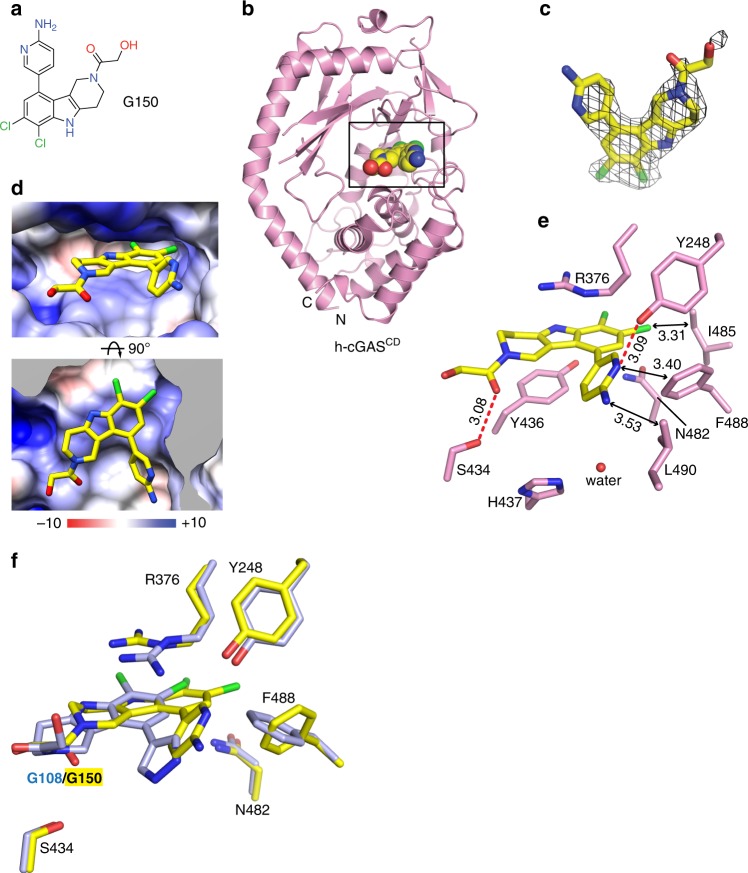
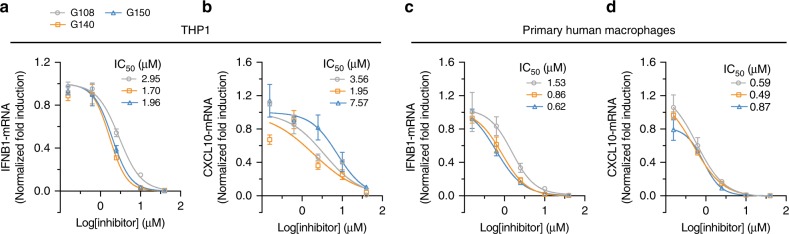
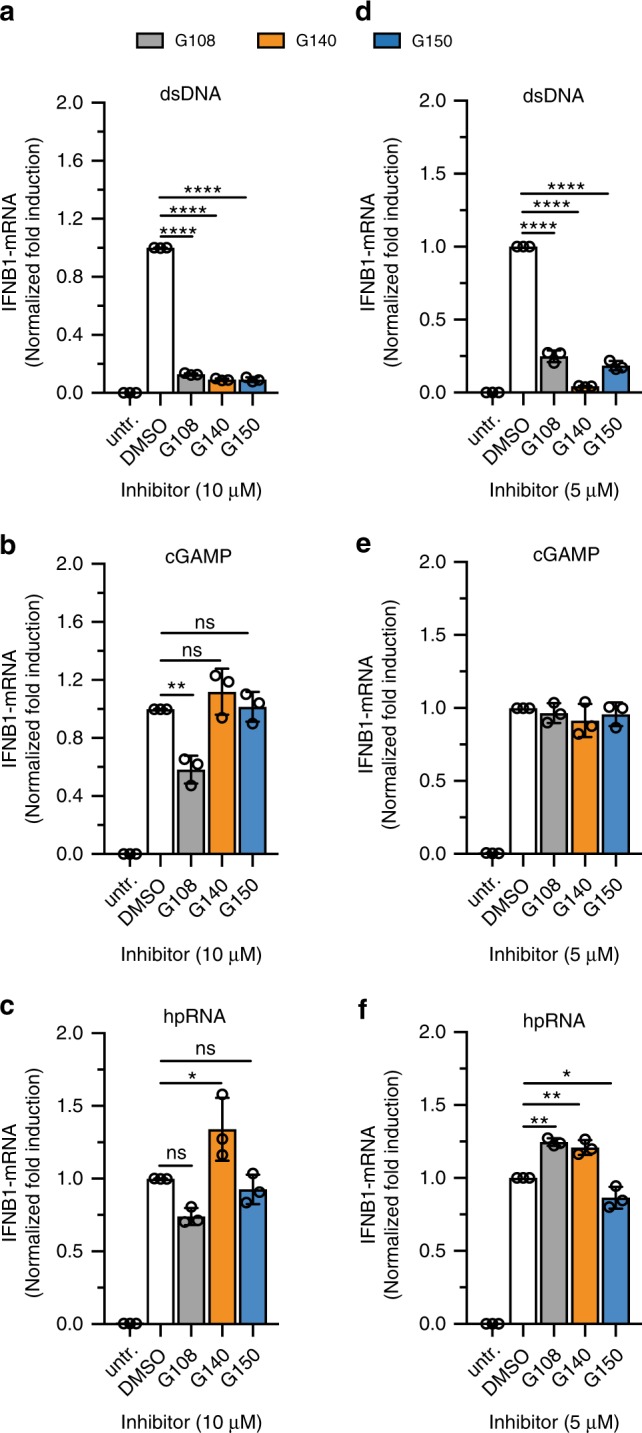
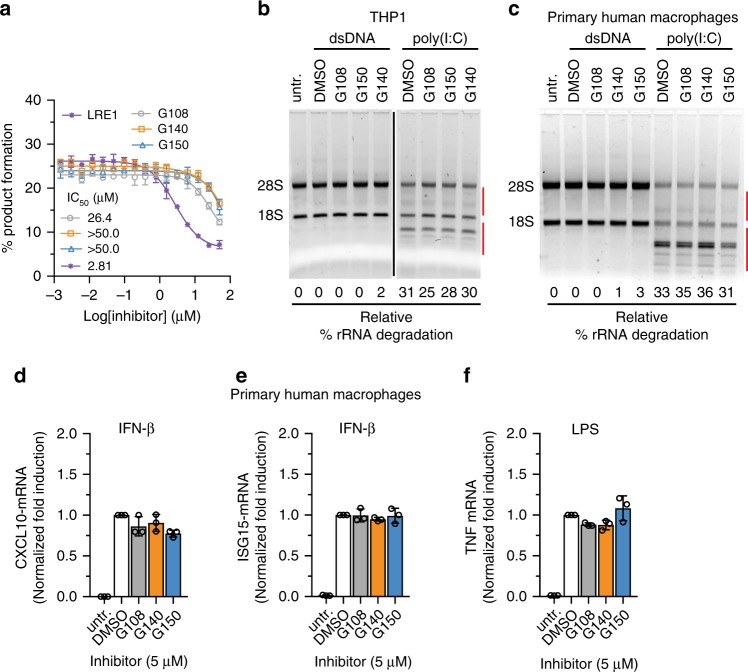
Cyclic GMP-AMP synthase (cGAS) is the primary sensor for aberrant intracellular dsDNA producing the cyclic dinucleotide cGAMP, a second messenger initiating cytokine production in subsets of myeloid lineage cell types. Therefore, inhibition of the enzyme cGAS may act anti-inflammatory. Here we report the discovery of human-cGAS-specific small-molecule inhibitors by high-throughput screening and the targeted medicinal chemistry optimization for two molecular scaffolds. Lead compounds from one scaffold co-crystallize with human cGAS and occupy the ATP- and GTP-binding active site. The specificity and potency of these drug candidates is further documented in human myeloid cells including primary macrophages. These novel cGAS inhibitors with cell-based activity will serve as probes into cGAS-dependent innate immune pathways and warrant future pharmacological studies for treatment of cGAS-dependent inflammatory diseases.
Overview
The claims and statistics of this paper haven’t been checked yet.
Free: it reads the open-access text and checks the first 5 claims that cite a source we can check. Create a free account to check every claim.
Integrity signals
Registry
Cites
Statistics
Figures
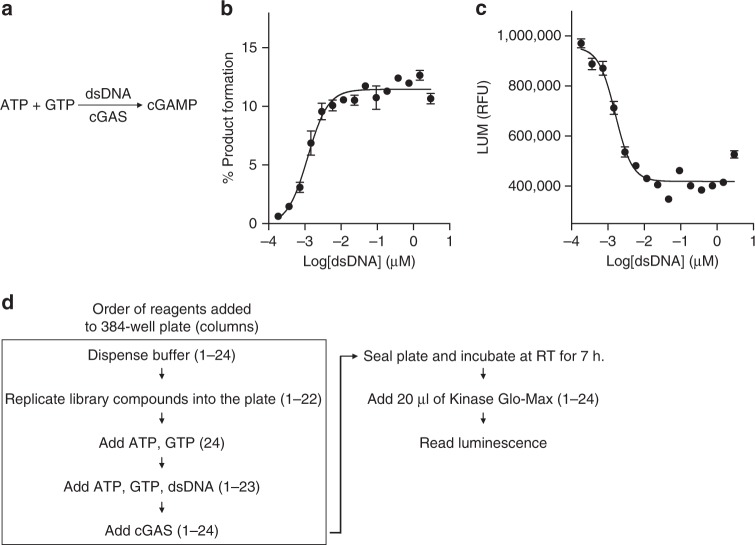
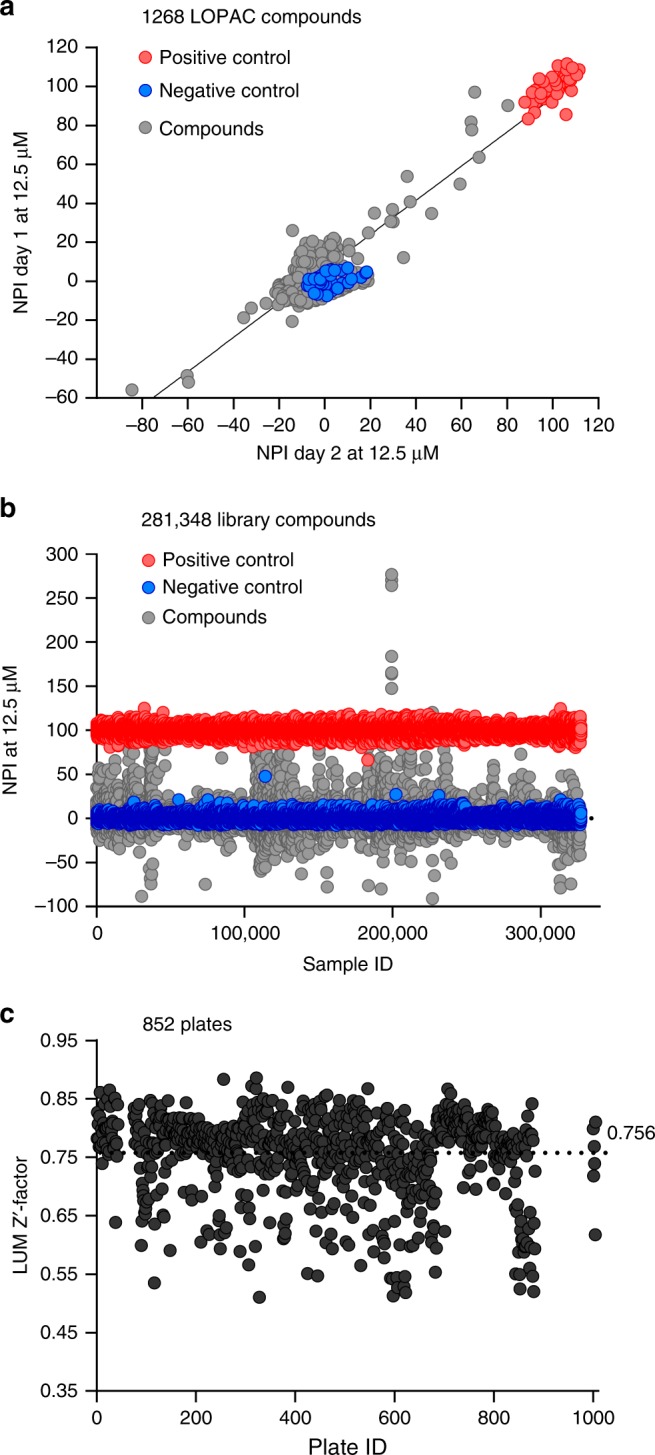
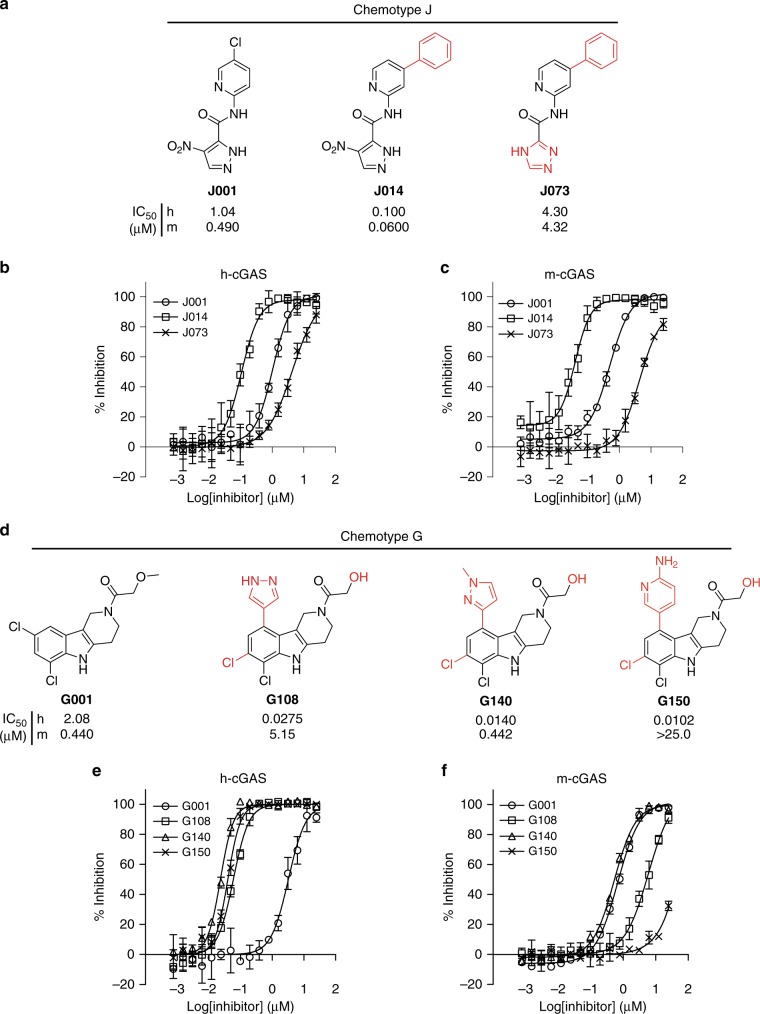
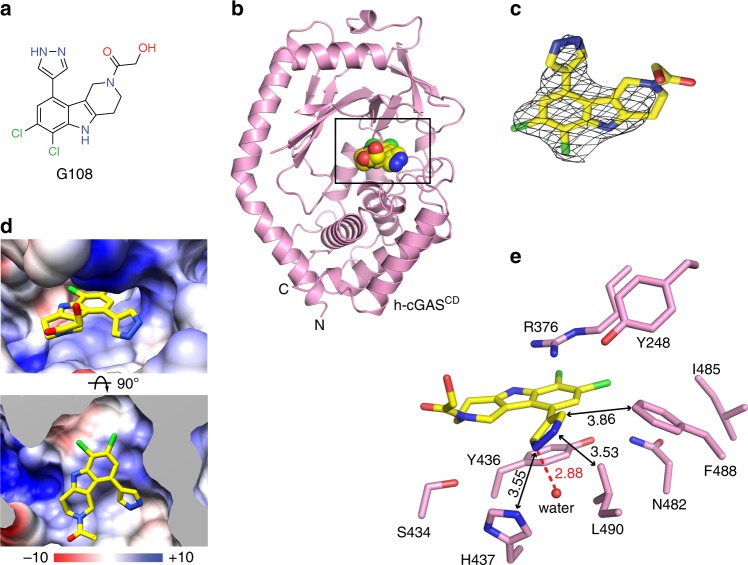
Verification
Claims the paper makes
The claims and statistics of this paper haven’t been checked yet.
Free: it reads the open-access text and checks the first 5 claims that cite a source we can check. Create a free account to check every claim.
Claims other papers make about this one
Each is checked against this paper’s own text: does it say what the citing paper says it does?
The source backs part of the claim, not all of it — or backs it for a different population, condition or comparison.
In the citing paper
“Our previous work established the efficacy of a brain permeable cGAS inhibitor (TDI6570, also known as G097, hereafter referred to as cGASi) formulated in chow in protecting against tau-induced deficits in P301S mice41,44.”
From APOE3 - R136S mutation confers resilience against tau pathology via cGAS-STING-IFN inhibition (2024) · cites this paper as [44]
Experimental — accuracy not yet measuredThe cited source says what the claim attributes to it.
In the citing paper
“cGAS inhibitors are being developed145.”
From The role of retrotransposable elements in ageing and age-associated diseases (2021) · cites this paper as [145]
The cited source says what the claim attributes to it.
In the citing paper
“several inhibitors of cGAS (Lama et al. 2019) and STING (Haag et al. 2018) have been developed.”
From Senescence and the SASP: many therapeutic avenues (2020) · cites this paper as Lama et al. 2019
The check wasn’t confident either way, so it gives no verdict — never disputed.
In the citing paper
“Our previous work established the efficacy of a brain permeable cGAS inhibitor (TDI6570, also known as G097, hereafter referred to as cGASi) formulated in chow in protecting against tau-induced deficits in P301S mice41,44.”
From The R136S mutation in the APOE3 gene confers resilience against tau pathology via inhibition of the cGAS-STING-IFN pathway (2025) · cites this paper as [44]
Experimental — accuracy not yet measuredThe check wasn’t confident either way, so it gives no verdict — never disputed.
In the citing paper
“AD patients exhibit myelin loss, and higher myelin expression is associated with tau pathology protection in AD43,44.”
From The R136S mutation in the APOE3 gene confers resilience against tau pathology via inhibition of the cGAS-STING-IFN pathway (2025) · cites this paper as [44]
Experimental — accuracy not yet measured
2 more claims about this paper
Create a free account to see every claim other papers make about this one.
Self-check
Percentages, sums and reported differences re-computed from the paper’s own numbers.
The self-check needs the paper’s full text.
Citations
Cites
UCSF Chimera—A visualization system for exploratory research and analysis
Pettersen, E. F., Goddard, T. D., Huang, C. C., Couch, G. S., Greenblatt, D. M., Meng, E. C., & Ferrin, T. E. (2004) · Journal of Computational Chemistry · doi:10.1002/jcc.20084 · Cited by 45,828
Features and development of Coot
Emsley, P., Lohkamp, B., Scott, W. G., & Cowtan, K. (2010) · Acta Crystallographica Section D Biological Crystallography · doi:10.1107/s0907444910007493 · Cited by 29,915
PHENIX : a comprehensive Python-based system for macromolecular structure solution
Adams, P. D., Afonine, P. V., Bunkóczi, G., Chen, V. B., Davis, I. W., Echols, N., Headd, J. J., Hung, L.-W., Kapral, G. J., Grosse-Kunstleve, R. W., et al. (2010) · Acta Crystallographica Section D Biological Crystallography · doi:10.1107/s0907444909052925 · Cited by 23,716
Phaser crystallographic software
McCoy, A. J., Grosse-Kunstleve, R. W., Adams, P. D., Winn, M. D., Storoni, L. C., & Read, R. J. (2007) · Journal of Applied Crystallography · doi:10.1107/s0021889807021206 · Cited by 20,612
PHENIX: a comprehensive Python-based system for macromolecular structure solution
Adams, P. D., Afonine, P. V., Bunkóczi, G., Chen, V. B., Davis, I. W., Echols, N., Headd, J. J., Hung, L.-W., Kapral, G. J., Grosse-Kunstleve, R. W., et al. (2012) · International Tables for Crystallography · doi:10.1107/97809553602060000865 · Cited by 7,334
Zhang, J.-H., Chung, T. D. Y., & Oldenburg, K. R. (1999) · SLAS Discovery · doi:10.1177/108705719900400206 · Cited by 6,847
Towards automated crystallographic structure refinement with phenix.refine
Afonine, P. V., Grosse-Kunstleve, R. W., Echols, N., Headd, J. J., Moriarty, N. W., Mustyakimov, M., Terwilliger, T. C., Urzhumtsev, A., Zwart, P. H., & Adams, P. D. (2012) · Acta Crystallographica Section D Biological Crystallography · doi:10.1107/s0907444912001308 · Cited by 5,511
Cyclic GMP-AMP Synthase Is a Cytosolic DNA Sensor That Activates the Type I Interferon Pathway
Sun, L., Wu, J., Du, F., Chen, X., & Chen, Z. J. (2013) · Science · doi:10.1126/science.1232458 · Cited by 4,996
Baell, J. B., & Holloway, G. A. (2010) · Journal of Medicinal Chemistry · doi:10.1021/jm901137j · Cited by 3,944
Pathogen Recognition and Inflammatory Signaling in Innate Immune Defenses
Mogensen, T. H. (2009) · Clinical Microbiology Reviews · doi:10.1128/cmr.00046-08 · Cited by 3,111
STING regulates intracellular DNA-mediated, type I interferon-dependent innate immunity
Ishikawa, H., Ma, Z., & Barber, G. N. (2009) · Nature · doi:10.1038/nature08476 · Cited by 2,759
Cyclic GMP-AMP Is an Endogenous Second Messenger in Innate Immune Signaling by Cytosolic DNA
Wu, J., Sun, L., Chen, X., Du, F., Shi, H., Chen, C., & Chen, Z. J. (2013) · Science · doi:10.1126/science.1229963 · Cited by 2,541
Mitochondrial DNA stress primes the antiviral innate immune response
West, A. P., Khoury-Hanold, W., Staron, M., Tal, M. C., Pineda, C. M., Lang, S. M., Bestwick, M., Duguay, B. A., Raimundo, N., MacDuff, D. A., et al. (2015) · Nature · doi:10.1038/nature14156 · Cited by 1,975
cGAS surveillance of micronuclei links genome instability to innate immunity
Mackenzie, K. J., Carroll, P., Martin, C.-A., Murina, O., Fluteau, A., Simpson, D. J., Olova, N., Sutcliffe, H., Rainger, J. K., Leitch, A., et al. (2017) · Nature · doi:10.1038/nature23449 · Cited by 1,752
CGAS produces a 2′-5′-linked cyclic dinucleotide second messenger that activates STING.
Ablasser, A., Goldeck, M., Cavlar, T., Deimling, T., Witte, G., Röhl, I., Hopfner, K.-P., Ludwig, J., & Hornung, V. (2013) · Nature · doi:10.1038/nature12306 · Cited by 1,695
The Adaptor Protein MITA Links Virus-Sensing Receptors to IRF3 Transcription Factor Activation
Zhong, B., Yang, Y., Li, S., Wang, Y.-Y., Li, Y., Diao, F., Lei, C., He, X., Zhang, L., Tien, P., et al. (2008) · Immunity · doi:10.1016/j.immuni.2008.09.003 · Cited by 1,519
Mitotic progression following DNA damage enables pattern recognition within micronuclei
Harding, S. M., Benci, J. L., Irianto, J., Discher, D. E., Minn, A. J., & Greenberg, R. A. (2017) · Nature · doi:10.1038/nature23470 · Cited by 1,508
Innate immune sensing of cytosolic chromatin fragments through cGAS promotes senescence
Glück, S., Guey, B., Gulen, M. F., Wolter, K., Kang, T.-W., Schmacke, N. A., Bridgeman, A., Rehwinkel, J., Zender, L., & Ablasser, A. (2017) · Nature Cell Biology · doi:10.1038/ncb3586 · Cited by 1,196
Targeting STING with covalent small-molecule inhibitors
Haag, S. M., Gulen, M. F., Reymond, L., Gibelin, A., Abrami, L., Decout, A., Heymann, M., van der Goot, F. G., Turcatti, G., Behrendt, R., et al. (2018) · Nature · doi:10.1038/s41586-018-0287-8 · Cited by 1,178
Gao, P., Ascano, M., Wu, Y., Barchet, W., Gaffney, B. L., Zillinger, T., Serganov, A. A., Liu, Y., Jones, R. A., Hartmann, G., et al. (2013) · Cell · doi:10.1016/j.cell.2013.04.046 · Cited by 1,101
Self-citationZhang, X., Shi, H., Wu, J., Zhang, X., Sun, L., Chen, C., & Chen, Z. J. (2013) · Molecular Cell · doi:10.1016/j.molcel.2013.05.022 · Cited by 1,071
cGAS is essential for cellular senescence
Yang, H., Wang, H., Ren, J., Chen, Q., & Chen, Z. J. (2017) · Proceedings of the National Academy of Sciences · doi:10.1073/pnas.1705499114 · Cited by 1,009
Cyclic GMP-AMP Synthase Is an Innate Immune Sensor of HIV and Other Retroviruses
Gao, D., Wu, J., Wu, Y.-T., Du, F., Aroh, C., Yan, N., Sun, L., & Chen, Z. J. (2013) · Science · doi:10.1126/science.1240933 · Cited by 992
Crow, Y. J., Hayward, B. E., Parmar, R., Robins, P., Leitch, A., Ali, M., Black, D. N., van Bokhoven, H., Brunner, H. G., Hamel, B. C., et al. (2006) · Nature Genetics · doi:10.1038/ng1845 · Cited by 903
Sun, W., Li, Y., Chen, L., Chen, H., You, F., Zhou, X., Zhou, Y., Zhai, Z., Chen, D., & Jiang, Z. (2009) · Proceedings of the National Academy of Sciences · doi:10.1073/pnas.0900850106 · Cited by 866
Abe, T., & Barber, G. N. (2014) · Journal of Virology · doi:10.1128/jvi.00037-14 · Cited by 767
Activation of cyclic GMP-AMP synthase by self-DNA causes autoimmune diseases
Gao, D., Li, T., Li, X.-D., Chen, X., Li, Q.-Z., Wight-Carter, M., & Chen, Z. J. (2015) · Proceedings of the National Academy of Sciences · doi:10.1073/pnas.1516465112 · Cited by 685
Watson, R. O., Bell, S. L., MacDuff, D. A., Kimmey, J. M., Diner, E. J., Olivas, J., Vance, R. E., Stallings, C. L., Virgin, H. W., & Cox, J. S. (2015) · Cell Host & Microbe · doi:10.1016/j.chom.2015.05.004 · Cited by 645
Molecular similarity: a key technique in molecular informatics
Bender, A., & Glen, R. C. (2004) · Organic & Biomolecular Chemistry · doi:10.1039/b409813g · Cited by 614
Discriminating self from non-self in nucleic acid sensing
Schlee, M., & Hartmann, G. (2016) · Nature Reviews Immunology · doi:10.1038/nri.2016.78 · Cited by 593
Nucleic acid recognition by the innate immune system
Barbalat, R., Ewald, S. E., Mouchess, M. L., & Barton, G. M. (2011) · Annual Review of Immunology · doi:10.1146/annurev-immunol-031210-101340 · Cited by 577
STING manifests self DNA-dependent inflammatory disease
Ahn, J., Gutman, D., Saijo, S., & Barber, G. N. (2012) · Proceedings of the National Academy of Sciences · doi:10.1073/pnas.1215006109 · Cited by 509
Structure of the Human cGAS–DNA Complex Reveals Enhanced Control of Immune Surveillance
Zhou, W., Whiteley, A. T., de Oliveira Mann, C. C., Morehouse, B. R., Nowak, R. P., Fischer, E. S., Gray, N. S., Mekalanos, J. J., & Kranzusch, P. J. (2018) · Cell · doi:10.1016/j.cell.2018.06.026 · Cited by 387
Gray, E. E., Treuting, P. M., Woodward, J. J., & Stetson, D. B. (2015) · The Journal of Immunology · doi:10.4049/jimmunol.1500969 · Cited by 384
Vincent, J., Adura, C., Gao, P., Luz, A., Lama, L., Asano, Y., Okamoto, R., Imaeda, T., Aida, J., Rothamel, K., et al. (2017) · Nature Communications · doi:10.1038/s41467-017-00833-9 · Cited by 370
Self-citationWang, Q., Liu, X., Cui, Y., Tang, Y., Chen, W., Li, S., Yu, H., Pan, Y., & Wang, C. (2014) · Immunity · doi:10.1016/j.immuni.2014.11.011 · Cited by 358
OAS proteins and cGAS: unifying concepts in sensing and responding to cytosolic nucleic acids
Hornung, V., Hartmann, R., Ablasser, A., & Hopfner, K.-P. (2014) · Nature Reviews Immunology · doi:10.1038/nri3719 · Cited by 342
Modulation of the cGAS-STING DNA sensing pathway by gammaherpesviruses
Ma, Z., Jacobs, S. R., West, J. A., Stopford, C., Zhang, Z., Davis, Z., Barber, G. N., Glaunsinger, B. A., Dittmer, D. P., & Damania, B. (2015) · Proceedings of the National Academy of Sciences · doi:10.1073/pnas.1503831112 · Cited by 310
Activation of RNase L is dependent on OAS3 expression during infection with diverse human viruses
Li, Y., Banerjee, S., Wang, Y., Goldstein, S. A., Dong, B., Gaughan, C., Silverman, R. H., & Weiss, S. R. (2016) · Proceedings of the National Academy of Sciences · doi:10.1073/pnas.1519657113 · Cited by 285
Anti-DNA antibodies–quintessential biomarkers of SLE
Pisetsky, D. S. (2016) · Nature Reviews Rheumatology · doi:10.1038/nrrheum.2015.151 · Cited by 267
Listeria monocytogenes induces IFNβ expression through an IFI16‐, cGAS‐ and STING‐dependent pathway
Hansen, K., Prabakaran, T., Laustsen, A., Jørgensen, S. E., Rahbæk, S. H., Jensen, S. B., Nielsen, R., Leber, J. H., Decker, T., Horan, K. A., et al. (2014) · The EMBO Journal · doi:10.15252/embj.201488029 · Cited by 263
Belgnaoui, S. M., Paz, S., & Hiscott, J. (2011) · Current Opinion in Immunology · doi:10.1016/j.coi.2011.08.001 · Cited by 241
An, J., Woodward, J. J., Sasaki, T., Minie, M., & Elkon, K. B. (2015) · The Journal of Immunology · doi:10.4049/jimmunol.1402793 · Cited by 239
Hall, J., Brault, A., Vincent, F., Weng, S., Wang, H., Dumlao, D., Aulabaugh, A., Aivazian, D., Castro, D., Chen, M., et al. (2017) · PLOS ONE · doi:10.1371/journal.pone.0184843 · Cited by 167
Suramin Potently Inhibits cGAMP Synthase, cGAS, in THP1 Cells to Modulate IFN-β Levels
Wang, M., Sooreshjani, M. A., Mikek, C., Opoku-Temeng, C., & Sintim, H. O. (2018) · Future Medicinal Chemistry · doi:10.4155/fmc-2017-0322 · Cited by 137
Koresawa, M., & Okabe, T. (2004) · ASSAY and Drug Development Technologies · doi:10.1089/154065804323056495 · Cited by 129
Discovery of LRE1 as a specific and allosteric inhibitor of soluble adenylyl cyclase
Ramos-Espiritu, L., Kleinboelting, S., Navarrete, F. A., Alvau, A., Visconti, P. E., Valsecchi, F., Starkov, A., Manfredi, G., Buck, H., Adura, C., et al. (2016) · Nature Chemical Biology · doi:10.1038/nchembio.2151 · Cited by 89
Self-citationAn RNA-Based Fluorescent Biosensor for High-Throughput Analysis of the cGAS-cGAMP-STING Pathway
Bose, D., Su, Y., Marcus, A., Raulet, D. H., & Hammond, M. C. (2016) · Cell chemical biology · doi:10.1016/j.chembiol.2016.10.014 · Cited by 80
Biotransformations Leading to Toxic Metabolites
Macherey, A., & Dansette, P. M. (2008) · Elsevier eBooks · doi:10.1016/b978-0-12-374194-3.00033-0 · Cited by 50
Cited by
The cGAS–STING pathway as a therapeutic target in inflammatory diseases
Decout, A., Katz, J. D., Venkatraman, S., & Ablasser, A. (2021) · Nature Reviews Immunology · doi:10.1038/s41577-021-00524-z · Cited by 2,309
The Cytosolic DNA-Sensing cGAS–STING Pathway in Cancer
Kwon, J., & Bakhoum, S. F. (2020) · Cancer Discovery · doi:10.1158/2159-8290.cd-19-0761 · Cited by 1,293
Senescence and the SASP: many therapeutic avenues
Birch, J., & Gil, J. (2020) · Genes & Development · doi:10.1101/gad.343129.120 · Cited by 1,177
“For example, RIG-I, a sensor for cytoplasmic RNA, mediates senescence-associated inflammation (Liu et al. 2011).”
BackgroundMitochondrial DNA in inflammation and immunity
Riley, J. S., & Tait, S. W. (2020) · EMBO reports · doi:10.15252/embr.201949799 · Cited by 865
“Small molecules targeting both cGAS [115,116] and STING [117] have been developed, with STING antagonists emerging as the most promising.”
DAMPs and DAMP-sensing receptors in inflammation and diseases
Ma, M., Jiang, W., & Zhou, R. (2024) · Immunity · doi:10.1016/j.immuni.2024.03.002 · Cited by 515
Metadata
- Authors
- Lama, L., Adura, C., Xie, W., Tomita, D., Kamei, T., Kuryavyi, V., Gogakos, T., Steinberg, J. I., Miller, M., Ramos-Espiritu, L., Asano, Y., Hashizume, S., Aida, J., Imaeda, T., Okamoto, R., Jennings, A. J., Michino, M., Kuroita, T., Stamford, A., Gao, P., Meinke, P., Glickman, J. F., Patel, D. J., & Tuschl, T.
- Affiliations
- Rockefeller University (US)
- Memorial Sloan Kettering Cancer Center (US)
- Tri-Institutional Therapeutics Discovery Institute (US)
- Corresponding author
- Glickman, J. Fraser
- Patel, Dinshaw J.
- Tuschl, Thomas
- ORCID
- Venue
- Nature Communications
- Published
- 2019-05-21
- Volume
- 10
- Issue
- 1
- Pages
- 2261-2261
- ISSN
- 2041-1723 (ISSN-L)
- PMC
- PMC6529454
- OpenAlex
- W2945498322
- Cited by
- 303
- References
- 49
- Citations by year
- 2026: 54 · 2025: 59 · 2024: 57 · 2023: 45 · 2022: 32 · 2021: 24 · 2020: 22 · 2019: 9
- FWCI
- 8.63
- Type
- journal article
- Language
- en
- Open access
- gold
- doi.org
- Licence
- cc-by
- creativecommons.org/licenses/by/4.0 (tdm)
- creativecommons.org/licenses/by/4.0 (vor)
- Locations
- Nature Communications (publishedVersion, cc-by)
- PubMed Central (publishedVersion, cc-by)
- PubMed (publishedVersion)
- OSTI OAI (U.S. Department of Energy Office of Scientific and Technical Information) (submittedVersion)
- RePEc: Research Papers in Economics (submittedVersion)
- DOAJ (DOAJ: Directory of Open Access Journals) (submittedVersion, cc-by-sa)
- DOAJ (DOAJ: Directory of Open Access Journals) (submittedVersion)
- Funders
- Commonwealth Foundation
- Leona M. and Harry B. Helmsley Charitable Trust
- Memorial Sloan-Kettering Cancer Center
- Weill Cornell Medical College
- National Cancer Institute (P30CA008748)
- Argonne National Laboratory
- Brookhaven National Laboratory
- Topics
- Life Sciences › Immunology and Microbiology › Immunology › interferon and immune responses
- Life Sciences › Biochemistry, Genetics and Molecular Biology › Molecular Biology › Phosphodiesterase function and regulation
- Life Sciences › Biochemistry, Genetics and Molecular Biology › Molecular Biology › Biochemical and Molecular Research
- Keywords
- cGAS, small molecule inhibitors, cGAMP, interferon gene expression, innate immunity, macrophages, myeloid cells, anti-inflammatory agents, GTP binding site, crystal structure, inflammatory diseases
- MeSH terms
- Cyclic Guanosine Monophosphate-Adenosine Monophosphate Synthase, Autoimmune Diseases, Cells, Cultured, DNA, Enzyme Inhibitors, Humans, Immunity, Innate, Interferons, Macrophages, Models, Molecular, Nucleotides, Cyclic, Nucleotidyltransferases, Recombinant Proteins, Crystallography, X-Ray, Drug Discovery, High-Throughput Screening Assays, Primary Cell Culture
About these checks
Registry, retraction, Cites and statistics results are computed, not judged, with one exception: a printed reference that no index lists is read once by a model before it counts as a citation error. Claims are extracted by a model and kept only when their quote appears verbatim in the text; each cited source is then checked, with a model’s help, for whether it says what the claim relies on. Those verdicts can be wrong — read the claim’s quote and the cited source before relying on one.
Statistics and arithmetic are recomputed, not judged.
Confidence bands are shown only for fields calibrated on our annotated test set. None is calibrated yet, so no band is shown.
What counts as a claim ›How we measure confidence ›How we check this ›
Are you an author, or do you see a problem with this page? Request a review
Data sources
Bibliographic data: Semantic Scholar, OpenAlex, Crossref.
Contains information from the Semantic Scholar Academic Graph Datasets, made available under the ODC Attribution License (ODC-BY 1.0).
Semantic Scholar’s data is described in: Kinney, R., et al. (2023). The Semantic Scholar Open Data Platform. arXiv:2301.10140.
