

Neutrophils promote the development of reparative macrophages mediated by ROS to orchestrate liver repair
Open accessThe DOI matches its Crossref record; 70 of the 71 references it cites were found in a registry or an index.
Abstract
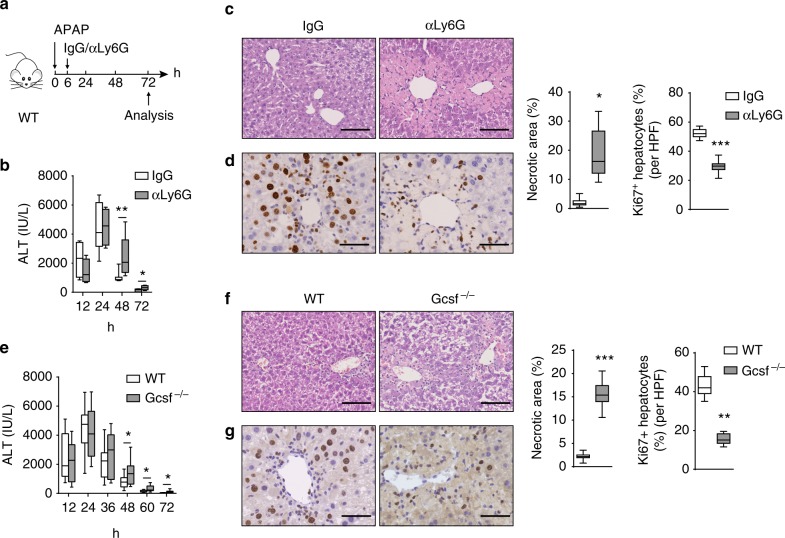
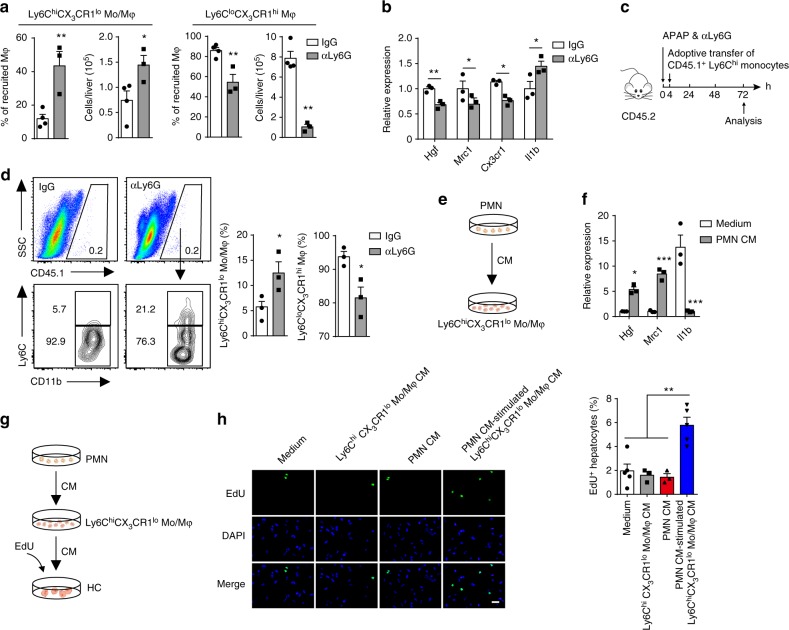
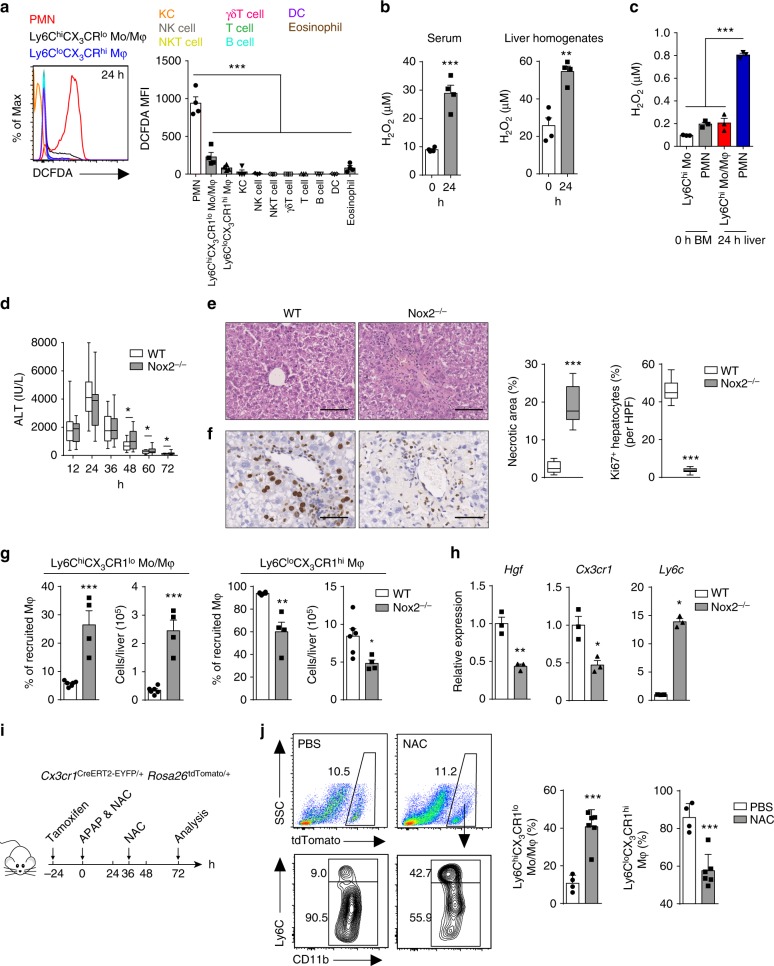
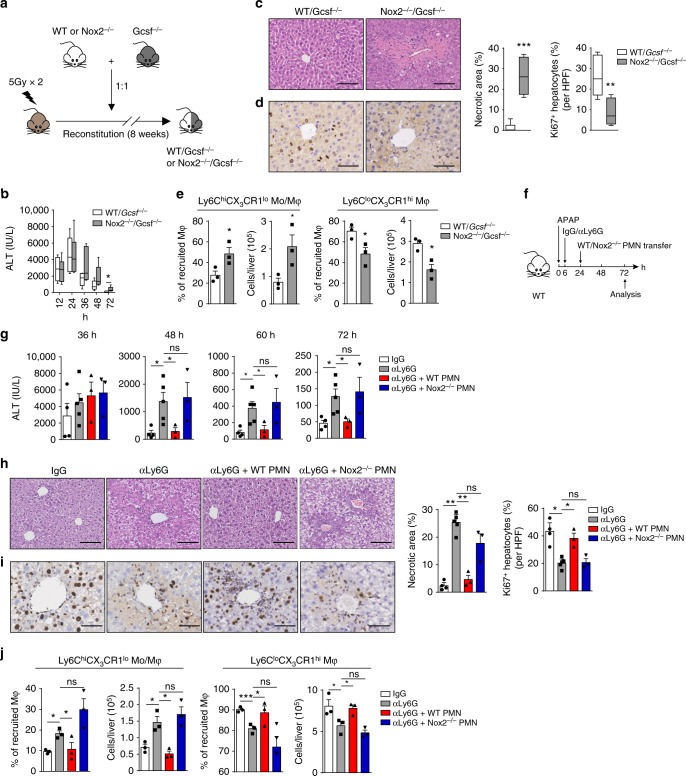
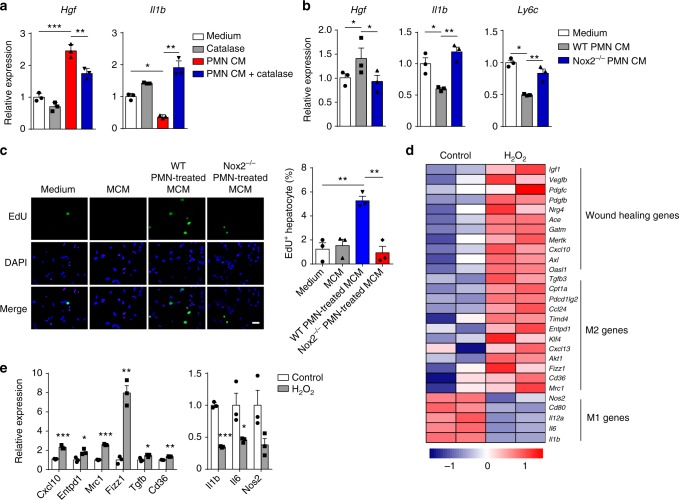
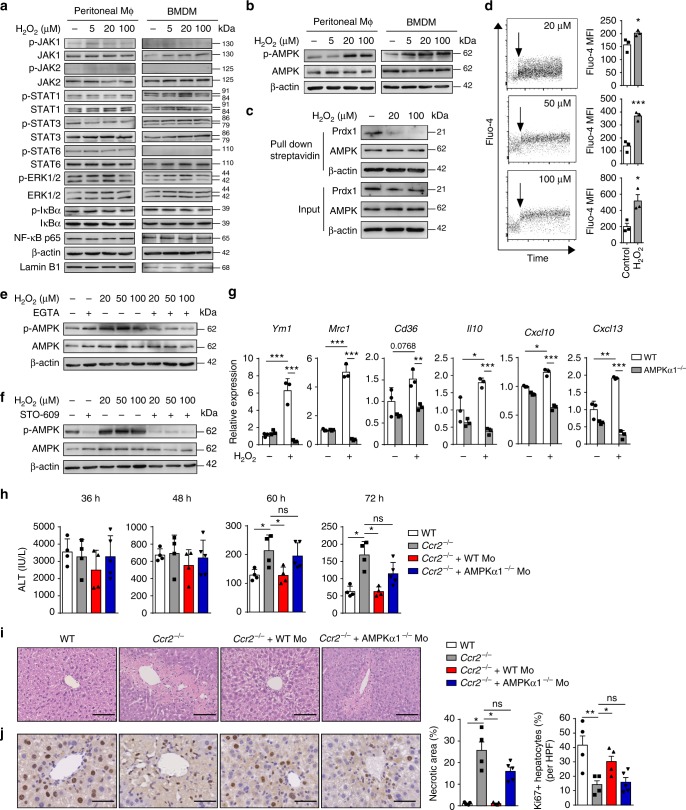
Phagocytes, including neutrophils and macrophages, have been suggested to function in a cooperative way in the initial phase of inflammatory responses, but their interaction and integration in the resolution of inflammation and tissue repair remain unclear. Here we show that neutrophils have crucial functions in liver repair by promoting the phenotypic conversion of pro-inflammatory Ly6C hi CX 3 CR1 lo monocytes/macrophages to pro-resolving Ly6C lo CX 3 CR1 hi macrophages. Intriguingly, reactive oxygen species (ROS), expressed predominantly by neutrophils, are important mediators that trigger this phenotypic conversion to promote liver repair. Moreover, this conversion is prevented by the depletion of neutrophils via anti-Ly6G antibody, genetic deficiency of granulocyte colony-stimulating factor, or genetic deficiency of NADPH oxidase 2 (Nox2). By contrast, adoptive transfer of WT rather than Nox2 −/− neutrophils rescues the impaired phenotypic conversion of macrophages in neutrophil-depleted mice. Our findings thus identify an intricate cooperation between neutrophils and macrophages that orchestrate resolution of inflammation and tissue repair.
Overview
The claims and statistics of this paper haven’t been checked yet.
Free: it reads the open-access text and checks the first 5 claims that cite a source we can check. Create a free account to check every claim.
Integrity signals
Registry
Cites
Statistics
Figures
Verification
Claims the paper makes
The claims and statistics of this paper haven’t been checked yet.
Free: it reads the open-access text and checks the first 5 claims that cite a source we can check. Create a free account to check every claim.
Claims other papers make about this one
Each is checked against this paper’s own text: does it say what the citing paper says it does?
In the citing paper
“However, it has also been suggested that neutrophils can be restorative and promote liver regeneration, and the disease-promoting versus pathogenic roles of neutrophils [90, 91] are likely time-, context- or subpopulation-dependent.”
From Inflammation and immunity in liver homeostasis and disease: a nexus of hepatocytes, nonparenchymal cells and immune cells (2025) · doi:10.1038/s41423-025-01313-7 · cites this paper as [91]
Self-check
Percentages, sums and reported differences re-computed from the paper’s own numbers.
The self-check needs the paper’s full text.
Citations
Cites
Neutrophil recruitment and function in health and inflammation
Kolaczkowska, E., & Kubes, P. (2013) · Nature Reviews Immunology · doi:10.1038/nri3399 · Cited by 5,472
The M1 and M2 paradigm of macrophage activation: Time for reassessment
Martinez, F. O., & Gordon, S. (2014) · F1000Prime Reports · doi:10.12703/p6-13 · Cited by 4,689
AMPK: a nutrient and energy sensor that maintains energy homeostasis
Hardie, D. G., Ross, F. A., & Hawley, S. A. (2012) · Nature Reviews Molecular Cell Biology · doi:10.1038/nrm3311 · Cited by 4,602
Pro-resolving lipid mediators are leads for resolution physiology
Serhan, C. N. (2014) · Nature · doi:10.1038/nature13479 · Cited by 3,041
Neutrophils in the activation and regulation of innate and adaptive immunity
Mantovani, A., Cassatella, M. A., Costantini, C., & Jaillon, S. (2011) · Nature Reviews Immunology · doi:10.1038/nri3024 · Cited by 3,027
Michalopoulos, G. K., & DeFrances, M. C. (1997) · Science · doi:10.1126/science.276.5309.60 · Cited by 2,828
Microglia promote learning-dependent synapse formation through brain-derived neurotrophic factor
Parkhurst, C. N., Yang, G., Ninan, I., Savas, J. N., Yates, J. R., Lafaille, J. J., Hempstead, B. L., Littman, D. R., & Gan, W.-B. (2013) · Cell · doi:10.1016/j.cell.2013.11.030 · Cited by 2,599
Signal transduction by reactive oxygen species
Finkel, T. (2011) · Journal of Cell Biology · doi:10.1083/jcb.201102095 · Cited by 2,322
Transcriptional regulation of macrophage polarization: enabling diversity with identity
Lawrence, T., & Natoli, G. (2011) · Nature Reviews Immunology · doi:10.1038/nri3088 · Cited by 2,284
Monocytes and macrophages: developmental pathways and tissue homeostasis
Ginhoux, F., & Jung, S. (2014) · Nature Reviews Immunology · doi:10.1038/nri3671 · Cited by 1,840
Cited by
Items 101–200 of 367
Zhao, J., Wu, H., Wang, L., Jiang, D., Wang, W., Yuan, G., Jia, P., & Jia, W. (2022) · Biomaterials Advances · doi:10.1016/j.msec.2022.112719 · Cited by 40
Woolbright, B. L., Nguyen, N. T., McGill, M. R., Sharpe, M. R., Curry, S. C., & Jaeschke, H. (2022) · Toxicology Letters · doi:10.1016/j.toxlet.2022.07.813 · Cited by 41
Zhang, S., Xu, R., He, S., Sun, R., Wang, G., Wei, S.-Y., Yan, X., & Fan, K. (2025) · Military Medical Research · doi:10.1186/s40779-025-00611-5 · Cited by 93
“ROS produced by immune cells is a key mediator in mac-rophages’ phenotypic switching [41–43].”
Immunity in salamander regeneration: Where are we standing and where are we headed?
Castro, L. A. B., Walters, H., Vázquez, R. O. G., & Yun, M. H. (2020) · Developmental Dynamics · doi:10.1002/dvdy.251 · Cited by 40
“Moreover, a role for neutrophils in the conversion of macrophages from a pro-inflammatory to an antiinflammatory phenotype has been described in mice, via neutrophil phagocytosis by macrophages (termed efferocytosis),(72) and also during mice liver repair via ROS release.(73) In zebrafish, neutrophils are recruited to…”
BackgroundType I Interferon-Mediated Regulation of Antiviral Capabilities of Neutrophils
Stegelmeier, A. A., Darzianiazizi, M., Hanada, K., Sharif, S., Wootton, S. K., Bridle, B. W., & Karimi, K. (2021) · International Journal of Molecular Sciences · doi:10.3390/ijms22094726 · Cited by 44
Novel strategies for the treatment of acetaminophen hepatotoxicity
Akakpo, J. Y., Ramachandran, A., & Jaeschke, H. (2020) · Expert Opinion on Drug Metabolism & Toxicology · doi:10.1080/17425255.2020.1817896 · Cited by 41
Nguyen, N. T., Umbaugh, D. S., Smith, S. H., Adelusi, O. B., Sánchez-Guerrero, G., Ramachandran, A., & Jaeschke, H. (2023) · Archives of Toxicology · doi:10.1007/s00204-023-03478-4 · Cited by 42
“2008), neutrophils (Chauhan et al. 2020; Yang et al. 2019), and Kupffer cells (Nguyen et al.”
BackgroundInfluentialHong, S. M., Lee, A., Hwang, S., Ha, Y., Kim, M.-J., Min, S., Hwang, W., Yoon, G., Kwon, S. M., Woo, H. G., et al. (2022) · Redox Biology · doi:10.1016/j.redox.2022.102237 · Cited by 41
Advances in hydrogels for the treatment of periodontitis
Zheng, H., Zhou, Y., Zheng, Y., & Liu, G. (2023) · Journal of Materials Chemistry B · doi:10.1039/d3tb00835e · Cited by 41
Neutrophil Phenotypes and Functions in Trauma and Trauma-Related Sepsis
Janicova, A., & Relja, B. (2020) · Shock · doi:10.1097/shk.0000000000001695 · Cited by 45
“However, neutrophil-dependent oxidative burst promotes phenotypic conversion of pro-inflammatory Ly6CCX3CR1 monocytes and macrophages into anti-inflammatory Ly6CCX3CR1 macrophages that consequently may contribute to tissue repair (105).”
BackgroundThe Relationship between Cancer and Paraoxonase 1
Medina‐Díaz, I. M., Ponce-Ruiz, N., Rojas‐García, A. E., Zambrano‐Zaragoza, J. F., Bernal-Hernández, Y. Y., González-Arias, C. A., Barrón-Vivanco, B. S., & Herrera‐Moreno, J. F. (2022) · Antioxidants · doi:10.3390/antiox11040697 · Cited by 46
Li, Q., Chen, F., & Wang, F. (2022) · Cell & Bioscience · doi:10.1186/s13578-022-00921-4 · Cited by 41
“Notably, ROS that mainly released by neutrophils may be the crucial mediator which triggers this procession [86].”
BackgroundM2 Macrophages Serve as Critical Executor of Innate Immunity in Chronic Allograft Rejection
Zhang, H., Li, Z., & Li, W. (2021) · Frontiers in Immunology · doi:10.3389/fimmu.2021.648539 · Cited by 45
“They are known to be recruited into stressed solid organ and contribute to tissue injury, while recent data have demonstrated their contradictory function in tissue repair (3, 4).”
BackgroundWang, J.-C., Shi, Q., Zhou, Q., Zhang, L.-L., Qiu, Y.-P., Lou, D.-Y., Zhou, L.-Q., Yang, B., He, Q.-J., Weng, Q.-J., et al. (2022) · Acta Pharmacologica Sinica · doi:10.1038/s41401-021-00842-x · Cited by 37
Sun, M., Chen, P., Xiao, K., Zhu, X., Zhao, Z., Guo, C., He, X., Shi, T., Zhong, Q., Jia, Y., et al. (2023) · Advanced Science · doi:10.1002/advs.202206789 · Cited by 47
Self-citationLi, Z., Zhao, Q., Lu, Y., Zhang, Y., Li, L., Li, M., Chen, X., Sun, D., Duan, Y., & Xu, Y. (2021) · Advanced Science · doi:10.1002/advs.202101957 · Cited by 39
Mitochondria in Acetaminophen-Induced Liver Injury and Recovery: A Concise Review
Ramachandran, A., & Jaeschke, H. (2023) · Livers · doi:10.3390/livers3020014 · Cited by 40
“Interestingly, it has also been demonstrated that neutrophils promote the development of reparative macrophages through ROS production to facilitate liver repair after an APAP overdose [111], and the role of mitochondria in controlling several facets of neutrophil physiology, including maturation and behavior, is now…”
BackgroundUmbaugh, D. S., & Jaeschke, H. (2020) · Expert Review of Gastroenterology & Hepatology · doi:10.1080/17474124.2021.1857238 · Cited by 40
“Furthermore, recent work in mice has highlighted neutrophil-mediated hepatic recovery following APAP [97,98]; consistent with these preclinical studies is the observation that neutrophil activation in APAP overdose”
BackgroundMacrophages in Atherosclerosis, First or Second Row Players?
Checkouri, É., Blanchard, V., & Meilhac, O. (2021) · Biomedicines · doi:10.3390/biomedicines9091214 · Cited by 43
Neutrophil accumulation within tissues: A damage x healing dichotomy
Costa, K. M. D. O., Menezes, G. B., & Neto, H. A. P. (2021) · Biomedicine & Pharmacotherapy · doi:10.1016/j.biopha.2021.112422 · Cited by 40
Extracellular Mechanisms of Neutrophils in Immune Cell Crosstalk
Shrestha, S., & Hong, C.-W. (2023) · Immune Network · doi:10.4110/in.2023.23.e38 · Cited by 36
“However, neutrophils utilize ROS production as a localized signaling mechanism to communicate with neighboring immune cells (45,46).”
BackgroundRecent advances in models of immune-mediated drug-induced liver injury
Tasnim, F., Huang, X., Lee, C. Z. W., Ginhoux, F., & Yu, H. (2021) · Frontiers in Toxicology · doi:10.3389/ftox.2021.605392 · Cited by 32
“Specifically, KC and neutrophil death have been shown to promote tissue repair by switching MoMφ from pro- to anti-inflammatory states (Triantafyllou et al., 2018; Yang et al., 2019).”
BackgroundThe role of Hippo pathway in ferroptosis
Xiang, J., Jiang, M., & Du, X. (2023) · Frontiers in Oncology · doi:10.3389/fonc.2022.1107505 · Cited by 32
“Frontiers in Oncology 04 oxygen (42), and neutrophils and macrophages can produce living oxygen when they are activated to exercise anti-infection function (45).”
BackgroundMolina, M. F., Abdelnabi, M. N., Mazouz, S., Villafranca‐Baughman, D., Trinh, V. Q., Muhammad, S., Bédard, N., Laverde, D. O., Hassan, G. S., Polo, A. D., et al. (2022) · Frontiers in Immunology · doi:10.3389/fimmu.2022.994480 · Cited by 38
“Population 2 was classified as inflammatory monocytes due to its high expression of Ly6C, low to negative expression of CX3CR1, and no expression of the granulocytic marker Ly6G (6, 10, 15, 20, 21).”
BackgroundInfluentialThe multifaceted role of macrophages during acute liver injury
Hassan, G. S., Molina, M. F., & Shoukry, N. H. (2023) · Frontiers in Immunology · doi:10.3389/fimmu.2023.1237042 · Cited by 33
“Such phenotypic switch is dependent on IL-4, IL-10, CX3CL1, neutrophil-derived ROS, and phagocytosis of dead neutrophils (28, 44, 71, 78, 176).”
InfluentialZhang, J., Xu, Y., Zhuo, C., Shi, R., Wang, H., Hu, Z., Chan, H. F., Kim, H.-W., Tao, Y., & Li, M. (2023) · Biomaterials · doi:10.1016/j.biomaterials.2023.122014 · Cited by 29
Self-citationMonocytes and Macrophages in Alpha-1 Antitrypsin Deficiency
Belchamber, K. B. R., Walker, E. M., Stockley, R. A., & Sapey, E. (2020) · International Journal of COPD · doi:10.2147/copd.s276792 · Cited by 30
“Neutrophils are able to modify macrophage phenotype, and thereby modulate their function, through the release of reactive oxygen species, which activates macrophage AMPK, suppresses NFkB and induces an anti-inflammatory phenotype.(60,61) This helps to limit the damage caused by these pro-inflammatory cells, and, on cl…”
BackgroundEngineering Neutrophil Immunomodulatory Hydrogels Promoted Angiogenesis
Gao, Z., Yu, Y., Dai, K., Zhang, T., Ji, L., Wang, X., Wang, J., & Liu, C. (2022) · ACS Applied Materials & Interfaces · doi:10.1021/acsami.2c08600 · Cited by 31
Neutrophil immune profile guides spinal cord regeneration in zebrafish
de Sena-Tomás, C., Lameira, L. R., da Costa, M. R., Taborda, P. N., Laborde, A., Orger, M. B., de Oliveira, S., & Saúde, L. (2024) · Brain Behavior and Immunity · doi:10.1016/j.bbi.2024.06.022 · Cited by 28
“…neutrophils aligns with previous reports in an influenza model, in atherosclerosis, and especially in an acute liver injury mouse model, where neutrophil-derived ROS, triggers monocyte differentiation into a pro-repair state to promote tissue resolution (Peiro, 2018; Warnatsch, 2015; Yang, 2019).”
Zebrafish Oxr1a Knockout Reveals Its Role in Regulating Antioxidant Defenses and Aging
Xu, H., Jiang, Y., Li, S., Xie, L., Tao, Y., & Li, Y. (2020) · Genes · doi:10.3390/genes11101118 · Cited by 30
“Low amounts of ROS have beneficial effects on many essential biological processes such as angiogenesis [2], wound healing [3], the killing of invading pathogens [4] and tissue repair [5].”
BackgroundSelf-citationXiong, H., Wang, S., Sun, Z., Li, J., Zhang, H., Liu, W., Ruan, J., Chen, S., Gao, C., & Fan, C. (2022) · Applied Materials Today · doi:10.1016/j.apmt.2022.101366 · Cited by 28
Liu, L., Cui, H., Huang, Y., Zhou, Y., Hu, J., & Wan, Y. (2022) · Environmental Science & Technology · doi:10.1021/acs.est.1c08141 · Cited by 29
Li, Y., Peng, H., Tang, W., Gu, D., Ren, S., Yu, Y., Yang, J., & Miao, L. (2022) · Materials & Design · doi:10.1016/j.matdes.2022.111540 · Cited by 28
Self-citationZebrafish ( Danio rerio ) as a Model for Understanding the Process of Caudal Fin Regeneration
Lebedeva, L., Zhumabayeva, B., Gebauer, T., Kisselev, I., & Aytasheva, Z. (2020) · Zebrafish · doi:10.1089/zeb.2020.1926 · Cited by 34
“…regulate tissue homeostasis, organ repair, and angiogenesis, migrate to the wound and secrete growth factor and cytokines that in turn activate extracellular matrix (ECM) production, 60,61 which presents in all tissues and regulates wound healing, providing a patch to protect the damaged area.”
Angiotensin Type 2 Receptors: Painful, or Not?
Pulakat, L., & Sumners, C. (2020) · Frontiers in Pharmacology · doi:10.3389/fphar.2020.571994 · Cited by 29
Hou, X., Liu, Q., Gao, Y., Liang, Y., Xie, H., Li, W., Zhou, Y., Liu, J., Feng, L., Xu, L., et al. (2022) · Cell Death and Disease · doi:10.1038/s41419-022-04555-9 · Cited by 29
“More recently, a series of studies suggested that inflammatory Ly6C monocytes transition into restorative Ly6C macrophages at the site of injury [12, 14, 16, 30, 43].”
BackgroundRecent Advances in Nano-Therapeutic Strategies for Osteoarthritis
Guo, X., Lou, J. N., Wang, F., Fan, D., & Qin, Z. (2022) · Frontiers in Pharmacology · doi:10.3389/fphar.2022.924387 · Cited by 39
“The specific inhibition of proliferation of activated macrophages and the clearance of high levels of ROS secreted by macrophages are important for the treatment of OA (Pu et al., 2014; Yang et al., 2019).”
BackgroundKim, K., Cheng, N., & Lau, L. F. (2022) · Hepatology Communications · doi:10.1002/hep4.2057 · Cited by 26
“[43– 45] On the other hand, neutrophils can also promote fibrosis resolution by the expression of MMPs[46] as well as the polarization of macrophages to the proresolving phenotype through ROS and microRNA223.[47,48] High levels of neutrophils in the early phase of injury correlate with fibrogenesis,[38] yet high neutr…”
BackgroundQian, Y., Zhao, J., Wu, H., & Kong, X. (2024) · Archives of Toxicology · doi:10.1007/s00204-024-03886-0 · Cited by 32
“Additionally, ROS expressed by neutrophils are important mediators that trigger this phenotypic transition to promote liver regeneration (Yang et al. 2019).”
The role of macrophages in liver fibrosis: composition, heterogeneity, and therapeutic strategies
Ma, X., Qiu, J., Zou, S., Tan, L., & Miao, T. (2024) · Frontiers in Immunology · doi:10.3389/fimmu.2024.1494250 · Cited by 35
Chen, Y., He, F., Wang, R., Yao, M., Li, Y., Guo, D., & He, S. (2021) · BioMed Research International · doi:10.1155/2021/5954036 · Cited by 28
“In addition, the sources of ROS production are also different, partly from the tumor cells themselves, but also from other stromal cells in the microenvironment, such as tumor-associated fibroblasts [49] and neutrophils [50].”
BackgroundSelf-citationMeirelles, L. D. S., Marson, R. F., Solari, M. I. G., & Nardi, N. B. (2020) · Cells · doi:10.3390/cells9010188 · Cited by 27
“These cells, also known as myofibroblasts, also contribute to the generation of ROS, which causes further damage in hepatocytes and endothelial cells, and TGF-β, which contributes to modulation of the macrophage phenotype (see text for details).”
BackgroundInfluentialPeripheral and central macrophages in obesity
Mukherjee, S., Skrede, S., Haugstøyl, M. E., López, M., & Fernø, J. (2023) · Frontiers in Endocrinology · doi:10.3389/fendo.2023.1232171 · Cited by 31
CD36 deficiency ameliorates drug-induced acute liver injury in mice
Zhang, C., Shi, X., Su, Z., Hu, C., Mu, X., Pan, J., Li, M., Teng, F., Tao, L., Zhao, T., et al. (2021) · Molecular Medicine · doi:10.1186/s10020-021-00325-z · Cited by 25
“Nevertheless, neutrophils may play an important role in liver repair by promoting phenotypic transformation of pro-inflammatory Ly6C (hi) macrophages to pro-repair Ly6C (low) macrophages (Yang 2019).”
BackgroundFibrotic liver has prompt recovery after ischemia-reperfusion injury
Konishi, T., Schuster, R. M., Goetzman, H. S., Caldwell, C. C., & Lentsch, A. B. (2020) · American Journal of Physiology-Gastrointestinal and Liver Physiology · doi:10.1152/ajpgi.00137.2019 · Cited by 25
Shi, L., Xu, Y., Jin, X., Wang, Z., Mao, C., Guo, S., Yan, S., & Shi, B. (2022) · Animals · doi:10.3390/ani12192535 · Cited by 27
“A low ROS concentration is beneficial to the host through the immune response, while excessive production of ROS can cause oxidative stress, damage the host and cause inflammation in both ruminants and monogastric animals [24].”
BackgroundChen, S., Chu, C., Wang, C., Yang, Y., Xu, Z.-Y., Qu, Y., & Man, Y. (2024) · Biomaterials · doi:10.1016/j.biomaterials.2024.122685 · Cited by 25
Li, Q., cheng, H., Liu, Y., Wang, X., He, F., & Li, T. (2020) · Cell Death and Disease · doi:10.1038/s41419-020-03114-4 · Cited by 26
Self-citationHou, F., Wang, H., Zheng, K., Yang, W., Xiao, K., Rong, Z., Xiao, J., Li, J., Cheng, B., Tang, L., et al. (2023) · Immune Network · doi:10.4110/in.2023.23.e24 · Cited by 24
“dynamic changes of Ly6chi and Ly6clo MDMs since Ly6chi Cx3cr1lo MDMs are known as proinflammatory macrophages while Ly6clo Cx3cr1hi MDMs are pro-resolving macrophages (20,21).”
BackgroundSelf-citationNeutrophil subsets in noncancer liver diseases: Cellular crosstalk and therapeutic targets
Huang, C., Fan, X., Shen, Y., Shen, M., & Yang, L. (2023) · European Journal of Immunology · doi:10.1002/eji.202250324 · Cited by 26
Unraveling the effect of intra- and intercellular processes on acetaminophen-induced liver injury
Heldring, M. M., Shaw, A. H., & Beltman, J. B. (2022) · npj Systems Biology and Applications · doi:10.1038/s41540-022-00238-5 · Cited by 23
Dynamic regulation and targeted interventions of macrophages in ischemia–reperfusion injury
Lu, P., Shen, R., Yang, J., Wu, L., & Wang, R. (2025) · Journal of Advanced Research · doi:10.1016/j.jare.2025.05.006 · Cited by 31
Self-citationZhao, R., Liang, B., Shi, Y., Gao, J., Wang, X., Shao, T., Xing, K., Yan, M., Wang, T., Zhang, Y., et al. (2025) · Materials Today Bio · doi:10.1016/j.mtbio.2025.102100 · Cited by 33
“In addition to pH changes, inflammatory responses in OA joints largely depend on activated macrophages, which secrete substantial amounts of ROS [102], Oxidative stress caused by ROS is a critical factor in the progression of OA [103].”
Cathelicidin promotes liver repair after acetaminophen-induced liver injury in mice
Zhai, T., Zhang, J., Zhang, J., Liu, B., Zhou, Z., Liu, F., & Wu, Y. T. (2023) · JHEP Reports · doi:10.1016/j.jhepr.2023.100687 · Cited by 27
“20,23 However, compared with their respective controls, CRAMP alone or combined with EGF did not markedly increase cyclin D1 protein levels (Fig.”
InfluentialSelf-citationA dual role of inflammation in acetaminophen-induced liver injury
Xu, L., & Wang, H. (2023) · Liver Research · doi:10.1016/j.livres.2023.03.001 · Cited by 26
Neutrophils exacerbate acetaminophen-induced liver injury by producing cytotoxic interferon-γ
Wu, H., Guo, C., Liu, Z., Cai, J., Wang, C., Yi, H., Sanyal, A. J., Puri, P., Zhou, H., & Wang, X. (2023) · International Immunopharmacology · doi:10.1016/j.intimp.2023.110734 · Cited by 22
Steatotic liver disease and cancer: from pathogenesis to therapeutic targets
Yang, Z., Liu, Z., Liu, W., & Dong, X. C. (2025) · eGastroenterology · doi:10.1136/egastro-2025-100218 · Cited by 33
Huber, N., Vetter, S. G., Stalder, G. L., Gerritsmann, H., & Giroud, S. (2021) · Frontiers in Physiology · doi:10.3389/fphys.2021.620614 · Cited by 25
“Activated neutrophils generate and release superoxide molecules, also called oxygen free radicals, as the basis for several anti-pathogenic and highly ROS which are also involved in other biomedical aspects such as the integration and resolution of inflammation and tissue injury and repair (Thiele et al., 2018; Yang e…”
BackgroundMesenchymal stem cells-based therapy in liver diseases
Han, H., Jin, W., & Li, X. (2022) · Molecular Biomedicine · doi:10.1186/s43556-022-00088-x · Cited by 25
Responses of hepatic sinusoidal cells to liver ischemia–reperfusion injury
Ito, Y., Hosono, K., & Amano, H. (2023) · Frontiers in Cell and Developmental Biology · doi:10.3389/fcell.2023.1171317 · Cited by 29
“Furthermore, neutrophil-derived ROS triggers macrophage phenotype switching to a reparative phenotype to promote liver repair after APAP-induced acute liver injury (Yang et al., 2019).”
BackgroundIshtiaq, I., Zeb, A., Badshah, H., Alattar, A., Alshaman, R., Koh, P., Rehman, N. U., Shah, F. A., & Althobaiti, Y. S. (2023) · Toxicology and Applied Pharmacology · doi:10.1016/j.taap.2023.116657 · Cited by 25
Late Protective Effect of Netrin-1 in the Murine Acetaminophen Hepatotoxicity Model
Duan, L., Woolbright, B. L., Jaeschke, H., & Ramachandran, A. (2020) · Toxicological Sciences · doi:10.1093/toxsci/kfaa041 · Cited by 21
“These data strongly suggest that neutrophils do not contribute to the liver injury after an APAP overdose but arrive in response to hepatocyte necrosis to facilitate repair and regeneration (Yang et al., 2019).”
BackgroundOxidized phospholipid damage signals as modulators of immunity
Choi, J. H., & Kagan, J. C. (2025) · Open Biology · doi:10.1098/rsob.240391 · Cited by 25
Kim, A. D., Kim, S. E., Leszczynska, A., Kaufmann, B., Reca, A., Kim, D. J., & Feldstein, A. E. (2021) · Scientific Reports · doi:10.1038/s41598-021-03679-w · Cited by 19
Yu, M., Li, X., Xu, L., Zheng, C., Pan, W., Chen, H., Liu, X., Zhang, X., & Zhang, J. (2024) · Hepatology Communications · doi:10.1097/hc9.0000000000000513 · Cited by 19
“[42] Therefore, the overall effect of neutrophil depletion was quite limited.”
BackgroundThe Tumor Microenvironment of Hepatocellular Carcinoma: Untying an Intricate Immunological Network
Volponi, C., Gazzillo, A., & Bonavita, E. (2022) · Cancers · doi:10.3390/cancers14246151 · Cited by 24
Hong, X., Luo, A. C., Doulamis, I. P., Oh, N. A., Im, G., Lin, C., del Nido, P. J., Lin, R., & Melero‐Martin, J. M. (2023) · Advanced Healthcare Materials · doi:10.1002/adhm.202301581 · Cited by 22
The functional diversity of neutrophils and clustered polarization of immunity
Xu, Y., Zhang, Q., & Zhao, Y. X. (2020) · Cellular and Molecular Immunology · doi:10.1038/s41423-020-0378-y · Cited by 18
“15 It was recently reported that neutrophils play a crucial role in the resolution of inflammation and liver repair by promoting the phenotypic conversion of proinflammatory Ly6CCX3CR1 macrophages to proresolving Ly6CCX3CR1 macrophages.(16) A subset of neutrophils inhibits T cell proliferation mainly through the expre…”
BackgroundNeutrophil β1 adrenoceptor blockade blunts stroke‐associated neuroinflammation
Clemente‐Moragón, A., Oliver, E., Calle, D., Cussó, L., Gómez, M., Pradillo, J. M., Castejón, R., Rallón, N. I., Benito, J. M., Fernández‐Ferro, J., et al. (2022) · British Journal of Pharmacology · doi:10.1111/bph.15963 · Cited by 20
“Neutrophils have an extensive repertoire of biological functions and remain essential contributors for the resolution of inflammation and tissue repair (Horckmans et al., 2017; Yang et al., 2019).”
BackgroundTrojanek, J., Michałkiewicz, J., Grzywa-Czuba, R., Jańczyk, W., Gackowska, L., Kubiszewska, I., Helmin–Basa, A., Wierzbicka, A., Szalecki, M., & Socha, P. (2020) · Mediators of Inflammation · doi:10.1155/2020/8327945 · Cited by 19
Protective role of ErbB3 signaling in myeloid cells during adaptation to cardiac pressure overload
Yin, H., Favreau-Lessard, A. J., deKay, J. T., Herrmann, Y. R., Robich, M. P., Koza, R. A., Prudovsky, I. A., Sawyer, D. B., & Ryzhov, S. V. (2020) · Journal of Molecular and Cellular Cardiology · doi:10.1016/j.yjmcc.2020.11.009 · Cited by 19
Lin, R., Yi, Z., Wang, J., Geng, S., & Li, L. (2022) · Cell Death and Disease · doi:10.1038/s41419-022-04809-6 · Cited by 24
Crosstalk Between Autophagy and Innate Immunity: A Pivotal Role in Hepatic Fibrosis
Chen, L., Kong, D., Xia, S., Wang, F., Li, Z., Zhang, F., & Zheng, S. (2022) · Frontiers in Pharmacology · doi:10.3389/fphar.2022.891069 · Cited by 20
“Neutrophils play an important role in innate immune response by capturing and destroying the pathogens, performing its function by producing reactive oxygen species (ROS), stretching neutrophil extracellular traps (NETs), and conducting the function of phagocytosis (Yang et al., 2019).”
BackgroundCharacterization of Zymosan-Modulated Neutrophils With Neuroregenerative Properties
Jerome, A. D., Atkinson, J., Moffatt, A. M., Sepeda, J. A., Segal, B. M., & Sas, A. (2022) · Frontiers in Immunology · doi:10.3389/fimmu.2022.912193 · Cited by 20
Li, Y., Liu, Y., Wei, X., Wang, C. Z., Khan, M. Z., & Ma, Q. (2026) · Gut Microbes · doi:10.1080/19490976.2026.2614115 · Cited by 27
Zhao, Q., Sheng, M., Wang, Y., Wang, X., Liu, W., Zhang, Y., Ke, T.-Y., Chen, S., Pang, G., Liang, Y., et al. (2022) · Frontiers in Pharmacology · doi:10.3389/fphar.2022.975250 · Cited by 20
“Primary hepatocytes and hepatic nonparenchymal cells were isolated from 6- to 8-week-old C57BL/6 mice by a 2-step collagenase type IV perfusion method (Yang et al., 2019).”
MethodTao, Y., Wang, J., Lyu, X., Li, N., Lai, D., Liu, Y., Zhang, X., Li, P., Cao, S., Zhou, X., et al. (2023) · Molecular & Cellular Proteomics · doi:10.1016/j.mcpro.2023.100510 · Cited by 18
“Kidney protein extracts were prepared according to standard protocols (21).”
Self-citationNguyen, N. T., Umbaugh, D. S., Huang, E. L., Adelusi, O. B., Sanchez Guerrero, G., Ramachandran, A., & Jaeschke, H. (2022) · Toxicological Sciences · doi:10.1093/toxsci/kfac057 · Cited by 15
Chen, S., Xie, J., Weng, S., Meng, W., Zheng, J., Huang, B., Zhan, R., Zhang, W., & Tian, J. H. (2024) · Chemical Engineering Journal · doi:10.1016/j.cej.2024.153951 · Cited by 16
Gong, L., Liao, L., Dai, X., Xue, X., Peng, C. Y., & Li, Y. (2021) · Toxicology Letters · doi:10.1016/j.toxlet.2021.08.009 · Cited by 17
DNA methylation analysis of negative pressure therapy effect in diabetic foot ulcers
Ludwig‐Słomczyńska, A. H., Borys, S., Seweryn, M. T., Hohendorff, J., Kapusta, P., Kiec-Wilk, B., Pitera, E., Wołkow, P. P., & Malecki, M. T. (2019) · Endocrine Connections · doi:10.1530/ec-19-0373 · Cited by 19
Rabiller, L., Robert, V., Arlat, A., Labit, E., Ousset, M., Salon, M., Coste, A., Fernandes, L. D. C., Monsarrat, P., Ségui, B., et al. (2021) · npj Regenerative Medicine · doi:10.1038/s41536-021-00151-1 · Cited by 23
Literature review of the mechanisms of acute kidney injury secondary to acute liver injury
Platt, E., Klootwijk, E. D., Salama, A. D., Davidson, B. R., & Robertson, F. P. (2022) · World Journal of Nephrology · doi:10.5527/wjn.v11.i1.13 · Cited by 15
Hu, W., Wang, Y., Chen, J., Yu, P., Tang, F., Hu, Z., Zhou, J., Liu, L., Qiu, W., Ye, Y., et al. (2022) · Materials Today Bio · doi:10.1016/j.mtbio.2022.100224 · Cited by 16
Involvement of oxidative species in cyclosporine-mediated cholestasis
Nsengimana, B., Okpara, E. S., Hou, W., Yan, C., & Han, S. (2022) · Frontiers in Pharmacology · doi:10.3389/fphar.2022.1004844 · Cited by 18
Radiation-induced reactive oxygen species partially assemble neutrophil NADPH oxidase
Owusu, S. B., Hudik, E., Férard, C., Dupré‐Crochet, S., Addison, E. C. D. K., Preko, K., Bizouarn, T., Houée‐Levin, C., & Baciou, L. (2020) · Free Radical Biology and Medicine · doi:10.1016/j.freeradbiomed.2020.12.233 · Cited by 16
Liu, S., Zhao, Y., Feng, X., & Xu, H. (2022) · Critical Reviews in Food Science and Nutrition · doi:10.1080/10408398.2022.2103090 · Cited by 17
Transcriptomic landscapes of effective and failed liver regeneration in humans
Starlinger, P. P., Brunnthaler, L., McCabe, C. E., Pereyra, D., Santol, J., Steadman, J. A., Hackl, M., Skalicky, S., Hackl, H., Gronauer, R., et al. (2023) · JHEP Reports · doi:10.1016/j.jhepr.2023.100683 · Cited by 22
“24 However, speci fi cally in acute processes such as ischaemia/reperfusion injury, observed during liver surgery, neutrophils promote liver injury.”
Cervantes-Gracia, K., Raja, K., Llanas-Cornejo, D., Cobley, J. N., Megson, I. L., Chahwan, R., & Husi, H. (2020) · Vessel Plus · doi:10.20517/2574-1209.2020.22 · Cited by 21
“Moreover, there is also a known cross-talk between ROS and neutrophil inflammation clearance and pro-inflammatory markers([5,9]).”
BackgroundYan, M., Wang, Z., Xia, T., Jin, S., Liu, Y., Hu, H., & Chang, Q. (2021) · Biomedicines · doi:10.3390/biomedicines9080939 · Cited by 14
“This is because ROS in the neutrophils activate macrophages, transforming into a reparative phenotype for liver repair [34].”
BackgroundKhuu, S., Fernandez, J., & Handsfield, G. G. (2023) · PLoS Computational Biology · doi:10.1371/journal.pcbi.1011042 · Cited by 17
“This is seen in other tissues where neutrophils identify damage and promote the phenotypic conversion of macrophages [73].”
BackgroundYan, M., Zhao, C., Lu, S., Cui, J., Sun, Z., Liu, X., Liu, S., Huo, Y., Yin, S., & Hu, H. (2021) · Journal of Cellular Physiology · doi:10.1002/jcp.30568 · Cited by 16
“In APAP‐induced liver injury, macrophages undergo a transition from a proinflammatory phenotype toward a reparative phenotype for effective tissue regeneration and repair (Yang et al., 2019).”
BackgroundBredemeyer, A. L., Amrute, J., Koenig, A. L., Idol, R. A., He, L. N., Luff, S. A., Dege, C., Leid, J. M., Schilling, J. D., Hinson, J. T., et al. (2022) · Development · doi:10.1242/dev.200016 · Cited by 13
Targeting innate immune responses to attenuate acetaminophen-induced hepatotoxicity
Wang, J., Zhang, L., Shi, Q. W., Yang, B., He, Q., Wang, J., & Weng, Q. (2022) · Biochemical Pharmacology · doi:10.1016/j.bcp.2022.115142 · Cited by 14
Yoon, J.-S., & Lee, C.-W. (2022) · Experimental & Molecular Medicine · doi:10.1038/s12276-022-00883-0 · Cited by 14
Guillot, A., & Tacke, F. (2020) · Hepatology · doi:10.1002/hep.30925 · Cited by 14
Macrophage heterogeneity and plasticity in liver injury and repair mechanisms
Zhang, T., Horn, P., Peiseler, M., & Tacke, F. (2025) · Stem Cells · doi:10.1093/stmcls/sxaf072 · Cited by 16
Liu, J., Zhang, L., Xu, F., Meng, S., Li, H., & Song, Y. (2022) · Toxics · doi:10.3390/toxics10120792 · Cited by 14
“Neutrophil has been identified to participate in liver recovery by boosting macrophage conversion from the pro-inflammatory to the anti-inflammatory stage [27,29].”
BackgroundInfluentialMeng, T., Zhang, X., Tang, W., Liu, C., & Duan, X. (2024) · Chemical & Biomedical Imaging · doi:10.1021/cbmi.3c00105 · Cited by 14
Ji, Y. R., Duan, Y., Li, Y., Lu, Q., Liu, D., Yang, Y., Chang, R., Jing, T., Yao, W., Yin, J., et al. (2024) · British Journal of Pharmacology · doi:10.1111/bph.16378 · Cited by 15
“…inflammatory Ly6C hi macrophages can transform into restorative Ly6C lo macrophages during regression of fibrosis, characterized by an increase in matrix metalloproteinases (MMPs) expression and a decrease in pro-inflammatory cytokines expression (Ramachandran et al., 2012; Yang et al., 2019).”
Background
Metadata
- Authors
- Yang, W., Tao, Y., Wu, Y., Zhao, X., Ye, W., Zhao, D., Fu, L., Tian, C., Yang, J., He, F., & Tang, L.
- Affiliations
- Beijing Proteome Research Center (CN)
- Anhui Medical University (CN)
- Corresponding author
- He, Fuchu
- Tang, Li
- Venue
- Nature Communications
- Published
- 2019-03-06
- Volume
- 10
- Issue
- 1
- Pages
- 1076-1076
- ISSN
- 2041-1723 (ISSN-L)
- PMC
- PMC6403250
- OpenAlex
- W2920290417
- Cited by
- 367
- References
- 71
- Citations by year
- 2026: 22 · 2025: 65 · 2024: 47 · 2023: 58 · 2022: 67 · 2021: 50 · 2020: 46 · 2019: 11
- FWCI
- 27.88
- Type
- journal article
- Language
- en
- Open access
- gold
- doi.org
- Licence
- cc-by
- creativecommons.org/licenses/by/4.0 (tdm)
- creativecommons.org/licenses/by/4.0 (vor)
- Locations
- Nature Communications (publishedVersion, cc-by)
- Europe PMC (PubMed Central) (publishedVersion, other-oa)
- PubMed Central (publishedVersion, cc-by)
- PubMed (publishedVersion)
- RePEc: Research Papers in Economics (submittedVersion)
- DOAJ (DOAJ: Directory of Open Access Journals) (submittedVersion)
- DOAJ (DOAJ: Directory of Open Access Journals) (submittedVersion, cc-by-sa)
- Funders
- Ludwig Institute for Cancer Research
- York University
- Chinese Academy of Sciences (2014CBA02000)
- Wuhan University
- Institute of Biophysics, Chinese Academy of Sciences
- Topics
- Health Sciences › Medicine › Hepatology › Liver physiology and pathology
- Life Sciences › Immunology and Microbiology › Immunology › Neutrophil, Myeloperoxidase and Oxidative Mechanisms
- Life Sciences › Immunology and Microbiology › Immunology › Immune cells in cancer
- Keywords
- neutrophils, reparative macrophages, liver repair, reactive oxygen species, inflammation resolution, Ly6C, CX3CR1, granulocyte colony-stimulating factor, NADPH oxidase 2, NOX2, adoptive transfer, tissue repair
- MeSH terms
- NADPH Oxidase 2, Acetaminophen, Animals, Cells, Cultured, Disease Models, Animal, Humans, Liver, Liver Regeneration, Macrophages, Male, Neutrophils, Bone Marrow Transplantation, Reactive Oxygen Species, Transplantation Chimera, Mice, Knockout, Adoptive Transfer, Mice, Chemical and Drug Induced Liver Injury, Primary Cell Culture
About these checks
Registry, retraction, Cites and statistics results are computed, not judged, with one exception: a printed reference that no index lists is read once by a model before it counts as a citation error. Claims are extracted by a model and kept only when their quote appears verbatim in the text; each cited source is then checked, with a model’s help, for whether it says what the claim relies on. Those verdicts can be wrong — read the claim’s quote and the cited source before relying on one.
Statistics and arithmetic are recomputed, not judged.
Confidence bands are shown only for fields calibrated on our annotated test set. None is calibrated yet, so no band is shown.
What counts as a claim ›How we measure confidence ›How we check this ›
Are you an author, or do you see a problem with this page? Request a review
Data sources
Bibliographic data: Semantic Scholar, OpenAlex, Crossref.
Contains information from the Semantic Scholar Academic Graph Datasets, made available under the ODC Attribution License (ODC-BY 1.0).
Semantic Scholar’s data is described in: Kinney, R., et al. (2023). The Semantic Scholar Open Data Platform. arXiv:2301.10140.
