

Neutrophils promote the development of reparative macrophages mediated by ROS to orchestrate liver repair
Open accessThe DOI matches its Crossref record; 70 of the 71 references it cites were found in a registry or an index.
Abstract
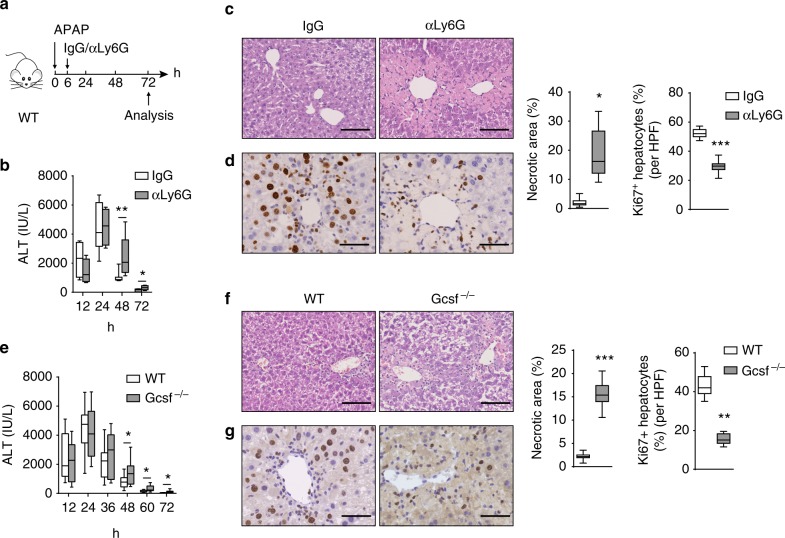
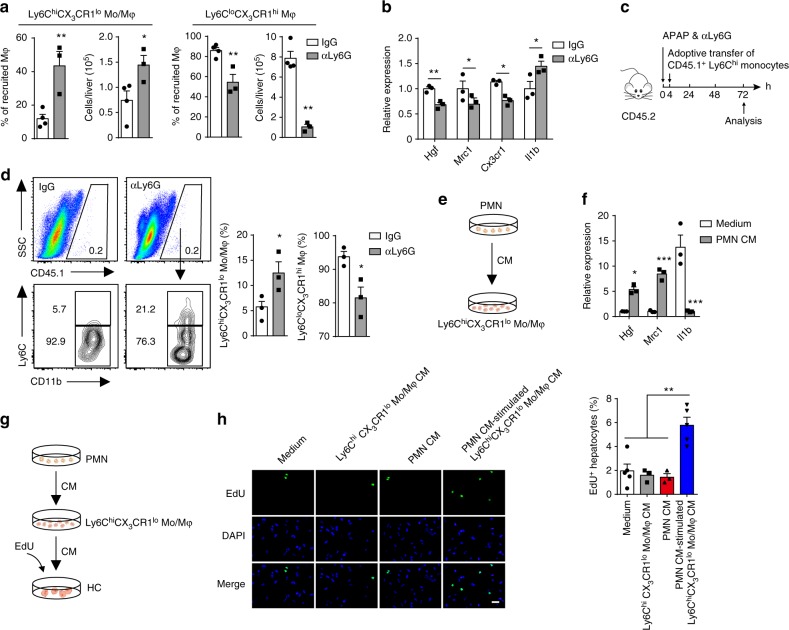
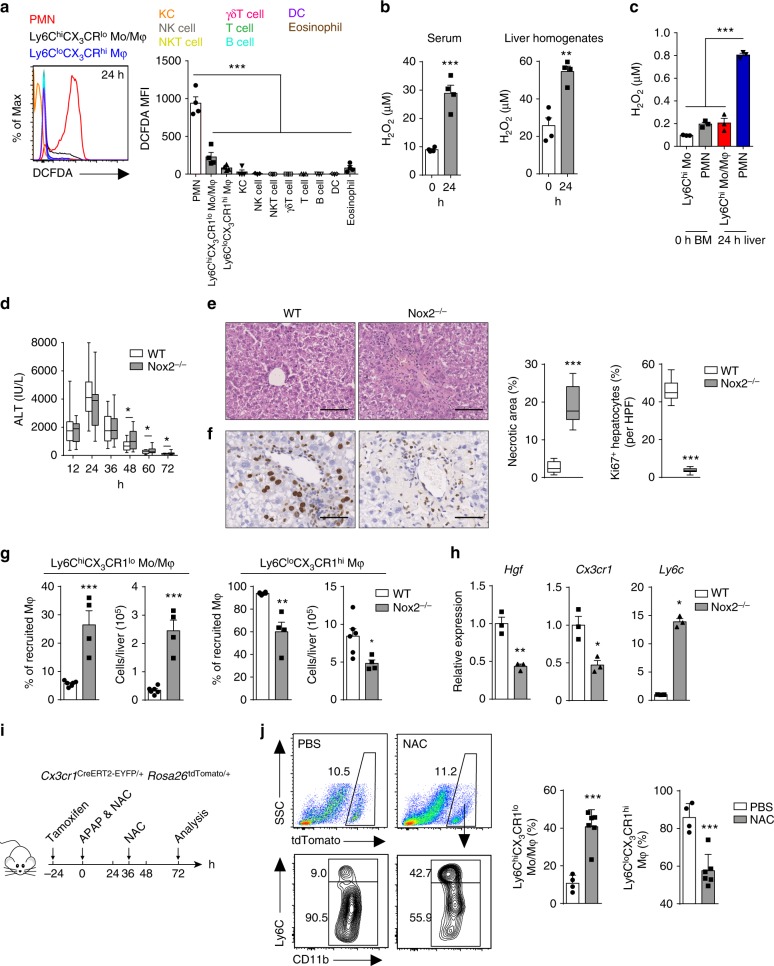
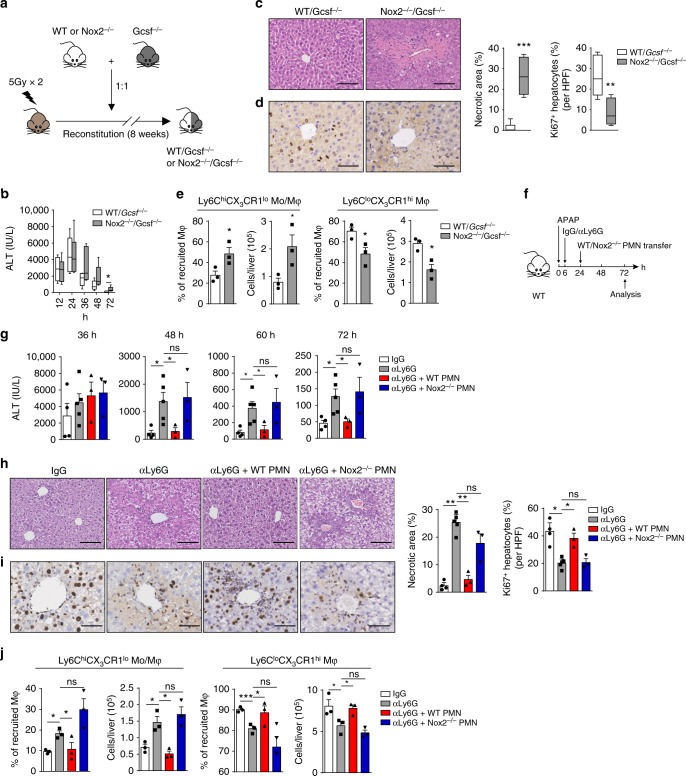
Phagocytes, including neutrophils and macrophages, have been suggested to function in a cooperative way in the initial phase of inflammatory responses, but their interaction and integration in the resolution of inflammation and tissue repair remain unclear. Here we show that neutrophils have crucial functions in liver repair by promoting the phenotypic conversion of pro-inflammatory Ly6C hi CX 3 CR1 lo monocytes/macrophages to pro-resolving Ly6C lo CX 3 CR1 hi macrophages. Intriguingly, reactive oxygen species (ROS), expressed predominantly by neutrophils, are important mediators that trigger this phenotypic conversion to promote liver repair. Moreover, this conversion is prevented by the depletion of neutrophils via anti-Ly6G antibody, genetic deficiency of granulocyte colony-stimulating factor, or genetic deficiency of NADPH oxidase 2 (Nox2). By contrast, adoptive transfer of WT rather than Nox2 −/− neutrophils rescues the impaired phenotypic conversion of macrophages in neutrophil-depleted mice. Our findings thus identify an intricate cooperation between neutrophils and macrophages that orchestrate resolution of inflammation and tissue repair.
Overview
The claims and statistics of this paper haven’t been checked yet.
Free: it reads the open-access text and checks the first 5 claims that cite a source we can check. Create a free account to check every claim.
Integrity signals
Registry
Cites
Statistics
Figures
Verification
Claims the paper makes
The claims and statistics of this paper haven’t been checked yet.
Free: it reads the open-access text and checks the first 5 claims that cite a source we can check. Create a free account to check every claim.
Claims other papers make about this one
Each is checked against this paper’s own text: does it say what the citing paper says it does?
In the citing paper
“However, it has also been suggested that neutrophils can be restorative and promote liver regeneration, and the disease-promoting versus pathogenic roles of neutrophils [90, 91] are likely time-, context- or subpopulation-dependent.”
From Inflammation and immunity in liver homeostasis and disease: a nexus of hepatocytes, nonparenchymal cells and immune cells (2025) · doi:10.1038/s41423-025-01313-7 · cites this paper as [91]
Self-check
Percentages, sums and reported differences re-computed from the paper’s own numbers.
The self-check needs the paper’s full text.
Citations
Cites
Neutrophil recruitment and function in health and inflammation
Kolaczkowska, E., & Kubes, P. (2013) · Nature Reviews Immunology · doi:10.1038/nri3399 · Cited by 5,472
The M1 and M2 paradigm of macrophage activation: Time for reassessment
Martinez, F. O., & Gordon, S. (2014) · F1000Prime Reports · doi:10.12703/p6-13 · Cited by 4,689
AMPK: a nutrient and energy sensor that maintains energy homeostasis
Hardie, D. G., Ross, F. A., & Hawley, S. A. (2012) · Nature Reviews Molecular Cell Biology · doi:10.1038/nrm3311 · Cited by 4,602
Pro-resolving lipid mediators are leads for resolution physiology
Serhan, C. N. (2014) · Nature · doi:10.1038/nature13479 · Cited by 3,041
Neutrophils in the activation and regulation of innate and adaptive immunity
Mantovani, A., Cassatella, M. A., Costantini, C., & Jaillon, S. (2011) · Nature Reviews Immunology · doi:10.1038/nri3024 · Cited by 3,027
Michalopoulos, G. K., & DeFrances, M. C. (1997) · Science · doi:10.1126/science.276.5309.60 · Cited by 2,828
Microglia promote learning-dependent synapse formation through brain-derived neurotrophic factor
Parkhurst, C. N., Yang, G., Ninan, I., Savas, J. N., Yates, J. R., Lafaille, J. J., Hempstead, B. L., Littman, D. R., & Gan, W.-B. (2013) · Cell · doi:10.1016/j.cell.2013.11.030 · Cited by 2,599
Signal transduction by reactive oxygen species
Finkel, T. (2011) · Journal of Cell Biology · doi:10.1083/jcb.201102095 · Cited by 2,322
Transcriptional regulation of macrophage polarization: enabling diversity with identity
Lawrence, T., & Natoli, G. (2011) · Nature Reviews Immunology · doi:10.1038/nri3088 · Cited by 2,284
Monocytes and macrophages: developmental pathways and tissue homeostasis
Ginhoux, F., & Jung, S. (2014) · Nature Reviews Immunology · doi:10.1038/nri3671 · Cited by 1,840
Cited by
Juan, C. A., Pérez de la Lastra, J. M., Plou, F. J., & Pérez-Lebeña, E. (2021) · International Journal of Molecular Sciences · doi:10.3390/ijms22094642 · Cited by 2,810
“Adoptive transfer of WT neutrophils in place of Nox2-/rescues the altered phenotypic conversion of macrophages in neutrophil-depleted mice [55].”
BackgroundBurn, G. L., Foti, A., Marsman, G., Patel, D. F., & Zychlinsky, A. (2021) · Immunity · doi:10.1016/j.immuni.2021.06.006 · Cited by 729
Wen, Y., Lambrecht, J., Ju, C., & Tacke, F. (2021) · Cellular & Molecular Immunology · doi:10.1038/s41423-020-00558-8 · Cited by 695
“Differentiation of these Ly6C MoMΦs into restorative Ly6C MoMφs indicates the transition of an inflammation/injury phase to a resolution/repair phase.(49,126,139,140) Ly6C MoMφs show an anti-inflammatory and restorative phenotype by expressing MMPs (MMP9, MMP12, and MMP13), growth factors (HGF and IGF), and phagocytos…”
BackgroundInfluentialThe Role of IL-6 in Skin Fibrosis and Cutaneous Wound Healing
Johnson, B. Z., Stevenson, A. W., Prêle, C. M., Fear, M. W., & Wood, F. M. (2020) · Biomedicines · doi:10.3390/biomedicines8050101 · Cited by 529
“There is some evidence that the phagocytosis of apoptotic neutrophils towards the end of the inflammatory phase contributes to the macrophage polarization; a switch from the IL-6-producing, proinflammatory M1 phenotype to the TGF-βproducing, reparative M2 phenotype [29,30].”
BackgroundLiver ischaemia–reperfusion injury: a new understanding of the role of innate immunity
Hirao, H., Nakamura, K., & Kupiec-Weglinski, J. W. (2022) · Nature Reviews Gastroenterology & Hepatology · doi:10.1038/s41575-021-00549-8 · Cited by 364
Macrophage phenotypes and functions: resolving inflammation and restoring homeostasis
Rodríguez-Morales, P., & Franklin, R. A. (2023) · Trends in Immunology · doi:10.1016/j.it.2023.10.004 · Cited by 304
Systemic Inflammatory Response Syndrome After Surgery: Mechanisms and Protection
Margraf, A., Ludwig, N., Zarbock, A., & Rossaint, J. (2020) · Anesthesia & Analgesia · doi:10.1213/ane.0000000000005175 · Cited by 285
A new neutrophil subset promotes CNS neuron survival and axon regeneration
Sas, A. R., Carbajal, K. S., Jerome, A. D., Menon, R., Yoon, C., Kalinski, A. L., Giger, R. J., & Segal, B. M. (2020) · Nature Immunology · doi:10.1038/s41590-020-00813-0 · Cited by 259
“Alternatively activated neutrophils have been shown to polarize monocyte/ macrophages towards a reparative and/ or pro-resolving phenotype that enhances healing in animal models of helminth infection, myocardial infarction and acetaminophen-induced liver injury 14,17,18 .”
Acetaminophen Hepatotoxicity: Paradigm for Understanding Mechanisms of Drug-Induced Liver Injury
Jaeschke, H., & Ramachandran, A. (2024) · Annual Review of Pathology: Mechanisms of Disease · doi:10.1146/annurev-pathmechdis-051122-094016 · Cited by 247
Single-cell technologies in hepatology: new insights into liver biology and disease pathogenesis
Ramachandran, P., Matchett, K. P., Dobie, R., Wilson-Kanamori, J. R., & Henderson, N. C. (2020) · Nature Reviews Gastroenterology & Hepatology · doi:10.1038/s41575-020-0304-x · Cited by 253
Liu, T., Wang, L., Liang, P., Wang, X., Liu, Y., Cai, J., She, Y., Wang, D., Wang, Z., Guo, Z., et al. (2021) · Cellular & Molecular Immunology · doi:10.1038/s41423-020-00567-7 · Cited by 230
Alternatively activated macrophages promote resolution of necrosis following acute liver injury
Starkey Lewis, P., Campana, L., Aleksieva, N., Cartwright, J. A., Mackinnon, A., O'Duibhir, E., Kendall, T., Vermeren, M., Thomson, A., Gadd, V., et al. (2020) · Journal of Hepatology · doi:10.1016/j.jhep.2020.02.031 · Cited by 209
Innate immune cells in cirrhosis
Bernsmeier, C., van der Merwe, S., & Périanin, A. (2020) · Journal of Hepatology · doi:10.1016/j.jhep.2020.03.027 · Cited by 202
Liu, L., Guo, X., Liu, W., & Lee, C. (2021) · Nanomaterials · doi:10.3390/nano11112975 · Cited by 198
Yang, Y. M., Cho, Y. E., & Hwang, S. (2022) · International Journal of Molecular Sciences · doi:10.3390/ijms23020774 · Cited by 197
“For instance, neutrophil-mediated ROS production stimulates the conversion of proinflammatory macrophages (Ly6ChiCX3CR1lo) to pro-resolving macrophages (Ly6CloCX3CR1hi) during acute liver injury [130,131].”
BackgroundWoo, J., Williams, S. M., Markillie, L. M., Feng, S., Tsai, C.-F., Aguilera-Vazquez, V., Sontag, R. L., Moore, R. J., Hu, D., Mehta, H. S., et al. (2021) · Nature Communications · doi:10.1038/s41467-021-26514-2 · Cited by 195
Cai, B., Lin, D., Li, Y., Wang, L., Xie, J., Dai, T., Liu, F., Tang, M., Tian, L., Yuan, Y., et al. (2021) · Advanced Science · doi:10.1002/advs.202100584 · Cited by 187
Li, H., Li, Y., Song, C., Hu, Y., Dai, M., Liu, B., & Pan, P. (2021) · Journal of Inflammation Research · doi:10.2147/jir.s321513 · Cited by 157
Yang, G., Fan, M., Zhu, J., Chen, L., Wu, L., Zhang, X., Zhang, M., Li, J., Yao, Q., Gu, Z., et al. (2020) · Biomaterials · doi:10.1016/j.biomaterials.2020.120155 · Cited by 158
Neutrophil and remnant clearance in immunity and inflammation
Singhal, A., & Kumar, S. (2021) · Immunology · doi:10.1111/imm.13423 · Cited by 172
Jaeschke, H., Adelusi, O. B., Akakpo, J. Y., Nguyen, N. T., Sánchez-Guerrero, G., Umbaugh, D. S., Ding, W., & Ramachandran, A. (2021) · Acta Pharmaceutica Sinica B · doi:10.1016/j.apsb.2021.09.023 · Cited by 163
Zhou, Z., Ni, K., Deng, H., & Chen, X. S. (2020) · Advanced Drug Delivery Reviews · doi:10.1016/j.addr.2020.06.006 · Cited by 145
Future directions in acute liver failure
Stravitz, R. T., Fontana, R. J., Karvellas, C., Durkalski, V., McGuire, B., Rule, J. A., Tujios, S., Lee, W. M., & for the Acute Liver Failure Study Group (2023) · Hepatology · doi:10.1097/hep.0000000000000458 · Cited by 132
“[56,57] Collectively, these studies have identified an intricate Molecular mechanisms of non-APAP liver injury.”
From Flies to Men: ROS and the NADPH Oxidase in Phagocytes
Moghadam, Z. M., Henneke, P., & Kolter, J. (2021) · Frontiers in Cell and Developmental Biology · doi:10.3389/fcell.2021.628991 · Cited by 156
Oxidative Stress–Induced Liver Damage and Remodeling of the Liver Vasculature
Banerjee, P., Gaddam, N., Chandler, V., & Chakraborty, S. (2023) · American Journal Of Pathology · doi:10.1016/j.ajpath.2023.06.002 · Cited by 168
Jaeschke, H., & Ramachandran, A. (2020) · Food and Chemical Toxicology · doi:10.1016/j.fct.2020.111240 · Cited by 136
“On the other hand, neither deficiency of NADPH oxidase nor inhibition of the enzyme protected against the APAP-induced oxidant stress and liver injury (Cover et al., 2006; James et al., 2003; Williams et al., 2014; Yang et al., 2019).”
BackgroundResultInfluentialGiacalone, V. D., Margaroli, C., Mall, M. A., & Tirouvanziam, R. (2020) · International Journal of Molecular Sciences · doi:10.3390/ijms21030851 · Cited by 114
“For example, it has also been implicated in the stimulation of wound healing through enhancing the differentiation of pro-resolution macrophages in the liver [61].”
BackgroundSkeletal muscle regeneration with robotic actuation–mediated clearance of neutrophils
Seo, B. R., Payne, C. J., McNamara, S. L., Freedman, B. R., Kwee, B. J., Nam, S., de Lázaro, I., Darnell, M., Alvarez, J. T., Dellacherie, M. O., et al. (2021) · Science Translational Medicine · doi:10.1126/scitranslmed.abe8868 · Cited by 119
Han, D., Wu, Y., Lu, D., Pang, J., Hu, J., Zhang, X., Wang, Z., Zhang, G., & Wang, J. (2023) · Cell Death and Disease · doi:10.1038/s41419-023-06190-4 · Cited by 124
“All mouse procedures were approved by the China Agricultural University Animal Care and Use Committee under protocol number AW51211202-1-3.”
Self-citationAlzheimer’s Disease: Etiology, Neuropathology and Pathogenesis
Sheppard, O., & Coleman, M. P. (2020) · Exon Publications eBooks · doi:10.36255/exonpublications.alzheimersdisease.2020.ch1 · Cited by 208
Senescent cells and macrophages: key players for regeneration?
Elder, S. S., & Emmerson, E. (2020) · Open Biology · doi:10.1098/rsob.200309 · Cited by 120
“Furthermore, this conversion was found to be dependent on the expression of reactive oxygen species (ROS) from neutrophils [110,111].”
BackgroundGPR101 mediates the pro-resolving actions of RvD5n-3 DPA in arthritis and infections
Flak, M. B., Koenis, D. S., Sobrino, A., Smith, J. T., Pistorius, K., Palmas, F., & Dalli, J. (2019) · Journal of Clinical Investigation · doi:10.1172/jci131609 · Cited by 103
“vehicle-treated mice) (Figure 8G and Supplemental Figure 6), markers associated with a homeostatic and resolution macrophage phenotype (25, 26).”
Inhibition of NETosis for treatment purposes: friend or foe?
Chamardani, T. M., & Amiritavassoli, S. (2022) · Molecular and Cellular Biochemistry · doi:10.1007/s11010-021-04315-x · Cited by 117
Occurrences and Functions of Ly6Chi and Ly6Clo Macrophages in Health and Disease
Li, Y., Zhang, Y., Pan, G., Xiang, L., Luo, D., & Shao, J. (2022) · Frontiers in Immunology · doi:10.3389/fimmu.2022.901672 · Cited by 128
“Moreover, neutrophils are involved in the Ly6C/Ly6C macrophage switch by expressing reactive oxygen species (ROS) to orchestrate liver repair (41) (Figure 1).”
Background(2025) · doi:10.1038/s41423-025-01313-7 · Cited by 97
“However, it has also been suggested that neutrophils can be restorative and promote liver regeneration, and the disease-promoting versus pathogenic roles of neutrophils [90, 91] are likely time, context-or subpopulation-dependent.”
Two Faces of Neutrophils in Liver Disease Development and Progression
Cho, Y., & Szabo, G. (2021) · Hepatology · doi:10.1002/hep.31680 · Cited by 97
The Roles of Neutrophils in the Pathogenesis of Liver Diseases
Tang, J., Yan, Z.-J., Feng, Q., Yu, L., & Wang, H. (2021) · Frontiers in Immunology · doi:10.3389/fimmu.2021.625472 · Cited by 109
“(88) also identified the beneficial effects of neutrophil-derived ROS on polarizing macrophages toward an alternative or reparative and anti-inflammatory phenotype in an APAP-induced liver injury model.”
BackgroundCell-to-cell and organ-to-organ crosstalk in the pathogenesis of alcohol-associated liver disease
Gao, H., Jiang, Y., Zeng, G., Huda, N., Thoudam, T., Yang, Z., Liangpunsakul, S., & Ma, J. (2024) · eGastroenterology · doi:10.1136/egastro-2024-100104 · Cited by 87
Mitohormesis reprogrammes macrophage metabolism to enforce tolerance
Timblin, G. A., Tharp, K. M., Ford, B., Winchester, J., Wang, J., Zhu, S., Khan, R. I., Louie, S. K., Iavarone, A. T., ten Hoeve, J., et al. (2021) · Nature Metabolism · doi:10.1038/s42255-021-00392-w · Cited by 97
“…profiling of myeloid cells from sepsis and cancer patients has revealed overlapping signatures of reduced proinflammatory gene expression 45 and increased aerobic glycolysis 46 , and ROS/RES production have been linked to myeloid cell metabolic alterations and immunosuppression 47, 48 .”
Chen, H., Wu, L., Wang, T., Zhang, F., Song, J., Fu, J., Kong, X., & Shi, J. (2023) · Acta Biomaterialia · doi:10.1016/j.actbio.2023.06.025 · Cited by 100
Emodin Attenuates Severe Acute Pancreatitis via Antioxidant and Anti-inflammatory Activity
Xia, S., Ni, Y., Zhou, Q., Liu, H., Xiang, H., Sui, H. X., & Shang, D. (2019) · Inflammation · doi:10.1007/s10753-019-01077-z · Cited by 91
Neutrophils in Tissue Injury and Repair: Molecular Mechanisms and Therapeutic Targets
Yang, L., Shi, F., Cao, F., Wang, L., She, J., He, B., Xu, X., Kong, L., & Cai, B. (2025) · MedComm · doi:10.1002/mco2.70184 · Cited by 116
“Meanwhile, the released apoptotic bodies can be engulfed by macrophages as signals for injury repair, promoting M2 polarization of macrophages to alleviate local inflammation and facilitate tissue repair [100].”
Immune-mediated drug-induced liver injury: immunogenetics and experimental models
Gerussi, A., Natalini, A., Antonangeli, F., Mancuso, C., Agostinetto, E., Barisani, D., Di Rosa, F., Andrade, R., & Invernizzi, P. (2021) · International Journal of Molecular Sciences · doi:10.3390/ijms22094557 · Cited by 87
“For example, neutrophil depletion by anti-Ly6G antibody treatment resulted in reduced hepatocyte proliferation and increased liver necrosis in mouse APAP-DILI [55].”
BackgroundInfluentialJiang, X., Zeng, Y., Li, C., Wang, K., & Yu, D. (2024) · Frontiers in Bioengineering and Biotechnology · doi:10.3389/fbioe.2024.1354286 · Cited by 99
Role of Neutrophils in the Pathogenesis of Nonalcoholic Steatohepatitis
Hwang, S., Yun, H., Moon, S., Cho, Y. E., & Gao, B. (2021) · Frontiers in Endocrinology · doi:10.3389/fendo.2021.751802 · Cited by 84
Chauhan, A., Sheriff, L., Hussain, M. T., Webb, G. J., Patten, D. A., Shepherd, E. L., Shaw, R., Weston, C. J., Haldar, D., Bourke, S., et al. (2020) · Nature Communications · doi:10.1038/s41467-020-15584-3 · Cited by 84
Kwak, S.-B., Kim, S. J., Kim, J., Kang, Y.-L., Ko, C. W., Kim, I., & Park, J. (2022) · Experimental & Molecular Medicine · doi:10.1038/s12276-022-00784-2 · Cited by 93
Anti-Inflammatory Neutrophil Functions in the Resolution of Inflammation and Tissue Repair
Loh, W., & Vermeren, S. (2022) · Cells · doi:10.3390/cells11244076 · Cited by 99
Cellular and Molecular Mechanisms of Wound Repair: From Biology to Therapeutic Innovation
Jin, C., Jin, Y., Ding, Z., Nuch, K. S., Han, M., Shim, J., Chien, P. N., & Heo, C. Y. (2025) · Cells · doi:10.3390/cells14231850 · Cited by 113
“Resolution of neutrophil activity occurs through apoptosis followed by macrophage efferocytosis, which shifts macrophages toward an anti-inflammatory (M2-like) phenotype that promotes granulation and angiogenesis [51,52].”
Molecular pathogenesis of acetaminophen-induced liver injury and its treatment options
Cai, X., Cai, H., Wang, J., Yang, Q., Guan, J., Deng, J., & Chen, Z. (2022) · Journal of Zhejiang University SCIENCE B · doi:10.1631/jzus.b2100977 · Cited by 84
“Then, the ROS released by neutrophils pro‐ mote the maturation of MoMF and coordinate macro‐ phages to participate in liver tissue repair (Yang et al., 2019).”
BackgroundMethodInfluentialGraça, F. A., Stephan, A., Minden‐Birkenmaier, B. A., Shirinifard, A., Wang, Y., Demontis, F., & Labelle, M. (2023) · Nature Communications · doi:10.1038/s41467-023-38624-0 · Cited by 88
A metabolic perspective of the neutrophil life cycle: new avenues in immunometabolism
Thind, M. K., Uhlig, H. H., Glogauer, M., Palaniyar, N., Bourdon, C., Gwela, A., Lancioni, C., Berkley, J. A., Bandsma, R., & Farooqui, A. (2024) · Frontiers in Immunology · doi:10.3389/fimmu.2023.1334205 · Cited by 95
“They do so by promoting the phenotypic conversion of pro-in fl ammatory Ly6C hi CX 3 CR1 lo monocytes/ macrophages to pro-resolving reparative Ly6C lo CX 3 CR1 hi macrophages mediated through neutrophil nicotinamide adenine dinucleotide phosphate (NADPH)-oxidase ROS production (36).”
BackgroundHormesis in Health and Chronic Diseases
Li, X., Yang, T., & Sun, Z. (2019) · Trends in Endocrinology and Metabolism · doi:10.1016/j.tem.2019.08.007 · Cited by 82
“ROS generated by neutrophils plays a vital role in promoting liver repair [23].”
BackgroundOxidative Stress and Redox Signaling in the Pathophysiology of Liver Diseases
Mooli, R. G. R., Mukhi, D., & Ramakrishnan, S. K. (2022) · Comprehensive physiology · doi:10.1002/cphy.c200021 · Cited by 153
Schroder, A. L., Chami, B., Liu, Y., Doyle, C. M., Kazzi, M. E., Ahlenstiel, G., Ahmad, G., Pathma‐Nathan, N., Collins, G. P., Toh, J. W. T., et al. (2021) · Inflammatory Bowel Diseases · doi:10.1093/ibd/izab239 · Cited by 76
“8 The production of ROS at sites of inflammation elicits an antimicrobial activity via the nonspecific oxidative damage of DNA, lipids, and proteins in the invading pathogen.”
BackgroundImmunomodulation for Tissue Repair and Regeneration
Moon, S., Hong, J., Go, S., & Kim, B. (2023) · Tissue Engineering and Regenerative Medicine · doi:10.1007/s13770-023-00525-0 · Cited by 77
Disease Mechanisms of Perioperative Organ Injury
Conrad, C., & Eltzschig, H. K. (2020) · Anesthesia & Analgesia · doi:10.1213/ane.0000000000005191 · Cited by 72
He, X., Hong, W., Yang, H. J., Lei, H., Lu, T., Cai, H., Bi, Z., Pan, X., Liu, Y., Dai, L., et al. (2021) · Signal Transduction and Targeted Therapy · doi:10.1038/s41392-021-00688-z · Cited by 69
Sylvester, A. L., Zhang, D. X., Ran, S., & Zinkevich, N. S. (2022) · Biomolecules · doi:10.3390/biom12060823 · Cited by 68
“The phenotypic conversion of pro-inflammatory Ly6ChiCX3CR1lo monocytes/macrophages to pro-resolving Ly6CloCX3CR1hi macrophages for liver repair is promoted by neutrophil signaling [24].”
BackgroundBrandel, V., Schimek, V., Göber, S., Hammond, T., Brunnthaler, L., Schrottmaier, W., Mussbacher, M., Sachet, M., Liang, Y.-Y., Reipert, S., et al. (2022) · Journal of Hepatology · doi:10.1016/j.jhep.2022.07.027 · Cited by 55
Roy, R., Zayas, J. P., Singh, S. K., Delgado, K., Wood, S. J., Mohamed, M. F., Frausto, D. M., Albalawi, Y. A., Price, T. P., Estupinian, R., et al. (2022) · eLife · doi:10.7554/elife.72071 · Cited by 72
“Neutrophil trafficking into wounds was assessed by immunohistochemical (IHC) analysis using Ly6G staining as described previously (Yang et al., 2019).”
MethodThe role of neutrophils in alcohol-related hepatitis
Khan, R. S., Lalor, P. F., Thursz, M., & Newsome, P. N. (2023) · Journal of Hepatology · doi:10.1016/j.jhep.2023.05.017 · Cited by 57
Microneedle‐Delivered PDA@Exo for Multifaceted Osteoarthritis Treatment via PI3K‐Akt‐mTOR Pathway
Li, Z., Lu, H., Fan, L., Ma, X., Duan, Z., Zhang, Y., Fu, Y., Wang, S., Guan, Y., Dong, Y., et al. (2024) · Advanced Science · doi:10.1002/advs.202406942 · Cited by 60
Beyond host defense and tissue injury: the emerging role of neutrophils in tissue repair
Rizo-Téllez, S. A., & Filep, J. G. (2024) · American Journal of Physiology-Cell Physiology · doi:10.1152/ajpcell.00652.2023 · Cited by 73
Dysregulation of neutrophil in sepsis: recent insights and advances
Zhang, J., Shao, Y., Wu, J., Zhang, J., Xiong, X., Mao, J., Wei, Y., Miao, C., & Zhang, H. (2025) · Cell Communication and Signaling · doi:10.1186/s12964-025-02098-y · Cited by 82
Neutrophils as critical orchestrators of chronic inflammation
Torfs, K., Vermeersch, G., Gouwy, M., Devos, T., Proost, P., & Struyf, S. (2026) · Cellular and Molecular Immunology · doi:10.1038/s41423-025-01380-w · Cited by 89
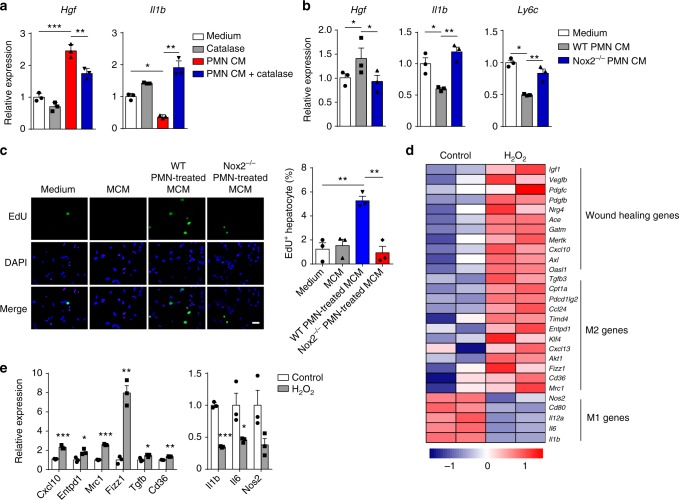
“Similarly, within a study focused on liver repair, conditioned medium from neutrophils of mice with NOX2 de fi ciency ( Nox 2 − / − ) failed to upregulate hepatocyte growth factor ( Hgf) , which is used as an anti-in fl ammatory marker, within Ly6C hi CX3CR1 lo monocytes/macrophages [83].”
Ariño, S., Aguilar-Bravo, B., Coll, M., Lee, W.-Y., Peiseler, M., Cantallops-Vilà, P., Sererols-Viñas, L., Martínez-García de la Torre, R. A., Martínez-Sánchez, C., Pedragosa, J., et al. (2023) · Journal of Hepatology · doi:10.1016/j.jhep.2023.05.045 · Cited by 59
Wang, J., Zhang, C., Zhang, W., Liu, W., Guo, Y., Dang, P., Wei, L., Zhao, H., Deng, X., Guo, S., et al. (2023) · Advanced Functional Materials · doi:10.1002/adfm.202306319 · Cited by 77
Nanomaterial-Based Repurposing of Macrophage Metabolism and Its Applications
Meng, T., He, D., Han, Z., Shi, R., Wang, Y., Ren, B., Zhang, C., Mao, Z., Luo, G., & Deng, J. (2024) · Nano-Micro Letters · doi:10.1007/s40820-024-01455-9 · Cited by 82
Therapeutic Targeting of Neutrophil Granulocytes in Inflammatory Liver Disease
Bartneck, M., & Wang, J. (2019) · Frontiers in Immunology · doi:10.3389/fimmu.2019.02257 · Cited by 62
“The release of ROS by neutrophils has been reported to mediate macrophage phenotype in mice switching from pro-inflammatory Ly6CCX3CR1 lo to pro-resolving Ly6CCX3CR1 hi macrophages, thus contributing to tissue repair in APAP liver injury model (69).”
BackgroundChen, M., Feng, Z., Fan, X., Sun, J., Geng, W., Wu, T., Sheng, J., Qian, J., & Xu, Z. (2022) · Nature Communications · doi:10.1038/s41467-022-34274-w · Cited by 57
Neutrophils in host defense, healing, and hypersensitivity: Dynamic cells within a dynamic host
Siwicki, M. R., & Kubes, P. (2023) · Journal of Allergy and Clinical Immunology · doi:10.1016/j.jaci.2022.12.004 · Cited by 62
Nguyen, N. T., Umbaugh, D. S., Sanchez-Guerrero, G., Ramachandran, A., & Jaeschke, H. (2022) · Archives of Toxicology · doi:10.1007/s00204-021-03183-0 · Cited by 56
NOX as a Therapeutic Target in Liver Disease
Matuz‐Mares, D., Vázquez‐Meza, H., & Vilchis‐Landeros, M. M. (2022) · Antioxidants · doi:10.3390/antiox11102038 · Cited by 65
Wu, L., Gao, X., Guo, Q., Li, J., Yao, J., Yan, K., Xu, Y., Jiang, X. X., Ye, D., & Guo, J. (2020) · Hepatology International · doi:10.1007/s12072-020-10081-7 · Cited by 60
Applications of Biomaterials for Immunosuppression in Tissue Repair and Regeneration
Shen, P. F., Chen, Y., Luo, S., Fan, Z., Wang, J., Chang, J., & Deng, J. (2020) · Acta Biomaterialia · doi:10.1016/j.actbio.2021.03.019 · Cited by 58
Macrophages as key regulators of liver health and disease
Papachristoforou, E., & Ramachandran, P. (2022) · International review of cytology · doi:10.1016/bs.ircmb.2022.04.006 · Cited by 71
Mechanisms regulating neutrophil responses in immunity, allergy, and autoimmunity
Özcan, A., & Boyman, O. (2022) · Allergy · doi:10.1111/all.15505 · Cited by 54
Immunomodulatory Properties: The Accelerant of Hydroxyapatite-Based Materials for Bone Regeneration
Shang, L., Shao, J., & Ge, S. (2022) · Tissue Engineering Part C Methods · doi:10.1089/ten.tec.2022.00111112 · Cited by 55
“34,35 The apoptotic neutrophils can release ‘‘eat-me’’ signals and thus are rapidly engulfed by macrophages (efferocytosis), which not only enhanced the phagocytic activity of macrophages but also induced the polarization of macrophages to pro-healing M2 phenotype.”
Immune cell response to orthopedic and craniofacial biomaterials depends on biomaterial composition
Avery, D., Morandini, L., Celt, N., Bergey, L., Simmons, J., Martin, R., Donahue, H. J., & Olivares‐Navarrete, R. (2023) · Acta Biomaterialia · doi:10.1016/j.actbio.2023.03.007 · Cited by 59
The complex roles of neutrophils in APAP‐induced liver injury
Guo, H., Chen, S., Xie, M., Zhou, C., & Zheng, M. (2021) · Cell Proliferation · doi:10.1111/cpr.13040 · Cited by 50
Wei, H., Yi, K., Li, F., Li, D., Yang, J.-Z., Shi, R., Jin, Y., Wang, H., Ding, J., Tao, Y., et al. (2024) · Advanced Materials · doi:10.1002/adma.202305826 · Cited by 59
Self-citationRhee, A. J., & Lavine, K. J. (2020) · Annual Review of Physiology · doi:10.1146/annurev-physiol-021119-034412 · Cited by 46
“Mechanistically, neutrophil-derived ROSmay stimulate the differentiation of reparative macrophages, as described in the liver following acetaminophen-induced liver injury (79).”
BackgroundGuillot, A., & Tacke, F. (2024) · Hepatology Communications · doi:10.1097/hc9.0000000000000491 · Cited by 45
“[71] Neutrophil can further polarize macrophages toward a repair phenotype by releasing micro-RNA 223, promoting injury resolution in mouse models.”
BackgroundRaising the ‘Good’ Oxidants for Immune Protection
Dumas, A., & Knaus, U. G. (2021) · Frontiers in Immunology · doi:10.3389/fimmu.2021.698042 · Cited by 45
The Gut–Liver Axis in Chronic Liver Disease: A Macrophage Perspective
Muynck, K. D., Vanderborght, B., Vlierberghe, H. V., & Devisscher, L. (2021) · Cells · doi:10.3390/cells10112959 · Cited by 53
“Anti-inflammatory/restorative MoMF Ly6Clo [67,71,79,80,83,84,86,95,102,103]”
Neutrophils in homeostasis and tissue repair
Shim, H. B., Deniset, J., & Kubes, P. (2022) · International Immunology · doi:10.1093/intimm/dxac029 · Cited by 48
Li, X., Gao, Q., Wu, W., Hai, S., Hu, J., You, J., Huang, D., Wang, H., Wu, D., Han, M., et al. (2022) · Cellular and Molecular Gastroenterology and Hepatology · doi:10.1016/j.jcmgh.2022.07.014 · Cited by 50
Neutrophils—biology and diversity
Begandt, D., A-González, N., Klotz, L., Erpenbeck, L., Jabłońska, J., Immler, R., Hasenberg, A., Mueller, T. T., Herrero-Cervera, A., Aranda-Pardos, I., et al. (2023) · Nephrology Dialysis Transplantation · doi:10.1093/ndt/gfad266 · Cited by 58
“The release of azurocidin and lactoferrin supports a proinflammatory (M1-like) macrophage phenotype, while neutrophil-generated ROS and gelatinase-associated lipocalin triggers a reparative (M2-like) macrophage phenotype [56 , 57 ].”
BackgroundInflammation in MASLD progression and cancer
Kim, Y. S., Park, Y., Rho, H., Yao, T., Gao, B., & Hwang, S. (2025) · JHEP Reports · doi:10.1016/j.jhepr.2025.101414 · Cited by 75
“50 Neutrophils in fi ltrate tumours and contribute to tumour progression through their functional plasticity.”
Ghaffarpour, S., Ghazanfari, T., Ardestani, S. K., Naghizadeh, M. M., Mahdavi, M. R. V., Salehi, M., Majd, A. M. M., Rashidi, A., Chenary, M. R., Mostafazadeh, A., et al. (2025) · Scientific Reports · doi:10.1038/s41598-025-98505-y · Cited by 51
“Neutrophils not only exhibit antibacterial action but also contribute to the innate immune system’s ability to resolve and repair by controlling the production of cytokines and growth factors 54,55 .”
Instrumental role for reactive oxygen species in the inflammatory response
Fokam, D., & Hoskin, D. W. (2020) · Frontiers in bioscience · doi:10.2741/4848 · Cited by 51
Macrophage Regulation of Granulopoiesis and Neutrophil Functions
Schulz, C., Petzold, T., & Ishikawa-Ankerhold, H. C. (2020) · Antioxidants and Redox Signaling · doi:10.1089/ars.2020.8203 · Cited by 46
“Respective phenotypic changes of macrophages is not observed in the absence of neutrophils or NOX is deficient (88).”
The Dual Role of Innate Immune Response in Acetaminophen-Induced Liver Injury
Yang, T., Wang, H., Wang, X., Li, J., & Jiang, L. (2022) · Biology · doi:10.3390/biology11071057 · Cited by 55
Chang, F., Ma, Y., Chen, S., Zhou, Q., Jiang, H., Zhang, J., & Wu, F. (2021) · Frontiers in Cell and Developmental Biology · doi:10.3389/fcell.2021.767051 · Cited by 45
“The cells were resuspended in serum containing DMEM and seeded in plates precoated with rat-tail collagen I (Zhang et al., 2012; Vig et al., 2015; Yang et al., 2019).”
MethodGuo, H., Zhou, G., Tian, G., Liu, Y., Dong, N., Li, L., Zhang, S., Chai, H., Chen, Y., & Yang, Y. (2021) · Animals · doi:10.3390/ani11030712 · Cited by 46
“How‐ ever, excessive production of ROS can cause oxidative stress, damage the host and cause inflammation [16].”
BackgroundSong, Q., Datta, S., Liang, X., Xu, X., Pavicic, P. G., Zhang, X., Zhao, Y., Liu, S., Zhao, J. J., Xu, Y., et al. (2023) · Cellular and Molecular Immunology · doi:10.1038/s41423-022-00966-y · Cited by 46
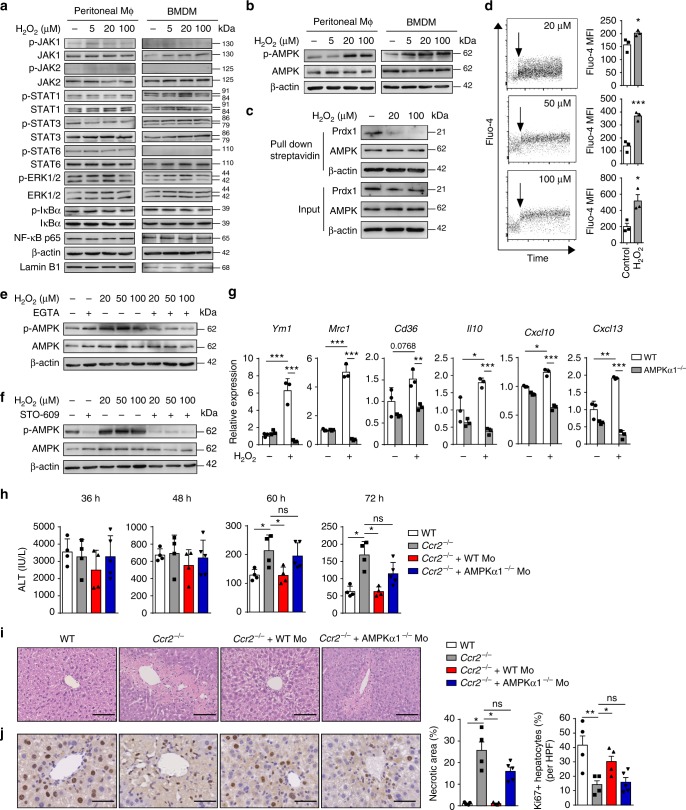
“Upon ALI, infiltrating neutrophils facilitate hepatic inflammation partially by recruiting inflammatory monocytes [32] and induce Mo-MF transition toward a reparative phenotype through ROS-dependent AMPK activation during resolution [9].”
BackgroundSelf-citationApplication of Electrospun Nanofiber Membrane in the Treatment of Diabetic Wounds
Gao, Z., Wang, Q., Yao, Q., & Zhang, P. (2021) · Pharmaceutics · doi:10.3390/pharmaceutics14010006 · Cited by 46
“Neutrophils engulf microorganisms and foreign bod es a d then are squeezed to the surface of the wound, after which they are swallowed by macrophages [24].”
BackgroundBarnig, C., Lutzweiler, G., Giannini, M., Lejay, A., Charles, A., Meyer, A., & Gény, B. (2022) · Antioxidants · doi:10.3390/antiox11061213 · Cited by 49
“There is now increasing evidence that ROS, beyond the initiation and the progression of the inflammatory response, are also involved in the resolution at later steps of the inflammatory response [71].”
BackgroundJu, J.-M., Nam, G., Lee, Y.-K., Jung, M., Chang, H., Kim, W., Shon, W.-J., Lim, J. Y., Kim, J., Chang, J., et al. (2021) · Proceedings of the National Academy of Sciences · doi:10.1073/pnas.2011170118 · Cited by 42
“Neutrophils express Ly6G and are strong candidates for ROS production (22, 38).”
Metadata
- Authors
- Yang, W., Tao, Y., Wu, Y., Zhao, X., Ye, W., Zhao, D., Fu, L., Tian, C., Yang, J., He, F., & Tang, L.
- Affiliations
- Beijing Proteome Research Center (CN)
- Anhui Medical University (CN)
- Corresponding author
- He, Fuchu
- Tang, Li
- Venue
- Nature Communications
- Published
- 2019-03-06
- Volume
- 10
- Issue
- 1
- Pages
- 1076-1076
- ISSN
- 2041-1723 (ISSN-L)
- PMC
- PMC6403250
- OpenAlex
- W2920290417
- Semantic Scholar
- cbea83169e42ebddfc502c37c6b1b2151a8285d8
- Cited by
- 367
- References
- 71
- Citations by year
- 2026: 22 · 2025: 65 · 2024: 47 · 2023: 58 · 2022: 67 · 2021: 50 · 2020: 46 · 2019: 11
- FWCI
- 27.88
- Type
- journal article
- Language
- en
- Open access
- gold
- doi.org
- Licence
- cc-by
- creativecommons.org/licenses/by/4.0 (tdm)
- creativecommons.org/licenses/by/4.0 (vor)
- Locations
- Nature Communications (publishedVersion, cc-by)
- Europe PMC (PubMed Central) (publishedVersion, other-oa)
- PubMed Central (publishedVersion, cc-by)
- PubMed (publishedVersion)
- RePEc: Research Papers in Economics (submittedVersion)
- DOAJ (DOAJ: Directory of Open Access Journals) (submittedVersion)
- DOAJ (DOAJ: Directory of Open Access Journals) (submittedVersion, cc-by-sa)
- Funders
- Ludwig Institute for Cancer Research
- York University
- Chinese Academy of Sciences (2014CBA02000)
- Wuhan University
- Institute of Biophysics, Chinese Academy of Sciences
- Topics
- Health Sciences › Medicine › Hepatology › Liver physiology and pathology
- Life Sciences › Immunology and Microbiology › Immunology › Neutrophil, Myeloperoxidase and Oxidative Mechanisms
- Life Sciences › Immunology and Microbiology › Immunology › Immune cells in cancer
- Keywords
- neutrophils, reparative macrophages, liver repair, reactive oxygen species, inflammation resolution, Ly6C, CX3CR1, granulocyte colony-stimulating factor, NADPH oxidase 2, NOX2, adoptive transfer, tissue repair
- MeSH terms
- NADPH Oxidase 2, Acetaminophen, Animals, Cells, Cultured, Disease Models, Animal, Humans, Liver, Liver Regeneration, Macrophages, Male, Neutrophils, Bone Marrow Transplantation, Reactive Oxygen Species, Transplantation Chimera, Mice, Knockout, Adoptive Transfer, Mice, Chemical and Drug Induced Liver Injury, Primary Cell Culture
About these checks
Registry, retraction, Cites and statistics results are computed, not judged, with one exception: a printed reference that no index lists is read once by a model before it counts as a citation error. Claims are extracted by a model and kept only when their quote appears verbatim in the text; each cited source is then checked, with a model’s help, for whether it says what the claim relies on. Those verdicts can be wrong — read the claim’s quote and the cited source before relying on one.
Statistics and arithmetic are recomputed, not judged.
Confidence bands are shown only for fields calibrated on our annotated test set. None is calibrated yet, so no band is shown.
What counts as a claim ›How we measure confidence ›How we check this ›
Are you an author, or do you see a problem with this page? Request a review
Data sources
Bibliographic data: Semantic Scholar, OpenAlex, Crossref.
Contains information from the Semantic Scholar Academic Graph Datasets, made available under the ODC Attribution License (ODC-BY 1.0).
Semantic Scholar’s data is described in: Kinney, R., et al. (2023). The Semantic Scholar Open Data Platform. arXiv:2301.10140.
