

Neutrophils promote the development of reparative macrophages mediated by ROS to orchestrate liver repair
Open accessThe DOI matches its Crossref record; 70 of the 71 references it cites were found in a registry or an index.
Abstract
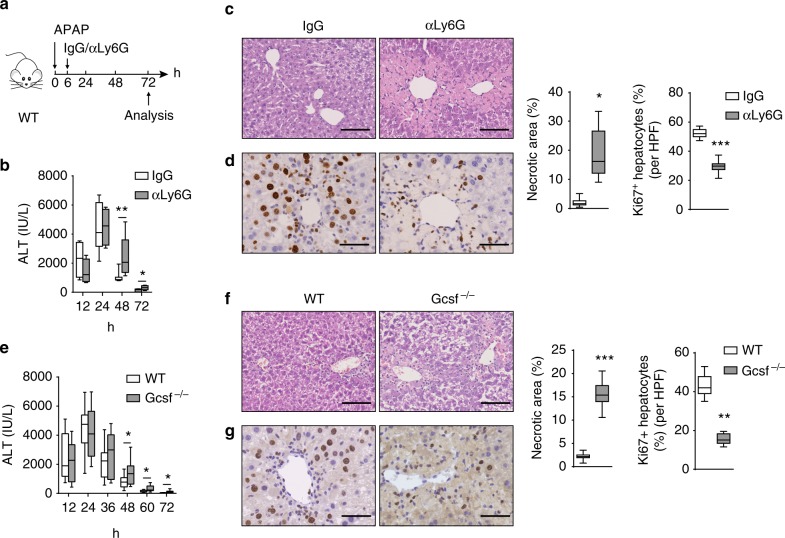
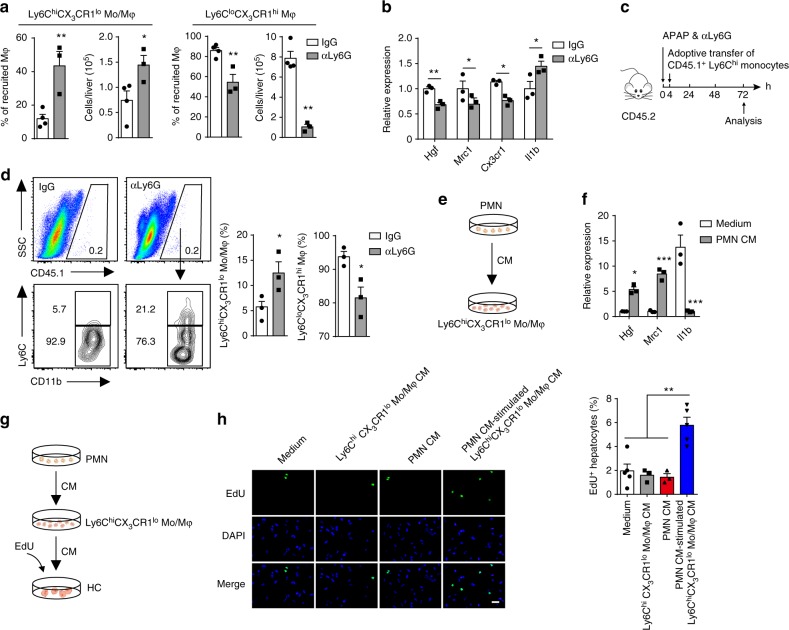
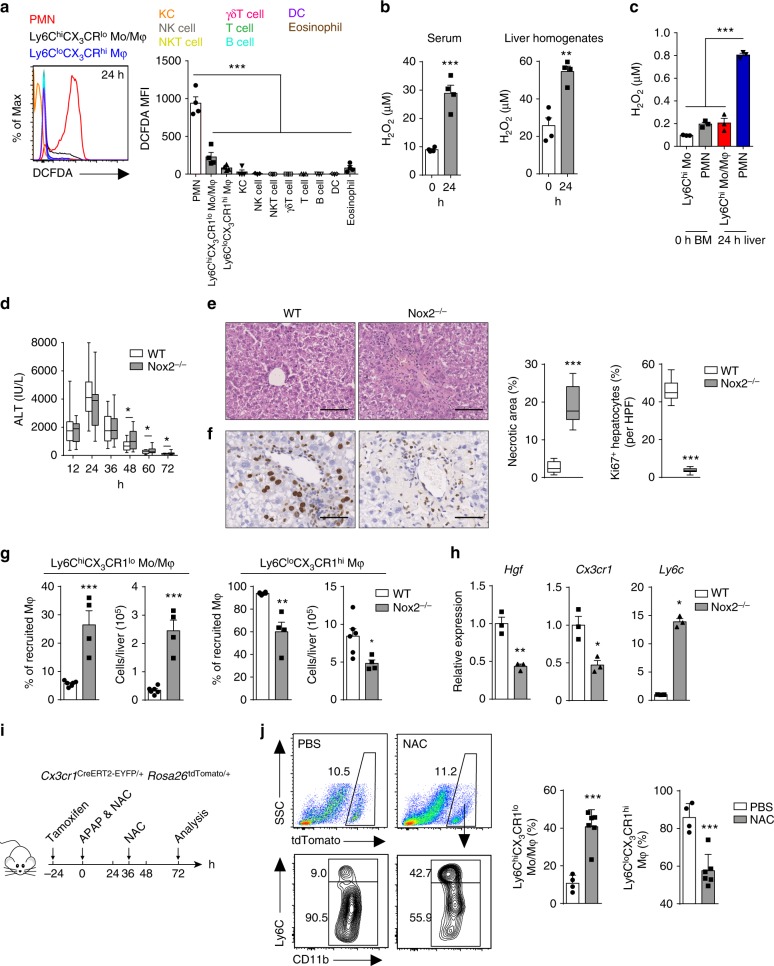
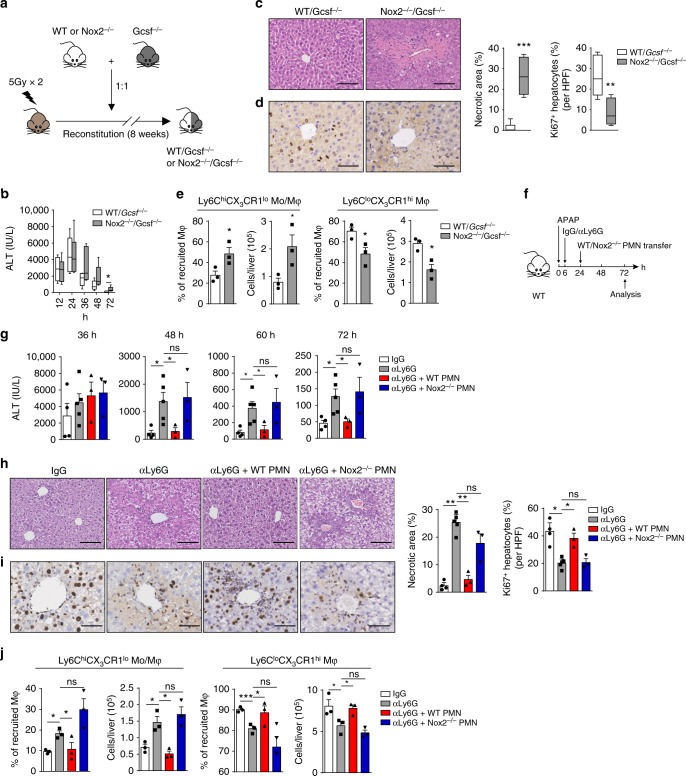
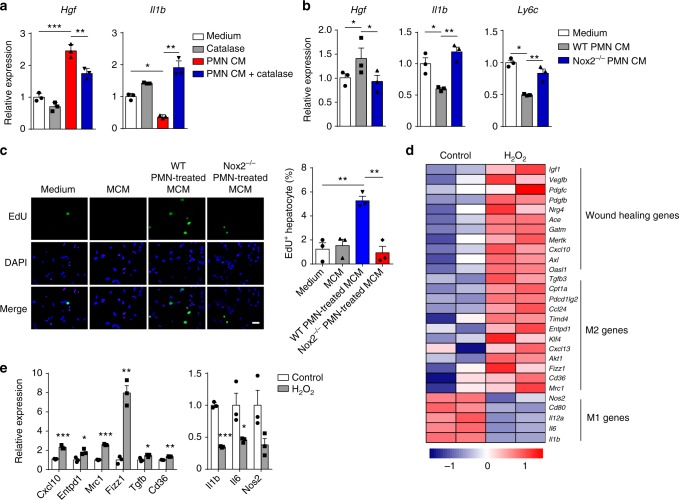
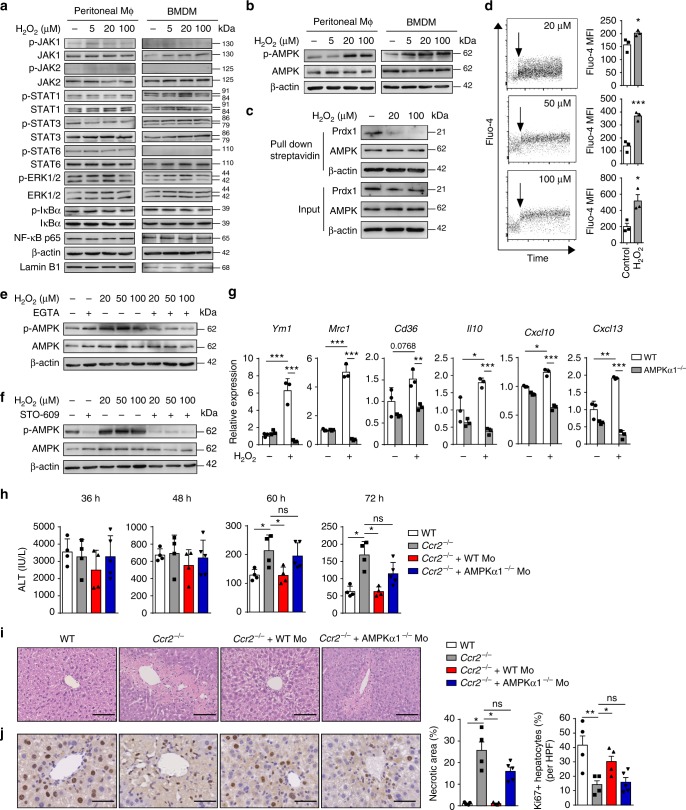
Phagocytes, including neutrophils and macrophages, have been suggested to function in a cooperative way in the initial phase of inflammatory responses, but their interaction and integration in the resolution of inflammation and tissue repair remain unclear. Here we show that neutrophils have crucial functions in liver repair by promoting the phenotypic conversion of pro-inflammatory Ly6C hi CX 3 CR1 lo monocytes/macrophages to pro-resolving Ly6C lo CX 3 CR1 hi macrophages. Intriguingly, reactive oxygen species (ROS), expressed predominantly by neutrophils, are important mediators that trigger this phenotypic conversion to promote liver repair. Moreover, this conversion is prevented by the depletion of neutrophils via anti-Ly6G antibody, genetic deficiency of granulocyte colony-stimulating factor, or genetic deficiency of NADPH oxidase 2 (Nox2). By contrast, adoptive transfer of WT rather than Nox2 −/− neutrophils rescues the impaired phenotypic conversion of macrophages in neutrophil-depleted mice. Our findings thus identify an intricate cooperation between neutrophils and macrophages that orchestrate resolution of inflammation and tissue repair.
Overview
The claims and statistics of this paper haven’t been checked yet.
Free: it reads the open-access text and checks the first 5 claims that cite a source we can check. Create a free account to check every claim.
Integrity signals
Registry
Cites
Statistics
Figures
Verification
Claims the paper makes
The claims and statistics of this paper haven’t been checked yet.
Free: it reads the open-access text and checks the first 5 claims that cite a source we can check. Create a free account to check every claim.
Claims other papers make about this one
Each is checked against this paper’s own text: does it say what the citing paper says it does?
In the citing paper
“However, it has also been suggested that neutrophils can be restorative and promote liver regeneration, and the disease-promoting versus pathogenic roles of neutrophils [90, 91] are likely time-, context- or subpopulation-dependent.”
From Inflammation and immunity in liver homeostasis and disease: a nexus of hepatocytes, nonparenchymal cells and immune cells (2025) · doi:10.1038/s41423-025-01313-7 · cites this paper as [91]
Self-check
Percentages, sums and reported differences re-computed from the paper’s own numbers.
The self-check needs the paper’s full text.
Citations
Cites
Neutrophil recruitment and function in health and inflammation
Kolaczkowska, E., & Kubes, P. (2013) · Nature Reviews Immunology · doi:10.1038/nri3399 · Cited by 5,472
The M1 and M2 paradigm of macrophage activation: Time for reassessment
Martinez, F. O., & Gordon, S. (2014) · F1000Prime Reports · doi:10.12703/p6-13 · Cited by 4,689
AMPK: a nutrient and energy sensor that maintains energy homeostasis
Hardie, D. G., Ross, F. A., & Hawley, S. A. (2012) · Nature Reviews Molecular Cell Biology · doi:10.1038/nrm3311 · Cited by 4,602
Pro-resolving lipid mediators are leads for resolution physiology
Serhan, C. N. (2014) · Nature · doi:10.1038/nature13479 · Cited by 3,041
Neutrophils in the activation and regulation of innate and adaptive immunity
Mantovani, A., Cassatella, M. A., Costantini, C., & Jaillon, S. (2011) · Nature Reviews Immunology · doi:10.1038/nri3024 · Cited by 3,027
Michalopoulos, G. K., & DeFrances, M. C. (1997) · Science · doi:10.1126/science.276.5309.60 · Cited by 2,828
Microglia promote learning-dependent synapse formation through brain-derived neurotrophic factor
Parkhurst, C. N., Yang, G., Ninan, I., Savas, J. N., Yates, J. R., Lafaille, J. J., Hempstead, B. L., Littman, D. R., & Gan, W.-B. (2013) · Cell · doi:10.1016/j.cell.2013.11.030 · Cited by 2,599
Signal transduction by reactive oxygen species
Finkel, T. (2011) · Journal of Cell Biology · doi:10.1083/jcb.201102095 · Cited by 2,322
Transcriptional regulation of macrophage polarization: enabling diversity with identity
Lawrence, T., & Natoli, G. (2011) · Nature Reviews Immunology · doi:10.1038/nri3088 · Cited by 2,284
Monocytes and macrophages: developmental pathways and tissue homeostasis
Ginhoux, F., & Jung, S. (2014) · Nature Reviews Immunology · doi:10.1038/nri3671 · Cited by 1,840
Cited by
Items 301–367 of 367
Marbourg, J. M., Vadala, C. P., Pyter, L. M., Sen, C. K., Schwab, J. M., & Popovich, P. G. (2025) · Journal of Neurotrauma · doi:10.1177/08977151251405884 · Cited by 3
“35,36 Without suf fi - cient wound neutrophil accumulation, macrophage activation is exacerbated and prolonged, leading to impaired healing.”
Main, E. N., Hall, S. C., & Bowlin, G. L. (2026) · Frontiers in Immunology · doi:10.3389/fimmu.2026.1760968 · Cited by 2
“Balancing MPO activity with pro-resolving mediators is therefore critical for transitioning from a dysregulated acute in fl ammatory response toward regeneration (34, 35).”
Beyond first responders: neutrophils shape biomaterial-guided regeneration
Pereira, M. M., Sousa, A. L., & Barbosa, J. N. (2026) · Biomaterials Science · doi:10.1039/d6bm00277c · Cited by 4
Ou, Q., Cheng, M., Fan, L., Zou, J., Wang, K., Xie, Z., Jiang, W., Gong, K., Wang, J., Jiang, Z., et al. (2026) · Microbiology Spectrum · doi:10.1128/spectrum.02376-25 · Cited by 2
“Infections, inflammatory cytokines, and other environmental cues can raise ROS levels to detrimental concentrations that contribute to pathological disease manifestation, which is linked to cell death or mediates (51, 52).”
Novaes, R., Costa, T. F. R., Goundry, A., Verçoza, B. R. F., Rodrigues, J. C. F., Godinho, J. L. P., Reis, F. C. G., Morrot, A., & Lima, A. P. C. A. (2022) · Biochemistry and Cell Biology · doi:10.1139/bcb-2021-0460 · Cited by 2
Park, S., Perumalsamy, H., Kim, J. E., Kim, H. Y., Jun, D. W., & Yoon, T. H. (2024) · Biomedicine & Pharmacotherapy · doi:10.1016/j.biopha.2024.117175 · Cited by 2
Role of Neutrophils in the Development of Steatotic Liver Disease
Choi, Y., Kim, Y. S., & Hwang, S. (2024) · Seminars in Liver Disease · doi:10.1055/s-0044-1789207 · Cited by 3
Role of sterile inflammation in acetaminophen hepatotoxicity
Jaeschke, H., & Ramachandran, A. (2024) · Elsevier eBooks · doi:10.1016/b978-0-443-15877-3.00009-0 · Cited by 2
Rousseau, D., Bonnafous, S., Soysouvanh, F., Sarrail, D., Bourinet, M., Strazzulla, A., Patouraux, S., Borderie, A., Dolfi, B., Gallerand, A., et al. (2025) · Hepatology · doi:10.1097/hep.0000000000001232 · Cited by 10
IL-22 promotes liver regeneration after portal vein ligation
Zhang, T., Seeger, P., Simsek, Y., Sabihi, M., Lücke, J., Zazara, D. E., Shiri, A. M., Kempski, J., Blankenburg, T., Zhao, L., et al. (2024) · Heliyon · doi:10.1016/j.heliyon.2024.e27578 · Cited by 2
“White blood cells have been reported to be involved with liver diseases and liver regeneration [33,34].”
BackgroundDRANquilizing neutrophil function in chronic liver disease
Groba, S. R., & Soehnlein, O. (2023) · Journal of Hepatology · doi:10.1016/j.jhep.2023.07.019 · Cited by 3
Neutrophil immune profile controls spinal cord regeneration in zebrafishPreprint
de Sena-Tomás, C., Lameira, L. R., Taborda, P. N., Laborde, A., Orger, M. B., de Oliveira, S., & Saúde, L. (2024) · bioRxiv (Cold Spring Harbor Laboratory) · doi:10.1101/2024.01.17.576035 · Cited by 2
Zhang, Q.-J., Feng, Y., Chen, X., Mo, X., Wu, Q., & Ju, Q. (2024) · International Journal of Dermatology and Venereology · doi:10.1097/jd9.0000000000000382 · Cited by 1
Neutrophil plasticity in liver diseases
Teo, J. M. N., Chen, W., & Ling, G. S. (2024) · Journal of Leukocyte Biology · doi:10.1093/jleuko/qiae222 · Cited by 1
Zhu, M., Li, Y., Liu, D., & Gong, Z. (2024) · Biochemical and Biophysical Research Communications · doi:10.1016/j.bbrc.2024.150937 · Cited by 2
Kasuga, R., Chu, P., Kanai∥, T., & Nakamoto, N. (2025) · Hepatology Research · doi:10.1111/hepr.14206 · Cited by 1
“24 Conversely, neutrophils play a significant role in the resolution of inflammation and fibrosis by inducing macrophages to transition into the M2 phenotype through ROS production 25 and by generating matrix metalloproteinases 8 and 9.”
Wang, X., Zhan, X., Gao, Y., Wang, H., Liu, Z., Liu, M., Lu, L., & Zhou, H. (2025) · Cellular and Molecular Gastroenterology and Hepatology · doi:10.1016/j.jcmgh.2025.101674 · Cited by 1
“34 35–37 The ability of macrophages to migrate to sites of liver injury is crucial for their roles in both exacerbating and resolving tissue damage.”
Bidirectional neutrophil–macrophage interactions as therapeutic leverage points in sepsis
Wang, Z., & Xu, K. (2025) · Journal of Leukocyte Biology · doi:10.1093/jleuko/qiaf152 · Cited by 1
Hall, S. C., Main, E. N., & Bowlin, G. L. (2026) · Cell Transplantation · doi:10.1177/09636897261453307 · Cited by 1
“During wound healing, PMNs and macrophages engage in intercellular crosstalk, which can form positive feedback loops, amplifying inflammatory responses 4,6,7 .”
Shi, L., Zhou, H., & Zheng, R. (2026) · Frontiers in Immunology · doi:10.3389/fimmu.2026.1793796 · Cited by 2
“Moreover, ROS impairs the transition of macrophages towards the type 2 tissue-remodeling effector program, a process essential for wound healing (192, 193).”
Zhang, H., You, K., Liu, Q., Xu, X., Hua, R., & Wang, L. Y. (2026) · Journal of Nanobiotechnology · doi:10.1186/s12951-026-04807-2 · Cited by 2
“In particular, macrophages, innate immune cells, are key players in orchestrating inflammatory responses and tissue repair [169, 170].”
Темнов, А. А., Склифас, А. Н., Zhalimov, V. K., Sharapov, M. G., Фадеев, Р. С., Kobyakova, M. I., Kukushkin, N. I., & Рогов, К. А. (2023) · BIOPHYSICS · doi:10.1134/s0006350923010153 · Cited by 1
Pathogenesis and interaction of neutrophils and extracellular vesicles in noncancer liver diseases
Sun, J., Yang, F., Zheng, Y., Huang, C., Fan, X., & Yang, L. (2024) · International Immunopharmacology · doi:10.1016/j.intimp.2024.112442 · Cited by 1
Macrophages in tissue engineering and regeneration
Clark, D. R., Nakamura, M. C., Miclau, T., & Marcucio, R. (2024) · Elsevier eBooks · doi:10.1016/b978-0-12-821754-2.00005-9 · Cited by 1
Chettupalli, A. K., Gupta, N., Bukke, S. P. N., Singh, M. P., & Mandal, C. (2025) · Biomedicine & Pharmacotherapy · doi:10.1016/j.biopha.2025.118803 · Cited by 1
Kou, Y., Zheng, X., Meng, L., Liu, M., Xu, S., Jing, Q., Zhang, S., Wang, H., Han, J., Liu, Z., et al. (2022) · Frontiers in Immunology · doi:10.3389/fimmu.2022.773341 · Cited by 1
“Recent work has implied that myeloid cells, especially neutrophils, have anti-inflammatory functions and contribute to liver repair after acute injury (15).”
BackgroundMéndez‐Sánchez, N., & Teschke, R. (2023) · Elsevier eBooks · doi:10.1016/b978-0-323-98368-6.00002-1 · Cited by 1
The Uniqueness of Innate Immunity
Szabó, G., & Mallard, J. (2020) · Springer eBooks · doi:10.1007/978-3-030-51709-0_3
Davis, A., Guldberg, R. E., & Samsonraj, R. M. (2020) · Journal of Musculoskeletal Research · doi:10.1142/s0218957721400017
Electrospun tissue regeneration biomaterials for immunomodulation
Fetz, A. E., Wallace, S. E., & Bowlin, G. L. (2021) · Elsevier eBooks · doi:10.1016/b978-0-12-821440-4.00003-7
増田, 広., 小澤, 雅., 栗田, 晋., 斉藤, 佳., & 一ノ瀬, 義. (2000) · Kyoto University Research Information Repository (Kyoto University)
Modulating neutrophils leads to changes in CNS outputPreprint
Coulibaly, A. P., Salken, I., & Provencio, J. J. (2022) · bioRxiv (Cold Spring Harbor Laboratory) · doi:10.1101/2022.02.10.479966
Rouse, B. T. (2021) · Faculty Opinions – Post-Publication Peer Review of the Biomedical Literature · doi:10.3410/f.738897709.793582174
Hong, X., Luo, A. C., Doulamis, I. P., Oh, N. A., Im, G., del Nido, P. J., Melero‐Martin, J. M., & Lin, R. (2022) · bioRxiv (Cold Spring Harbor Laboratory) · doi:10.1101/2022.06.30.497378
Nefodova, A. (2022) · Biotechnologia Acta · doi:10.15407/biotech15.04.018
Sato, R., Liu, K., Shibata, T., Hoshino, K., Yamaguchi, K., Miyazaki, T., Hiranuma, R., Fukui, R., Motoi, Y., Fukuda‐Ohta, Y., et al. (2023) · bioRxiv (Cold Spring Harbor Laboratory) · doi:10.1101/2023.05.11.540294
“Bone marrow-derived Ly6C hi CX3CR1 lo monocytes infiltrate the liver upon acetaminophen (APAP) challenge and differentiate into Ly6C lo CX3CR1 hi macrophages, promoting clearance and tissue repair 6 .”
Liver transplantation: the recipient
(2024) · Elsevier eBooks · doi:10.1016/b978-0-443-23571-9.00034-7
Liashko, M. B., & Govsieiev, D. O. (2023) · UKRAINIAN JOURNAL HEALTH OF WOMAN · doi:10.15574/hw.2023.169.26
Темнов, А. А., Склифас, А. Н., Zhalimov, V. K., Sharapov, M. G., Фадеев, Р. С., Kobyakova, M. I., Kukushkin, N. I., & Rogov, K. A. (2023) · Биофизика · doi:10.31857/s000630292301009x
β-Glucan Reprograms Neutrophils to Induce Disease Tolerance Against Influenza A VirusPreprint
Khan, N., Chèvre, R., Sun, S., Sadeghi, M., Pernet, E., Herrero-Cervera, A., Grant, A., Downey, J., Barreiro, L. B., Yipp, B. G., et al. (2024) · bioRxiv (Cold Spring Harbor Laboratory) · doi:10.1101/2024.09.02.610822
“An additional unique feature of these regulatory neutrophils was the increased production of ROS, which has been shown to be required for polarizing macrophages towards a repair/healing phenotype during injury 46 .”
BackgroundOshins, R. A., Aranyos, A. M., Grey, S., Mohammad, N. S., Lu, Y., Lascano, J. E., Flagg, T. O., Serban, K. A., Brantly, M., & Khodayari, N. (2024) · bioRxiv (Cold Spring Harbor Laboratory) · doi:10.1101/2024.10.11.617858 · Cited by 1
Mechanisms of Acetaminophen Hepatotoxicity: Cell Death Signaling Mechanisms in Hepatocytes
Jaeschke, H., & Ramachandran, A. (2025) · Elsevier eBooks · doi:10.1016/b978-0-323-95488-4.00273-4
Li, H., Song, M., Hylemon, P. B., & Zhou, H. (2025) · Gut · doi:10.1136/gutjnl-2025-335259 · Cited by 2
“8 9 These findings highlight the complexity of neutrophil–hepatocyte crosstalk and emphasise the importance of further investigating neutrophil–hepatocyte cross-talk in AH, which may reveal novel targets for more precise and effective therapeutic interventions without compromising essential immune…”
Léandre, F., Iddir, A., Godard, C., Lagoutte, I., Caldiero, A., Souid, S., Pinto, S., Augustin, J., Malham, V. B., Alves, A., et al. (2025) · bioRxiv (Cold Spring Harbor Laboratory) · doi:10.1101/2025.06.02.655477
Chen, L., Li, J., Wang, X., Chen, S., Wu, Y. L., Li, J.-X., & Liang, S. (2025) · Journal of Inflammation Research · doi:10.2147/jir.s523065 · Cited by 1
“29 The findings of these studies underscore the significance of neutrophils in hepatic inflammatory injury and repair and warrant further investigation.”
Self-citationSánchez-Guerrero, G., Chavez, D. K., Jaeschke, H., & Ramachandran, A. (2025) · Journal of Biochemical and Molecular Toxicology · doi:10.1002/jbt.70448 · Cited by 1
“…cells which infiltrate the liver after APAP induced injury and while their role in APAP hepatotoxicity was controversial earlier, accumulating evidence suggests that they primarily function to clear cell debris and stimulate repair after a moderate APAP overdose, as used in this study [5, 48, 49].”
Iron overload in CD11c+ myeloid cells exacerbates acetaminophen hepatotoxicity
Liu, S., Kanamori, Y., Ohta, Y., Li, S., Liu, Y., Li, H., Saleh, M., Nita, A., Nakayama, K. I., & Moroishi, T. (2025) · Communications Biology · doi:10.1038/s42003-025-08521-x
“In acetaminophen (APAP)- induced liver injury, neutrophils initially drive in fl ammation 3 but later perform reparative roles as the injury resolves 4 .”
Intricate interplay between fungi and neutrophils
Cheng, Y.-F., Liao, H.-Y., Hsieh, T.-Y., & Chen, Y.-H. (2025) · Journal of Leukocyte Biology · doi:10.1093/jleuko/qiaf148
Xie, Y., Yao, J., Yan, M., Lin, Y., Wei, J., Wang, H., Mao, Y., Liu, P., & Li, X. (2023) · Figshare · doi:10.6084/m9.figshare.24587682
Just right: neutrophils exemplify the Goldilocks principle in liver regeneration
Pereyra, D., Dong, Y., & Starlinger, P. P. (2025) · Gut · doi:10.1136/gutjnl-2025-337710
“4 5 Further, neutrophils migrate to the site of injury where they facilitate ECM remodelling and neoangiogenesis.”
Mechanisms of Liver Regeneration
Kofler, A., Poelsler, L. H., Oberhuber, R., & Primavesi, F. (2026) · Springer eBooks · doi:10.1007/978-3-032-10997-2_1
Effects of gamma irradiation-induced reactive oxygen species on phagocytes NADPH oxidase
Owusu, S. B. (2021) · theses.fr (ABES) · doi:10.70675/6d734417z0108z4c5bzb9b4zd22129533f3f
Rôle de l'isoforme A du récepteur de l'insuline dans l'homéostasie et la carcinogenèse hépatiques
Léandre, F. (2024) · theses.fr (ABES) · doi:10.70675/df1bc445z5d98z462dzbc59za0d4015bcf04
Liver fibrosis: Pathogenesis and innovative nanoparticle-based therapeutic strategies
Cai, Y., Li, J., Chen, S., Zhang, H., Tan, J., Li, H., Zhang, S., Li, B., Wei, Q., Lin, C., et al. (2026) · International Journal of Pharmaceutics X · doi:10.1016/j.ijpx.2026.100596
“During this inflammatory response, certain hepatocytes become activated, secrete copious collagen fibers and other ECM proteins, culminating in connective tissue deposition within the liver (Lua et al., 2016; Yang et al., 2019b).”
Zhang, X., ai, R., Zeng, Y., Xu, Y., Shao, W., Yao, J., Tian, X., Zhu, Z., Pi, Y., & Dai, W. (2026) · Cell Reports · doi:10.1016/j.celrep.2026.117762
Niche-dependent immunometabolic regulation of tissue repair and regeneration
Xie, X., Zeng, L., Chi, Z., & Wang, D. (2026) · Immunity & Inflammation · doi:10.1007/s44466-026-00052-2
“…l - d e r i v e d R O S p r o m o t e s r e p a r a t i v e m a c r o p h a g e t r a n s i t i o n d u r - i n g a c u t e l i v e r i n j u r y [ 71 ] L u n g ↑ A T 2 c e ll - d e r i v e d l a c t a t e s u p p r e ss e s i n fl a mm a t o r y a l v e o l a r m a c r o p h a g e s a n d l i m…”
InfluentialBiological treatments for asthma and chronic obstructive pulmonary disease
Tejwani, V., Siddharthan, T., Majumdar, U., Hatipoglu, U. S., & Hanania, N. A. (2026) · BMJ Medicine · doi:10.1136/bmjmed-2025-002195
“75 Furthermore, these previous studies were performed without consideration of eosinophil counts and future studies including those with neutrophilic inflammation, such as individuals with α 1 antitrypsin deficiency or low eosinophil counts, may give different results.”
Lei, C. (2026) · Hepatobiliary Communications · doi:10.1016/j.hbc.2026.100008
Chen, Y., Yin, Y., Huang, B., Chen, J., Shu, T., Xu, X., & Li, G. (2026) · Bioactive Materials · doi:10.1016/j.bioactmat.2026.09.002
“The early inflammatory phase, dominated by neutrophils and macrophages, involves the release of ROS and pro-inflammatory factors to clear necrotic tissue and stimulate angiogenic factors [47].”
Immune metabolic reprogramming in MASLD
Razafiarison, J., Venteclef, N., Ginhoux, F., & Blériot, C. (2026) · JHEP Reports · doi:10.1016/j.jhepr.2026.102027 · Cited by 2
Zhang, X., Chen, X., Guo, X., Liu, R., Husain, S., Long, Y., & Li, W. (2026) · American Journal Of Pathology · doi:10.1016/j.ajpath.2026.09.008
Ma, R., Zhang, H., Wang, H., Weng, L., & Chen, X. (2026) · Chemical Communications · doi:10.1039/d6cc03374a
Metadata
- Authors
- Yang, W., Tao, Y., Wu, Y., Zhao, X., Ye, W., Zhao, D., Fu, L., Tian, C., Yang, J., He, F., & Tang, L.
- Affiliations
- Beijing Proteome Research Center (CN)
- Anhui Medical University (CN)
- Corresponding author
- He, Fuchu
- Tang, Li
- Venue
- Nature Communications
- Published
- 2019-03-06
- Volume
- 10
- Issue
- 1
- Pages
- 1076-1076
- ISSN
- 2041-1723 (ISSN-L)
- PMC
- PMC6403250
- OpenAlex
- W2920290417
- Cited by
- 367
- References
- 71
- Citations by year
- 2026: 22 · 2025: 65 · 2024: 47 · 2023: 58 · 2022: 67 · 2021: 50 · 2020: 46 · 2019: 11
- FWCI
- 27.88
- Type
- journal article
- Language
- en
- Open access
- gold
- doi.org
- Licence
- cc-by
- creativecommons.org/licenses/by/4.0 (tdm)
- creativecommons.org/licenses/by/4.0 (vor)
- Locations
- Nature Communications (publishedVersion, cc-by)
- Europe PMC (PubMed Central) (publishedVersion, other-oa)
- PubMed Central (publishedVersion, cc-by)
- PubMed (publishedVersion)
- RePEc: Research Papers in Economics (submittedVersion)
- DOAJ (DOAJ: Directory of Open Access Journals) (submittedVersion)
- DOAJ (DOAJ: Directory of Open Access Journals) (submittedVersion, cc-by-sa)
- Funders
- Ludwig Institute for Cancer Research
- York University
- Chinese Academy of Sciences (2014CBA02000)
- Wuhan University
- Institute of Biophysics, Chinese Academy of Sciences
- Topics
- Health Sciences › Medicine › Hepatology › Liver physiology and pathology
- Life Sciences › Immunology and Microbiology › Immunology › Neutrophil, Myeloperoxidase and Oxidative Mechanisms
- Life Sciences › Immunology and Microbiology › Immunology › Immune cells in cancer
- Keywords
- neutrophils, reparative macrophages, liver repair, reactive oxygen species, inflammation resolution, Ly6C, CX3CR1, granulocyte colony-stimulating factor, NADPH oxidase 2, NOX2, adoptive transfer, tissue repair
- MeSH terms
- NADPH Oxidase 2, Acetaminophen, Animals, Cells, Cultured, Disease Models, Animal, Humans, Liver, Liver Regeneration, Macrophages, Male, Neutrophils, Bone Marrow Transplantation, Reactive Oxygen Species, Transplantation Chimera, Mice, Knockout, Adoptive Transfer, Mice, Chemical and Drug Induced Liver Injury, Primary Cell Culture
About these checks
Registry, retraction, Cites and statistics results are computed, not judged, with one exception: a printed reference that no index lists is read once by a model before it counts as a citation error. Claims are extracted by a model and kept only when their quote appears verbatim in the text; each cited source is then checked, with a model’s help, for whether it says what the claim relies on. Those verdicts can be wrong — read the claim’s quote and the cited source before relying on one.
Statistics and arithmetic are recomputed, not judged.
Confidence bands are shown only for fields calibrated on our annotated test set. None is calibrated yet, so no band is shown.
What counts as a claim ›How we measure confidence ›How we check this ›
Are you an author, or do you see a problem with this page? Request a review
Data sources
Bibliographic data: Semantic Scholar, OpenAlex, Crossref.
Contains information from the Semantic Scholar Academic Graph Datasets, made available under the ODC Attribution License (ODC-BY 1.0).
Semantic Scholar’s data is described in: Kinney, R., et al. (2023). The Semantic Scholar Open Data Platform. arXiv:2301.10140.
