

Neutrophils promote the development of reparative macrophages mediated by ROS to orchestrate liver repair
Open accessThe DOI matches its Crossref record; 70 of the 71 references it cites were found in a registry or an index.
Abstract
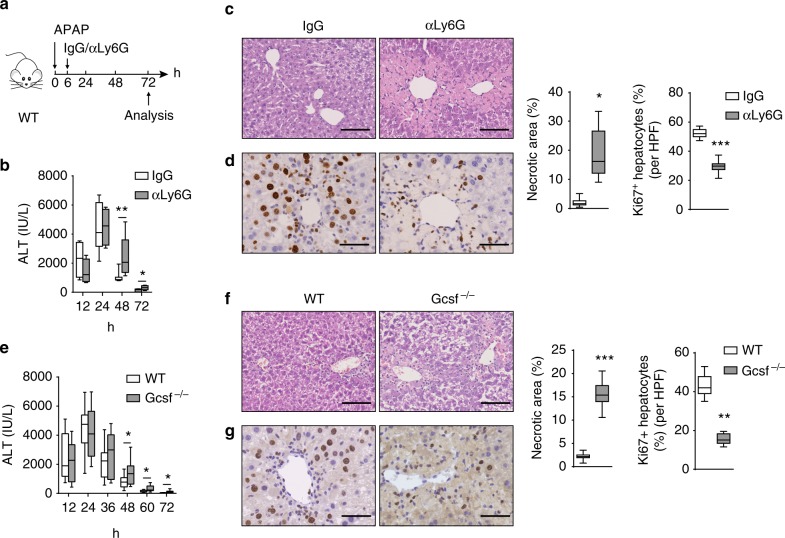
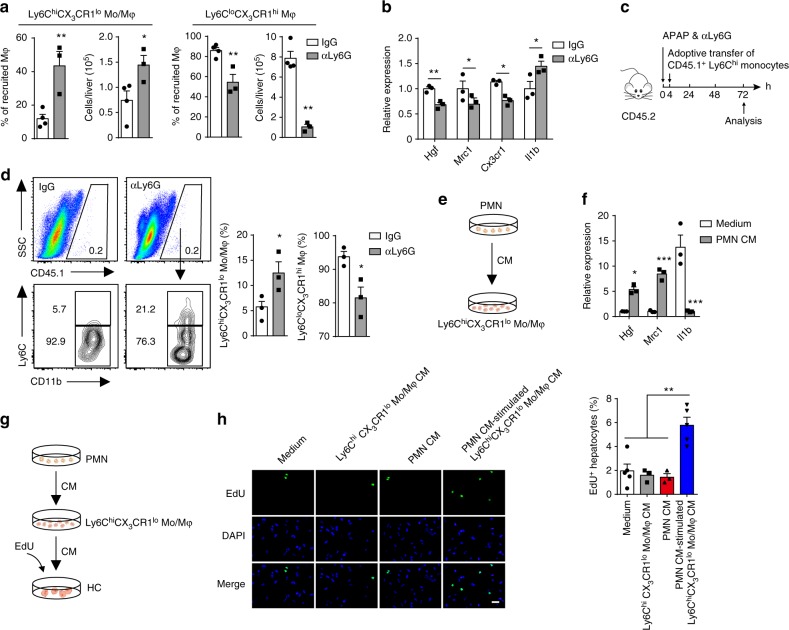
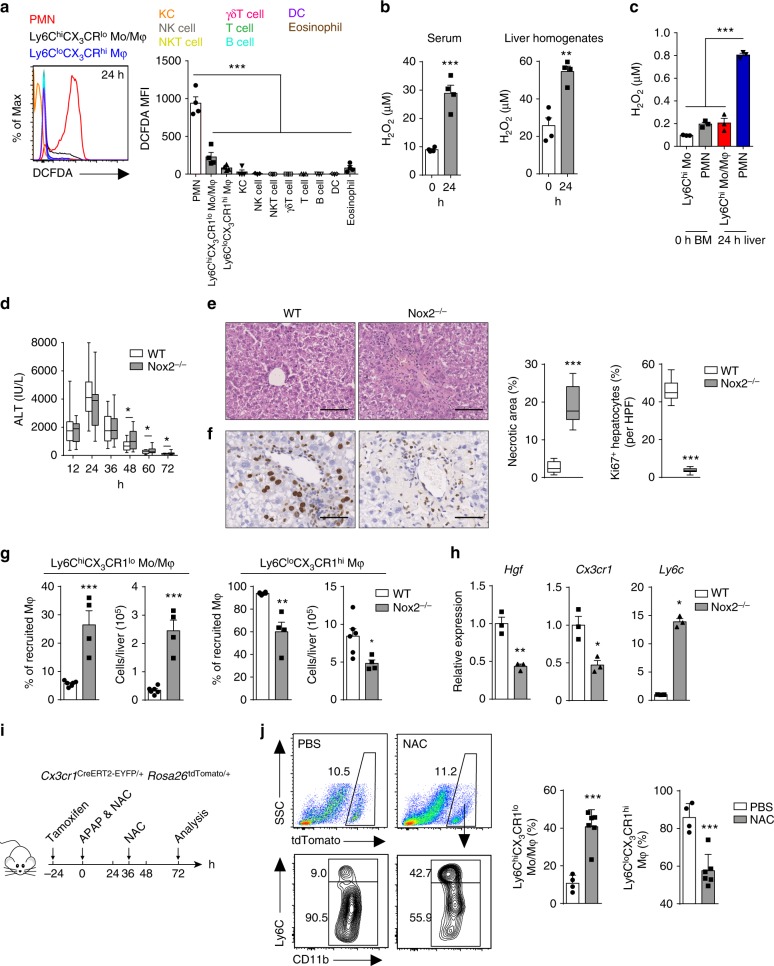
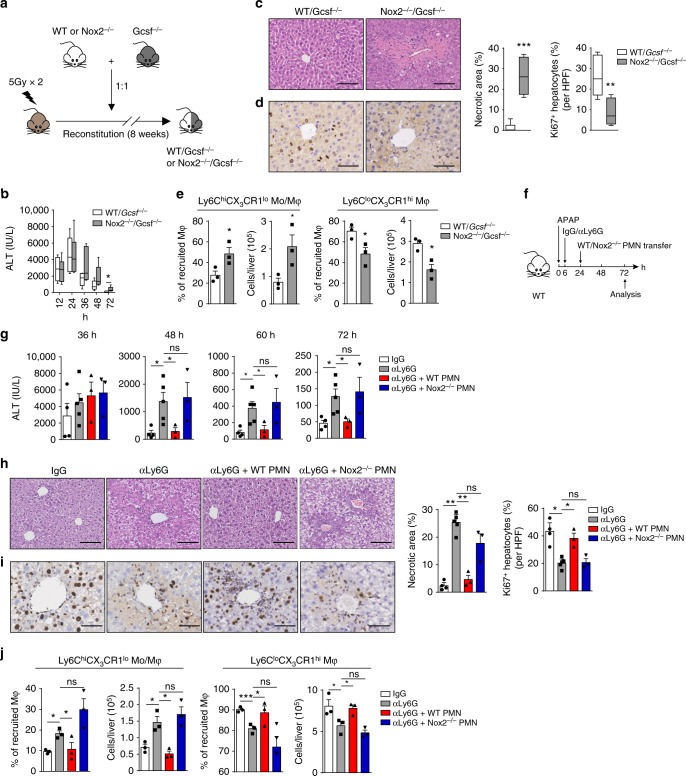
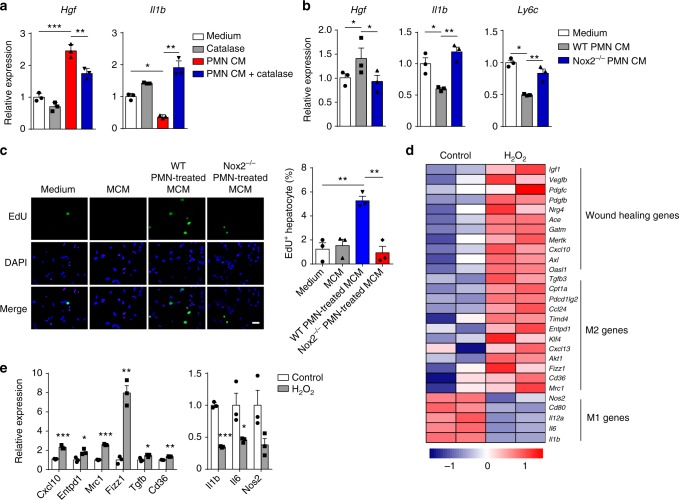
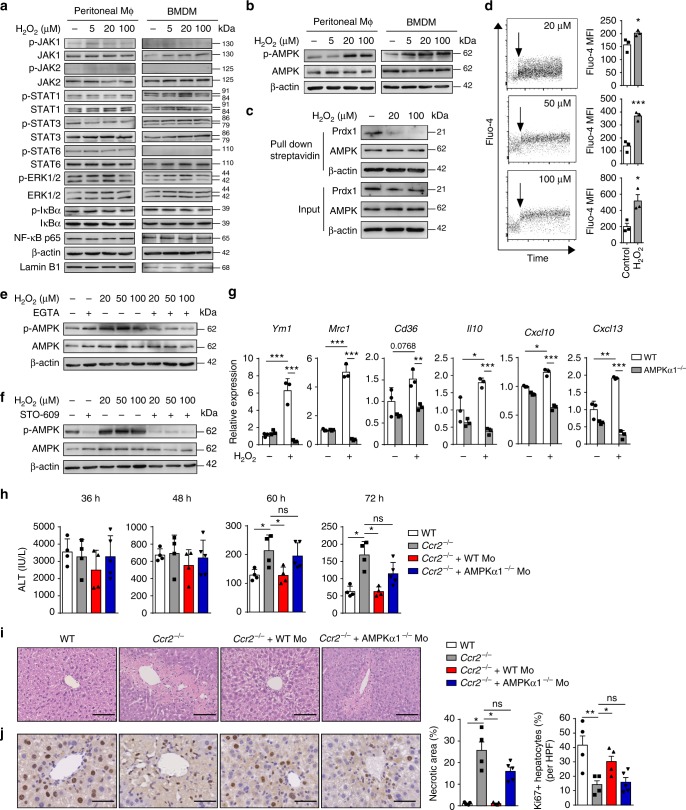
Phagocytes, including neutrophils and macrophages, have been suggested to function in a cooperative way in the initial phase of inflammatory responses, but their interaction and integration in the resolution of inflammation and tissue repair remain unclear. Here we show that neutrophils have crucial functions in liver repair by promoting the phenotypic conversion of pro-inflammatory Ly6C hi CX 3 CR1 lo monocytes/macrophages to pro-resolving Ly6C lo CX 3 CR1 hi macrophages. Intriguingly, reactive oxygen species (ROS), expressed predominantly by neutrophils, are important mediators that trigger this phenotypic conversion to promote liver repair. Moreover, this conversion is prevented by the depletion of neutrophils via anti-Ly6G antibody, genetic deficiency of granulocyte colony-stimulating factor, or genetic deficiency of NADPH oxidase 2 (Nox2). By contrast, adoptive transfer of WT rather than Nox2 −/− neutrophils rescues the impaired phenotypic conversion of macrophages in neutrophil-depleted mice. Our findings thus identify an intricate cooperation between neutrophils and macrophages that orchestrate resolution of inflammation and tissue repair.
Overview
The claims and statistics of this paper haven’t been checked yet.
Free: it reads the open-access text and checks the first 5 claims that cite a source we can check. Create a free account to check every claim.
Integrity signals
Registry
Cites
Statistics
Figures
Verification
Claims the paper makes
The claims and statistics of this paper haven’t been checked yet.
Free: it reads the open-access text and checks the first 5 claims that cite a source we can check. Create a free account to check every claim.
Claims other papers make about this one
Each is checked against this paper’s own text: does it say what the citing paper says it does?
In the citing paper
“However, it has also been suggested that neutrophils can be restorative and promote liver regeneration, and the disease-promoting versus pathogenic roles of neutrophils [90, 91] are likely time-, context- or subpopulation-dependent.”
From Inflammation and immunity in liver homeostasis and disease: a nexus of hepatocytes, nonparenchymal cells and immune cells (2025) · doi:10.1038/s41423-025-01313-7 · cites this paper as [91]
Self-check
Percentages, sums and reported differences re-computed from the paper’s own numbers.
The self-check needs the paper’s full text.
Citations
Cites
Neutrophil recruitment and function in health and inflammation
Kolaczkowska, E., & Kubes, P. (2013) · Nature Reviews Immunology · doi:10.1038/nri3399 · Cited by 5,472
The M1 and M2 paradigm of macrophage activation: Time for reassessment
Martinez, F. O., & Gordon, S. (2014) · F1000Prime Reports · doi:10.12703/p6-13 · Cited by 4,689
AMPK: a nutrient and energy sensor that maintains energy homeostasis
Hardie, D. G., Ross, F. A., & Hawley, S. A. (2012) · Nature Reviews Molecular Cell Biology · doi:10.1038/nrm3311 · Cited by 4,602
Pro-resolving lipid mediators are leads for resolution physiology
Serhan, C. N. (2014) · Nature · doi:10.1038/nature13479 · Cited by 3,041
Neutrophils in the activation and regulation of innate and adaptive immunity
Mantovani, A., Cassatella, M. A., Costantini, C., & Jaillon, S. (2011) · Nature Reviews Immunology · doi:10.1038/nri3024 · Cited by 3,027
Michalopoulos, G. K., & DeFrances, M. C. (1997) · Science · doi:10.1126/science.276.5309.60 · Cited by 2,828
Microglia promote learning-dependent synapse formation through brain-derived neurotrophic factor
Parkhurst, C. N., Yang, G., Ninan, I., Savas, J. N., Yates, J. R., Lafaille, J. J., Hempstead, B. L., Littman, D. R., & Gan, W.-B. (2013) · Cell · doi:10.1016/j.cell.2013.11.030 · Cited by 2,599
Signal transduction by reactive oxygen species
Finkel, T. (2011) · Journal of Cell Biology · doi:10.1083/jcb.201102095 · Cited by 2,322
Transcriptional regulation of macrophage polarization: enabling diversity with identity
Lawrence, T., & Natoli, G. (2011) · Nature Reviews Immunology · doi:10.1038/nri3088 · Cited by 2,284
Monocytes and macrophages: developmental pathways and tissue homeostasis
Ginhoux, F., & Jung, S. (2014) · Nature Reviews Immunology · doi:10.1038/nri3671 · Cited by 1,840
Hydrogen peroxide sensing and signaling
Veal, E. A., Day, A. M., & Morgan, B. A. (2007) · Molecular Cell · doi:10.1016/j.molcel.2007.03.016 · Cited by 1,604
Eosinophils Sustain Adipose Alternatively Activated Macrophages Associated with Glucose Homeostasis
Wu, D., Molofsky, A. B., Liang, H.-E., Ricardo-Gonzalez, R. R., Jouihan, H. A., Bando, J. K., Chawla, A., & Locksley, R. M. (2011) · Science · doi:10.1126/science.1201475 · Cited by 1,376
Macrophage-mediated inflammation in metabolic disease
Chawla, A., Nguyen, K. D., & Goh, Y. P. S. (2011) · Nature reviews. Immunology · doi:10.1038/nri3071 · Cited by 1,314
Neutrophil extracellular traps license macrophages for cytokine production in atherosclerosis
Warnatsch, A., Ioannou, M., Wang, Q., & Papayannopoulos, V. (2015) · Science · doi:10.1126/science.aaa8064 · Cited by 1,270
Macrophage Immunometabolism: Where Are We (Going)?
Van den Bossche, J., O’Neill, L. A., & Menon, D. (2017) · Trends in Immunology · doi:10.1016/j.it.2017.03.001 · Cited by 1,163
Efficacy of Oral N-Acetylcysteine in the Treatment of Acetaminophen Overdose
Smilkstein, M. J., Knapp, G. L., Kulig, K. W., & Rumack, B. H. (1988) · New England Journal of Medicine · doi:10.1056/nejm198812153192401 · Cited by 1,102
Phagocyte partnership during the onset and resolution of inflammation
Soehnlein, O., & Lindbom, L. (2010) · Nature Reviews Immunology · doi:10.1038/nri2779 · Cited by 1,054
Ramachandran, P., Pellicoro, A., Vernon, M. A., Boulter, L., Aucott, R. L., Ali, A., Hartland, S. N., Snowdon, V. K., Cappon, A., Gordon-Walker, T. T., et al. (2012) · Proceedings of the National Academy of Sciences · doi:10.1073/pnas.1119964109 · Cited by 1,001
Bernal, W., Auzinger, G., Dhawan, A., & Wendon, J. (2010) · The Lancet · doi:10.1016/s0140-6736(10)60274-7 · Cited by 996
How are TH2-type immune responses initiated and amplified?
Paul, W. E., & Zhu, J. (2010) · Nature Reviews Immunology · doi:10.1038/nri2735 · Cited by 963
Lieschke, G., Grail, D., Hodgson, G., Metcalf, D., Stanley, E., Cheers, C., Fowler, K., Basu, S., Zhan, Y., & Dunn, A. (1994) · Blood · doi:10.1182/blood.v84.6.1737.1737 · Cited by 962
Reactive Oxygen Species and Neutrophil Function
Winterbourn, C. C., Kettle, A. J., & Hampton, M. B. (2016) · Annual Review of Biochemistry · doi:10.1146/annurev-biochem-060815-014442 · Cited by 885
Proresolving Lipid Mediators and Mechanisms in the Resolution of Acute Inflammation
Buckley, C. D., Gilroy, D. W., & Serhan, C. N. (2014) · Immunity · doi:10.1016/j.immuni.2014.02.009 · Cited by 807
Resolution of Inflammation: What Controls Its Onset?
Sugimoto, M. A., Sousa, L. P., Pinho, V., Perretti, M., & Teixeira, M. M. (2016) · Frontiers in Immunology · doi:10.3389/fimmu.2016.00160 · Cited by 638
Yamamoto, S., Shimizu, S., Kiyonaka, S., Takahashi, N., Wajima, T., Hara, Y., Negoro, T., Hiroi, T., Kiuchi, Y., Okada, T., et al. (2008) · Nature Medicine · doi:10.1038/nm1758 · Cited by 622
Macrophages and Tissue Injury: Agents of Defense or Destruction?
Laskin, D. L., Sunil, V. R., Gardner, C. R., & Laskin, J. D. (2011) · Annual Review of Pharmacology and Toxicology · doi:10.1146/annurev.pharmtox.010909.105812 · Cited by 604
Zhang, Y., Choksi, S., Chen, K., Pobezinskaya, Y., Linnoila, I., & Liu, Z.-G. (2013) · Cell Research · doi:10.1038/cr.2013.75 · Cited by 573
Visualizing the function and fate of neutrophils in sterile injury and repair
Wang, J., Hossain, M., Thanabalasuriar, A., Gunzer, M., Meininger, C., & Kubes, P. (2017) · Science · doi:10.1126/science.aam9690 · Cited by 508
Love, N. R., Chen, Y., Ishibashi, S., Kritsiligkou, P., Lea, R., Koh, Y., Gallop, J. L., Dorey, K., & Amaya, E. (2013) · Nature Cell Biology · doi:10.1038/ncb2659 · Cited by 485
Zigmond, E., Samia-Grinberg, S., Pasmanik-Chor, M., Brazowski, E., Shibolet, O., Halpern, Z., & Varol, C. (2014) · The Journal of Immunology · doi:10.4049/jimmunol.1400574 · Cited by 480
Acetaminophen hepatotoxicity and repair: the role of sterile inflammation and innate immunity
Jaeschke, H., Williams, C. D., Ramachandran, A., & Bajt, M. L. (2012) · Liver International · doi:10.1111/j.1478-3231.2011.02501.x · Cited by 478
Mounier, R., Théret, M., Arnold, L., Cuvellier, S., Bultot, L., Göransson, O., Sanz, N., Ferry, A., Sakamoto, K., Foretz, M., et al. (2013) · Cell Metabolism · doi:10.1016/j.cmet.2013.06.017 · Cited by 462
Dal-Secco, D., Wang, J., Zeng, Z., Kolaczkowska, E., Wong, C. H. Y., Petri, B., Ransohoff, R. M., Charo, I. F., Jenne, C. N., & Kubes, P. (2015) · Journal of Experimental Medicine · doi:10.1084/jem.20141539 · Cited by 452
Exposure to hydrogen peroxide induces oxidation and activation of AMP-activated protein kinase
Zmijewski, J. W., Banerjee, S., Bae, H., Friggeri, A., Lazarowski, E. R., & Abraham, E. (2010) · Journal of Biological Chemistry · doi:10.1074/jbc.m110.143685 · Cited by 441
AMP-activated protein kinase and its downstream transcriptional pathways
Cantó, C., & Auwerx, J. (2010) · Cellular and Molecular Life Sciences · doi:10.1007/s00018-010-0454-z · Cited by 421
Holt, M. P., Cheng, L., & Ju, C. (2008) · Journal of Leukocyte Biology · doi:10.1189/jlb.0308173 · Cited by 399
Positional identification of Ncf1 as a gene that regulates arthritis severity in rats
Olofsson, P., Holmberg, J., Tordsson, J., Lu, S., Åkerström, B., & Holmdahl, R. (2003) · Nature Genetics · doi:10.1038/ng1058 · Cited by 385
Chen, F., Wu, W., Millman, A., Craft, J. F., Chen, E., Patel, N., Boucher, J. L., Urban, J. F., Kim, C. C., & Gause, W. C. (2014) · Nature Immunology · doi:10.1038/ni.2984 · Cited by 354
Hervera, A., De Virgiliis, F., Palmisano, I., Zhou, L., Tantardini, E., Kong, G., Hutson, T., Danzi, M. C., Perry, R. B.-T., Santos, C. X. C., et al. (2018) · Nature Cell Biology · doi:10.1038/s41556-018-0039-x · Cited by 331
Liu, Z.-X., Govindarajan, S., & Kaplowitz, N. (2004) · Gastroenterology · doi:10.1053/j.gastro.2004.08.053 · Cited by 328
Mossanen, J. C., Krenkel, O., Ergen, C., Govaere, O., Liepelt, A., Puengel, T., Heymann, F., Kalthoff, S., Lefebvre, E., Eulberg, D., et al. (2016) · Hepatology · doi:10.1002/hep.28682 · Cited by 325
Neutrophil-derived microvesicles enter cartilage and protect the joint in inflammatory arthritis
Headland, S. E., Jones, H. R., Norling, L. V., Kim, A., Souza, P. R., Corsiero, E., Gil, C. D., Nerviani, A., Dell’Accio, F., Pitzalis, C., et al. (2015) · Science Translational Medicine · doi:10.1126/scitranslmed.aac5608 · Cited by 319
Endothelial Cell-Derived Angiopoietin-2 Controls Liver Regeneration as a Spatiotemporal Rheostat
Hu, J., Srivastava, K., Wieland, M., Runge, A., Mogler, C., Besemfelder, E., Terhardt, D., Vogel, M. J., Cao, L., Korn, C., et al. (2014) · Science · doi:10.1126/science.1244880 · Cited by 317
Immune Modulation of Stem Cells and Regeneration
Aurora, A. B., & Olson, E. N. (2014) · Cell Stem Cell · doi:10.1016/j.stem.2014.06.009 · Cited by 308
Dambach, D. M., Watson, L. M., Gray, K. R., Durham, S. K., & Laskin, D. L. (2002) · Hepatology · doi:10.1053/jhep.2002.33162 · Cited by 289
AMPK: Regulating Energy Balance at the Cellular and Whole Body Levels
Hardie, D. G., & Ashford, M. L. J. (2014) · Physiology · doi:10.1152/physiol.00050.2013 · Cited by 280
Kim, J.-R., Yoon, H. W., Kwon, K.-S., Lee, S.-R., & Rhee, S. G. (2000) · Analytical Biochemistry · doi:10.1006/abio.2000.4623 · Cited by 277
Egawa, M., Mukai, K., Yoshikawa, S., Iki, M., Mukaida, N., Kawano, Y., Minegishi, Y., & Karasuyama, H. (2013) · Immunity · doi:10.1016/j.immuni.2012.11.014 · Cited by 257
Induction of regulatory T cells by macrophages is dependent on production of reactive oxygen species
Kraaij, M. D., Savage, N. D. L., van der Kooij, S. W., Koekkoek, K., Wang, J., van den Berg, J. M., Ottenhoff, T. H. M., Kuijpers, T. W., Holmdahl, R., van Kooten, C., et al. (2010) · Proceedings of the National Academy of Sciences · doi:10.1073/pnas.1012016107 · Cited by 253
James, L. P. (2003) · Toxicological Sciences · doi:10.1093/toxsci/kfg181 · Cited by 244
T cell surface redox levels determine T cell reactivity and arthritis susceptibility
Gelderman, K. A., Hultqvist, M., Holmberg, J., Olofsson, P., & Holmdahl, R. (2006) · Proceedings of the National Academy of Sciences · doi:10.1073/pnas.0604571103 · Cited by 242
Schiwon, M., Weisheit, C., Franken, L., Gutweiler, S., Dixit, A., Meyer-Schwesinger, C., Pohl, J.-M., Maurice, N. J., Thiebes, S., Lorenz, K., et al. (2014) · Cell · doi:10.1016/j.cell.2014.01.006 · Cited by 242
The protective role of ROS in autoimmune disease
Hultqvist, M., Olsson, L. M., Gelderman, K. A., & Holmdahl, R. (2009) · Trends in Immunology · doi:10.1016/j.it.2009.03.004 · Cited by 224
NOX2 Complex–Derived ROS as Immune Regulators
Sareila, O., Kelkka, T., Pizzolla, A., Hultqvist, M., & Holmdahl, R. (2011) · Antioxidants & Redox Signaling · doi:10.1089/ars.2010.3635 · Cited by 200
Wang, X., Sun, R., Wei, H., & Tian, Z. (2013) · Hepatology · doi:10.1002/hep.25982 · Cited by 189
Kühl, A. A., Kakirman, H., Janotta, M., Dreher, S., Cremer, P., Pawlowski, N. N., Loddenkemper, C., Heimesaat, M. M., Grollich, K., Zeitz, M., et al. (2007) · Gastroenterology · doi:10.1053/j.gastro.2007.08.073 · Cited by 187
Role of macrophages and inflammatory mediators in chemically induced toxicity
Laskin, D. L., & Laskin, J. D. (2001) · Toxicology · doi:10.1016/s0300-483x(00)00437-6 · Cited by 174
Neutrophil activation during acetaminophen hepatotoxicity and repair in mice and humans
Williams, C. D., Bajt, M. L., Sharpe, M. R., McGill, M. R., Farhood, A., & Jaeschke, H. (2014) · Toxicology and Applied Pharmacology · doi:10.1016/j.taap.2014.01.004 · Cited by 170
Metchnikoff's policemen: macrophages in development, homeostasis and regeneration
Stefater, J. A., Ren, S., Lang, R. A., & Duffield, J. S. (2011) · Trends in Molecular Medicine · doi:10.1016/j.molmed.2011.07.009 · Cited by 163
A key role for G-CSF–induced neutrophil production and trafficking during inflammatory arthritis
Eyles, J. L., Hickey, M. J., Norman, M. U., Croker, B. A., Roberts, A. W., Drake, S. F., James, W. G., Metcalf, D., Campbell, I. K., & Wicks, I. P. (2008) · Blood · doi:10.1182/blood-2008-02-139535 · Cited by 156
Gundra, U. M., Girgis, N. M., Gonzalez, M. A., San Tang, M., Van Der Zande, H. J. P., Lin, J.-D., Ouimet, M., Ma, L. J., Poles, J., Vozhilla, N., et al. (2017) · Nature Immunology · doi:10.1038/ni.3734 · Cited by 145
Acetaminophen hepatoxicity: What do we know, what don’t we know, and what do we do next?†
Kaplowitz, N. (2004) · Hepatology · doi:10.1002/hep.20312 · Cited by 142
Prolonged treatment with N-acetylcystine delays liver recovery from acetaminophen hepatotoxicity
Yang, R., Miki, K., He, X., Killeen, M. E., & Fink, M. P. (2009) · Critical Care · doi:10.1186/cc7782 · Cited by 138
Neutrophil myeloperoxidase diminishes the toxic effects and mortality induced by lipopolysaccharide
Reber, L. L., Gillis, C. M., Starkl, P. M., Jönsson, F., Sibilano, R., Marichal, T., Gaudenzio, N., Berard, M., Rogalla, S., Contag, C. H., et al. (2017) · The Journal of Experimental Medicine · doi:10.1084/jem.20161238 · Cited by 133
Ncf1 polymorphism reveals oxidative regulation of autoimmune chronic inflammation
Holmdahl, R., Sareila, O., Olsson, L. M., Bäckdahl, L., & Wing, K. (2016) · Immunological Reviews · doi:10.1111/imr.12378 · Cited by 131
Modulation of Macrophage Phenotype by Soluble Product(s) Released from Neutrophils
Daley, J. M., Reichner, J. S., Mahoney, E. J., Manfield, L., Henry, W. L., Mastrofrancesco, B., & Albina, J. E. (2005) · The Journal of Immunology · doi:10.4049/jimmunol.174.4.2265 · Cited by 101
Whyte, I. M., Francis, B., & Dawson, A. H. (2007) · Current Medical Research and Opinion · doi:10.1185/030079907x219715 · Cited by 98
Dragomir, A.-C. D., Sun, R., Choi, H., Laskin, J. D., & Laskin, D. L. (2012) · The Journal of Immunology · doi:10.4049/jimmunol.1201851 · Cited by 78
Gardner, C. R., Hankey, P. A., Mishin, V. M., Francis, M., Yu, S., Laskin, J. D., & Laskin, D. L. (2012) · Toxicology and Applied Pharmacology · doi:10.1016/j.taap.2012.04.027 · Cited by 24
The use of N-acetylcysteine long after an acetaminophen overdose in mice
Banda, P. W., & Quart, B. D. (1987) · Toxicology Letters · doi:10.1016/0378-4274(87)90045-2 · Cited by 10
Cited by
Juan, C. A., Pérez de la Lastra, J. M., Plou, F. J., & Pérez-Lebeña, E. (2021) · International Journal of Molecular Sciences · doi:10.3390/ijms22094642 · Cited by 2,810
“Adoptive transfer of WT neutrophils in place of Nox2-/rescues the altered phenotypic conversion of macrophages in neutrophil-depleted mice [55].”
BackgroundBurn, G. L., Foti, A., Marsman, G., Patel, D. F., & Zychlinsky, A. (2021) · Immunity · doi:10.1016/j.immuni.2021.06.006 · Cited by 729
Wen, Y., Lambrecht, J., Ju, C., & Tacke, F. (2021) · Cellular & Molecular Immunology · doi:10.1038/s41423-020-00558-8 · Cited by 695
“Differentiation of these Ly6C MoMΦs into restorative Ly6C MoMφs indicates the transition of an inflammation/injury phase to a resolution/repair phase.(49,126,139,140) Ly6C MoMφs show an anti-inflammatory and restorative phenotype by expressing MMPs (MMP9, MMP12, and MMP13), growth factors (HGF and IGF), and phagocytos…”
BackgroundInfluentialThe Role of IL-6 in Skin Fibrosis and Cutaneous Wound Healing
Johnson, B. Z., Stevenson, A. W., Prêle, C. M., Fear, M. W., & Wood, F. M. (2020) · Biomedicines · doi:10.3390/biomedicines8050101 · Cited by 529
“There is some evidence that the phagocytosis of apoptotic neutrophils towards the end of the inflammatory phase contributes to the macrophage polarization; a switch from the IL-6-producing, proinflammatory M1 phenotype to the TGF-βproducing, reparative M2 phenotype [29,30].”
BackgroundLiver ischaemia–reperfusion injury: a new understanding of the role of innate immunity
Hirao, H., Nakamura, K., & Kupiec-Weglinski, J. W. (2022) · Nature Reviews Gastroenterology & Hepatology · doi:10.1038/s41575-021-00549-8 · Cited by 364
Metadata
- Authors
- Yang, W., Tao, Y., Wu, Y., Zhao, X., Ye, W., Zhao, D., Fu, L., Tian, C., Yang, J., He, F., & Tang, L.
- Affiliations
- Beijing Proteome Research Center (CN)
- Anhui Medical University (CN)
- Corresponding author
- He, Fuchu
- Tang, Li
- Venue
- Nature Communications
- Published
- 2019-03-06
- Volume
- 10
- Issue
- 1
- Pages
- 1076-1076
- ISSN
- 2041-1723 (ISSN-L)
- PMC
- PMC6403250
- OpenAlex
- W2920290417
- Semantic Scholar
- cbea83169e42ebddfc502c37c6b1b2151a8285d8
- Cited by
- 367
- References
- 71
- Citations by year
- 2026: 22 · 2025: 65 · 2024: 47 · 2023: 58 · 2022: 67 · 2021: 50 · 2020: 46 · 2019: 11
- FWCI
- 27.88
- Type
- journal article
- Language
- en
- Open access
- gold
- doi.org
- Licence
- cc-by
- creativecommons.org/licenses/by/4.0 (tdm)
- creativecommons.org/licenses/by/4.0 (vor)
- Locations
- Nature Communications (publishedVersion, cc-by)
- Europe PMC (PubMed Central) (publishedVersion, other-oa)
- PubMed Central (publishedVersion, cc-by)
- PubMed (publishedVersion)
- RePEc: Research Papers in Economics (submittedVersion)
- DOAJ (DOAJ: Directory of Open Access Journals) (submittedVersion)
- DOAJ (DOAJ: Directory of Open Access Journals) (submittedVersion, cc-by-sa)
- Funders
- Ludwig Institute for Cancer Research
- York University
- Chinese Academy of Sciences (2014CBA02000)
- Wuhan University
- Institute of Biophysics, Chinese Academy of Sciences
- Topics
- Health Sciences › Medicine › Hepatology › Liver physiology and pathology
- Life Sciences › Immunology and Microbiology › Immunology › Neutrophil, Myeloperoxidase and Oxidative Mechanisms
- Life Sciences › Immunology and Microbiology › Immunology › Immune cells in cancer
- Keywords
- neutrophils, reparative macrophages, liver repair, reactive oxygen species, inflammation resolution, Ly6C, CX3CR1, granulocyte colony-stimulating factor, NADPH oxidase 2, NOX2, adoptive transfer, tissue repair
- MeSH terms
- NADPH Oxidase 2, Acetaminophen, Animals, Cells, Cultured, Disease Models, Animal, Humans, Liver, Liver Regeneration, Macrophages, Male, Neutrophils, Bone Marrow Transplantation, Reactive Oxygen Species, Transplantation Chimera, Mice, Knockout, Adoptive Transfer, Mice, Chemical and Drug Induced Liver Injury, Primary Cell Culture
About these checks
Registry, retraction, Cites and statistics results are computed, not judged, with one exception: a printed reference that no index lists is read once by a model before it counts as a citation error. Claims are extracted by a model and kept only when their quote appears verbatim in the text; each cited source is then checked, with a model’s help, for whether it says what the claim relies on. Those verdicts can be wrong — read the claim’s quote and the cited source before relying on one.
Statistics and arithmetic are recomputed, not judged.
Confidence bands are shown only for fields calibrated on our annotated test set. None is calibrated yet, so no band is shown.
What counts as a claim ›How we measure confidence ›How we check this ›
Are you an author, or do you see a problem with this page? Request a review
Data sources
Bibliographic data: Semantic Scholar, OpenAlex, Crossref.
Contains information from the Semantic Scholar Academic Graph Datasets, made available under the ODC Attribution License (ODC-BY 1.0).
Semantic Scholar’s data is described in: Kinney, R., et al. (2023). The Semantic Scholar Open Data Platform. arXiv:2301.10140.
