

Neutrophils promote the development of reparative macrophages mediated by ROS to orchestrate liver repair
Open accessThe DOI matches its Crossref record; 70 of the 71 references it cites were found in a registry or an index.
Abstract
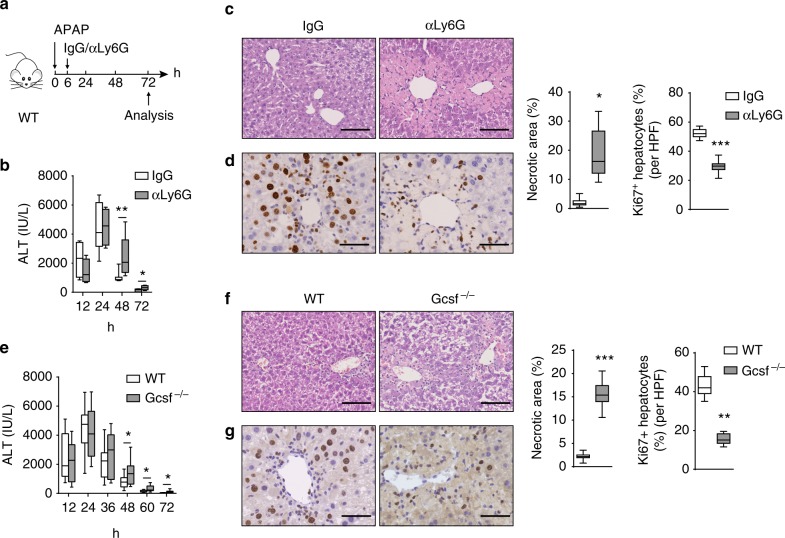
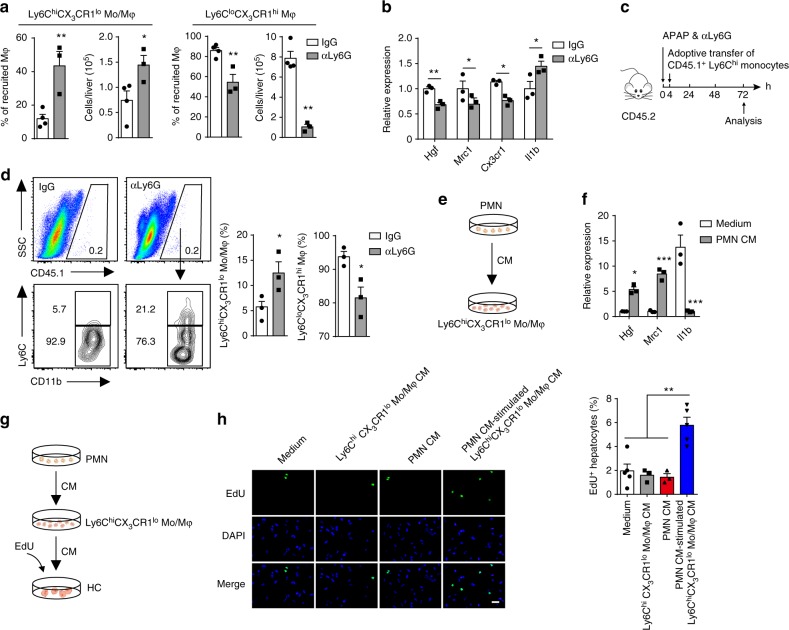
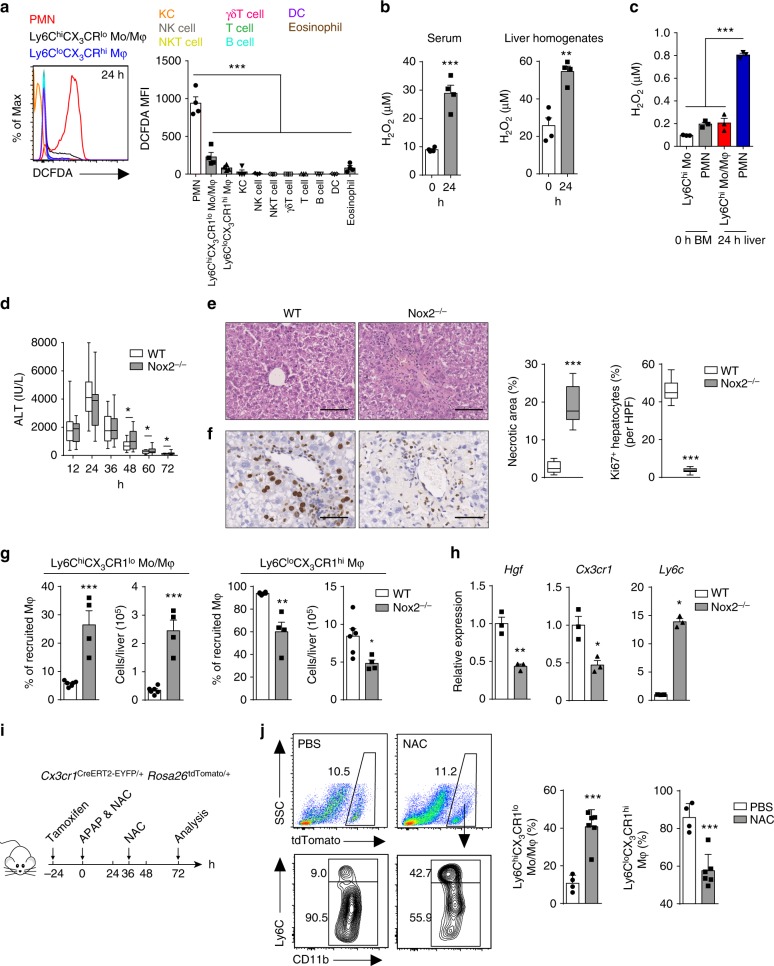
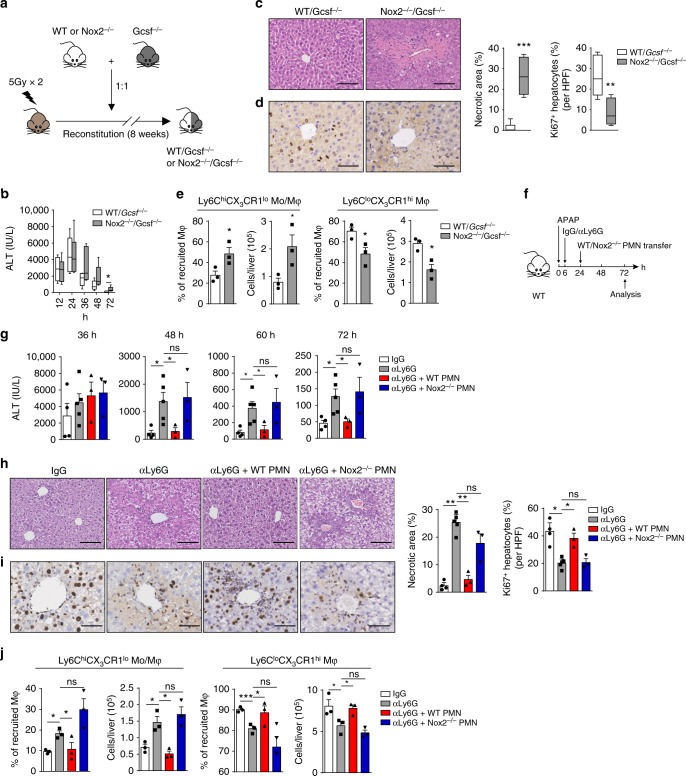
Phagocytes, including neutrophils and macrophages, have been suggested to function in a cooperative way in the initial phase of inflammatory responses, but their interaction and integration in the resolution of inflammation and tissue repair remain unclear. Here we show that neutrophils have crucial functions in liver repair by promoting the phenotypic conversion of pro-inflammatory Ly6C hi CX 3 CR1 lo monocytes/macrophages to pro-resolving Ly6C lo CX 3 CR1 hi macrophages. Intriguingly, reactive oxygen species (ROS), expressed predominantly by neutrophils, are important mediators that trigger this phenotypic conversion to promote liver repair. Moreover, this conversion is prevented by the depletion of neutrophils via anti-Ly6G antibody, genetic deficiency of granulocyte colony-stimulating factor, or genetic deficiency of NADPH oxidase 2 (Nox2). By contrast, adoptive transfer of WT rather than Nox2 −/− neutrophils rescues the impaired phenotypic conversion of macrophages in neutrophil-depleted mice. Our findings thus identify an intricate cooperation between neutrophils and macrophages that orchestrate resolution of inflammation and tissue repair.
Overview
The claims and statistics of this paper haven’t been checked yet.
Free: it reads the open-access text and checks the first 5 claims that cite a source we can check. Create a free account to check every claim.
Integrity signals
Registry
Cites
Statistics
Figures
Verification
Claims the paper makes
The claims and statistics of this paper haven’t been checked yet.
Free: it reads the open-access text and checks the first 5 claims that cite a source we can check. Create a free account to check every claim.
Claims other papers make about this one
Each is checked against this paper’s own text: does it say what the citing paper says it does?
In the citing paper
“However, it has also been suggested that neutrophils can be restorative and promote liver regeneration, and the disease-promoting versus pathogenic roles of neutrophils [90, 91] are likely time-, context- or subpopulation-dependent.”
From Inflammation and immunity in liver homeostasis and disease: a nexus of hepatocytes, nonparenchymal cells and immune cells (2025) · doi:10.1038/s41423-025-01313-7 · cites this paper as [91]
Self-check
Percentages, sums and reported differences re-computed from the paper’s own numbers.
The self-check needs the paper’s full text.
Citations
Cites
Neutrophil recruitment and function in health and inflammation
Kolaczkowska, E., & Kubes, P. (2013) · Nature Reviews Immunology · doi:10.1038/nri3399 · Cited by 5,472
The M1 and M2 paradigm of macrophage activation: Time for reassessment
Martinez, F. O., & Gordon, S. (2014) · F1000Prime Reports · doi:10.12703/p6-13 · Cited by 4,689
AMPK: a nutrient and energy sensor that maintains energy homeostasis
Hardie, D. G., Ross, F. A., & Hawley, S. A. (2012) · Nature Reviews Molecular Cell Biology · doi:10.1038/nrm3311 · Cited by 4,602
Pro-resolving lipid mediators are leads for resolution physiology
Serhan, C. N. (2014) · Nature · doi:10.1038/nature13479 · Cited by 3,041
Neutrophils in the activation and regulation of innate and adaptive immunity
Mantovani, A., Cassatella, M. A., Costantini, C., & Jaillon, S. (2011) · Nature Reviews Immunology · doi:10.1038/nri3024 · Cited by 3,027
Michalopoulos, G. K., & DeFrances, M. C. (1997) · Science · doi:10.1126/science.276.5309.60 · Cited by 2,828
Microglia promote learning-dependent synapse formation through brain-derived neurotrophic factor
Parkhurst, C. N., Yang, G., Ninan, I., Savas, J. N., Yates, J. R., Lafaille, J. J., Hempstead, B. L., Littman, D. R., & Gan, W.-B. (2013) · Cell · doi:10.1016/j.cell.2013.11.030 · Cited by 2,599
Signal transduction by reactive oxygen species
Finkel, T. (2011) · Journal of Cell Biology · doi:10.1083/jcb.201102095 · Cited by 2,322
Transcriptional regulation of macrophage polarization: enabling diversity with identity
Lawrence, T., & Natoli, G. (2011) · Nature Reviews Immunology · doi:10.1038/nri3088 · Cited by 2,284
Monocytes and macrophages: developmental pathways and tissue homeostasis
Ginhoux, F., & Jung, S. (2014) · Nature Reviews Immunology · doi:10.1038/nri3671 · Cited by 1,840
Cited by
Items 201–300 of 367
Zhang, X., Geng, Q., Lin, L., Zhang, L., Shi, C., Liu, B., Yan, L., Cao, Z., Li, L., Li, L., et al. (2024) · Toxicology · doi:10.1016/j.tox.2024.153900 · Cited by 13
Liver Macrophage Diversity in Health and Disease
Horn, P., & Tacke, F. (2024) · Results and problems in cell differentiation · doi:10.1007/978-3-031-65944-7_7 · Cited by 17
Oxidative stress mediated by the NOX2/ROS/NF-κB signaling axis is involved in rosacea
Wang, Y., Long, L., Chen, M., & Li, J. (2025) · Archives of Dermatological Research · doi:10.1007/s00403-025-03898-5 · Cited by 15
“It is especially abundant in immune cells such as neutrophils and macrophages, and is mainly involved in the immune defense mechanism [43, 44].”
Kreimeyer, H., Gonzalez, C. G., Fondevila, M. F., Hsu, C. L., Hartmann, P., Zhang, X., Stärkel, P., Bosques-Padilla, F., Verna, E. C., Abraldes, J. G., et al. (2025) · Gut · doi:10.1136/gutjnl-2024-332730 · Cited by 12
Novel regulators of hepatic macrophages in liver fibrosis
Tang, X., Bai, M., Du, X., Wang, H., Liu, M., Fu, X., Zhang, H., Liang, S., & Wang, L. (2025) · Frontiers in Immunology · doi:10.3389/fimmu.2025.1705503 · Cited by 12
Reviewing the function of macrophages in liver disease
Chen, L., Guillot, A., & Tacke, F. (2025) · Expert Review of Gastroenterology & Hepatology · doi:10.1080/17474124.2025.2508963 · Cited by 17
“…stages, the inflammation resolution and tissue repair depends on the proper functions of these macrophages. where IL-4, IL-10, CX3CL1, neutrophil-derived reactive oxygen species (ROS), and phagocytosis of dead neutrophils are involved, triggering the transition to an early repair phenotype [59].”
Neutrophils, functions beyond host defense
Wang, J., & Wang, J. (2022) · Cellular Immunology · doi:10.1016/j.cellimm.2022.104579 · Cited by 14
Xiong, Y., Huang, X., Jiao, Y., Zhou, C., & Yu, T. (2023) · Biomaterials Advances · doi:10.1016/j.bioadv.2023.213497 · Cited by 12
Liang, Y., Zeng, D., You, Y., Ma, B., Li, X., & Chen, T. (2020) · ACS Medicinal Chemistry Letters · doi:10.1021/acsmedchemlett.0c00105 · Cited by 12
Hsu, C.-Y., Lin, Y., Chang, L.-Y., Huang, S., Huang, C., Yang, C., Huang, C., & Lin, C. (2020) · Frontiers in Immunology · doi:10.3389/fimmu.2020.574839 · Cited by 15
“In addition, a recent study indicated that these neutrophils could promote the phenotypic conversion of pro-resolving macrophages to facilitate tissue repair (36).”
BackgroundRevealing the diversity of neutrophil functions and subsets
Fukushima, K., Nabeshima, H., & Kida, H. (2021) · Cellular and Molecular Immunology · doi:10.1038/s41423-021-00638-3 · Cited by 14
Lu, Y., Chang, N., Zhao, X., Xue, R., Liu, J., Yang, L., & Li, L. (2022) · Frontiers in Immunology · doi:10.3389/fimmu.2022.824385 · Cited by 12
“It was also recently reported that activated neutrophils from acetaminophen (APAP) challenged mice livers promote the phenotypic transformation from proinflammatory macrophages to reparative macrophages by releasing ROS, while non-activated neutrophils from bone marrow do not have this effect (20).”
BackgroundSelf-citationBeyond Killing: The Overlooked Contribution of Neutrophils to Tissue Repair
Anitua, E., Troya, M., & Alkhraisat, M. H. (2025) · International Journal of Molecular Sciences · doi:10.3390/ijms26178669 · Cited by 16
“In a mouse model of APAP-induced liver injury, neutrophils facilitate optimal liver repair by promoting the conversion of macrophages to a pro-resolving phenotype through the production of ROS [60].”
Candela, M. E., Addison, M., Aird, R., Man, T.-Y., Cartwright, J. A., Ashmore-Harris, C., Kilpatrick, A. M., Starkey Lewis, P. J., Drape, A., Barnett, M., et al. (2025) · npj Regenerative Medicine · doi:10.1038/s41536-025-00393-3 · Cited by 11
“Alongside the in fl ammatory response, polymorphonuclear leukocytes (neutrophils) are rapidly recruited to the site of cell injury, providing a substantial source of reactive oxygen species that promote liver repair 20 .”
Zhu, Y.-R., Yang, Y., Ruan, D.-D., Que, Y.-M., Gao, H., Yang, Y.-Z., & Zhao, H. (2025) · International Journal of Molecular Sciences · doi:10.3390/ijms26041493 · Cited by 12
“The predominant inflammatory cell infiltrating the liver in AILI is neutrophils [33,34].”
The dual role of neutrophils in sepsis-associated liver injury
Fang, L., Song, Y. N., Chen, J., & Ding, Y. (2025) · Frontiers in Immunology · doi:10.3389/fimmu.2025.1538282 · Cited by 13
“Neutrophils may help induce a phenotypic switch in macrophages toward a pro-restorative pro fi le through microRNA-223 or ROS, thereby resolving in fl ammation (44, 45).”
Zhang, P., Liu, D., Wu, L., Wu, X., Yan, K., Fan, M., Zou, D., Song, E., Jiang, Y., Xu, Y., et al. (2025) · Hepatology · doi:10.1097/hep.0000000000001309 · Cited by 18
The multiple mechanisms and modes of cell death after acetaminophen overdose
Jaeschke, H., & Ramachandran, A. (2025) · Exploration of Digestive Diseases · doi:10.37349/edd.2025.100569 · Cited by 16
“More recently, additional studies provided direct evidence for a pro-regenerative role of neutrophils by enhanced phagocytosis of necrotic cell debris and by promoting the conversion of monocyte-derived macrophages to the M2 phenotype [110, 120].”
Lopez-Ichikawa, M. A., Vu, N. K., Nijagal, A., Rubinsky, B., & Chang, T. T. (2021) · Scientific Reports · doi:10.1038/s41598-021-94016-8 · Cited by 11
Li, W., Zhang, L., Li, Y.-Y., Wang, X., Li, J.-L., Zhao, S.-N., Ni, M.-Q., Li, Q., & Sun, H. (2022) · International Journal of Molecular Sciences · doi:10.3390/ijms24010670 · Cited by 12
“Nonetheless, these neutrophils have been documented to be mainly dysfunctional [45,46].”
BackgroundRibeiro‐Filho, J., Leite, F. C., Calheiros, A. S., Carneiro, A. B., Azeredo, J. A., de Assis, E. F., Dias, C. D. S., Piuvezam, M. R., & Bozza, P. T. (2019) · Toxins · doi:10.3390/toxins11120705 · Cited by 11
“Curiously, it was also recently reported that neutrophils might participate in the resolution of inflammation mediated by reparative macrophages [5].”
BackgroundRichter, M., Diesterbeck, E., Pylaeva, E., Labusek, N., Köster, C., Nagel, D., Karsch, L., Fischer, A. J., Sous, M., Jung, M., et al. (2025) · Nature Communications · doi:10.1038/s41467-025-65517-1 · Cited by 12
Liu, H., Zhang, B., Chen, H., Wang, H., Qin, X., Sun, C., Pang, Z., & Hu, Y. (2024) · Advanced Science · doi:10.1002/advs.202409895 · Cited by 17
GPR35 prevents drug-induced liver injury via the Gαs-cAMP-PKA axis in macrophages
Zhao, X., Li, Y., Yang, L., Chen, X., Zhang, J., Chen, T., Wang, H., Li, F., Chen, C., Wu, J., et al. (2025) · Cellular and Molecular Life Sciences · doi:10.1007/s00018-025-05751-4 · Cited by 10
“It has been shown that resolution-promoting Ly6 C lo CX3 CR1 hi macrophages improve liver repair during APAP-induced liver injury [37].”
Self-citationWickstead, E. S., Irving, M. A., Getting, S. J., & McArthur, S. (2021) · FEBS Journal · doi:10.1111/febs.15861 · Cited by 11
Two transcriptionally and functionally distinct waves of neutrophils during mouse acute liver injury
Maali, Y., Molina, M. F., Khedr, O., Abdelnabi, M. N., Dion, J., Hassan, G. S., & Shoukry, N. H. (2024) · Hepatology Communications · doi:10.1097/hc9.0000000000000459 · Cited by 9
“[8] Depleting neutrophils were associated with both improvement and worsening liver injuries, implying fine regulation of different neutrophil subtypes with distinct functions.”
BackgroundMacrophage ATG16L1 promotes liver regeneration after partial hepatectomy
Zhan, X., Bai, Y., Zhu, Q., Gao, Y., Fan, L., Bu, Q., Zhu, Z., Rao, Z., & Zhou, H. (2025) · JHEP Reports · doi:10.1016/j.jhepr.2025.101330 · Cited by 11
Systemic and metabolic control of liver regeneration
Deng, Y., Zhao, Z., Sun, Y., & Ma, L. (2025) · Trends in Endocrinology and Metabolism · doi:10.1016/j.tem.2025.09.008 · Cited by 11
Epigenetic and Metabolic Regulation of Macrophages during Gout
Cobo, I., Murillo‐Saich, J., Alishala, M., & Gumá, M. (2023) · Gout Urate and Crystal Deposition Disease · doi:10.3390/gucdd1030013 · Cited by 11
Pretreatment of UC-MSCs with IFN-α2 improves treatment of liver fibrosis by recruiting neutrophils
Xie, Y., Yao, J., Yan, M., Lin, Y., Wei, J., Wang, H., Mao, Y., Liu, P., & Li, X. (2023) · Journal of Translational Medicine · doi:10.1186/s12967-023-04732-0 · Cited by 9
“Some studies have suggested that the damage-repair ability of neutrophils depends on their synergy with anti-inflammatory macrophages [53, 54].”
BackgroundLuyendyk, J. P., Morozova, E., & Copple, B. L. (2023) · Drug Metabolism and Disposition · doi:10.1124/dmd.123.001280 · Cited by 10
“Specifically, neutrophils shape the monocyte/macrophage response to liver injury which is essential for the clearance of dead cell debris and for triggering the resolution of inflammation (Graubardt et al., 2017b; Yang et al., 2019b; Chauhan et al., 2020).”
BackgroundInfluentialUmbaugh, D. S., & Jaeschke, H. (2024) · Expert Review of Clinical Pharmacology · doi:10.1080/17512433.2024.2306219 · Cited by 9
“The temporal relationship between these events aligns with the described role of neutrophils promoting a reparative macrophage phenotype [33], and macrophages in inducing hepatocyte proliferation [34,35].”
BackgroundAcetaminophen overdose-induced acute liver injury can be alleviated by static magnetic field
Chen, H.-X., 中国科学院合肥物质科学研究院强磁场科学中心, 中., Wang, X., Yu, B., Feng, C., Cheng, G.-F., Zhang, L., Wang, J., Wang, Y., Guo, R.-W., et al. (2024) · 动物学研究 · doi:10.24272/j.issn.2095-8137.2023.410 · Cited by 11
Multifaceted roles of neutrophils in cardiac disease
Morrissey, S. M., Kirkland, L. G., Phillips, T. K., Levit, R. D., Hopke, A. R., & Jensen, B. C. (2025) · Journal of Leukocyte Biology · doi:10.1093/jleuko/qiaf017 · Cited by 14
Paredes, L. C., Luz, R. B. D. S., Tozzi, O. N., de Carvalho, L. Â. S. J., Calado, S. L. D. M., Padovani, B. N., Morales, C., do Amaral, M. A., de Assis, H. C. S., Câmara, N. O. S., et al. (2021) · Scandinavian Journal of Immunology · doi:10.1111/sji.13026 · Cited by 11
Salem, F. E. H., Yehia, H. M., Korany, S. M., Alarjani, K. M., AL-MASOUD, A. H., & El‐Khadragy, M. F. (2022) · Food Science and Technology · doi:10.1590/fst.97322 · Cited by 9
The Role of Immune Cells in Liver Regeneration
Wen, Y. (2023) · Livers · doi:10.3390/livers3030029 · Cited by 9
“The depletion of neutrophils via the anti-Ly6G antibody or genetic deficiency of NADPH oxidase 2 impedes the phenotypic conversion of macrophages and liver regeneration [29,37,72].”
BackgroundThe Immune Microenvironment: New Therapeutic Implications in Organ Fibrosis
Chen, X., Wu, C. F., Tang, F., Zhou, J., Mo, L., Li, Y., & He, J. (2025) · Advanced Science · doi:10.1002/advs.202505067 · Cited by 15
Immunometabolic integration in therapeutic strategies for managing MASLD
González-Serrano, S., Onoiu, A.-I., Camps, J., & Joven, J. (2025) · Frontiers in Pharmacology · doi:10.3389/fphar.2025.1693753 · Cited by 8
Li, J., Gao, Y., Cui, L., He, H.-Y., Zheng, J., Mo, S., Zhou, X., Chu, S., Sun, X., Chen, N., et al. (2022) · Journal of Pharmacy and Pharmacology · doi:10.1093/jpp/rgab180 · Cited by 9
Guo, Z., & Liang, J. (2022) · Lipids in Health and Disease · doi:10.1186/s12944-022-01759-y · Cited by 10
“Immune cell fractions and immune checkpoints Myeloid-derived suppressor cells (MDSCs) [26], Regulatory T (Treg) cells [26], natural killer (NK) T cells [27] and neutrophils [28] within the HCC micromanage were thought in association with immune suppression.”
BackgroundTargeting cathepsin C ameliorates murine acetaminophen-induced liver injury
Raith, J., Bachmann, M., Gonther, S., Stülb, H., Aghdassi, A. A., Pham, C. T. N., & Mühl, H. (2024) · Theranostics · doi:10.7150/thno.96092 · Cited by 9
“Contrari-wise, neutrophils are also supposed to promote resolution of APAP-induced ALI by removing cell debris [ 20 ] and by supporting the generation of pro-resolving macrophages [ 21 ] .”
BackgroundJaeschke, H., & Ramachandran, A. (2020) · Hepatology · doi:10.1002/hep.31490 · Cited by 8
“In fact, a recent paper reported a role for neutrophils in the conversion of the proinflammatory phenotype of freshly recruited monocytes to the proregenerative phenotype critical for recovery.(8) Thus, these recent studies provide direct evidence for two beneficial mechanisms of neutrophil involvement in the recovery…”
BackgroundNovel Mechanisms for Resolution of Liver Inflammation: Therapeutic Implications
Kaufmann, B., Reca, A., Kim, A. D., & Feldstein, A. E. (2021) · Seminars in Liver Disease · doi:10.1055/s-0041-1723031 · Cited by 8
Macrophages at the Crossroads of Chronic Stress and Cancer
Momčilović, S., Milošević, M. S., Kočović, D. M., Marković, D. C., Zdravković, D., & Vignjević, S. (2025) · International Journal of Molecular Sciences · doi:10.3390/ijms26146838 · Cited by 10
“Hence, macrophages cooperate with neutrophils, which exhibit a critical function in tissue repair by promoting the phenotypic conversion of proinflammatory to pro-resolving macrophages [7].”
Shen, J., Huang, S., Wang, Y., Wang, Q., Lin, S., Guan, W., Gong, Y., Si, Y., Zhao, M., Zhou, H., et al. (2026) · JCI Insight · doi:10.1172/jci.insight.191479 · Cited by 10
“This aligns with studies demonstrating that neutrophil depletion in drug-induced acute liver injury models impedes macrophage turnover during liver repair, resulting in elevated serum ALT levels and increased liver necrosis (39).”
Adelusi, O. B., Akakpo, J. Y., Eichenbaum, G. M., Sadaff, E., Ramachandran, A., & Jaeschke, H. (2024) · Archives of Toxicology · doi:10.1007/s00204-024-03725-2 · Cited by 7
“…damage-associated molecular patterns (DAMPs) from necrotic hepatocytes triggers the activation and recruitment of immune cells (Jaeschke et al. 2012; Kubes and Mehal 2012), a critical step in the initiation of liver recovery from the injury (Dambach et al. 2002; Holt et al. 2008; Yang et al. 2019).”
Xu, L., Liu, Y., Jiao, Y., Zhong, K., Li, J., Guan, Y., Wei, H., Lou, W., & Ge, J. (2024) · Food Chemistry · doi:10.1016/j.foodchem.2024.140327 · Cited by 8
Tian, W., Zhao, J., Choo, B.-K., Kim, I., Ahn, D., Tae, H., Islam, M. S., & Park, B. (2021) · Environmental Science and Pollution Research · doi:10.1007/s11356-021-14530-0 · Cited by 9
Fpr2−/− Mice Developed Exacerbated Alcohol-Associated Liver Disease
Hardesty, J., Warner, J. B., Song, Y., Floyd, A., McClain, C. J., Warner, D. R., & Kirpich, I. (2023) · Biology · doi:10.3390/biology12050639 · Cited by 7
“Recently, it has been demonstrated that neutrophils can promote MoMF differentiation via an H2O2-dependent mechanism [29].”
BackgroundResultInfluentialCXCL5 Promotes Acetaminophen-Induced Hepatotoxicity by Activating Kupffer Cells
Qiu, K., Pan, Y., Huang, W., Li, M., Yan, X., Zhou, Z., & Qi, J. (2023) · International Journal of Molecular Sciences · doi:10.3390/ijms241512180 · Cited by 8
CLEC-1 Restrains Acute Inflammatory Response and Recruitment of Neutrophils following Tissue Injury
Camille, L., Coronilla, J. S., Berangere, E., Drouin, M., Mérieau, E., Mary, C., Biteau, K., Wilhelm, E., Batty, C., Gauttier, V., et al. (2024) · The Journal of Immunology · doi:10.4049/jimmunol.2300479 · Cited by 7
Hepatic macrophages in drug-induced liver injury
Shan, Z., & Ju, C. (2019) · Liver Research · doi:10.1016/j.livres.2019.11.002 · Cited by 8
3D-printed scaffolds with ROS-clearing capacity for critical-sized bone defect regeneration
Chen, P., Xia, Y., Wu, Y., Wu, X., Wang, Y., & Dai, H. (2025) · Biomaterials Advances · doi:10.1016/j.bioadv.2025.214575 · Cited by 6
Self-citationYan, J., Huang, A., Zhang, S., Yao, N., Huang, J., Jiang, Z., Wang, J., Chen, F., Yu, Q., Cheng, J., et al. (2025) · Gut · doi:10.1136/gutjnl-2025-336300 · Cited by 11
Song, P., Wu, Y., Chen, X., Liu, Y., Dong, M., Shi, J., Wang, X., Dong, N., Qiao, W., & Wang, Q. (2025) · BMEMat · doi:10.1002/bmm2.70053 · Cited by 6
Self-citationBensemmane, L., Milliat, F., Tréton, X., & Linard, C. (2023) · Stem Cell Research & Therapy · doi:10.1186/s13287-023-03562-7 · Cited by 8
“In the past, neutrophils have been generally linked to the exacerbation of tissue injury through ROS release, but recent work revealed that neutrophil– monocyte cooperation performs key liver repair functions, with ROS-triggered macrophage skewing toward a reparative phenotype [38].”
BackgroundTaurine ameliorates liver fibrosis by repressing Fpr2-regulated macrophage M1 polarization
Xie, K., Zhang, Y., Ou, X., Xiao, Y., Luo, J., & Tan, S. (2025) · European Journal of Pharmacology · doi:10.1016/j.ejphar.2025.177614 · Cited by 8
Xu, G., Xue, J., Jiang, J., Liang, T., Yao, Y., Liao, S., Chen, T., Li, H., Liu, C., & Zhan, X. (2020) · Tuberculosis · doi:10.1016/j.tube.2020.102039 · Cited by 6
Ying, C., Fang, X., Wang, H., Yang, Y., Xu, P., Liu, K., & Yin, G. (2022) · Journal of Fish Biology · doi:10.1111/jfb.15027 · Cited by 6
Redox-Activation of Neutrophils Induced by Pericardium Scaffolds
Vlasova, I. I., Suleimanov, S. K., Mikhalchik, E. V., Urmantaeva, N., Salimov, E. L., Ragimov, A. A., Khlebnikova, T., & Timashev, P. S. (2022) · International Journal of Molecular Sciences · doi:10.3390/ijms232415468 · Cited by 6
“ROS produced by neutrophils were found to be important mediators that trigger the phenotypic conversion of macrophages to pro-resolving state-orchestrating liver repair [41].”
BackgroundThe danger signal interferon-induced protein 35 (IFP35) mediates acetaminophen-induced liver injury
Mao, X., Wu, D., Xu, N., Wang, J., Zeng, J., Jiang, Z., Liu, Y., & Liang, H. (2022) · Biochemical and Biophysical Research Communications · doi:10.1016/j.bbrc.2022.06.086 · Cited by 6
Metabolic symphony coordinates the muscle regeneration niche
Lu, Y., Chi, Z., & Wang, D. (2025) · Trends in Molecular Medicine · doi:10.1016/j.molmed.2025.07.006 · Cited by 7
Tao, Y., Zhang, M., Chen, L., Jia, H., Yang, Y., Wu, Y., Li, P., Wen, Z., Zhang, X., Chen, X., et al. (2026) · Redox Biology · doi:10.1016/j.redox.2025.104002 · Cited by 7
“AMPK activation can be triggered by upstream Ca 2 + -CaMKK β pathway [30].”
Self-citationThe role of neutrophils in corneal nerve regeneration
Zhao, X., Zhang, M., Li, F., Ma, C., Wang, D., & Wang, Y. (2023) · BMC Ophthalmology · doi:10.1186/s12886-023-03088-9 · Cited by 5
Self-citationCapece, G. E., Patel, A. M., Hu, D. C., Roychowdhury, T., Hazel, B., Kothapalli, J., Mac, N. A., Denorme, F., Campbell, R. A., & Poole, L. G. (2025) · Toxicological Sciences · doi:10.1093/toxsci/kfaf123 · Cited by 5
“On the other hand, additional experimental evidence indicates that neutrophil depletion delays liver repair and injury resolution following challenge with hepatotoxicants such as carbon tetra-chloride (CCl 4 ) (Saijou et al. 2018; Calvente et al. 2019) or acetaminophen (Yang et al. 2019).”
Innate Immune Cells during Machine Perfusion of Liver Grafts—The Janus Face of Hepatic Macrophages
Pollmann, N. S., Pascher, A., & Becker, F. (2022) · Journal of Clinical Medicine · doi:10.3390/jcm11226669 · Cited by 7
“Their beneficial role is partly due to the promotion of a macrophage phenotype switch from pro-inflammatory macrophages (Ly6Chigh CX3CR1low) to reparative macrophages (Ly6Clow, CX3CR1high), as suggested in acute liver injury [73].”
BackgroundHuman Neutrophil α-Defensins 1–3 Are Upregulated in the Microenvironment of Fibrotic Liver
Fanne, R. A., Maraga, E., Kassem, E., Groisman, G. M., Amsalem, N., Zeina, A., Mouch, M. A., Taher, R., & Abu‐Mouch, S. (2023) · Medicina · doi:10.3390/medicina59030496 · Cited by 6
“mechanistically associated with alleviation of fibrosis through matrix metalloproteinaseinduced collagen degradation [20,21], or polarizing macrophages toward anti-inflammatory phenotype [22].”
BackgroundTrail Formation Alleviates Excessive Adhesion and Maintains Efficient Neutrophil Migration
Hu, W., Gao, W., Gong, Y., Guo, P., Li, W., Shu, X., Lü, S., Zeng, Z., Zhang, Y., & Long, M. (2023) · ACS Applied Materials & Interfaces · doi:10.1021/acsami.3c00288 · Cited by 6
Rat deconvolution as knowledge miner for immune cell trafficking from toxicogenomics databases
Morita, K., Mizuno, T., Azuma, I., Suzuki, Y., & Kusuhara, H. (2023) · Toxicological Sciences · doi:10.1093/toxsci/kfad117 · Cited by 5
“…importance of various immune cells, such as Kupffer cells and NKT cells, has been demonstrated individually, their contribution to the progression of liver injury and their relationship with each other has remained largely unknown (Laskin et al. , 1995; Liu et al. , 2004; 2006; Yang et al. , 2019).”
BackgroundKlement, L., Jansakun, C., Yan, B., Staffer, S., Tuma‐Kellner, S., Altamura, S., Muckenthaler, M. U., Merle, U., & Chamulitrat, W. (2024) · Biochimica et Biophysica Acta (BBA) - Molecular Basis of Disease · doi:10.1016/j.bbadis.2024.167016 · Cited by 8
Torabi, S., Zarrabi, M., Shekari, F., Poorkazem, H., Lotfinia, M., Bencina, S., Gramignoli, R., Hassan, M., Najimi, M., & Vosough, M. (2024) · Journal of Cellular and Molecular Medicine · doi:10.1111/jcmm.18507 · Cited by 7
Temporal dichotomy of neutrophil function in acute liver injury and repair
Cartwright, J. A., Potey, P. M., Livingstone, E. J., Campana, L., Lewis, P. J. S., Oremek, M. E. M., Gachanja, N. N., Rinaldi, G., Aird, R. E., Man, T. Y., et al. (2025) · JHEP Reports · doi:10.1016/j.jhepr.2025.101417 · Cited by 10
“Standard chow and mash were returned to mice 20 min after injection and all mice were maintained in warming cabinets (28 (cid:2) C).”
Semaphorin 7a is protective through immune modulation during acetaminophen-induced liver injury
Livingstone, E. J., Cartwright, J. A., Campana, L., Lewis, P. J. S., Dwyer, B. J., Aird, R. E., Man, T. Y., Vermeren, M., Rossi, A. G., Boulter, L., et al. (2025) · Journal of Inflammation · doi:10.1186/s12950-025-00429-x · Cited by 4
“Neutrophils have controversial roles in APAP-ALI, with reports indicating they contribute to injury, or tissue repair [40–44].”
Li, R., Zhao, Y., Zhang, S. M., Liu, Y., Chi, C., Wu, D., & Song, J. (2025) · Macromolecular Bioscience · doi:10.1002/mabi.202500084 · Cited by 4
HNF4A ameliorates acute liver failure by inhibiting NCOA4-mediated ferritinophagy
Yu, W., & Zhao, C. (2025) · Scientific Reports · doi:10.1038/s41598-025-13798-3 · Cited by 6
Intestinal Bacterium Akkermansia muciniphila Inhibits Progression of Abdominal Aortic Aneurysm
He, X., Liu, Y., Zhou, H., & Wu, K. (2025) · Antioxidants and Redox Signaling · doi:10.1177/15230864251376034 · Cited by 5
“Additionally, the anti-ly6G treatment promotes neutrophil depletion (Yang et al., 2019), while DNase I treatment facilitates NET degradation (Jarrahi et al., 2023).”
Hashai, K., Abadi, F., Clyman, D., Shany‐Kdoshim, S., & Polak, D. (2023) · Journal of Periodontal Research · doi:10.1111/jre.13160 · Cited by 4
García‐Sáez, J., Figueroa‐Fuentes, M., González‐Corralejo, C., Roncero, C., Lazcanoiturburu, N., Gutiérrez-Uzquiza, Á., Vaquero, J., Gonzalez‐Sanchez, E., Bhutia, K., Calero‐Pérez, S., et al. (2024) · International Journal of Biological Sciences · doi:10.7150/ijbs.90645 · Cited by 4
“…recruitment is part of the inflammatory response to pathogens or injury signals, and although generally associated to hepatocyte toxicity in early stages of the cholestatic injury, they have been also associated with repair, and an indispensable role in tissue regeneration has been granted [74, 75]”
BackgroundCellular effects of splenectomy on liver regeneration after 70% resection
Elchaninov, A. V., Vishnyakova, P., Gantsova, E. A., Chirkova, M., Karyagina, V., Anatoliy, L., Kananykhina, E. Y., Kuznetsova, M., Atabekov, I., Karpulevich, E., et al. (2025) · Frontiers in Cell and Developmental Biology · doi:10.3389/fcell.2025.1561815 · Cited by 4
Ontogenetic drivers of neutrophil heterogeneity
Hageb, A., Farjia, M., Osei-Sarpong, C., & Silvestre-Roig, C. (2025) · Experimental Hematology · doi:10.1016/j.exphem.2025.104863 · Cited by 6
Adelusi, O. B., Schneider, C., McKimens, C., Luyendyk, J. P., Ramachandran, A., & Jaeschke, H. (2025) · Archives of Toxicology · doi:10.1007/s00204-025-04144-7 · Cited by 4
“Previous reports have shown that neutrophils do not contribute to liver injury after a 300 mg/kg overdose of APAP (Cover et al. 2006; Law-son et al. 2000; Kono et al. 2010; Schulte et al 2024; Yang et al. 2019).”
InfluentialLIFR recruits HGF-producing neutrophils to promote liver injury repair and regenerationPreprint
Deng, Y., Zhao, Z., Sheldon, M., Zhao, Y., Teng, H., Martinez, C., Zhang, J., Lin, C., Sun, Y., Fan, Y., et al. (2023) · bioRxiv (Cold Spring Harbor Laboratory) · doi:10.1101/2023.03.18.533289 · Cited by 4
Targeting the HDAC6/Hint2/MICU1 axis to ameliorate acute liver failure via inhibiting NETosis
Guo, J., Shi, C., Wang, Y., Zhang, D., Zhang, Q., Zhang, X., Wang, L., & Gong, Z. (2025) · Life Sciences · doi:10.1016/j.lfs.2025.123498 · Cited by 5
Hepatocyte iron suppresses liver fibrosis via fibrolytic neutrophil recruitment in cholestasis
Kanamori, Y., Nita, A., Nakayama, K. I., Kurotaki, D., Harada, K., & Moroishi, T. (2025) · JHEP Reports · doi:10.1016/j.jhepr.2025.101590 · Cited by 4
“24,38,39 As part of their restorative role, neutrophils instruct Ly6C hi proinflammatory macrophages to acquire reparative phenotypes in acetaminophen-or CCl 4 -induced liver injury.”
Dialogues in Immunity: The Interplay Between Neutrophils and Macrophages
Anitua, E., Troya, M., & Alkhraisat, M. H. (2026) · Biomedicines · doi:10.3390/biomedicines14030520 · Cited by 4
“…shift in macrophages from a pro-inflammatory (Ly6C hi CX3CR1 lo ) to a pro-resolving (Ly6C lo CX3CR1 hi ) state, a transition driven, among others, by neutrophil-derived ROS and potentially mediated by AMPK activation, which reprograms macrophage metabolism toward a reparative profile [13].”
The immunometabolic nature of MASH: framing immune cells within metabolic dysfunction
González-Serrano, S., Onoiu, A.-I., Jiménez-Franco, A., Cambra-Cortés, V., Camps, J., & Joven, J. (2026) · Frontiers in Immunology · doi:10.3389/fimmu.2026.1797949 · Cited by 4
“As a result, macrophages would shift toward restorative phenotypes that contribute to tissue regeneration following cessation of the hepatic insult (95) (Figure 4A).”
Ouyang, S.-X., Xu, Y.-G., Ding, P., Long, Y., Zhang, Z., Sun, S.-J., Zhang, Y., Yin, H., Zhang, J.-B., Cao, Q., et al. (2025) · Toxicology · doi:10.1016/j.tox.2025.154058 · Cited by 4
Therapeutic targeting of myeloid cells in liver fibrosis: Mechanisms and clinical prospects
Wang, Y., Liu, Y., Chen, D., Liu, L., Sun, L., & Zhang, L. (2025) · Animal Models and Experimental Medicine · doi:10.1002/ame2.70053 · Cited by 5
Inflammation und perioperative Organdysfunktion
Rossaint, J., & Margraf, A. (2020) · Der Anaesthesist · doi:10.1007/s00101-020-00886-4 · Cited by 8
Shaker, M. E., Gomaa, H. A. M., Hazem, S. H., Abdelgawad, M. A., El‐Mesery, M., & Shaaban, A. A. (2023) · Frontiers in Pharmacology · doi:10.3389/fphar.2023.1212771 · Cited by 4
Neutrophil and macrophage crosstalk might be a potential target for liver regeneration
Chen, Y., Yang, Y., Lu, J., Chen, H., Shi, Z., Wang, X., Xu, N., Xu, X., & Wang, S. (2024) · FEBS Open Bio · doi:10.1002/2211-5463.13803 · Cited by 3
“Notably, after partial hepatectomy (PH) or associated liver partition and portal vein ligation for staged hepatectomy, neutrophils and macrophages undergo a phenotypic transition from pro-inflammatory to pro-regenerative states as they diligently clear cell debris [14,15].”
BackgroundZhu, M., Li, Y., Liu, D., & Gong, Z. (2024) · Cancers · doi:10.3390/cancers16101793 · Cited by 3
“As a main source of ROS, tumor-associated neutrophils (TANs) have been reported to play essential roles in liver regeneration and HCC development [37,38].”
BackgroundRedox, cysteines, and kinases—A triad sustaining myeloid leukemia
Marensi, V. (2024) · Advances in cancer research · doi:10.1016/bs.acr.2024.04.008 · Cited by 3
CELLULAR AND MOLECULAR MECHANISMS OF LIVER FIBROGENESIS
Lebedeva, E. I., & Myadelets, O. D. (2019) · Hepatology and Gastroenterology · doi:10.25298/2616-5546-2019-3-2-119-126 · Cited by 7
“Пути, лежащие в основе этого переключения, представляют большой интерес и являются терапевтически привлекательными [33, 34].”
Hierarchical Assembly of Flexible Biopolymer Polyphosphate‐Manganese into Nanosheets
Wang, J., Tao, Y., Juan, Y., Zhou, H., Zhao, X., Cheng, X., Wang, X., Quan, X., Li, J., Huang, K., et al. (2022) · Small · doi:10.1002/smll.202203200 · Cited by 4
Self-citationMultiple cell-type interactions drive invariant NKT cell hepatitis
Tan, J., Ji, L., Li, Q., Guo, R., Hao, Y., Xiao, P., Zai, Q., Zhang, X., Gao, Y., Zhang, X., et al. (2025) · Hepatology Communications · doi:10.1097/hc9.0000000000000592 · Cited by 4
“[10] Interestingly, α -Galcer – mediated NKT hepatitis can cause the accumulation of neutrophils in the liver, leading to liver damage and inflammation.”
Xu, F. H., Jansakun, C., Li, G., Biswas, U., Poschet, G., Staffer, S., Tuma‐Kellner, S., Nakchbandi, I. A., Merle, U., & Chamulitrat, W. (2025) · Biomedicine & Pharmacotherapy · doi:10.1016/j.biopha.2025.118146 · Cited by 2
Nahiyera, M., Sinha, S., Dhankani, P., Singhal, A., Singh, A., Sharma, R. K., Gond, A., Atter, P., Gupta, K., Mitra, K., et al. (2025) · Cell Reports · doi:10.1016/j.celrep.2025.115995 · Cited by 2
Immune cells in liver regeneration: Current evidence and potential clinical targets
Moore, H. F., Usmani, S., Froghi, S., Rashidi, H., Quaglia, A., Fuller, B. J., & Davidson, B. R. (2025) · International Reviews of Immunology · doi:10.1080/08830185.2025.2531820 · Cited by 5
“Ly6C hi (CCR2 + CX3CR1 lo ) monocytes are known as classical, inflammatory monocytes which are rapidly recruited in response to tissue injury [206,264].”
Influential
Metadata
- Authors
- Yang, W., Tao, Y., Wu, Y., Zhao, X., Ye, W., Zhao, D., Fu, L., Tian, C., Yang, J., He, F., & Tang, L.
- Affiliations
- Beijing Proteome Research Center (CN)
- Anhui Medical University (CN)
- Corresponding author
- He, Fuchu
- Tang, Li
- Venue
- Nature Communications
- Published
- 2019-03-06
- Volume
- 10
- Issue
- 1
- Pages
- 1076-1076
- ISSN
- 2041-1723 (ISSN-L)
- PMC
- PMC6403250
- OpenAlex
- W2920290417
- Semantic Scholar
- cbea83169e42ebddfc502c37c6b1b2151a8285d8
- Cited by
- 367
- References
- 71
- Citations by year
- 2026: 22 · 2025: 65 · 2024: 47 · 2023: 58 · 2022: 67 · 2021: 50 · 2020: 46 · 2019: 11
- FWCI
- 27.88
- Type
- journal article
- Language
- en
- Open access
- gold
- doi.org
- Licence
- cc-by
- creativecommons.org/licenses/by/4.0 (tdm)
- creativecommons.org/licenses/by/4.0 (vor)
- Locations
- Nature Communications (publishedVersion, cc-by)
- Europe PMC (PubMed Central) (publishedVersion, other-oa)
- PubMed Central (publishedVersion, cc-by)
- PubMed (publishedVersion)
- RePEc: Research Papers in Economics (submittedVersion)
- DOAJ (DOAJ: Directory of Open Access Journals) (submittedVersion)
- DOAJ (DOAJ: Directory of Open Access Journals) (submittedVersion, cc-by-sa)
- Funders
- Ludwig Institute for Cancer Research
- York University
- Chinese Academy of Sciences (2014CBA02000)
- Wuhan University
- Institute of Biophysics, Chinese Academy of Sciences
- Topics
- Health Sciences › Medicine › Hepatology › Liver physiology and pathology
- Life Sciences › Immunology and Microbiology › Immunology › Neutrophil, Myeloperoxidase and Oxidative Mechanisms
- Life Sciences › Immunology and Microbiology › Immunology › Immune cells in cancer
- Keywords
- neutrophils, reparative macrophages, liver repair, reactive oxygen species, inflammation resolution, Ly6C, CX3CR1, granulocyte colony-stimulating factor, NADPH oxidase 2, NOX2, adoptive transfer, tissue repair
- MeSH terms
- NADPH Oxidase 2, Acetaminophen, Animals, Cells, Cultured, Disease Models, Animal, Humans, Liver, Liver Regeneration, Macrophages, Male, Neutrophils, Bone Marrow Transplantation, Reactive Oxygen Species, Transplantation Chimera, Mice, Knockout, Adoptive Transfer, Mice, Chemical and Drug Induced Liver Injury, Primary Cell Culture
About these checks
Registry, retraction, Cites and statistics results are computed, not judged, with one exception: a printed reference that no index lists is read once by a model before it counts as a citation error. Claims are extracted by a model and kept only when their quote appears verbatim in the text; each cited source is then checked, with a model’s help, for whether it says what the claim relies on. Those verdicts can be wrong — read the claim’s quote and the cited source before relying on one.
Statistics and arithmetic are recomputed, not judged.
Confidence bands are shown only for fields calibrated on our annotated test set. None is calibrated yet, so no band is shown.
What counts as a claim ›How we measure confidence ›How we check this ›
Are you an author, or do you see a problem with this page? Request a review
Data sources
Bibliographic data: Semantic Scholar, OpenAlex, Crossref.
Contains information from the Semantic Scholar Academic Graph Datasets, made available under the ODC Attribution License (ODC-BY 1.0).
Semantic Scholar’s data is described in: Kinney, R., et al. (2023). The Semantic Scholar Open Data Platform. arXiv:2301.10140.
