

Structure of the plastic-degrading Ideonella sakaiensis MHETase bound to a substrate
Open accessThe DOI matches its Crossref record; 39 of the 40 references it cites were found in a registry or an index.
Abstract
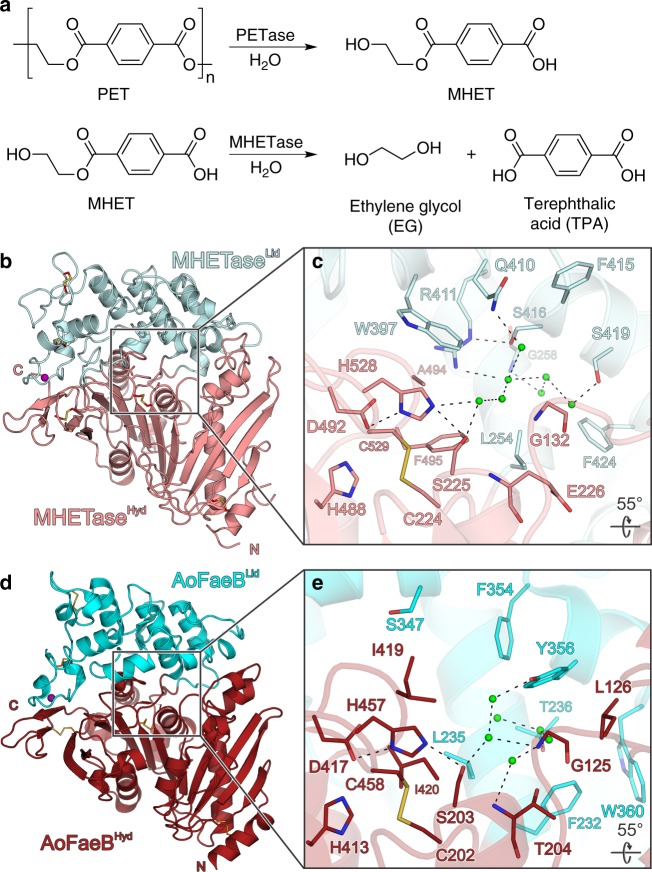
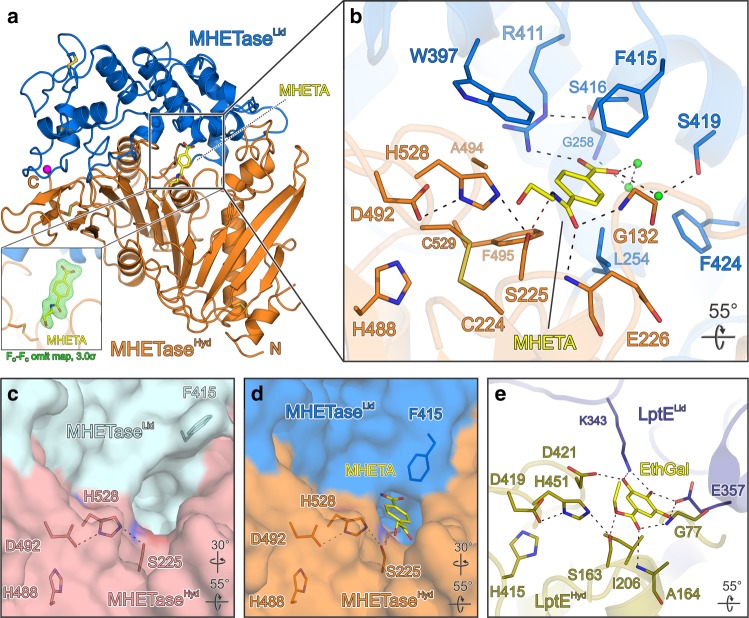
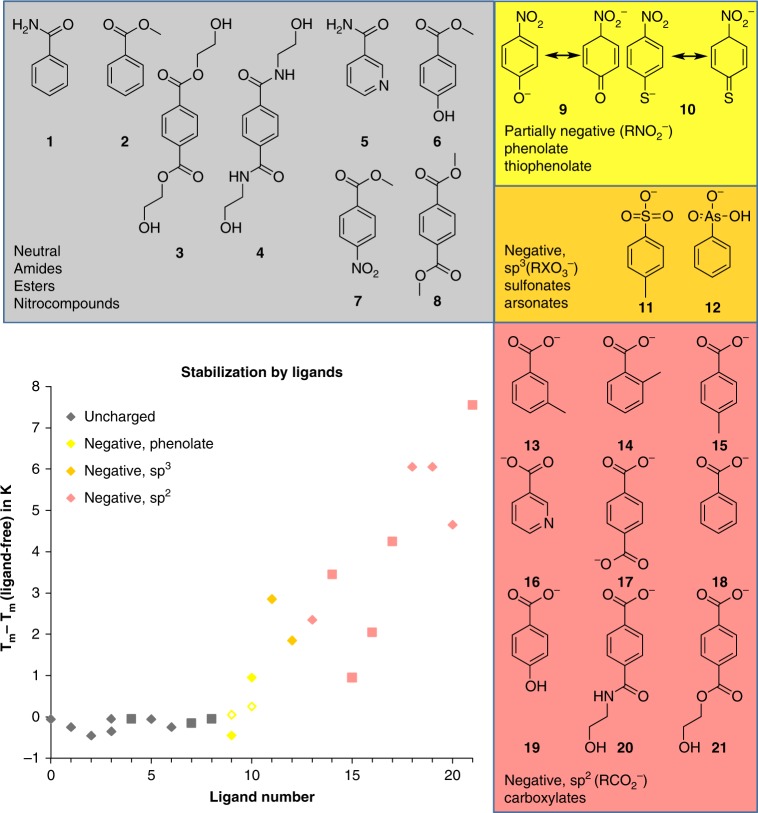
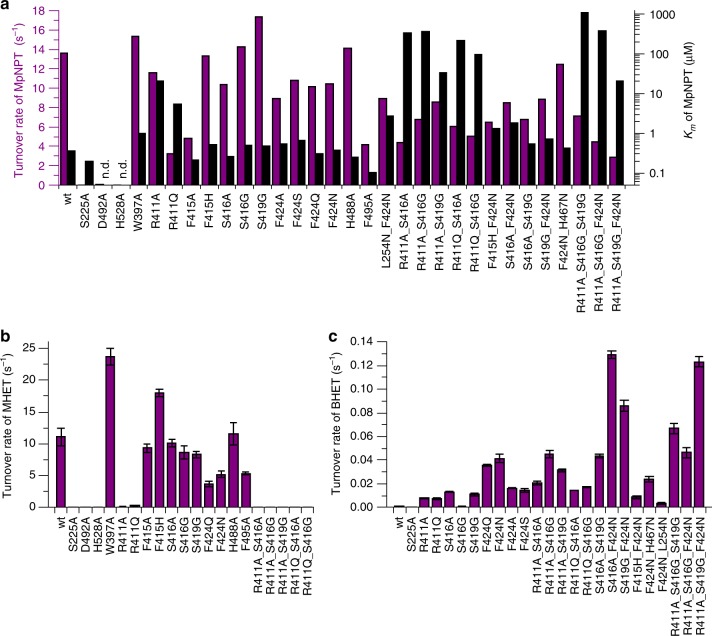
The extreme durability of polyethylene terephthalate (PET) debris has rendered it a long-term environmental burden. At the same time, current recycling efforts still lack sustainability. Two recently discovered bacterial enzymes that specifically degrade PET represent a promising solution. First, Ideonella sakaiensis PETase, a structurally well-characterized consensus α/β-hydrolase fold enzyme, converts PET to mono-(2-hydroxyethyl) terephthalate (MHET). MHETase, the second key enzyme, hydrolyzes MHET to the PET educts terephthalate and ethylene glycol. Here, we report the crystal structures of active ligand-free MHETase and MHETase bound to a nonhydrolyzable MHET analog. MHETase, which is reminiscent of feruloyl esterases, possesses a classic α/β-hydrolase domain and a lid domain conferring substrate specificity. In the light of structure-based mapping of the active site, activity assays, mutagenesis studies and a first structure-guided alteration of substrate specificity towards bis-(2-hydroxyethyl) terephthalate (BHET) reported here, we anticipate MHETase to be a valuable resource to further advance enzymatic plastic degradation.
Overview
The claims and statistics of this paper haven’t been checked yet.
Free: it reads the open-access text and checks the first 5 claims that cite a source we can check. Create a free account to check every claim.
Integrity signals
Registry
Cites
Statistics
Figures
Verification
Claims the paper makes
The claims and statistics of this paper haven’t been checked yet.
Free: it reads the open-access text and checks the first 5 claims that cite a source we can check. Create a free account to check every claim.
Self-check
Percentages, sums and reported differences re-computed from the paper’s own numbers.
The self-check needs the paper’s full text.
Citations
Cites
Basic local alignment search tool
Altschul, S. F., Gish, W., Miller, W., Myers, E. W., & Lipman, D. J. (1990) · Journal of Molecular Biology · doi:10.1006/jmbi.1990.9999 · Cited by 98,669
MEGA7: Molecular Evolutionary Genetics Analysis Version 7.0 for Bigger Datasets
Kumar, S., Stecher, G., & Tamura, K. (2016) · Molecular Biology and Evolution · doi:10.1093/molbev/msw054 · Cited by 44,059
Features and development of Coot
Emsley, P., Lohkamp, B., Scott, W. G., & Cowtan, K. (2010) · Acta Crystallographica Section D Biological Crystallography · doi:10.1107/s0907444910007493 · Cited by 29,915
Production, use, and fate of all plastics ever made
Geyer, R., Jambeck, J. R., & Law, K. L. (2017) · Science Advances · doi:10.1126/sciadv.1700782 · Cited by 18,606
Kabsch, W. (2010) · Acta Crystallographica Section D Biological Crystallography · doi:10.1107/s0907444909047337 · Cited by 16,463
Overview of the CCP 4 suite and current developments
Winn, M. D., Ballard, C. C., Cowtan, K. D., Dodson, E. J., Emsley, P., Evans, P. R., Keegan, R. M., Krissinel, E. B., Leslie, A. G. W., McCoy, A., et al. (2011) · Acta Crystallographica Section D Biological Crystallography · doi:10.1107/s0907444910045749 · Cited by 12,353
Lost at sea: where is all the plastic?
Thompson, R. C., Olsen, Y., Mitchell, R. P., Davis, A., Rowland, S. J., John, A. W. G., McGonigle, D., & Russell, A. E. (2004) · Science · doi:10.1126/science.1094559 · Cited by 7,765
The rapid generation of mutation data matrices from protein sequences
Jones, D. T., Taylor, W. R., & Thornton, J. M. (1992) · Bioinformatics · doi:10.1093/bioinformatics/8.3.275 · Cited by 6,947
Towards automated crystallographic structure refinement with phenix.refine
Afonine, P. V., Grosse-Kunstleve, R. W., Echols, N., Headd, J. J., Moriarty, N. W., Mustyakimov, M., Terwilliger, T. C., Urzhumtsev, A., Zwart, P. H., & Adams, P. D. (2012) · Acta Crystallographica Section D Biological Crystallography · doi:10.1107/s0907444912001308 · Cited by 5,511
Eriksen, M., Lebreton, L. C. M., Carson, H. S., Thiel, M., Moore, C. J., Borerro, J. C., Galgani, F., Ryan, P. G., & Reisser, J. (2014) · PLoS ONE · doi:10.1371/journal.pone.0111913 · Cited by 4,710
Cited by
Items 101–200 of 514
Metabolic engineering for sustainability and health
Kim, G. B., Choi, S. Y., Cho, I., Ahn, D., & Lee, S. Y. (2023) · Trends in biotechnology · doi:10.1016/j.tibtech.2022.12.014 · Cited by 83
Pardo, I., Jha, R. K., Bermel, R. E., Bratti, F., Gaddis, M., McIntyre, E., Michener, W. E., Neidle, E. L., Dale, T., Beckham, G. T., et al. (2020) · Metabolic Engineering · doi:10.1016/j.ymben.2020.09.009 · Cited by 78
Assessment of the PETase conformational changes induced by poly(ethylene terephthalate) binding
da Costa, C. H. S., dos Santos, A. M., Alves, C. N., Martí, S., Moliner, V., da Costa, K. S., & Lameira, J. (2021) · Proteins Structure Function and Bioinformatics · doi:10.1002/prot.26155 · Cited by 76
“The second enzyme is the MHETase (MHET hydrolase) that further converts MHET into two monomers: ethylene glycol (EG) and TPA.(12) Structural and evolu-”
BackgroundPolyethylene degradation and assimilation by the marine yeast Rhodotorula mucilaginosa
Vaksmaa, A., Polerecky, L., Dombrowski, N., Kienhuis, M. V. M., Posthuma, I., Gerritse, J., Boekhout, T., & Niemann, H. (2023) · ISME Communications · doi:10.1038/s43705-023-00267-z · Cited by 73
Deconstructing PET: Advances in enzyme engineering for sustainable plastic degradation
Yao, J., Liu, Y., Gu, Z., Zhang, L., & Guo, Z. (2024) · Chemical Engineering Journal · doi:10.1016/j.cej.2024.154183 · Cited by 70
Exploring biodegradative efficiency: a systematic review on the main microplastic-degrading bacteria
da Silva, M. R. F., Souza, K. S., Motteran, F., de Araújo, L. C. A., Singh, R., Bhadouria, R., & de Oliveira, M. B. M. (2024) · Frontiers in Microbiology · doi:10.3389/fmicb.2024.1360844 · Cited by 73
Isolation and identification of low-density polyethylene degrading novel bacterial strains
Nadeem, H., Alia, K. B., Muneer, F., Rasul, I., Siddique, M. H., Azeem, F., & Zubaır, M. (2021) · Archives of Microbiology · doi:10.1007/s00203-021-02521-1 · Cited by 74
Toward Microbial Recycling and Upcycling of Plastics: Prospects and Challenges
Verschoor, J.-A., Kusumawardhani, H., Ram, A. F. J., & de Winde, J. H. (2022) · Frontiers in Microbiology · doi:10.3389/fmicb.2022.821629 · Cited by 69
Kim, N. K., Lee, S., & Park, H. (2022) · Bioresource Technology · doi:10.1016/j.biortech.2022.127931 · Cited by 72
Understanding challenges associated with plastic and bacterial approach toward plastic degradation
Sharma, H., & Neelam, D. K. (2022) · Journal of Basic Microbiology · doi:10.1002/jobm.202200428 · Cited by 74
Edwards, S., León-Zayas, R., Ditter, R., Laster, H., Sheehan, G., Anderson, O., Beattie, T., & Mellies, J. L. (2022) · International Journal of Molecular Sciences · doi:10.3390/ijms23105612 · Cited by 67
“Degradation of BHET by EstB was assayed as previously described [86].”
MethodHuang, J., Yan, D., Dong, H., Li, F., Lü, X., & Xin, J. (2021) · Journal of environmental chemical engineering · doi:10.1016/j.jece.2021.106277 · Cited by 67
Bayer, T., Palm, G. J., Berndt, L., Meinert, H., Branson, Y., Schmidt, L., Cziegler, C., Somvilla, I., Zurr, C., Graf, L. G., et al. (2024) · Angewandte Chemie International Edition · doi:10.1002/anie.202404492 · Cited by 67
Self-citationExploring new galaxies: Perspectives on the discovery of novel PET-degrading enzymes
Mičan, J., Jaradat, D. M. M., Liu, W., Weber, G., Mazurenko, S., Bornscheuer, U. T., Damborský, J., Wei, R., & Bednář, D. (2023) · Applied Catalysis B: Environmental · doi:10.1016/j.apcatb.2023.123404 · Cited by 68
Self-citationFull valorisation of waste PET into dimethyl terephthalate and cyclic arylboronic esters
Zhang, M., Yu, Y., Yan, B., Song, X., Liu, Y., Feng, Y., Wu, W., Chen, B., Han, B., & Mei, Q. (2024) · Applied Catalysis B: Environmental · doi:10.1016/j.apcatb.2024.124055 · Cited by 66
Antarctic Polyester Hydrolases Degrade Aliphatic and Aromatic Polyesters at Moderate Temperatures
Blázquez‐Sánchez, P., Engelberger, F., Cifuentes-Anticevic, J., Sonnendecker, C., Griñén, A., Reyes, J., Díez, B., Guixé, V., Richter, P. K., Zimmermann, W., et al. (2021) · Applied and Environmental Microbiology · doi:10.1128/aem.01842-21 · Cited by 64
Chen, K., Dong, X., & Sun, Y. P. (2022) · Journal of Hazardous Materials · doi:10.1016/j.jhazmat.2022.129517 · Cited by 61
Current advances in the structural biology and molecular engineering of PETase
Liu, F., Wang, T., Yang, W., Zhang, Y., Gong, Y., Fan, X., Wang, G., Lü, Z., & Wang, J. (2023) · Frontiers in Bioengineering and Biotechnology · doi:10.3389/fbioe.2023.1263996 · Cited by 64
“sakaiensis bound to a nonhydrolyzable MHET analogue (Palm et al., 2019).”
BackgroundSatta, A., Zampieri, G., Loprete, G., Campanaro, S., Treu, L., & Bergantino, E. (2024) · Reviews in Environmental Science and Bio/Technology · doi:10.1007/s11157-024-09688-1 · Cited by 67
“1b, e), characterized only in three organisms so far (Palm et al. 2019; Meyer-Cifuentes and Öztürk 2021; Perez-Garcia et al. 2023), can be classified within the tannase family, belonging to Block X of the α/β-hydrolase fold enzymes (Palm et al. 2019).”
Sun, Q., Zheng, Y., Yun, L., Wu, H., Liu, R.-K., Du, J.-T., Gu, Y.-H., Shen, Z., & Wang, J. (2023) · ACS Sustainable Chemistry & Engineering · doi:10.1021/acssuschemeng.3c01206 · Cited by 63
Kothawale, S. S., Kumar, L., & Singh, S. P. (2023) · Environmental Research · doi:10.1016/j.envres.2023.116281 · Cited by 59
Abdelhamid, M. A. A., Khalifa, H. O., Yoon, H. J., Ki, M., & Pack, S. P. (2024) · International Journal of Molecular Sciences · doi:10.3390/ijms25168616 · Cited by 57
Groseclose, T. M., & Nguyen, H. B. (2025) · Communications Materials · doi:10.1038/s43246-025-00919-8 · Cited by 61
“5b) in screening MHET and BHET hydrolase widely prevails over other methods 73,141,142,144 .”
InfluentialPapadopoulou, A. A., Hecht, K., & Buller, R. (2019) · CHIMIA International Journal for Chemistry · doi:10.2533/chimia.2019.743 · Cited by 60
Hachisuka, S.-I., Nishii, T., & Yoshida, S. (2021) · Applied and Environmental Microbiology · doi:10.1128/aem.00020-21 · Cited by 53
“structural analyses of PETase (16–21) and MHETase (22, 23); enhancement of the PET-”
BackgroundMicroplastics in Water: A Review of Characterization and Removal Methods
Li, Y., Chen, P., Tang, Y., Yang, Y., Zhou, C., Bu, J., & Zhong, S. (2024) · Sustainability · doi:10.3390/su16104033 · Cited by 57
Schaerer, L. G., Wu, R., Putman, L. I., Pearce, J. M., Lu, T., Shonnard, D. R., Ong, R. G., & Techtmann, S. M. (2023) · Trends in Biotechnology · doi:10.1016/j.tibtech.2022.06.012 · Cited by 52
Kawai, F., Furushima, Y., Mochizuki, N., Muraki, N., Yamashita, M., Iida, A., Mamoto, R., Tosha, T., Iizuka, R., & Kitajima, S. (2022) · AMB Express · doi:10.1186/s13568-022-01474-y · Cited by 52
“Notably, thermostable PET hydrolases, especially from actinomycetes, can hydrolyze BHET and MHET in addition to PET, in contrast to IsPETase, which does not hydrolyze MHET to TPA and requires an MHET-hydrolyzing enzyme to be added for complete PET degradation (Yoshida et al. 2016; Palm et al. 2019).”
BackgroundRieder, J., Kapopoulou, A., Bank, C., & Adrian‐Kalchhauser, I. (2023) · Environmental Microbiome · doi:10.1186/s40793-023-00459-z · Cited by 54
“Notably is Ideonella, a small genus group composed of four species, with one species, Ideonella sakaiensis, capable of degrading PET, a polymer widely used in food containers, bottles, and synthetic fibers [84].”
BackgroundThe cause, fate and effect of microplastics in freshwater ecosystem: Ways to overcome the challenge
Raju, M., Gandhimathi, R., & Nidheesh, P. V. (2023) · Journal of Water Process Engineering · doi:10.1016/j.jwpe.2023.104199 · Cited by 57
Hwang, D.-H., Lee, M.-E., Cho, B.-H., Oh, J. W., You, S. K., Ko, Y. J., Hyeon, J. E., & Han, S. O. (2022) · The Science of The Total Environment · doi:10.1016/j.scitotenv.2022.156890 · Cited by 54
Jani, V., Wu, S., & Venkiteshwaran, K. (2024) · Microplastics · doi:10.3390/microplastics3010007 · Cited by 51
“For example, the bacterium Ideonella sakaiensis can degrade PET in ethylene glycol and terephthalic acid through enzymes like PETase and MHETase [83].”
BackgroundA versatile microbial platform as a tunable whole-cell chemical sensor
Hernández-Sancho, J. M., Boudigou, A., Alván-Vargas, M. V. G., Freund, D., Bååth, J. A., Westh, P., Jensen, K., Noda‐García, L., Volke, D. C., & Nikel, P. I. (2024) · Nature Communications · doi:10.1038/s41467-024-52755-y · Cited by 53
“ThepotentialforbiologicalupcyclingofPETmaterialized with the discoveryof Ideonella sakaiensis , the fi rstbacterium knownto degrade PET 72,73 .”
Pirillo, V., Orlando, M., Battaglia, C., Pollegioni, L., & Molla, G. (2023) · FEBS Journal · doi:10.1111/febs.16736 · Cited by 49
Development of Enzyme-Based Approaches for Recycling PET on an Industrial Scale
Oda, K., & Wlodawer, A. (2024) · Biochemistry · doi:10.1021/acs.biochem.3c00554 · Cited by 63
Han, H., Song, P., Jiang, Y., Fan, J., Khan, A., Liu, P., Mašek, O., & Li, X. (2024) · Journal of Hazardous Materials · doi:10.1016/j.jhazmat.2024.134838 · Cited by 49
Cifuentes, I. E. M., Wu, P., Zhao, Y., Liu, W., Neumann‐Schaal, M., Pfaff, L., Barys, J., Li, Z., Gao, J., Han, X., et al. (2022) · Frontiers in Bioengineering and Biotechnology · doi:10.3389/fbioe.2022.930140 · Cited by 48
Self-citationEngineered polyethylene terephthalate hydrolases: perspectives and limits
Kawai, F., Iizuka, R., & Kawabata, T. (2024) · Applied Microbiology and Biotechnology · doi:10.1007/s00253-024-13222-2 · Cited by 47
“A feruloyl esterase homolog was cloned from I. sakaiensis as the enzyme to hydrolyze MHET (MHETase) that wild-type Is PETase produces from PET but cannot hydrolyze (Palm et al. 2019; Knott et al. 2020).”
BackgroundMethodExploring biotechnology for plastic recycling, degradation and upcycling for a sustainable future
Liu, X., Park, H., Ackermann, Y. S., Avérous, L., Ballerstedt, H., Besenmatter, W., Blázquez, B., Bornscheuer, U. T., Branson, Y., Casey, W. T., et al. (2025) · Biotechnology Advances · doi:10.1016/j.biotechadv.2025.108544 · Cited by 46
Self-citationBiotechnological Plastic Degradation and Valorization Using Systems Metabolic Engineering
Lee, G. H., Kim, D.-W., Jin, Y. H., Kim, S., Lim, E. S., Ji, M., Ko, J. K., Gong, G., Lee, S., Um, Y., et al. (2023) · International Journal of Molecular Sciences · doi:10.3390/ijms242015181 · Cited by 47
“Given its crucial role in complete PET degradation, extensive studies have been conducted on the crystal structure and catalytic mechanism of MHETase [68].”
BackgroundYin, Q., You, S., Zhang, J., Qi, W. D., & Su, R. (2022) · Bioresource Technology · doi:10.1016/j.biortech.2022.128026 · Cited by 44
Tobin, L. A., Jarocki, V. M., Kenyon, J. J., Drigo, B., Donner, E., Djordjevic, S. P., & Hamidian, M. (2024) · Applied and Environmental Microbiology · doi:10.1128/aem.01654-23 · Cited by 44
“…(5-dehy dro-4-deoxyglucarate dehydratase, galactarate dehydratase garD , glucarate dehydra tase gudD, and glucarate transporter gudP ), and mono(2-hydroxyethyl) terephthalate hydrolase, shown to be involved in the degradation and metabolization of PET plastic for use as a carbon source (51).”
BackgroundBiological Upcycling of Plastics Waste
Klauer, R. R., Hansen, D. A., Wu, D., Monteiro, L. M. O., Solomon, K., & Blenner, M. (2024) · Annual Review of Chemical and Biomolecular Engineering · doi:10.1146/annurev-chembioeng-100522-115850 · Cited by 48
Bayer, T., Pfaff, L., Branson, Y., Becker, A., Wu, S., Bornscheuer, U. T., & Wei, R. (2022) · iScience · doi:10.1016/j.isci.2022.104326 · Cited by 45
“…depolymerization (Wei et al., 2019a, 2019b; Yoshida et al., 2016) or the chromatographic analysis and quantification of degradation intermediates and/or products such as terephthalic acid (TPA) and its monoesters and diesters (Eberl et al., 2009; Herrero Acero et al., 2011; Palm et al., 2019).”
BackgroundMethodSelf-citationStructural basis of terephthalate recognition by solute binding protein TphC
Gautom, T., Dheeman, D. S., Levy, C., Butterfield, T., Gonzalez, G. A., Roy, P. L., Caiger, L., Fisher, K., Johannissen, L. O., & Dixon, N. (2021) · Nature Communications · doi:10.1038/s41467-021-26508-0 · Cited by 46
von Borzyskowski, L. S., Schulz-Mirbach, H., Castellanos, M. T., Severi, F., Gómez-Coronado, P. A., Paczia, N., Glatter, T., Bar‐Even, A., Lindner, S. N., & Erb, T. J. (2023) · Metabolic Engineering · doi:10.1016/j.ymben.2023.01.011 · Cited by 44
Insertions and Deletions (Indels): A Missing Piece of the Protein Engineering Jigsaw
Miton, C. M., & Tokuriki, N. (2023) · Biochemistry · doi:10.1021/acs.biochem.2c00188 · Cited by 39
Krainara, S., Mistry, A. N., Malee, C., Chavananikul, C., Pinyakong, O., Assavalapsakul, W., Jitpraphai, S. M., Kachenchart, B., & Luepromchai, E. (2023) · Journal of Hazardous Materials · doi:10.1016/j.jhazmat.2023.132507 · Cited by 42
Jahanshahi, D. A., Barzani, M. R. R., Bahram, M., Ariaeenejad, S., & Kavousi, K. (2025) · Ecotoxicology and Environmental Safety · doi:10.1016/j.ecoenv.2024.117640 · Cited by 43
Enrichment of native plastic‐associated biofilm communities to enhance polyester degrading activity
Howard, S. A., Carr, C. M., Sbahtu, H. I., Onwukwe, U., López, M. J., Dobson, A. D. W., & McCarthy, R. R. (2023) · Environmental Microbiology · doi:10.1111/1462-2920.16466 · Cited by 44
“The key MHETase active site residues were identified based on a previous description of the substrate-bound crystal structure (Palm et al., 2019).”
BackgroundReddy, C. N., Kallem, P., Mounika, K. V. S. S. N., Muqeet, A., Raj, J. J. J., Aishwarya, C. V. S., Gupta, R. K., Polisetti, V., Mishra, B., Yadavalli, R., et al. (2023) · Polymer Testing · doi:10.1016/j.polymertesting.2023.108223 · Cited by 43
Carboxylic Ester Hydrolases in Bacteria: Active Site, Structure, Function and Application
Oh, C., Kim, T., & Kim, K. K. (2019) · Crystals · doi:10.3390/cryst9110597 · Cited by 43
Microbial engineering strategies for synthetic microplastics clean up: A review on recent approaches
Kumar, V., Sharma, N., Duhan, L., Pasrija, R., Thomas, J. B., Umesh, M., Lakkaboyana, S. K., Andler, R., Vangnai, A. S., Vithanage, M. S., et al. (2022) · Environmental Toxicology and Pharmacology · doi:10.1016/j.etap.2022.104045 · Cited by 40
Pfaff, L., Breite, D., Badenhorst, C. P. S., Bornscheuer, U. T., & Wei, R. (2021) · Methods in enzymology on CD-ROM/Methods in enzymology · doi:10.1016/bs.mie.2020.11.003 · Cited by 38
Self-citationMalik, N., Lakhawat, S. S., Kumar, V., Sharma, V., Bhatti, J. S., & Sharma, P. K. (2023) · Process Safety and Environmental Protection · doi:10.1016/j.psep.2023.06.013 · Cited by 39
Engineering Plastic Eating Enzymes Using Structural Biology
Barclay, A., & Acharya, K. R. (2023) · Biomolecules · doi:10.3390/biom13091407 · Cited by 37
“Despite this, no residues within the binding pocket are conserved with feruloyl esterases, resulting in MHETase possessing a distinctive binding pocket tailored to accommodate the MHET substrate [11].”
BackgroundFrom Bulk to Binding: Decoding the Entry of PET into Hydrolase Binding Pockets
Jäckering, A., Göttsch, F., Schäffler, M., Doerr, M., Bornscheuer, U. T., Wei, R., & Strodel, B. (2024) · JACS Au · doi:10.1021/jacsau.4c00718 · Cited by 37
Self-citationGan, S. K., Phua, S.-X., Yeo, J. Y., Heng, Z. S., & Xing, Z. (2021) · Methods and Protocols · doi:10.3390/mps4020043 · Cited by 41
Jung, H., Shin, G., Park, S. B., Jegal, J., Park, S., Park, J., Oh, D. X., & Kim, H. J. (2023) · Waste Management · doi:10.1016/j.wasman.2023.09.027 · Cited by 37
Zhang, Z., Huang, S., Cai, D., Shao, C., Zhang, C., Zhou, J., Cui, Z., He, T., Chen, C., Chen, B., et al. (2022) · Green Chemistry · doi:10.1039/d2gc01834a · Cited by 36
Novel Pet‐Degrading Enzymes: Structure‐Function from a Computational Perspective
Berselli, A., Ramos, M. J., & Menziani, M. C. (2021) · ChemBioChem · doi:10.1002/cbic.202000841 · Cited by 37
Vaksmaa, A., Egger, M., Lüke, C., Martins, P. D., Rosselli, R., Asbun, A. A., & Niemann, H. (2022) · Marine Pollution Bulletin · doi:10.1016/j.marpolbul.2022.113949 · Cited by 36
From protocells to prototissues: a materials chemistry approach
Gobbo, P. (2020) · Biochemical Society Transactions · doi:10.1042/bst20200310 · Cited by 35
Mechanistic Insights into Cellular and Molecular Basis of Protein‐Nanoplastic Interactions
Naidu, G., Nagar, N., & Poluri, K. M. (2023) · Small · doi:10.1002/smll.202305094 · Cited by 36
Omic-driven strategies to unveil microbiome potential for biodegradation of plastics: a review
Farveen, M. S., & Narayanan, R. (2024) · Archives of Microbiology · doi:10.1007/s00203-024-04165-3 · Cited by 35
“The combination of PETase and MHETase from Ideonella sakaiensis 201-F6 achieved complete PET degradation (Palm et al. 2019).”
Microplastics in ecosystems: ecotoxicological threats and strategies for mitigation and governance
Das, B. K., Das, S., Kumar, V., Roy, S., Mitra, A., & Mandal, B. (2025) · Frontiers in Marine Science · doi:10.3389/fmars.2025.1672484 · Cited by 40
Duru, C. E., Duru, I. A., & Enyoh, C. E. (2021) · Bulletin of the National Research Centre/Bulletin of the National Research Center · doi:10.1186/s42269-021-00563-5 · Cited by 34
“sakaiensis 201-F6 was discovered and shown to grow on low-crystallinity PET films (Palm et al. 2019).”
BackgroundMle046 Is a Marine Mesophilic MHETase-Like Enzyme
Cifuentes, I. E. M., & Öztürk, B. (2021) · Frontiers in Microbiology · doi:10.3389/fmicb.2021.693985 · Cited by 34
Environmental role of aromatic carboxylesterases
Ghodke, V. M., & Punekar, N. S. (2021) · Environmental Microbiology · doi:10.1111/1462-2920.15774 · Cited by 34
Chang, A. C., Patel, A., Perry, S., Soong, Y. V., Ayafor, C., Wong, H., Xie, D., & Sobkowicz, M. J. (2022) · Macromolecular Rapid Communications · doi:10.1002/marc.202100929 · Cited by 34
Chen, M., Cai, C., Bao, J., Du, Y., Hongbing, G., & Liu, X. (2022) · Polymer Degradation and Stability · doi:10.1016/j.polymdegradstab.2022.110080 · Cited by 33
Bioprocessing of plastics for sustainable environment: Progress, challenges, and prospects
Rambabu, K., Bharath, G., Govarthanan, M., Kumar, P. S., Show, P. L., & BANAT, F. A. (2023) · TrAC Trends in Analytical Chemistry · doi:10.1016/j.trac.2023.117189 · Cited by 35
Investigation of the halophilic PET hydrolase PET6 from Vibrio gazogenes
Weigert, S., Pérez-García, P., Gisdon, F. J., Gagsteiger, A., Schweinshaut, K., Ullmann, G. M., Chow, J., Streit, W. R., & Höcker, B. (2022) · Protein Science · doi:10.1002/pro.4500 · Cited by 33
Zhang, X., Chen, X., Liu, Z., Pan, X., Zheng, X., Li, Y., Liao, X., & Wang, J. (2024) · TrAC Trends in Analytical Chemistry · doi:10.1016/j.trac.2024.118028 · Cited by 32
Al-Tohamy, R., Ali, S. S., Zhang, M., Elsamahy, T., Abdelkarim, E. A., Jiao, H., Sun, S., & Sun, J. (2022) · Applied Biochemistry and Biotechnology · doi:10.1007/s12010-022-04216-9 · Cited by 33
“Ideonella sakaiensis, which was isolated from sediment, for example, grew well on polyethylene terephthalate (PET) film and totally degraded the film in a period of 6 weeks by secreting plastic-degrading enzymes known as PETase and MHETase [26].”
Biodegradation mechanism of polycaprolactone by a novel esterase MGS0156: a QM/MM approach
Feng, S., Yue, Y., Chen, J., Zhou, J., Li, Y., & Zhang, Q. (2020) · Environmental Science Processes & Impacts · doi:10.1039/d0em00340a · Cited by 33
Patel, D., Mamtora, D., Kamath, A., & Shukla, A. (2022) · Marine Pollution Bulletin · doi:10.1016/j.marpolbul.2022.113509 · Cited by 31
Establishment of a salt-induced bioremediation platform from marine Vibrio natriegens
Huang, L., Ni, J., Zhong, C., Xu, P., Dai, J., & Tang, H. (2022) · Communications Biology · doi:10.1038/s42003-022-04319-3 · Cited by 30
“As PETase or LCC could catalyze PET to mono-(2-hydroxyethyl) terephthalic acid (MHET) and bis-(2-hydroxyethyl) terephthalic acid (BHET) as main products, then the MHETase or Tfca can catalyze BHET and MHET further to ethylene glycol (EG), terephthalic acid (TPA), and other components under mild conditions (Fig.”
InfluentialSon, J., Lim, S. H., Kim, Y. J., Lim, H. J., Lee, J. Y., Jeong, S., Park, C., & Park, S. J. (2023) · Bioresource Technology · doi:10.1016/j.biortech.2023.128607 · Cited by 29
Tesei, D., Quartinello, F., Guebitz, G. M., Ribitsch, D., Nöbauer, K., Razzazi‐Fazeli, E., & Sterflinger, K. (2020) · Scientific Reports · doi:10.1038/s41598-020-66256-7 · Cited by 29
Aboelnga, M. M., & Kalyaanamoorthy, S. (2022) · ACS Sustainable Chemistry & Engineering · doi:10.1021/acssuschemeng.2c04913 · Cited by 28
Microplastic pollution in riverine ecosystems: threats posed on macroinvertebrates
Nantege, D., Odong, R., Auta, H. S., Keke, U. N., Ndatimana, G., Assie, F. A. G. J., & Arimoro, F. O. (2023) · Environmental Science and Pollution Research · doi:10.1007/s11356-023-27839-9 · Cited by 29
“Further, the bacterium Ideonella sakaiensis produces enzymes (PETase and MHETase) that hydrolyzes PET into terephthalic acid and ethylene glycol which are environmentally harmless (Palm et al. 2019; Yoshida et al. 2021).”
BackgroundA metagenomic catalog for exploring the plastizymes landscape covering taxa, genes, and proteins
Jahanshahi, D. A., Ariaeenejad, S., & Kavousi, K. (2023) · Scientific Reports · doi:10.1038/s41598-023-43042-9 · Cited by 29
Denesyuk, A. I., Dimitriou, P. S., Johnson, M. S., Nakayama, T., & Denessiouk, K. A. (2020) · PLoS ONE · doi:10.1371/journal.pone.0229376 · Cited by 28
“[58, 61, 62], with a single study highlighting the residue’s role in the stability of the enzyme and the catalytic activity rather than in ligand binding [58].”
BackgroundAnusha, J. R., Citarasu, T., Uma, G., Vimal, S., Kamaraj, C., Kumar, V., Muzammil, K., & Sankar, M. M. (2024) · Chemosphere · doi:10.1016/j.chemosphere.2024.141417 · Cited by 30
Novel aspects of ethylene glycol catabolism
Shimizu, T., & Inui, M. (2024) · Applied Microbiology and Biotechnology · doi:10.1007/s00253-024-13179-2 · Cited by 27
“Since PET is a co-polymer consisting of EG and TPA, equivalent moles of EG and TPA are released during PET degradation catalyzed by PETase (Liu et al. 2023) and MHETase (Palm et al. 2019) produced by I. sakaiensis .”
MethodA customized self-assembled synergistic biocatalyst for plastic depolymerization
Zhang, W., Han, Y., Yang, F. L., Guan, L., Lu, F., Mao, S., Tian, K., Yao, M., & Qin, H. (2024) · Journal of Hazardous Materials · doi:10.1016/j.jhazmat.2024.135380 · Cited by 28
Adamu, H., Bello, U., IbrahimTafida, U., Garba, Z. N., Galadima, A., Lawan, M. M., Abba, S. I., & Qamar, M. (2024) · Journal of Environmental Management · doi:10.1016/j.jenvman.2024.122543 · Cited by 28
Engineering the catalytic activity of an Antarctic PET ‐degrading enzyme by loop exchange
Blázquez‐Sánchez, P., Vargas, J. A., Furtado, A. A., Griñén, A., Leonardo, D. A., Sculaccio, S. A., Pereira, H. M., Sonnendecker, C., Zimmermann, W., Díez, B., et al. (2023) · Protein Science · doi:10.1002/pro.4757 · Cited by 27
Exploring the Reaction Mechanism of Polyethylene Terephthalate Biodegradation through QM/MM Approach
dos Santos, A. M., da Costa, C. H. S., Silva, P. H. A., Skaf, M. S., & Lameira, J. (2024) · The Journal of Physical Chemistry B · doi:10.1021/acs.jpcb.4c02207 · Cited by 27
Functional characterization of prokaryotic dark matter: the road so far and what lies ahead
Escudeiro, P., Henry, C. S., & Dias, R. P. M. (2022) · Current Research in Microbial Sciences · doi:10.1016/j.crmicr.2022.100159 · Cited by 33
Biodegradation of different PET variants from food containers by Ideonella sakaiensis
Walter, A., Sopracolle, L., Mutschlechner, M., Spruck, M., & Griesbeck, C. (2022) · Archives of Microbiology · doi:10.1007/s00203-022-03306-w · Cited by 26
Erratum To: Biodegradation of waste PET
Hiraga, K., Taniguchi, I., Yoshida, S., Kimura, Y., & Oda, K. (2020) · EMBO Reports · doi:10.15252/embr.201949826 · Cited by 26
Brinch-Pedersen, W., Keller, M. B., Dorau, R., Paul, B., Jensen, K., Borch, K., & Westh, P. (2024) · ACS Sustainable Chemistry & Engineering · doi:10.1021/acssuschemeng.4c00060 · Cited by 25
Structural insight and engineering of a plastic degrading hydrolase Ple629
Li, Z., Zhao, Y., Wu, P., Wang, H. E., Li, Q., Gao, J., Qin, H., Wei, H., Bornscheuer, U. T., Han, X., et al. (2022) · Biochemical and Biophysical Research Communications · doi:10.1016/j.bbrc.2022.07.103 · Cited by 27
Self-citationLoll‐Krippleber, R., Sajtovich, V. A., Ferguson, M. W., Ho, B., Burns, A. R., Payliss, B. J., Bellissimo, J., Peters, S., Roy, P. J., Wyatt, H. D. M., et al. (2022) · Microbial Cell Factories · doi:10.1186/s12934-022-02007-9 · Cited by 25
“recombinant MHETase also showed optimal activity at 45°C, in agreement with previous 274 characterizations of purified MHETase [29].”
BackgroundMethodResultInfluentialDeterminants for an Efficient Enzymatic Catalysis in Poly(Ethylene Terephthalate) Degradation
Castro-Rodríguez, J. A., Rodríguez‐Sotres, R., & Farrés, A. (2023) · Catalysts · doi:10.3390/catal13030591 · Cited by 25
de Oliveira, M. V. D., Calandrini, G. S. M., da Costa, C. H. S., de Souza, C. G. D. S., Alves, C. N., Silva, J. R. A., Lima, A. H., & Lameira, J. (2025) · Scientific Reports · doi:10.1038/s41598-024-84718-0 · Cited by 25
Müeller, U., Barthel, T., Benz, L. S., Bon, V., Crosskey, T., Dieguez, C. G., Förster, R., Gless, C., Hauß, T., Heinemann, U., et al. (2025) · Journal of Synchrotron Radiation · doi:10.1107/s1600577525001110 · Cited by 24
Self-citationSahith, V. N., Aravind Kumar, J., Sruthi, V. S., Sathish, S., Venkatesan, D., Prabu, D., & Samrot, A. V. (2025) · Desalination and Water Treatment · doi:10.1016/j.dwt.2025.101450 · Cited by 24
Metadata
- Authors
- Palm, G. J., Reisky, L., Böttcher, D., Müller, H., Michels, E. A. P., Walczak, M. C., Berndt, L., Weiss, M. S., Bornscheuer, U. T., & Weber, G.
- Affiliations
- Universität Greifswald (DE)
- Helmholtz-Zentrum Berlin für Materialien und Energie (DE)
- Corresponding author
- Bornscheuer, Uwe T.
- Weber, Gert
- ORCID
- Venue
- Nature Communications
- Published
- 2019-04-12
- Volume
- 10
- Issue
- 1
- Pages
- 1717-1717
- ISSN
- 2041-1723 (ISSN-L)
- PMC
- PMC6461665
- OpenAlex
- W2935008047
- Semantic Scholar
- 42b9fbfede7afc036ca1302efa65d810541f4d76
- Cited by
- 491
- References
- 40
- Citations by year
- 2026: 69 · 2025: 55 · 2024: 93 · 2023: 75 · 2022: 72 · 2021: 83 · 2020: 34 · 2019: 10
- FWCI
- 17.96
- Type
- journal article
- Language
- en
- Open access
- gold
- doi.org
- Licence
- cc-by
- creativecommons.org/licenses/by/4.0 (tdm)
- creativecommons.org/licenses/by/4.0 (vor)
- Locations
- Nature Communications (publishedVersion, cc-by)
- PubMed Central (publishedVersion, cc-by)
- PubMed (publishedVersion)
- HZB Repository (Helmholtz-Zentrum Berlin für Materialien und Energie GmbH (HZB)) (submittedVersion, other-oa)
- RePEc: Research Papers in Economics (submittedVersion)
- DESY Publication Database (PUBDB) (Deutsches Elektronen-Synchrotron) (submittedVersion, cc-by)
- DOAJ (DOAJ: Directory of Open Access Journals) (submittedVersion)
- DOAJ (DOAJ: Directory of Open Access Journals) (submittedVersion, cc-by-sa)
- Funders
- Humboldt-Universität zu Berlin
- Freie Universität Berlin
- Helmholtz-Zentrum Berlin für Materialien und Energie
- Deutsches Elektronen-Synchrotron
- Leibniz-Gemeinschaft
- Topics
- Life Sciences › Biochemistry, Genetics and Molecular Biology › Structural Biology › Enzyme Structure and Function
- Life Sciences › Biochemistry, Genetics and Molecular Biology › Biotechnology › Enzyme Production and Characterization
- Physical Sciences › Materials Science › Biomaterials › biodegradable polymer synthesis and properties
- Keywords
- Ideonella sakaiensis, MHETase, polyethylene terephthalate degradation, plastic biodegradation, alpha/beta hydrolase fold, feruloyl esterase, lid domain, substrate specificity, active site mapping, bis(2-hydroxyethyl) terephthalate, crystal structure
- MeSH terms
- Protein Domains, Burkholderiales, Biodegradation, Environmental, Enzymes, Fluorometry, Hydrolases, Hydrolysis, Ligands, Phthalic Acids, Phylogeny, Plastics, Polyethylene Terephthalates, Substrate Specificity, Mutagenesis, Mutagenesis, Site-Directed, Protein Structure, Secondary, Protein Folding, Ethylene Glycol, Catalytic Domain
About these checks
Registry, retraction, Cites and statistics results are computed, not judged, with one exception: a printed reference that no index lists is read once by a model before it counts as a citation error. Claims are extracted by a model and kept only when their quote appears verbatim in the text; each cited source is then checked, with a model’s help, for whether it says what the claim relies on. Those verdicts can be wrong — read the claim’s quote and the cited source before relying on one.
Statistics and arithmetic are recomputed, not judged.
Confidence bands are shown only for fields calibrated on our annotated test set. None is calibrated yet, so no band is shown.
What counts as a claim ›How we measure confidence ›How we check this ›
Are you an author, or do you see a problem with this page? Request a review
Data sources
Bibliographic data: Semantic Scholar, OpenAlex, Crossref.
Contains information from the Semantic Scholar Academic Graph Datasets, made available under the ODC Attribution License (ODC-BY 1.0).
Semantic Scholar’s data is described in: Kinney, R., et al. (2023). The Semantic Scholar Open Data Platform. arXiv:2301.10140.
