

Structure of the plastic-degrading Ideonella sakaiensis MHETase bound to a substrate
Open accessThe DOI matches its Crossref record; 39 of the 40 references it cites were found in a registry or an index.
Abstract
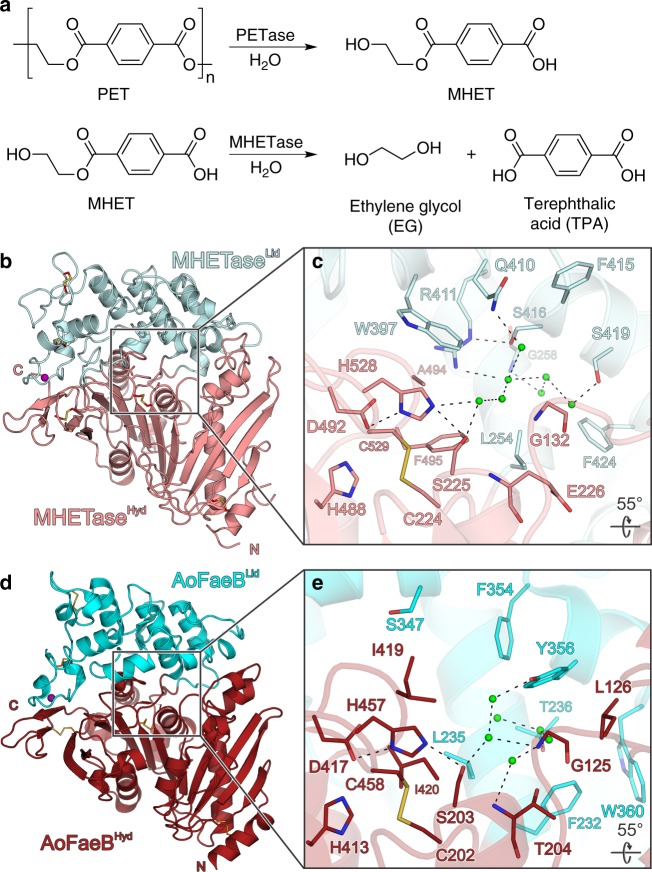
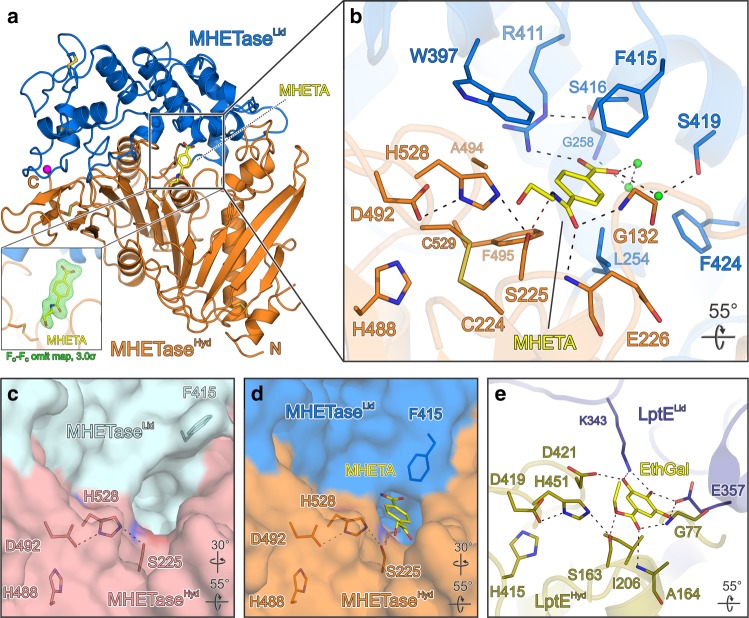
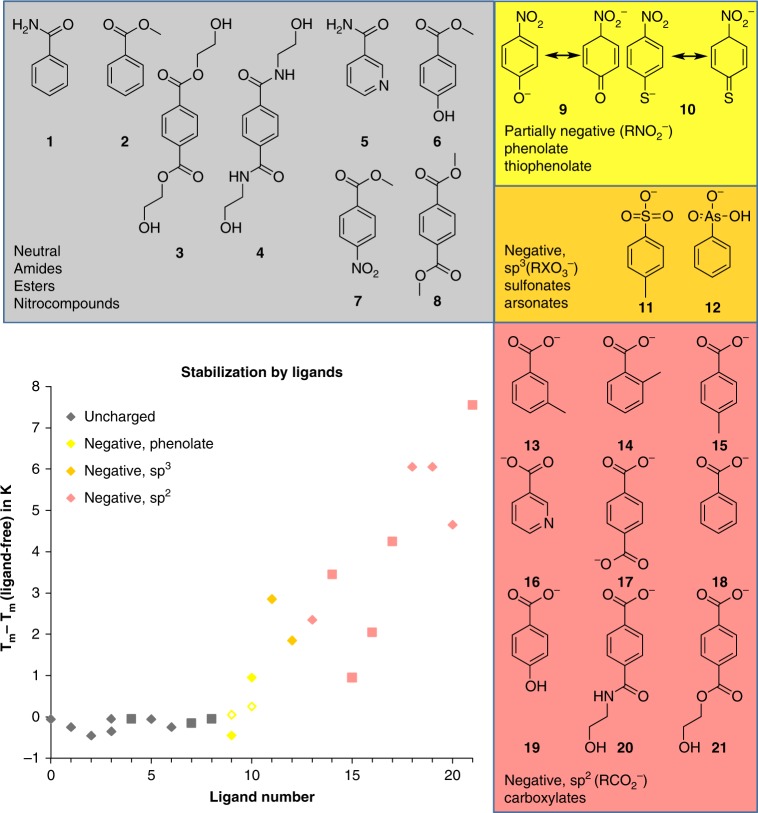
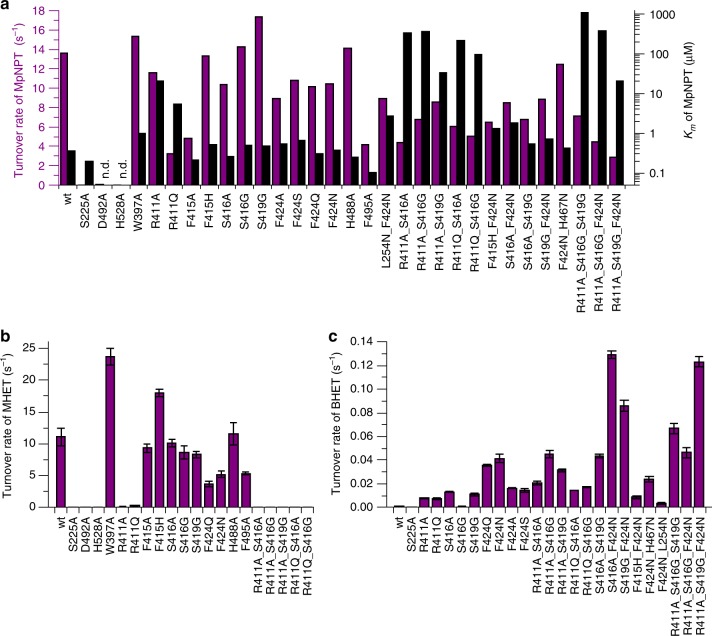
The extreme durability of polyethylene terephthalate (PET) debris has rendered it a long-term environmental burden. At the same time, current recycling efforts still lack sustainability. Two recently discovered bacterial enzymes that specifically degrade PET represent a promising solution. First, Ideonella sakaiensis PETase, a structurally well-characterized consensus α/β-hydrolase fold enzyme, converts PET to mono-(2-hydroxyethyl) terephthalate (MHET). MHETase, the second key enzyme, hydrolyzes MHET to the PET educts terephthalate and ethylene glycol. Here, we report the crystal structures of active ligand-free MHETase and MHETase bound to a nonhydrolyzable MHET analog. MHETase, which is reminiscent of feruloyl esterases, possesses a classic α/β-hydrolase domain and a lid domain conferring substrate specificity. In the light of structure-based mapping of the active site, activity assays, mutagenesis studies and a first structure-guided alteration of substrate specificity towards bis-(2-hydroxyethyl) terephthalate (BHET) reported here, we anticipate MHETase to be a valuable resource to further advance enzymatic plastic degradation.
Overview
The claims and statistics of this paper haven’t been checked yet.
Free: it reads the open-access text and checks the first 5 claims that cite a source we can check. Create a free account to check every claim.
Integrity signals
Registry
Cites
Statistics
Figures
Verification
Claims the paper makes
The claims and statistics of this paper haven’t been checked yet.
Free: it reads the open-access text and checks the first 5 claims that cite a source we can check. Create a free account to check every claim.
Self-check
Percentages, sums and reported differences re-computed from the paper’s own numbers.
The self-check needs the paper’s full text.
Citations
Cites
Basic local alignment search tool
Altschul, S. F., Gish, W., Miller, W., Myers, E. W., & Lipman, D. J. (1990) · Journal of Molecular Biology · doi:10.1006/jmbi.1990.9999 · Cited by 98,669
MEGA7: Molecular Evolutionary Genetics Analysis Version 7.0 for Bigger Datasets
Kumar, S., Stecher, G., & Tamura, K. (2016) · Molecular Biology and Evolution · doi:10.1093/molbev/msw054 · Cited by 44,059
Features and development of Coot
Emsley, P., Lohkamp, B., Scott, W. G., & Cowtan, K. (2010) · Acta Crystallographica Section D Biological Crystallography · doi:10.1107/s0907444910007493 · Cited by 29,915
Production, use, and fate of all plastics ever made
Geyer, R., Jambeck, J. R., & Law, K. L. (2017) · Science Advances · doi:10.1126/sciadv.1700782 · Cited by 18,606
Kabsch, W. (2010) · Acta Crystallographica Section D Biological Crystallography · doi:10.1107/s0907444909047337 · Cited by 16,463
Overview of the CCP 4 suite and current developments
Winn, M. D., Ballard, C. C., Cowtan, K. D., Dodson, E. J., Emsley, P., Evans, P. R., Keegan, R. M., Krissinel, E. B., Leslie, A. G. W., McCoy, A., et al. (2011) · Acta Crystallographica Section D Biological Crystallography · doi:10.1107/s0907444910045749 · Cited by 12,353
Lost at sea: where is all the plastic?
Thompson, R. C., Olsen, Y., Mitchell, R. P., Davis, A., Rowland, S. J., John, A. W. G., McGonigle, D., & Russell, A. E. (2004) · Science · doi:10.1126/science.1094559 · Cited by 7,765
The rapid generation of mutation data matrices from protein sequences
Jones, D. T., Taylor, W. R., & Thornton, J. M. (1992) · Bioinformatics · doi:10.1093/bioinformatics/8.3.275 · Cited by 6,947
Towards automated crystallographic structure refinement with phenix.refine
Afonine, P. V., Grosse-Kunstleve, R. W., Echols, N., Headd, J. J., Moriarty, N. W., Mustyakimov, M., Terwilliger, T. C., Urzhumtsev, A., Zwart, P. H., & Adams, P. D. (2012) · Acta Crystallographica Section D Biological Crystallography · doi:10.1107/s0907444912001308 · Cited by 5,511
Eriksen, M., Lebreton, L. C. M., Carson, H. S., Thiel, M., Moore, C. J., Borerro, J. C., Galgani, F., Ryan, P. G., & Reisser, J. (2014) · PLoS ONE · doi:10.1371/journal.pone.0111913 · Cited by 4,710
Cited by
An engineered PET depolymerase to break down and recycle plastic bottles
Tournier, V., Topham, C. M., Gilles, A., David, B., Folgoas, C., Moya-Leclair, E., Kamionka, E., Desrousseaux, M.-L., Texier, H., Gavalda, S., et al. (2020) · Nature · doi:10.1038/s41586-020-2149-4 · Cited by 2,176
Chemical and biological catalysis for plastics recycling and upcycling
Ellis, L. D., Rorrer, N. A., Sullivan, K. P., Otto, M., McGeehan, J. E., Román-Leshkov, Y., Wierckx, N., & Beckham, G. T. (2021) · Nature Catalysis · doi:10.1038/s41929-021-00648-4 · Cited by 1,201
Plastics: Environmental and Biotechnological Perspectives on Microbial Degradation
Danso, D., Chow, J., & Streit, W. R. (2019) · Applied and Environmental Microbiology · doi:10.1128/aem.01095-19 · Cited by 918
Dogu, O., Pelucchi, M., Van de Vijver, R., Van Steenberge, P. H. M., D'hooge, D. R., Cuoci, A., Mehl, M., Frassoldati, A., Faravelli, T., & Van Geem, K. M. (2021) · Progress in Energy and Combustion Science · doi:10.1016/j.pecs.2020.100901 · Cited by 698
Polyethylene terephthalate (PET) in the packaging industry
Nisticò, R. (2020) · Polymer Testing · doi:10.1016/j.polymertesting.2020.106707 · Cited by 637
Expanding plastics recycling technologies: chemical aspects, technology status and challenges
Li, H., Aguirre-Villegas, H. A., Allen, R. D., Bai, X., Benson, C. H., Beckham, G. T., Bradshaw, S. L., Brown, J. L., Brown, R. C., Cecon, V. S., et al. (2022) · Green Chemistry · doi:10.1039/d2gc02588d · Cited by 616
Microbial Degradation and Valorization of Plastic Wastes
Ru, J., Huo, Y., & Yang, Y. (2020) · Frontiers in Microbiology · doi:10.3389/fmicb.2020.00442 · Cited by 609
Enzymes’ Power for Plastics Degradation
Tournier, V., Duquesne, S., Guillamot, F., Cramail, H., Taton, D., Marty, A., & André, I. (2023) · Chemical Reviews · doi:10.1021/acs.chemrev.2c00644 · Cited by 590
Cui, Y., Chen, Y., Liu, X., Dong, S., Tian, Y., Qiao, Y., Mitra, R., Han, J., Li, C., Han, X., et al. (2021) · ACS Catalysis · doi:10.1021/acscatal.0c05126 · Cited by 580
Characterization and engineering of a two-enzyme system for plastics depolymerization
Knott, B. C., Erickson, E., Allen, M. D., Gado, J. E., Graham, R., Kearns, F. L., Pardo, I., Topuzlu, E., Anderson, J. J., Austin, H. P., et al. (2020) · Proceedings of the National Academy of Sciences · doi:10.1073/pnas.2006753117 · Cited by 526
“Prior studies presenting MHETase crystal structures focused upon understanding and tuning substrate specificity, particularly the rational engineering of MHETase to impart BHET hydrolysis activity (35, 36).”
BackgroundInfluentialThe potential impact of nano- and microplastics on human health: Understanding human health risks.
Winiarska, E., Jutel, M., & Zemelka-Wiacek, M. (2024) · Environmental Research · doi:10.1016/j.envres.2024.118535 · Cited by 470
Singh, A., Rorrer, N. A., Nicholson, S. R., Erickson, E., DesVeaux, J. S., Avelino, A. F. T., Lamers, P., Bhatt, A., Zhang, Y., Avery, G., et al. (2021) · Joule · doi:10.1016/j.joule.2021.06.015 · Cited by 446
Microbial degradation of microplastics by enzymatic processes: a review
Othman, A. R., Hasan, H. A., Muhamad, M. H., Ismail, N. ’., & Abdullah, S. R. S. (2021) · Environmental Chemistry Letters · doi:10.1007/s10311-021-01197-9 · Cited by 426
“A comprehensive analysis of the MHETase structure through structure modification is needed to enhance its performance (Palm et al. 2019; Knott et al. 2020).”
BackgroundReview on plastic wastes in marine environment – Biodegradation and biotechnological solutions
A., G. K., K., A., M., H., K., S., & G., D. (2020) · Marine Pollution Bulletin · doi:10.1016/j.marpolbul.2019.110733 · Cited by 406
Biodegradation of polyethylene and polystyrene: From microbial deterioration to enzyme discovery
Zhang, Y., Pedersen, J. N., Eser, B. E., & Guo, Z. (2022) · Biotechnology Advances · doi:10.1016/j.biotechadv.2022.107991 · Cited by 369
Using a marine microalga as a chassis for polyethylene terephthalate (PET) degradation
Moog, D., Schmitt, J., Senger, J., Zarzycki, J., Rexer, K.-H., Linne, U., Erb, T., & Maier, U. G. (2019) · Microbial Cell Factories · doi:10.1186/s12934-019-1220-z · Cited by 334
Biodegradation of microplastics: Better late than never
Miri, S., Saini, R., Davoodi, S. M., Pulicharla, R., Brar, S. K., & Magdouli, S. (2022) · Chemosphere · doi:10.1016/j.chemosphere.2021.131670 · Cited by 324
Bollinger, A., Thies, S., Knieps-Grünhagen, E., Gertzen, C., Kobus, S., Höppner, A., Ferrer, M., Gohlke, H., Smits, S. H. J., & Jaeger, K.-E. (2020) · Frontiers in Microbiology · doi:10.3389/fmicb.2020.00114 · Cited by 320
“, 2017), for type IIb just one enzyme with solved crystal structures exists (Han et al., 2017; Austin et al., 2018; Fecker et al., 2018; Joo et al., 2018; Liu B. et al., 2018; Liu C. et al., 2018; Palm et al., 2019), and, to the best of our knowledge, no crystal structure is known for a type IIa enzyme.”
BackgroundTowards bio-upcycling of polyethylene terephthalate
Tiso, T., Narancic, T., Wei, R., Pollet, E., Beagan, N., Schröder, K., Honak, A., Jiang, M., Kenny, S. T., Wierckx, N., et al. (2021) · Metabolic Engineering · doi:10.1016/j.ymben.2021.03.011 · Cited by 315
Embracing Nature’s Catalysts: A Viewpoint on the Future of Biocatalysis
Hauer, B. (2020) · ACS Catalysis · doi:10.1021/acscatal.0c01708 · Cited by 284
Mechanism-Based Design of Efficient PET Hydrolases
Wei, R., von Haugwitz, G., Pfaff, L., Mican, J., Badenhorst, C. P. S., Liu, W., Weber, G., Austin, H. P., Bednar, D., Damborsky, J., et al. (2022) · ACS Catalysis · doi:10.1021/acscatal.1c05856 · Cited by 284
Self-citationPolyethylene terephthalate degradation under natural and accelerated weathering conditions
Sang, T., Wallis, C. J., Hill, G., & Britovsek, G. J. P. (2020) · European Polymer Journal · doi:10.1016/j.eurpolymj.2020.109873 · Cited by 270
Biodegradation of plastics for sustainable environment
Singh Jadaun, J., Bansal, S., Sonthalia, A., Rai, A. K., & Singh, S. P. (2022) · Bioresource Technology · doi:10.1016/j.biortech.2022.126697 · Cited by 256
Recent Advances in Biological Recycling of Polyethylene Terephthalate (PET) Plastic Wastes
Soong, Y.-H. V., Sobkowicz, M. J., & Xie, D. (2022) · Bioengineering · doi:10.3390/bioengineering9030098 · Cited by 255
Meyer-Cifuentes, I. E., Werner, J., Jehmlich, N., Will, S. E., Neumann-Schaal, M., & Öztürk, B. (2020) · Nature Communications · doi:10.1038/s41467-020-19583-2 · Cited by 249
Progress in the catalytic glycolysis of polyethylene terephthalate
Xin, J., Zhang, Q., Huang, J., Huang, R., Jaffery, Q. Z., Yan, D., Zhou, Q., Xu, J., & Lu, X. (2021) · Journal of Environmental Management · doi:10.1016/j.jenvman.2021.113267 · Cited by 238
Functional expression of polyethylene terephthalate-degrading enzyme (PETase) in green microalgae
Kim, J. W., Park, S.-B., Tran, Q.-G., Cho, D.-H., Choi, D.-Y., Lee, Y. J., & Kim, H.-S. (2020) · Microbial Cell Factories · doi:10.1186/s12934-020-01355-8 · Cited by 231
Yan, F., Wei, R., Cui, Q., Bornscheuer, U. T., & Liu, Y. (2021) · Microbial Biotechnology · doi:10.1111/1751-7915.13580 · Cited by 217
Self-citationSustainable materials alternative to petrochemical plastics pollution: A review analysis
Singh, N., Ogunseitan, O. A., Wong, M. H., & Tang, Y. (2022) · Sustainable Horizons · doi:10.1016/j.horiz.2022.100016 · Cited by 216
Microbial remediation of micro-nano plastics: Current knowledge and future trends
Tiwari, N., Santhiya, D., & Sharma, J. G. (2020) · Environmental Pollution · doi:10.1016/j.envpol.2020.115044 · Cited by 210
Werner, A. Z., Clare, R., Mand, T. D., Pardo, I., Ramirez, K. J., Haugen, S. J., Bratti, F., Dexter, G. N., Elmore, J. R., Huenemann, J. D., et al. (2021) · Metabolic Engineering · doi:10.1016/j.ymben.2021.07.005 · Cited by 207
Challenges and opportunities in bioremediation of micro-nano plastics: A review
Zhou, Y., Kumar, M., Sarsaiya, S., Sirohi, R., Awasthi, S. K., Sindhu, R., Binod, P., Pandey, A., Bolan, N. S., Zhang, Z., et al. (2022) · Science of The Total Environment · doi:10.1016/j.scitotenv.2021.149823 · Cited by 206
Samak, N. A., Jia, Y., Sharshar, M. M., Mu, T., Yang, M., Peh, S., & Xing, J. (2020) · Environment International · doi:10.1016/j.envint.2020.106144 · Cited by 202
“The synergistic activity of the two enzymes is needed for efficient PET biodegradation yielding TPA and EG, which can be used as a building block for a new round of PET synthesis (Palm et al. 2019).”
BackgroundMicroplastic materials in the environment: Problem and strategical solutions
Tian, W., Song, P., Zhang, H., Duan, X., Wei, Y., Wang, H., & Wang, S. (2023) · Progress in Materials Science · doi:10.1016/j.pmatsci.2022.101035 · Cited by 201
Sourcing thermotolerant poly(ethylene terephthalate) hydrolase scaffolds from natural diversity
Erickson, E., Gado, J. E., Avilán, L., Bratti, F., Brizendine, R. K., Cox, P. A., Gill, R., Graham, R., Kim, D.-J., König, G., et al. (2022) · Nature Communications · doi:10.1038/s41467-022-35237-x · Cited by 186
Bacha, A.-U.-R., Nabi, I., Zaheer, M., Jin, W., & Yang, L. (2023) · Science of The Total Environment · doi:10.1016/j.scitotenv.2022.160108 · Cited by 182
Blank, L. M., Narancic, T., Mampel, J., Tiso, T., & O’Connor, K. (2020) · Current Opinion in Biotechnology · doi:10.1016/j.copbio.2019.11.011 · Cited by 182
Strategies and progress in synthetic textile fiber biodegradability
Egan, J., & Salmon, S. (2022) · SN Applied Sciences · doi:10.1007/s42452-021-04851-7 · Cited by 178
Impact of the insect gut microbiota on ecology, evolution, and industry
Jang, S., & Kikuchi, Y. (2020) · Current Opinion in Insect Science · doi:10.1016/j.cois.2020.06.004 · Cited by 173
Hou, L., & Majumder, E. L.-W. (2021) · Materials · doi:10.3390/ma14030503 · Cited by 172
“, terephthalic acid and ethylene glycol) [17].”
Khairul Anuar, N. F. S., Huyop, F., Ur-Rehman, G., Abdullah, F., Normi, Y. M., Sabullah, M. K., & Abdul Wahab, R. (2022) · International Journal of Molecular Sciences · doi:10.3390/ijms232012644 · Cited by 166
Micro- and nano-plastic pollution: Behavior, microbial ecology, and remediation technologies
Rai, P. K., Lee, J., Brown, R. J. C., & Kim, K.-H. (2021) · Journal of Cleaner Production · doi:10.1016/j.jclepro.2020.125240 · Cited by 164
Sustainable Solutions Through Innovative Plastic Waste Recycling Technologies
Alaghemandi, M. (2024) · Sustainability · doi:10.3390/su162310401 · Cited by 163
“Enzymes like those identified in Ideonella sakaiensis have been particularly noted for their ability to degrade PET [237,238], a prevalent and persistent form of plastic, offering a sustainable loop in plastic lifecycle management.”
Engineering microbial division of labor for plastic upcycling
Bao, T., Qian, Y., Xin, Y., Collins, J. J., & Lu, T. (2023) · Nature Communications · doi:10.1038/s41467-023-40777-x · Cited by 159
Chen, Z., Duan, R., Xiao, Y., Wei, Y., Zhang, H., Sun, X., Wang, S., Cheng, Y., Wang, X., Tong, S., et al. (2022) · Nature Communications · doi:10.1038/s41467-022-34908-z · Cited by 170
Complete Depolymerization of PET Wastes by an Evolved PET Hydrolase from Directed Evolution
Shi, L., Liu, P., Tan, Z., Zhao, W., Gao, J., Gu, Q., Ma, H., Liu, H., & Zhu, L. (2023) · Angewandte Chemie International Edition · doi:10.1002/anie.202218390 · Cited by 163
Shi, L., Liu, H., Gao, S., Weng, Y., & Zhu, L. (2021) · Journal of Agricultural and Food Chemistry · doi:10.1021/acs.jafc.0c07469 · Cited by 152
Carniel, A., Waldow, V. D. A., & de Castro, A. M. (2021) · Biotechnology Advances · doi:10.1016/j.biotechadv.2021.107811 · Cited by 150
Decomposition of the PET Film by MHETase Using Exo-PETase Function
Sagong, H.-Y., Seo, H., Kim, T., Son, H. F., Joo, S., Lee, S. H., Kim, S., Woo, J.-S., Hwang, S. Y., & Kim, K.-J. (2020) · ACS Catalysis · doi:10.1021/acscatal.9b05604 · Cited by 140
Microbial Communities on Plastic Polymers in the Mediterranean Sea
Vaksmaa, A., Knittel, K., Abdala Asbun, A., Goudriaan, M., Ellrott, A., Witte, H. J., Vollmer, I., Meirer, F., Lott, C., Weber, M., et al. (2021) · Frontiers in Microbiology · doi:10.3389/fmicb.2021.673553 · Cited by 129
“The highest percentage of reads assigned to Archaea on PE was 1.3%, on PP 1.4%, and on PS 31.9%.”
MethodInfluentialThe modular structure of α/β‐hydrolases
Bauer, T. L., Buchholz, P. C. F., & Pleiss, J. (2020) · The FEBS Journal · doi:10.1111/febs.15071 · Cited by 138
Kim, D. H., Han, D. O., Shim, K. I., Kim, T. Y., Pelton, J. G., Ryu, M. H., Joo, J. C., Han, J. W., Kim, H. T., & Kim, K. H. (2021) · ACS Catalysis · doi:10.1021/acscatal.0c04014 · Cited by 141
Yoshida, S., Hiraga, K., Taniguchi, I., & Oda, K. (2021) · Methods in enzymology on CD-ROM/Methods in enzymology · doi:10.1016/bs.mie.2020.12.007 · Cited by 167
Skariyachan, S., Taskeen, N., Kishore, A. P., & Krishna, B. V. (2021) · Journal of Hazardous Materials · doi:10.1016/j.jhazmat.2021.128086 · Cited by 141
P450-driven plastic-degrading synthetic bacteria
Yeom, S., Le, T., & Yun, C. (2021) · Trends in biotechnology · doi:10.1016/j.tibtech.2021.06.003 · Cited by 136
Ahmed, A. S. S., Billah, M. M., Ali, M. M., Bhuiyan, M. K. A., Guo, L., Mohinuzzaman, M., Hossain, M. B., Rahman, M. S., Islam, M. S., Yan, M., et al. (2023) · The Science of The Total Environment · doi:10.1016/j.scitotenv.2023.162414 · Cited by 141
QM/MM Study of the Enzymatic Biodegradation Mechanism of Polyethylene Terephthalate
Boneta, S., Arafet, K., & Moliner, V. (2021) · Journal of Chemical Information and Modeling · doi:10.1021/acs.jcim.1c00394 · Cited by 135
Li, A., Sheng, Y., Cui, H., Wang, M., Wu, L., Song, Y., Yang, R., Li, X., & Huang, H. (2023) · Nature Communications · doi:10.1038/s41467-023-39929-w · Cited by 137
Biodegradation of waste PET: A sustainable solution for dealing with plastic pollution
Hiraga, K., Taniguchi, I., Yoshida, S., Kimura, Y., & Oda, K. (2019) · EMBO Reports · doi:10.15252/embr.201949365 · Cited by 128
“The crystal structure showed that it is composed of an a/b-hydrolase domain and a lid domain [6].”
Kushwaha, A., Goswami, L., Singhvi, M. S., & Kim, B. S. (2022) · Chemical Engineering Journal · doi:10.1016/j.cej.2022.141230 · Cited by 131
Enzyme catalyzes ester bond synthesis and hydrolysis: The key step for sustainable usage of plastics
Lai, J., Huang, H., Lin, M., Xu, Y., Li, X., & Sun, B. (2023) · Frontiers in Microbiology · doi:10.3389/fmicb.2022.1113705 · Cited by 132
“Furthermore, through the combination of PETase and MHETase, ester bonds of PET could be completely hydrolyzed to produce the monomers TPA and EG, indicating a promising two-enzyme system for recycling of PET (Palm et al., 2019).”
BackgroundEvaluation of PET Degradation Using Artificial Microbial Consortia
Qi, X., Ma, Y., Chang, H., Li, B., Ding, M., & Yuan, Y. (2021) · Frontiers in Microbiology · doi:10.3389/fmicb.2021.778828 · Cited by 127
Priya, A., Dutta, K., & Daverey, A. (2021) · Journal of Chemical Technology & Biotechnology · doi:10.1002/jctb.6675 · Cited by 127
Orlando, M., Molla, G., Castellani, P., Pirillo, V., Torretta, V., & Ferronato, N. (2023) · International Journal of Molecular Sciences · doi:10.3390/ijms24043877 · Cited by 123
“5 to 7 nm) obtained from amorphous PET sheets of 2 mm thickness IsPETaseTM [87] and IsMHETaseSM [88], two variants of I.”
BackgroundThe reaction mechanism of the Ideonella sakaiensis PETase enzyme
Burgin, T., Pollard, B. C., Knott, B. C., Mayes, H. B., Crowley, M. F., McGeehan, J. E., Beckham, G. T., & Woodcock, H. L. (2024) · Communications Chemistry · doi:10.1038/s42004-024-01154-x · Cited by 118
“…and related serine hydrolases have resulted from a combination of rational engineering, directed evolution, and advanced computational strategies 3,4,10 – 17 , and some of these have demonstrated that increased enzyme melting temperature can lead to improved PET hydrolysis activity 11,14,15,18 .”
BackgroundSchwaminger, S. P., Fehn, S., Steegmüller, T., Rauwolf, S., Löwe, H., Pflüger‐Grau, K., & Berensmeier, S. (2021) · Nanoscale Advances · doi:10.1039/d1na00243k · Cited by 121
Lee, H. M., Kim, H. R., Jeon, E., Yu, H. C., Lee, S., Li, J., & Kim, D. H. (2020) · Microorganisms · doi:10.3390/microorganisms8091341 · Cited by 122
Insights into polyester plastic biodegradation by carboxyl ester hydrolases
Gricajeva, A., Kumar, A., & Gudiukaitė, R. (2021) · Journal of Chemical Technology & Biotechnology · doi:10.1002/jctb.6745 · Cited by 116
Engineering and evaluation of thermostable IsPETase variants for PET degradation
Brott, S., Pfaff, L., Schuricht, J., Schwarz, J., Böttcher, D., Badenhorst, C. P. S., Wei, R., & Bornscheuer, U. T. (2021) · Engineering in Life Sciences · doi:10.1002/elsc.202100105 · Cited by 116
Self-citationMechanistic studies of a lipase unveil effect of pH on hydrolysis products of small PET modules
Świderek, K., Velasco‐Lozano, S., Galmés, M. À., Olazabal, I., Sardón, H., López‐Gallego, F., & Moliner, V. (2023) · Nature Communications · doi:10.1038/s41467-023-39201-1 · Cited by 110
Molecular Insights into the Enhanced Performance of EKylated PETase Toward PET Degradation
Chen, K., Hu, Y., Dong, X., & Sun, Y. P. (2021) · ACS Catalysis · doi:10.1021/acscatal.1c01062 · Cited by 115
Insect Microbial Symbionts: Ecology, Interactions, and Biological Significance
Mondal, S., Somani, J., Roy, S., Babu, A., & Pandey, A. K. (2023) · Microorganisms · doi:10.3390/microorganisms11112665 · Cited by 114
“Another instance is the bacterium Ideonella sakaiensis Yoshida et al. (Burkholderiales: Comamonadaceae), which can develop its growth on polyethylene terephthalate (PET) film and degrade film entirely in 6 weeks by secreting plastic-degrading enzymes termed PETase and MHETase [147,148].”
BackgroundPerspectives on the Role of Enzymatic Biocatalysis for the Degradation of Plastic PET
Magalhães, R. P., Cunha, J. M., & Sousa, S. F. (2021) · International Journal of Molecular Sciences · doi:10.3390/ijms222011257 · Cited by 110
“The substitution of the catalytic triad by alanine mutants resulted in total loss of enzymatic activity, confirming their essential role in catalysis [80,89].”
BackgroundInfluentialCurrent Knowledge on Polyethylene Terephthalate Degradation by Genetically Modified Microorganisms
Urbanek, A. K., Kosiorowska, K. E., & Mirończuk, A. M. (2021) · Frontiers in Bioengineering and Biotechnology · doi:10.3389/fbioe.2021.771133 · Cited by 116
Reaction Mechanism of MHETase, a PET Degrading Enzyme
Pinto, A. V., Ferreira, P., Neves, R. P. P., Fernandes, P. A., Ramos, M. J., & Magalhães, A. L. (2021) · ACS Catalysis · doi:10.1021/acscatal.1c02444 · Cited by 108
Current Advances in the Biodegradation and Bioconversion of Polyethylene Terephthalate
Qi, X., Yan, W., Cao, Z., Ding, M., & Yuan, Y. (2021) · Microorganisms · doi:10.3390/microorganisms10010039 · Cited by 110
Micro- and nanoplastics removal mechanisms in wastewater treatment plants: A review
Rout, P. R., Mohanty, A., Aastha, A., Sharma, A., Miglani, M., Liu, D., & Varjani, S. (2022) · Journal of Hazardous Materials Advances · doi:10.1016/j.hazadv.2022.100070 · Cited by 118
von Haugwitz, G., Han, X., Pfaff, L., Li, Q., Wei, H., Gao, J., Methling, K., Ao, Y., Brack, Y., Mičan, J., et al. (2022) · ACS Catalysis · doi:10.1021/acscatal.2c03772 · Cited by 103
Self-citationMoyal, J., Dave, P. H., Wu, M., Karimpour, S., Brar, S. K., Zhong, H., & Kwong, R. W. M. (2023) · Reviews of Environmental Contamination and Toxicology · doi:10.1007/s44169-023-00035-z · Cited by 153
“The second enzyme, MHETase, converts MHET to ethylene glycol and terephthalic acid (Palm et al. 2019; Yoshida et al. 2016).”
BackgroundClosed-loop utilization of polyester in the textile industry
Chen, Z., Sun, H., Kong, W., Chen, L., & Zuo, W. (2023) · Green Chemistry · doi:10.1039/d3gc00407d · Cited by 106
Liu, P., Zhang, T., Zheng, Y., Li, Q., Su, T., & Qi, Q. (2021) · Engineering Microbiology · doi:10.1016/j.engmic.2021.100003 · Cited by 102
Technologies to eliminate microplastic from water: Current approaches and future prospects
Puteri, M. N., Gew, L. T., Ong, H. C., & Ming, L. C. (2025) · Environment International · doi:10.1016/j.envint.2025.109397 · Cited by 109
A Review on Aquatic Impacts of Microplastics and Its Bioremediation Aspects
Jeyavani, J., Sibiya, A., Shanthini, S., Ravi, C., Vijayakumar, S., Rajan, D. K., & Vaseeharan, B. (2021) · Current Pollution Reports · doi:10.1007/s40726-021-00188-2 · Cited by 102
Ecotoxicity of microplastic wastes and their sustainable management: A review
Das, A., Ray, S. K., Mohanty, M., Mohanty, J., Dey, S., & Das, A. P. (2024) · Environmental Chemistry and Ecotoxicology · doi:10.1016/j.enceco.2024.05.003 · Cited by 98
Djapovic, M., Milivojević, D., Tomic, T. I., Lješević, M., Nikolaivits, E., Topakas, E., Maslak, V., & Nikodinović‐Runić, J. (2021) · Chemosphere · doi:10.1016/j.chemosphere.2021.130005 · Cited by 97
García-Meseguer, R., Ortí, E., Tuñón, I., Ruiz‐Pernía, J. J., & Aragó, J. (2023) · Journal of the American Chemical Society · doi:10.1021/jacs.3c04427 · Cited by 96
Qin, Z., Mou, J., Chao, C. Y. H., Chopra, S. S., Daoud, W. A., Leu, S., Ning, Z., Tso, C. Y., Chan, C. K., Tang, S., et al. (2021) · ChemSusChem · doi:10.1002/cssc.202100752 · Cited by 95
A comprehensive review on enzymatic biodegradation of polyethylene terephthalate
Qiu, J., Chen, Y., Zhang, L., Wu, J., Zeng, X., Shi, X., Liu, L., & Chen, J. (2023) · Environmental Research · doi:10.1016/j.envres.2023.117427 · Cited by 91
Engineering Microbes to Bio-Upcycle Polyethylene Terephthalate
Dissanayake, L., & Jayakody, L. N. (2021) · Frontiers in Bioengineering and Biotechnology · doi:10.3389/fbioe.2021.656465 · Cited by 91
Emerging Roles of PETase and MHETase in the Biodegradation of Plastic Wastes
Maity, W., Maity, S., Bera, S., & Roy, A. (2021) · Applied Biochemistry and Biotechnology · doi:10.1007/s12010-021-03562-4 · Cited by 92
Ding, Z., Xu, G., Miao, R., Wu, N., Zhang, W., Yao, B., Guan, F., Huang, H., & Tian, J. (2023) · Journal of Hazardous Materials · doi:10.1016/j.jhazmat.2023.131386 · Cited by 87
Zhang, J., Wang, H., Luo, Z., Yang, Z., Zhang, Z., Wang, P., Li, M., Zhang, Y., Feng, Y., Lu, D., et al. (2023) · Communications Biology · doi:10.1038/s42003-023-05523-5 · Cited by 93
“His plays a similar role as in acylation, deprotonating the catalytic water and transferring the proton to the serine, then activating the release of TPA 64,65 .”
IsPETase- and IsMHETase-Catalyzed Cascade Degradation Mechanism toward Polyethylene Terephthalate
Feng, S., Yue, Y., Zheng, M., Li, Y., Zhang, Q., & Wang, W. (2021) · ACS Sustainable Chemistry & Engineering · doi:10.1021/acssuschemeng.1c02420 · Cited by 89
Kumar, D., Biswas, J. K., Mulla, S. I., Singh, R., Shukla, R., Ahanger, M. A., Shekhawat, G. S., Verma, K. K., Siddiqui, M. W., & Seth, C. S. (2024) · Plant Physiology and Biochemistry · doi:10.1016/j.plaphy.2024.108795 · Cited by 93
Sustainable Materials for Fused Deposition Modeling 3D Printing Applications
Rett, J. P., Traoré, Y. L., & Ho, E. A. (2021) · Advanced Engineering Materials · doi:10.1002/adem.202001472 · Cited by 87
Chemo‐Biological Upcycling of Poly(ethylene terephthalate) to Multifunctional Coating Materials
Kim, H. T., Ryu, M. H., Jung, Y. J., Lim, S., Song, H. M., Park, J., Hwang, S. Y., Lee, H., Yeon, Y. J., Sung, B. H., et al. (2021) · ChemSusChem · doi:10.1002/cssc.202100909 · Cited by 84
Self-citationSheriff, S. S., Yusuf, A. A., Akiyode, O. O., Hallie, E. F., Odoma, S., Yambasu, R. A., Thompson-Williams, K., Asumana, C., Gono, S. Z., & Kamara, M. H. (2025) · Waste Management Bulletin · doi:10.1016/j.wmb.2025.100204 · Cited by 86
Gao, R., Pan, H., & Lian, J. (2021) · Enzyme and Microbial Technology · doi:10.1016/j.enzmictec.2021.109868 · Cited by 85
Tarazona, N. A., Wei, R., Brott, S., Pfaff, L., Bornscheuer, U. T., Lendlein, A., & Machatschek, R. (2022) · Chem Catalysis · doi:10.1016/j.checat.2022.11.004 · Cited by 84
Self-citationErickson, E., Shakespeare, T. J., Bratti, F., Buss, B. L., Graham, R., Hawkins, M. A., König, G., Michener, W. E., Miscall, J., Ramirez, K. J., et al. (2021) · ChemSusChem · doi:10.1002/cssc.202101932 · Cited by 79
Metadata
- Authors
- Palm, G. J., Reisky, L., Böttcher, D., Müller, H., Michels, E. A. P., Walczak, M. C., Berndt, L., Weiss, M. S., Bornscheuer, U. T., & Weber, G.
- Affiliations
- Universität Greifswald (DE)
- Helmholtz-Zentrum Berlin für Materialien und Energie (DE)
- Corresponding author
- Bornscheuer, Uwe T.
- Weber, Gert
- ORCID
- Venue
- Nature Communications
- Published
- 2019-04-12
- Volume
- 10
- Issue
- 1
- Pages
- 1717-1717
- ISSN
- 2041-1723 (ISSN-L)
- PMC
- PMC6461665
- OpenAlex
- W2935008047
- Semantic Scholar
- 42b9fbfede7afc036ca1302efa65d810541f4d76
- Cited by
- 491
- References
- 40
- Citations by year
- 2026: 69 · 2025: 55 · 2024: 93 · 2023: 75 · 2022: 72 · 2021: 83 · 2020: 34 · 2019: 10
- FWCI
- 17.96
- Type
- journal article
- Language
- en
- Open access
- gold
- doi.org
- Licence
- cc-by
- creativecommons.org/licenses/by/4.0 (tdm)
- creativecommons.org/licenses/by/4.0 (vor)
- Locations
- Nature Communications (publishedVersion, cc-by)
- PubMed Central (publishedVersion, cc-by)
- PubMed (publishedVersion)
- HZB Repository (Helmholtz-Zentrum Berlin für Materialien und Energie GmbH (HZB)) (submittedVersion, other-oa)
- RePEc: Research Papers in Economics (submittedVersion)
- DESY Publication Database (PUBDB) (Deutsches Elektronen-Synchrotron) (submittedVersion, cc-by)
- DOAJ (DOAJ: Directory of Open Access Journals) (submittedVersion)
- DOAJ (DOAJ: Directory of Open Access Journals) (submittedVersion, cc-by-sa)
- Funders
- Humboldt-Universität zu Berlin
- Freie Universität Berlin
- Helmholtz-Zentrum Berlin für Materialien und Energie
- Deutsches Elektronen-Synchrotron
- Leibniz-Gemeinschaft
- Topics
- Life Sciences › Biochemistry, Genetics and Molecular Biology › Structural Biology › Enzyme Structure and Function
- Life Sciences › Biochemistry, Genetics and Molecular Biology › Biotechnology › Enzyme Production and Characterization
- Physical Sciences › Materials Science › Biomaterials › biodegradable polymer synthesis and properties
- Keywords
- Ideonella sakaiensis, MHETase, polyethylene terephthalate degradation, plastic biodegradation, alpha/beta hydrolase fold, feruloyl esterase, lid domain, substrate specificity, active site mapping, bis(2-hydroxyethyl) terephthalate, crystal structure
- MeSH terms
- Protein Domains, Burkholderiales, Biodegradation, Environmental, Enzymes, Fluorometry, Hydrolases, Hydrolysis, Ligands, Phthalic Acids, Phylogeny, Plastics, Polyethylene Terephthalates, Substrate Specificity, Mutagenesis, Mutagenesis, Site-Directed, Protein Structure, Secondary, Protein Folding, Ethylene Glycol, Catalytic Domain
About these checks
Registry, retraction, Cites and statistics results are computed, not judged, with one exception: a printed reference that no index lists is read once by a model before it counts as a citation error. Claims are extracted by a model and kept only when their quote appears verbatim in the text; each cited source is then checked, with a model’s help, for whether it says what the claim relies on. Those verdicts can be wrong — read the claim’s quote and the cited source before relying on one.
Statistics and arithmetic are recomputed, not judged.
Confidence bands are shown only for fields calibrated on our annotated test set. None is calibrated yet, so no band is shown.
What counts as a claim ›How we measure confidence ›How we check this ›
Are you an author, or do you see a problem with this page? Request a review
Data sources
Bibliographic data: Semantic Scholar, OpenAlex, Crossref.
Contains information from the Semantic Scholar Academic Graph Datasets, made available under the ODC Attribution License (ODC-BY 1.0).
Semantic Scholar’s data is described in: Kinney, R., et al. (2023). The Semantic Scholar Open Data Platform. arXiv:2301.10140.
