

Gut microbiota dependent anti-tumor immunity restricts melanoma growth in Rnf5−/− mice
Open accessThe DOI matches its Crossref record; 50 of the 50 references it cites were found in a registry or an index.
Abstract
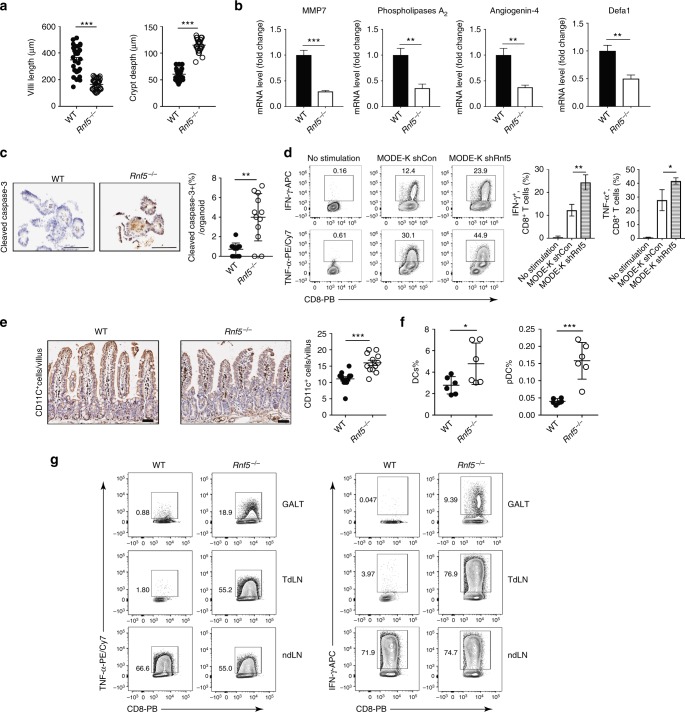
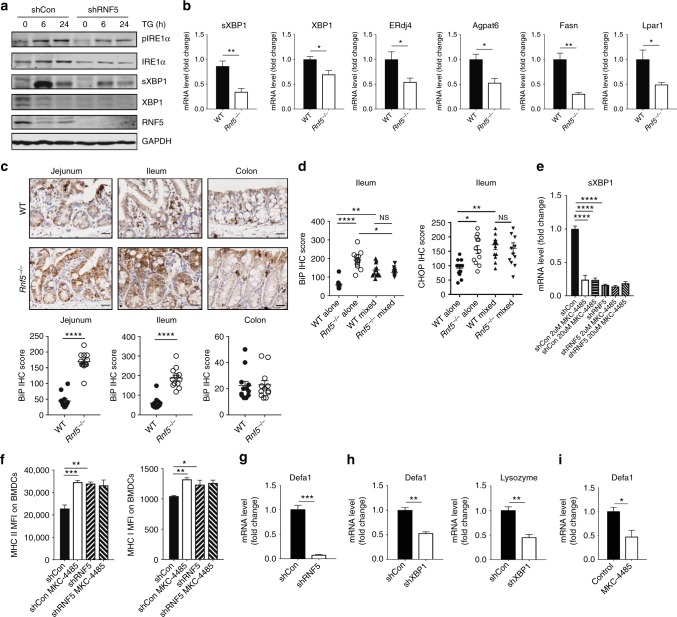
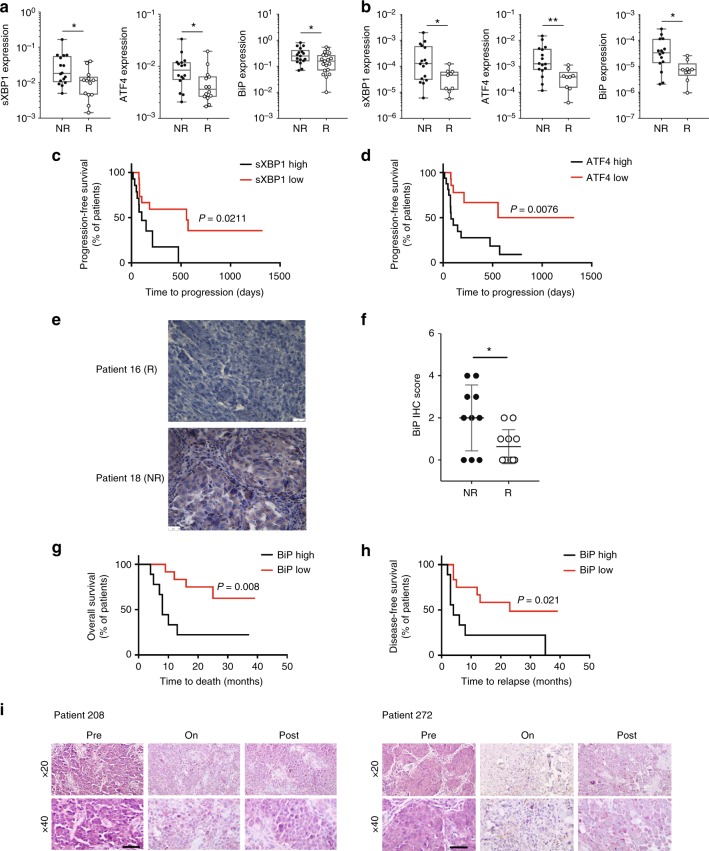
Accumulating evidence points to an important role for the gut microbiome in anti-tumor immunity. Here, we show that altered intestinal microbiota contributes to anti-tumor immunity, limiting tumor expansion. Mice lacking the ubiquitin ligase RNF5 exhibit attenuated activation of the unfolded protein response (UPR) components, which coincides with increased expression of inflammasome components, recruitment and activation of dendritic cells and reduced expression of antimicrobial peptides in intestinal epithelial cells. Reduced UPR expression is also seen in murine and human melanoma tumor specimens that responded to immune checkpoint therapy. Co-housing of Rnf5 −/− and WT mice abolishes the anti-tumor immunity and tumor inhibition phenotype, whereas transfer of 11 bacterial strains, including B. rodentium , enriched in Rnf5 −/− mice, establishes anti-tumor immunity and restricts melanoma growth in germ-free WT mice. Altered UPR signaling, exemplified in Rnf5 −/− mice, coincides with altered gut microbiota composition and anti-tumor immunity to control melanoma growth.
Overview
The claims and statistics of this paper haven’t been checked yet.
Free: it reads the open-access text and checks the first 5 claims that cite a source we can check. Create a free account to check every claim.
Integrity signals
Registry
Cites
Statistics
Figures
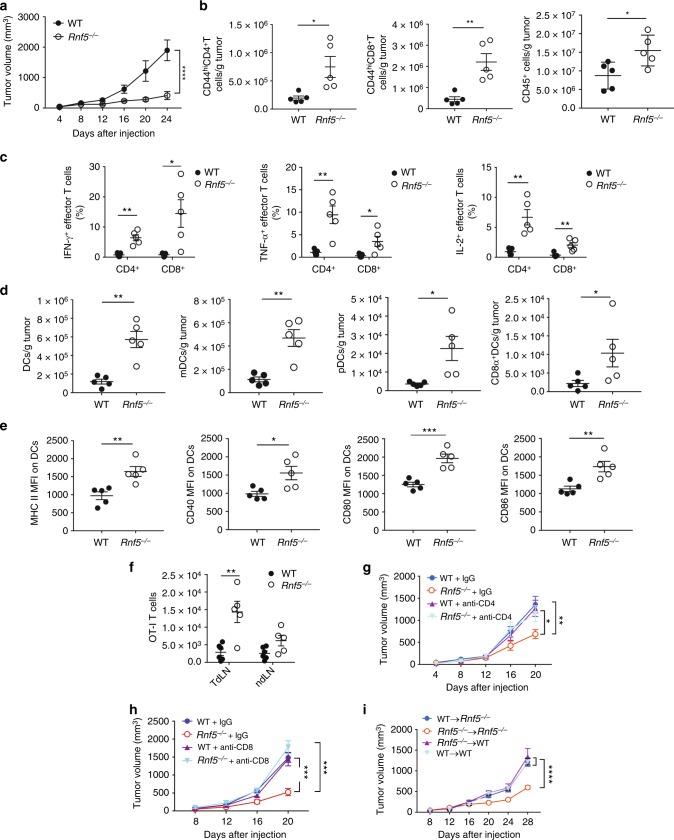
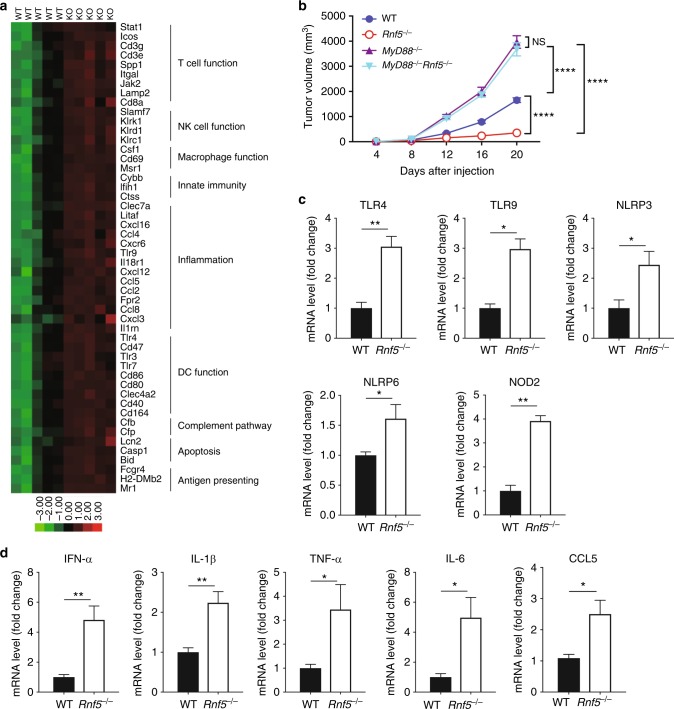
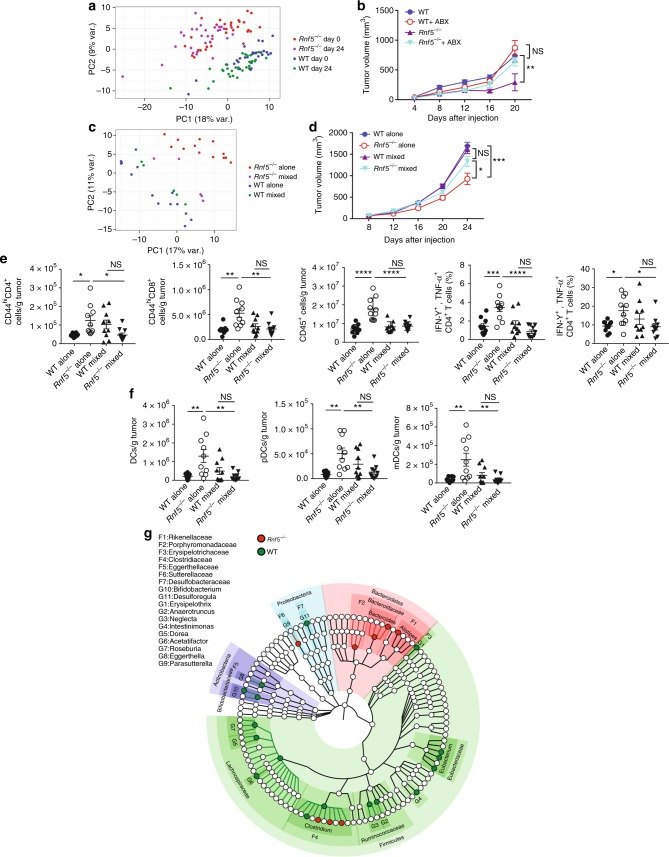
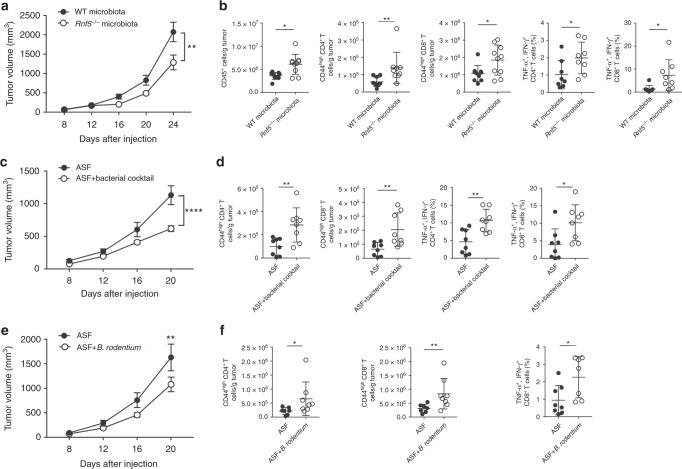
Verification
Claims the paper makes
The claims and statistics of this paper haven’t been checked yet.
Free: it reads the open-access text and checks the first 5 claims that cite a source we can check. Create a free account to check every claim.
Claims other papers make about this one
Each is checked against this paper’s own text: does it say what the citing paper says it does?
The source backs part of the claim, not all of it — or backs it for a different population, condition or comparison.
In the citing paper
“Homeostasis of gut microbiota also affects the efficacy and side effects of common cancer treatments, such as chemotherapy, radiotherapy, and immunotherapy8,9.”
From Combining gut microbiota modulation and chemotherapy by capecitabine-loaded prebiotic nanoparticle improves colorectal cancer therapy (2023) · cites this paper as [8]
Experimental — accuracy not yet measuredThe cited source says what the claim attributes to it.
In the citing paper
“Non-hematopoietic components of the intestinal mucosa are also linked to the TME (77).”
From The microbiome and human cancer (2021) · cites this paper as [77]
The cited source says what the claim attributes to it.
In the citing paper
“Confirming a Rnf5−/−-specific microbial effect, co-housing Rnf5−/− mice with wild type mice, or administering antibiotics, restored tumor aggressiveness”
From The microbiome and human cancer (2021) · cites this paper as [77]
In the citing paper
“This bowel injury amplified mobilization of CCR7-expressing DCs to Peyer’s patches, mLNs and melanoma-draining LNs, increasing IFNγ-producing T lymphocyte tumor infiltration.”
From The microbiome and human cancer (2021) · cites this paper as [77]
In the citing paper
“Gene deficient mice and BM chimeras identified a role for RNF5, an E3 ubiquitin ligase, in immunosurveillance of severe melanoma.”
From The microbiome and human cancer (2021) · cites this paper as [77]
2 more claims about this paper
Create a free account to see every claim other papers make about this one.
Self-check
Percentages, sums and reported differences re-computed from the paper’s own numbers.
The self-check needs the paper’s full text.
Citations
Cites
Genome engineering using the CRISPR-Cas9 system
Ran, F. A., Hsu, P. D., Wright, J., Agarwala, V., Scott, D. A., & Zhang, F. (2013) · Nature Protocols · doi:10.1038/nprot.2013.143 · Cited by 11,133
Commensal Bifidobacterium promotes antitumor immunity and facilitates anti–PD-L1 efficacy
Sivan, A., Corrales, L., Hubert, N., Williams, J. B., Aquino-Michaels, K., Earley, Z. M., Benyamin, F. W., Man Lei, Y., Jabri, B., Alegre, M.-L., et al. (2015) · Science · doi:10.1126/science.aac4255 · Cited by 3,888
Anticancer immunotherapy by CTLA-4 blockade relies on the gut microbiota
Vétizou, M., Pitt, J. M., Daillère, R., Lepage, P., Waldschmitt, N., Flament, C., Rusakiewicz, S., Routy, B., Roberti, M. P., Duong, C. P. M., et al. (2015) · Science · doi:10.1126/science.aad1329 · Cited by 3,488
An Integrated Stress Response Regulates Amino Acid Metabolism and Resistance to Oxidative Stress
Harding, H. P., Zhang, Y., Zeng, H., Novoa, I., Lu, P. D., Calfon, M., Sadri, N., Yun, C., Popko, B., Paules, R., et al. (2003) · Molecular Cell · doi:10.1016/s1097-2765(03)00105-9 · Cited by 3,323
Immune checkpoint targeting in cancer therapy: toward combination strategies with curative potential
Sharma, P., & Allison, J. P. (2015) · Cell · doi:10.1016/j.cell.2015.03.030 · Cited by 2,345
Role of the gut microbiota in immunity and inflammatory disease
Kamada, N., Seo, S.-U., Chen, G. Y., & Núñez, G. (2013) · Nature reviews. Immunology · doi:10.1038/nri3430 · Cited by 2,256
Targeted Disruption of the MyD88 Gene Results in Loss of IL-1- and IL-18-Mediated Function
Adachi, O., Kawai, T., Takeda, K., Matsumoto, M., Tsutsui, H., Sakagami, M., Nakanishi, K., & Akira, S. (1998) · Immunity · doi:10.1016/s1074-7613(00)80596-8 · Cited by 2,041
Lee, A.-H., Iwakoshi, N. N., & Glimcher, L. H. (2003) · Molecular and Cellular Biology · doi:10.1128/mcb.23.21.7448-7459.2003 · Cited by 2,037
NLRP6 Inflammasome Regulates Colonic Microbial Ecology and Risk for Colitis
Elinav, E., Strowig, T., Kau, A. L., Henao-Mejia, J., Thaiss, C. A., Booth, C. J., Peaper, D. R., Bertin, J., Eisenbarth, S. C., Gordon, J. I., et al. (2011) · Cell · doi:10.1016/j.cell.2011.04.022 · Cited by 2,024
TURNER, S., PRYER, K. M., MIAO, V. P. W., & PALMER, J. D. (1999) · Journal of Eukaryotic Microbiology · doi:10.1111/j.1550-7408.1999.tb04612.x · Cited by 1,575
Cited by
Items 201–230 of 230
Additional file 10 of Dysbiosis of skin microbiome and gut microbiome in melanoma progression
Mekadim, C., Skalníková, H. K., Cizkova, J., Cizkova, V., Palanová, A., Horák, V., & Mrázek, J. (2022) · Figshare · doi:10.6084/m9.figshare.19242013
Wang, H., Li, Z., Tao, Y., Ou, S., Ye, J., Ran, S., Luo, K., Guan, Z., Xiang, J., Yan, G., et al. (2024) · Figshare · doi:10.6084/m9.figshare.26625646
Wan, H., Zhang, J., Liu, Z., Dong, B., Tao, Z., Wang, G., & Wang, C. (2024) · Figshare · doi:10.6084/m9.figshare.26757550
Wang, H., Li, Z., Tao, Y., Ou, S., Ye, J., Ran, S., Luo, K., Guan, Z., Xiang, J., Yan, G., et al. (2024) · Figshare · doi:10.6084/m9.figshare.26625658
Wang, H., Li, Z., Tao, Y., Ou, S., Ye, J., Ran, S., Luo, K., Guan, Z., Xiang, J., Yan, G., et al. (2024) · Figshare · doi:10.6084/m9.figshare.26625631
Additional file 20 of Dysbiosis of skin microbiome and gut microbiome in melanoma progression
Mekadim, C., Skalníková, H. K., Cizkova, J., Cizkova, V., Palanová, A., Horák, V., & Mrazek, J. (2022) · Figshare · doi:10.6084/m9.figshare.19242070
Wang, H., Li, Z., Tao, Y., Ou, S., Ye, J., Ran, S., Luo, K., Guan, Z., Xiang, J., Yan, G., et al. (2024) · Figshare · doi:10.6084/m9.figshare.26625670
Wang, H., Li, Z., Tao, Y., Ou, S., Ye, J., Ran, S., Luo, K., Guan, Z., Xiang, J., Yan, G., et al. (2024) · Figshare · doi:10.6084/m9.figshare.26625676
Wang, H., Li, Z., Tao, Y., Ou, S., Ye, J., Ran, S., Luo, K., Guan, Z., Xiang, J., Yan, G., et al. (2024) · Figshare · doi:10.6084/m9.figshare.26625691
Additional file 5 of Dysbiosis of skin microbiome and gut microbiome in melanoma progression
Mekadim, C., Skalníková, H. K., Cizkova, J., Cizkova, V., Palanová, A., Horák, V., & Mrazek, J. (2022) · Figshare · doi:10.6084/m9.figshare.19242133
Wang, H., Li, Z., Tao, Y., Ou, S., Ye, J., Ran, S., Luo, K., Guan, Z., Xiang, J., Yan, G., et al. (2024) · Figshare · doi:10.6084/m9.figshare.26625664
Wang, H., Li, Z., Tao, Y., Ou, S., Ye, J., Ran, S., Luo, K., Guan, Z., Xiang, J., Yan, G., et al. (2024) · Figshare · doi:10.6084/m9.figshare.26625652
Wang, H., Li, Z., Tao, Y., Ou, S., Ye, J., Ran, S., Luo, K., Guan, Z., Xiang, J., Yan, G., et al. (2024) · Figshare · doi:10.6084/m9.figshare.26625661
Additional file 11 of Dysbiosis of skin microbiome and gut microbiome in melanoma progression
Mekadim, C., Skalníková, H. K., Cizkova, J., Cizkova, V., Palanová, A., Horák, V., & Mrazek, J. (2022) · Figshare · doi:10.6084/m9.figshare.19242016
Wang, H., Li, Z., Tao, Y., Ou, S., Ye, J., Ran, S., Luo, K., Guan, Z., Xiang, J., Yan, G., et al. (2024) · Figshare · doi:10.6084/m9.figshare.26625685
Wang, H., Li, Z., Tao, Y., Ou, S., Ye, J., Ran, S., Luo, K., Guan, Z., Xiang, J., Yan, G., et al. (2024) · Figshare · doi:10.6084/m9.figshare.26625667
Wang, H., Li, Z., Tao, Y., Ou, S., Ye, J., Ran, S., Luo, K., Guan, Z., Xiang, J., Yan, G., et al. (2024) · Figshare · doi:10.6084/m9.figshare.26625673
Additional file 9 of Dysbiosis of skin microbiome and gut microbiome in melanoma progression
Mekadim, C., Skalníková, H. K., Cizkova, J., Cizkova, V., Palanová, A., Horák, V., & Mrazek, J. (2022) · Figshare · doi:10.6084/m9.figshare.19242151
TMEM33 deletion potentiates anti-tumor CD8 + T cell immunityPreprint
Jackson, M. P., Zhao, T., Milotay, G., Pedroza‐Pacheco, I., Cai, Y., Willis, C., Phyu, S. M., Beernaert, B., Kwon, J., Estéphan, H., et al. (2026) · bioRxiv (Cold Spring Harbor Laboratory) · doi:10.64898/2026.01.01.697288 · Cited by 1
“However, the tumor-protective and CD8 + T cell-potentiating effects documented in Rnf5 -/- hosts have been attributed to non-hematopoietic compartments ( 42 ), in contrast to the T cell-intrinsic function of TMEM33 we propose here.”
Cancer-Induced Ileopathy and Dysbiosis Contribute to Carcinogenesis
Yonekura, S. (2020) · theses.fr (ABES) · doi:10.70675/d456a746zde60z4ec9zab97zefec41211866
Chazal, M. (2025) · theses.fr (ABES) · doi:10.70675/1b51fffez4deez4f80zab7ezdd44622a8f8b
Su, X., Xiang, Y., Zhao, H., Li, O., Zhang, L., & Guo, B. (2026) · Frontiers in Microbiology · doi:10.3389/fmicb.2026.1839030 · Cited by 1
Toward disease-associated fecal microbiome signatures for domestic mammals
Lin, D., Ganda, E., Silverman, J., Huang, J., Gottwald, K. R. K., Hu, H., Niu, P., & McArt, J. A. A. (2026) · Communications Biology · doi:10.1038/s42003-026-10647-5
Advances in Research on the Dual Roles of Endoplasmic Reticulum Stress Response in Tumors
李, 钰. (2026) · Advances in Clinical Medicine · doi:10.12677/acm.2026.1672656
Molecular pathways linking the gut microbiome to antitumor immunity
Olea, X. D., Ramer‐Tait, A. E., Cohen, J. E., Osterman, A., & Ronai, Z. A. (2026) · Trends in Microbiology · doi:10.1016/j.tim.2026.08.013
Self-citationRNF5: an emerging therapeutic target for modulating immunity and metabolism
He, R., Wang, J., Lin, M., Su, Y., Li, Z., Dong, W., Zhang, D., & Yu, X. (2026) · Biochemical Pharmacology · doi:10.1016/j.bcp.2026.118481
Lauretta, C., Sorrentino, C., Sabbatino, E., Tutino, V., Souza, D. S., MIGLIACCIO, A., Castoria, G., Giovannelli, P., & Donato, M. D. (2026) · Frontiers in Cell and Developmental Biology · doi:10.3389/fcell.2026.1905416
“Conversely, persistent or spatially restricted STING activation may sustain chronic inflammation, immune exhaustion, and resistance to immune checkpoint blockade, particularly within suppressive myeloid-rich niches (Woo et al., 2014; Corrales et al., 2015; Sivick et al., 2018; Li et al., 2019).”
Antibiotics and outcomes of cancer immunotherapy: An updated meta-analysis and clinical applications
Porcari, S., Bolte, L. A., Björk, J. R., Elkrief, A., Derosa, L., Ferrari, M., Pezzullo, A. M., Severino, A., Fusco, W. G., Messaoudene, M., et al. (2026) · Cancer Cell · doi:10.1016/j.ccell.2026.09.012
SEL1L: molecular gatekeeper of the endoplasmic reticulum quality control network
Shen, Z., Niu, Y., Chen, H., Pan, M., Yang, F., Li, M., Zhang, C., Zhou, Y., & Yan, J. (2026) · Experimental Biology and Medicine · doi:10.3389/ebm.2026.11350
Supplementary Data from Microbiota-Centered Interventions: The Next Breakthrough in Immuno-Oncology?
(2023) · doi:10.1158/2159-8290.22540051.v1
Metadata
- Authors
- Li, Y., Tinoco, R., Elmén, L., Segota, I., Xian, Y., Fujita, Y., Sahu, A., Zarecki, R., Marie, K., Feng, Y., Khateb, A., Frederick, D. T., Ashkenazi, S. K., Kim, H., Perez, E. G., Day, C.-P., Segura Muñoz, R. S., Schmaltz, R., Yooseph, S., Tam, M. A., Zhang, T., Avitan-Hersh, E., Tzur, L., Roizman, S., Boyango, I., Bar-Sela, G., Orian, A., Kaufman, R. J., Bosenberg, M., Goding, C. R., Baaten, B., Levesque, M. P., Dummer, R., Brown, K., Merlino, G., Ruppin, E., Flaherty, K., Ramer-Tait, A., Long, T., Peterson, S. N., Bradley, L. M., & Ronai, Z. A.
- Affiliations
- Sanford Burnham Prebys Medical Discovery Institute (US)
- University of Nebraska–Lincoln (US)
- University of Maryland, College Park (US)
- Tel Aviv University (IL)
- National Institutes of Health (US)
- Technion – Israel Institute of Technology (IL)
- Harvard University (US)
- University of Central Florida (US)
- BioLegend (United States) (US)
- National Cancer Institute (US)
- Yale University (US)
- University of Oxford (GB)
- University of Zurich (CH)
- Corresponding author
- Ronai, Ze’ev A.
- ORCID
- Tinoco, Roberto
- Xian, Yibo
- Fujita, Yu
- Sahu, Avinash
- Zarecki, Raphy
- Marie, Kerrie
- Frederick, Dennie T.
- Kim, Hyungsoo
- Day, Chi-Ping
- Yooseph, Shibu
- Tam, Miguel A.
- Zhang, Tongwu
- Orian, Amir
- Kaufman, Randal J.
- Bosenberg, Marcus
- Goding, Colin R.
- Levesque, Mitchell P.
- Dummer, Reinhard
- Brown, Kevin
- Merlino, Glenn
- Ruppin, Eytan
- Flaherty, Keith
- Ramer-Tait, Amanda
- Long, Tao
- Bradley, Linda M.
- Ronai, Ze’ev A.
- Venue
- Nature Communications
- Published
- 2019-04-02
- Volume
- 10
- Issue
- 1
- Pages
- 1492-1492
- ISSN
- 2041-1723 (ISSN-L)
- PMC
- PMC6445090
- OpenAlex
- W2930205604
- Semantic Scholar
- a8881180310d8212a6a8bd869ff2801c1e13e481
- Cited by
- 212
- References
- 50
- Citations by year
- 2026: 13 · 2025: 23 · 2024: 37 · 2023: 35 · 2022: 41 · 2021: 36 · 2020: 21 · 2019: 6
- FWCI
- 8.60
- Type
- journal article
- Language
- en
- Open access
- gold
- doi.org
- Licence
- cc-by
- creativecommons.org/licenses/by/4.0 (tdm)
- creativecommons.org/licenses/by/4.0 (vor)
- Locations
- Nature Communications (publishedVersion, cc-by)
- Europe PMC (PubMed Central) (publishedVersion, cc-by)
- PubMed Central (publishedVersion, cc-by)
- PubMed (publishedVersion)
- Zurich Open Repository and Archive (University of Zurich) (acceptedVersion, cc-by)
- Lincoln (University of Nebraska) (submittedVersion)
- RePEc: Research Papers in Economics (submittedVersion)
- DOAJ (DOAJ: Directory of Open Access Journals) (submittedVersion)
- DOAJ (DOAJ: Directory of Open Access Journals) (submittedVersion, cc-by-sa)
- eScholarship (California Digital Library) (submittedVersion)
- eScholarship (California Digital Library) (submittedVersion, cc-by)
- Research Explorer (The University of Manchester) (submittedVersion, other-oa)
- Zurich Open Repository and Archive (University of Zurich) (submittedVersion, cc-by)
- Zurich Open Repository and Archive (University of Zurich)
- Funders
- Melanoma Research Alliance (509524)
- National Institutes of Health (CA030199)
- Engineering and Physical Sciences Research Council (EP/K040375/1)
- National Cancer Institute (R35CA197465, DK103185, CA198103, CA 030199, R01CA198103, P01CA128814, R01CA216187, P30CA030199)
- National Institute of Allergy and Infectious Diseases (R01AI106895)
- National Institute of Diabetes and Digestive and Kidney Diseases (R01DK113171, R01DK103185)
- Congressionally Directed Medical Research Programs (CA150892)
- Topics
- Life Sciences › Biochemistry, Genetics and Molecular Biology › Molecular Biology › Gut microbiota and health
- Health Sciences › Medicine › Oncology › Cancer Immunotherapy and Biomarkers
- Life Sciences › Immunology and Microbiology › Immunology › T-cell and B-cell Immunology
- Keywords
- gut microbiota, antitumor immunity, melanoma, RNF5, ubiquitin ligase, unfolded protein response, inflammasome, dendritic cells, antimicrobial peptides, immune checkpoint therapy, germ-free mice, cohousing
- MeSH terms
- Gastrointestinal Microbiome, Animals, Bacteria, Humans, Intestines, Melanoma, Membrane Proteins, Mice, Inbred C57BL, Mice, Knockout, Antimicrobial Cationic Peptides, Ubiquitin-Protein Ligases, Cell Proliferation, Mice, Unfolded Protein Response
About these checks
Registry, retraction, Cites and statistics results are computed, not judged, with one exception: a printed reference that no index lists is read once by a model before it counts as a citation error. Claims are extracted by a model and kept only when their quote appears verbatim in the text; each cited source is then checked, with a model’s help, for whether it says what the claim relies on. Those verdicts can be wrong — read the claim’s quote and the cited source before relying on one.
Statistics and arithmetic are recomputed, not judged.
Confidence bands are shown only for fields calibrated on our annotated test set. None is calibrated yet, so no band is shown.
What counts as a claim ›How we measure confidence ›How we check this ›
Are you an author, or do you see a problem with this page? Request a review
Data sources
Bibliographic data: Semantic Scholar, OpenAlex, Crossref.
Contains information from the Semantic Scholar Academic Graph Datasets, made available under the ODC Attribution License (ODC-BY 1.0).
Semantic Scholar’s data is described in: Kinney, R., et al. (2023). The Semantic Scholar Open Data Platform. arXiv:2301.10140.
