

Gut microbiota dependent anti-tumor immunity restricts melanoma growth in Rnf5−/− mice
Open accessThe DOI matches its Crossref record; 50 of the 50 references it cites were found in a registry or an index.
Abstract
Accumulating evidence points to an important role for the gut microbiome in anti-tumor immunity. Here, we show that altered intestinal microbiota contributes to anti-tumor immunity, limiting tumor expansion. Mice lacking the ubiquitin ligase RNF5 exhibit attenuated activation of the unfolded protein response (UPR) components, which coincides with increased expression of inflammasome components, recruitment and activation of dendritic cells and reduced expression of antimicrobial peptides in intestinal epithelial cells. Reduced UPR expression is also seen in murine and human melanoma tumor specimens that responded to immune checkpoint therapy. Co-housing of Rnf5 −/− and WT mice abolishes the anti-tumor immunity and tumor inhibition phenotype, whereas transfer of 11 bacterial strains, including B. rodentium , enriched in Rnf5 −/− mice, establishes anti-tumor immunity and restricts melanoma growth in germ-free WT mice. Altered UPR signaling, exemplified in Rnf5 −/− mice, coincides with altered gut microbiota composition and anti-tumor immunity to control melanoma growth.
Overview
The claims and statistics of this paper haven’t been checked yet.
Free: it reads the open-access text and checks the first 5 claims that cite a source we can check. Create a free account to check every claim.
Integrity signals
Registry
Cites
Statistics
Figures
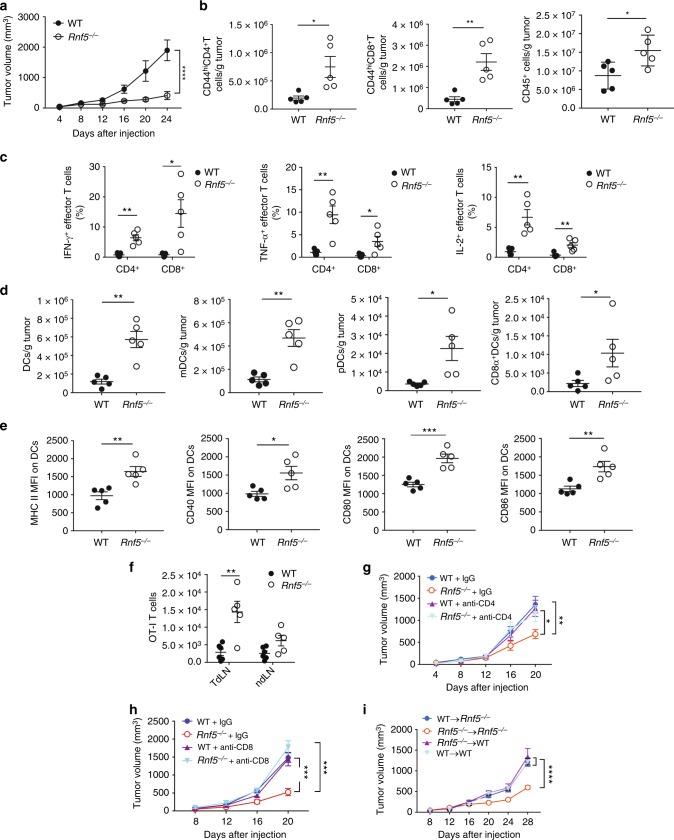
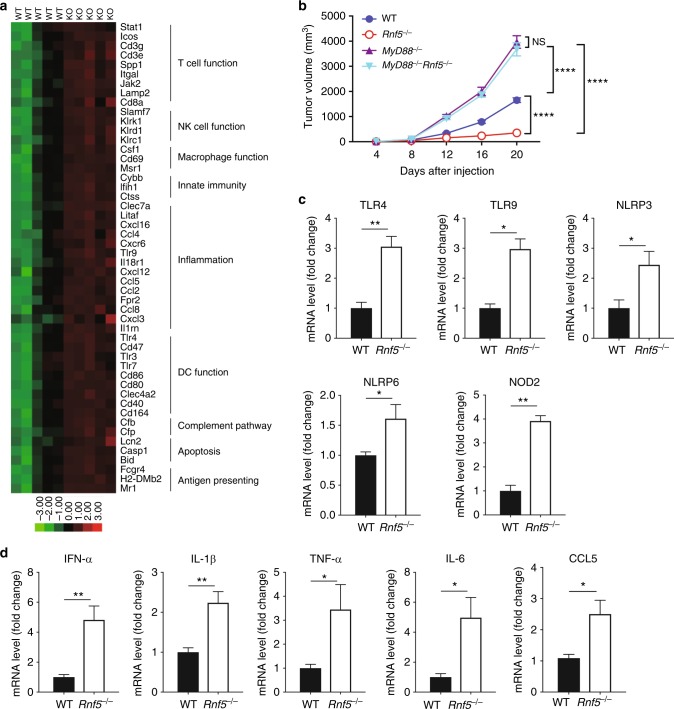
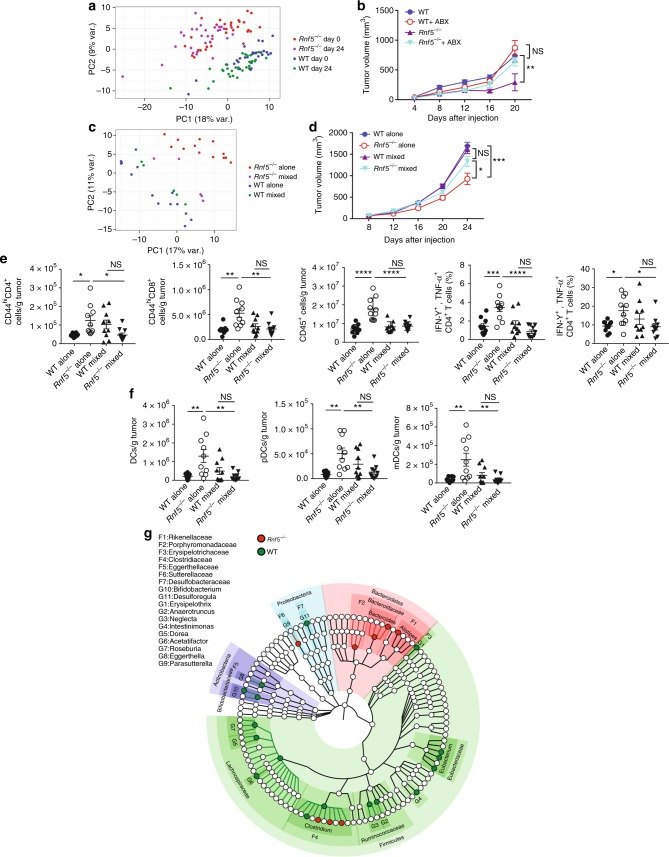
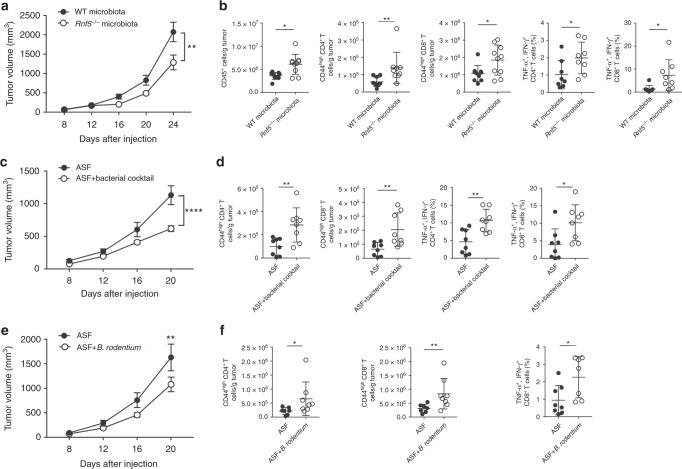
Verification
Claims the paper makes
The claims and statistics of this paper haven’t been checked yet.
Free: it reads the open-access text and checks the first 5 claims that cite a source we can check. Create a free account to check every claim.
Claims other papers make about this one
Each is checked against this paper’s own text: does it say what the citing paper says it does?
The source backs part of the claim, not all of it — or backs it for a different population, condition or comparison.
In the citing paper
“Homeostasis of gut microbiota also affects the efficacy and side effects of common cancer treatments, such as chemotherapy, radiotherapy, and immunotherapy8,9.”
From Combining gut microbiota modulation and chemotherapy by capecitabine-loaded prebiotic nanoparticle improves colorectal cancer therapy (2023) · cites this paper as [8]
Experimental — accuracy not yet measuredThe cited source says what the claim attributes to it.
In the citing paper
“Non-hematopoietic components of the intestinal mucosa are also linked to the TME (77).”
From The microbiome and human cancer (2021) · cites this paper as [77]
The cited source says what the claim attributes to it.
In the citing paper
“Confirming a Rnf5−/−-specific microbial effect, co-housing Rnf5−/− mice with wild type mice, or administering antibiotics, restored tumor aggressiveness”
From The microbiome and human cancer (2021) · cites this paper as [77]
In the citing paper
“This bowel injury amplified mobilization of CCR7-expressing DCs to Peyer’s patches, mLNs and melanoma-draining LNs, increasing IFNγ-producing T lymphocyte tumor infiltration.”
From The microbiome and human cancer (2021) · cites this paper as [77]
In the citing paper
“Gene deficient mice and BM chimeras identified a role for RNF5, an E3 ubiquitin ligase, in immunosurveillance of severe melanoma.”
From The microbiome and human cancer (2021) · cites this paper as [77]
2 more claims about this paper
Create a free account to see every claim other papers make about this one.
Self-check
Percentages, sums and reported differences re-computed from the paper’s own numbers.
The self-check needs the paper’s full text.
Citations
Cites
Genome engineering using the CRISPR-Cas9 system
Ran, F. A., Hsu, P. D., Wright, J., Agarwala, V., Scott, D. A., & Zhang, F. (2013) · Nature Protocols · doi:10.1038/nprot.2013.143 · Cited by 11,133
Commensal Bifidobacterium promotes antitumor immunity and facilitates anti–PD-L1 efficacy
Sivan, A., Corrales, L., Hubert, N., Williams, J. B., Aquino-Michaels, K., Earley, Z. M., Benyamin, F. W., Man Lei, Y., Jabri, B., Alegre, M.-L., et al. (2015) · Science · doi:10.1126/science.aac4255 · Cited by 3,888
Anticancer immunotherapy by CTLA-4 blockade relies on the gut microbiota
Vétizou, M., Pitt, J. M., Daillère, R., Lepage, P., Waldschmitt, N., Flament, C., Rusakiewicz, S., Routy, B., Roberti, M. P., Duong, C. P. M., et al. (2015) · Science · doi:10.1126/science.aad1329 · Cited by 3,488
An Integrated Stress Response Regulates Amino Acid Metabolism and Resistance to Oxidative Stress
Harding, H. P., Zhang, Y., Zeng, H., Novoa, I., Lu, P. D., Calfon, M., Sadri, N., Yun, C., Popko, B., Paules, R., et al. (2003) · Molecular Cell · doi:10.1016/s1097-2765(03)00105-9 · Cited by 3,323
Immune checkpoint targeting in cancer therapy: toward combination strategies with curative potential
Sharma, P., & Allison, J. P. (2015) · Cell · doi:10.1016/j.cell.2015.03.030 · Cited by 2,345
Role of the gut microbiota in immunity and inflammatory disease
Kamada, N., Seo, S.-U., Chen, G. Y., & Núñez, G. (2013) · Nature reviews. Immunology · doi:10.1038/nri3430 · Cited by 2,256
Targeted Disruption of the MyD88 Gene Results in Loss of IL-1- and IL-18-Mediated Function
Adachi, O., Kawai, T., Takeda, K., Matsumoto, M., Tsutsui, H., Sakagami, M., Nakanishi, K., & Akira, S. (1998) · Immunity · doi:10.1016/s1074-7613(00)80596-8 · Cited by 2,041
Lee, A.-H., Iwakoshi, N. N., & Glimcher, L. H. (2003) · Molecular and Cellular Biology · doi:10.1128/mcb.23.21.7448-7459.2003 · Cited by 2,037
NLRP6 Inflammasome Regulates Colonic Microbial Ecology and Risk for Colitis
Elinav, E., Strowig, T., Kau, A. L., Henao-Mejia, J., Thaiss, C. A., Booth, C. J., Peaper, D. R., Bertin, J., Eisenbarth, S. C., Gordon, J. I., et al. (2011) · Cell · doi:10.1016/j.cell.2011.04.022 · Cited by 2,024
TURNER, S., PRYER, K. M., MIAO, V. P. W., & PALMER, J. D. (1999) · Journal of Eukaryotic Microbiology · doi:10.1111/j.1550-7408.1999.tb04612.x · Cited by 1,575
Cited by
Endoplasmic reticulum stress signals in the tumour and its microenvironment
Chen, X., & Cubillos-Ruiz, J. R. (2021) · Nature Reviews Cancer · doi:10.1038/s41568-020-00312-2 · Cited by 1,356
The microbiome and human cancer
Sepich-Poore, G. D., Zitvogel, L., Straussman, R., Hasty, J., Wargo, J. A., & Knight, R. (2021) · Science · doi:10.1126/science.abc4552 · Cited by 1,332
“Nonhematopoietic components of the intestinal mucosa are also linked to the TME (77).”
InfluentialTumor-resident intracellular microbiota promotes metastatic colonization in breast cancer
Fu, A., Yao, B., Dong, T., Chen, Y., Yao, J., Liu, Y., Li, H., Bai, H., Liu, X., Zhang, Y., et al. (2022) · Cell · doi:10.1016/j.cell.2022.02.027 · Cited by 981
Gut microbiota in colorectal cancer development and therapy
Wong, C. C., & Yu, J. (2023) · Nature Reviews Clinical Oncology · doi:10.1038/s41571-023-00766-x · Cited by 721
Current Sampling Methods for Gut Microbiota: A Call for More Precise Devices
Tang, Q., Jin, G., Wang, G., Liu, T., Liu, X., Wang, B., & Cao, H. (2020) · Frontiers in Cellular and Infection Microbiology · doi:10.3389/fcimb.2020.00151 · Cited by 455
“…infection from various pathogens; promoting the maturation of the immune system; participating in the regulation of the immune response, nutritional absorption and metabolism; and promoting anti-cancer functions (Foster et al., 2017; Kim et al., 2017; Macpherson et al., 2017; Li et al., 2019).”
The role of gut microbiota in cancer treatment: friend or foe?
Cheng, W. Y., Wu, C.-Y., & Yu, J. (2020) · Gut · doi:10.1136/gutjnl-2020-321153 · Cited by 384
Gut Microbiota in Cancer Immune Response and Immunotherapy
Zhou, C.-B., Zhou, Y.-L., & Fang, J.-Y. (2021) · Trends in Cancer · doi:10.1016/j.trecan.2021.01.010 · Cited by 301
Cancer pharmacomicrobiomics: targeting microbiota to optimise cancer therapy outcomes
Ting, N. L.-N., Lau, H. C.-H., & Yu, J. (2022) · Gut · doi:10.1136/gutjnl-2021-326264 · Cited by 274
Yue, Y., Xu, J., Li, Y., Cheng, K., Feng, Q., Ma, X., Ma, N., Zhang, T., Wang, X., Zhao, X., et al. (2022) · Nature Biomedical Engineering · doi:10.1038/s41551-022-00886-2 · Cited by 264
Self-citationZhang, Z., Tang, H., Chen, P., Xie, H., & Tao, Y. (2019) · Signal Transduction and Targeted Therapy · doi:10.1038/s41392-019-0074-5 · Cited by 251
Prebiotic-Induced Anti-tumor Immunity Attenuates Tumor Growth
Li, Y., Elmén, L., Segota, I., Xian, Y., Tinoco, R., Feng, Y., Fujita, Y., Segura Muñoz, R. R., Schmaltz, R., Bradley, L. M., et al. (2020) · Cell Reports · doi:10.1016/j.celrep.2020.01.035 · Cited by 189
“The prebiotics inulin and mucin have been reported to induce Bifidobacterium spp. and Akkermansia muciniphila (Everard et al., 2013; Fehlbaum et al., 2018; Li et al., 2019a; Singh et al., 2018).”
InfluentialSelf-citationThe Structure, Activation and Signaling of IRE1 and Its Role in Determining Cell Fate
Siwecka, N., Rozpędek-Kamińska, W., Wawrzynkiewicz, A., Pytel, D., Diehl, J. A., & Majsterek, I. (2021) · Biomedicines · doi:10.3390/biomedicines9020156 · Cited by 172
New Insights Into the Cancer–Microbiome–Immune Axis: Decrypting a Decade of Discoveries
Jain, T., Sharma, P., Are, A. C., Vickers, S. M., & Dudeja, V. (2021) · Frontiers in Immunology · doi:10.3389/fimmu.2021.622064 · Cited by 183
“rodentium, improved anti-tumor immunity through increased DCs recruitment and improved immunotherapy efficacy (27).”
Microbiota-Centered Interventions: The Next Breakthrough in Immuno-Oncology?
Derosa, L., Routy, B., Desilets, A., Daillère, R., Terrisse, S., Kroemer, G., & Zitvogel, L. (2021) · Cancer Discovery · doi:10.1158/2159-8290.cd-21-0236 · Cited by 170
Rizvi, Z. A., Dalal, R., Sadhu, S., Kumar, Y., Kumar, S., Gupta, S. K., Tripathy, M. R., Rathore, D. K., & Awasthi, A. (2021) · Science Advances · doi:10.1126/sciadv.abg5016 · Cited by 157
Lang, T., Zhu, R., Zhu, X., Yan, W., Li, Y., Zhai, Y., Wu, T., Huang, X., Yin, Q., & Li, Y. (2023) · Nature Communications · doi:10.1038/s41467-023-40439-y · Cited by 133
Self-citationChoi, Y., Lichterman, J. N., Coughlin, L. A., Poulides, N., Li, W., Del Valle, P., Palmer, S. N., Gan, S., Kim, J., Zhan, X., et al. (2023) · Science Immunology · doi:10.1126/sciimmunol.abo2003 · Cited by 132
“Previous studies have reported that gut inflammation increases DC mobilization into MLNs and TDLNs in a CCR7 dependent manner (39, 40).”
Gut Microbiome: A Promising Biomarker for Immunotherapy in Colorectal Cancer
Temraz, S. N., Nassar, F. J., Nasr, R., Charafeddine, M., Mukherji, D., & Shamseddine, A. I. (2019) · International Journal of Molecular Sciences · doi:10.3390/ijms20174155 · Cited by 132
“A recent paper revealed that Rnf5−/−melanoma bearing mice that lack ring finger protein 5 (RNF5) (helps cells remove incorrectly folded proteins) and are characterized by low unfolded protein response (UPR) activity benefit from immunotherapy, because they have altered gut microbiome contributing to antitumor immunity…”
Sun, J., Chen, F., & Wu, G. (2023) · The ISME Journal · doi:10.1038/s41396-023-01483-0 · Cited by 127
Disentangling host–microbiota complexity through hologenomics
Alberdi, A., Andersen, S. B., Limborg, M. T., Dunn, R. R., & Gilbert, M. T. P. (2021) · Nature Reviews Genetics · doi:10.1038/s41576-021-00421-0 · Cited by 120
Aghamajidi, A., & Vareki, S. M. (2022) · Cancers · doi:10.3390/cancers14153563 · Cited by 111
Dysbiosis of skin microbiome and gut microbiome in melanoma progression
Mekadim, C., Skalnikova, H. K., Cizkova, J., Cizkova, V., Palanova, A., Horak, V., & Mrazek, J. (2022) · BMC Microbiology · doi:10.1186/s12866-022-02458-5 · Cited by 93
Melanoma and microbiota: Current understanding and future directions
Routy, B., Jackson, T., Mählmann, L., Baumgartner, C. K., Blaser, M., Byrd, A., Corvaia, N., Couts, K., Davar, D., Derosa, L., et al. (2024) · Cancer Cell · doi:10.1016/j.ccell.2023.12.003 · Cited by 89
Self-citationTargeting ubiquitin signaling for cancer immunotherapy
Zhou, X., & Sun, S. (2021) · Signal Transduction and Targeted Therapy · doi:10.1038/s41392-020-00421-2 · Cited by 100
Kim, S., Lee, J., Shin, S. G., Kim, J. K., Silwal, P., Kim, Y. J., Shin, N., Kim, P. S., Won, M., Lee, S., et al. (2020) · Autophagy · doi:10.1080/15548627.2020.1847460 · Cited by 81
Interaction between intestinal microbiota and tumour immunity in the tumour microenvironment
Yang, X., Guo, Y., Chen, C., Shao, B., Zhao, L., Zhou, Q., Liu, J., Wang, G., Yuan, W., & Sun, Z. (2021) · Immunology · doi:10.1111/imm.13397 · Cited by 88
Ding, G., Gong, Q., Ma, J., Liu, X., Wang, Y., & Cheng, X. (2021) · Cancer Science · doi:10.1111/cas.15078 · Cited by 81
Usyk, M., Pandey, A., Hayes, R. B., Moran, U., Pavlick, A. C., Osman, I., Weber, J. S., & Ahn, J. (2021) · Genome Medicine · doi:10.1186/s13073-021-00974-z · Cited by 81
Patra, V., Gallais Sérézal, I., & Wolf, P. (2020) · Nutrients · doi:10.3390/nu12061795 · Cited by 70
Anderson, R., Theron, A. J., & Rapoport, B. L. (2019) · Frontiers in Immunology · doi:10.3389/fimmu.2019.02254 · Cited by 77
A Colon‐Targeted Oral Probiotics Delivery System Using an Enzyme‐Triggered Fuse‐Like Microcapsule
Cheng, Q., Liu, L., Xie, M., Li, H., Ma, D., & Xue, W. (2021) · Advanced Healthcare Materials · doi:10.1002/adhm.202001953 · Cited by 68
Endoplasmic reticulum stress responses in anticancer immunity
Hwang, S., Chang, S., Rodríguez, P. C., & Cubillos‐Ruiz, J. R. (2025) · Nature reviews. Cancer · doi:10.1038/s41568-025-00836-5 · Cited by 80
Ballotti, R., Chéli, Y., & Bertolotto, C. (2020) · Molecular Cancer · doi:10.1186/s12943-020-01290-7 · Cited by 67
Khateb, A., Deshpande, A. J., Feng, Y., Finlay, D., Lee, J. S., Lazar, I., Fabre, B., Li, Y., Fujita, Y., Zhang, T., et al. (2021) · Nature Communications · doi:10.1038/s41467-021-25664-7 · Cited by 63
Self-citationYang, C., Cui, M., Zhang, Y., Pan, H., Liu, J., Wang, S., Ma, N., Chang, J. K., Sun, T., & Wang, H. (2020) · Communications Biology · doi:10.1038/s42003-020-01287-4 · Cited by 60
The gut dysbiosis-cancer axis: illuminating novel insights and implications for clinical practice
Asseri, A. H., Bakhsh, T., Abuzahrah, S. S., Ali, S., & Rather, I. A. (2023) · Frontiers in Pharmacology · doi:10.3389/fphar.2023.1208044 · Cited by 61
“nucleatum fibroblast activation protein 2 (FAP2) adhesin interfered with NK cell activity, resulting in the pathogen evading antitumor immunity (Gur et al., 2015; Li et al., 2019).”
Potential links between the microbiota and T cell immunity determine the tumor cell fate
Mohseni, A. H., Taghinezhad‐S, S., Casolaro, V., Lv, Z., & Li, D. (2023) · Cell Death and Disease · doi:10.1038/s41419-023-05560-2 · Cited by 55
Jiang, S., Ma, W., Ma, C., Zhang, Z., Zhang, W., & Zhang, J. (2024) · Gut Microbes · doi:10.1080/19490976.2024.2341717 · Cited by 57
Influence of the gut microbiota on immune cell interactions and cancer treatment
Liu, C., Fu, L., Wang, Y., & Yang, W. (2024) · Journal of Translational Medicine · doi:10.1186/s12967-024-05709-3 · Cited by 50
Wang, M., Zhang, L., Chang, W., & Zhang, Y. (2023) · Frontiers in Immunology · doi:10.3389/fimmu.2022.1096551 · Cited by 45
“Rnf5 knockout (Rnf5) mice had an increased number of Bacteroides massiliensis compared with WT mice (72).”
Guo, J., Song, C., Liu, Y., Wu, X., Dong, W., Zhu, H., Xiang, Z., & Qin, C. (2022) · Animal Models and Experimental Medicine · doi:10.1002/ame2.12257 · Cited by 47
Roles of Gut Microbiota in Alcoholic Liver Disease
Zhang, D., Liu, Z., & Bai, F. (2023) · International Journal of General Medicine · doi:10.2147/ijgm.s420195 · Cited by 42
The role of gut microbiota in tumorigenesis and treatment
Xu, J., Liu, M.-T., Tao, T., Zhu, X. M., & Fei, F. (2021) · Biomedicine & Pharmacotherapy · doi:10.1016/j.biopha.2021.111444 · Cited by 45
Non-Melanoma Skin Cancer: news from microbiota research
Squarzanti, D. F., Zavattaro, E., Pizzimenti, S., Amoruso, A., Savoia, P., & Azzimonti, B. (2020) · Critical Reviews in Microbiology · doi:10.1080/1040841x.2020.1794792 · Cited by 40
Facts and Hopes for Gut Microbiota Interventions in Cancer Immunotherapy
Davar, D., & Zarour, H. M. (2022) · Clinical Cancer Research · doi:10.1158/1078-0432.ccr-21-1129 · Cited by 40
“rodentium, which stimulates antitumor responses in Rnf5 / mice in a My8DD/TLR-mediated fashion (65), and Bifidobacterium spp.”
The gut microbiome and melanoma: A review
Makaranka, S., Scutt, F., Frixou, M., Wensley, K. E., Sharma, R., & Greenhowe, J. (2022) · Experimental Dermatology · doi:10.1111/exd.14639 · Cited by 44
Kuan, Y.-C., Takahashi, Y., Maruyama, T., Shimizu, M., Yamauchi, Y., & Sato, R. (2020) · Journal of Biological Chemistry · doi:10.1074/jbc.ra119.011849 · Cited by 40
Computational methods and challenges in analyzing intratumoral microbiome data
Wang, Q., Liu, Z., Ma, A., Li, Z., Liu, B., & Ma, Q. (2023) · Trends in Microbiology · doi:10.1016/j.tim.2023.01.011 · Cited by 37
“The results showed that bacteria are enriched in the TME niches with immune and epithelial cell functions and promote tumor growth rather than being distributed randomly in the TME.”
InfluentialHan, J., Tao, Z., Qian, Y., Yu, C., Li, J., Kang, Z., Lu, S., Xie, Y., Hong, J., Chen, H., et al. (2021) · Gut Microbes · doi:10.1080/19490976.2021.1917269 · Cited by 37
The gut microbiome: an unexpected player in cancer immunity
Peterson, S. N., Bradley, L. M., & Ronai, Z. A. (2019) · Current Opinion in Neurobiology · doi:10.1016/j.conb.2019.09.016 · Cited by 38
Self-citationXian, H., Li, J., Zhang, Y., Li, D., Zhu, Y., Li, S., Tan, Z., Lin, Z., Li, X., & Pan, Y. (2021) · Frontiers in Pharmacology · doi:10.3389/fphar.2021.650216 · Cited by 36
Lozenov, S., Krastev, B. M., Nikolaev, G., Peshevska-Sekulovska, M., Peruhova, M., & Velikova, T. V. (2023) · International Journal of Molecular Sciences · doi:10.3390/ijms24065978 · Cited by 36
“This, in turn, may limit melanoma progression in Rnf5/ mice [53].”
Influence of Microbiota on Tumor Immunotherapy
Yu, X., Li, W., Li, Z., Wu, Q., & Sun, S. (2024) · International Journal of Biological Sciences · doi:10.7150/ijbs.91771 · Cited by 37
“These interactions further triggered immune responses via the IFN-I and IL-12-mediated pathways [168,169,185–187].”
Composition of the murine gut microbiome impacts humoral immunity induced by rabies vaccines
Zhang, Y., Wu, Q. D., Zhou, M., Luo, Z., Lv, L., Pei, J., Wang, C., Chai, B., Sui, B., Huang, F., et al. (2020) · Clinical and Translational Medicine · doi:10.1002/ctm2.161 · Cited by 33
The unfolded protein and integrated stress response in melanoma and vitiligo
Manga, P., & Choudhury, N. (2020) · Pigment Cell & Melanoma Research · doi:10.1111/pcmr.12947 · Cited by 34
Clinical Evidence for Microbiome-Based Strategies in Cancer Immunotherapy: A State-of-the-Art Review
Petrelli, F., Ghidini, A., Dottorini, L., Ghidini, M., Zaniboni, A., & Tomasello, G. (2025) · Medicina · doi:10.3390/medicina61091595 · Cited by 33
Lee, Y., Jung, M., Kim, J., Charles, A., Christ, W., Kang, J., Kang, M., Kwak, C. S., Klingström, J., Smed‐Sörensen, A., et al. (2023) · Cell Reports · doi:10.1016/j.celrep.2023.112835 · Cited by 30
Zhu, H., Guo, H., Sun, N., Xiao, R., Ji, B., Jiang, R., Dong, F., Yao, C., Wang, X., Li, R., et al. (2025) · Advanced Science · doi:10.1002/advs.202509383 · Cited by 38
Novel insights on gut microbiota manipulation and immune checkpoint inhibition in cancer (Review)
Vivarelli, S., Falzone, L., Leonardi, G. C., Salmeri, M., & Libra, M. (2021) · International Journal of Oncology · doi:10.3892/ijo.2021.5255 · Cited by 31
“Additionally, the GM may alter the immune response acti‐ vated by the host against the neoplasm, as observed in several tumor‐bearing mice models (49,113,114).”
Dingenen, L. V., Segers, C., Wouters, S., Mysara, M., Leys, N., Kumar‐Singh, S., Malhotra‐Kumar, S., & Houdt, R. V. (2023) · Frontiers in Cellular and Infection Microbiology · doi:10.3389/fcimb.2023.1298264 · Cited by 31
The role of ER-associated degradation and ER-phagy in health and disease
Jeon, Y. J., & Ronai, Z. A. (2026) · Signal Transduction and Targeted Therapy · doi:10.1038/s41392-025-02501-7 · Cited by 31
Self-citationGut Microbiota and Immune Responses
Dong, L., Xie, J., Wang, Y., & Zuo, D. (2020) · Advances in experimental medicine and biology · doi:10.1007/978-981-15-2385-4_10 · Cited by 31
Host dysbiosis negatively impacts IL-9-producing T-cell differentiation and antitumour immunity
Almeida, R. R., Vieira, R. D. S., Castoldi, Â., Terra, F. F., de Melo, A. C. L., Canesso, M. C. C., Lemos, L., Cipelli, M., Rana, N., Hiyane, M. I., et al. (2020) · British Journal of Cancer · doi:10.1038/s41416-020-0915-6 · Cited by 28
Nutritional Interventions Targeting Gut Microbiota during Cancer Therapies
Rinninella, E., Raoul, P. C., Cintoni, M., Palombaro, M., Pulcini, G., Gasbarrini, A., & Mele, M. C. (2021) · Microorganisms · doi:10.3390/microorganisms9071469 · Cited by 28
“An in vitro study showed that the cultivation of fecal samples with inulin and mucin increased the relative abundance of gut microbial species implicated in tumor growth control in Rnf5−/−mice [90].”
InfluentialGut Microbiome in Patients With Early-Stage and Late-Stage Melanoma
Witt, R. G., Cass, S. H., Tran, T., Damania, A. V., Nelson, E. E., Sirmans, E., Burton, E. M., Chelvanambi, M., Johnson, S. B., Tawbi, H. A., et al. (2023) · JAMA Dermatology · doi:10.1001/jamadermatol.2023.2955 · Cited by 29
Islam, M. Z., Tran, M. A., Xu, T., Tierney, B. T., Patel, C. J., & Kostic, A. D. (2022) · Microbiome · doi:10.1186/s40168-022-01373-1 · Cited by 29
Innao, V., Allegra, A. G., Musolino, C., & Allegra, A. (2020) · International Journal of Molecular Sciences · doi:10.3390/ijms21238902 · Cited by 37
“In particular, a reduced URP has been observed in patients with melanoma responding to immunotherapy, and this may represent a marker potential for stratification of responders and non-responders [63].”
Ileal immune tonus is a prognosis marker of proximal colon cancer in mice and patients
Picard, M., Yonekura, S., Slowicka, K., Petta, I., Rauber, C., Routy, B., Richard, C., Iebba, V., Tidjani Alou, M., Becharef, S., et al. (2021) · Cell Death & Differentiation · doi:10.1038/s41418-020-00684-w · Cited by 24
Emmanuelli, A., Salvagno, C., Hwang, S., Awasthi, D., Sandoval, T. A., Chae, C.-S., Cheong, J., Tan, C., Iwawaki, T., & Cubillos‐Ruiz, J. R. (2024) · OncoImmunology · doi:10.1080/2162402x.2024.2411070 · Cited by 27
A Highlight of the Mechanisms of Immune Checkpoint Blocker Resistance
Huang, Q., Lei, Y., Li, X., Guo, F., & Liu, M. (2020) · Frontiers in Cell and Developmental Biology · doi:10.3389/fcell.2020.580140 · Cited by 25
Gut Microbiota–Related Biomarkers in Immuno-Oncology
Silva, C. A. C., Fidelle, M., Almonte, A. A., Derosa, L., & Zitvogel, L. (2025) · Annual Review of Pharmacology and Toxicology · doi:10.1146/annurev-pharmtox-061124-102218 · Cited by 22
Potential of Black Phosphorus in Immune‐Based Therapeutic Strategies
Dong, W., Hu, W., Liu, H., Zhou, C., Zhang, X., Wang, S., & Lin, H. (2022) · Bioinorganic Chemistry and Applications · doi:10.1155/2022/3790097 · Cited by 22
Suppression of KSHV lytic replication and primary effusion lymphoma by selective RNF5 inhibition
Li, X., Wang, F., Zhang, X., Sun, Q., & Kuang, E. (2023) · PLoS Pathogens · doi:10.1371/journal.ppat.1011103 · Cited by 21
“In contrast, RNF5 inhibition results in enhanced autophagy and antitumor immunity, restricting bacterial infection and tumor growth [19, 22].”
Wang, J., Pu, J., Zhang, Z., Feng, Z., Han, J., Su, X., & Shi, L. (2023) · Heliyon · doi:10.1016/j.heliyon.2023.e16682 · Cited by 21
“This structural change of gut microbiota may contribute to anti-tumor immunity and limit tumor expansion [26].”
Zeng, Y., Wu, R., He, Y., Zhang, Q., Wang, Z., Qin, P., Yang, F., Han, Y., Hao, M., Zheng, Y., et al. (2025) · Cell Host & Microbe · doi:10.1016/j.chom.2025.04.011 · Cited by 23
Diet, Microbes, and Cancer Across the Tree of Life: a Systematic Review
Kapsetaki, S. E., Alcaraz, G. M., Maley, C. C., Whisner, C. M., & Aktipis, A. (2022) · Current Nutrition Reports · doi:10.1007/s13668-022-00420-5 · Cited by 20
A small-molecule inhibitor and degrader of the RNF5 ubiquitin ligase
Ruan, J., Liang, D., Yan, W., Zhong, Y., Talley, D. C., Rai, G., Tao, D., LeClair, C. A., Simeonov, A. M., Zhang, Y., et al. (2022) · Molecular Biology of the Cell · doi:10.1091/mbc.e22-06-0233 · Cited by 21
Endoplasmic Reticulum Stress: Triggers Microenvironmental Regulation and Drives Tumor Evolution
Peng, C., Wang, J., Wang, S., Zhao, Y., Wang, H., Wang, Y., Ma, Y., & Yang, J. (2025) · Cancer Medicine · doi:10.1002/cam4.70684 · Cited by 21
“Additionally, directly suppressing XBP1 in melanoma cells enhances the effectiveness of immunotherapy when treated with antibodies targeting proteins involved in the programmed cell death 1 (PD-1) and cytotoxic T cell lymphocyte-associated antigen 4 (CTLA-4) pathways [92].”
Impact of the ileal microbiota on colon cancer
Roberti, M. P., Rauber, C., Kroemer, G., & Zitvogel, L. (2021) · Seminars in Cancer Biology · doi:10.1016/j.semcancer.2021.09.016 · Cited by 18
Mattiola, I., & Diefenbach, A. (2023) · Seminars in Immunology · doi:10.1016/j.smim.2023.101724 · Cited by 19
Zhou, Z., Lv, Y., Zuo, A., Zhu, X., Xu, Y., Zuo, L., Xu, H., Liu, S., Zhang, Y., Weng, S., et al. (2025) · hLife · doi:10.1016/j.hlife.2025.05.008 · Cited by 16
Liu, Z., & Xia, L. (2022) · Frontiers in Microbiology · doi:10.3389/fmicb.2022.944101 · Cited by 20
Inactivation of the Caenorhabditis elegans RNF-5 E3 ligase promotes IRE-1-independent ER functions
Adir, O., Abu‐Shach, U. B., Arbib, S., Henis‐Korenblit, S., & Broday, L. (2020) · Autophagy · doi:10.1080/15548627.2020.1827778 · Cited by 17
Potential Effects of Regulating Intestinal Flora on Immunotherapy for Liver Cancer
Yan, X.-D., Bai, L., Qi, P., Lv, J., Song, X., & Zhang, L. (2023) · International Journal of Molecular Sciences · doi:10.3390/ijms241411387 · Cited by 16
“It enhances CD8+ T-cell expression, upregulates PDL1 expression in the mouse tumor cell, and increases antibody CD47 expression, which sensitizes mouse tumor cells to anti-CD47 immunotherapy [66,67].”
Zhao, J., Yao, C., Qin, Y., Zhu, H., Guo, H., Ji, B., Li, X., Sun, N., Li, R., Wu, Y., et al. (2024) · Cell Death and Disease · doi:10.1038/s41419-024-06500-4 · Cited by 17
“Murine intestinal cells were isolated as described [49].”
Efficient Mining of Anticancer Peptides from Gut Metagenome
Ma, Y., Liu, X., Zhang, X., Yu, Y., Li, Y., Song, M., & Wang, J. (2023) · Advanced Science · doi:10.1002/advs.202300107 · Cited by 19
Self-citationBouferraa, Y., Fares, C., Zerdan, M. B., & Kennedy, L. B. (2023) · International Journal of Molecular Sciences · doi:10.3390/ijms24119702 · Cited by 15
“demonstrated that transferring 11 bacterial strains, which were more abundant in mice with negative ubiquitin ligase RNF5, resulted in the development of anti-tumor immunity and limited melanoma growth in germ-free mice [31].”
Wang, H., Li, Z., Tao, Y., Ou, S., Ye, J., Ran, S., Luo, K., Guan, Z., Xiang, J. Y., Yan, G., et al. (2023) · Journal of Translational Medicine · doi:10.1186/s12967-023-04547-z · Cited by 14
The Sunrise of Tertiary Lymphoid Structures in Cancer
Rochefort, J., Marodon, G., Teillaud, J., & Dieu‐Nosjean, M. (2025) · Immunological Reviews · doi:10.1111/imr.70046 · Cited by 16
Li, X., Wang, F., Huang, L., Yang, M., & Kuang, E. (2023) · Cell Death and Disease · doi:10.1038/s41419-023-06188-y · Cited by 13
Gonçalves, M., Lopes, C. C. C., & Silva, P. (2024) · Tissue and Cell · doi:10.1016/j.tice.2024.102306 · Cited by 15
Exploring the role of gut microbiota in colorectal liver metastasis through the gut-liver axis
Liu, Q.-L., Zhou, H., Wang, Z., & Chen, Y. (2025) · Frontiers in Cell and Developmental Biology · doi:10.3389/fcell.2025.1563184 · Cited by 14
Micro-coevolution of host genetics with gut microbiome in three Chinese ethnic groups
Cheng, M., Ge, X., Zhong, C., Fu, R., Ning, K., & Xu, S. (2021) · Journal of genetics and genomics/Journal of Genetics and Genomics · doi:10.1016/j.jgg.2021.09.002 · Cited by 14
Targeting of Ubiquitin E3 Ligase RNF5 as a Novel Therapeutic Strategy in Neuroectodermal Tumors
Principi, E., Sondo, E., Bianchi, G., Ravera, S., Morini, M., Tomati, V., Pastorino, C., Zara, F., Bruno, C., Eva, A., et al. (2022) · Cancers · doi:10.3390/cancers14071802 · Cited by 13
“Notably, rnf5−/− mice present an enhanced antitumor response, which is coupled with greater recovery and function of CD8+ lymphocytes in melanoma tumors [12].”
Unal, B., & Saatcioglu, F. (2025) · Biomarker Research · doi:10.1186/s40364-025-00813-y · Cited by 11
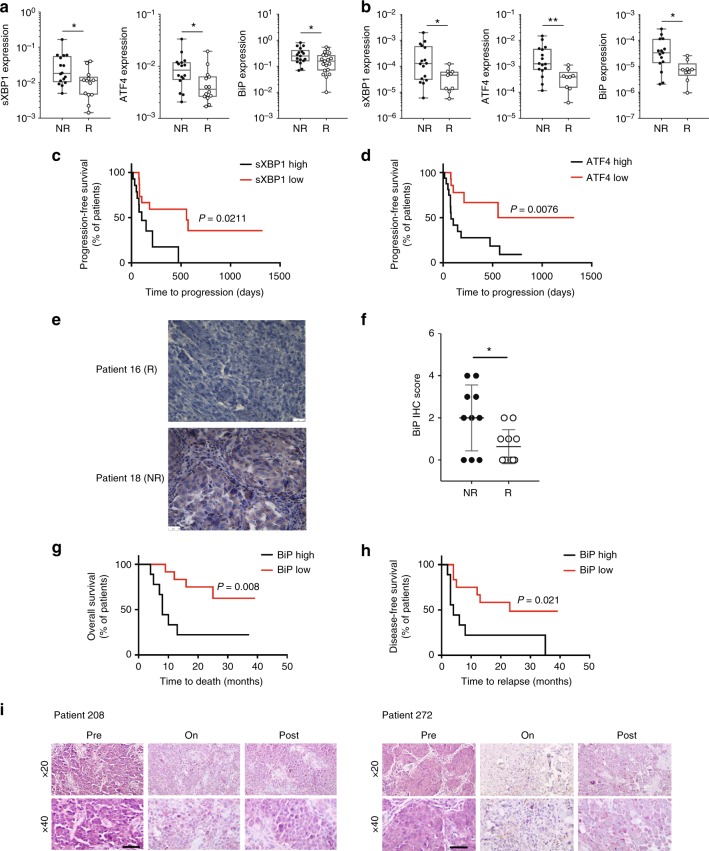
“Importantly, lower levels of XBP1s, ATF4, and BiP expression in pre-treatment tumor biopsy samples significantly correlated with better treatment responses and prolonged survival in different groups of melanoma patients undergoing anti-CTLA-4 therapy [193].”
Impact of the microbiome on tumor immunity
McCoy, K. D., & Mager, L. F. (2021) · Current Opinion in Immunology · doi:10.1016/j.coi.2021.01.002 · Cited by 11
Lei, Y., Zhao, S., & Jiang, M. (2021) · Frontiers in Immunology · doi:10.3389/fimmu.2021.653319 · Cited by 11
Bartonella henselae Detected in Malignant Melanoma, a Preliminary Study
Ericson, M. E., Breitschwerdt, E. B., Reicherter, P., Maxwell, C., Maggi, R. G., Melvin, R. G., Maluki, A. H., Bradley, J. M., Miller, J. C., Simmons, G. E., et al. (2021) · Pathogens · doi:10.3390/pathogens10030326 · Cited by 12
“Recent studies in mice also suggest that the gut microbiome may influence the therapeutic response for cancers in locations distant from the gut [12,13].”
Hsu, C., Chandramoorthy, H. C. K., Mohammed, J. S., Al-Hasnaawei, S., Yaqob, M., Kundlas, M., Samikan, K., Sahoo, S., Sunori, S. K., & Abbas, Z. A. (2025) · Archives of Dermatological Research · doi:10.1007/s00403-025-04237-4 · Cited by 11
“Dysbio-sis in the broader aspect of the gut microbiome affects several immune cells'development and function, including but not limited to T cells, DCS, and macrophages, ultimately leading to poor immune surveillance and anti-tumor immunity [126].”
An Update on the Role of Ubiquitination in Melanoma Development and Therapies
Soysouvanh, F., Giuliano, S., Habel, N., Hachem, N. E., Pisibon, C., Bertolotto, C., & Ballotti, R. (2021) · Journal of Clinical Medicine · doi:10.3390/jcm10051133 · Cited by 11
“demonstrated that an alteration of intestinal microbiota in Rnf5−/− mice may have a role in antitumor immunity [85].”
Metadata
- Authors
- Li, Y., Tinoco, R., Elmén, L., Segota, I., Xian, Y., Fujita, Y., Sahu, A., Zarecki, R., Marie, K., Feng, Y., Khateb, A., Frederick, D. T., Ashkenazi, S. K., Kim, H., Perez, E. G., Day, C.-P., Segura Muñoz, R. S., Schmaltz, R., Yooseph, S., Tam, M. A., Zhang, T., Avitan-Hersh, E., Tzur, L., Roizman, S., Boyango, I., Bar-Sela, G., Orian, A., Kaufman, R. J., Bosenberg, M., Goding, C. R., Baaten, B., Levesque, M. P., Dummer, R., Brown, K., Merlino, G., Ruppin, E., Flaherty, K., Ramer-Tait, A., Long, T., Peterson, S. N., Bradley, L. M., & Ronai, Z. A.
- Affiliations
- Sanford Burnham Prebys Medical Discovery Institute (US)
- University of Nebraska–Lincoln (US)
- University of Maryland, College Park (US)
- Tel Aviv University (IL)
- National Institutes of Health (US)
- Technion – Israel Institute of Technology (IL)
- Harvard University (US)
- University of Central Florida (US)
- BioLegend (United States) (US)
- National Cancer Institute (US)
- Yale University (US)
- University of Oxford (GB)
- University of Zurich (CH)
- Corresponding author
- Ronai, Ze’ev A.
- ORCID
- Tinoco, Roberto
- Xian, Yibo
- Fujita, Yu
- Sahu, Avinash
- Zarecki, Raphy
- Marie, Kerrie
- Frederick, Dennie T.
- Kim, Hyungsoo
- Day, Chi-Ping
- Yooseph, Shibu
- Tam, Miguel A.
- Zhang, Tongwu
- Orian, Amir
- Kaufman, Randal J.
- Bosenberg, Marcus
- Goding, Colin R.
- Levesque, Mitchell P.
- Dummer, Reinhard
- Brown, Kevin
- Merlino, Glenn
- Ruppin, Eytan
- Flaherty, Keith
- Ramer-Tait, Amanda
- Long, Tao
- Bradley, Linda M.
- Ronai, Ze’ev A.
- Venue
- Nature Communications
- Published
- 2019-04-02
- Volume
- 10
- Issue
- 1
- Pages
- 1492-1492
- ISSN
- 2041-1723 (ISSN-L)
- PMC
- PMC6445090
- OpenAlex
- W2930205604
- Semantic Scholar
- a8881180310d8212a6a8bd869ff2801c1e13e481
- Cited by
- 212
- References
- 50
- Citations by year
- 2026: 13 · 2025: 23 · 2024: 37 · 2023: 35 · 2022: 41 · 2021: 36 · 2020: 21 · 2019: 6
- FWCI
- 8.60
- Type
- journal article
- Language
- en
- Open access
- gold
- doi.org
- Licence
- cc-by
- creativecommons.org/licenses/by/4.0 (tdm)
- creativecommons.org/licenses/by/4.0 (vor)
- Locations
- Nature Communications (publishedVersion, cc-by)
- Europe PMC (PubMed Central) (publishedVersion, cc-by)
- PubMed Central (publishedVersion, cc-by)
- PubMed (publishedVersion)
- Zurich Open Repository and Archive (University of Zurich) (acceptedVersion, cc-by)
- Lincoln (University of Nebraska) (submittedVersion)
- RePEc: Research Papers in Economics (submittedVersion)
- DOAJ (DOAJ: Directory of Open Access Journals) (submittedVersion)
- DOAJ (DOAJ: Directory of Open Access Journals) (submittedVersion, cc-by-sa)
- eScholarship (California Digital Library) (submittedVersion)
- eScholarship (California Digital Library) (submittedVersion, cc-by)
- Research Explorer (The University of Manchester) (submittedVersion, other-oa)
- Zurich Open Repository and Archive (University of Zurich) (submittedVersion, cc-by)
- Zurich Open Repository and Archive (University of Zurich)
- Funders
- Melanoma Research Alliance (509524)
- National Institutes of Health (CA030199)
- Engineering and Physical Sciences Research Council (EP/K040375/1)
- National Cancer Institute (R35CA197465, DK103185, CA198103, CA 030199, R01CA198103, P01CA128814, R01CA216187, P30CA030199)
- National Institute of Allergy and Infectious Diseases (R01AI106895)
- National Institute of Diabetes and Digestive and Kidney Diseases (R01DK113171, R01DK103185)
- Congressionally Directed Medical Research Programs (CA150892)
- Topics
- Life Sciences › Biochemistry, Genetics and Molecular Biology › Molecular Biology › Gut microbiota and health
- Health Sciences › Medicine › Oncology › Cancer Immunotherapy and Biomarkers
- Life Sciences › Immunology and Microbiology › Immunology › T-cell and B-cell Immunology
- Keywords
- gut microbiota, antitumor immunity, melanoma, RNF5, ubiquitin ligase, unfolded protein response, inflammasome, dendritic cells, antimicrobial peptides, immune checkpoint therapy, germ-free mice, cohousing
- MeSH terms
- Gastrointestinal Microbiome, Animals, Bacteria, Humans, Intestines, Melanoma, Membrane Proteins, Mice, Inbred C57BL, Mice, Knockout, Antimicrobial Cationic Peptides, Ubiquitin-Protein Ligases, Cell Proliferation, Mice, Unfolded Protein Response
About these checks
Registry, retraction, Cites and statistics results are computed, not judged, with one exception: a printed reference that no index lists is read once by a model before it counts as a citation error. Claims are extracted by a model and kept only when their quote appears verbatim in the text; each cited source is then checked, with a model’s help, for whether it says what the claim relies on. Those verdicts can be wrong — read the claim’s quote and the cited source before relying on one.
Statistics and arithmetic are recomputed, not judged.
Confidence bands are shown only for fields calibrated on our annotated test set. None is calibrated yet, so no band is shown.
What counts as a claim ›How we measure confidence ›How we check this ›
Are you an author, or do you see a problem with this page? Request a review
Data sources
Bibliographic data: Semantic Scholar, OpenAlex, Crossref.
Contains information from the Semantic Scholar Academic Graph Datasets, made available under the ODC Attribution License (ODC-BY 1.0).
Semantic Scholar’s data is described in: Kinney, R., et al. (2023). The Semantic Scholar Open Data Platform. arXiv:2301.10140.
