

Deep brain stimulation of the internal capsule enhances human cognitive control and prefrontal cortex function
Open accessThe DOI matches its Crossref record; 71 of the 71 references it cites were found in a registry or an index.
Abstract
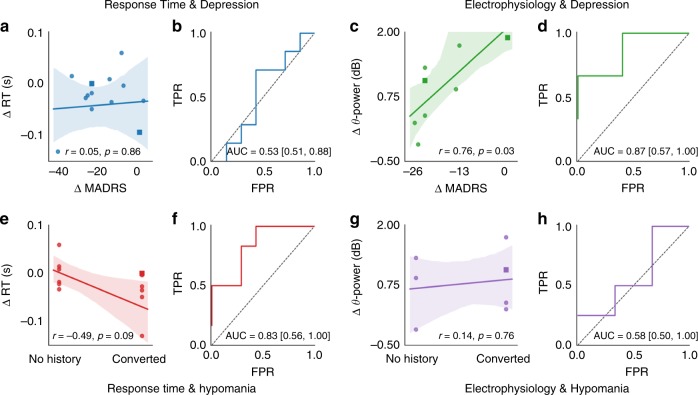
Deep brain stimulation (DBS) is a circuit-oriented treatment for mental disorders. Unfortunately, even well-conducted psychiatric DBS clinical trials have yielded inconsistent symptom relief, in part because DBS’ mechanism(s) of action are unclear. One clue to those mechanisms may lie in the efficacy of ventral internal capsule/ventral striatum (VCVS) DBS in both major depression (MDD) and obsessive-compulsive disorder (OCD). MDD and OCD both involve deficits in cognitive control. Cognitive control depends on prefrontal cortex (PFC) regions that project into the VCVS. Here, we show that VCVS DBS’ effect is explained in part by enhancement of PFC-driven cognitive control. DBS improves human subjects’ performance on a cognitive control task and increases theta (5–8Hz) oscillations in both medial and lateral PFC. The theta increase predicts subjects’ clinical outcomes. Our results suggest a possible mechanistic approach to DBS therapy, based on tuning stimulation to optimize these neurophysiologic phenomena.
Overview
The claims and statistics of this paper haven’t been checked yet.
Free: it reads the open-access text and checks the first 5 claims that cite a source we can check. Create a free account to check every claim.
Integrity signals
Registry
Cites
Statistics
Figures
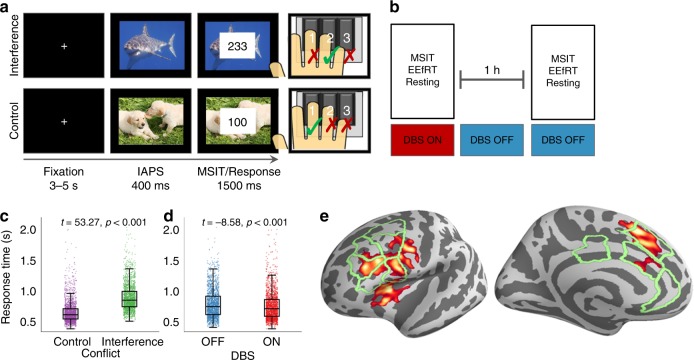
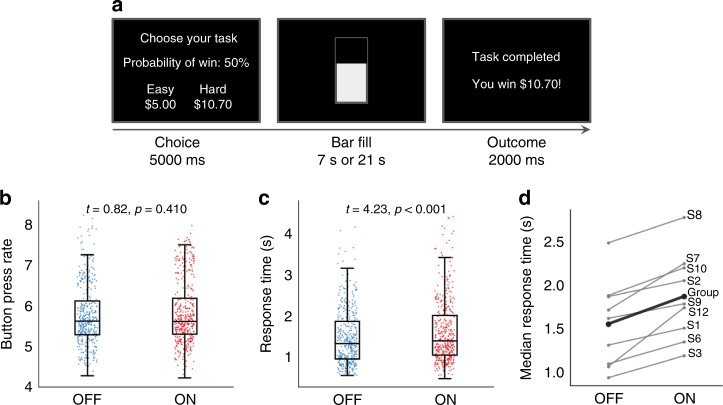
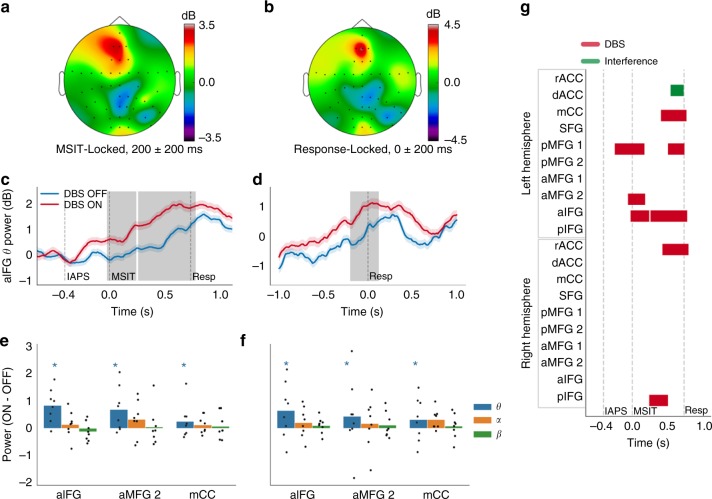
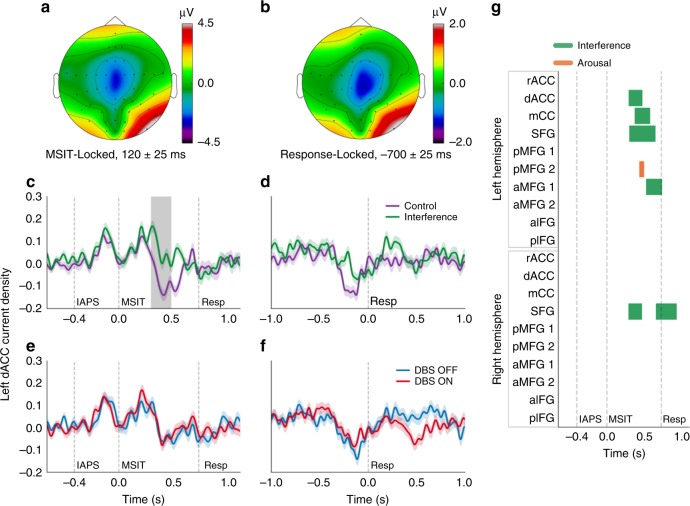
Verification
Claims the paper makes
The claims and statistics of this paper haven’t been checked yet.
Free: it reads the open-access text and checks the first 5 claims that cite a source we can check. Create a free account to check every claim.
Claims other papers make about this one
Each is checked against this paper’s own text: does it say what the citing paper says it does?
The source backs part of the claim, not all of it — or backs it for a different population, condition or comparison.
In the citing paper
“DBS of the ventral capsule/ventral striatum, which modulates CSTC loops including the CN and OFC (233, 234)”
From Neural mechanisms underlying cognitive inflexibility in obsessive-compulsive disorder: a review (2026) · cites this paper as [234]
Experimental — accuracy not yet measuredThe source backs part of the claim, not all of it — or backs it for a different population, condition or comparison.
In the citing paper
“improve cognitive inflexibility in refractory OCD patients (234)”
From Neural mechanisms underlying cognitive inflexibility in obsessive-compulsive disorder: a review (2026) · cites this paper as [234]
Experimental — accuracy not yet measuredIn the citing paper
“Another recent study also indicated that ventral cognitive circuit function can be improved by ventral capsular/ventral striatal (VC/VS) DBS targeting the ALIC [132].”
From Toward a neurocircuit-based taxonomy to guide treatment of obsessive-compulsive disorder (2021) · cites this paper as [132]
In the citing paper
“Widge et al. [132] found that stimulation at this target resulted in significantly greater theta oscillations in prefrontal regions, including the IFG, during an inhibition task in patients with OCD and/or depression.”
From Toward a neurocircuit-based taxonomy to guide treatment of obsessive-compulsive disorder (2021) · cites this paper as [132]
Self-check
Percentages, sums and reported differences re-computed from the paper’s own numbers.
The self-check needs the paper’s full text.
Citations
Cites
Measuring emotion: The self-assessment manikin and the semantic differential
Bradley, M. M., & Lang, P. J. (1994) · Journal of Behavior Therapy and Experimental Psychiatry · doi:10.1016/0005-7916(94)90063-9 · Cited by 9,538
Fischl, B. (2012) · NeuroImage · doi:10.1016/j.neuroimage.2012.01.021 · Cited by 9,526
Nonparametric statistical testing of EEG- and MEG-data
Maris, E., & Oostenveld, R. (2007) · Journal of Neuroscience Methods · doi:10.1016/j.jneumeth.2007.03.024 · Cited by 8,496
Whiteford, H. A., Degenhardt, L., Rehm, J., Baxter, A. J., Ferrari, A. J., Erskine, H. E., Charlson, F. J., Norman, R. E., Flaxman, A. D., Johns, N., et al. (2013) · The Lancet · doi:10.1016/s0140-6736(13)61611-6 · Cited by 6,006
Hämäläinen, M., Hari, R., Ilmoniemi, R. J., Knuutila, J., & Lounasmaa, O. V. (1993) · Reviews of Modern Physics · doi:10.1103/revmodphys.65.413 · Cited by 4,684
MEG and EEG data analysis with MNE-Python
Gramfort, A. (2013) · Frontiers in Neuroscience · doi:10.3389/fnins.2013.00267 · Cited by 3,784
Frontal theta as a mechanism for cognitive control
Cavanagh, J. F., & Frank, M. J. (2014) · Trends in Cognitive Sciences · doi:10.1016/j.tics.2014.04.012 · Cited by 2,726
Rhythms for cognition: communication through coherence
Fries, P. (2015) · Neuron · doi:10.1016/j.neuron.2015.09.034 · Cited by 2,725
A hybrid approach to the skull stripping problem in MRI
Ségonne, F., Dale, A. M., Busa, E., Glessner, M., Salat, D., Hahn, H. K., & Fischl, B. (2004) · NeuroImage · doi:10.1016/j.neuroimage.2004.03.032 · Cited by 2,212
Which elements are excited in electrical stimulation of mammalian central nervous system: A review
Ranck, J. B. (1975) · Brain Research · doi:10.1016/0006-8993(75)90364-9 · Cited by 2,024
Cited by
Toward a neurocircuit-based taxonomy to guide treatment of obsessive-compulsive disorder
Shephard, E., Stern, E. R., van den Heuvel, O. A., Costa, D. L. C., Batistuzzo, M. C., Godoy, P. B. G., Lopes, A. C., Brunoni, A. R., Hoexter, M. Q., Shavitt, R. G., et al. (2021) · Molecular Psychiatry · doi:10.1038/s41380-020-01007-8 · Cited by 250
Lundqvist, M., Miller, E. K., Nordmark, J., Liljefors, J., & Herman, P. (2024) · Trends in Cognitive Sciences · doi:10.1016/j.tics.2024.03.010 · Cited by 169
“This knowledge may be leveraged in brain stimulation treatment for more accurate stimulation protocols [47 – 51] or enhanced neurofeedback [52].”
Self-citationDubreuil-Vall, L., Chau, P., Ruffini, G., Widge, A. S., & Camprodon, J. A. (2019) · Brain Stimulation · doi:10.1016/j.brs.2019.06.006 · Cited by 164
“Similar effects have recently been observed from deep brain stimulation [20], with EEG changes lateralized to left DLPFC, suggesting multiple ways of tapping into these cortico-striatal circuits of executive function.”
BackgroundSelf-citationThe impact of the digital revolution on human brain and behavior: where do we stand?
Korte, M. (2020) · Dialogues in Clinical Neuroscience · doi:10.31887/dcns.2020.22.2/mkorte · Cited by 137
Four Deep Brain Stimulation Targets for Obsessive-Compulsive Disorder: Are They Different?
Haber, S. N., Yendiki, A., & Jbabdi, S. (2021) · Biological Psychiatry · doi:10.1016/j.biopsych.2020.06.031 · Cited by 133
Provenza, N. R., Sheth, S. A., Rijn, E. M. D.-V., Mathura, R. K., Ding, Y., Vogt, G. S., Avendaño-Ortega, M., Ramakrishnan, N., Peled, N., Gelin, L. F. F., et al. (2021) · Nature Medicine · doi:10.1038/s41591-021-01550-z · Cited by 137
Connectomic deep brain stimulation for obsessive-compulsive disorder
Baldermann, J. C., Schüller, T., Kohl, S., Voon, V., Li, N., Hollunder, B., Figee, M., Haber, S. N., Sheth, S. A., Mosley, P. E., et al. (2021) · Biological Psychiatry · doi:10.1016/j.biopsych.2021.07.010 · Cited by 118
“Moreover, there is a number of electrophysiological studies showing that active DBS of the ALIC/NAc interferes with low frequency oscillations within the mPFC/ACC, which can be linked to improvements in obsessions and compulsions (7,8,37) and cognitive performance during conflicts (here, DBS increased theta power in m…”
BackgroundDeep brain stimulation for psychiatric disorders: From focal brain targets to cognitive networks
Sullivan, C. R. P., Olsen, S., & Widge, A. S. (2021) · NeuroImage · doi:10.1016/j.neuroimage.2020.117515 · Cited by 112
Self-citationClosed-loop enhancement and neural decoding of cognitive control in humans
Basu, I., Yousefi, A., Crocker, B., Zelmann, R., Paulk, A. C., Peled, N., Ellard, K. K., Weisholtz, D. S., Cosgrove, G. R., Deckersbach, T., et al. (2021) · Nature Biomedical Engineering · doi:10.1038/s41551-021-00804-y · Cited by 103
Self-citationEisma, J. J., Rawls, E., Long, S. M., Mach, R. J., & Lamm, C. (2021) · Scientific Reports · doi:10.1038/s41598-021-94162-z · Cited by 134
Veerakumar, A., Tiruvadi, V., Howell, B., Waters, A. C., Crowell, A. L., Voytek, B., Riva-Posse, P., Denison, L., Rajendra, J. K., Edwards, J. A., et al. (2019) · Journal of Neurophysiology · doi:10.1152/jn.00875.2018 · Cited by 89
Deep brain stimulation for refractory major depressive disorder: a comprehensive review
Johnson, K. A., Okun, M. S., Scangos, K. W., Mayberg, H. S., & de Hemptinne, C. (2024) · Molecular Psychiatry · doi:10.1038/s41380-023-02394-4 · Cited by 136
Prefrontal cortex and cognitive control: new insights from human electrophysiology
Widge, A. S., Heilbronner, S. R., & Hayden, B. Y. (2019) · F1000Research · doi:10.12688/f1000research.20044.1 · Cited by 88
Self-citationBari, A. A., Mikell, C. B., Abosch, A., Ben-Haim, S., Buchanan, R. J., Burton, A. W., Carcieri, S., Cosgrove, G. R., D’Haese, P.-F., Daskalakis, Z. J., et al. (2018) · Journal of Neurology, Neurosurgery & Psychiatry · doi:10.1136/jnnp-2017-317082 · Cited by 71
Self-citationPaulk, A. C., Zelmann, R., Crocker, B., Widge, A. S., Dougherty, D. D., Eskandar, E. N., Weisholtz, D. S., Richardson, R. M., Cosgrove, G. R., Williams, Z. M., et al. (2022) · Brain stimulation · doi:10.1016/j.brs.2022.02.017 · Cited by 73
Self-citationThe Potential of Artificial Intelligence for Assistive Technology in Education
Zdravkova, K. (2022) · Learning and analytics in intelligent systems · doi:10.1007/978-3-031-04662-9_4 · Cited by 72
Electroencephalogram based brain-computer interface: Applications, challenges, and opportunities
Yadav, H., & Maini, S. (2023) · Multimedia Tools and Applications · doi:10.1007/s11042-023-15653-x · Cited by 86
“Widge et al. [308] proposed deep brain stimulation (DBS) -based method for treating major depressive disorder (MDD) and obsessive–compulsive disorder (OCD).”
MethodCytoelectric coupling: Electric fields sculpt neural activity and “tune” the brain’s infrastructure
Pinotsis, D. A., Fridman, G., & Miller, E. K. (2023) · Progress in Neurobiology · doi:10.1016/j.pneurobio.2023.102465 · Cited by 58
“Transcranial direct current stimulation (tDCS) has been shown to affect memory storage and improve cognitive function in human subjects (Tedla et al., 2022; Widge et al., 2019).”
BackgroundSelf-citationLocus coeruleus neurons encode the subjective difficulty of triggering and executing actions
Bornert, P., & Bouret, S. (2021) · PLoS Biology · doi:10.1371/journal.pbio.3001487 · Cited by 70
Decoding task engagement from distributed network electrophysiology in humans
Provenza, N. R., Paulk, A. C., Peled, N., Restrepo, M. I., Cash, S. S., Dougherty, D. D., Eskandar, E. N., Borton, D. A., & Widge, A. S. (2019) · Journal of Neural Engineering · doi:10.1088/1741-2552/ab2c58 · Cited by 52
“4–8 Hz oscillations, which in our analysis discriminated MSIT from free behavior, are strengthened in vlPFC when patients receive DBS that enhances MSIT performance [55].”
BackgroundSelf-citationNeural theta oscillations support semantic memory retrieval
Marko, M., Cimrová, B., & Riečanský, I. (2019) · Scientific Reports · doi:10.1038/s41598-019-53813-y · Cited by 50
Closing the loop in psychiatric deep brain stimulation: physiology, psychometrics, and plasticity
Widge, A. S. (2023) · Neuropsychopharmacology · doi:10.1038/s41386-023-01643-y · Cited by 56
“With DBS on, patients ’ MSIT performance improved – they became 5 – 10% faster without making more errors (i.e., they were able to shift the canonical speed-accuracy tradeoff curve) [58].”
BackgroundSelf-citationInvasive and Non-invasive Neurostimulation for OCD
Bergfeld, I. O., Dijkstra, E., Graat, I., de Koning, P. P., van den Boom, B. J. G., Arbab, T., Vulink, N. C. C., Denys, D. A. J. P., Willuhn, I., & Mocking, R. J. T. (2021) · Current topics in behavioral neurosciences · doi:10.1007/7854_2020_206 · Cited by 55
Olsen, S. T., Basu, I., Bilge, M. T., Kanabar, A., Boggess, M. J., Rockhill, A. P., Gosai, A. K., Hahn, E. M., Peled, N., Ennis, M. M., et al. (2020) · Frontiers in Human Neuroscience · doi:10.3389/fnhum.2020.569973 · Cited by 45
Self-citationKahn, L. W., Sutton, B., Winston, H. R., Abosch, A., Thompson, J. A., & Davis, R. A. (2021) · Frontiers in Psychiatry · doi:10.3389/fpsyt.2021.568932 · Cited by 47
“Another recent study has demonstrated that PFC-related cognitive control, including theta oscillations, improves after DBS of VC/VS (47).”
BackgroundWidge, A. S., Zhang, F., Gosai, A. K., Papadimitrou, G., Wilson-Braun, P., Tsintou, M., Palanivelu, S., Noecker, A. M., McIntyre, C. C., O’Donnell, L. J., et al. (2021) · Neuropsychopharmacology · doi:10.1038/s41386-021-01199-9 · Cited by 40
“They dovetail with other work linking modulation of those circuits to increased cognitive control [73, 74], a construct that is thought to be deficient in OCD [75, 76].”
BackgroundSelf-citationZhang, C., Kim, S., Li, J., Zhang, Y., Lv, Q., Zeljic, K., Gong, H., Wei, H., Liu, W., Sun, B., et al. (2021) · Journal of Neurology Neurosurgery & Psychiatry · doi:10.1136/jnnp-2020-323062 · Cited by 38
Hein, T. P., Gong, Z., Ivanova, M., Fedele, T., Nikulin, V. V., & Ruiz, M. H. (2023) · Communications Biology · doi:10.1038/s42003-023-04628-1 · Cited by 37
Deep brain stimulation and lag synchronization in a memristive two-neuron network
Yu, X., Bao, H., Xu, Q., Chen, M., & Bao, B. (2024) · Neural Networks · doi:10.1016/j.neunet.2024.106728 · Cited by 34
Marques, D. B., Ruggiero, R. N., Bueno-Júnior, L. S., Rossignoli, M. T., & Leite, J. P. (2021) · Journal of Neuroscience · doi:10.1523/jneurosci.0128-21.2021 · Cited by 32
Sun, Z., Jia, L., Shi, D., He, Y., Ren, Y., Yang, J., & Ma, X. (2021) · Behavioural Brain Research · doi:10.1016/j.bbr.2021.113709 · Cited by 34
Closed-Loop Deep Brain Stimulation for Psychiatric Disorders
Widge, A. S. (2023) · Harvard Review of Psychiatry · doi:10.1097/hrp.0000000000000367 · Cited by 39
Self-citationZhang, Y., Yang, Y., Zhu, L., Zhu, Q., Jia, Y., Zhang, L., Peng, Q., Wang, J., Liu, J., Fan, W., et al. (2021) · Frontiers in Psychiatry · doi:10.3389/fpsyt.2020.600583 · Cited by 29
“Strikingly, deep brain stimulation therapy targeting the striatum showed improvement of cognitive performance in MDD subjects’, which was, in part, driven by PFC as indicated by increases in theta (5–8Hz) oscillations in both medial and lateral PFC (52).”
BackgroundInfluentialA Causal Network Analysis of Neuromodulation in the Mood Processing Network
Qiao, S., Sedillo, J. I., Brown, K. A., Ferrentino, B., & Pesaran, B. (2020) · Neuron · doi:10.1016/j.neuron.2020.06.012 · Cited by 29
“The inconsistent therapeutic efficacy from prior studies using open-loop focal neuromodulation to treat mood disorders (Dougherty et al., 2015; Inman et al., 2018b; Mayberg et al., 2005; Rao et al., 2018; Widge et al., 2019) may reflect the state dependence of the underlying network mechanisms.”
BackgroundLi, S., Lo, Y., Tseng, H.-Y., Lin, S.-H., Kuo, C., Chen, T.-C., Chang, C.-W., Liang, Y., Lin, Y.-C., Wang, C.-Y., et al. (2023) · Neurobiology of Stress · doi:10.1016/j.ynstr.2023.100566 · Cited by 30
Unraveling the mechanisms of deep-brain stimulation of the internal capsule in a mouse model
van den Boom, B. J. G., Fernandez, A. E., Rasmussen, P. A., van Beest, E. H., Parthasarathy, A., Denys, D. A. J. P., & Willuhn, I. (2023) · Nature Communications · doi:10.1038/s41467-023-41026-x · Cited by 27
Multi-Modal Neuroimaging Analysis and Visualization Tool (MMVT)Preprint
Felsenstein, O., Peled, N., Hahn, E., Rockhill, A. P., Frank, D., Libster, A. M., Nossenson, Y., Folsom, L., Gholipour, T., Macadams, K., et al. (2019) · arXiv (Cornell University) · doi:10.48550/arxiv.1912.10079 · Cited by 34
“through a large, non-linear space (Widge et al., 2019).”
Self-citationZhang, Y., Kong, Y., Liu, X., Gao, H.-R., Yin, Y., Hou, Z., Zhang, H., Zhang, H., Xie, C., Zhang, Z., et al. (2020) · Journal of Magnetic Resonance Imaging · doi:10.1002/jmri.27466 · Cited by 24
Taraku, B., Woods, R. P., Boucher, M., Espinoza, R. T., Jog, M., Al‐Sharif, N., Narr, K. L., & Zavaliangos‐Petropulu, A. (2023) · Human Brain Mapping · doi:10.1002/hbm.26217 · Cited by 25
“Notably, the internal capsule, previously used as a target for deep brain stimulation in TRD (Widge et al., 2019), forms an inte-”
BackgroundNeuromodulation for major depressive disorder: innovative measures to capture efficacy and outcomes
Rabin, J. S., Davidson, B., Giacobbe, P., Hamani, C., Cohn, M., Illes, J., & Lipsman, N. (2020) · The Lancet Psychiatry · doi:10.1016/s2215-0366(20)30187-5 · Cited by 24
Human dorsal anterior cingulate neurons signal conflict by amplifying task-relevant informationPreprint
Ebitz, R. B., Smith, E. H., Horga, G., Schevon, C. A., Yates, M. J., McKhann, G. M., Botvinick, M., Sheth, S. A., & Hayden, B. Y. (2020) · bioRxiv (Cold Spring Harbor Laboratory) · doi:10.1101/2020.03.14.991745 · Cited by 26
“This task and its close variants have been widely used to study conflict in humans in studies using both mass action measures and intracranial electrophysiology (Sheth et al., 2012; Smith et al., 2019; Widge et al., 2019a).”
MethodLi, S., Zhang, J., Li, J., Hu, Y., Zhang, M., & Wang, H. (2025) · Frontiers in Neural Circuits · doi:10.3389/fncir.2025.1516839 · Cited by 23
Wong, S., Lebois, L. A. M., Ely, T. D., van Rooij, S. J. H., Bruce, S. E., Murty, V. P., Jovanović, T., House, S. L., Beaudoin, F. L., An, X., et al. (2023) · Molecular Psychiatry · doi:10.1038/s41380-023-02012-3 · Cited by 24
Noninvasive Electrical Stimulation Neuromodulation and Digital Brain Technology: A Review
Zhang, S., Qin, Y., Wang, J., Yu, Y., Wu, L., & Zhang, T. (2023) · Biomedicines · doi:10.3390/biomedicines11061513 · Cited by 25
Claustral neurons projecting to frontal cortex restrict opioid consumption
Terem, A., Fatal, Y., Peretz‐Rivlin, N., Turm, H., Koren, S. S., Kitsberg, D., Ashwal-Fluss, R., Mukherjee, D., Habib, N., & Citri, A. (2023) · Current Biology · doi:10.1016/j.cub.2023.05.065 · Cited by 22
Shing, N., Walker, M. C., & Chang, P. (2022) · Neurobiology of Learning and Memory · doi:10.1016/j.nlm.2022.107683 · Cited by 21
Nagrale, S. S., Yousefi, A., Netoff, T. I., & Widge, A. S. (2023) · Journal of Neural Engineering · doi:10.1088/1741-2552/acd0d5 · Cited by 20
“As further verification, we showed that interference trials have higher RTs by the amount that would be expected during MSIT (figure 3(B)).”
BackgroundMethodInfluentialSelf-citationPeng, S., DHAWAN, V. M., Eidelberg, D., & Ma, Y. (2021) · Bioelectronic Medicine · doi:10.1186/s42234-021-00065-9 · Cited by 21
“Electroencephalography (EEG) and magnetoencephalography (MEG) can also detect DBS-induced dynamic modulation in large-scale cortical brain networks with high temporal resolution (Kibleur and David, 2018, Mithani et al., 2019, Widge et al., 2019, Litvak et al., 2020).”
BackgroundClosed loop enhancement and neural decoding of human cognitive controlPreprint
Basu, I., Yousefi, A., Crocker, B., Zelmann, R., Paulk, A. C., Peled, N., Ellard, K. K., Weisholtz, D. S., Cosgrove, G. R., Deckersbach, T., et al. (2020) · bioRxiv (Cold Spring Harbor Laboratory) · doi:10.1101/2020.04.24.059964 · Cited by 17
Self-citationStriatal stimulation enhances cognitive control and evidence processing in rodents and humans
Reimer, A. E., Rijn, E. M. D.-V., Kim, J., Mensinger, M. E., Sachse, E. M., Wald, A., Hoskins, E., Singh, K., Alpers, A., Cooper, D., et al. (2024) · Science Translational Medicine · doi:10.1126/scitranslmed.adp1723 · Cited by 19
Self-citationHerron, J. A., Kullmann, F. A., Denison, T., Goodman, W. K., Gunduz, A., Neumann, W., Provenza, N. R., Shanechi, M. M., Sheth, S. A., Starr, P. A., et al. (2024) · Nature Biomedical Engineering · doi:10.1038/s41551-024-01314-3 · Cited by 25
“The most common target for DBS in the treatment of OCD is the ventral internal capsule/ventral striatum (VC/VS) as it may normalize pathological frontostriatal network activity 86,87 .”
Self-citationDarzi, A., Provenza, N. R., Jeni, L. A., Borton, D. A., Sheth, S. A., Goodman, W. K., & Cohn, J. F. (2021) · International Conference on Automatic Face and Gesture Recognition · doi:10.1109/fg52635.2021.9667028 · Cited by 17
“, adjustments) for OCD is made largely on the basis of subjective report during office visits with a psychiatrist or neurologist (open-loop paradigm) [32].”
BackgroundSildatke, E., Gruendler, T. O. J., Ullsperger, M., Dembek, T. A., Baldermann, J. C., Kohl, S., Visser-Vandewalle, V. E. R. M., Huys, D., Kuhn, J., & Schüller, T. (2021) · Neuromodulation Technology at the Neural Interface · doi:10.1111/ner.13493 · Cited by 17
Soper, D. J., Reich, D., Ross, A., Salami, P., Cash, S. S., Basu, I., Peled, N., & Paulk, A. C. (2023) · PLoS ONE · doi:10.1371/journal.pone.0287921 · Cited by 22
Self-citationDavidson, B., Xhima, K., Cosgrove, R. G., Hamani, C., Eitan, R., Rezai, A. R., LeBlang, S., Philip, N. S., & Lipsman, N. (2025) · Brain stimulation · doi:10.1016/j.brs.2025.08.012 · Cited by 19
de Oliveira, A. R., Reimer, A. E., Simandl, G. J., Nagrale, S. S., & Widge, A. S. (2021) · Translational Psychiatry · doi:10.1038/s41398-021-01448-x · Cited by 15
“Similarly, DBS of the ventral capsule/ventral striatum, an advanced surgical therapy for compulsivity, can increase behavioral flexibility (53).”
BackgroundSelf-citationCognitive effects of focal neuromodulation in neurological and psychiatric disorders
Wiseman, M., Sewell, I. J., Nestor, S. M., Giacobbe, P., Hamani, C., Lipsman, N., & Rabin, J. S. (2024) · Nature Reviews Psychology · doi:10.1038/s44159-024-00291-3 · Cited by 18
“However, one open-label study that included patients with either major depressive disorder or obsessive–compulsive disorder found enhanced post-operative performance on a task of cognitive control in the combined patient cohort 170 .”
Torres, C. V., Treu, S., Strange, B. A., Lara, M., Navas, M., Ezquiaga, E., Zazo, E. S., Vicente, J. S., Muñiz, I., & Fernández, F. S. (2021) · World Neurosurgery · doi:10.1016/j.wneu.2021.08.039 · Cited by 17
Avvaru, S., Peled, N., Provenza, N. R., Widge, A. S., & Parhi, K. K. (2021) · IEEE Transactions on Neural Systems and Rehabilitation Engineering · doi:10.1109/tnsre.2021.3105432 · Cited by 16
“This might be achieved through adaptive brain stimulation that intervenes when cognitive control lapses [10], [11], [48].”
Self-citationLi, X., Wang, Q., Duan, Y., Zhang, Y.-W., Wang, H., & Liu, A. (2025) · Journal of Ethnopharmacology · doi:10.1016/j.jep.2025.120059 · Cited by 17
Neurocomputational model of compulsivity: deviating from an uncertain goal-directed system
Kim, T., Lee, S. W., Lho, S. K., Moon, S., Kim, M., & Kwon, J. S. (2024) · Brain · doi:10.1093/brain/awae102 · Cited by 16
“65,66 Because neuromodulation outcomes can be improved by connectivity-based targeting, 67 enhancing vlPFC-putamen connectivity is expected to be more precise at alleviating compulsivity than proximal activity modulations.”
BackgroundPatterns of Focal- and Large-Scale Synchronization in Cognitive Control and Inhibition: A Review
Beppi, C., Violante, I. R., Hampshire, A., Grossman, N., & Sandrone, S. (2020) · Frontiers in Human Neuroscience · doi:10.3389/fnhum.2020.00196 · Cited by 15
Cholinergic Deep Brain Stimulation for Memory and Cognitive Disorders
Subramaniam, S., Blake, D. T., & Constantinidis, C. (2021) · Journal of Alzheimer s Disease · doi:10.3233/jad-210425 · Cited by 16
Neurostimulation to improve cognitive flexibility
Sachse, E. M., & Widge, A. S. (2025) · Current Opinion in Behavioral Sciences · doi:10.1016/j.cobeha.2025.101484 · Cited by 22
Self-citationDzianok, P., Antonova, I., Wojciechowski, J., Dreszer, J., & Kublik, E. (2022) · GigaScience · doi:10.1093/gigascience/giac015 · Cited by 19
Webler, R. D., Oathes, D. J., van Rooij, S. J. H., Gewirtz, J. C., Nahas, Z. H., Lissek, S. M., & Widge, A. S. (2022) · Neuroscience & Biobehavioral Reviews · doi:10.1016/j.neubiorev.2022.105005 · Cited by 15
Self-citationEffective Deep Brain Stimulation for Obsessive-Compulsive Disorder Requires Clinical Expertise
van Westen, M., Rietveld, E., & Denys, D. A. J. P. (2019) · Frontiers in Psychology · doi:10.3389/fpsyg.2019.02294 · Cited by 14
“, 2019) and with particular patterns in oscillatory activity of frontal neural populations in 2 OCD and 12 MDD patients (Widge et al., 2019).”
BackgroundGörmezoğlu, M., van der Vlis, T. A. M. B., Schruers, K. R. J., Ackermans, L. P. C. M., Polosan, M., & Leentjens, A. F. G. (2020) · Journal of Clinical Medicine · doi:10.3390/jcm9082383 · Cited by 21
“In this study, DBS improved the patients’ performance on a cognitive control task and increases theta (5–8 Hz) oscillations in both medial and lateral PFC, which predicts the clinical outcome [25].”
BackgroundXiong, B., Li, B., Wen, R., Gao, Y., Gong, F., Li, D., Xu, Y., Deng, H., Xiao, L., Yin, S., et al. (2023) · Journal of neurosurgery · doi:10.3171/2023.4.jns221824 · Cited by 15
Baldermann, J. C., Bohn, K. P., Hammes, J., Schüller, C. B., Visser-Vandewalle, V. E. R. M., Drzezga, A. E., & Kuhn, J. (2019) · Brain Sciences · doi:10.3390/brainsci9090220 · Cited by 13
“Congruent to this, response to DBS of the VC/VS correlated with increased prefronto-striatal functional connectivity [6] and increase in prefrontal theta oscillations [26].”
BackgroundChang, C.-W., Lo, Y., Lin, S.-H., Yang, S., Lin, H., Lin, T.-C., Li, S., Hsieh, C. C., Ro, V., Chung, Y.-J., et al. (2019) · Frontiers in Neuroscience · doi:10.3389/fnins.2019.01269 · Cited by 12
Neuroablative Intervention for Refractory Obsessive-Compulsive Disorder
Chang, J. G., Kim, S. J., & Kim, C. (2023) · Psychiatry Investigation · doi:10.30773/pi.2023.0214 · Cited by 11
“57 58 The same considerations apply to the observation of adverse effects.”
BackgroundCognition falters at ~4 Hz in Parkinson’s disease
Narayanan, N. S., Jourahmad, Z., Cole, R. C., & Cavanagh, J. F. (2024) · Trends in Cognitive Sciences · doi:10.1016/j.tics.2024.06.002 · Cited by 10
Schüller, T., Gruendler, T. O. J., Smith, E. E., Baldermann, J. C., Kohl, S., Fischer, A. G., Visser-Vandewalle, V. E. R. M., Ullsperger, M., Kuhn, J., & Huys, D. (2021) · NeuroImage Clinical · doi:10.1016/j.nicl.2021.102746 · Cited by 10
“, 2019) and cognitive control improvements and subsequently modulated theta activity are linked to alleviation of depressive symptoms (Widge et al., 2019).”
Deep brain stimulation effect on anterior pallidum reduces motor impulsivity in Parkinson's disease
Moussawi, K., Kim, M. J., Baybayan, S., Wood, M., & Mills, K. A. (2021) · Brain stimulation · doi:10.1016/j.brs.2021.11.006 · Cited by 11
“This latter effect is consistent with prior literature showing that DBS stimulation of PFC connected circuits reduces reaction time [56].”
Sex-biased computations underlying differential set shift performance in mice
Glewwe, N., Rijn, E. M. D.-V., Chen, C. S., Giglio, E., Knep, E., Ebitz, R. B., Widge, A. S., & Grissom, N. M. (2026) · Neuropsychopharmacology · doi:10.1038/s41386-026-02397-z · Cited by 10
Self-citationProvenza, N. R., Gelin, L. F. F., Mahaphanit, W., McGrath, M. C., Rijn, E. M. D.-V., Fan, Y., Dhar, R., Frank, M. J., Restrepo, M. I., Goodman, W. K., et al. (2022) · Brazilian Journal of Psychiatry · doi:10.1590/1516-4446-2020-1675 · Cited by 11
van der Vlis, T. A. M. B., Duits, A., van de Veerdonk, M. M. G. H., Mulders, A. E. P., Schruers, K. R. J., Temel, Y., Ackermans, L. P. C. M., & Leentjens, A. F. G. (2021) · Neuromodulation Technology at the Neural Interface · doi:10.1111/ner.13534 · Cited by 10
Developing Clinically Interpretable Neuroimaging Biotypes in Psychiatry
Ahn, J., Foland‐Ross, L. C., Akiki, T. J., Boyar, L., Wydler, I., Bostian, C. M., Zhang, X., Yang, H., Ellsay, A., Ma, E. W., et al. (2025) · Biological Psychiatry · doi:10.1016/j.biopsych.2025.08.019 · Cited by 11
“…diverse interventions and control groups, including currently approved antidepressants, a wider array of behavioral therapies, neuromodulation (117,118), deep brain stimulation (119,120), and rapid-acting therapeutics such as ketamine (121) and psychedelics (122), within a standardized framework.”
Prefrontal network engagement by deep brain stimulation in limbic hubs
Allawala, A. B., Bijanki, K. R., Oswalt, D. N., Mathura, R. K., Adkinson, J. A., Pirtle, V., Shofty, B., Robinson, M. E., Harrison, M. T., Mathew, S. J., et al. (2024) · Frontiers in Human Neuroscience · doi:10.3389/fnhum.2023.1291315 · Cited by 10
Failure modes and mitigations for Bayesian optimization of neuromodulation parameters
Rijn, E. M. D.-V., & Widge, A. S. (2025) · Journal of Neural Engineering · doi:10.1088/1741-2552/ade189 · Cited by 9
“…potential differences: general behavior (accuracy, performance, etc.) [40, 43, 51, 52], memory [35, 38, 41, 42, 47, 53], motor [44, 49, 50, 54], physiology (brain activity, pupillometry, skin conductance response, etc.) [35, 37, 39, 44–46, 48, 55, 56], and reaction time [23, 34– 37, 49, 50, 57–61].”
InfluentialSelf-citationChen, W., de Hemptinne, C., Leibbrand, M., Miller, A. M., Larson, P., & Starr, P. A. (2019) · Journal of Cognitive Neuroscience · doi:10.1162/jocn_a_01450 · Cited by 8
Acceptability of Neuroscientific Interventions in Education
Schmied, A., Varma, S., & Dubinsky, J. M. (2021) · Science and Engineering Ethics · doi:10.1007/s11948-021-00328-3 · Cited by 12
Vieira, E. V., Arantes, P. R., Hamani, C., Iglésio, R., Duarte, K. P., Teixeira, M. J., Miguel, E. C., Lopes, A. C., & Godinho, F. L. F. (2021) · Frontiers in Psychiatry · doi:10.3389/fpsyt.2021.680484 · Cited by 11
“The results reported in this systematic review lend further support to the notion that tractography may be a complimentary method for surgical targeting in OCD, since (i) fibers that connect the PFC to the ventral striatum and thalamus nuclei seem to be involved in dysfunctions of reward and decisionmaking processes i…”
BackgroundResultChanging Connectomes: Evolution, Development, and Dynamics in Network Neuroscience
Kaiser, M. (2020) · The MIT Press eBooks · doi:10.7551/mitpress/11980.001.0001 · Cited by 28
Xu, J., Huang, T., & Dana, A. (2023) · Neurological Sciences · doi:10.1007/s10072-023-06614-1 · Cited by 7
“In 2019, Widge showed that DBS of the internal capsule enhances the performance of patients with OCD on a cognitive control task and increases theta oscillations in both medial and lateral prefrontal cortex [31], and in 2020, Denys et al.”
BackgroundKomaitis, S., Koutsarnakis, C., Lani, E., Κalamatianos, T., Drosos, E., Skandalakis, G. P., Liakos, F., Liouta, E., Kalyvas, A., & Stranjalis, G. (2021) · Journal of neurosurgery · doi:10.3171/2020.7.jns201287 · Cited by 7
Pretrial predictors of conflict response efficacy in the human prefrontal cortex
Herman, A. B., Smith, E. H., Schevon, C. A., Yates, M. J., McKhann, G. M., Botvinick, M., Hayden, B. Y., & Sheth, S. A. (2023) · iScience · doi:10.1016/j.isci.2023.108047 · Cited by 8
Avvaru, S., Provenza, N. R., Widge, A. S., & Parhi, K. K. (2021) · Annual International Conference of the IEEE Engineering in Medicine and Biology Society (EMBC) · doi:10.1109/embc46164.2021.9630923 · Cited by 6
“the MSIT performance is affected by electrical stimulation [8], [13].”
BackgroundSelf-citationA taxonomy of the brain’s white matter: Twenty-one major tracts for the twenty-first centuryPreprint
Bullock, D. N., Hayday, E., Grier, M. D., Tang, W., Pestilli, F., & Heilbronner, S. R. (2021) · doi:10.31234/osf.io/fvk5r · Cited by 6
Unilateral Striatal Deep Brain Stimulation Improves Cognitive Control
Sachse, E. M., Rijn, E. M. D.-V., Bennek, J. P., Buccini, M. C., Mensinger, M. E., Iacobucci, F. A., Reimer, A. E., & Widge, A. S. (2026) · Journal of Neuroscience · doi:10.1523/jneurosci.1925-25.2026 · Cited by 5
Self-citationAcevedo, N., Castle, D. J., & Rossell, S. L. (2024) · Expert Review of Neurotherapeutics · doi:10.1080/14737175.2024.2306875 · Cited by 7
“This notion is supported by changes in activation in motivational and affective regions from DBS [117] and cognitive control regions from CBT [118], as well as improved cognition from DBS [119] and synergistic effects of DBS and CBT [71,80].”
BackgroundIntelligent Deep Brain Stimulation Systems: A General Review
Khan, S., Khan, F., Sikander, Q. U. A., Alam, M. M., & Su’ud, M. M. (2021) · IEEE Access · doi:10.1109/access.2021.3105457 · Cited by 6
“A study led by [39] shows that enhancement of PFC-driven cognitive control can be achieved by the stimulation in VCVS DBS (ventral capsule/ventral striatum (VC/VS) area where theta oscillations increase in medial and lateral prefrontal cortex as a result.”
BackgroundMethodInfluentialDecoding Human Cognitive Control Using Functional Connectivity of Local Field Potentials
Avvaru, S., Provenza, N. R., Widge, A. S., & Parhi, K. K. (2021) · Annual International Conference of the IEEE Engineering in Medicine and Biology Society (EMBC) · doi:10.1109/embc46164.2021.9630706 · Cited by 5
“Its sensitivity to electrical stimulation makes it a good candidate task to study cognitive control [11], [18].”
BackgroundSelf-citationDeep brain stimulation for obsessive-compulsive disorder: why anatomy matters
Figee, M., & Mayberg, H. (2021) · Biological Psychiatry · doi:10.1016/j.biopsych.2021.06.011 · Cited by 4
Toward biophysical markers of depression vulnerability
Pinotsis, D. A., Fitzgerald, S., See, C., Sementsova, A., & Widge, A. S. (2022) · Frontiers in Psychiatry · doi:10.3389/fpsyt.2022.938694 · Cited by 4
“MSIT has been validated to produce robust cortical activations at the single-participant level, in both fMRI (29) and EEG (30) studies, and is used for assessing depression state.”
MethodSelf-citationSpiliotis, K., Appali, R., Gomes, A. K. F., Payonk, J. P., Adrian, S. B., van Rienen, U., Starke, J., & Köhling, R. (2024) · Scientific Reports · doi:10.1038/s41598-024-69456-7 · Cited by 6
“Deep brain stimulation (DBS) of the striatum has evolved as a promising therapy for patients with severe and resistant forms of OCD and mental impairments 31–33 .”
Input–output organization of the mouse BLA-projecting IL neurons
Li, Z., Qu, Y., Wu, Q., Tang, L., Dong, Y., & Xu, X. (2025) · Frontiers in Neuroscience · doi:10.3389/fnins.2025.1532078 · Cited by 3
Mood biomarkers of response to deep brain stimulation in depression measured with a sensing system
Davidson, B., Scherer, M., Giacobbe, P., Nestor, S. M., Abrahão, A., Rabin, J. S., Phung, L., Lin, F., Lipsman, N., Milosevic, L., et al. (2023) · Brain stimulation · doi:10.1016/j.brs.2023.09.007 · Cited by 4
“Changes associated with antidepressant DBS effects include an increase in theta oscillations and cordance [6, 8] and the suppression of beta and gamma oscillations [9], the latter signal being successfully used as a”
A Reproducible Pipeline for Parcellation of the Anterior Limb of the Internal Capsule
Wong, K. S., Braun, H. C., Liu, Z., Bullock, D. N., Palnitkar, T., Patriat, R., Chandrasekaran, J., Brenny, S., Johnson, M. D., Widge, A. S., et al. (2024) · Biological Psychiatry Cognitive Neuroscience and Neuroimaging · doi:10.1016/j.bpsc.2024.07.008 · Cited by 13
Self-citation
Metadata
- Authors
- Widge, A. S., Zorowitz, S., Basu, I., Paulk, A. C., Cash, S. S., Eskandar, E. N., Deckersbach, T., Miller, E. K., & Dougherty, D. D.
- Affiliations
- University of Minnesota (US)
- Harvard University (US)
- Albert Einstein College of Medicine (US)
- Massachusetts Institute of Technology (US)
- Corresponding author
- Widge, A. S.
- ORCID
- Venue
- Nature Communications
- Published
- 2019-04-04
- Volume
- 10
- Issue
- 1
- Pages
- 1536-1536
- ISSN
- 2041-1723 (ISSN-L)
- PMC
- PMC6449385
- OpenAlex
- W2931590275
- Cited by
- 152
- References
- 71
- Citations by year
- 2026: 15 · 2025: 13 · 2024: 23 · 2023: 22 · 2022: 12 · 2021: 38 · 2020: 17 · 2019: 11
- FWCI
- 13.07
- Type
- journal article
- Language
- en
- Open access
- gold
- doi.org
- Licence
- cc-by
- creativecommons.org/licenses/by/4.0 (tdm)
- creativecommons.org/licenses/by/4.0 (vor)
- Locations
- Nature Communications (publishedVersion, cc-by)
- Europe PMC (PubMed Central) (publishedVersion, cc-by)
- PubMed Central (publishedVersion, cc-by)
- PubMed (publishedVersion)
- DSpace@MIT (Massachusetts Institute of Technology) (submittedVersion, cc-by-nc)
- RePEc: Research Papers in Economics (submittedVersion)
- DOAJ (DOAJ: Directory of Open Access Journals) (submittedVersion)
- DOAJ (DOAJ: Directory of Open Access Journals) (submittedVersion, cc-by-sa)
- Funders
- U.S. Department of Defense (MURI N00014-16-1-2832, W911NF1420045, N000141612832)
- National Institutes of Health
- Defense Advanced Research Projects Agency (W911NF-14, W911NF-14–2–0045, 2-0045)
- Advanced Research Projects Agency
- Multidisciplinary University Research Initiative (N00014-16-1-2832)
- Office of Naval Research (MURI N00014‐16‐1‐2832, N00014-16-1–2832, N00014)
- National Institute of Mental Health (R37MH087027, R21MH109722, R03MH111320)
- National Institute of Neurological Disorders and Stroke (UH3NS100548)
- Army Research Office (W911NF)
- Topics
- Health Sciences › Medicine › Clinical Neurology › Deep Brain Stimulation and Movement Disorders
- Social Sciences › Psychology › Clinical Psychology › Obsessive-Compulsive Spectrum Disorders
- Life Sciences › Neuroscience › Neurology › Transcranial Magnetic Stimulation Studies
- Keywords
- deep brain stimulation, cognitive control, prefrontal cortex, theta oscillations, major depressive disorder, obsessive-compulsive disorder, mechanism of action, psychosurgery
- MeSH terms
- Adult, Aged, Cognition, Major Depressive Disorder, Female, Humans, Male, Middle Aged, Obsessive-Compulsive Disorder, Treatment Outcome, Prefrontal Cortex, Internal Capsule, Deep Brain Stimulation
About these checks
Registry, retraction, Cites and statistics results are computed, not judged, with one exception: a printed reference that no index lists is read once by a model before it counts as a citation error. Claims are extracted by a model and kept only when their quote appears verbatim in the text; each cited source is then checked, with a model’s help, for whether it says what the claim relies on. Those verdicts can be wrong — read the claim’s quote and the cited source before relying on one.
Statistics and arithmetic are recomputed, not judged.
Confidence bands are shown only for fields calibrated on our annotated test set. None is calibrated yet, so no band is shown.
What counts as a claim ›How we measure confidence ›How we check this ›
Are you an author, or do you see a problem with this page? Request a review
Data sources
Bibliographic data: Semantic Scholar, OpenAlex, Crossref.
Contains information from the Semantic Scholar Academic Graph Datasets, made available under the ODC Attribution License (ODC-BY 1.0).
Semantic Scholar’s data is described in: Kinney, R., et al. (2023). The Semantic Scholar Open Data Platform. arXiv:2301.10140.
