

Deep brain stimulation of the internal capsule enhances human cognitive control and prefrontal cortex function
Open accessThe DOI matches its Crossref record; 71 of the 71 references it cites were found in a registry or an index.
Abstract
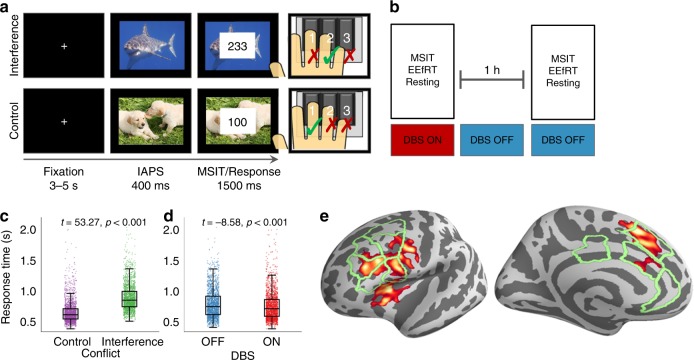
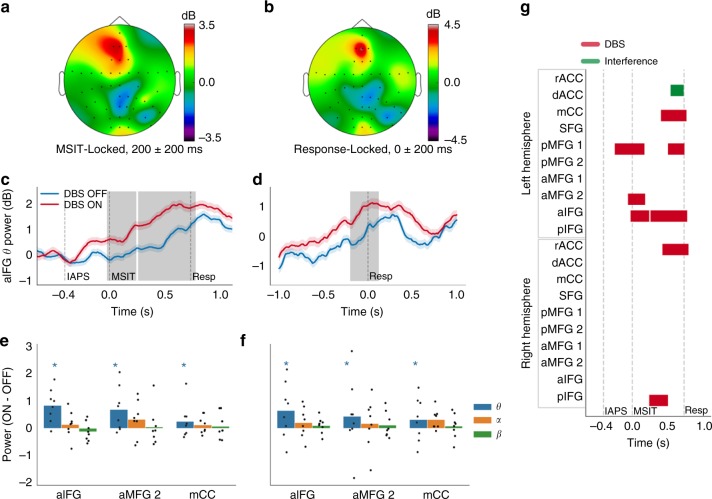
Deep brain stimulation (DBS) is a circuit-oriented treatment for mental disorders. Unfortunately, even well-conducted psychiatric DBS clinical trials have yielded inconsistent symptom relief, in part because DBS’ mechanism(s) of action are unclear. One clue to those mechanisms may lie in the efficacy of ventral internal capsule/ventral striatum (VCVS) DBS in both major depression (MDD) and obsessive-compulsive disorder (OCD). MDD and OCD both involve deficits in cognitive control. Cognitive control depends on prefrontal cortex (PFC) regions that project into the VCVS. Here, we show that VCVS DBS’ effect is explained in part by enhancement of PFC-driven cognitive control. DBS improves human subjects’ performance on a cognitive control task and increases theta (5–8Hz) oscillations in both medial and lateral PFC. The theta increase predicts subjects’ clinical outcomes. Our results suggest a possible mechanistic approach to DBS therapy, based on tuning stimulation to optimize these neurophysiologic phenomena.
Overview
The claims and statistics of this paper haven’t been checked yet.
Free: it reads the open-access text and checks the first 5 claims that cite a source we can check. Create a free account to check every claim.
Integrity signals
Registry
Cites
Statistics
Figures
Verification
Claims the paper makes
The claims and statistics of this paper haven’t been checked yet.
Free: it reads the open-access text and checks the first 5 claims that cite a source we can check. Create a free account to check every claim.
Claims other papers make about this one
Each is checked against this paper’s own text: does it say what the citing paper says it does?
The source backs part of the claim, not all of it — or backs it for a different population, condition or comparison.
In the citing paper
“DBS of the ventral capsule/ventral striatum, which modulates CSTC loops including the CN and OFC (233, 234)”
From Neural mechanisms underlying cognitive inflexibility in obsessive-compulsive disorder: a review (2026) · cites this paper as [234]
Experimental — accuracy not yet measuredThe source backs part of the claim, not all of it — or backs it for a different population, condition or comparison.
In the citing paper
“improve cognitive inflexibility in refractory OCD patients (234)”
From Neural mechanisms underlying cognitive inflexibility in obsessive-compulsive disorder: a review (2026) · cites this paper as [234]
Experimental — accuracy not yet measuredIn the citing paper
“Another recent study also indicated that ventral cognitive circuit function can be improved by ventral capsular/ventral striatal (VC/VS) DBS targeting the ALIC [132].”
From Toward a neurocircuit-based taxonomy to guide treatment of obsessive-compulsive disorder (2021) · cites this paper as [132]
In the citing paper
“Widge et al. [132] found that stimulation at this target resulted in significantly greater theta oscillations in prefrontal regions, including the IFG, during an inhibition task in patients with OCD and/or depression.”
From Toward a neurocircuit-based taxonomy to guide treatment of obsessive-compulsive disorder (2021) · cites this paper as [132]
Self-check
Percentages, sums and reported differences re-computed from the paper’s own numbers.
The self-check needs the paper’s full text.
Citations
Cites
Measuring emotion: The self-assessment manikin and the semantic differential
Bradley, M. M., & Lang, P. J. (1994) · Journal of Behavior Therapy and Experimental Psychiatry · doi:10.1016/0005-7916(94)90063-9 · Cited by 9,538
Fischl, B. (2012) · NeuroImage · doi:10.1016/j.neuroimage.2012.01.021 · Cited by 9,526
Nonparametric statistical testing of EEG- and MEG-data
Maris, E., & Oostenveld, R. (2007) · Journal of Neuroscience Methods · doi:10.1016/j.jneumeth.2007.03.024 · Cited by 8,496
Whiteford, H. A., Degenhardt, L., Rehm, J., Baxter, A. J., Ferrari, A. J., Erskine, H. E., Charlson, F. J., Norman, R. E., Flaxman, A. D., Johns, N., et al. (2013) · The Lancet · doi:10.1016/s0140-6736(13)61611-6 · Cited by 6,006
Hämäläinen, M., Hari, R., Ilmoniemi, R. J., Knuutila, J., & Lounasmaa, O. V. (1993) · Reviews of Modern Physics · doi:10.1103/revmodphys.65.413 · Cited by 4,684
MEG and EEG data analysis with MNE-Python
Gramfort, A. (2013) · Frontiers in Neuroscience · doi:10.3389/fnins.2013.00267 · Cited by 3,784
Frontal theta as a mechanism for cognitive control
Cavanagh, J. F., & Frank, M. J. (2014) · Trends in Cognitive Sciences · doi:10.1016/j.tics.2014.04.012 · Cited by 2,726
Rhythms for cognition: communication through coherence
Fries, P. (2015) · Neuron · doi:10.1016/j.neuron.2015.09.034 · Cited by 2,725
A hybrid approach to the skull stripping problem in MRI
Ségonne, F., Dale, A. M., Busa, E., Glessner, M., Salat, D., Hahn, H. K., & Fischl, B. (2004) · NeuroImage · doi:10.1016/j.neuroimage.2004.03.032 · Cited by 2,212
Which elements are excited in electrical stimulation of mammalian central nervous system: A review
Ranck, J. B. (1975) · Brain Research · doi:10.1016/0006-8993(75)90364-9 · Cited by 2,024
Interpreting magnetic fields of the brain: minimum norm estimates
Hämäläinen, M. S., & Ilmoniemi, R. J. (1994) · Medical & Biological Engineering & Computing · doi:10.1007/bf02512476 · Cited by 1,995
Optical Deconstruction of Parkinsonian Neural Circuitry
Gradinaru, V., Mogri, M., Thompson, K. R., Henderson, J. M., & Deisseroth, K. (2009) · Science · doi:10.1126/science.1167093 · Cited by 1,526
An asymptotic equivalence of choice of model by cross validation and Akaike's criterion
Stone, M. (1977) · Journal of the Royal Statistical Society Series B (Statistical Methodology) · doi:10.1111/j.2517-6161.1977.tb01603.x · Cited by 1,286
Hold Your Horses: Impulsivity, Deep Brain Stimulation, and Medication in Parkinsonism
Frank, M. J., Samanta, J., Moustafa, A. A., & Sherman, S. J. (2007) · Science · doi:10.1126/science.1146157 · Cited by 1,120
Neurocognitive endophenotypes of impulsivity and compulsivity: Towards dimensional psychiatry
Robbins, T. W., Gillan, C. M., Smith, D. G., de Wit, S., & Ersche, K. D. (2012) · Trends in Cognitive Sciences · doi:10.1016/j.tics.2011.11.009 · Cited by 1,003
Signal-space projection method for separating MEG or EEG into components
Uusitalo, M. A., & Ilmoniemi, R. J. (1997) · Medical & Biological Engineering & Computing · doi:10.1007/bf02534144 · Cited by 913
Treadway, M. T., Buckholtz, J. W., Schwartzman, A. N., Lambert, W. E., & Zald, D. H. (2009) · PLoS ONE · doi:10.1371/journal.pone.0006598 · Cited by 769
Subthalamic nucleus stimulation reverses mediofrontal influence over decision threshold
Cavanagh, J. F., Wiecki, T. V., Cohen, M. X., Figueroa, C. M., Samanta, J., Sherman, S. J., & Frank, M. J. (2011) · Nature Neuroscience · doi:10.1038/nn.2925 · Cited by 645
McTeague, L. M., Huemer, J., Carreon, D. M., Jiang, Y., Eickhoff, S. B., & Etkin, A. (2017) · American Journal of Psychiatry · doi:10.1176/appi.ajp.2017.16040400 · Cited by 635
Dorsal anterior cingulate cortex and the value of control
Shenhav, A., Cohen, J. D., & Botvinick, M. M. (2016) · Nature Neuroscience · doi:10.1038/nn.4384 · Cited by 565
Rapid effects of deep brain stimulation for treatment-resistant major depression
Schlaepfer, T. E., Bewernick, B. H., Kayser, S., Mädler, B., & Coenen, V. A. (2013) · Biological Psychiatry · doi:10.1016/j.biopsych.2013.01.034 · Cited by 563
Dougherty, D. D., Rezai, A. R., Carpenter, L. L., Howland, R. H., Bhati, M. T., O’Reardon, J. P., Eskandar, E. N., Baltuch, G. H., Machado, A. D., Kondziolka, D., et al. (2015) · Biological Psychiatry · doi:10.1016/j.biopsych.2014.11.023 · Cited by 558
Self-citationMechanisms of deep brain stimulation
Herrington, T. M., Cheng, J. J., & Eskandar, E. N. (2016) · Journal of Neurophysiology · doi:10.1152/jn.00281.2015 · Cited by 551
Self-citationMidfrontal conflict-related theta-band power reflects neural oscillations that predict behavior
Cohen, M. X., & Donner, T. H. (2013) · Journal of Neurophysiology · doi:10.1152/jn.00479.2013 · Cited by 494
Riva-Posse, P., Choi, K. S., Holtzheimer, P. E., McIntyre, C. C., Gross, R. E., Chaturvedi, A., Crowell, A. L., Garlow, S. J., Rajendra, J. K., & Mayberg, H. S. (2014) · Biological Psychiatry · doi:10.1016/j.biopsych.2014.03.029 · Cited by 460
Value, search, persistence and model updating in anterior cingulate cortex
Kolling, N., Wittmann, M. K., Behrens, T. E. J., Boorman, E. D., Mars, R. B., & Rushworth, M. F. S. (2016) · Nature Neuroscience · doi:10.1038/nn.4382 · Cited by 444
A neural microcircuit for cognitive conflict detection and signaling
Cohen, M. X. (2014) · Trends in Neurosciences · doi:10.1016/j.tins.2014.06.004 · Cited by 406
LeDoux, J., & Daw, N. D. (2018) · Nature Reviews Neuroscience · doi:10.1038/nrn.2018.22 · Cited by 400
Insights into the mechanisms of deep brain stimulation
Ashkan, K., Rogers, P., Bergman, H., & Ughratdar, I. (2017) · Nature Reviews Neurology · doi:10.1038/nrneurol.2017.105 · Cited by 364
A Corticostriatal Path Targeting Striosomes Controls Decision-Making under Conflict
Friedman, A., Homma, D., Gibb, L. G., Amemori, K.-I., Rubin, S. J., Hood, A. S., Riad, M. H., & Graybiel, A. M. (2015) · Cell · doi:10.1016/j.cell.2015.04.049 · Cited by 309
Bush, G., & Shin, L. M. (2006) · Nature Protocols · doi:10.1038/nprot.2006.48 · Cited by 309
Vaghi, M. M., Vértes, P. E., Kitzbichler, M. G., Apergis-Schoute, A. M., van der Flier, F. E., Fineberg, N. A., Sule, A., Zaman, R., Voon, V., Kundu, P., et al. (2017) · Biological Psychiatry · doi:10.1016/j.biopsych.2016.08.009 · Cited by 290
The Connectome Mapper: An Open-Source Processing Pipeline to Map Connectomes with MRI
Daducci, A., Gerhard, S., Griffa, A., Lemkaddem, A., Cammoun, L., Gigandet, X., Meuli, R., Hagmann, P., & Thiran, J.-P. (2012) · PLoS ONE · doi:10.1371/journal.pone.0048121 · Cited by 276
Tyagi, H., Apergis-Schoute, A. M., Akram, H., Foltynie, T., Limousin, P., Drummond, L. M., Fineberg, N. A., Matthews, K., Jahanshahi, M., Robbins, T. W., et al. (2019) · Biological Psychiatry · doi:10.1016/j.biopsych.2019.01.017 · Cited by 227
Automated model selection in covariance estimation and spatial whitening of MEG and EEG signals
Engemann, D. A., & Gramfort, A. (2015) · NeuroImage · doi:10.1016/j.neuroimage.2014.12.040 · Cited by 203
Widge, A. S., Bilge, M. T., Montana, R., Chang, W., Rodriguez, C. I., Deckersbach, T., Carpenter, L. L., Kalin, N. H., & Nemeroff, C. B. (2019) · American Journal of Psychiatry · doi:10.1176/appi.ajp.2018.17121358 · Cited by 199
Self-citationPizzagalli, D. A., Webb, C. A., Dillon, D. G., Tenke, C. E., Kayser, J., Goer, F., Fava, M., McGrath, P., Weissman, M., Parsey, R., et al. (2018) · JAMA Psychiatry · doi:10.1001/jamapsychiatry.2018.0252 · Cited by 189
What are the shapes of response time distributions in visual search?
Palmer, E. M., Horowitz, T. S., Torralba, A., & Wolfe, J. M. (2011) · Journal of Experimental Psychology: Human Perception and Performance · doi:10.1037/a0020747 · Cited by 176
Regression‐based estimation of ERP waveforms: I. The rERP framework
Smith, N. J., & Kutas, M. (2015) · Psychophysiology · doi:10.1111/psyp.12317 · Cited by 159
Closing the Loop on Deep Brain Stimulation for Treatment-Resistant Depression
Widge, A. S., Malone, D. A., & Dougherty, D. D. (2018) · Frontiers in Neuroscience · doi:10.3389/fnins.2018.00175 · Cited by 143
Self-citationKlein, E., Goering, S., Gagne, J., Shea, C. V., Franklin, R., Zorowitz, S., Dougherty, D. D., & Widge, A. S. (2016) · Brain-Computer Interfaces · doi:10.1080/2326263x.2016.1207497 · Cited by 140
Self-citationKinematic Adaptive Deep Brain Stimulation for Resting Tremor in Parkinson's Disease
Malekmohammadi, M., Herron, J., Velisar, A., Blumenfeld, Z., Trager, M. H., Chizeck, H. J., & Brontë‐Stewart, H. (2016) · Movement Disorders · doi:10.1002/mds.26482 · Cited by 134
Makris, N., Rathi, Y., Mouradian, P., Bonmassar, G., Papadimitriou, G., Ing, W. I., Yeterian, E. H., Kubicki, M., Eskandar, E. N., Wald, L. L., et al. (2016) · Brain Imaging and Behavior · doi:10.1007/s11682-015-9462-9 · Cited by 131
Self-citationBroadway, J. M., Holtzheimer, P. E., Hilimire, M. R., Parks, N. A., DeVylder, J., Mayberg, H. S., & Corballis, P. M. (2012) · Neuropsychopharmacology · doi:10.1038/npp.2012.23 · Cited by 131
Staying in the Loop: Relational Agency and Identity in Next-Generation DBS for Psychiatry
Goering, S., Klein, E., Dougherty, D. D., & Widge, A. S. (2017) · AJOB Neuroscience · doi:10.1080/21507740.2017.1320320 · Cited by 124
Self-citationClosed-loop neuromodulation systems: next-generation treatments for psychiatric illness
Lo, M.-C., & Widge, A. S. (2017) · International Review of Psychiatry · doi:10.1080/09540261.2017.1282438 · Cited by 122
Self-citationWidge, A. S., Ellard, K. K., Paulk, A. C., Basu, I., Yousefi, A., Zorowitz, S., Gilmour, A., Afzal, A., Deckersbach, T., Cash, S. S., et al. (2017) · Experimental Neurology · doi:10.1016/j.expneurol.2016.07.021 · Cited by 118
Self-citationThe application of deep brain stimulation in the treatment of psychiatric disorders
Graat, I., Figee, M., & Denys, D. A. J. P. (2017) · International Review of Psychiatry · doi:10.1080/09540261.2017.1282439 · Cited by 114
Smith, N. J., & Marta Kutas, A. (2014) · Psychophysiology · doi:10.1111/psyp.12320 · Cited by 110
Striatal dopamine regulates systemic glucose metabolism in humans and mice
ter Horst, K. W., Lammers, N. M., Trinko, R., Opland, D. M., Figee, M., Ackermans, M. T., Booij, J., van den Munckhof, P., Schuurman, P. R., Fliers, E., et al. (2018) · Science Translational Medicine · doi:10.1126/scitranslmed.aar3752 · Cited by 106
Ramirez‐Zamora, A., Giordano, J. J., Gunduz, A., Brown, P., Sanchez, J. C., Foote, K. D., Almeida, L., Starr, P. A., Bronte-Stewart, H. M., Hu, W., et al. (2018) · Frontiers in Neuroscience · doi:10.3389/fnins.2017.00734 · Cited by 85
Noecker, A. M., Choi, K. S., Riva-Posse, P., Gross, R. E., Mayberg, H. S., & McIntyre, C. C. (2018) · Neuromodulation: Technology at the Neural Interface · doi:10.1111/ner.12625 · Cited by 73
Bari, A. A., Mikell, C. B., Abosch, A., Ben-Haim, S., Buchanan, R. J., Burton, A. W., Carcieri, S., Cosgrove, G. R., D’Haese, P.-F., Daskalakis, Z. J., et al. (2018) · Journal of Neurology, Neurosurgery & Psychiatry · doi:10.1136/jnnp-2017-317082 · Cited by 71
Self-citationMidfrontal theta tracks action monitoring over multiple interactive time scales
Cohen, M. X. (2016) · NeuroImage · doi:10.1016/j.neuroimage.2016.07.054 · Cited by 67
Who Qualifies for Deep Brain Stimulation for OCD? Data From a Naturalistic Clinical Sample
Garnaat, S. L., Greenberg, B. D., Sibrava, N. J., Goodman, W. K., Mancebo, M. C., Eisen, J. L., & Rasmussen, S. A. (2014) · The Journal of Neuropsychiatry and Clinical Neurosciences · doi:10.1176/appi.neuropsych.12090226 · Cited by 63
Impaired Midline Theta Power and Connectivity During Proactive Cognitive Control in Schizophrenia
Ryman, S. G., Cavanagh, J. F., Wertz, C. J., Shaff, N. A., Dodd, A. B., Stevens, B., Ling, J. M., Yeo, R. A., Hanlon, F. M., Bustillo, J., et al. (2018) · Biological Psychiatry · doi:10.1016/j.biopsych.2018.04.021 · Cited by 62
Predictors of hypomania during ventral capsule/ventral striatum deep brain stimulation
Widge, A. S., Licon, E., Zorowitz, S., Corse, A., Arulpragasam, A. R., Camprodon, J. A., Cusin, C., Eskandar, E. N., Deckersbach, T., & Dougherty, D. D. (2016) · The Journal of Neuropsychiatry and Clinical Neurosciences · doi:10.1176/appi.neuropsych.15040089 · Cited by 58
Self-citationWidge, A. S., Deckersbach, T., Eskandar, E. N., & Dougherty, D. D. (2015) · Biological Psychiatry · doi:10.1016/j.biopsych.2015.06.005 · Cited by 55
Self-citationEwing, S. G., & Grace, A. A. (2012) · Brain stimulation · doi:10.1016/j.brs.2012.07.007 · Cited by 55
Translational research in OCD: circuitry and mechanisms
Haber, S. N., & Heilbronner, S. R. (2013) · Neuropsychopharmacology · doi:10.1038/npp.2012.182 · Cited by 50
Deep Brain Stimulation Diminishes Cross-Frequency Coupling in Obsessive-Compulsive Disorder
Bahramisharif, A., Mazaheri, A., Levar, N., Schuurman, P. R., Figee, M., & Denys, D. A. J. P. (2015) · Biological Psychiatry · doi:10.1016/j.biopsych.2015.05.021 · Cited by 50
Hwang, K., Ghuman, A. S., Manoach, D. S., Jones, S. R., & Luna, B. (2016) · NeuroImage · doi:10.1016/j.neuroimage.2016.05.017 · Cited by 49
Deep Brain Stimulation in Psychiatry
Bilge, M. T., Gosai, A. K., & Widge, A. S. (2018) · Psychiatric Clinics of North America · doi:10.1016/j.psc.2018.04.003 · Cited by 44
Self-citationRecent insights into corticostriatal circuit mechanisms underlying habits
O’Hare, J. K., Calakos, N., & Yin, H. H. (2017) · Current Opinion in Behavioral Sciences · doi:10.1016/j.cobeha.2017.10.001 · Cited by 36
Ooms, P., Blankers, M., Figee, M., Mantione, M., van den Munckhof, P., Schuurman, P. R., & Denys, D. (2014) · Brain Stimulation · doi:10.1016/j.brs.2014.06.009 · Cited by 35
Brain electrical activity signatures during performance of the Multisource Interference Task
González-Villar, A. J., & Carrillo‐de‐la‐Peña, M. T. (2017) · Psychophysiology · doi:10.1111/psyp.12843 · Cited by 27 · cited 1×
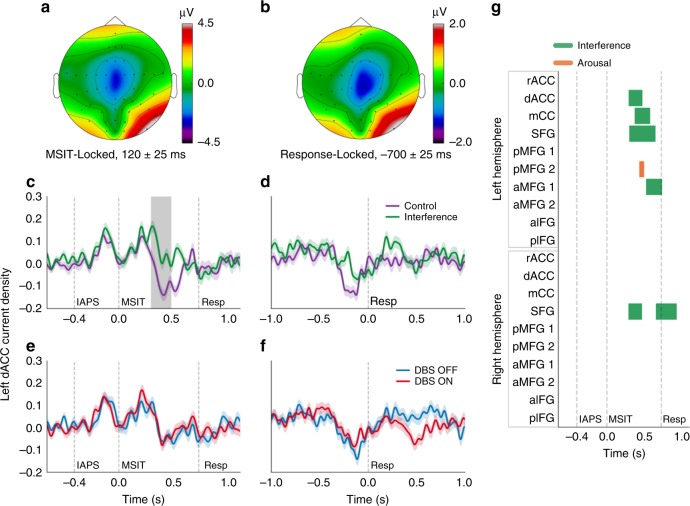
“This matches the sensor-space results of González-Villar et al.(2) As with DBS, the 2 Interference/Control trials have very different response times between the conditions, and we 3 attribute these peri-response effects to that time shift.”
Basu, I., Crocker, B., Farnes, K., Robertson, M. M., Paulk, A. C., Vallejo-Lopez, D. I., Dougherty, D. D., Cash, S. S., Eskandar, E. N., Kramer, M., et al. (2018) · Journal of Neural Engineering · doi:10.1088/1741-2552/aae136 · Cited by 27
Self-citationCOMPASS: An Open-Source, General-Purpose Software Toolkit for Computational Psychiatry
Yousefi, A., Paulk, A. C., Basu, I., Mirsky, J. L., Dougherty, D. D., Eskandar, E. N., Eden, U. T., & Widge, A. S. (2019) · Frontiers in Neuroscience · doi:10.3389/fnins.2018.00957 · Cited by 22
Self-citationWidge, A. S., Zorowitz, S., Link, K. E., Miller, E. K., Deckersbach, T., Eskandar, E. N., & Dougherty, D. D. (2015) · Biological Psychiatry · doi:10.1016/j.biopsych.2015.10.029 · Cited by 16
Self-citationAltering alpha-frequency brain oscillations with rapid analog feedback-driven neurostimulation
Widge, A. S., Boggess, M. J., Rockhill, A. P., Mullen, A. C., Sheopory, S., Loonis, R. F., Freeman, D. K., & Miller, E. K. (2018) · PLoS ONE · doi:10.1371/journal.pone.0207781 · Cited by 13
Self-citationPsychiatric Neurotherapeutics: Contemporary Surgical and Device-Based Treatments
Aaronson, S. T. (2017) · American Journal of Psychiatry · doi:10.1176/appi.ajp.2017.17020162 · Cited by 9 · cited 1×
“Briefly, the MNE method finds the maximum a posteriori estimates of the latent cortical sources, given the observed sensor sources, assuming (1) the current source amplitudes are sparse and normally distributed with a known source covariance matrix and (2) the observed sensor data contain additive noise with a normal…”
Cited by
Toward a neurocircuit-based taxonomy to guide treatment of obsessive-compulsive disorder
Shephard, E., Stern, E. R., van den Heuvel, O. A., Costa, D. L. C., Batistuzzo, M. C., Godoy, P. B. G., Lopes, A. C., Brunoni, A. R., Hoexter, M. Q., Shavitt, R. G., et al. (2021) · Molecular Psychiatry · doi:10.1038/s41380-020-01007-8 · Cited by 250
Lundqvist, M., Miller, E. K., Nordmark, J., Liljefors, J., & Herman, P. (2024) · Trends in Cognitive Sciences · doi:10.1016/j.tics.2024.03.010 · Cited by 169
“This knowledge may be leveraged in brain stimulation treatment for more accurate stimulation protocols [47 – 51] or enhanced neurofeedback [52].”
Self-citationDubreuil-Vall, L., Chau, P., Ruffini, G., Widge, A. S., & Camprodon, J. A. (2019) · Brain Stimulation · doi:10.1016/j.brs.2019.06.006 · Cited by 164
“Similar effects have recently been observed from deep brain stimulation [20], with EEG changes lateralized to left DLPFC, suggesting multiple ways of tapping into these cortico-striatal circuits of executive function.”
BackgroundSelf-citationThe impact of the digital revolution on human brain and behavior: where do we stand?
Korte, M. (2020) · Dialogues in Clinical Neuroscience · doi:10.31887/dcns.2020.22.2/mkorte · Cited by 137
Four Deep Brain Stimulation Targets for Obsessive-Compulsive Disorder: Are They Different?
Haber, S. N., Yendiki, A., & Jbabdi, S. (2021) · Biological Psychiatry · doi:10.1016/j.biopsych.2020.06.031 · Cited by 133
Metadata
- Authors
- Widge, A. S., Zorowitz, S., Basu, I., Paulk, A. C., Cash, S. S., Eskandar, E. N., Deckersbach, T., Miller, E. K., & Dougherty, D. D.
- Affiliations
- University of Minnesota (US)
- Harvard University (US)
- Albert Einstein College of Medicine (US)
- Massachusetts Institute of Technology (US)
- Corresponding author
- Widge, A. S.
- ORCID
- Venue
- Nature Communications
- Published
- 2019-04-04
- Volume
- 10
- Issue
- 1
- Pages
- 1536-1536
- ISSN
- 2041-1723 (ISSN-L)
- PMC
- PMC6449385
- OpenAlex
- W2931590275
- Cited by
- 152
- References
- 71
- Citations by year
- 2026: 15 · 2025: 13 · 2024: 23 · 2023: 22 · 2022: 12 · 2021: 38 · 2020: 17 · 2019: 11
- FWCI
- 13.07
- Type
- journal article
- Language
- en
- Open access
- gold
- doi.org
- Licence
- cc-by
- creativecommons.org/licenses/by/4.0 (tdm)
- creativecommons.org/licenses/by/4.0 (vor)
- Locations
- Nature Communications (publishedVersion, cc-by)
- Europe PMC (PubMed Central) (publishedVersion, cc-by)
- PubMed Central (publishedVersion, cc-by)
- PubMed (publishedVersion)
- DSpace@MIT (Massachusetts Institute of Technology) (submittedVersion, cc-by-nc)
- RePEc: Research Papers in Economics (submittedVersion)
- DOAJ (DOAJ: Directory of Open Access Journals) (submittedVersion)
- DOAJ (DOAJ: Directory of Open Access Journals) (submittedVersion, cc-by-sa)
- Funders
- U.S. Department of Defense (MURI N00014-16-1-2832, W911NF1420045, N000141612832)
- National Institutes of Health
- Defense Advanced Research Projects Agency (W911NF-14, W911NF-14–2–0045, 2-0045)
- Advanced Research Projects Agency
- Multidisciplinary University Research Initiative (N00014-16-1-2832)
- Office of Naval Research (MURI N00014‐16‐1‐2832, N00014-16-1–2832, N00014)
- National Institute of Mental Health (R37MH087027, R21MH109722, R03MH111320)
- National Institute of Neurological Disorders and Stroke (UH3NS100548)
- Army Research Office (W911NF)
- Topics
- Health Sciences › Medicine › Clinical Neurology › Deep Brain Stimulation and Movement Disorders
- Social Sciences › Psychology › Clinical Psychology › Obsessive-Compulsive Spectrum Disorders
- Life Sciences › Neuroscience › Neurology › Transcranial Magnetic Stimulation Studies
- Keywords
- deep brain stimulation, cognitive control, prefrontal cortex, theta oscillations, major depressive disorder, obsessive-compulsive disorder, mechanism of action, psychosurgery
- MeSH terms
- Adult, Aged, Cognition, Major Depressive Disorder, Female, Humans, Male, Middle Aged, Obsessive-Compulsive Disorder, Treatment Outcome, Prefrontal Cortex, Internal Capsule, Deep Brain Stimulation
About these checks
Registry, retraction, Cites and statistics results are computed, not judged, with one exception: a printed reference that no index lists is read once by a model before it counts as a citation error. Claims are extracted by a model and kept only when their quote appears verbatim in the text; each cited source is then checked, with a model’s help, for whether it says what the claim relies on. Those verdicts can be wrong — read the claim’s quote and the cited source before relying on one.
Statistics and arithmetic are recomputed, not judged.
Confidence bands are shown only for fields calibrated on our annotated test set. None is calibrated yet, so no band is shown.
What counts as a claim ›How we measure confidence ›How we check this ›
Are you an author, or do you see a problem with this page? Request a review
Data sources
Bibliographic data: Semantic Scholar, OpenAlex, Crossref.
Contains information from the Semantic Scholar Academic Graph Datasets, made available under the ODC Attribution License (ODC-BY 1.0).
Semantic Scholar’s data is described in: Kinney, R., et al. (2023). The Semantic Scholar Open Data Platform. arXiv:2301.10140.
