

Senescent cells evade immune clearance via HLA-E-mediated NK and CD8+ T cell inhibition
Open accessThe DOI matches its Crossref record; 58 of the 59 references it cites were found in a registry or an index.
Abstract
Senescent cells accumulate in human tissues during ageing and contribute to age-related pathologies. The mechanisms responsible for their accumulation are unclear. Here we show that senescent dermal fibroblasts express the non-classical MHC molecule HLA-E, which interacts with the inhibitory receptor NKG2A expressed by NK and highly differentiated CD8 + T cells to inhibit immune responses against senescent cells. HLA-E expression is induced by senescence-associated secretary phenotype-related pro-inflammatory cytokines, and is regulated by p38 MAP kinase signalling in vitro. Consistently, HLA-E expression is increased on senescent cells in human skin sections from old individuals, when compared with those from young, and in human melanocytic nevi relative to normal skin. Lastly, blocking the interaction between HLA-E and NKG2A boosts immune responses against senescent cells in vitro. We thus propose that increased HLA-E expression contributes to persistence of senescent cells in tissues, thereby suggesting a new strategy for eliminating senescent cells during ageing.
Overview
The claims and statistics of this paper haven’t been checked yet.
Free: it reads the open-access text and checks the first 5 claims that cite a source we can check. Create a free account to check every claim.
Integrity signals
Registry
Cites
Statistics
Figures
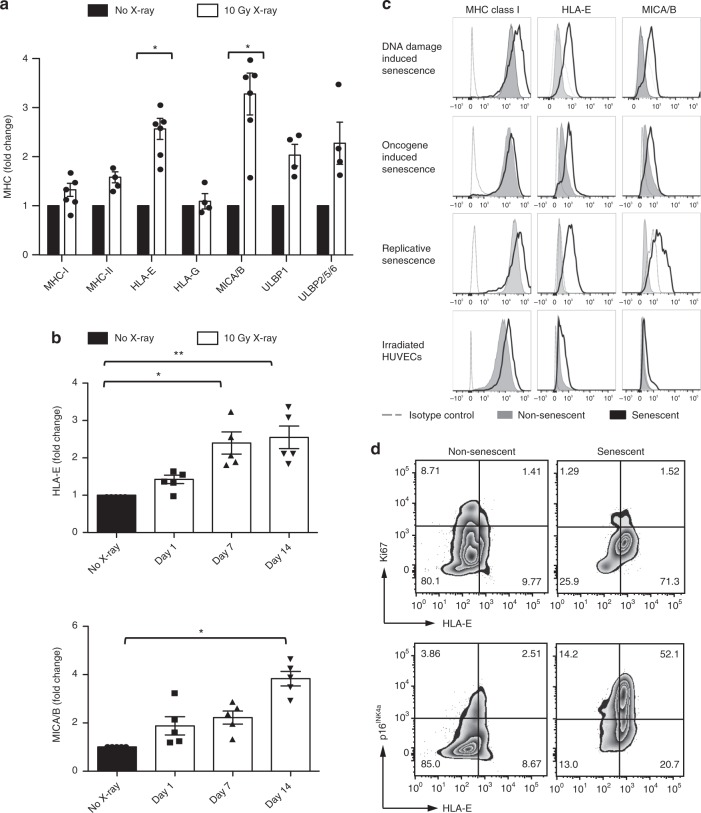
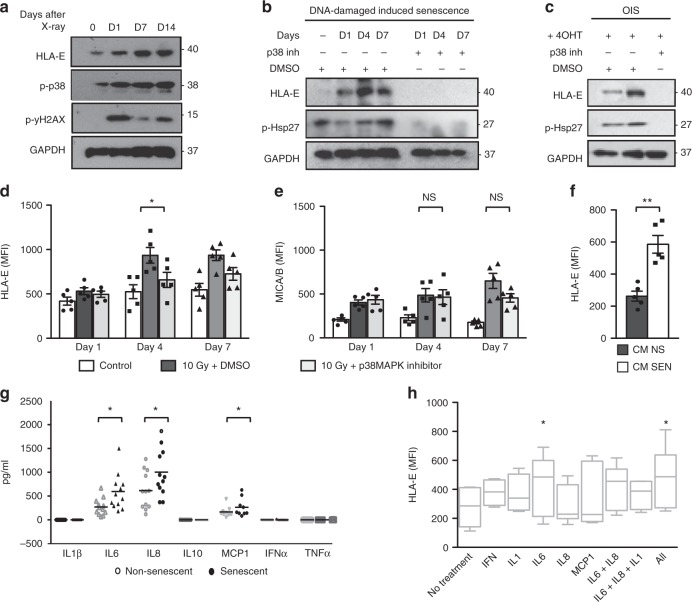
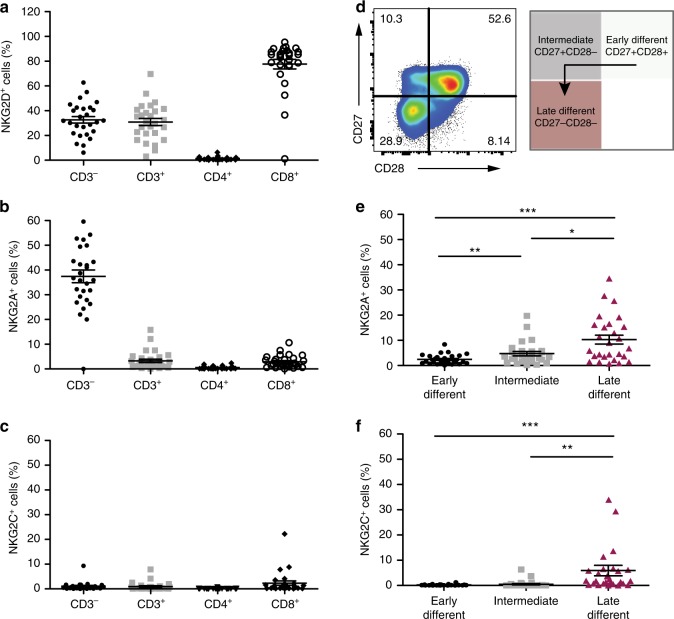
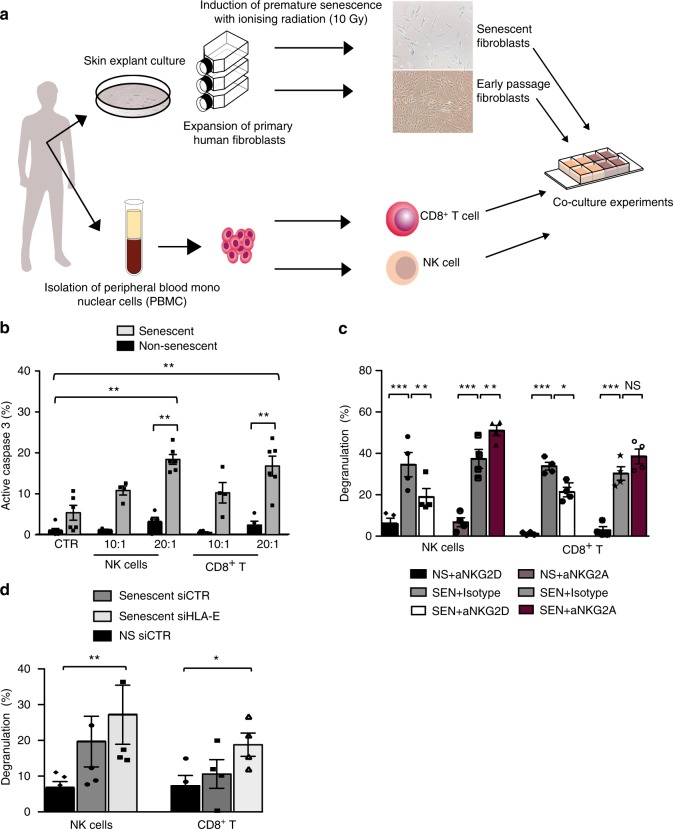
Verification
Claims the paper makes
The claims and statistics of this paper haven’t been checked yet.
Free: it reads the open-access text and checks the first 5 claims that cite a source we can check. Create a free account to check every claim.
Claims other papers make about this one
Each is checked against this paper’s own text: does it say what the citing paper says it does?
The source backs part of the claim, not all of it — or backs it for a different population, condition or comparison.
In the citing paper
“Normally, senescent cells appear to be cleared within days to weeks after they develop by natural killer cells and other immune cell types62,66–69.”
From Cellular senescence and senolytics: the path to the clinic (2022) · cites this paper as [66]
Experimental — accuracy not yet measuredThe source backs part of the claim, not all of it — or backs it for a different population, condition or comparison.
In the citing paper
“Pereira et al. recently reported that senescent human primary dermal fibroblasts and endothelial cells express higher levels of the atypical major histocompatibility complex (MHC) Ib molecule HLA-E via the p38 signaling pathway than non-senescent cells.”
From Immune Clearance of Senescent Cells to Combat Ageing and Chronic Diseases (2020) · cites this paper as [124]
Experimental — accuracy not yet measuredThe source backs part of the claim, not all of it — or backs it for a different population, condition or comparison.
In the citing paper
“Moreover, IL-6 and IL-8 also enhanced the surface expression of HLA- E that interacts with the inhibitory receptor NKG2A, thereby blunting the activity of cytotoxic NK cells and mature CD8 + T- cells 176 .”
From Senescence and cancer — role and therapeutic opportunities (2022) · cites this paper as [176]
Experimental — accuracy not yet measuredThe cited source says what the claim attributes to it.
In the citing paper
“At younger ages, senescent cells are cleared by the host immune system [63–66]”
From Reducing Senescent Cell Burden in Aging and Disease (2020) · cites this paper as [64]
The cited source says what the claim attributes to it.
In the citing paper
“However, this immunomodulatory property of monocytes may be a by-product of the increased inflammatory skin environmentas increased senescent stromal cells such as fibroblasts are present in older skin (10).”
From The impact of ageing on monocytes and macrophages (2021) · cites this paper as [10]
5 more claims about this paper
Create a free account to see every claim other papers make about this one.
Self-check
Percentages, sums and reported differences re-computed from the paper’s own numbers.
The self-check needs the paper’s full text.
Citations
Cites
The senescence-associated secretory phenotype: the dark side of tumor suppression
Coppé, J.-P., Desprez, P.-Y., Krtolica, A., & Campisi, J. (2010) · Annual Review of Pathology: Mechanisms of Disease · doi:10.1146/annurev-pathol-121808-102144 · Cited by 5,206
Self-citationChronic Inflammation (Inflammaging) and Its Potential Contribution to Age-Associated Diseases
Franceschi, C., & Campisi, J. (2014) · The Journals of Gerontology Series A: Biological Sciences and Medical Sciences · doi:10.1093/gerona/glu057 · Cited by 3,891
Self-citationClearance of p16Ink4a-positive senescent cells delays ageing-associated disorders
Baker, D. J., Wijshake, T., Tchkonia, T., LeBrasseur, N. K., Childs, B. G., van de Sluis, B., Kirkland, J. L., & van Deursen, J. M. (2011) · Nature · doi:10.1038/nature10600 · Cited by 3,670
Aging, Cellular Senescence, and Cancer
Campisi, J. (2013) · Annual Review of Physiology · doi:10.1146/annurev-physiol-030212-183653 · Cited by 2,954
Self-citationNaturally occurring p16Ink4a-positive cells shorten healthy lifespan
Baker, D. J., Childs, B. G., Durik, M., Wijers, M. E., Sieben, C. J., Zhong, J., A. Saltness, R., Jeganathan, K. B., Verzosa, G. C., Pezeshki, A., et al. (2016) · Nature · doi:10.1038/nature16932 · Cited by 2,876
Lanier, L. L. (2005) · Annual Review of Immunology · doi:10.1146/annurev.immunol.23.021704.115526 · Cited by 2,769
The role of senescent cells in ageing
van Deursen, J. M. (2014) · Nature · doi:10.1038/nature13193 · Cited by 2,623
Senescence and tumour clearance is triggered by p53 restoration in murine liver carcinomas
Xue, W., Zender, L., Miething, C., Dickins, R. A., Hernando, E., Krizhanovsky, V., Cordon-Cardo, C., & Lowe, S. W. (2007) · Nature · doi:10.1038/nature05529 · Cited by 2,473
A complex secretory program orchestrated by the inflammasome controls paracrine senescence
Acosta, J. C., Banito, A., Wuestefeld, T., Georgilis, A., Janich, P., Morton, J. P., Athineos, D., Kang, T.-W., Lasitschka, F., Andrulis, M., et al. (2013) · Nature Cell Biology · doi:10.1038/ncb2784 · Cited by 2,278
Persistent DNA damage signalling triggers senescence-associated inflammatory cytokine secretion
Rodier, F., Coppé, J.-P., Patil, C. K., Hoeijmakers, W. A. M., Muñoz, D. P., Raza, S. R., Freund, A., Campeau, E., Davalos, A. R., & Campisi, J. (2009) · Nature Cell Biology · doi:10.1038/ncb1909 · Cited by 2,232
Self-citation
Cited by
Items 101–200 of 565
Innate and Adaptive Immunity in Aging and Longevity: The Foundation of Resilience
Moskalev, A., Stambler, I., & Caruso, C. (2020) · Aging and Disease · doi:10.14336/ad.2020.0603 · Cited by 79
Targeting tumor cell senescence and polyploidy as potential therapeutic strategies
Saleh, T., Carpenter, V. J., Bloukh, S., & Gewirtz, D. A. (2020) · Seminars in Cancer Biology · doi:10.1016/j.semcancer.2020.12.010 · Cited by 74
Cellular senescence in lymphoid organs and immunosenescence
Budamagunta, V., Foster, T. C., & Zhou, D. (2021) · Aging · doi:10.18632/aging.203405 · Cited by 67
“Despite multiple studies demonstrating various mechanisms via which SnCs could evade immune clearance [66, 67], the impact of aging on immune evasion of SnCs is not yet completely understood.”
BackgroundSkin health and biological aging
Furman, D., Auwerx, J. H., Bulteau, A., Church, G. M., Couturaud, V., Crabbé, L., Davies, K. J. A., Decottignies, A., Gladyshev, V. N., Kennedy, B. K., et al. (2025) · Nature Aging · doi:10.1038/s43587-025-00901-6 · Cited by 85
“…may also contribute to the reported upregulation of HLA-E expression in SASP-induced senescent dermal fibroblasts, a phenomenon that is likely to contribute to the persistence of senescent cells in the skin through the inhibition of immune response to clear tissue-resident senescent cells 63 .”
Senescence in chronic wounds and potential targeted therapies
Wei, X., Li, M., Zheng, Z., Ma, J., Gao, Y., Chen, L., Peng, Y., Yu, S., & Yang, L. (2022) · Burns & Trauma · doi:10.1093/burnst/tkab045 · Cited by 73
“The expression of HLA-E is modulated by the p38 MAP kinase signal pathway in vitro [125].”
Zhao, B., Wu, B. C., Feng, N., Zhang, X., Zhang, X., Wei, Y., & Zhang, W. (2023) · Journal of Hematology & Oncology · doi:10.1186/s13045-023-01426-4 · Cited by 81
Understanding NK cell biology for harnessing NK cell therapies: targeting cancer and beyond
Shin, E., Bak, S. H., Park, T., Kim, J.-W., Yoon, S. R., Jung, H., & Noh, J. (2023) · Frontiers in Immunology · doi:10.3389/fimmu.2023.1192907 · Cited by 83
Liu, Y., Lomeli, I., & Kron, S. J. (2024) · Cells · doi:10.3390/cells13151281 · Cited by 77
Khalil, R., Diab‐Assaf, M., & Lemaître, J.-M. (2023) · Cells · doi:10.3390/cells12060915 · Cited by 74
Exercise Counters the Age-Related Accumulation of Senescent Cells
Zhang, X., Englund, D. A., Aversa, Z., Jachim, S. K., White, T. A., & LeBrasseur, N. K. (2022) · Exercise and Sport Sciences Reviews · doi:10.1249/jes.0000000000000302 · Cited by 63
“For example, senescent dermal fibroblasts can evade immune clearance by expressing the nonclassical major compatibility complex molecule HLA class I histocompatibility antigen, alpha chain E which interacts with the inhibitory receptor natural killer group 2 member A expressed by NK cells and highly differentiated CD8…”
BackgroundSenescence as an Amyloid Cascade: The Amyloid Senescence Hypothesis
Walton, C. C., Begelman, D., Nguyen, W., & Andersen, J. K. (2020) · Frontiers in Cellular Neuroscience · doi:10.3389/fncel.2020.00129 · Cited by 62
CD8+ T Cell Senescence: Lights and Shadows in Viral Infections, Autoimmune Disorders and Cancer
Tedeschi, V., Paldino, G., Kunkl, M., Paroli, M., Sorrentino, R., Tuosto, L., & Fiorillo, M. T. (2022) · International Journal of Molecular Sciences · doi:10.3390/ijms23063374 · Cited by 72
Senescence in the Development and Response to Cancer with Immunotherapy: A Double-Edged Sword
Battram, A. M., Bachiller, M., & Martín-Antonio, B. (2020) · International Journal of Molecular Sciences · doi:10.3390/ijms21124346 · Cited by 70
Senescent T cells: Beneficial and detrimental roles
Laphanuwat, P., Gomes, D. C. O., & Akbar, A. N. (2023) · Immunological Reviews · doi:10.1111/imr.13206 · Cited by 67
Self-citationAgeing mechanisms that contribute to tissue remodeling in lung disease
Schuliga, M. J., Read, J. M., & Knight, D. A. (2021) · Ageing Research Reviews · doi:10.1016/j.arr.2021.101405 · Cited by 65
Senescence and the Aging Immune System as Major Drivers of Chronic Kidney Disease
Schroth, J., Thiemermann, C., & Henson, S. M. (2020) · Frontiers in Cell and Developmental Biology · doi:10.3389/fcell.2020.564461 · Cited by 59
Iltis, C., Moskalevska, I., Debiesse, A., Seguin, L., Fissoun, C., Cervera, L., Moudombi, L., Ardin, M., Ferrari, A., Eliott, C., et al. (2024) · Nature Aging · doi:10.1038/s43587-024-00776-z · Cited by 59
“Recent data showed that pre-oncogenic SnCs can be immunosuppressive and limit their elimination via the SASP by recruiting myeloid cells 16 or by regulating the HLA-E pathway 18 or by overexpressing PD-L1 (ref.”
Senescence under appraisal: hopes and challenges revisited
Davan-Wetton, C. S. A., Pessolano, E., Perretti, M., & Montero‐Melendez, T. (2021) · Cellular and Molecular Life Sciences · doi:10.1007/s00018-020-03746-x · Cited by 64
Aging and homeostasis of the hypodermis in the age-related deterioration of skin function
Liu, M., Lu, F., & Feng, J. (2024) · Cell Death and Disease · doi:10.1038/s41419-024-06818-z · Cited by 79
“Senile fi broblasts upregulate HLA-E expression for immune escape, thereby impairing their clearance by NK and CD8 + T cells that express the inhibitory receptor NKG2A [125].”
BackgroundCellular senescence as a possible link between prostate diseases of the ageing male
Fiard, G., Stavrinides, V., Chambers, E. S., Heavey, S., Freeman, A., Ball, R., Akbar, A. N., & Emberton, M. (2021) · Nature Reviews Urology · doi:10.1038/s41585-021-00496-8 · Cited by 64
Self-citationYu, S., Chen, M., Xu, L., Mao, E., & Sun, S. (2023) · Frontiers in Immunology · doi:10.3389/fimmu.2023.1175490 · Cited by 65
“revealed that senescent cells can evade immune clearance by secreting SASP factors, such as IL-6, to upregulate HLA-E, which suppresses natural killer (NK) cells and T cell clearance in premalignant lesions (6).”
BackgroundCellular senescence and wound healing in aged and diabetic skin
Kita, A., Yamamoto, S., Saito, Y., & Chikenji, T. S. (2024) · Frontiers in Physiology · doi:10.3389/fphys.2024.1344116 · Cited by 55
Current Landscape of Cancer Immunotherapy: Harnessing the Immune Arsenal to Overcome Immune Evasion
Mitra, A., Kumar, A., Amdare, N. P., & Pathak, R. (2024) · Biology · doi:10.3390/biology13050307 · Cited by 82
Senescence-associated hyper-activation to inflammatory stimuli in vitro
Budamagunta, V., Manohar‐Sindhu, S., Yang, Y., He, Y., Traktuev, D. O., Foster, T. C., & Zhou, D. (2021) · Aging · doi:10.18632/aging.203396 · Cited by 62
“This clearance mechanism has been shown to become impaired with advancing age, leading to the accumulation of SnCs [16, 17].”
BackgroundSalminen, A. (2022) · Cellular and Molecular Life Sciences · doi:10.1007/s00018-022-04520-x · Cited by 61
Immunotherapy in older patients with cancer
Granier, C., Gey, A., Roncelin, S., Weiss, L., Paillaud, É., & Tartour, É. (2020) · Biomedical Journal · doi:10.1016/j.bj.2020.07.009 · Cited by 63
Seal, S. V., & Turner, J. D. (2021) · International Journal of Molecular Sciences · doi:10.3390/ijms22073344 · Cited by 69
Merkt, W., Zhou, Y., Han, H., & Lagares, D. (2021) · Wound Repair and Regeneration · doi:10.1111/wrr.12952 · Cited by 71
“For instance, up-regulation of MIC-A/B and ULBPs in senescent myofibroblasts have been shown to activate both NK cells and a subset of CD8+ T cells via the NKG2D receptor.(44,49,65,70) NKG2D”
Pathogenesis of Melasma Explained
Ali, L., & Al‐Niaimi, F. (2025) · International Journal of Dermatology · doi:10.1111/ijd.17718 · Cited by 75
Luo, J., Sun, T., Liu, Z., Liu, Y., Liu, J., Wang, S., Shi, X., & Zhou, H. (2025) · International Journal of Oral Science · doi:10.1038/s41368-025-00380-w · Cited by 72
“89 Clearly, immune dysfunction triggered by senescent cells can create a feedback loop that promotes the accumulation of TIS and the development of an immunosuppressive microenvironment.”
Endocrine Controls of Skin Aging
Böhm, M., Stegemann, A., Paus, R., Kleszczyński, K., Maity, P., Wlaschek, M., & Scharffetter‐Kochanek, K. (2025) · Endocrine Reviews · doi:10.1210/endrev/bnae034 · Cited by 68
Senescent cells in cancer therapy: why and how to remove them
Zhang, J., Zhang, D., & Yu, B. (2021) · Cancer Letters · doi:10.1016/j.canlet.2021.07.002 · Cited by 59
The senescence-associated secretory phenotype: Fueling a wound that never heals
Pulido, T., Velarde, M. C., & Alimirah, F. (2021) · Mechanisms of Ageing and Development · doi:10.1016/j.mad.2021.111561 · Cited by 57
Zhang, L., Niu, M., Wei, A.-W., Tang, J.-F., Tu, C., Bai, Z.-F., Zou, Z.-S., Xiao, X.-H., Liu, Y.-P., & Wang, J.-B. (2020) · Archives of Toxicology · doi:10.1007/s00204-019-02595-3 · Cited by 49
“Moreover, to understand of the mechanism of IDILI, the HLA polymorphism hypothesis still requires immune cells and inflammatory cytokines to participate downstream (Ooi et al. 2017; Pereira et al. 2019).”
BackgroundWalters, H., & Cox, L. S. (2021) · Oxidative Medicine and Cellular Longevity · doi:10.1155/2021/6697861 · Cited by 52
Microglial MHC-I induction with aging and Alzheimer’s is conserved in mouse models and humans
Kellogg, C. M., Pham, K., Machalinski, A. H., Porter, H. L., Blankenship, H. E., Tooley, K. B., Stout, M. B., Rice, H. C., Sharpe, A. L., Beckstead, M. J., et al. (2023) · GeroScience · doi:10.1007/s11357-023-00859-6 · Cited by 39
“In the periphery, MHC-I expression in senescent fibroblasts has been demonstrated to be a mechanism by which senescent cells avoid immune clearance through the ITIM containing receptor NKG2A on NK and T-cells [90].”
BackgroundSynergism of BCL-2 family inhibitors facilitates selective elimination of senescent cells
Rysanek, D., Vašicová, P., Kolla, J. N., Sedlák, D., Anděra, L., Bártek, J., & Hodný, Z. (2022) · Aging · doi:10.18632/aging.204207 · Cited by 50
Subcellular structure, heterogeneity, and plasticity of senescent cells
Bitencourt, T. C., Vargas, J. E., Silva, A. O., Fraga, L. R., & Filippi‐Chiela, E. (2024) · Aging Cell · doi:10.1111/acel.14154 · Cited by 46
“For instance, irradiation-induced SnCs increase HLA-E expression, which suppresses the activity of CD8 + T lymphocytes and NK cells (Pereira et al., 2019 ).”
BackgroundAgeing, immune fitness and cancer
Dolan, M., Libby, K. A., Ringel, A. E., van Galen, P., & McAllister, S. S. (2025) · Nature reviews. Cancer · doi:10.1038/s41568-025-00858-z · Cited by 62
Diverse Roles of Cellular Senescence in Skeletal Muscle Inflammation, Regeneration, and Therapeutics
Saito, Y., & Chikenji, T. (2021) · Frontiers in Pharmacology · doi:10.3389/fphar.2021.739510 · Cited by 57
“Muscle contraction also activates focal adhesion kinase (FAK), a mechanosensor, to stimulate muscle protein synthesis in an mTOR-dependent or -independent manner (Wilkinson et al., 2008; Durieux et al., 2009; Klossner et al., 2009; Philp et al., 2011).”
BackgroundCell senescence in cardiometabolic diseases
Grootaert, M. O. J. (2024) · npj Aging · doi:10.1038/s41514-024-00170-4 · Cited by 61
Immune surveillance of senescence: potential application to age-related diseases
Wang, T., & Nakanishi, M. (2024) · Trends in Cell Biology · doi:10.1016/j.tcb.2024.06.007 · Cited by 54
Intersection of immunometabolism and immunosenescence during aging
Lee, K.-A., Robbins, P. D., & Camell, C. D. (2021) · Current Opinion in Pharmacology · doi:10.1016/j.coph.2021.01.003 · Cited by 46
“Their accumulation can be driven by increased expression of inhibitory molecules permitting escape from immunosurveillance and suboptimal cytotoxicity from aged immune cells [9,10].”
BackgroundMechanisms of hematopoietic clonal dominance in VEXAS syndrome
Molteni, R., Fiumara, M., Campochiaro, C., Alfieri, R. R., Pacini, G., Licari, E., Tomelleri, A., Diral, E., Varesi, A., Weber, A., et al. (2025) · Nature Medicine · doi:10.1038/s41591-025-03623-9 · Cited by 52
Sharma, R. (2021) · Biogerontology · doi:10.1007/s10522-021-09936-9 · Cited by 55
Trussoni, C. E., O’Hara, S. P., & LaRusso, N. F. (2022) · Seminars in Immunopathology · doi:10.1007/s00281-022-00909-9 · Cited by 43
Harris, R. J. C., Willsmore, Z. N., Laddach, R., Crescioli, S., Chauhan, J., Cheung, A., Black, A., Geh, J. L. C., Ross, A. D. M., Healy, C., et al. (2022) · OncoImmunology · doi:10.1080/2162402x.2022.2104426 · Cited by 58
Therapy-induced senescence is a transient drug resistance mechanism in breast cancer
Bajtai, E., Kiss, C., Bakos, É., Langó, T., Lovrics, A., Schád, É., Tisza, V., Hegedűs, K., Fürjes, P., Szabó, Z., et al. (2025) · Molecular Cancer · doi:10.1186/s12943-025-02310-0 · Cited by 66
“While some reports suggest that senescent cells are immunogenic and cleared by the immune system [128, 129], others indicate that these cells evade the immune response [130, 131].”
Immune surveillance of senescent cells in aging and disease
Majewska, J., & Krizhanovsky, V. (2025) · Nature Aging · doi:10.1038/s43587-025-00910-5 · Cited by 58
“Senescent cells express the nonclassical MHC molecule HLA antigen E (HLA-E), an inhibitory ligand that binds to the NKG2A receptor expressed by highly differentiated CD8 + T cells and NK cells to inhibit their immune-mediated responses against senescent cells 56,57 .”
Lung regeneration: implications of the diseased niche and ageing
Melo-Narváez, M. C., Stegmayr, J., Wagner, D. E., & Lehmann, M. (2020) · European Respiratory Review · doi:10.1183/16000617.0222-2020 · Cited by 46
Senescence and Immunoregulation in the Tumor Microenvironment
Ruhland, M. K., & Alspach, E. (2021) · Frontiers in Cell and Developmental Biology · doi:10.3389/fcell.2021.754069 · Cited by 52
Age-Related Changes in the Fibroblastic Differon of the Dermis: Role in Skin Aging
Zorina, A. I., Zorin, V. L., Kudlay, D. A., & Kopnin, P. (2022) · International Journal of Molecular Sciences · doi:10.3390/ijms23116135 · Cited by 52
Piezo1 transforms mechanical stress into pro senescence signals and promotes osteoarthritis severity
Liu, Y., Zhang, Z., Li, J., Chang, B., Lin, Q., Wang, W., Wang, W., & Zhang, H. (2023) · Mechanisms of Ageing and Development · doi:10.1016/j.mad.2023.111880 · Cited by 58
Yang, N., Lode, K., Berzaghi, R., Islam, A., Martínez-Zubiaurre, I., & Hellevik, T. (2021) · Frontiers in Immunology · doi:10.3389/fimmu.2020.602530 · Cited by 48
“proposes that increased HLA-E expression by senescent cells contributes to the evasion of NK cell-mediated immune clearance (42).”
BackgroundZhao, R., Jin, X., Li, A., Xu, B., Shen, Y., Wang, W., Huang, J., Zhang, Y., & Li, X. (2021) · Advanced Science · doi:10.1002/advs.202104128 · Cited by 51
Senescence, NK cells, and cancer: navigating the crossroads of aging and disease
Gergues, M., Bari, R., Koppisetti, S., Gosiewska, A., Kang, L., & HARIRI, R. J. (2025) · Frontiers in Immunology · doi:10.3389/fimmu.2025.1565278 · Cited by 52
The Role of Ageing and Parenchymal Senescence on Macrophage Function and Fibrosis
Campbell, R., Docherty, M.-H., Ferenbach, D. A., & Mylonas, K. J. (2021) · Frontiers in Immunology · doi:10.3389/fimmu.2021.700790 · Cited by 48
A guide to senolytic intervention in neurodegenerative disease
Lee, S., Wang, E. Y., Steinberg, A. B., Walton, C. C., Chinta, S. J., & Andersen, J. K. (2021) · Mechanisms of Ageing and Development · doi:10.1016/j.mad.2021.111585 · Cited by 39
Yang, K., Zhao, Y., Sun, G., Zhang, X., Cao, J., Shao, M.-C., Liang, X., & Wang, L. (2023) · Frontiers in Immunology · doi:10.3389/fimmu.2022.1081546 · Cited by 46
The Molecular Mechanisms of HLA-G Regulatory Function on Immune Cells during Early Pregnancy
Mao, J., Feng, Y., Zhu, X., & Ma, F. (2023) · Biomolecules · doi:10.3390/biom13081213 · Cited by 49
“In vitro, blocking the interaction between HLA-E and NKG2A can enhance the immune response to senescent cells [117].”
BackgroundGleason, C. E., Dickson, M. A., Klein, M. E., Antonescu, C. R., Gularte‐Mérida, R., Benitez, M., Delgado, J. I., Kataru, R. P., Tan, M. W. Y., Bradić, M., et al. (2023) · Clinical Cancer Research · doi:10.1158/1078-0432.ccr-23-2378 · Cited by 43
Tumor infiltrating NK cell (TINK) subsets and functional molecules in patients with breast cancer
Rezaeifard, S., Talei, A., Shariat, M., & Erfani, N. (2021) · Molecular Immunology · doi:10.1016/j.molimm.2021.03.003 · Cited by 38
Cellular senescence signaling in cancer: A novel therapeutic target to combat human malignancies
Fakhri, S., Moradi, S. Z., DeLiberto, L. K., & Bishayee, A. (2022) · Biochemical Pharmacology · doi:10.1016/j.bcp.2022.114989 · Cited by 42
Aghayev, T., Mazitova, A., Fang, J. R., Peshkova, I. O., Rausch, M. P., Hung, M., White, K., Masia, R., Titerina, E. K., Fatkhullina, A. R., et al. (2022) · Cancer Discovery · doi:10.1158/2159-8290.cd-20-1628 · Cited by 39
The central role of DNA damage in immunosenescence
Kell, L., Simon, A. K., Alsaleh, G., & Cox, L. S. (2023) · Frontiers in Aging · doi:10.3389/fragi.2023.1202152 · Cited by 49
“, 2014)) and then killed by immune cells such as CD8 T cells and Natural Killer (NK) cells, and cleared by macrophages through phagocytosis (Oishi and Manabe, 2016; Pereira et al., 2019).”
BackgroundInfluentialCellular Senescence in Immunity against Infections
Marrella, V., Facoetti, A., & Cassani, B. (2022) · International Journal of Molecular Sciences · doi:10.3390/ijms231911845 · Cited by 45
“Strategies based on immunemediated clearance should consider immune evasion mechanisms that senescent cells have developed to prevent their removal [293,294].”
BackgroundRecent insights into the crosstalk between senescent cells and CD8 T lymphocytes
Marin, I., Serrano, M., & Pietrocola, F. (2023) · npj Aging · doi:10.1038/s41514-023-00105-5 · Cited by 36
Insights into the role of senescence in tumor dormancy: mechanisms and applications
DeLuca, V. J., & Saleh, T. (2023) · Cancer and Metastasis Reviews · doi:10.1007/s10555-023-10082-6 · Cited by 41
“However, senescent cells, particularly senescent tumor cells, have been shown to evade immune detection by a variety of mechanisms including the enhanced expression of immune inhibitory cell surface markers as well as cleavage of immuneactivating cell surface markers [190, 191].”
BackgroundCancer-associated fibroblasts in radiotherapy: Bystanders or protagonists?
Martínez-Zubiaurre, I., & Hellevik, T. (2023) · Cell Communication and Signaling · doi:10.1186/s12964-023-01093-5 · Cited by 40
“Several in vitro observations have confirmed that following exposure to high radiation doses, CAFs [26, 28, 29] and normal tissue fibroblasts evade cell death [30, 31], but acquire a senescent phenotype [26, 30] accompanied by impaired proliferative and migratory functions [26].”
BackgroundTing, K. K., Coleman, P. R., Zhao, Y., Vadas, M. A., & Gamble, J. R. (2021) · Vascular Biology · doi:10.1530/vb-20-0013 · Cited by 43
Bullous pemphigoid: An immune disorder related to aging (Review)
Deotto, M. L., Spiller, A., Sernicola, A., & Alaibac, M. (2021) · Experimental and Therapeutic Medicine · doi:10.3892/etm.2021.10972 · Cited by 48
Endothelial and systemic upregulation of miR-34a-5p fine-tunes senescence in progeria
Manakanatas, C., Ghadge, S. K., Agic, A., Sarigol, F., Fichtinger, P., Fischer, I., Foisner, R., & Osmanagic‐Myers, S. (2022) · Aging · doi:10.18632/aging.203820 · Cited by 38
“Senescent cells, however, have developed mechanisms to evade immune-mediated clearance resulting in the persistence of immune cell infiltrates in the proximity of senescent cells [48].”
BackgroundMechanistic Insights Into the Immune Pathophysiology of COVID-19; An In-Depth Review
Shafqat, A., Shafqat, S., Alsalameh, S., Kashir, J., AlKattan, K. M., & Yaqinuddin, A. (2022) · Frontiers in Immunology · doi:10.3389/fimmu.2022.835104 · Cited by 38
Enhancing immunity during ageing by targeting interactions within the tissue environment
Bracken, O. V., Maeyer, R. P. H. D., & Akbar, A. N. (2025) · Nature Reviews Drug Discovery · doi:10.1038/s41573-024-01126-9 · Cited by 46
“In addition, senescent tissue cells can evade killing by expressing the ligands for immune checkpoint inhibitors such as PD1 and by secretion of soluble MICA/B proteins, which act as decoy NK receptors 17,115 .”
InfluentialSelf-citationDiwan, B., & Sharma, R. (2022) · Food Science and Biotechnology · doi:10.1007/s10068-022-01114-y · Cited by 40
Context‐dependent roles of cellular senescence in normal, aged, and disease states
Moiseeva, V., Cisneros, A., Cobos, A. C., Tarrega, A. B., Oñate, C. S., Perdiguero, E., Serrano, A. L., & Muñoz‐Cánoves, P. (2023) · The FEBS Journal · doi:10.1111/febs.16573 · Cited by 34
Aryl hydrocarbon receptor: From pathogenesis to therapeutic targets in aging-related tissue fibrosis
Yang, C.-E., Wang, Y., Hua, M.-R., Miao, H., Zhao, Y., & Cao, G. (2022) · Ageing Research Reviews · doi:10.1016/j.arr.2022.101662 · Cited by 36
Sayegh, S., Fantecelle, C. H., Laphanuwat, P., Subramanian, P., Rustin, M. H. A., Gomes, D. C. O., Akbar, A. N., & Chambers, E. S. (2024) · Aging Cell · doi:10.1111/acel.14093 · Cited by 35
“Overall, our findings suggest that one mechanism for the enhanced response to cutaneous VZV challenge in vivo after vitamin D 3 supplementation was through the inhibition of the SASP produced by senescent stromal cells, that increase in number in the skin during ageing (Pereira et al., 2019).”
BackgroundResultInfluentialSelf-citationKe, M., Zhu, H., Lin, Y. W., Zhang, Y., Tang, T., Xie, Y., Chen, Z., Wang, X., & Shen, Y. L. (2024) · Journal of Translational Internal Medicine · doi:10.2478/jtim-2024-0025 · Cited by 46
“[65,66] Similarly, we also found that the expression level of ARPC1B is generally positively correlated with the expression levels of chemokines CXCL16 , CCL5 , CCL3 , and chemokine receptors CCR1 , and CCR5 .”
Treating age-related multimorbidity: the drug discovery challenge
Ermogenous, C., Green, C., Jackson, T., Ferguson, M. A. J., & Lord, J. M. (2020) · Drug Discovery Today · doi:10.1016/j.drudis.2020.06.016 · Cited by 39
An Immune Gene-Related Five-lncRNA Signature for to Predict Glioma Prognosis
Wang, X., Gao, M., Ye, J., Jiang, Q., Yang, Q., Zhang, C., Wang, S.-T., Zhang, J., Wang, L., Wu, J., et al. (2020) · Frontiers in Genetics · doi:10.3389/fgene.2020.612037 · Cited by 38
Koh, J., Rha, M., Choi, S. J., Lee, H. S., Han, J. W., Nam, H., Kim, D.-U., Lee, J. G., Kim, M. S., Park, J. Y., et al. (2022) · Journal of Hepatology · doi:10.1016/j.jhep.2022.05.020 · Cited by 34
Senescence in cancer: Advances in detection and treatment modalities
Billimoria, R., & Bhatt, P. (2023) · Biochemical Pharmacology · doi:10.1016/j.bcp.2023.115739 · Cited by 38
Cellular senescence offers distinct immunological vulnerabilities in cancer
Zhou, L., Ma, B., & Ruscetti, M. A. (2024) · Trends in cancer · doi:10.1016/j.trecan.2024.11.010 · Cited by 45
Autophagy and senescence in cancer therapy
Patel, N. H., Bloukh, S., Alwohosh, E., Alhesa, A., Saleh, T., & Gewirtz, D. A. (2021) · Advances in cancer research · doi:10.1016/bs.acr.2021.01.002 · Cited by 42
Self-citationT cell aging and Alzheimer’s disease
Guo, L., Li, X., Gould, T. M., Wang, Z., & Cao, W. (2023) · Frontiers in Immunology · doi:10.3389/fimmu.2023.1154699 · Cited by 41
“CD8 TEMRA cells upregulate NK markers, which mediate the killing of senescent cells independent of TCR recognition (79).”
BackgroundFibroblast: A Novel Target for Autoimmune and Inflammatory Skin Diseases Therapeutics
Chen, X., Wu, Y., Jia, S., & Zhao, M. (2024) · Clinical Reviews in Allergy & Immunology · doi:10.1007/s12016-024-08997-1 · Cited by 39
Senescence of Hepatic Stellate Cells by Specific Delivery of Manganese for Limiting Liver Fibrosis
Gu, L., Zhao, C., Wang, Y., Wang, C., Yin, X., Ye, Q., Liu, Y., Zou, X., Wang, L., Zhuge, Y., et al. (2024) · Nano Letters · doi:10.1021/acs.nanolett.3c03689 · Cited by 36
A nutrigeroscience approach: Dietary macronutrients and cellular senescence
Calubag, M. F., Robbins, P. D., & Lamming, D. W. (2024) · Cell Metabolism · doi:10.1016/j.cmet.2024.07.025 · Cited by 35
Salminen, A. (2025) · Ageing Research Reviews · doi:10.1016/j.arr.2025.102694 · Cited by 34
Abnormal respiratory progenitors in fibrotic lung injury
Xie, T., Lynn, H., Parks, W. C., Stripp, B. R., Chen, P., Jiang, D., & Noble, P. W. (2022) · Stem Cell Research & Therapy · doi:10.1186/s13287-022-02737-y · Cited by 31
Wang, Z., Chen, Y., Fang, H., Xiao, K., Wu, Z., Xie, X., Liu, J., Chen, F., He, Y., Wang, L., et al. (2024) · Science Advances · doi:10.1126/sciadv.adp7022 · Cited by 41
Promises and challenges of senolytics in skin regeneration, pathology and ageing
Pils, V., Ring, N., Valdivieso, K., Lämmermann, I., Грубер, Ф., Schosserer, M., Grillari, J., & Ogrodnik, M. B. (2021) · Mechanisms of Ageing and Development · doi:10.1016/j.mad.2021.111588 · Cited by 34
Khan, A. H., Chowers, I., & Lotery, A. J. (2023) · Cells · doi:10.3390/cells12131708 · Cited by 36
“Senescent cells were shown to do this via expression of HLA-E [76].”
BackgroundWang, Z., Hu, Y., Wu, Q., & Zhang, R. (2019) · Combinatorial Chemistry & High Throughput Screening · doi:10.2174/1386207322666191106110615 · Cited by 31
Sharma, R., Diwan, B., Sharma, A., & Witkowski, J. M. (2022) · Biogerontology · doi:10.1007/s10522-022-09995-6 · Cited by 33
“The immune system is also one of the major regulatory systems to be affected by the deleterious process of aging, and age-related immune dysfunctions are often associated with increased risk of diseases and weakened vaccine response in the elderly (Allen et al. 2020; Pereira et al. 2019).”
BackgroundCellular Senescence in Hepatocellular Carcinoma: The Passenger or the Driver?
Cai, X., Guillot, A., & Liu, H. (2022) · Cells · doi:10.3390/cells12010132 · Cited by 38
Wang, H., Yu, Y., Li, R., Zhang, H., Chen, Z., Sun, C., & Zhuang, J. (2025) · Acta Pharmaceutica Sinica B · doi:10.1016/j.apsb.2025.07.022 · Cited by 43
“Additionally, the expression of IL-6 and IL-8 upregulates the surface levels of the inhibitory receptor NKG2A ligand HLA-E, thereby impairing the anti-tumor activity of NK cells and mature CD8 + T cells 134 .”
HRBAC, T., Kopková, A., Siegl, F., Večeřa, M., Ruckova, M., Kazda, T., Jančálek, R., Hendrych, M., Hermanová, M., Vybíhal, V., et al. (2022) · Cancer Genomics & Proteomics · doi:10.21873/cgp.20311 · Cited by 30
El‐Sadoni, M., Shboul, S. A., Alhesa, A., Shahin, N. A., Alsharaiah, E., Ismail, M. A., Ababneh, N. A., Alotaibi, M. R., Azab, B., & Saleh, T. (2023) · Cancer Chemotherapy and Pharmacology · doi:10.1007/s00280-023-04523-w · Cited by 28
“This suggests that not all patients with breast cancer are amenable for the deleterious effects of TIS, including risk of escape from senescent growth arrest [2, 25, 28, 73], evasion of immunosurveillance [105], or developing more aggressive malignant phenotypes [27, 72].”
Background
Metadata
- Authors
- Pereira, B. I., Devine, O. P., Vukmanovic-Stejic, M., Chambers, E. S., Subramanian, P., Patel, N., Virasami, A., Sebire, N. J., Kinsler, V., Valdovinos, A., LeSaux, C. J., Passos, J. F., Antoniou, A., Rustin, M. H. A., Campisi, J., & Akbar, A. N.
- Affiliations
- University College London (GB)
- Great Ormond Street Hospital (GB)
- Buck Institute for Research on Aging (US)
- Mayo Clinic (US)
- Northumbria University (GB)
- Corresponding author
- Akbar, Arne N.
- ORCID
- Venue
- Nature Communications
- Published
- 2019-06-03
- Volume
- 10
- Issue
- 1
- Pages
- 2387-2387
- ISSN
- 2041-1723 (ISSN-L)
- PMC
- PMC6547655
- OpenAlex
- W2948309692
- Semantic Scholar
- 06de5dea91fc1df1d6f986231b42d094e676353b
- Cited by
- 556
- References
- 59
- Citations by year
- 2026: 88 · 2025: 100 · 2024: 96 · 2023: 59 · 2022: 73 · 2021: 80 · 2020: 50 · 2019: 10
- FWCI
- 38.07
- Type
- journal article
- Language
- en
- Open access
- gold
- doi.org
- Licence
- cc-by
- creativecommons.org/licenses/by/4.0 (tdm)
- creativecommons.org/licenses/by/4.0 (vor)
- Locations
- Nature Communications (publishedVersion, cc-by)
- Europe PMC (PubMed Central) (publishedVersion, cc-by)
- PubMed Central (publishedVersion, cc-by)
- PubMed (publishedVersion)
- Northumbria Research Link (Northumbria University) (acceptedVersion)
- OSTI OAI (U.S. Department of Energy Office of Scientific and Technical Information) (submittedVersion)
- RePEc: Research Papers in Economics (submittedVersion)
- DOAJ (DOAJ: Directory of Open Access Journals) (submittedVersion, cc-by-sa)
- DOAJ (DOAJ: Directory of Open Access Journals) (submittedVersion)
- UCL Discovery (University College London) (submittedVersion)
- eScholarship (California Digital Library) (submittedVersion)
- Queen Mary Research Online (Queen Mary University of London) (submittedVersion, cc-by)
- Newcastle University ePrints (Newcastle Univesity) (cc-by)
- Funders
- .B.I.P. was supported by the Portuguese Foundation for Science and Technology and Gulbenkian Institute for Science sponsoring the Advanced Medical Program for Physicians
- O.D. was supported by an MB PhD funding award from the National Institute for Health Research University College London Hospitals Biomedical Research Centre
- Foundation for the National Institutes of Health (AG052744, AG051729)
- RCUK | Medical Research Council (MR/P00184X/1, MR/M003833/1)
- Dermatrust
- Topics
- Life Sciences › Biochemistry, Genetics and Molecular Biology › Cell Biology › Telomeres, Telomerase, and Senescence
- Life Sciences › Immunology and Microbiology › Immunology › Immune Cell Function and Interaction
- Life Sciences › Biochemistry, Genetics and Molecular Biology › Aging › Genetics, Aging, and Longevity in Model Organisms
- Keywords
- cellular senescence, senescent cell clearance, HLA-E, NKG2A, natural killer cells, CD8+ T cells, immune evasion, senescence-associated secretory phenotype, inflammatory cytokines, dermal fibroblasts, skin aging, melanocytic nevi
- MeSH terms
- HLA-E Antigens, Adult, Aged, Aging, Fibroblasts, Humans, Killer Cells, Natural, Nevus, Pigmented, Phenotype, Skin, Histocompatibility Antigens Class I, Signal Transduction, Cytokines, Cellular Senescence, CD8-Positive T-Lymphocytes, Dermis, RNA, Small Interfering, p38 Mitogen-Activated Protein Kinases, NK Cell Lectin-Like Receptor Subfamily C, Young Adult, In Vitro Techniques
About these checks
Registry, retraction, Cites and statistics results are computed, not judged, with one exception: a printed reference that no index lists is read once by a model before it counts as a citation error. Claims are extracted by a model and kept only when their quote appears verbatim in the text; each cited source is then checked, with a model’s help, for whether it says what the claim relies on. Those verdicts can be wrong — read the claim’s quote and the cited source before relying on one.
Statistics and arithmetic are recomputed, not judged.
Confidence bands are shown only for fields calibrated on our annotated test set. None is calibrated yet, so no band is shown.
What counts as a claim ›How we measure confidence ›How we check this ›
Are you an author, or do you see a problem with this page? Request a review
Data sources
Bibliographic data: Semantic Scholar, OpenAlex, Crossref.
Contains information from the Semantic Scholar Academic Graph Datasets, made available under the ODC Attribution License (ODC-BY 1.0).
Semantic Scholar’s data is described in: Kinney, R., et al. (2023). The Semantic Scholar Open Data Platform. arXiv:2301.10140.
