

Senescent cells evade immune clearance via HLA-E-mediated NK and CD8+ T cell inhibition
Open accessThe DOI matches its Crossref record; 58 of the 59 references it cites were found in a registry or an index.
Abstract
Senescent cells accumulate in human tissues during ageing and contribute to age-related pathologies. The mechanisms responsible for their accumulation are unclear. Here we show that senescent dermal fibroblasts express the non-classical MHC molecule HLA-E, which interacts with the inhibitory receptor NKG2A expressed by NK and highly differentiated CD8 + T cells to inhibit immune responses against senescent cells. HLA-E expression is induced by senescence-associated secretary phenotype-related pro-inflammatory cytokines, and is regulated by p38 MAP kinase signalling in vitro. Consistently, HLA-E expression is increased on senescent cells in human skin sections from old individuals, when compared with those from young, and in human melanocytic nevi relative to normal skin. Lastly, blocking the interaction between HLA-E and NKG2A boosts immune responses against senescent cells in vitro. We thus propose that increased HLA-E expression contributes to persistence of senescent cells in tissues, thereby suggesting a new strategy for eliminating senescent cells during ageing.
Overview
The claims and statistics of this paper haven’t been checked yet.
Free: it reads the open-access text and checks the first 5 claims that cite a source we can check. Create a free account to check every claim.
Integrity signals
Registry
Cites
Statistics
Figures
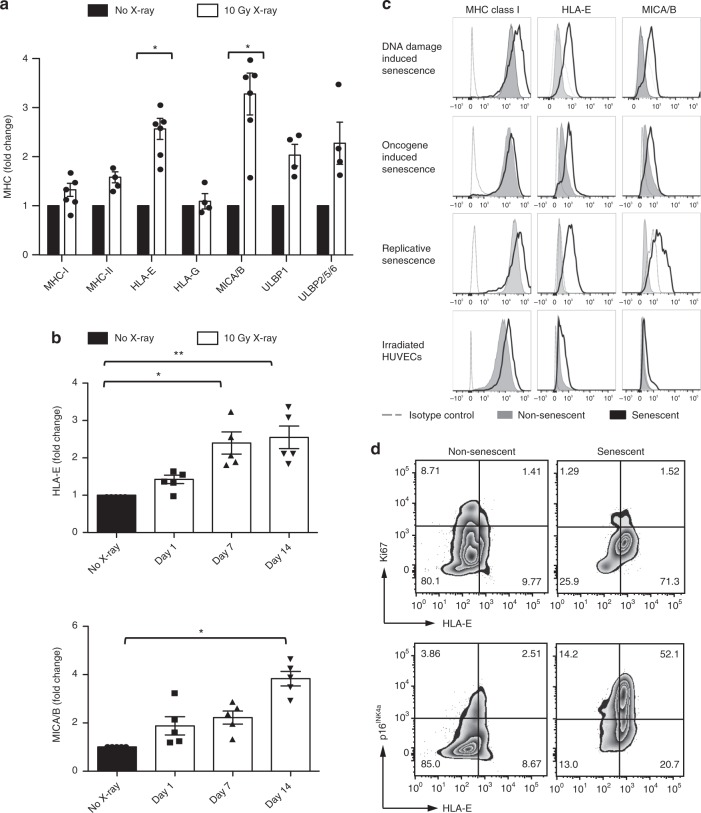
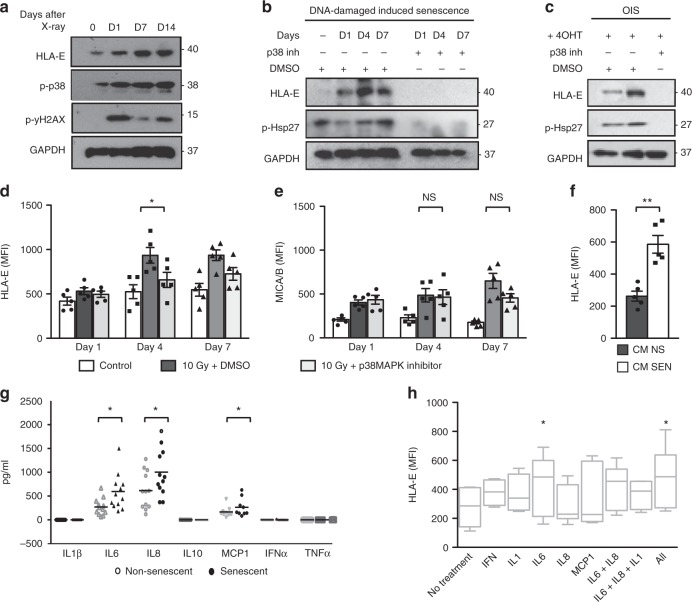
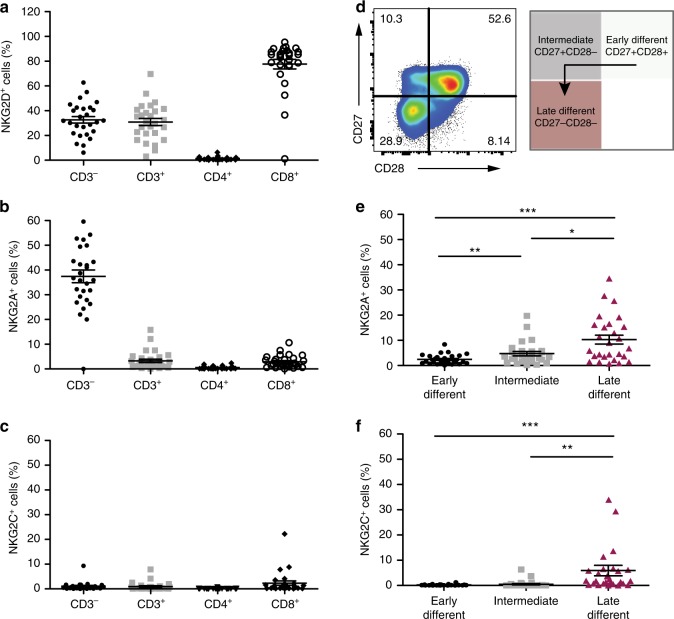
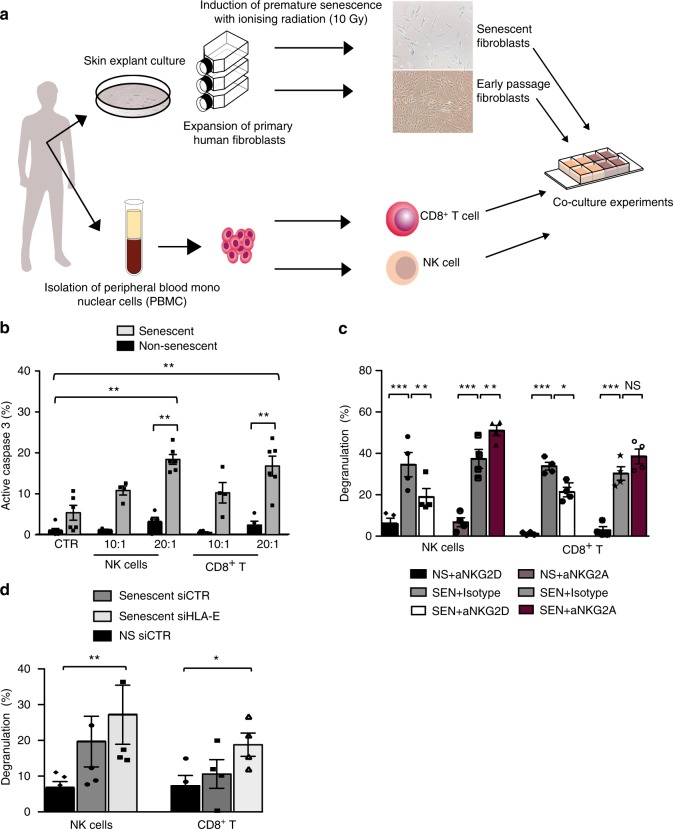
Verification
Claims the paper makes
The claims and statistics of this paper haven’t been checked yet.
Free: it reads the open-access text and checks the first 5 claims that cite a source we can check. Create a free account to check every claim.
Claims other papers make about this one
Each is checked against this paper’s own text: does it say what the citing paper says it does?
The source backs part of the claim, not all of it — or backs it for a different population, condition or comparison.
In the citing paper
“Normally, senescent cells appear to be cleared within days to weeks after they develop by natural killer cells and other immune cell types62,66–69.”
From Cellular senescence and senolytics: the path to the clinic (2022) · cites this paper as [66]
Experimental — accuracy not yet measuredThe source backs part of the claim, not all of it — or backs it for a different population, condition or comparison.
In the citing paper
“Pereira et al. recently reported that senescent human primary dermal fibroblasts and endothelial cells express higher levels of the atypical major histocompatibility complex (MHC) Ib molecule HLA-E via the p38 signaling pathway than non-senescent cells.”
From Immune Clearance of Senescent Cells to Combat Ageing and Chronic Diseases (2020) · cites this paper as [124]
Experimental — accuracy not yet measuredThe source backs part of the claim, not all of it — or backs it for a different population, condition or comparison.
In the citing paper
“Moreover, IL-6 and IL-8 also enhanced the surface expression of HLA- E that interacts with the inhibitory receptor NKG2A, thereby blunting the activity of cytotoxic NK cells and mature CD8 + T- cells 176 .”
From Senescence and cancer — role and therapeutic opportunities (2022) · cites this paper as [176]
Experimental — accuracy not yet measuredThe cited source says what the claim attributes to it.
In the citing paper
“At younger ages, senescent cells are cleared by the host immune system [63–66]”
From Reducing Senescent Cell Burden in Aging and Disease (2020) · cites this paper as [64]
The cited source says what the claim attributes to it.
In the citing paper
“However, this immunomodulatory property of monocytes may be a by-product of the increased inflammatory skin environmentas increased senescent stromal cells such as fibroblasts are present in older skin (10).”
From The impact of ageing on monocytes and macrophages (2021) · cites this paper as [10]
5 more claims about this paper
Create a free account to see every claim other papers make about this one.
Self-check
Percentages, sums and reported differences re-computed from the paper’s own numbers.
The self-check needs the paper’s full text.
Citations
Cites
The senescence-associated secretory phenotype: the dark side of tumor suppression
Coppé, J.-P., Desprez, P.-Y., Krtolica, A., & Campisi, J. (2010) · Annual Review of Pathology: Mechanisms of Disease · doi:10.1146/annurev-pathol-121808-102144 · Cited by 5,206
Self-citationChronic Inflammation (Inflammaging) and Its Potential Contribution to Age-Associated Diseases
Franceschi, C., & Campisi, J. (2014) · The Journals of Gerontology Series A: Biological Sciences and Medical Sciences · doi:10.1093/gerona/glu057 · Cited by 3,891
Self-citationClearance of p16Ink4a-positive senescent cells delays ageing-associated disorders
Baker, D. J., Wijshake, T., Tchkonia, T., LeBrasseur, N. K., Childs, B. G., van de Sluis, B., Kirkland, J. L., & van Deursen, J. M. (2011) · Nature · doi:10.1038/nature10600 · Cited by 3,670
Aging, Cellular Senescence, and Cancer
Campisi, J. (2013) · Annual Review of Physiology · doi:10.1146/annurev-physiol-030212-183653 · Cited by 2,954
Self-citationNaturally occurring p16Ink4a-positive cells shorten healthy lifespan
Baker, D. J., Childs, B. G., Durik, M., Wijers, M. E., Sieben, C. J., Zhong, J., A. Saltness, R., Jeganathan, K. B., Verzosa, G. C., Pezeshki, A., et al. (2016) · Nature · doi:10.1038/nature16932 · Cited by 2,876
Lanier, L. L. (2005) · Annual Review of Immunology · doi:10.1146/annurev.immunol.23.021704.115526 · Cited by 2,769
The role of senescent cells in ageing
van Deursen, J. M. (2014) · Nature · doi:10.1038/nature13193 · Cited by 2,623
Senescence and tumour clearance is triggered by p53 restoration in murine liver carcinomas
Xue, W., Zender, L., Miething, C., Dickins, R. A., Hernando, E., Krizhanovsky, V., Cordon-Cardo, C., & Lowe, S. W. (2007) · Nature · doi:10.1038/nature05529 · Cited by 2,473
A complex secretory program orchestrated by the inflammasome controls paracrine senescence
Acosta, J. C., Banito, A., Wuestefeld, T., Georgilis, A., Janich, P., Morton, J. P., Athineos, D., Kang, T.-W., Lasitschka, F., Andrulis, M., et al. (2013) · Nature Cell Biology · doi:10.1038/ncb2784 · Cited by 2,278
Persistent DNA damage signalling triggers senescence-associated inflammatory cytokine secretion
Rodier, F., Coppé, J.-P., Patil, C. K., Hoeijmakers, W. A. M., Muñoz, D. P., Raza, S. R., Freund, A., Campeau, E., Davalos, A. R., & Campisi, J. (2009) · Nature Cell Biology · doi:10.1038/ncb1909 · Cited by 2,232
Self-citation
Cited by
Items 501–565 of 565
Senescent Cells and Antiaging Medicine: Cellular Aging Control Mechanism
Katsuumi, G., & Minamino, T. (2024) · Springer eBooks · doi:10.1007/978-981-97-8514-8_25
Isolation of Exosome from Senescent Preadipocytes for Mass Spectrometric Analysis
Wang, Y. (2025) · Methods in molecular biology · doi:10.1007/978-1-0716-4502-4_13
Clonal expansion of cytotoxic CD8 + T cells in lecanemab-associated ARIAPreprint
Johnson, L. A., Saito, K., Pallerla, A. V., Funnell, J. L., Ezzo, A. R., Song, C. L., Harrison, D. A., Norton, N. J., Moore, L. C., Eldik, L. J. V., et al. (2025) · medRxiv · doi:10.1101/2025.09.17.25335728
The dual role of cellular senescence in tumor occurrence and development
Huang, X., Wang, Z.-R., Wu, B., & Song, W.-W. (2025) · Discover Medicine · doi:10.1007/s44337-025-00502-7
Sharma, R. (2025) · Biochemical and Biophysical Research Communications · doi:10.1016/j.bbrc.2025.152881 · Cited by 2
CD94/NKG2A-Qa-1b axis as a key modulator of vaccine responsiveness in aging populations
Chen, L., Bai, Z., Wan, D., Ren, W., Que, H., Wang, J., Lu, Y., He, X., Hong, W., Alu, A., et al. (2025) · Cell Reports · doi:10.1016/j.celrep.2025.116514 · Cited by 1
Molla, A. (2025) · American Journal of Biomedical and Life Sciences · doi:10.11648/j.ajbls.20251305.12
Chen, M., Pan, Y., Zhang, J., & Zeng, Y. (2025) · Journal of Inflammation Research · doi:10.2147/jir.s548070
Targeting RNA polymerase I to boost natural killer cell anticancer activity in multiple myeloma
Sproviero, E., Gnocchini, E., Cipollone, T., Petillo, S., Cassone, C., Molfetta, R., Zingoni, A., Soriani, A., Cerboni, C., Petrucci, M. T., et al. (2025) · Cell Death and Disease · doi:10.1038/s41419-025-08196-6 · Cited by 2
Wu, H., Yao, Z., Li, H., Zhang, L., Zhao, Y., Li, Y., Wu, Y., Zhang, Z., Xie, J., Ding, F., et al. (2024) · Figshare · doi:10.6084/m9.figshare.25954940
Xu, L., Lu, Y., Deng, Z., Li, X., Shi, Y., Zhao, K., Yao, W., & Wang, J. (2022) · Figshare · doi:10.6084/m9.figshare.19766132
Xu, L., Lu, Y., Deng, Z., Li, X., Shi, Y., Zhao, K., Yao, W., & Wang, J. (2022) · Figshare · doi:10.6084/m9.figshare.19766126
Transplanting ANXA1⁻ CD8⁺ Naïve T cells Delay Aging Through SenolysisPreprint
Wu, Y., Guo, S. Z., Zhang, F., Lou, F., Li, Y. Y., Sun, Y., Shen, Q., Zhao, L., Cai, X., Wang, Z., et al. (2026) · bioRxiv (Cold Spring Harbor Laboratory) · doi:10.64898/2026.02.21.707223
HLA-E as an Emerging Checkpoint and Biomarker in Personalized Cancer Immunotherapy
Sanmugawil, R., Parmeswaran, L., Rahman, N. A., & Hassan, N. (2026) · Current Medical Science · doi:10.1007/s11596-026-00171-2
Tosun, M., & Schenerman, M. A. (2026) · Elsevier eBooks · doi:10.1016/b978-0-443-21988-7.00028-1
Rôle de l’immunosurveillance des cellules sénescentes dans le cancer et le vieillissement
Iltis, C. (2020) · theses.fr (ABES) · doi:10.70675/9a339b58z5fecz427dz8de4z8ce0bd748478 · Cited by 1
Staging concept for aging management: Definition, mechanism, and coping strategies
Wang, Z., Liu, S. S., Du, S., Cui, X., Chao, B., Liu, M., & Wu, M. (2026) · View · doi:10.1002/viw.20250201
Kumar, S., Suman, S., Li, H.-H., Angdisen, J. J., Datta, K., & Fornace, A. J. (2026) · Molecular Biomedicine · doi:10.1186/s43556-026-00446-z · Cited by 1
“Alternatively, CD107a (lysosomal-associated membrane protein-1, LAMP-1) expression was used as a marker of NK cell degranulation, as described previously [48].”
Senolytic drug discovery and mechanisms of action in BRAF-V600E oncogene-induced senescence
L’Hôte, V. (2022) · theses.fr (ABES) · doi:10.70675/acd5f426zc1b2z446fz8404z0f8f121081f8 · Cited by 1
Nonclassical MHC‐I Molecules: Emerging Therapeutic Targets in Next‐Generation Immunotherapy
He, W., & McMichael, A. J. (2026) · MedComm · doi:10.1002/mco2.70742 · Cited by 1
Modulating hepatic stellate cell senescence: A promising therapeutic strategy for liver fibrosis
Sharmila, M., Harini, K. S., & Ezhilarasan, D. (2026) · Hepatobiliary & pancreatic diseases international · doi:10.1016/j.hbpd.2026.04.006
Li, Y. (2024) · Integrate Medicine · doi:10.61958/imsh8177
A senescent-immune reserve niche model for incomplete lobular involution in the aging breastPreprint
Lue, J. C., Baker, D. J., Degnim, A. C., Winham, S. J., Sherman, M. E., & Radisky, D. C. (2026) · eLife · doi:10.7554/elife.111667
Zheng, S., Hong, Y., Xiao, Y., Yijiati, A., Mo, Y., Yu, X., Huang, S., Xian, X., Jiang, Y., Wei, Q., et al. (2026) · International Journal of Molecular Sciences · doi:10.3390/ijms27104444
“Unlike intrinsic aging, photoaging is characterized by accelerated dermal extracellular matrix degradation, fibroblast photoaging, and paracrine-mediated “bystander photoaging” that propagates dysfunction to neighboring cells [26,27].”
Duca, D., Lovati, G., Zocchi, A., Giardina, G., Mileti, E., Melixetian, M., Lotti, F., Doni, M., Marocchi, F., & Lanfrancone, L. (2026) · Cell Death and Disease · doi:10.21203/rs.3.rs-9577216/v1
Wang, F., Zeng, T., Yuan, C., Wang, H., Yu, Y., Deng, E., Wang, Y., Ji, J., Cui, J., Tang, D., et al. (2026) · Aging Cell · doi:10.1111/acel.70552
Pathological Interplay of ROS With Myofibroblasts: An Impediment to Corneal Restitution
Karimi, M. Y., & Colagar, A. H. (2026) · Oxidative Medicine and Cellular Longevity · doi:10.1155/omcl/5547254
Chen, X., Liu, H., Shu, Q., Tang, Y., Zhang, J., Yu, W., & Li, S. (2026) · Cells · doi:10.3390/cells15121123
Escape and evasion: when immunosurveillance of senescent cells goes wrong
Shakur, E., Jacobs, A., Ghosh, R., & Yousefzadeh, M. J. (2026) · Frontiers in Genetics · doi:10.3389/fgene.2026.1882818
“In human fibroblasts and endothelial cells, it was shown that senescent cells increase expression of HLE-A, which binds to the NKG2A receptor on NK cells, thereby inhibiting their response (Pereira et al., 2019).”
Arnold, C. R., Mangesius, J., Weinberger, B., Portnaia, I., Santacroce, A., Ganswindt, U., & Muacevic, A. (2026) · Frontiers in Immunology · doi:10.3389/fimmu.2026.1888282
“Senescent cells accumulate with age due to increasing cellular damage, reduced repair mechanisms, and impaired clearance by immune cells (98).”
Hasegawa, T., Nishitani, K., & Kabashima, K. (2026) · International Immunology · doi:10.1093/intimm/dxag037
Feng, J., Liang, Y., Zhou, J., Yu, Y., Zheng, X., Mo, J., Huang, Z., & Zhang, J. (2026) · Clinical Epigenetics · doi:10.1186/s13148-026-02206-w
“…protective role of NK cells and platelets (PLT) highlights the dual nature of immune-aging interactions: while NK cells may mitigate mortality through senescent cell clearance [30], Elevated PLT counts may reflect compensatory thromboregula-tory mechanisms associated with vascular aging.”
Paul, B. M., Kannan, G., Arunachalam, K., & Thangaraj, P. (2026) · Inflammopharmacology · doi:10.1007/s10787-026-02346-8
“This form of surveillance is a primary mechanism for limiting the chronic build-up of senescent cells(Kale et al. 2020; Pereira et al. 2019).”
Ubiquitination‐related gene signature in photoaging and prediction of candidate therapeutic agents
Xu, X., & Lü, X. (2026) · Photochemistry and Photobiology · doi:10.1111/php.70138
Wang, G., Meng, Y., & Han, J. (2026) · Ageing Research Reviews · doi:10.1016/j.arr.2026.103293
The senescence–immune axis as a target for combining immunotherapy and senotherapy
Saez‐Calazans, F., Grün, L. K., Stein, L. E., Barbé‐Tuana, F. M., & Filippi‐Chiela, E. C. (2026) · Ageing Research Reviews · doi:10.1016/j.arr.2026.103309
Multi‐Omic Analysis of Putative Cellular Senescence‐Associated Genes on the Risk of Pan‐Cancer
Liu, B., Wu, W., Liu, C., Feng, P., Liu, S., Gong, S., Li, Y., Li, Y., Mi, J., Zheng, P., et al. (2026) · Molecular Carcinogenesis · doi:10.1002/mc.70170
“It contributes to the maintenance of the senescent state [23].”
HLA class I expression and tumor immune infiltration together shape colon cancer immune contexture
Zhu, H., van Nieuwkerk, R., van der Kroft, S. N., van Vlierberghe, R. L. P., Ijsselsteijn, M. E., Zuo, W., Hviid, T. V. F., Tollenaar, R. A. �. �., Vahrmeijer, A. L., Bedognetti, D., et al. (2026) · Neoplasia · doi:10.1016/j.neo.2026.101357
“Interestingly, HLA-E expression was associated with improved DSS and PFS, a finding that contrasts with its traditional immunosuppressive role via NKG2A/CD94-mediated suppression of NK and CD8 + T cells [55 – 58].”
Context-dependent duality of senescent cells in liver fibrosis
Gu, Y., Zhan, L., Di, Y., Wu, H., Zhao, T., Zhang, F., & Wu, Q. (2026) · Liver Research · doi:10.1016/j.livres.2026.09.001
“40 When immuno-surveillance is compromised, persistent senescent cells can establish a chronic, low-grade, pro-fibrotic inflammatory milieu accompanied by immune dysregulation, thereby further amplifying senescent cell accumulation.”
Hesen, S. S., Kassem, K. F., Naser, A. A., salah, M. S., .Salah, N. S., & Hafez, O. M. (2026) · Research Square · doi:10.21203/rs.3.rs-10942772/v1
Blocking PD-L2 prevents senescent cell accumulation and age-related dysfunction
Chaib, S., Prata, L. G. P. L., Suda, M., Sola, A., Mitchell, T. J., Anastasiadis, Z. P., Kunz, H., Nie, J., Victorelli, S. G., Flores, R. L., et al. (2026) · Cell Metabolism · doi:10.1016/j.cmet.2026.08.014
Self-citationA transitional senescence program drives inflammatory monocyte state expansion in aging humansPreprint
Vasilopoulos, T., Turano, P. S., Garza‐Martinez, L., Akbulut, E., Konda, M., Herbig, U., Fitzgerald-Bocarsly, P. A., & Martínez‐Zamudio, R. I. (2026) · bioRxiv (Cold Spring Harbor Laboratory) · doi:10.64898/2026.09.09.750459
Skin Aging: From Molecular Mechanisms to Therapeutic and Technological Innovations
Chen, S., Yang, Y., Pan, X., Pan, Y., & Cai, S. (2026) · Journal of Cellular and Molecular Medicine · doi:10.1111/jcmm.71357
Matveeva, K. S., & Shevyrev, D. (2026) · International Journal of Molecular Sciences · doi:10.3390/ijms27188416
“There is growing evidence that adaptive immunity plays a role in senescent cell clearance [37–40].”
The role of the immune system in hypertension
Fields, E., Berillo, O., & Schiffrin, E. L. (2026) · Journal of Hypertension · doi:10.1097/hjh.0000000000004440
The role of senescence in kidney ageing, injury and fibrosis
Janas, P. P., Mason, T., & Ferenbach, D. A. (2026) · Nature Reviews Nephrology · doi:10.1038/s41581-026-01123-8
Blanco, J. R., & Carnero, A. (2026) · Cancers · doi:10.3390/cancers18193084
“These changes could influence responsiveness to immune checkpoint blockade, although direct clinical evidence remains limited [108,109].”
Radiation-induced cell-death states in cancer: Toward biomarker-guided radioimmunotherapy
Wang, X., (2085), W. G., Wang, Q., He, S., & Zou, B. (2026) · Cancer Letters · doi:10.1016/j.canlet.2026.218860
Coronado, R. E. (2026) · GeroScience · doi:10.1007/s11357-026-02554-8
Du, L., Zhang, Y., Liang, R., Song, B., Zhou, J., 夏贤武, Liu, C., Wu, K., & Cao, X. (2026) · Journal of Hematology & Oncology · doi:10.1186/s13045-026-01847-x
Simpson, D. J., Crofts, S., Mavrommatis, C., White, T. A., Suwanlikit, Y., Loyva, K., Rocca, W. A., Kantarci, K., Mielke, M. M., Richmond, A., et al. (2026) · medRxiv · doi:10.64898/2026.09.29.26364335
Cellular senescence: six decades of discovery and reinvention
Klaver, M., Steeneken, L. S., Veeningen, N., Altulea, A., & Demaria, M. (2026) · The EMBO Journal · doi:10.1038/s44318-026-00922-w
Liu, F., Xu, J., Chen, Z., Yao, L., Li, Y., Wang, T., Wang, Q., He, J., Yang, S., & Wang, W. (2026) · Pharmaceuticals · doi:10.3390/ph19101576
“As key inflammatory mediators, IL-6 and MCP-1 secreted by senescent fibroblasts sustain low-grade skin inflammation, and MCP-1 further recruits inflammatory cells and promotes tissue fibrosis [61–63].”
Huang, J., Ji, L., Jin, H., Shi, Z., Song, X., Cai, Y., & Tong, X. (2026) · Ageing Research Reviews · doi:10.1016/j.arr.2026.103398
Tumor-associated immunosenescence: Mechanisms, biomarkers and age-adaptive immunotherapy
Wu, H., Yang, Z., Zhang, H., Jin, Y., Ji, S., Zhang, Z., Sun, G., & Zhang, X. (2026) · Critical Reviews in Oncology/Hematology · doi:10.1016/j.critrevonc.2026.105647
Croix, A. E. L., Gouveia, M. E. T., Bertone, P. M., Nemanic, N. M., Bahney, C. S., & Hixon, K. R. (2026) · Bioactive Materials · doi:10.1016/j.bioactmat.2026.09.020
Cheng, S., Zhao, Y., & Wang, W. (2026) · Frontiers in Immunology · doi:10.3389/fimmu.2026.1982821
“The HLA-E – NKG2A axis is a plausible candidate because HLA-E can suppress natural killer (NK)-positive and CD8-positive T-cell cytotoxicity in other senescent-cell contexts, while dysfunctional cytotoxic lymphocyte populations have been described in metabolic liver disease (37, 62).”
Senescence and tumor immunology: A multifaceted interplay of influence
Xie, Y., Zhang, J., Wang, S., Rao, D., Zhang, J., & Ao, Y. (2026) · iScience · doi:10.1016/j.isci.2026.117849
“149,150 The SASP also promotes the infiltration of NK cells, CD8 + T cells, MDSCs, and M2 macrophages.”
Bourdon, C., Spano, L., Boukouaci, W., Ching-lien, W., Lajnef, M., Godin, O., Leboyer, M., Aouizerate, B., Lefrere, A., Belzeaux-R, R., et al. (2026) · Brain Behavior and Immunity · doi:10.1016/j.bbi.2026.107061
Targeting MMGT1 enhances immunotherapy efficacy in triple-negative breast cancer
Liu, S., Liu, H., Zhang, M., Guo, K., Tong, S., Jiang, N., Zhou, J., Yan, L., Hung, M., Zhou, C., et al. (2026) · Cell Reports Medicine · doi:10.1016/j.xcrm.2026.103120
Toya, M., Hirose, R., Lee, M. L., Ergul, Y. S., Igei, T., Shinohara, I., Murayama, M., Kushioka, J., Tsubosaka, M., Gao, Q., et al. (2026) · Bioengineering · doi:10.3390/bioengineering13111236
Niazi, S. K. (2026) · Frontiers in Systems Biology · doi:10.3389/fsysb.2026.1940319
Metadata
- Authors
- Pereira, B. I., Devine, O. P., Vukmanovic-Stejic, M., Chambers, E. S., Subramanian, P., Patel, N., Virasami, A., Sebire, N. J., Kinsler, V., Valdovinos, A., LeSaux, C. J., Passos, J. F., Antoniou, A., Rustin, M. H. A., Campisi, J., & Akbar, A. N.
- Affiliations
- University College London (GB)
- Great Ormond Street Hospital (GB)
- Buck Institute for Research on Aging (US)
- Mayo Clinic (US)
- Northumbria University (GB)
- Corresponding author
- Akbar, Arne N.
- ORCID
- Venue
- Nature Communications
- Published
- 2019-06-03
- Volume
- 10
- Issue
- 1
- Pages
- 2387-2387
- ISSN
- 2041-1723 (ISSN-L)
- PMC
- PMC6547655
- OpenAlex
- W2948309692
- Semantic Scholar
- 06de5dea91fc1df1d6f986231b42d094e676353b
- Cited by
- 556
- References
- 59
- Citations by year
- 2026: 88 · 2025: 100 · 2024: 96 · 2023: 59 · 2022: 73 · 2021: 80 · 2020: 50 · 2019: 10
- FWCI
- 38.07
- Type
- journal article
- Language
- en
- Open access
- gold
- doi.org
- Licence
- cc-by
- creativecommons.org/licenses/by/4.0 (tdm)
- creativecommons.org/licenses/by/4.0 (vor)
- Locations
- Nature Communications (publishedVersion, cc-by)
- Europe PMC (PubMed Central) (publishedVersion, cc-by)
- PubMed Central (publishedVersion, cc-by)
- PubMed (publishedVersion)
- Northumbria Research Link (Northumbria University) (acceptedVersion)
- OSTI OAI (U.S. Department of Energy Office of Scientific and Technical Information) (submittedVersion)
- RePEc: Research Papers in Economics (submittedVersion)
- DOAJ (DOAJ: Directory of Open Access Journals) (submittedVersion, cc-by-sa)
- DOAJ (DOAJ: Directory of Open Access Journals) (submittedVersion)
- UCL Discovery (University College London) (submittedVersion)
- eScholarship (California Digital Library) (submittedVersion)
- Queen Mary Research Online (Queen Mary University of London) (submittedVersion, cc-by)
- Newcastle University ePrints (Newcastle Univesity) (cc-by)
- Funders
- .B.I.P. was supported by the Portuguese Foundation for Science and Technology and Gulbenkian Institute for Science sponsoring the Advanced Medical Program for Physicians
- O.D. was supported by an MB PhD funding award from the National Institute for Health Research University College London Hospitals Biomedical Research Centre
- Foundation for the National Institutes of Health (AG052744, AG051729)
- RCUK | Medical Research Council (MR/P00184X/1, MR/M003833/1)
- Dermatrust
- Topics
- Life Sciences › Biochemistry, Genetics and Molecular Biology › Cell Biology › Telomeres, Telomerase, and Senescence
- Life Sciences › Immunology and Microbiology › Immunology › Immune Cell Function and Interaction
- Life Sciences › Biochemistry, Genetics and Molecular Biology › Aging › Genetics, Aging, and Longevity in Model Organisms
- Keywords
- cellular senescence, senescent cell clearance, HLA-E, NKG2A, natural killer cells, CD8+ T cells, immune evasion, senescence-associated secretory phenotype, inflammatory cytokines, dermal fibroblasts, skin aging, melanocytic nevi
- MeSH terms
- HLA-E Antigens, Adult, Aged, Aging, Fibroblasts, Humans, Killer Cells, Natural, Nevus, Pigmented, Phenotype, Skin, Histocompatibility Antigens Class I, Signal Transduction, Cytokines, Cellular Senescence, CD8-Positive T-Lymphocytes, Dermis, RNA, Small Interfering, p38 Mitogen-Activated Protein Kinases, NK Cell Lectin-Like Receptor Subfamily C, Young Adult, In Vitro Techniques
About these checks
Registry, retraction, Cites and statistics results are computed, not judged, with one exception: a printed reference that no index lists is read once by a model before it counts as a citation error. Claims are extracted by a model and kept only when their quote appears verbatim in the text; each cited source is then checked, with a model’s help, for whether it says what the claim relies on. Those verdicts can be wrong — read the claim’s quote and the cited source before relying on one.
Statistics and arithmetic are recomputed, not judged.
Confidence bands are shown only for fields calibrated on our annotated test set. None is calibrated yet, so no band is shown.
What counts as a claim ›How we measure confidence ›How we check this ›
Are you an author, or do you see a problem with this page? Request a review
Data sources
Bibliographic data: Semantic Scholar, OpenAlex, Crossref.
Contains information from the Semantic Scholar Academic Graph Datasets, made available under the ODC Attribution License (ODC-BY 1.0).
Semantic Scholar’s data is described in: Kinney, R., et al. (2023). The Semantic Scholar Open Data Platform. arXiv:2301.10140.
