

Senescent cells evade immune clearance via HLA-E-mediated NK and CD8+ T cell inhibition
Open accessThe DOI matches its Crossref record; 58 of the 59 references it cites were found in a registry or an index.
Abstract
Senescent cells accumulate in human tissues during ageing and contribute to age-related pathologies. The mechanisms responsible for their accumulation are unclear. Here we show that senescent dermal fibroblasts express the non-classical MHC molecule HLA-E, which interacts with the inhibitory receptor NKG2A expressed by NK and highly differentiated CD8 + T cells to inhibit immune responses against senescent cells. HLA-E expression is induced by senescence-associated secretary phenotype-related pro-inflammatory cytokines, and is regulated by p38 MAP kinase signalling in vitro. Consistently, HLA-E expression is increased on senescent cells in human skin sections from old individuals, when compared with those from young, and in human melanocytic nevi relative to normal skin. Lastly, blocking the interaction between HLA-E and NKG2A boosts immune responses against senescent cells in vitro. We thus propose that increased HLA-E expression contributes to persistence of senescent cells in tissues, thereby suggesting a new strategy for eliminating senescent cells during ageing.
Overview
The claims and statistics of this paper haven’t been checked yet.
Free: it reads the open-access text and checks the first 5 claims that cite a source we can check. Create a free account to check every claim.
Integrity signals
Registry
Cites
Statistics
Figures
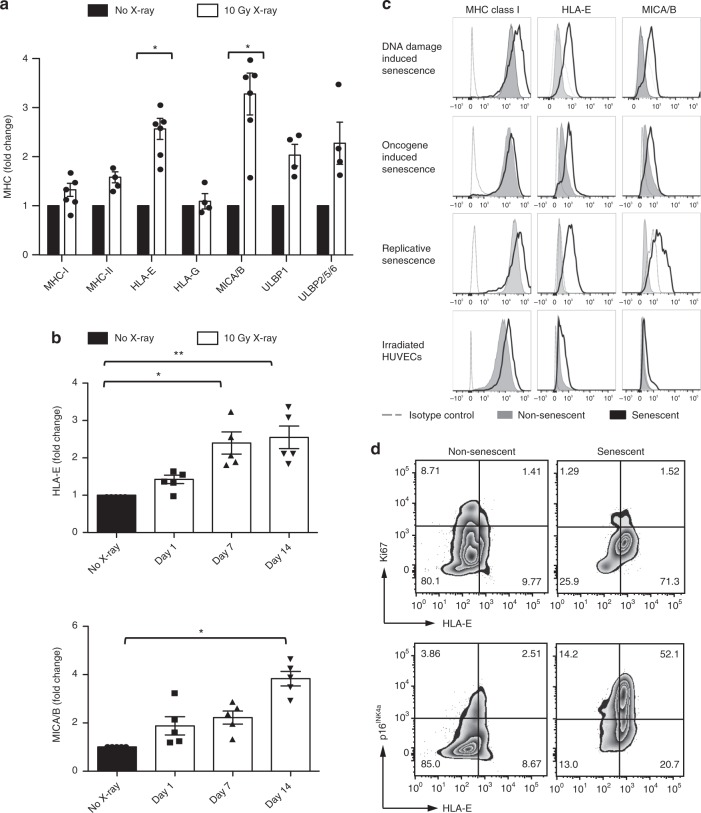
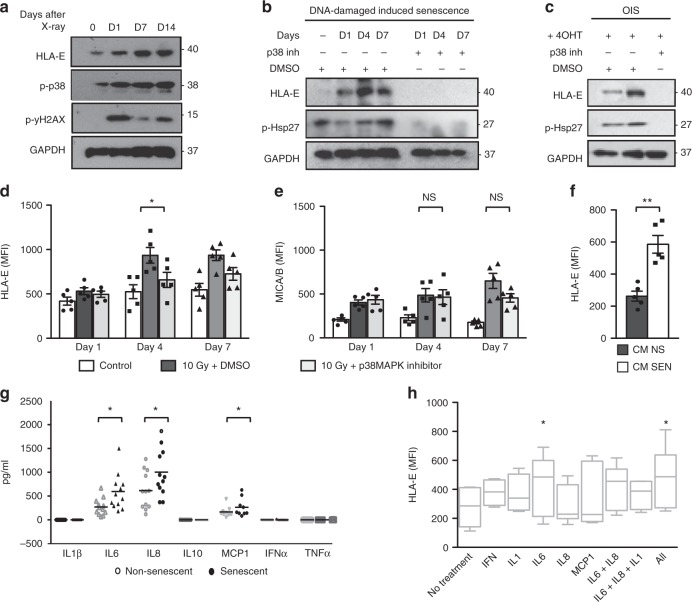
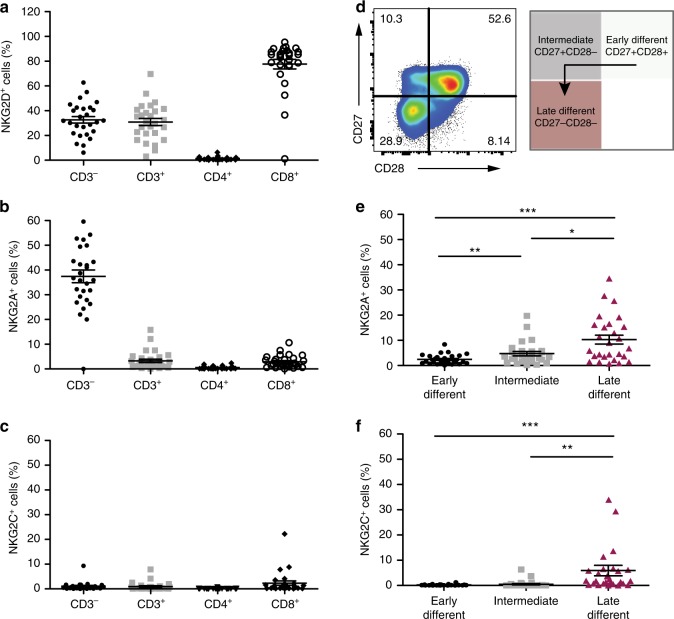
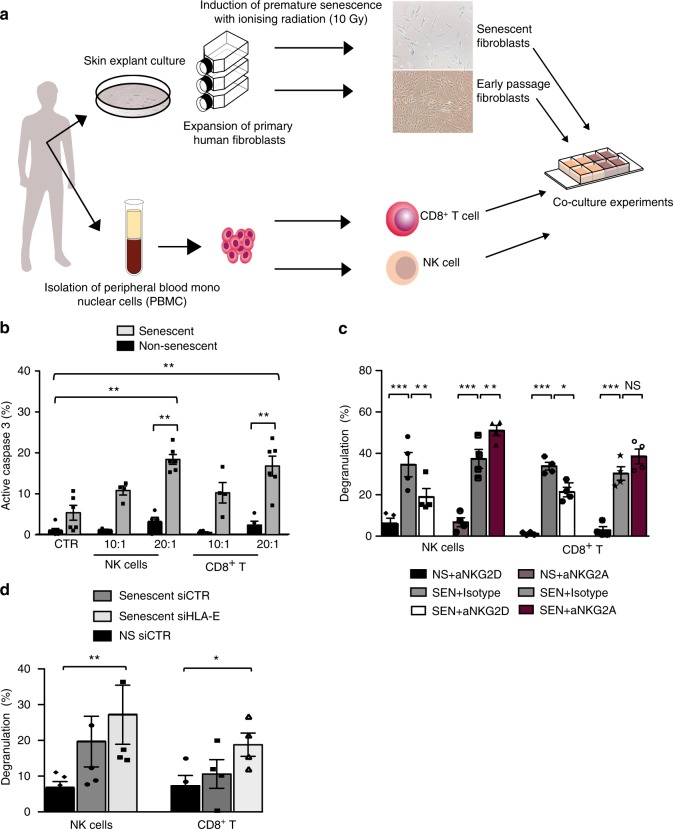
Verification
Claims the paper makes
The claims and statistics of this paper haven’t been checked yet.
Free: it reads the open-access text and checks the first 5 claims that cite a source we can check. Create a free account to check every claim.
Claims other papers make about this one
Each is checked against this paper’s own text: does it say what the citing paper says it does?
The source backs part of the claim, not all of it — or backs it for a different population, condition or comparison.
In the citing paper
“Normally, senescent cells appear to be cleared within days to weeks after they develop by natural killer cells and other immune cell types62,66–69.”
From Cellular senescence and senolytics: the path to the clinic (2022) · cites this paper as [66]
Experimental — accuracy not yet measuredThe source backs part of the claim, not all of it — or backs it for a different population, condition or comparison.
In the citing paper
“Pereira et al. recently reported that senescent human primary dermal fibroblasts and endothelial cells express higher levels of the atypical major histocompatibility complex (MHC) Ib molecule HLA-E via the p38 signaling pathway than non-senescent cells.”
From Immune Clearance of Senescent Cells to Combat Ageing and Chronic Diseases (2020) · cites this paper as [124]
Experimental — accuracy not yet measuredThe source backs part of the claim, not all of it — or backs it for a different population, condition or comparison.
In the citing paper
“Moreover, IL-6 and IL-8 also enhanced the surface expression of HLA- E that interacts with the inhibitory receptor NKG2A, thereby blunting the activity of cytotoxic NK cells and mature CD8 + T- cells 176 .”
From Senescence and cancer — role and therapeutic opportunities (2022) · cites this paper as [176]
Experimental — accuracy not yet measuredThe cited source says what the claim attributes to it.
In the citing paper
“At younger ages, senescent cells are cleared by the host immune system [63–66]”
From Reducing Senescent Cell Burden in Aging and Disease (2020) · cites this paper as [64]
The cited source says what the claim attributes to it.
In the citing paper
“However, this immunomodulatory property of monocytes may be a by-product of the increased inflammatory skin environmentas increased senescent stromal cells such as fibroblasts are present in older skin (10).”
From The impact of ageing on monocytes and macrophages (2021) · cites this paper as [10]
5 more claims about this paper
Create a free account to see every claim other papers make about this one.
Self-check
Percentages, sums and reported differences re-computed from the paper’s own numbers.
The self-check needs the paper’s full text.
Citations
Cites
The senescence-associated secretory phenotype: the dark side of tumor suppression
Coppé, J.-P., Desprez, P.-Y., Krtolica, A., & Campisi, J. (2010) · Annual Review of Pathology: Mechanisms of Disease · doi:10.1146/annurev-pathol-121808-102144 · Cited by 5,206
Self-citationChronic Inflammation (Inflammaging) and Its Potential Contribution to Age-Associated Diseases
Franceschi, C., & Campisi, J. (2014) · The Journals of Gerontology Series A: Biological Sciences and Medical Sciences · doi:10.1093/gerona/glu057 · Cited by 3,891
Self-citationClearance of p16Ink4a-positive senescent cells delays ageing-associated disorders
Baker, D. J., Wijshake, T., Tchkonia, T., LeBrasseur, N. K., Childs, B. G., van de Sluis, B., Kirkland, J. L., & van Deursen, J. M. (2011) · Nature · doi:10.1038/nature10600 · Cited by 3,670
Aging, Cellular Senescence, and Cancer
Campisi, J. (2013) · Annual Review of Physiology · doi:10.1146/annurev-physiol-030212-183653 · Cited by 2,954
Self-citationNaturally occurring p16Ink4a-positive cells shorten healthy lifespan
Baker, D. J., Childs, B. G., Durik, M., Wijers, M. E., Sieben, C. J., Zhong, J., A. Saltness, R., Jeganathan, K. B., Verzosa, G. C., Pezeshki, A., et al. (2016) · Nature · doi:10.1038/nature16932 · Cited by 2,876
Lanier, L. L. (2005) · Annual Review of Immunology · doi:10.1146/annurev.immunol.23.021704.115526 · Cited by 2,769
The role of senescent cells in ageing
van Deursen, J. M. (2014) · Nature · doi:10.1038/nature13193 · Cited by 2,623
Senescence and tumour clearance is triggered by p53 restoration in murine liver carcinomas
Xue, W., Zender, L., Miething, C., Dickins, R. A., Hernando, E., Krizhanovsky, V., Cordon-Cardo, C., & Lowe, S. W. (2007) · Nature · doi:10.1038/nature05529 · Cited by 2,473
A complex secretory program orchestrated by the inflammasome controls paracrine senescence
Acosta, J. C., Banito, A., Wuestefeld, T., Georgilis, A., Janich, P., Morton, J. P., Athineos, D., Kang, T.-W., Lasitschka, F., Andrulis, M., et al. (2013) · Nature Cell Biology · doi:10.1038/ncb2784 · Cited by 2,278
Persistent DNA damage signalling triggers senescence-associated inflammatory cytokine secretion
Rodier, F., Coppé, J.-P., Patil, C. K., Hoeijmakers, W. A. M., Muñoz, D. P., Raza, S. R., Freund, A., Campeau, E., Davalos, A. R., & Campisi, J. (2009) · Nature Cell Biology · doi:10.1038/ncb1909 · Cited by 2,232
Self-citation
Cited by
Items 301–400 of 565
Calorie restriction mimetics against aging and inflammation
Chaudhary, S., Chaudhary, M. R., Jena, M. K., Rath, P. K., Mishra, B. P., Paital, B., Vyas, A., Sahoo, D. K., Singh, P., & Mehdi, M. M. (2025) · Biogerontology · doi:10.1007/s10522-025-10269-0 · Cited by 15
In vivo CAR-cell therapy: current challenges and emerging therapeutic advances
Yang, Y.-M., Bao, B., Cao, Y.-H., Yao, J., Ding, Y.-F., Hu, Y.-Y., Fan, F., & Zhao, J. (2026) · Molecular Biomedicine · doi:10.1186/s43556-026-00447-y · Cited by 16
Pieren, D. K. J., Smits, N. A. M., Imholz, S., Nagarajah, B., van Oostrom, C. T., Brandt, R. M. C., Vermeij, W. P., Dollé, M. E. T., & Guichelaar, T. (2021) · Frontiers in Aging · doi:10.3389/fragi.2021.667193 · Cited by 14
Yang, S., Shu, C., Hu, H., Ma, G., & Yang, M. (2022) · Computational and Mathematical Methods in Medicine · doi:10.1155/2022/9726181 · Cited by 13
“The dermoscope can project the twodimensional surface of the tissue structures at different depths, and the pigmentation of the epidermis junction and the superficial dermis as well as the size and shape of blood vessels in superficial vascular plexus can be observed [8, 9].”
BackgroundXing, F., Lv, H., Xiang, W., Wang, L., Zong, Q., Lv, G., Liu, C., Feng, Q., Wang, H., & Yang, W. (2025) · Cancer Letters · doi:10.1016/j.canlet.2025.217544 · Cited by 13
Liu, G., Chen, Y., Dai, S., Wu, G., Wang, F., Chen, W., Wu, L., Luo, P., & Shi, C. (2025) · Journal of Translational Medicine · doi:10.1186/s12967-025-06204-z · Cited by 14
Liang, X., Lin, X., Lin, Z., Lin, W., Peng, Z., & Wei, S. (2023) · Computers in Biology and Medicine · doi:10.1016/j.compbiomed.2023.106850 · Cited by 13
Targeting immunosenesence promotes clearance of senescent cells
Tizazu, A. M., Tessema, E. A., & Cexus, O. (2025) · Immunity & Ageing · doi:10.1186/s12979-025-00518-8 · Cited by 15
Immunosenescence: Molecular Mechanisms, Diseases, and Therapeutic Innovations
Gong, N., Pan, X., Deng, Y., Che, J., Bao, J., Wang, M., Xu, C., Liu, X., & Shi, Y. (2025) · MedComm · doi:10.1002/mco2.70515 · Cited by 18
“Principally, immune checkpoint molecules (e.g., PD-L1/PD-L2) are markedly stimulated and stabilized in STCs, participating in induction of cell-intrinsic senescence when interacting with immune cells as well as systemic immunosenescence [518, 544, 545].”
Parvanov, D. A., Ganeva, R., Arsov, K., Decheva, I., Handzhiyska, M., Ruseva, M., Vidolova, N., Scarpellini, F., Metodiev, D., & Stamenov, G. (2023) · Journal of Assisted Reproduction and Genetics · doi:10.1007/s10815-023-02821-z · Cited by 13
“Hypothetically, the observed change of relation between senescent cells and T helpers in RIF women and the decreased p16/CD4 ratio in endometrial stroma could be restored by intrauterine administration of activated peripheral blood mononuclear cells (PBMC) [49, 50] in combination with senolytics or SASP inhibitors [51…”
BackgroundHung, Y., Sato, A., Takino, Y., Ishigami, A., & Machida, S. (2024) · GeroScience · doi:10.1007/s11357-024-01338-2 · Cited by 17
“The CD8 + T cells critically contribute to recognition and elimination of senescent cells [34, 35].”
Qian, H., Yuan, B., Liu, Y., Wang, L., Zhu, R., & Dong, P. (2025) · iScience · doi:10.1016/j.isci.2025.112697 · Cited by 10
Wu, J., Zhang, L., Zhao, Z., Liu, Y., Li, Z., Feng, X., Zhang, L., Yao, X., Du, J., Chen, L., et al. (2025) · Ageing Research Reviews · doi:10.1016/j.arr.2025.102783 · Cited by 10
Immune age is correlated with decreased TCR clonal diversity and antibody response to SARS-CoV-2
Davies, M., Denise, H., Day, M., Henson, S. M., Scotton, C. J., & Harries, L. W. (2025) · Scientific Reports · doi:10.1038/s41598-025-04736-4 · Cited by 11
“Evidence of CD8 compartment dysfunction is also suggested by the upregulation of the late immune checkpoint marker NKG2 A in older individuals which indicates repeated stimulations and replicative senescence within aged CD8 + T cells 20,30 .”
Nanomaterials intervene in cell senescence to reinforce cancer therapy
Sun, S., Yang, N., Nie, J., Yang, Z., Pei, Z., Ding, R., & Cheng, L. (2025) · Coordination Chemistry Reviews · doi:10.1016/j.ccr.2025.217012 · Cited by 10
A Cellular Senescence-Centric Integrated Approach to Understanding Organismal Aging
Sharma, R., & Diwan, B. (2022) · Current Aging Science · doi:10.2174/1874609815666220914104548 · Cited by 9
Ljubič, M., Prašnikar, E., Perdih, A., & Borišek, J. (2023) · Journal of Chemical Information and Modeling · doi:10.1021/acs.jcim.3c00249 · Cited by 10
Georgakopoulou, E. A., Valsamidi, C., Veroutis, D., & Havaki, S. (2020) · Mechanisms of Ageing and Development · doi:10.1016/j.mad.2020.111409 · Cited by 13
Tao, S., He, Y., Kichula, K. M., Wang, J., He, J., Norman, P. J., & Zhu, F. (2021) · Frontiers in Immunology · doi:10.3389/fimmu.2021.640334 · Cited by 12
“HLA-E is recognized by inhibitory CD94:NKG2A expressed by NK cell and T cell subsets (75, 76).”
BackgroundHLA-E Binding Peptide as a Potential Therapeutic Candidate for High-Risk Multiple Myeloma
Yang, Y., Liu, Z., Wang, H.-T., & Zhang, G. (2021) · Frontiers in Oncology · doi:10.3389/fonc.2021.670673 · Cited by 10
Bai, Z., Zhou, Y., Ye, X., Li, Y., Peng, Y., Guan, Q., Zhang, W., & Ma, L. (2021) · Biochimica et Biophysica Acta (BBA) - Molecular Cell Research · doi:10.1016/j.bbamcr.2021.119174 · Cited by 9
Senotherapeutics: Different approaches of discovery and development
Yoon, J. H., & Han, H. J. (2024) · Molecules and Cells · doi:10.1016/j.mocell.2023.10.001 · Cited by 10
Comprehensive Pan-Cancer Analysis of Senescence With Cancer Prognosis and Immunotherapy
Zhao, Q., Hu, W., Xu, J., Zeng, S., Xi, X., Chen, J., Wu, X., Hu, S., & Zhong, T. (2022) · Frontiers in Molecular Biosciences · doi:10.3389/fmolb.2022.919274 · Cited by 12
Targeting senescent dermal fibroblasts responsible for hyperactive melanocytes in melasma
Wan, J., Liao, Z., Dong, B., Jiang, S., & Lei, T. (2023) · Chinese Medical Journal · doi:10.1097/cm9.0000000000002488 · Cited by 14
“However, several research studies have presented strong evidence that senescent dermal fibroblasts inmelasmamay evade immune cell clearance by the upregulation of lysophospholipids([6]) and the non-classical major histocompatibility complex (MHC) molecule human leukocyte antigen (HLA)-E.([7]) Encouragingly, recent stu…”
BackgroundYang, W., An, L., Li, Y., & Qian, S. (2023) · Aging · doi:10.18632/aging.204981 · Cited by 9
Zheng, H., Wu, J., Feng, J., & Cheng, H. (2024) · Clinical Cosmetic and Investigational Dermatology · doi:10.2147/ccid.s403417 · Cited by 10
Impact of Senescent Cell‐Derived Extracellular Vesicles on Innate Immune Cell Function
Chen, Y., Sullivan, J., Hanley, S., Price, J. M. J., Tariq, M. A., McIlvenna, L. C., Whitham, M., Sharma‐Oates, A., Harrison, P., Lord, J. M., et al. (2024) · Advanced Biology · doi:10.1002/adbi.202400265 · Cited by 11
Rahimpour, S., Clary, B. L., Nasoohi, S., Berhanu, Y. S., & Brown, C. M. (2024) · Aging and Disease · doi:10.14336/ad.2024.1293 · Cited by 28
“SASPs activate tissue-resident cells and infiltrating immune cells, and they also regulate the metabolism of NAD, a key energy metabolite [14, 21, 22].”
Wang, Z., Chen, C., Ai, J., Gao, Y., Wang, L., Xia, S., Jia, Y., & Qin, Y. (2025) · MedComm · doi:10.1002/mco2.70048 · Cited by 18
Kendsersky, N. M., Odrobina, M., Mabe, N. W., Farrel, A., Grossmann, L. D., Tsang, M., Groff, D., Wolpaw, A. J., Narch, A., Zammarchi, F., et al. (2025) · Neuro-Oncology · doi:10.1093/neuonc/noaf012 · Cited by 12
Berg, M., Krabbendam, L., van der Ploeg, E. K., van Nimwegen, M., van der Veer, T., Banchero, M., Carpaij, O. A., Hoogenboezem, R. M., van den Berge, M., Bindels, E. M., et al. (2025) · Journal of Cystic Fibrosis · doi:10.1016/j.jcf.2025.01.016 · Cited by 10
Cell‐Surface LAMP1 is a Senescence Marker in Aging and Idiopathic Pulmonary Fibrosis
Meca-Laguna, G., Qiu, M., Hou, Y., Barkovskaya, A., Shankar, A., Dixit, B., Rae, M. J., Boominathan, A., & Sharma, A. (2025) · Aging Cell · doi:10.1111/acel.70141 · Cited by 11
“Additionally, it presents an intriguing possibility to test whether the selective delivery of senolytic Recent studies have investigated immune surveillance of SEN in aging and disease (Burton and Stolzing 2018; Pereira et al. 2019; Sagiv et al. 2016; Zhang et al. 2022).”
Immunosenescence accelerates atherosclerosis development in AAV-PCSK9 mouse model
de Mol, J., Smit, V., Kleijn, M. N. A. B., van Santbrink, P. J., Bot, I., & Foks, A. C. (2025) · GeroScience · doi:10.1007/s11357-025-01768-6 · Cited by 11
“The frequency of NKG2D, a receptor that was found to bind to senescent cells [42, 43], was 2.6-fold higher expressed on aged compared to young CD8 + T cells (young: 17.19 ± 0.89% vs. aged: 45.78 ± 2.1%, p 0.0001) (Fig.”
InfluentialSkin aging: mechanisms, evaluation, and rejuvenation
Li, R., Zhang, J., Mao, K., Meng, D., & Han, J.-D. J. (2026) · The EMBO Journal · doi:10.1038/s44318-026-00810-3 · Cited by 16
“Within this failing ecosystem, senescent fi broblasts in the dermis actively evade immune clearance by NK and CD8 + T cells through HLA-E upregulation (Pereira et al, 2019) (Fig.”
Prašnikar, E., Perdih, A., & Borišek, J. (2021) · Journal of Chemical Information and Modeling · doi:10.1021/acs.jcim.1c00414 · Cited by 11
Update on Contact Sensitization in the Older Adult Population
Woodruff, C. M., Kollhoff, A. L., Butler, D. C., & Botto, N. C. (2021) · Dermatitis · doi:10.1097/der.0000000000000763 · Cited by 10
“Fragrance Balsam of Peru (36), hydroperoxide of linalool (24), fragrance mix I (21), cinnamal (17), perfume mix (13), fragrance mix II (10) Preservatives Isothiazolinones (67), formaldehyde/formaldehyde releasing preservatives (22) Metals Nickel (27), gold (14), cobalt (12), potassium dichromate (6) Medicaments Topica…”
BackgroundRejuvenation Strategy for Inducing and Enhancing Autoimmune Response to Eliminate Senescent Cells
Wang, X., Zhang, C., Su, J., Ren, S., Wang, X., Zhang, Y., Yuan, Z., He, X., Wu, X., Li, M., et al. (2025) · Aging and disease · doi:10.14336/ad.2024.0579 · Cited by 8
“Due to the expression of natural killer group 2 member D ligand (NKG2DL) by senescent cells, they can evade endogenous NK cell-mediated innate immunity [106].”
Muscle stem cells as immunomodulator during regeneration
Xu, H., Le, V. V., Oprescu, S. N., & Kuang, S. (2024) · Current topics in developmental biology/Current Topics in Developmental Biology · doi:10.1016/bs.ctdb.2024.01.010 · Cited by 9
Skin Aging and the Upcoming Role of Ferroptosis in Geroscience
Rezzani, R., Favero, G., Cominelli, G., Pinto, D., & Rinaldi, F. (2024) · International Journal of Molecular Sciences · doi:10.3390/ijms25158238 · Cited by 9
“Several studies indicated that there are many aging fibroblasts in older individuals (>65 years) compared to younger people ( 40 years) [86,87].”
Fuentes, J. D. B., Bartolomé, J., Sanchez, A. D. L., Aguilar, A. D. L., Mohamed, K. M., Guevara‐Hoyer, K., Martinez, P. B., Borregón, M., Arias, A. F., Sánchez‐Ramón, S., et al. (2025) · Frontiers in Oncology · doi:10.3389/fonc.2025.1525924 · Cited by 8
“Consequently, tumor cells may evade NK cell action through HLA-E overexpression (21, 33).”
Targeting Senescence in Oncology: An Emerging Therapeutic Avenue for Cancer
Meguro, S., Makabe, S., Yaginuma, K., Onagi, A., Tanji, R., Matsuoka, K., Hoshi, S., Koguchi, T., Kayama, E., Hata, J., et al. (2025) · Current Oncology · doi:10.3390/curroncol32080467 · Cited by 10
“Moreover, senescent cells can escape immune attack by NK cells and CD8 + T cells by expressing human leukocyte antigen-E (HLA-E) [66].”
Senescent cells in systemic aging: SASP heterogeneity, immune escape, and endocrine modulation
Qoura, L. A., Churov, A. V., Maltseva, O. N., Ерусланова, К. А., & Zeng, G. (2026) · Biogerontology · doi:10.1007/s10522-026-10449-6 · Cited by 12
“Pereira et al. (Pereira et al. 2019) found that senescent human dermal fibroblasts show increased HLA-E expression, diminishing immune responses by interacting with the NKG2A inhibitory receptor on NK cells and CD8 ⁺ T cells.”
Natural killer cells immunosenescence and the impact of lifestyle management
Wang, L., Mao, L., Xiao, W., & Chen, P. (2023) · Biochemical and Biophysical Research Communications · doi:10.1016/j.bbrc.2023.149216 · Cited by 10
Engineering Antibodies Targeting p16 MHC-Peptide Complexes
Rettko, N. J., Campisi, J., & Wells, J. A. (2022) · ACS Chemical Biology · doi:10.1021/acschembio.1c00808 · Cited by 8
Self-citationCould senescence phenotypes strike the balance to promote tumor dormancy?
Chiu, F.-Y., Kvadas, R. M., Mheidly, Z., Shahbandi, A., & Jackson, J. G. (2023) · Cancer and Metastasis Reviews · doi:10.1007/s10555-023-10089-z · Cited by 8
Tilman, G., Dupré, E., Watteyne, L., Baert, C. A., Nolf, D., Benhaddi, F., Lambert, F., Daumerie, A., Bouzin, C., Lucas, S., et al. (2023) · Lupus Science & Medicine · doi:10.1136/lupus-2023-001010 · Cited by 11
Dolan, M., Shi, Y., Mastri, M., Long, M. D., McKenery, A., Hill, J. W., Vaghi, C., Benzekry, S., Barbi, J. J., & Ebos, J. M. L. (2024) · Molecular Cancer Therapeutics · doi:10.1158/1535-7163.mct-24-0139 · Cited by 11
Strategies to disrupt NKG2A:HLA-E interactions for improved anti-cancer immunity
Fisher, J. G., Graham, L. V., & Blunt, M. D. (2024) · Oncotarget · doi:10.18632/oncotarget.28610 · Cited by 7
Zhou, T., Yan, J., Xu, B., Zhang, Y., Mao, G., Xie, Y., Fang, Q., Wang, B., Liu, Z., Zou, Y., et al. (2024) · Cancer Letters · doi:10.1016/j.canlet.2024.217408 · Cited by 9
Просандеева, Е. С., Gorodkova, E., Shcherbakova, A. S., Asaad, W., Popov, S. V., Mel'nichenko, G. A., Mokrysheva, N. G., & Utkina, M. V. (2024) · Heliyon · doi:10.1016/j.heliyon.2024.e41457 · Cited by 7
Reprogramming and targeting of cholesterol metabolism in tumor-associated macrophages
Ma, Q., Zhu, Y., Zhang, D., Su, X., Jiang, C., Zhang, Y., Zhang, X., Han, N., Shu, G., Yin, G., et al. (2025) · Journal of Materials Chemistry B · doi:10.1039/d5tb00236b · Cited by 7
Recent advances and applications of mitochondria in tumors and inflammation
Hui, L., Pan, M., Li, Y., Huang, Z. Y., Li, H., Zhang, C., Guo, C., & Wang, H. (2025) · Journal of Translational Medicine · doi:10.1186/s12967-025-06722-w · Cited by 10
“They can also enhance T cell activation through APCs (such as dendritic cells), leading to chronic inflammation and tissue damage [68, 69].”
Zhu, S., Chen, Y., Lin, H., Lu, J., Pan, Y., Li, G., Wu, Y., Zhang, H., Huang, X., Chen, Y., et al. (2025) · Advanced Science · doi:10.1002/advs.202508431 · Cited by 12
Chen, Y., Shen, J., Zhao, X., He, Q., & Zhang, J. (2024) · Immunology and Cell Biology · doi:10.1111/imcb.12812 · Cited by 7
“10,11 14 Although researchers have increasingly focused on the effects of senescence on anticancer immunity, there is still limited knowledge about the interactions among cellular senescence, SASP, the antitumor immune response, and tumor progression.”
Characterization of senescence and nuclear reorganization in aging gingival cells
Fernández, C., Ormeno, D., Villalobos, V., Garrido, M., Canelo, J., Cerda, O., Maldonado, F., & Cáceres, M. (2025) · npj Aging · doi:10.1038/s41514-025-00200-9 · Cited by 11
Targeting the stress support network regulated by autophagy and senescence for cancer treatment
Kim, J., Lee, Y., Roh, K., Kim, M.-S., & Kang, C. (2021) · Advances in cancer research · doi:10.1016/bs.acr.2021.01.003 · Cited by 7
Prašnikar, E., Perdih, A., & Borišek, J. (2022) · Frontiers in Pharmacology · doi:10.3389/fphar.2022.925427 · Cited by 8
“This circumstance could favorably complement the upregulation of HLA-E on these cells (Pereira et al., 2019; Eugène et al., 2020; Yang et al., 2021) and provide the necessary selectivity in the exchange of the original with designer peptide in case of therapeutic application.”
BackgroundPotential Role of Cellular Senescence on Coronavirus InfectionsPreprint
Chapagain, P. P. (2020) · Preprints.org · doi:10.20944/preprints202004.0532.v1 · Cited by 6
“The relevance of coronavirus infections with senescence will also allow us to target cellular senescence by therapeutics or by boosting immune recognition of senescent cells 3,7,59 .”
Replicative aging impedes stress-induced assembly of a key human protein disaggregasePreprint
Mathangasinghe, Y., Alberts, N., Rosado, C. J., Cox, D., Payne, N. L., Ormsby, A. R., Merve, K., Sakson, R., Uthishtran, S., Ruppert, T., et al. (2022) · bioRxiv (Cold Spring Harbor Laboratory) · doi:10.1101/2022.06.25.497591 · Cited by 9
Chaib, S., Lopez-Dominguez, J. A., Lalinde-Gutiérrez, M., Prats, N., Marín, I., Meyer, K. R., Muñoz, M. I., Aguilera, M., Mateo, L., Attolini, C. S., et al. (2022) · bioRxiv (Cold Spring Harbor Laboratory) · doi:10.1101/2022.11.04.501681 · Cited by 7
Kumar, A., O’Brien, M., Young, V. B., & Yung, R. L. (2025) · Aging Cell · doi:10.1111/acel.70278 · Cited by 7
“…typically presents self-peptides, the development of a senescent phenotype in adipose tissue cells during aging and obesity could explain the increased MHC-I signaling compared to ND-fed young mice (Zhang et al. 2024; Marin et al. 2023; Ou et al. 2022; Pereira et al. 2019; Palmer et al. 2019).”
Targeting cellular senescence as a therapeutic vulnerability in gastric cancer
Geng, H., Huang, C., Xu, L., Zhou, Y., Dong, Z., Zhong, Y., Li, Q., Yang, C. G., Huang, S., Liao, W., et al. (2024) · Life Sciences · doi:10.1016/j.lfs.2024.122631 · Cited by 8
The biomedical application of inorganic metal nanoparticles in aging and aging-associated diseases
Meng, Y., Zhang, J., Liu, Y., Zhu, Y., Lv, H., Xia, F., Guo, Q., Shi, Q., Qiu, C., & Wang, J. (2024) · Journal of Advanced Research · doi:10.1016/j.jare.2024.05.023 · Cited by 9
“…expression of HLA-E was gradually increased in dermal fibrob-lasts but not in melanocytes, which was regulated by p38 MAP kinase signaling pathway [89]. miR-377, as a upstream miRNAs to negatively control DNA methyltransferase 1, was remarkably expressed in aged human skin fibroblasts, which might…”
Measuring the impact of therapy-induced senescence on NK cell phenotypes in cancer
Chowdhury, S. R., Murphy, K. C., Parikh, C. N., DeMarco, K. D., Zhou, L., & Ruscetti, M. A. (2024) · Methods in cell biology · doi:10.1016/bs.mcb.2024.07.010 · Cited by 6
The role of senescence-associated secretory phenotype (SASP) in cellular senescene
Lime, F. V. I. D., & Hardiany, N. S. (2021) · Acta Biochimica Indonesiana · doi:10.32889/actabioina.33 · Cited by 7
“Therefore senescent cells can escape from the body’s immune response [33,43].”
BackgroundKim, K., Admasu, T. D., Stolzing, A., & Sharma, A. (2022) · Aging · doi:10.18632/aging.203931 · Cited by 9
“developed an autologous co-culture system with skin-derived primary human fibroblasts and NK cells, cytotoxicity towards senescent fibroblasts was low (10-20%) even with a high T:E ratio of 1:20 [17, 24, 25].”
Establishing evidence for immune surveillance of β-cell senescence
Morelli, N. R., Pipella, J., & Thompson, P. J. (2024) · Trends in Endocrinology and Metabolism · doi:10.1016/j.tem.2024.01.003 · Cited by 9
Induction of senescence renders cancer cells highly immunogenicPreprint
Marín, I., Boix, O., García, A., Sirois, I., Caballé, A., Zarzuela, E., Ruano, I., Attolini, C. S., Prats, N., Lopez-Dominguez, J. A., et al. (2022) · bioRxiv (Cold Spring Harbor Laboratory) · doi:10.1101/2022.06.05.494912 · Cited by 6
“Specifically, senescent human skin fibroblasts upregulate 41 HLA-E, which is an inhibitory signal for NK and CD8 T cells, and depletion of HLA-E renders 42 senescent cells susceptible to elimination by both NK and CD8 T cells (14).”
BackgroundEmerging strategies in senotherapeutics: from broad-spectrum senolysis to precision reprogramming
Zhang, W., Song, S., Zhang, Y., Pan, Y., Hu, D., & Wang, Y. (2026) · npj Aging · doi:10.1038/s41514-026-00355-z · Cited by 6
“Additionally, SnCs express othercheckpointligands,includingPD-L1andHLA-E,whichinhibitT-cell andNK-cellactivity,respectively 61,62 .”
Yamamoto, S., Saito, Y., Sato, T., Nakano, S., Kasseki, D., Nagao, A., Miura, N., Nagaoka, K., Kita, A., Miyajima, M., et al. (2025) · Arthritis & Rheumatology · doi:10.1002/art.43244 · Cited by 6
“47 HLA-E levels are elevated in SEN clusters; thus, increased HLA-E expression may inhibit the cytotoxicity of CD8+ T cells or NK cells.”
Li, Z., Wang, X., Liu, Z., Li, S., Zhang, Z., Huang, C., Liu, Y., Tang, X., Zhang, J., Zhou, P., et al. (2025) · Aging Cell · doi:10.1111/acel.70180 · Cited by 12
“Previous studies suggest that senescent cells may express immune checkpoint molecules like HLA-E or PD-L1 to avoid immune clearance (Pereira et al. 2019; Salminen 2024).”
Cai, X., Cui, Y.-Y., Ding, C.-Y., Liu, H.-B., Yu, M., Chen, L.-Y., Ding, C.-Y., Wu, X., Zhang, H., Li, C., et al. (2025) · Biomaterials · doi:10.1016/j.biomaterials.2025.123747 · Cited by 12
Kim, S. J., Batra, C., Yoshii, H., Hamada, Y., Ueki, Y., Eckert, G. J., John, V., & Kittaka, M. (2025) · Journal of Periodontology · doi:10.1002/jper.11393 · Cited by 7
Zhang, B., Zhao, X., Cao, J., Liu, Z., Wang, X., Li, R., Bo, H., Xu, K., & Guo, J. (2025) · Frontiers in Endocrinology · doi:10.3389/fendo.2025.1671482 · Cited by 9
Senotherapeutics for metabolic disease and diabetic complications
Palmer, A. K., Spinelli, R., Prata, L. G. P. L., Chaib, S., Suda, M., Tchkonia, T., Smith, U., & Kirkland, J. L. (2025) · Journal of Internal Medicine · doi:10.1111/joim.70039 · Cited by 9
Imperfect repair in aging: senescent cells and the hepatic fibrotic niche
Kim, J., Kim, M., & Kim, C. (2026) · BMB Reports · doi:10.5483/bmbrep.2025-0224 · Cited by 6
Singh, S., Madhukar, M., Dikhit, M. R., Ravidas, V. N., Pandey, K., & Sen, A. (2023) · The Journal of Infectious Diseases · doi:10.1093/infdis/jiad049 · Cited by 5
Tang, W., Zhang, Q., Qin, L., Yang, X., Chu, D., Li, H., Zhang, J., Zhang, Y., & Zhang, H. (2025) · Phytomedicine · doi:10.1016/j.phymed.2025.157089 · Cited by 5
Telomerase Depletion Accelerates Ageing of the Zebrafish Brain
Martins, R. R., Besse, S., Ellis, P. S., Sevil, R., Hartopp, N., Purse, C., Everett‐Brown, G., Evans, O., Mughal, N., Wahib, M. H. F., et al. (2025) · Aging Cell · doi:10.1111/acel.70280 · Cited by 5
The potential for senotherapy as a novel approach to extend life quality in veterinary medicine
Williams, Z. J., Chow, L., Dow, S., & Pezzanite, L. M. (2024) · Frontiers in Veterinary Science · doi:10.3389/fvets.2024.1369153 · Cited by 6
Entwistle, A., Walker, S., Knecht, A. K., Strum, S. L., Shah, A. A., Podgoreanu, M. V., Pustavoitau, A., Mitin, N., & Williams, J. B. (2024) · Cardiology and Cardiovascular Medicine · doi:10.26502/fccm.92920387 · Cited by 5
Multiple characteristic alterations and available therapeutic strategies of cellular senescence
Zhao, Y., Li, H., Guo, Q., & Hui, H. (2023) · Journal of Zhejiang University SCIENCE B · doi:10.1631/jzus.b2200178 · Cited by 5
Hautalterung – zelluläre Seneszenz: Wohin geht die Reise?
Scharffetter‐Kochanek, K., Wang, Y., Makrantonaki, E., Crișan, D., Wlaschek, M., Geiger, H., & Maity, P. (2023) · Die Dermatologie · doi:10.1007/s00105-023-05201-x · Cited by 5
p16-dependent upregulation of PD-L1 impairs immunosurveillance of senescent cellsPreprint
Majewska, J., Agrawal, A., Mayo, A., Roitman, L., Chatterjee, R., Kralova, J. S., Landsberger, T., Katzenelenbogen, Y., Meir-Salame, T., Hagai, E., et al. (2023) · bioRxiv (Cold Spring Harbor Laboratory) · doi:10.1101/2023.01.30.524522 · Cited by 5
“Lines of evidence suggest that the age-dependent decline of immune-mediated clearance of senescent cells depends on senescent cell-autonomous mechanisms that inhibit their removal (5, 6), and functional impairment of the aged immune system (immunosenescence) (7, 8).”
BackgroundMethodThe HLA-E/NKG2A axis identifies a therapeutic vulnerability in BCG-unresponsive bladder cancerPreprint
Salomé, B., Yu, H., Ranti, D. L., Wang, Y., Bieber, C., Gabriel, P., Duquesne, I., Strandgaard, T., Hug, B., Houghton, S., et al. (2024) · bioRxiv (Cold Spring Harbor Laboratory) · doi:10.1101/2024.09.02.610816 · Cited by 5
γδ T Cells Target and Ablate Senescent Cells in Aging and Alleviate Pulmonary FibrosisPreprint
Meca-Laguna, G., Admasu, T. D., Shankar, A., Barkovskaya, A., Collibee, I., Krakauer, A. A., Tran, T., Rae, M. J., & Sharma, A. (2025) · bioRxiv (Cold Spring Harbor Laboratory) · doi:10.1101/2025.05.05.652251 · Cited by 8
de Mendonça, L. B., Lenz, G., & Filippi‐Chiela, E. C. (2025) · Biochemical Society Transactions · doi:10.1042/bst20253054 · Cited by 5
Senescent cancer cells in immune surveillance and evasion: mechanisms and therapeutic implications
De-chang, L., Wang, J., Wei, Y., Wu, H. Y., Yuan, S., Yang, M. J., & Sun, L. (2025) · Journal of Leukocyte Biology · doi:10.1093/jleuko/qiaf125 · Cited by 5
Antonangeli, F., Arcuri, E., & Santoni, A. (2025) · Frontiers in Immunology · doi:10.3389/fimmu.2025.1694567 · Cited by 4
The role of cellular senescence in wound healing of diabetic skin
Ueda, N., Saito, Y., Ota, K., Nagao, A., Kasseki, D., & Chikenji, T. (2026) · The Journal of Biochemistry · doi:10.1093/jb/mvag006 · Cited by 6
Koroma, A. K., Singh, K., Wang, Y., Krug, L., Haas, P., Wlaschek, M., Sakk, V., Schuster, T., Furst, D. E., Schrezenmeier, H., et al. (2026) · Aging Cell · doi:10.1111/acel.70398 · Cited by 7
“This, in part, is due to the ability of senescent fibroblasts to evade NK cell cytotoxicity by the up-regulation of HLA-E on their surface, which interacts with the inhibitory receptor NKG2A expressed by NK cells to suppress cytotoxic removal of senescent fibroblasts (Pereira et al. 2019).”
The Immunogenicity of Human Senescent Cells Is Dependent on the Senescence Inducer and Cell Type
Goyer, M., Sonn, A., Benabdallah, B., Lê, O., Dulong, J., Oschwald, J., Sirois, I., Apavaloaei, A., Hesnard, L., Guimond, J. V., et al. (2026) · Aging Cell · doi:10.1111/acel.70410 · Cited by 5
Harnessing CAR-Extracellular Vesicles for Next-Generation Cancer Immunotherapy
Chelvaretnam, S., Mom, K. T., Palma, C., Pham, Q., Fitri, A., Bhuiyan, S., Shojaee, M., Asari, K., Rashid, H., Hinch, L., et al. (2026) · International Journal of Molecular Sciences · doi:10.3390/ijms27052163 · Cited by 5
“…complex (MHC) class I chain-related protein A (MICA) and MHC class I chain-related protein B (MICB) and the upregulation of inhibitory ligands like human leukocyte antigen E (HLA-E), which engage NK cell inhibitory receptors including NKG2A, thereby dampening cytolytic responses [9].”
Natural killer cells: gatekeepers of healthy aging in longevity medicine
Yang, J. Y., Tu, D. T., Liao, J.-C., & Lee, O. K. (2026) · Inflammation and Regeneration · doi:10.1186/s41232-026-00414-8 · Cited by 5
Natural killer cell immunotherapy reverses lung fibrosis by eliminating senescent fibroblasts
Merkt, W., Rodon, L., Deicher, F. S., Freitag, M., Claus, M., Lister, R. T., Han, H., Zhou, Y., Horne, A., Stütz, A. N., et al. (2026) · Science Translational Medicine · doi:10.1126/scitranslmed.adq5442 · Cited by 11
Senolytic Vaccines from the Central and Peripheral Tolerance Perspective
Vasilieva, M. I., Shatalova, R., Matveeva, K., Shindyapin, V., Minskaia, E., Ivanov, R., & Shevyrev, D. (2024) · Vaccines · doi:10.3390/vaccines12121389 · Cited by 5
“They increase the expression of HLA-E (H2-Qa-1), which protects them from NK and CD8 + lymphocytes, and also express the molecules CD24, CD47, and GD2, which transmit the “do not eat me” signal [85,151].”
Expression and prognosis of cellular senescence genes in head and neck squamous cell carcinoma
Feng, C., Mao, W., Xiao, Q., Liu, Y., Yan, M., Dong, P., Liu, Y., & Chen, X. (2025) · Holistic Integrative Oncology · doi:10.1007/s44178-024-00115-7 · Cited by 5
“The altered microenvironment of the body promotes tumor proliferation, migration, invasion, angiogenesis, and development [21–23].”
GD3 ganglioside checkpoints in immune surveillance of senescent cells
Majewska, J., & Krizhanovsky, V. (2025) · Nature Aging · doi:10.1038/s43587-025-00803-7 · Cited by 4
Shboul, S. A., Karsaneh, O. A. A., Alrjoub, M., Alqudah, M. A. Y., El‐Sadoni, M., Alhesa, A., Ramadan, M., Barukba, M., Al-Quran, E. F., Masaadeh, A. H., et al. (2025) · International Journal of Immunopathology and Pharmacology · doi:10.1177/03946320251324821 · Cited by 4
“28 Collectively, senescence seems to contribute unfa-vorably to tumor immunosurveillance, but this role requires further exploration.”
Mechanisms of natural killer cell-mediated clearance of senescent renal tubular epithelial cells
Funk, N. D., Sinning, J., Schaser, P., Sörensen-Zender, I., Wulfmeyer, V. C., Schmidt-Ott, K. M., Brand, K., Halle, S., & Schmitt, R. (2025) · Frontiers in Cell and Developmental Biology · doi:10.3389/fcell.2025.1597230 · Cited by 5
Metadata
- Authors
- Pereira, B. I., Devine, O. P., Vukmanovic-Stejic, M., Chambers, E. S., Subramanian, P., Patel, N., Virasami, A., Sebire, N. J., Kinsler, V., Valdovinos, A., LeSaux, C. J., Passos, J. F., Antoniou, A., Rustin, M. H. A., Campisi, J., & Akbar, A. N.
- Affiliations
- University College London (GB)
- Great Ormond Street Hospital (GB)
- Buck Institute for Research on Aging (US)
- Mayo Clinic (US)
- Northumbria University (GB)
- Corresponding author
- Akbar, Arne N.
- ORCID
- Venue
- Nature Communications
- Published
- 2019-06-03
- Volume
- 10
- Issue
- 1
- Pages
- 2387-2387
- ISSN
- 2041-1723 (ISSN-L)
- PMC
- PMC6547655
- OpenAlex
- W2948309692
- Cited by
- 556
- References
- 59
- Citations by year
- 2026: 88 · 2025: 100 · 2024: 96 · 2023: 59 · 2022: 73 · 2021: 80 · 2020: 50 · 2019: 10
- FWCI
- 38.07
- Type
- journal article
- Language
- en
- Open access
- gold
- doi.org
- Licence
- cc-by
- creativecommons.org/licenses/by/4.0 (tdm)
- creativecommons.org/licenses/by/4.0 (vor)
- Locations
- Nature Communications (publishedVersion, cc-by)
- Europe PMC (PubMed Central) (publishedVersion, cc-by)
- PubMed Central (publishedVersion, cc-by)
- PubMed (publishedVersion)
- Northumbria Research Link (Northumbria University) (acceptedVersion)
- OSTI OAI (U.S. Department of Energy Office of Scientific and Technical Information) (submittedVersion)
- RePEc: Research Papers in Economics (submittedVersion)
- DOAJ (DOAJ: Directory of Open Access Journals) (submittedVersion, cc-by-sa)
- DOAJ (DOAJ: Directory of Open Access Journals) (submittedVersion)
- UCL Discovery (University College London) (submittedVersion)
- eScholarship (California Digital Library) (submittedVersion)
- Queen Mary Research Online (Queen Mary University of London) (submittedVersion, cc-by)
- Newcastle University ePrints (Newcastle Univesity) (cc-by)
- Funders
- .B.I.P. was supported by the Portuguese Foundation for Science and Technology and Gulbenkian Institute for Science sponsoring the Advanced Medical Program for Physicians
- O.D. was supported by an MB PhD funding award from the National Institute for Health Research University College London Hospitals Biomedical Research Centre
- Foundation for the National Institutes of Health (AG052744, AG051729)
- RCUK | Medical Research Council (MR/P00184X/1, MR/M003833/1)
- Dermatrust
- Topics
- Life Sciences › Biochemistry, Genetics and Molecular Biology › Cell Biology › Telomeres, Telomerase, and Senescence
- Life Sciences › Immunology and Microbiology › Immunology › Immune Cell Function and Interaction
- Life Sciences › Biochemistry, Genetics and Molecular Biology › Aging › Genetics, Aging, and Longevity in Model Organisms
- Keywords
- cellular senescence, senescent cell clearance, HLA-E, NKG2A, natural killer cells, CD8+ T cells, immune evasion, senescence-associated secretory phenotype, inflammatory cytokines, dermal fibroblasts, skin aging, melanocytic nevi
- MeSH terms
- HLA-E Antigens, Adult, Aged, Aging, Fibroblasts, Humans, Killer Cells, Natural, Nevus, Pigmented, Phenotype, Skin, Histocompatibility Antigens Class I, Signal Transduction, Cytokines, Cellular Senescence, CD8-Positive T-Lymphocytes, Dermis, RNA, Small Interfering, p38 Mitogen-Activated Protein Kinases, NK Cell Lectin-Like Receptor Subfamily C, Young Adult, In Vitro Techniques
About these checks
Registry, retraction, Cites and statistics results are computed, not judged, with one exception: a printed reference that no index lists is read once by a model before it counts as a citation error. Claims are extracted by a model and kept only when their quote appears verbatim in the text; each cited source is then checked, with a model’s help, for whether it says what the claim relies on. Those verdicts can be wrong — read the claim’s quote and the cited source before relying on one.
Statistics and arithmetic are recomputed, not judged.
Confidence bands are shown only for fields calibrated on our annotated test set. None is calibrated yet, so no band is shown.
What counts as a claim ›How we measure confidence ›How we check this ›
Are you an author, or do you see a problem with this page? Request a review
Data sources
Bibliographic data: Semantic Scholar, OpenAlex, Crossref.
Contains information from the Semantic Scholar Academic Graph Datasets, made available under the ODC Attribution License (ODC-BY 1.0).
Semantic Scholar’s data is described in: Kinney, R., et al. (2023). The Semantic Scholar Open Data Platform. arXiv:2301.10140.
