

The DOI matches its Crossref record; 40 of the 40 references it cites were found in a registry or an index.
Gut microbiota confers host resistance to obesity by metabolizing dietary polyunsaturated fatty acids
Open accessAbstract
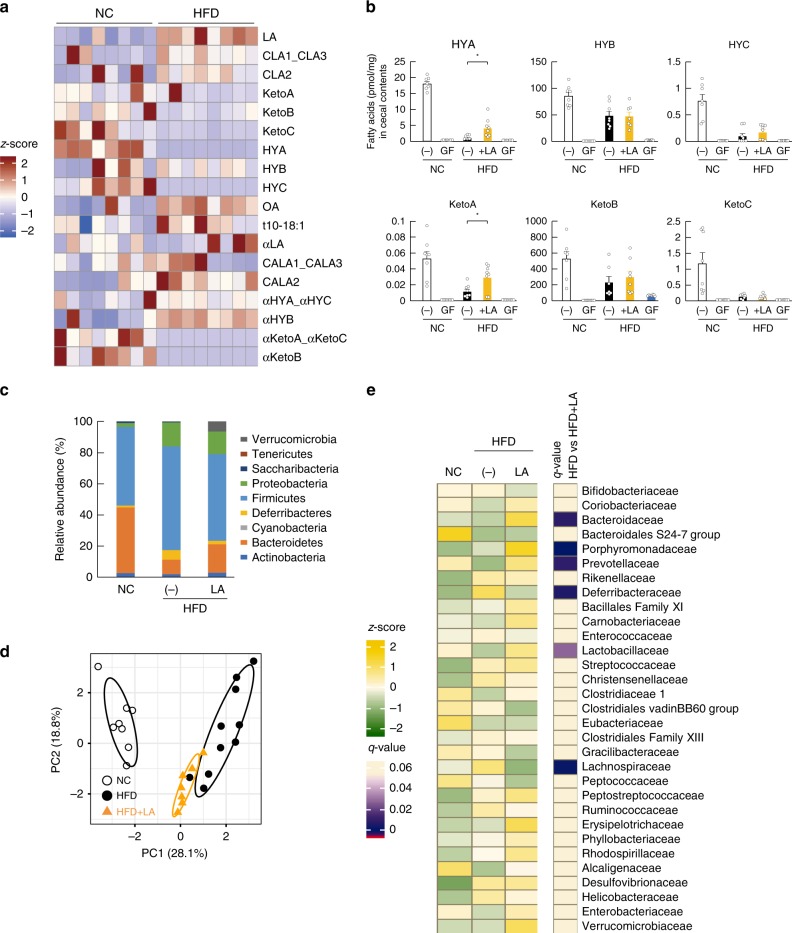
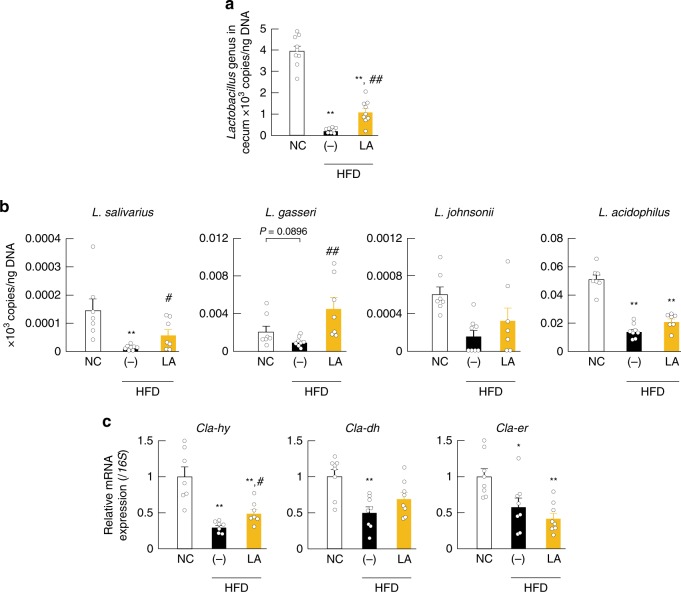
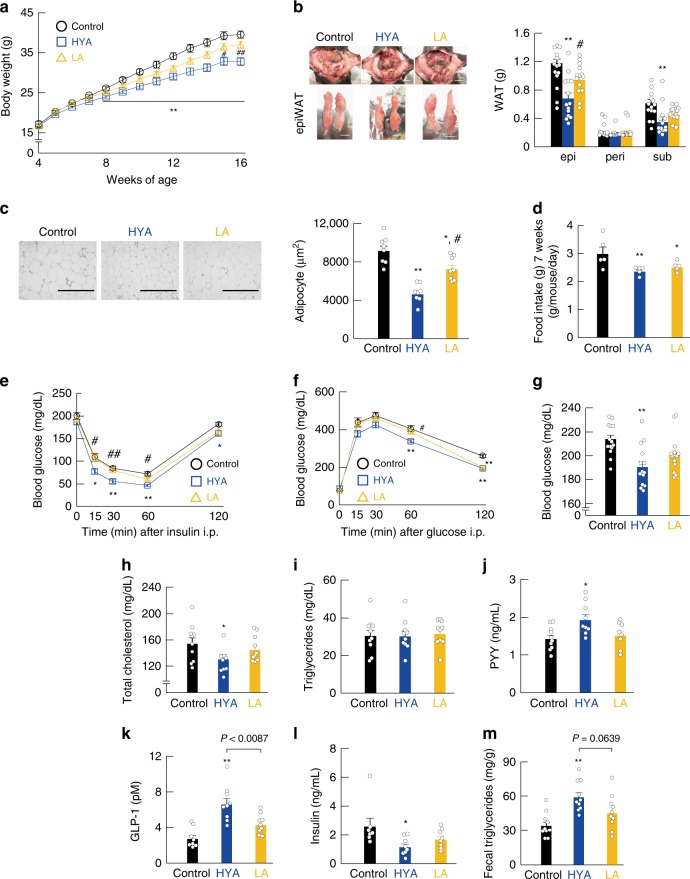
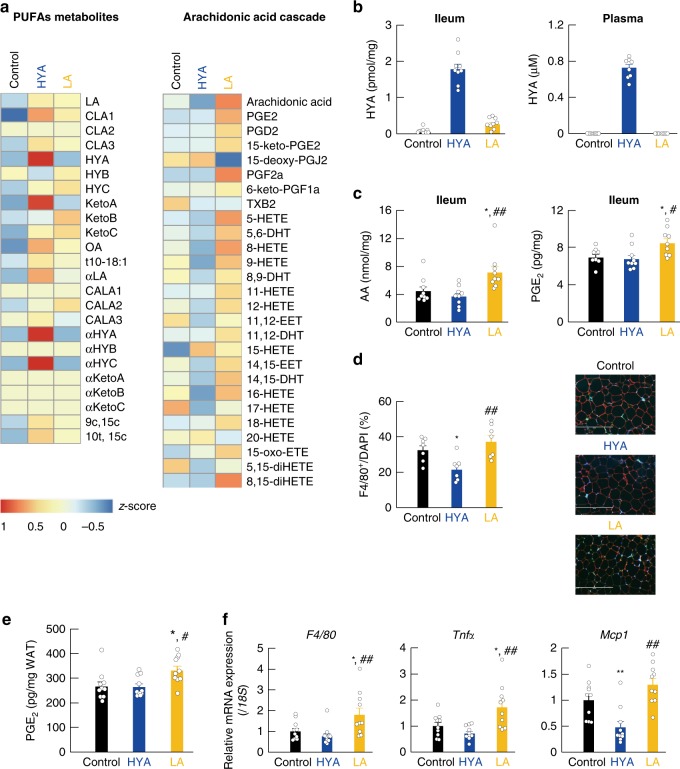
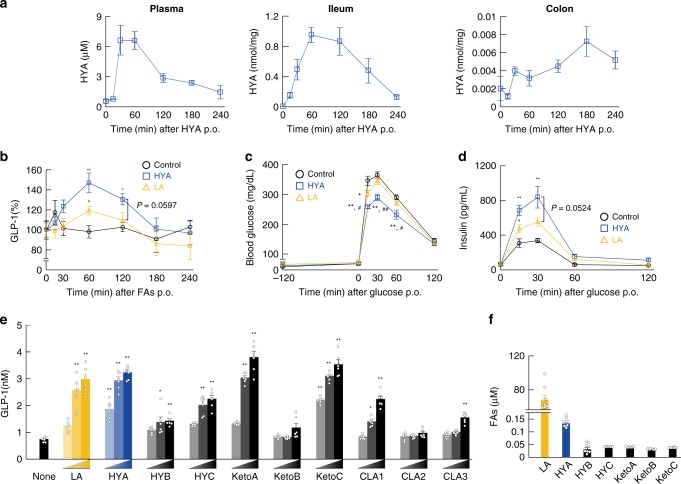
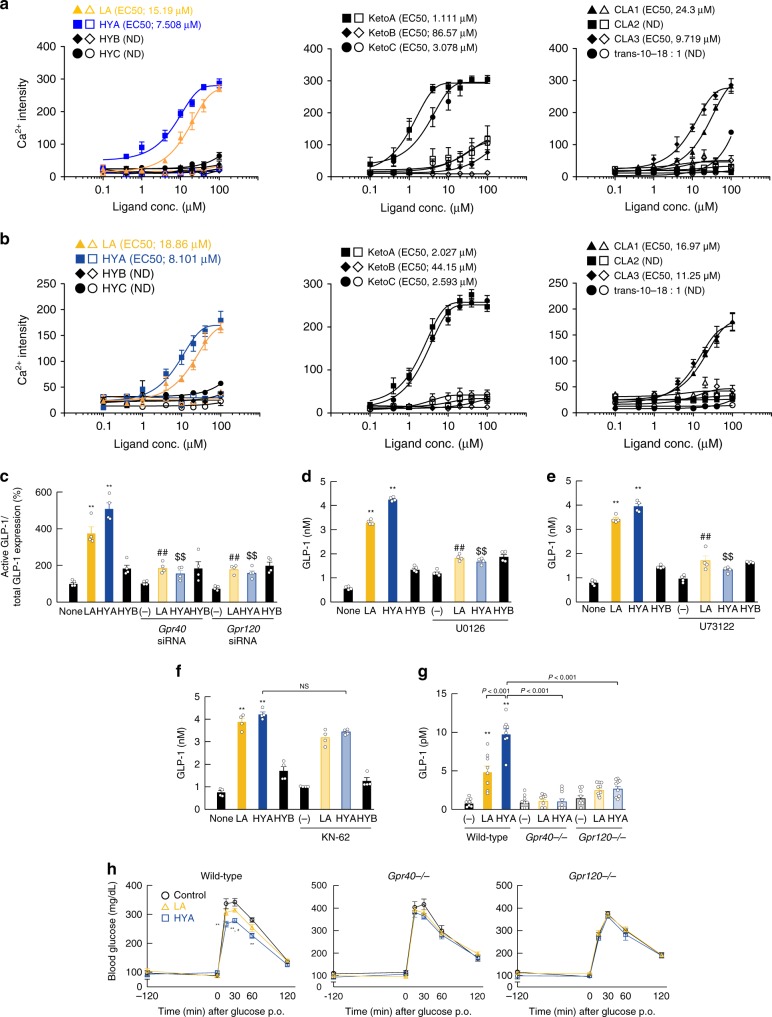
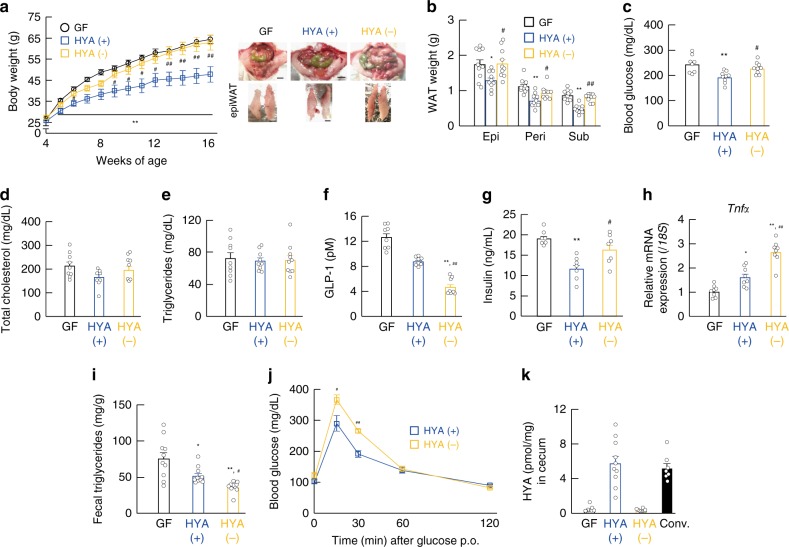
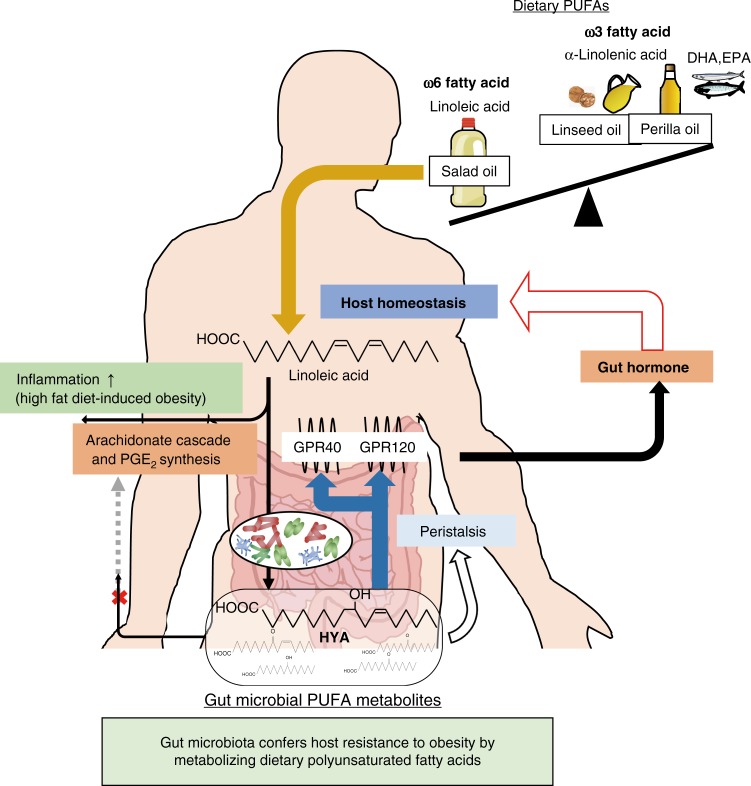
Gut microbiota mediates the effects of diet, thereby modifying host metabolism and the incidence of metabolic disorders. Increased consumption of omega-6 polyunsaturated fatty acid (PUFA) that is abundant in Western diet contributes to obesity and related diseases. Although gut-microbiota-related metabolic pathways of dietary PUFAs were recently elucidated, the effects on host physiological function remain unclear. Here, we demonstrate that gut microbiota confers host resistance to high-fat diet (HFD)-induced obesity by modulating dietary PUFAs metabolism. Supplementation of 10-hydroxy- cis -12-octadecenoic acid (HYA), an initial linoleic acid-related gut-microbial metabolite, attenuates HFD-induced obesity in mice without eliciting arachidonic acid-mediated adipose inflammation and by improving metabolic condition via free fatty acid receptors. Moreover, Lactobacillus -colonized mice show similar effects with elevated HYA levels. Our findings illustrate the interplay between gut microbiota and host energy metabolism via the metabolites of dietary omega-6-FAs thereby shedding light on the prevention and treatment of metabolic disorders by targeting gut microbial metabolites.
Overview
The claims and statistics of this paper haven’t been checked yet.
Run the check — free, no account needed. It reads the open-access text and checks the sources it cites.
Integrity signals
Registry
Cites
Statistics
Figures
Verification
Claims the paper makes
The claims and statistics of this paper haven’t been checked yet.
Run the check — free, no account needed. It reads the open-access text and checks the sources it cites.
Claims other papers make about this one
Each is checked against this paper’s own text: does it say what the citing paper says it does?
In the citing paper
“The secretion of GLP-1 is modulated by the gut microbiota”
From Microbiota–gut–brain axis and its therapeutic applications in neurodegenerative diseases (2024) · cites this paper as [437]
Self-check
Percentages, sums and reported differences re-computed from the paper’s own numbers.
The self-check needs the paper’s full text.
Citations
Cites
An obesity-associated gut microbiome with increased capacity for energy harvest
Turnbaugh, P. J., Ley, R. E., Mahowald, M. A., Magrini, V., Mardis, E. R., & Gordon, J. I. (2006) · Nature · doi:10.1038/nature05414 · Cited by 12,444
Human gut microbes associated with obesity
Ley, R. E., Turnbaugh, P. J., Klein, S., & Gordon, J. I. (2006) · Nature · doi:10.1038/4441022a · Cited by 8,785
A core gut microbiome in obese and lean twins
Turnbaugh, P. J., Hamady, M., Yatsunenko, T., Cantarel, B. L., Duncan, A., Ley, R. E., Sogin, M. L., Jones, W. J., Roe, B. A., Affourtit, J. P., et al. (2009) · Nature · doi:10.1038/nature07540 · Cited by 7,823
Mechanisms linking obesity to insulin resistance and type 2 diabetes
Kahn, S. E., Hull, R. L., & Utzschneider, K. M. (2006) · Nature · doi:10.1038/nature05482 · Cited by 5,448
Turnbaugh, P. J., Bäckhed, F., Fulton, L., & Gordon, J. I. (2008) · Cell Host & Microbe · doi:10.1016/j.chom.2008.02.015 · Cited by 2,915
Oh, D. Y., Talukdar, S., Bae, E. J., Imamura, T., Morinaga, H., Fan, W., Li, P., Lu, W. J., Watkins, S. M., & Olefsky, J. M. (2010) · Cell · doi:10.1016/j.cell.2010.07.041 · Cited by 2,428
An Increase in the Omega-6/Omega-3 Fatty Acid Ratio Increases the Risk for Obesity
Simopoulos, A. P. (2016) · Nutrients · doi:10.3390/nu8030128 · Cited by 1,673
Free fatty acids regulate gut incretin glucagon-like peptide-1 secretion through GPR120
Hirasawa, A., Tsumaya, K., Awaji, T., Katsuma, S., Adachi, T., Yamada, M., Sugimoto, Y., Miyazaki, S., & Tsujimoto, G. (2004) · Nature Medicine · doi:10.1038/nm1168 · Cited by 1,580
Self-citationFree fatty acids regulate insulin secretion from pancreatic β cells through GPR40
Itoh, Y., Kawamata, Y., Harada, M., Kobayashi, M., Fujii, R., Fukusumi, S., Ogi, K., Hosoya, M., Tanaka, Y., Uejima, H., et al. (2003) · Nature · doi:10.1038/nature01478 · Cited by 1,538
Kimura, I., Ozawa, K., Inoue, D., Imamura, T., Kimura, K., Maeda, T., Terasawa, K., Kashihara, D., Hirano, K., Tani, T., et al. (2013) · Nature Communications · doi:10.1038/ncomms2852 · Cited by 1,512
Self-citation
Cited by
Sorted by citations
Items 201–300 of 392
Guzzardi, M. A., Rosa, F. L., Campani, D., Insilla, A. C., Sena, V. D., Panetta, D., Brunetto, M. R., Bonino, F., Collado, M. C., & Iozzo, P. (2021) · Nutrients · doi:10.3390/nu13103438 · Cited by 13
Qiu, J., Hu, P., Li, F., Huang, Y., Yang, Y., Sun, F., Wu, P., Lai, Y., Wang, Y., He, X., et al. (2025) · BMC Medicine · doi:10.1186/s12916-025-04061-7 · Cited by 12
“Previous studies showed that LA supplementation increased the abundance of bacterial species capable of metabolizing LA, and thus led to an increase of several metabolites improving metabolic conditions [50].”
Host and microbiome lipid metabolism in colorectal cancer development and therapy
Evora, G. M., Brauer, M., & Letellier, E. (2025) · Trends in cancer · doi:10.1016/j.trecan.2025.08.005 · Cited by 17
The gut-derived metabolites as mediators of the effect of healthy nutrition on the brain
Leyrolle, Q., Prado-Perez, L., & Layé, S. (2023) · Frontiers in Nutrition · doi:10.3389/fnut.2023.1155533 · Cited by 13
“Finally, the 10-hydroxy-cis-12octadecenoic acid (HYA) which is produced by some Lactobacillus has been shown to protect from obesity related alterations like insulinresistance and adipose tissue inflammation (124).”
BackgroundLiu, D., Han, X., Zou, W., Yang, Z., Peng, J., Li, Y., Liu, Y., Jia, M., Liu, W., Li, H., et al. (2024) · Reproductive Sciences · doi:10.1007/s43032-024-01748-9 · Cited by 15
“Miyamoto et al. reported that obesity can lead to changes in the type and abundance of components of the intestinal microbiota [10], and an intestinal microbiota imbalance can also lead to obesity, lipid metabolism disorders, and related diseases [11, 12].”
Miyamoto, J., Ando, Y., Yamano, M., Nishida, A., Murakami, K., & Kimura, I. (2025) · Frontiers in Nutrition · doi:10.3389/fnut.2025.1542196 · Cited by 13
“Hematoxylin and eosin staining was performed using standard techniques, with minor modifications (42, 43).”
Self-citationFecal Microbiota Composition as a Metagenomic Biomarker of Dietary Intake
Melo, N. C. D. O., Cuevas‐Sierra, A., Cruz, E. F., Víctor de la, O., & Martínez, J. A. (2023) · International Journal of Molecular Sciences · doi:10.3390/ijms24054918 · Cited by 13
“Western diet Plant-based diet Low carb diet Polyphenols Heme iron [62,67,76,92,133,143]”
BackgroundMethodBlood indices of omega-3 and omega-6 polyunsaturated fatty acids are altered in hyperglycemia
Alfhili, M. A., Alsughayyir, J., Basudan, A., Alfaifi, M. A., Awan, Z. A., Algethami, M. R., & Al‐Sheikh, Y. A. (2023) · Saudi Journal of Biological Sciences · doi:10.1016/j.sjbs.2023.103577 · Cited by 13
Sato, S., Chinda, D., Iino, C., Sawada, K., Mikami, T., Nakaji, S., Sakuraba, H., & Fukuda, S. (2024) · Nutrients · doi:10.3390/nu16040524 · Cited by 11
“Fish containing polyunsaturated fatty acids increase Bifidobacterium , Lactobacillus , and Akkermansia in the gut and prevent obesity [22,23].”
BackgroundSato, H., Taketomi, Y., Murase, R., Park, J., Hosomi, K., Jujo, T., Mizuguchi, K., Arita, M., Kunisawa, J., & Murakami, M. (2024) · Cell Reports · doi:10.1016/j.celrep.2024.114752 · Cited by 12
Self-citationGuo, Z., Yang, S., Qi, L., Xinming, M., Wang, Y., Li, B., & He, J. (2025) · Food & Function · doi:10.1039/d4fo05280c · Cited by 12
Lv, J., Zhao, H., Yu, Y., Wang, J.-H., Zhang, X., Guo, Z.-Q., Jiang, W., Wang, K., & Guo, L. (2025) · World Journal of Gastroenterology · doi:10.3748/wjg.v31.i30.108680 · Cited by 19
“Similarly, Dendrobium officinale elevate Akkermansia and Bifidobacterium , increase acetate/taurine production, lowering LDL-C and VLDL-C levels in HFD-fed mice, effects partially transmissible via FMT[187].”
InfluentialLipids from gut microbiota: pursuing a personalized treatment
Carneiro, P. V., Montenegro, N. D. A., Lana, A. J., Amato, A. A., & Santos, G. M. (2022) · Trends in Molecular Medicine · doi:10.1016/j.molmed.2022.06.001 · Cited by 12
Dietary Patterns, Gut Microbiota Remodeling, and Cardiometabolic Disease
Guiducci, L., Nicolini, G., & Forini, F. (2023) · Metabolites · doi:10.3390/metabo13060760 · Cited by 15
“It is noteworthy that conversion of excessive dietary LA to HYA by the GM suppresses inflammatory responses and exerts beneficial metabolic effects via regulating intestinal environment rather than through a systemic action [159].”
BackgroundPotential associations between organic dairy products, gut microbiome, and gut health: A review
Wittwer, A. E., Lee, S. G., & Ranadheera, C. S. (2023) · Food Research International · doi:10.1016/j.foodres.2023.113195 · Cited by 12
Metabolic effects of milk fatty acids: A literature review
Muñoz‐Alvarez, K. Y., Gutiérrez‐Aguilar, R., & Frigolet, M. E. (2024) · Nutrition Bulletin · doi:10.1111/nbu.12657 · Cited by 11
Fu, Q.-H., Ma, X., Li, S., Shi, M.-N., Song, T., & Cui, J. (2024) · Animal Models and Experimental Medicine · doi:10.1002/ame2.12405 · Cited by 10
Zhang, S., Lü, Y., Li, H., Han, L., Jing, W., Wu, X., Ullah, S., Liu, R., Wu, Y., & Xu, J. (2021) · Journal of Proteome Research · doi:10.1021/acs.jproteome.1c00252 · Cited by 12
Cao, B., Lu, C., Yan, L., McIntyre, R. S., Teopiz, K. M., & Zhan, L. (2025) · BMC Psychiatry · doi:10.1186/s12888-025-07388-w · Cited by 10
“Our findings indicate that BMI in patients with MDD exhibited positive pairwise correlations with Fusobacterium and ALT. Consistent with prior reports, elevated Fusobacterium has been documented in patients with liver and bile diseases as well as in obese populations [54–56].”
Early‐Life Sugar Consumption Affects the Microbiome in Juvenile Mice
Alasmar, R. M., Kavitha, V., Shanmugakonar, M., & Al‐Naemi, H. A. (2022) · Molecular Nutrition & Food Research · doi:10.1002/mnfr.202200322 · Cited by 10
Miyamoto, J., Ando, Y., Nishida, A., Yamano, M., Suzuki, S., Takada, H., & Kimura, I. (2024) · Molecular Nutrition & Food Research · doi:10.1002/mnfr.202300758 · Cited by 10
Self-citationHao, F., Guo, M., Zhao, Y., Zhu, X., Hu, X., Zhu, W., Mei, C., Zhou, N., Qin, K., Zhu, H., et al. (2025) · Journal of Inflammation Research · doi:10.2147/jir.s517176 · Cited by 12
“31,32 Notably, a substantial proportion of flavonoids in QEP are predominantly derived from P. corylifolia .”
Recent trends in the field of lipid engineering
Kikukawa, H., Watanabe, K., Kishino, S., Takeuchi, M., Ando, A., Izumi, Y., & Sakuradani, E. (2022) · Journal of Bioscience and Bioengineering · doi:10.1016/j.jbiosc.2022.02.001 · Cited by 10
Self-citationJiang, J., Chen, L., Sun, R., Yu, T., Jiang, S., & Chen, H. (2023) · Therapeutic Advances in Chronic Disease · doi:10.1177/20406223231156826 · Cited by 10
Zhao, Y., Zheng, Y., Xie, K., Hou, Y., Liu, Q., Jiang, Y., Zhang, Y., & Man, C. (2023) · Nutrients · doi:10.3390/nu15234971 · Cited by 11
“It was found that the gut microbiota’s release of the polyunsaturated fatty acid metabolite 10-hydroxy-cis-12-octadecenoic acid (HYA) could improve host resistance to high-fat diet-induced obesity [14].”
BackgroundHagiwara, S., Nagata, K., Kasakura, K., Sakata, F., Kishino, S., Ogawa, J., Yashiro, T., & Nishiyama, C. (2020) · Biochemical and Biophysical Research Communications · doi:10.1016/j.bbrc.2020.07.006 · Cited by 10
Self-citationDworzański, W., Cholewińska, E., Fotschki, B., Juśkiewicz, J., & Ognik, K. (2022) · Scientific Reports · doi:10.1038/s41598-022-13328-5 · Cited by 10
Dai, W., Ye, J., Liu, S., Chang, G., Xu, H., Lin, Z., & Xue, Q. (2022) · Frontiers in Microbiology · doi:10.3389/fmicb.2022.933941 · Cited by 10
“The host-associated microbiota, especially gut microbiota, is often considered as an “extra organ,” due to its pivotal roles in intestinal development and physiology, as well as in host growth and health (Xiong et al., 2018; Miyamoto et al., 2019).”
BackgroundLiao, J., Zhang, Y., Ma, C., Wu, G., & Zhang, W. (2023) · Journal of Ethnopharmacology · doi:10.1016/j.jep.2023.116529 · Cited by 9
Wang, Z., Cui, S., Zhang, T., Wang, W., Li, J., Chen, Y. Q., & Zhu, S. (2023) · mSystems · doi:10.1128/msystems.00573-23 · Cited by 10
Gut microbial metabolites reveal diet-dependent metabolic changes induced by nicotine administration
Ohue‐Kitano, R., Banno, Y., Masujima, Y., & Kimura, I. (2024) · Scientific Reports · doi:10.1038/s41598-024-51528-3 · Cited by 9
Self-citationA review of cell-type specific circuit mechanisms underlying epilepsy
Zhao, P., Ding, X., Li, L., & Jiang, G. (2024) · Acta Epileptologica · doi:10.1186/s42494-024-00159-2 · Cited by 13
Yang, S., Chen, L., Luo, D., Wang, Y.-Y., & Liang, F.-X. (2024) · Journal of Chinese Integrative Medicine · doi:10.1016/j.joim.2024.08.004 · Cited by 9
Heng, Y. C., Wong, G. W. J., & Kittelmann, S. (2024) · Biotechnology for Biofuels and Bioproducts · doi:10.1186/s13068-024-02578-2 · Cited by 9
Park, Y., Woo, J.-M., Shin, J., Chung, M., Seo, E.-J., Lee, S., & Park, J. (2024) · Food Chemistry · doi:10.1016/j.foodchem.2024.142010 · Cited by 9
Emerging mechanisms of organ crosstalk: The role of oxylipins
Fisk, H. L., & Shaikh, S. R. (2024) · Nutrition Bulletin · doi:10.1111/nbu.12726 · Cited by 9
“LA-fed mice (1%/day for 12 weeks) exhibited significant production of the LA-derived microbial metabolite 10- hydroxy- cis- 12-octadecenoic acid (HYA) by Lactobacillus salivarius and Lactobacillus gasseri in 22 Lactobacillus strains (Miyamoto et al., 2019).”
InfluentialHu, L., Zhao, Y., You, T., & Xu, H. (2023) · Journal of Applied Microbiology · doi:10.1093/jambio/lxad061 · Cited by 9
Bisphenol S exposure induces intestinal inflammation via altering gut microbiome
Li, S., Ma, X., Zhang, X., Bai, S., Li, X., Huang, Y., Yu, J., Fan, Y., Lu, C., Du, G., et al. (2024) · Food and Chemical Toxicology · doi:10.1016/j.fct.2024.114830 · Cited by 12
Self-citationMethyl Diet Enhanced Sepsis-Induced Mortality Through Altering Gut Microbiota
Yu, C. J., Zhu, X., Zheng, C., Luo, Y., Wang, F., Gao, Y., Wu, H., Sun, X., & Kong, X. (2021) · Journal of Inflammation Research · doi:10.2147/jir.s305202 · Cited by 11
Stomach secretes estrogen in response to the blood triglyceride levels
Ito, T., Yamamoto, Y., Yamagishi, N., & Kanai, Y. (2021) · Communications Biology · doi:10.1038/s42003-021-02901-9 · Cited by 9
Research advances of in vivo biological fate of food bioactives delivered by colloidal systems
Zhao, C., Liu, D., Feng, L., Cui, J., Du, H., Wang, Y., Xiao, H., & Zheng, J. (2022) · Critical Reviews in Food Science and Nutrition · doi:10.1080/10408398.2022.2154741 · Cited by 9
“More interestingly, some food bioactives exert health-promoting effects only when they are transformed into certain metabolites by the gut microbiota (Koppel, Rekdal, and Balskus 2017; Miyamoto et al. 2019).”
BackgroundRienzi, S. C. D., Johnson, E. L., Waters, J. L., Kennedy, E. A., Jacobson, J., Lawrence, P., Wang, D. H., Worgall, T. S., Brenna, J. T., & Ley, R. E. (2021) · The Journal of Nutritional Biochemistry · doi:10.1016/j.jnutbio.2021.108808 · Cited by 9
Park, J., Cho, S. Y., & Lee, S. (2026) · Metabolites · doi:10.3390/metabo16010045 · Cited by 8
“Functionally, 10-HOE activates both FFAR1 [12,33,34] and FFAR4 (Figure 2 and Table 1) [13,35], in addition to PPAR γ , implicating it as a multifunctional signaling lipid at the host–microbe interface.”
InfluentialChen, H., Yang, G., Chen, L., Zhao, Y., Yao, P., Li, Y., Tang, Y., & Li, D. (2024) · Nutrition Metabolism and Cardiovascular Diseases · doi:10.1016/j.numecd.2024.05.026 · Cited by 8
Metabolic impact of dietary lipids: towards a role of unabsorbed lipid residues?
Michalski, M., Barz, M. L., & Vors, C. (2021) · OCL · doi:10.1051/ocl/2020058 · Cited by 9
Sofyana, N. T., Zheng, J., Manabe, Y., Yamamoto, Y., Kishino, S., Ogawa, J., & Sugawara, T. (2020) · Lipids · doi:10.1002/lipd.12219 · Cited by 8
Self-citationCORRELATION BETWEEN INTESTINAL MICROBIOTA AND GROWTH OF WHITE SHRIMP (LITOPENAEUS VANNAMEI)
Wu, J.-Y., Yan, M., SANG, Y., Li, F., LUO, K., & Hu, L. (2021) · Applied Ecology and Environmental Research · doi:10.15666/aeer/1906_49935005 · Cited by 7
“…host, such as growth, metabolism, immunity, and health through participating in the metabolism processes of host (Nieuwdorp et al., 2014; Magnúsdóttir et al., 2015; Yan et al., 2016; Wang et al., 2016; Oliphant and Allen Vercoe, 2019; Miyamoto et al., 2019; Butt and Volkoff, 2019; Ni et al., 2021).”
BackgroundWang, S., Fu, Z., Chen, W., Wu, S., Ke, S., Tu, J., & Wei, B. (2024) · Chemistry & Biodiversity · doi:10.1002/cbdv.202401088 · Cited by 8
Roussel, C., Lessard‐Lord, J., Nallabelli, N., Müller, C. E., Flamand, N., Silvestri, C., & Marzo, V. D. (2025) · The FASEB Journal · doi:10.1096/fj.202500752rr · Cited by 7
Berkowitz, L., Araneda, P., Cofré, G., Sara, D., Olsen, M., Urzúa, I., Pérez, D. D., & Rigotti, A. (2026) · Frontiers in Nutrition · doi:10.3389/fnut.2025.1728865 · Cited by 8
Sun, Y., Sun, B., Wang, Z., Lv, Y., & Ma, Q. (2023) · International Journal of Molecular Sciences · doi:10.3390/ijms24065401 · Cited by 7
“A primary cause of obesity is improper food consumption, specifically of diets with high fat (HFD) [1].”
BackgroundLiu, C., Xu, Q., Dong, S., Ding, H., Li, B., Zhang, D., Liang, Y., Li, L., Liu, Q., Cheng, Y., et al. (2024) · Frontiers in Endocrinology · doi:10.3389/fendo.2024.1338147 · Cited by 7
Hong, Y., Song, G., Feng, X., Niu, J., Wang, L., Yang, C., Luo, X., Zhou, S., & Ma, W. (2024) · Foods · doi:10.3390/foods13071124 · Cited by 7
“The overconsumption of fatty foods is often linked to changes in the gut micro-biome [5], which has a major impact on how the body absorbs energy [6].”
BackgroundFluorescent Ligand-Based Discovery of Small-Molecule Sulfonamide Agonists for GPR120
Ma, S., Li, Z., Yang, Y., Zhang, L., Li, M., & Du, L. (2022) · Frontiers in Chemistry · doi:10.3389/fchem.2022.816014 · Cited by 7
“(Leung and Zhang, 2014; Hilgendorf et al., 2019; Miyamoto et al., 2019) Therefore, GPR120 can induce the secretion of GLP-1 under the induction of ω-3 fatty acids, which can inhibit eating and promote insulin synthesis.”
BackgroundFujimoto, D., Shinohara, M., Kawamori, H., Toba, T., Kakizaki, S., Nakamura, K., Sasaki, S., Hamana, T., Fujii, H., Osumi, Y., et al. (2023) · Atherosclerosis · doi:10.1016/j.atherosclerosis.2023.05.001 · Cited by 6
Self-citationLakshmanan, A. P., Deola, S., & Terranegra, A. (2023) · Transplantation · doi:10.1097/tp.0000000000004629 · Cited by 6
Larsen, M. C., Rondelli, C. M., Almeldin, A., Song, Y., N′jai, A. U., Alexander, D. L., Forsberg, E. C., Sheibani, N., & Jefcoate, C. R. E. (2023) · International Journal of Molecular Sciences · doi:10.3390/ijms242316884 · Cited by 5
“A positive interplay be-tween Cyp1b1 -/- and Cyp1a1 could derive not only from differences in their respective reduction cycles [27,29], but also from the distinctive metabolism of estradiol (E2) [43,78] and polyunsaturated fatty acids [26,79].”
BackgroundDeng, Y., Zhang, B., Wang, J., Wang, Y., Li, D., Feng, L., Tian, Y., Ma, X., Liang, G., & Wang, C. (2024) · Journal of Agricultural and Food Chemistry · doi:10.1021/acs.jafc.4c05679 · Cited by 6
Gao, G., Jiao, Y., Kwok, L., & Zhong, Z. (2024) · Animals · doi:10.3390/ani14223174 · Cited by 6
“Emerging research suggests that the gut microbiota can actively modulate the host’s energy metabolism and fat deposition patterns, thereby influencing overall body weight and adiposity [19,20].”
Ahmad, A., Riaz, S., & Tanveer, M. U. (2022) · IntechOpen eBooks · doi:10.5772/intechopen.105397 · Cited by 7
Nandi, S. K., Basu, S., Bhattacharjya, A., Ghosh, R. D., Bose, C. K., Mukhopadhyay, S., & Bhattacharya, R. K. (2022) · Nutrition · doi:10.1016/j.nut.2022.111787 · Cited by 6
Heinzer, K., Lang, S., Farowski, F., Wisplinghoff, H., Vehreschild, M. J. G. T., Martin, A., Nowag, A., Kretzschmar, A., Scholz, C. J., Roderburg, C., et al. (2022) · Nutrition Research · doi:10.1016/j.nutres.2022.07.006 · Cited by 6
Fotschki, B., Ognik, K., Cholewińska, E., Grzelak-Błaszczyk, K., Myszczyński, K., Krauze, M., & Juśkiewicz, J. (2023) · Nutrients · doi:10.3390/nu15143118 · Cited by 6
“It is well known that the intestinal microbiota shows an imbalanced status in patients with obesity, nonalcoholic fatty liver disease, and type 2 diabetes [13,14].”
BackgroundPolyunsaturated Fatty Acids and Microbiota Relationship: Implications in Cancer Onset and Treatment
Costantini, L., & Merendino, N. (2020) · Journal of Clinical Medicine · doi:10.3390/jcm9113490 · Cited by 6
“Subsequently, in the paper of Miyamoto and co-workers [5], it was proven that in mice fed a high-fat diet, the Lactobacillus-colonized gut microbiota converted the n-6 PUFA linoleic acid in the metabolite 10-hydroxy-cis-12-octadecenoic acid, reducing linoleic acid conversion in the inflammatory eicosanoids of the arac…”
BackgroundNishida, A., Ohue‐Kitano, R., Masujima, Y., Nonaka, H., Igarashi, M., Ikeda, T., & Kimura, I. (2024) · FASEB BioAdvances · doi:10.1096/fba.2024-00075 · Cited by 5
Self-citationWang, P., Chen, M., Liu, C., & Zheng, L. (2025) · Trends in Food Science & Technology · doi:10.1016/j.tifs.2025.105427 · Cited by 6
Zhang, Y., Shao, C., Yu, J., Yang, Y., & Wang, S. (2025) · Carbohydrate Polymers · doi:10.1016/j.carbpol.2025.124743 · Cited by 5
Gut Microbiota Regulate Saturated Free Fatty Acid Metabolism in Heart Failure
Tuerhongjiang, G., Guo, M., Qiao, X., Liu, J., Wen, X., Wei, Y., Liu, P., Lou, B., Wang, C., Sun, L., et al. (2024) · Small Science · doi:10.1002/smsc.202300337 · Cited by 5
Wang, Y., He, X., Qian, Z., Li, S., Jing, M., Li, X., Shen, W., Xue, S., Li, H., & Chen, L. (2025) · Integrative Zoology · doi:10.1111/1749-4877.12942 · Cited by 5
Self-citationda Silva, V. G., Roy, N. C., Smith, N. W., Wall, C. R., Mullaney, J. A., & McNabb, W. C. (2025) · Frontiers in Nutrition · doi:10.3389/fnut.2025.1591341 · Cited by 7
The role of Lactobacillus in diseases and its intervention by Chinese herbs
Lai, H., Yan, D., Zhang, J., Li, B., & Li, F. R. (2025) · Pharmacological Research - Modern Chinese Medicine · doi:10.1016/j.prmcm.2025.100655 · Cited by 5
The role of probiotics in adolescents’ obesity
Chen, X., Li, Y., & Jia, Y. (2025) · Frontiers in Cellular and Infection Microbiology · doi:10.3389/fcimb.2025.1546627 · Cited by 7
Gut microbiota and glycochenodeoxycholic role in liver metastasis of breast cancer
Yan, L., Tan, Q., Zhu, J. X., He, Y., Tao, P., & He, J. (2025) · Biochemical Pharmacology · doi:10.1016/j.bcp.2025.117128 · Cited by 5
Morita, Y., Jounai, K., Tomita, Y., & Maruyama, M. (2021) · Experimental Gerontology · doi:10.1016/j.exger.2021.111477 · Cited by 5
Interaction Between Natural Products and Gut Microbiota
Ağagündüz, D., Cemali, Ö., & Çelik, E. (2022) · Current Pharmacology Reports · doi:10.1007/s40495-022-00309-5 · Cited by 6
Profiling the response of individual gut microbes to free fatty acids (FFAs) found in human milk
Waller, M. E., Gutierrez, A., Ticer, T. D., Glover, J. S., Baatz, J. E., Wagner, C. L., Engevik, M. A., & Chetta, K. E. (2025) · Journal of Functional Foods · doi:10.1016/j.jff.2025.106664 · Cited by 5
“Several dietary fatty acids have been found to affect the composition of the gut microbiota in both adult humans and mice (Miyamoto et al., 2019; Mujico et al., 2013; Patterson et al., 2014; Schoeler et al., 2023; Xu et al., 2022).”
Golonka, R. M., Yeoh, B. S., Li, Y., Saha, P., Abokor, A. A., Cheng, X., Xiao, X., Chandrashekar, D. S., Varambally, S., Gonzalez, D. J., et al. (2020) · American Journal of Physiology-Gastrointestinal and Liver Physiology · doi:10.1152/ajpgi.00349.2019 · Cited by 5
Zhu, Y., Li, H., Ma, M., Li, D., Zhang, O., Cai, S., Wang, Y., Chen, D., Jin, S., Ding, C., et al. (2022) · Acta Biochimica et Biophysica Sinica · doi:10.3724/abbs.2022154 · Cited by 5
Mansouri, R., Mousavi, S. N., Shokri, R., Afshar, D., & Shapouri, R. (2025) · Journal of Functional Foods · doi:10.1016/j.jff.2025.107055 · Cited by 4
Wen, J., Liang, H., Zhao, M., Xuan, B., Meng, X., Liu, Y., Wang, L., He, L., Zhou, T., Tao, Y., et al. (2025) · Frontiers in Immunology · doi:10.3389/fimmu.2025.1703964 · Cited by 4
Song, X.-F., Liu, Y., Fei, Q., Xu, C., & Ji, F. (2026) · World Journal of Gastroenterology · doi:10.3748/wjg.v32.i1.114479 · Cited by 4
“In addition, gut microbiota-derived conjugated linoleic acid hydratase, a key linoleic acid metabolic enzyme, is involved in linoleic acid metabolism to form 10-hydroxy-cis-12-octadecenoic acid[98].”
Integrative multi-omics analysis reveals oral microbiome-metabolome signatures of obesity
Shibl, A. A., Denekew, T. W., Ahmad, A. R., Abdelrazig, S., Leonor, C., Utenova, L., Zhang, G., AbdelBaqi, M., Malla, Y., Arshad, M., et al. (2026) · Cell Reports · doi:10.1016/j.celrep.2025.116819 · Cited by 7
Promises and challenges of postbiotics: From bioactive mechanisms to functional food applications
Bodjrenou, D. M., Dhital, S., Li, W., Zeng, H., Huang, Q., Wang, Q., Mackay, C. R., & Zhang, B. (2026) · Food Wellness · doi:10.1016/j.foodw.2026.100041 · Cited by 4
Gut microbe–derived N -acyl serinol lipids shape host postprandial metabolic homeostasis
Dutta, S., Mahen, K. K., Massey, W. J., Varadharajan, V., Burrows, A. C., Horak, A. J., Mrdjen, M., Mouannes, N., Orabi, D., Osborn, L. J., et al. (2026) · Proceedings of the National Academy of Sciences · doi:10.1073/pnas.2517314123 · Cited by 4
“…of diet–microbe–host interactions in lipid signaling is still in its infancy, it is likely that both bacterially and human derived lipids including acyl - amides, eicosanoids (63, 64), sphingolipids (26, 65), and likely many others could serve as key signaling intermediates in endocrine circuits.”
Association between egg consumption and risk of obesity: A comprehensive review
Chen, J., Pei, B., & Shi, S. (2024) · Poultry Science · doi:10.1016/j.psj.2024.104660 · Cited by 4
“…of adipocyto-kines or interfering with their corresponding mediated signaling pathways to a certain extent, inhibiting individual appetite and affecting various metabolic rates such as lipid metabolism, energy metabolism, and muscle anabolic metabolism (Silva et al., 2017; Miyamoto et al., 2019).”
Matsushita, R., Sato, K., Uchida, K., Imi, Y., Amano, R., Kasahara, N., Kitao, Y., Oishi, Y., Kawaai, H., Tomimoto, C., et al. (2025) · Nutrients · doi:10.3390/nu17081393 · Cited by 4
Self-citationWang, X., Chen, H., Yang, B. K., Zhao, J., Zhang, H., & Chen, W. (2023) · International Journal of Biological Macromolecules · doi:10.1016/j.ijbiomac.2023.127522 · Cited by 4
ZHANG, S., Shuai, Y. A. N. G., Zhuang, Y., Dan, Y. A. N. G., Gu, X., Wang, Y., Zhenzhen, W. A. N. G., Chen, R., & Fuling, Y. A. N. (2024) · Bioscience of Microbiota Food and Health · doi:10.12938/bmfh.2024-008 · Cited by 6
“They also produce compounds that have anti-inflammatory and antioxidant properties, which help to control the body’s energy metabolic processes and maintain a balanced metabolism and energy level [16–18].”
Kim, D.-H., Kim, S., Kim, S.-A., Kwak, M. J., Han, N. S., & Lee, C. H. (2024) · International Journal of Molecular Sciences · doi:10.3390/ijms251810112 · Cited by 4
“This experiment involves culturing cells initially cultured in complex media after washing, then cultivating them in pure cultures with defined substrates [16,17].”
MethodYoneda, K., Sendo, S., Okano, T., Shimizu, H., Yamada, H., Nishimura, K., Ueda, Y., & Saegusa, J. (2025) · Frontiers in Immunology · doi:10.3389/fimmu.2024.1444892 · Cited by 5
YONESHIGE, R., Kusuda, E., & Takaaki, A. N. D. O. (2022) · Journal of Veterinary Medical Science · doi:10.1292/jvms.21-0354 · Cited by 4
“Consequently, the FA molecular species produced in the intestinal tract depends on the metabolism of unsaturated FAs of lactic acid bacteria in the intestinal tract and may influence host health [14].”
BackgroundWang, L., Zhang, Z., Luo, G., Wang, Y., Du, K., & Gao, X. (2023) · Frontiers in Molecular Biosciences · doi:10.3389/fmolb.2023.1147910 · Cited by 4
“Gut microbiota confers host resistance to obesity by metabolizing dietary polyunsaturated fatty acids (Yu et al., 2019b; Miyamoto et al., 2019).”
BackgroundEssential Fatty Acids along the Women’s Life Cycle and Promotion of a Well-balanced Metabolism
Marchiori, G. N., Eynard, A. R., & Soria, E. A. (2023) · Current Women s Health Reviews · doi:10.2174/0115734048247312230929092327 · Cited by 4
Obezite ve Mikrobiyota Etkileşimlerine Genel Bakış
Çatak, J., Yıldırım, E., & MEMİŞ, N. (2021) · European Journal of Science and Technology · doi:10.31590/ejosat.935513 · Cited by 6
Role of Gastrointestinal Tract (GUT) Health in Reducing Non-communicable Disease Risk
Tripti, T., & Ghosh, J. (2025) · Journal of Comprehensive Health · doi:10.25259/jch_29_2024 · Cited by 3
Gong, Q., Zhang, Y., Liu, J., Yuan, S., Hu, H., Cao, Y., Fu, S., & Guo, W. (2025) · iMetaOmics. · doi:10.1002/imo2.70026 · Cited by 3
“These results align with previous studies [6, 7].”
Kim, Y., Seo, E., Kang, A., Kang, M.-G., Jang, K. B., Oh, S., & Kim, Y. (2025) · Biomedicine & Pharmacotherapy · doi:10.1016/j.biopha.2025.118896 · Cited by 3
Duan, Y., Li, X., Chai, Y., Chen, H., & Hou, H. (2025) · Frontiers in Microbiology · doi:10.3389/fmicb.2025.1682370 · Cited by 3
“Dysregulation of these fatty acids is commonly observed in obesity with insulin-resistant status (Miyamoto et al., 2019).”
Self-citationJiang, X., Zhao, F., Li, R., Xiong, S., Xiao, P., Wang, P. J., Gao, H., Wu, Y., Xiao, K., Cai, X., et al. (2025) · Environment & Health · doi:10.1021/envhealth.5c00553 · Cited by 3
Ren, R., Cai, Q., Liu, L., Liu, J., & Chen, N. (2026) · Food Chemistry · doi:10.1016/j.foodchem.2026.149183 · Cited by 3
Metadata
- Authors
- Miyamoto, J., Igarashi, M., Watanabe, K., Karaki, S.-I., Mukouyama, H., Kishino, S., Li, X., Ichimura, A., Irie, J., Sugimoto, Y., Mizutani, T., Sugawara, T., Miki, T., Ogawa, J., Drucker, D. J., Arita, M., Itoh, H., & Kimura, I.
- Affiliations
- Japan Agency for Medical Research and Development (JP)
- Tokyo University of Agriculture and Technology (JP)
- Shizuoka University (JP)
- Kyoto University (JP)
- Keio University (JP)
- Chiba University (JP)
- Mount Sinai Hospital (CA)
- Corresponding author
- Kimura, Ikuo
- ORCID
- Venue
- Nature Communications
- Published
- 2019-09-05
- Volume
- 10
- Issue
- 1
- Pages
- 4007-4007
- ISSN
- 2041-1723 (ISSN-L)
- PMC
- PMC6728375
- OpenAlex
- W2971602650
- Cited by
- 392
- References
- 40
- Citations by year
- 2026: 46 · 2025: 60 · 2024: 65 · 2023: 62 · 2022: 64 · 2021: 51 · 2020: 40 · 2019: 1
- FWCI
- 12.91
- Type
- journal article
- Language
- en
- Open access
- gold
- doi.org
- Locations
- Nature Communications (publishedVersion, cc-by)
- Europe PMC (PubMed Central) (publishedVersion, cc-by)
- PubMed Central (publishedVersion, cc-by)
- PubMed (publishedVersion)
- RePEc: Research Papers in Economics (submittedVersion)
- DOAJ (DOAJ: Directory of Open Access Journals) (submittedVersion, cc-by-sa)
- DOAJ (DOAJ: Directory of Open Access Journals) (submittedVersion)
- Funders
- MEXT | Japan Society for the Promotion of Science (JP15H05344, JP16H01355)
- Japan Agency for Medical Research and Development (JP18gm1010007)
- Topics
- Life Sciences › Biochemistry, Genetics and Molecular Biology › Molecular Biology › Gut microbiota and health
- Health Sciences › Nursing › Nutrition and Dietetics › Fatty Acid Research and Health
- Health Sciences › Medicine › Endocrinology, Diabetes and Metabolism › Adipokines, Inflammation, and Metabolic Diseases
- Keywords
- gut microbiota, obesity, omega-6 fatty acids, high-fat diet, linoleic acid metabolites, Lactobacillus, free fatty acid receptors, adipose tissue inflammation, arachidonic acid, energy metabolism, metabolic disorders
- MeSH terms
- Gastrointestinal Microbiome, Adipose Tissue, Animals, Cell Line, Dietary Fats, Unsaturated, Energy Metabolism, Fatty Acids, Unsaturated, Humans, Inflammation, Lactobacillus, Metabolic Diseases, Mice, Inbred C57BL, Obesity, Oleic Acids, Dietary Supplements, Linoleic Acid, Models, Animal, Fatty Acids, Omega-6, Mice, Diet, High-Fat, Diet, Western
About these checks
Registry, retraction, Cites and statistics results are computed, not judged, with one exception: a printed reference that no index lists is read once by a model before it counts as a citation error. Claims are extracted by a model and kept only when their quote appears verbatim in the text; each cited source is then checked, with a model’s help, for whether it says what the claim relies on. Those verdicts can be wrong — read the claim’s quote and the cited source before relying on one.
Statistics and arithmetic are recomputed, not judged.
Confidence bands are shown only for fields calibrated on our annotated test set. None is calibrated yet, so no band is shown.
What counts as a claim ›How we measure confidence ›How we check this ›
Are you an author, or do you see a problem with this page? Request a review
