

Systemic short chain fatty acids limit antitumor effect of CTLA-4 blockade in hosts with cancer
Open accessThe DOI matches its Crossref record; 54 of the 54 references it cites were found in a registry or an index.
Abstract
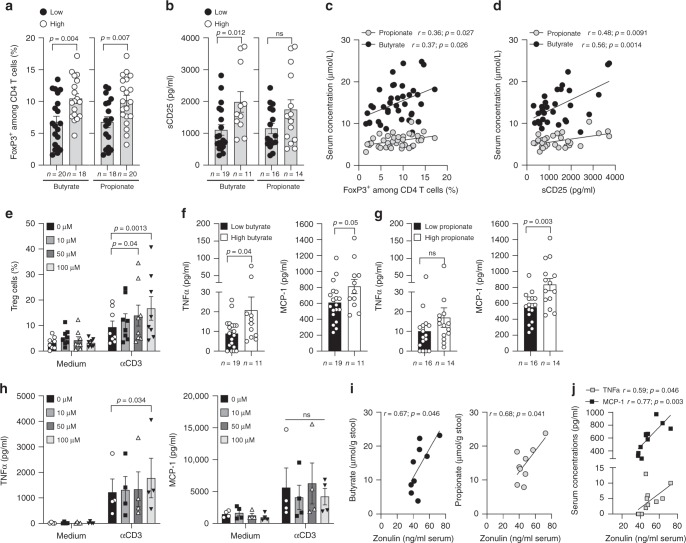
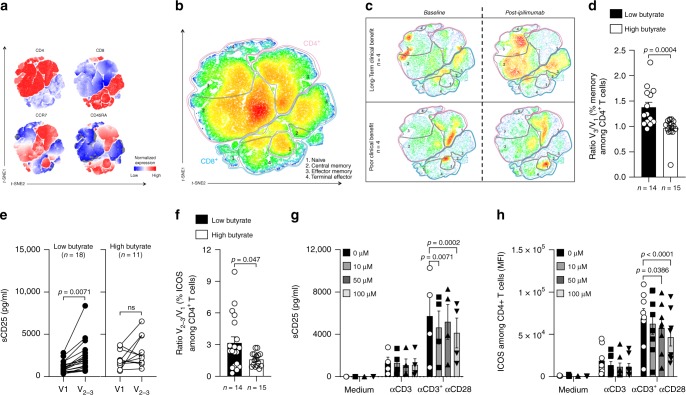
Gut microbiota composition influences the clinical benefit of immune checkpoints in patients with advanced cancer but mechanisms underlying this relationship remain unclear. Molecular mechanism whereby gut microbiota influences immune responses is mainly assigned to gut microbial metabolites. Short-chain fatty acids (SCFA) are produced in large amounts in the colon through bacterial fermentation of dietary fiber. We evaluate in mice and in patients treated with anti-CTLA-4 blocking mAbs whether SCFA levels is related to clinical outcome. High blood butyrate and propionate levels are associated with resistance to CTLA-4 blockade and higher proportion of Treg cells. In mice, butyrate restrains anti-CTLA-4-induced up-regulation of CD80/CD86 on dendritic cells and ICOS on T cells, accumulation of tumor-specific T cells and memory T cells. In patients, high blood butyrate levels moderate ipilimumab-induced accumulation of memory and ICOS + CD4 + T cells and IL-2 impregnation. Altogether, these results suggest that SCFA limits anti-CTLA-4 activity.
Overview
The claims and statistics of this paper haven’t been checked yet.
Free: it reads the open-access text and checks the first 5 claims that cite a source we can check. Create a free account to check every claim.
Integrity signals
Registry
Cites
Statistics
Figures
Verification
Claims the paper makes
The claims and statistics of this paper haven’t been checked yet.
Free: it reads the open-access text and checks the first 5 claims that cite a source we can check. Create a free account to check every claim.
Claims other papers make about this one
Each is checked against this paper’s own text: does it say what the citing paper says it does?
The source backs part of the claim, not all of it — or backs it for a different population, condition or comparison.
In the citing paper
“In contrast, another study demonstrated that high plasma SCFA levels were associated with shorter PFS in cancer patients treated with CTLA-4 inhibitors [60].”
From A Clinical Outcome of the Anti-PD-1 Therapy of Melanoma in Polish Patients Is Mediated by Population-Specific Gut Microbiome Composition (2022) · cites this paper as [60]
Experimental — accuracy not yet measuredThe source backs part of the claim, not all of it — or backs it for a different population, condition or comparison.
In the citing paper
“High serum levels of butyrate and propionate have been associated with resistance to anti-CTLA-4 antibodies and radiotherapy and increased Treg cell numbers in patients with melanoma.”
From Melanoma and microbiota: Current understanding and future directions (2024) · cites this paper as [54]
Experimental — accuracy not yet measuredIn the citing paper
“By contrast, supplementing mice with butyrate in their drinking water appears to be detrimental for CTLA‑4 blockade,151”
From Gut dysbiosis in oncology: a risk factor for immunoresistance (2026) · doi:10.1038/s41422-025-01212-6 · cites this paper as [151]
In the citing paper
“the gut microbiome is able to regulate the sensitivity of malignant solid tumors to immune checkpoint inhibitors (ICIs), such as programmed cell death receptor-1 (PD-1)/ligand 1 (L1) and cytotoxic T-lymphocyte-associated protein 4 (CTLA-4) (10,13,14).”
From The Role of Gut Microbiota in Lung Cancer: From Carcinogenesis to Immunotherapy (2021) · doi:10.3389/fonc.2021.720842 · cites this paper as [13]
In the citing paper
“Furthermore, the addition of anti-CTLA-4 has a profound effect on gut barrier permeability 50,51 , potentially changing the influence of the gut microbiome on ICB response.”
From A gut microbial signature for combination immune checkpoint blockade across cancer types (2024) · cites this paper as [50]
5 more claims about this paper
Create a free account to see every claim other papers make about this one.
Self-check
Percentages, sums and reported differences re-computed from the paper’s own numbers.
The self-check needs the paper’s full text.
Citations
Cites
Improved Survival with Ipilimumab in Patients with Metastatic Melanoma
Hodi, F. S., O'Day, S. J., McDermott, D. F., Weber, R. W., Sosman, J. A., Haanen, J. B., Gonzalez, R., Robert, C., Schadendorf, D., Hassel, J. C., et al. (2010) · New England Journal of Medicine · doi:10.1056/nejmoa1003466 · Cited by 15,155
Self-citationCombined Nivolumab and Ipilimumab or Monotherapy in Untreated Melanoma
Larkin, J., Chiarion-Sileni, V., Gonzalez, R., Grob, J. J., Cowey, C. L., Lao, C. D., Schadendorf, D., Dummer, R., Smylie, M., Rutkowski, P., et al. (2015) · New England Journal of Medicine · doi:10.1056/nejmoa1504030 · Cited by 8,157
Self-citationPembrolizumab versus Ipilimumab in Advanced Melanoma
Robert, C., Schachter, J., Long, G. V., Arance, A., Grob, J. J., Mortier, L., Daud, A., Carlino, M. S., McNeil, C., Lotem, M., et al. (2015) · New England Journal of Medicine · doi:10.1056/nejmoa1503093 · Cited by 5,887
Self-citationCommensal microbe-derived butyrate induces the differentiation of colonic regulatory T cells
Furusawa, Y., Obata, Y., Fukuda, S., Endo, T. A., Nakato, G., Takahashi, D., Nakanishi, Y., Uetake, C., Kato, K., Kato, T., et al. (2013) · Nature · doi:10.1038/nature12721 · Cited by 5,549
The Microbial Metabolites, Short-Chain Fatty Acids, Regulate Colonic T reg Cell Homeostasis
Smith, P. M., Howitt, M. R., Panikov, N., Michaud, M., Gallini, C. A., Bohlooly-Y, M., Glickman, J. N., & Garrett, W. S. (2013) · Science · doi:10.1126/science.1241165 · Cited by 5,413
Metabolites produced by commensal bacteria promote peripheral regulatory T-cell generation
Arpaia, N., Campbell, C., Fan, X., Dikiy, S., van der Veeken, J., deRoos, P., Liu, H., Cross, J. R., Pfeffer, K., Coffer, P. J., et al. (2013) · Nature · doi:10.1038/nature12726 · Cited by 4,838
Gut microbiome modulates response to anti-PD-1 immunotherapy in melanoma patients
Gopalakrishnan, V., Spencer, C. N., Nezi, L., Reuben, A., Andrews, M. C., Karpinets, T. V., Prieto, P. A., Vicente, D., Hoffman, K., Wei, S. C., et al. (2018) · Science · doi:10.1126/science.aan4236 · Cited by 4,812
Ipilimumab plus Dacarbazine for Previously Untreated Metastatic Melanoma
Robert, C., Thomas, L., Bondarenko, I., O'Day, S., Weber, J., Garbe, C., Lebbe, C., Baurain, J.-F., Testori, A., Grob, J.-J., et al. (2011) · New England Journal of Medicine · doi:10.1056/nejmoa1104621 · Cited by 4,496
Self-citationCommensal Bifidobacterium promotes antitumor immunity and facilitates anti–PD-L1 efficacy
Sivan, A., Corrales, L., Hubert, N., Williams, J. B., Aquino-Michaels, K., Earley, Z. M., Benyamin, F. W., Man Lei, Y., Jabri, B., Alegre, M.-L., et al. (2015) · Science · doi:10.1126/science.aac4255 · Cited by 3,888
Anticancer immunotherapy by CTLA-4 blockade relies on the gut microbiota
Vétizou, M., Pitt, J. M., Daillère, R., Lepage, P., Waldschmitt, N., Flament, C., Rusakiewicz, S., Routy, B., Roberti, M. P., Duong, C. P. M., et al. (2015) · Science · doi:10.1126/science.aad1329 · Cited by 3,488
Self-citation
Cited by
Items 101–200 of 530
Lu, S., Xu, J., Zhao, Z., Guo, Y., Zhang, H., Jurutka, P. W., Huang, D., Cao, C., & Cheng, S. (2023) · Food & Function · doi:10.1039/d3fo02018e · Cited by 59
The role of gut microbial metabolites in the T cell lifecycle
Tran, M. T., Huh, J. R., & Devlin, A. S. (2025) · Nature Immunology · doi:10.1038/s41590-025-02227-2 · Cited by 62
Gut microbiota–derived metabolites in immunomodulation and gastrointestinal cancer immunotherapy
Luo, W., Li, R., Pan, C., & Luo, C. (2025) · Frontiers in Immunology · doi:10.3389/fimmu.2025.1710880 · Cited by 59
“Acetate, in certain contexts, can even promote tumor growth and immune evasion through the acetyl coenzyme A (acetyl-CoA) – cellular myelocytomatosis oncogene (c-Myc) – PD-L1 signaling pathway (12, 13).”
Sánchez-Alcoholado, L., Laborda-Illanes, A., Otero, A., Ordóñez, R., González-González, A., Plaza-Andrades, I., Ramos-Molina, B., Gómez-Millán, J., & Queipo-Ortuño, M. I. (2021) · International Journal of Molecular Sciences · doi:10.3390/ijms22179549 · Cited by 49
“suggested that SCFA limits anti-CTLA-4 activity in patients with metastatic melanoma [21].”
BackgroundThe Emerging Biotherapeutic Agent: Akkermansia
Kalia, V. C., Gong, C., Shanmugam, R., Lin, H. M., Zhang, L., & Lee, J.-K. (2021) · Indian Journal of Microbiology · doi:10.1007/s12088-021-00993-9 · Cited by 57
Huang, M., Ji, Q., Huang, H., Wang, X., & Wang, L. (2025) · Gut Microbes · doi:10.1080/19490976.2025.2486519 · Cited by 57
“137 Additionally, Feng et al. conducted a clinical study evaluating the relationship between gut microbiota alterations, clinical parameters, and peripheral immune responses in patients with HBV-HCC.”
Tian, T., Zhao, Y., Yang, Y., Wang, T., Jin, S., Guo, J., & Liu, Z. (2020) · PubMed Central · Cited by 68
Gao, D., Fang, L., Liu, C., Yang, M., Yu, X., Wang, L., Zhang, W., Sun, C., & Zhuang, J. (2023) · Biomedicine & Pharmacotherapy · doi:10.1016/j.biopha.2023.115622 · Cited by 62
Liu, X., Lu, B., Tang, H. T., Jia, X., Zhou, Q., Zeng, Y., Gao, X., Chen, M., Xu, Y., Wang, M., et al. (2024) · EBioMedicine · doi:10.1016/j.ebiom.2024.105427 · Cited by 58
Metabolites as agents and targets for cancer immunotherapy
Trefny, M. P., Kroemer, G., Zitvogel, L., & Kobold, S. (2025) · Nature Reviews Drug Discovery · doi:10.1038/s41573-025-01227-z · Cited by 67
“Similarly, IDO1 knockout or an IDO1 inhibitor synergized with anti-cytotoxic T lymphocyte-associated protein 4 (CTLA4) immune checkpoint blockade (ICB) in the B16 murine melanoma model 29 .”
InfluentialWang, R., Zhuang, J., Zhang, Q., Wu, W., Yu, X., Zhang, H., & Xie, Z. (2025) · Experimental Hematology and Oncology · doi:10.1186/s40164-025-00689-6 · Cited by 59
Lachance, G., Robitaille, K., Laaraj, J., Gevariya, N., Varin, T. V., Feldiorean, A., Gaignier, F., Bourdeau‐Julien, I., Xu, H. W., Hallal, T., et al. (2024) · Nature Communications · doi:10.1038/s41467-024-45332-w · Cited by 62
“A recent study found that high serum butyrate levels produced by gut microbes were associated with resistance to anti-CTLA-4 blockage and a higher proportion of Treg cells in patients with metastatic melanoma 46 .”
Redefining bioactive small molecules from microbial metabolites as revolutionary anticancer agents
Giurini, E. F., Godla, A., & Gupta, K. H. (2024) · Cancer Gene Therapy · doi:10.1038/s41417-023-00715-x · Cited by 53
Gao, Y., Tan, Y.-J., & Fang, J. (2025) · Nature Reviews Clinical Oncology · doi:10.1038/s41571-025-01026-w · Cited by 55
Gut microbial metabolites in cancer immunomodulation
Liu, H., Xiong, X., Zhu, W., Wang, S., Huang, W.-C., Zhu, G., Xu, H., & Yang, L. (2025) · Molecular Cancer · doi:10.1186/s12943-025-02521-5 · Cited by 62
“Clinical evidence further associates high circulating propionate with resistance to anti– CTLA-4 therapy, suggesting that its immune-modulating role may compromise checkpoint efficacy [89].”
InfluentialDóra, D., Bokhari, S. M. Z., Aloss, K., Takacs, P., Desnoix, J. Z., Szklenárik, G., Hurley, P. D., & Lohinai, Z. (2023) · International Journal of Molecular Sciences · doi:10.3390/ijms24032769 · Cited by 51
Lu, S., Wang, C., Ma, J., & Wang, Y. (2024) · Frontiers in Immunology · doi:10.3389/fimmu.2024.1456030 · Cited by 56
Gut microbiota as a biomarker and modulator of anti-tumor immunotherapy outcomes
Yan, J., Yang, L., Ren, Q., Zhu, C., Du, H., Wang, Z., Qi, Y., Xian, X., & Chen, D. (2024) · Frontiers in Immunology · doi:10.3389/fimmu.2024.1471273 · Cited by 56
De-coding the complex role of microbial metabolites in cancer
Escriva, P. P., Bernardino, C. C. T., & Letellier, E. (2025) · Cell Reports · doi:10.1016/j.celrep.2025.115358 · Cited by 54
Microbiota-mediated mechanisms of mucosal immunity across the lifespan
Iliev, I. D., Blander, J. M., Collins, N., Guo, C., Longman, R., Sonnenberg, G. F., Zeng, M. Y., & Artis, D. (2025) · Nature Immunology · doi:10.1038/s41590-025-02281-w · Cited by 66
“Microbiota-derived metabolites can also increase immune suppression 107 , which may have a role in negatively regulating the efficacy of ICI therapy 230 .”
The use of immunotherapy in older patients with advanced non-small cell lung cancer
Tagliamento, M., Frélaut, M., Baldini, C., Naigeon, M., Nencioni, A., Chaput, N., & Besse, B. (2022) · Cancer Treatment Reviews · doi:10.1016/j.ctrv.2022.102394 · Cited by 53
Self-citationThe impact of the gut microbiome on tumor immunotherapy: from mechanism to application strategies
Guo, C., Kong, L., Xiao, L., Liu, K., Cui, H., Xin, Q., Gu, X., Jiang, C., & Wu, J. (2023) · Cell & Bioscience · doi:10.1186/s13578-023-01135-y · Cited by 48
Microbiota in cancer: molecular mechanisms and therapeutic interventions
Chen, Z., Guan, D., Wang, Z., Li, X., Dong, S., Huang, J., & Zhou, W. (2023) · MedComm · doi:10.1002/mco2.417 · Cited by 50
Gut Microbiota and Tumor Immune Escape: A New Perspective for Improving Tumor Immunotherapy
He, Y., Huang, J., Li, Q., Xia, W., Zhang, C., Liu, Z., Xiao, J., Yi, Z., Deng, H., Xiao, Z., et al. (2022) · Cancers · doi:10.3390/cancers14215317 · Cited by 50
The intestinal microbiota: from health to disease, and back
Nathan, N., Philpott, D. J., & Girardin, S. E. (2021) · Microbes and Infection · doi:10.1016/j.micinf.2021.104849 · Cited by 53
Li, Y., Ye, Z., Zhu, J., Fang, S., Meng, L., & Zhou, C. (2022) · Frontiers in Immunology · doi:10.3389/fimmu.2022.844335 · Cited by 45
Cheng, S., Han, Z., Dai, D., Li, F., Zhang, X., Lu, M. S., Lü, Z., Wang, X., Zhou, J., Li, J., et al. (2024) · Cell Reports Medicine · doi:10.1016/j.xcrm.2023.101355 · Cited by 58
“12 Metabolites of the gut microbiome, such as short-chain fatty acids (SCFAs) 13–16 and inosine, 17 are shown to influence host immunity—synergistically modulating anti-tumor effects.”
BackgroundMicrobiome-derived metabolome as a potential predictor of response to cancer immunotherapy
Malczewski, A. B., Navarro, S., Coward, J. I. G., & Ketheesan, N. (2020) · Journal for ImmunoTherapy of Cancer · doi:10.1136/jitc-2020-001383 · Cited by 49
Rad, H. F., Tahmasebi, H., Javani, S., Hemati, M., Zakerhamidi, D., Hosseini, M., Alibabaei, F., Banihashemian, S. Z., Oksenych, V., & Eslami, M. (2024) · Biomedicines · doi:10.3390/biomedicines12122776 · Cited by 46
Immunometabolism of regulatory T cells in cancer
Saravia, J., & Chi, H. (2025) · Oncogene · doi:10.1038/s41388-025-03458-1 · Cited by 53
“…with elevated microbiota-derived short-chain fatty acids have increased proportions of T reg cells and are more resistant to anti-CTLA4 treatment [168], suggesting that microbiome composition-associated effects on T reg cells are clinically relevant and may be used as a prognostic marker or…”
Microbial metabolites are involved in tumorigenesis and development by regulating immune responses
Liu, J., Tian, R., Sun, C., Guo, Y., Dong, L., Li, Y., & Song, X. (2023) · Frontiers in Immunology · doi:10.3389/fimmu.2023.1290414 · Cited by 41
Zhou, Y., Han, W., Feng, Y., Wang, Y., Sun, T., & Xu, J. (2024) · International Journal of Oncology · doi:10.3892/ijo.2024.5661 · Cited by 43
“The success of immune checkpoint inhibitors (ICIs) in tumor therapy significantly relies on reactivating specific T cells and promoting the apoptosis of Tregs present within the TME (62,63).”
BackgroundInfluentialFacts and Hopes for Gut Microbiota Interventions in Cancer Immunotherapy
Davar, D., & Zarour, H. M. (2022) · Clinical Cancer Research · doi:10.1158/1078-0432.ccr-21-1129 · Cited by 40
Macandog, A. D. G., Catozzi, C., Capone, M., Nabinejad, A., Nanaware, P. P., Liu, S., Vinjamuri, S., Stunnenberg, J. A., Galiè, S., Jodice, M. G., et al. (2024) · Cell Host & Microbe · doi:10.1016/j.chom.2024.10.006 · Cited by 40
“…epithelial homeostasis 44,45 and immune functions 46–50 have been widely reported, but their role in host immunity during immunotherapy response appears ambiguous 51–53 with concurrent immune-activating (driven by IFN-g and IL-12) 54,55 and suppressive (mediated by Treg) 55 effects described.”
Self-citationPlant-Based Diets and Cancer Risk: What is the Evidence?
DeClercq, V., Nearing, J. T., & Sweeney, E. (2022) · Current Nutrition Reports · doi:10.1007/s13668-022-00409-0 · Cited by 47
“found that higher levels of systemic butyrate and propionate were associated with reduced anti-CTLA-4 efficacy [86].”
BackgroundChaľová, P., Ťažký, A., Škultéty, Ľ., Minichová, L., Chovanec, M., Čierniková, S., Mikuš, P., & Piešťanský, J. (2023) · Frontiers in Oncology · doi:10.3389/fonc.2023.1110235 · Cited by 43
“used as an indirect systematic marker of the microbiota composition associated with clinical outcomes in patients treated with ipilimumab (90).”
BackgroundMethodLu, Y., Yuan, H., Liang, S., Li, D., Jiang, P., Wang, X., Zhang, K., & Liu, D. (2025) · Frontiers in Immunology · doi:10.3389/fimmu.2025.1603658 · Cited by 45
“This aligns with clinical data: in advanced melanoma patients receiving anti-PD-1/IFN a , serum I3A levels >31.15 pmol/100 m L (70th percentile) correlate with signi fi cantly longer PFS (12.6 vs. 5.8 months) and OS (28.3 vs. 14.1 months), whereas non-responders show no differences in levels of the endogenous AhR ligan…”
InfluentialMetabolic Implications of Immune Checkpoint Proteins in Cancer
Stirling, E. R., Bronson, S. M., Mackert, J. D., Cook, K. L., Triozzi, P. L., & Soto‐Pantoja, D. R. (2022) · Cells · doi:10.3390/cells11010179 · Cited by 41
“Microbiota-derived shortchain fatty acid acids such as butyrate have been shown to limit CTLA-4 response in mouse models [163].”
BackgroundGut microbial metabolites in cancer therapy
Song, P., Peng, Z., & Guo, X. (2025) · Trends in Endocrinology & Metabolism · doi:10.1016/j.tem.2024.06.016 · Cited by 38
Chen, B., Chen, Y., Dragomir, M. P., Chi, D., Chen, W., Horst, D. A., Călin, G. A., & Li, Q. (2022) · Therapeutic Advances in Medical Oncology · doi:10.1177/17588359221111703 · Cited by 46
Optimizing Cancer Treatment Through Gut Microbiome Modulation
Kim, K., Lee, M., Shin, Y., Lee, Y., & Kim, T. J. (2025) · Cancers · doi:10.3390/cancers17071252 · Cited by 40
“These divergent outcomes emphasize that SCFA-mediated immune modulation is influenced by factors such as treatment timing, metabolite concentration, and the local immune microenvironment [117,118].”
Find the Flame: Predictive Biomarkers for Immunotherapy in Melanoma
Garutti, M., Bonin, S., Buriolla, S., Bertoli, E., Pizzichetta, M. A., Zalaudek, I., & Puglisi, F. (2021) · Cancers · doi:10.3390/cancers13081819 · Cited by 39
“Short-chain fatty acid (SCFA) serum levels negatively correlate with anti-CTLA-4 efficacy in metastatic melanoma patients [24].”
Chen, Y., Xiao, N., Chen, Y., Chen, X., Zhong, C., Cheng, Y., Du, B., & Li, P. (2021) · Food Research International · doi:10.1016/j.foodres.2021.110808 · Cited by 39
Fatty Acids as a Tool to Boost Cancer Immunotherapy Efficacy
Westheim, A. J. F., Stoffels, L. M., Dubois, L. J., van Bergenhenegouwen, J., van Helvoort, A., LANGEN, R. C. J., Shiri‐Sverdlov, R., & Theys, J. (2022) · Frontiers in Nutrition · doi:10.3389/fnut.2022.868436 · Cited by 43
“reported an inverse relation between serum SCFA levels and outcome in melanoma patients receiving the anti-CTLA-4 antibodies Ipilimumab; patients with lower serum levels of butyrate and propionate demonstrated longer progression free survival (34).”
BackgroundPietrzak, B., Tomela, K., Olejnik-Schmidt, A., Galus, Ł., Mackiewicz, J., Kaczmarek, M., Mackiewicz, A., & Schmidt, M. (2022) · Cancers · doi:10.3390/cancers14215369 · Cited by 36
“prausnitzii abundance was negatively associated with the serum butyrate concentration that was found to reduce anti-CTLA-4 therapy efficacy [60].”
BackgroundResultGuillot, N., Roméo, B., Manesh, S. S., Milano, G., Brest, P., Zitvogel, L., Hofman, P., & Mograbi, B. (2023) · Trends in Molecular Medicine · doi:10.1016/j.molmed.2023.08.004 · Cited by 36
Diet-microbiome interactions in cancer
Abdeen, S. K., Mastandrea, I., Stinchcombe, N., Puschhof, J., & Elinav, E. (2025) · Cancer Cell · doi:10.1016/j.ccell.2025.03.013 · Cited by 36
Exploring the Role of the Gut Microbiota in Modulating Colorectal Cancer Immunity
Shakhpazyan, N. K., Михалева, Л. М., Bedzhanyan, A. L., Владиславовна, Г. З., Mikhalev, A. I., Midiber, K. Y., Pechnikova, V. V., & Biryukov, A. E. (2024) · Cells · doi:10.3390/cells13171437 · Cited by 37
“This suggests that butyrate limits the immune response induced by CTLA-4 blockade [104].”
BackgroundMetabolic interactions: how gut microbial metabolites influence colorectal cancer
Cao, Q., Yang, M., & Chen, M. (2025) · Frontiers in Microbiology · doi:10.3389/fmicb.2025.1611698 · Cited by 42
“These changes may weaken the efficacy of anti-CTLA-4 therapy (Coutzac et al., 2020).”
InfluentialGut microbiota: A double-edged sword in immune checkpoint blockade immunotherapy against tumors
Wang, J., Zhu, N., Su, L., & Yang, R. (2023) · Cancer Letters · doi:10.1016/j.canlet.2023.216582 · Cited by 37
Zhuang, Y., Abdelsattar, M. M., Fu, Y., Zhang, N., & Chai, J. (2024) · Animal nutrition · doi:10.1016/j.aninu.2024.04.027 · Cited by 37
Zhao, H., Wang, D., Zhang, Z., Xian, J., & Bai, X. (2022) · Molecules · doi:10.3390/molecules27154799 · Cited by 38
“In mice, butyrate inhibited upregulation of CD80/CD86 on dendritic cells and ICOS upregulation on T cells induced by CTLA-4 mAb, and increased the proportion of Treg cells [35].”
BackgroundInfluentialMicrobiota as the unifying factor behind the hallmarks of cancer
Benešová, I., Křížová, Ľ., & Kverka, M. (2023) · Journal of Cancer Research and Clinical Oncology · doi:10.1007/s00432-023-05244-6 · Cited by 35
“This may not be a universal feature, because in some cohorts high levels of fecal Faecalibacterium is associated with worse prognosis in patients with malignant melanoma and fecal butyrate limits the anticancer effect of CTLA-4 blockade (Coutzac et al. 2020).”
BackgroundJiang, H., & Zhang, Q. (2024) · Oncology Letters · doi:10.3892/ol.2024.14221 · Cited by 36
“However, another study indicated that elevated levels of butyrate and propionate in the blood led to an increase in the proportion of Treg cells, which resulted in a dimin‑ ished anti‑CTLA‑4 blockade effect and limited the activity of anti‑CTLA‑4 therapy (87).”
BackgroundLipid metabolism in tumor-infiltrating regulatory T cells: perspective to precision immunotherapy
Shan, Y., Xie, T., Sun, Y., Lu, Z., Topatana, W., Juengpanich, S., Chen, T., Han, Y., Cao, J., Hu, J., et al. (2024) · Biomarker Research · doi:10.1186/s40364-024-00588-8 · Cited by 37
“It has been reported that high levels of blood SCFAs confer resistance to CTLA-4 blockade in tumor-bearing mice or clinical patients, inhibit upregulation of CD80/CD86 in APC cells, and promote Tregs activation and aggregation [38].”
BackgroundWu, Y., Liang, X., Ni, J., Zhao, R., Shao, S., Si, L., Han, W., & Yu, L. (2021) · Frontiers in Cell and Developmental Biology · doi:10.3389/fcell.2021.681240 · Cited by 37
“A high proportion of Treg cells was found to induce resistance to anti-CTLA4 blocking mAbs in patients with advanced cancer (Coutzac et al., 2020), but such suppression of immunotherapy could be reversed by the TGF-β pathway inhibitor galunisertib (Holmgaard et al.”
BackgroundAssociation between gut microbiota and its functional metabolites with prenatal depression in women
Xie, T., Fan, X., Pang, H., Zang, T., Ni, W., Liu, J., Li, Z., Li, S., Zhu, Q., Slack, J. E., et al. (2023) · Neurobiology of Stress · doi:10.1016/j.ynstr.2023.100592 · Cited by 36
“For example, in cancer patients undergoing immunotherapy, excessive SCFAs can impair the effect of immunotherapy (Coutzac et al., 2020).”
Checkpoint inhibitor responses can be regulated by the gut microbiota – A systematic review
Zeriouh, M., Raskov, H., Kvich, L., Gögenür, I., & Bennedsen, A. L. B. (2023) · Neoplasia · doi:10.1016/j.neo.2023.100923 · Cited by 33
“[27] (2020) GOLD study Appears not to be registered SC12-018; ID-RCB-2012-A01496-”
BackgroundModulation of the Gut Microbiome to Improve Clinical Outcomes in Hepatocellular Carcinoma
Shen, S., Khatiwada, S., Behary, J., Kim, R., & Zekry, A. (2022) · Cancers · doi:10.3390/cancers14092099 · Cited by 34
“Recently, serum SCFA levels were associated with poorer anticytotoxic T lymphocyte antigen 4 (αCTLA4) response in patients with metastatic melanoma, which paralleled their findings in a mouse model whereby administration of butyrate in mice reduced αCTLA4 efficacy [41].”
BackgroundEmerging roles of the gut microbiota in cancer immunotherapy
Shi, Z., Li, H., Song, W., Zhou, Z., Li, Z., & Zhang, M. (2023) · Frontiers in Immunology · doi:10.3389/fimmu.2023.1139821 · Cited by 34
“Namely, high levels of blood butyrate and propionate were involved in the resistance to CTLA-4 blockade and higher frequency of Treg cells, and butyrate could impede the accumulation of tumor-specific T cells and memory T cells (64).”
BackgroundInfluence of Microbiota on Tumor Immunotherapy
Yu, X., Li, W., Li, Z., Wu, Q., & Sun, S. (2024) · International Journal of Biological Sciences · doi:10.7150/ijbs.91771 · Cited by 37
Huang, X., Chen, C., Xie, W., Zhou, C., Tian, X. W., Zhang, Z., Wang, Q., Chang, H., Xiao, W., Zhang, R., et al. (2023) · International Journal of Radiation Oncology*Biology*Physics · doi:10.1016/j.ijrobp.2023.06.2515 · Cited by 36
Sharma, D., Gajjar, D., & Seshadri, S. (2023) · Microbiome Research Reports · doi:10.20517/mrr.2023.51 · Cited by 39
Xiao, J., Guo, X., & Wang, Z. (2024) · Frontiers in Immunology · doi:10.3389/fimmu.2024.1385907 · Cited by 36
Gut microbiota reshapes the TNBC immune microenvironment: Emerging immunotherapeutic strategies
Huang, M., Zhang, Y., Chen, Z., Yu, X., Luo, S., Peng, X., & Li, X. (2025) · Pharmacological Research · doi:10.1016/j.phrs.2025.107726 · Cited by 34
Designing live bacterial therapeutics for cancer
Lee, J., McClure, S., Weichselbaum, R. R., & Mimee, M. (2025) · Advanced Drug Delivery Reviews · doi:10.1016/j.addr.2025.115579 · Cited by 35
Exploring the food-gut axis in immunotherapy response of cancer patients
Russo, E., Nannini, G., Dinu, M., Pagliai, G., Sofi, F., & Amedei, A. (2020) · World Journal of Gastroenterology · doi:10.3748/wjg.v26.i33.4919 · Cited by 32
The role of the sex hormone-gut microbiome axis in tumor immunotherapy
Wang, L., Tang, L., Zhai, D., Song, M., Li, W., Xu, S., Jiang, S., Meng, H., Liang, J., Wang, Y., et al. (2023) · Gut Microbes · doi:10.1080/19490976.2023.2185035 · Cited by 34
Qu, Y., An, K., Wang, D., Yu, H., Li, J., Min, Z., Xiong, Y., Xue, Z., & Mao, Z. (2025) · Molecular Neurobiology · doi:10.1007/s12035-025-04726-7 · Cited by 30
“Similar findings were reported for PA that an increase in Tregs after CD3 stimulation in vitro was observed with BA concentrations of 50 µM or 100 µM [50].”
Zhang, H., Li, M., Kaboli, P. J., Ji, H., Du, F., Wu, X., Zhao, Y., Shen, J., Wan, L., Yi, T., et al. (2021) · The International Journal of Biological Markers · doi:10.1177/17246008211005473 · Cited by 34
The role of short-chain fatty acids in cancer prevention and cancer treatment
Kalyanaraman, B., Cheng, G., & Hardy, M. (2024) · Archives of Biochemistry and Biophysics · doi:10.1016/j.abb.2024.110172 · Cited by 34
Crouch, L. I., Rodrigues, C. S., Bakshani, C. R., Tavares-Gomes, L., Gaifem, J., & Pinho, S. S. (2024) · Seminars in Immunology · doi:10.1016/j.smim.2024.101891 · Cited by 31
Disentangling the molecular mystery of tumour–microbiota interactions: Microbial metabolites
Duan, Y.-W., Dai, J.-H., Lu, Y.-Q., Qiao, H., & Liu, N. (2024) · Clinical and Translational Medicine · doi:10.1002/ctm2.70093 · Cited by 31
Emerging insights into the impact of systemic metabolic changes on tumor-immune interactions
Cote, A. L., Munger, C. J., & Ringel, A. E. (2025) · Cell Reports · doi:10.1016/j.celrep.2025.115234 · Cited by 30
Harnessing phytochemicals: Innovative strategies to enhance cancer immunotherapy
Zhu, Q., Zhang, R., Zhao, Z., Xie, T., & Sui, X. (2025) · Drug Resistance Updates · doi:10.1016/j.drup.2025.101206 · Cited by 37
Commensal Microbiota and Cancer Immunotherapy: Harnessing Commensal Bacteria for Cancer Therapy
Bae, J., Park, K., & Kim, Y. (2022) · Immune Network · doi:10.4110/in.2022.22.e3 · Cited by 32
“In addition, memory Th1 immune responses to B. intestinihominis was shown to predict the prolonged PFS in advanced lung and ovarian cancer patients after platinum-based chemotherapy (80).”
BackgroundInfluentialBrevi, A., Cogrossi, L. L., Lorenzoni, M., Mattorre, B., & Bellone, M. (2022) · Frontiers in Immunology · doi:10.3389/fimmu.2022.845422 · Cited by 32
“while protective in some contexts (60–63, 65, 93, 108), may be detrimental for the induction of efficient anti-cancer CTL responses (56, 147, 148).”
BackgroundInfluentialHersi, F., Elgendy, S. M., Shamma, S. A. A., Altell, R. T., Sadiek, O., & Omar, H. A. (2022) · Life Sciences · doi:10.1016/j.lfs.2022.120573 · Cited by 31
Immuno-reactive cancer organoid model to assess effects of the microbiome on cancer immunotherapy
Shelkey, E., Oommen, D., Stirling, E. R., Soto‐Pantoja, D. R., Cook, K. L., Lu, Y., Votanopoulos, K. I., & Söker, S. (2022) · Scientific Reports · doi:10.1038/s41598-022-13930-7 · Cited by 31
Xie, N.-N., Wu, C., Ge, Q., Zhou, J., Long, F., Mao, Q., Li, S., & Shen, H. (2023) · Food & Function · doi:10.1039/d2fo03383f · Cited by 30
Haberman, Y., Kamer, I., Amir, A., Goldenberg, S., Efroni, G., Daniel‐Meshulam, I., Lobachov, A., Daher, S., Hadar, R., Gantz-Sorotsky, H., et al. (2023) · Scientific Reports · doi:10.1038/s41598-023-29136-4 · Cited by 34
Miya, T. V., Marima, R. M., Damane, B. P., Ledet, E. M., & Dlamini, Z. (2023) · Cancers · doi:10.3390/cancers15164086 · Cited by 33
“Furthermore, composition of the gut microbiota seems to be linked with increas d risk of anti-CTLA-4-stimulated colitis in patients with me astatic melanoma [118,119].”
BackgroundInfluentialMicrobiome in Cancer Development and Treatment
Čierniková, S., Ševčíková, A., Mladosievičová, B., & Mego, M. (2023) · Microorganisms · doi:10.3390/microorganisms12010024 · Cited by 33
“The authors did not observe any significant associations between acetate and PFS [35].”
BackgroundMicrobiome Modulation for the Treatment of Solid Neoplasms
Barragán-Carrillo, R., Zengin, Z. B., & Pal, S. K. (2025) · Journal of Clinical Oncology · doi:10.1200/jco-25-00374 · Cited by 34
Harnessing the microbiome for cancer therapy
Hajjar, R., Mars, R. A. T., & Kashyap, P. (2026) · Nature Reviews Microbiology · doi:10.1038/s41579-025-01268-6 · Cited by 34
Golonka, R. M., & Vijay–Kumar, M. (2020) · Advances in cancer research · doi:10.1016/bs.acr.2020.10.004 · Cited by 29
Nutritional Interventions Targeting Gut Microbiota during Cancer Therapies
Rinninella, E., Raoul, P. C., Cintoni, M., Palombaro, M., Pulcini, G., Gasbarrini, A., & Mele, M. C. (2021) · Microorganisms · doi:10.3390/microorganisms9071469 · Cited by 28
“Moreover, microbial metabolites such as short-chain fatty acids (SCFAs), especially butyrate, are associated with anti-PD-1 and anti-CTLA-4 therapies [41,42].”
BackgroundCancer and immunotherapy: a role for microbiota composition
Pham, F., Moinard‐Butot, F., Coutzac, C., & Chaput, N. (2021) · European Journal of Cancer · doi:10.1016/j.ejca.2021.06.051 · Cited by 29
Self-citationImproving Cancer Immunotherapy: Exploring and Targeting Metabolism in Hypoxia Microenvironment
Wei, J., Hu, M., & Du, H. (2022) · Frontiers in Immunology · doi:10.3389/fimmu.2022.845923 · Cited by 34
“Moreover, short-chain fatty acids in TME limit the capacity of DC to stimulate T cells and restrict the antitumor effect in CTLA-4 blockade treatment (101).”
BackgroundBredin, P., & Naidoo, J. (2022) · Cancer and Metastasis Reviews · doi:10.1007/s10555-022-10039-1 · Cited by 29
Microbial mechanisms to improve immune checkpoint blockade responsiveness
Griffin, M. E., & Hang, H. C. (2022) · Neoplasia · doi:10.1016/j.neo.2022.100818 · Cited by 31
Pallozzi, M., Tommaso, N. D., Maccauro, V., Santopaolo, F., Gasbarrini, A., Ponziani, F. R., & Pompili, M. (2022) · Cancers · doi:10.3390/cancers14194631 · Cited by 28
Song, R., Liu, F., Yu, P., Zhang, Y., & Wang, L. (2023) · Biomarker Research · doi:10.1186/s40364-023-00498-1 · Cited by 29
“Short-chain fatty acids (SCFAs), one type of microbiota metabolites in the gut, are known for their function in T cell homeostasis [51].”
BackgroundOtegui, N., Houry, M., Arozarena, I., Serrano, D., Redín, E., Expósito, F., León, S., Valencia, K., Montuenga, L. M., & Calvo, A. (2023) · Cancers · doi:10.3390/cancers15123076 · Cited by 30
“have shown that high butyrate and propionate blood levels are associated with a lack of response to anti-CTLA-4 blockade and higher Treg infiltration [116,117].”
BackgroundMicrobiota substances modulate dendritic cells activity: A critical view
Shvets, Y. V., Khranovska, N., Senchylo, N., Ostapchenko, D., Tymoshenko, I., Onysenko, S., Kobyliak, N. M., & Falalyeyeva, T. M. (2024) · Heliyon · doi:10.1016/j.heliyon.2024.e27125 · Cited by 28
“Cl ´ elia Coutzac et al. [99] investigated that butyrate decreased the expression of CD80 and CD86 molecules on DCs treated with anti-CTLA-4 MKAT in vitro .”
BackgroundWang, L., Jiang, W., Yang, M., Danzeng, Q., Liu, S., & Cui, M. (2025) · Cell Communication and Signaling · doi:10.1186/s12964-025-02275-z · Cited by 29
“Systemic SCFAs have been confirmed to diminish the efficacy of anti-CTLA-4 therapy by reducing the expression of ICOS molecules on CD4 ⁺ T cells and the expression of CD80/CD86 molecules on DCs [40].”
The microbiome, gastrointestinal cancer, and immunotherapy
Newsome, R. C., Yang, Y., & Jobin, C. (2021) · Journal of Gastroenterology and Hepatology · doi:10.1111/jgh.15742 · Cited by 28
Ran, B., Guo, C., Zhang, Y., Han, C., Cao, T., Huang, H., Geng, Z., & Li, W. (2022) · Food & Function · doi:10.1039/d1fo04218a · Cited by 26
Potential of natural products and gut microbiome in tumor immunotherapy
Cao, L., Wang, X., Ma, X., Xu, M., & Li, J. (2024) · Chinese Medicine · doi:10.1186/s13020-024-01032-7 · Cited by 25
Härm, J., Fan, Y.-T., & Brenner, D. (2024) · Current Opinion in Immunology · doi:10.1016/j.coi.2024.102511 · Cited by 27
Metadata
- Authors
- Coutzac, C., Jouniaux, J.-M., Paci, A., Schmidt, J., Mallardo, D., Seck, A., Asvatourian, V., Cassard, L., Saulnier, P., Lacroix, L., Woerther, P.-L., Vozy, A., Naigeon, M., Nebot-Bral, L., Desbois, M., Simeone, E., Mateus, C., Boselli, L., Grivel, J., Soularue, E., Lepage, P., Carbonnel, F., Ascierto, P. A., Robert, C., & Chaput, N.
- Affiliations
- Centre National de la Recherche Scientifique (FR)
- Istituto Nazionale Tumori IRCCS "Fondazione G. Pascale" (IT)
- Institut Gustave Roussy (FR)
- AgroParisTech (FR)
- Université Paris-Saclay (FR)
- Corresponding author
- Chaput, Nathalie
- ORCID
- Coutzac, Clélia
- Paci, Angelo
- Schmidt, Julien
- Mallardo, Domenico
- Seck, Atmane
- Cassard, Lydie
- Saulnier, Patrick
- Lacroix, Ludovic
- Woerther, Paul-Louis
- Vozy, Aurore
- Naigeon, Marie
- Desbois, Mélanie
- Simeone, Ester
- Mateus, Christine
- Boselli, Lisa
- Lepage, Patricia
- Carbonnel, Franck
- Ascierto, Paolo Antonio
- Robert, Caroline
- Chaput, Nathalie
- Venue
- Nature Communications
- Published
- 2020-05-01
- Volume
- 11
- Issue
- 1
- Pages
- 2168-2168
- ISSN
- 2041-1723 (ISSN-L)
- PMC
- PMC7195489
- OpenAlex
- W3022450273
- Semantic Scholar
- 814b2fcb75bf9ea248984c70830cc85812a61f27
- Cited by
- 513
- References
- 54
- Citations by year
- 2026: 89 · 2025: 105 · 2024: 84 · 2023: 86 · 2022: 74 · 2021: 58 · 2020: 17
- FWCI
- 21.22
- Type
- journal article
- Language
- en
- Open access
- gold
- doi.org
- Licence
- cc-by
- creativecommons.org/licenses/by/4.0 (tdm)
- creativecommons.org/licenses/by/4.0 (vor)
- Locations
- Nature Communications (publishedVersion, cc-by)
- PubMed Central (publishedVersion, cc-by)
- PubMed (publishedVersion)
- HAL (submittedVersion, cc-by)
- HAL (submittedVersion)
- RePEc: Research Papers in Economics (submittedVersion)
- DOAJ (DOAJ: Directory of Open Access Journals) (submittedVersion, cc-by-sa)
- Funders
- Agence Nationale de la Recherche (ANR-10-IBHU-0001)
- Institut National de la Santé et de la Recherche Médicale (INCa-DGOS-INSERM_12551)
- Centre National de la Recherche Scientifique (INCa-DGOS-INSERM_12551)
- Institut National Du Cancer (INCa-DGOS-INSERM-6043, INCa-DGOS-INSERM-12551, ANR-10IBHU-0001, 2012-1-RT-14-IGR-01)
- Institut Gustave-Roussy
- Direction Générale de l’offre de Soins
- Fondation Gustave Roussy
- Topics
- Health Sciences › Medicine › Oncology › Cancer Immunotherapy and Biomarkers
- Life Sciences › Biochemistry, Genetics and Molecular Biology › Molecular Biology › Gut microbiota and health
- Life Sciences › Immunology and Microbiology › Immunology › T-cell and B-cell Immunology
- Keywords
- short-chain fatty acids, butyrate, propionate, CTLA-4 blockade, immune checkpoint inhibitors, gut microbiota, cancer immunotherapy resistance, regulatory T cells, dendritic cells, ICOS, memory T cells, ipilimumab, interleukin-2, cancer immunotherapy
- MeSH terms
- Gastrointestinal Microbiome, Ipilimumab, Animals, Butyrates, Dendritic Cells, Fatty Acids, Volatile, Humans, Mice, Inbred BALB C, Neoplasms, Propionates, RNA, Ribosomal, 16S, T-Lymphocytes, Biomarkers, Tumor, B7-1 Antigen, T-Lymphocytes, Regulatory, Mice, B7-2 Antigen, CTLA-4 Antigen
About these checks
Registry, retraction, Cites and statistics results are computed, not judged, with one exception: a printed reference that no index lists is read once by a model before it counts as a citation error. Claims are extracted by a model and kept only when their quote appears verbatim in the text; each cited source is then checked, with a model’s help, for whether it says what the claim relies on. Those verdicts can be wrong — read the claim’s quote and the cited source before relying on one.
Statistics and arithmetic are recomputed, not judged.
Confidence bands are shown only for fields calibrated on our annotated test set. None is calibrated yet, so no band is shown.
What counts as a claim ›How we measure confidence ›How we check this ›
Are you an author, or do you see a problem with this page? Request a review
Data sources
Bibliographic data: Semantic Scholar, OpenAlex, Crossref.
Contains information from the Semantic Scholar Academic Graph Datasets, made available under the ODC Attribution License (ODC-BY 1.0).
Semantic Scholar’s data is described in: Kinney, R., et al. (2023). The Semantic Scholar Open Data Platform. arXiv:2301.10140.
