

Systemic short chain fatty acids limit antitumor effect of CTLA-4 blockade in hosts with cancer
Open accessThe DOI matches its Crossref record; 54 of the 54 references it cites were found in a registry or an index.
Abstract
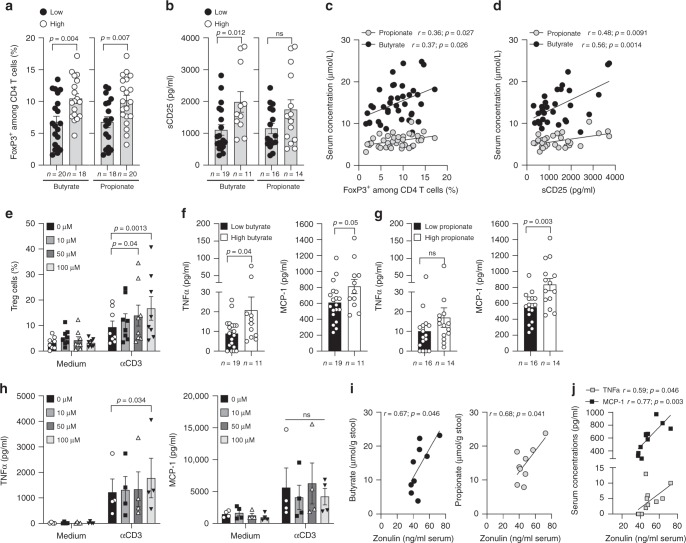
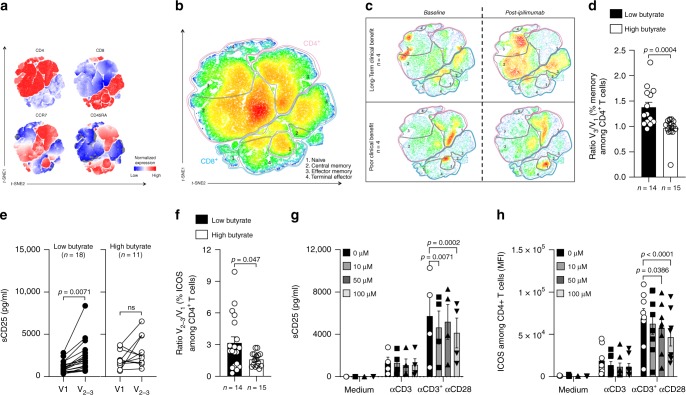
Gut microbiota composition influences the clinical benefit of immune checkpoints in patients with advanced cancer but mechanisms underlying this relationship remain unclear. Molecular mechanism whereby gut microbiota influences immune responses is mainly assigned to gut microbial metabolites. Short-chain fatty acids (SCFA) are produced in large amounts in the colon through bacterial fermentation of dietary fiber. We evaluate in mice and in patients treated with anti-CTLA-4 blocking mAbs whether SCFA levels is related to clinical outcome. High blood butyrate and propionate levels are associated with resistance to CTLA-4 blockade and higher proportion of Treg cells. In mice, butyrate restrains anti-CTLA-4-induced up-regulation of CD80/CD86 on dendritic cells and ICOS on T cells, accumulation of tumor-specific T cells and memory T cells. In patients, high blood butyrate levels moderate ipilimumab-induced accumulation of memory and ICOS + CD4 + T cells and IL-2 impregnation. Altogether, these results suggest that SCFA limits anti-CTLA-4 activity.
Overview
The claims and statistics of this paper haven’t been checked yet.
Free: it reads the open-access text and checks the first 5 claims that cite a source we can check. Create a free account to check every claim.
Integrity signals
Registry
Cites
Statistics
Figures
Verification
Claims the paper makes
The claims and statistics of this paper haven’t been checked yet.
Free: it reads the open-access text and checks the first 5 claims that cite a source we can check. Create a free account to check every claim.
Claims other papers make about this one
Each is checked against this paper’s own text: does it say what the citing paper says it does?
The source backs part of the claim, not all of it — or backs it for a different population, condition or comparison.
In the citing paper
“In contrast, another study demonstrated that high plasma SCFA levels were associated with shorter PFS in cancer patients treated with CTLA-4 inhibitors [60].”
From A Clinical Outcome of the Anti-PD-1 Therapy of Melanoma in Polish Patients Is Mediated by Population-Specific Gut Microbiome Composition (2022) · cites this paper as [60]
Experimental — accuracy not yet measuredThe source backs part of the claim, not all of it — or backs it for a different population, condition or comparison.
In the citing paper
“High serum levels of butyrate and propionate have been associated with resistance to anti-CTLA-4 antibodies and radiotherapy and increased Treg cell numbers in patients with melanoma.”
From Melanoma and microbiota: Current understanding and future directions (2024) · cites this paper as [54]
Experimental — accuracy not yet measuredIn the citing paper
“By contrast, supplementing mice with butyrate in their drinking water appears to be detrimental for CTLA‑4 blockade,151”
From Gut dysbiosis in oncology: a risk factor for immunoresistance (2026) · doi:10.1038/s41422-025-01212-6 · cites this paper as [151]
In the citing paper
“the gut microbiome is able to regulate the sensitivity of malignant solid tumors to immune checkpoint inhibitors (ICIs), such as programmed cell death receptor-1 (PD-1)/ligand 1 (L1) and cytotoxic T-lymphocyte-associated protein 4 (CTLA-4) (10,13,14).”
From The Role of Gut Microbiota in Lung Cancer: From Carcinogenesis to Immunotherapy (2021) · doi:10.3389/fonc.2021.720842 · cites this paper as [13]
In the citing paper
“Furthermore, the addition of anti-CTLA-4 has a profound effect on gut barrier permeability 50,51 , potentially changing the influence of the gut microbiome on ICB response.”
From A gut microbial signature for combination immune checkpoint blockade across cancer types (2024) · cites this paper as [50]
5 more claims about this paper
Create a free account to see every claim other papers make about this one.
Self-check
Percentages, sums and reported differences re-computed from the paper’s own numbers.
The self-check needs the paper’s full text.
Citations
Cites
Improved Survival with Ipilimumab in Patients with Metastatic Melanoma
Hodi, F. S., O'Day, S. J., McDermott, D. F., Weber, R. W., Sosman, J. A., Haanen, J. B., Gonzalez, R., Robert, C., Schadendorf, D., Hassel, J. C., et al. (2010) · New England Journal of Medicine · doi:10.1056/nejmoa1003466 · Cited by 15,155
Self-citationCombined Nivolumab and Ipilimumab or Monotherapy in Untreated Melanoma
Larkin, J., Chiarion-Sileni, V., Gonzalez, R., Grob, J. J., Cowey, C. L., Lao, C. D., Schadendorf, D., Dummer, R., Smylie, M., Rutkowski, P., et al. (2015) · New England Journal of Medicine · doi:10.1056/nejmoa1504030 · Cited by 8,157
Self-citationPembrolizumab versus Ipilimumab in Advanced Melanoma
Robert, C., Schachter, J., Long, G. V., Arance, A., Grob, J. J., Mortier, L., Daud, A., Carlino, M. S., McNeil, C., Lotem, M., et al. (2015) · New England Journal of Medicine · doi:10.1056/nejmoa1503093 · Cited by 5,887
Self-citationCommensal microbe-derived butyrate induces the differentiation of colonic regulatory T cells
Furusawa, Y., Obata, Y., Fukuda, S., Endo, T. A., Nakato, G., Takahashi, D., Nakanishi, Y., Uetake, C., Kato, K., Kato, T., et al. (2013) · Nature · doi:10.1038/nature12721 · Cited by 5,549
The Microbial Metabolites, Short-Chain Fatty Acids, Regulate Colonic T reg Cell Homeostasis
Smith, P. M., Howitt, M. R., Panikov, N., Michaud, M., Gallini, C. A., Bohlooly-Y, M., Glickman, J. N., & Garrett, W. S. (2013) · Science · doi:10.1126/science.1241165 · Cited by 5,413
Metabolites produced by commensal bacteria promote peripheral regulatory T-cell generation
Arpaia, N., Campbell, C., Fan, X., Dikiy, S., van der Veeken, J., deRoos, P., Liu, H., Cross, J. R., Pfeffer, K., Coffer, P. J., et al. (2013) · Nature · doi:10.1038/nature12726 · Cited by 4,838
Gut microbiome modulates response to anti-PD-1 immunotherapy in melanoma patients
Gopalakrishnan, V., Spencer, C. N., Nezi, L., Reuben, A., Andrews, M. C., Karpinets, T. V., Prieto, P. A., Vicente, D., Hoffman, K., Wei, S. C., et al. (2018) · Science · doi:10.1126/science.aan4236 · Cited by 4,812
Ipilimumab plus Dacarbazine for Previously Untreated Metastatic Melanoma
Robert, C., Thomas, L., Bondarenko, I., O'Day, S., Weber, J., Garbe, C., Lebbe, C., Baurain, J.-F., Testori, A., Grob, J.-J., et al. (2011) · New England Journal of Medicine · doi:10.1056/nejmoa1104621 · Cited by 4,496
Self-citationCommensal Bifidobacterium promotes antitumor immunity and facilitates anti–PD-L1 efficacy
Sivan, A., Corrales, L., Hubert, N., Williams, J. B., Aquino-Michaels, K., Earley, Z. M., Benyamin, F. W., Man Lei, Y., Jabri, B., Alegre, M.-L., et al. (2015) · Science · doi:10.1126/science.aac4255 · Cited by 3,888
Anticancer immunotherapy by CTLA-4 blockade relies on the gut microbiota
Vétizou, M., Pitt, J. M., Daillère, R., Lepage, P., Waldschmitt, N., Flament, C., Rusakiewicz, S., Routy, B., Roberti, M. P., Duong, C. P. M., et al. (2015) · Science · doi:10.1126/science.aad1329 · Cited by 3,488
Self-citation
Cited by
Items 501–530 of 530
Probiotics in Autoimmune Disease: Strain-specific Mechanisms and Therapeutic Perspectives
Zhou, J., Cao, J., Dong, S., Li, H., Yang, S., Yan, Z., Wang, C., Pei, Y., Su, Y., Wen, B., et al. (2026) · Clinical Reviews in Allergy & Immunology · doi:10.1007/s12016-026-09190-2
“In addition, probiotics mitigate oxidative stress by reducing reactive oxygen species (ROS) through inhibition of the TNF-α/ NF-κB pathway [ 82] and suppression of neutrophil oxidative burst [83].”
The interplay between lipid metabolism, cancer progression and anti-cancer immunity
Koh, C., Lee, Y., Kim, I., & Chung, Y. (2026) · Experimental & Molecular Medicine · doi:10.1038/s12276-026-01783-3
The microbiota-NK cell axis in colorectal cancer: a spatial and subset-centric framework
Wen, J., Gao, Y., Xu, M., Li, M., Dong, X., Zhao, M., Xuan, B., Meng, X., He, L., Zhang, W., et al. (2026) · Frontiers in Immunology · doi:10.3389/fimmu.2026.1934819
“…level, the abundance of A. muciniphila correlates positively with the proportion of memory-like NK cells; however, this effect operates through the aforementioned nicotinamide metabolic pathway, representing indirect metabolic support rather than direct antigen-driven differentiation (43, 95).”
Panda, P., Mohanty, S., & Mohapatra, R. (2026) · Clinical Microbiology Newsletter · doi:10.1016/j.clinmicnews.2026.08.003
Interplay of gut microbiota, immune cells and natural products in reshaping cancer immunotherapy
Wu, X., Lu, L., Li, T., Zhao, L., Wang, L., Yao, Y., Chen, J., Liu, T., Li, X., Zhu, X., et al. (2026) · Frontiers in Microbiology · doi:10.3389/fmicb.2026.1898063
Pang, T., Zhou, X., & Ge, Z. (2026) · Metabolites · doi:10.3390/metabo16090638
“…propionate can directly inhibit tumor cell growth in breast cancer and colorectal cancer models [37,38], whereas higher circulating propionate levels are associated with an increased proportion of Tregs and reduced benefit from anti-cytotoxic T-lymphocyte-associated protein 4 (CTLA-4) therapy [39].”
Zhao, X., Wang, H., Liu, Y., & Cao, L. (2026) · Frontiers in Oncology · doi:10.3389/fonc.2026.1919294
“…metabolites can also reverse direction across compartment and checkpoint context: systemic short-chain fatty acids were associated with impaired CTLA-4 blockade in one mixed mouse-human study, whereas fecal short-chain fatty acids correlated with favorable PD-1 outcomes in another (66, 67).”
Guo, L., HUANG, B., Chen, S., Zheng, H., Huang, W., Hu, J., Zhou, L., & Chen, L. (2026) · Frontiers in Medicine · doi:10.3389/fmed.2026.1928103
“…of regulatory T cells (Tregs), suppresses the accumulation of memory T cells, and downregulates the expression of inducible co-stimulatory molecules on T cells; it also blunts the anti-tumor activity of ipilimumab by hindering the recruitment of response-associated CD4 + T cells (54).”
Molecular pathways linking the gut microbiome to antitumor immunity
Olea, X. D., Ramer‐Tait, A. E., Cohen, J. E., Osterman, A., & Ronai, Z. A. (2026) · Trends in Microbiology · doi:10.1016/j.tim.2026.08.013
Exploring the Opportunities and Challenges of Lung Cancer Immunotherapy through the Lung-Gut Axis
刘, 文. (2026) · Advances in Clinical Medicine · doi:10.12677/acm.2026.1693258
Biazzo, M., Soriani, M., Micallef, M. P., Zaky, E., & Podrini, C. (2026) · Microorganisms · doi:10.3390/microorganisms14102147
“Microbial metabolites are plausible functional mediators of ICI response because they link between microbial ecology and host immunity [19–23].”
InfluentialGut microbiota: A key modulator of individualized efficacy and toxicity in cancer therapy
Hou, X., Chen, K., Ran, L., Pu, R., Tong, R., Li, P., Liu, K., Du, H., Liu, Y., & Hou, X. (2026) · Journal of Pharmaceutical Analysis · doi:10.1016/j.jpha.2026.101802
Zhan, X., 刘洪玲, Han, L., Liu, Y., Huang, C., Yang, X., & Shi, D. (2026) · Research Square · doi:10.21203/rs.3.rs-10990887/v1
Lipid metabolism: a potential checkpoint for cGAS-STING regulation in colorectal cancer
Qiu, Q., Cheng, Z., Gu, J., Zhang, T., Cai, M., & Wang, J. (2026) · Frontiers in Immunology · doi:10.3389/fimmu.2026.1928380
“However, excessively high butyrate concentrations can dampen the ef fi cacy of immunotherapy (177).”
Gut microbiota in esophageal cancer: mechanisms, clinical implications, and therapeutic potential
Li, Y., Zhou, L., Huang, R., Wang, Y., 赵海滨, Sun, M., Zhang, Y., 吴仲兵, & Li, J. (2026) · Frontiers in Microbiology · doi:10.3389/fmicb.2026.1955627
ZHANG, Y.-F., Ran, X. U. E., & Lin, S. H. E. N. (2026) · Shengming kexue · doi:10.3724/cbls.2026124
Shi, X., Wang, S., & Ouyang, W. (2026) · Frontiers in Immunology · doi:10.3389/fimmu.2026.1947330
From Dysbiosis to Symbiosis: Using the Gut Microbiome to Improve Cancer Outcomes
Nassar, S. A. (2026) · Medical Sciences · doi:10.3390/medsci14060669
Closing the adaptive window: immune–metabolic strategies to constrain melanoma therapy resistance
Riccardo, F., Conti, L., Defilippi, P., Arina, P., Audrito, V., & Calautti, E. (2026) · Frontiers in Immunology · doi:10.3389/fimmu.2026.1954638
Propionate promotes MHC class I antigen presentation and anti-tumor immunity
Li, S., Guo, D., Yang, Q., Cao, Y., Dong, Y., Jiang, X., Tian, X., Nie, D., Wu, L., Wu, Q., et al. (2026) · Cell Metabolism · doi:10.1016/j.cmet.2026.09.018
Gut Microbiota-Induced Metabolic Reprogramming of the Host Immune System
Roy, S. (2026) · Springer eBooks · doi:10.1007/978-3-032-30306-6_7
Luo, H., Wu, H., & Zhang, H. (2026) · Frontiers in Immunology · doi:10.3389/fimmu.2026.1968875
Microbiome interactions in renal cell carcinoma: evidence, challenges and opportunities
Lindgaard, C., Hvidt, A. K., Keller, A. K., Thingholm, L., Kristensen, S. S., & Lyskjær, I. (2026) · Nature Reviews Urology · doi:10.1038/s41585-026-01198-9
Wang, C. (2026) · Theoretical and Natural Science · doi:10.54254/2753-8818/2027.mb38223
Chen, S., Chen, S., Li, Y., Su, J., Yu, C., Xu, C., Li, Q., Wu, Q., & Sun, C. (2026) · PeerJ · doi:10.7717/peerj.21840
Mei, Y., Ling, S. H. I., He, S., Liu, C., Liu, M., & Hou, Y. (2026) · Frontiers in Cellular and Infection Microbiology · doi:10.3389/fcimb.2026.1975315
Ye, S., Tian, T., Huangfu, J., Liu, H., Liu, P., & Zhou, J. (2026) · Frontiers in Immunology · doi:10.3389/fimmu.2026.1999117
Bone metastases at the nutrition–bone–immune interface: implications for immune checkpoint blockade
Liu, W., Shui, T., Zhao, J., & Li, L. (2026) · Frontiers in Immunology · doi:10.3389/fimmu.2026.1982392
Predictive Biomarkers to Immune Checkpoint Inhibitors in Lung Cancer
Russo, A., Santarpia, M., & Rolfo, C. (2026) · Frontiers research topics · doi:10.3389/978-2-8325-8971-7
Supplementary Data from Microbiota-Centered Interventions: The Next Breakthrough in Immuno-Oncology?
(2023) · doi:10.1158/2159-8290.22540051.v1
Metadata
- Authors
- Coutzac, C., Jouniaux, J.-M., Paci, A., Schmidt, J., Mallardo, D., Seck, A., Asvatourian, V., Cassard, L., Saulnier, P., Lacroix, L., Woerther, P.-L., Vozy, A., Naigeon, M., Nebot-Bral, L., Desbois, M., Simeone, E., Mateus, C., Boselli, L., Grivel, J., Soularue, E., Lepage, P., Carbonnel, F., Ascierto, P. A., Robert, C., & Chaput, N.
- Affiliations
- Centre National de la Recherche Scientifique (FR)
- Istituto Nazionale Tumori IRCCS "Fondazione G. Pascale" (IT)
- Institut Gustave Roussy (FR)
- AgroParisTech (FR)
- Université Paris-Saclay (FR)
- Corresponding author
- Chaput, Nathalie
- ORCID
- Coutzac, Clélia
- Paci, Angelo
- Schmidt, Julien
- Mallardo, Domenico
- Seck, Atmane
- Cassard, Lydie
- Saulnier, Patrick
- Lacroix, Ludovic
- Woerther, Paul-Louis
- Vozy, Aurore
- Naigeon, Marie
- Desbois, Mélanie
- Simeone, Ester
- Mateus, Christine
- Boselli, Lisa
- Lepage, Patricia
- Carbonnel, Franck
- Ascierto, Paolo Antonio
- Robert, Caroline
- Chaput, Nathalie
- Venue
- Nature Communications
- Published
- 2020-05-01
- Volume
- 11
- Issue
- 1
- Pages
- 2168-2168
- ISSN
- 2041-1723 (ISSN-L)
- PMC
- PMC7195489
- OpenAlex
- W3022450273
- Semantic Scholar
- 814b2fcb75bf9ea248984c70830cc85812a61f27
- Cited by
- 513
- References
- 54
- Citations by year
- 2026: 89 · 2025: 105 · 2024: 84 · 2023: 86 · 2022: 74 · 2021: 58 · 2020: 17
- FWCI
- 21.22
- Type
- journal article
- Language
- en
- Open access
- gold
- doi.org
- Licence
- cc-by
- creativecommons.org/licenses/by/4.0 (tdm)
- creativecommons.org/licenses/by/4.0 (vor)
- Locations
- Nature Communications (publishedVersion, cc-by)
- PubMed Central (publishedVersion, cc-by)
- PubMed (publishedVersion)
- HAL (submittedVersion, cc-by)
- HAL (submittedVersion)
- RePEc: Research Papers in Economics (submittedVersion)
- DOAJ (DOAJ: Directory of Open Access Journals) (submittedVersion, cc-by-sa)
- Funders
- Agence Nationale de la Recherche (ANR-10-IBHU-0001)
- Institut National de la Santé et de la Recherche Médicale (INCa-DGOS-INSERM_12551)
- Centre National de la Recherche Scientifique (INCa-DGOS-INSERM_12551)
- Institut National Du Cancer (INCa-DGOS-INSERM-6043, INCa-DGOS-INSERM-12551, ANR-10IBHU-0001, 2012-1-RT-14-IGR-01)
- Institut Gustave-Roussy
- Direction Générale de l’offre de Soins
- Fondation Gustave Roussy
- Topics
- Health Sciences › Medicine › Oncology › Cancer Immunotherapy and Biomarkers
- Life Sciences › Biochemistry, Genetics and Molecular Biology › Molecular Biology › Gut microbiota and health
- Life Sciences › Immunology and Microbiology › Immunology › T-cell and B-cell Immunology
- Keywords
- short-chain fatty acids, butyrate, propionate, CTLA-4 blockade, immune checkpoint inhibitors, gut microbiota, cancer immunotherapy resistance, regulatory T cells, dendritic cells, ICOS, memory T cells, ipilimumab, interleukin-2, cancer immunotherapy
- MeSH terms
- Gastrointestinal Microbiome, Ipilimumab, Animals, Butyrates, Dendritic Cells, Fatty Acids, Volatile, Humans, Mice, Inbred BALB C, Neoplasms, Propionates, RNA, Ribosomal, 16S, T-Lymphocytes, Biomarkers, Tumor, B7-1 Antigen, T-Lymphocytes, Regulatory, Mice, B7-2 Antigen, CTLA-4 Antigen
About these checks
Registry, retraction, Cites and statistics results are computed, not judged, with one exception: a printed reference that no index lists is read once by a model before it counts as a citation error. Claims are extracted by a model and kept only when their quote appears verbatim in the text; each cited source is then checked, with a model’s help, for whether it says what the claim relies on. Those verdicts can be wrong — read the claim’s quote and the cited source before relying on one.
Statistics and arithmetic are recomputed, not judged.
Confidence bands are shown only for fields calibrated on our annotated test set. None is calibrated yet, so no band is shown.
What counts as a claim ›How we measure confidence ›How we check this ›
Are you an author, or do you see a problem with this page? Request a review
Data sources
Bibliographic data: Semantic Scholar, OpenAlex, Crossref.
Contains information from the Semantic Scholar Academic Graph Datasets, made available under the ODC Attribution License (ODC-BY 1.0).
Semantic Scholar’s data is described in: Kinney, R., et al. (2023). The Semantic Scholar Open Data Platform. arXiv:2301.10140.
