

Systemic short chain fatty acids limit antitumor effect of CTLA-4 blockade in hosts with cancer
Open accessThe DOI matches its Crossref record; 54 of the 54 references it cites were found in a registry or an index.
Abstract
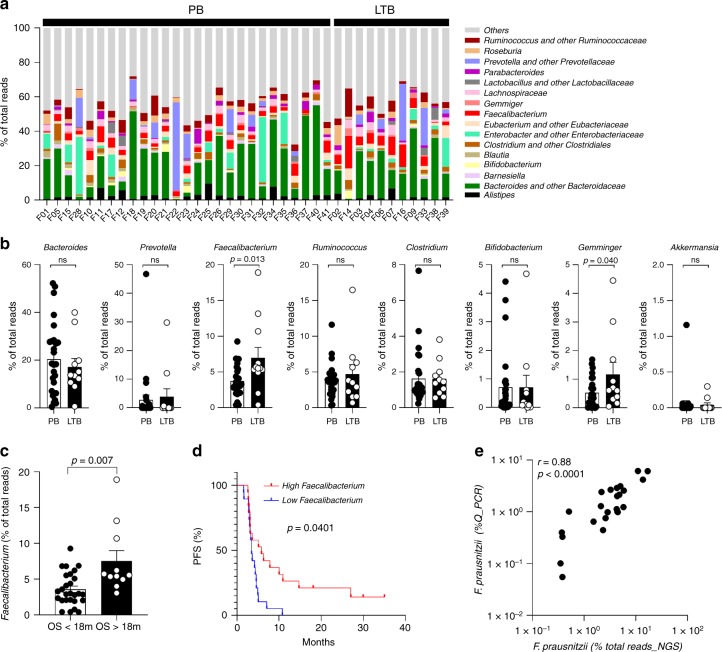
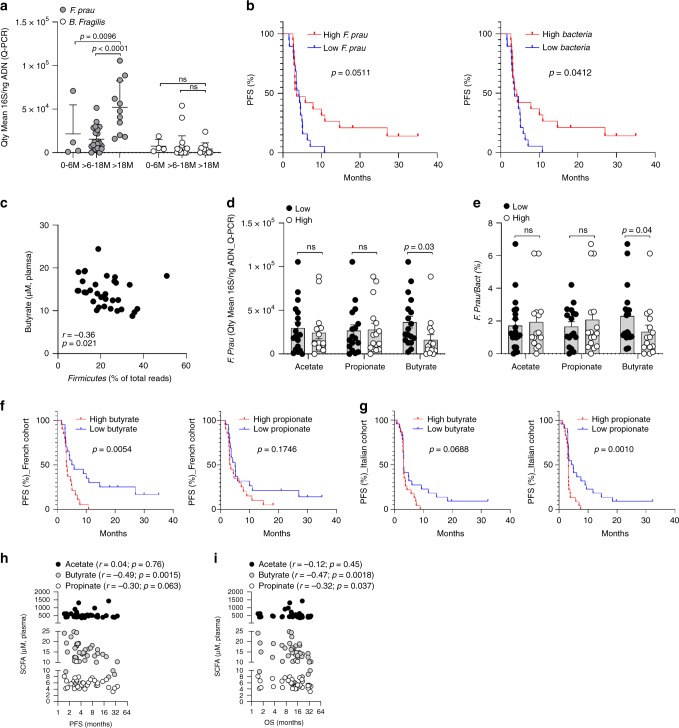
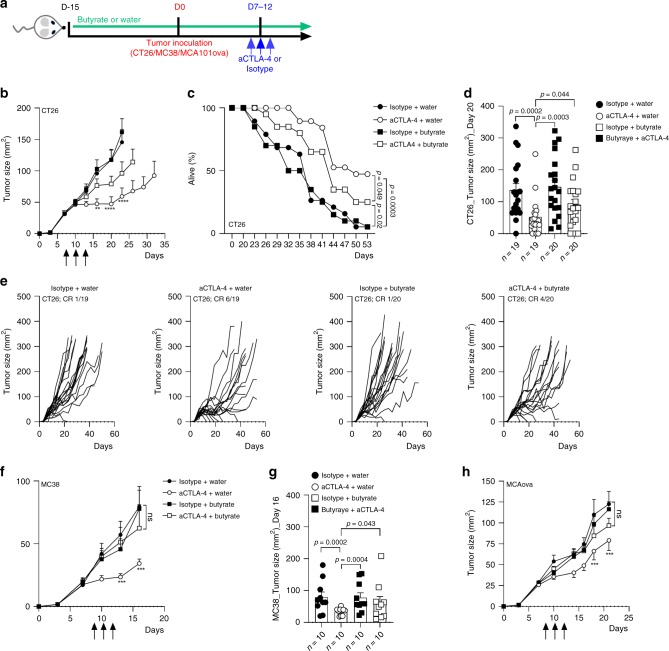
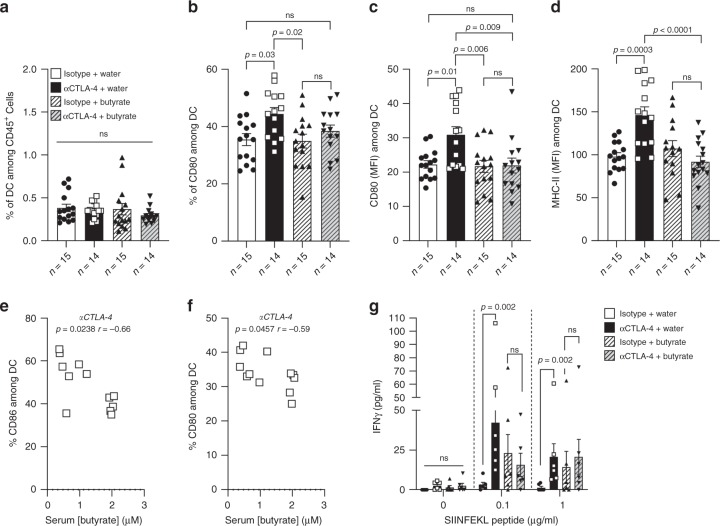
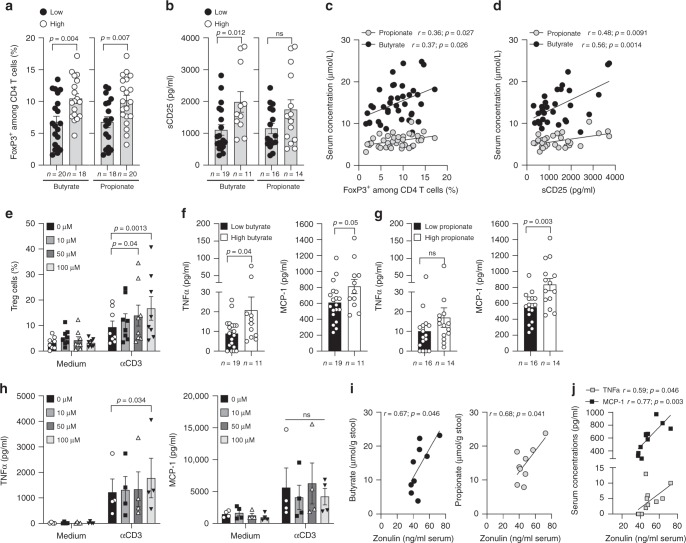
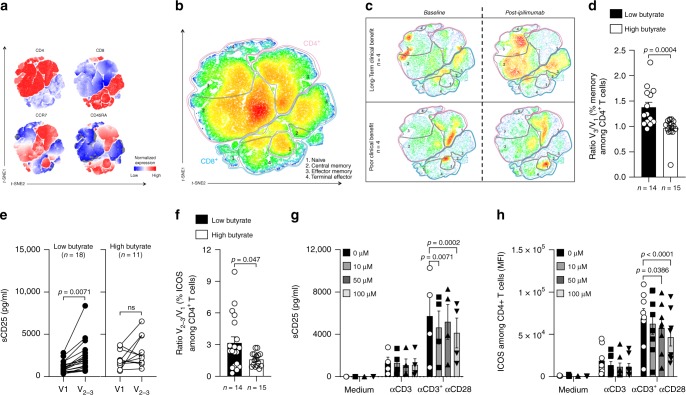
Gut microbiota composition influences the clinical benefit of immune checkpoints in patients with advanced cancer but mechanisms underlying this relationship remain unclear. Molecular mechanism whereby gut microbiota influences immune responses is mainly assigned to gut microbial metabolites. Short-chain fatty acids (SCFA) are produced in large amounts in the colon through bacterial fermentation of dietary fiber. We evaluate in mice and in patients treated with anti-CTLA-4 blocking mAbs whether SCFA levels is related to clinical outcome. High blood butyrate and propionate levels are associated with resistance to CTLA-4 blockade and higher proportion of Treg cells. In mice, butyrate restrains anti-CTLA-4-induced up-regulation of CD80/CD86 on dendritic cells and ICOS on T cells, accumulation of tumor-specific T cells and memory T cells. In patients, high blood butyrate levels moderate ipilimumab-induced accumulation of memory and ICOS + CD4 + T cells and IL-2 impregnation. Altogether, these results suggest that SCFA limits anti-CTLA-4 activity.
Overview
The claims and statistics of this paper haven’t been checked yet.
Free: it reads the open-access text and checks the first 5 claims that cite a source we can check. Create a free account to check every claim.
Integrity signals
Registry
Cites
Statistics
Figures
Verification
Claims the paper makes
The claims and statistics of this paper haven’t been checked yet.
Free: it reads the open-access text and checks the first 5 claims that cite a source we can check. Create a free account to check every claim.
Claims other papers make about this one
Each is checked against this paper’s own text: does it say what the citing paper says it does?
The source backs part of the claim, not all of it — or backs it for a different population, condition or comparison.
In the citing paper
“In contrast, another study demonstrated that high plasma SCFA levels were associated with shorter PFS in cancer patients treated with CTLA-4 inhibitors [60].”
From A Clinical Outcome of the Anti-PD-1 Therapy of Melanoma in Polish Patients Is Mediated by Population-Specific Gut Microbiome Composition (2022) · cites this paper as [60]
Experimental — accuracy not yet measuredThe source backs part of the claim, not all of it — or backs it for a different population, condition or comparison.
In the citing paper
“High serum levels of butyrate and propionate have been associated with resistance to anti-CTLA-4 antibodies and radiotherapy and increased Treg cell numbers in patients with melanoma.”
From Melanoma and microbiota: Current understanding and future directions (2024) · cites this paper as [54]
Experimental — accuracy not yet measuredIn the citing paper
“By contrast, supplementing mice with butyrate in their drinking water appears to be detrimental for CTLA‑4 blockade,151”
From Gut dysbiosis in oncology: a risk factor for immunoresistance (2026) · doi:10.1038/s41422-025-01212-6 · cites this paper as [151]
In the citing paper
“the gut microbiome is able to regulate the sensitivity of malignant solid tumors to immune checkpoint inhibitors (ICIs), such as programmed cell death receptor-1 (PD-1)/ligand 1 (L1) and cytotoxic T-lymphocyte-associated protein 4 (CTLA-4) (10,13,14).”
From The Role of Gut Microbiota in Lung Cancer: From Carcinogenesis to Immunotherapy (2021) · doi:10.3389/fonc.2021.720842 · cites this paper as [13]
In the citing paper
“Furthermore, the addition of anti-CTLA-4 has a profound effect on gut barrier permeability 50,51 , potentially changing the influence of the gut microbiome on ICB response.”
From A gut microbial signature for combination immune checkpoint blockade across cancer types (2024) · cites this paper as [50]
5 more claims about this paper
Create a free account to see every claim other papers make about this one.
Self-check
Percentages, sums and reported differences re-computed from the paper’s own numbers.
The self-check needs the paper’s full text.
Citations
Cites
Improved Survival with Ipilimumab in Patients with Metastatic Melanoma
Hodi, F. S., O'Day, S. J., McDermott, D. F., Weber, R. W., Sosman, J. A., Haanen, J. B., Gonzalez, R., Robert, C., Schadendorf, D., Hassel, J. C., et al. (2010) · New England Journal of Medicine · doi:10.1056/nejmoa1003466 · Cited by 15,155
Self-citationCombined Nivolumab and Ipilimumab or Monotherapy in Untreated Melanoma
Larkin, J., Chiarion-Sileni, V., Gonzalez, R., Grob, J. J., Cowey, C. L., Lao, C. D., Schadendorf, D., Dummer, R., Smylie, M., Rutkowski, P., et al. (2015) · New England Journal of Medicine · doi:10.1056/nejmoa1504030 · Cited by 8,157
Self-citationPembrolizumab versus Ipilimumab in Advanced Melanoma
Robert, C., Schachter, J., Long, G. V., Arance, A., Grob, J. J., Mortier, L., Daud, A., Carlino, M. S., McNeil, C., Lotem, M., et al. (2015) · New England Journal of Medicine · doi:10.1056/nejmoa1503093 · Cited by 5,887
Self-citationCommensal microbe-derived butyrate induces the differentiation of colonic regulatory T cells
Furusawa, Y., Obata, Y., Fukuda, S., Endo, T. A., Nakato, G., Takahashi, D., Nakanishi, Y., Uetake, C., Kato, K., Kato, T., et al. (2013) · Nature · doi:10.1038/nature12721 · Cited by 5,549
The Microbial Metabolites, Short-Chain Fatty Acids, Regulate Colonic T reg Cell Homeostasis
Smith, P. M., Howitt, M. R., Panikov, N., Michaud, M., Gallini, C. A., Bohlooly-Y, M., Glickman, J. N., & Garrett, W. S. (2013) · Science · doi:10.1126/science.1241165 · Cited by 5,413
Metabolites produced by commensal bacteria promote peripheral regulatory T-cell generation
Arpaia, N., Campbell, C., Fan, X., Dikiy, S., van der Veeken, J., deRoos, P., Liu, H., Cross, J. R., Pfeffer, K., Coffer, P. J., et al. (2013) · Nature · doi:10.1038/nature12726 · Cited by 4,838
Gut microbiome modulates response to anti-PD-1 immunotherapy in melanoma patients
Gopalakrishnan, V., Spencer, C. N., Nezi, L., Reuben, A., Andrews, M. C., Karpinets, T. V., Prieto, P. A., Vicente, D., Hoffman, K., Wei, S. C., et al. (2018) · Science · doi:10.1126/science.aan4236 · Cited by 4,812
Ipilimumab plus Dacarbazine for Previously Untreated Metastatic Melanoma
Robert, C., Thomas, L., Bondarenko, I., O'Day, S., Weber, J., Garbe, C., Lebbe, C., Baurain, J.-F., Testori, A., Grob, J.-J., et al. (2011) · New England Journal of Medicine · doi:10.1056/nejmoa1104621 · Cited by 4,496
Self-citationCommensal Bifidobacterium promotes antitumor immunity and facilitates anti–PD-L1 efficacy
Sivan, A., Corrales, L., Hubert, N., Williams, J. B., Aquino-Michaels, K., Earley, Z. M., Benyamin, F. W., Man Lei, Y., Jabri, B., Alegre, M.-L., et al. (2015) · Science · doi:10.1126/science.aac4255 · Cited by 3,888
Anticancer immunotherapy by CTLA-4 blockade relies on the gut microbiota
Vétizou, M., Pitt, J. M., Daillère, R., Lepage, P., Waldschmitt, N., Flament, C., Rusakiewicz, S., Routy, B., Roberti, M. P., Duong, C. P. M., et al. (2015) · Science · doi:10.1126/science.aad1329 · Cited by 3,488
Self-citation
Cited by
Items 201–300 of 530
New insights into gut microbiota–prostate cancer crosstalk
Laaraj, J., Lachance, G., Bergeron, A., Fradet, Y., Robitaille, K., & Fradet, V. (2025) · Trends in Molecular Medicine · doi:10.1016/j.molmed.2025.03.015 · Cited by 27
Wang, W., Fan, J., Zhang, C., Huang, Y., Chen, Y., Fu, S., & Wu, J. (2024) · Microbiological Research · doi:10.1016/j.micres.2024.127668 · Cited by 25
Gut dysbiosis in oncology: a risk factor for immunoresistance
(2026) · doi:10.1038/s41422-025-01212-6 · Cited by 24
“150 By contrast, supplementing mice with butyrate in their drinking water appears to be detrimental for CTLA ‑ 4 blockade, 151 suggesting that baseline SCFA levels or their supplementation may differentially affect ICI regimens.”
Lim, M. Y., Hong, S., & Nam, Y. (2025) · Frontiers in Immunology · doi:10.3389/fimmu.2024.1512683 · Cited by 27
Wekking, D., Silva, C. A. C., Viscò, R., Denaro, N., Lambertini, M., Maccioni, A., Loddo, E., Willard-Gallo, K. E., Scartozzi, M., Derosa, L., et al. (2025) · Critical Reviews in Oncology/Hematology · doi:10.1016/j.critrevonc.2025.104767 · Cited by 30
Pharmacomicrobiomics in Anticancer Therapies: Why the Gut Microbiota Should Be Pointed Out
Conti, G., D’Amico, F., Fabbrini, M., Brigidi, P., Barone, M., & Turroni, S. (2022) · Genes · doi:10.3390/genes14010055 · Cited by 28
“However, it should be noted that a high production of SCFAs, particularly propionate and butyrate (produced by Ruminococcaceae members among others), appeared to limit the antitumor activity of anti-CTLA-4, with reduced systemic inflammation and immune activation in tumor-bearing mice [68].”
BackgroundHow Can the Microbiome Induce Carcinogenesis and Modulate Drug Resistance in Cancer Therapy?
Mendes, I., & Vale, N. (2023) · International Journal of Molecular Sciences · doi:10.3390/ijms241411855 · Cited by 24
“[220] ↑ Group of eight species driven by Bifidobacterium longum Frankel et al.”
BackgroundCombinational therapeutic strategies to overcome resistance to immune checkpoint inhibitors
Al-Saafeen, B. H., Ali, B. R., & Elkord, E. (2025) · Frontiers in Immunology · doi:10.3389/fimmu.2025.1546717 · Cited by 28
Li, X., An, S., Luo, Z., Zhou, P., Wang, L., & Feng, R. (2023) · Food Chemistry · doi:10.1016/j.foodchem.2023.135592 · Cited by 24
Zeng, Y., Shi, Q., Liu, X., Tang, H. T., Lu, B., Zhou, Q., Xu, Y., Chen, M., Zhao, J., Li, Y., et al. (2023) · Frontiers in Oncology · doi:10.3389/fonc.2023.1144534 · Cited by 26
“However, oral supplement of butyrate was not confirmed to promote immune response in mouse model (25).”
BackgroundRole of Gut Microbial Metabolites in the Pathogenesis of Primary Liver Cancers
Pallozzi, M., Gaetano, V. D., Tommaso, N. D., Cerrito, L., Santopaolo, F., Stella, L., Gasbarrini, A., & Ponziani, F. R. (2024) · Nutrients · doi:10.3390/nu16142372 · Cited by 27
“Gut-derived metabolites may have a role in this interaction; in particular, SCFAs inhibit the histone deacetylase, which limits the expression of PD-1 and results in its upregulation, but their role has not been clarified yet [48–51].”
BackgroundRole of gut microbiome on immunotherapy efficacy in melanoma
Bibbò, S., Ianiro, G., Giambò, F., Settanni, C. R., Cammarota, G., & Gasbarrini, A. (2021) · Human Vaccines & Immunotherapeutics · doi:10.1080/21645515.2021.1926759 · Cited by 26
“Moreover, similar results were reported in another study that confirmed the improved clinical response in patients with metastatic melanoma treated with anti-CTLA-4 therapy if gut microbiota was enriched by Faecalibacterium spp.(16)”
ResultZhang, W., Jin, C., Liu, S., Wan, X., Li, Y., Liu, J., Duan, Z., Ma, J., & Gao, Y. (2026) · Frontiers in Immunology · doi:10.3389/fimmu.2026.1757513 · Cited by 22
Gao, D., Shen, Y., Xu, L., Sun, Y., Hu, H., Xu, B., Wang, Z., & Xu, H. (2024) · Drug Resistance Updates · doi:10.1016/j.drup.2024.101158 · Cited by 32
Chen, L., Li, B., Zu, M., Reis, R. L., Kundu, S. C., & Xiao, B. (2025) · Seminars in Cancer Biology · doi:10.1016/j.semcancer.2025.06.012 · Cited by 24
Anderson, G. (2023) · Exploration of Targeted Anti-tumor Therapy · doi:10.37349/etat.2023.00176 · Cited by 24
Malczewski, A. B., Ketheesan, N., Coward, J. I. G., & Navarro, S. (2021) · Frontiers in Immunology · doi:10.3389/fimmu.2021.624434 · Cited by 22
“In contrast to these studies, a separate group, which looked at (mostly melanoma) patients undergoing anti-CTLA-4 Ab monotherapy (n = 85) found that elevated levels of SCFAs were associated with disease progression (53).”
ResultRegulation of Treg Cell Metabolism and Function in Non-Lymphoid Tissues
Yang, K. (2022) · Frontiers in Immunology · doi:10.3389/fimmu.2022.909705 · Cited by 27
Wang, Y., Su, X., Liu, Y., Hu, L., Lin, K., Xu, C., Sun, Z., Sun, C., Guo, H., & Shen, S. (2025) · Acta Pharmaceutica Sinica B · doi:10.1016/j.apsb.2025.05.040 · Cited by 25
“The anti-tumor effect of SCFAs has also been further demonstrated in vitro , although it has been shown that high doses of SCFAs, such as butyric acid and propionic acid could inhibit the anti-tumor effect blocked by CTLA-4 blockers 133 .”
The impact of microbiome dysbiosis on T cell function within the tumor microenvironment (TME)
DiPalma, M. P., & Blattman, J. N. (2023) · Frontiers in Cell and Developmental Biology · doi:10.3389/fcell.2023.1141215 · Cited by 24
“In mice and humans, high C4 concentrations in the blood were associated with resistance to anti-CTLA-4 therapies, evidenced by restrained upregulation of B7 on T cells (Coutzac et al., 2020).”
BackgroundDiet-gut microbial interactions influence cancer immunotherapy
Wang, X., & Geng, S.-T. (2023) · Frontiers in Oncology · doi:10.3389/fonc.2023.1138362 · Cited by 23
“(119) also found that Tregs increased at a butyrate concentration of 50 mmol or 100 mmol, but not at a concentration of 10 mmol.”
BackgroundPotential antitumor effects of short-chain fatty acids in breast cancer models
Muradás, T. C., Freitas, R. D. S., Gonçalves, J. I. B., Xavier, F. A. C., & Marinowic, D. R. (2024) · American Journal of Cancer Research · doi:10.62347/etuq6763 · Cited by 22
Role of gut microbiome in suppression of cancers
Xu, Y., Gao, Z., Liu, J., Yang, Q., & Xu, S. (2025) · Gut Microbes · doi:10.1080/19490976.2025.2495183 · Cited by 21
“123,140 This interaction between the gut microbiome and adaptive immune cells can lead to immune evasion or suppression, depending on the microbial composition.”
Tomela, K., Pietrzak, B., SCHMIDT, M. T., & Mackiewicz, A. A. (2020) · Life · doi:10.3390/life10100219 · Cited by 26
Microbiota: A key factor affecting and regulating the efficacy of immunotherapy
Jiang, Y., Jia, D., Sun, Y., Ding, N., & Wang, L. (2023) · Clinical and Translational Medicine · doi:10.1002/ctm2.1508 · Cited by 22
“23,57 However, two-patient cohorts and preclinical studies were observed the opposite conclusion.”
BackgroundThe gut microbiome modulate response to immunotherapy in cancer
Jiang, S., Kang, Z., Chen, Y., & Fang, J. (2024) · Science China Life Sciences · doi:10.1007/s11427-023-2634-7 · Cited by 22
“However, Coutzac et al. (2020) discovered a correlation between elevated levels of butyrate and propionate in the blood and resistance to CTLA-4 blockade as well as an increased percentage of Treg cells.”
Microbial metabolites: novel therapeutic tools for boosting cancer therapies
Luu, M., & Visekruna, A. (2021) · Trends in Cell Biology · doi:10.1016/j.tcb.2021.08.005 · Cited by 20
Microbiota-centered interventions to boost immune checkpoint blockade therapies
Almonte, A. A., Thomas, S., & Zitvogel, L. (2025) · Journal of Experimental Medicine · doi:10.1084/jem.20250378 · Cited by 19
Susiriwatananont, T., Eiamprapaporn, P., Roque, M. V., Farraye, F. A., Pearlman, A., & Chumsri, S. (2025) · Cells · doi:10.3390/cells14221779 · Cited by 21
“However, clinical data are mixed: some studies link high fecal and plasma SCFA levels to better ICI outcomes [117–119], while others find no significant correlation [120–122].”
Leigh, S., Lynch, C. M. K., Bird, B., Griffin, B. T., Cryan, J. F., & Clarke, G. A. (2022) · Expert Opinion on Drug Metabolism & Toxicology · doi:10.1080/17425255.2022.2043849 · Cited by 19
Delaye, M., Rousseau, A., Mailly-Giacchetti, L., Assoun, S., Sokol, H., & Neuzillet, C. (2023) · Pharmacology & Therapeutics · doi:10.1016/j.pharmthera.2023.108442 · Cited by 20
Gut microbiota in cancer initiation, development and therapy
Zhang, R., Zhang, X., Lau, H. C.-H., & Yu, J. Q. (2024) · Science China Life Sciences · doi:10.1007/s11427-024-2831-x · Cited by 19
“In these cases, high systemic levels of butyrate and propionate were linked to poor outcomes, likely due to an increase in Tregs and a decrease in anti-tumor T cell activity (Coutzac et al., 2020).”
Taming the Sentinels: Microbiome-Derived Metabolites and Polarization of T Cells
Wojciech, Ł., Tan, K. S. W., & Gascoigne, N. R. J. (2020) · International Journal of Molecular Sciences · doi:10.3390/ijms21207740 · Cited by 19
“Work done on French cohorts treated with ipilimumab, a blocking CTL-4 therapeutic, revealed that low baseline expression of butyrate and propionate was associated with longer progression-free survival [73].”
BackgroundLate-Stage Glioma Is Associated with Deleterious Alteration of Gut Bacterial Metabolites in Mice
Herbreteau, A., Aubert, P., Croyal, M., Naveilhan, P., Billon‐Crossouard, S., Neunlist, M., Delneste, Y., Couez, D., & Aymeric, L. (2022) · Metabolites · doi:10.3390/metabo12040290 · Cited by 19
“These metabolites were chosen based on their involvement in brain/gut communication and cancer development or treatment [1,18,19,22,30].”
BackgroundAraji, G., Maamari, J., Ahmad, F. A., Zareef, R. O., Chaftari, P. S., & Yeung, S. J. (2021) · Journal of Immunotherapy and Precision Oncology · doi:10.36401/jipo-21-10 · Cited by 22
“On the contrary, Coutzac et al[33] demonstrated that anti-CTL4 therapy efficacy was negatively influenced by systemic SCFAs.”
BackgroundVandoni, G., D’Amico, F., Fabbrini, M., Mariani, L., Sieri, S., Casirati, A., Guardo, L. D., Vecchio, M. D., Anichini, A., Mortarini, R., et al. (2023) · International Journal of Molecular Sciences · doi:10.3390/ijms241411611 · Cited by 18
“, induction of Treg cells, reduced accumulation of memory T cells, and lower inducible T cell co-stimulator induction in T cells [37].”
BackgroundBouferraa, Y., Chedid, A., Amhaz, G., Lakkiss, A. E., Mukherji, D., Temraz, S. N., & Shamseddine, A. I. (2021) · International Journal of Molecular Sciences · doi:10.3390/ijms22158036 · Cited by 18
“In addition, the butyrate limits CD80/CD86 regulation and thus, increases the effectiveness of the anti-CTLA-4 treatment [58].”
BackgroundImpact of the ileal microbiota on colon cancer
Roberti, M. P., Rauber, C., Kroemer, G., & Zitvogel, L. (2021) · Seminars in Cancer Biology · doi:10.1016/j.semcancer.2021.09.016 · Cited by 18
‘Know thyself’ – host factors influencing cancer response to immune checkpoint inhibitors
Gunjur, A., Manrique-Rincón, A., Klein, O., Behren, A., Lawley, T. D., Welsh, S. J., & Adams, D. J. (2022) · The Journal of Pathology · doi:10.1002/path.5907 · Cited by 20
Targeting regulatory T cell metabolism in disease: Novel therapeutic opportunities
Halvorson, T., Tuomela, K., & Levings, M. K. (2023) · European Journal of Immunology · doi:10.1002/eji.202250002 · Cited by 20
Pharmacomicrobiomics in precision cancer therapy: bench to bedside
Ngoc, K. L., Pham, T. T. H., Nguyen, T. K., & Huong, P. T. (2024) · Frontiers in Immunology · doi:10.3389/fimmu.2024.1428420 · Cited by 20
dos Santos, A., & Vasylyshyn, A. (2025) · Frontiers in Physiology · doi:10.3389/fphys.2025.1595057 · Cited by 20
Advancements in understanding tumor‑resident bacteria and their application in cancer therapy
Luo, Y., Huang, X., Wang, R., Lin, Y., Sun, J., Li, K., Wang, D. Y., Yan, Y., & Qiao, Y. (2025) · Military Medical Research · doi:10.1186/s40779-025-00623-1 · Cited by 31
Mattiola, I., & Diefenbach, A. (2023) · Seminars in Immunology · doi:10.1016/j.smim.2023.101724 · Cited by 19
Consistent Stool Metagenomic Biomarkers Associated with the Response To Melanoma Immunotherapy
Olekhnovich, E. I., Ivanov, A. B., Babkina, A. A., Sokolov, A. A., Игоревич, У. В., Fedorov, D. E., & Ilina, E. N. (2023) · mSystems · doi:10.1128/msystems.01023-22 · Cited by 21
Zhang, Y., Chen, X., Chen, R., Li, L., Ju, Q., Qiu, D., Wang, Y., Jing, P., Chang, N., Wang, M., et al. (2025) · Clinical and Translational Medicine · doi:10.1002/ctm2.70170 · Cited by 23
“21,22 However, microbiome in lower respiratory tract, which was found to be nonsterile in healthy conditions with boost development of metagenomic sequencing, 23 fails to be elucidated in mediating response differences to ICB in NSCLC.”
Li, D., Lan, X., Xu, L., Zhou, S., Luo, H., Zhang, X., Yu, W., Yang, Y., & Fang, X. (2025) · Frontiers in Immunology · doi:10.3389/fimmu.2025.1552010 · Cited by 20
Wu, Q. D., Zhang, Y., Wang, C., Hou, Y., He, W., Wang, L., Xiong, J., Ren, Z., Wang, H., Sui, B., et al. (2023) · Journal of Virology · doi:10.1128/jvi.00656-23 · Cited by 18
“Although SCFAs seem to be potent regulators of the immunosuppressive activity of CD4 T cells by inducing epigenetic reprogramming (59, 60), some recent reports suggest that SCFAs can also intensify the activity of CD41 effector T cells (61, 62), indicating that the impact of microbial metabolites on the immune system…”
BackgroundOtsuka, K., Isobe, J., Asai, Y., Nakano, T., Hattori, K., Ariyoshi, T., Yamashita, T., Motegi, K., Saito, A., Kohmoto, M., et al. (2024) · Cancer Immunology Immunotherapy · doi:10.1007/s00262-023-03608-y · Cited by 19
“In contrast, butyric acid has immunosuppressive effects and has been reported to increase tolerance to CTLA-4 blockade and the percentage of regulatory T cells (Tregs) in the cancer immune system [26].”
BackgroundSi, L., Zhao, R., Han, Y., Shao, S., Ji, Y., Zhang, J., Pan, H., Sun, J., & Feng, Y. (2024) · Clinical and Experimental Medicine · doi:10.1007/s10238-024-01479-w · Cited by 18
“An increased number of Tregs has been linked to a reduced response rate to CTLA-4 mAbs in patients with advanced cancer [43], although such negative effects can be reversed by TGF-β pathway inhibitor galunisertib which restores sensitivity to PD-L1 blockade in CRC mice [30].”
BackgroundAgurto, M. I. G., Valenzuela, N. O., Canedo-Marroquín, G., Espinoza, D., & Tortora, S. C. (2024) · Cancers · doi:10.3390/cancers16203545 · Cited by 17
“Further studies need to be performed [110].”
Chandrasekaran, P., Krausz, M., Han, Y., Mitsuiki, N., Gabrysch, A., Nöltner, C., Proietti, M., Heller, T., Grou, C., Calderon, V., et al. (2025) · Microbiome · doi:10.1186/s40168-025-02028-7 · Cited by 16
“Although several key studies have demonstrated the important role of the microbiota [16, 17] and associated metabolites [18, 19] in mediating response to CTLA4 blockers to treat malignancies, where T reg activity is intentionally dampened, no studies to date have evaluated the role of the…”
Daillère, R., Routy, B., Goubet, A., Cogdill, A. P., Ferrere, G., Silva, C. A.-C., Fluckiger, A., Ly, P., Haddad, Y., Pizzato, E., et al. (2020) · OncoImmunology · doi:10.1080/2162402x.2020.1794423 · Cited by 18
“Moreover, patients from cluster A exhibited lower circulating CD4 Tregs.(41,44) An additional study including 39 patients focusing on various ICI regimens (anti-CTLA-4, anti-PD-1, or the combination of both) corroborated the finding that the metagenomics-based analysis of the gut microbiota composition can”
ResultLipidomic-Based Advances in Diagnosis and Modulation of Immune Response to Cancer
Gil‐de‐Gómez, L., Balgoma, D., & Montero, O. (2020) · Metabolites · doi:10.3390/metabo10080332 · Cited by 16
“These effects limit the clinical outcome of cancer patients treated with anti-CTLA-4 blocking monoclonal antibodies [78].”
BackgroundModeling the Th17 and Tregs Paradigm: Implications for Cancer Immunotherapy
Corral‐Jara, K. F., da Silva, G. R., Fierro, N. A., & Soumelis, V. (2021) · Frontiers in Cell and Developmental Biology · doi:10.3389/fcell.2021.675099 · Cited by 17
Lipid‐based regulators of immunity
Johnson, W. T., Dorn, N. C., Ogbonna, D. A., Bottini, N., & Shah, N. J. (2021) · Bioengineering & Translational Medicine · doi:10.1002/btm2.10288 · Cited by 18
Gut Microbiota-Mediated Modulation of Cancer Progression and Therapy Efficacy
Cheng, P., Shen, P., Shan, Y., Yu, Y., Deng, R., Chen, W., Lu, Y., & Wei, Z. (2021) · Frontiers in Cell and Developmental Biology · doi:10.3389/fcell.2021.626045 · Cited by 18
Om, H., Chand, U., & Kushawaha, P. K. (2023) · Cancer Immunology Immunotherapy · doi:10.1007/s00262-023-03551-y · Cited by 17
“Other research has shown that Bacteroides fragilis produces polysaccharide A, preventing intestinal inflammation by modulating cytokines [12].”
ResultThe role of short-chain fatty acid metabolism in the pathogenesis, diagnosis and treatment of cancer
Hou, M., Yu, Q., Yang, L., Zhao, H., Jiang, P., Qin, L. Y., & Zhang, Q. (2024) · Frontiers in Oncology · doi:10.3389/fonc.2024.1451045 · Cited by 16
“Butyrate also inhibits the upregulation of CD80/ CD86 on dendritic cells and ICOS on T cells induced by CTLA-4 monoclonal antibody, while increasing the proportion of Tregs (53).”
BackgroundShaikh, F. Y., Lee, S., White, J. R., Zhao, Y., Ferri, J. T., Pereira, G., Landon, B. V., Ke, S., Hu, C., Feliciano, J. L., et al. (2024) · Cancers · doi:10.3390/cancers16213644 · Cited by 17
“A number of metabolites produced by or linked to microbes, such as short chain fatty acids, inosine, and trimethylamine N-oxide, have been implicated in other tumor types as modulators of immune cell function in the setting of ICI treatment [20–23].”
BackgroundGanesan, R., & Suk, K. T. (2022) · Livers · doi:10.3390/livers2030012 · Cited by 16
“Analysis of intestinal microbiota shows that specific anaerobic gut microbes are significantly required in allogenic stem cell transplantation (SCT) [5,6].”
BackgroundMetabolization of microbial postbiotic pentanoate drives anti-cancer CAR T cellsPreprint
Staudt, S., Nikolka, F., Perl, M., Franz, J., Leblay, N., Yuan, X.-K., Larrayoz, M., Lozano, T., Warmuth, L., Fante, M. A., et al. (2024) · bioRxiv (Cold Spring Harbor Laboratory) · doi:10.1101/2024.08.19.608538 · Cited by 24
“1d ) [15].”
Cedó, L., Madeira, A., & Caro, P. (2025) · Seminars in Cancer Biology · doi:10.1016/j.semcancer.2025.10.007 · Cited by 14
Zheng, S., Li, K.-Z., Feng, G., Wang, Y.-T., Jia-ning, W. A. N. G., Li, S., & Sun, Y.-D. (2025) · Molecular Cancer · doi:10.1186/s12943-025-02513-5 · Cited by 17
“…pancreatic cancer cohorts to be classified into two microbiome-related categories, designated Mclus-ter Circulating butyrate has been reported to suppress DC differentiation and interfere with CD28-mediated costimulation, processes that are critical for the antitumor efficacy of ipilimumab [88].”
The gut microbiome in solid-organ and haematopoietic-stem-cell transplantation
Swarte, J. C., Zhang, S., Bakker, S. J. L., Björk, J. R., & Weersma, R. K. (2026) · Nature Reviews Microbiology · doi:10.1038/s41579-025-01271-x · Cited by 14
Bouferraa, Y., Fares, C., Zerdan, M. B., & Kennedy, L. B. (2023) · International Journal of Molecular Sciences · doi:10.3390/ijms24119702 · Cited by 15
“However, it has been shown to blunt the response with anti-CLA4 therapy in melanoma patients [49].”
BackgroundGut microbiota in cancer: insights on microbial metabolites and therapeutic strategies
Chen, Y., Wang, X., Ye, Y., & Ren, Q. (2023) · Medical Oncology · doi:10.1007/s12032-023-02249-6 · Cited by 14
“Concurrently, research has revealed that serum SCFA levels correlate with poor anti-cytotoxic T-lymphocyte anti-gen-4 (anti-CTLA-4) responses in patients with metastatic melanoma [16].”
Elango, A., Nesam, V. D., Sukumar, P., Lawrence, I., & Radhakrishnan, A. (2024) · Archives of Microbiology · doi:10.1007/s00203-024-03914-8 · Cited by 15
“Butyr-ate also inhibits the effect of CTLA-4 (anti-cytotoxic T lym - phocyte-associated antigen-4) by reducing the improvement of memory T cells and dendritic cells (Coutzac et al. 2020).”
Xie, W., Sharma, A., Kaushik, H. K., Sharma, L., Nistha, Anwer, M. K., Sachdeva, M., Elossaily, G. M., Zhang, Y., Pillappan, R., et al. (2024) · Heliyon · doi:10.1016/j.heliyon.2024.e35336 · Cited by 16
“SCFAs are essential metabolites produced by gut microbiota, and they have the potential to modulate the immune system [159].”
BackgroundCheng, W., Zhu, N., Wang, J., & Yang, R. (2024) · Frontiers in Immunology · doi:10.3389/fimmu.2024.1331518 · Cited by 14
“High concentration of butyrate in cancer patients can decrease the anticancer activity of ipilimumab by inhibiting the accumulation of T cells (62).”
BackgroundRon, R., Cabello, A., Gosalbes, M. J., Sánchez‐Conde, M., Talavera-Rodríguez, A., Zamora, J., Monge‐Maíllo, B., Jiménez, D., Martínez‐Sanz, J., López, Y., et al. (2021) · The Journal of Infectious Diseases · doi:10.1093/infdis/jiab068 · Cited by 17
Integrating microbiome insights into cervical cancer
Bautista, J., Sardi, P. C., Paguay-Caisabanda, I., Gancino-Guevara, K., & López‐Cortés, A. (2026) · Frontiers in Medicine · doi:10.3389/fmed.2026.1766052 · Cited by 13
“SCFAs, generated by bacterial fermentation, show context-dependent effects: butyrate suppresses proliferation and induces apoptosis in HeLa and Caski cells (78, 79), while other studies suggest neutral or pro-tumorigenic outcomes, including Treg expansion and inflammation (80, 81).”
Poletto, S., Paruzzo, L., Nepote, A., Caravelli, D., Sangiolo, D., & Carnevale‐Schianca, F. (2023) · Cancers · doi:10.3390/cancers16010101 · Cited by 15
“Some effects could also be mediated by the production of short-chain fatty acids [70].”
BackgroundExploiting lactic acid bacteria for colorectal cancer: a recent update
Chen, Y., Yang, B. K., Zhao, J., Ross, R. P., Stanton, C., Zhang, H., & Chen, W. (2022) · Critical Reviews in Food Science and Nutrition · doi:10.1080/10408398.2022.2154742 · Cited by 14
“Butyric acid can regulate inflammatory cytokines and apoptosis-related proteins, which influence the occurrence of CRC, while propionate, induced apoptosis of CRC cells ultimately mitigating CRC (Coutzac et al. 2020).”
BackgroundReview to Understand the Crosstalk between Immunotherapy and Tumor Metabolism
Pandey, P., Khan, F., Upadhyay, T. K., & Maqsood, R. (2023) · Molecules · doi:10.3390/molecules28020862 · Cited by 16
Domingues, C., Cabral, C., Jarak, I., Veiga, F., Dourado, M., & Figueiras, A. (2023) · Vaccines · doi:10.3390/vaccines11030492 · Cited by 13
The Microbiome Matters: Its Impact on Cancer Development and Therapeutic Responses
Chung, I.-Y., Kim, J. H., & Koh, A. (2024) · The Journal of Microbiology · doi:10.1007/s12275-024-00110-7 · Cited by 16
“Elevated levels of blood butyrate and propionate are associated with a reduced antitumor effect of CLTA-4 blockade and an elevated proportion of regulatory T (Treg) cells in both murine tumor models and cancer patients (Coutzac et al., 2020).”
Magnusson, M. K., Vidal, A., Maasfeh, L., Isaksson, S., Malhotra, R., Olsson, H., & Öhman, L. (2021) · International Journal of Molecular Sciences · doi:10.3390/ijms22063084 · Cited by 13
“High levels of butyrate and proprionate have been reported to interfere with the antitumor activity of CTLA-4 blockade in cancer patients and associates to higher frequencies of blood Tregs [27].”
BackgroundInfluentialReens, A. L., Cabral, D. J., Liang, X., Norton, J. E., Therien, A. G., Hazuda, D. J., & Swaminathan, G. (2021) · Frontiers in Immunology · doi:10.3389/fimmu.2021.643255 · Cited by 17
Wegner, V. D., Feile, A., Alb, M., Hudecek, M., Hewitt, P. G., & Mosig, A. S. (2025) · Advanced Healthcare Materials · doi:10.1002/adhm.202405003 · Cited by 15
The gut-tumor connection: the role of microbiota in cancer progression and treatment strategies
Wei, Z., Gao, G., He, Q., Kwok, L. Y., & Sun, Z. (2025) · Journal of Advanced Research · doi:10.1016/j.jare.2025.08.038 · Cited by 14
Lipids from gut microbiota: pursuing a personalized treatment
Carneiro, P. V., Montenegro, N. D. A., Lana, A. J., Amato, A. A., & Santos, G. M. (2022) · Trends in Molecular Medicine · doi:10.1016/j.molmed.2022.06.001 · Cited by 13
Complex Role of Microbiome in Pancreatic Tumorigenesis: Potential Therapeutic Implications
Amara, S., Yang, L. V., Tiriveedhi, V., & Muzaffar, M. (2022) · Cells · doi:10.3390/cells11121900 · Cited by 12
“However, in contrast, SCFAs have also shown to be correlated with the expansion of immunosuppressive pro-cancer regulatory CD4+T cells (Treg) and a resistance to anticancer immune-checkpoint inhibitor therapy [47].”
BackgroundBacteria and macrophages in the tumor microenvironment
Xu, S. S., Xiong, Y., Fu, B., Guo, D. L., Sha, Z., Lin, X., & Wu, H. (2023) · Frontiers in Microbiology · doi:10.3389/fmicb.2023.1115556 · Cited by 14
“Colorectal cancer Firmicutes Roseburia Coutzac et al. (2020)”
Therapeutic Modulation of the Microbiome in Oncology: Current Trends and Future Directions
Saraswat, I., & Goel, A. (2024) · Current Pharmaceutical Biotechnology · doi:10.2174/0113892010353600241109132441 · Cited by 15
Du, P., Jing, J., & He, X. (2022) · Frontiers in Pharmacology · doi:10.3389/fphar.2022.1091124 · Cited by 15
“In a clinical study of solid tumor patients treated with anti-CTLA-4 antibody, low levels of serum butyrate and propionate were observed to be associated with prolonged progression-free survival (PFS) in the pooled cohort (n = 85), and there was a correlation between gut bacteria and systemic SCFA concentrations (Cout…”
BackgroundShort-chain fatty acids in viral infection: the underlying mechanisms, opportunities, and challenges
Tsui, Y., Wu, X., Zhang, X., Ye, P., Mok, C. K. P., Chan, F. K. L., Ng, S. C., & Tun, H. M. (2024) · Trends in Microbiology · doi:10.1016/j.tim.2024.10.001 · Cited by 13
The Skin Microbiome: A New Key Player in Melanoma, From Onset to Metastatic Stage
L'Orphelin, J. ‐., Dompmartin, A., & Dréno, B. (2025) · Pigment Cell & Melanoma Research · doi:10.1111/pcmr.13224 · Cited by 14
“Elevated serum levels of butyrate and propionate have been linked to resistance to anti- CTLA-4 and an increase in Treg cells in melanoma patients (Uribe-Herranz et al. 2020; Coutzac et al. 2020).”
Zhou, Y., Han, W., Feng, Y., Wang, Y., Liu, X., Sun, T., & Xu, J. (2025) · Frontiers in Immunology · doi:10.3389/fimmu.2025.1539653 · Cited by 14
“It should also be noted that a clinical study found that high levels of butyrate in the blood can inhibit the aggregation of memory T cells and ICOS+ CD4+ T cells, as well as IL-2 impregnation, induced by ipilimumab (40).”
Fan, Y., Li, Y., Gu, X., Chen, N., Chen, Y., Fang, C., Wang, Z., Yin, Y., Deng, H., & Dai, L. (2025) · Chinese Medical Journal · doi:10.1097/cm9.0000000000003430 · Cited by 11
“In a clinical study in a cohort of French and Italian patients treated with anti-cytotoxic T lymphocyte-associated anti-gen-4 (CTLA-4) antibodies, serum concentrations were evaluated [84] and SCFA regulates anti-CTLA-4 activity was found between microbes.”
Targeting lipid metabolism to enhance cancer immunotherapy
Zhao, D., Wu, L., & Li, Y. (2025) · Biochimica et Biophysica Acta (BBA) - Reviews on Cancer · doi:10.1016/j.bbcan.2025.189416 · Cited by 13
Dayhimi, A., Jazi, K., Bigdeli, Y., Farhoudi, F., Erfanimanesh, M., Esmaeili, M., Gorjipour, F., Ajami, M., & Pazoki–Toroudi, H. (2025) · Technology in Cancer Research & Treatment · doi:10.1177/15330338251365700 · Cited by 14
“181 However, as an anti-in fl ammatory and anti-carcinogenic agent, they act through various mechanisms such as inhibiting histone deacetylase (HDAC) activity and acting as a ligand for G-protein-coupled receptor to facilitate the expansion and differentiation of regulatory T-cells and promote…”
Gut microbiome metabolites in lung cancer: The emerging importance of short-chain fatty acids
Bishoyi, A. K., Al-Hasnaawei, S., Salem, K. H., Ganesan, S., Shankhyan, A., Nanda, A., Sinha, A., Ray, S., Nathiya, D., & Hammady, F. J. (2025) · International Immunopharmacology · doi:10.1016/j.intimp.2025.115821 · Cited by 13
Cao, P., Li, Q., Li, Y., Guo, H., Wei, C., Xu, R., Ouyang, C., Chen, W., Wang, L., & Wang, Z. (2025) · Nature Communications · doi:10.1038/s41467-025-67437-6 · Cited by 12
T cell immunotherapy for solid tumors: limitations, progress, and future prospects
Wang, Y., Zhang, B., Wang, Y., Tan, Y., Hu, X., Che, X., & Feng, M. (2026) · Frontiers in Immunology · doi:10.3389/fimmu.2026.1755751 · Cited by 17
Microbial molecules, metabolites, and malignancy
Thomas, R. M. (2025) · Neoplasia · doi:10.1016/j.neo.2025.101128 · Cited by 11
Gut dysbiosis from high-salt diet promotes glioma via propionate-mediated TGF-β activation
Kim, C. W., Kim, H.-J., Kang, I., Ku, K. B., Kim, Y., Park, J. H., Lim, J., Kang, B. H., Park, W. H., La, J., et al. (2025) · The Journal of Experimental Medicine · doi:10.1084/jem.20241135 · Cited by 13
Pan, D., Bao, Y., Lu, X., Gu, Q., Zhang, Y., & Zheng, Y. (2025) · International Journal of Molecular Medicine · doi:10.3892/ijmm.2025.5655 · Cited by 11
Life Factors and Melanoma: From the Macroscopic State to the Molecular Mechanism
Wang, H., Zhang, H., Zhou, Y., Li, C., & Guo, W. (2025) · Advanced Science · doi:10.1002/advs.202501388 · Cited by 10
Communication between gut microbiota-derived metabolites and the tumor microenvironment
Hu, X., Li, B., Li, Y., Liang, Y., & Huang, T. (2025) · Frontiers in Immunology · doi:10.3389/fimmu.2025.1649438 · Cited by 11
“For instance, high levels of butyrate have been suggested to impair anti-CTLA-4 therapy by increasing the frequencies of Tregs and reducing tumor-speci fi c T cell in fi ltration (82).”
Metadata
- Authors
- Coutzac, C., Jouniaux, J.-M., Paci, A., Schmidt, J., Mallardo, D., Seck, A., Asvatourian, V., Cassard, L., Saulnier, P., Lacroix, L., Woerther, P.-L., Vozy, A., Naigeon, M., Nebot-Bral, L., Desbois, M., Simeone, E., Mateus, C., Boselli, L., Grivel, J., Soularue, E., Lepage, P., Carbonnel, F., Ascierto, P. A., Robert, C., & Chaput, N.
- Affiliations
- Centre National de la Recherche Scientifique (FR)
- Istituto Nazionale Tumori IRCCS "Fondazione G. Pascale" (IT)
- Institut Gustave Roussy (FR)
- AgroParisTech (FR)
- Université Paris-Saclay (FR)
- Corresponding author
- Chaput, Nathalie
- ORCID
- Coutzac, Clélia
- Paci, Angelo
- Schmidt, Julien
- Mallardo, Domenico
- Seck, Atmane
- Cassard, Lydie
- Saulnier, Patrick
- Lacroix, Ludovic
- Woerther, Paul-Louis
- Vozy, Aurore
- Naigeon, Marie
- Desbois, Mélanie
- Simeone, Ester
- Mateus, Christine
- Boselli, Lisa
- Lepage, Patricia
- Carbonnel, Franck
- Ascierto, Paolo Antonio
- Robert, Caroline
- Chaput, Nathalie
- Venue
- Nature Communications
- Published
- 2020-05-01
- Volume
- 11
- Issue
- 1
- Pages
- 2168-2168
- ISSN
- 2041-1723 (ISSN-L)
- PMC
- PMC7195489
- OpenAlex
- W3022450273
- Semantic Scholar
- 814b2fcb75bf9ea248984c70830cc85812a61f27
- Cited by
- 513
- References
- 54
- Citations by year
- 2026: 89 · 2025: 105 · 2024: 84 · 2023: 86 · 2022: 74 · 2021: 58 · 2020: 17
- FWCI
- 21.22
- Type
- journal article
- Language
- en
- Open access
- gold
- doi.org
- Licence
- cc-by
- creativecommons.org/licenses/by/4.0 (tdm)
- creativecommons.org/licenses/by/4.0 (vor)
- Locations
- Nature Communications (publishedVersion, cc-by)
- PubMed Central (publishedVersion, cc-by)
- PubMed (publishedVersion)
- HAL (submittedVersion, cc-by)
- HAL (submittedVersion)
- RePEc: Research Papers in Economics (submittedVersion)
- DOAJ (DOAJ: Directory of Open Access Journals) (submittedVersion, cc-by-sa)
- Funders
- Agence Nationale de la Recherche (ANR-10-IBHU-0001)
- Institut National de la Santé et de la Recherche Médicale (INCa-DGOS-INSERM_12551)
- Centre National de la Recherche Scientifique (INCa-DGOS-INSERM_12551)
- Institut National Du Cancer (INCa-DGOS-INSERM-6043, INCa-DGOS-INSERM-12551, ANR-10IBHU-0001, 2012-1-RT-14-IGR-01)
- Institut Gustave-Roussy
- Direction Générale de l’offre de Soins
- Fondation Gustave Roussy
- Topics
- Health Sciences › Medicine › Oncology › Cancer Immunotherapy and Biomarkers
- Life Sciences › Biochemistry, Genetics and Molecular Biology › Molecular Biology › Gut microbiota and health
- Life Sciences › Immunology and Microbiology › Immunology › T-cell and B-cell Immunology
- Keywords
- short-chain fatty acids, butyrate, propionate, CTLA-4 blockade, immune checkpoint inhibitors, gut microbiota, cancer immunotherapy resistance, regulatory T cells, dendritic cells, ICOS, memory T cells, ipilimumab, interleukin-2, cancer immunotherapy
- MeSH terms
- Gastrointestinal Microbiome, Ipilimumab, Animals, Butyrates, Dendritic Cells, Fatty Acids, Volatile, Humans, Mice, Inbred BALB C, Neoplasms, Propionates, RNA, Ribosomal, 16S, T-Lymphocytes, Biomarkers, Tumor, B7-1 Antigen, T-Lymphocytes, Regulatory, Mice, B7-2 Antigen, CTLA-4 Antigen
About these checks
Registry, retraction, Cites and statistics results are computed, not judged, with one exception: a printed reference that no index lists is read once by a model before it counts as a citation error. Claims are extracted by a model and kept only when their quote appears verbatim in the text; each cited source is then checked, with a model’s help, for whether it says what the claim relies on. Those verdicts can be wrong — read the claim’s quote and the cited source before relying on one.
Statistics and arithmetic are recomputed, not judged.
Confidence bands are shown only for fields calibrated on our annotated test set. None is calibrated yet, so no band is shown.
What counts as a claim ›How we measure confidence ›How we check this ›
Are you an author, or do you see a problem with this page? Request a review
Data sources
Bibliographic data: Semantic Scholar, OpenAlex, Crossref.
Contains information from the Semantic Scholar Academic Graph Datasets, made available under the ODC Attribution License (ODC-BY 1.0).
Semantic Scholar’s data is described in: Kinney, R., et al. (2023). The Semantic Scholar Open Data Platform. arXiv:2301.10140.
