

Nanoproteomics enables proteoform-resolved analysis of low-abundance proteins in human serum
Open accessThe DOI matches its Crossref record; 58 of the 64 references it cites were found in a registry or an index, and 1 are not checked yet; 18 of the 64 sources its claims cite were checked for support.
Abstract
Top-down mass spectrometry (MS)-based proteomics provides a comprehensive analysis of proteoforms to achieve a proteome-wide understanding of protein functions. However, the MS detection of low-abundance proteins from blood remains an unsolved challenge due to the extraordinary dynamic range of the blood proteome. Here, we develop an integrated nanoproteomics method coupling peptide-functionalized superparamagnetic nanoparticles (NPs) with top-down MS for the enrichment and comprehensive analysis of cardiac troponin I (cTnI), a gold-standard cardiac biomarker, directly from serum. These NPs enable the sensitive enrichment of cTnI (<1 ng/mL) with high specificity and reproducibility, while simultaneously depleting highly abundant proteins such as human serum albumin (>10 10 more abundant than cTnI). We demonstrate that top-down nanoproteomics can provide high-resolution proteoform-resolved molecular fingerprints of diverse cTnI proteoforms to establish proteoform-pathophysiology relationships. This scalable and reproducible antibody-free strategy can generally enable the proteoform-resolved analysis of low-abundance proteins directly from serum to reveal previously unachievable molecular details.
Verified 2026-10-05 · 1 reference not checked yet
Overview
CoChat Summary
TL;DR
The paper develops an antibody-free top-down nanoproteomics method that uses peptide-functionalized superparamagnetic nanoparticles to enrich cardiac troponin I (cTnI) directly from human serum and analyze its proteoforms by top-down mass spectrometry. The approach enriches cTnI while depleting highly abundant human serum albumin and detects cTnI proteoforms at clinically relevant low ng/mL levels.
Key findings
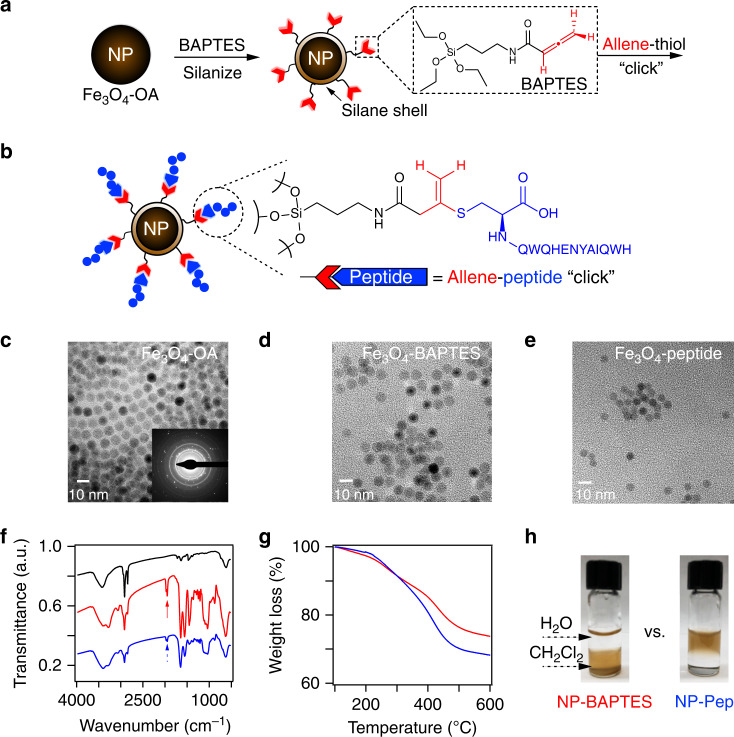
- The NP-Pep uses a 13-mer cTnI-binding peptide (HWQIAYNEHQWQC) with a reported Kd of 270 pM, targeting cTnI residues 114–144; peptide surface density was inferred as ~0.034 µmol peptide/mg NP, and NP-Pep zeta potential in 0.1× PBS was ~−38 mV.
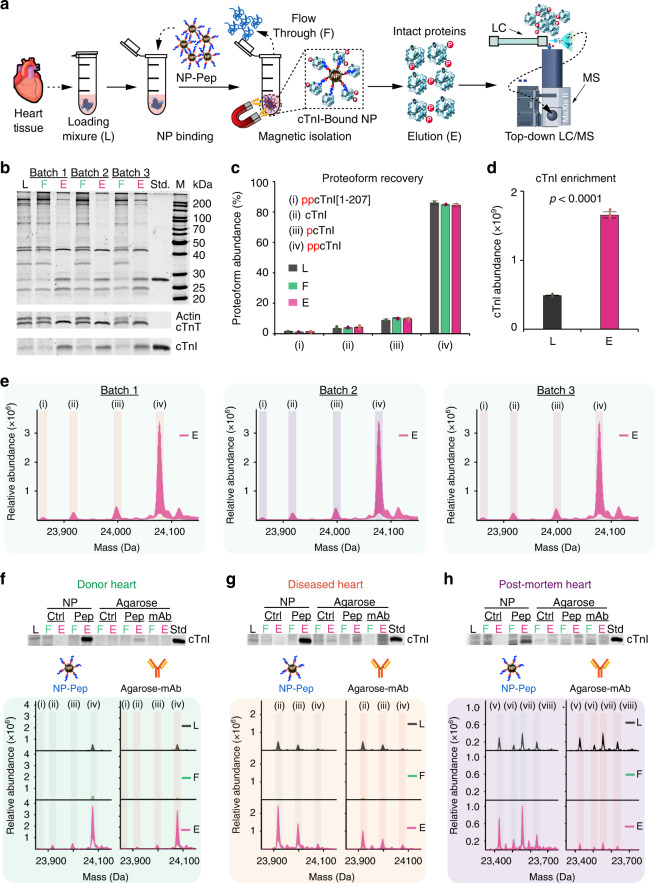
- From human heart sarcomeric extracts, NP-Pep enriched cTnI over threefold (p < 0.0001) relative to the loading mixture and preserved endogenous cTnI proteoform distributions, including ppcTnI[1-207], cTnI, pcTnI, and ppcTnI.
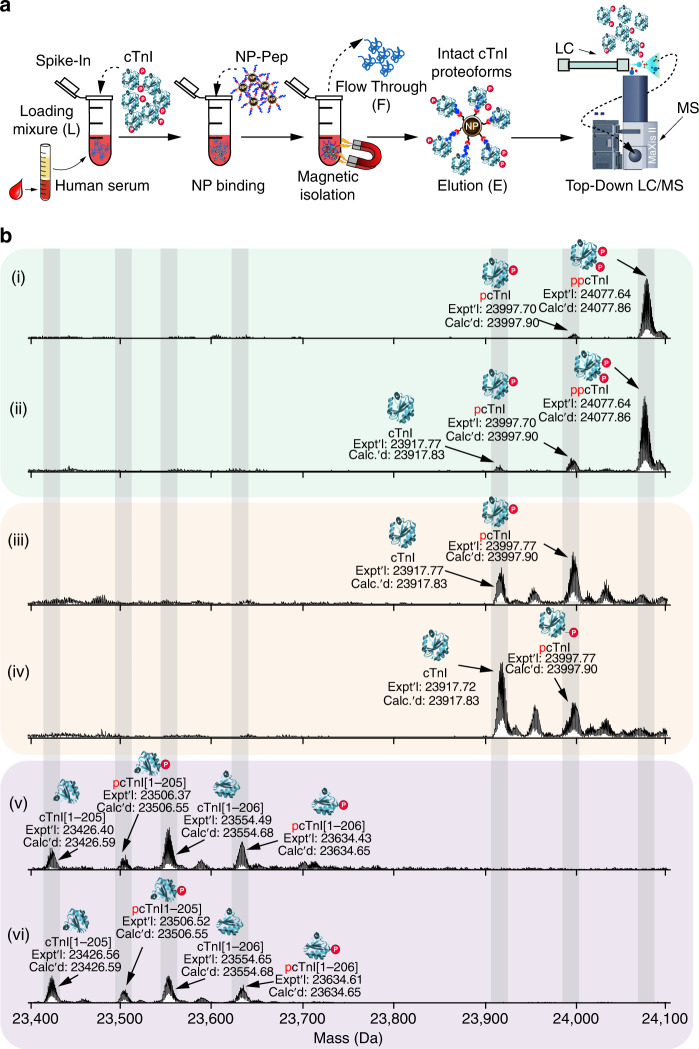
- From human serum, NP-Pep enabled detection of cTnI proteoforms with an LOD of 0.75 ng/mL, while top-down MS alone detected purified cTnI with an LOD of 0.06 ng/mL; NP-Pep showed a 115-fold cTnI enrichment factor and ~51% serum cTnI recovery, compared with ~17% for Agarose-mAb.
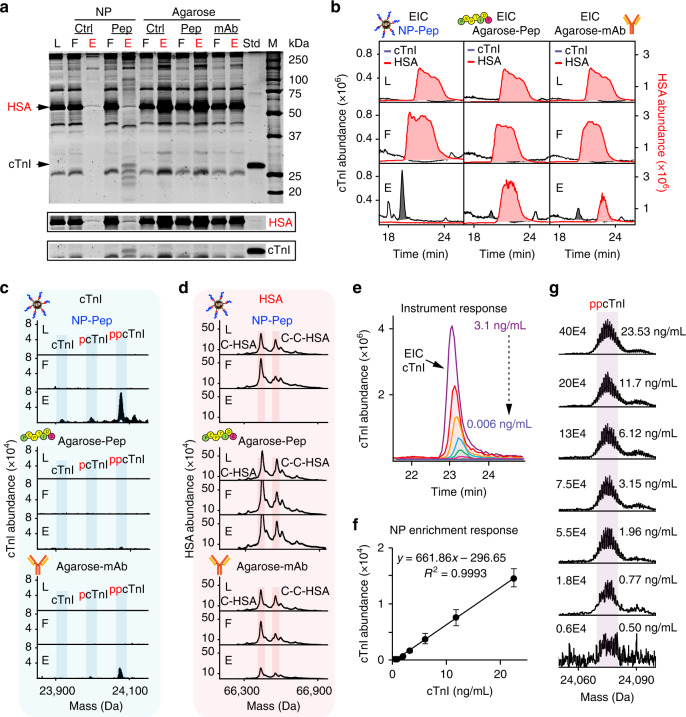
- NP-Pep nearly completely depleted HSA, which is >10 orders of magnitude more abundant than circulating cTnI, and revealed proteoform fingerprints: donor hearts were primarily phosphorylated cTnI, dilated cardiomyopathy hearts showed decreased phosphorylated cTnI, and postmortem samples showed C-terminal truncated cTnI proteoforms.
Methods
- The authors synthesized BAPTES-silanized Fe3O4 nanoparticles and conjugated the cTnI-binding peptide via cysteine-thiol chemistry, characterizing NPs by TEM, FTIR, TGA, and zeta potential.
- cTnI enrichment was tested from human heart sarcomeric extracts and from human male AB serum spiked with cTnI from donor, dilated cardiomyopathy, and postmortem heart samples; NP-Pep was compared with agarose-peptide and anti-cTnI monoclonal antibody (M46) platforms.
- Enriched fractions were analyzed by SDS-PAGE, ELISA, and top-down LC/MS using reversed-phase liquid chromatography coupled to a maXis II Q-TOF mass spectrometer, with deconvolution and MS/MS for proteoform identification.
Limitations
- The paper states that some nonspecific proteins were still retained from serum enrichment, that cTnI recovery could be improved by automating the NP-Pep workflow to reduce sample handling and protein loss, and that further instrumentation improvements are needed to reach the diagnostic cutoff used by contemporary cTnI ELISA (≤0.04 ng/mL).
- The paper notes that the allene carboxamide chemistry relies on a Cys nonessential to the peptide binding sequence, with alternative bioorthogonal coupling approaches needed if such a Cys is unavailable.
- Evident from the text: serum experiments used spike-in cTnI from a limited set of human heart samples rather than endogenous circulating cTnI from a large patient cohort, so clinical validation remains future work.
Model-written summary. Check it against the paper before relying on it.
Integrity signals
Registry
Cites
Statistics
Figures
Verification
Claims the paper makes
7 Valid · 0 Not valid · 16 Not checked · 50 Own results and interpretations
The cited sources support only part of this claim — read each source’s verdict below.
In the paper
“Moreover, the intrinsic challenge of designing and evaluating epitope-specific antibodies for PTMs makes it difficult to develop robust antibodies suitable for proteoform analysis16.”
§ Nanoproteomics enables proteoform-resolved analysis of low-abundance proteins in human serum > Introduction
What the sources say
- Partly supportedcites [16] Janes KA Fragile epitopes—antibody’s guess is as good as yours Sci. Signal. 2020 13 eaaz8130 31992582 PMC7231929 sourceExperimental — accuracy not yet measured
The paper’s Abstract describes how a posttranslational modification can perturb antibody binding, and its discussion of PP2A C reports that phosphorylation or methylation made several antibodies unsuitable for particular assays. It also describes epitope recognition and antibody selection as difficult to predict. It does not specifically address developing PTM-specific antibodies for proteoform analysis, so that application extends beyond what the paper says. (LLM, conf=0.83)
plainstates a cause- Asserted: passes — The authors put it forward as true.
- Checkable: passes — It can be checked against evidence.
- Load-bearing: passes — The paper’s conclusions depend on it.
- Based: passes — The paper gives a reason why it holds.
- Partly supported
The cited sources support only part of this claim — read each source’s verdict below.
In the paper
“However, the MS detection of low-abundance proteins remains an unsolved challenge due to high dynamic range of the human proteome8–10.”
§ Nanoproteomics enables proteoform-resolved analysis of low-abundance proteins in human serum > Introduction
What the sources say
- Partly supportedcites [8] Chen B Brown KA Lin Z Ge Y Top-down proteomics: ready for prime time? Anal. Chem. 2018 90 110 127 29161012 PMC6138622 sourceExperimental — accuracy not yet measured
Our copy does support the core of the claim: the Concluding Remarks list 'detection and characterization of high MW and low-abundance proteins' among on-going challenges that 'remain to be further addressed by novel methodologies', and the Sample Preparation and Data Acquisition sections describe low-abundance proteoforms being 'overwhelmed by the signals of co-eluting non-phosphorylated proteins' or 'hindered or missed entirely' because abundant precursors dominate DDA selection. What the source does not support is the stated cause and context: it never attributes the difficulty to the extraordinary dynamic range of the human (or blood) proteome — its only dynamic-range statements concern instrument response ('for intact proteins, the dynamic range and the instrument response greatly vary among instrument types', Quantitative Top-Down Proteomics) and note that instrumentation advances have given top-down 'wider dynamic range'. Blood/plasma appears only incidentally (Cheon et al.'s low-MW plasma proteome comparison, Applications > Global profiling), not as a proteome-wide dynamic-range obstacle. (LLM, conf=0.75)
- Not checked yetcites [9] Rifai N Gillette MA Carr SA Protein biomarker discovery and validation: the long and uncertain path to clinical utility Nat. Biotechnol. 2006 24 971 983 16900146 source
- Not checked yetcites [10] Anderson NL Anderson NG The human plasma proteome: history, character, and diagnostic Prospects 2002 1 845 867 12488461
plainstates a cause- Asserted: passes — The authors put it forward as true.
- Checkable: passes — It can be checked against evidence.
- Load-bearing: passes — The paper’s conclusions depend on it.
- Based: passes — The paper gives a reason why it holds.
- Partly supported
The cited sources support only part of this claim — read each source’s verdict below.
In the paper
“Recent studies have shown that cTnI is heavily modified and its proteoforms arising from various PTMs can provide new insights to the molecular mechanisms underlying cardiovascular diseases27–31.”
§ Nanoproteomics enables proteoform-resolved analysis of low-abundance proteins in human serum > Introduction
What the sources say
- Supportedcites [27] Soetkamp D The continuing evolution of cardiac troponin I biomarker analysis: from protein to proteoform Expert Rev. Proteomics 2017 14 973 986 28984473 PMC6174071 source
The 'Posttranslational Modifications as compensatory mechanisms and potential biomarkers' section says cTnI undergoes extensive PTMs and that altered PTM profiles can reflect dysregulated cellular signaling during cardiac disease. The Conclusion describes analysis of modified cTnI proteoforms as revealing a molecular fingerprint of myocardial health. These passages support the claim's potential for mechanistic insight; no page numbers are supplied in our copy. (LLM, conf=0.90)
- Not checked yetcites [28] Labugger, R., Organ, L., Collier, C., Atar, D. & Van Eyk, J. E. Extensive troponin I and T modification detected in serum from patients with acute myocardial infarction. Circulation102, 1221–1226 (2000). 10982534 source
- Not checked yetcites [29] Murphy AM Transgenic mouse model of stunned myocardium Science 2000 287 488 491 10642551 source
- Supportedcites [30] Peng Y Top-down proteomics reveals concerted reductions in myofilament and Z-disc protein phosphorylation after acute myocardial infarction Mol. Cell. Proteomics 2014 13 2752 2764 24969035 PMC4189000 source
The Results (page unavailable) identify distinct phosphorylated cTnI proteoforms and report reduced cTnI phosphorylation after acute myocardial infarction. The Discussion (page unavailable) connects cTnI phosphorylation to cardiac function and says that understanding these early molecular changes could inform interventions. Together, these passages support the hedged claim that studying cTnI proteoforms can provide insight into cardiovascular disease mechanisms. (LLM, conf=0.88)
- Partly supportedcites [31] Dong X Augmented phosphorylation of cardiac troponin I in hypertensive heart failure J. Biol. Chem. 2012 287 848 857 22052912 PMC3256890 sourceExperimental — accuracy not yet measured
The introduction (p. 2) says studying endogenous cTnI modifications in heart-failure models is important for understanding regulation of cardiac dysfunction. The discussion (p. 8) says mapping phosphorylation across multiple cTnI sites is crucial to understanding phosphorylation in cardiac disease. The paper supports the value of studying cTnI phosphorylation, but does not establish the broader claim about proteoforms arising from various kinds of PTMs across cardiovascular diseases. (LLM, conf=0.83)
plainstates an association- Asserted: passes — The authors put it forward as true.
- Checkable: passes — It can be checked against evidence.
- Load-bearing: passes — The paper’s conclusions depend on it.
- Based: passes — The paper gives a reason why it holds.
- Supported
The sources with a verdict support this claim; the rest weren’t checked yet, have no full text we could read, or their verdicts aren’t rated yet.
In the paper
“Front-end protein enrichment strategies are therefore required to specifically capture and enrich low-abundance proteins from the complex biological milieu prior to MS analysis9,11.”
§ Nanoproteomics enables proteoform-resolved analysis of low-abundance proteins in human serum > Introduction
What the sources say
- Not checked yetcites [9] Rifai N Gillette MA Carr SA Protein biomarker discovery and validation: the long and uncertain path to clinical utility Nat. Biotechnol. 2006 24 971 983 16900146 source
- Supportedcites [11] Xie S Moya C Bilgin B Jayaraman A Walton SP Emerging affinity-based techniques in proteomics Expert Rev. Proteomics 2009 6 573 583 19811078 PMC3967512 source
The Affinity Prefractionation section states that affinity-based separation methods are useful for enrichment of low abundance proteins in complex samples and reducing sample complexity, and that the high specificity between bait and capture molecule minimizes non-specific capture — matching 'specifically capture and enrich low-abundance proteins'. The necessity framing is echoed in the Abstract ('no single technique is adequate', limitations drive complementary methods for greater dynamic range/specificity) and Current Proteomics Methods (MS 'unlikely... stand-alone'; serum concentration range spans at least five orders of magnitude), with pre-MS separation/fractionation discussed throughout. (LLM, conf=0.82)
plainstates a cause- Asserted: passes — The authors put it forward as true.
- Checkable: passes — It can be checked against evidence.
- Load-bearing: passes — The paper’s conclusions depend on it.
- Based: passes — The paper gives a reason why it holds.
The cited sources support only part of this claim — read each source’s verdict below.
In the paper
“These serum cTnI enrichment results illustrate the major benefits of functionalized NPs compared to current antibody-based approaches: (1) NPs are capable of reproducibly and effectively enriching cTnI (Supplementary Fig. 23) across all tested serum samples without the use of antibody, thus overcoming the intrinsic antibody-related limitations (vide supra)14,15,51–53.”
§ Nanoproteomics enables proteoform-resolved analysis of low-abundance proteins in human serum > Results > Enrichment of low-abundance proteoforms from human serum
What the sources say
- Partly supportedcites [14] Baker M Reproducibility crisis: blame it on the antibodies Nature 2015 521 274 276 25993940 sourceExperimental — accuracy not yet measured
Baker (2015) supports only the 'intrinsic antibody-related limitations' half of the attributed clause: BLAME IT ON THE ANTIBODIES (p. 1) states antibodies are 'among the most common causes of problems', with batch-to-batch variability producing 'dramatically differing results' and antibodies recognizing extra proteins; VARIABILITY and CROSS-REACTIVITY sidebars (p. 3) and 'ANTIBODIES ARE NOT MAGIC REAGENTS' (p. 2) add missing validation/lot-to-lot data and up to half of commercial antibodies being unreliable. However, our copy says nothing about nanoparticles, an NP-Pep conjugate, or reproducible enrichment of cardiac troponin I (cTnI) in serum — searched 'cardiac troponin I enrichment nanoparticle peptide serum' with no relevant passage — so the experimental claim that NPs reproducibly and effectively enrich cTnI across all tested serum samples without antibody is the citing authors' own result and is not attributable to this news feature. (LLM, conf=0.75)
- Partly supportedcites [15] Bradbury A Plückthun A Reproducibility: standardize antibodies used in research Nature 2015 518 27 29 25652980 sourceExperimental — accuracy not yet measured
Our copy of the Bradbury/Plückthun Nature commentary fully substantiates the 'intrinsic antibody-related limitations' clause the citation cluster is attached to: it reports that fewer than half of ~6,000 routinely used commercial antibodies recognized only their specified targets (C, p.1), that polyclonal functionality varies batch to batch with only 0.5-5% of antibodies binding the intended target and that hybridoma lines can die off or lose their antibody genes (WILDLY VARIABLE, p.1), and that only 44% of publications give enough information to repurchase the same antibody. However, nothing in our copy addresses the NP-Pep/nanoparticle-peptide result itself — reproducibly and effectively enriching cTnI across tested serum samples is the citing authors' own data (their Supplementary Fig. 23), and the paper mentions only other non-antibody reagent classes (recombinant protein scaffolds, nucleic-acid-based reagents/aptamers; TWO STEPS, p.2), not nanoparticles or cardiac troponin enrichment in serum. (LLM, conf=0.72)
- Not checked yetcites [51] Apple FS Counterpoint: standardization of cardiac troponin I assays will not occur in my lifetime Clin. Chem. 2012 58 169 171 21940657 source
- Not checked yetcites [52] Apple FS Sandoval Y Jaffe AS Ordonez-Llanos J Cardiac troponin assays: guide to understanding analytical characteristics and their impact on clinical care Clin. Chem. 2017 63 73 81 28062612 source
- Could not verifycites [53] Herman DS Kavsak PA Greene DN Variability and error in cardiac troponin testing: an ACLPS critical review Am. J. Clin. Pathol. 2017 148 281 295 28967956 sourceExperimental — accuracy not yet measured
Our copy of Herman et al. (2017, AJCP) is an ACLPS critical review of preanalytical, analytical and postanalytical error in cTn testing; no passage addresses nanoparticle or peptide-based, antibody-free enrichment of cTnI, nor any 'NP-Pep' construct (searched: nanoparticle/functionalized enrichment, mass spectrometry sample preparation, antibody-based limitations, cTnI serum enrichment). The closest material — the Interfering Antibodies section (heterophile and anti-cTn antibody interference, prevalence 5-20%, epitope-dependent assay effects) and the Lack of cTn Harmonization section — documents antibody-related assay problems but says nothing about a nanoparticle method reproducibly enriching cTnI across tested serum samples. Since our copy neither states nor contradicts the attributed experimental result, and it does not credit that result to any named work, the claim cannot be verified against this source. (LLM, conf=0.72)
plainstates a cause- Asserted: passes — The authors put it forward as true.
- Checkable: passes — It can be checked against evidence.
- Load-bearing: passes — The paper’s conclusions depend on it.
- Based: passes — The paper gives a reason why it holds.
- Partly supported
31 more claims · 1 with their cited sources checked
Create a free account to see all 73 claims and to verify the 46 references still open.
- Probably not a substantial claim. 11
- It may state two separate claims as one. 26
- The quote only partly states this claim. 1
Claims other papers make about this one
Each is checked against this paper’s own text: does it say what the citing paper says it does?
The source backs part of the claim, not all of it — or backs it for a different population, condition or comparison.
In the citing paper
“Using the previously discussed NP-based method, Tiambeng and Roberts et al. demonstrated that different low-abundance cTnI proteoforms could be enriched directly from human serum and characterized by top-down MS, showing promise for improved clinical diagnosis [68].”
From Top-down proteomics: challenges, innovations, and applications in basic and clinical research (2020) · cites this paper as [68]
Experimental — accuracy not yet measuredThe cited source says what the claim attributes to it.
In the citing paper
“cardiac troponin I (cTnI) [65–67], an important and gold-standard cardiac biomarker [68].”
From Top-down proteomics: challenges, innovations, and applications in basic and clinical research (2020) · cites this paper as [68]
The cited source says what the claim attributes to it.
In the citing paper
“Overall, the NP-peptide approach outperformed conventional monoclonal antibody and top-down characterization of cTnI, enriched from serum, yielded proteoform-resolved molecular fingerprints of diverse cTnI proteoforms for evaluation of proteoform-pathophysiology relationships (Figure 3) [68].”
From Top-down proteomics: challenges, innovations, and applications in basic and clinical research (2020) · cites this paper as [68]
In the citing paper
“The NP-peptide approach enabled the enrichment of cTnI with high specificity (< 1 ng/mL) and reproducibility, while at the same time depleted highly abundant proteins like human serum albumin.”
From Top-down proteomics: challenges, innovations, and applications in basic and clinical research (2020) · cites this paper as [68]
In the citing paper
“Overall, the NP-peptide approach outperformed conventional monoclonal antibody and top-down characterization of cTnI, enriched from serum, yielded proteoform-resolved molecular fingerprints of diverse cTnI proteoforms for evaluation of proteoform-pathophysiology relationships (Figure 3) [68].”
From Top-down proteomics: challenges, innovations, and applications in basic and clinical research (2020) · cites this paper as [68]
Self-check
Percentages, sums and reported differences re-computed from the paper’s own numbers.
Each contradiction between two passages listed here was confirmed by an independent check.
Rated minor: it would not touch a result — a value no result rests on, a p-value that stays on the same side of the significance level, or a conflict that is clerical, resolved elsewhere in the paper, or outside its own findings.
In the paper
§ Nanoproteomics enables proteoform-resolved analysis of low-abundance proteins in human serum > Methods > Comparison of cTnI enrichment from sarcomere extracts
“The methods described here correspond to the data presented in Fig. 2f–k and Supplementary Figs. 17 and 18.”
§ Nanoproteomics enables proteoform-resolved analysis of low-abundance proteins in human serum > Results > Reproducible and faithful recapitulation of cTnI proteoforms
“f–h Enrichment from three different human heart samples using NP-Pep in comparison with agarose-mAb.”
Rated minor: it would not touch a result — a value no result rests on, a p-value that stays on the same side of the significance level, or a conflict that is clerical, resolved elsewhere in the paper, or outside its own findings.
In the paper
§ Nanoproteomics enables proteoform-resolved analysis of low-abundance proteins in human serum > Methods > Comparison of cTnI enrichment from serum spiked with cTnI
“The methods described here correspond to the data presented in Fig. 2a–d and Supplementary Figs. 20–22.”
§ Nanoproteomics enables proteoform-resolved analysis of low-abundance proteins in human serum > Results > Reproducible and faithful recapitulation of cTnI proteoforms
“Heart tissue extract (loading mixture, L) is first incubated with the NP-Pep.”
Citations
Cites
Heart Disease and Stroke Statistics—2017 Update: A Report From the American Heart Association
Benjamin, E. J., Blaha, M. J., Chiuve, S. E., Cushman, M., Das, S. R., Deo, R., de Ferranti, S. D., Floyd, J., Fornage, M., Gillespie, C., et al. (2017) · Circulation · doi:10.1161/cir.0000000000000485 · Cited by 12,591
Heart disease and stroke statistics-2018 update: a report from the american heart association
Benjamin, E. J., Virani, S. S., Callaway, C. W., Chamberlain, A. M., Chang, A. R., Cheng, S., Chiuve, S. E., Cushman, M., Delling, F. N., Deo, R., et al. (2018) · Circulation · doi:10.1161/cir.0000000000000558 · Cited by 7,146
Principles of nanoparticle design for overcoming biological barriers to drug delivery
Blanco, E., Shen, H., & Ferrari, M. (2015) · Nature Biotechnology · doi:10.1038/nbt.3330 · Cited by 7,002 · cited 2×
“Roman numerals correspond to N-terminally acetylated cTnI proteoforms following Met exclusion: (i) ppcTnI[1-207]; (ii) cTnI; (iii) pcTnI; (iv) ppcTnI; (v) cTnI[1-205]; (vi) pcTnI[1-205]; (vii) cTnI[1-206]; (viii) pcTnI[1-206].”
BackgroundNanostructures in Biodiagnostics
Rosi, N. L., & Mirkin, C. A. (2005) · Chemical Reviews · doi:10.1021/cr030067f · Cited by 4,603
Anderson, N. L., & Anderson, N. G. (2002) · Molecular & Cellular Proteomics · doi:10.1074/mcp.r200007-mcp200 · Cited by 4,414
Ultra-large-scale syntheses of monodisperse nanocrystals
Park, J., An, K., Hwang, Y., Park, J.-G., Noh, H.-J., Kim, J.-Y., Park, J.-H., Hwang, N.-M., & Hyeon, T. (2004) · Nature Materials · doi:10.1038/nmat1251 · Cited by 4,076
Agard, N. J., Prescher, J. A., & Bertozzi, C. R. (2004) · Journal of the American Chemical Society · doi:10.1021/ja044996f · Cited by 3,017
Multifunctional Magnetic Nanoparticles: Design, Synthesis, and Biomedical Applications
Gao, J., Gu, H., & Xu, B. (2009) · Accounts of Chemical Research · doi:10.1021/ar9000026 · Cited by 1,907
Protein biomarker discovery and validation: the long and uncertain path to clinical utility
Rifai, N., Gillette, M. A., & Carr, S. A. (2006) · Nature Biotechnology · doi:10.1038/nbt1235 · Cited by 1,867 · cited 2×
“Roman numerals correspond to N-terminally acetylated cTnI proteoforms following Met exclusion: (i) ppcTnI[1-207]; (ii) cTnI; (iii) pcTnI; (iv) ppcTnI; (v) cTnI[1-205]; (vi) pcTnI[1-205]; (vii) cTnI[1-206]; (viii) pcTnI[1-206].”
BackgroundWalkey, C. D., & Chan, W. C. W. (2012) · Chem. Soc. Rev. · doi:10.1039/c1cs15233e · Cited by 1,758
Cited by
Novel Strategies to Address the Challenges in Top-Down Proteomics
Melby, J. A., Roberts, D. S., Larson, E. J., Brown, K. A., Bayne, E. F., Jin, S., & Ge, Y. (2021) · Journal of the American Society for Mass Spectrometry · doi:10.1021/jasms.1c00099 · Cited by 190
Self-citationKang, M. S., Kong, T. W. S., Khoo, Y. X. J., & Loh, T. (2021) · Chemical Science · doi:10.1039/d1sc02973h · Cited by 163
Roberts, D. S., Loo, J. A., Tsybin, Y. O., Liu, X., Wu, S., Chamot-Rooke, J., Agar, J. N., Paša-Tolić, L., Smith, L. M., & Ge, Y. (2024) · Nature Reviews Methods Primers · doi:10.1038/s43586-024-00318-2 · Cited by 161
Self-citationNanoantibiotics: Functions and Properties at the Nanoscale to Combat Antibiotic Resistance
Mamun, M. M., Sorinolu, A. J., Munir, M., & Vejerano, E. P. (2021) · Frontiers in Chemistry · doi:10.3389/fchem.2021.687660 · Cited by 154
Top-down proteomics: challenges, innovations, and applications in basic and clinical research
Brown, K. A., Melby, J. A., Roberts, D. S., & Ge, Y. (2020) · Expert Review of Proteomics · doi:10.1080/14789450.2020.1855982 · Cited by 152
Self-citationTop-Down Proteomics and the Challenges of True Proteoform Characterization
Po, A., & Eyers, C. E. (2023) · Journal of Proteome Research · doi:10.1021/acs.jproteome.3c00416 · Cited by 123
Ferdosi, S., Tangeysh, B., Brown, T. R., Everley, P. A., Figa, M., McLean, M., Elgierari, E. M., Zhao, X., Garcia, V. J., Wang, T., et al. (2022) · Proceedings of the National Academy of Sciences · doi:10.1073/pnas.2106053119 · Cited by 112
Chen, X., Shu, W., Zhao, L., & Wan, J. (2022) · View · doi:10.1002/viw.20220038 · Cited by 92
Tian, C., Yang, Y., Bai, B., Wang, S., Liu, M., Sun, R., Yu, T., & Chu, X. (2021) · International Journal of Biological Sciences · doi:10.7150/ijbs.58786 · Cited by 90
Roberts, D. S., Mann, M. W., Melby, J. A., Larson, E. J., Zhu, Y., Brasier, A. R., Jin, S., & Ge, Y. (2021) · Journal of the American Chemical Society · doi:10.1021/jacs.1c02713 · Cited by 77
Self-citationXu, T., Wang, Q., Wang, Q., & Sun, L. (2024) · Analytical Methods · doi:10.1039/d4ay00651h · Cited by 56
Mass spectrometry‐based targeted proteomics for analysis of protein mutations
Lin, T., Zhang, T., Kitata, R. B., Liu, T., Smith, R. D., Qian, W., & Shi, T. (2021) · Mass Spectrometry Reviews · doi:10.1002/mas.21741 · Cited by 58
Recent advances in top‐down proteome sample processing ahead of MS analysis
Nickerson, J. L., Baghalabadi, V., Rajendran, S. R. C. K., Jakubec, P. J., Said, H., McMillen, T. S., Dang, Z., & Doucette, A. A. (2023) · Mass Spectrometry Reviews · doi:10.1002/mas.21706 · Cited by 55
Proteomic Exploration of Endocytosis of Framework Nucleic Acids
Tian, T., Zhang, C., Li, J., Liu, Y., Wang, Y., Ke, X., Fan, C., Lei, H., Hao, P., & Li, Q. (2021) · Small · doi:10.1002/smll.202100837 · Cited by 51
Zheng, Z., Zhu, S., Lv, M., Gu, Z., & Hu, H. (2022) · Nano Today · doi:10.1016/j.nantod.2022.101453 · Cited by 43
Multi‐omic analyses and network biology in cardiovascular disease
Reitz, C. J., Kuzmanov, U., & Gramolini, A. O. (2023) · PROTEOMICS · doi:10.1002/pmic.202200289 · Cited by 42
Application of nanomaterials in proteomics-driven precision medicine
Zhang, Y., Yang, H., Yu, Y., & Zhang, Y. (2022) · Theranostics · doi:10.7150/thno.64325 · Cited by 41
Meng, Y., Chen, J., Liu, Y., Zhu, Y., Wong, Y., Lyu, H., Shi, Q., Xia, F., Gu, L., Zhang, X., et al. (2022) · Journal of Pharmaceutical Analysis · doi:10.1016/j.jpha.2022.07.002 · Cited by 37
Self-citationDefining the Sarcomeric Proteoform Landscape in Ischemic Cardiomyopathy by Top-Down Proteomics
Chapman, E. A., Aballo, T. J., Melby, J. A., Zhou, T., Price, S. J., Rossler, K. J., Lei, I., Tang, P. C. Y., & Ge, Y. (2023) · Journal of Proteome Research · doi:10.1021/acs.jproteome.2c00729 · Cited by 32
Self-citationRoberts, D. S., Mann, M. W., Li, B. H., Kim, D., Braiser, A. R., Jin, S., & Ge, Y. (2022) · Chemical Science · doi:10.1039/d2sc02132c · Cited by 31
Self-citationKang, M. S., Khoo, Y. X. J., Jia, Z., & Loh, T. (2022) · Green Synthesis and Catalysis · doi:10.1016/j.gresc.2022.09.002 · Cited by 31
High-throughput single biomarker identification using droplet nanopore
Zhang, L.-L., Zhong, C., Huang, T.-J., Zhang, L., Yan, F., & Ying, Y. (2024) · Chemical Science · doi:10.1039/d3sc06795e · Cited by 31
Designed Nanomaterials‐Assisted Proteomics and Metabolomics Analysis for In Vitro Diagnosis
Wang, Y., Li, R., Shu, W., Chen, X., Lin, Y., & Wan, J. (2023) · Small Methods · doi:10.1002/smtd.202301192 · Cited by 30
Chapman, E. A., Roberts, D. S., Tiambeng, T. N., Andrews, J., Wang, M.-D., Reasoner, E. A., Melby, J. A., Li, B. H., Kim, D., Alpert, A. J., et al. (2023) · Nature Communications · doi:10.1038/s41467-023-43321-z · Cited by 28
Self-citationVentouri, I. K., Veelders, S., Passamonti, M., Endres, P., Roemling, R., Schoenmakers, P. J., Somsen, G. W., Haselberg, R., & Gargano, A. (2023) · Analytica Chimica Acta · doi:10.1016/j.aca.2023.341324 · Cited by 28
Zhao, H., Zheng, J., Liang, H., Liu, H., Liu, F., Zhang, Y., & Li, C.-P. (2023) · Sensors and Actuators B Chemical · doi:10.1016/j.snb.2023.134026 · Cited by 26
Melby, J. A., de Lange, W. J., Zhang, J., Roberts, D. S., Mitchell, S. D., Tucholski, T., Kim, G., Kyrvasilis, A., McIlwain, S. J., Kamp, T. J., et al. (2021) · Journal of Proteome Research · doi:10.1021/acs.jproteome.0c00830 · Cited by 20
Self-citationLiu, Q., Wang, M., Dai, X., Li, S., Guo, H., Huang, H., Xie, Y., Xu, C., Liu, Y., & Tan, W. (2025) · Advanced Science · doi:10.1002/advs.202413713 · Cited by 17
Yu, Y., Ghalandari, B., Shen, G., Wang, L., Liu, X., Wang, A., Li, S., Xie, H., & Ding, X. (2021) · Journal of Nanobiotechnology · doi:10.1186/s12951-021-01140-8 · Cited by 16
Variant biomarker discovery using mass spectrometry-based proteogenomics
Reilly, L., Seddighi, S., Singleton, A., Cookson, M., Ward, M. E., & Qi, Y. A. (2023) · Frontiers in Aging · doi:10.3389/fragi.2023.1191993 · Cited by 15
A Nanorobotics-Based Approach of Breast Cancer in the Nanotechnology Era
Neagu, A.-N., Jayaweera, T. M., Weraduwage, K., & Darie, C. C. (2024) · International Journal of Molecular Sciences · doi:10.3390/ijms25094981 · Cited by 15
Nano‐omics: Frontier fields of fusion of nanotechnology
Wang, X., Xu, W., Li, J., Chen, S., Guo, Y., Shan, J., & Qi, R. (2023) · Smart Medicine · doi:10.1002/smmd.20230039 · Cited by 15
Xu, M., Xu, K., Yin, S., Chang, C., Sun, W., Wang, G., Zhang, K., Mu, J., Wu, M., Xing, B., et al. (2023) · Molecular & Cellular Proteomics · doi:10.1016/j.mcpro.2023.100574 · Cited by 13
Reasoner, E. A., Chan, H., Aballo, T. J., Plouff, K., Noh, S., Ge, Y., & Jin, S. (2025) · ACS Nano · doi:10.1021/acsnano.4c18028 · Cited by 11
Self-citationSize Exclusion Chromatography Strategies and MASH Explorer for Large Proteoform Characterization
Tiambeng, T. N., Wu, Z., Melby, J. A., & Ge, Y. (2022) · Methods in molecular biology · doi:10.1007/978-1-0716-2325-1_3 · Cited by 10
Self-citationShao, X., Tian, M., Yin, J., Duan, H., Tian, Y., Wang, H. Z., Xia, C., Wang, Z., Zhu, Y., Wang, Y., et al. (2024) · Nature Communications · doi:10.1038/s41467-024-52948-5 · Cited by 10
Self-citationZhang, X., Zhong, B., Sun, Y., Liu, D., Zhang, X., Wang, D., Wang, C., Gao, H., Zhong, M., Qin, H., et al. (2025) · Chemical Science · doi:10.1039/d4sc07379g · Cited by 10
Ren, J., Zhang, S., & Liu, S. (2023) · Nanoscale · doi:10.1039/d3nr01768k · Cited by 9
Leveraging nanoparticle protein corona to advance plasma proteome profiling
Saei, A. A., Ghaffari, B., Bonakdarpour, B., Sun, L., Ge, Y., Nisbet, D. R., Serpooshan, V., Kostarelos, K., Borhan, B., Murphy, C. J., et al. (2026) · Nature Communications · doi:10.1038/s41467-026-74426-w · Cited by 9
Self-citationAsicioglu, M., Öztuğ, M., & Karagüler, N. G. (2023) · Clinical Proteomics · doi:10.1186/s12014-023-09430-z · Cited by 9
Zhang, Q., Zhu, X., Li, J., Zhang, Y., Wang, C., & Ma, Q. (2025) · Microchimica Acta · doi:10.1007/s00604-025-07238-2 · Cited by 9
Evolution of proteomics technologies for understanding respiratory syncytial virus pathogenesis
Mann, M. W., & Brasier, A. R. (2021) · Expert Review of Proteomics · doi:10.1080/14789450.2021.1931130 · Cited by 8
Nanotechnology translation in vascular diseases: From design to the bench
Zhou, Y., Yue, T., Ding, Y., Tan, H., Weng, J., Luo, S., & Zheng, X. (2023) · Wiley Interdisciplinary Reviews Nanomedicine and Nanobiotechnology · doi:10.1002/wnan.1919 · Cited by 8
Song, X., Chen, Z., Zheng, Y., & Wu, J. (2024) · Expert Review of Proteomics · doi:10.1080/14789450.2024.2436401 · Cited by 7
Sun, L. Z., Xu, Y., Dube, N., Anderson, M., Breidinger, S., Vaddady, P. K., Thornton, B., Morrow, L., Matthews, R. P., Stoch, S. A., et al. (2022) · Journal of Pharmaceutical and Biomedical Analysis · doi:10.1016/j.jpba.2022.114639 · Cited by 7
Luo, Y. R., & Yang, S. (2023) · Analytical Chemistry · doi:10.1021/acs.analchem.2c04727 · Cited by 7
Huang, J., Zhu, T., Ruan, J., Xu, X., Su, X., Ma, Y., Yang, R., Li, N., & Su, H. (2023) · Microchemical Journal · doi:10.1016/j.microc.2023.108756 · Cited by 6
Ion Activation Methods for Top‐Down Proteomics
Walker, J. N., & Brodbelt, J. S. (2026) · Mass Spectrometry Reviews · doi:10.1002/mas.70023 · Cited by 5
Asicioglu, M., Swart, C., Saban, E., Yürek, E., Karagüler, N. G., & Öztuğ, M. (2025) · Clinical Chemistry and Laboratory Medicine (CCLM) · doi:10.1515/cclm-2024-0999 · Cited by 5
Ferver, A., Burgess, S. C., Scanes, C. G., & Dridi, S. (2021) · Elsevier eBooks · doi:10.1016/b978-0-12-819770-7.00001-3 · Cited by 5
Recent Advances in Top‐Down Proteomics for Single‐Cell Research
Melby, J. A., Su, P., & Gomes, F. P. (2026) · Mass Spectrometry Reviews · doi:10.1002/mas.70031 · Cited by 4
Plant-Based Nanotechnology for Proteomic and Genomic: Current Trends, Approaches and Applications
Abrar, S., & Naik, M. R. (2026) · Smart nanomaterials technology · doi:10.1007/978-981-95-4709-8_12 · Cited by 4
Virus-like Iron-Gold Heterogeneous Nanoparticles for Drug Target Screening
Tang, J., Sun, Q., Xie, Y., Zheng, Q., & Ding, Y. (2023) · Analytical Chemistry · doi:10.1021/acs.analchem.3c01762 · Cited by 4
Proteoforms in Disease: Biomedical Applications of Top‐Down Proteomics
Rogers, H. T., Gregorich, Z. R., Gant, M. S., Gao, Z., Chamot‐Rooke, J., & Ge, Y. (2026) · Mass Spectrometry Reviews · doi:10.1002/mas.70042 · Cited by 3
Self-citationRejeeth, C., & Sharma, A. (2022) · Frontiers in Nanotechnology · doi:10.3389/fnano.2022.1047055 · Cited by 3
Current Understanding of Dried Spots Platform for Blood Proteomics
Perpétuo, L., Rocha, H., Ferreira, R. M., Manadas, B. J., Amado, F. M. L., Guedes, S. D. M., Mannaa, A. M., Vialaret, J., Hirtz, C., & Vitorino, R. M. P. (2023) · Current Proteomics · doi:10.2174/1570164620666230727104921 · Cited by 3
Advances in Chemical Conjugation of Natural Cysteine: Techniques and Applications
Li, J., Zhang, Z., Loh, T., & Xu, K. (2025) · Synlett · doi:10.1055/a-2594-9636 · Cited by 2
Applications of Top‐Down Protein Analysis in Clinical Diagnostics
Mann, M. W., Yeung, P. S.-W., & Luo, Y. R. (2026) · Mass Spectrometry Reviews · doi:10.1002/mas.70030 · Cited by 2
Yu, L., Gan, Z., Shen, Y., Liu, Y., Feng, Y., Li, H., Zhao, F., & Xiao, Y. (2026) · Analytical Chemistry · doi:10.1021/acs.analchem.6c00815 · Cited by 2
Chen, Y., Boggess, B., Yang, J., Manicke, N. E., & Bruening, M. L. (2026) · Talanta · doi:10.1016/j.talanta.2026.129396 · Cited by 2
Liu, N., Zhang, M., Qin, H., Zhao, H., Zhu, Y. C., Xie, Y. D., Liu, J., Wang, F., Liu, Z., & Chang, C. (2026) · Journal of Proteome Research · doi:10.1021/acs.jproteome.6c00159 · Cited by 2
Self-citationAdvances in nanomaterials for the diagnosis and treatment of ischemic heart disease
Jiang, Q., Zhou, F., Li, Y., Wang, C., Wang, S., Houxiang, H., & Zheng, Z. (2026) · Discover Nano · doi:10.1186/s11671-026-04464-2 · Cited by 1
Soo, P., Lee, C.-C., Shie, M.-F., Patil, A. A., Descanzo, M. J. N., Chin, Y.-C., Chen, H.-A., Horng, Y., Lin, C., Lee, J., et al. (2024) · Analytical Methods · doi:10.1039/d4ay00314d · Cited by 1
Body mass index-specific nanoparticle protein corona signatures in late pregnancy
Velazquez, S., Juber, M. C., Okun, M. L., Lau, E., & Ashkarran, A. A. (2026) · Nanoscale · doi:10.1039/d6nr00722h · Cited by 1
Tanaka, H., Sato, A., & Yamamoto, K. (2021) · Annals of Pharmacy Practice and Pharmacotherapy · doi:10.51847/aeyhje0ksd
Nanoproteomics: An Approach for the Identification of Molecular Targets Associated with Hypoxia
Priya, J. D. A., Malik, S., Khalid, M., & Gautam, A. (2023) · Smart nanomaterials technology · doi:10.1007/978-981-99-1718-1_8
Advances in Sample Preparation for Protein Top-Down Mass Spectrometry
ZHANG, M., Xue, J., Yang, S., Yongliang, Y. U., Zheyi, L. I. U., & Fangjun, W. A. N. G. (2026) · Analysis and Testing Technology and Instruments · doi:10.3724/j.1006-3757.2026.05.004
Liu, R., Liang, Z., Xia, S., Luo, Y., & Li, H. (2026) · Analytica Chimica Acta · doi:10.1016/j.aca.2026.345161
Nanoparticles: implications on proteome
Fawad, M., & Hakeem, K. R. (2024) · Elsevier eBooks · doi:10.1016/b978-0-323-95721-2.00005-1
Srivatzen, S., Kavitha, B. S., Sood, A. K., & Asokan, S. (2026) · Optical Fiber Technology · doi:10.1016/j.yofte.2026.104657
Application of Nanomaterials to Separation of Low-Abundance Proteins
Sun, N., Deng, C., & Shen, X. (2021) · Nanostructure science and technology · doi:10.1007/978-981-16-5816-7_2
Characterization of extracellular vesicles: Techniques and technologies
Thakur, N., Singh, C., & Kumar, A. (2026) · Elsevier eBooks · doi:10.1016/b978-0-443-36641-3.00007-3
Can we use proteomics to predict cardiovascular events?
Gregorich, Z. R. (2024) · Expert Review of Proteomics · doi:10.1080/14789450.2024.2445248
Transforming nanoproteomics into multidimensional Raman spectromics for ovarian cancer diagnosis
Dai, X., Saiding, Q., Guo, H., Jin, B., Liu, Q., Wang, M., Fan, J., Guo, H., Zhu, J., Tao, W., et al. (2025) · Cell Biomaterials · doi:10.1016/j.celbio.2025.100275
Machine Learning Models in Proteomics and Phylogenetics
Truong, P. (2025) · KTH Publication Database DiVA (KTH Royal Institute of Technology)
Eligini, S., Gianazza, E., & Mallia, A. (2026) · Wiley eBooks · doi:10.1002/9781394211166.ch2
Wang, M., Perciaccante, A. J., Inman, D., Sung, B. H., Weaver, A. M., Ponik, S. M., Ge, Y., & Jin, S. (2026) · Advanced Functional Materials · doi:10.1002/adfm.78084
Self-citationVargas de la Cruz, C. B. (2021) · LA Referencia (Red Federada de Repositorios Institucionales de Publicaciones Científicas)
Li, Y., Zhou, W., Zhang, Y., Zhang, C., Gao, L., Yang, X., & Qi, H. (2026) · Journal of Electroanalytical Chemistry · doi:10.1016/j.jelechem.2026.120195
USP28 potentiates endothelial necroptosis via deubiquitinating NMMHC IIA in septic male mice
Tang, J., Hu, D., Xu, M., Chen, H., Gong, S., Li, F., Yu, B., Zhang, Y., Liu, S., & Kou, J. (2026) · Nature Communications · doi:10.1038/s41467-026-78666-8
Metadata
- Authors
- Tiambeng, T. N., Roberts, D. S., Brown, K. A., Zhu, Y., Chen, B., Wu, Z., Mitchell, S. D., Guardado-Alvarez, T. M., Jin, S., & Ge, Y.
- Affiliations
- University of Wisconsin–Madison (US)
- Corresponding author
- Jin, Song
- Ge, Ying
- ORCID
- Venue
- Nature Communications
- Published
- 2020-08-06
- Volume
- 11
- Issue
- 1
- Pages
- 3903-3903
- ISSN
- 2041-1723 (ISSN-L)
- PMC
- PMC7411019
- OpenAlex
- W3047360653
- Semantic Scholar
- 8157e168847d138d08e9a977c9ec8f286e7f186a
- Cited by
- 76
- References
- 64
- Citations by year
- 2026: 16 · 2025: 6 · 2024: 10 · 2023: 19 · 2022: 10 · 2021: 14 · 2020: 1
- FWCI
- 4.20
- Type
- journal article
- Language
- en
- Open access
- gold
- doi.org
- Licence
- cc-by
- creativecommons.org/licenses/by/4.0 (tdm)
- creativecommons.org/licenses/by/4.0 (vor)
- Locations
- Nature Communications (publishedVersion, cc-by)
- PubMed Central (publishedVersion, cc-by)
- PubMed (publishedVersion)
- RePEc: Research Papers in Economics (submittedVersion)
- DOAJ (DOAJ: Directory of Open Access Journals) (submittedVersion, cc-by-sa)
- Funders
- U.S. Department of Health & Human Services | NIH | National Heart, Lung, and Blood Institute (HL007936-19)
- U.S. Department of Health & Human Services | NIH | NIH Office of the Director (OD018475)
- U.S. Department of Health & Human Services | NIH | National Institute of General Medical Sciences (GM117058, GM125085)
- Topics
- Physical Sciences › Chemistry › Spectroscopy › Advanced Proteomics Techniques and Applications
- Physical Sciences › Chemistry › Spectroscopy › Mass Spectrometry Techniques and Applications
- Life Sciences › Biochemistry, Genetics and Molecular Biology › Molecular Biology › Advanced Biosensing Techniques and Applications
- Keywords
- top-down mass spectrometry, low-abundance proteins, human serum, cardiac troponin I, cardiac biomarkers, superparamagnetic nanoparticles, peptide-functionalized nanoparticles, protein enrichment, proteoforms, cardiac pathophysiology
- MeSH terms
- Serum Albumin, Human, Blood Chemical Analysis, Blood Proteins, Humans, Protein Processing, Post-Translational, Mass Spectrometry, Reproducibility of Results, Biomarkers, Troponin I, Proteome, Nanotechnology, Proteomics, Magnetite Nanoparticles
About these checks
Registry, retraction, Cites and statistics results are computed, not judged, with one exception: a printed reference that no index lists is read once by a model before it counts as a citation error. Claims are extracted by a model and kept only when their quote appears verbatim in the text; each cited source is then checked, with a model’s help, for whether it says what the claim relies on. Those verdicts can be wrong — read the claim’s quote and the cited source before relying on one.
The claim verdicts this report counts are experimental: their accuracy is not yet measured.
A language model drew the claims from the paper on 2026-10-05, under version 3 of the claim definition (model deepseek-v4.1-flash, prompt extract-v3).
A second model labelled each claim on 2026-10-05 (model jev-1.13-20260917, definition revision gold-guideline-v0.2).
Cited sources are checked with a language model’s help (gpt-6-sol and qwen3.8-omni-flash).
Statistics and arithmetic are recomputed, not judged.
Confidence bands are shown only for fields calibrated on our annotated test set. None is calibrated yet, so no band is shown.
What counts as a claim ›How we measure confidence ›How we check this ›
Are you an author, or do you see a problem with this page? Request a review
Data sources
Bibliographic data: Semantic Scholar, OpenAlex, Crossref.
Contains information from the Semantic Scholar Academic Graph Datasets, made available under the ODC Attribution License (ODC-BY 1.0).
Semantic Scholar’s data is described in: Kinney, R., et al. (2023). The Semantic Scholar Open Data Platform. arXiv:2301.10140.
