

The XZZX surface code
Open accessThe DOI matches its Crossref record; 67 of the 67 references it cites were found in a registry or an index.
Abstract
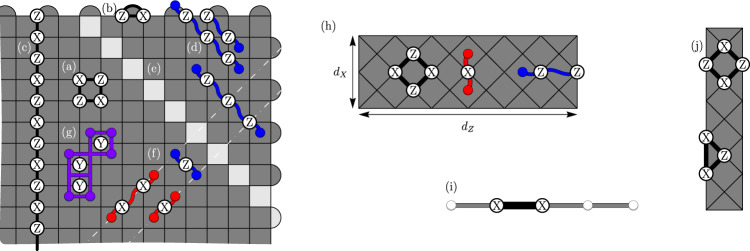
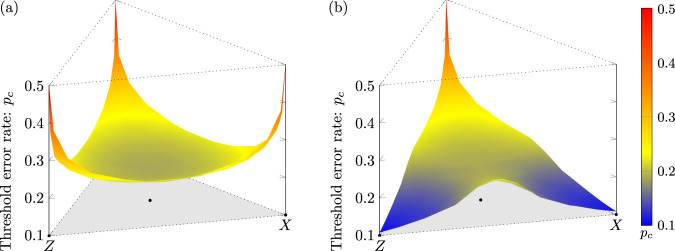
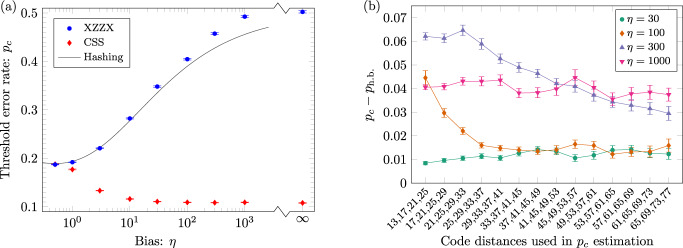
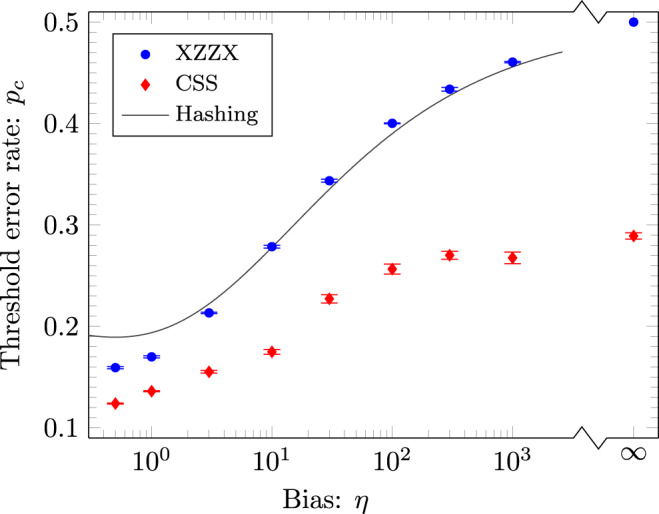
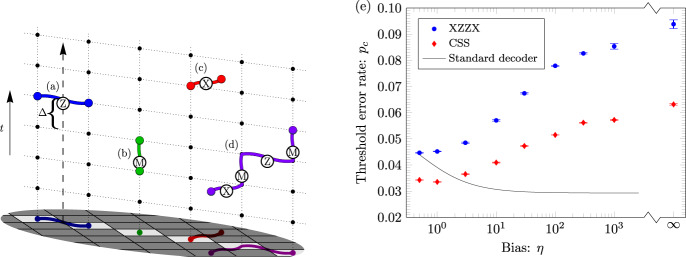
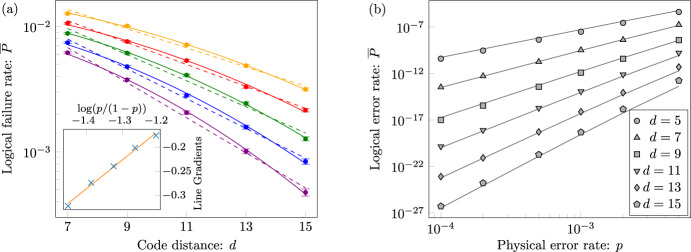
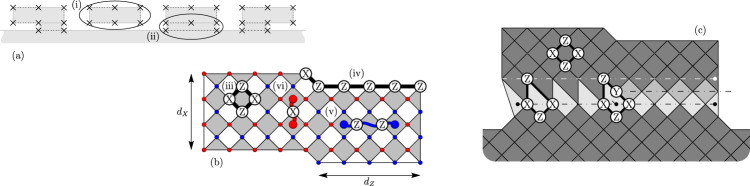
Performing large calculations with a quantum computer will likely require a fault-tolerant architecture based on quantum error-correcting codes. The challenge is to design practical quantum error-correcting codes that perform well against realistic noise using modest resources. Here we show that a variant of the surface code—the XZZX code—offers remarkable performance for fault-tolerant quantum computation. The error threshold of this code matches what can be achieved with random codes (hashing) for every single-qubit Pauli noise channel; it is the first explicit code shown to have this universal property. We present numerical evidence that the threshold even exceeds this hashing bound for an experimentally relevant range of noise parameters. Focusing on the common situation where qubit dephasing is the dominant noise, we show that this code has a practical, high-performance decoder and surpasses all previously known thresholds in the realistic setting where syndrome measurements are unreliable. We go on to demonstrate the favourable sub-threshold resource scaling that can be obtained by specialising a code to exploit structure in the noise. We show that it is possible to maintain all of these advantages when we perform fault-tolerant quantum computation.
Overview
The claims and statistics of this paper haven’t been checked yet.
Free: it reads the open-access text and checks the first 5 claims that cite a source we can check. Create a free account to check every claim.
Integrity signals
Registry
Cites
Statistics
Figures
Verification
Claims the paper makes
The claims and statistics of this paper haven’t been checked yet.
Free: it reads the open-access text and checks the first 5 claims that cite a source we can check. Create a free account to check every claim.
Claims other papers make about this one
Each is checked against this paper’s own text: does it say what the citing paper says it does?
The source backs part of the claim, not all of it — or backs it for a different population, condition or comparison.
In the citing paper
“We also remove certain Hadamard gates to implement the ZXXZ variant of the surface code44,45, which helps symmetrize the X- and Z-basis logical error rates.”
From Suppressing quantum errors by scaling a surface code logical qubit (2023) · cites this paper as [45]
Experimental — accuracy not yet measuredThe source backs part of the claim, not all of it — or backs it for a different population, condition or comparison.
In the citing paper
“At the same time, various proposals have been put forward to further scale bosonic QEC by concatenating it with an outer code across multiple bosonic modes6,8–16,18,40, leveraging the protection offered in each bosonic mode to reduce the overall resource overhead for QEC.”
From Hardware-efficient quantum error correction via concatenated bosonic qubits (2025) · cites this paper as [14]
Experimental — accuracy not yet measuredThe cited source says what the claim attributes to it.
In the citing paper
“The large physical-qubit overhead associated with error correction motivates the search for more hardware-efficient approaches6–18.”
From Hardware-efficient quantum error correction via concatenated bosonic qubits (2025) · cites this paper as [14]
Self-check
Percentages, sums and reported differences re-computed from the paper’s own numbers.
The self-check needs the paper’s full text.
Citations
Cites
Harris, C. R., Millman, K. J., van der Walt, S. J., Gommers, R., Virtanen, P., Cournapeau, D., Wieser, E., Taylor, J., Berg, S., Smith, N. J., et al. (2020) · Nature · doi:10.1038/s41586-020-2649-2 · Cited by 23,826
Fault-tolerant quantum computation by anyons
Kitaev, A. Y. (2003) · Annals of Physics · doi:10.1016/s0003-4916(02)00018-0 · Cited by 7,238 · cited 2×
“[12] A.”
BackgroundMixed-state entanglement and quantum error correction
Bennett, C. H., DiVincenzo, D. P., Smolin, J. A., & Wootters, W. K. (1996) · Physical Review A · doi:10.1103/physreva.54.3824 · Cited by 5,272 · cited 2×
“[17] C.”
BackgroundSurface codes: Towards practical large-scale quantum computation
Fowler, A. G., Mariantoni, M., Martinis, J. M., & Cleland, A. N. (2012) · Physical Review A · doi:10.1103/physreva.86.032324 · Cited by 3,059
Efficient estimation of free energy differences from Monte Carlo data
Bennett, C. H. (1976) · Journal of Computational Physics · doi:10.1016/0021-9991(76)90078-4 · Cited by 2,755
Good quantum error-correcting codes exist
Calderbank, A. R., & Shor, P. W. (1996) · Physical Review A · doi:10.1103/physreva.54.1098 · Cited by 2,516 · cited 1×
“To contrast the XZZX surface code with its conventional counterpart, we refer to the latter as the CSS surface code because it is of Calderbank-Shor-Steane type [34, 35].”
MethodEdmonds, J. (1965) · Canadian Journal of Mathematics · doi:10.4153/cjm-1965-045-4 · Cited by 2,428
Dennis, E., Kitaev, A., Landahl, A., & Preskill, J. (2002) · Journal of Mathematical Physics · doi:10.1063/1.1499754 · Cited by 1,768
Universal quantum computation with ideal Clifford gates and noisy ancillas
Bravyi, S., & Kitaev, A. (2005) · Physical Review A · doi:10.1103/physreva.71.022316 · Cited by 1,525 · cited 2×
“[51] S.”
Quantum computations: algorithms and error correction
Kitaev, A. Y. (1997) · Russian Mathematical Surveys · doi:10.1070/rm1997v052n06abeh002155 · Cited by 1,424
Research works printed but not linked: 12
- Shor, P. W. Fault-tolerant quantum computation. in Proc. 37th Annual Symposium on Foundations of Computer Science, FOCS ’96 (IEEE Computer Society, 1996).
- Gidney, C. & Ekerå, M. How to factor 2048 bit RSA integers in 8 hours using 20 million noisy qubits. arXiv http://arxiv.org/abs/1905.09749 (2019). · arXiv
- Li M Miller D Newman M Wu Y Brown KR 2d compass codes Phys. Rev. X 2019 9 021041
- Wilde, M. M. Theorem 24.6.2 Quantum Information Theory, 2nd edn. (Cambridge University Press, 2017).
- Bausch, J. & Leditzky, F. Error thresholds for arbitrary Pauli noise. arXiv http://arxiv.org/abs/1910.00471 (2019). · arXiv
- Brown BJ Laubscher K Kesselring MS Wootton JR Poking holes and cutting corners to achieve Clifford gates with the surface code Phys. Rev. X 2017 7 021029
- Hastings MB Decoding in hyperbolic space: LDPC codes with linear rate and efficient error correction Quant. Inf. Comput. 2014 14 1187
- Fowler AG Wang DS Hollenberg LCL Surface code quantum error correction incorporating accurate error propagation Quant. Inf. Comput. 2011 11 0008
- Krishna A Poulin D Fault-tolerant gates on hypergraph product codes Phys. Rev. X 2021 11 011023
- Breuckmann, N. P. & Londe, V. Single-shot decoding of linear rate LDPC quantum codes with high performance. arXiv http://arxiv.org/abs/2001.03568 (2020). · arXiv
- Hastings, M. B., Haah, J. & O’Donnell, R. Fiber bundle codes: breaking the barrier for quantum LDPC codes. arXiv http://arxiv.org/abs/2009.03921 (2020). · arXiv
- Tuckett, D. K. Tailoring surface codes: Improvements in quantum error correction with biased noise. Ph.D. thesis, University of Sydney (2020).
Cited by
Items 101–200 of 265
Decoding quantum color codes with MaxSAT
Berent, L., Burgholzer, L., Derks, P.-J. H. S., Eisert, J., & Wille, R. (2024) · Quantum · doi:10.22331/q-2024-10-23-1506 · Cited by 13
Fault-tolerant hyperbolic Floquet quantum error correcting codes
Fahimniya, A., Dehghani, H., Bharti, K., Mathew, S., Kollár, A. J., Gorshkov, A. V., & Gullans, M. J. (2025) · Quantum · doi:10.22331/q-2025-09-05-1849 · Cited by 45
Parallel decoding of multiple logical qubits in tensor-network codes
Farrelly, T., Milicevic, N., Harris, R. J., McMahon, N. A., & Stace, T. M. (2022) · Physical Review A · doi:10.1103/physreva.105.052446 · Cited by 23
Leverrier, A., Apers, S., & Vuillot, C. (2022) · Quantum · doi:10.22331/q-2022-07-14-766 · Cited by 21
“2We note, however, that non CSS codes are investigated in the context of quantum fault-tolerance where their non CSS nature offers interesting properties in terms of resistance to biased noise for instance [2].”
InfluentialAnalog Information Decoding of Bosonic Quantum Low-Density Parity-Check Codes
Berent, L., Hillmann, T., Eisert, J., Wille, R., & Roffe, J. (2024) · PRX Quantum · doi:10.1103/prxquantum.5.020349 · Cited by 24
“To further motivate this combination and to show how continuous syndrome information comes into play, we give a brief overview in the following.”
Parity-controlled gate in a two-dimensional neutral-atom array
Guo, F.-Q., Su, S., Li, W., & Shao, X. (2025) · Physical Review A · doi:10.1103/physreva.111.022420 · Cited by 16
Hockings, E. T., Doherty, A. C., & Harper, R. (2025) · PRX Quantum · doi:10.1103/prxquantum.6.010334 · Cited by 37
Preserving Phase Coherence and Linearity in Cat Qubits with Exponential Bit-Flip Suppression
(2025) · doi:10.1103/physrevx.15.011070 · Cited by 12
Efficient Concatenated Bosonic Code for Additive Gaussian Noise
Fukui, K., Matsuura, T., & Menicucci, N. C. (2023) · Physical Review Letters · doi:10.1103/physrevlett.131.170603 · Cited by 18
Preserving phase coherence and linearity in cat qubits with exponential bit-flip suppression
Putterman, H., Noh, K., Patel, R. N., Peairs, G. A., MacCabe, G. S., Lee, M., Aghaeimeibodi, S., Hann, C. T., Jarrige, I., Marcaud, G., et al. (2024) · arXiv · doi:10.48550/arxiv.2409.17556 · Cited by 12
Optimization of Decoder Priors for Accurate Quantum Error Correction
Sivak, V., Newman, M., & Klimov, P. V. (2024) · Physical Review Letters · doi:10.1103/physrevlett.133.150603 · Cited by 43
“To benchmark our method on the general hyper-graph error models, we use a dataset of d = 3 , 5 surface codes (the XZZX variant [37]) of varying duration r ∈ (5 , 9 , 13 , 17 , 21 , 25) prepared and measured in the X basis.”
MethodDesigning fault-tolerant circuits using detector error models
Derks, P.-J. H. S., Townsend-Teague, A., Burchards, A. G., & Eisert, J. (2025) · Quantum · doi:10.22331/q-2025-11-06-1905 · Cited by 95
“Lemma 25 (All circuit-level errors) .”
InfluentialDiscovery of optimal quantum codes via reinforcement learning
Su, V. P., Cao, C., Hu, H.-Y., Yanay, Y., Tahan, C., & Swingle, B. G. (2025) · Physical Review Applied · doi:10.1103/physrevapplied.23.034048 · Cited by 44
Shinde, U. U., & Bandaru, R. (2024) · Scientific Reports · doi:10.1038/s41598-024-65182-2 · Cited by 16
“Researchers are actively exploring novel algorithms and hardware improvements to surmount these challenges and advance the field of quantum error correction 17–20 .”
BackgroundHybrid Cat-Transmon Architecture for Scalable, Hardware-Efficient Quantum Error Correction
Hann, C. T., Noh, K., Putterman, H., Matheny, M. H., Iverson, J. K., Fang, M. T., Chamberland, C., Painter, O. J., & Brandão, F. G. S. L. (2025) · PRX Quantum · doi:10.1103/75x7-5ysv · Cited by 24
Linear-Optical Quantum Computation with Arbitrary Error-Correcting Codes
Walshe, B. W., Baragiola, B. Q., Ferretti, H., Gefaell, J., Vasmer, M., Weil, R., Matsuura, T., Jaeken, T., Pantaleoni, G., Han, Z., et al. (2025) · Physical Review Letters · doi:10.1103/physrevlett.134.100602 · Cited by 29
Quantum repetition codes as building blocks of large-period discrete time crystals
Bomantara, R. W. (2021) · Physical review. B./Physical review. B · doi:10.1103/physrevb.104.l180304 · Cited by 14
Biased Gottesman-Kitaev-Preskill repetition code
Stafford, M. P., & Menicucci, N. C. (2023) · Physical Review A · doi:10.1103/physreva.108.052428 · Cited by 22
Magic state distillation and cost analysis in fault-tolerant universal quantum computation
Liu, Y., Ma, Z., Luo, L., Du, C., Fei, Y., Wang, H., Duan, Q., & Yang, J. (2023) · Quantum Science and Technology · doi:10.1088/2058-9565/ace6ca · Cited by 11
Coherent information as a mixed-state topological order parameter of fermions
Huang, Z.-M., Colmenárez, L., Müller, M., & Diehl, S. (2025) · Physical Review Research · doi:10.1103/fx56-8nvy · Cited by 20
Quantum error correction for long chains of trapped ions
Ye, M., & Delfosse, N. (2025) · Quantum · doi:10.22331/q-2025-11-27-1920 · Cited by 43
“Our simulations show that, under the ion chain model, the [[48 , 4 , 7]] BB5 code achieves a logical error rate per logical qubit 4 times smaller than the best BB6 codes with code length up to 50 .”
InfluentialSurface Code with Imperfect Erasure Checks
Chang, K., Singh, S., Claes, J., Sahay, K., Teoh, J. D., & Puri, S. (2025) · PRX Quantum · doi:10.1103/d1v7-nctj · Cited by 33
Non–Pauli Errors Can Be Efficiently Sampled in Qudit Surface Codes
Ma, Y., Hanks, M., & Kim, M. S. (2023) · Physical Review Letters · doi:10.1103/physrevlett.131.200602 · Cited by 12
Error-rate-agnostic decoding of topological stabilizer codes
Hammar, K., Orekhov, A., Hybelius, P. W., Wisakanto, A. K., Srivastava, B., Kockum, A. F., & Granath, M. (2022) · Physical Review A · doi:10.1103/physreva.105.042616 · Cited by 12
“The parametrization for Zbiased noise in [67, 68, 77] in terms of fixed η = pz px+py and px = py corresponds to fixed α only for depolarizing noise η = 12 and pure phase-flip noise η = ∞, while in general there is a mapping”
BackgroundMethodInfluentialComparison of 2D topological codes and their decoding performances
Kuo, K.-Y., & Lai, C. (2022) · IEEE International Symposium on Information Theory (ISIT) · doi:10.1109/isit50566.2022.9834489 · Cited by 13
Nonlocal discrete time crystals in periodically driven surface codes
Bomantara, R. W. (2021) · Physical review. B./Physical review. B · doi:10.1103/physrevb.104.064302 · Cited by 10
Quantum computer error structure probed by quantum error correction syndrome measurements
Gicev, S., Hollenberg, L. C. L., & Usman, M. (2024) · Physical Review Research · doi:10.1103/physrevresearch.6.043249 · Cited by 20
“At the same time, techniques can continue to develop which address more general noise models, such as those featuring inhomogeneous noise [67], asymmetric coherent rotations [68], biased noise [59], amplitude and phase damping [69], and correlated errors [70].”
InfluentialDetrimental non-Markovian errors for surface code memory
Kam, J. F., Gicev, S., Modi, K. K., Southwell, A., & Usman, M. (2025) · Quantum Science and Technology · doi:10.1088/2058-9565/adebab · Cited by 31
“In this paper, while we specifically study the rotated XZ surface code, our analyses of temporally correlated errors should extend to other surface code variations including the XY surface code [12], and the XZZX surface code [40].”
Decoherence-Protected Implementation of Quantum Gates
Wu, C., Sun, C., Chen, J., & Yi, X. X. (2023) · Physical Review Applied · doi:10.1103/physrevapplied.19.034069 · Cited by 8
Modeling error correction with Lindblad dynamics and approximate channels
Schwartzman-Nowik, Z., Shirizly, L., & Landa, H. (2025) · Physical Review A · doi:10.1103/physreva.111.022613 · Cited by 17
“These include, in particular, biased noise models [10–13], correlated noise [14], and explorations of advantages of codes adapted (or tailored) to particular noise types [15, 16].”
Replica topological order in quantum mixed states and quantum error correction
Li, Z., & Mong, R. S. K. (2025) · Physical review. B./Physical review. B · doi:10.1103/physrevb.111.125106 · Cited by 44
Near-Term Spin-Qubit Architecture Design via Multipartite Maximally Entangled States
Paraskevopoulos, N., Steinberg, M., Undseth, B., Sarkar, A., Vandersypen, L. M. K., Xue, X., & Feld, S. (2025) · PRX Quantum · doi:10.1103/prxquantum.6.020307 · Cited by 11
“Many variants of the surface code have been studied and proposed, including the rotated [84] and XZZX [85] versions, among others [86, 87].”
Construction of bias-preserving operations for pair-cat codes
Yuan, M., Xu, Q., & Jiang, L. (2022) · Physical Review A · doi:10.1103/physreva.106.062422 · Cited by 12
Nonperturbative Floquet engineering of the toric-code Hamiltonian and its ground state
Petiziol, F., Wimberger, S., Eckardt, A., & Mintert, F. (2024) · Physical review. B./Physical review. B · doi:10.1103/physrevb.109.075126 · Cited by 19
“Besides, Wen’s formulation has recently found renewed attention as a promising surface code design against biased noise [58, 59].”
Low-overhead quantum error-correction codes with a cyclic topology
Simakov, I. A., & Besedin, I. S. (2025) · Physical Review A · doi:10.1103/physreva.111.012444 · Cited by 10
Logical qubits with erasure conversion using metastable neutral atoms
Zhang, B., Liu, G., Bornet, G., Horvath, S. P., Peng, P., Ma, S., Huang, S., Puri, S., & Thompson, J. D. (2026) · Nature Physics · doi:10.1038/s41567-026-03309-0 · Cited by 57
“Qubits with biased Pauli noise can be used to raise the threshold and lower the overhead 15,16 , motivating recent studies of bosonic qubits 17–19 .”
Dynamical subset sampling of quantum error-correcting protocols
Heußen, S., Winter, D., Rispler, M., & Müller, M. (2024) · Physical Review Research · doi:10.1103/physrevresearch.6.013177 · Cited by 22
Spanning Tree Matching Decoder for Quantum Surface Codes
Forlivesi, D., Valentini, L., & Chiani, M. (2024) · IEEE Communications Letters · doi:10.1109/lcomm.2024.3396882 · Cited by 13
“These codes arrange qubits on a planar sheet [9], [21], [22], [23].”
BackgroundMultimode rotation-symmetric bosonic codes from homological rotor codes
Xu, Y., Wang, Y., & Albert, V. V. (2024) · Physical Review A · doi:10.1103/physreva.110.022402 · Cited by 18
Simulation of the five-qubit quantum error correction code on superconducting qubits
Simakov, I. A., Besedin, I. S., & Ustinov, A. V. (2022) · Physical Review A · doi:10.1103/physreva.105.032409 · Cited by 10
Efficient diagnostics for quantum error correction
Iyer, P. S., Jain, A., Bartlett, S. D., & Emerson, J. (2022) · Physical Review Research · doi:10.1103/physrevresearch.4.043218 · Cited by 13
“[6] J Pablo Bonilla Ataides, David K Tuckett, Stephen D Bartlett, Steven T Flammia, and Benjamin J Brown.”
BackgroundSelf-citationQuantum State Tomography for Kerr Parametric Oscillators
Suzuki, Y., Kawabata, S., Yamamoto, T., & Masuda, S. (2023) · Physical Review Applied · doi:10.1103/physrevapplied.20.034031 · Cited by 9
Engineering Quantum Error Correction Codes Using Evolutionary Algorithms
Webster, M. A., & Browne, D. E. (2025) · IEEE Transactions on Quantum Engineering · doi:10.1109/tqe.2025.3538934 · Cited by 21
“In terms of biased error models, the XZZX code [26] is an example of a stabilizer code that has good protection against errors, where the error model is highly biased.”
Dynamic compensation for pump-induced frequency shift in Kerr-cat qubit initialization
Xu, Y., Hua, Z., Wang, W., Ma, Y., Li, M., Chen, J., Zhou, J., Pan, X., Xiao, L., Huang, H., et al. (2025) · Physical Review Applied · doi:10.1103/physrevapplied.23.034060 · Cited by 8
Unifying Non-Markovian Characterization with an Efficient and Self-Consistent Framework
White, G. A. L., Jurcevic, P., Hill, C. D., & Modi, K. K. (2025) · Physical Review X · doi:10.1103/physrevx.15.021047 · Cited by 42
Snakes and Ladders: Adapting the Surface Code to Defects
Leroux, C., Lin, S. F., Bienias, P., Sankar, K., Benhemou, A., Kubica, A., & Iverson, J. K. (2025) · PRX Quantum · doi:10.1103/815q-xjrb · Cited by 31
Faster Born probability estimation via gate merging and frame optimisation
Koukoulekidis, N., Kwon, H., Jee, H. H., Jennings, D., & Kim, M. S. (2022) · Quantum · doi:10.22331/q-2022-10-13-838 · Cited by 9
Multilayered logical qubits and synthesized quantum bits
Jin, K., & Cha, G. (2023) · Quantum Science and Technology · doi:10.1088/2058-9565/accec5 · Cited by 6
Performance Analysis of Quantum Error-Correcting Surface Codes over Asymmetric Channels
Valentini, L., Forlivesi, D., & Chiani, M. (2023) · International Conference on Communications · doi:10.1109/icc45041.2023.10279096 · Cited by 9
“Despite their importance, the performance of these codes has been investigated in the literature only partially, and mainly in terms of accuracy threshold over symmetric channels [22], [23], [27], [28].”
BackgroundDegenerate quantum erasure decoding
Kuo, K.-Y., & Ouyang, Y. (2026) · npj Quantum Information · doi:10.1038/s41534-026-01212-3 · Cited by 16
“General QLDPC codes admit low-complexity quantum circuits and offer the benefits of (1) enabling error-corrected quantum computation with constant encoding rates [ 52, 53 ] and (2) enhancing quantum network communication rates [ 54 ] .”
Exact Decoding of Quantum Error-Correcting Codes
Cao, H., Zhao, S. J., Feng, D., Shen, Z., Yan, H., Su, T., Sun, W., Xu, H., Pan, F. P., Yu, H., et al. (2025) · Physical Review Letters · doi:10.1103/physrevlett.134.190603 · Cited by 21
Designing quantum error correction codes for practical spin qudit systems
Lim, S., & Ardavan, A. (2025) · Physical Review A · doi:10.1103/7q6l-d4qh · Cited by 9
“In the case of qubit-based QEC protocols, such as the surface code [13, 33–36], similar approaches – tailoring code-words and decoders – have been reported [37–40] to compensate for biased error models.”
Quantum Codes for Asymmetric Channels: ZZZY Surface Codes
Forlivesi, D., Valentini, L., & Chiani, M. (2024) · IEEE Communications Letters · doi:10.1109/lcomm.2024.3454804 · Cited by 6
“An example of this approach are the XZZX surface codes, designed to address scenarios where qubit dephasing is the primary noise source [15].”
MethodNew design of three-qubit system with three transmons and a single fixed-frequency resonator coupler
Kang, J., Kim, C., Kim, Y., & Kwon, Y. (2025) · Scientific Reports · doi:10.1038/s41598-025-94448-6 · Cited by 10
Hybrid quantum error correction in qubit architectures
Kristensen, L. B., Kjærgaard, M., Andersen, C. K., & Zinner, N. T. (2023) · Physical Review A · doi:10.1103/physreva.108.022403 · Cited by 10
Quantum computing for data-centric engineering and science
Herbert, S. (2022) · Data-Centric Engineering · doi:10.1017/dce.2022.36 · Cited by 6
“The exact value within this range depends on whether qubit qualities improve enough for low-overhead error-correction codes [100] to be practical; and in particular whether the overhead can be reduced by exploiting asymmetries in the noise [101,102] – both of which remain very active research topics.”
BackgroundAdvances in quantum error correction based on superconducting quantum systems
Chen, Z.-J., Pan, X., Hua, Z., Wang, W., Ma, Y., Li, M., Zou, X., Sun, L., & Zou, C. (2022) · Acta Physica Sinica · doi:10.7498/aps.71.20221824 · Cited by 5
Measurement-based preparation of stable coherent states of a Kerr parametric oscillator
Suzuki, Y., Watabe, S., Kawabata, S., & Masuda, S. (2023) · Scientific Reports · doi:10.1038/s41598-023-28682-1 · Cited by 8
Tiurev, K., Pesah, A. C., Derks, P.-J. H. S., Roffe, J., Eisert, J., Kesselring, M. S., & Reiner, J.-M. (2024) · Physical Review Letters · doi:10.1103/physrevlett.133.110601 · Cited by 19
Bubble Clustering Decoder for Quantum Topological Codes
Forlivesi, D., Valentini, L., & Chiani, M. (2025) · IEEE Transactions on Communications · doi:10.1109/tcomm.2025.3558012 · Cited by 12
“Surfacecodes represent a significant category of CSS stabilizer codes, notable for arranging qubits on a planar sheet [14], [43], [44], [45].”
Engineering the nonlinearity of bosonic modes with a multiloop SQUID
Hua, Z., Xu, Y., Wang, W., Ma, Y., Zhou, J., Cai, W., Ai, H., Liu, Y.-X., Li, M., Zou, C., et al. (2025) · Physical Review Applied · doi:10.1103/physrevapplied.23.054031 · Cited by 10
On Belief Propagation Decoding of Quantum Codes with Quaternary Reliability Statistics
Kung, C.-F., Kuo, K.-Y., & Lai, C. (2023) · International Symposium on Turbo Codes and Iterative Information Processing · doi:10.1109/istc57237.2023.10273527 · Cited by 10
Thresholds for Postselected Quantum Error Correction from Statistical Mechanics
English, L., Williamson, D. J., & Bartlett, S. D. (2025) · Physical Review Letters · doi:10.1103/nh49-52y2 · Cited by 25
“Our proposed heuristic post-selection technique offers practical advantages without”
Self-citationLi, A.-Q., 田, C.-W. 策. T., Xu, X., Ma, H., & Liang, J. (2025) · Chinese Physics B · doi:10.1088/1674-1056/adab63 · Cited by 8
Accurate and Honest Approximation of Correlated Qubit Noise
Setiawan, F., Gramolin, A. V., Matekole, E. S., Krovi, H., & Taylor, J. M. (2025) · Quantum · doi:10.22331/q-2025-04-09-1701 · Cited by 6
“For example, for devices with biased Pauli noise, cat qubits [9–11] and the XZZX surface code [12] are favorable as they possess outstanding resilience against such noise.”
Quantum low-density parity-check codes for erasure-biased atomic quantum processors
Pecorari, L., & Pupillo, G. (2025) · Physical Review A · doi:10.1103/mgkt-ctv8 · Cited by 16
Multiqubit parity gates for Rydberg atoms in various configurations
Kazemi, J., Schuler, M., Ertler, C., & Lechner, W. (2025) · Physical Review Research · doi:10.1103/56qk-rmsz · Cited by 9
Estimating the Bias of CX Gates via Character Randomized Benchmarking
Claes, J., & Puri, S. (2023) · PRX Quantum · doi:10.1103/prxquantum.4.010307 · Cited by 5
“3 for the example of a circuit that measures the stabilizer of the XZZX surface code [5].”
BackgroundEmergent (2+1)D topological orders from iterative (1+1)D gauging
Garre-Rubio, J. (2024) · Nature Communications · doi:10.1038/s41467-024-52320-7 · Cited by 9
“Unexpectedly, the local symmetries from each gauging, modified by the composition of the subsequent maps, become the stabilizers of the generalization of the XZZX -code [17](a realization of the toric code [18] proposed in [19]) for any Abelian group.”
Characterization of errors in a CNOT between surface code patches
Domokos, B., Márton, Á., & Asbóth, J. K. (2024) · Quantum · doi:10.22331/q-2024-12-27-1577 · Cited by 9
“Bias in the physical noise (e.g., larger Z than X error rates) will definitely break the symmetry; it is an open question whether symmetrized (e.g., XZZX [35]) surface code restores the symmetry structure.”
Quantum Comb Tomography via Learning Isometries on Stiefel Manifold
Li, Z., He, X.-L., Zheng, C., Dong, Y.-Q., Luan, T., Yu, X., & Zhang, Z. (2025) · Physical Review Letters · doi:10.1103/physrevlett.134.010803 · Cited by 14
Yi, Z., Liang, Z., Chen, J., Zhong, K., Wu, Y., Fang, Z., & Wang, X. (2025) · Quantum Information Processing · doi:10.1007/s11128-025-04709-6 · Cited by 7
“…accuracy, based on PDBP, we modify the message passing algorithm and hard decision process and obtain FDBP. Simulation results show that, for XZZX planar surfaces [20] code and planar surface codes [21], the capability of PDBP and FDBP to decode Pauli X and Z error is the same as that of SBP.”
Short two-qubit pulse sequences for exchange-only spin qubits in two-dimensional layouts
Chadwick, J. D., Guerreschi, G. G., Luthi, F., Mądzik, M. T., Mohiyaddin, F. A., Prabhu, P., Schmitz, A. T., Litteken, A., Premaratne, S., Bishop, N. C., et al. (2025) · Physical Review A · doi:10.1103/physreva.111.052616 · Cited by 8
Far from Perfect: Quantum Error Correction with (Hyperinvariant) Evenbly Codes
Steinberg, M., Fan, J., Harris, R. J., Elkouss, D., Feld, S., & Jahn, A. (2025) · Quantum · doi:10.22331/q-2025-08-08-1826 · Cited by 26
“94% ; this threshold value is very competitive with known code-capacity thresholds for the surface code, color code, and the holographic 6 , 1 , 3 code [6, 13, 30].”
Optimal adaptation of surface-code decoders to local noise
Darmawan, A. S. (2025) · Physical Review A · doi:10.1103/r2dc-qcrx · Cited by 11
Exact results on finite size corrections for surface codes tailored to biased noise
Xiao, Y., Srivastava, B., & Granath, M. (2024) · Quantum · doi:10.22331/q-2024-09-11-1468 · Cited by 11
Using detector likelihood for benchmarking quantum error correction
Hesner, I., Hetényi, B., & Wootton, J. R. (2025) · Physical Review A · doi:10.1103/physreva.111.052452 · Cited by 3
Interleaved Logical Qubits in Atom Arrays
Viszlai, J., Lin, S. F., Dangwal, S., Bradley, C. E., Ramesh, V., Baker, J. M., Bernien, H., & Chong, F. T. (2025) · IEEE International Symposium on High-Performance Computer Architecture (HPCA) · doi:10.1109/hpca61900.2025.00030 · Cited by 9
“Stabilizers are either X-type: { XXXX , XX , or Z-type: { ZZZZ , ZZ , although variants like the XZZX surface code exist [10].”
Magic Tricycles: Efficient Magic-State Generation with Finite Block-Length Quantum LDPC Codes
Menon, V., Ataides, J. P. B., Mehta, R., Gu, A., Tan, D. B., & Lukin, M. D. (2026) · Physical Review X · doi:10.1103/ghhp-cytl · Cited by 45
“The asymmetry between the X and Z sectors of tricycle codes make them particularly advantageous for leveraging noise bias in entangling gate operations—a feature pervasive in leading experimental platforms [1, 5, 64, 79, 11].”
Aoki, T., Tomonaga, A., Mizuno, K., & Masuda, S. (2025) · Applied Physics Letters · doi:10.1063/5.0241315 · Cited by 7
Cylindrical and Möbius Quantum Codes for Asymmetric Pauli Errors
Valentini, L., Forlivesi, D., & Chiani, M. (2025) · IEEE Transactions on Information Theory · doi:10.1109/tit.2025.3546769 · Cited by 6
“In [42], a variant of surface codes has been proposed, named XZZX surface code.”
Many-Body Quantum Catalysts for Transforming Between Phases of Matter
Stephen, D. T., Nandkishore, R., & Zhang, J.-H. (2025) · PRX Quantum · doi:10.1103/prxquantum.6.020353 · Cited by 10
Tailoring dynamical codes for biased noise: the X3Z3 Floquet code
Setiawan, F., & McLauchlan, C. (2025) · npj Quantum Information · doi:10.1038/s41534-025-01074-1 · Cited by 23
“This is a space-time analogue of the symmetries present in bias-tailored static codes such as the XZZX code 42 and the domain wall colourcode 46 .”
InfluentialLi, J., Wang, Z. M., Shi, S., Li, Y. N., Shang, R., & Gu, Y. (2022) · Europhysics Letters (EPL) · doi:10.1209/0295-5075/aca2d6 · Cited by 3
Martínez, J. E., iOlius, A. D., & Crespo, P. M. (2023) · Physical Review A · doi:10.1103/physreva.108.032602 · Cited by 7
Error metric for non-trace-preserving quantum operations
Shi, Y. B., & Waks, E. (2023) · Physical Review A · doi:10.1103/physreva.108.032609 · Cited by 5
On the Efficacy of Surface Codes in Compensating for Radiation Events in Superconducting Devices
Vallero, M., Casagranda, G., Vella, F., & Rech, P. (2024) · International Conference for High Performance Computing, Networking, Storage and Analysis (SC) · doi:10.1109/sc41406.2024.00075 · Cited by 12
Quantum Circuit Tensors and Enumerators With Applications to Quantum Fault Tolerance
Kukliansky, A., & Lackey, B. (2025) · IEEE Transactions on Information Theory · doi:10.1109/tit.2025.3555189 · Cited by 8
“3 for the noiseless teleportation circuit. biased error models and the analysis of codes tailored to biased noise [33], [34].”
Practical Quantum Error Correction with the XZZX Code and Kerr-Cat Qubits
Darmawan, A. S., Brown, B. J., Grimsmo, A. L., Tuckett, D. K., & Puri, S. (2021) · PRX Quantum · doi:10.1103/prxquantum.2.030345 · Cited by 2
Self-citationSparse non-Markovian Noise Modeling of Transmon-Based Multi-Qubit Operations
Oda, Y., Schultz, K., Norris, L., Shehab, O., & Quiroz, G. (2026) · PRX Quantum · doi:10.1103/lx8x-z29x · Cited by 12
Viewing protected superconducting qubits through the lens of the cat qubit
Lieu, S., Rosenfeld, E., Noh, K., & Hann, C. T. (2025) · Physical Review A · doi:10.1103/p8fy-qdc8 · Cited by 5
Stabilization of Kerr-cat qubits with quantum circuit refrigerator
Masuda, S., Kamimura, S., Yamamoto, T., Aoki, T., & Tomonaga, A. (2025) · npj Quantum Information · doi:10.1038/s41534-025-00974-6 · Cited by 5
“Rates of QCR-induced deexcitations of the system can be changed by more than four orders of magnitude by tuning a bias voltage across the tunneling junctions.”
Quantum error correction with Kolmogorov–Arnold network for rotated surface codes decoding
Fan, Z.-C., Tian, C., Xiao, B., Guo, X., & Ma, H. (2025) · Quantum Information Processing · doi:10.1007/s11128-025-04826-2 · Cited by 3
“When juxtaposed with other quantum error correction codes, rotated surface codes [12] emerge as a practical choice for implementation due to their simplicity and robust stability.”
Unfolded distillation: very low-cost magic state preparation for biased-noise qubits
Ruiz, D., Guillaud, J., Vuillot, C., & Mirrahimi, M. (2026) · npj Quantum Information · doi:10.1038/s41534-026-01197-z · Cited by 20
Linear optical quantum computing with a hybrid squeezed-cat code
Kiryu, S., Fukui, K., Okamoto, A., & Tomita, A. (2025) · Physical Review A · doi:10.1103/jxbx-75m9 · Cited by 8
“To utilize the H-SC code as a resource for universal fault-tolerant quantum computation, it will be necessary to concatenate it with quantum error-correcting codes, such as surface codes [44, 45].”
Sunami, S., Hirano, Y., Hinokuma, T., & Yamasaki, H. (2026) · PRX Quantum · doi:10.1103/tz8f-6xwk · Cited by 16
“In the presence of finite error biases on the Bell pairs, for example, with phase errors dominating over bit-flip errors [14, 60], better performance is expected from the use of Clifford-deformed surface codes, such as the XZZX surface code [63] and the XY surface code [64].”
Zhang, D.-X., Ni, J.-H., Zhang, Y., Yu, L. Z., Kang, Y., Su, Q.-P., & Yang, C. (2025) · Chinese Journal of Physics · doi:10.1016/j.cjph.2025.11.035 · Cited by 2
Information dynamics in decohered quantum memory with repeated syndrome measurements
Hauser, J., Bao, Y., Sang, S., Lavasani, A., Agrawal, U., & Fisher, M. P. A. (2025) · Physical review. B./Physical review. B · doi:10.1103/v5kq-7mn7 · Cited by 22
Opportunities in full-stack design of low-overhead fault-tolerant quantum computation
Zhou, H., Cain, M., & Lukin, M. D. (2025) · Nature Computational Science · doi:10.1038/s43588-025-00895-6 · Cited by 15
“The bias-preserving gate allows full utilization of the noise bias, resulting in substantial improvements in error thresholds and therefore reductions in the overhead required 161 .”
Demonstration of measurement-free universal logical quantum computation
Butt, F., Pogorelov, I., Freund, R., Steiner, A., Meyer, M., Monz, T., & Müller, M. (2026) · Nature Communications · doi:10.1038/s41467-026-68533-x · Cited by 2
“Further adjustment of our schemes to a biased noise setting 41,82 , which is often given in experimental architectures 15,17,79 , could therefore potentially boost the performance while reducing overheads.”
Metadata
- Authors
- Bonilla Ataides, J. P., Tuckett, D. K., Bartlett, S. D., Flammia, S. T., & Brown, B. J.
- Affiliations
- The University of Sydney (AU)
- Corresponding author
- Brown, Benjamin J.
- ORCID
- Venue
- Nature Communications
- Published
- 2021-04-12
- Volume
- 12
- Issue
- 1
- Pages
- 2172-2172
- ISSN
- 2041-1723 (ISSN-L)
- PMC
- PMC8042007
- OpenAlex
- W3085306040
- Semantic Scholar
- 059f1d3b4d12d486afcd70c6c9ce5a96f1727c8b
- Cited by
- 262
- References
- 63
- Citations by year
- 2026: 29 · 2025: 94 · 2024: 45 · 2023: 52 · 2022: 34 · 2021: 8
- FWCI
- 12.28
- Type
- journal article
- Language
- en
- Open access
- gold
- doi.org
- Licence
- cc-by
- creativecommons.org/licenses/by/4.0 (tdm)
- creativecommons.org/licenses/by/4.0 (vor)
- Locations
- Nature Communications (publishedVersion, cc-by)
- PubMed Central (publishedVersion, cc-by)
- PubMed (publishedVersion)
- arXiv (Cornell University) (submittedVersion)
- DOAJ (DOAJ: Directory of Open Access Journals) (submittedVersion, cc-by-sa)
- arXiv (Cornell University)
- Funders
- National Computational Infrastructure
- Australian Government (CE170100009)
- University of Sydney
- Australian Research Council (CE170100009, W911NF-21-1-0007)
- National Cancer Institute
- Army Research Office (W911NF-21-1-, W911NF-21-1-0007, W911NF)
- Topics
- Physical Sciences › Computer Science › Artificial Intelligence › Quantum Computing Algorithms and Architecture
- Physical Sciences › Physics and Astronomy › Atomic and Molecular Physics, and Optics › Quantum Information and Cryptography
- Physical Sciences › Physics and Astronomy › Atomic and Molecular Physics, and Optics › Quantum many-body systems
- Keywords
- surface code, quantum error correction, fault-tolerant quantum computing, error threshold, qubit dephasing, decoder performance, resource scaling
About these checks
Registry, retraction, Cites and statistics results are computed, not judged, with one exception: a printed reference that no index lists is read once by a model before it counts as a citation error. Claims are extracted by a model and kept only when their quote appears verbatim in the text; each cited source is then checked, with a model’s help, for whether it says what the claim relies on. Those verdicts can be wrong — read the claim’s quote and the cited source before relying on one.
Statistics and arithmetic are recomputed, not judged.
Confidence bands are shown only for fields calibrated on our annotated test set. None is calibrated yet, so no band is shown.
What counts as a claim ›How we measure confidence ›How we check this ›
Are you an author, or do you see a problem with this page? Request a review
Data sources
Bibliographic data: Semantic Scholar, OpenAlex, Crossref.
Contains information from the Semantic Scholar Academic Graph Datasets, made available under the ODC Attribution License (ODC-BY 1.0).
Semantic Scholar’s data is described in: Kinney, R., et al. (2023). The Semantic Scholar Open Data Platform. arXiv:2301.10140.
