

Association of sleep duration in middle and old age with incidence of dementia
Open accessThe DOI matches its Crossref record; 55 of the 55 references it cites were found in a registry or an index.
Abstract
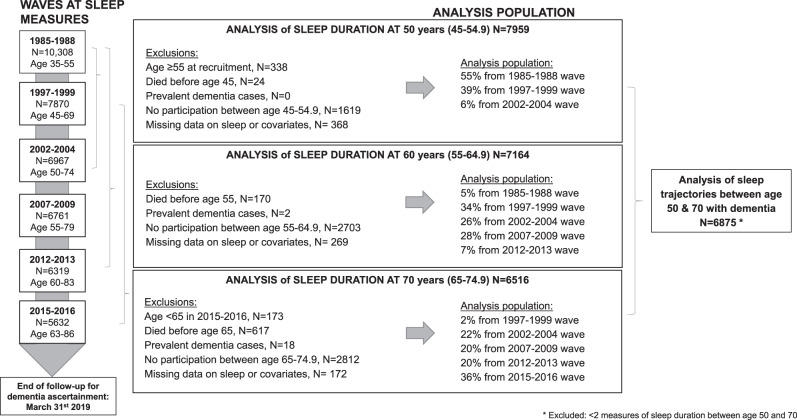
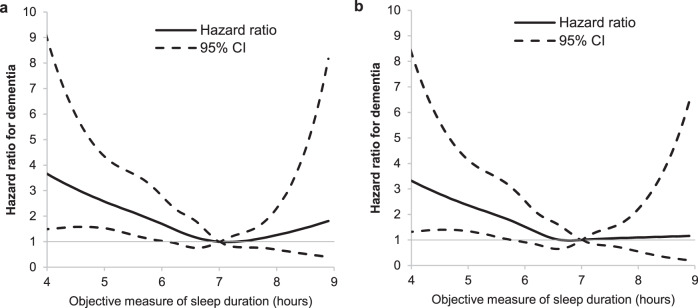
Sleep dysregulation is a feature of dementia but it remains unclear whether sleep duration prior to old age is associated with dementia incidence. Using data from 7959 participants of the Whitehall II study, we examined the association between sleep duration and incidence of dementia (521 diagnosed cases) using a 25-year follow-up. Here we report higher dementia risk associated with a sleep duration of six hours or less at age 50 and 60, compared with a normal (7 h) sleep duration, although this was imprecisely estimated for sleep duration at age 70 (hazard ratios (HR) 1.22 (95% confidence interval 1.01–1.48), 1.37 (1.10–1.72), and 1.24 (0.98–1.57), respectively). Persistent short sleep duration at age 50, 60, and 70 compared to persistent normal sleep duration was also associated with a 30% increased dementia risk independently of sociodemographic, behavioural, cardiometabolic, and mental health factors. These findings suggest that short sleep duration in midlife is associated with an increased risk of late-onset dementia.
Overview
The claims and statistics of this paper haven’t been checked yet.
Free: it reads the open-access text and checks the first 5 claims that cite a source we can check. Create a free account to check every claim.
Integrity signals
Registry
Cites
Statistics
Figures
Verification
Claims the paper makes
The claims and statistics of this paper haven’t been checked yet.
Free: it reads the open-access text and checks the first 5 claims that cite a source we can check. Create a free account to check every claim.
Claims other papers make about this one
Each is checked against this paper’s own text: does it say what the citing paper says it does?
The cited source says what the claim attributes to it.
In the citing paper
“In the Whitehall II study, persistent short sleep duration ≤6 hours at age 50, 60, and 70 compared to persistent normal sleep duration (7 hours) was associated with a 30% increased dementia risk independently of sociodemographic, behavioural, cardiometabolic, and mental health factors.(303)”
From Dementia prevention, intervention, and care: 2024 report of the Lancet standing Commission (2024) · cites this paper as [303]
In the citing paper
“Persistent SD (<6 h per night) during midlife is associated with a 30% elevated risk of dementia in a longitudinal study of 7959 participants.”
From Microbiota–gut–brain axis and its therapeutic applications in neurodegenerative diseases (2024) · cites this paper as [649]
Self-check
Percentages, sums and reported differences re-computed from the paper’s own numbers.
The self-check needs the paper’s full text.
Citations
Cites
1 retracted
Dementia prevention, intervention, and care: 2020 report of the Lancet Commission
Livingston, G., Huntley, J., Sommerlad, A., Ames, D., Ballard, C., Banerjee, S., Brayne, C., Burns, A., Cohen-Mansfield, J., Cooper, C., et al. (2020) · The Lancet · doi:10.1016/s0140-6736(20)30367-6 · Cited by 10,430
Self-citationRetractedHarrell, F. E. (2001) · Springer Series in Statistics · doi:10.1007/978-1-4757-3462-1 · Cited by 9,195
A scaled version of the General Health Questionnaire
Goldberg, D. P., & Hillier, V. F. (1979) · Psychological Medicine · doi:10.1017/s0033291700021644 · Cited by 5,459
Sleep Drives Metabolite Clearance from the Adult Brain
Xie, L., Kang, H., Xu, Q., Chen, M. J., Liao, Y., Thiyagarajan, M., O’Donnell, J., Christensen, D. J., Nicholson, C., Iliff, J. J., et al. (2013) · Science · doi:10.1126/science.1241224 · Cited by 5,411
2016 Alzheimer's disease facts and figures
Alzheimer's Association (2016) · Alzheimer's & Dementia · doi:10.1016/j.jalz.2016.03.001 · Cited by 5,069
Jack, C. R., Knopman, D. S., Jagust, W. J., Petersen, R. C., Weiner, M. W., Aisen, P. S., Shaw, L. M., Vemuri, P., Wiste, H. J., Weigand, S. D., et al. (2013) · The Lancet Neurology · doi:10.1016/s1474-4422(12)70291-0 · Cited by 4,396
Health inequalities among British civil servants: the Whitehall II study
Marmot, M. G., Stansfeld, S., Patel, C., North, F., Head, J., White, I., Brunner, E., Feeney, A., Marmot, M. G., & Smith, G. D. (1991) · The Lancet · doi:10.1016/0140-6736(91)93068-k · Cited by 3,608
Group-Based Trajectory Modeling in Clinical Research
Nagin, D. S., & Odgers, C. L. (2010) · Annual Review of Clinical Psychology · doi:10.1146/annurev.clinpsy.121208.131413 · Cited by 2,708
2020 Alzheimer's disease facts and figures
(2020) · Alzheimer's & Dementia · doi:10.1002/alz.12068 · Cited by 2,353
Neurocognitive consequences of sleep deprivation
Goel, N., Rao, H., Durmer, J., & Dinges, D. (2009) · Seminars in Neurology · doi:10.1055/s-0029-1237117 · Cited by 2,154
Cited by
Items 101–200 of 671
Bonnar, O., Eyre, B., & van Veluw, S. J. (2025) · Neurotherapeutics · doi:10.1016/j.neurot.2025.e00535 · Cited by 32
“There is a growing body of evidence to suggest that sleep is linked to AD, with sleep disturbances and de fi ciency associated with an increased risk of developing dementia [67,68].”
Barbaux, L., Perrault, A. A., Cross, N. E., Weiner, O. M., Essounni, M., Pomares, F. B., Tarelli, L., McCarthy, M., Maltezos, A., Smith, D., et al. (2025) · SLEEP · doi:10.1093/sleep/zsaf168 · Cited by 34
Wang, X.-X., Cao, Q., Teng, J., Wang, R., Yang, Z., Wang, M., & Cao, Z. (2022) · European Radiology · doi:10.1007/s00330-022-08649-y · Cited by 37
Gohari, A., Baumann, B., Jen, R., & Ayas, N. (2022) · Clinics in Chest Medicine · doi:10.1016/j.ccm.2022.02.001 · Cited by 34
Semyachkina-Glushkovskaya, O. V., Penzel, T., Poluektov, M. G., Fedosov, I. V., Tsoy, M. O., Terskov, A. V., Blokhina, I., Сидоров, В. В., & Kurths, J. (2023) · International Journal of Molecular Sciences · doi:10.3390/ijms241310946 · Cited by 35
Contador, I., Buch-Vicente, B., del Ser, T., Velasco, S. L., Villarejo‐Galende, A., Benito‐León, J., & Bermejo‐Pareja, F. (2024) · Journal of Clinical Medicine · doi:10.3390/jcm13144100 · Cited by 32
“Other high-quality research confirms that daily hours—short and long sleep duration—of sleep may be related to cognitive decline [228,229].”
BackgroundYang, Q., Li, S., Yang, Y., Lin, X., Yang, M., Tian, C., & Mao, J. (2024) · Neuroscience & Biobehavioral Reviews · doi:10.1016/j.neubiorev.2024.105817 · Cited by 36
Characteristics of people living with undiagnosed dementia: findings from the CFAS Wales study
Gamble, L. D., Matthews, F. E., Jones, I. R., Hillman, A. E., Woods, B. T., MacLeod, C. A., Martyr, A., Collins, R., Pentecost, C., Rusted, J. M., et al. (2022) · BMC Geriatrics · doi:10.1186/s12877-022-03086-4 · Cited by 37
“There is an association between sleep and cognitive function [63], and a recent report has found that, over 25 years of follow up, higher risk of late-onset dementia was associated with less sleep in mid-life [64].”
BackgroundCosta, Y. S., Lim, A. S. P., Thorpe, K. E., Colelli, D. R., Mitchell, S. B., Masellis, M., Lam, B., Black, S. E., & Boulos, M. I. (2022) · Sleep Medicine · doi:10.1016/j.sleep.2022.11.037 · Cited by 33
Liu, F., Zhou, F., Zhang, K., Wu, T., Pan, M., Wang, X., Tong, J., Chen, Z., & Xiang, H. (2022) · Environmental Research · doi:10.1016/j.envres.2022.115177 · Cited by 31
Fonseca, C., Ettcheto, M., Bicker, J., Fernandes, M. J., Falcão, A. C., Camins, A., & Fortuna, A. C. (2023) · Ageing Research Reviews · doi:10.1016/j.arr.2023.101998 · Cited by 32
van der Heide, F. C. T., Valeri, L., Dugravot, A., Danilevicz, I. M., Landré, B., Kivimäki, M., Sabia, S., & Singh‐Manoux, A. (2024) · EClinicalMedicine · doi:10.1016/j.eclinm.2024.102539 · Cited by 34
Self-citationContribution of CNS and extra-CNS infections to neurodegeneration: a narrative review
Kettunen, P., Koıstınaho, J., & Rõlova, T. (2024) · Journal of Neuroinflammation · doi:10.1186/s12974-024-03139-y · Cited by 33
“The strength of these associations is of the same magnitude as other commonly accepted neurodegeneration-associated factors such as cardiovascular disease, stroke, and sleep disorders [107–112].”
BackgroundSong, Y., Liu, H., Gu, K., & Liu, Y. (2024) · BMC Public Health · doi:10.1186/s12889-024-19900-0 · Cited by 30
“Older individuals sleeping less than 6 h exhibited a 30% increased risk of dementia compared with those with the typical 7 h of sleep [27].”
BackgroundSleep quality and sleep duration predict brain microstructure among community-dwelling older adults
Tsiknia, A. A., Parada, H., Banks, S. J., & Reas, E. T. (2023) · Neurobiology of Aging · doi:10.1016/j.neurobiolaging.2023.02.001 · Cited by 33
“Prior studies have implicated a potential “sweet-spot” of sleep duration, reporting lowest risk estimates for 7–8 hours of sleep nightly (Sabia et al., 2021; Yaffe et al., 2014).”
Neuroepigenetics of ageing and neurodegeneration-associated dementia: An updated review
Mir, F. A., Amanullah, A., Jain, B. P., Hyderi, Z., & Gautam, A. (2023) · Ageing Research Reviews · doi:10.1016/j.arr.2023.102067 · Cited by 31
Sleep features and long-term incident neurodegeneration: a polysomnographic study
Ibrahim, A., Cesari, M., Heidbreder, A., Defrancesco, M., Brandauer, E., Seppi, K., Kiechl, S. J., Högl, B., & Stefani, A. (2023) · SLEEP · doi:10.1093/sleep/zsad304 · Cited by 31
Tan, X. W., Åkerstedt, T., Lagerros, Y. T., Miley-Åkerstedt, A., Bellocco, R., Adami, H., Ye, W., Pei, J.-J., & Wang, H. (2023) · Age and Ageing · doi:10.1093/ageing/afad163 · Cited by 30
“In a previous study with repeated assessment of sleep duration, changes of habitual sleep duration between age 50 and 70 were not associated with a higher incidence of dementia [5].”
Zheng, X., Zhu, Z., Chen, J., He, J., Zhu, Y., Zhang, L., & Qu, F. (2022) · Journal of Sleep Research · doi:10.1111/jsr.13808 · Cited by 30
“Insufficient sleep, whether due to duration, persistence, or quality, is associated with an increased risk of negative health outcomes, such as cardiovascular disease, diabetes, depression, and anxiety (Sabia et al., 2021).”
BackgroundAssociation between sleep problems and multimorbidity patterns in older adults
Idalino, S. C. C., Canever, J. B., Cândido, L. M., Wagner, K. J. P., Moreira, B. D. S., Danielewicz, A. L., & de Avelar, N. C. P. (2023) · BMC Public Health · doi:10.1186/s12889-023-15965-5 · Cited by 31
“Sleep problems can also negatively affect mood and mental and brain health [13], increasing the risk of neuropsychiatric conditions such as the development of depression [14], anxiety [15], and dementia [16].”
BackgroundWong, A. T. Y., Reeves, G. K., & Floud, S. (2023) · Alzheimer's & Dementia · doi:10.1002/alz.13009 · Cited by 28
“As it has been suggested that the association of sleep duration with dementia risk might vary by age, 4 we also tested for heterogeneity in the main findings between women ≤ 65 years of age (midlife 3 ) and > 65 (late life 3 ) at baseline. proportions of women reporting usually, sometimes, and…”
BackgroundInfluentialMaintaining brain health across the lifespan
García‐García, I., Donica, O., Cohen, A. A., Gonseth, S., Heini, A. F., Nusslé, S. C., Pichard, C., Rietschel, E., Tanačković, G., Folli, S., et al. (2023) · Neuroscience & Biobehavioral Reviews · doi:10.1016/j.neubiorev.2023.105365 · Cited by 28
Howard, C., Mukadam, N., Hui, E. K., & Livingston, G. (2024) · Sleep Medicine · doi:10.1016/j.sleep.2024.10.022 · Cited by 31
“However, most researchers agree that 7 – 8 h/night is normal [6,34,35] and therefore our definitions encompass atypically brief and extended sleep durations.”
Satpati, A., Neylan, T. C., & Grinberg, L. T. (2023) · Alzheimer s & Dementia Translational Research & Clinical Interventions · doi:10.1002/trc2.12379 · Cited by 31
History of ALS and the competing theories on pathogenesis: IFCN handbook chapter
Eisen, A., Vucic, S., & Mitsumoto, H. (2023) · Clinical Neurophysiology Practice · doi:10.1016/j.cnp.2023.11.004 · Cited by 31
“Missing just a single night’s sleep results in memory, mood, and attentional impairments the next day and disrupted sleep across the lifespan is linked to neurodegeneration (Krause et al., 2017, Sabia et al., 2021).”
BackgroundThe glymphatic system and Amyotrophic lateral sclerosis
Eisen, A., Nedergaard, M., Gray, E., & Kiernan, M. C. (2024) · Progress in Neurobiology · doi:10.1016/j.pneurobio.2024.102571 · Cited by 28
Ning, D., Fang, Y., & Zhang, W. (2023) · Cancer · doi:10.1002/cncr.34951 · Cited by 30
“Recent studies have explored the association of sleep duration trajectories with hypertension, 31 diabetes, 32 dementia, 33 cardiovascular events, and all ‐ cause mortality, 34 which high-lighted the importance of considering long ‐ term sleep duration patterns to disentangle the complex…”
BackgroundDementia Prevention in Clinical Practice
Niotis, K., Akiyoshi, K., Carlton, C., & Isaacson, R. (2022) · Seminars in Neurology · doi:10.1055/s-0042-1759580 · Cited by 28
Selbæk‐Tungevåg, S., Selbæk, G., Strand, B. H., Myrstad, C., Livingston, G., Lydersen, S., Bergh, S., & Ernstsen, L. (2023) · Journal of Sleep Research · doi:10.1111/jsr.13820 · Cited by 28
“Two studies have shown that insomnia (Sindi et al., 2018) and short sleep duration (Sabia et al., 2021) at the age of 50 years increase the risk of developing dementia decades later.”
BackgroundShang, Y., Yu, L., Xing, H., Chang, Y., Dong, K., Xiao, Y., Liu, Y., Feng, M., Qin, Y., & Dai, H. (2024) · Nature and Science of Sleep · doi:10.2147/nss.s496607 · Cited by 26
“20 In recent years, the use of magnetic resonance imaging (MRI) to evaluate glymphatic system function has been widely applied in clinical and scientific research, among which the most commonly used method is the diffusion tensor image analysis along the perivascular space (DTI-ALPS) proposed by…”
Aberrant waste disposal in neurodegeneration: why improved sleep could be the solution
Wafford, K. A. (2021) · Cerebral Circulation - Cognition and Behavior · doi:10.1016/j.cccb.2021.100025 · Cited by 34
Cerebrovascular alterations in NAFLD: Is it increasing our risk of Alzheimer's disease?
Hadjihambi, A. (2021) · Analytical Biochemistry · doi:10.1016/j.ab.2021.114387 · Cited by 27
Lin, W., Lin, Y., Yang, F., Chung, C., Hu, J., Tsao, C., Weng, Z., Ko, C.-A., & Chien, W. (2023) · Sleep Medicine · doi:10.1016/j.sleep.2023.05.014 · Cited by 27
van der Linden, M., Olthof, M. R., & Wijnhoven, H. A. H. (2023) · Nutrients · doi:10.3390/nu16010131 · Cited by 27
“…and inadequate sleep duration in older adults are associated with adverse physical and mental health outcomes, including impaired cognitive function [7–13], reduced functional capacity [14–16], disability [17,18], reduced quality of life [19], and increased risk of all-cause mortality [10,20–22].”
BackgroundAssociation of shift work with incident dementia: a community-based cohort study
Liao, H., Pan, D., Deng, Z., Jiang, J., Cai, J., Liu, Y., He, B., Lei, M., Li, H., Li, Y., et al. (2022) · BMC Medicine · doi:10.1186/s12916-022-02667-9 · Cited by 24
“In fact, in our study, the proportion of participants with a sleep duration less than 6 h was higher in night shift workers compared with nonnight shift workers and our results (Additional file 1: Table S9) showed that sleep duration less than 6 h was associated with an increased risk of dementia, in line with previou…”
ResultAhnaou, A., & Drinkenburg, W. H. I. M. (2021) · Neuroscience & Biobehavioral Reviews · doi:10.1016/j.neubiorev.2021.06.039 · Cited by 26
Zhao, X., Lu, J., Zhang, J., Liu, C., Wang, H., Wāng, Y., & Du, Q. (2024) · Psychoneuroendocrinology · doi:10.1016/j.psyneuen.2024.107065 · Cited by 27
Sleep as the Foundation of Brain Health
Ibrahim, A., Högl, B., & Stefani, A. (2025) · Seminars in Neurology · doi:10.1055/a-2566-4073 · Cited by 26
“85 Moreover, reduced sleep ef fi ciency (de fi ned as the percentage of the time in bed spent sleeping) was associated with incident risk of all neurodegenerative diseases.”
Mechanisms of Activation of Brain’s Drainage during Sleep: The Nightlife of Astrocytes
Postnov, D. E., Semyachkina-Glushkovskaya, O. V., Litvinenko, E., Kurths, J., & Penzel, T. (2023) · Cells · doi:10.3390/cells12222667 · Cited by 24
“There are significant differences in sleep disturbances and quality between men and women [8,21,22,25].”
BackgroundLeow, Y. J., Soo, S. A., Kumar, D., Zailan, F. Z., Sandhu, G. K., Vipin, A., Lee, F. P. H. E., Ghildiyal, S., Liew, S. Y., Dang, C., et al. (2024) · Journal of Alzheimer s Disease · doi:10.3233/jad-230898 · Cited by 24
“Sleep is a risk factor for cognitive impairment [39] as well as a possible early manifestation of cognitive decline [40].”
BackgroundLooze, C. D., Feeney, J. C., Scarlett, S., Hirst, R. J., Knight, S. P., Carey, D., Meaney, J. F., & Kenny, R. A. (2021) · SLEEP · doi:10.1093/sleep/zsab241 · Cited by 24
“In the Whitehall II cohort study [78], persistent Short sleep duration at age 50, 60, and 70 compared to persistent Normal sleep duration was associated with a 30% increased dementia risk, independently of sociodemographic, behavioral, cardiometabolic, and mental health factors (depressive symptoms).”
BackgroundFang, Y., Yang, M. J., Ning, D., Huang, H., He, Y., Huang, Y., Nagel, E., Pan, D., Wang, W., Qin, T., et al. (2024) · Journal of Affective Disorders · doi:10.1016/j.jad.2024.06.114 · Cited by 22
Hospital‐diagnosed sleep disorders and incident dementia: a nationwide observational cohort study
Damsgaard, L., Janbek, J., Laursen, T. M., Erlangsen, A., Spira, A. P., & Waldemar, G. (2022) · European Journal of Neurology · doi:10.1111/ene.15517 · Cited by 28
“A recent study found short sleep duration (≤6 h) at age 50 and age 60 to be associated with increased risk of dementia, whilst sleep duration at age 70 was not associated with dementia after adjustment [31].”
BackgroundLin, Y., Gao, Y., Sun, X., Wang, J., Ye, S., Wu, X., & Xiao, F. (2023) · Environmental Research · doi:10.1016/j.envres.2023.115495 · Cited by 21
Understanding Sleep Regulation in Normal and Pathological Conditions, and Why It Matters
Nollet, M., Franks, N. P., & Wisden, W. (2023) · Journal of Huntington s Disease · doi:10.3233/jhd-230564 · Cited by 24
“According to the Whitehall longitudinal study of about 8,000 British civil servants, less than 7 hours of sleep per night over 25 years is associated with poor health outcomes, including a 30% increased risk of developing dementia [17].”
A meta-analysis of the relationship between sleep and β-Amyloid biomarkers in Alzheimer’s disease
Harenbrock, J., Holling, H., Reid, G., & Koychev, I. G. (2023) · Biomarkers in Neuropsychiatry · doi:10.1016/j.bionps.2023.100068 · Cited by 25
Exploring the nexus: Sleep disorders, circadian dysregulation, and Alzheimer’s disease
Khandayataray, P., & Murthy, M. K. (2025) · Neuroscience · doi:10.1016/j.neuroscience.2025.03.066 · Cited by 23
Roy, A., Ojile, J. M., Kram, J. A., Olin, J., Rosenberg, R. P., Hudson, J. D., Bogan, R., & Charlesworth, J. D. (2023) · SLEEP · doi:10.1093/sleep/zsad188 · Cited by 20
Difelikefalin improves itch-related sleep disruption in patients undergoing haemodialysis
Weiner, D. E., Schaufler, T., McCafferty, K., Kalantar‐Zadeh, K., Germain, M. J., Ruessmann, D., Morin, I., Menzaghi, F., Wen, W., & Ständer, S. (2023) · Nephrology Dialysis Transplantation · doi:10.1093/ndt/gfad245 · Cited by 22
“…to mortality and morbidity in CKD-aP, difelikefalin may help to address a major clinical burden by improving sleep quality, secondary to itch relief. in inflammatory status, metabolism and cognition in the short term, and risk of cancer, dementia and metabolic syndrome in the long term [11 –13 ].”
BackgroundNiotis, K., Saperia, C., Saif, N., Carlton, C., & Isaacson, R. (2024) · Nature Mental Health · doi:10.1038/s44220-023-00191-0 · Cited by 21
“For example, none have yet included hearing loss, air pollution exposure and vaccine use, and few take into consideration the full contribution of nutrition (for example, specific dietary patterns, single/multi-nutrients) or sleep 8,228–230 .”
Borelli, W. V., Zimmer, E. R., Bieger, A., Coelho, B. B., Pascoal, T. A., Chaves, M. L. F., Amariglio, R. E., & Castilhos, R. M. (2022) · Alzheimer s & Dementia Diagnosis Assessment & Disease Monitoring · doi:10.1002/dad2.12368 · Cited by 21
Du, L., Langhough, R. E., Hermann, B. P., Jonaitis, E. M., Betthauser, T. J., Cody, K. A., Mueller, K. D., Zuelsdorff, M. L., Chin, N. A., Ennis, G. E., et al. (2023) · Brain Communications · doi:10.1093/braincomms/fcad039 · Cited by 19
Wu, Y., Rosenberg, D. E., Greenwood-Hickman, M. A., McCurry, S. M., Proust‐Lima, C., Nelson, J. C., Crane, P. K., LaCroix, A. Z., Larson, E. B., & Shaw, P. A. (2023) · Frontiers in Psychology · doi:10.3389/fpsyg.2023.1083344 · Cited by 20
Machado‐Fragua, M. D., Sabia, S., Fayossé, A., Hassen, C. B., van der Heide, F. C. T., Kivimäki, M., & Singh‐Manoux, A. (2023) · BMC Medicine · doi:10.1186/s12916-023-03155-4 · Cited by 19
Self-citationGreen, S. F., Frame, T. V. H., Banerjee, L. V., Gimson, A., Blackman, J., Morrison, H. D., Lloyd, K., Rudd, S., Fotherby, W. F., Bartsch, U., et al. (2022) · Sleep Medicine Reviews · doi:10.1016/j.smrv.2022.101665 · Cited by 21
Dhillon, V. S., Deo, P., Thomas, P., & Fenech, M. F. (2023) · International Journal of Molecular Sciences · doi:10.3390/ijms24020982 · Cited by 21
“Sleep disturbances can cause neural impairment and are associated with neurodegenerative diseases and aging [52,53].”
BackgroundHuang, L., Tan, L., Tan, C., Zhang, X., Xu, L., Zou, J., Lin, Y.-J., Zhang, Y., Hao, Q., Zhang, Z.-Q., et al. (2025) · BMC Medicine · doi:10.1186/s12916-025-04255-z · Cited by 19
“Our results are in line with those of previous studies reporting that sleep behaviors (including short and long sleep duration, insomnia symptoms, sleep apnea, and excessive daytime napping) are associated with increased risks of cognitive decline and dementia [23–25].”
Wang, B., Song, J., Zhang, Y., Cui, X., Huo, Z., Liu, W., Shi, W., Wan, S., Shi, D., Hong, L., et al. (2026) · Environmental Science & Technology · doi:10.1021/acs.est.5c06613 · Cited by 18
Sleep Deficiency in the Elderly
Pappas, J. A., & Miner, B. (2022) · Clinics in Chest Medicine · doi:10.1016/j.ccm.2022.02.005 · Cited by 19
Sleep Disturbances Predict Cognitive Decline in Cognitively Healthy Adults
Zawar, I., Mattos, M. K., Manning, C. A., Patrie, J. T., & Quigg, M. (2023) · Journal of Alzheimer s Disease · doi:10.3233/jad-221244 · Cited by 18
Sleep disturbances and disorders in the memory clinic: Self-report, actigraphy, and polysomnography
Lam, A. K. F., Kong, S. D., D'Rozario, A. L., Ireland, C., Ahmed, R. M., Schrire, Z. M., Mowszowski, L., Michaelian, J. C., Grunstein, R. R., & Naismith, S. L. (2025) · Journal of Alzheimer s Disease · doi:10.1177/13872877251338065 · Cited by 19
Chen, C., Zhai, R., Lan, X., Yang, S., Tang, S., Xiong, X., He, Y., Lin, J., Feng, J., Chen, D., et al. (2024) · Ibrain · doi:10.1002/ibra.12167 · Cited by 16
“38 Increasing sleep duration by an hour in older adults with less than 7 h of sleep significantly lowers mild memory ‐ related cognitive impairment.”
BackgroundZhang, W., Lian, T., He, M., Guo, P., Guan, H., Li, J., Qi, J., Luo, D., Li, J., Huang, Y. M., et al. (2025) · Fluids and Barriers of the CNS · doi:10.1186/s12987-025-00638-9 · Cited by 18
“Consequently, we specifically investigated SSD among all the types of sleep disorders, and divided patients into AD-SSD [22, 52] and AD-nSSD groups.”
Resolving inflammatory links between myocardial infarction and vascular dementia
Thorp, E. B., Flanagan, M. E., Popko, B., & DeBerge, M. (2022) · Seminars in Immunology · doi:10.1016/j.smim.2022.101600 · Cited by 17
Multidimensional Sleep Health and Long-Term Cognitive Decline in Community-Dwelling Older Men
Cavaillès, C., Yaffe, K. S., Blackwell, T., Buysse, D. J., Stone, K. L., & Leng, Y. (2023) · Journal of Alzheimer s Disease · doi:10.3233/jad-230737 · Cited by 19
“Increasing evidence suggests that individual sleep disturbances evaluated objectively such as extreme sleepduration,poorsleepquality,anddisruptedcirca-dianrhythmsareassociatedwithpoorcognitionand riskofdevelopingAlzheimer’sdiseaseandrelated dementiasinolderadults[1–4].”
Aakre, J. A., Schulz, J., Ballard, C. G., Corbett, A., Bjorvatn, B., Aarsland, D., Creese, B., Hampshire, A., Brooker, H. J., & Testad, I. (2023) · International Journal of Geriatric Psychiatry · doi:10.1002/gps.6022 · Cited by 19
“21 In contrast, a Norwegian study with an 11 yearlong follow ‐ up period 22 found no link between insomnia and dementia or Alzheimer's disease.”
BackgroundAssociations Between Depression Symptom Burden and Delirium Risk: A Prospective Cohort Study
Gaba, A., Li, P., Zheng, X., Gao, C., Cai, R., Hu, K., & Gao, L. (2024) · Innovation in Aging · doi:10.1093/geroni/igae029 · Cited by 18
“…[m 2 ]), sleep duration was categorized into short (<6 hours/day), normal (6–9 hours), and long (>9 hours) because of the previously demonstrated U-shape associations with delirium or dementia (4,28), frequency of friend and family visits (never vs any), and falls in the last year (none vs any).”
BackgroundThe newly discovered glymphatic system: the missing link between physical exercise and brain health?
Olegário, R. L., Nóbrega, O. D. T., & Camargos, E. F. (2024) · Frontiers in Integrative Neuroscience · doi:10.3389/fnint.2024.1349563 · Cited by 17
Young, V. M., Bernal, R., Baril, A., Zeynoun, J., Wiedner, C. D., Gaona, C. A., Beiser, A., Teixeira, A. L., Salardini, A., Pase, M. P., et al. (2025) · Alzheimer s & Dementia · doi:10.1002/alz.70160 · Cited by 19
Metabolic Disturbances Induced by Sleep Restriction as Potential Triggers for Alzheimer’s Disease
García‐Aviles, J. E., Méndez‐Hernández, R., Guzmán‐Ruiz, M. A., Cruz, M., Guerrero‐Vargas, N. N., Velázquez‐Moctezuma, J., & Hurtado‐Alvarado, G. (2021) · Frontiers in Integrative Neuroscience · doi:10.3389/fnint.2021.722523 · Cited by 17
“In this way, it is suggested to avoid the use of psychoactive substances at night (Cordone et al., 2021) such as caffeine (Roehrs and Roth, 2008), energy drinks (Sampasa-Kanyinga et al., 2018), and smoking (McNamara et al., 2014).”
BackgroundLi, W., Sun, N., Kondracki, A. J., & Sun, W. (2021) · International Journal of Environmental Research and Public Health · doi:10.3390/ijerph181910140 · Cited by 20
Thwarting Alzheimer’s Disease through Healthy Lifestyle Habits: Hope for the Future
Govindugari, V. L., Golla, S., Reddy, S. D. M., Chunduri, A., Nunna, L. S. V., Jahanavi, M., Shamshabad, V., Bandela, M., & Suryadevara, V. (2023) · Neurology International · doi:10.3390/neurolint15010013 · Cited by 21
Multi-dimensional sleep health and dementia risk: a prospective study in the UK Biobank
Huang, T., Beydoun, M. A., Kianersi, S., Redline, S. S., & Launer, L. J. (2025) · BMC Medicine · doi:10.1186/s12916-025-04251-3 · Cited by 18
“While this one-time assessment has demonstrated moderate stability over time, it did not fully capture sleep health in early life or changes over time, which should be investigated in future studies [47, 48].”
When sleep fails, brain clearance suffers: the role of glymphatic impairment in clinical neurology
la Herrán-Arita, A. K. D. (2025) · Acta Neurologica Belgica · doi:10.1007/s13760-025-02959-w · Cited by 17
Warsame, F., Chu, N. M., Hong, J., Mathur, A., Crews, D. C., Bayliss, G. P., Segev, D. L., & McAdams‐DeMarco, M. (2022) · Nephrology Dialysis Transplantation · doi:10.1093/ndt/gfac325 · Cited by 16
Buchalter, R. B., Gentry, E. G., Willis, M. A., & McGinley, M. P. (2022) · The Lancet Regional Health - Americas · doi:10.1016/j.lana.2022.100415 · Cited by 22
Bloomberg, M., Brocklebank, L. A., Doherty, A., Hamer, M., & Steptoe, A. (2024) · International Journal of Behavioral Nutrition and Physical Activity · doi:10.1186/s12966-024-01683-7 · Cited by 17
Five-Year Changes in 24-Hour Sleep-Wake Activity and Dementia Risk in Oldest Old Women
Milton, S., Cavaillès, C., Ancoli‐Israel, S., Stone, K. L., Yaffe, K. S., & Leng, Y. (2025) · Neurology · doi:10.1212/wnl.0000000000213403 · Cited by 18
Gabb, V. G., Blackman, J., Morrison, H. D., Li, H., Kendrick, A. H., Turner, N. L., Greenwood, R., Biswas, B., Heslegrave, A., & Coulthard, E. J. (2025) · JMIR Aging · doi:10.2196/72824 · Cited by 22
“Poor quality or insufficient sleep in midlife increases the risk of all-cause dementia and MCI [10,11], indicating that improving sleep may also protect against dementia.”
Kumar, D., Sharma, A., Taliyan, R., Urmera, M. T., Herrera-Calderón, O., Heinbockel, T., Rahman, S., & Goyal, R. (2021) · Ageing Research Reviews · doi:10.1016/j.arr.2021.101533 · Cited by 19
Guo, J., Li, A., Chen, M., Wei, D., Wu, J., Wang, T., Hu, Y., Lin, Y., Xu, X., Yang, L., et al. (2023) · Sleep Health · doi:10.1016/j.sleh.2023.02.003 · Cited by 17
Sleep Abnormalities and Risk of Alzheimer’s Disease
Süzgün, M. A., Tang, Q., & Stefani, A. (2025) · Current Neurology and Neuroscience Reports · doi:10.1007/s11910-025-01451-5 · Cited by 16
“Similarly, 50 and 60 year old adults reporting ≤ 6 h of sleep have higher demen - tia incidence (HR = 1.22 and 1.37, respectively) at 25-year follow-up [10 ].”
InfluentialRelationship between circadian genes and memory impairment caused by sleep deprivation
Peng, K., Zheng, C., Liu, F., Wu, L., Tang, Y., Wu, Y., Lv, D., Chen, H., Qian, L., Wu, X., et al. (2022) · PeerJ · doi:10.7717/peerj.13165 · Cited by 16
“Numerous studies have shown that SD has deleterious effects on cognitive function by impairing neurological functions and development ( Sabia et al., 2021 ) contributing to a decrease in attention, working memory, emotional signal transmission speed in the brain, and reaction time ( Turner et al.,…”
Altered circadian behavior and light sensing in mouse models of Alzheimer’s disease
Weigel, T. K., Guo, C. L., Güler, A. D., & Ferris, H. A. (2023) · Frontiers in Aging Neuroscience · doi:10.3389/fnagi.2023.1218193 · Cited by 17
“, 2018) and poor sleep quality in adulthood is a risk factor for AD later in life (Sabia et al., 2021).”
Smith, L., Sánchez, G. F. L., Shin, J. I., Kostev, K., Underwood, B. R., Oh, H. Y., Soysal, P., Veronese, N., Schuch, F. B., Tully, M. A., et al. (2023) · European Journal of Nutrition · doi:10.1007/s00394-023-03226-5 · Cited by 15
Gallic Acid Ameliorates Cognitive Impairment Caused by Sleep Deprivation through Antioxidant Effect
Pang, X., Xu, Y., Xie, S., Zhang, T., Cong, L., Qi, Y., Liu, L., Li, Q., Mo, M., Wang, G., et al. (2023) · Experimental Neurobiology · doi:10.5607/en23015 · Cited by 16
“Several studies have indicated that SD triggers the accumulation of reactive oxygen species [13], which can impair neural function and development and have detrimental effects on cognition, including declines in attention and working memory [14], associated with alterations in the PFC [30].”
BackgroundRigny, L., Fletcher‐Lloyd, N., Capstick, A., Nilforooshan, R., & Barnaghi, P. M. (2024) · Communications Medicine · doi:10.1038/s43856-024-00646-0 · Cited by 15
Wang, M., Zeng, X., Liu, Q., Yang, Z., & Li, J. (2025) · Journal of Affective Disorders · doi:10.1016/j.jad.2025.01.154 · Cited by 15
Bian, W., Biswas, R. K., Ahmadi, M. N., Bin, Y. S., Postnova, S., Phillips, A. J. K., Koemel, N. A., Chaput, J., Rajaratnam, S. M. W., Cistulli, P. A., et al. (2025) · BMC Public Health · doi:10.1186/s12889-025-21649-z · Cited by 17
“Our findings are in line with previous literature that found short device-measured sleep duration to be associated with dementia, but not for long sleep duration [8].”
InfluentialQin, S., Ng, K. K., Soon, C. S., Chua, X. Y., Zhou, J. H., Koh, W., & Chee, M. W. L. (2025) · Sleep Medicine · doi:10.1016/j.sleep.2025.106569 · Cited by 16
“Both long and short sleep durations assessed in this manner, have been associated with poorer cognition [6] and an increased risk of cognitive impairment and dementia [7 – 9].”
Lee, M., Nam, J.-H., Yi, E., Bhimla, A., Nelson, J., & Grace, X. (2021) · Brain Sciences · doi:10.3390/brainsci11091155 · Cited by 15
Ourry, V., Rehel, S., André, C., Mary, A., Paly, L., Delarue, M., Requier, F., Hendy, A. S., Collette, F., Marchant, N. L., et al. (2023) · Aging · doi:10.18632/aging.204943 · Cited by 17
“Various aspects of sleep including poor self-reported sleep quality, short sleep duration and sleep fragmentation have been quite consistently associated with an increased risk of cognitive decline and AD dementia (see [3, 4] for systematic reviews and meta-analyses; [5, 6]).”
BackgroundHong, H., Chen, Y., Tozer, D., Jiaerken, Y., Huang, P., & Markus, H. S. (2025) · Alzheimer s & Dementia · doi:10.1002/alz.70699 · Cited by 16
Zheng, Q., Li, S., Wen, F., Zhong, L., Feng, K., Sun, Y., Bao, J., Weng, H., Shen, P., Lin, H., et al. (2022) · Frontiers in Medicine · doi:10.3389/fmed.2022.832851 · Cited by 17
Hormone-sleep interactions predict cerebellar connectivity and behavior in aging females
Ballard, H. K., Jackson, T. B., Hicks, T. H., Cox, S. J., Symm, A. C., Maldonado, T., & Bernard, J. A. (2022) · Psychoneuroendocrinology · doi:10.1016/j.psyneuen.2023.106034 · Cited by 14
Curtis, A. F., Costa, A. N., Musich, M. L., Schmiedeler, A., Jagannathan, S., Connell, M., Atkinson, A., Miller, M. B., & McCrae, C. S. (2023) · Behavioral Sleep Medicine · doi:10.1080/15402002.2023.2177293 · Cited by 15
Overactive bladder and cognitive impairment in middle-aged women: A cross-sectional study
Park, J., Chang, Y., Choi, H. R., Kim, J. H., Seo, S. W., Ryu, H. J., Cho, Y., Kim, C., Kwon, R., Lim, G.-Y., et al. (2024) · Maturitas · doi:10.1016/j.maturitas.2024.108042 · Cited by 14
Wang, S., Hicks, M. H., Barrett, E. S., Martsenkovskyi, D., Голованова, І. А., Marchak, O., Ishchenko, L., Fiedler, N. L., & Haque, U. (2024) · Psychosomatic Medicine · doi:10.1097/psy.0000000000001337 · Cited by 16
Braley, T. J., Lyu, X., Dunietz, G. L., Schulz, P., Bove, R. M., Chervin, R. D., Paulson, H. L., & Shedden, K. (2024) · SLEEP Advances · doi:10.1093/sleepadvances/zpae077 · Cited by 15
Association Between Chrononutrition Patterns and Multidimensional Sleep Health
Kim, N., Conlon, R. K., Farsijani, S., & Hawkins, M. (2024) · Nutrients · doi:10.3390/nu16213724 · Cited by 15
Metadata
- Authors
- Sabia, S., Fayosse, A., Dumurgier, J., van Hees, V. T., Paquet, C., Sommerlad, A., Kivimäki, M., Dugravot, A., & Singh-Manoux, A.
- Affiliations
- Inserm (FR)
- University College London (GB)
- ORCID
- Venue
- Nature Communications
- Published
- 2021-04-20
- Volume
- 12
- Issue
- 1
- Pages
- 2289-2289
- ISSN
- 2041-1723 (ISSN-L)
- PMC
- PMC8058039
- OpenAlex
- W3153417615
- Cited by
- 628
- References
- 55
- Citations by year
- 2026: 92 · 2025: 141 · 2024: 142 · 2023: 117 · 2022: 95 · 2021: 41
- FWCI
- 70.85
- Type
- journal article
- Language
- en
- Open access
- gold
- doi.org
- Licence
- cc-by
- creativecommons.org/licenses/by/4.0 (tdm)
- creativecommons.org/licenses/by/4.0 (vor)
- Locations
- Nature Communications (publishedVersion, cc-by)
- PubMed Central (publishedVersion, cc-by)
- PubMed (publishedVersion)
- HAL (submittedVersion, cc-by)
- RePEc: Research Papers in Economics (submittedVersion)
- DOAJ (DOAJ: Directory of Open Access Journals) (submittedVersion, cc-by-sa)
- UCL Discovery (University College London) (submittedVersion)
- Työväentutkimus Vuosikirja (submittedVersion)
- Funders
- Wellcome Trust (204841, R024227, 221854, 221854/Z/20/Z, 204841/Z/16/Z, 311492, 329202, R01AG056477)
- National Institute for Health and Care Research (RF1AG062553, 204841/Z/16/Z, 311492, R024227, 221854/Z/20/Z)
- British Heart Foundation (RG/16/11/32334, RF1AG062553, 32334, R024227, RG/13/2/30098, 311492)
- University College London (204841/Z/16/Z)
- Agence Nationale de la Recherche (ANR-19-CE36-0004)
- Academy of Finland (RF1AG062553, 311492, R024227, 329,202)
- NordForsk (RF1AG062553, 70521, R024227, 75021, 311492)
- University College London Hospitals NHS Foundation Trust
- National Institutes of Health (S011676, R024227)
- Medical Research Council (S011676, 221854/Z/20/Z, MR/S011676/1, R024227, MR/R024227/1, RF1AG062553, 204841/Z/16/Z, 311492, R024227, S011676)
- Economic and Social Research Council (ES/T014377/1)
- National Institute on Aging (RF1AG062553, R01AG056477, R024227, R01AG056477, RF1AG062553, 311492)
- Topics
- Health Sciences › Medicine › Psychiatry and Mental health › Dementia and Cognitive Impairment Research
- Social Sciences › Psychology › Experimental and Cognitive Psychology › Sleep and related disorders
- Life Sciences › Neuroscience › Cognitive Neuroscience › Sleep and Wakefulness Research
- Keywords
- sleep duration, dementia incidence, short sleep duration, midlife, old age, late-onset dementia, sleep dysregulation, Whitehall II study, dementia risk factors
- MeSH terms
- Adult, Age Factors, Aged, Aged, 80 and over, Dementia, Female, Follow-Up Studies, United Kingdom, Humans, Longitudinal Studies, Male, Middle Aged, Risk Factors, Sleep, Sleep Deprivation, Sleep Wake Disorders, Time Factors, Cohort Studies, Incidence, Proportional Hazards Models
About these checks
Registry, retraction, Cites and statistics results are computed, not judged, with one exception: a printed reference that no index lists is read once by a model before it counts as a citation error. Claims are extracted by a model and kept only when their quote appears verbatim in the text; each cited source is then checked, with a model’s help, for whether it says what the claim relies on. Those verdicts can be wrong — read the claim’s quote and the cited source before relying on one.
Statistics and arithmetic are recomputed, not judged.
Confidence bands are shown only for fields calibrated on our annotated test set. None is calibrated yet, so no band is shown.
What counts as a claim ›How we measure confidence ›How we check this ›
Are you an author, or do you see a problem with this page? Request a review
Data sources
Bibliographic data: Semantic Scholar, OpenAlex, Crossref.
Contains information from the Semantic Scholar Academic Graph Datasets, made available under the ODC Attribution License (ODC-BY 1.0).
Semantic Scholar’s data is described in: Kinney, R., et al. (2023). The Semantic Scholar Open Data Platform. arXiv:2301.10140.
