

Association of sleep duration in middle and old age with incidence of dementia
Open accessThe DOI matches its Crossref record; 55 of the 55 references it cites were found in a registry or an index.
Abstract
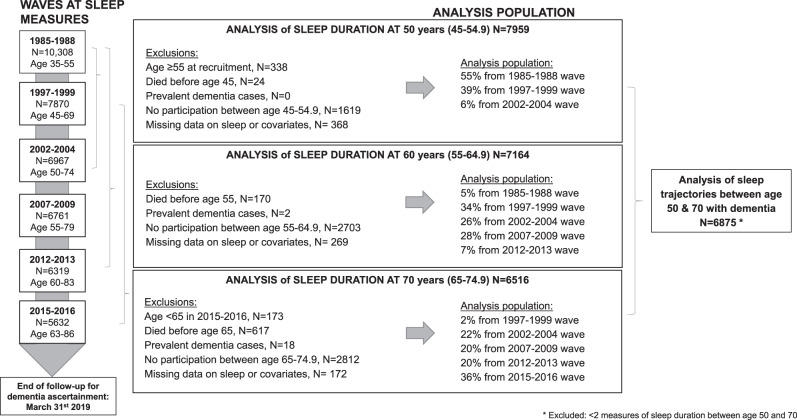
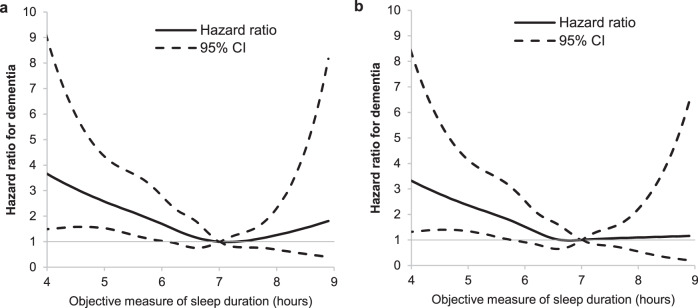
Sleep dysregulation is a feature of dementia but it remains unclear whether sleep duration prior to old age is associated with dementia incidence. Using data from 7959 participants of the Whitehall II study, we examined the association between sleep duration and incidence of dementia (521 diagnosed cases) using a 25-year follow-up. Here we report higher dementia risk associated with a sleep duration of six hours or less at age 50 and 60, compared with a normal (7 h) sleep duration, although this was imprecisely estimated for sleep duration at age 70 (hazard ratios (HR) 1.22 (95% confidence interval 1.01–1.48), 1.37 (1.10–1.72), and 1.24 (0.98–1.57), respectively). Persistent short sleep duration at age 50, 60, and 70 compared to persistent normal sleep duration was also associated with a 30% increased dementia risk independently of sociodemographic, behavioural, cardiometabolic, and mental health factors. These findings suggest that short sleep duration in midlife is associated with an increased risk of late-onset dementia.
Overview
The claims and statistics of this paper haven’t been checked yet.
Free: it reads the open-access text and checks the first 5 claims that cite a source we can check. Create a free account to check every claim.
Integrity signals
Registry
Cites
Statistics
Figures
Verification
Claims the paper makes
The claims and statistics of this paper haven’t been checked yet.
Free: it reads the open-access text and checks the first 5 claims that cite a source we can check. Create a free account to check every claim.
Claims other papers make about this one
Each is checked against this paper’s own text: does it say what the citing paper says it does?
The cited source says what the claim attributes to it.
In the citing paper
“In the Whitehall II study, persistent short sleep duration ≤6 hours at age 50, 60, and 70 compared to persistent normal sleep duration (7 hours) was associated with a 30% increased dementia risk independently of sociodemographic, behavioural, cardiometabolic, and mental health factors.(303)”
From Dementia prevention, intervention, and care: 2024 report of the Lancet standing Commission (2024) · cites this paper as [303]
In the citing paper
“Persistent SD (<6 h per night) during midlife is associated with a 30% elevated risk of dementia in a longitudinal study of 7959 participants.”
From Microbiota–gut–brain axis and its therapeutic applications in neurodegenerative diseases (2024) · cites this paper as [649]
Self-check
Percentages, sums and reported differences re-computed from the paper’s own numbers.
The self-check needs the paper’s full text.
Citations
Cites
1 retracted
Dementia prevention, intervention, and care: 2020 report of the Lancet Commission
Livingston, G., Huntley, J., Sommerlad, A., Ames, D., Ballard, C., Banerjee, S., Brayne, C., Burns, A., Cohen-Mansfield, J., Cooper, C., et al. (2020) · The Lancet · doi:10.1016/s0140-6736(20)30367-6 · Cited by 10,430
Self-citationRetractedHarrell, F. E. (2001) · Springer Series in Statistics · doi:10.1007/978-1-4757-3462-1 · Cited by 9,195
A scaled version of the General Health Questionnaire
Goldberg, D. P., & Hillier, V. F. (1979) · Psychological Medicine · doi:10.1017/s0033291700021644 · Cited by 5,459
Sleep Drives Metabolite Clearance from the Adult Brain
Xie, L., Kang, H., Xu, Q., Chen, M. J., Liao, Y., Thiyagarajan, M., O’Donnell, J., Christensen, D. J., Nicholson, C., Iliff, J. J., et al. (2013) · Science · doi:10.1126/science.1241224 · Cited by 5,411
2016 Alzheimer's disease facts and figures
Alzheimer's Association (2016) · Alzheimer's & Dementia · doi:10.1016/j.jalz.2016.03.001 · Cited by 5,069
Jack, C. R., Knopman, D. S., Jagust, W. J., Petersen, R. C., Weiner, M. W., Aisen, P. S., Shaw, L. M., Vemuri, P., Wiste, H. J., Weigand, S. D., et al. (2013) · The Lancet Neurology · doi:10.1016/s1474-4422(12)70291-0 · Cited by 4,396
Health inequalities among British civil servants: the Whitehall II study
Marmot, M. G., Stansfeld, S., Patel, C., North, F., Head, J., White, I., Brunner, E., Feeney, A., Marmot, M. G., & Smith, G. D. (1991) · The Lancet · doi:10.1016/0140-6736(91)93068-k · Cited by 3,608
Group-Based Trajectory Modeling in Clinical Research
Nagin, D. S., & Odgers, C. L. (2010) · Annual Review of Clinical Psychology · doi:10.1146/annurev.clinpsy.121208.131413 · Cited by 2,708
2020 Alzheimer's disease facts and figures
(2020) · Alzheimer's & Dementia · doi:10.1002/alz.12068 · Cited by 2,353
Neurocognitive consequences of sleep deprivation
Goel, N., Rao, H., Durmer, J., & Dinges, D. (2009) · Seminars in Neurology · doi:10.1055/s-0029-1237117 · Cited by 2,154
Cited by
Items 501–600 of 671
The public health environment and brain function
Doyle, S. J., Rostamihosseinkhani, M., & Sabayan, B. (2024) · Elsevier eBooks · doi:10.1016/b978-0-12-820480-1.00163-7 · Cited by 1
Association between sleep duration and mortality in cancer patients
Itani, O. (2024) · Sleep and Biological Rhythms · doi:10.1007/s41105-024-00560-x · Cited by 1
“Previous epidemiologic studies have reported that extremely short sleep duration significantly increases the risk of developing obesity [1, 2], hypertension[1, 2], diabetes [1], heart disease [1, 2], cerebrovascular disease [2], dementia [3], and depression [2].”
Yang, X., Zhao, X., & Jiang, Y. (2025) · The Journal of Clinical Endocrinology & Metabolism · doi:10.1210/clinem/dgaf307 · Cited by 1
Review of: "Association of sleep duration in middle and old age with incidence of dementia"
Strandberg, T. E. (2021) · doi:10.32388/jygjsa
“Although an observational study cannot prove causation, as plausible mechanisms explaining the link with short sleep duration, the authors discuss several effects of sleep on brain health, including neuroinflammation and impaired clearance of amyloid-beta from brain via the glymphatic system (1).”
BackgroundAvancées scientifiques 2021 en médecine interne générale ambulatoire
Gouveia, A., Auer, S., Baratali, L., Deillon, E., Kokkinakis, I., Leuzinger, S., Samusure, J., Selby, K. J., Tzartzas, K., Favrat, B., et al. (2022) · JMIG · doi:10.53738/revmed.2022.18.766.102
Quiaios, L., Dumur, J., Major, K., Stamm, E., Cominetti, F., Mérandon, S., Apostolova, Y., Humbert, M., Cochet, C., Nguyen, S., et al. (2022) · JMIG · doi:10.53738/revmed.2022.18.767.161
Devarajan, S., Mylsamy, S., Venkatachalam, T., & Veerasamy, G. (2021) · International Journal of Medical Sciences and Nursing Research · doi:10.55349/ijmsnr.2021111216
“[17] On workdays, both during and after lock down Males get up early.”
BackgroundWhat is the Relationship Between Sleep and Alzheimer’s Disease? A Narrative Review
Gobraeil, S., & Rizq, G. (2022) · Undergraduate Research in Natural and Clinical Science and Technology (URNCST) Journal · doi:10.26685/urncst.334 · Cited by 1
The Relationship Between Sleep Disorders, Medical Conditions, and Your Health
Bailey, F. D. R., & Attanasio, M. R. (2022) · Wiley eBooks · doi:10.1002/9781119080336.ch5
Kim, S., Lee, H.-J., Son, Y., & Kim, D. (2021) · Daehan imsang geon-gang jeungjin hakoeji/Daehan imsang geon'gang jeungjin haghoeji · doi:10.15384/kjhp.2021.21.4.158
Lecour, S., & Hess, D. C. (2021) · PubMed
Prediction of Cognitive Decline by Behavioral Symptoms in Neuropsychiatric Disorders
Barekatain, M., Sadeghpour, S., Rajabi, F., & Maracy, M. R. (2022) · Iranian Journal of Psychiatry and Behavioral Sciences · doi:10.5812/ijpbs-126596
“Persistent short sleep duration at ages 50, 60, and 70 compared to persistent normal sleep duration was also associated with a 30% increased dementia risk independently of sociodemographic, behavioral, cardiometabolic, and mental health factors (29).”
BackgroundMcNamara, M., Dolja‐Gore, X., Cavenagh, D., D’Este, C. A., Melo, L., Jackson, K., Nepal, S., Cresswell, A., Anstey, K. J., Brodaty, H., et al. (2023) · Research Square · doi:10.21203/rs.3.rs-2525669/v1
Non-pharmaceutical Treatments for Alzheimer’s DiseasePreprint
Barath, P. (2023) · doi:10.58445/rars.153
Evaluatıon of The Relationship Between Perıodontal Dısease And Sleep Duratıon
Dikilitaş, A., Evirgen, Ş., Karaaslan, F., & Kahraman, E. N. (2023) · Yeditepe Dental Journal · doi:10.5505/yeditepe.2023.12599
Zhang, J., Shi, L., Chen, D., Ma, H., & Li, H. (2023) · Research Square · doi:10.21203/rs.3.rs-3450364/v1
Lobos, P., More, J., Bruna, B., & Antonello Penna, S. (2023) · Revista Hospital Clínico Universidad de Chile · doi:10.5354/2735-7996.2023.71414
“En particular, se ha observado que la disminución de la duración y calidad del sueño en adultos se relaciona con aumento en la aparición de demencia(50), determinándose que la reducción del sueño promueve la acumulación del péptido Aβ por interrupción de los mecanismos de aclaramiento linfático(51).”
BackgroundZülke, A. E., Luppa, M., & Riedel-Heller, S. G. (2023) · Public Health Forum · doi:10.1515/pubhef-2023-0056
Doyle, S. J., Emily C. Davis, B., & Trevathan, E. (2023) · American Public Health Association eBooks · doi:10.2105/9780875533377ch20
Link between insomnia, cognitive impairment and stroke
Suzuki, K. (2023) · Sleep and Biological Rhythms · doi:10.1007/s41105-023-00501-0
“Additionally, persistent short sleep at the ages of 50, 60, and 70 was associated with a 30% increase in the risk of dementia compared to persistent normal sleep, independent of comorbidities or sociodemographic, behavioral and mental health factors [2].”
Vandenbroucke, J. P., Sørensen, H. T., Rehkopf, D. H., Gradus, J. L., Mackenbach, J. P., Glymour, M. M., Galea, S., & Henderson, V. W. (2024) · Clinical Epidemiology · doi:10.2147/clep.s443152
“17,18 The impact of these exposures over the life course is difficult to quantify, but there are potential effects on the initiation and progression of dementia pathologies and on resilience in the setting of these pathologies.”
BackgroundGibbs, D. (2024) · Cambridge University Press eBooks · doi:10.1017/9781009430067.027
Multifaceted roles of sleep on healthy longevity
Chen, L. (2024) · Archives of Gerontology and Geriatrics · doi:10.1016/j.archger.2024.105355
Effets des troubles du sommeil sur la démence : une approche épidémiologique
Cavaillès, C. (2022) · theses.fr (ABES) · doi:10.70675/b52557d6zaca4z4316zab9ez1224634b5ae0
Champetier, P. (2023) · theses.fr (ABES) · doi:10.70675/323f5d1dz6fd3z49d7z9d48z77d2f3bf899e
Yang, Y., Wang, X., Chen, L., Zhang, N., Ji, S., Wang, Z., Han, J., Wang, Y., & Wen, M. (2024) · Food Science and Human Wellness · doi:10.26599/fshw.2024.9250067
Schlafstörungen bei Demenzerkrankungen
Brandt, M. (2024) · Springer eBooks · doi:10.1007/978-3-662-68297-5_5
Editorial: The 3 S's: sex, stress, and sleep as risk factors for dementias
Ding, Q. (2024) · Frontiers in Aging Neuroscience · doi:10.3389/fnagi.2024.1410797 · Cited by 2
Bobko, N. A., Gadayeva, D. O., & Antoniuk, A. Y. (2024) · Ukrainian Journal of Occupational Health · doi:10.33573/ujoh2024.01.024
Mental Performance Programs in the Corporate World
Cortoos, A., & Bocksteins, M. (2024) · Routledge eBooks · doi:10.4324/9781003378969-18
Dementia and depression: risk factors and microvascular mechanisms
van Gennip, A. C. E. (2024) · Research Publications (Maastricht University) · doi:10.26481/dis.20241010ag
Bonner‐Jackson, A. (2024) · Oxford University Press eBooks · doi:10.1093/med/9780197690024.003.0015
Regional associations of sleep architecture and Alzheimer’s disease pathologyPreprint
Buchal, A., Elmenhorst, D., Doering, E., Dzialas, V., Giehl, K., Bischof, G. N., van Eimeren, T., Drzezga, A. E., Hoenig, M. C., & the T-POT study group (2024) · bioRxiv (Cold Spring Harbor Laboratory) · doi:10.1101/2024.10.10.617528
(2024) · Elsevier eBooks · doi:10.1016/b978-0-443-23565-8.09996-8
Lifestyle Factors Affecting Biological Processes and Health
Anisman, H., Hayley, S. P., & Kusnecov, A. W. (2024) · Elsevier eBooks · doi:10.1016/b978-0-443-23565-8.00009-0
Talkad, H., Chen, Y., Bress, A. P., Langbaum, J. B. S., Tariot, P. N., & Pruzin, J. J. (2024) · Journal of Aging Research and Lifestyle · doi:10.14283/jarlife.2024.19
Sleep, Aging, and Inflammation: Unraveling the Connections
Singh, Y., Baitha, U., & Vishwakarma, L. C. (2024) · Progress in inflammation research · doi:10.1007/978-3-031-74744-1_9
Decade-Long Impact of Transcranial Direct Current Stimulation in Alzheimer’s DiseasePreprint
Aggarwal, A. (2025) · bioRxiv (Cold Spring Harbor Laboratory) · doi:10.1101/2025.01.26.634937
Xu, Z., & Zhao, Q. (2025) · Economic Analysis and Policy · doi:10.1016/j.eap.2025.03.001
Exploring the evolving frontiers of sleep deprivation research in the post-COVID-19 era
Abdelwahab, S. İ., Taha, M. M. E., Aldhahi, M. I., Jerah, A. A., Farasani, A. M., Abdullah, S. M., Aljahdali, I. A., Ibrahim, R., Oraibi, O., Oraibi, B., et al. (2025) · Medicine · doi:10.1097/md.0000000000041806
Li, N., Sheng, H., & Meng, H. (2025) · Journal of environmental health · doi:10.70387/001c.133853
“Individuals who experience sleep disorders for an extended amount of time have an increased risk of mental disorders and chronic diseases such as diabetes and cardiovascular disease (Sabia et al., 2021), which adversely affect their quality of life.”
Sleep Disorders in the Elderly
Amidi, A., Ancoli‐Israel, S., Maglione, J. E., & Wu, L. M. (2025) · Oxford University Press eBooks · doi:10.1093/oxfordhb/9780197602751.013.27
Brain Clearance, Sleep, and Circadian Rhythms: Implications for Brain Health
van Heese, E. M., Bakker, E. N. T. P., & van der Werf, Y. D. (2025) · Oxford University Press eBooks · doi:10.1093/oxfordhb/9780197602751.013.60
Cherubini, J. M., Walker, D. W., So, J., Nguyen, L., MacDonald, M. J., & Walsh, J. J. (2025) · Translational Exercise Biomedicine · doi:10.1515/teb-2025-0012
Brennan, G. S., Thompson, T., Oliveri, H., Vinje, V., Ringstad, G. A., Eide, P. K., Goriely, A., & Rognes, M. E. (2025) · bioRxiv (Cold Spring Harbor Laboratory) · doi:10.1101/2025.06.03.657596
(2025) · Neurological Sciences and Neurosurgery · doi:10.47275/2692-093x-146
Sleep disorders in neurological diseases
Bušková, J. (2025) · Neurologie pro praxi · doi:10.36290/neu.2024.050
Diagnosis, treatment, and associated outcomes of later-life insomnia: a narrative review
Kaufmann, C. N., Lee, S., Berkley, A., Wickwire, E. M., Neubauer, D. N., Li, J., & Spira, A. P. (2025) · SLEEP · doi:10.1093/sleep/zsaf192
DISTÚRBIOS DO SONO E O IMPACTO NO DESENVOLVIMENTO DE DOENÇAS NEURODEGENERATIVAS
IRRAZABAL, A. G. Q. S., CUNHA, A. C., GALBINSKI, B. S., Delai, L., Sommer, L. T., SNEL, L. P. F., Oliveira, M., Dumoncel, M. P. C., dos Reis, M. A. B., RAUBER, M. K., et al. (2025) · Editora Pasteur eBooks · doi:10.59290/978-65-6029-257-4.22
Distúrbios do sono como fator de risco para doenças neurodegenerativas
Barbosa, C. L. B., Gonzalez, H. E. G. D. S., & Lima, D. D. M. F. (2025) · Journal Archives of Health · doi:10.46919/archv6n4espec-16062
Fletcher‐Lloyd, N., Céspedes, N., Capstick, A., Fogel, A., Bafaloukou, M., Heydari, M., Cairns, A., Walsh, C., True, J., CR T Group, et al. (2026) · npj Digital Medicine · doi:10.1038/s41746-026-02964-0
Association Between Low Birth Weight and Dementia Risk: A Large-scale Prospective Study.
Yu, X., Xue, Q., Li, J., Zhang, P., Ouyang, Q., Luo, X., He, Q., Wang, Y., Zhao, Y., He, X., et al. (2025) · PubMed Central · doi:10.12182/20250560503 · Cited by 1
Bhat, A., Bishir, M., Kalyan, M., Torterolo, P., Chang, S. L., Pandi-Perumal, S. R., & Chidambaram, S. B. (2025) · NeuroImmune Pharmacology and Therapeutics · doi:10.1515/nipt-2025-0009
Sleep Duration and Multimorbidity as Joint Predictors of All-Cause Mortality in US AdultsPreprint
Azu, E. U., Adebile, T. V., Kizza, T., Samawi, H. M., & Yu, L. (2025) · Research Square · doi:10.21203/rs.3.rs-7861351/v1
Zhao, G., Zhang, K., & Li, X. (2026) · BMC Public Health · doi:10.1186/s12889-026-27502-1
“By integrating these theoretical perspectives, we propose the “Cumulative Bridge” framework to explain how the benefits of sustained activity accrue to bridge the gap between ageing and declining sleep health [9].”
Frailty and Poor Sleep Patterns
Kaşkal, M., & Frost, F. J. (2025) · JACC Asia · doi:10.1016/j.jacasi.2025.09.004
Intzandt, B., Ramirez, J., Lam, B., Masellis, M., Einstein, G., Bherer, L., Black, S. E., & ONDRI and CCNA Investigators (2025) · Alzheimer s & Dementia · doi:10.1002/alz.70825
Epilepsy and dementia: is sleep the critical link?
You, X., & Sen, A. (2025) · Advances in Clinical Neuroscience & Rehabilitation · doi:10.47795/ezda3368
Einschlafen: Ein Problem für viele Menschen – Was sagt die Wissenschaft?
Spitzer, M. (2025) · Nervenheilkunde · doi:10.1055/a-2693-9372
Sleep health and dementia risk
Kaufmann, C. N., Tseng, C., Lucey, B. P., Malhotra, A., & Spira, A. P. (2025) · Elsevier eBooks · doi:10.1016/b978-0-443-13954-3.00048-6
Association of Novel Sleep EEG Biomarkers with All-Cause Mortality in a Large Community-Based Cohort
Huang, J., & Wang, L. (2025) · Nature and Science of Sleep · doi:10.2147/nss.s557087
“4 However, the electroencephalogram (EEG) signal itself—the primary measure of brain activity during sleep—contains prognostic information that extends beyond simple sleep duration.”
Tomarevska, O., Poliakov, O., Коваленко, С. О., Chyzhyk, V. V., & Plyska, O. I. (2025) · Problems of ageing and longevity (Ukraine) · doi:10.71012/pro-ageing-2025-4-02
U, S. R. (2024) · cIRcle (University of British Columbia) · doi:10.14288/1.0445482
Ma, L.-Z., Ma, Y.-H., Ou, Y.-N., Chen, S.-D., Yang, L., Dong, Q., Cheng, W., Tan, L., & Yu, J. (2022) · Figshare · doi:10.6084/m9.figshare.19646269
Tian, J., Jones, G., Lin, X., Zhou, Y., King, A. E., Vickers, J., & Pan, F. (2023) · Figshare · doi:10.6084/m9.figshare.22767245
Machado‐Fragua, M. D., Sabia, S., Fayossé, A., Hassen, C. B., van der Heide, F. C. T., Kivimäki, M., & Singh‐Manoux, A. (2023) · Figshare · doi:10.6084/m9.figshare.24558175
Self-citationMeernik, C., Eilat-Adar, S., Leonard, D., Barlow, C. E., Gerber, Y., Tesler, R., Shanks, C. B., Gabriel, K. K. P., Pavlovic, A., DeFina, L. F., et al. (2024) · Figshare · doi:10.6084/m9.figshare.27124001
Kazemi, M., Khalili, P., Kazemi, M., Hasani, H., Sadeghi, M., & Jamali, Z. (2023) · Figshare · doi:10.6084/m9.figshare.22774271
Kinoshita, K., Otsuka, R., Takada, M., Nishita, Y., Tange, C., Jinzu, H., Suzuki, K., Shimokata, H., Imaizumi, A., & Arai, H. (2023) · Figshare · doi:10.6084/m9.figshare.24295710
Liao, H., Pan, D., Deng, Z., Jiang, J., Cai, J., Liu, Y., He, B., Lei, M., Li, H., Li, Y., et al. (2024) · Figshare · doi:10.6084/m9.figshare.26554718
Mapping activity-dependent gene expression in the brain
Vanrobaeys, Y. S. (2024) · Iowa Research Online (The University of Iowa) · doi:10.25820/etd.007387
Gamble, L. D., Matthews, F. E., Jones, I. R., Hillman, A. E., Woods, B. T., Macleod, C. A., Martyr, A., Collins, R., Pentecost, C., Rusted, J. M., et al. (2022) · Figshare · doi:10.6084/m9.figshare.19745697
Meernik, C., Eilat-Adar, S., Leonard, D., Barlow, C. E., Gerber, Y., Tesler, R., Shanks, C. B., Gabriel, K. K. P., Pavlovic, A., DeFina, L. F., et al. (2024) · Figshare · doi:10.6084/m9.figshare.27123998
Li, T.-C., Li, C.-I., Liu, C.-S., Lin, C.-H., Yang, S.-Y., & Lin, C. (2023) · Figshare · doi:10.6084/m9.figshare.24883578
Kinoshita, K., Otsuka, R., Takada, M., Nishita, Y., Tange, C., Jinzu, H., Suzuki, K., Shimokata, H., Imaizumi, A., & Arai, H. (2024) · Figshare · doi:10.6084/m9.figshare.24295796
Fukuoka, T., Irie, S., Watanabe, Y., Kutsuna, T., & Abe, A. (2022) · Figshare · doi:10.6084/m9.figshare.20372759
Fukuoka, T., Irie, S., Watanabe, Y., Kutsuna, T., & Abe, A. (2022) · Figshare · doi:10.6084/m9.figshare.20372762
Quigley, I. (2025) · PDXScholar (Portland State University)
Touserkani, N., Lassalle, I., Yang, A., Jones, S., Mach, A., Gilbride, K., Kim, S., & Dao, A. (2024) · eScholarship (California Digital Library)
Mechanistic insights into Aβ-dependent neuronal hyperactivity in an Alzheimer’s model
Knauer, M. M., Konnerth, A., & München, T. U. (2023)
Relationships Between Movement Behaviours And Dementia
Oye-Somefun, A. (2024) · YorkSpace (York University)
Interhippocampal demyelination in the early onset of Alzheimer's disease
Ftara, A. (2024) · Repository of Digital Objects for Teaching Research and Culture (University of Valencia)
New advances in the neurobiological mechanisms regulating fear extinction.
Ten-Blanco, M. (2023) · Deposito Digital UFV (Francisco de Vitoria University)
Zwischen Schlaflosigkeit und Klassenzimmer
Hagmair, K. (. (2024) · KiDokS
ASSOCIATIONS BETWEEN SLEEP AND COGNITIVE DECLINE IN OLDER ADULTS
Kuhler, C., & Kuhler, C. (2023) · UA Campus Repository (The University of Arizona)
Stexå, E., & Einarsson, E. (2024) · Diva portal (Dalarna University Library)
Protocol for the Asian Cohort for Alzheimer's Disease (ACAD) Study
Ho, P., Peavy, G. M., Lee, H., Gu, Y., Kukull, W. A., Choi, Y., Yu, W. H., Reyes‐Dumeyer, D., Henderson, V. W., Tee, B. L., et al. (2025) · Alzheimer s & Dementia Translational Research & Clinical Interventions · doi:10.1002/trc2.70189 · Cited by 1
Bowen, P. G., Jones, C. D., Myers, T., Martin, R. C., Knight, A. J., Azuero, A., Smith, T. R., Lancaster, C., Brewer, M., Davuluri, S., et al. (2025) · Archives of Public Health · doi:10.1186/s13690-025-01768-0
“Each BCS element has been independently associated with adverse effects on brain health [32, 41, 42], with increasing evidence that implementing a multi-domain approach is more likely to improve outcomes [43, 44].”
Ai, M., Wu, K., Song, M., Huo, B., Wu, Z., Jia, H., & Ning, Y. (2026) · Sleep Medicine · doi:10.1016/j.sleep.2026.108769
Metadata
- Authors
- Sabia, S., Fayosse, A., Dumurgier, J., van Hees, V. T., Paquet, C., Sommerlad, A., Kivimäki, M., Dugravot, A., & Singh-Manoux, A.
- Affiliations
- Inserm (FR)
- University College London (GB)
- ORCID
- Venue
- Nature Communications
- Published
- 2021-04-20
- Volume
- 12
- Issue
- 1
- Pages
- 2289-2289
- ISSN
- 2041-1723 (ISSN-L)
- PMC
- PMC8058039
- OpenAlex
- W3153417615
- Cited by
- 628
- References
- 55
- Citations by year
- 2026: 92 · 2025: 141 · 2024: 142 · 2023: 117 · 2022: 95 · 2021: 41
- FWCI
- 70.85
- Type
- journal article
- Language
- en
- Open access
- gold
- doi.org
- Licence
- cc-by
- creativecommons.org/licenses/by/4.0 (tdm)
- creativecommons.org/licenses/by/4.0 (vor)
- Locations
- Nature Communications (publishedVersion, cc-by)
- PubMed Central (publishedVersion, cc-by)
- PubMed (publishedVersion)
- HAL (submittedVersion, cc-by)
- RePEc: Research Papers in Economics (submittedVersion)
- DOAJ (DOAJ: Directory of Open Access Journals) (submittedVersion, cc-by-sa)
- UCL Discovery (University College London) (submittedVersion)
- Työväentutkimus Vuosikirja (submittedVersion)
- Funders
- Wellcome Trust (204841, R024227, 221854, 221854/Z/20/Z, 204841/Z/16/Z, 311492, 329202, R01AG056477)
- National Institute for Health and Care Research (RF1AG062553, 204841/Z/16/Z, 311492, R024227, 221854/Z/20/Z)
- British Heart Foundation (RG/16/11/32334, RF1AG062553, 32334, R024227, RG/13/2/30098, 311492)
- University College London (204841/Z/16/Z)
- Agence Nationale de la Recherche (ANR-19-CE36-0004)
- Academy of Finland (RF1AG062553, 311492, R024227, 329,202)
- NordForsk (RF1AG062553, 70521, R024227, 75021, 311492)
- University College London Hospitals NHS Foundation Trust
- National Institutes of Health (S011676, R024227)
- Medical Research Council (S011676, 221854/Z/20/Z, MR/S011676/1, R024227, MR/R024227/1, RF1AG062553, 204841/Z/16/Z, 311492, R024227, S011676)
- Economic and Social Research Council (ES/T014377/1)
- National Institute on Aging (RF1AG062553, R01AG056477, R024227, R01AG056477, RF1AG062553, 311492)
- Topics
- Health Sciences › Medicine › Psychiatry and Mental health › Dementia and Cognitive Impairment Research
- Social Sciences › Psychology › Experimental and Cognitive Psychology › Sleep and related disorders
- Life Sciences › Neuroscience › Cognitive Neuroscience › Sleep and Wakefulness Research
- Keywords
- sleep duration, dementia incidence, short sleep duration, midlife, old age, late-onset dementia, sleep dysregulation, Whitehall II study, dementia risk factors
- MeSH terms
- Adult, Age Factors, Aged, Aged, 80 and over, Dementia, Female, Follow-Up Studies, United Kingdom, Humans, Longitudinal Studies, Male, Middle Aged, Risk Factors, Sleep, Sleep Deprivation, Sleep Wake Disorders, Time Factors, Cohort Studies, Incidence, Proportional Hazards Models
About these checks
Registry, retraction, Cites and statistics results are computed, not judged, with one exception: a printed reference that no index lists is read once by a model before it counts as a citation error. Claims are extracted by a model and kept only when their quote appears verbatim in the text; each cited source is then checked, with a model’s help, for whether it says what the claim relies on. Those verdicts can be wrong — read the claim’s quote and the cited source before relying on one.
Statistics and arithmetic are recomputed, not judged.
Confidence bands are shown only for fields calibrated on our annotated test set. None is calibrated yet, so no band is shown.
What counts as a claim ›How we measure confidence ›How we check this ›
Are you an author, or do you see a problem with this page? Request a review
Data sources
Bibliographic data: Semantic Scholar, OpenAlex, Crossref.
Contains information from the Semantic Scholar Academic Graph Datasets, made available under the ODC Attribution License (ODC-BY 1.0).
Semantic Scholar’s data is described in: Kinney, R., et al. (2023). The Semantic Scholar Open Data Platform. arXiv:2301.10140.
