

Association of sleep duration in middle and old age with incidence of dementia
Open accessThe DOI matches its Crossref record; 55 of the 55 references it cites were found in a registry or an index.
Abstract
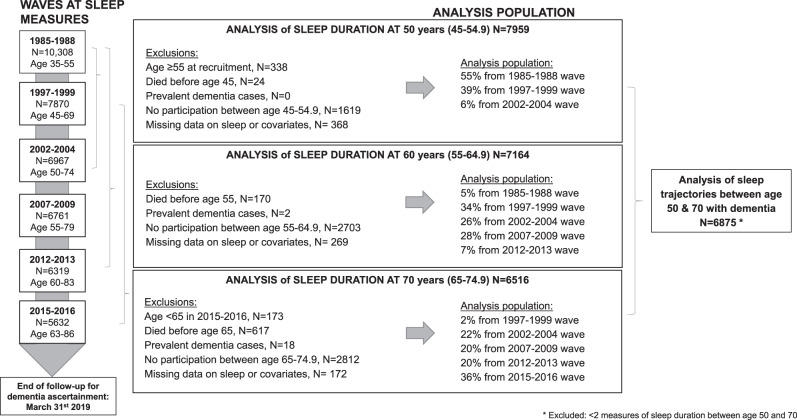
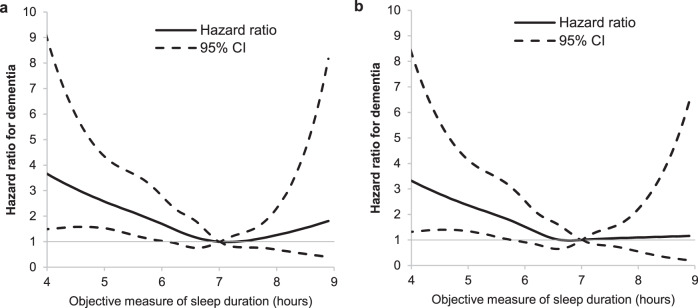
Sleep dysregulation is a feature of dementia but it remains unclear whether sleep duration prior to old age is associated with dementia incidence. Using data from 7959 participants of the Whitehall II study, we examined the association between sleep duration and incidence of dementia (521 diagnosed cases) using a 25-year follow-up. Here we report higher dementia risk associated with a sleep duration of six hours or less at age 50 and 60, compared with a normal (7 h) sleep duration, although this was imprecisely estimated for sleep duration at age 70 (hazard ratios (HR) 1.22 (95% confidence interval 1.01–1.48), 1.37 (1.10–1.72), and 1.24 (0.98–1.57), respectively). Persistent short sleep duration at age 50, 60, and 70 compared to persistent normal sleep duration was also associated with a 30% increased dementia risk independently of sociodemographic, behavioural, cardiometabolic, and mental health factors. These findings suggest that short sleep duration in midlife is associated with an increased risk of late-onset dementia.
Overview
The claims and statistics of this paper haven’t been checked yet.
Free: it reads the open-access text and checks the first 5 claims that cite a source we can check. Create a free account to check every claim.
Integrity signals
Registry
Cites
Statistics
Figures
Verification
Claims the paper makes
The claims and statistics of this paper haven’t been checked yet.
Free: it reads the open-access text and checks the first 5 claims that cite a source we can check. Create a free account to check every claim.
Claims other papers make about this one
Each is checked against this paper’s own text: does it say what the citing paper says it does?
The cited source says what the claim attributes to it.
In the citing paper
“In the Whitehall II study, persistent short sleep duration ≤6 hours at age 50, 60, and 70 compared to persistent normal sleep duration (7 hours) was associated with a 30% increased dementia risk independently of sociodemographic, behavioural, cardiometabolic, and mental health factors.(303)”
From Dementia prevention, intervention, and care: 2024 report of the Lancet standing Commission (2024) · cites this paper as [303]
In the citing paper
“Persistent SD (<6 h per night) during midlife is associated with a 30% elevated risk of dementia in a longitudinal study of 7959 participants.”
From Microbiota–gut–brain axis and its therapeutic applications in neurodegenerative diseases (2024) · cites this paper as [649]
Self-check
Percentages, sums and reported differences re-computed from the paper’s own numbers.
The self-check needs the paper’s full text.
Citations
Cites
1 retracted
Dementia prevention, intervention, and care: 2020 report of the Lancet Commission
Livingston, G., Huntley, J., Sommerlad, A., Ames, D., Ballard, C., Banerjee, S., Brayne, C., Burns, A., Cohen-Mansfield, J., Cooper, C., et al. (2020) · The Lancet · doi:10.1016/s0140-6736(20)30367-6 · Cited by 10,430
Self-citationRetractedHarrell, F. E. (2001) · Springer Series in Statistics · doi:10.1007/978-1-4757-3462-1 · Cited by 9,195
A scaled version of the General Health Questionnaire
Goldberg, D. P., & Hillier, V. F. (1979) · Psychological Medicine · doi:10.1017/s0033291700021644 · Cited by 5,459
Sleep Drives Metabolite Clearance from the Adult Brain
Xie, L., Kang, H., Xu, Q., Chen, M. J., Liao, Y., Thiyagarajan, M., O’Donnell, J., Christensen, D. J., Nicholson, C., Iliff, J. J., et al. (2013) · Science · doi:10.1126/science.1241224 · Cited by 5,411
2016 Alzheimer's disease facts and figures
Alzheimer's Association (2016) · Alzheimer's & Dementia · doi:10.1016/j.jalz.2016.03.001 · Cited by 5,069
Jack, C. R., Knopman, D. S., Jagust, W. J., Petersen, R. C., Weiner, M. W., Aisen, P. S., Shaw, L. M., Vemuri, P., Wiste, H. J., Weigand, S. D., et al. (2013) · The Lancet Neurology · doi:10.1016/s1474-4422(12)70291-0 · Cited by 4,396
Health inequalities among British civil servants: the Whitehall II study
Marmot, M. G., Stansfeld, S., Patel, C., North, F., Head, J., White, I., Brunner, E., Feeney, A., Marmot, M. G., & Smith, G. D. (1991) · The Lancet · doi:10.1016/0140-6736(91)93068-k · Cited by 3,608
Group-Based Trajectory Modeling in Clinical Research
Nagin, D. S., & Odgers, C. L. (2010) · Annual Review of Clinical Psychology · doi:10.1146/annurev.clinpsy.121208.131413 · Cited by 2,708
2020 Alzheimer's disease facts and figures
(2020) · Alzheimer's & Dementia · doi:10.1002/alz.12068 · Cited by 2,353
Neurocognitive consequences of sleep deprivation
Goel, N., Rao, H., Durmer, J., & Dinges, D. (2009) · Seminars in Neurology · doi:10.1055/s-0029-1237117 · Cited by 2,154
Cited by
Items 301–400 of 671
Britt, K. C., Oh, H., Boateng, A. C. O., Morgan, S., Ashida, S., Nagel, C., Thorpe, R. J., & Koenig, H. G. (2025) · Brain Sciences · doi:10.3390/brainsci15121296 · Cited by 6
“Poor sleep may contribute to worse cognitive functioning, increasing one’s risk of developing dementia [95].”
Effects of sleep on multimodal cognitive functioning in college students
Xu, Y., Qin, L., Wen, S. W., Zhang, X., & Zhou, Y. (2025) · Frontiers in Psychiatry · doi:10.3389/fpsyt.2025.1637699 · Cited by 6
“Similarly, an inverted U-shaped relationship exists between sleep and cognition: sleep durations exceeding 8 hours are negatively correlated with cognitive function, whereas 6 – 8 hours of sleep show a positive correlation (46).”
Gupta, B., Goel, R., Gupta, K., Thakor, A., & Mittal, A. (2025) · Annals of Indian Academy of Neurology · doi:10.4103/aian.aian_176_25 · Cited by 6
The Impact of Lifestyle on Brain Health
Potashkin, J. A., Vidyadhara, D. J., & Hunsberger, H. C. (2025) · American Journal of Lifestyle Medicine · doi:10.1177/15598276251411888 · Cited by 7
Marsh, E. B., Lavretsky, H., Kasparian, N. A., Pike, N. A., Doyle, K. P., Aggarwal, N. T., Fullerton, H. J., Ivy, A. S., & Dlamini, N. (2026) · Stroke · doi:10.1161/str.0000000000000518 · Cited by 7
Fazeli, P. L., Hopkins, C., Vance, D. E., Wadley, V. G., Li, P., Turan, B., Bowen, P. G., & Clay, O. J. (2022) · Nursing Research and Reviews · doi:10.2147/nrr.s339200 · Cited by 8
The Media Coverage of Bruce Willis Reveals Unfamiliarity With Frontotemporal Degeneration
Hurley, R. S. E., Pillai, J. A., & Leverenz, J. B. (2023) · Innovation in Aging · doi:10.1093/geroni/igad125 · Cited by 6
“Most of the components of a healthy lifestyle have been supported scientifically, in terms of delaying the onset and improving outcomes for FTD and other neurodegenerative diseases (Casaletto et al., 2020; Dhana et al., 2020; Sabia et al., 2021).”
BackgroundThe role of actigraphy in detecting and characterizing the early phases of Alzheimer’s disease
Winer, J. R. (2024) · SLEEP · doi:10.1093/sleep/zsae076 · Cited by 7
“It is generally understood that better sleep health in late life is associated with lower risk and/or slower progression of AD, a hypothesis supported by epidemiological findings [3, 4] as well as mechanistic studies in AD mouse models [5–7].”
ResultBulycheva, I. A., Watanabe, Y., Kitamura, K., Kabasawa, K., Saito, T., Takahashi, A., Kobayashi, R., Oshiki, R., Takachi, R., Tsugane, S., et al. (2024) · Journal of Alzheimer s Disease · doi:10.3233/jad-231104 · Cited by 6
“…short self-reported sleep duration and high dementia risk may be explained by the fact that, unlike studies using objective measures of sleep duration [41], the studies using self-reported sleep duration simply assessed sleep quantity and did not assess the impact of sleep quality (e.g., insomnia).”
Smagula, S. F., Zhang, G., Krafty, R. T., Ramos, A. R., Sotres‐Alvarez, D., Rodakowski, J. L., Gallo, L. C., Lamar, M., Gujral, S., Fischer, D. R., et al. (2024) · Sleep Health · doi:10.1016/j.sleh.2024.02.002 · Cited by 8
Zhao, Z., Yin, X., & Xu, M. (2024) · The Journals of Gerontology Series B · doi:10.1093/geronb/gbae173 · Cited by 6
GABAergic Signaling Underlying REM Sleep Deprivation‐Induced Spatial Working Memory Deficits
Varinthra, P., Shih, S., & Liu, I. Y. (2025) · Brain and Behavior · doi:10.1002/brb3.70607 · Cited by 6
“…and elderly individuals correlate with a higher incidence of Parkinson’s disease (Rosinvil et al. 2024), stroke (Tsai et al. 2022), and dementia (Li et al. 2023; Lv et al. 2022; Rosinvil et al. 2024; Sabia et al. 2021), suggesting a critical link between sleep and neurodegenerative diseases.”
Li, S., Yang, B., Shang, S., & Jiang, W. (2025) · Obesity · doi:10.1002/oby.24338 · Cited by 7
“Although this is a self-reported measure and lacks a validated tool, it is consistent with similar epidemiological studies [ 18].”
Sleep Disorders in the Allergy-Immunology Clinic
Conway, A. E., Verdi, M., Anagnostou, A., Bernstein, J., Abrams, E. M., Madan, J. C., Oppenheimer, J. J., Lang, D. M., Hand, M., Forester, J. P., et al. (2025) · The Journal of Allergy and Clinical Immunology In Practice · doi:10.1016/j.jaip.2025.07.052 · Cited by 6
Melikyan, Z. A., Kawas, C. H., Paganini‐Hill, A., Jiang, L., Mander, B. A., & Corrada, M. M. (2022) · Behavioral Sleep Medicine · doi:10.1080/15402002.2022.2148668 · Cited by 7
“Short (≤5 or ≤6 hours depending on the study) and long (≥8 or ≥9 hours depending on the study) self-reported sleep per night and per 24 hr are associated with increased risk of all-cause cognitive impairment (Chen et al., 2016; Sabia et al., 2021).”
BackgroundCircadian rhythm disruption and retinal dysfunction: a bidirectional link in Alzheimer's disease?
Carrero, L., Antequera, D., Municio, C., & Carro, E. (2023) · Neural Regeneration Research · doi:10.4103/1673-5374.390962 · Cited by 6
“A recent study showed that short sleep duration in midlife is associated with a higher risk of dementia later in life, independently of sociodemographic, behavioral, cardio-metabolic, and mental health factors (Sabia et al., 2021).”
BackgroundShin, S., Seok, J. W., Kim, K., Kim, J. H., Nam, H., & Pak, K. (2024) · NeuroImage · doi:10.1016/j.neuroimage.2024.120814 · Cited by 6
“Moreover, sleep disturbance increases the risk of dementia (Sabia et al., 2021; Shi et al., 2018) and is frequent in neurodegenerative diseases, including Alzheimer ’ s disease (AD) (Pak et al., 2020).”
BackgroundKhaing, K., Dolja‐Gore, X., Nair, B., Byles, J., & Attia, J. (2024) · Journal of the American Medical Directors Association · doi:10.1016/j.jamda.2024.105299 · Cited by 6
The role of sleep in Alzheimer’s disease: a mini review
Pathmanathan, J. S., Westover, M. B., Sivakumaran, S., Donoghue, J., & Puryear, C. B. (2025) · Frontiers in Neuroscience · doi:10.3389/fnins.2025.1428733 · Cited by 7
“…cohort study of 7,959 participants followed since the late 1980s (Whitehall II study, following 10,308 British civil servants and collecting a range of clinical metrics and health records) sleep duration was measured using questionnaires administered every 5–10 years (Sabia et al., 2021).”
Kekkonen, E., Hall, A., Antikaínen, R., Havulinna, S., Kivipelto, M., Kulmala, J., Laatikainen, T., Paajanen, T. I., Sindi, S., Soininen, H. S., et al. (2025) · BMC Geriatrics · doi:10.1186/s12877-025-05830-y · Cited by 7
“Short sleep duration (≤ 6 h/night) in mid-life has been associated with an increased higher incidence of dementia in a > 30-year follow-up study, but in later life long sleep duration has also been associated with dementia [48].”
Zatońska, K., Basiak-Rasała, A., Połtyn–Zaradna, K., Kinastowski, K., & Szuba, A. (2021) · International Journal of Environmental Research and Public Health · doi:10.3390/ijerph19010403 · Cited by 6
“Short sleep duration in middle age has been also associated with an increased risk of dementia [9].”
BackgroundFauria, K., Minguillón, C., Knezevic, I., Tort‐Colet, N., Stankeviciute, L. S., Hernández, L., Rădoi, A., Deulofeu, C., Fuentes‐Julián, S., Turull, I., et al. (2022) · BMJ Open · doi:10.1136/bmjopen-2022-067159 · Cited by 7
Hou, X., Hayashi, R., Itoh, M., & Tonoki, A. (2023) · SLEEP · doi:10.1093/sleep/zsad018 · Cited by 6
Li, X., Jin, Y., Bandinelli, S., Ferrucci, L., Tanaka, T., & Talegawkar, S. A. (2024) · Journal of the American Geriatrics Society · doi:10.1111/jgs.19194 · Cited by 7
“29 Despite sleep being closely associated with the other CVH factors, 21 these studies investigated the role of sleep duration in dementia risk independently, 26 – 34 without considering the potential interactions between sleep and other CVH factors.”
The Complex Interplay between Sleep and Neurodegenerative Diseases: An Epidemiological View
Bergmann, M., Tschiderer, L., Seekircher, L., Santamaría, J., & Provini, F. (2025) · Neuroepidemiology · doi:10.1159/000546316 · Cited by 6
“Incontrast in other studies (25/34) assessing different sleep features reported no association with dementia, including, for example, OSA and snoring [7, 62], sleep duration [7, 16, 30, 33, 36, 38, 40, 46, 48, 49, 54, 61, 62], or sleep quality [35, 46, 48, 58, 61, 62], each de fi ned differently.”
Air pollution and Alzheimer's disease prevention: The science and a prevention plan
Khalsa, D. S., Lavretsky, H., Reddy, M. Y., Fenn, A., & Walling, C. G. (2025) · Journal of Alzheimer s Disease · doi:10.1177/13872877251386482 · Cited by 5
“92,93 Pharmacologic responses may inadvertently worsen long-term brain health.”
Zhu, Y., Chen, F., Fang, X., Liang, N., Na, G., & Liu, Z. (2025) · Journal of Affective Disorders · doi:10.1016/j.jad.2025.120934 · Cited by 6
Du, M., Prats‐Uribe, A., Mercadé‐Besora, N., López‐Güell, K., Guo, Y., Alcalde‐Herraiz, M., Chen, X., Delmestri, A., Man, W. Y., Duarte‐Salles, T., et al. (2026) · European Journal of Epidemiology · doi:10.1007/s10654-025-01352-4 · Cited by 6
“For instance, research has shown that individuals with sleep disorders have a 17% higher risk of developing dementia compared to those without sleep disturbances [33].”
Oye-Somefun, A., Mirzadeh, P., Gao-Kang, J., Rotondi, M. A., Kuk, J. L., Tamim, H., & Ardern, C. I. (2026) · PLoS ONE · doi:10.1371/journal.pone.0343621 · Cited by 8
Microglial repopulation alleviates age-related decline of stable wakefulness in mice
Liu, H., Badawy, M., Sun, S., Cruz, G., Ge, S., & Xiong, Q. (2022) · Frontiers in Aging Neuroscience · doi:10.3389/fnagi.2022.988166 · Cited by 6
“Changes in sleep architecture in turn indicate accelerated brain aging or pathological conditions, such as dementia (Carvalho et al., 2017; Sabia et al., 2021; Gao et al., 2022).”
BackgroundLonger sleep duration in Alzheimer’s disease progression: a compensatory response?
Li, P., Gao, L., Lucey, B. P., Ju, Y. S., Musiek, E. S., & Hu, K. (2024) · SLEEP · doi:10.1093/sleep/zsae093 · Cited by 5
“…age adults with approximately 25 years of follow-up, self-reported short sleep duration, but not long sleep duration, was associated with an increased risk of cognitive impairment [19], further implying a confounding factor of the timing of sleep monitoring relative to the onset of symptomatic AD.”
BackgroundFonseca, L. M., Finlay, M., Chaytor, N. S., Morimoto, N. G., Buchwald, D., Dongen, H. P. A. V., Quan, S. F., & Suchy‐Dicey, A. M. (2024) · Frontiers in Aging Neuroscience · doi:10.3389/fnagi.2024.1346807 · Cited by 6
Chang, J., Liu, Y., Zhao, Y., Gao, P., & Tang, Y. (2024) · Journal of Neurology · doi:10.1007/s00415-024-12580-1 · Cited by 5
“Less than 6 h of bed rest has been associated with increased dementia incidence [20], and insufficient sleep can result in pathological changes in brain microstructure and accumulation of toxic metabolites, such as β-amyloid [21].”
Fan, J., Feng, J., Yang, L. C., Zhang, Q., & Li, H. (2024) · Neuroscience Letters · doi:10.1016/j.neulet.2024.138095 · Cited by 6
“Sleep is a naturally occurring physiological state which is critical for health and normal brain functions such as memory, emotions, and cognition[1 – 3].”
Activity variability: A novel physical activity metric and its association with cognitive impairment
Donahue, P. T., Schrack, J. A., Thrul, J., & Carlson, M. C. (2025) · Alzheimer s & Dementia Translational Research & Clinical Interventions · doi:10.1002/trc2.70079 · Cited by 10
“We excluded times during which participants may typically be sleeping because less timespentasleep(i.e.,greaternighttimeactivity)isrelatedtocognitive impairment 27 and our goal was to examine whether activity during waking hours was associated with cognition.”
Ihle‐Hansen, H., Hagberg, G., Ihle‐Hansen, H., Munthe‐Kaas, R., Aam, S., Aamodt, E. B., Lydersen, S., Beyer, M. K., Luzum, G., Saltvedt, I. T., et al. (2025) · Journal of the American Heart Association · doi:10.1161/jaha.124.038125 · Cited by 6
Sleep Disturbances in Neurological Disease: A Target for Intervention
Khambadkone, S. G., & Benjamin, S. E. (2022) · Seminars in Neurology · doi:10.1055/a-1958-0710 · Cited by 5
Zülke, A. E., Luppa, M., Köhler, S., & Riedel-Heller, S. G. (2023) · Der Nervenarzt · doi:10.1007/s00115-023-01471-x · Cited by 5
“Weitere kürzlich belegte Risikofaktoren sind Schlafmangel [24] und psychischer”
BackgroundLü, F., Zhong, J., Liu, H., & Xiao, H. (2023) · Frontiers in Neurology · doi:10.3389/fneur.2023.1258464 · Cited by 5
Comorbidity of Dementia: A Cross-Sectional Study of PUMCH Dementia Cohort
Shang, L., Dong, L., Huang, X., Chu, S., Jin, W., Bao, J., Wang, T., Mao, C., & Gao, J. (2024) · Journal of Alzheimer s Disease · doi:10.3233/jad-231025 · Cited by 7
“Insomnia has been shown to increase the risk of dementia by hindering the clearance of metabolites in the brain [35, 36].”
Niu, Y., Zhong, J.-F., Wen, H.-Y., Yan, H., Diao, Z., Li, J., Bai, X., Qiu, J., Xu, Z. N., Chen, L., et al. (2024) · The Journals of Gerontology Series A · doi:10.1093/gerona/glae034 · Cited by 6
Lifestyle medicine for healthy cognitive aging: A narrative review
Halma, M. T. J., Marik, P. E., Gazda, S., & Tuszyński, J. A. (2024) · Brain Behavior and Immunity Integrative · doi:10.1016/j.bbii.2024.100077 · Cited by 6
Focus on Multidisciplinary Aspects of Sleep Medicine
Cicolin, A., & Ferini‐Strambi, L. (2023) · Brain Sciences · doi:10.3390/brainsci13091327 · Cited by 5
Longitudinal trajectories of disability index and associated factors in Chinese older adults
Si, H., Yuan, Y., Shi, Z., Wang, Y., & He, P. (2025) · The journal of nutrition health & aging · doi:10.1016/j.jnha.2025.100530 · Cited by 5
“6 [106_TD$DIFF] h) and normal sleep ( > 6 [107_TD$DIFF] h) [20].”
The impact of behavioral patterns on accelerated aging in the UK biobank
Zhou, J., Xin, M., Wang, F., Zhong, Y., Zhang, T.-T., Mao, R., & Hu, Z. (2025) · Aging Clinical and Experimental Research · doi:10.1007/s40520-025-03074-9 · Cited by 5
“Participants were stratified into tertiles and categorized as: short ( 7 h/day), average (7 h/day), and long (≥ 8 h/day) sleep duration [ 14].. Total physical activity (TPA) was quantified using the International Physical Activity Questionnaire (IPAQ) [15].”
Wang, C., Zhang, T., Lu, H., Xu, Z., Wei, S., Ma, C., Fang, P., Zhu, Y., & Guo, F. (2025) · Brain Research Bulletin · doi:10.1016/j.brainresbull.2025.111640 · Cited by 7
Yiallourou, S. R., Cribb, L., Campbell‐Brown, B., Brakenridge, C. J., Baril, A., & Pase, M. P. (2025) · BMC Medicine · doi:10.1186/s12916-025-04536-7 · Cited by 4
“The sample selection process from the total UKB sample is displayed in Additional file 1, Figure S1 [3, 15–18].”
Gabb, V. G., Blackman, J., Morrison, H. D., Biswas, B., Li, H., Turner, N. L., Russell, G. M., Greenwood, R., Jolly, A., Trender, W. R., et al. (2024) · JMIR Research Protocols · doi:10.2196/52652 · Cited by 4
Tucker, A., Goldberg, T. E., & Kim, H. (2024) · Expert Review of Molecular Diagnostics · doi:10.1080/14737159.2024.2389307 · Cited by 6
“Large-scale prospective studies found both short and excessive subjective sleep to be predictive of incident dementia, even after adjusting for other AD-related risk factors, such as apolipoprotein (APOE) e4 genotype [53,54].”
Effect of “He Tiao Du Ren An Shen Acupuncture” on restless leg syndrome: A randomized trial
Guan, X.-R., Chen, Y., Li, J., Su, X., & Sun, W. (2024) · Medicine · doi:10.1097/md.0000000000039926 · Cited by 4
“[8] The psychological effects of managing RLS are multifaceted, encompassing depressive symptoms, a higher likelihood of suicidal ideation and self-harm, impediments to learning, and a diminished sense of motivation.”
BackgroundDementia and Cognitive Decline: A HEALM Approach
Jaqua, E. E., Tran, M.-L. N., Alvarez, P., Gupta, M., & Yoong, J. (2024) · American Journal of Lifestyle Medicine · doi:10.1177/15598276241291508 · Cited by 5
“50 A pooled cohort study, including 100,000 person-years of follow-up, demonstrated signi fi cant declines in global cognitive function among individuals with very low or high sleep durations.”
Li, J., Lin, Y., Yang, Z., Heinrich, J., Zhao, T., Yu, Z., Wang, W., Yang, K., Shen, P., Lin, H., et al. (2025) · Environmental Research · doi:10.1016/j.envres.2025.120767 · Cited by 4
Liu, Y.-J., Swaab, D. F., & Zhou, J.-N. (2025) · Handbook of clinical neurology · doi:10.1016/b978-0-323-90918-1.00001-0 · Cited by 4
An appraisal at a glance of metallome and disease biomarkers
López, R., Pereira, F. J., & Aller, A. J. (2025) · European Journal of Medicinal Chemistry · doi:10.1016/j.ejmech.2025.117931 · Cited by 4
Fukuoka, T., Irie, S., Watanabe, Y., Kutsuna, T., & Abe, A. (2022) · Pilot and Feasibility Studies · doi:10.1186/s40814-022-01122-z · Cited by 5
Michael Fellmann, M. A., Lambusch, F., & Schmidt, A. C. (2023) · Lecture notes in computer science · doi:10.1007/978-3-031-35599-8_11 · Cited by 4
Ogugu, E. G., Reilly, M. R., Mbe, K. A., & Bell, J. F. (2024) · Behavioral Sleep Medicine · doi:10.1080/15402002.2024.2314284 · Cited by 4
“…al., 2017; Yadav et al., 2017), diabetes (Shan et al., 2015), cardiovascular disease (Cappuccio et al., 2011; Von Ruesten et al., 2012), cancer (Von Ruesten et al., 2012), depression (Li et al., 2017; F. Liu et al., 2021), dementia (Sabia et al., 2021), and chronic kidney disease (Bo et al., 2019).”
BackgroundFaucher, C., Borne, L., Behler, A., Paton, B. K., Giorgio, J., Fripp, J., Thienel, R., Lupton, M. K., & Breakspear, M. J. (2024) · SLEEP Advances · doi:10.1093/sleepadvances/zpae058 · Cited by 4
“For example, people with better sleep attributes tend to have superior cognitive performance and a reduced risk of developing dementia in later life [4–6].”
BackgroundAssociations between the 24-h Activity Daily Cycle and Incident Dementia
Raichlen, D. A., Aslan, D. H., Sayre, M. K., Nanda, A., Bharadwaj, P. K., Ally, M., Maltagliati, S., Lai, M. H. C., Wilcox, R. R., Klimentidis, Y. C., et al. (2025) · Medicine & Science in Sports & Exercise · doi:10.1249/mss.0000000000003745 · Cited by 5
Multi-organ imaging and genetics show the impact of sleep patterns on the human brain and body
Fan, Z., Yang, Y., Guo, Y., Li, Y., Shu, J., Yang, X., Li, B., Lin, J., Wang, Q., Gibson, C., et al. (2026) · Communications Medicine · doi:10.1038/s43856-026-01656-w · Cited by 4
“Previous research has indicated an elevated risk of Alzheimer ’ sdiseaseamongindividualswithNAFLD 143,144 andsleeptraitshavealso been consistently linked to Alzheimer ’ s disease and other dementias 2 .”
Recent Advancements in the Early Diagnosis and Treatment of Alzheimer's Disease
Wu, Y., Fu, L., Li, Q., Gao, X., Zhang, Y., Jin, C., Ding, F., Hong, S. C., Cai, H., & Li, Y. (2023) · Advanced Therapeutics · doi:10.1002/adtp.202300181 · Cited by 5
Guia, I. D., Eslick, S., Naismith, S. L., Kanduri, S., Shah, T. M., & Martins, R. N. (2024) · Journal of Alzheimer s Disease Reports · doi:10.3233/adr-230150 · Cited by 5
“In a UK study, sleep disturbance at midlife was predictive of dementia 25 years later [49].”
BackgroundSleep Patterns and Arrhythmias
Kadish, A. H., & Jacobson, J. T. (2021) · Journal of the American College of Cardiology · doi:10.1016/j.jacc.2021.07.024 · Cited by 4
Which Are the Most Reliable Sleep Parameters that Predict Cognitive Decline and Alzheimer’s Disease?
Ferini‐Strambi, L. (2024) · Journal of Alzheimer s Disease · doi:10.3233/jad-231311 · Cited by 4
“Thisfindinghasbeen confirmedinthe7,959participantsoftheWhitehall II study, with a 25-year follow up: measurement of sleep duration measured by an accelerometer at age 50, 60, and 70 years showed a higher risk of dementia with a sleep duration of six hours or less compared to seven hours [6].”
Wang, K., Ji, J., Zhang, H., Sun, Z., Shao, Q., Xu, W., Wang, Q., Wang, X., & Cheng, F. (2024) · Journal of Stroke and Cerebrovascular Diseases · doi:10.1016/j.jstrokecerebrovasdis.2024.107918 · Cited by 3
Qaisar, R., Hussain, M. A., Franzese, F., Karim, A., Ahmad, F., Awad, A., & Alkahtani, S. A. (2025) · Archives of Public Health · doi:10.1186/s13690-025-01536-0 · Cited by 3
“Similarly, insomnia and poor sleep increase the risks of several diseases, including cardio-vascular disorders [11], dementia [12], cognitive decline [13], and somatic diseases [13].”
Could self-reporting sleep duration become an important tool in the prediction of dementia?
Šagud, M., Janović, M. B., Uzun, S., Rajačić, B. K., Kozumplik, O., & Pivac, N. (2025) · Expert Review of Neurotherapeutics · doi:10.1080/14737175.2025.2506459 · Cited by 6
“…associated with a 77% increased risk of dementia and a 63% increased risk of AD [43], which was confirmed in a long-term follow-up [37], as well as with a higher risk of dementia in late life [44], while short sleep in middle age was associated with an increased risk of late-onset dementia [45,46].”
Liang, B., Hou, D., Li, J., Chen, G., & Pei, L. (2025) · BMC Geriatrics · doi:10.1186/s12877-025-06360-3 · Cited by 3
“…activate the hypothalamic-pituitary-adrenal (HPA) axis, elevate cortisol levels, increase systemic inflammation (e.g., CRP, IL-6), and promote neurodegenerative changes such as hippocampal atrophy and β-amyloid accumulation, all of which are detrimental to cognitive and emotional health [49, 50].”
Qin, C., Li, Z., Jiang, T., Feng, H., Feng, J., & Hu, H. (2025) · Kidney & Blood Pressure Research · doi:10.1159/000548489 · Cited by 3
“Recent research has investigated the connection be-tween sleep duration trajectories and various health outcomes, such as cancer [23], hypertension [42], diabetes [43], dementia [44], cardio-metabolic disease [24], and all-cause mortality [45].”
Zhou, J., Huang, N., Huang, T., & Ma, J. (2025) · Psychiatry Research · doi:10.1016/j.psychres.2025.116759 · Cited by 3
Wang, H. Y., Mao, X., Liu, S., Zhang, J., Li, E., Song, Y., Li, H., Chang, L., & Wu, Y. (2025) · Journal of Alzheimer s Disease Reports · doi:10.1177/25424823251391704 · Cited by 4
“71,72 Contrarily, long-term SD interventions may yield more erratic cognitive behavioral indicators.”
Siette, J., de Vera-Pinpin, M. J. R., Alsager, S. Y., Dodds, L., Naismith, S. L., & Armitage, C. J. (2025) · Scientific Reports · doi:10.1038/s41598-025-24009-4 · Cited by 5
“Studies that examine the impact of non-pharmacological therapy on sleep in middle-aged adults (i.e., 45–64 years) are very limited, despite short sleep duration (variously defined between 5 and 7 h 11,12,35 being prevalent in 35–39% of middle-aged adults 36,37 .”
InfluentialNa, S., Muir, K. R., Lophatananon, A., Huang, Y., & Lee, J. (2025) · Journal of Neurology · doi:10.1007/s00415-025-13524-z · Cited by 4
“It is known that factors, such as sleep and nutrition, strongly influence AD [19, 21].”
Biological aging and gout risk in hyperuricemia: a UK Biobank cohort study
Li, N., Chen, Z., Han, M., Shang, A., Zhou, J., Sun, Y. X., Li, Y., Sun, J., Shen, A., Yang, Y., et al. (2025) · International Journal of Surgery · doi:10.1097/js9.0000000000003948 · Cited by 3
Fang, Y., Hardy, R., Yaffe, K. S., Little, S. J., Tanner, C. M., & Leng, Y. (2025) · npj Parkinson s Disease · doi:10.1038/s41531-025-01202-w · Cited by 3
Puech, C., Sadanand, A., Coleman, N., Ikhane, M., Badran, M., Wang, R., Gozal, D., & Parent, A. (2026) · Alzheimer s & Dementia · doi:10.1002/alz.71134 · Cited by 3
Mazzoleni, E., Malavolti, M., Rossetti, A. O., Mazzoli, R., Vinceti, M., & Filippini, T. (2026) · Journal of Epidemiology and Population Health · doi:10.1016/j.jeph.2026.203168 · Cited by 3
Physical Exercise, Sleep, and the Brain
Brewer‐Smyth, K. (2022) · Springer eBooks · doi:10.1007/978-3-031-08801-8_13 · Cited by 3
Baruth, J. M., Salgado, M. F., Joseph, B., Singh, B., & Núñez, N. A. (2023) · International Psychogeriatrics · doi:10.1017/s1041610223000030 · Cited by 3
Tari, B., Yehuda, M. B., Laurell, A. A. S., Ritchie, K. A., Dauvilliers, Y. A., Ritchie, C. W., LAWLOR, B. A., Naçi, L., Terrera, G. M., Malhotra, P., et al. (2023) · Frontiers in Sleep · doi:10.3389/frsle.2023.1226824 · Cited by 3
Sleep and cancer mortality in the Cancer Prevention Study-II
Donzella, S. M., Deubler, E. L., Patel, A. V., Phipps, A. I., & Zhong, C. (2024) · Cancer Causes & Control · doi:10.1007/s10552-024-01910-3 · Cited by 6
“Although changes in sleep patterns are expected, results from Sabia et al. showed that the average change in sleep duration throughout midlife (50 to 70 years of age) was relatively stable with average change of less than 1 h [47].”
Gadolinium-Based Imaging and the Study of Neurofluid Dynamics
Ringstad, G. A., Eide, P. K., Naganawa, S., & Agarwal, N. (2025) · Neuroimaging Clinics of North America · doi:10.1016/j.nic.2024.12.008 · Cited by 3
Chen, S., Ke, W., Guan, X., Hong, S., Wu, S., Yu, Z., Lin, J., Wang, C., Fu, M., Xiao, Y., et al. (2025) · Journal of Affective Disorders · doi:10.1016/j.jad.2025.119573 · Cited by 4
Breheny, M., Ross, I., & Gibson, R. H. (2025) · Health Promotion International · doi:10.1093/heapro/daaf100 · Cited by 3
Fan, H., Sun, H., Feng, Y., Zhang, Q., Xing, H.-Q., Huang, Q.-H., Su, Z., Cheung, T. C. C., Ng, C. H., Xiang, Y., et al. (2025) · Frontiers in Aging Neuroscience · doi:10.3389/fnagi.2025.1579560 · Cited by 3
Zhao, B., Zhou, S., Chang, J., Li, A., Geng, C., Wei, T., Zhao, Y., Gao, P., Wang, Z., & Tang, Y. (2025) · Journal of Neurology · doi:10.1007/s00415-025-13363-y · Cited by 4
“While prior research [3], has linked insufficient sleep to an increased dementia risk, this study refines the understanding by identifying 8.38 h as the optimal weekday sleep duration associated with the lowest all-cause dementia risk.”
InfluentialLarner, A. J. (2022) · Cognitive Neuropsychiatry · doi:10.1080/13546805.2022.2054694 · Cited by 3
“oping late onset dementia compared to those who slept longer (7h/night) (Sabia et al., 2021).”
BackgroundGibson, M., Nicolazzo, J., Cavuoto, M. G., Rowsthorn, E., Cribb, L., Bransby, L., Buckley, R. F., Yassi, N., Yiallourou, S. R., Brodtmann, A. G., et al. (2022) · SLEEP · doi:10.1093/sleep/zsac307 · Cited by 4
Kazemi, M., Khalili, P., Kazemi, M., Hasani, H., Sadeghi, M., & Jamali, Z. (2023) · Diabetology & Metabolic Syndrome · doi:10.1186/s13098-023-01072-3 · Cited by 3
Li, T., Li, C., Liu, C.-S., Lin, C., Yang, S.-Y., & Lin, C. (2023) · BMC Psychiatry · doi:10.1186/s12888-023-05434-z · Cited by 3
Munns, L., Demnitz‐King, H., André, C., Rehel, S., Ourry, V., Sayette, V. D. L., Vivien, D., Chételat, G., Rauchs, G., & Marchant, N. L. (2024) · Nature and Science of Sleep · doi:10.2147/nss.s441509 · Cited by 3
“9 In 10–14 Sleep efficiency in particular is an important sleep characteristic to consider, as this incorporates multiple sleep metrics, including sleep latency, the length of sleep awakenings and sleep duration, and therefore provides a more holistic way of quantifying sleep health.”
BackgroundBorelli, W. V., Noll, G., Tonon, A. C., Leotti, V. B., Chaves, M. L. F., Zimmer, E. R., & Castilhos, R. M. (2024) · International Journal of Geriatric Psychiatry · doi:10.1002/gps.6109 · Cited by 3
“8 This association remains elusive in low ‐ and middle ‐ income countries (LMIC), especially considering the low proportion of studies addressing dementia in this context.”
BackgroundSleep duration in middle-aged years of life predicts the age of diagnosis of Parkinson's disease
Clark, C., Gold, J., & Rigby, B. R. (2024) · Sleep Medicine X · doi:10.1016/j.sleepx.2024.100123 · Cited by 3
“…areas of the brain affected in the pathophysiology of PD. Chronic sleep disturbance increases neuroinflammation, alpha synu-cleinopathies, and atherosclerosis of the vasculature in the brain, impairs nocturnal brain oxygenation, and alters protein homeostasis, all of which contribute to PD [23,24].”
BackgroundDing, J., Yu, M., Li, L., Yang, M., Yang, P., Hua, B., & Ding, X. (2024) · Neuroscience · doi:10.1016/j.neuroscience.2024.11.046 · Cited by 3
Fazeli, P. L., Hopkins, C., Vance, D. E., Wadley, V. G., Li, P., Turan, B., Wang, D. H., Bowen, P. G., & Clay, O. J. (2023) · Ethnicity and Health · doi:10.1080/13557858.2023.2231669 · Cited by 3
“…explained which of the fi ve CogRx domains had ‘ optimal ’ or ‘ suboptimal ’ levels, informed by evidenced-based criteria (Centers for Disease Control and Prevention 2008; Fratiglioni et al. 2000; Morris, Tangney, Wang, Sacks, Bennett, et al. 2015; Sabia et al. 2021; Verghese et al. 2003) (Table 1).”
MethodDevelopment and Validation of a Novel Dementia Risk Score in the UK Biobank CohortPreprint
Anatürk, M., Patel, R., Georgiopoulos, G. A., Newby, D., Topiwala, A., de Lange, A. G., Cole, J. H., Jansen, M. G., Ebmeier, K. P., Singh‐Manoux, A., et al. (2021) · PsyArXiv (OSF Preprints) · doi:10.31234/osf.io/5yvjr · Cited by 3
Self-citationEditorial: The impact of age-related changes in brain network organization and sleep on memory
Mary, A., Bastin, C., Lina, J., & Rauchs, G. (2022) · Frontiers in Aging Neuroscience · doi:10.3389/fnagi.2022.1049278 · Cited by 3
“, 2016), and with an increased risk of incident dementia at older age (Spira et al., 2013; Branger et al., 2016; Sabia et al., 2021; Winer et al., 2021).”
BackgroundYu, Y., Fedele, G., Celardo, I., Zhou, L., Zhi Tan, B. W., Loh, S. H. Y., & Martins, L. M. (2025) · doi:10.1101/2025.02.26.640405 · Cited by 3
“Some studies suggest that shorter sleep duration (insomnia) increases AD risk (Sabia et al., 2021).”
Relation entre durée du sommeil chez l’adulte et risque de démence
Sabia, S., & Dumurgier, J. (2021) · médecine/sciences · doi:10.1051/medsci/2021177 · Cited by 2
Self-citationLin, C., Li, J., Zheng-ya, Z., Jiaxiang, Z., Wang, F., Wei, F., Zhiyu, Z., & Liu, S. (2024) · European Spine Journal · doi:10.1007/s00586-024-08374-8 · Cited by 2
“Sleep duration was self-reported and categorized into three tertiles: low (0–6 h), moderate (7 h), and high ( ≥ 8 h) [ 19 ].”
Metadata
- Authors
- Sabia, S., Fayosse, A., Dumurgier, J., van Hees, V. T., Paquet, C., Sommerlad, A., Kivimäki, M., Dugravot, A., & Singh-Manoux, A.
- Affiliations
- Inserm (FR)
- University College London (GB)
- ORCID
- Venue
- Nature Communications
- Published
- 2021-04-20
- Volume
- 12
- Issue
- 1
- Pages
- 2289-2289
- ISSN
- 2041-1723 (ISSN-L)
- PMC
- PMC8058039
- OpenAlex
- W3153417615
- Cited by
- 628
- References
- 55
- Citations by year
- 2026: 92 · 2025: 141 · 2024: 142 · 2023: 117 · 2022: 95 · 2021: 41
- FWCI
- 70.85
- Type
- journal article
- Language
- en
- Open access
- gold
- doi.org
- Licence
- cc-by
- creativecommons.org/licenses/by/4.0 (tdm)
- creativecommons.org/licenses/by/4.0 (vor)
- Locations
- Nature Communications (publishedVersion, cc-by)
- PubMed Central (publishedVersion, cc-by)
- PubMed (publishedVersion)
- HAL (submittedVersion, cc-by)
- RePEc: Research Papers in Economics (submittedVersion)
- DOAJ (DOAJ: Directory of Open Access Journals) (submittedVersion, cc-by-sa)
- UCL Discovery (University College London) (submittedVersion)
- Työväentutkimus Vuosikirja (submittedVersion)
- Funders
- Wellcome Trust (204841, R024227, 221854, 221854/Z/20/Z, 204841/Z/16/Z, 311492, 329202, R01AG056477)
- National Institute for Health and Care Research (RF1AG062553, 204841/Z/16/Z, 311492, R024227, 221854/Z/20/Z)
- British Heart Foundation (RG/16/11/32334, RF1AG062553, 32334, R024227, RG/13/2/30098, 311492)
- University College London (204841/Z/16/Z)
- Agence Nationale de la Recherche (ANR-19-CE36-0004)
- Academy of Finland (RF1AG062553, 311492, R024227, 329,202)
- NordForsk (RF1AG062553, 70521, R024227, 75021, 311492)
- University College London Hospitals NHS Foundation Trust
- National Institutes of Health (S011676, R024227)
- Medical Research Council (S011676, 221854/Z/20/Z, MR/S011676/1, R024227, MR/R024227/1, RF1AG062553, 204841/Z/16/Z, 311492, R024227, S011676)
- Economic and Social Research Council (ES/T014377/1)
- National Institute on Aging (RF1AG062553, R01AG056477, R024227, R01AG056477, RF1AG062553, 311492)
- Topics
- Health Sciences › Medicine › Psychiatry and Mental health › Dementia and Cognitive Impairment Research
- Social Sciences › Psychology › Experimental and Cognitive Psychology › Sleep and related disorders
- Life Sciences › Neuroscience › Cognitive Neuroscience › Sleep and Wakefulness Research
- Keywords
- sleep duration, dementia incidence, short sleep duration, midlife, old age, late-onset dementia, sleep dysregulation, Whitehall II study, dementia risk factors
- MeSH terms
- Adult, Age Factors, Aged, Aged, 80 and over, Dementia, Female, Follow-Up Studies, United Kingdom, Humans, Longitudinal Studies, Male, Middle Aged, Risk Factors, Sleep, Sleep Deprivation, Sleep Wake Disorders, Time Factors, Cohort Studies, Incidence, Proportional Hazards Models
About these checks
Registry, retraction, Cites and statistics results are computed, not judged, with one exception: a printed reference that no index lists is read once by a model before it counts as a citation error. Claims are extracted by a model and kept only when their quote appears verbatim in the text; each cited source is then checked, with a model’s help, for whether it says what the claim relies on. Those verdicts can be wrong — read the claim’s quote and the cited source before relying on one.
Statistics and arithmetic are recomputed, not judged.
Confidence bands are shown only for fields calibrated on our annotated test set. None is calibrated yet, so no band is shown.
What counts as a claim ›How we measure confidence ›How we check this ›
Are you an author, or do you see a problem with this page? Request a review
Data sources
Bibliographic data: Semantic Scholar, OpenAlex, Crossref.
Contains information from the Semantic Scholar Academic Graph Datasets, made available under the ODC Attribution License (ODC-BY 1.0).
Semantic Scholar’s data is described in: Kinney, R., et al. (2023). The Semantic Scholar Open Data Platform. arXiv:2301.10140.
