

Association of sleep duration in middle and old age with incidence of dementia
Open accessThe DOI matches its Crossref record; 55 of the 55 references it cites were found in a registry or an index.
Abstract
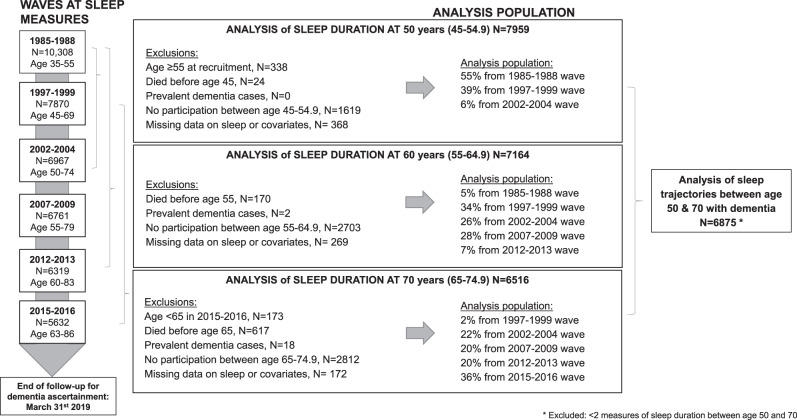
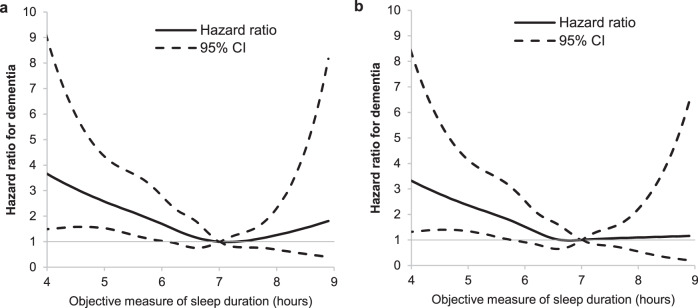
Sleep dysregulation is a feature of dementia but it remains unclear whether sleep duration prior to old age is associated with dementia incidence. Using data from 7959 participants of the Whitehall II study, we examined the association between sleep duration and incidence of dementia (521 diagnosed cases) using a 25-year follow-up. Here we report higher dementia risk associated with a sleep duration of six hours or less at age 50 and 60, compared with a normal (7 h) sleep duration, although this was imprecisely estimated for sleep duration at age 70 (hazard ratios (HR) 1.22 (95% confidence interval 1.01–1.48), 1.37 (1.10–1.72), and 1.24 (0.98–1.57), respectively). Persistent short sleep duration at age 50, 60, and 70 compared to persistent normal sleep duration was also associated with a 30% increased dementia risk independently of sociodemographic, behavioural, cardiometabolic, and mental health factors. These findings suggest that short sleep duration in midlife is associated with an increased risk of late-onset dementia.
Overview
The claims and statistics of this paper haven’t been checked yet.
Free: it reads the open-access text and checks the first 5 claims that cite a source we can check. Create a free account to check every claim.
Integrity signals
Registry
Cites
Statistics
Figures
Verification
Claims the paper makes
The claims and statistics of this paper haven’t been checked yet.
Free: it reads the open-access text and checks the first 5 claims that cite a source we can check. Create a free account to check every claim.
Claims other papers make about this one
Each is checked against this paper’s own text: does it say what the citing paper says it does?
The cited source says what the claim attributes to it.
In the citing paper
“In the Whitehall II study, persistent short sleep duration ≤6 hours at age 50, 60, and 70 compared to persistent normal sleep duration (7 hours) was associated with a 30% increased dementia risk independently of sociodemographic, behavioural, cardiometabolic, and mental health factors.(303)”
From Dementia prevention, intervention, and care: 2024 report of the Lancet standing Commission (2024) · cites this paper as [303]
In the citing paper
“Persistent SD (<6 h per night) during midlife is associated with a 30% elevated risk of dementia in a longitudinal study of 7959 participants.”
From Microbiota–gut–brain axis and its therapeutic applications in neurodegenerative diseases (2024) · cites this paper as [649]
Self-check
Percentages, sums and reported differences re-computed from the paper’s own numbers.
The self-check needs the paper’s full text.
Citations
Cites
1 retracted
Dementia prevention, intervention, and care: 2020 report of the Lancet Commission
Livingston, G., Huntley, J., Sommerlad, A., Ames, D., Ballard, C., Banerjee, S., Brayne, C., Burns, A., Cohen-Mansfield, J., Cooper, C., et al. (2020) · The Lancet · doi:10.1016/s0140-6736(20)30367-6 · Cited by 10,430
Self-citationRetractedHarrell, F. E. (2001) · Springer Series in Statistics · doi:10.1007/978-1-4757-3462-1 · Cited by 9,195
A scaled version of the General Health Questionnaire
Goldberg, D. P., & Hillier, V. F. (1979) · Psychological Medicine · doi:10.1017/s0033291700021644 · Cited by 5,459
Sleep Drives Metabolite Clearance from the Adult Brain
Xie, L., Kang, H., Xu, Q., Chen, M. J., Liao, Y., Thiyagarajan, M., O’Donnell, J., Christensen, D. J., Nicholson, C., Iliff, J. J., et al. (2013) · Science · doi:10.1126/science.1241224 · Cited by 5,411
2016 Alzheimer's disease facts and figures
Alzheimer's Association (2016) · Alzheimer's & Dementia · doi:10.1016/j.jalz.2016.03.001 · Cited by 5,069
Jack, C. R., Knopman, D. S., Jagust, W. J., Petersen, R. C., Weiner, M. W., Aisen, P. S., Shaw, L. M., Vemuri, P., Wiste, H. J., Weigand, S. D., et al. (2013) · The Lancet Neurology · doi:10.1016/s1474-4422(12)70291-0 · Cited by 4,396
Health inequalities among British civil servants: the Whitehall II study
Marmot, M. G., Stansfeld, S., Patel, C., North, F., Head, J., White, I., Brunner, E., Feeney, A., Marmot, M. G., & Smith, G. D. (1991) · The Lancet · doi:10.1016/0140-6736(91)93068-k · Cited by 3,608
Group-Based Trajectory Modeling in Clinical Research
Nagin, D. S., & Odgers, C. L. (2010) · Annual Review of Clinical Psychology · doi:10.1146/annurev.clinpsy.121208.131413 · Cited by 2,708
2020 Alzheimer's disease facts and figures
(2020) · Alzheimer's & Dementia · doi:10.1002/alz.12068 · Cited by 2,353
Neurocognitive consequences of sleep deprivation
Goel, N., Rao, H., Durmer, J., & Dinges, D. (2009) · Seminars in Neurology · doi:10.1055/s-0029-1237117 · Cited by 2,154
Cited by
Dementia prevention, intervention, and care: 2024 report of the Lancet standing Commission
Livingston, G., Huntley, J., Liu, K. Y., Costafreda, S. G., Selbæk, G., Alladi, S., Ames, D., Banerjee, S., Burns, A., Brayne, C., et al. (2024) · The Lancet · doi:10.1016/s0140-6736(24)01296-0 · Cited by 3,860
Self-citation2023 Alzheimer's disease facts and figures
(2023) · Alzheimer's & Dementia · doi:10.1002/alz.13016 · Cited by 3,212
2024 Alzheimer's disease facts and figures
(2024) · Alzheimer's & Dementia · doi:10.1002/alz.13809 · Cited by 2,536
2022 Alzheimer's disease facts and figures
(2022) · Alzheimer's & Dementia · doi:10.1002/alz.12638 · Cited by 2,341
Microbiota–gut–brain axis and its therapeutic applications in neurodegenerative diseases
Loh, J. S., Mak, W. Q., Tan, L. K. S., Ng, C. X., Chan, H. H., Yeow, S. H., Foo, J. B., Ong, Y. S., How, C. W., & Khaw, K. Y. (2024) · Signal Transduction and Targeted Therapy · doi:10.1038/s41392-024-01743-1 · Cited by 1,193
Role of sleep deprivation in immune-related disease risk and outcomes
Garbarino, S., Lanteri, P., Bragazzi, N. L., Magnavita, N., & Scoditti, E. (2021) · Communications Biology · doi:10.1038/s42003-021-02825-4 · Cited by 571
2025 Alzheimer's disease facts and figures
(2025) · Alzheimer's & Dementia · doi:10.1002/alz.70235 · Cited by 474
Sleep physiology, pathophysiology, and sleep hygiene
Baranwal, N., Yu, P. K., & Siegel, N. S. (2023) · Progress in Cardiovascular Diseases · doi:10.1016/j.pcad.2023.02.005 · Cited by 540
Alzheimer’s disease: insights into pathology, molecular mechanisms, and therapy
Zheng, Q., & Wang, X. (2025) · Protein & Cell · doi:10.1093/procel/pwae026 · Cited by 410
Pathogenesis, diagnostics, and therapeutics for Alzheimer's disease: Breaking the memory barrier
Kamatham, P. T., Shukla, R., Khatri, D. K., & Vora, L. K. (2024) · Ageing Research Reviews · doi:10.1016/j.arr.2024.102481 · Cited by 371
“In a long-term study utilizing information from 7959 participants and a 25-year follow-up, it was found that sleeping for less than 6 hours at 50, 60 and 70 years of age was linked to a 30 % higher risk of dementia (Sabia et al., 2021).”
BackgroundNorepinephrine-mediated slow vasomotion drives glymphatic clearance during sleep
Hauglund, N. L., Andersen, M., Tokarska, K., Radovanovic, T., Kjaerby, C., Sørensen, F. L., Bojarowska, Z., Untiet, V., Ballestero, S. B., Kolmos, M. G., et al. (2025) · Cell · doi:10.1016/j.cell.2024.11.027 · Cited by 349
Menopause—Biology, consequences, supportive care, and therapeutic options
Davis, S. R., Pinkerton, J., Santoro, N., & Simoncini, T. (2023) · Cell · doi:10.1016/j.cell.2023.08.016 · Cited by 233
Gottesman, R. F., Lutsey, P. L., Benveniste, H., Brown, D. L., Full, K. M., Lee, J.-M., Osorio, R. S., Pase, M. P., Redeker, N. S., Redline, S., et al. (2024) · Stroke · doi:10.1161/str.0000000000000453 · Cited by 227
“62,63 Particular caution should be used when interpreting studies in which sleep and dementia were assessed simultaneously in older adults, because sleep and circadian disorders may be a manifestation of underlying brain pathology, and thus a marker but not a direct cause of dementia risk.”
BackgroundLi, Y., Sahakian, B. J., Kang, J., Langley, C., Zhang, W., Xie, C., Xiang, S., Yu, J., Cheng, W., & Feng, J. (2022) · Nature Aging · doi:10.1038/s43587-022-00210-2 · Cited by 178
Impact of sleep duration on executive function and brain structure
Tai, X. Y., Chen, C., Manohar, S., & Husain, M. (2022) · Communications Biology · doi:10.1038/s42003-022-03123-3 · Cited by 148
Lucey, B. P., Wisch, J., Boerwinkle, A. H., Landsness, E. C., Toedebusch, C. D., McLeland, J. S., Butt, O. H., Hassenstab, J., Morris, J. C., Ances, B. M., et al. (2021) · Brain · doi:10.1093/brain/awab272 · Cited by 161
Parhizkar, S., Gent, G., Chen, Y., Rensing, N. R., Gratuze, M., Strout, G. W., Sviben, S., Tycksen, E., Zhang, Q., Erdmann-Gilmore, P., et al. (2023) · Science Translational Medicine · doi:10.1126/scitranslmed.ade6285 · Cited by 158
Global synergistic actions to improve brain health for human development
Owolabi, M. O., Leonardi, M., Bassetti, C. L., Jaarsma, J., Hawrot, T., Makanjuola, A., Dhamija, R. K., Feng, W., Straub, V. W., Camaradou, J., et al. (2023) · Nature Reviews Neurology · doi:10.1038/s41582-023-00808-z · Cited by 153
The interconnected causes and consequences of sleep in the brain
Lewis, L. D. (2021) · Science · doi:10.1126/science.abi8375 · Cited by 143
Daytime napping and Alzheimer's dementia: A potential bidirectional relationship
Li, P., Gao, L., Yu, L., Zheng, X., Ulsa, M. C., Yang, H., Gaba, A., Yaffe, K., Bennett, D. A., Buchman, A. S., et al. (2023) · Alzheimer's & Dementia · doi:10.1002/alz.12636 · Cited by 124
Sleep Architecture, Obstructive Sleep Apnea, and Cognitive Function in Adults
Pase, M. P., Harrison, S. L., Misialek, J. R., Kline, C. E., Cavuoto, M. G., Baril, A., Yiallourou, S. R., Bisson, A., Himali, D., Leng, Y., et al. (2023) · JAMA Network Open · doi:10.1001/jamanetworkopen.2023.25152 · Cited by 144
“The median (IQR) wake after sleep onset time ranged from 44 (27-73) to 101 (66-147) minutes, and the prevalence of moderate to severe OSA ranged from 16.”
BackgroundSleep Duration and Executive Function in Adults
Sen, A., & Tai, X. Y. (2023) · Current Neurology and Neuroscience Reports · doi:10.1007/s11910-023-01309-8 · Cited by 148
Huang, S., Li, Y., Zhang, Y.-R., Huang, Y., Wu, B., Zhang, W., Deng, Y., Chen, S.-D., He, X., Chen, S., et al. (2022) · Molecular Psychiatry · doi:10.1038/s41380-022-01655-y · Cited by 137
“Although some studies have questioned reverse casualty [5, 21], we observed a significant association even in a long follow-up subgroup, which is consistent with other long follow-up studies [34–36].”
BackgroundResultWang, X., Wang, Z., Cao, J., Dong, Y., & Chen, Y. (2021) · Frontiers in Pharmacology · doi:10.3389/fphar.2021.708645 · Cited by 138
Li, N., Tan, S., Wang, Y., Deng, J., Wang, N., Zhu, S., Tian, W., Xu, J., & Wang, Q. (2023) · Gut Microbes · doi:10.1080/19490976.2023.2252764 · Cited by 117
“Accumulated evidence suggests that SD may induce cognitive deterioration, such as loss of attention, memory impairment, cognitive decline, even an increased risk of dementia.(4) However, the underlying mechanism for SD-induced cognitive dysfunction as well as effective, clinically available therapy is still lacking.”
BackgroundBloomberg, M., Brocklebank, L. A., Hamer, M., & Steptoe, A. (2023) · The Lancet Healthy Longevity · doi:10.1016/s2666-7568(23)00083-1 · Cited by 126
Parp1 promotes sleep, which enhances DNA repair in neurons
Zada, D., Sela, Y., Matosevich, N., Monsonego, A., Lerer‐Goldshtein, T., Nir, Y., & Appelbaum, L. (2021) · Molecular Cell · doi:10.1016/j.molcel.2021.10.026 · Cited by 127
Sabia, S., Dugravot, A., Léger, D., Ben Hassen, C., Kivimaki, M., & Singh-Manoux, A. (2022) · PLOS Medicine · doi:10.1371/journal.pmed.1004109 · Cited by 106
“In sensitivity analysis, we used inverse probability weighting to account for missing data [22].”
MethodSelf-citationGordon, N. P., Yao, J., Brickner, L. A., & Lo, J. C.-M. (2022) · BMC Public Health · doi:10.1186/s12889-022-14443-8 · Cited by 109
Kamondi, A., Grigg-Damberger, M. M., Löscher, W., Tanila, H., & Horvath, A. A. (2024) · Nature Reviews Neurology · doi:10.1038/s41582-024-00932-4 · Cited by 127
“In 2021, a 25-year follow-up study including 7,959 participants found that less than 6 h of sleep in people in the age range 50–70 years was associated with a 30% increased risk of incident dementia 154 .”
Ma, J., Chen, M., Liu, G.-H., Gao, M., Chen, N.-H., Toh, C. H., Hsu, J.-L., Wu, K.-Y., Huang, C.-M., Lin, C.-M., et al. (2025) · Molecular Psychiatry · doi:10.1038/s41380-024-02778-0 · Cited by 96
“Poor sleep quality is associated with adverse effects on cognitive functions, especially memory [43, 44].”
The gut microbiome and Alzheimer’s disease: Complex and bidirectional interactions
Tarawneh, R. M., & Penhos, E. (2022) · Neuroscience & Biobehavioral Reviews · doi:10.1016/j.neubiorev.2022.104814 · Cited by 97
Wong, R., & Lovier, M. A. (2023) · American Journal of Preventive Medicine · doi:10.1016/j.amepre.2023.01.008 · Cited by 92
Yue, O., Wang, X., Hou, M., Zheng, M., Bai, Z., Cui, B., Cha, S., & Liu, X. (2021) · Nano Energy · doi:10.1016/j.nanoen.2021.106682 · Cited by 89
Liu, G., Ladrón-de-Guevara, A., Izhiman, Y., Nedergaard, M., & Du, T. (2022) · Fluids and Barriers of the CNS · doi:10.1186/s12987-022-00382-4 · Cited by 87
“Short sleep duration during midlife is associated with a higher risk of dementia later in life, independently of sociodemographic, behavioral, cardiometabolic, and mental health factors [12].”
BackgroundLiu, Y., Cui, J., Cao, L., Stubbendorff, A., & Zhang, S. (2023) · Journal of Affective Disorders · doi:10.1016/j.jad.2023.10.012 · Cited by 77
Physical activity and lifestyle modifications in the treatment of neurodegenerative diseases
Santiago, J. A., & Potashkin, J. A. (2023) · Frontiers in Aging Neuroscience · doi:10.3389/fnagi.2023.1185671 · Cited by 84
“A longitudinal study using data from 7959 subjects and a 25-year follow-up determined that sleeping less than 6 h at ages 50, 60, and 70 was associated with a 30% increased dementia risk (Sabia et al., 2021).”
Vanrobaeys, Y. S., Peterson, Z. J., Walsh, E. N., Chatterjee, S., Lin, L., Lyons, L. C., Nickl‐Jockschat, T., & Abel, T. G. (2023) · Nature Communications · doi:10.1038/s41467-023-42751-z · Cited by 78
The inescapable drive to sleep: Overlapping mechanisms of sleep and sedation
Franks, N. P., & Wisden, W. (2021) · Science · doi:10.1126/science.abi8372 · Cited by 74
Artificial intelligence for dementia—Applied models and digital health
Lyall, D. M., Kormilitzin, A., Lancaster, C., Sousa, J., Petermann‐Rocha, F., Buckley, C., Harshfield, E. L., Iveson, M. H., Madan, C. R., McArdle, R., et al. (2023) · Alzheimer's & Dementia · doi:10.1002/alz.13391 · Cited by 68
“Further work is required to identify the most useful digital mobility metrics that can be incorporated into classification models such as ML algorithms to strengthen diagnostic models.”
Wu, X., Yang, H., He, S., Xia, T., Chen, D., Zhou, Y., Liu, J., Liu, M., & Sun, Z. (2022) · Frontiers in Immunology · doi:10.3389/fimmu.2022.872542 · Cited by 73
Chen, Z., Ho, M. M., & Chau, P. H. (2022) · Journal of Cachexia Sarcopenia and Muscle · doi:10.1002/jcsm.12933 · Cited by 75
“of neurodegenerative disorders, such as lifestyle-related behaviours and health conditions.(8,9) More recently, growing ev-”
BackgroundLyons, L. C., Vanrobaeys, Y. S., & Abel, T. G. (2023) · Journal of Neurochemistry · doi:10.1111/jnc.15787 · Cited by 78
“Sleep and circadian rhythm disorders have also been linked to the increased incidence and accelerated progression of neurodegenerative diseases including Alzheimer's disease (Sabia et al., 2021; Shi et al., 2018; Wang & Holtzman, 2020; Wu et al., 2019).”
BackgroundJones, A., Ali, M. U., Mayhew, A., Aryal, K., Correia, R. H., Dash, D., Manis, D. R., Rehman, A., O’Connell, M. E., Taler, V., et al. (2025) · Environmental Research · doi:10.1016/j.envres.2025.121007 · Cited by 81
Association between chronic pain and risk of incident dementia: findings from a prospective cohort
Tian, J., Jones, G., Lin, X., Zhou, Y., King, A. E., Vickers, J. C., & Pan, F. (2023) · BMC Medicine · doi:10.1186/s12916-023-02875-x · Cited by 72
2026 Alzheimer's disease facts and figures
Alzheimer's, T. S. O. A. D. A. A. W. S. C. I. T. B. I., neurons, T. B. N. A. E. A. A. H. A. B. H. B. O., long, E. W., connections, B. E. T. E. E. I. N. T. F. C. W. O. N. A. S., synapses, C., memories, I. F. I. T. B. O. C. T. A. R. B. O. N. A. T. U. B. A. N. T. B. C. T. O. S. T. A. S. T. T. R. T. T. B. T. S. F. T. C. B. O., thoughts, sensations, emotions, & skills., M. A. (2026) · Alzheimer s & Dementia · doi:10.1002/alz.71345 · Cited by 124
The prevalence of sleep loss and sleep disorders in young and old adults
Jha, V. M. (2022) · Aging Brain · doi:10.1016/j.nbas.2022.100057 · Cited by 77
“These sleep issues are assumed to be the outcome of disease-related brain alterations that influence the sleep-wake cycle [164,74,121].”
BackgroundThe Role of Tryptophan Metabolism in Alzheimer’s Disease
Savonije, K., & Weaver, D. F. (2023) · Brain Sciences · doi:10.3390/brainsci13020292 · Cited by 71
“Trp has a long-recognized sedative effect, and the serotonergic metabolites 5-HT and melatonin have also been demonstrated to have a beneficial effect on sleep [22,32].”
BackgroundMorrone, C. D., Raghuraman, R., Hussaini, S. A., & Yu, W. H. (2023) · Molecular Neurodegeneration · doi:10.1186/s13024-023-00617-4 · Cited by 69
Liang, R., Fan, L., Lai, X., Shi, D., Wang, H., Shi, W., Liu, W., Yu, L., Song, J., & Wang, B. (2024) · Environment International · doi:10.1016/j.envint.2024.108773 · Cited by 69
Genome-wide association of polygenic risk extremes for Alzheimer's disease in the UK Biobank
Gouveia, C., Gibbons, E., Dehghani, N., Eapen, J., Guerreiro, R., & Bras, J. (2022) · Scientific Reports · doi:10.1038/s41598-022-12391-2 · Cited by 61
Unemployment and sleep: evidence from the United States and Europe
Blanchflower, D. G., & Bryson, A. (2021) · Economics & Human Biology · doi:10.1016/j.ehb.2021.101042 · Cited by 62
“Recent work suggests short sleep duration in midlife is associated with an increased risk of late-onset dementia (Sabia et al, 2021).”
Upright versus supine MRI: effects of body position on craniocervical CSF flow
Muccio, M., Chu, D., Minkoff, L. A., Kulkarni, N., Damadian, B. E., Damadian, R. V., & Ge, Y. (2021) · Fluids and Barriers of the CNS · doi:10.1186/s12987-021-00296-7 · Cited by 61
“The importance of further investigating such hypothesis is highlighted especially by recent studies reporting increase in misfolded protein accumulation in humans following one night of sleep deprivation [41], changes in glymphatic waste clearance during sleep [42], as well as a correlation between sleep and late-onse…”
BackgroundTrends in prevalence of short sleep duration and trouble sleeping among US adults, 2005–2018
Wang, S., Rossheim, M. E., & Nandy, R. R. (2022) · SLEEP · doi:10.1093/sleep/zsac231 · Cited by 60
Blackman, J., Stankeviciute, L. S., Arenaza‐Urquijo, E. M., Suárez‐Calvet, M., Sánchez‐Benavides, G., Vilor‐Tejedor, N., Iranzo, Á., Molinuevo, J. L., Gispert, J. D., Coulthard, E. J., et al. (2022) · Brain Communications · doi:10.1093/braincomms/fcac257 · Cited by 60
“This is in line with recent evidence showing that short sleep duration is associated with increased dementia risk.(57) Like Aβ, ISF levels of tau also fluctuate diurnally,(33) with studies supporting the hypothesis that this is driven by in-”
ResultDevelopment and validation of a dementia risk score in the UK Biobank and Whitehall II cohorts
Anatürk, M., Patel, R., Ebmeier, K. P., Georgiopoulos, G. A., Newby, D., Topiwala, A., de Lange, A. G., Cole, J. H., Jansen, M. G., Singh‐Manoux, A., et al. (2023) · BMJ Mental Health · doi:10.1136/bmjment-2023-300719 · Cited by 63
Self-citationThe night’s watch: Exploring how sleep protects against neurodegeneration
Parhizkar, S., & Holtzman, D. M. (2025) · Neuron · doi:10.1016/j.neuron.2025.02.004 · Cited by 57
“However, more recent studies may allude to the possibility of a longer-term role of sleep in accumulation of dementia-related neuropathologies, 107–110 which may in turn accelerate neurodegenerative disease onset and progression.”
Chronic sleep fragmentation impairs brain interstitial clearance in young wildtype mice
Deng, S., Hu, Y., Chen, S., Xue, Y., Yao, D., Sun, Q., Nedergaard, M., Wang, W., & Ding, F. (2024) · Journal of Cerebral Blood Flow & Metabolism · doi:10.1177/0271678x241230188 · Cited by 52
Xiong, Y., Tvedt, J., Åkerstedt, T., Cadar, D., & Wang, H. (2024) · Psychiatry Research · doi:10.1016/j.psychres.2024.115760 · Cited by 59
“…between insufficient sleep duration and cognitive decline or dementia, the findings remain inconclusive (Benito-Le ´ on et al., 2014; Bubu et al., 2017; Luojus et al., 2017; Westwood et al., 2017; Larsson and Wolk, 2018; Sindi et al., 2018; Fan et al., 2019; Xu et al., 2020; Sabia et al., 2021).”
BackgroundInfurna, F. J. (2021) · The Gerontologist · doi:10.1093/geront/gnab086 · Cited by 55
“, blood pressure)—foreshadows better health in old age (Launer et al., 1995; Sabia et al., 2021).”
BackgroundTowards a Consensus on Alzheimer’s Disease Comorbidity?
Avitan, I., Halperin, Y., Saha, T., Bloch, N., Atrahimovich, D., Polis, B., Samson, A. O., & Braitbard, O. (2021) · Journal of Clinical Medicine · doi:10.3390/jcm10194360 · Cited by 51
“66)—in particular, lack thereof (<7 h/night)—has recently been correlated with dementias [32].”
BackgroundMa, L., Ma, Y., Ou, Y., Chen, S.-D., Liu, Y., Dong, Q., Cheng, W., Tan, L., & Yu, J. (2022) · BMC Medicine · doi:10.1186/s12916-022-02331-2 · Cited by 49
“Sleep duration was divided into short (<7 h per night), normal (7 h per night), and long (>7 h per night) [20].”
BackgroundThe role of population-level preventive care for brain health in ageing
Sabayan, B., Doyle, S. J., Rost, N. S., Sorond, F. A., Lakshminarayan, K., & Launer, L. J. (2023) · The Lancet Healthy Longevity · doi:10.1016/s2666-7568(23)00051-x · Cited by 52
Guo, C., Harshfield, E. L., & Markus, H. S. (2024) · Neurology · doi:10.1212/wnl.0000000000209141 · Cited by 52
Orexin Receptor Antagonism: Normalizing Sleep Architecture in Old Age and Disease
Kron, J. O.-Z. J., Keenan, R. J., Hoyer, D., & Jacobson, L. H. (2023) · The Annual Review of Pharmacology and Toxicology · doi:10.1146/annurev-pharmtox-040323-031929 · Cited by 53
Tian, L., Ding, P., Kuang, X., Ai, W., & Shi, H. (2024) · BMC Public Health · doi:10.1186/s12889-024-20524-7 · Cited by 49
“…are associated with a variety of adverse health outcomes such as type 2 diabetes mellitus (T2DM) [13], cardiovascular disease (CVD) [14], dementia [15], multimorbidity [16], and mortality [14] when compared with those with normal total sleep duration trajectory, the relationship between sleep…”
BackgroundThe role of the GABAergic system on insomnia
Varinthra, P., Anwar, S. N. M. N., Shih, S.-C., & Liu, I. Y. (2024) · Tzu Chi Medical Journal · doi:10.4103/tcmj.tcmj_243_23 · Cited by 51
“Sleeping 7–9 h per night is recommended for adults [2].”
BackgroundJin, Y., Zhang, W., Yu, M., Li, J., Du, Y., Wang, W., Chen, G., Ding, X., & Ding, J. (2024) · Sleep Medicine · doi:10.1016/j.sleep.2024.01.028 · Cited by 50
Promise of Lifestyle Medicine for Heart Disease, Diabetes Mellitus, and Cerebrovascular Diseases
Pikula, A., Gulati, M., Bonnet, J. P., Ibrahim, S., Chamoun, S., Freeman, A. M., & Reddy, K. R. (2024) · Mayo Clinic Proceedings Innovations Quality & Outcomes · doi:10.1016/j.mayocpiqo.2023.11.005 · Cited by 54
Progress on early diagnosing Alzheimer’s disease
Chen, Y., Al‐Nusaif, M., Li, S., Tan, X., Yang, H., Cai, H., & Le, W. (2024) · Frontiers of Medicine · doi:10.1007/s11684-023-1047-1 · Cited by 46
Ulsa, M. C., Zheng, X., Li, P., Gaba, A., Wong, P. M., Saxena, R., Scheer, F. A. J. L., Rutter, M. K., Akeju, O., Hu, K., et al. (2021) · The Journals of Gerontology Series A · doi:10.1093/gerona/glab272 · Cited by 49
“We categorized sleep duration into short (<6 hours/day), normal (6–9 hours), and long (>9 hours) based on prior evidence for U-shape associations with disease (3,15,20).”
BackgroundSex Hormones, Sleep, and Memory: Interrelationships Across the Adult Female Lifespan
Harrington, Y. A., Parisi, J. M., Duan, D., Rojo‐Wissar, D. M., Holingue, C., & Spira, A. P. (2022) · Frontiers in Aging Neuroscience · doi:10.3389/fnagi.2022.800278 · Cited by 47
SEMYACHKINA-GLUSHKOVSKAYA, O. V., Fedosov, I. V., Penzel, T., Li, D., Yu, T., Telnova, V., Исмаиловна, К. Э., Saranceva, E. I., Terskov, A. V., Khorovodov, A. P., et al. (2023) · International Journal of Molecular Sciences · doi:10.3390/ijms24043221 · Cited by 47
“Indeed, the results of a recent study on a large group of 8000 volunteers observed from their middle age till their 70th year of age for 25 years revealed a higher incidence of dementia in people aged 50–60 years who chronically did not get enough sleep (6 h and less a night) [2].”
Association Between Sleep Quantity and Quality in Early Adulthood With Cognitive Function in Midlife
Leng, Y., Knutson, K. L., Carnethon, M. R., & Yaffe, K. S. (2024) · Neurology · doi:10.1212/wnl.0000000000208056 · Cited by 44
Yin, C., Zhang, M., Jin, S., Zhou, Y., Ding, L., Lv, Q., Huang, Z., Zhou, J., Chen, J., Wang, P., et al. (2024) · Phytomedicine · doi:10.1016/j.phymed.2024.155725 · Cited by 45
Liu, R., Ren, Y., Hou, T., Liang, X., Dong, Y., Wang, Y., Cong, L., Wang, X., Qin, Y., Ren, J., et al. (2022) · Journal of the American Geriatrics Society · doi:10.1111/jgs.18042 · Cited by 47
The role of lifestyle medicine in menopausal health: a review of non-pharmacologic interventions
Anekwe, C. V., Cano, A., Mulligan, J., Ang, S. B., Johnson, C. N., Panay, N., Schaedel, Z., Akam, E. Y., Porterfield, F., Wang, E., et al. (2025) · Climacteric · doi:10.1080/13697137.2025.2548806 · Cited by 53
“Longitudinal studies reinforce this connection: self-reported short sleep (≤6 h) in midlife is associated with a 22–37% increased risk of incident dementia (hazard ratio (HR) 1.22– 1.37), independent of cardiometabolic and mental health confounders [136].”
InfluentialUchida, K. S. K., Meno, K., Korenaga, T., Liu, S., Suzuki, H., Baba, Y., Tagata, C., Araki, Y., Tsunemi, S., Aso, K., et al. (2024) · PLoS ONE · doi:10.1371/journal.pone.0309287 · Cited by 42
Longitudinal association of apolipoprotein E and sleep with incident dementia
Palpatzis, E., Bass, N. J., Jones, R., & Mukadam, N. (2021) · Alzheimer s & Dementia · doi:10.1002/alz.12439 · Cited by 41
“The findings complement longitudinal studies reporting short and long sleep duration and excessive daytime napping to increase dementia risk 10,11,12,13,14,15,39, .”
Yang, J. J., Keohane, L. M., Pan, X.-F., Qu, R., Shu, X.-O., Lipworth, L., Braun, K., Steinwandel, M. D., Dai, Q., Shrubsole, M., et al. (2022) · Neurology · doi:10.1212/wnl.0000000000200774 · Cited by 39
Chronotype and cognitive function: Observational study and bidirectional Mendelian randomization
Wang, J., Li, Y. R., Jiang, C. Q., Zhang, W. S., Zhu, T., Zhu, F., Jin, Y. L., Lam, T., Cheng, K. K., & Xu, L. (2022) · EClinicalMedicine · doi:10.1016/j.eclinm.2022.101713 · Cited by 42
Bransby, L., Rosenich, E., Maruff, P. T., & Lim, Y. Y. (2023) · The Journal of Prevention of Alzheimer s Disease · doi:10.14283/jpad.2023.119 · Cited by 41
“…and clinicopathological studies include low occupational complexity (20), hypercholesterolemia (21), anxiety (22), psychological stress (23), low socioeconomic status (24), poor diet (25), low cognitive engagement (26), short sleep duration (27, 28), excessive sleep duration (29), Table 1.”
BackgroundHabitual Sleep Duration and the Colonic Mucosa-Associated Gut Microbiota in Humans—A Pilot Study
Agrawal, R., Ajami, N. J., Malhotra, S., Chen, L., White, D. L., Sharafkhaneh, A., Hoffman, K. L., Graham, D. Y., El‐Serag, H. B., Petrosino, J. F., et al. (2021) · Clocks & Sleep · doi:10.3390/clockssleep3030025 · Cited by 39
“Because sleep deprivation and gut microbiota have been associated with neuropsychological conditions, including depression [6], dementia [7], Parkinsonism [8,9], and autism spectrum disorder [10,11], the role of bi-directional signaling between the gut microbiota and the brain has been suggested [12].”
BackgroundXiao, Q., Shadyab, A. H., Rapp, S. R., Stone, K. L., Yaffe, K., Sampson, J. N., Chen, J., Hayden, K. M., Henderson, V. W., & LaCroix, A. Z. (2022) · Journal of the American Geriatrics Society · doi:10.1111/jgs.17926 · Cited by 41
Targeting Sleep and Circadian Function in the Prevention of Alzheimer Disease
Musiek, E. S., & Ju, Y. S. (2022) · JAMA Neurology · doi:10.1001/jamaneurol.2022.1732 · Cited by 40
Residential greenness and risk of incident dementia: A prospective study of 375,342 participants
Hu, H., Ma, Y., Deng, Y., Ou, Y., Cheng, W., Feng, J., Tan, L., & Yu, J. (2022) · Environmental Research · doi:10.1016/j.envres.2022.114703 · Cited by 40
Sleep disorders and risk of alzheimer's disease: A two-way road
Lacerda, R. A. V., Desio, J. A. F., Kammers, C. M., Henkes, S. F. C., de Sá, M. F., de Souza, E. F., da Silva, D. M., Gusmão, C. T. P., & dos Santos, J. C. C. (2024) · Ageing Research Reviews · doi:10.1016/j.arr.2024.102514 · Cited by 37
Kodishala, C., Hulshizer, C. A., Kronzer, V. L., Davis, J. M., Ramanan, V. K., Vassilaki, M. E., Mielke, M. M., Crowson, C. S., & Myasoedova, E. (2022) · The Journal of Rheumatology · doi:10.3899/jrheum.220200 · Cited by 38
The Drosophila blood-brain barrier emerges as a model for understanding human brain diseases
Contreras, E. G., & Klämbt, C. (2023) · Neurobiology of Disease · doi:10.1016/j.nbd.2023.106071 · Cited by 37
Hasibuan, R. K., & Hasna, J. A. (2021) · Jurnal Kedokteran dan Kesehatan · doi:10.24853/jkk.17.2.187-195 · Cited by 81
Zhao, J.-L., Cross, N. E., Yao, C. W., Carrier, J., Postuma, R. B., Gosselin, N., Kakinami, L., & Dang‐Vu, T. T. (2022) · SLEEP · doi:10.1093/sleep/zsac176 · Cited by 36
Bogan, R., Roy, A., Kram, J. A., Ojile, J. M., Rosenberg, R. P., Hudson, J. D., Scheuller, H. S., Winkelman, J. W., & Charlesworth, J. D. (2023) · SLEEP · doi:10.1093/sleep/zsad190 · Cited by 35
“Nocturnal RLS symptoms result in sleep disturbances that cause sleep deprivation [2] and thereby increase the risks of associated chronic health conditions including dementia, hypertension, heart failure, and diabetes mellitus [3, 4].”
BackgroundUnderstanding the aging hypothalamus, one cell at a time
Hajdarovic, K. H., Yu, D., & Webb, A. E. (2022) · Trends in Neurosciences · doi:10.1016/j.tins.2022.10.004 · Cited by 37
Role of sleep in neurodegeneration: the consensus report of the 5th Think Tank World Sleep Forum
Ferini‐Strambi, L., Liguori, C., Lucey, B. P., Mander, B. A., Spira, A. P., Videnović, A., Baumann, C. R., Franco, O. H., Fernandes, M., Gnarra, O., et al. (2023) · Neurological Sciences · doi:10.1007/s10072-023-07232-7 · Cited by 36
“Notably, a recent publication in Nature Communications by Sabia et al. evaluated close to eight thousand middle-aged individuals from the Whitehall II study during 25 years of follow-up [53].”
Association of the sleep regularity index with incident dementia and brain volume
Yiallourou, S. R., Cribb, L., Cavuoto, M. G., Rowsthorn, E., Nicolazzo, J., Gibson, M., Baril, A.-A., & Pase, M. P. (2024) · Neurology · doi:10.1212/wnl.0000000000208029 · Cited by 33
Park, S.-Y., Setiawan, V. W., Crimmins, E. M., White, L. R., Wu, A. H., Cheng, I., Darst, B. F., Haiman, C. A., Wilkens, L. R., Le Marchand, L., et al. (2024) · Neurology · doi:10.1212/wnl.0000000000208116 · Cited by 33
Age at cardiovascular disease onset, dementia risk, and the role of lifestyle factors
van Gennip, A. C. E., van Sloten, T. T., Fayossé, A., Sabia, S., & Singh‐Manoux, A. (2023) · Alzheimer s & Dementia · doi:10.1002/alz.13562 · Cited by 34
“It is also possible that interventions in those with CVD need to be multi-domain, and include a wider range of lifestyle factors such as sleep, 40,41 social isolation, 42 depressive symptoms, 43 and air population.”
BackgroundSelf-citationLiu, Z., Zhang, L., Bai, L., Guo, Z., Gao, J., Lin, Y., Zhou, Y., Lai, J., Tao, J., & Chen, L. (2025) · JAMA Network Open · doi:10.1001/jamanetworkopen.2024.54307 · Cited by 36
Gastrointestinal microbiota and inflammasomes interplay in health and disease: a gut feeling
Luca, R. D., Arrè, V., Nardone, S., Incerpi, S., Giannelli, G., Trivedi, P., Anastasiadou, E., & Negro, R. (2025) · Gut · doi:10.1136/gutjnl-2025-334938 · Cited by 37
Carvalho, D. Z., Kolla, B. P., McCarter, S. J., Louis, E. K. S., Machulda, M. M., Przybelski, S. A., Fought, A. J., Lowe, V. J., Somers, V. K., Boeve, B. F., et al. (2025) · Neurology · doi:10.1212/wnl.0000000000214155 · Cited by 33
Metadata
- Authors
- Sabia, S., Fayosse, A., Dumurgier, J., van Hees, V. T., Paquet, C., Sommerlad, A., Kivimäki, M., Dugravot, A., & Singh-Manoux, A.
- Affiliations
- Inserm (FR)
- University College London (GB)
- ORCID
- Venue
- Nature Communications
- Published
- 2021-04-20
- Volume
- 12
- Issue
- 1
- Pages
- 2289-2289
- ISSN
- 2041-1723 (ISSN-L)
- PMC
- PMC8058039
- OpenAlex
- W3153417615
- Cited by
- 628
- References
- 55
- Citations by year
- 2026: 92 · 2025: 141 · 2024: 142 · 2023: 117 · 2022: 95 · 2021: 41
- FWCI
- 70.85
- Type
- journal article
- Language
- en
- Open access
- gold
- doi.org
- Licence
- cc-by
- creativecommons.org/licenses/by/4.0 (tdm)
- creativecommons.org/licenses/by/4.0 (vor)
- Locations
- Nature Communications (publishedVersion, cc-by)
- PubMed Central (publishedVersion, cc-by)
- PubMed (publishedVersion)
- HAL (submittedVersion, cc-by)
- RePEc: Research Papers in Economics (submittedVersion)
- DOAJ (DOAJ: Directory of Open Access Journals) (submittedVersion, cc-by-sa)
- UCL Discovery (University College London) (submittedVersion)
- Työväentutkimus Vuosikirja (submittedVersion)
- Funders
- Wellcome Trust (204841, R024227, 221854, 221854/Z/20/Z, 204841/Z/16/Z, 311492, 329202, R01AG056477)
- National Institute for Health and Care Research (RF1AG062553, 204841/Z/16/Z, 311492, R024227, 221854/Z/20/Z)
- British Heart Foundation (RG/16/11/32334, RF1AG062553, 32334, R024227, RG/13/2/30098, 311492)
- University College London (204841/Z/16/Z)
- Agence Nationale de la Recherche (ANR-19-CE36-0004)
- Academy of Finland (RF1AG062553, 311492, R024227, 329,202)
- NordForsk (RF1AG062553, 70521, R024227, 75021, 311492)
- University College London Hospitals NHS Foundation Trust
- National Institutes of Health (S011676, R024227)
- Medical Research Council (S011676, 221854/Z/20/Z, MR/S011676/1, R024227, MR/R024227/1, RF1AG062553, 204841/Z/16/Z, 311492, R024227, S011676)
- Economic and Social Research Council (ES/T014377/1)
- National Institute on Aging (RF1AG062553, R01AG056477, R024227, R01AG056477, RF1AG062553, 311492)
- Topics
- Health Sciences › Medicine › Psychiatry and Mental health › Dementia and Cognitive Impairment Research
- Social Sciences › Psychology › Experimental and Cognitive Psychology › Sleep and related disorders
- Life Sciences › Neuroscience › Cognitive Neuroscience › Sleep and Wakefulness Research
- Keywords
- sleep duration, dementia incidence, short sleep duration, midlife, old age, late-onset dementia, sleep dysregulation, Whitehall II study, dementia risk factors
- MeSH terms
- Adult, Age Factors, Aged, Aged, 80 and over, Dementia, Female, Follow-Up Studies, United Kingdom, Humans, Longitudinal Studies, Male, Middle Aged, Risk Factors, Sleep, Sleep Deprivation, Sleep Wake Disorders, Time Factors, Cohort Studies, Incidence, Proportional Hazards Models
About these checks
Registry, retraction, Cites and statistics results are computed, not judged, with one exception: a printed reference that no index lists is read once by a model before it counts as a citation error. Claims are extracted by a model and kept only when their quote appears verbatim in the text; each cited source is then checked, with a model’s help, for whether it says what the claim relies on. Those verdicts can be wrong — read the claim’s quote and the cited source before relying on one.
Statistics and arithmetic are recomputed, not judged.
Confidence bands are shown only for fields calibrated on our annotated test set. None is calibrated yet, so no band is shown.
What counts as a claim ›How we measure confidence ›How we check this ›
Are you an author, or do you see a problem with this page? Request a review
Data sources
Bibliographic data: Semantic Scholar, OpenAlex, Crossref.
Contains information from the Semantic Scholar Academic Graph Datasets, made available under the ODC Attribution License (ODC-BY 1.0).
Semantic Scholar’s data is described in: Kinney, R., et al. (2023). The Semantic Scholar Open Data Platform. arXiv:2301.10140.
