

Association of sleep duration in middle and old age with incidence of dementia
Open accessThe DOI matches its Crossref record; 55 of the 55 references it cites were found in a registry or an index.
Abstract
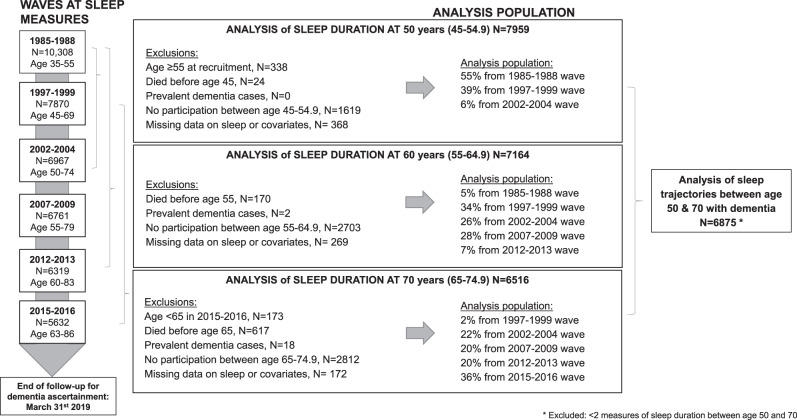
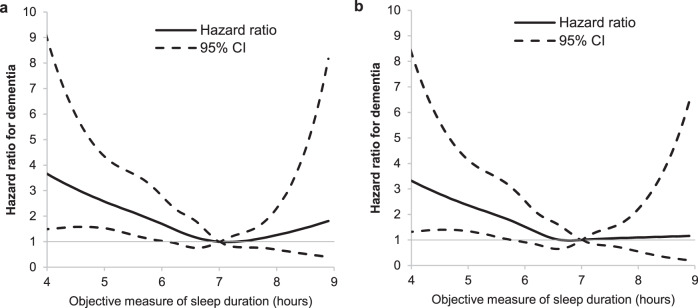
Sleep dysregulation is a feature of dementia but it remains unclear whether sleep duration prior to old age is associated with dementia incidence. Using data from 7959 participants of the Whitehall II study, we examined the association between sleep duration and incidence of dementia (521 diagnosed cases) using a 25-year follow-up. Here we report higher dementia risk associated with a sleep duration of six hours or less at age 50 and 60, compared with a normal (7 h) sleep duration, although this was imprecisely estimated for sleep duration at age 70 (hazard ratios (HR) 1.22 (95% confidence interval 1.01–1.48), 1.37 (1.10–1.72), and 1.24 (0.98–1.57), respectively). Persistent short sleep duration at age 50, 60, and 70 compared to persistent normal sleep duration was also associated with a 30% increased dementia risk independently of sociodemographic, behavioural, cardiometabolic, and mental health factors. These findings suggest that short sleep duration in midlife is associated with an increased risk of late-onset dementia.
Overview
The claims and statistics of this paper haven’t been checked yet.
Free: it reads the open-access text and checks the first 5 claims that cite a source we can check. Create a free account to check every claim.
Integrity signals
Registry
Cites
Statistics
Figures
Verification
Claims the paper makes
The claims and statistics of this paper haven’t been checked yet.
Free: it reads the open-access text and checks the first 5 claims that cite a source we can check. Create a free account to check every claim.
Claims other papers make about this one
Each is checked against this paper’s own text: does it say what the citing paper says it does?
The cited source says what the claim attributes to it.
In the citing paper
“In the Whitehall II study, persistent short sleep duration ≤6 hours at age 50, 60, and 70 compared to persistent normal sleep duration (7 hours) was associated with a 30% increased dementia risk independently of sociodemographic, behavioural, cardiometabolic, and mental health factors.(303)”
From Dementia prevention, intervention, and care: 2024 report of the Lancet standing Commission (2024) · cites this paper as [303]
In the citing paper
“Persistent SD (<6 h per night) during midlife is associated with a 30% elevated risk of dementia in a longitudinal study of 7959 participants.”
From Microbiota–gut–brain axis and its therapeutic applications in neurodegenerative diseases (2024) · cites this paper as [649]
Self-check
Percentages, sums and reported differences re-computed from the paper’s own numbers.
The self-check needs the paper’s full text.
Citations
Cites
1 retracted
Dementia prevention, intervention, and care: 2020 report of the Lancet Commission
Livingston, G., Huntley, J., Sommerlad, A., Ames, D., Ballard, C., Banerjee, S., Brayne, C., Burns, A., Cohen-Mansfield, J., Cooper, C., et al. (2020) · The Lancet · doi:10.1016/s0140-6736(20)30367-6 · Cited by 10,430
Self-citationRetractedHarrell, F. E. (2001) · Springer Series in Statistics · doi:10.1007/978-1-4757-3462-1 · Cited by 9,195
A scaled version of the General Health Questionnaire
Goldberg, D. P., & Hillier, V. F. (1979) · Psychological Medicine · doi:10.1017/s0033291700021644 · Cited by 5,459
Sleep Drives Metabolite Clearance from the Adult Brain
Xie, L., Kang, H., Xu, Q., Chen, M. J., Liao, Y., Thiyagarajan, M., O’Donnell, J., Christensen, D. J., Nicholson, C., Iliff, J. J., et al. (2013) · Science · doi:10.1126/science.1241224 · Cited by 5,411
2016 Alzheimer's disease facts and figures
Alzheimer's Association (2016) · Alzheimer's & Dementia · doi:10.1016/j.jalz.2016.03.001 · Cited by 5,069
Jack, C. R., Knopman, D. S., Jagust, W. J., Petersen, R. C., Weiner, M. W., Aisen, P. S., Shaw, L. M., Vemuri, P., Wiste, H. J., Weigand, S. D., et al. (2013) · The Lancet Neurology · doi:10.1016/s1474-4422(12)70291-0 · Cited by 4,396
Health inequalities among British civil servants: the Whitehall II study
Marmot, M. G., Stansfeld, S., Patel, C., North, F., Head, J., White, I., Brunner, E., Feeney, A., Marmot, M. G., & Smith, G. D. (1991) · The Lancet · doi:10.1016/0140-6736(91)93068-k · Cited by 3,608
Group-Based Trajectory Modeling in Clinical Research
Nagin, D. S., & Odgers, C. L. (2010) · Annual Review of Clinical Psychology · doi:10.1146/annurev.clinpsy.121208.131413 · Cited by 2,708
2020 Alzheimer's disease facts and figures
(2020) · Alzheimer's & Dementia · doi:10.1002/alz.12068 · Cited by 2,353
Neurocognitive consequences of sleep deprivation
Goel, N., Rao, H., Durmer, J., & Dinges, D. (2009) · Seminars in Neurology · doi:10.1055/s-0029-1237117 · Cited by 2,154
Cited by
Items 401–500 of 671
Validating the CogSleep Screener in older adults at a memory and cognition clinic
Kong, S. D., Schrire, Z. M., Lin, P. H., Simonetti, S., Cross, N. E., Mowszowski, L., Ireland, C., Rosenzweig, I., & Naismith, S. L. (2024) · Journal of Sleep Research · doi:10.1111/jsr.14355 · Cited by 2
“With regards to more general sleep disturbance, short sleep duration predicts longitudinally the development of dementia (Sabia et al., 2021) and both sleep duration and sleep latency are associated with the presence of brain beta-amyloid (Ab) (Brown et al., 2016; Winer et al., 2021) which may vary…”
Wang, L.-Y., Hu, H., Sheng, Z.-H., Hu, H., Zhang, Z.-H., & Tan, L. (2024) · Journal of Alzheimer s Disease · doi:10.1177/13872877241291969 · Cited by 2
Kim, S., Kang, S., Kim, S. E., Kim, H. J., Kim, S. A., Lee, Y. W., Kim, E. Y., Shin, C., & Lee, H. W. (2025) · Scientific Reports · doi:10.1038/s41598-024-81158-8 · Cited by 2
Li, H., Peng, T., Xu, Y., Li, Q., Yang, L., Gong, Z., Teng, J., Zhang, Q., & Jia, Y. (2025) · Psychoneuroendocrinology · doi:10.1016/j.psyneuen.2025.107444 · Cited by 2
A life course approach to neurodegeneration
James, S., Schott, J. M., & Ben‐Shlomo, Y. (2025) · Oxford University Press eBooks · doi:10.1093/oso/9780198895961.003.0011 · Cited by 2
Malik, V., Huang, X., Zhou, H., Bojar, R., Soni, R. K., Landry, D. W., Jelić, S., & Wang, J. (2025) · iScience · doi:10.1016/j.isci.2025.112510 · Cited by 2
“90,108 We identified three proteins, CALML5, GAPDH, and LRP1, associated with the GO term ‘‘Alzheimer’s disease’’ based on altered proteins and metabolite levels upon sleep restriction (Figure 3A).”
Association of healthy lifestyle with excess risk of dementia in individuals with hypertension
Lu, Y., Chang, J., Zhao, Y., Gao, P., & Tang, Y. (2025) · Journal of Alzheimer s Disease · doi:10.1177/13872877251344309 · Cited by 2
Sun, J., Li, H., Deng, J., Liu, J., Hu, N., Liu, H., Fan, Y., & Shi, L. (2025) · Journal of Global Health · doi:10.7189/jogh.15.04267 · Cited by 2
“Previous studies have also shown that nighttime sleep that is too long, too short, or both can lead to cognitive decline [ 49 – 52 ].”
The role of sleep in dementia prevention: building the case for causality
Jiang, K., Callow, D. D., & Spira, A. P. (2025) · SLEEP · doi:10.1093/sleep/zsaf285 · Cited by 2
Contribution of sleep disturbances to cognitive changes in vascular cognitive impairment
Luo, J. K., Li, F., Zhao, P., Xu, J., & Hu, H. (2025) · Sleep Medicine · doi:10.1016/j.sleep.2025.106832 · Cited by 4
Pedersen, T. J., Lu, R., Toedebusch, C. D., Hess, A., Richardson, R., Quigley, A., Robinson, C. G., Morris, J. C., Holtzman, D. M., Xiong, C., et al. (2025) · Alzheimer s & Dementia · doi:10.1002/alz.70761 · Cited by 2
Saini, B., Kong, S. D., Schrire, Z. M., Jacobson, L. H., Grunstein, R. R., & Naismith, S. L. (2025) · Pharmacological Reviews · doi:10.1016/j.pharmr.2025.100094 · Cited by 3
Wang, Z., Han, H., Chen, Y., & Ling, C. (2025) · BMC Public Health · doi:10.1186/s12889-025-24331-6 · Cited by 2
“Meanwhile, poor lifestyles (e.g., short sleeping, unhealthy diets, smoking, excessive alcohol intake, and physical inactivity) [7, 9–12] and adverse health status (e.g., cardiovascular diseases (CVDs) and physical functional impairment) [13, 14] are strongly associated with elevated risk of…”
Sleep Quality and Cognitive Life Expectancy in the United States
Chiu, C., Chen, C.-A., Wang, J., & Ofstedal, M. B. (2025) · Research on Aging · doi:10.1177/01640275251394993 · Cited by 2
“Furthermore, a persistent short sleep duration ( & 6 h per night) at middle age predicted increasing dementia risk at older age by 30% compared to persistent normal sleep duration (7 h per night) (Sabia et al., 2021).”
Stroo, J. F., de Bresser, J., Redline, S. S., van Heemst, D., & Noordam, R. (2025) · GeroScience · doi:10.1007/s11357-025-01989-9 · Cited by 3
“Similar to our findings, previous studies also observed that both short and long sleep durations were associated with a higher risk of incident dementia and with poor cognitive function (measured on multiple cognitive domains) [3, 4, 6, 7, 39–42].”
Wang, C., Wang, C. Q. S., Wu, X., & Luo, J. (2025) · Pedagogy and Psychology of Sport · doi:10.12775/pps.2025.26.66407 · Cited by 3
“An increased risk of dementia by approximately one-third is linked to sleeping fewer than six hours per night (Sabia et al., 2021).”
Cardiovascular Activity Predominantly Modulates Brain Dynamics in Non‐REM Sleep Transitions
Catrambone, V., Faraguna, U., & Valenza, G. (2025) · Annals of the New York Academy of Sciences · doi:10.1111/nyas.70138 · Cited by 2
Yang, H., Huang, S., Ma, Y., Lu, Y., & Chai, Y. (2025) · Experimental Neurology · doi:10.1016/j.expneurol.2025.115584 · Cited by 2
Calderon, R., Liu, S., Huang, J., McPhillips, M., Liu, M., Li, J., & Li, J. (2025) · Journal of Geriatric Psychiatry and Neurology · doi:10.1177/08919887251403581 · Cited by 2
Preventive dietary and lifestyle strategies for neurodegenerative diseases: a comprehensive review
Pathak, K., Kumari, T., Aggarwal, L., & Singh, V. (2026) · Nutritional Neuroscience · doi:10.1080/1028415x.2026.2615456 · Cited by 2
“People who follow balanced diets, stay physically active, sleep well, and limit alcohol and smoking tend to show better cognitive performance in later life [178].”
Serum 25-hydroxyvitamin D concentrations, sleep characteristics and the risk of incident dementia
Ren, J.-J., Li, Z., Zhong, W.-F., Gao, J., Chen, P., Wang, X.-M., You, F., & Mao, C. (2026) · Maturitas · doi:10.1016/j.maturitas.2026.108864 · Cited by 2
Lu, Q., Gu, H., Jiang, Z., Yang, Q., Hu, W., & He, C. (2026) · SLEEP · doi:10.1093/sleep/zsag016 · Cited by 2
Balendran, V., Liu, J., Wu, K., Dong, A., & Aton, S. J. (2026) · SLEEP · doi:10.1093/sleep/zsag047 · Cited by 2
“Growing evidence also suggests that sleep disruption (i.e. more chronic SD) occurs prior to cognitive and/or behavioral changes in psychiatric and neurological disorders such as schizophrenia, bipolar disorder, and Alzheimer’s disease [ 6– 13].”
Sleep Duration, Chronotype, and Mortality in Parkinson’s Disease: A Prospective Cohort Study
Partinen, E., Ylikoski, A., Siemiński, M., Kaps, M., Partinen, M., & Hublin, C. (2026) · Nature and Science of Sleep · doi:10.2147/nss.s568358 · Cited by 2
Sleep Disorders in Neurodegenerative Diseases: Pathological Correlations and Underlying Mechanisms
Wang, Z., He, F., Li, L., Wang, W., Zhang, L., Tang, J., & Le, W. (2026) · Neuroscience Bulletin · doi:10.1007/s12264-026-01609-2 · Cited by 3
“Hazard ratios range from 1.2 to 1.4 after adjustment for conventional risk factors [8].”
InfluentialZheng, Y., Wu, X., Chen, H., Li, F., Yaffe, K. S., Stone, K. L., Leng, Y., & Tan, X. (2026) · Alzheimer s & Dementia · doi:10.1002/alz.71331 · Cited by 2
“4,21,22 In addition, only a few cross-sectional studies have examined the potential role of CAP in neurodegenerative processes.”
Association between metabolic syndrome and incident stroke: insights from the UK Biobank
Zhou, Y., Zhu, J., Liu, H., Zhang, Q., & Chen, J. (2026) · Frontiers in Neurology · doi:10.3389/fneur.2026.1803011 · Cited by 2
“Sleep duration was categorized into short (<7 h per night), normal (7 h per night), and long (>7 h per night) (23).”
Night‐to‐night rapid eye movement sleep variability: A relevant marker of early amyloid‐β deposition
Montagne, B., Boulin, M., Hamel, A., Champetier, P., Rehel, S., Mézenge, F., Landeau, B., Delarue, M., Hébert, O., Soussi, C., et al. (2026) · Alzheimer s & Dementia · doi:10.1002/alz.71376 · Cited by 2
“48,49 However, a meta-analysis found no overall association between TST and amyloid load.”
Sun, H., Xie, Z., Dong, C., Fu, C., Hao, W., Wang, Q., Zhou, C., & Zhu, D. (2023) · Journal of Public Health · doi:10.1007/s10389-023-02017-w · Cited by 2
“Sleep disturbance may also increase the risk of dementia (Sabia et al. 2021).”
Das Exposom im Fokus präventiver Maßnahmen für die Alzheimer- und Parkinson-Erkrankung
Schäffer, E., & Piel, J. (2023) · Der Nervenarzt · doi:10.1007/s00115-023-01538-9 · Cited by 2
Braimah, J. A., Agyemang‐Duah, W., Amoak, D., Batung, E. S., Kansanga, M. M., & Kyeremeh, E. (2024) · Journal of Hunger & Environmental Nutrition · doi:10.1080/19320248.2024.2314185 · Cited by 2
“35,37,38 We also found that health-related factors, particularly self-rated mental and self-rated physical health, are strongly associated with food insecurity among both short and long sleepers.”
Blokhina, I., Adushkina, V., Zlatogosrkaya, D., Ilyukov, E., Telnova, V., Evsukova, A., Terskov, A. V., Myagkov, D., Tuktarov, D., Tsoy, M. O., et al. (2024) · The European Physical Journal Special Topics · doi:10.1140/epjs/s11734-023-01081-3 · Cited by 2
“Therefore, a recent study on a large group of 8000 volunteers, who were observed for 25 years upon reaching 50–70 years of age, revealed that chronical not enough sleep (less than 6 h per night) leads to the development of dementia in 85% of tested people [2].”
DOSE: a lifestyle philosophy for dementia prevention informed by drug development and epidemiology
Daly, T. P. (2024) · Dementia & Neuropsychologia · doi:10.1590/1980-5764-dn-2023-0112 · Cited by 2
Cui, C., Yu, T., Zhai, Y., Zhang, S., & Su, Z. (2024) · Medicine · doi:10.1097/md.0000000000039587 · Cited by 2
Functional and vascular neuroimaging in maritime pilots with long-term sleep disruption
Mentink, L. J., van Osch, M. J. P., Bakker, L. J., Rikkert, M. G. M. O., Beckmann, C. F., Claassen, J. A. H. R., & Haak, K. V. (2024) · GeroScience · doi:10.1007/s11357-024-01417-4 · Cited by 3
Satomi, E., Apolinário, D., Magaldi, R. M., Busse, A. L., Gomes, G. C. V., Ribeiro, E. S., Genta, P. R., Piovezan, R. D., Poyares, D. R., Filho, W. J., et al. (2024) · Neurobiology of Sleep and Circadian Rhythms · doi:10.1016/j.nbscr.2024.100110 · Cited by 2
Sarsembayeva, D., Schreuder, M. J., Huisman, M. A., Kok, A. A. L., Wagner, M., Capuano, A. W., & Hartman, C. A. (2025) · Journal of Sleep Research · doi:10.1111/jsr.70067 · Cited by 3
“…given that most research only studied the effects of short/long sleep duration (Sindi et al. 2018; Cavaillès et al. 2022; Bokenberger et al. 2017; Sabia et al. 2021; Lysen et al. 2020; Palpatzis et al. 2021; Westwood et al. 2017; Benito-León et al. 2009; Cox et al. 2019; Gildner et al. 2019;…”
InfluentialDong, Y., Wang, Y., Liu, X., Wang, Y., Yue, Z., Wang, Z., & Wang, S. (2025) · iScience · doi:10.1016/j.isci.2025.112633 · Cited by 2
“47,48 Our findings establish tNIR therapy as a promising intervention to reverse SD-induced hippocampal dysfunction by addressing multiple interconnected mechanisms, including CBF restoration, metabolic reprogramming, and ionic homeostasis.”
Is the lack of appropriate cognitive demand the primary driver of dementia risk?
Wood, T. R., & Turknett, J. (2022) · Lifestyle Medicine · doi:10.1002/lim2.70 · Cited by 2
Modifiable Lifestyle Factors and Cognition Through Midlife
Randolph, J. S., & Randolph, J. J. (2022) · Springer eBooks · doi:10.1007/978-3-031-11389-5_2 · Cited by 2
Sleep Disturbances in Parkinson's Disease
Elavarasi, A., & Bhatia, M. (2022) · Annals of Indian Academy of Neurology · doi:10.4103/aian.aian_472_22 · Cited by 2
“Sleep is also important in the consolidation of memory, and sleep dysfunction antedates the development of various neurodegenerative conditions such as Alzheimer’s disease.[2,3]”
BackgroundDementia and Cognitive Impairment
Chong, Y. F. V., & Tang, S. (2024) · Elsevier eBooks · doi:10.1016/b978-0-323-99967-0.00134-4 · Cited by 2
Konno, H., Murotani, R., & Kamada, Y. (2023) · medRxiv · doi:10.1101/2023.10.01.23296182 · Cited by 2
Biologic Effects of Disrupted Sleep
Cordoza, M. L., Jones, C. W., & Dinges, D. F. (2022) · Springer eBooks · doi:10.1007/978-3-031-06447-0_5 · Cited by 3
Moysés‐Oliveira, M., Adami, L. N. G., Guerreiro, P., Mosini, A. C., Kloster, A. K., Cunha, L., Paschalidis, M., Marquezini, B. P., Pires, G. N., Tempaku, P. F., et al. (2023) · Rejuvenation Research · doi:10.1089/rej.2023.0019 · Cited by 1
“64 In addition, there is a greater risk of cognitive impairment in people with advanced sleep phase, 40 reduced sleep duration, 65 and changes in N2 and N3 architecture, 66,67 as well as increased dementia risk associated to reduced or increased sleep duration in elderly individuals.”
Cordoza, M. L., Anderson, B. J., Cevasco, M., Diamond, J. M., Younes, M. K., Gerardy, B., Iroegbu, C., & Riegel, B. J. (2024) · The Journal of Cardiovascular Nursing · doi:10.1097/jcn.0000000000001092 · Cited by 2
Associations Between Sleep And Cognition Among Middle-Aged And Older Adults In Europe
Crowley, P., O’Donovan, M. R., Flanagan, E., & Ó’Caoimh, R. (2024) · Journal of Alzheimer s Disease · doi:10.1093/ageing/afae178.346 · Cited by 1
Donzella, S. M., VoPham, T., Patel, A. V., McCullough, M. L., Phipps, A. I., & Zhong, C. (2024) · Sleep Health · doi:10.1016/j.sleh.2024.10.011 · Cited by 2
Chen, L., Yang, Y., Zhang, N., Sun, B., Che, H., Wang, Z., Han, J., & Wen, M. (2025) · Food Science and Human Wellness · doi:10.26599/fshw.2024.9250443 · Cited by 2
Kurkela, J., Pirttimäki, T., & Nokia, M. S. (2025) · Psykologia · doi:10.62443/psykologia.v58i2.112801 · Cited by 3
Han, W., Wang, T., He, Z., Wang, Y., Wang, C., Lei, S., Wang, X., & Wang, R. (2025) · The journal of nutrition health & aging · doi:10.1016/j.jnha.2025.100510 · Cited by 2
“Poor sleep quality and duration have been linked to negative health outcomes, including obesity, cardiovascular disease, and impaired physical function [39 – 41].”
Kusumoto, H., Khakharia, A., Bramoweth, A. D., Phillips, L. S., Fung, C. H., Eisenstein, R., & Vaughan, C. P. (2025) · Journal of Applied Gerontology · doi:10.1177/07334648251330666 · Cited by 1
“Cognitive behavioral therapy for insomnia (CBT-I) is the recommended fi rst-line treatment for chronic insomnia (Sabia et al., 2021; Selbæk-Tungev ˚ ag et al., 2023; Yaffe et al., 2015).”
Kodishala, C., George, R. J., Javed, R., Lovering, E., Crowson, C. S., Lennon, R. J., Hulshizer, C. A., & Myasoedova, E. (2025) · Scandinavian Journal of Rheumatology · doi:10.1080/03009742.2025.2503055 · Cited by 1
“Among the potentially modifiable risk factors, low educational level, traumatic brain injury, smoking, alcohol consumption, diabetes mellitus, hypertension, obesity in midlife, hyperlipidaemia, depression, and less sleep account for about 40% of the risk associated with AD/ADRD incidence (5, 6).”
The 24-Hour Movement Behavior Composition and the Risk of Dementia
Liubetskaya, M., Lopes, M. V. V., & Janssen, I. (2025) · Sage Open Aging · doi:10.1177/30495334251361293 · Cited by 1
“Systematic reviews have reported that insufficient ( < 6 hr/day) and excessive ( > 9 hr/day) sleep, high SED, and low MVPA are associated with an increased risk of dementia (Blondell et al., 2014; Sabia et al., 2021; Yan et al., 2020).”
Hoepel, S. J. W., Ikram, M. K., Ikram, M. A., Voortman, T., & Luik, A. I. (2025) · Journal of Sleep Research · doi:10.1111/jsr.70166 · Cited by 2
“Those who spent more time in sleep and less in sedentary behaviour or light PA had a lower risk of dementia, in line with previous evidence linking short sleep duration and sleep disturbances to a higher risk of dementia (Shi et al. 2018; Sabia et al. 2021).”
Guo, Y. (2025) · PLoS ONE · doi:10.1371/journal.pone.0330782 · Cited by 3
“Recently, there has been increasing evidence that long sleep duration, short sleep duration, and insomnia are associated with cognitive function [8,9].”
Huang, X., Li, C., Tao, G., Zhong, Y., Li, J., Chen, T., & Shen, J. (2025) · Frontiers in Public Health · doi:10.3389/fpubh.2025.1640089 · Cited by 1
Shi, H., Lipworth, L. P., Xiao, Q., Han, X., Mumma, M. T., Keohane, L. M., Yu, D., Bolton, C. J., Archer, D. B., Hohman, T. J., et al. (2025) · Alzheimer s & Dementia · doi:10.1002/alz.70678 · Cited by 1
“19,62,63 Sleep medications (including hypnotics or sedatives), other important sleep health dimensions and sleep disorders, including sleep apnea and insomnia, were not measured in our study.”
Jing, W., Zhang, Q., & Kang, J. (2025) · Educational Gerontology · doi:10.1080/03601277.2025.2575904 · Cited by 1
“Additionally, adequate sleep (Sabia et al., 2021; Wong et al., 2023), a healthy diet (Liu et al., 2020; Shannon et al., 2023), and maintaining a healthy weight (Lee et al., 2020; Qu et al., 2020) have been independently linked to better cognitive function.”
Sleep duration and cognitive function among rural older adults in China: A population-based study
Fang, Y., Yan, Z., Wang, X., She, R., Wang, P., & Liang, Y. (2025) · PLoS ONE · doi:10.1371/journal.pone.0318044 · Cited by 1
“The previous studies have found an inversed U-shaped relationship between sleep duration and cognitive function, sleep duration of 7 h was recommended as normal sleep duration [12,28,29].”
Fernandez, F., & Grandner, M. A. (2025) · Journal of Alzheimer s Disease · doi:10.1177/13872877251392186 · Cited by 2
García‐García, I., Carrard, J., D’Amelio, P., Daeppen, J.-B., Gibertoni, S., Heini, A. F., Ivanišević, J., Rietschel, E., Tanačković, G., & Donica, O. (2026) · Frontiers in Psychology · doi:10.3389/fpsyg.2026.1749193 · Cited by 1
“The study showed that participants who regularly slept 6 or fewer hours per night at baseline had a 30% increase in their risk of dementia compared with those who reported sleeping 7 h or longer regularly (Sabia et al., 2021).”
Fushimi, M., Kawamura, A., Utsumi, T., Nagao, K., Matsui, K., Kimura, A., Aritake‐Okada, S., Yoshiike, T., & Kuriyama, K. (2025) · Nutrients · doi:10.3390/nu17233749 · Cited by 1
“Furthermore, insufficient sleep duration itself is associated with increased fatigue; poorer subjective sleep quality; and impairments in cognitive, emotional, and metabolic functioning [3,42].”
Distúrbios do Sono e Declínio Cognitivo em Idosos: Uma Perspectiva Psiquiátrica
de Andrade, T. V., Maia, J. B. B. L., Chagas, A. M. B., dos Santos, Y. L., Braga, A. T., Azeredo, A. D. S., Alkmim, C. C., Bernardino, D. O., Correia, H. V. D. C., & de Resende, L. T. (2025) · Brazilian Journal of Implantology and Health Sciences · doi:10.36557/2674-8169.2025v7n12p1221-1231 · Cited by 1
Chen, L., Chen, C., Hong, Y., Yin, X., Liu, Z., Lu, Y., Chen, Z., Tan, Y., Fu-rong, L., Li, Y., et al. (2025) · BMC Public Health · doi:10.1186/s12889-025-25305-4 · Cited by 1
“Conversely, prolonged sitting time and both insufficient and excessive sleep duration (compared to 7–8 h) have been linked to an increased risk of stroke and dementia [9–12].”
Sato, A., Sato, Y., Suzuki, C., & Suzuki, R. (2025) · Children · doi:10.3390/children13010030 · Cited by 1
“It has been reported that short sleep durations increase the risks of the onset of various diseases and mortality [32], such as due to obesity [33–35], heart disease [36], lifestyle-related diseases [37], and dementia [38].”
Roles of wearable devices in geriatric medicine: recent trends and perspectives
原昭壽, & 山本, 浩. (2025) · Nippon Ronen Igakkai Zasshi Japanese Journal of Geriatrics · doi:10.3143/geriatrics.62.348 · Cited by 1
Zhang, J., Qian, M., Li, S., Zhao, R., Jiao, D., Cui, M., Sawada, Y., Kakuda, A., & Anme, T. (2026) · Healthcare · doi:10.3390/healthcare14020192 · Cited by 2
“A large body of epidemiological evidence has documented the U-shaped association between sleep duration and cognitive outcomes [25,26].”
Aakre, J. A., Bjorvatn, B., Gjestsen, M. T., Dalen, I., Ballard, C. G., & Testad, I. (2026) · JMIR Research Protocols · doi:10.2196/81542 · Cited by 1
“The ASLEEP RCT will be conducted as a nested study within the PROTECT Norge infrastructure, which was launched in 2020 and approved by the Regional Committee for Medical and Health Research Ethics, West (REK vest, reference 2019/478).”
InfluentialThe Effect of Sleep Deprivation on Cognitive Function in Postmenopausal Women: A Systematic Review
Benýšková, E., Beníčková, M., & Gimunová, M. (2026) · International Journal of Women s Health · doi:10.2147/ijwh.s562840 · Cited by 3
“57 Long-term insufficient sleep correlates with neurodegenerative processes, especially the accumulation of Aβ, a pathological hallmark linked to cognitive deterioration.”
Sleep disturbance and brain health in professional association footballers
Howarth, N. E., Miller, M. A., Batten, J., Ji, C., Dawes, H., Grey, M. J., Pearce, A. J., & White, A. J. (2026) · Frontiers in Sports and Active Living · doi:10.3389/fspor.2025.1713730 · Cited by 1
Bai, C., Feng, T., Huang, N., Wang, Q., Chen, J. M., Zhao, D., Chen, B., Li, Y., Chen, J., Guo, X., et al. (2026) · BMC Neurology · doi:10.1186/s12883-026-04676-0 · Cited by 2
“Such counterintuitive results may reflect complex, bidirectional relationships between sleep and dementia rather than simple linear causality [29].”
Luo, X., Yin, Z., Sun, X., & Li, K. (2026) · Sleep Medicine X · doi:10.1016/j.sleepx.2026.100175 · Cited by 1
“These nonlinear associations align with previous research reporting similar patterns [11,13,16], while extending prior findings by characterising population-specific dose – response profiles in middle-aged and older adults.”
Associations between sleep disorders and dementia in older adults Iranians: A large cross-sectional
Abbası, F., Fard, A. S., Karimian, E., Golparvar, M., Khodaei, H., & Veisani, Y. (2026) · Sleep Epidemiology · doi:10.1016/j.sleepe.2026.100136 · Cited by 1
Harbishettar, V., Ramachandra, P., Tenagi, S., Srivastava, S., Ravindra, P. N., Rajkumar, R. P., Leroi, I., Shaji, K. S., & Gupta, R. R. (2026) · International Journal of Geriatric Psychiatry · doi:10.1002/gps.70206 · Cited by 3
Long, C., Wu, Y., Wang, S., Gong, Z., & Wang, Y. (2026) · Sleep research. · doi:10.1002/slp2.70031 · Cited by 1
“38 Additionally, both no naps and extended naps are associated with cognitive decline, especially in visuo-spatial and memory functions, indicating that short naps may offer protective benefits, consistent with findings from a large cohort study in China.”
Lv, J., Zhao, J., Wang, Y., Li, S., & Ma, L. (2026) · Brain Research Bulletin · doi:10.1016/j.brainresbull.2026.111885 · Cited by 1
Does insomnia severity increase the risk of dementia? A 7-year longitudinal study
Oo, A. T., Yamada, T., Sato, S., Takeda, N., Nakamura, M., Ueda, T., Kitabatake, Y., Maruo, K., Arao, T., & Nemoto, Y. (2026) · Archives of Gerontology and Geriatrics · doi:10.1016/j.archger.2026.106274 · Cited by 1
Champetier, P., Herreros, C. A., Pereira, F. R., Herzog, R. A., Chaumon, M., Houot, M., Locatelli, M., Kas, A., Habert, M., Teichmann, M., et al. (2026) · Alzheimer s & Dementia · doi:10.1002/alz.71514 · Cited by 2
Cordoza, M. L., Kamdar, B. B., Gorecki, N. M., & Heavner, M. S. (2026) · Critical Care Nurse · doi:10.4037/ccn2026191 · Cited by 1
Bai, L., Guo, Z., Xu, K., Sun, Y., Zhang, L., Gao, J., Chen, L., & Liu, Z. (2026) · International Psychogeriatrics · doi:10.1016/j.inpsyc.2026.100233 · Cited by 2
Sleep Deprivation and Neuronal Hyperexcitation Share Transcriptomic Signatures
Chatzigiannis, M. M., Hagihara, H., & Miyakawa, T. (2026) · Neuropsychopharmacology Reports · doi:10.1002/npr2.70150 · Cited by 1
A gradual and sustainable approach to diagnosing sleep and circadian disturbances in dementia
Guarnieri, B., Hoxhaj, D., Torresi, F. B., Arnaldi, D., Bonanni, E., Carpi, M., Cremascoli, R., Liguori, C., Lombardi, G., Mainieri, G., et al. (2026) · Alzheimer s & Dementia · doi:10.1002/alz.71654 · Cited by 1
Yiallourou, S. R., Wiedner, C. D., Yang, Q., Baril, A., Misialek, J. R., Kline, C. E., Harrison, S., Bernal, R., Bisson, A., Himali, D., et al. (2026) · Neurology · doi:10.1212/wnl.0000000000218182 · Cited by 1
Qadi, N., AlDakheel, A., & Shosha, E. (2026) · Life · doi:10.3390/life16081289 · Cited by 1
“Longitudinal evidence links short sleep duration in midlife to later dementia incidence [27].”
Sleep–wake control with age and neurodegenerative diseases
Tang, W.-X., Yang, C., Zhang, M., Kushida, C. A., de Lecea, L., & Li, S. (2026) · Sleep Medicine Reviews · doi:10.1016/j.smrv.2026.102352 · Cited by 1
Biswas, B., Gabb, V. G., Blackman, J., Morrison, H. D., Coulthard, E. J., & Roudaut, A. (2026) · Journal of Medical Internet Research · doi:10.2196/88094 · Cited by 1
“The relationship between sleep and neurodegeneration is considered bidirectional, with short sleep duration and sleep disorders in midlife associated with increased dementia risk [9,10].”
Mackey, T. A. (2022) · Workplace Health & Safety · doi:10.1177/21650799211045720 · Cited by 1
Healthy Lifestyle, Autonomic Nervous System Activity, and Sleep Status for Healthy Aging
Sato, M., Betriana, F., Tanioka, R., Osaka, K., Tanioka, T., & Schoenhofer, S. O. (2022) · Physiology · doi:10.5772/intechopen.101837 · Cited by 1
Hughey, L., Flynn, T. W., Dunaway, J., Moore, J. R., Sabbahi, A., Fritsch, A., Koszalinski, A., & Reynolds, B. (2022) · Musculoskeletal Care · doi:10.1002/msc.1686 · Cited by 1
Relación de las alteraciones del sueño con el desarrollo de diabetes mellitus gestacional.
Valencia‐Ortega, J., Acosta-Bustos, J., Guzmán-Medina, D. G., & Saucedo, R. (2022) · REVISTA BIOMÉDICA · doi:10.32776/revbiomed.v33i3.969 · Cited by 2
Camargos, E. F., & Nóbrega, O. D. T. (2023) · The Journal of Clinical Pharmacology · doi:10.1002/jcph.2219 · Cited by 2
A PRIVAÇÃO DO SONO E SEUS IMPACTOS NO DESENVOLVIMENTO DE TRANSTORNOS NEURODEGENERATIVOS
Garcia, M. P., Siqueira, L. B., Bordignon, G., Peres, G. F. F., Machado, A. R. D. S. R., Machado, A. M., & da Silva, A. V. (2023) · Arquivos de Ciências da Saúde da UNIPAR · doi:10.25110/arqsaude.v27i7.2023-041 · Cited by 3
Doença de Alzheimer: é possível prevenir?
Leite, R. I. J. C. K., da Costa, B. T., Ferreira, L. G., Peixoto, A. G. A., Villela, E. V., & Canelas, F. M. A. M. (2024) · Brazilian Journal of Health Review · doi:10.34119/bjhrv7n2-157 · Cited by 1
Could Sleep-related Conditions Be Included as Another Modifiable Risk Factor in Alzheimer’s Disease?
Harbishettar, V. (2024) · Journal of Psychiatry Spectrum · doi:10.4103/jopsys.jopsys_19_24 · Cited by 1
Wong, R., & Grullon, J. R. (2024) · BJPsych Open · doi:10.1192/bjo.2024.814 · Cited by 1
de Sequera, P., Sesmero, J. M. M., Romo, I., Calvo, A., Aceituno, S., Ruiz‐Andrés, O., & Mauro, J. C. J. (2025) · Journal of Clinical Medicine · doi:10.3390/jcm14020624 · Cited by 1
Li, M., He, J., Liang, Y., Zou, F., Gou, C., Lv, J., Zhang, X., Li, D., & Yu, Z. (2025) · Nature and Science of Sleep · doi:10.2147/nss.s492309 · Cited by 1
“The diagnostic criteria for ISSNHL are coded as 388.2 in the International Classification of Diseases (ICD)-9, and H91.”
InfluentialParaciani, C., Havekes, R., Meerlo, P., & Gervais, N. J. (2025) · Frontiers in Neuroendocrinology · doi:10.1016/j.yfrne.2025.101205 · Cited by 1
“For example, studies in middle-aged human cohorts indicate that chronic insufficient sleep contributes to the development of neurodegenerative diseases later in life (Sabia et al., 2021).”
Cognition, sleep and estrogen—menopause is really not just about hot flashes
Auranen, A. (2022) · Acta Obstetricia Et Gynecologica Scandinavica · doi:10.1111/aogs.14471 · Cited by 1
Metadata
- Authors
- Sabia, S., Fayosse, A., Dumurgier, J., van Hees, V. T., Paquet, C., Sommerlad, A., Kivimäki, M., Dugravot, A., & Singh-Manoux, A.
- Affiliations
- Inserm (FR)
- University College London (GB)
- ORCID
- Venue
- Nature Communications
- Published
- 2021-04-20
- Volume
- 12
- Issue
- 1
- Pages
- 2289-2289
- ISSN
- 2041-1723 (ISSN-L)
- PMC
- PMC8058039
- OpenAlex
- W3153417615
- Cited by
- 628
- References
- 55
- Citations by year
- 2026: 92 · 2025: 141 · 2024: 142 · 2023: 117 · 2022: 95 · 2021: 41
- FWCI
- 70.85
- Type
- journal article
- Language
- en
- Open access
- gold
- doi.org
- Licence
- cc-by
- creativecommons.org/licenses/by/4.0 (tdm)
- creativecommons.org/licenses/by/4.0 (vor)
- Locations
- Nature Communications (publishedVersion, cc-by)
- PubMed Central (publishedVersion, cc-by)
- PubMed (publishedVersion)
- HAL (submittedVersion, cc-by)
- RePEc: Research Papers in Economics (submittedVersion)
- DOAJ (DOAJ: Directory of Open Access Journals) (submittedVersion, cc-by-sa)
- UCL Discovery (University College London) (submittedVersion)
- Työväentutkimus Vuosikirja (submittedVersion)
- Funders
- Wellcome Trust (204841, R024227, 221854, 221854/Z/20/Z, 204841/Z/16/Z, 311492, 329202, R01AG056477)
- National Institute for Health and Care Research (RF1AG062553, 204841/Z/16/Z, 311492, R024227, 221854/Z/20/Z)
- British Heart Foundation (RG/16/11/32334, RF1AG062553, 32334, R024227, RG/13/2/30098, 311492)
- University College London (204841/Z/16/Z)
- Agence Nationale de la Recherche (ANR-19-CE36-0004)
- Academy of Finland (RF1AG062553, 311492, R024227, 329,202)
- NordForsk (RF1AG062553, 70521, R024227, 75021, 311492)
- University College London Hospitals NHS Foundation Trust
- National Institutes of Health (S011676, R024227)
- Medical Research Council (S011676, 221854/Z/20/Z, MR/S011676/1, R024227, MR/R024227/1, RF1AG062553, 204841/Z/16/Z, 311492, R024227, S011676)
- Economic and Social Research Council (ES/T014377/1)
- National Institute on Aging (RF1AG062553, R01AG056477, R024227, R01AG056477, RF1AG062553, 311492)
- Topics
- Health Sciences › Medicine › Psychiatry and Mental health › Dementia and Cognitive Impairment Research
- Social Sciences › Psychology › Experimental and Cognitive Psychology › Sleep and related disorders
- Life Sciences › Neuroscience › Cognitive Neuroscience › Sleep and Wakefulness Research
- Keywords
- sleep duration, dementia incidence, short sleep duration, midlife, old age, late-onset dementia, sleep dysregulation, Whitehall II study, dementia risk factors
- MeSH terms
- Adult, Age Factors, Aged, Aged, 80 and over, Dementia, Female, Follow-Up Studies, United Kingdom, Humans, Longitudinal Studies, Male, Middle Aged, Risk Factors, Sleep, Sleep Deprivation, Sleep Wake Disorders, Time Factors, Cohort Studies, Incidence, Proportional Hazards Models
About these checks
Registry, retraction, Cites and statistics results are computed, not judged, with one exception: a printed reference that no index lists is read once by a model before it counts as a citation error. Claims are extracted by a model and kept only when their quote appears verbatim in the text; each cited source is then checked, with a model’s help, for whether it says what the claim relies on. Those verdicts can be wrong — read the claim’s quote and the cited source before relying on one.
Statistics and arithmetic are recomputed, not judged.
Confidence bands are shown only for fields calibrated on our annotated test set. None is calibrated yet, so no band is shown.
What counts as a claim ›How we measure confidence ›How we check this ›
Are you an author, or do you see a problem with this page? Request a review
Data sources
Bibliographic data: Semantic Scholar, OpenAlex, Crossref.
Contains information from the Semantic Scholar Academic Graph Datasets, made available under the ODC Attribution License (ODC-BY 1.0).
Semantic Scholar’s data is described in: Kinney, R., et al. (2023). The Semantic Scholar Open Data Platform. arXiv:2301.10140.
