

Association of sleep duration in middle and old age with incidence of dementia
Open accessThe DOI matches its Crossref record; 55 of the 55 references it cites were found in a registry or an index.
Abstract
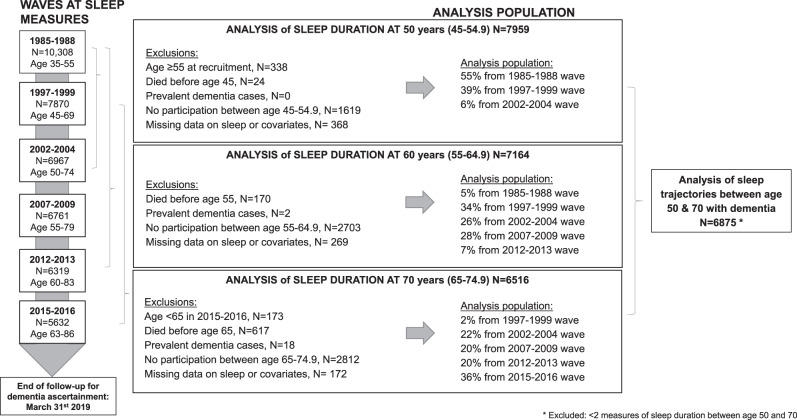
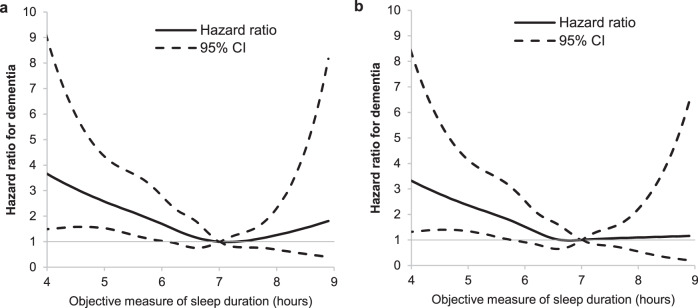
Sleep dysregulation is a feature of dementia but it remains unclear whether sleep duration prior to old age is associated with dementia incidence. Using data from 7959 participants of the Whitehall II study, we examined the association between sleep duration and incidence of dementia (521 diagnosed cases) using a 25-year follow-up. Here we report higher dementia risk associated with a sleep duration of six hours or less at age 50 and 60, compared with a normal (7 h) sleep duration, although this was imprecisely estimated for sleep duration at age 70 (hazard ratios (HR) 1.22 (95% confidence interval 1.01–1.48), 1.37 (1.10–1.72), and 1.24 (0.98–1.57), respectively). Persistent short sleep duration at age 50, 60, and 70 compared to persistent normal sleep duration was also associated with a 30% increased dementia risk independently of sociodemographic, behavioural, cardiometabolic, and mental health factors. These findings suggest that short sleep duration in midlife is associated with an increased risk of late-onset dementia.
Overview
The claims and statistics of this paper haven’t been checked yet.
Free: it reads the open-access text and checks the first 5 claims that cite a source we can check. Create a free account to check every claim.
Integrity signals
Registry
Cites
Statistics
Figures
Verification
Claims the paper makes
The claims and statistics of this paper haven’t been checked yet.
Free: it reads the open-access text and checks the first 5 claims that cite a source we can check. Create a free account to check every claim.
Claims other papers make about this one
Each is checked against this paper’s own text: does it say what the citing paper says it does?
The cited source says what the claim attributes to it.
In the citing paper
“In the Whitehall II study, persistent short sleep duration ≤6 hours at age 50, 60, and 70 compared to persistent normal sleep duration (7 hours) was associated with a 30% increased dementia risk independently of sociodemographic, behavioural, cardiometabolic, and mental health factors.(303)”
From Dementia prevention, intervention, and care: 2024 report of the Lancet standing Commission (2024) · cites this paper as [303]
In the citing paper
“Persistent SD (<6 h per night) during midlife is associated with a 30% elevated risk of dementia in a longitudinal study of 7959 participants.”
From Microbiota–gut–brain axis and its therapeutic applications in neurodegenerative diseases (2024) · cites this paper as [649]
Self-check
Percentages, sums and reported differences re-computed from the paper’s own numbers.
The self-check needs the paper’s full text.
Citations
Cites
1 retracted
Dementia prevention, intervention, and care: 2020 report of the Lancet Commission
Livingston, G., Huntley, J., Sommerlad, A., Ames, D., Ballard, C., Banerjee, S., Brayne, C., Burns, A., Cohen-Mansfield, J., Cooper, C., et al. (2020) · The Lancet · doi:10.1016/s0140-6736(20)30367-6 · Cited by 10,430
Self-citationRetractedHarrell, F. E. (2001) · Springer Series in Statistics · doi:10.1007/978-1-4757-3462-1 · Cited by 9,195
A scaled version of the General Health Questionnaire
Goldberg, D. P., & Hillier, V. F. (1979) · Psychological Medicine · doi:10.1017/s0033291700021644 · Cited by 5,459
Sleep Drives Metabolite Clearance from the Adult Brain
Xie, L., Kang, H., Xu, Q., Chen, M. J., Liao, Y., Thiyagarajan, M., O’Donnell, J., Christensen, D. J., Nicholson, C., Iliff, J. J., et al. (2013) · Science · doi:10.1126/science.1241224 · Cited by 5,411
2016 Alzheimer's disease facts and figures
Alzheimer's Association (2016) · Alzheimer's & Dementia · doi:10.1016/j.jalz.2016.03.001 · Cited by 5,069
Jack, C. R., Knopman, D. S., Jagust, W. J., Petersen, R. C., Weiner, M. W., Aisen, P. S., Shaw, L. M., Vemuri, P., Wiste, H. J., Weigand, S. D., et al. (2013) · The Lancet Neurology · doi:10.1016/s1474-4422(12)70291-0 · Cited by 4,396
Health inequalities among British civil servants: the Whitehall II study
Marmot, M. G., Stansfeld, S., Patel, C., North, F., Head, J., White, I., Brunner, E., Feeney, A., Marmot, M. G., & Smith, G. D. (1991) · The Lancet · doi:10.1016/0140-6736(91)93068-k · Cited by 3,608
Group-Based Trajectory Modeling in Clinical Research
Nagin, D. S., & Odgers, C. L. (2010) · Annual Review of Clinical Psychology · doi:10.1146/annurev.clinpsy.121208.131413 · Cited by 2,708
2020 Alzheimer's disease facts and figures
(2020) · Alzheimer's & Dementia · doi:10.1002/alz.12068 · Cited by 2,353
Neurocognitive consequences of sleep deprivation
Goel, N., Rao, H., Durmer, J., & Dinges, D. (2009) · Seminars in Neurology · doi:10.1055/s-0029-1237117 · Cited by 2,154
Cited by
Items 201–300 of 671
Multidimensional sleep profiles via machine learning and risk of dementia and cardiovascular disease
Cavaillès, C., Wallace, M. L., Leng, Y., Stone, K. L., Ancoli‐Israel, S., & Yaffe, K. S. (2025) · Communications Medicine · doi:10.1038/s43856-025-01019-x · Cited by 18
Guo, P. F., Zhang, W., Lian, T., Zhang, W.-J., He, M., Zhang, Y.-N., Huang, Y. M., Ding, D.-Y., Guan, H., Li, J., et al. (2022) · Neural Regeneration Research · doi:10.4103/1673-5374.360250 · Cited by 16
“Other demographic variables, including gender (Liguori et al., 2014), education level (Sabia et al., 2021; Winer et al., 2021) and disease duration did not differ between AD-SI and AD-nSI groups, which was similar to other studies.”
Ding, H., Li, C., & Zhao, X. (2025) · Frontiers in Public Health · doi:10.3389/fpubh.2025.1605158 · Cited by 14
Sohrabpour, A., Sarovic, D., Zetterberg, H., Hämäläinen, M., Baillet, S., & Khan, S. (2025) · Alzheimer s & Dementia · doi:10.1002/alz.70835 · Cited by 14
Recent advances in Alzheimer’s disease: From molecular mechanisms to therapeutic strategies
Rudman, M. D., Ulrich, J. D., & Holtzman, D. M. (2026) · Cell · doi:10.1016/j.cell.2026.06.006 · Cited by 20
Yan, W., Hou, D., Li, Z., Tang, W., Han, X., & Tang, Y. (2023) · CNS Spectrums · doi:10.1017/s1092852923002250 · Cited by 13
Ouyang, M., Chen, T., Chen, J., Liu, C., Luo, H., Yang, S., & Liao, W. (2024) · Heliyon · doi:10.1016/j.heliyon.2024.e30009 · Cited by 15
“There ’ s a growing body of research suggesting a correlation between sleep duration and an increased dementia risk in seniors, though conclusions remain varied [4 – 6].”
BackgroundMethodНаволокин, Н. А., Adushkina, V., Zlatogorskaya, D., Telnova, V., Evsukova, A., Vodovozova, E. L., Anna, E., Dosadina, E. E., Diduk, S., & Semyachkina-Glushkovskaya, O. V. (2024) · Pharmaceuticals · doi:10.3390/ph17060788 · Cited by 14
“The conditions that can impair the function of lymphatic drainage processes, such as COVID-19 infection, or chronic sleep deprivation (less than 6 h), promote excessive accumulation of A β in brain tissues [3,4,29,30,128,129,282,283].”
BackgroundThe Sleep Opportunity, Need and Ability ( SONA ) Theory
Scott, H., & Perlis, M. L. (2025) · Journal of Sleep Research · doi:10.1111/jsr.70030 · Cited by 13
“There is also evidence to suggest that short sleep is associated with increased incidence of dementia (Sabia et al. 2021).”
Wang, Y., Wen, Q., Luo, S., Tang, L., Zhan, S., Cao, J., Wang, S., & Chen, Q. (2025) · Health Data Science · doi:10.34133/hds.0161 · Cited by 16
“For example, in 7,959 participants of the Whitehall II study, both subjectively and objectively short sleep durations were found to be associated with higher incidence of dementia [ 33 ].”
Kim, H. J., Kim, R. E. Y., Kim, S., Lee, S. K., Lee, H. W., & Shin, C. (2023) · SLEEP · doi:10.1093/sleep/zsad108 · Cited by 14
Secular Trends in Sleep Conditions in Chinese Elderly Individuals: A National Population-Based Study
Pan, X.-B., Hong-xia, W., Cao, Y., & Liu, Y. (2023) · Nature and Science of Sleep · doi:10.2147/nss.s416084 · Cited by 14
Zhou, F., Liu, F., Wu, T., Zhang, K., Pan, M., Wang, X., Chen, Z., Tong, J., Yan, Y., & Xiang, H. (2023) · Ecotoxicology and Environmental Safety · doi:10.1016/j.ecoenv.2023.115226 · Cited by 13
Trends in sleep duration in the U.S. from 2004 to 2018: A decomposition analysis
Xu, J., Luo, L., Gamaldo, A. A., Verdery, A. M., Hardy, M. A., Buxton, O. M., & Xiao, Q. (2023) · SSM - Population Health · doi:10.1016/j.ssmph.2023.101562 · Cited by 14
“…association between sleep duration and performance on cognitive tasks is particularly salient in Black adults (Gamaldo et al., 2010), who tend to perform worse on cognitive assessments, potentially reflecting a greater risk of Alzheimer ’ s Disease and related dementias (ADRDs; Sabia et al., 2021).”
BackgroundGuo, J., Wu, J., Wei, D., Wang, T., Hu, Y., Lin, Y., Chen, M., Yang, L., Wen, Y., Cai, Y., et al. (2022) · Ecotoxicology and Environmental Safety · doi:10.1016/j.ecoenv.2022.113199 · Cited by 13
Xu, Q., Kim, Y., Chung, K., Schulz, P. E., & Gottlieb, A. (2024) · JMIR Formative Research · doi:10.2196/55575 · Cited by 13
Current and Emerging Sleep Interventions for Older Adults with or without Mild Cognitive Impairment
Suraev, A. S., Kong, S. D., Schrire, Z. M., Tran, B. A., Cross, N. E., Matar, E., & Naismith, S. L. (2024) · Current Treatment Options in Neurology · doi:10.1007/s11940-024-00808-4 · Cited by 12
“Even earlier on the continuum, shorter sleep duration in healthy older adults in midlife, particularly at ages 50 and 60, has been associated with an increased risk of late-onset dementia, independent of sociodemographic, behavioural, cardiometabolic, and mental health factors [15].”
Qiu, P., Dong, C., Li, A. M., Xie, J., & Wu, J. (2024) · BMC Geriatrics · doi:10.1186/s12877-024-05511-2 · Cited by 12
“This contrasts with some earlier findings where the focus has been predominantly on the adverse effects of short SD [13, 54].”
ResultZou, H., Jiang, L., Hou, Y., Zhang, L., & Liu, J. (2024) · Aging Clinical and Experimental Research · doi:10.1007/s40520-024-02881-w · Cited by 12
The Neuroprotective Potential of Ocimum Plant Species: Seasoning the Mind with Sweet and Holy Basil
Vasincu, A., Rusu, R.-N., Ababei, D. C., Bulea, D., Arcan, O. D., Vasincu, I. M., Chiriac, S. I. B., Popescu, I.-R., Bild, W., & Bild, V. (2025) · Nutrients · doi:10.3390/nu17172877 · Cited by 14
“Additionally, the association between sleep and cognitive function is widely acknowledged, duet to the role of sleep in learning, memory, and synaptic plasticity as well as waste clearance from the brain [211].”
Sun, H., Milton, S., Fang, Y., Taha, H. B., Shiju, S., THOMAS, R. J., Ganglberger, W., Pase, M. P., Hughes, T., Purcell, S., et al. (2026) · JAMA Network Open · doi:10.1001/jamanetworkopen.2026.1521 · Cited by 16
Monitoring Older Adult Blood Pressure Trends at Home as a Proxy for Brain Health
Cassarino, N., Bergstrom, B., Johannes, C., & Gualtieri, L. N. (2021) · Online Journal of Public Health Informatics · doi:10.5210/ojphi.v13i3.11842 · Cited by 14
“additional metrics related to brain health including blood glucose levels, weight, physical activity, resting heart rate, sleep pattern and more [33-37].”
BackgroundEtholén, A., Pietiläinen, O. K., Kouvonen, A. M., Hänninen, M., Rahkonen, O., & Lallukka, T. M. (2022) · Journal of Aging and Health · doi:10.1177/08982643221078740 · Cited by 13
“Instead, the recent Whitehall study II on 25-year follow-up found an association between short sleep duration in midlife and an increased risk of dementia in later life (Sabia et al., 2021).”
BackgroundNaismith, S. L., Leng, Y., Palmer, J. R., & Lucey, B. P. (2022) · Alzheimer s & Dementia Diagnosis Assessment & Disease Monitoring · doi:10.1002/dad2.12380 · Cited by 14
“4 While amyloid deposition is associated with low CSF Aβ42,5 the ratio of CSF phosphorylated tau (p-tau)/Aβ (1-42) has also been associated with increased brain amyloid6 and is superior to single biomarkers at predicting risk of decline and conversion to dementia.”
BackgroundSleep behavior traits and associations with opioid-related adverse events: a cohort study
Chen, R. W., Ulsa, M. C., Li, P., Gao, C., Zheng, X., Xu, J., Luo, Y., Shen, S., Lane, J. M., Scheer, F. A. J. L., et al. (2023) · SLEEP · doi:10.1093/sleep/zsad118 · Cited by 12
Kinoshita, K., Otsuka, R., Takada, M., Nishita, Y., Tange, C., Jinzu, H., Suzuki, K., Shimokata, H., Imaizumi, A., & Arai, H. (2023) · BMC Geriatrics · doi:10.1186/s12877-023-04359-2 · Cited by 12
“Although a few studies have reported no significant association between long sleep duration and cognitive function decline [39–41], our results are consistent with many other studies that have reported the association of long sleep duration with cognitive impairment [42–47].”
ResultLiu, C., Zhang, J., Wei, X., Shi, J., Fang, Q., Zhou, W., Sun, L., Hu, Z., Hong, J., Gu, W., et al. (2023) · Frontiers in Endocrinology · doi:10.3389/fendo.2023.1278665 · Cited by 16
“Sleep duration has been demonstrated as a critical factor in fl uencing a variety of health outcomes like hyperglycemia, cardiovascular disease (CVD), and cognitive decline (6 – 8).”
BackgroundMiyata, J., Muraki, I., Iso, H., Yamagishi, K., Yasuda, N., Sawada, N., Inoue, M., & Tsugane, S. (2024) · Preventive Medicine · doi:10.1016/j.ypmed.2024.107884 · Cited by 15
Singham, T., Saunders, R., Brooker, H. J., Creese, B., Aarsland, D., Hampshire, A., Ballard, C. G., Corbett, A., Desai, R., & Stott, J. C. H. (2022) · Journal of Affective Disorders · doi:10.1016/j.jad.2022.04.139 · Cited by 12
Tan, X. W., Lebedeva, A., Åkerstedt, T., & Wang, H. (2022) · The Journals of Gerontology Series A · doi:10.1093/gerona/glac104 · Cited by 12
“A 25-year longitudinal study carried out on 7 959 British adults reported a 30% higher risk of dementia diagnosis among participants who had persistent short sleep duration (6 hours or less per night) at age 50, 60, and 70, compared to those with a 7-hour sleep duration in all 3 time points (7).”
Khosroazad, S., Gilbert, C. F., Aronis, J., Daigle, K. M., Esfahani, M., Almaghasilah, A., Ahmed, F. S., Elias, M. F., Meuser, T. M., Kaye, L. W., et al. (2023) · BMC Geriatrics · doi:10.1186/s12877-023-03983-2 · Cited by 11
“AD risk is increased in persons > 60 years of age if sleep duration dips below 6 h/day which leads to chronic sleep loss [24].”
BackgroundCallow, D. D., Spira, A. P., Zipunnikov, V., Lu, H., Wanigatunga, S., Rabinowitz, J. A., Albert, M., Bakker, A., & Soldan, A. (2024) · NeuroImage Clinical · doi:10.1016/j.nicl.2024.103621 · Cited by 13
“Greater engagement in physical activity (Blondell et al., 2014; Nuzum et al., 2020; Sewell et al., 2023a) and adequate sleep quality and duration (Sabia et al., 2021; Shi et al., 2018) are associated with a reduced rate of cognitive decline and a lower risk of dementia.”
Influencing factors of glymphatic system during perioperative period
Dong, R., Liu, W., Han, Y., Wang, Z., Jiang, L., Wang, L., & Gu, X. (2024) · Frontiers in Neuroscience · doi:10.3389/fnins.2024.1428085 · Cited by 13
Low-cost predictive models of dementia risk using machine learning and exposome predictors
Camacho, M., Atehortúa, A., Wilkinson, T., Gkontra, P., & Lekadir, K. (2024) · Health and Technology · doi:10.1007/s12553-024-00937-5 · Cited by 12
“The results of our study add to previous works that pointed out that the associations of sleep and dementia are yet to be clarified 52–54 .”
Sleep and Neurodegeneration: Examining Potential Physiological Mechanisms
McConnell, B. V., Deng, Y., & Lucey, B. P. (2025) · Current Sleep Medicine Reports · doi:10.1007/s40675-024-00316-6 · Cited by 12
Khaing, K., Dolja‐Gore, X., Dizon, J., Fang, X., Tian, Z., Fu, C., Barker, D., Zhou, Q. X., Nair, B., Byles, J., et al. (2025) · The Journals of Gerontology Series A · doi:10.1093/gerona/glaf087 · Cited by 15
“The data from 6 included studies (21,33–37) with a total 33 849 participants was used for the Bayesian multilevel regression model.”
InfluentialDeep cervical lymphaticovenous anastomosis for Alzheimer's disease: A narrative review
Chen, Q., Wen, Q., Zhong, T. P., Liu, J., & Gao, H. (2025) · Alzheimer s & Dementia · doi:10.1002/alz.71038 · Cited by 13
“22 These findings indicate that targeting pathways of waste clearance based on the mechanisms of glymphatic dysfunction may provide new therapeutic strategies for AD.”
Röhr, S., & Riedel-Heller, S. G. (2021) · Psychiatrische Praxis · doi:10.1055/a-1666-8540 · Cited by 12
“[16] Sabia S, Fayosse A, Dumurgier J et al.”
BackgroundNighttime Sleep Characteristics and White Matter Integrity in Young Adults
Reyes, S., Rimkus, C. D. M., Lozoff, B., Algarín, C. R., & Peirano, P. D. (2022) · Nature and Science of Sleep · doi:10.2147/nss.s360311 · Cited by 11
Feed your microbiome and improve sleep, stress resilience, and cognition
Chichlowski, M., Cotter, J., Fawkes, N., & Pandey, N. (2022) · Exploration of Medicine · doi:10.37349/emed.2022.00097 · Cited by 13
Allcock, L., Mantzioris, E., & Villani, A. M. (2022) · Frontiers in Public Health · doi:10.3389/fpubh.2022.1017078 · Cited by 11
Patterns of sleep disturbances across stages of cognitive decline
Gallagher, V. T., Reilly, S., Williams, I. C., Mattos, M. K., & Manning, C. A. (2022) · International Journal of Geriatric Psychiatry · doi:10.1002/gps.5865 · Cited by 12
Yoon, J., Heo, S., Lee, H., Sul, E. G., Han, T., & Kwon, Y. (2023) · Medicina · doi:10.3390/medicina59061066 · Cited by 13
“In addition, they can increase the risk of cancer [10], mental health conditions [11,12], and psychiatric disorders [13].”
BackgroundHan, X., Liu, G., Lee, S., Yang, X., Wu, M. N., Lu, H., & Wei, Z. (2024) · Frontiers in Physiology · doi:10.3389/fphys.2024.1456690 · Cited by 11
“Persistent sleep disruption between the ages of 50 – 70 is associated with a 30% increased risk of dementia, independent of sociodemographic, behavioral, cardiometabolic, and mental health factors (Sabia et al., 2021).”
BackgroundRisk factors for the neurodegenerative dementias in the Western Pacific region
Clarke, A. J., Brodtmann, A. G., Irish, M., Mowszowski, L., Radford, K. A., Naismith, S. L., Mok, V., Kiernan, M. C., Halliday, G. M., & Ahmed, R. M. (2024) · The Lancet Regional Health - Western Pacific · doi:10.1016/j.lanwpc.2024.101051 · Cited by 20
“Disturbances of sleep, including nocturnal awakenings, poor sleep quality and ef fi ciency and aberrant sleep duration are common in older people, are pronounced in those at risk for dementia, 94 increase dementia risk 95 and are signi fi cant contributors to disability.”
BackgroundShort sleep duration and dementia: a narrative review
Stephens, E. R., Sarangi, A., & Gude, J. G. (2022) · Baylor University Medical Center Proceedings · doi:10.1080/08998280.2022.2026123 · Cited by 12
The Glymphatic System and its Relationship to Migraine
Burgos, A. F., Olson, P. A., & Vgontzas, A. (2024) · Current Neurology and Neuroscience Reports · doi:10.1007/s11910-024-01368-5 · Cited by 12
“…quality and insomnia, (2) sleep changes in middle age (short sleep duration, insomnia, and self-reported sleep disturbances) as a risk factor for Alzheimer’s disease, and (3) the well-accepted role of glymphatic dysfunction in the accumulation of proteins that define Alzheimer’s disease [72–74].”
Gohari, A., Baumann, B., Jen, R., & Ayas, N. (2024) · Sleep Medicine Clinics · doi:10.1016/j.jsmc.2024.07.001 · Cited by 12
Review on pathogenesis and treatment of Alzheimer's disease
Cai, J., Liu, Y., & Fan, H. (2024) · Developmental Dynamics · doi:10.1002/dvdy.762 · Cited by 11
Yan, Y., Lan, L., Gong, P., & Guo, C. (2025) · Building and Environment · doi:10.1016/j.buildenv.2025.112628 · Cited by 11
Sleep trajectories across three cognitive‐aging pathways in community older adults
Zaheed, A. B., Tapia, A. L., Oryshkewych, N., Wheeler, B. J., Butters, M. A., Buysse, D. J., Leng, Y., Barnes, L. L., Lim, A. S. P., Yu, L., et al. (2025) · Alzheimer s & Dementia · doi:10.1002/alz.70159 · Cited by 12
Circadian Rhythms in Aging and Age-Related Neurogenerative Disease
Zitting, K., & Yuan, R. K. (2025) · Current Sleep Medicine Reports · doi:10.1007/s40675-025-00336-w · Cited by 11
“…and circadian rhythm disruption is highly complex and most likely bidirectional, as there is evidence that poor sleep contributes to cognitive decline and risk of dementia [47, 50, 51], while the brain atrophy observed with neurodegenerative diseases can impair the circadian and sleep systems [52].”
Daily cannabis use is associated with sleep duration differentially across ages
Gonzalez, J. E., Shea, S. A., & Bowles, N. P. (2022) · Sleep Health · doi:10.1016/j.sleh.2022.10.006 · Cited by 11
Yu, M., Jiang, Y., Gong, X., & Gao, X. (2024) · Biological Research For Nursing · doi:10.1177/10998004241230325 · Cited by 10
“Using data from 7959 participants of the Whitehall II study with a 25-year follow-up, Sabia et al. found that short sleep duration in midlife is associated with an increased risk of late-onset dementia (Sabia et al., 2021).”
BackgroundMethodWang, Z., Li, X., Wang, J., Yang, W., Dove, A. E., Lu, W., Qi, X., Sindi, S., & Xu, W. (2024) · Sleep Medicine · doi:10.1016/j.sleep.2024.04.033 · Cited by 10
Atayde, A. L., Fischer, C. E., Schweizer, T. A., & Muñoz, D. G. (2022) · Journal of Alzheimer s Disease · doi:10.3233/jad-215276 · Cited by 10
“Arecentstudyanalyzingalargesampleof participantsthatwerefollowedfor25yearsfound ahigherincidenceofdementiainparticipantswith shortsleepduration(6hoursorless)inmiddleandold age,asassessedbyquestionnairesandaccelerome-tersinasubsample[46].”
Brain metabolites are associated with sleep architecture and cognitive functioning in older adults
Mueller, C., Nenert, R. E., Catiul, C., Pilkington, J., Szaflarski, J. P., & Amara, A. W. (2024) · Brain Communications · doi:10.1093/braincomms/fcae245 · Cited by 9
“11,12 The American Association of Sleep Medicine recommends at least 7 h of sleep per night for adults aged 18 years and over, 13 with between 6% and 30% of individuals estimated to sleep for inadequate amounts of time.”
BackgroundSeo, C.-R., Lee, B. K., Jee, H. J., Yoo, J. R., Lee, C.-K., Park, J. W., & Jung, Y. (2024) · Nutrients · doi:10.3390/nu16234224 · Cited by 10
Sleep Alterations and Cognitive Decline
Lucey, B. P. (2025) · Seminars in Neurology · doi:10.1055/a-2557-8422 · Cited by 10
“58 Thisstronglysuggeststhat the role of sleep in cognitive performance changes across the lifespan and with disease processes.”
Sakal, C., Chen, T., Xu, W., Zhang, W., Yu, Y., & Li, X. (2025) · SLEEP · doi:10.1093/sleep/zsaf113 · Cited by 11
Feng, F., Cai, Z., Chen, J., Yang, D., Huang, N., & Luo, Y. (2025) · Scientific Reports · doi:10.1038/s41598-025-23440-x · Cited by 9
“These inconsistencies may be attributed to variations in study populations, methodological approaches, and follow-up durations 18,19 .”
Tahmasian, M., Elberse, J. D., Ahmadi, R., Wen, L., Rosenzweig, I., Genon, S., Eickhoff, S. B., & Mander, B. A. (2026) · GeroScience · doi:10.1007/s11357-026-02152-8 · Cited by 9
Metabolic health disparities driven by financial stress: Behavioural adaptation or modification?
Kuo, W., Bratzke, L. C., Hagen, E. W., Hale, L. E., Brown, R., Barnet, J. H., & Peppard, P. E. (2022) · Stress and Health · doi:10.1002/smi.3210 · Cited by 11
Komulainen, K., Hakulinen, C. A., Lipsanen, J. O., Partonen, T., Pulkki-Råbäck, L., Kähönen, M. A. P., Virtanen, M., Ruuhela, R., Raitakari, O. T., Rovio, S., et al. (2022) · Scientific Reports · doi:10.1038/s41598-022-25336-6 · Cited by 9
Lu, H., Zhang, Y., Ran, S., Chen, Y., Ye, Z., Huang, M., & Wang, P. (2023) · Neuroreport · doi:10.1097/wnr.0000000000001926 · Cited by 9
Proteomic changes in the hippocampus of large mammals after total-body low dose radiation
Iacono, D., Hatch, K., Murphy, E. K., Post, J. D., Cole, R. N., Perl, D. P., & Day, R. M. (2024) · PLoS ONE · doi:10.1371/journal.pone.0296903 · Cited by 9
Mueller, C., Nenert, R. E., Catiul, C., Pilkington, J., Szaflarski, J. P., & Amara, A. W. (2024) · Brain Research · doi:10.1016/j.brainres.2024.149016 · Cited by 12
Ukawa, S., Zhao, W., Okabayashi, S., Kimura, T., Ando, M., Wakai, K., Tsushita, K., Kawamura, T., & Tamakoshi, A. (2022) · Sleep Medicine · doi:10.1016/j.sleep.2022.08.022 · Cited by 9
Demand Coupling Drives Neurodegeneration: A Model of Age-Related Cognitive Decline and Dementia
Turknett, J., & Wood, T. R. (2022) · Cells · doi:10.3390/cells11182789 · Cited by 9
“This includes significantly increased risk of ARCD and ARD as well as worse cognitive function associated with sedentary behavior and reduced physical activity [37,41–43], chronic sleep deprivation or sleep disruption [37,44,45], insulin resistance and dysglycemia [46,47], poor-quality nutrition and associated changes…”
BackgroundGoldilocks at work: Just the right amount of job demands may be needed for your sleep health
Nelson, M. E., Lee, S., Allen, T. D., Buxton, O. M., Almeida, D. M., & Andel, R. (2022) · Sleep Health · doi:10.1016/j.sleh.2022.09.002 · Cited by 9
A narrative review of the pathophysiology and impacts of insufficient and disrupted sleep.
Steffey, M. A., Scharf, V. F., Risselada, M., Buote, N. J., Griffon, D. J., Winter, A. L., & Zamprogno, H. (2023) · PubMed Central · Cited by 21
Al-Musharaf, S., Albedair, B., Alfawaz, W., Aldhwayan, M., & Aljuraiban, G. S. (2023) · Nutrients · doi:10.3390/nu15184090 · Cited by 9
“Sleeping less than 6 h per night has been shown to decrease cognitive performance and disrupt mood [12], increase the risk of dementia [13], and contribute to higher mortality rates [14].”
BackgroundHealthy lifestyles for dementia prevention
Sabia, S., & Singh‐Manoux, A. (2023) · BMJ · doi:10.1136/bmj.p117 · Cited by 9
Self-citationRezende, T. A., Giatti, L., de Menezes, S. T., Griep, R. H., Ribeiro, P. C. C., & Barreto, S. M. (2024) · Revista Brasileira de Epidemiologia · doi:10.1590/1980-549720240006 · Cited by 10
“Considering that individuals with amnestic mild cognitive impairment are at increased risk of dementia 33 , as well as those with persistent duration of ≤ 6 hours at 50, 60, and 70 years 34 , individuals with extreme sleep durations deserve attention to prevent continued adverse effects on memory.”
BackgroundAnxious–depressive symptoms and sleep disturbances across the Alzheimer disease spectrum
Chai, Y., Kojori, E. S., Saykin, A. J., & Yu, M. (2025) · Nature Mental Health · doi:10.1038/s44220-025-00416-4 · Cited by 8
“Another study found that CN adults who consistently slept less at ages 50, 60 and 70 had a 30% higher risk of dementia over an average of 24.6, 14.8 and 7.5 years, respectively 133 .”
InfluentialDembo, R. S., Hong, J., DaWalt, L. S., Berry‐Kravis, E., & Seltzer, M. M. (2023) · American Journal on Intellectual and Developmental Disabilities · doi:10.1352/1944-7558-128.3.254 · Cited by 8
Etholén, A., Kouvonen, A. M., Hänninen, M., Kulmala, J., Rahkonen, O., Mänty, M., & Lallukka, T. M. (2023) · Preventive Medicine · doi:10.1016/j.ypmed.2023.107830 · Cited by 9
Liu, X., Xu, P., Wei, R., Cheng, B.-J., Sun, L., Yang, L., & Chen, G. (2024) · Frontiers in Public Health · doi:10.3389/fpubh.2023.1047025 · Cited by 9
Zhang, K., Zhu, Y. W., Fenik, P., Fleysh, D., Ly, C., THOMAS, S. A., & Veasey, S. C. (2024) · Journal of Neuroscience · doi:10.1523/jneurosci.1929-23.2024 · Cited by 9
“Both forms of CSD increase the risk of developing Alzheimer ’ s disease (AD) and related dementias (Lim et al., 2013; Sabia et al., 2021).”
BackgroundMeernik, C., Eilat-Adar, S., Leonard, D., Barlow, C. E., Gerber, Y., Tesler, R., Shanks, C. B., Gabriel, K. P., Pavlovic, A., DeFina, L. F., et al. (2024) · International Journal of Behavioral Nutrition and Physical Activity · doi:10.1186/s12966-024-01663-x · Cited by 8
“We also had insufficient data on participants’ sleep, which is linked to both diet and dementia [70].”
BackgroundHallab, A., & Initiative, T. A. D. N. (2024) · Lipids in Health and Disease · doi:10.1186/s12944-024-02302-x · Cited by 8
How can secondary dementia prevention trials of Alzheimer's disease be clinically meaningful?
Liu, K. Y., Thambisetty, M., & Howard, R. J. (2022) · Alzheimer s & Dementia · doi:10.1002/alz.12788 · Cited by 9
“…a deeper understanding of the natural history of and genetic ( APOE ε 4 or monogenic mutations) measures, as well as cognitive, 76 behavioral, 77,78 digital, 79 and sociodemographic data 12 (age, vascular risk factors, education, race/ethnicity), may provide better prognostic trajectories for…”
Sleep Deprivation in Middle Age May Increase Dementia Risk: A Review
Balan, I., Bilger, N., Saparov, D., Hryb, I., & Abdyraimov, A. (2023) · Cureus · doi:10.7759/cureus.37425 · Cited by 13
“Multiple observational studies with a follow-up of fewer than 10 years have revealed the possible association between mild cognitive decline and dementia and long or short sleep duration [5].”
BackgroundThe aging human brain exhibits reduced hemodynamic and cerebrospinal fluid flow waves during sleep
Bailes, S. M., Williams, S. D., Ashenagar, B., Pham, T. L. D., Valdiviezo, Z., Licata, J., Bosli, M. Y., Dormes, B. J., Yun, H. J., Zimmerman, D., et al. (2026) · Nature Aging · doi:10.1101/2025.02.22.639649 · Cited by 10
“Mounting evidence in the literature indicates that poor sleep is predictive of cognitive decline and neurodegeneration across the lifespan (Ibrahim et al., 2024; Lucey et al., 2019; Sabia et al., 2021), but the mechanisms underlying this relationship are unknown.”
García‐Aviles, J. E., Avilez-Avilez, J. J., Sánchez-Hernández, J., Patlán-Márquez, C., Rodríguez-Alpízar, J., Becerril-Mercado, F. M., Jiménez, A., Guerrero‐Vargas, N. N., Morin, J., Rodríguez-García, M., et al. (2025) · Neurochemical Research · doi:10.1007/s11064-025-04561-1 · Cited by 8
“The CA3–CA1 pathway displays distinctive theta–gamma coupling during exploratory and memory-guided behaviors [35, 57]; disrupting hippocampal theta oscillation during REM sleep after learning prevents memory consolidation [18].”
Zhao, H., Shi, H., Ren, Z., He, M., Cui, L., Wang, S., Zhao, J., Li, W., Wei, Y., Zhang, W., et al. (2023) · Journal of Psychosomatic Research · doi:10.1016/j.jpsychores.2023.111380 · Cited by 7
Gallagher, V. T., Reilly, S., Rossetti, M. A., Mattos, M. K., & Manning, C. A. (2023) · Psychogeriatrics · doi:10.1111/psyg.13064 · Cited by 7
Xue, B., Jian, X., Peng, L., Wu, C., Fahira, A., Syed, A. A. S., Xia, D., Wang, B., Niu, M., Yajie, J., et al. (2024) · Sleep Medicine · doi:10.1016/j.sleep.2024.04.032 · Cited by 7
Sleep Deficiency in the Elderly
Pappas, J. A., & Miner, B. (2024) · Sleep Medicine Clinics · doi:10.1016/j.jsmc.2024.07.007 · Cited by 11
Short Sleep Duration and Hypertension: A Double Hit for the Brain
Yiallourou, S. R., Baril, A., Wiedner, C. D., Song, X., Bernal, R., Himali, D., Cavuoto, M. G., DeCarli, C. S., Beiser, A., Seshadri, S. S., et al. (2024) · Journal of the American Heart Association · doi:10.1161/jaha.124.035132 · Cited by 8
The effect of sleep disturbances on the incidence of dementia for varying lag times
Alders, P., Kok, A. A. L., van Zutphen, E. M., Claassen, J. A. H. R., & Deeg, D. J. H. (2025) · The Journal of Prevention of Alzheimer s Disease · doi:10.1016/j.tjpad.2024.100024 · Cited by 7
The Brain Toxin Cleansing of Sleep Achieved During Wakefulness
Arendash, G. W. (2025) · Journal of Clinical Medicine · doi:10.3390/jcm14030926 · Cited by 8
“…beneficial actions of TRFT technology on brain cleansing during wakefulness add credibility to FDA’s “Breakthrough” designation for both the MemoEM device and TRFT technology against AD, in that AD subjects typically obtain less than normal amounts of sleep and have sleep disturbances [6–9].”
InfluentialİDE, D., & GÜNDÜZ, T. (2021) · Ergonomi · doi:10.33439/ergonomi.935728 · Cited by 7
Sleep Disorders in Patients with Neurologic Disease
Lee‐Iannotti, J. K. (2023) · CONTINUUM Lifelong Learning in Neurology · doi:10.1212/con.0000000000001270 · Cited by 9
Sosnowski, D. W., Smail, E. J., Maher, B. S., Moore, A. Z., Kuo, P., Wu, M. N., Low, D. V., Stone, K. L., Simonsick, E. M., Ferrucci, L., et al. (2024) · The International Journal of Aging and Human Development · doi:10.1177/00914150241231192 · Cited by 7
“…demonstrate links between self-reported habitual sleep duration and various aging-related health outcomes (e.g., dementia, cognitive decline; Chen et al., 2016; Sabia et al., 2021), self-report sleep measures typically query only about sleep in the recent past (e.g., prior 2 weeks or a month).”
Zülke, A. E., Luppa, M., van Boxtel, M. P. J., Deckers, K., Heger, I., Köhler, S., & Riedel-Heller, S. G. (2023) · BMC Public Health · doi:10.1186/s12889-023-17247-6 · Cited by 7
“Further evidence suggests detrimental effects of, e.g., stress [4] or sleep disturbances [5] on risk for dementia.”
BackgroundHan, C., An, J., & Chan, P. (2021) · BMC Geriatrics · doi:10.1186/s12877-021-02513-2 · Cited by 8
“associated with another major public health problem among middle-aged and elder adults: cognitive decline and dementia [35, 47, 58, 59].”
BackgroundArora, S., Critchley, G., Dekmak, A. S., Miesenböck, G., Kempf, A., & Ligoxygakis, P. (2025) · Brain Communications · doi:10.1093/braincomms/fcaf144 · Cited by 7
Cheng, Z.-Y., Qian, T., Yu, J., Yan, Y., Jing, L., Yang, B., Tang, H., Yan, A., Liu, M., Song, Y., et al. (2025) · International Immunopharmacology · doi:10.1016/j.intimp.2025.115174 · Cited by 7
Han, J. W., Oh, D. J., Kim, T. H., Kwak, K. P., Kim, B., Kim, S. G., Kim, J. L., Moon, S. W., Park, J. H., Ryu, S., et al. (2025) · Journal of Korean Medical Science · doi:10.3346/jkms.2025.40.e326 · Cited by 6
“This finding was complemented by Park et al., 43 , 44 and Whitehall II study 45 which have primarily focused on identifying optimal sleep duration and its associations with dementia risk.”
Metadata
- Authors
- Sabia, S., Fayosse, A., Dumurgier, J., van Hees, V. T., Paquet, C., Sommerlad, A., Kivimäki, M., Dugravot, A., & Singh-Manoux, A.
- Affiliations
- Inserm (FR)
- University College London (GB)
- ORCID
- Venue
- Nature Communications
- Published
- 2021-04-20
- Volume
- 12
- Issue
- 1
- Pages
- 2289-2289
- ISSN
- 2041-1723 (ISSN-L)
- PMC
- PMC8058039
- OpenAlex
- W3153417615
- Cited by
- 628
- References
- 55
- Citations by year
- 2026: 92 · 2025: 141 · 2024: 142 · 2023: 117 · 2022: 95 · 2021: 41
- FWCI
- 70.85
- Type
- journal article
- Language
- en
- Open access
- gold
- doi.org
- Licence
- cc-by
- creativecommons.org/licenses/by/4.0 (tdm)
- creativecommons.org/licenses/by/4.0 (vor)
- Locations
- Nature Communications (publishedVersion, cc-by)
- PubMed Central (publishedVersion, cc-by)
- PubMed (publishedVersion)
- HAL (submittedVersion, cc-by)
- RePEc: Research Papers in Economics (submittedVersion)
- DOAJ (DOAJ: Directory of Open Access Journals) (submittedVersion, cc-by-sa)
- UCL Discovery (University College London) (submittedVersion)
- Työväentutkimus Vuosikirja (submittedVersion)
- Funders
- Wellcome Trust (204841, R024227, 221854, 221854/Z/20/Z, 204841/Z/16/Z, 311492, 329202, R01AG056477)
- National Institute for Health and Care Research (RF1AG062553, 204841/Z/16/Z, 311492, R024227, 221854/Z/20/Z)
- British Heart Foundation (RG/16/11/32334, RF1AG062553, 32334, R024227, RG/13/2/30098, 311492)
- University College London (204841/Z/16/Z)
- Agence Nationale de la Recherche (ANR-19-CE36-0004)
- Academy of Finland (RF1AG062553, 311492, R024227, 329,202)
- NordForsk (RF1AG062553, 70521, R024227, 75021, 311492)
- University College London Hospitals NHS Foundation Trust
- National Institutes of Health (S011676, R024227)
- Medical Research Council (S011676, 221854/Z/20/Z, MR/S011676/1, R024227, MR/R024227/1, RF1AG062553, 204841/Z/16/Z, 311492, R024227, S011676)
- Economic and Social Research Council (ES/T014377/1)
- National Institute on Aging (RF1AG062553, R01AG056477, R024227, R01AG056477, RF1AG062553, 311492)
- Topics
- Health Sciences › Medicine › Psychiatry and Mental health › Dementia and Cognitive Impairment Research
- Social Sciences › Psychology › Experimental and Cognitive Psychology › Sleep and related disorders
- Life Sciences › Neuroscience › Cognitive Neuroscience › Sleep and Wakefulness Research
- Keywords
- sleep duration, dementia incidence, short sleep duration, midlife, old age, late-onset dementia, sleep dysregulation, Whitehall II study, dementia risk factors
- MeSH terms
- Adult, Age Factors, Aged, Aged, 80 and over, Dementia, Female, Follow-Up Studies, United Kingdom, Humans, Longitudinal Studies, Male, Middle Aged, Risk Factors, Sleep, Sleep Deprivation, Sleep Wake Disorders, Time Factors, Cohort Studies, Incidence, Proportional Hazards Models
About these checks
Registry, retraction, Cites and statistics results are computed, not judged, with one exception: a printed reference that no index lists is read once by a model before it counts as a citation error. Claims are extracted by a model and kept only when their quote appears verbatim in the text; each cited source is then checked, with a model’s help, for whether it says what the claim relies on. Those verdicts can be wrong — read the claim’s quote and the cited source before relying on one.
Statistics and arithmetic are recomputed, not judged.
Confidence bands are shown only for fields calibrated on our annotated test set. None is calibrated yet, so no band is shown.
What counts as a claim ›How we measure confidence ›How we check this ›
Are you an author, or do you see a problem with this page? Request a review
Data sources
Bibliographic data: Semantic Scholar, OpenAlex, Crossref.
Contains information from the Semantic Scholar Academic Graph Datasets, made available under the ODC Attribution License (ODC-BY 1.0).
Semantic Scholar’s data is described in: Kinney, R., et al. (2023). The Semantic Scholar Open Data Platform. arXiv:2301.10140.
