

The DOI matches its Crossref record; 94 of the 97 references it cites were found in a registry or an index.
Promoter G-quadruplexes and transcription factors cooperate to shape the cell type-specific transcriptome
Open accessPublished version of a preprint
Abstract
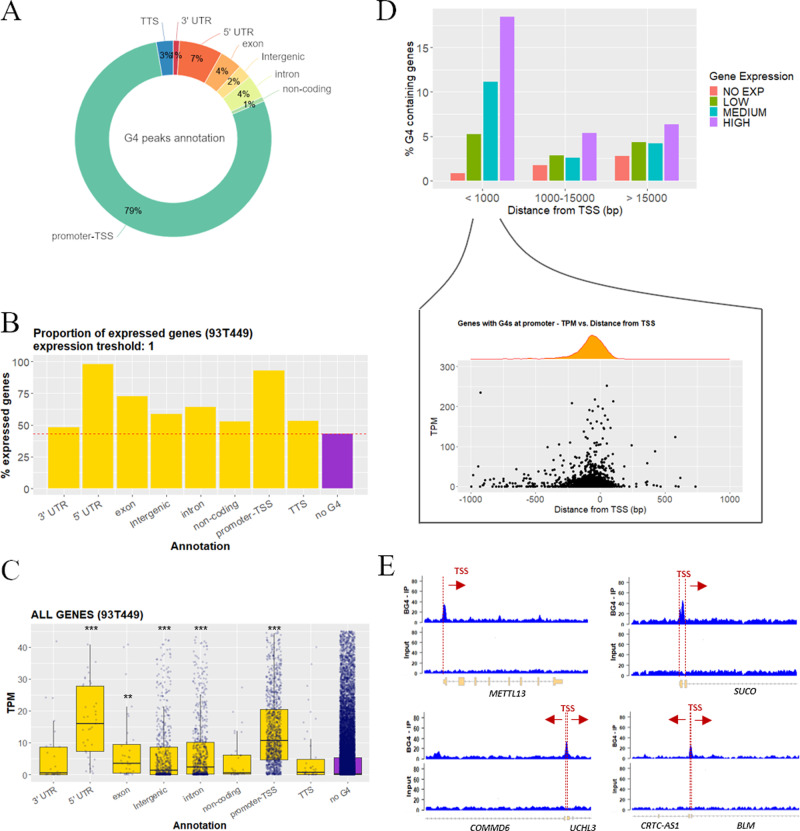
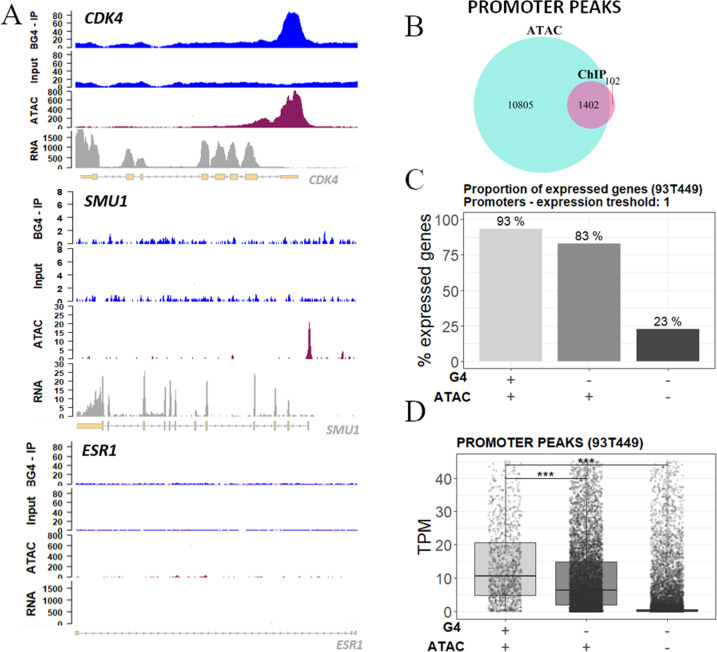
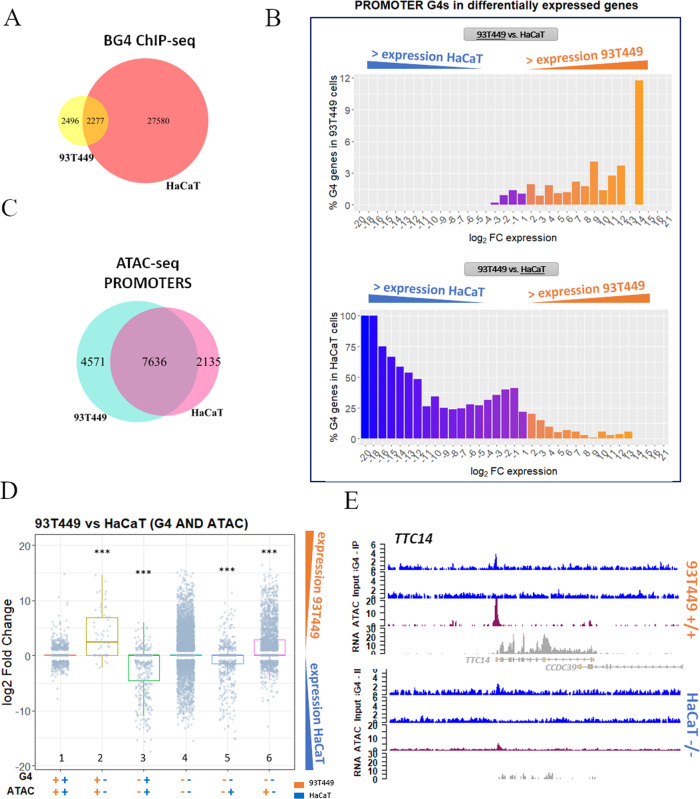
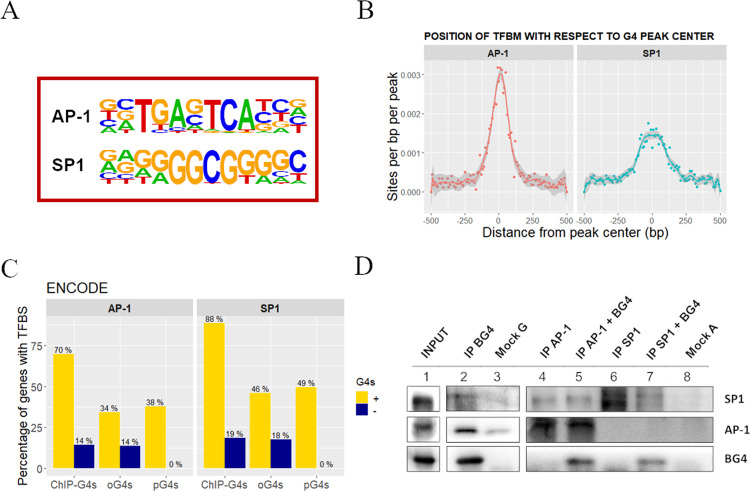
Cell identity is maintained by activation of cell-specific gene programs, regulated by epigenetic marks, transcription factors and chromatin organization. DNA G-quadruplex (G4)-folded regions in cells were reported to be associated with either increased or decreased transcriptional activity. By G4-ChIP-seq/RNA-seq analysis on liposarcoma cells we confirmed that G4s in promoters are invariably associated with high transcription levels in open chromatin. Comparing G4 presence, location and transcript levels in liposarcoma cells to available data on keratinocytes, we showed that the same promoter sequences of the same genes in the two cell lines had different G4-folding state: high transcript levels consistently associated with G4-folding. Transcription factors AP-1 and SP1, whose binding sites were the most significantly represented in G4-folded sequences, coimmunoprecipitated with their G4-folded promoters. Thus, G4s and their associated transcription factors cooperate to determine cell-specific transcriptional programs, making G4s to strongly emerge as new epigenetic regulators of the transcription machinery.
Overview
The claims and statistics of this paper haven’t been checked yet.
Run the check — free, no account needed. It reads the open-access text and checks the sources it cites.
Integrity signals
Registry
Cites
Statistics
Figures
Verification
Claims the paper makes
The claims and statistics of this paper haven’t been checked yet.
Run the check — free, no account needed. It reads the open-access text and checks the sources it cites.
Claims other papers make about this one
Each is checked against this paper’s own text: does it say what the citing paper says it does?
The source backs part of the claim, not all of it — or backs it for a different population, condition or comparison.
In the citing paper
“However, G4s hold various regulatory functions in transcription and translation (20)”
From G-quadruplex-mediated genomic instability drives SNVs in cancer (2024) · cites this paper as [20]
Experimental — accuracy not yet measured
Self-check
Percentages, sums and reported differences re-computed from the paper’s own numbers.
The self-check needs the paper’s full text.
Citations
Cites
Hallmarks of Cancer: The Next Generation
Hanahan, D., & Weinberg, R. A. (2011) · Cell · doi:10.1016/j.cell.2011.02.013 · Cited by 66,590
The Sequence Alignment/Map format and SAMtools
Li, H., Handsaker, B., Wysoker, A., Fennell, T., Ruan, J., Homer, N., Marth, G., Abecasis, G., Durbin, R., & 1000 Genome Project Data Processing Subgroup (2009) · Bioinformatics · doi:10.1093/bioinformatics/btp352 · Cited by 62,041
BEDTools: a flexible suite of utilities for comparing genomic features
Quinlan, A. R., & Hall, I. M. (2010) · Bioinformatics · doi:10.1093/bioinformatics/btq033 · Cited by 27,437
Model-based Analysis of ChIP-Seq (MACS)
Zhang, Y., Liu, T., Meyer, C. A., Eeckhoute, J., Johnson, D. S., Bernstein, B. E., Nusbaum, C., Myers, R. M., Brown, M., Li, W., et al. (2008) · Genome Biology · doi:10.1186/gb-2008-9-9-r137 · Cited by 18,386
ATAC-seq: a method for assaying chromatin accessibility genome-wide
Buenrostro, J. D., Wu, B., Chang, H. Y., & Greenleaf, W. J. (2015) · Current Protocols in Molecular Biology · doi:10.1002/0471142727.mb2129s109 · Cited by 3,289
An improved ATAC-seq protocol reduces background and enables interrogation of frozen tissues
Corces, M. R., Trevino, A. E., Hamilton, E. G., Greenside, P. G., Sinnott-Armstrong, N. A., Vesuna, S., Satpathy, A. T., Rubin, A. J., Montine, K. S., Wu, B., et al. (2017) · Nature Methods · doi:10.1038/nmeth.4396 · Cited by 2,496
Siddiqui-Jain, A., Grand, C. L., Bearss, D. J., & Hurley, L. H. (2002) · Proceedings of the National Academy of Sciences · doi:10.1073/pnas.182256799 · Cited by 2,274
Quantitative visualization of DNA G-quadruplex structures in human cells
Biffi, G., Tannahill, D., McCafferty, J., & Balasubramanian, S. (2013) · Nature Chemistry · doi:10.1038/nchem.1548 · Cited by 2,173
Zhu, A., Ibrahim, J. G., & Love, M. I. (2018) · Bioinformatics · doi:10.1093/bioinformatics/bty895 · Cited by 2,142
Prevalence of quadruplexes in the human genome
Huppert, J. L., & Balasubramanian, S. (2005) · Nucleic Acids Research · doi:10.1093/nar/gki609 · Cited by 1,795
Targeting G-quadruplexes in gene promoters: a novel anticancer strategy?
Balasubramanian, S., Hurley, L. H., & Neidle, S. (2011) · Nature Reviews Drug Discovery · doi:10.1038/nrd3428 · Cited by 1,720
Rouillard, A. D., Gundersen, G. W., Fernandez, N. F., Wang, Z., Monteiro, C. D., McDermott, M. G., & Ma’ayan, A. (2016) · Database · doi:10.1093/database/baw100 · Cited by 1,515
G-quadruplexes in promoters throughout the human genome
Huppert, J. L., & Balasubramanian, S. (2006) · Nucleic Acids Research · doi:10.1093/nar/gkl1057 · Cited by 1,392
AP-1 subunits: quarrel and harmony among siblings
Heß, J., Angel, P. E., & Schorpp‐Kistner, M. (2004) · Journal of Cell Science · doi:10.1242/jcs.01589 · Cited by 1,305
High-throughput sequencing of DNA G-quadruplex structures in the human genome
Chambers, V. S., Marsico, G., Boutell, J. M., Antonio, M. D., Smith, G. P., & Balasubramanian, S. (2015) · Nature Biotechnology · doi:10.1038/nbt.3295 · Cited by 1,261
Impact of cytosine methylation on DNA binding specificities of human transcription factors
Yin, Y., Morgunova, E., Jolma, A., Kaasinen, E., Sahu, B., Khund-Sayeed, S., Das, P. K., Kivioja, T., Dave, K., Zhong, F., et al. (2017) · Science · doi:10.1126/science.aaj2239 · Cited by 1,257
ChIPpeakAnno: a Bioconductor package to annotate ChIP-seq and ChIP-chip data
Zhu, L. J., Gazin, C., Lawson, N. D., Pagès, H., Lin, S. M., Lapointe, D. S., & Green, M. R. (2010) · BMC Bioinformatics · doi:10.1186/1471-2105-11-237 · Cited by 1,159
Highly prevalent putative quadruplex sequence motifs in human DNA
Todd, A. K. (2005) · Nucleic Acids Research · doi:10.1093/nar/gki553 · Cited by 1,002
G-quadruplex structures mark human regulatory chromatin
Hänsel-Hertsch, R., Beraldi, D., Lensing, S. V., Marsico, G., Zyner, K., Parry, A., Di Antonio, M., Pike, J., Kimura, H., Narita, M., et al. (2016) · Nature Genetics · doi:10.1038/ng.3662 · Cited by 964
Small-molecule–induced DNA damage identifies alternative DNA structures in human genes
Rodriguez, R., Miller, K. M., Forment, J. V., Bradshaw, C. R., Nikan, M., Britton, S., Oelschlaegel, T., Xhemalce, B., Balasubramanian, S., & Jackson, S. P. (2012) · Nature Chemical Biology · doi:10.1038/nchembio.780 · Cited by 741
Saito, A., Yamashita, T., Mariko, Y., Nosaka, Y., Tsuchiya, K., Ando, T., Suzuki, T., Tsuruo, T., & Nakanishi, O. (1999) · Proceedings of the National Academy of Sciences · doi:10.1073/pnas.96.8.4592 · Cited by 696
Re-evaluation of G-quadruplex propensity with G4Hunter
Bedrat, A., Lacroix, L., & Mergny, J. (2016) · Nucleic Acids Research · doi:10.1093/nar/gkw006 · Cited by 693
Cogoi, S., & Xodo, L. (2006) · Nucleic Acids Research · doi:10.1093/nar/gkl286 · Cited by 687
Barrett, L. W., Fletcher, S., & Wilton, S. D. (2012) · Cellular and Molecular Life Sciences · doi:10.1007/s00018-012-0990-9 · Cited by 641
Quadruplex Nucleic Acids as Novel Therapeutic Targets
Neidle, S. (2016) · Journal of Medicinal Chemistry · doi:10.1021/acs.jmedchem.5b01835 · Cited by 587
Paeschke, K., Capra, J. A., & Zakian, V. A. (2011) · Cell · doi:10.1016/j.cell.2011.04.015 · Cited by 566
Actinomycin and DNA transcription.
Sobell, H. (1985) · Proceedings of the National Academy of Sciences of the United States of America · doi:10.1073/pnas.82.16.5328 · Cited by 553
Detection of G-quadruplex DNA in mammalian cells
Henderson, A. R., Wu, Y., Huang, Y. C., Chavez, E. A., Platt, J. M., Johnson, F. B., Brosh, R. M., Sen, D., & Lansdorp, P. M. (2013) · Nucleic Acids Research · doi:10.1093/nar/gkt957 · Cited by 504
Whole genome experimental maps of DNA G-quadruplexes in multiple species
Marsico, G., Chambers, V. S., Sahakyan, A. B., McCauley, P., Boutell, J. M., Antonio, M. D., & Balasubramanian, S. (2019) · Nucleic Acids Research · doi:10.1093/nar/gkz179 · Cited by 435
Sp1 transcription factor: A long-standing target in cancer chemotherapy
Vizcaíno, C., Mansilla, S., & Portugal, J. (2015) · Pharmacology & Therapeutics · doi:10.1016/j.pharmthera.2015.05.008 · Cited by 377
The AP-1 transcriptional complex: Local switch or remote command?
Bejjani, F., Evanno, E., Zibara, K., Piechaczyk, M., & Jariel‐Encontre, I. (2019) · Biochimica et Biophysica Acta (BBA) - Reviews on Cancer · doi:10.1016/j.bbcan.2019.04.003 · Cited by 370
Differential sensitivity of liposarcoma subtypes to chemotherapy.
Jones, R. L., Fisher, C., Al-Muderis, O., & Judson, I. (2005) · European Journal of Cancer · doi:10.1016/j.ejca.2005.07.023 · Cited by 345
Identification and Characterization of Nucleolin as a c-myc G-quadruplex-binding Protein
González, V., Guo, K., Hurley, L. H., & Sun, D. (2009) · Journal of Biological Chemistry · doi:10.1074/jbc.m109.018028 · Cited by 333
Targeting MYC Expression through G-Quadruplexes
Brooks, T. A., & Hurley, L. H. (2010) · Genes & Cancer · doi:10.1177/1947601910377493 · Cited by 305
TLR7 and TLR8 as targets in cancer therapy
Schön, M., & Schön, M. (2008) · Oncogene · doi:10.1038/sj.onc.1210913 · Cited by 302
Fusenig, N. E., & Boukamp, P. (1998) · Molecular Carcinogenesis · doi:10.1002/(sici)1098-2744(199811)23:3 · Cited by 287
DNA G-quadruplex structures mold the DNA methylome
Mao, S.-Q., Ghanbarian, A. T., Spiegel, J., Cuesta, S. M., Beraldi, D., Antonio, M. D., Marsico, G., Hänsel‐Hertsch, R., Tannahill, D., & Balasubramanian, S. (2018) · Nature Structural & Molecular Biology · doi:10.1038/s41594-018-0131-8 · Cited by 274
Disruption of dog-1 in Caenorhabditis elegans triggers deletions upstream of guanine-rich DNA
Cheung, I. K., Schertzer, M. J., Rose, A. M., & Lansdorp, P. M. (2002) · Nature Genetics · doi:10.1038/ng928 · Cited by 270
Telomeric G-quadruplexes are a substrate and site of localization for human telomerase
Moye, A. L., Porter, K. C., Cohen, S. B., Phan, T., Zyner, K. G., Sasaki, N., Lovrecz, G. O., Beck, J. L., & Bryan, T. M. (2015) · Nature Communications · doi:10.1038/ncomms8643 · Cited by 268
Hijacking of the AP-1 Signaling Pathway during Development of ATL
Gazon, H., Barbeau, B., Mesnard, J.-M., & Péloponèse, J. (2018) · Frontiers in Microbiology · doi:10.3389/fmicb.2017.02686 · Cited by 250
Visualization of RNA-Quadruplexes in Live Cells
Laguerre, A., Hukezalie, K. R., Winckler, P., Katranji, F., Chanteloup, G., Pirrotta, M., Perrier‐Cornet, J., Wong, J. M. Y., & Monchaud, D. (2015) · Journal of the American Chemical Society · doi:10.1021/jacs.5b03413 · Cited by 249
Predicting cell-type–specific gene expression from regions of open chromatinPreprint
Natarajan, A., Yardımcı, G. G., Sheffield, N. C., Crawford, G. E., & Ohler, U. (2012) · Genome Research · doi:10.1101/gr.135129.111 · Cited by 244
Shivalingam, A., Izquierdo, M. A., Marois, A. L., Vyšniauskas, A., Suhling, K., Kuimova, M. K., & Vilar, R. (2015) · Nature Communications · doi:10.1038/ncomms9178 · Cited by 234
A non-canonical DNA structure is a binding motif for the transcription factor SP1 in vitro
Raiber, E., Kranaster, R., Lam, E. Y. N., Nikan, M., & Balasubramanian, S. (2011) · Nucleic Acids Research · doi:10.1093/nar/gkr882 · Cited by 233
Elevated Levels of G-Quadruplex Formation in Human Stomach and Liver Cancer Tissues
Biffi, G., Tannahill, D., Miller, J., Howat, W. J., & Balasubramanian, S. (2014) · PLoS ONE · doi:10.1371/journal.pone.0102711 · Cited by 223
Landscape of G-quadruplex DNA structural regions in breast cancer
Hänsel-Hertsch, R., Simeone, A., Shea, A., Hui, W. W. I., Zyner, K. G., Marsico, G., Rueda, O. M., Bruna, A., Martin, A., Zhang, X., et al. (2020) · Nature Genetics · doi:10.1038/s41588-020-0672-8 · Cited by 223
A guide to computational methods for G-quadruplex prediction
Lombardi, E. P., & Londoño‐Vallejo, A. (2019) · Nucleic Acids Research · doi:10.1093/nar/gkz1097 · Cited by 221
Liposarcoma: Molecular Genetics and Therapeutics
Conyers, R. K., Young, S., & Thomas, D. M. (2010) · Sarcoma · doi:10.1155/2011/483154 · Cited by 219
Chen, H. M., Pahl, H. L., Scheibe, R. J., Zhang, D. E., & Tenen, D. G. (1993) · Journal of Biological Chemistry · doi:10.1016/s0021-9258(18)53086-6 · Cited by 199
G-quadruplex unwinding helicases and their function in vivo
Sauer, M., & Paeschke, K. (2017) · Biochemical Society Transactions · doi:10.1042/bst20170097 · Cited by 179
O’Connor, L., Gilmour, J., & Bonifer, C. (2016) · Europe PMC (PubMed Central) · Cited by 173
A Systematic Approach to Identify Candidate Transcription Factors that Control Cell Identity
D’Alessio, A. C., Fan, Z. P., Wert, K. J., Baranov, P., Cohen, M. A., Saini, J. S., Cohick, E., Charniga, C., Dadon, D., Hannett, N. M., et al. (2015) · Stem Cell Reports · doi:10.1016/j.stemcr.2015.09.016 · Cited by 172
Genome-wide analysis reveals regulatory role of G4 DNA in gene transcriptionPreprint
Du, Z., Zhao, Y., & Li, N. (2007) · Genome Research · doi:10.1101/gr.6905408 · Cited by 165
The Interplay between G-quadruplex and Transcription
Kim, N. (2017) · Current Medicinal Chemistry · doi:10.2174/0929867325666171229132619 · Cited by 150
Tosoni, E., Frasson, I., Scalabrin, M., Perrone, R., Butovskaya, E., Nadai, M., Palù, G., Fabris, D., & Richter, S. N. (2015) · Nucleic Acids Research · doi:10.1093/nar/gkv897 · Cited by 149
Self-citationNoncanonical secondary structures arising from non-B DNA motifs are determinants of mutagenesis
Georgakopoulos-Soares, I., Morganella, S., Jain, N., Hemberg, M., & Nik-Zainal, S. (2018) · Genome Research · doi:10.1101/gr.231688.117 · Cited by 146
Direct evidence of mitochondrial G-quadruplex DNA by using fluorescent anti-cancer agents
Huang, W., Tseng, T., Chen, Y., Chang, C., Wang, Z., Wang, C., Hsu, T.-N., Li, P., Chen, C., Lin, J., et al. (2015) · Nucleic Acids Research · doi:10.1093/nar/gkv1061 · Cited by 139
Cogoi, S., Paramasivam, M., Membrino, A., Yokoyama, K., & Xodo, L. (2010) · Journal of Biological Chemistry · doi:10.1074/jbc.m110.101923 · Cited by 137
DDX5 helicase resolves G-quadruplex and is involved in MYC gene transcriptional activation
Wu, G., Xing, Z., Tran, E. J., & Yang, D. (2019) · Proceedings of the National Academy of Sciences · doi:10.1073/pnas.1909047116 · Cited by 133
Artusi, S., Nadai, M., Perrone, R., Biasolo, M., Palù, G., Flamand, L., Calistri, A., & Richter, S. (2015) · Antiviral Research · doi:10.1016/j.antiviral.2015.03.016 · Cited by 133
Self-citationShibata, Y., Sheffield, N. C., Fedrigo, O. D., Babbitt, C. C., Wortham, M., Tewari, A. K., London, D., Song, L., Lee, B., Iyer, V. R., et al. (2012) · PLoS Genetics · doi:10.1371/journal.pgen.1002789 · Cited by 124
Integrative characterization of G-Quadruplexes in the three-dimensional chromatin structure
Hou, Y., Li, F., Zhang, R., Li, S., Liu, H., Qin, Z. S., & Sun, X. S. (2019) · Epigenetics · doi:10.1080/15592294.2019.1621140 · Cited by 123
The diverse structural landscape of quadruplexes
Lightfoot, H., Hagen, T., Tatum, N., & Hall, J. (2019) · FEBS Letters · doi:10.1002/1873-3468.13547 · Cited by 114
Perrone, R., Nadai, M., Poe, J. A., Frasson, I., Palumbo, M., Palù, G., Smithgall, T., & Richter, S. (2013) · PLoS ONE · doi:10.1371/journal.pone.0073121 · Cited by 102
Self-citationUnderstanding the Role of the Transcription Factor Sp1 in Ovarian Cancer: from Theory to Practice
Vellingiri, B., Iyer, M., Subramaniam, M. D., Jayaramayya, K., Siama, Z., Giridharan, B., Narayanasamy, A., Dayem, A. A., & Cho, S. (2020) · International Journal of Molecular Sciences · doi:10.3390/ijms21031153 · Cited by 96
Uribe, D. J., Guo, K., Shin, Y.-J., & Sun, D. (2011) · Biochemistry · doi:10.1021/bi101633b · Cited by 96
Visualization of DNA G-quadruplexes in herpes simplex virus 1-infected cells
Artusi, S., Perrone, R., Lago, S., Raffa, P., Iorio, E. D., Palù, G., & Richter, S. N. (2016) · Nucleic Acids Research · doi:10.1093/nar/gkw968 · Cited by 87
Self-citationLaguerre, A., Wong, J. M. Y., & Monchaud, D. (2016) · Scientific Reports · doi:10.1038/srep32141 · Cited by 84
G-quadruplexes as novel cis-elements controlling transcription during embryonic development
David, A. P., Margarit, E., Domizi, P., Banchio, C., Armas, P., & Calcaterra, N. (2016) · Nucleic Acids Research · doi:10.1093/nar/gkw011 · Cited by 83
Identification of G-quadruplexes in long functional RNAs using 7-deazaguanine RNA
Weldon, C., Behm‐Ansmant, I., Hurley, L. H., Burley, G. A., Branlant, C., Eperon, I. C., & Dominguez, C. (2016) · Nature Chemical Biology · doi:10.1038/nchembio.2228 · Cited by 75
Leonard, D. A., Rajaram, N., & Kerppola, T. K. (1997) · Proceedings of the National Academy of Sciences of the United States of America · doi:10.1073/pnas.94.10.4913 · Cited by 69
Espejo, M. A. J., & Line, S. R. P. (2019) · FEBS Journal · doi:10.1111/febs.15065 · Cited by 51
DNA bending determines Fos–Jun heterodimer orientation
Leonard, D. A., & Kerppola, T. K. (1998) · Nature Structural Biology · doi:10.1038/2316 · Cited by 51
Bonifas, J., Hennen, J., Dierolf, D., Kalmes, M., & Blömeke, B. (2010) · Toxicology in Vitro · doi:10.1016/j.tiv.2009.12.023 · Cited by 48
Callegaro, S., Perrone, R., Scalabrin, M., Doria, F., Palù, G., & Richter, S. N. (2017) · Scientific Reports · doi:10.1038/s41598-017-02667-3 · Cited by 46
Self-citationTranscriptional control by G-quadruplexes: In vivo roles and perspectives for specific intervention
Armas, P., David, A. P., & Calcaterra, N. (2017) · Transcription · doi:10.1080/21541264.2016.1243505 · Cited by 45
Toll-Like Receptor 9 in Breast Cancer
Sandholm, J. A., & Selander, K. S. (2014) · Frontiers in Immunology · doi:10.3389/fimmu.2014.00330 · Cited by 44
Ishihara, K., Takahashi, I., Tsuchiya, Y., Hasegawa, M., & Kamemura, K. (2010) · Biochemical and Biophysical Research Communications · doi:10.1016/j.bbrc.2010.06.105 · Cited by 44
Lago, S., Nadai, M., Ruggiero, E., Tassinari, M., Marušič, M., Tosoni, B., Frasson, I., Cernilogar, F. M., Pirota, V., Doria, F., et al. (2020) · Nucleic Acids Research · doi:10.1093/nar/gkaa1273 · Cited by 41
Self-citationRelationships between putative G-quadruplex-forming sequences, RecQ helicases, and transcription
Smestad, J. A., & Maher, L. J. (2015) · BMC Medical Genetics · doi:10.1186/s12881-015-0236-4 · Cited by 39
Cytochrome P450 4A11 expression in human keratinocytes: effects of ultraviolet irradiation
Gonzalez, M., Marteau, C., Franchi, J., & Migliore‐Samour, D. (2001) · British Journal of Dermatology · doi:10.1046/j.1365-2133.2001.04490.x · Cited by 36
Vogel and Motulsky's human genetics--problems and approaches
Kango-Singh, M. (2010) · Human Genomics · doi:10.1186/1479-7364-5-1-73 · Cited by 35
DNA G‐Quadruplexes (G4s) Modulate Epigenetic (Re)Programming and Chromatin Remodeling
Varizhuk, A. M., Isaakova, E. A., & Pozmogova, G. E. (2019) · BioEssays · doi:10.1002/bies.201900091 · Cited by 33
Tassinari, M., Cimino-Reale, G., Nadai, M., Doria, F., Butovskaya, E., Recagni, M., Freccero, M., Zaffaroni, N., Richter, S. N., & Folini, M. (2018) · Journal of Medicinal Chemistry · doi:10.1021/acs.jmedchem.8b00502 · Cited by 31
Self-citationTseng, T., Chu, I.-T., Lin, S.-J., Li, J., & Chang, T. (2018) · Molecules · doi:10.3390/molecules24010035 · Cited by 29
Characterization of a Human Keratinocyte HaCaT Cell Line Model to Study the Regulation of CYP2S1
McNeilly, A. D., Woods, J. A., Ibbotson, S. H., Wolf, C. R., & Smith, G. C. (2011) · Drug Metabolism and Disposition · doi:10.1124/dmd.111.042085 · Cited by 27
Lavallée‐Adam, M., Cloutier, P., Coulombe, B., & Blanchette, M. (2017) · Nucleic Acids Research · doi:10.1093/nar/gkx751 · Cited by 19
GNG Motifs Can Replace a GGG Stretch during G-Quadruplex Formation in a Context Dependent Manner
Das, K., Srivastava, M., & Raghavan, S. (2016) · PLoS ONE · doi:10.1371/journal.pone.0158794 · Cited by 17
Chariker, J. H., Miller, D. M., & Rouchka, E. C. (2016) · PLoS ONE · doi:10.1371/journal.pone.0165101 · Cited by 17
Recagni, M., Tassinari, M., Doria, F., Cimino-Reale, G., Zaffaroni, N., Freccero, M., Folini, M., & Richter, S. (2019) · Cells · doi:10.3390/cells8101274 · Cited by 15
Self-citationIn Vivo Chemical Probing for G-Quadruplex Formation
Kouzine, F., Wójtowicz, D., Yamane, A., Casellas, R. C., Przytycka, T. M., & Levens, D. (2019) · Methods in molecular biology · doi:10.1007/978-1-4939-9666-7_23 · Cited by 14
The Hidden Genomic and Transcriptomic Plasticity of Giant Marker Chromosomes in Cancer
Macchia, G., Severgnini, M., Purgato, S., Tolomeo, D., Casciaro, H., Cifola, I., L’Abbate, A., Anna, L., Palumbo, O., Carella, M., et al. (2017) · Genetics · doi:10.1534/genetics.117.300552 · Cited by 14
Maintaining mitochondria in beige adipose tissue
Lü, X. (2019) · Adipocyte · doi:10.1080/21623945.2019.1574194 · Cited by 11
Mgs1 protein supports genome stability via recognition of G‐quadruplex DNA structures
Zacheja, T., Toth, A., Harami, G. M., Yang, Q., Schwindt, E., Kovács, M., Paeschke, K., & Burkovics, P. (2020) · The FASEB Journal · doi:10.1096/fj.202000886r · Cited by 11
Research works printed but not linked: 1
- Hänsel-Hertsch, R. et al. G-quadruplex structures mark human regulatory chromatin. Nat Genet. 48, 1267–1272 (2016). · DOI · Paper page
Cited by
Sorted by citations
DNA G-quadruplex structures: more than simple roadblocks to transcription?
Robinson, J., Raguseo, F., Nuccio, S. P., Liano, D., & Antonio, M. D. (2021) · Nucleic Acids Research · doi:10.1093/nar/gkab609 · Cited by 321
“Specifically, 98% of G4s identified by BG4ChIP coincided with NDRs, an observation that has now been recapitulated in independent studies (17).”
BackgroundInfluentialDynamic alternative DNA structures in biology and disease
Wang, G., & Vasquez, K. M. (2023) · Nature Reviews Genetics · doi:10.1038/s41576-022-00539-9 · Cited by 196
Genome-wide mapping of G-quadruplex structures with CUT&Tag
Lyu, J., Shao, R., Yung, P. Y. K., & Elsässer, S. J. (2021) · Nucleic Acids Research · doi:10.1093/nar/gkab1073 · Cited by 220
G-quadruplex DNA structure is a positive regulator of MYC transcription
Esain-Garcia, I., Kirchner, A., Melidis, L., Tavares, R. D. C. A., Dhir, S., Simeone, A., Yu, Z., Madden, S. K., Hermann, R., Tannahill, D., et al. (2024) · Proceedings of the National Academy of Sciences · doi:10.1073/pnas.2320240121 · Cited by 147
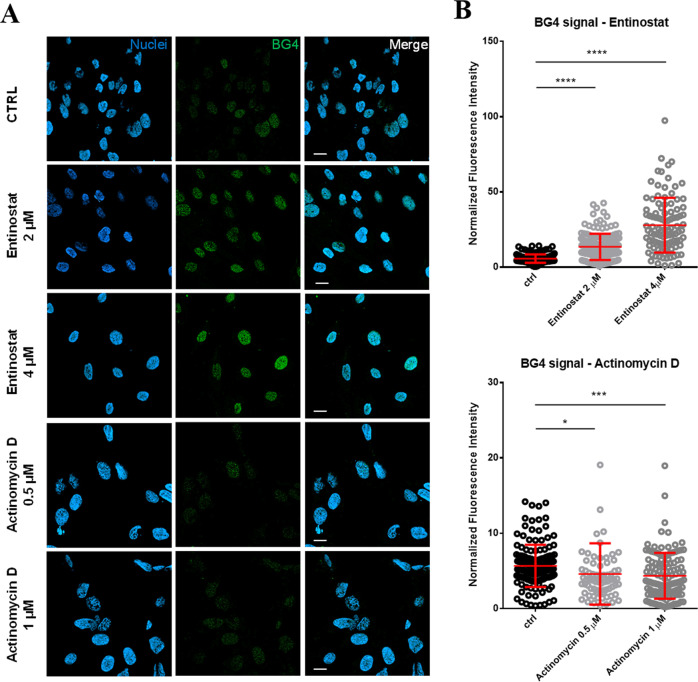
“In vitro experiments have suggested transcription can lead to G4 folding (21); however, G4s are still observed in cells when transcription is inhibited (22, 23).”
G-Quadruplexes and Their Ligands: Biophysical Methods to Unravel G-Quadruplex/Ligand Interactions
Santos, T. A. B. D., Salgado, G. F. J., Cabrita, E. J., & Cruz, C. (2021) · Pharmaceuticals · doi:10.3390/ph14080769 · Cited by 143
“The location of those G4 structures was revealed using an antibodybased G4 chromatin immunoprecipitation sequencing (G4 ChIP–seq) approach [21], and suggests that they play a crucial role in critical cellular processes such as DNA replication [29,30], DNA damage repair [26], transcription [22,23], translation [31] and…”
Background
Metadata
- Authors
- Lago, S., Nadai, M., Cernilogar, F. M., Kazerani, M., Domíniguez Moreno, H., Schotta, G., & Richter, S. N.
- Affiliations
- University of Padua (IT)
- Ludwig-Maximilians-Universität München (DE)
- Corresponding author
- Lago, Sara
- Schotta, Gunnar
- Richter, Sara N.
- Venue
- Nature Communications
- Published
- 2021-06-23
- Volume
- 12
- Issue
- 1
- Pages
- 3885-3885
- ISSN
- 2041-1723 (ISSN-L)
- PMC
- PMC8222265
- OpenAlex
- W3173676343
- Cited by
- 269
- References
- 97
- Citations by year
- 2026: 26 · 2025: 53 · 2024: 72 · 2023: 65 · 2022: 41 · 2021: 10
- FWCI
- 14.76
- Type
- journal article
- Language
- en
- Open access
- gold
- doi.org
- Locations
- Nature Communications (publishedVersion, cc-by)
- bioRxiv (Cold Spring Harbor Laboratory) (acceptedVersion, cc-by-nc)
- PubMed Central (publishedVersion, cc-by)
- PubMed (publishedVersion)
- RePEc: Research Papers in Economics (submittedVersion)
- DOAJ (DOAJ: Directory of Open Access Journals) (submittedVersion, cc-by-sa)
- Padua Research Archive (University of Padova) (submittedVersion, cc-by)
- Funders
- Deutsche Forschungsgemeinschaft (213249687, SFB1064, SFB1321, 329628492)
- Associazione Italiana per la Ricerca sul Cancro (21850)
- Fondazione Italiana per la Ricerca sul Cancro (21850)
- Topics
- Life Sciences › Biochemistry, Genetics and Molecular Biology › Molecular Biology › DNA and Nucleic Acid Chemistry
- Life Sciences › Biochemistry, Genetics and Molecular Biology › Molecular Biology › Genomics and Chromatin Dynamics
- Life Sciences › Biochemistry, Genetics and Molecular Biology › Molecular Biology › Epigenetics and DNA Methylation
- Keywords
- G-quadruplex, transcription factors, cell type-specific transcriptome, epigenetic regulation of transcription, AP-1, Sp1, keratinocytes, chromatin accessibility
- MeSH terms
- Base Sequence, Binding Sites, Cell Line, DNA, Humans, Nucleic Acid Conformation, Promoter Regions, Genetic, Protein Binding, Transcription Factors, Sp1 Transcription Factor, Transcription Factor AP-1, Gene Expression Profiling, Cell Line, Tumor, G-Quadruplexes, Transcriptome
About these checks
Registry, retraction, Cites and statistics results are computed, not judged, with one exception: a printed reference that no index lists is read once by a model before it counts as a citation error. Claims are extracted by a model and kept only when their quote appears verbatim in the text; each cited source is then checked, with a model’s help, for whether it says what the claim relies on. Those verdicts can be wrong — read the claim’s quote and the cited source before relying on one.
Statistics and arithmetic are recomputed, not judged.
Confidence bands are shown only for fields calibrated on our annotated test set. None is calibrated yet, so no band is shown.
What counts as a claim ›How we measure confidence ›How we check this ›
Are you an author, or do you see a problem with this page? Request a review
