

The DOI matches its Crossref record; 91 of the 91 references it cites were found in a registry or an index.
Microfluidic device with brain extracellular matrix promotes structural and functional maturation of human brain organoids
Open accessAbstract
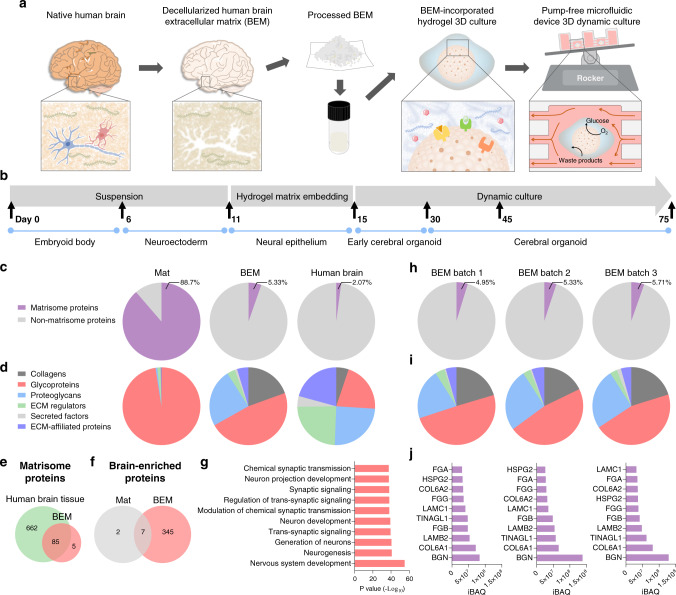
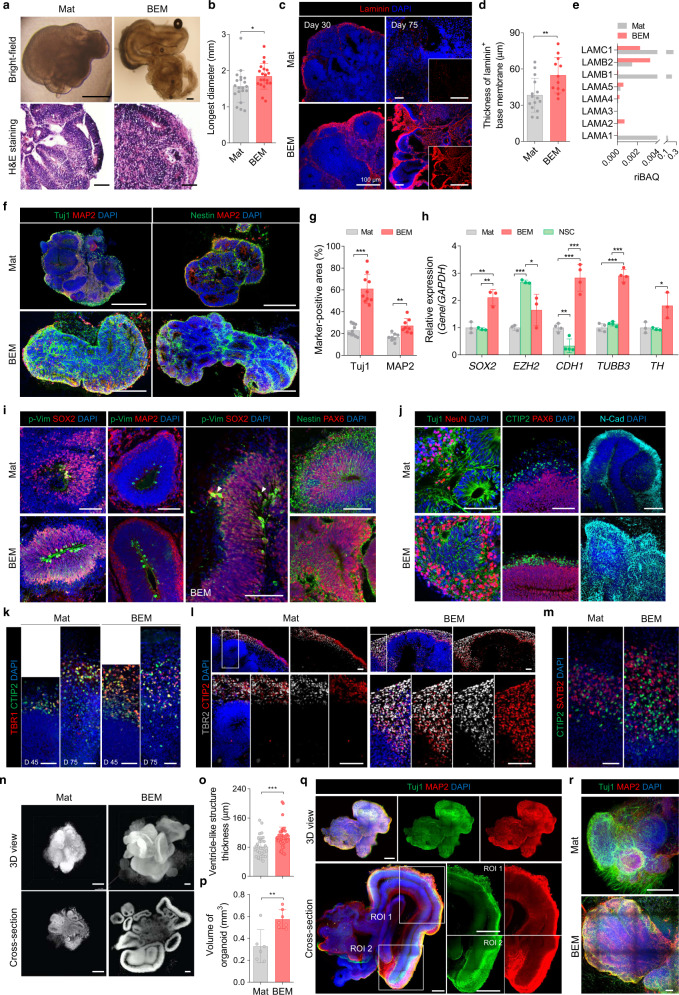
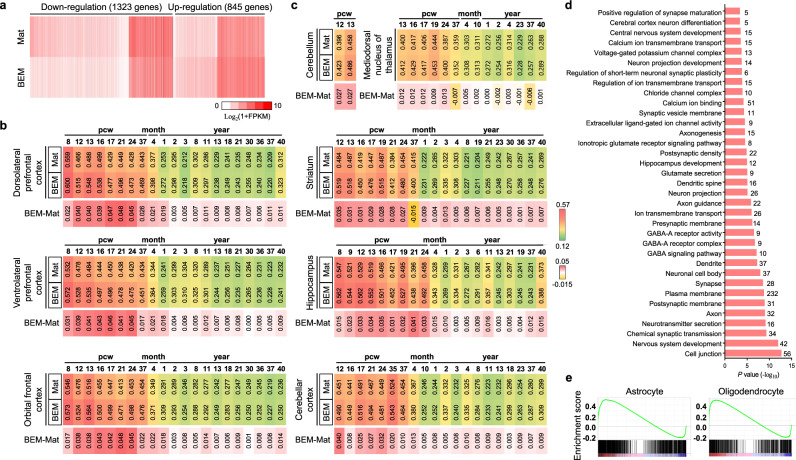
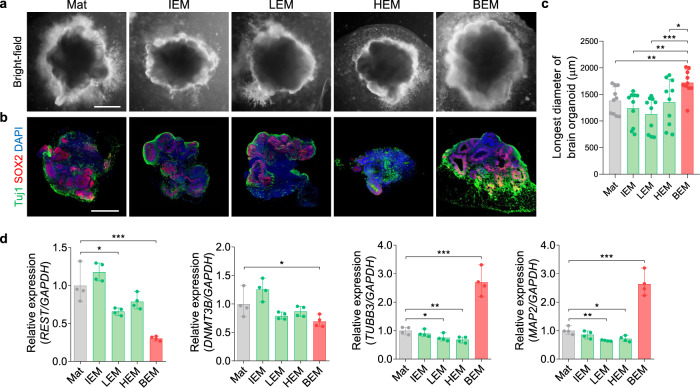
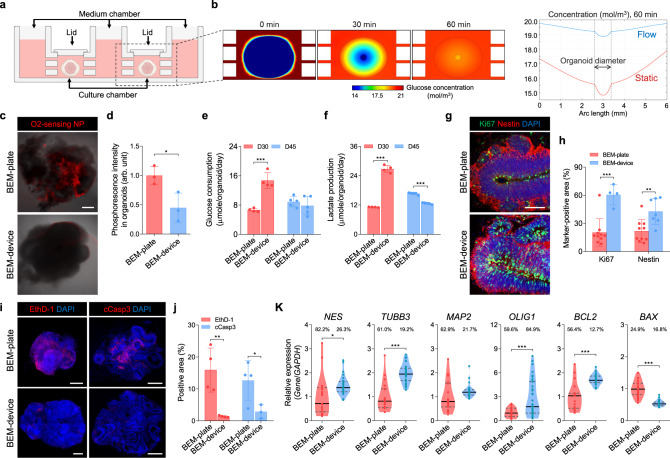
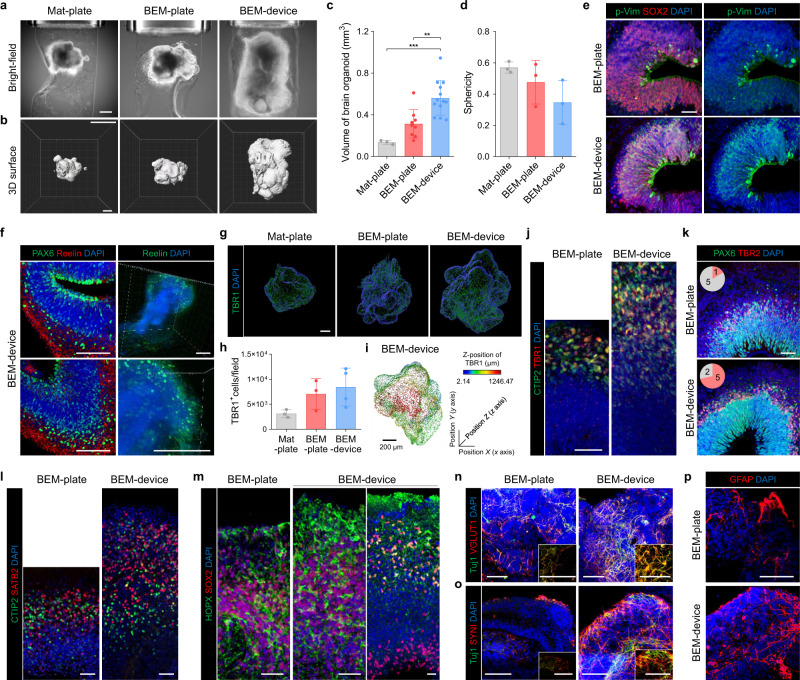
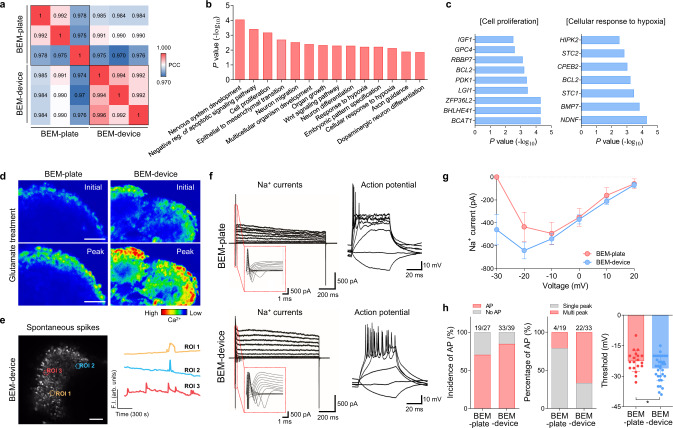
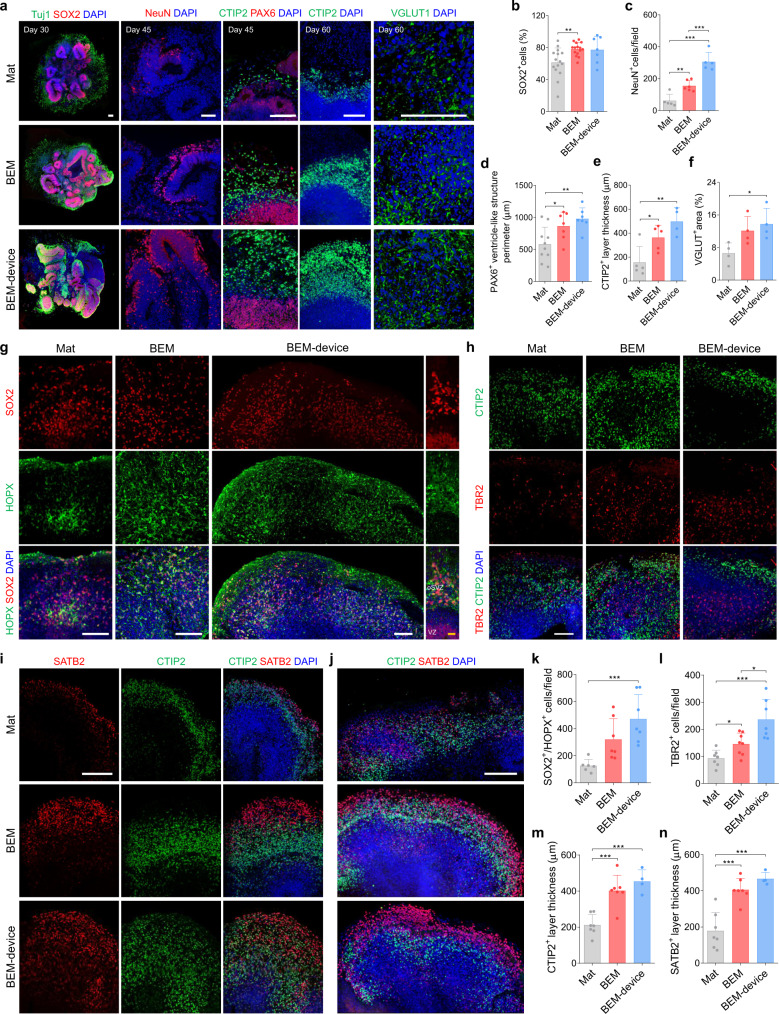
Brain organoids derived from human pluripotent stem cells provide a highly valuable in vitro model to recapitulate human brain development and neurological diseases. However, the current systems for brain organoid culture require further improvement for the reliable production of high-quality organoids. Here, we demonstrate two engineering elements to improve human brain organoid culture, (1) a human brain extracellular matrix to provide brain-specific cues and (2) a microfluidic device with periodic flow to improve the survival and reduce the variability of organoids. A three-dimensional culture modified with brain extracellular matrix significantly enhanced neurogenesis in developing brain organoids from human induced pluripotent stem cells. Cortical layer development, volumetric augmentation, and electrophysiological function of human brain organoids were further improved in a reproducible manner by dynamic culture in microfluidic chamber devices. Our engineering concept of reconstituting brain-mimetic microenvironments facilitates the development of a reliable culture platform for brain organoids, enabling effective modeling and drug development for human brain diseases.
Overview
The claims and statistics of this paper haven’t been checked yet.
Run the check — free, no account needed. It reads the open-access text and checks the sources it cites.
Integrity signals
Registry
Cites
Statistics
Figures
Verification
Claims the paper makes
The claims and statistics of this paper haven’t been checked yet.
Run the check — free, no account needed. It reads the open-access text and checks the sources it cites.
Claims other papers make about this one
Each is checked against this paper’s own text: does it say what the citing paper says it does?
The source backs part of the claim, not all of it — or backs it for a different population, condition or comparison.
In the citing paper
“While many other organoid models, including brain[13], intestinal [14], mammary gland [15], and retinal organoids [16], employ 3D ECM-based hydrogels to induce complex tissue architecture that cannot be achieved in ECM-free floating culture, the same has not been explored for skin yet.”
From Efficient Generation of Skin Organoids from Pluripotent Cells via Defined Extracellular Matrix Cues and Morphogen Gradients in a Spindle‐Shaped Microfluidic Device (2024) · cites this paper as [13]
Experimental — accuracy not yet measured
Self-check
Percentages, sums and reported differences re-computed from the paper’s own numbers.
The self-check needs the paper’s full text.
Citations
Cites
Gene Ontology: tool for the unification of biology
Ashburner, M., Ball, C. A., Blake, J. A., Botstein, D., Butler, H., Cherry, J. M., Davis, A. P., Dolinski, K., Dwight, S. S., Eppig, J. T., et al. (2000) · Nature Genetics · doi:10.1038/75556 · Cited by 43,206
Tissue-based map of the human proteome
Uhlén, M., Fagerberg, L., Hallström, B. M., Lindskog, C., Oksvold, P., Mardinoglu, A., Sivertsson, Å., Kampf, C., Sjöstedt, E., Asplund, A., et al. (2015) · Science · doi:10.1126/science.1260419 · Cited by 15,286
The Molecular Signatures Database Hallmark Gene Set Collection
Liberzon, A., Birger, C., Thorvaldsdóttir, H., Ghandi, M., Mesirov, J. P., & Tamayo, P. (2015) · Cell Systems · doi:10.1016/j.cels.2015.12.004 · Cited by 13,807
Shrestha, S., & Offer, S. M. (2016) · Medical Epigenetics · doi:10.1159/000444713 · Cited by 8,951
Pérez-Riverol, Y., Csordas, A., Bai, J.-W., Bernal-Llinares, M., Hewapathirana, S., Kundu, D. J., Inuganti, A., Griss, J., Mayer, G., Eisenacher, M., et al. (2018) · Nucleic Acids Res. · doi:10.1093/nar/gky1106 · Cited by 6,216
Cerebral organoids model human brain development and microcephaly
Lancaster, M. A., Renner, M., Martin, C.-A., Wenzel, D., Bicknell, L. S., Hurles, M. E., Homfray, T., Penninger, J. M., Jackson, A. P., & Knoblich, J. A. (2013) · Nature · doi:10.1038/nature12517 · Cited by 5,372
The Gene Ontology resource: enriching a GOld mine
The Gene Ontology Consortium, Carbon, S., Douglass, E., Good, B. M., Unni, D. R., Harris, N. L., Mungall, C. J., Basu, S., Chisholm, R. L., Dodson, R. J., et al. (2021) · Nucleic Acids Research · doi:10.1093/nar/gkaa1113 · Cited by 3,555
Organoid Models and Applications in Biomedical Research
Xinaris, C., Brizi, V., & Remuzzi, G. (2015) · The Nephron journals/Nephron journals · doi:10.1159/000433566 · Cited by 3,519
Mi, H., Muruganujan, A., Ebert, D., Huang, X., & Thomas, P. D. (2018) · Nucleic Acids Research · doi:10.1093/nar/gky1038 · Cited by 3,030
A draft map of the human proteome
Kim, M.-S., Pinto, S. M., Getnet, D., Nirujogi, R. S., Manda, S. S., Chaerkady, R., Madugundu, A. K., Kelkar, D. S., Isserlin, R., Jain, S., et al. (2014) · Nature · doi:10.1038/nature13302 · Cited by 2,198
Cited by
Sorted by citations
Organoids: The current status and biomedical applications
Yang, S., Hu, H., Kung, H., Zou, R.-Q., Dai, Y.-S., Hu, Y.-F., Wang, T., Lv, T., Yu, J., & Li, F. (2023) · MedComm · doi:10.1002/mco2.274 · Cited by 300
Three-Dimensional Cell Cultures: The Bridge between In Vitro and In Vivo Models
Urzì, O., Gasparro, R., Costanzo, E., Luca, A. D., Giavaresi, G., Fontana, S., & Alessandro, R. (2023) · International Journal of Molecular Sciences · doi:10.3390/ijms241512046 · Cited by 258
Kim, W., Gwon, Y., Park, S., Kim, H., & Kim, J. (2022) · Bioactive Materials · doi:10.1016/j.bioactmat.2022.03.039 · Cited by 216
Self-citationShell microelectrode arrays (MEAs) for brain organoids
Huang, Q., Tang, B.-H., Romero, J. C., Yang, Y., Elsayed, S. K., Pahapale, G. J., Lee, T.-J., Pantoja, I. E. M., Han, F., Berlinicke, C. J., et al. (2022) · bioRxiv · doi:10.1126/sciadv.abq5031 · Cited by 195
Microfluidic organoids-on-a-chip: The future of human models
Saorin, G., Caligiuri, I., & Rizzolio, F. (2022) · Seminars in Cell and Developmental Biology · doi:10.1016/j.semcdb.2022.10.001 · Cited by 213
Li, Q., Yu, H., Zhao, F., Cao, C., Wu, T., Fan, Y., Ao, Y., & Hu, X. (2023) · Advanced Science · doi:10.1002/advs.202303650 · Cited by 186
Microglia-containing human brain organoids for the study of brain development and pathology
Zhang, W., Jiang, J., Xu, Z., Yan, H., Tang, B., Liu, C., Chen, C., & Meng, Q. (2022) · Molecular Psychiatry · doi:10.1038/s41380-022-01892-1 · Cited by 195
Amirifar, L., Shamloo, A., Nasiri, R., de Barros, N. R., Wang, Z. Z., Unluturk, B. D., Libanori, A., Ievglevskyi, O., Diltemiz, S. E., Sances, S., et al. (2022) · Biomaterials · doi:10.1016/j.biomaterials.2022.121531 · Cited by 151
Modelling human brain development and disease with organoids
Birtele, M., Lancaster, M. A., & Quadrato, G. (2024) · Nature Reviews Molecular Cell Biology · doi:10.1038/s41580-024-00804-1 · Cited by 177
Human organoids-on-chips for biomedical research and applications
Wang, H., Ning, X., Zhao, F. H., Zhao, H., & Li, D. (2024) · Theranostics · doi:10.7150/thno.90492 · Cited by 148
Bioengineering methods for vascularizing organoids
Nwokoye, P. N., & Abilez, O. J. (2024) · Cell Reports Methods · doi:10.1016/j.crmeth.2024.100779 · Cited by 156
Advances in Spheroids and Organoids on a Chip
Fang, G., Chen, Y., Lu, H., & Jin, D. (2023) · Advanced Functional Materials · doi:10.1002/adfm.202215043 · Cited by 135
Papamichail, L., Koch, L. S., Veerman, D., Broersen, K., & van der Meer, A. D. (2025) · Frontiers in Bioengineering and Biotechnology · doi:10.3389/fbioe.2025.1515340 · Cited by 120
Miao, Y., Chen, Y., Luo, J., Liu, X., Yang, Q., Shi, X., & Wang, Y. (2022) · Bioactive Materials · doi:10.1016/j.bioactmat.2022.08.005 · Cited by 118
Neuropathogenesis-on-chips for neurodegenerative diseases
Amartumur, S., Nguyen, H. M., Huynh, T., Kim, T. S., Woo, R., Oh, E., Kim, K. K., Lee, L. P., & Heo, C. (2024) · Nature Communications · doi:10.1038/s41467-024-46554-8 · Cited by 131
Engineering the Extracellular Matrix for Organoid Culture
Heo, J. H., Kang, D., Seo, S. J., & Jin, Y. (2022) · International Journal of Stem Cells · doi:10.15283/ijsc21190 · Cited by 116
Self-citationHuman fetal brain self-organizes into long-term expanding organoids
Hendriks, D. F. G., Pagliaro, A., Andreatta, F., Ma, Z., van Giessen, J., Massalini, S., López‐Iglesias, C., van Son, G. J. F., DeMartino, J., Damen, M. J. A., et al. (2024) · Cell · doi:10.1016/j.cell.2023.12.012 · Cited by 108
Advanced 3D imaging and organoid bioprinting for biomedical research and therapeutic applications
Maharjan, S., Ma, C., Singh, B., Kang, H., Orive, G., Yao, J., & Zhang, Y. S. (2024) · Advanced Drug Delivery Reviews · doi:10.1016/j.addr.2024.115237 · Cited by 107
Self-citationMin, S., Kim, S., Sim, W., Choi, Y. S., Joo, H., Park, J.-H., Lee, S.-J., Kim, H., Lee, M. J., Jeong, I., et al. (2024) · Nature Communications · doi:10.1038/s41467-024-46928-y · Cited by 107
Self-citationMagnetic nanoparticles for ferroptosis cancer therapy with diagnostic imaging
Ko, M. J., Min, S., Hong, H., Yoo, W., Joo, J., Zhang, Y. S., Kang, H., & Kim, D. (2023) · Bioactive Materials · doi:10.1016/j.bioactmat.2023.09.015 · Cited by 101
Self-citationSun, Z., Chen, Z., Yin, M., Wu, X., Guo, B., Cheng, X., Quan, R., Sun, Y., Zhang, Q., Fan, Y., et al. (2024) · Cell stem cell · doi:10.1016/j.stem.2024.03.007 · Cited by 102
Choi, Y.-M., Lee, H., Ann, M., Song, M., Rheey, J., & Jang, J. (2023) · Biofabrication · doi:10.1088/1758-5090/acd95f · Cited by 94
Self-citation3d organ-on-a-chip: the convergence of microphysiological systems and organoids
Baptista, L. S., Porrini, C., Kronemberger, G. S., Kelly, D. J., & Perrault, C. M. (2022) · Frontiers in Cell and Developmental Biology · doi:10.3389/fcell.2022.1043117 · Cited by 90
“, 2021) or even with biomaterials derived from decellularized extracellular matrix (Cho et al., 2021; Kim et al., 2022).”
BackgroundEngineering In vitro Models: Bioprinting of Organoids with Artificial Intelligence
Lee, H. (2023) · Cyborg and Bionic Systems · doi:10.34133/cbsystems.0018 · Cited by 93
Microfluidic high-throughput 3D cell culture
Ko, J., Park, D., Lee, J., Jung, S., Baek, K., Sung, K. E., Lee, J., & Jeon, N. L. (2024) · Nature Reviews Bioengineering · doi:10.1038/s44222-024-00163-8 · Cited by 88
Self-citationMicrofluidics for Neuronal Cell and Circuit Engineering
Habibey, R., Arias, J. E. R., Striebel, J., & Busskamp, V. (2022) · Chemical Reviews · doi:10.1021/acs.chemrev.2c00212 · Cited by 88
Advanced human developmental toxicity and teratogenicity assessment using human organoid models
Li, M., Gong, J., Gao, L., Zou, T., Kang, J., & Xu, H. (2022) · Ecotoxicology and Environmental Safety · doi:10.1016/j.ecoenv.2022.113429 · Cited by 84
Kim, S.-H., & Chang, M. (2023) · International Journal of Molecular Sciences · doi:10.3390/ijms241512528 · Cited by 96
Self-citationCao, S.-Y., Yang, D., Huang, Z., Lin, Y., Wu, H., Chang, L., Luo, C., Xu, Y., Liu, Y., & Zhu, D. (2023) · npj Regenerative Medicine · doi:10.1038/s41536-023-00301-7 · Cited by 91
Limitations of human brain organoids to study neurodegenerative diseases: a manual to survive
Urrestizala-Arenaza, N., Cerchio, S., Cavaliere, F., & Magliaro, C. (2024) · Frontiers in Cellular Neuroscience · doi:10.3389/fncel.2024.1419526 · Cited by 80
Rigor and reproducibility in human brain organoid research: Where we are and where we need to go
Sandoval, S. O., Cappuccio, G., Kruth, K., Osenberg, S., Khalil, S. M., Méndez-Albelo, N. M., Padmanabhan, K., Wang, D., Niciu, M. J., Bhattacharyya, A., et al. (2024) · Stem Cell Reports · doi:10.1016/j.stemcr.2024.04.008 · Cited by 80
From 2D to 3D and beyond: the evolution and impact of in vitro tumor models in cancer research
Rauner, G., Gupta, P. B., & Kuperwasser, C. (2025) · Nature Methods · doi:10.1038/s41592-025-02769-1 · Cited by 82
Brain organoids, consciousness, ethics and moral status
Jeziorski, J. J., Brandt, R., Evans, J. H., Campana, W. M., KALICHMAN, M. W., Thompson, E. T., Goldstein, L. S. B., Koch, C., & Muotri, A. R. (2022) · Seminars in Cell and Developmental Biology · doi:10.1016/j.semcdb.2022.03.020 · Cited by 71
Human Brain Organoids-on-Chip: Advances, Challenges, and Perspectives for Preclinical Applications
Castiglione, H., Vigneron, P.-A., Baquerre, C., Yates, F., Rontard, J., & Honegger, T. (2022) · Pharmaceutics · doi:10.3390/pharmaceutics14112301 · Cited by 73
Saglam‐Metiner, P., Devamoglu, U., Filiz, Y., Akbari, S., Beceren, G., Bağca, B. G., Yaldiz, B., Yanasik, S., Avcı, Ç. B., Erdal, E., et al. (2023) · Communications Biology · doi:10.1038/s42003-023-04547-1 · Cited by 69
Pushing the boundaries of brain organoids to study Alzheimer’s disease
Cerneckis, J., Bu, G., & Shi, Y. (2023) · Trends in Molecular Medicine · doi:10.1016/j.molmed.2023.05.007 · Cited by 63
Advances in Microfluidic Technologies in Organoid Research
Liu, H., Gan, Z., Qin, X., Wang, Y., & Qin, J. (2023) · Advanced Healthcare Materials · doi:10.1002/adhm.202302686 · Cited by 68
Microfluidic Platforms for Real‐Time In Situ Monitoring of Biomarkers for Cellular Processes
Lou, C., Yang, H., Hou, Y., Huang, H., Qiu, J., Wang, C., Sang, Y., Liu, H., & Han, L. G. (2023) · Advanced Materials · doi:10.1002/adma.202307051 · Cited by 61
Kim, D., Lim, H., Youn, J., Park, T., & Kim, D. S. (2024) · Nature Communications · doi:10.1038/s41467-024-53073-z · Cited by 66
Self-citationAdvancing Tissue Decellularized Hydrogels for Engineering Human Organoids
Moura, B. S., Monteiro, M. V., Ferreira, L. P., Lavrador, P., Gaspar, V. M., & Mano, J. F. (2022) · Advanced Functional Materials · doi:10.1002/adfm.202202825 · Cited by 64
Standardizing designed and emergent quantitative features in microphysiological systems
Nahon, D. M., Moerkens, R., Aydoğmuş, H., Lendemeijer, B., Martínez-Silgado, A., Stein, J. M., Dostanić, M., Frimat, J., Gontan, C., de Graaf, M. N. S., et al. (2024) · Nature Biomedical Engineering · doi:10.1038/s41551-024-01236-0 · Cited by 65
Multimodal therapy strategy based on a bioactive hydrogel for repair of spinal cord injury
Roh, E. J., Kim, D., Kim, J. H., Lim, C. S., Choi, H., Kwon, S. Y., Park, S. Y., Kim, J. Y., Kim, H., Hwang, D., et al. (2023) · Biomaterials · doi:10.1016/j.biomaterials.2023.122160 · Cited by 60
Self-citationHuman 3D brain organoids: steering the demolecularization of brain and neurological diseases
Adlakha, Y. K. (2023) · Cell Death Discovery · doi:10.1038/s41420-023-01523-w · Cited by 63
Long, K. R., & Huttner, W. Β. (2022) · Frontiers in Cellular Neuroscience · doi:10.3389/fncel.2021.804649 · Cited by 58
Advanced lung organoids for respiratory system and pulmonary disease modeling
Joo, H., Min, S., & Cho, S. (2024) · Journal of Tissue Engineering · doi:10.1177/20417314241232502 · Cited by 66
Self-citation3D hydrogel models of the neurovascular unit to investigate blood–brain barrier dysfunction
Potjewyd, G., Kellett, K. A. B., & Hooper, N. M. (2021) · Neuronal Signaling · doi:10.1042/ns20210027 · Cited by 53
Engineered organoids for biomedical applications
de Barros, N. R., Wang, C., Maity, S., Peirsman, A., Nasiri, R., Herland, A., Ermis, M., Kawakita, S., de Carvalho, B. G., Kouchehbaghi, N. H., et al. (2023) · Advanced Drug Delivery Reviews · doi:10.1016/j.addr.2023.115142 · Cited by 60
Self-citationSpatial confinement toward creating artificial living systems
Shang, L., Ye, F., Li, M., & Zhao, Y. (2022) · Chemical Society Reviews · doi:10.1039/d1cs01025e · Cited by 54
Periodic Flows in Microfluidics
Mudugamuwa, A., Roshan, U., Hettiarachchi, S., Cha, H., Musharaf, H. M., Kang, X., Trịnh, Q. T., Xia, H., Nguyen, N., & Zhang, J. (2024) · Small · doi:10.1002/smll.202404685 · Cited by 53
Biomimetic Alveolus-on-a-Chip for SARS-CoV-2 Infection Recapitulation
Cao, T., Shao, C., Yu, X., Xie, R., Yang, C., Sun, Y., Yang, S., He, W., Xu, Y., Fan, Q., et al. (2022) · Research · doi:10.34133/2022/9819154 · Cited by 53
Organ-on-a-chip microengineering for bio-mimicking disease models and revolutionizing drug discovery
Ahmed, T. (2022) · Biosensors and Bioelectronics X · doi:10.1016/j.biosx.2022.100194 · Cited by 56
Vascularized human brain organoid on-chip
Tan, S. Y., Feng, X., Cheng, L. K., & Wu, A. R. (2023) · Lab on a Chip · doi:10.1039/d2lc01109c · Cited by 52
Brain organoid protocols and limitations
Zhao, H., & Haddad, G. G. (2024) · Frontiers in Cellular Neuroscience · doi:10.3389/fncel.2024.1351734 · Cited by 60
Organoids from pluripotent stem cells and human tissues: When two cultures meet each other
Artegiani, B., & Hendriks, D. F. G. (2025) · Developmental Cell · doi:10.1016/j.devcel.2025.01.005 · Cited by 54
Organoid Imaging: Seeing Development and Function
Keshara, R., Kim, Y. H., & Grapin‐Botton, A. (2022) · Annual Review of Cell and Developmental Biology · doi:10.1146/annurev-cellbio-120320-035146 · Cited by 52
Self-citationAcharya, P., Choi, N. Y., Shrestha, S., Jeong, S., & Lee, M. (2023) · Biotechnology and Bioengineering · doi:10.1002/bit.28606 · Cited by 50
Self-citationSoto, A., Spongberg, C. V., Martinino, A., & Giovinazzo, F. (2024) · Biomedicines · doi:10.3390/biomedicines12020397 · Cited by 50
Fanizza, F., Campanile, M., Forloni, G., Giordano, C., & Albani, D. (2022) · Journal of Tissue Engineering · doi:10.1177/20417314221095339 · Cited by 55
Engineering the 3D structure of organoids
Moss, S. P., Bakırcı, E., & Feinberg, A. W. (2024) · Stem Cell Reports · doi:10.1016/j.stemcr.2024.11.009 · Cited by 52
Kim, E., Jeong, E., Hong, Y., Jeong, I., Kim, J.-H., Kwon, Y. W., Park, Y., Lee, J., Choi, S., Kim, J., et al. (2025) · Nature Communications · doi:10.1038/s41467-024-55752-3 · Cited by 67
Self-citationSong, H., Jiang, H., Hu, W., Hai, Y., Cai, Y., Li, H., Liao, Y. R., Huang, Y., Lv, X., Zhang, Y., et al. (2024) · Science Advances · doi:10.1126/sciadv.adl3511 · Cited by 49
Vascular network-inspired diffusible scaffolds for engineering functional midbrain organoids
Cai, H., Tian, C., Chen, L., Yang, Y., Sun, A. X., McCracken, K. W., Tchieu, J. H., Gu, M., Mackie, K., & Guo, F. (2025) · Cell stem cell · doi:10.1016/j.stem.2025.02.010 · Cited by 58
Current progress of cerebral organoids for modeling Alzheimer's disease origins and mechanisms
Sreenivasamurthy, S., Laul, M., Zhao, N., Kim, T., & Zhu, D. (2022) · Bioengineering & Translational Medicine · doi:10.1002/btm2.10378 · Cited by 49
Engineered biomimetic hydrogels for organoids
Li, Y., Saiding, Q., Wang, Z., & Cui, W. (2023) · Progress in Materials Science · doi:10.1016/j.pmatsci.2023.101216 · Cited by 46
Toward the next generation of vascularized human neural organoids
Li, M., Gao, L., Zhao, L., Zou, T., & Xu, H. (2022) · Medicinal Research Reviews · doi:10.1002/med.21922 · Cited by 45
Jin, Y., Kim, H., Min, S., Choi, Y. S., Seo, S. J., Jeong, E., Kim, S. K., Lee, H., Jo, S.-H., Park, J.-H., et al. (2022) · Science Advances · doi:10.1126/sciadv.abn5768 · Cited by 44
Self-citationKim, H. J., Kim, G., Chi, K. Y., Kim, H., Jang, Y. J., Jo, S., Lee, J., Lee, Y., Woo, D., Han, C., et al. (2023) · Stem Cell Research & Therapy · doi:10.1186/s13287-023-03235-5 · Cited by 45
Self-citationFunctional bioengineered models of the central nervous system
Rouleau, N., Murugan, N. J., & Kaplan, D. L. (2023) · Nature Reviews Bioengineering · doi:10.1038/s44222-023-00027-7 · Cited by 49
Applications of organoid technology to brain tumors
Wen, J., Liu, F., Cheng, Q., Weygant, N., Liang, X., Fan, F., Li, C., Zhang, L., & Liu, Z. (2023) · CNS Neuroscience & Therapeutics · doi:10.1111/cns.14272 · Cited by 44
Kjar, A., Haschert, M. R., Zepeda, J. C., Simmons, A. J., Yates, A., Chavarría, D., Fernandez, M., Robertson, G. L., Abdulrahman, A. M., Kim, H., et al. (2024) · Cell Reports · doi:10.1016/j.celrep.2024.114874 · Cited by 43
Silk scaffolding drives self-assembly of functional and mature human brain organoids
Sozzi, E., Kajtez, J., Bruzelius, A., Wesseler, M. F., Nilsson, F., Birtele, M., Larsen, N. B., Ottosson, D. R., Storm, P., Parmar, M., et al. (2022) · Frontiers in Cell and Developmental Biology · doi:10.3389/fcell.2022.1023279 · Cited by 41
A 3D bioprinted cortical organoid platform for modeling human brain development
Cadena, M. A., Sing, A., Taylor, K., Jin, L., Ning, L., Salar Amoli, M., Singh, Y., Lanjewar, S. N., Tomov, M. L., Serpooshan, V., et al. (2024) · Advanced Healthcare Materials · doi:10.1002/adhm.202401603 · Cited by 39
Organs-on-Chips Platforms Are Everywhere: A Zoom on Biomedical Investigation
Zommiti, M., Connil, N., Tahrioui, A., Groboillot, A., Barbey, C., Konto‐Ghiorghi, Y., Lesouhaitier, O., Chevalier, S., & Feuilloley, M. G. J. (2022) · Bioengineering · doi:10.3390/bioengineering9110646 · Cited by 40
Engineering brain-on-a-chip platforms
Servais, B., Mahmoudi, N., Gautam, V., Tong, W., Ibbotson, M. R., Nisbet, D. R., & Collins, D. J. (2024) · Nature Reviews Bioengineering · doi:10.1038/s44222-024-00184-3 · Cited by 44
Thio, S. K., Bae, S. W., & Park, S.-Y. (2022) · Sensors and Actuators B Chemical · doi:10.1016/j.snb.2022.131543 · Cited by 38
Microfluidic Brain‐on‐a‐Chip: From Key Technology to System Integration and Application
Wang, Z., Zhang, Y., Li, Z., Wang, H., Li, N., & Deng, Y. (2023) · Small · doi:10.1002/smll.202304427 · Cited by 41
Review: 3D cell models for organ-on-a-chip applications
Żuchowska, A., Baranowska, P., Flont, M., Brzózka, Z., & Jastrzębska, E. (2024) · Analytica Chimica Acta · doi:10.1016/j.aca.2024.342413 · Cited by 39
Emerging approaches to enhance human brain organoid physiology
Pagliaro, A., Artegiani, B., & Hendriks, D. F. G. (2025) · Trends in Cell Biology · doi:10.1016/j.tcb.2024.12.001 · Cited by 37
Photonic control of image-guided ferroptosis cancer nanomedicine
Ko, M. J., Yoo, W., Min, S., Zhang, Y. S., Joo, J., Kang, H., & Kim, D. (2023) · Coordination Chemistry Reviews · doi:10.1016/j.ccr.2023.215532 · Cited by 37
Self-citationVascularized organoid-on-a-chip: design, imaging, and analysis
Yu, T., Yang, Q., Peng, B., Gu, Z., & Zhu, D. Y. (2024) · Angiogenesis · doi:10.1007/s10456-024-09905-z · Cited by 35
Exploring human brain development and disease using assembloids
Wu, S., & Nowakowski, T. J. (2025) · Neuron · doi:10.1016/j.neuron.2025.02.010 · Cited by 36
Gong, J., Gong, Y., Zou, T., Zeng, Y., Yang, C., Mo, L., Kang, J., Fan, X., Xu, H., & Yang, J. (2023) · Lab on a Chip · doi:10.1039/d3lc00054k · Cited by 35
The Future of 3D Brain Cultures in Developmental Neurotoxicity Testing
Högberg, H. T., & Smirnova, L. (2022) · Frontiers in Toxicology · doi:10.3389/ftox.2022.808620 · Cited by 38
Recent advancements and future requirements in vascularization of cortical organoids
LaMontagne, E., Muotri, A. R., & Engler, A. J. (2022) · Frontiers in Bioengineering and Biotechnology · doi:10.3389/fbioe.2022.1048731 · Cited by 39
The Role of Extracellular Matrix Components in the Spreading of Pathological Protein Aggregates
Moretto, E., Stuart, S., Surana, S., Vargas, J. N. S., & Schiavo, G. (2022) · Frontiers in Cellular Neuroscience · doi:10.3389/fncel.2022.844211 · Cited by 32
Zhu, Y., Jiang, D., Qiu, Y. L., Liu, X., Bian, Y., Tian, S., Wang, X., Hsia, K. J., Wan, H., Zhuang, L., et al. (2024) · Bioactive Materials · doi:10.1016/j.bioactmat.2024.05.019 · Cited by 35
Decellularized extracellular matrix for organoid and engineered organ culture
Guo, X., Liu, B., Zhang, Y., Cheong, S., Xu, T., Lu, F., & He, Y. (2024) · Journal of Tissue Engineering · doi:10.1177/20417314241300386 · Cited by 44
Jun, Y., Nguyen-Ngoc, K.-V., Sai, S., Bender, R. H. F., Gong, W., Kravets, V. V., Zhu, H., Hatch, C. J., Schlichting, M., Gaetani, R., et al. (2022) · Developmental Cell · doi:10.1016/j.devcel.2025.04.024 · Cited by 43
Advances of Engineered Hydrogel Organoids within the Stem Cell Field: A Systematic Review
Li, Z., Yue, M., Liu, Y., Zhang, P., Qing, J., Liu, H., & Zhou, Y. (2022) · Gels · doi:10.3390/gels8060379 · Cited by 37
Organoid-on-a-chip: Current challenges, trends, and future scope toward medicine
Li, Z., Li, Q., Zhou, C., Lu, K., Liu, Y., Xuan, L., & Wang, X. (2023) · Biomicrofluidics · doi:10.1063/5.0171350 · Cited by 33
Saglam‐Metiner, P., Yıldırım, E., Dincer, C., Başak, O., & Yeşil-Çeliktaş, Ö. (2024) · Microchimica Acta · doi:10.1007/s00604-023-06165-4 · Cited by 37
Models of Herpes Simplex Virus Latency
Canova, P. N., Charron, A. J., & Leib, D. A. (2024) · Viruses · doi:10.3390/v16050747 · Cited by 33
In situ biosensing technologies for an organ-on-a-chip
Kim, J., Kim, J., Jin, Y., & Cho, S. (2023) · Biofabrication · doi:10.1088/1758-5090/aceaae · Cited by 34
Self-citationPramotton, F. M., Spitz, S., & Kamm, R. D. (2024) · Advanced Science · doi:10.1002/advs.202403892 · Cited by 33
Kim, S., Choi, Y. S., Lee, J. S., Jo, S.-H., Kim, Y., & Cho, S. (2021) · Journal of Industrial and Engineering Chemistry · doi:10.1016/j.jiec.2021.11.044 · Cited by 32
Self-citationNanoscale surface coatings and topographies for neural interfaces
Cho, Y., Choi, Y., & Seong, H. (2023) · Acta Biomaterialia · doi:10.1016/j.actbio.2023.12.025 · Cited by 34
Self-citationEngineered biomaterials in stem cell-based regenerative medicine
Zhu, F., Nie, G., & Liu, C. (2023) · Life Medicine · doi:10.1093/lifemedi/lnad027 · Cited by 33
A dive into the bath: embedded 3D bioprinting of freeform in vitro models
Öztürk-Öncel, M. Ö., Leal-Martínez, B. H., Monteiro, R. F., Gomes, M. E., & Domingues, R. M. A. (2023) · Biomaterials Science · doi:10.1039/d3bm00626c · Cited by 32
Advances in gut–brain organ chips
Zhang, Y., Lu, S., Zhuang, J., & Liang, L. (2024) · Cell Proliferation · doi:10.1111/cpr.13724 · Cited by 31
Ma, W., Zheng, Y., Yang, G.-Z., Zhang, H., Lu, M., Ma, H., Wu, C., & Lu, H. (2024) · Materials Horizons · doi:10.1039/d4mh00228h · Cited by 27
Metadata
- Authors
- Cho, A.-N., Jin, Y., An, Y., Kim, J., Choi, Y. S., Lee, J. S., Kim, J., Choi, W.-Y., Koo, D.-J., Yu, W., Chang, G.-E., Kim, D.-Y., Jo, S.-H., Kim, J., Kim, S.-Y., Kim, Y.-G., Kim, J. Y., Choi, N., Cheong, E., Kim, Y.-J., Je, H. S., Kang, H.-C., & Cho, S.-W.
- Affiliations
- Yonsei University (KR)
- Kangwon National University (KR)
- Seoul National University (KR)
- Duke-NUS Medical School (SG)
- Soongsil University (KR)
- Korea Institute of Science and Technology (KR)
- Corresponding author
- Cho, Seung-Woo
- ORCID
- Venue
- Nature Communications
- Published
- 2021-08-05
- Volume
- 12
- Issue
- 1
- Pages
- 4730-4730
- ISSN
- 2041-1723 (ISSN-L)
- PMC
- PMC8342542
- OpenAlex
- W3188744629
- Cited by
- 397
- References
- 91
- Citations by year
- 2026: 77 · 2025: 83 · 2024: 96 · 2023: 66 · 2022: 69 · 2021: 6
- FWCI
- 18.60
- Type
- journal article
- Language
- en
- Open access
- gold
- doi.org
- Locations
- Nature Communications (publishedVersion, cc-by)
- PubMed Central (publishedVersion, cc-by)
- PubMed (publishedVersion)
- RePEc: Research Papers in Economics (submittedVersion)
- DOAJ (DOAJ: Directory of Open Access Journals) (submittedVersion, cc-by-sa)
- YUHSpace (Yonsei University Medical Library) (submittedVersion, cc-by-nc-nd)
- Funders
- National Research Foundation of Korea (2016M3C9A4921712, 2017M3C7A1047659, 2018M3A9H1021382)
- Institute for Basic Science (IBS-R026-D1)
- Samsung (SRFC-TC2003-03)
- Topics
- Life Sciences › Biochemistry, Genetics and Molecular Biology › Molecular Biology › Pluripotent Stem Cells Research
- Physical Sciences › Engineering › Biomedical Engineering › 3D Printing in Biomedical Research
- Life Sciences › Neuroscience › Developmental Neuroscience › Neurogenesis and neuroplasticity mechanisms
- Keywords
- brain organoids, microfluidics, brain extracellular matrix, induced pluripotent stem cells, neurogenesis, organoid maturation, dynamic culture, periodic flow, electrophysiological function, 3D cell culture
- MeSH terms
- Animals, Brain, Culture Media, Extracellular Matrix, Feasibility Studies, Humans, Models, Anatomic, Models, Neurological, Neuroglia, Organ Culture Techniques, Organoids, Swine, Hydrogels, Gene Expression Profiling, Neurogenesis, Electrophysiological Phenomena, Lab-On-A-Chip Devices, Induced Pluripotent Stem Cells
About these checks
Registry, retraction, Cites and statistics results are computed, not judged, with one exception: a printed reference that no index lists is read once by a model before it counts as a citation error. Claims are extracted by a model and kept only when their quote appears verbatim in the text; each cited source is then checked, with a model’s help, for whether it says what the claim relies on. Those verdicts can be wrong — read the claim’s quote and the cited source before relying on one.
Statistics and arithmetic are recomputed, not judged.
Confidence bands are shown only for fields calibrated on our annotated test set. None is calibrated yet, so no band is shown.
What counts as a claim ›How we measure confidence ›How we check this ›
Are you an author, or do you see a problem with this page? Request a review
