

The DOI matches its Crossref record; 91 of the 91 references it cites were found in a registry or an index.
Microfluidic device with brain extracellular matrix promotes structural and functional maturation of human brain organoids
Open accessAbstract
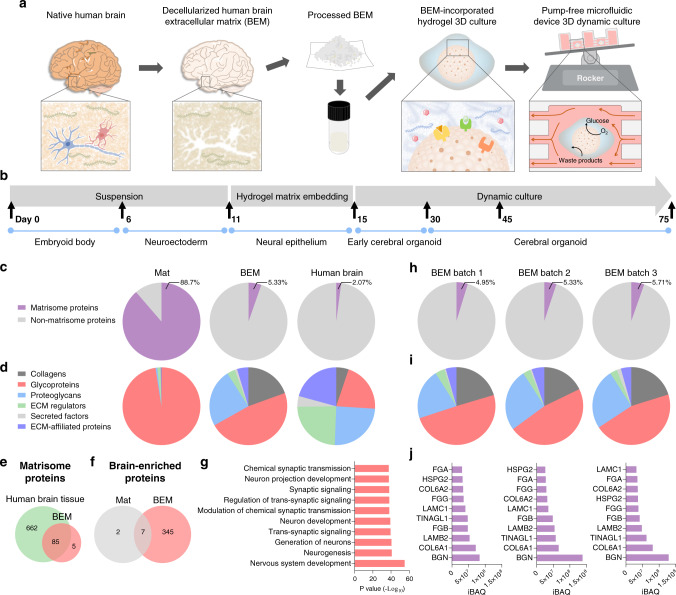
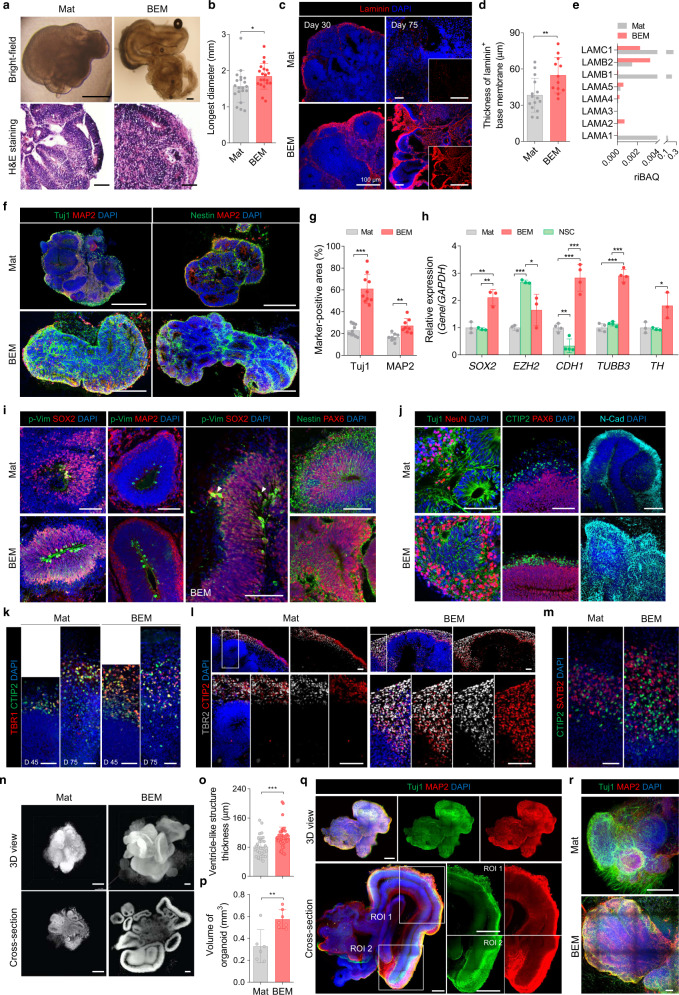
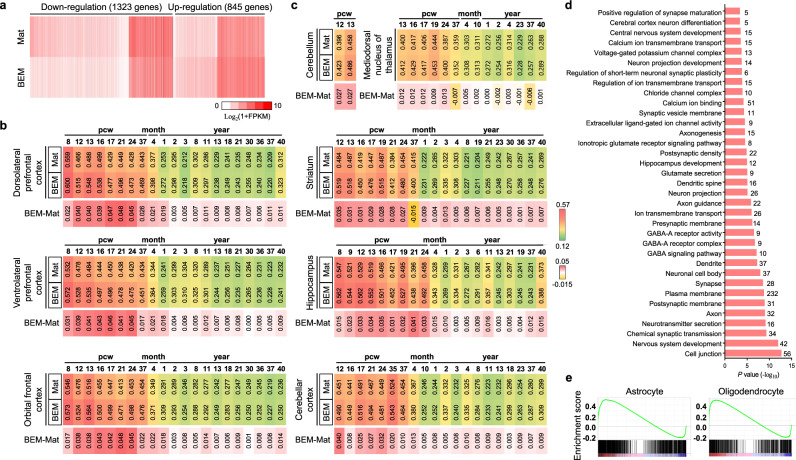
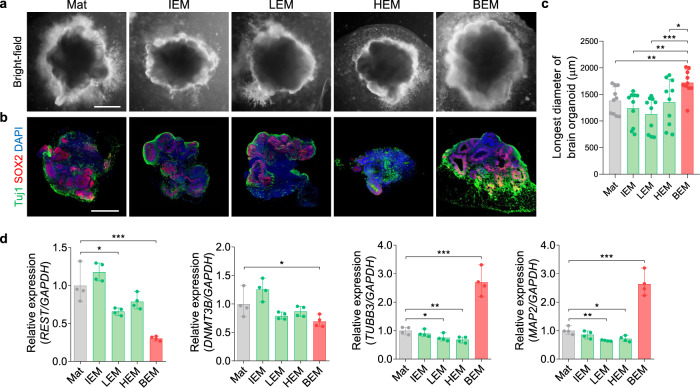
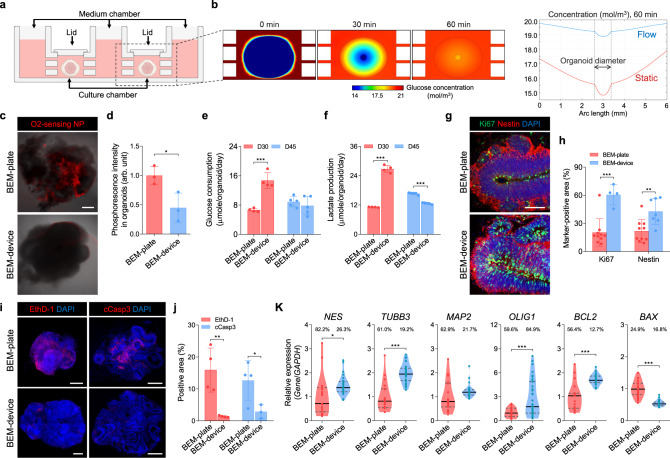
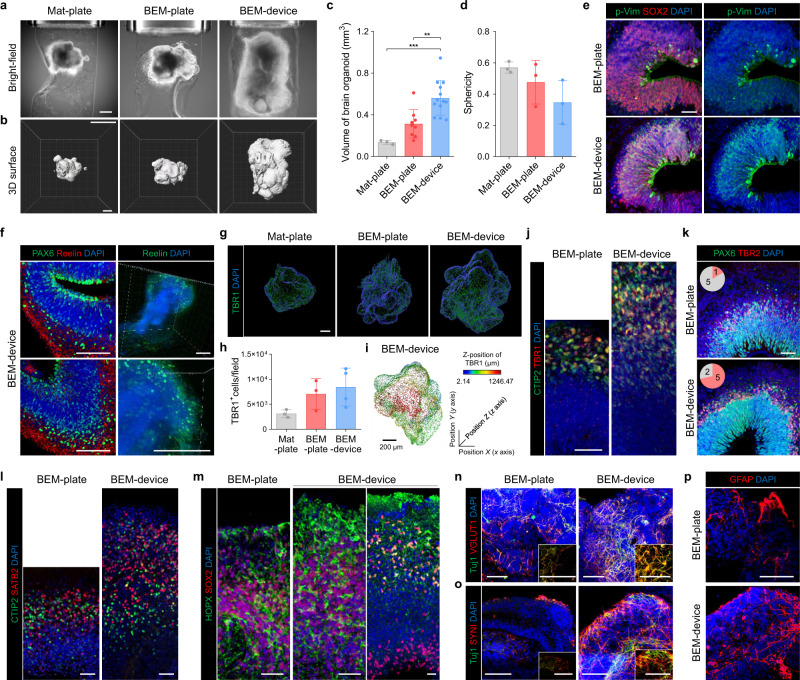
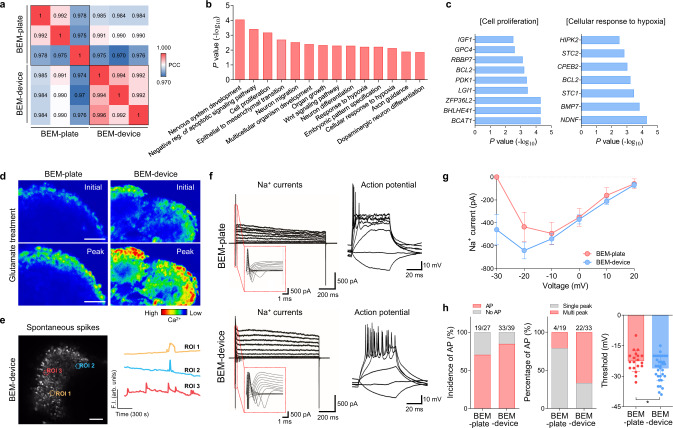
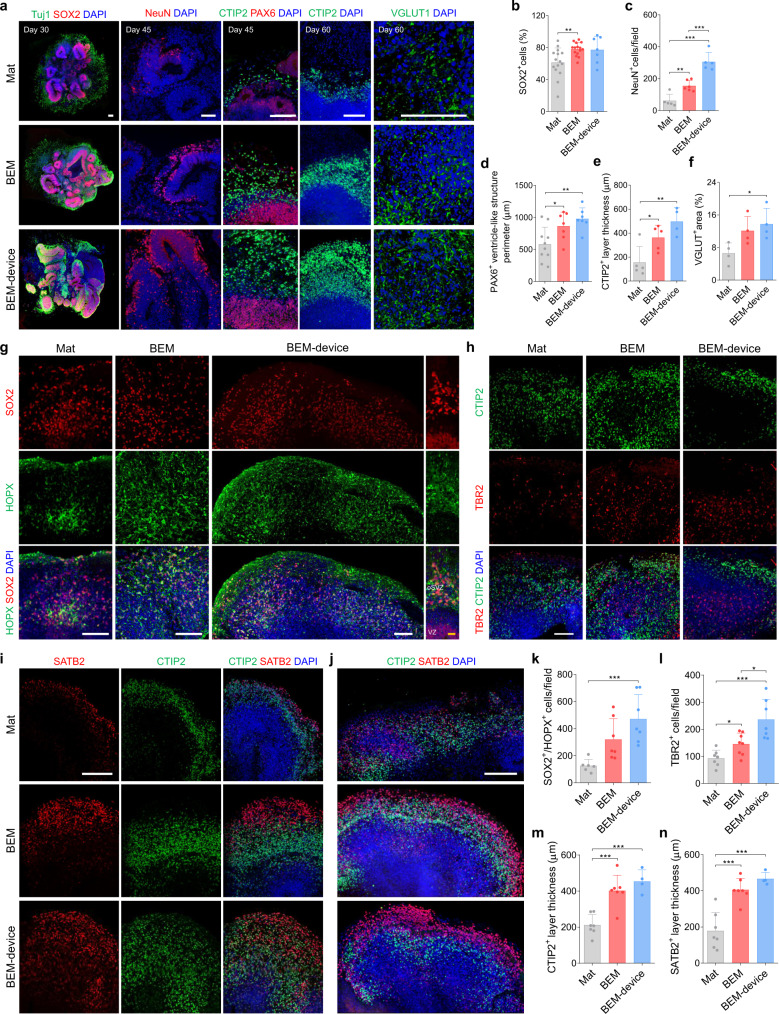
Brain organoids derived from human pluripotent stem cells provide a highly valuable in vitro model to recapitulate human brain development and neurological diseases. However, the current systems for brain organoid culture require further improvement for the reliable production of high-quality organoids. Here, we demonstrate two engineering elements to improve human brain organoid culture, (1) a human brain extracellular matrix to provide brain-specific cues and (2) a microfluidic device with periodic flow to improve the survival and reduce the variability of organoids. A three-dimensional culture modified with brain extracellular matrix significantly enhanced neurogenesis in developing brain organoids from human induced pluripotent stem cells. Cortical layer development, volumetric augmentation, and electrophysiological function of human brain organoids were further improved in a reproducible manner by dynamic culture in microfluidic chamber devices. Our engineering concept of reconstituting brain-mimetic microenvironments facilitates the development of a reliable culture platform for brain organoids, enabling effective modeling and drug development for human brain diseases.
Overview
The claims and statistics of this paper haven’t been checked yet.
Run the check — free, no account needed. It reads the open-access text and checks the sources it cites.
Integrity signals
Registry
Cites
Statistics
Figures
Verification
Claims the paper makes
The claims and statistics of this paper haven’t been checked yet.
Run the check — free, no account needed. It reads the open-access text and checks the sources it cites.
Claims other papers make about this one
Each is checked against this paper’s own text: does it say what the citing paper says it does?
The source backs part of the claim, not all of it — or backs it for a different population, condition or comparison.
In the citing paper
“While many other organoid models, including brain[13], intestinal [14], mammary gland [15], and retinal organoids [16], employ 3D ECM-based hydrogels to induce complex tissue architecture that cannot be achieved in ECM-free floating culture, the same has not been explored for skin yet.”
From Efficient Generation of Skin Organoids from Pluripotent Cells via Defined Extracellular Matrix Cues and Morphogen Gradients in a Spindle‐Shaped Microfluidic Device (2024) · cites this paper as [13]
Experimental — accuracy not yet measured
Self-check
Percentages, sums and reported differences re-computed from the paper’s own numbers.
The self-check needs the paper’s full text.
Citations
Cites
Gene Ontology: tool for the unification of biology
Ashburner, M., Ball, C. A., Blake, J. A., Botstein, D., Butler, H., Cherry, J. M., Davis, A. P., Dolinski, K., Dwight, S. S., Eppig, J. T., et al. (2000) · Nature Genetics · doi:10.1038/75556 · Cited by 43,206
Tissue-based map of the human proteome
Uhlén, M., Fagerberg, L., Hallström, B. M., Lindskog, C., Oksvold, P., Mardinoglu, A., Sivertsson, Å., Kampf, C., Sjöstedt, E., Asplund, A., et al. (2015) · Science · doi:10.1126/science.1260419 · Cited by 15,286
The Molecular Signatures Database Hallmark Gene Set Collection
Liberzon, A., Birger, C., Thorvaldsdóttir, H., Ghandi, M., Mesirov, J. P., & Tamayo, P. (2015) · Cell Systems · doi:10.1016/j.cels.2015.12.004 · Cited by 13,807
Shrestha, S., & Offer, S. M. (2016) · Medical Epigenetics · doi:10.1159/000444713 · Cited by 8,951
Pérez-Riverol, Y., Csordas, A., Bai, J.-W., Bernal-Llinares, M., Hewapathirana, S., Kundu, D. J., Inuganti, A., Griss, J., Mayer, G., Eisenacher, M., et al. (2018) · Nucleic Acids Res. · doi:10.1093/nar/gky1106 · Cited by 6,216
Cerebral organoids model human brain development and microcephaly
Lancaster, M. A., Renner, M., Martin, C.-A., Wenzel, D., Bicknell, L. S., Hurles, M. E., Homfray, T., Penninger, J. M., Jackson, A. P., & Knoblich, J. A. (2013) · Nature · doi:10.1038/nature12517 · Cited by 5,372
The Gene Ontology resource: enriching a GOld mine
The Gene Ontology Consortium, Carbon, S., Douglass, E., Good, B. M., Unni, D. R., Harris, N. L., Mungall, C. J., Basu, S., Chisholm, R. L., Dodson, R. J., et al. (2021) · Nucleic Acids Research · doi:10.1093/nar/gkaa1113 · Cited by 3,555
Organoid Models and Applications in Biomedical Research
Xinaris, C., Brizi, V., & Remuzzi, G. (2015) · The Nephron journals/Nephron journals · doi:10.1159/000433566 · Cited by 3,519
Mi, H., Muruganujan, A., Ebert, D., Huang, X., & Thomas, P. D. (2018) · Nucleic Acids Research · doi:10.1093/nar/gky1038 · Cited by 3,030
A draft map of the human proteome
Kim, M.-S., Pinto, S. M., Getnet, D., Nirujogi, R. S., Manda, S. S., Chaerkady, R., Madugundu, A. K., Kelkar, D. S., Isserlin, R., Jain, S., et al. (2014) · Nature · doi:10.1038/nature13302 · Cited by 2,198
Cited by
Sorted by citations
Items 101–200 of 397
Non-invasive label-free imaging analysis pipeline for in situ characterization of 3D brain organoids
Serafini, C. E., Charles, S., Costa, P. C., Niu, W., Cheng, B., Wen, Z., Lu, H., & Robles, F. E. (2024) · Scientific Reports · doi:10.1038/s41598-024-72038-2 · Cited by 31
In vitro models for head and neck cancer: Current status and future perspective
Moya‐Garcia, C. R., Okuyama, H., Sadeghi, N., Li, J., Tabrizian, M., & Li‐Jessen, N. Y. K. (2022) · Frontiers in Oncology · doi:10.3389/fonc.2022.960340 · Cited by 28
Recent Advances in Brain Organoid Technology for Human Brain Research
Jeong, E., Choi, S., & Cho, S. (2022) · ACS Applied Materials & Interfaces · doi:10.1021/acsami.2c17467 · Cited by 29
Self-citationBrain organoids for hypoxic-ischemic studies: from bench to bedside
Gaston-Breton, R., Maïza, A., Hamoudi, R., Stonestreet, B. S., & Mabondzo, A. M. (2023) · Cellular and Molecular Life Sciences · doi:10.1007/s00018-023-04951-0 · Cited by 29
Li, G., Liu, S., Chen, W., Jiang, Z., Luo, Y., Wang, D., Zheng, Y., & Liu, Y. (2022) · Advanced Healthcare Materials · doi:10.1002/adhm.202202114 · Cited by 26
Advantages and Potential Benefits of Using Organoids in Nanotoxicology
Nikonorova, V. G., Chrishtop, V. V., Mironov, V. A., & Prilepskii, A. Y. (2023) · Cells · doi:10.3390/cells12040610 · Cited by 31
Spheroids and organoids derived from colorectal cancer as tools for in vitro drug screening
Zawawi, S. S. A., Salleh, E. A., & Musa, M. (2024) · Exploration of Targeted Anti-tumor Therapy · doi:10.37349/etat.2024.00226 · Cited by 25
Engineering of Immune Microenvironment for Enhanced Tissue Remodeling
Ko, G. R., & Lee, J. S. (2022) · Tissue Engineering and Regenerative Medicine · doi:10.1007/s13770-021-00419-z · Cited by 26
Self-citationQian, S., Mao, J., Liu, Z., Zhao, B., Zhao, Q., Lu, B., Zhang, L., Mao, X., Cheng, L., Cui, W., et al. (2022) · Smart Medicine · doi:10.1002/smmd.20220007 · Cited by 25
A review on current brain organoid technologies from a biomedical engineering perspective
Lokai, T., Albin, B., Qubbaj, K., Tiwari, A. P., Adhikari, P., & Yang, I. H. (2023) · Experimental Neurology · doi:10.1016/j.expneurol.2023.114461 · Cited by 25
Acharya, P., Joshi, P., Shrestha, S., Choi, N. Y., Jeong, S., & Lee, M. (2024) · Biofabrication · doi:10.1088/1758-5090/ad1b1e · Cited by 28
Self-citationOrtega, J. A., de Aguiar, G. P. S., Chandravanshi, P., Levy, N., Engel, E., & Álvarez, Z. (2024) · Wiley Interdisciplinary Reviews Nanomedicine and Nanobiotechnology · doi:10.1002/wnan.1962 · Cited by 27
Kim, J. J., Bae, M., & Cho, D. (2024) · Small Science · doi:10.1002/smsc.202400314 · Cited by 24
Self-citationBhattacharya, A., Choi, W. W. Y., Muffat, J., & Li, Y. (2021) · Journal of Molecular Biology · doi:10.1016/j.jmb.2021.167386 · Cited by 24
Self-citationBio-chemo-mechanical coupling models of soft biological materials: A review
Sun, S.-Y., Zhang, H., Fang, W. P., Chen, X., Li, B., & Feng, X. (2022) · Advances in applied mechanics · doi:10.1016/bs.aams.2022.05.004 · Cited by 24
Marino, A., Battaglini, M., Lefevre, M. C., Ceccarelli, M. C., Ziaja, K., & Ciofani, G. (2023) · TrAC Trends in Analytical Chemistry · doi:10.1016/j.trac.2023.117319 · Cited by 23
Quílez, C., Jeon, E. Y., Pappalardo, A., Pathak, P., & Abaci, H. E. (2024) · Advanced Healthcare Materials · doi:10.1002/adhm.202400405 · Cited by 22
Bondarenko, L. S., Baimuratova, R. K., Reindl, M., Zach, V., Dzeranov, A. A., Pankratov, D., Kydralieva, K. A., Dzhardimalieva, G. I., Kolb, D., Wagner, F. E., et al. (2024) · Heliyon · doi:10.1016/j.heliyon.2024.e27640 · Cited by 26
Boylin, K., Aquino, G. V., Purdon, M., Abedi, K., Kasendra, M. J., & Barrile, R. (2024) · Biofabrication · doi:10.1088/1758-5090/ad4c08 · Cited by 21
Organoids for tissue repair and regeneration
Yu, B., Zhou, D., Wang, F., Chen, X., Li, M., & Su, J. (2025) · Materials Today Bio · doi:10.1016/j.mtbio.2025.102013 · Cited by 27
Song, J., Bang, S., Choi, N., & Kim, H. N. (2022) · Biomicrofluidics · doi:10.1063/5.0121476 · Cited by 25
Self-citationGenetically modified organoids for tissue engineering and regenerative medicine
Zhang, Q., Jin, H., Zhu, D., Chen, Y., Fu, M., Lu, S., Qiu, Y., Zhou, G., Yang, G., & Jiang, Z. (2024) · Advances in Colloid and Interface Science · doi:10.1016/j.cis.2024.103337 · Cited by 23
Towards a quality control framework for cerebral cortical organoids
Castiglione, H., Madrange, L., Baquerre, C., Maisonneuve, B. G. C., Lemonnier, T., Deslys, J., Yates, F., Honegger, T., Rontard, J., & Vigneron, P.-A. (2025) · Scientific Reports · doi:10.1038/s41598-025-14425-x · Cited by 21
Vascularised Brain Organoids: Engineering Strategies and Neurobiological Applications
Song, Y., Jo, H., Jeong, S., Kim, I., & Lee, S. S. (2026) · Cell Proliferation · doi:10.1111/cpr.70161 · Cited by 23
Microfluidic systems for modeling human development
Bonner, M. G., Gudapati, H., Mou, X., & Musah, S. (2022) · Development · doi:10.1242/dev.199463 · Cited by 21
Engineering Brain Organoids: Toward Mature Neural Circuitry with an Intact Cytoarchitecture
Jang, H., Kim, S. H., Koh, Y., & Yoon, K. (2022) · International Journal of Stem Cells · doi:10.15283/ijsc22004 · Cited by 22
Self-citationShuchat, S., Yossifon, G., & Huleihel, M. (2022) · International Journal of Molecular Sciences · doi:10.3390/ijms23105402 · Cited by 21
Brain organoids: A new tool for modelling of neurodevelopmental disorders
Aili, Y., Maimaitiming, N., Wang, Z., & Wang, Y. (2024) · Journal of Cellular and Molecular Medicine · doi:10.1111/jcmm.18560 · Cited by 24
Neural Organoids, a Versatile Model for Neuroscience
Lee, J., & Sun, W. (2022) · Molecules and Cells · doi:10.14348/molcells.2022.2019 · Cited by 22
Self-citationRecent advances and challenges in organoid-on-a-chip technology
Suhito, I. R., & Kim, T. P. (2022) · Organoid · doi:10.51335/organoid.2022.2.e4 · Cited by 21
Microinstrumentation for Brain Organoids
Patel, D., Shetty, S., Acha, C., Pantoja, I. E. M., Zhao, A., George, D., & Gracias, D. H. (2024) · Advanced Healthcare Materials · doi:10.1002/adhm.202302456 · Cited by 21
Revealing the clinical potential of high-resolution organoids
Ko, J., Hyung, S., Cheong, S., Chung, Y., & Jeon, N. L. (2024) · Advanced Drug Delivery Reviews · doi:10.1016/j.addr.2024.115202 · Cited by 23
Pei, Y., Wang, Y., Chen, J., Zhou, J., Han, Y., Liu, X., Chen, S., Chen, S., He, D., Wu, Y., et al. (2025) · Advanced Science · doi:10.1002/advs.202502299 · Cited by 24
Wei, Z., Sun, T., Shimoda, S., Chen, Z., Xie, C., Wang, H., Huang, Q., Fukuda, T., & Shi, Q. (2022) · Lab on a Chip · doi:10.1039/d1lc01149a · Cited by 20
Spitz, S., Ko, E. C., Ertl, P., & Kamm, R. D. (2023) · International Journal of Molecular Sciences · doi:10.3390/ijms24032171 · Cited by 19
Microenvironments Matter: Advances in Brain-on-Chip
Akçay, G., & Lüttge, R. (2023) · Biosensors · doi:10.3390/bios13050551 · Cited by 19
Kafili, G., Kabir, H., Kandeloos, A. J., Golafshan, E., Ghasemi, S., Mashayekhan, S., & Taebnia, N. (2023) · Journal of Biomaterials Applications · doi:10.1177/08853282231207216 · Cited by 20
Organoids in concert: engineering in vitro models toward enhanced fidelity
Chen, Z., Sugimura, R., Zhang, Y. S., Ruan, C., & Wen, C. (2024) · Aggregate · doi:10.1002/agt2.478 · Cited by 23
Abdulla, A., Yan, H., Chen, S., Wu, L., Chen, X.-S., Zhang, Y., Zhang, M., Zhuang, T. Y., Ahmad, K. Z., Lin, J., et al. (2024) · Biosensors and Bioelectronics · doi:10.1016/j.bios.2024.116754 · Cited by 21
Generation of Neural Organoids and Their Application in Disease Modeling and Regenerative Medicine
Huang, R., Gao, F., Yu, L., Chen, H., & Zhu, R. (2025) · Advanced Science · doi:10.1002/advs.202501198 · Cited by 20
Vascularizing organoids-on-chip for perfused and personalized models
Menzani, B., Gea, P. D., Gidrol, X., & Tubbs, E. (2026) · Lab on a Chip · doi:10.1039/d5lc00890e · Cited by 20
Cortical Organoids to Model Microcephaly
Farcy, S., Albert, A., Gressèns, P., Baffet, A. D., & Ghouzzi, V. E. (2022) · Cells · doi:10.3390/cells11142135 · Cited by 20
Engineered organoids in oral and maxillofacial regeneration
Wang, Y., & Sun, Y. (2022) · iScience · doi:10.1016/j.isci.2022.105757 · Cited by 18
Tang, X., Wang, Z., Khutsishvili, D., Cheng, Y., Wang, J., Tang, J., & Ma, S. (2023) · Cell Systems · doi:10.1016/j.cels.2023.09.004 · Cited by 22
Alzheimer’s Disease: Current Perspectives and Advances in Physiological Modeling
Boder, E. J., & Banerjee, I. A. (2021) · Bioengineering · doi:10.3390/bioengineering8120211 · Cited by 18
Cerebral organoids as an in vitro model to study autism spectrum disorders
Rabeling, A., & Goolam, M. (2022) · Gene Therapy · doi:10.1038/s41434-022-00356-z · Cited by 17
Zeng, Y.-L., Du, Y., Xu, X., Wang, Y., Yu, S., Liu, T., Luo, S., Xiang, X., Liu, W., Chen, Y.-C., et al. (2023) · Nano Today · doi:10.1016/j.nantod.2023.101947 · Cited by 18
ECM-derived biomaterials for regulating tissue multicellularity and maturation
Smandri, A., Al-Masawa, M. E., Ng, M. H., & Fauzi, M. B. (2024) · iScience · doi:10.1016/j.isci.2024.109141 · Cited by 22
Charles, S., Jackson, E., Sun, G., Zhou, Y., Siciliano, B., Niu, W., Han, H., Nikitina, A. A., Kemp, M. L., Wen, Z., et al. (2024) · Advanced Materials Technologies · doi:10.1002/admt.202400473 · Cited by 19
Fiorenzano, A., Sozzi, E., Kästli, R., Iazzetta, M. R., Bruzelius, A., Arlotta, P., & Parmar, M. (2025) · The EMBO Journal · doi:10.1038/s44318-025-00494-1 · Cited by 16
The neurovascular unit in leukodystrophies: towards solving the puzzle
Zarekiani, P., Pinto, H. N., Hol, E. M., Bugiani, M., & de Vries, H. E. (2022) · Fluids and Barriers of the CNS · doi:10.1186/s12987-022-00316-0 · Cited by 18
Present and Future Modeling of Human Psychiatric Connectopathies With Brain Organoids
Urenda, J., Dosso, A. D., Birtele, M., & Quadrato, G. (2022) · Biological Psychiatry · doi:10.1016/j.biopsych.2022.12.017 · Cited by 16
Microfluidics and Organoids, the Power Couple of Developmental Biology and Oncology Studies
Hetzel, L. A., Ali, A., Corbo, V., & Hankemeier, T. (2023) · International Journal of Molecular Sciences · doi:10.3390/ijms241310882 · Cited by 17
Jin, G., Kim, D., Mun, S., & Bang, S. (2024) · BioChip Journal · doi:10.1007/s13206-024-00141-7 · Cited by 16
Self-citationGeneration, interrogation, and future applications of microglia-containing brain organoids
Stefano, J. D., Marco, F. D., Cicalini, I., FitzGerald, U., Pieragostino, D., Verhoye, M., Ponsaerts, P., & Breedam, E. V. (2024) · Neural Regeneration Research · doi:10.4103/nrr.nrr-d-24-00921 · Cited by 17
Vascular microphysiological systems (MPS): biologically relevant and potent models
Breuil, L., Kitada, A., Yadav, S., Zhou, H., Fujimoto, K., & Yokokawa, R. (2025) · Lab on a Chip · doi:10.1039/d5lc00014a · Cited by 15
Organoids in drug development: from predictive models to regulatory integration
Song, X., Chen, X., Chen, Q., Wang, H., Zhang, T., Liao, M. Z., Liu, C., Yu, H., Hao, Y., Gu, G., et al. (2026) · Drug Discovery Today · doi:10.1016/j.drudis.2026.104608 · Cited by 20
Engineered human cardiac tissues for modeling heart diseases
Min, S., & Cho, S. (2022) · BMB Reports · doi:10.5483/bmbrep.2022-0185 · Cited by 16
Self-citationModular 3D printed platform for fluidically connected human brain organoid culture
Rezaei, B., Giacomoni, J., Nilsson, F., Sozzi, E., Fiorenzano, A., Parmar, M., Keller, S. S., & Kajtez, J. (2023) · Biofabrication · doi:10.1088/1758-5090/ad0c2c · Cited by 16
Acharya, P., Shrestha, S., Joshi, P., Choi, N. Y., Lekkala, V. K. R., Kang, S., Ni, G., & Lee, M. (2024) · Biofabrication · doi:10.1088/1758-5090/ad867e · Cited by 16
Self-citationCoronel, R., García-Moreno, E., Siendones, E., Barrero, M. J., Martínez–Delgado, B., Santos‐Ocaña, C., Liste, I., & Cascajo-Almenara, M. V. (2024) · Frontiers in Cellular Neuroscience · doi:10.3389/fncel.2024.1403734 · Cited by 14
Xia, J., Gao, X., Yao, J., Fei, Y., Song, D., Gu, Z., Zheng, G., Gu, Y., & Tu, C. (2025) · Biomaterials Research · doi:10.34133/bmr.0192 · Cited by 14
Zhu, H., Yao, C., Xu, Z., Shang, G., Peng, J., Xie, H., Qian, T., Qiu, Z., Maeso, L., Mao, M., et al. (2025) · Acta Biomaterialia · doi:10.1016/j.actbio.2025.06.013 · Cited by 14
Huang, J., Zhu, Y., Tang, J., Liu, Y., Lu, M., Zhang, R., & Sun, A. X. (2025) · Biomolecules · doi:10.3390/biom15081118 · Cited by 14
McComish, S. F., Copas, A. N. M., & Caldwell, M. A. (2022) · Frontiers in Neuroscience · doi:10.3389/fnins.2022.851058 · Cited by 17
Kundu, S., Boutin, M. E., Strong, C. E., Voss, T. C., & Ferrer, M. (2022) · Communications Biology · doi:10.1038/s42003-022-04177-z · Cited by 14
Sun, S., Xue, X., & Fu, J. (2023) · Current Opinion in Genetics & Development · doi:10.1016/j.gde.2023.102097 · Cited by 14
Bioengineering toolkits for potentiating organoid therapeutics
Park, S., & Cho, S. (2024) · Advanced Drug Delivery Reviews · doi:10.1016/j.addr.2024.115238 · Cited by 18
Self-citationhPSCs-derived brain organoids for disease modeling, toxicity testing and drug evaluation
Xie, N., Bai, J., Hou, Y., Liu, J., Zhang, Y., Meng, X., & Wang, X. (2024) · Experimental Neurology · doi:10.1016/j.expneurol.2024.115110 · Cited by 15
Recent Advances in 3D-Cultured Brain Tissue Models Derived from Human iPSCs
Choi, N. Y., Lee, M., & Jeong, S. (2022) · BioChip Journal · doi:10.1007/s13206-022-00075-y · Cited by 14
Self-citationFrom niche to organoid: Engineering bone tissues through microenvironmental insights
Yan, X., Sheng, L., Zhu, M., He, Z., Yao, X., & Wu, H. (2025) · Journal of Tissue Engineering · doi:10.1177/20417314251358567 · Cited by 15
Recent advances in micro-physiological systems for investigating tumor metastasis and organotropism
Yoon, H., del Río, J. S., Cho, S. W., & Park, T. (2024) · Lab on a Chip · doi:10.1039/d3lc01033c · Cited by 13
Self-citationBoncristiani, C., Gilio, A. D., Castro, F. D., Nardini, A., Palmisani, J., Vàzquez, R. M., de Gennaro, G., Fanizzi, F. P., Ciccarella, G., & Vergaro, V. (2025) · Journal of Materials Chemistry B · doi:10.1039/d4tb02499k · Cited by 14
Biomaterials-based strategies for in vitro neural models
Özgün, A., Lomboni, D. J., Arnott, H. G., Staines, W. A., Woulfe, J., & Variola, F. (2022) · Biomaterials Science · doi:10.1039/d1bm01361k · Cited by 13
Why Can Organoids Improve Current Organ-on-Chip Platforms?
Sokołowska, P., Żuchowska, A., & Brzózka, Z. (2022) · Organoids · doi:10.3390/organoids1010007 · Cited by 15
Spitz, S., Bolognin, S., Brandauer, K., Füßl, J., Schuller, P., Schobesberger, S., Jordan, C., Schädl, B., Grillari, J., Wanzenboeck, H. D., et al. (2022) · bioRxiv (Cold Spring Harbor Laboratory) · doi:10.1101/2022.08.19.504522 · Cited by 15
3D Printing for Neural Repair: Bridging the Gap in Regenerative Medicine
Clair‐Glover, M. S., Yue, Z., & Dottori, M. (2025) · Advanced Materials · doi:10.1002/adma.202507590 · Cited by 14
Modeling neurodegenerative diseases with brain organoids: from development to disease applications
Larriba-González, T., García-Martín, M., Ojeda-Hernández, D. D., Rincón-Cerrada, P., Martín-Blanco, L., Benito‐Martín, M. S., Selma-Calvo, B., de la Fuente-Martín, S., Matías‐Guiu, J. A., Matías‐Guiu, J., et al. (2025) · Frontiers in Cell and Developmental Biology · doi:10.3389/fcell.2025.1663286 · Cited by 12
Li, M., Sun, H., Hou, Z., Hao, S., Jin, L., & Wang, B. (2023) · Small · doi:10.1002/smll.202306451 · Cited by 12
The application of brain organoid for drug discovery in mitochondrial diseases
Liang, K. X. (2024) · The International Journal of Biochemistry & Cell Biology · doi:10.1016/j.biocel.2024.106556 · Cited by 12
Choi, S., Lee, M. J., Kim, M., Bae, Y., Park, J., & Cho, S. (2024) · Advanced Healthcare Materials · doi:10.1002/adhm.202401826 · Cited by 12
Self-citationHuman brain organoids for understanding substance use disorders
Li, K., Gu, L., Cai, H., Lu, H., Mackie, K., & Guo, F. (2024) · Drug Metabolism and Pharmacokinetics · doi:10.1016/j.dmpk.2024.101036 · Cited by 14
Balance between the cell viability and death in 3D
Debruyne, A. C., Okkelman, I. A., & Dmitriev, R. I. (2022) · Seminars in Cell and Developmental Biology · doi:10.1016/j.semcdb.2022.09.005 · Cited by 16
Kršek, A., Schleicher, L. M. S., Jagodic, A., & Batičić, L. (2025) · International Journal of Molecular Sciences · doi:10.3390/ijms26189178 · Cited by 13
Novel organoids mode evaluating the food nutrition and safety: Current state and future prospects
Tan, F., Cui, P., Li, S., Tan, Y., & Ma, A. (2024) · Food Frontiers · doi:10.1002/fft2.451 · Cited by 11
Shen, Y., & Kokaia, Z. (2025) · Cells · doi:10.3390/cells14141074 · Cited by 12
Microfluidic Techniques for Next‐Generation Organoid Systems
Gong, J., Li, M., Kang, J., Yin, Z., Cha, Z., Yang, J., & Xu, H. (2022) · Advanced Materials Interfaces · doi:10.1002/admi.202200846 · Cited by 12
Considerations for modelling diffuse high-grade gliomas and developing clinically relevant therapies
Higginbottom, S. L., Tomaskovic‐Crook, E., & Crook, J. M. (2023) · Cancer and Metastasis Reviews · doi:10.1007/s10555-023-10100-7 · Cited by 12
Jeong, S., Kang, H. W., Kim, S. H., Hong, G., Nam, M., Seong, J., Yoon, E.-S., Cho, I., Chung, S. H., Bang, S., et al. (2023) · Science Advances · doi:10.1126/sciadv.adf0925 · Cited by 10
Self-citationNazari, H., Cho, A., Goss, D. M., Thiery, J. P., & Warkiani, M. E. (2024) · Lab on a Chip · doi:10.1039/d4lc00296b · Cited by 11
Self-citationBioengineering tools for next-generation neural organoids
O’Laughlin, R., Cheng, F., Song, H., & Ming, G. (2025) · Current Opinion in Neurobiology · doi:10.1016/j.conb.2025.103011 · Cited by 12
Bioengineering innovations for neural organoids with enhanced fidelity and function
Sun, Y., Ikeuchi, Y., Guo, F., Hyun, I., Ming, G., & Fu, J. (2025) · Cell stem cell · doi:10.1016/j.stem.2025.03.014 · Cited by 18
Breaking down the barriers to animal-free research
Hope, L., & Bailey, J. (2025) · Alternatives to Laboratory Animals · doi:10.1177/02611929251349465 · Cited by 12
Hypoxia and Multilineage Communication in 3D Organoids for Human Disease Modeling
Ehab, S., Gaser, O. A., & Dayem, A. A. (2025) · Biomimetics · doi:10.3390/biomimetics10090624 · Cited by 13
Dennison, R., Usuga, E., Chen, H., Paul, J. Z., Arbelaez, C. A., & Teng, Y. D. (2023) · Cells · doi:10.3390/cells12040618 · Cited by 12
Bhattacharya, S., Kumar, D., Prajapati, B. G., & Anjum, M. M. (2024) · Current Medicinal Chemistry · doi:10.2174/0109298673312968240803104252 · Cited by 9
Kandra, M., Váňová, T., Jongen, V. A., Pospíšil, J., Novak, J. F., Chochola, V., Buryška, T., Prokop, Z., Hodný, Z., Hampl, A., et al. (2024) · Biotechnology Journal · doi:10.1002/biot.202400240 · Cited by 9
Emerging brain organoids: 3D models to decipher, identify and revolutionize brain
Zhao, Y., Wang, T., Liu, J., Wang, Z., & Lu, Y. (2025) · Bioactive Materials · doi:10.1016/j.bioactmat.2025.01.025 · Cited by 9
Cell and tissue reprogramming: Unlocking a new era in medical drug discovery
Sen, C. K., Friday, A. J., & Roy, S. (2025) · Pharmacological Reviews · doi:10.1016/j.pharmr.2025.100077 · Cited by 9
Mechanobiological engineering strategies for organoid culture
Taghizadeh, M., Taghizadeh, A. A., & Kim, H. S. (2025) · APL Bioengineering · doi:10.1063/5.0275439 · Cited by 10
Metadata
- Authors
- Cho, A.-N., Jin, Y., An, Y., Kim, J., Choi, Y. S., Lee, J. S., Kim, J., Choi, W.-Y., Koo, D.-J., Yu, W., Chang, G.-E., Kim, D.-Y., Jo, S.-H., Kim, J., Kim, S.-Y., Kim, Y.-G., Kim, J. Y., Choi, N., Cheong, E., Kim, Y.-J., Je, H. S., Kang, H.-C., & Cho, S.-W.
- Affiliations
- Yonsei University (KR)
- Kangwon National University (KR)
- Seoul National University (KR)
- Duke-NUS Medical School (SG)
- Soongsil University (KR)
- Korea Institute of Science and Technology (KR)
- Corresponding author
- Cho, Seung-Woo
- ORCID
- Venue
- Nature Communications
- Published
- 2021-08-05
- Volume
- 12
- Issue
- 1
- Pages
- 4730-4730
- ISSN
- 2041-1723 (ISSN-L)
- PMC
- PMC8342542
- OpenAlex
- W3188744629
- Cited by
- 397
- References
- 91
- Citations by year
- 2026: 77 · 2025: 83 · 2024: 96 · 2023: 66 · 2022: 69 · 2021: 6
- FWCI
- 18.60
- Type
- journal article
- Language
- en
- Open access
- gold
- doi.org
- Locations
- Nature Communications (publishedVersion, cc-by)
- PubMed Central (publishedVersion, cc-by)
- PubMed (publishedVersion)
- RePEc: Research Papers in Economics (submittedVersion)
- DOAJ (DOAJ: Directory of Open Access Journals) (submittedVersion, cc-by-sa)
- YUHSpace (Yonsei University Medical Library) (submittedVersion, cc-by-nc-nd)
- Funders
- National Research Foundation of Korea (2016M3C9A4921712, 2017M3C7A1047659, 2018M3A9H1021382)
- Institute for Basic Science (IBS-R026-D1)
- Samsung (SRFC-TC2003-03)
- Topics
- Life Sciences › Biochemistry, Genetics and Molecular Biology › Molecular Biology › Pluripotent Stem Cells Research
- Physical Sciences › Engineering › Biomedical Engineering › 3D Printing in Biomedical Research
- Life Sciences › Neuroscience › Developmental Neuroscience › Neurogenesis and neuroplasticity mechanisms
- Keywords
- brain organoids, microfluidics, brain extracellular matrix, induced pluripotent stem cells, neurogenesis, organoid maturation, dynamic culture, periodic flow, electrophysiological function, 3D cell culture
- MeSH terms
- Animals, Brain, Culture Media, Extracellular Matrix, Feasibility Studies, Humans, Models, Anatomic, Models, Neurological, Neuroglia, Organ Culture Techniques, Organoids, Swine, Hydrogels, Gene Expression Profiling, Neurogenesis, Electrophysiological Phenomena, Lab-On-A-Chip Devices, Induced Pluripotent Stem Cells
About these checks
Registry, retraction, Cites and statistics results are computed, not judged, with one exception: a printed reference that no index lists is read once by a model before it counts as a citation error. Claims are extracted by a model and kept only when their quote appears verbatim in the text; each cited source is then checked, with a model’s help, for whether it says what the claim relies on. Those verdicts can be wrong — read the claim’s quote and the cited source before relying on one.
Statistics and arithmetic are recomputed, not judged.
Confidence bands are shown only for fields calibrated on our annotated test set. None is calibrated yet, so no band is shown.
What counts as a claim ›How we measure confidence ›How we check this ›
Are you an author, or do you see a problem with this page? Request a review
