

Gut microbiota-bile acid crosstalk contributes to the rebound weight gain after calorie restriction in mice
Open accessThe DOI matches its Crossref record; 57 of the 57 references it cites were found in a registry or an index.
Abstract
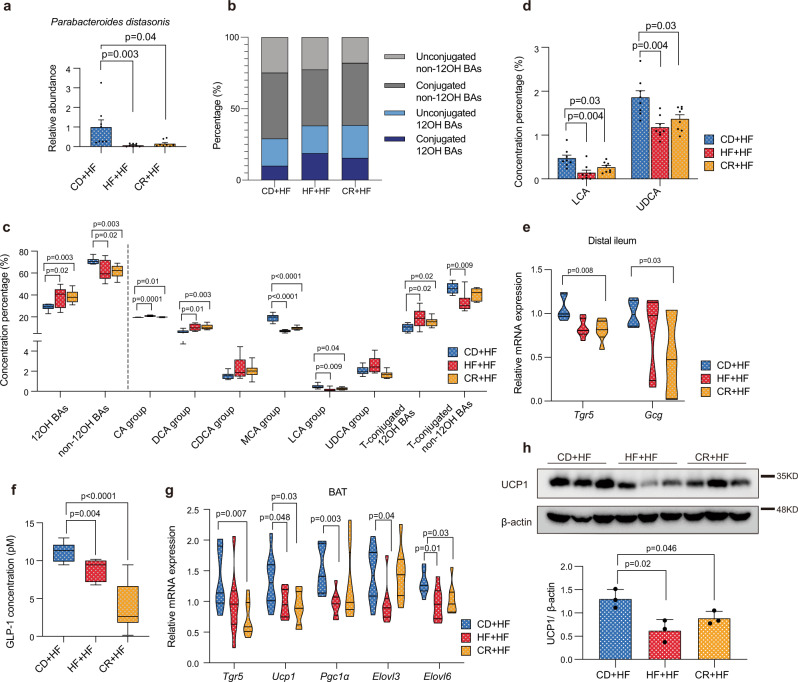
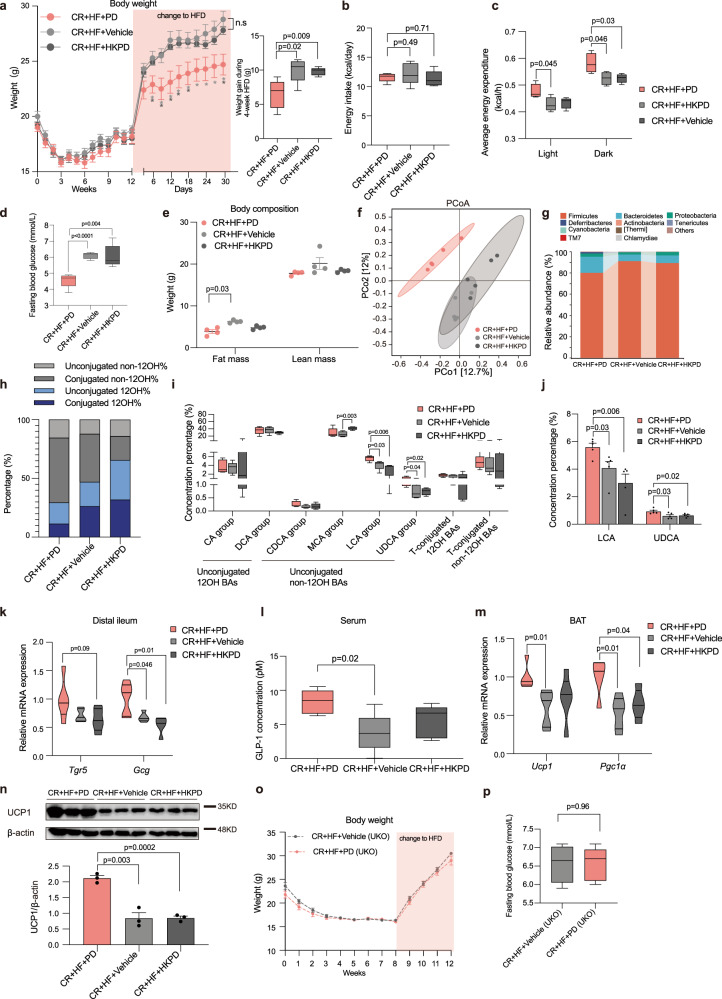
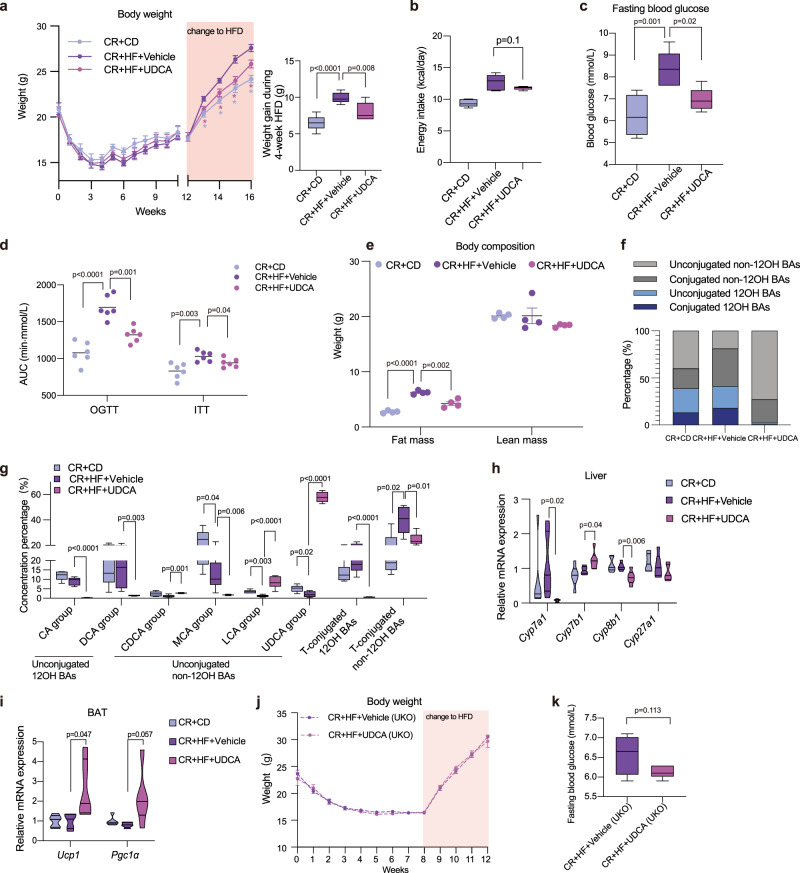
Calorie restriction (CR) and fasting are common approaches to weight reduction, but the maintenance is difficult after resuming food consumption. Meanwhile, the gut microbiome associated with energy harvest alters dramatically in response to nutrient deprivation. Here, we reported that CR and high-fat diet (HFD) both remodeled the gut microbiota with similar microbial composition, Parabacteroides distasonis was most significantly decreased after CR or HFD. CR altered microbiota and reprogramed metabolism, resulting in a distinct serum bile acid profile characterized by depleting the proportion of non-12α-hydroxylated bile acids, ursodeoxycholic acid and lithocholic acid. Downregulation of UCP1 expression in brown adipose tissue and decreased serum GLP-1 were observed in the weight-rebound mice. Moreover, treatment with Parabacteroides distasonis or non-12α-hydroxylated bile acids ameliorated weight regain via increased thermogenesis. Our results highlighted the gut microbiota-bile acid crosstalk in rebound weight gain and Parabacteroides distasonis as a potential probiotic to prevent rapid post-CR weight gain.
Overview
The claims and statistics of this paper haven’t been checked yet.
Free: it reads the open-access text and checks the first 5 claims that cite a source we can check. Create a free account to check every claim.
Integrity signals
Registry
Cites
Statistics
Figures
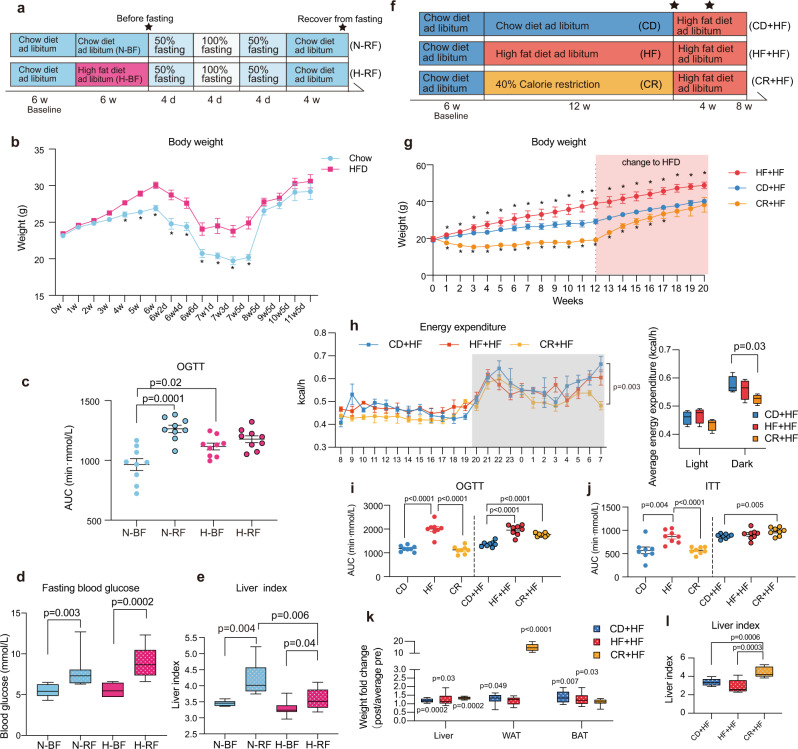
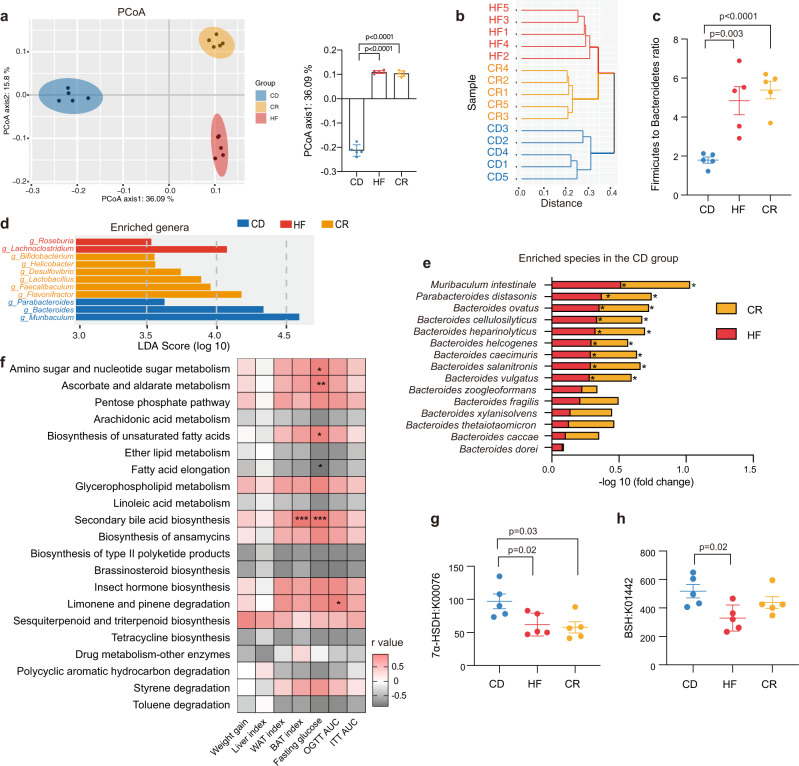
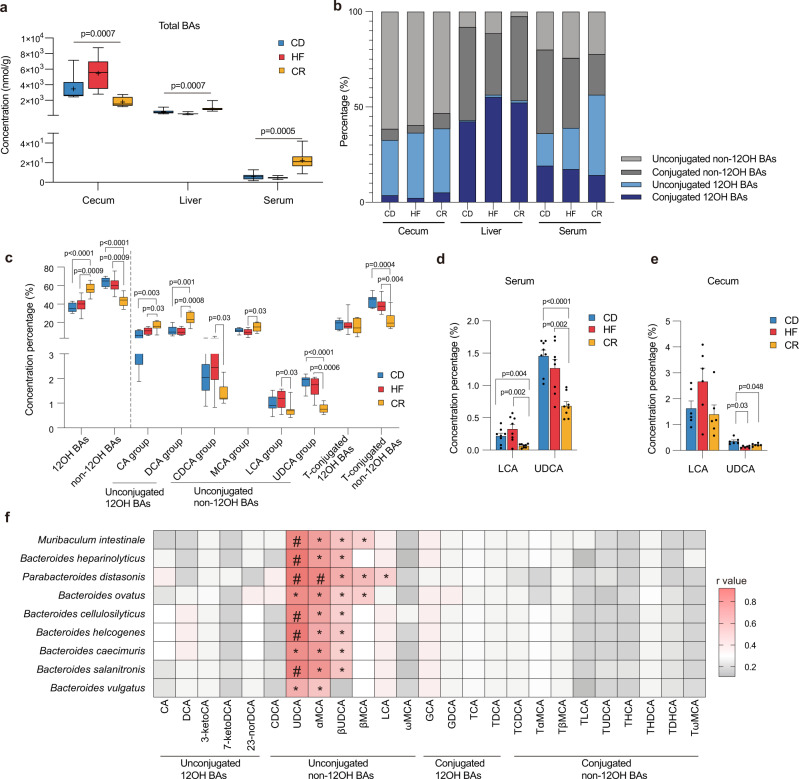
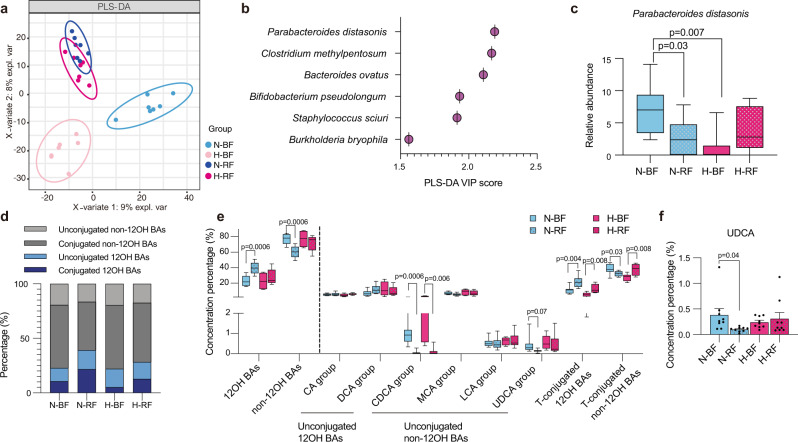
Verification
Claims the paper makes
The claims and statistics of this paper haven’t been checked yet.
Free: it reads the open-access text and checks the first 5 claims that cite a source we can check. Create a free account to check every claim.
Claims other papers make about this one
Each is checked against this paper’s own text: does it say what the citing paper says it does?
The source backs part of the claim, not all of it — or backs it for a different population, condition or comparison.
In the citing paper
“Additionally, adipose tissue plays a critical role in weight regulation, influenced by factors such as cellular stress, inflammation, extracellular matrix alterations, and adiponectin secretion [97, 98].”
From Comparing caloric restriction regimens for effective weight management in adults: a systematic review and network meta-analysis (2024) · cites this paper as [97]
Experimental — accuracy not yet measuredThe source backs part of the claim, not all of it — or backs it for a different population, condition or comparison.
In the citing paper
“while reciprocal interactions among gut microbes can also re-regulate metabolism processes [97].”
From Comparing caloric restriction regimens for effective weight management in adults: a systematic review and network meta-analysis (2024) · cites this paper as [97]
Experimental — accuracy not yet measured
Self-check
Percentages, sums and reported differences re-computed from the paper’s own numbers.
The self-check needs the paper’s full text.
Citations
Cites
An obesity-associated gut microbiome with increased capacity for energy harvest
Turnbaugh, P. J., Ley, R. E., Mahowald, M. A., Magrini, V., Mardis, E. R., & Gordon, J. I. (2006) · Nature · doi:10.1038/nature05414 · Cited by 12,444
Diet rapidly and reproducibly alters the human gut microbiome
David, L. A., Maurice, C. F., Carmody, R. N., Gootenberg, D. B., Button, J. E., Wolfe, B. E., Ling, A. V., Devlin, A. S., Varma, Y., Fischbach, M. A., et al. (2014) · Nature · doi:10.1038/nature12820 · Cited by 10,100
Caloric Restriction Delays Disease Onset and Mortality in Rhesus Monkeys
Colman, R. J., Anderson, R. M., Johnson, S. C., Kastman, E. K., Kosmatka, K. J., Beasley, T. M., Allison, D. B., Cruzen, C., Simmons, H. A., Kemnitz, J. W., et al. (2009) · Science · doi:10.1126/science.1173635 · Cited by 2,277
Bile acid-microbiota crosstalk in gastrointestinal inflammation and carcinogenesis
Jia, W., Xie, G., & Jia, W. (2018) · Nature Reviews Gastroenterology & Hepatology · doi:10.1038/nrgastro.2017.119 · Cited by 1,924
Self-citationFasting: molecular mechanisms and clinical applications
Longo, V. D., & Mattson, M. P. (2014) · Cell Metabolism · doi:10.1016/j.cmet.2013.12.008 · Cited by 1,425
Long-term weight-loss maintenance: a meta-analysis of US studies
Anderson, J. W., Konz, E. C., Frederich, R. C., & Wood, C. L. (2001) · The American Journal of Clinical Nutrition · doi:10.1093/ajcn/74.5.579 · Cited by 1,351
Wang, K., Liao, M., Zhou, N., Bao, L., Ma, K., Zheng, Z., Wang, Y., Liu, C., Wang, W., Wang, J., et al. (2019) · Cell Reports · doi:10.1016/j.celrep.2018.12.028 · Cited by 1,158
Self-citationFasting, Circadian Rhythms, and Time-Restricted Feeding in Healthy Lifespan
Longo, V. D., & Panda, S. (2016) · Cell Metabolism · doi:10.1016/j.cmet.2016.06.001 · Cited by 1,013
Connecting dysbiosis, bile-acid dysmetabolism and gut inflammation in inflammatory bowel diseases
Duboc, H., Rajca, S., Rainteau, D., Benarous, D., Maubert, M.-A., Quervain, E., Thomas, G., Barbu, V., Humbert, L., Despras, G., et al. (2013) · Gut · doi:10.1136/gutjnl-2012-302578 · Cited by 930
Huang, F., Zheng, X., Ma, X., Jiang, R., Zhou, W., Zhou, S., Zhang, Y., Lei, S., Wang, S., Kuang, J., et al. (2019) · Nature Communications · doi:10.1038/s41467-019-12896-x · Cited by 789
Self-citation
Cited by
Fleishman, J. S., & Kumar, S. (2024) · Signal Transduction and Targeted Therapy · doi:10.1038/s41392-024-01811-6 · Cited by 544
Kuang, J., Wang, J., Li, Y., Li, M., Zhao, M., Ge, K., Zheng, D., Cheung, K. C. P., Liao, B., Wang, S., et al. (2023) · Cell Metabolism · doi:10.1016/j.cmet.2023.07.011 · Cited by 321
Self-citationThe gut microbiota in obesity and weight management: microbes as friends or foe?
Van Hul, M., & Cani, P. D. (2023) · Nature Reviews Endocrinology · doi:10.1038/s41574-022-00794-0 · Cited by 318
Gut commensal Parabacteroides distasonis alleviates inflammatory arthritis
Sun, H., Guo, Y., Wang, H., Yin, A., Hu, J., Yuan, T., Zhou, S., Xu, W., Wei, P., Yin, S., et al. (2023) · Gut · doi:10.1136/gutjnl-2022-327756 · Cited by 249
Self-citationZhao, Q., Dai, M.-Y., Huang, R.-Y., Duan, J.-Y., Zhang, T., Bao, W.-M., Zhang, J.-Y., Gui, S.-Q., Xia, S.-M., Dai, C.-T., et al. (2023) · Nature Communications · doi:10.1038/s41467-023-37459-z · Cited by 208
Self-citationTargeting the gut microbiota and its metabolites for type 2 diabetes mellitus
Wu, J., Yang, K., Fan, H., Wei, M., & Xiong, Q. (2023) · Frontiers in Endocrinology · doi:10.3389/fendo.2023.1114424 · Cited by 203
Self-citationXu, H., Fang, F., Wu, K., Song, J., Li, Y., Lu, X., Liu, J., Zhou, L., Yu, W., Yu, F., et al. (2023) · Microbiome · doi:10.1186/s40168-023-01709-5 · Cited by 199
“Among these metabolites, bile acids (BAs) are a highly abundant pool of host-derived and microbial-modified metabolites that are major regulators of host lipid homeostasis [9].”
BackgroundSelf-citationDietary regulation in health and disease
Wu, Q., Gao, Z.-J., Yu, X., & Wang, P. (2022) · Signal Transduction and Targeted Therapy · doi:10.1038/s41392-022-01104-w · Cited by 176
“Meanwhile, CR enables to reprogramme the microbial bile acid metabolism to stimulate brown adipose.(194) However, a very-low-calorie diet severely impairs bacterial abundance and restructures the gut microbiome.”
BackgroundGut bacteria-driven homovanillic acid alleviates depression by modulating synaptic integrity
Zhao, M., Ren, Z., Zhao, A., Tang, Y., Kuang, J., Li, M., Chen, T., Wang, S., Wang, J., Zhang, H., et al. (2024) · Cell Metabolism · doi:10.1016/j.cmet.2024.03.010 · Cited by 153
Self-citationLithocholic acid phenocopies anti-ageing effects of calorie restriction
Qu, Q., Chen, Y., Wang, Y., Long, S., Wang, W., Yang, H.-Y., Li, M., Tian, X., Wei, X., Liu, Y., et al. (2024) · Nature · doi:10.1038/s41586-024-08329-5 · Cited by 140
“4b), as previously seen in obese mice 29,48 .”
InfluentialSelf-citationEnhancing intestinal barrier efficiency: A novel metabolic diseases therapy
Zhang, Y., Xiao, Z., Yu, X., Novák, P., Gui, Q., & Yin, K. (2023) · Frontiers in Nutrition · doi:10.3389/fnut.2023.1120168 · Cited by 131
“Studies have found crosstalk between microbiota and bile acids in weight regain and the addition of Parabacteroides distasonis, a potential probiotic that could prevent rapid weight gain after calorie restriction diets (232).”
BackgroundA Gpr35-tuned gut microbe-brain metabolic axis regulates depressive-like behavior
Cheng, L., Wu, H., Cai, X., Zhang, Y., Yu, S., Hou, Y., Yin, Z., Yan, Q., Wang, Q., Sun, T., et al. (2024) · Cell Host & Microbe · doi:10.1016/j.chom.2023.12.009 · Cited by 128
Self-citationHuang, Y., Wang, Z., Ye, B., Hongjie, J., Ji, S., Sheng, W., Ye, S., Ou, Y., Peng, Y., Xu, Y., et al. (2023) · Journal of Translational Medicine · doi:10.1186/s12967-023-04259-4 · Cited by 124
“At the same time, 6 OTUs (three belonging to Firmicutes, two belonging to Bacteroidetes, and one belonging to the Actinobacteria phylum) and 6 OTUs (two belonging to Firmicutes, two belonging to Bacteroidetes, one belonging to Proteobacteria, and one belonging to the Desulfobacterota phylum) were highlighted in the T1…”
BackgroundInfluentialRoles of the gut microbiome in weight management
Carmody, R. N., & Bisanz, J. E. (2023) · Nature Reviews Microbiology · doi:10.1038/s41579-023-00888-0 · Cited by 118
Fu, C., Ye, K., Ma, S., Du, H., Chen, S., Liu, D., Ma, G., & Xiao, H. (2023) · Food Chemistry · doi:10.1016/j.foodchem.2023.135849 · Cited by 107
Dietary patterns and cardiometabolic health: Clinical evidence and mechanism
Wang, W., Liu, Y., Li, Y., Luo, B., Lin, Z., Chen, K., & Liu, Y. (2023) · MedComm · doi:10.1002/mco2.212 · Cited by 100
Self-citationBile acids-gut microbiota crosstalk contributes to the improvement of type 2 diabetes mellitus
Gao, R., Meng, X., Xue, Y., Mao, M., Liu, Y., Tian, X., Sui, B., Li, X., & Zhang, P. (2022) · Frontiers in Pharmacology · doi:10.3389/fphar.2022.1027212 · Cited by 93
“Mice can reduce weight rebound by supplementationwith non-12α hydroxylated bile acids or Parabacteroides distasonis (Li et al., 2022).”
BackgroundMohr, A. E., Sweazea, K. L., Bowes, D. A., Jasbi, P., Whisner, C. M., Sears, D. D., Krajmalnik-Brown, R., Jin, Y., Gu, H., Klein-Seetharaman, J., et al. (2024) · Nature Communications · doi:10.1038/s41467-024-48355-5 · Cited by 80
Digesting the complex metabolic effects of diet on the host and microbiome
Carmody, R. N., Varady, K. A., & Turnbaugh, P. J. (2024) · Cell · doi:10.1016/j.cell.2024.06.032 · Cited by 81
Bile acids, gut microbiota, and therapeutic insights in hepatocellular carcinoma
Song, Y., Lau, H. C.-H., Zhang, X., & Yu, J. Q. (2023) · Cancer Biology and Medicine · doi:10.20892/j.issn.2095-3941.2023.0394 · Cited by 80
Cross-Talk Between Gut Microbiota and Adipose Tissues in Obesity and Related Metabolic Diseases
Wu, D., Wang, H., Xie, L., & Hu, F. (2022) · Frontiers in Endocrinology · doi:10.3389/fendo.2022.908868 · Cited by 75
“Parabacteroides distasonis is able to produce secondary bile acids (BAs) and is known to ameliorate weight regain (64).”
BackgroundInfluentialCheng, L., Wei, Y., Peng, L., Wei, K., Liu, Z., & Wei, X. (2023) · Critical Reviews in Food Science and Nutrition · doi:10.1080/10408398.2023.2236701 · Cited by 70
Wang, Y., Li, Y., Lin, Y., Cao, C.-Y., Chen, D., Huang, X., Li, C., Xu, H., Lai, H., Chen, H., et al. (2025) · Cell Death Discovery · doi:10.1038/s41420-025-02413-z · Cited by 70
“The microbes not only participate in food digestion, molecules decomposition and synthesis, and absorption, providing energy and nutritional support for the host [18, 19], but they also maintain the normal host-physiological functions by regulating metabolism [20 – 22].”
Self-citationA Cascade of Microbiota-Leaky Gut-Inflammation- Is it a Key Player in Metabolic Disorders?
Mishra, S. P., Jain, S., Agadzi, B., & Yadav, H. (2025) · Current Obesity Reports · doi:10.1007/s13679-025-00624-0 · Cited by 70
Bile acids, gut microbiota and metabolic surgery
Tu, J., Wang, Y., Jin, L., & Huang, W. (2022) · Frontiers in Endocrinology · doi:10.3389/fendo.2022.929530 · Cited by 68
Li, Z., Yuan, H., Chu, H., & Yang, L. (2023) · Microorganisms · doi:10.3390/microorganisms11082059 · Cited by 60
“Parabacteroides distasonis non-12α-hydroxylated bile acids, LCA and UDCA increased thermogenesis ameliorating weight regain in mice [19]”
BackgroundZhu, X., Dai, X., Zhao, L., Li, J., Zhu, Y., He, W., Guan, X., Wu, T., Liu, L., Song, H., et al. (2024) · Gut Microbes · doi:10.1080/19490976.2024.2390136 · Cited by 60
“63 And sole UDCA supplementation also attenuated weight rebound after a restricted diet by activating thermogenesis in mice fed a HFD. 16 Non-12OH BAs, including CDCA, LCA and UDCA, are potential TGR5 agonists to stimulate UCP1-dependent energy expenditure.”
BackgroundHamamah, S., Iatcu, O. C., & Covașă, M. (2024) · Nutrients · doi:10.3390/nu17010143 · Cited by 58
The relationships between high-fat diet and metabolic syndrome: Potential mechanisms
Tang, C., Wang, Y., Xu, Z., Chen, D., Xu, J., Yang, D., Zhang, L., Liu, J., & Kan, J. (2024) · Food Bioscience · doi:10.1016/j.fbio.2024.104261 · Cited by 52
Zhang, L., Zhang, T., Sun, J., Huang, Y., Liu, T., Ye, Z.-W., Hu, J., Zhang, G., Chen, H., Ye, Z.-W., et al. (2022) · Journal of Endocrinological Investigation · doi:10.1007/s40618-022-01914-3 · Cited by 47
Regulating bile acids signaling for NAFLD: molecular insights and novel therapeutic interventions
Wei, M., Tu, W., & Huang, G. (2024) · Frontiers in Microbiology · doi:10.3389/fmicb.2024.1341938 · Cited by 46
Self-citationGong, D., Lei, J., He, X., Hao, J., Zhang, F., Huang, X., Gu, W., Yang, X., & Yu, J. (2024) · Lipids in Health and Disease · doi:10.1186/s12944-024-02300-z · Cited by 45
“Wang et al. [220] reported that treatment with Parabacteroi-des distasonis primarily elevated the concentrations of unconjugated non-12OH BAs, UDCA, and LCA.”
Therapeutic potential of Parabacteroides distasonis in gastrointestinal and hepatic disease
Duan, J., Li, Q., Cheng, Y., Zhu, W., Liu, H., & Li, F. (2024) · MedComm · doi:10.1002/mco2.70017 · Cited by 43
Purdel, C. N., Margina, D. M., Adam-Dima, I., & Ungurianu, A. (2023) · Nutrients · doi:10.3390/nu15235005 · Cited by 41
“However, the results are contradictory, as some studies reported an increase in the abundance of Firmicutes [56,59,60,71], but others mentioned the reduction of its proportion in the gut microbiota after 24:24 h or 16:8 h IF regimens [62,65,67].”
BackgroundResultContribution of the microbiome for better phenotyping of people living with obesity
Ciaula, A. D., Bonfrate, L., Khalil, M., Garruti, G., & Portincasa, P. (2023) · Reviews in Endocrine and Metabolic Disorders · doi:10.1007/s11154-023-09798-1 · Cited by 43
Effects of semaglutide on metabolism and gut microbiota in high-fat diet-induced obese mice
Sun, L., Shang, B., Lv, S., Liu, G., Wu, Q., & Geng, Y. (2025) · Frontiers in Pharmacology · doi:10.3389/fphar.2025.1562896 · Cited by 41
Bile acid and its bidirectional interactions with gut microbiota: a review
He, S., Li, L., Yao, Y., Su, J., Lei, S., Zhang, Y., & Zeng, H. (2023) · Critical Reviews in Microbiology · doi:10.1080/1040841x.2023.2262020 · Cited by 39
“Recent studies have shown that different levels of protein intake can affect Lactobacillus abundance (wang et al. 2022).”
Gao, P., Rinott, E., Dong, D., Mei, Z., Wang, F., Liu, Y., Kamer, O., Meir, A. Y., Tuohy, K. M., Blüher, M., et al. (2024) · Gut Microbes · doi:10.1080/19490976.2024.2426610 · Cited by 39
“10 Furthermore, animal studies have shown that BAs can influence dietary energy harvest 33,34 and appetite by altering gut microbiome composition and activating TGR5 signaling.”
Fasting intervention and its clinical effects on the human host and microbiome
Forslund, S. K. (2022) · Journal of Internal Medicine · doi:10.1111/joim.13574 · Cited by 39
Li, X., Zhao, Y., Qi, X., Cui, J., Zhou, Y., Tan, Y., Huang, X., & Ye, H. (2024) · Current Research in Food Science · doi:10.1016/j.crfs.2024.100683 · Cited by 39
Pei, L., Liu, W., Liu, L., Wang, X., Jiang, L., Chen, Z., Wang, Q., Wang, P., & Xu, H. (2023) · Frontiers in Nutrition · doi:10.3389/fnut.2023.1237237 · Cited by 36
“capacity (63), which might be related to the production of SCFAs (64).”
BackgroundZhu, Z., Xu, Y., Xia, Y., Jia, X., Chen, Y., Liu, Y., Zhang, L., Chai, H., & Sun, L. (2023) · Life Sciences · doi:10.1016/j.lfs.2023.122304 · Cited by 36
Cheng, J., Ye, K., Fu, C., Zhou, Y., Chen, Y., Ma, G., Chen, S., Tu, J., & Xiao, H. (2024) · Food Research International · doi:10.1016/j.foodres.2024.115231 · Cited by 36
Special correlation between diet and MASLD: positive or negative?
Liu, J., Li, C., Yang, Y., Li, J., Sun, X., Zhang, Y., Liu, R., Chen, F., & Li, X. (2025) · Cell & Bioscience · doi:10.1186/s13578-025-01382-1 · Cited by 37
“This dual disruption of energy balance and BA signaling highlighted how gut microbiota interactions directly drove MASLD progression [105].”
Jian, E., Wang, M., Zhang, Z., Heng, Y., Zhang, C., Chen, Q., Yu, X., Zhu, Y., & Cai, P. (2025) · Frontiers in Microbiology · doi:10.3389/fmicb.2025.1634803 · Cited by 35
Wang, Y., Yu, J., Chen, B., Jin, W., Wang, M., Chen, X., Jian, M., Sun, L., & Piao, C. (2024) · Frontiers in Endocrinology · doi:10.3389/fendo.2024.1481270 · Cited by 33
“However, during weight regain, the gut microbiota and BAs play pivotal roles, and supplementation with Parabacteroides distasonis and non-12 a -hydroxylated BAs can effectively mitigate weight rebound (129).”
Chen, L., Wang, Y., Liu, J., Hong, Z., Wong, K., Chiou, J. A., Xu, B., Céspedes, C. L., Bai, W., & Tian, L. (2023) · Food & Function · doi:10.1039/d3fo01085f · Cited by 33
Chen, D., Wang, Y., Yang, J., Ou, W., Lin, G., Zeng, Z., Lu, X., Chen, Z., Zou, L., Tian, Y., et al. (2024) · Frontiers in Pharmacology · doi:10.3389/fphar.2024.1343755 · Cited by 32
Liu, D., Ye, J., Yan, Y., Chen, Y., Wang, H., Wang, M., Feng, Y., Li, R., Xu, X., Jiang, Y., et al. (2023) · Frontiers in Pharmacology · doi:10.3389/fphar.2023.1166635 · Cited by 30
“Activation of G protein-coupled receptor 5 (TGR5) and Farnesoid X receptor (FXR) improves metabolism and plays an anti-obesity role (Li et al., 2022).”
BackgroundYang, Q., Liu, J., Li, T., Lyu, S., Liu, X., Du, Z., Shang, X., & Zhang, T. (2023) · Journal of Agricultural and Food Chemistry · doi:10.1021/acs.jafc.2c08897 · Cited by 30
Wang, Y., Mei, P.-C., Bai, P.-R., An, N., He, J., Wang, J., Zhu, Q., & Feng, Y. (2022) · Analytica Chimica Acta · doi:10.1016/j.aca.2022.340691 · Cited by 29
Self-citationWu, J., Man, D., Shi, D., Wu, W., Wang, S., Wang, K., Li, Y., Yang, L., Bian, X., Wang, Q., et al. (2022) · Nutrients · doi:10.3390/nu14245311 · Cited by 29
“Since bile acids are major regulators of glucose and lipid homeostasis, microbiota-bile acid crosstalk contributes highly to the weight gain in mice after calorie restriction [35].”
BackgroundSelf-citationGillard, J., & Leclercq, I. A. (2023) · Clinical Science · doi:10.1042/cs20220697 · Cited by 30
Florkowski, M. R., Abiona, E., Frank, K. M., & Brichacek, A. L. (2024) · Frontiers in Nutrition · doi:10.3389/fnut.2024.1392666 · Cited by 29
“In addition to dietary components, the caloric level of a diet must be considered, as calorie restriction has been shown to decrease production of BAs (188, 189).”
BackgroundYang, Q., Li, T., Lyu, S., Ge, H., Yang, M., Liu, X., Liu, J., Yu, Y., & Zhang, T. (2022) · International Journal of Biological Macromolecules · doi:10.1016/j.ijbiomac.2022.09.224 · Cited by 28
Weight cycling based on altered immune microenvironment as a result of metaflammation
Li, W., & Chen, W. (2023) · Nutrition & Metabolism · doi:10.1186/s12986-023-00731-6 · Cited by 28
“By increasing thermogenesis, treatment with Parabacteroides distasonis or non-12α-hydroxylated bile acids improves weight gain [45].”
BackgroundWan, X., Wang, J., Zhang, S., Zhang, X., Shi, X., & Chen, G. (2024) · International Journal of Biological Macromolecules · doi:10.1016/j.ijbiomac.2024.138101 · Cited by 27
Self-citationDuan, X., Nie, Y., Xie, X., Zhang, Q., Zhu, C., Zhu, H., Chen, R., Xu, J. J., Zhang, J., Yang, C., et al. (2024) · Frontiers in Microbiology · doi:10.3389/fmicb.2024.1421608 · Cited by 26
“…of genes related to the bile acid signaling pathway and affected the gut microbiota structure Numerous studies have shown that bile acid is a key factor in the regulation of the host intestinal microbial population (Wahlström et al., 2016; Quinn et al., 2020; Li et al., 2022; He et al., 2023).”
BackgroundLiu, Y., Zhang, S., Deng, H., Chen, A., & Chai, L. (2022) · The Science of The Total Environment · doi:10.1016/j.scitotenv.2022.159031 · Cited by 26
Lin, L., Tang, R., Liu, Y., Li, Z., Li, H., & Yang, H. (2024) · Frontiers in Pharmacology · doi:10.3389/fphar.2024.1415844 · Cited by 26
Huang, J., Li, Y., Chen, M., Cai, Z., Cai, Z., & Jiang, Z. (2024) · International Journal of Behavioral Nutrition and Physical Activity · doi:10.1186/s12966-024-01657-9 · Cited by 25
“Fasting may affect weight control by altering the composition of the gut microbiota [76, 96], while reciprocal interactions among gut microbes can also re-regulate metabolism processes [97].”
BackgroundSelf-citationLiu, Y., Zhang, S., Deng, H., Chen, A., & Chai, L. (2022) · The Science of The Total Environment · doi:10.1016/j.scitotenv.2022.160849 · Cited by 24
He, X., Gao, X., Hong, Y., Zhong, J., Li, Y., Zhu, W., Ma, J., Huang, W., Li, Y., Li, Y., et al. (2023) · Journal of Agricultural and Food Chemistry · doi:10.1021/acs.jafc.3c02909 · Cited by 24
Self-citationKadeer, G., Fu, W., He, Y., Feng, Y. J., Liu, W.-H., Hung, W., Feng, H., & Zhao, W. H. (2023) · Nutrition & Metabolism · doi:10.1186/s12986-023-00739-y · Cited by 24
“Besides, researchers recently have found that Parabacteroides distasonis could affect the proportion of secondary non-12α-hydroxylated bile acids and metabolism of glucose and lipid, ameliorate weight regain via increased thermogenesis [33].”
BackgroundZhang, S., Zhao, X., He, X., Shi, W., & Ma, N. (2026) · Journal of Animal Science and Biotechnology/Journal of animal science and biotechnology · doi:10.1186/s40104-025-01319-1 · Cited by 24
“This process provides substrates for further microbial metabolism (like dehydroxylation), enhances FXR signaling, and suppresses SREBP-1c, which reduces liver fat deposition [83, 84].”
Zhang, B., Wang, J., Chen, X., Xue, T., Xin, J., Liu, Y., Wang, X., & Li, X. (2024) · Marine Biotechnology · doi:10.1007/s10126-024-10365-1 · Cited by 22
“The latest research has shown that the bile acid–intestinal flora axis is closely related to the disorder of lipid metabolism in DM (Cai et al. 2022; Li et al. 2022a).”
Self-citationMendis, B. I. L. M., Sarvananda, L., Jayasinghe, T. N., Rajapakse, I. H., & Dissanayake, A. S. (2025) · Medicine in Microecology · doi:10.1016/j.medmic.2025.100144 · Cited by 21
Guo, M., Jiang, X., Ouyang, H., Zhang, X., Zhang, S., Wang, P., Bi, G., Wu, T., Zhou, W., Liang, F., et al. (2025) · Acta Pharmaceutica Sinica B · doi:10.1016/j.apsb.2025.01.024 · Cited by 21
“…prevents post-calorie restriction weight regain, improves obesity, ameliorates acute pancreatitis, colorectal cancer, liver fibrosis, and alcoholic hepatitis through regulating related metabolites such as ursodeoxycholic acid, lithocholic acid, succinate, acetate, and bile salt hydrolase 16,39,40 .”
Du, H., Shi, L. S., Yan, T., Wang, Q., Wang, Y., Zhao, Y., & Yang, X. (2022) · Food & Function · doi:10.1039/d2fo02063g · Cited by 21
Chen, J., Yang, H., Qin, Y., Zhou, X., & Ma, Q. (2024) · Research · doi:10.34133/research.0515 · Cited by 20
Chaudhary, S., Kaur, P., Singh, T. A., Bano, K. S., Vyas, A., Mishra, A. K., Singh, P., & Mehdi, M. M. (2024) · Biogerontology · doi:10.1007/s10522-024-10146-2 · Cited by 22
“( Li et al. 2022a).”
Skeletal muscles and gut microbiota-derived metabolites: novel modulators of adipocyte thermogenesis
Tang, Y., Wang, Y., Wang, Y. Y., Liao, Z., & Xiao, X. (2023) · Frontiers in Endocrinology · doi:10.3389/fendo.2023.1265175 · Cited by 19
Self-citationVo, N., Zhang, Q., & Sung, H. (2024) · Journal of Pharmacy & Pharmaceutical Sciences · doi:10.3389/jpps.2024.13062 · Cited by 18
“However, maintaining weight loss through long-term adherence to a calorie-restricted regimen can be dif fi cult, often resulting in poor compliance and subsequent weight regain once the regimen is discontinued [24, 25].”
BackgroundYang, C., Du, Y., Zhao, T., Zhao, L., Liu, L., Liu, L., & Yang, X. (2024) · Food & Function · doi:10.1039/d4fo01489h · Cited by 17
Yin, J., Zhang, M., Jiang, W., Huang, X., & Yin, Y. (2025) · Research · doi:10.34133/research.0904 · Cited by 17
“…adhesion molecule 2 [ 22 ] and dipeptidyl peptidase 4 [ 24 ], as well as interactions between the metabolites bile acids and Takeda G protein-coupled receptor 5 (TGR5) signals [ 21 , 23 ], are recognized to participate in the regulation of postprandial GLP-1 response to initiate lipase secretion.”
Zhang, Y., Dong, L., Dai, X., Huang, Y., Gao, Y., & Wang, F. (2024) · Discover Oncology · doi:10.1007/s12672-024-00897-2 · Cited by 16
“Contrary to our findings of increased Parabacteroides abundance in the CR group, other studies have reported a significant decrease in Pd after CR [48].”
ResultLiu, Y., Wu, H., Liu, B., Chen, S., Huang, L., Liu, Z., Wang, J., Xie, L., & Wu, X. (2024) · Schizophrenia Research · doi:10.1016/j.schres.2024.06.040 · Cited by 17
Self-citationLiao, J., Liu, Y., Yao, Y., Zhang, J., Wang, H., Zhao, J., Chen, W., & Lu, W. (2023) · Nutrients · doi:10.3390/nu15204339 · Cited by 16
“…intake [8,9]; (b) affecting the process of intestinal digestion and absorption and balancing the energy metabolism [10]; (c) inhibiting tissue inflammation and maintaining the function of tissues [11]; and (d) improving metabolism and promoting thermogenesis of brown adipose tissue (BAT) [12].”
BackgroundZhang, Y., Gao, Y., Li, C., Zhang, Y.-A., Lu, Y., Ye, J., & Liu, X. (2024) · Microbiome · doi:10.1186/s40168-024-01799-9 · Cited by 15
“Parabacteroides distasonis is a Gram-negative probiotic and is known to have beneficial effects on weight gain [61], hyperglycemia and hyperlipidemia [62], hepatic steatosis [63], and reduction of rectal cancer [64].”
Lin, L., Tang, R., Liu, Y., Li, Z., Li, H., & Yang, H. (2024) · Pharmacological Research · doi:10.1016/j.phrs.2024.107323 · Cited by 15
Liu, X., Fang, W., Pang, S., Song, G., Wang, Y., & Qi, W. (2025) · International Journal of Biological Macromolecules · doi:10.1016/j.ijbiomac.2025.142145 · Cited by 16
Zhang, Z., Kong, A. P. S., Wong, V. W., & Hui, X. H. (2025) · Cell & Bioscience · doi:10.1186/s13578-025-01406-w · Cited by 16
“Although there are differences between the gut microbiota of humans and mice, both mouse models and human studies have shown that IF can alter the gut microbiota, subsequently influencing metabolic processes and liver health [20, 21, 27, 43–46].”
Differential roles of individual bile acid in physiology and disease
Fan, M., Yang, Z., Jin, L., & Huang, W. (2025) · Pharmacological Research · doi:10.1016/j.phrs.2025.107845 · Cited by 15
Shu, X., Cao, Y. J., Wu, Y., Chen, M., Zhao, W., Ji, G., & Zhang, L. R. (2025) · Journal of Ethnopharmacology · doi:10.1016/j.jep.2025.119719 · Cited by 14
Chen, C., Liu, L., Zhong, Y., Wang, M., Ai, Y., Hou, Y., Chen, H., Lin, X., Zhang, Y., Ding, M., et al. (2023) · The Journal of Nutritional Biochemistry · doi:10.1016/j.jnutbio.2023.109358 · Cited by 14
Yu, Z., Wang, Y., Zhang, F., Ma, R., Yang, X., Yang, K., Mi, A., Ran, L., & Wu, Y. (2023) · Gut Microbes · doi:10.1080/19490976.2023.2221098 · Cited by 14
Ouyang, R., Zheng, S., Wang, X., Li, Q., Ding, J., Ma, X., Zhuo, Z., Li, Z., Qi, X., Lu, X., et al. (2023) · Metabolites · doi:10.3390/metabo13070846 · Cited by 14
“It has been well established that Parabacteroides is capable of producing secondary bile acids [56] and thus may be able to alleviate obesity and metabolic dysfunctions [57].”
BackgroundSelf-citationWang, X., Wang, X., Yu, S., Huang, L., Xue, Q., Yang, X., Wang, Z., Lin, W., Jiang, Y., Xu, Y., et al. (2025) · Nature Communications · doi:10.1038/s41467-025-67172-y · Cited by 13
“Although BA – TGR5 signaling involvement in brown adipocytes has been well studied 29,30 , the precise mechanisms by which BAs induce WAT browning remain unclear.”
Shiu, W.-C., Liu, Z., Chen, B.-Y., Ku, Y.-W., & Chen, P. (2024) · Foods · doi:10.3390/foods13071079 · Cited by 13
Liu, Y., Zhang, Y., Guo, C., Li, M., Wang, Y., & Zhang, L. (2024) · Frontiers in Cellular and Infection Microbiology · doi:10.3389/fcimb.2024.1402329 · Cited by 12
Self-citationZhang, G., Jia, W., Liu, L., Wang, L., Xu, J., Tao, J., Xu, M., Yue, M., Luo, H., Hai, P., et al. (2024) · Journal of Ethnopharmacology · doi:10.1016/j.jep.2024.118870 · Cited by 12
Self-citationZhang, M., Li, H., Tan, T., Lu, L., Mi, J., Rehman, A., Yan, Y., & Ran, L. (2023) · Food Science & Nutrition · doi:10.1002/fsn3.3923 · Cited by 12
“Clinical trials and animal studies suggested that polyphenols could modify glucose and lipid metabolism (Matacchione et al., 2020; Ramos et al., 2023; Wang, Ma, et al., 2022).”
Yang, X., Xue, C., Chen, K., Gao, D., Wang, H., & Tang, C. C. (2024) · Frontiers in Pharmacology · doi:10.3389/fphar.2023.1339744 · Cited by 12
“…illnesses (Illiano et al., 2020), may have an impact on corresponding activities such as food digestion (Paone and Cani, 2020), energy metabolism (Li M. et al., 2022), immunological and genetic modulation (Wiertsema et al., 2021; Xu et al., 2023), as well as the integrity of the intestinal…”
BackgroundHuang, G., Li, B. J., Li, C., Chen, B., Li, Y., Li, S., Gan, L., Li, D., Chen, L., He, C., et al. (2026) · Carbohydrate Polymers · doi:10.1016/j.carbpol.2026.124936 · Cited by 12
Self-citationA nexus of dietary restriction and gut microbiota: Recent insights into metabolic health
Wang, L., Wang, F., Xiong, L. H., Song, H., Ren, B., & Shen, X. (2023) · Critical Reviews in Food Science and Nutrition · doi:10.1080/10408398.2023.2202750 · Cited by 11
“…an increase in Lactobacillus (Fraumene et al. 2018; Kok et al. 2018; Pan et al. 2018; Tang et al. 2020; S. Wang et al. 2018) and Bifidobacterium (S. Wang et al. 2018; C. Zhang et al. 2013), and a decrease in Bacteroides (Cox et al. 2019; M. Li et al. 2022) compared with the normal diet group.”
Maternal dietary intervention during lactation impacts the maternal faecal and human milk microbiota
Sindi, A. S., Stinson, L. F., Gridneva, Z., Leghi, G. E., Netting, M., Wlodek, M. E., Mühlhäusler, B. S., Rea, A., Trevenen, M., Geddes, D. T., et al. (2024) · Journal of Applied Microbiology · doi:10.1093/jambio/lxae024 · Cited by 11
Zhang, C., Gui, W., Yin, X., Gou, L., Guo, M., Suo, F., Zhuang, T., Yuan, Z., Liu, Y., Gu, M., et al. (2024) · Journal of Pharmaceutical Analysis · doi:10.1016/j.jpha.2024.100976 · Cited by 11
“OH BAs ratios [6,8].”
BackgroundIshizaka, A., Koga, M., Mizutani, T., Suzuki, Y., Matano, T., & Yotsuyanagi, H. (2024) · BMC Microbiology · doi:10.1186/s12866-024-03431-0 · Cited by 11
“Specifically, Parabacteroides distasonis and Parabacteroides goldstei-nii have been shown to exert anti-obesity effects by producing secondary bile acids (lithocholic acid [LCA]) and ursodeoxycholic acid [49, 50].”
BackgroundDong, H., Liu, X., Song, G., Peng, W., Sun, X., Fang, W., & Qi, W. (2025) · Biology · doi:10.3390/biology14030291 · Cited by 11
“OH BAs and glucose and lipid metabolism homeostasis [46].”
Chamarande, J., Cunat, L., Alauzet, C., & Cailliez‐Grimal, C. (2022) · International Journal of Molecular Sciences · doi:10.3390/ijms23169411 · Cited by 11
Metadata
- Authors
- Li, M., Wang, S., Li, Y., Zhao, M., Kuang, J., Liang, D., Wang, J., Wei, M., Rajani, C., Ma, X., Tang, Y., Ren, Z., Chen, T., Zhao, A., Hu, C., Shen, C., Jia, W., Liu, P., Zheng, X., & Jia, W.
- Affiliations
- Shanghai Jiao Tong University (CN)
- Hong Kong Baptist University (HK)
- University of Hawaii Cancer Center (US)
- East China Normal University (CN)
- Corresponding author
- Jia, Weiping
- Zheng, Xiaojiao
- Jia, Wei
- ORCID
- Venue
- Nature Communications
- Published
- 2022-04-19
- Volume
- 13
- Issue
- 1
- Pages
- 2060-2060
- ISSN
- 2041-1723 (ISSN-L)
- PMC
- PMC9018700
- OpenAlex
- W4224239131
- Semantic Scholar
- 3e616461118d9d3d95296c95b78d639b36976ad7
- Cited by
- 175
- References
- 57
- Citations by year
- 2026: 18 · 2025: 38 · 2024: 59 · 2023: 43 · 2022: 17
- FWCI
- 12.89
- Type
- journal article
- Language
- en
- Open access
- gold
- doi.org
- Licence
- cc-by
- creativecommons.org/licenses/by/4.0 (tdm)
- creativecommons.org/licenses/by/4.0 (vor)
- Locations
- Nature Communications (publishedVersion, cc-by)
- PubMed Central (publishedVersion, cc-by)
- PubMed (publishedVersion)
- RePEc: Research Papers in Economics (submittedVersion)
- DOAJ (DOAJ: Directory of Open Access Journals) (submittedVersion, cc-by-sa)
- Funders
- National Natural Science Foundation of China (31972935, 82122012, 81974073)
- National Cancer Institute (P30CA071789)
- Topics
- Life Sciences › Biochemistry, Genetics and Molecular Biology › Molecular Biology › Gut microbiota and health
- Health Sciences › Medicine › Physiology (medical) › Dietary Effects on Health
- Life Sciences › Neuroscience › Endocrine and Autonomic Systems › Regulation of Appetite and Obesity
- Keywords
- caloric restriction, weight regain, gut microbiota, bile acids, Parabacteroides distasonis, high-fat diet, ursodeoxycholic acid, lithocholic acid, UCP1, brown adipose tissue thermogenesis, glucagon-like peptide-1, probiotics, energy metabolism
- MeSH terms
- Gastrointestinal Microbiome, Animals, Bile Acids and Salts, Mice, Inbred C57BL, Weight Gain, Caloric Restriction, Bacteroidetes, Mice, Diet, High-Fat
About these checks
Registry, retraction, Cites and statistics results are computed, not judged, with one exception: a printed reference that no index lists is read once by a model before it counts as a citation error. Claims are extracted by a model and kept only when their quote appears verbatim in the text; each cited source is then checked, with a model’s help, for whether it says what the claim relies on. Those verdicts can be wrong — read the claim’s quote and the cited source before relying on one.
Statistics and arithmetic are recomputed, not judged.
Confidence bands are shown only for fields calibrated on our annotated test set. None is calibrated yet, so no band is shown.
What counts as a claim ›How we measure confidence ›How we check this ›
Are you an author, or do you see a problem with this page? Request a review
Data sources
Bibliographic data: Semantic Scholar, OpenAlex, Crossref.
Contains information from the Semantic Scholar Academic Graph Datasets, made available under the ODC Attribution License (ODC-BY 1.0).
Semantic Scholar’s data is described in: Kinney, R., et al. (2023). The Semantic Scholar Open Data Platform. arXiv:2301.10140.
