

Gut microbiota-bile acid crosstalk contributes to the rebound weight gain after calorie restriction in mice
Open accessThe DOI matches its Crossref record; 57 of the 57 references it cites were found in a registry or an index.
Abstract
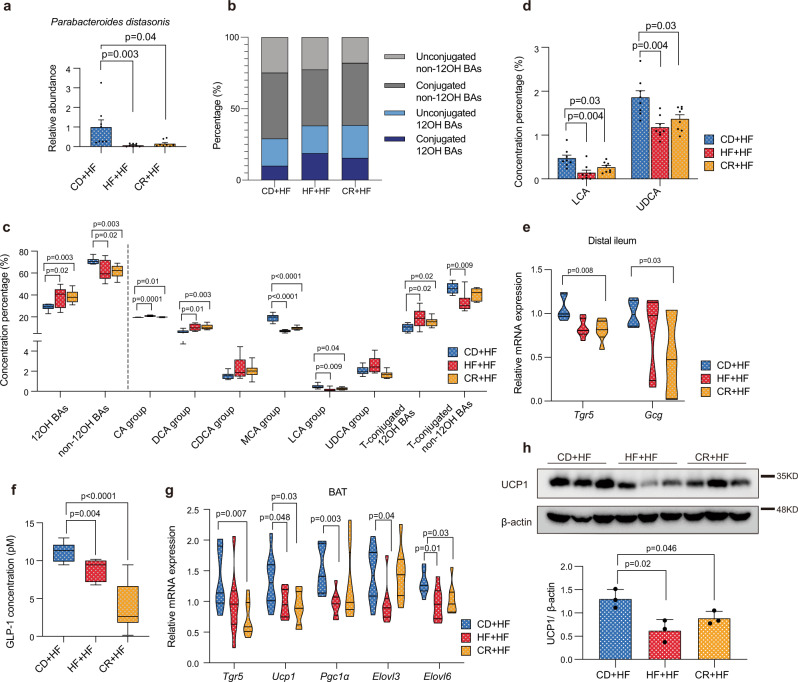
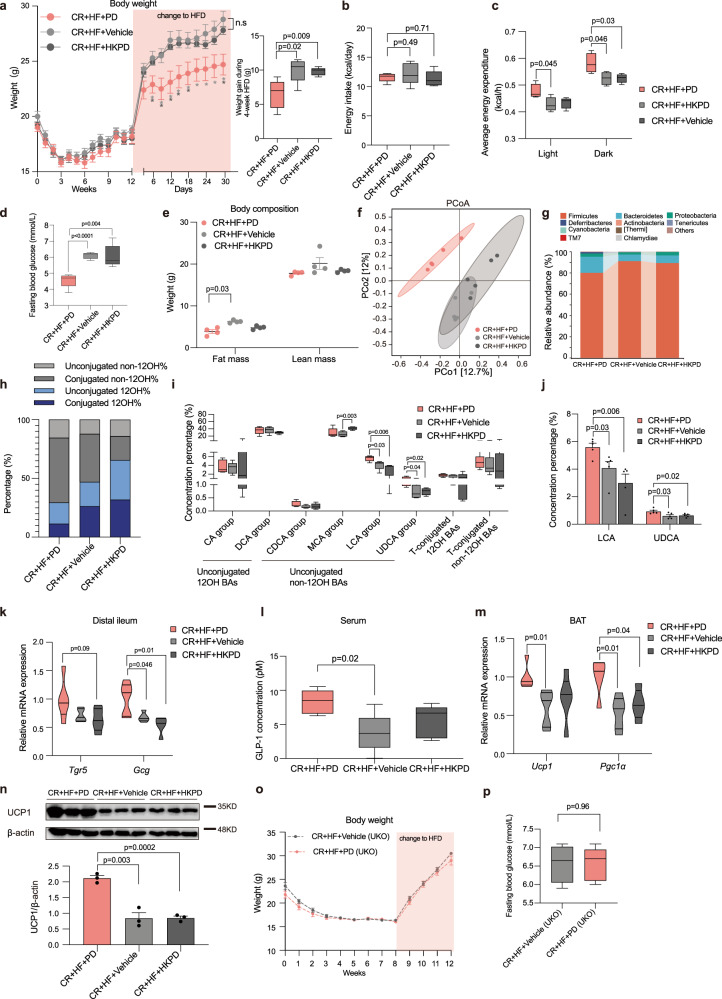
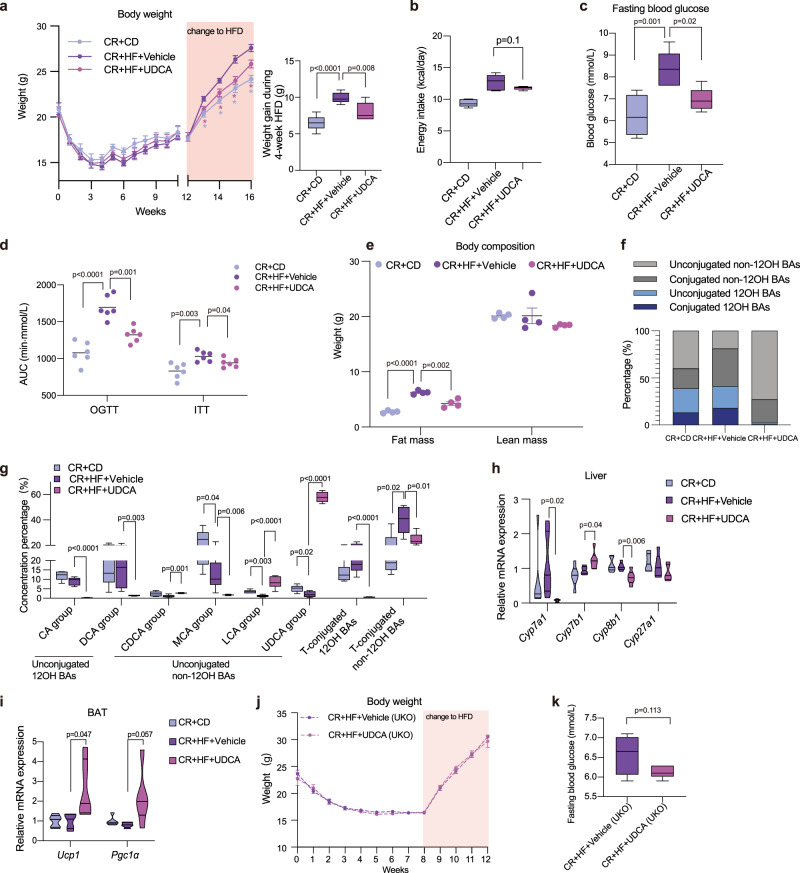
Calorie restriction (CR) and fasting are common approaches to weight reduction, but the maintenance is difficult after resuming food consumption. Meanwhile, the gut microbiome associated with energy harvest alters dramatically in response to nutrient deprivation. Here, we reported that CR and high-fat diet (HFD) both remodeled the gut microbiota with similar microbial composition, Parabacteroides distasonis was most significantly decreased after CR or HFD. CR altered microbiota and reprogramed metabolism, resulting in a distinct serum bile acid profile characterized by depleting the proportion of non-12α-hydroxylated bile acids, ursodeoxycholic acid and lithocholic acid. Downregulation of UCP1 expression in brown adipose tissue and decreased serum GLP-1 were observed in the weight-rebound mice. Moreover, treatment with Parabacteroides distasonis or non-12α-hydroxylated bile acids ameliorated weight regain via increased thermogenesis. Our results highlighted the gut microbiota-bile acid crosstalk in rebound weight gain and Parabacteroides distasonis as a potential probiotic to prevent rapid post-CR weight gain.
Overview
The claims and statistics of this paper haven’t been checked yet.
Free: it reads the open-access text and checks the first 5 claims that cite a source we can check. Create a free account to check every claim.
Integrity signals
Registry
Cites
Statistics
Figures
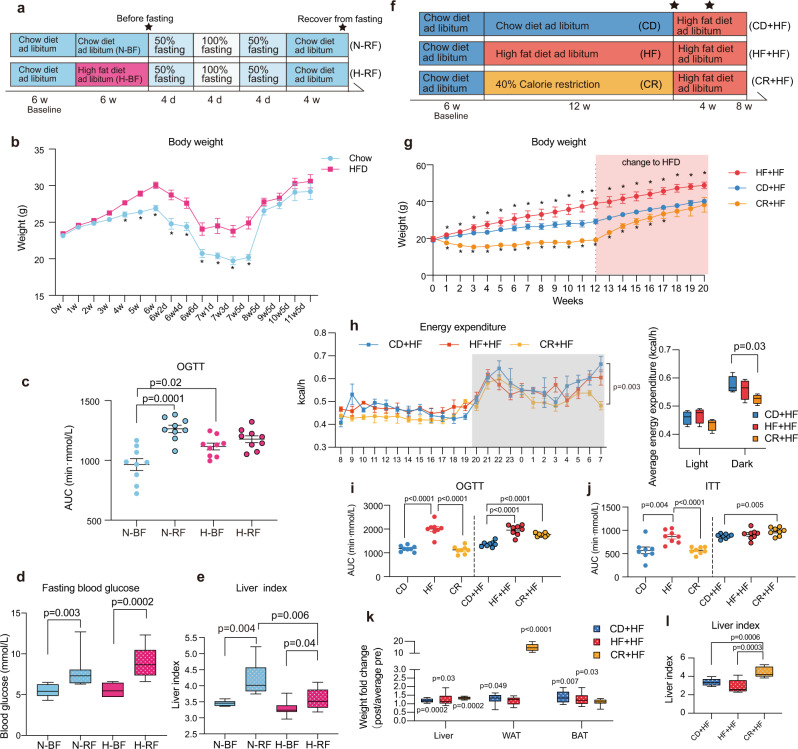
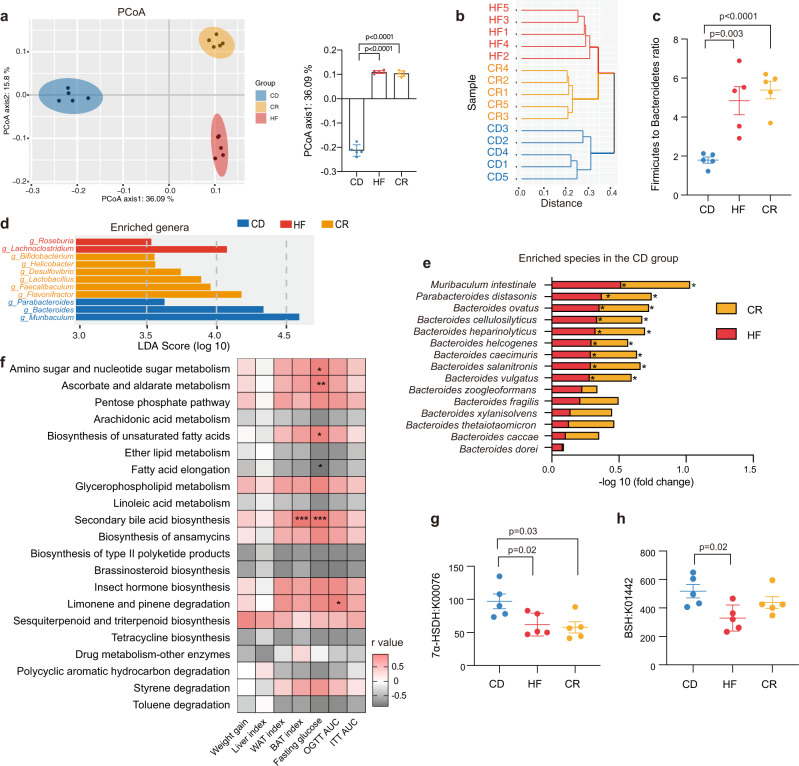
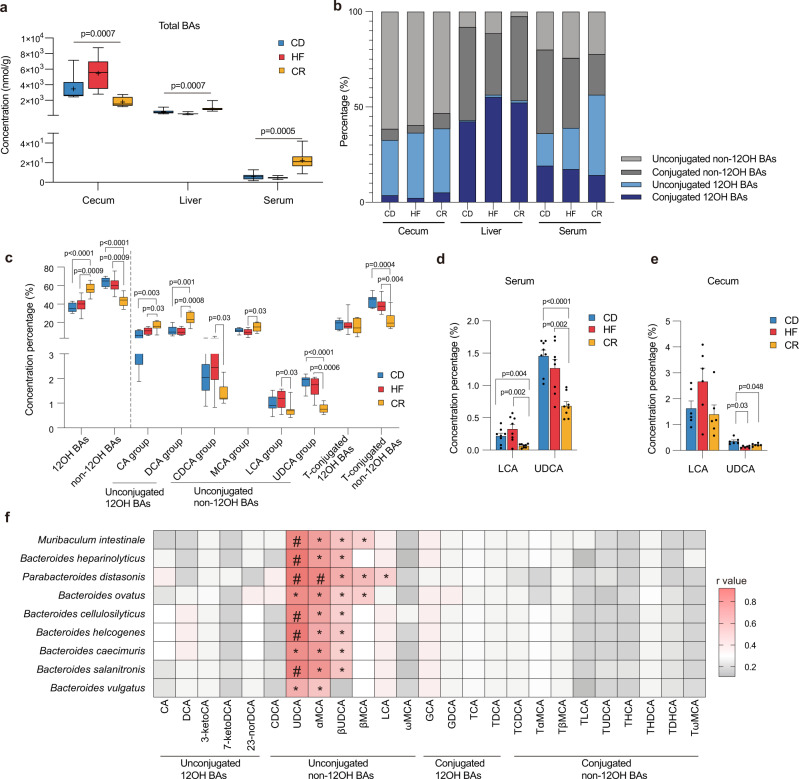
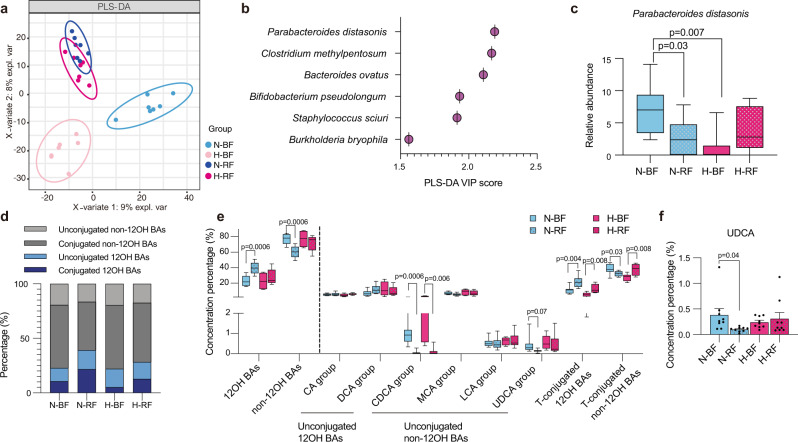
Verification
Claims the paper makes
The claims and statistics of this paper haven’t been checked yet.
Free: it reads the open-access text and checks the first 5 claims that cite a source we can check. Create a free account to check every claim.
Claims other papers make about this one
Each is checked against this paper’s own text: does it say what the citing paper says it does?
The source backs part of the claim, not all of it — or backs it for a different population, condition or comparison.
In the citing paper
“Additionally, adipose tissue plays a critical role in weight regulation, influenced by factors such as cellular stress, inflammation, extracellular matrix alterations, and adiponectin secretion [97, 98].”
From Comparing caloric restriction regimens for effective weight management in adults: a systematic review and network meta-analysis (2024) · cites this paper as [97]
Experimental — accuracy not yet measuredThe source backs part of the claim, not all of it — or backs it for a different population, condition or comparison.
In the citing paper
“while reciprocal interactions among gut microbes can also re-regulate metabolism processes [97].”
From Comparing caloric restriction regimens for effective weight management in adults: a systematic review and network meta-analysis (2024) · cites this paper as [97]
Experimental — accuracy not yet measured
Self-check
Percentages, sums and reported differences re-computed from the paper’s own numbers.
The self-check needs the paper’s full text.
Citations
Cites
An obesity-associated gut microbiome with increased capacity for energy harvest
Turnbaugh, P. J., Ley, R. E., Mahowald, M. A., Magrini, V., Mardis, E. R., & Gordon, J. I. (2006) · Nature · doi:10.1038/nature05414 · Cited by 12,444
Diet rapidly and reproducibly alters the human gut microbiome
David, L. A., Maurice, C. F., Carmody, R. N., Gootenberg, D. B., Button, J. E., Wolfe, B. E., Ling, A. V., Devlin, A. S., Varma, Y., Fischbach, M. A., et al. (2014) · Nature · doi:10.1038/nature12820 · Cited by 10,100
Caloric Restriction Delays Disease Onset and Mortality in Rhesus Monkeys
Colman, R. J., Anderson, R. M., Johnson, S. C., Kastman, E. K., Kosmatka, K. J., Beasley, T. M., Allison, D. B., Cruzen, C., Simmons, H. A., Kemnitz, J. W., et al. (2009) · Science · doi:10.1126/science.1173635 · Cited by 2,277
Bile acid-microbiota crosstalk in gastrointestinal inflammation and carcinogenesis
Jia, W., Xie, G., & Jia, W. (2018) · Nature Reviews Gastroenterology & Hepatology · doi:10.1038/nrgastro.2017.119 · Cited by 1,924
Self-citationFasting: molecular mechanisms and clinical applications
Longo, V. D., & Mattson, M. P. (2014) · Cell Metabolism · doi:10.1016/j.cmet.2013.12.008 · Cited by 1,425
Long-term weight-loss maintenance: a meta-analysis of US studies
Anderson, J. W., Konz, E. C., Frederich, R. C., & Wood, C. L. (2001) · The American Journal of Clinical Nutrition · doi:10.1093/ajcn/74.5.579 · Cited by 1,351
Wang, K., Liao, M., Zhou, N., Bao, L., Ma, K., Zheng, Z., Wang, Y., Liu, C., Wang, W., Wang, J., et al. (2019) · Cell Reports · doi:10.1016/j.celrep.2018.12.028 · Cited by 1,158
Self-citationFasting, Circadian Rhythms, and Time-Restricted Feeding in Healthy Lifespan
Longo, V. D., & Panda, S. (2016) · Cell Metabolism · doi:10.1016/j.cmet.2016.06.001 · Cited by 1,013
Connecting dysbiosis, bile-acid dysmetabolism and gut inflammation in inflammatory bowel diseases
Duboc, H., Rajca, S., Rainteau, D., Benarous, D., Maubert, M.-A., Quervain, E., Thomas, G., Barbu, V., Humbert, L., Despras, G., et al. (2013) · Gut · doi:10.1136/gutjnl-2012-302578 · Cited by 930
Huang, F., Zheng, X., Ma, X., Jiang, R., Zhou, W., Zhou, S., Zhang, Y., Lei, S., Wang, S., Kuang, J., et al. (2019) · Nature Communications · doi:10.1038/s41467-019-12896-x · Cited by 789
Self-citationJiao, N., Baker, S. S., Chapa-Rodriguez, A., Liu, W., Nugent, C. A., Tsompana, M., Mastrandrea, L., Buck, M. J., Baker, R. D., Genco, R. J., et al. (2018) · Gut · doi:10.1136/gutjnl-2017-314307 · Cited by 737
A metabolic pathway for bile acid dehydroxylation by the gut microbiome
Funabashi, M., Grove, T. L., Wang, M., Varma, Y., McFadden, M. E., Brown, L. C., Guo, C., Higginbottom, S., Almo, S. C., & Fischbach, M. A. (2020) · Nature · doi:10.1038/s41586-020-2396-4 · Cited by 590
Pathak, P., Xie, C., Nichols, R. G., Ferrell, J. M., Boehme, S., Krausz, K. W., Patterson, A. D., Gonzalez, F. J., & Chiang, J. Y. L. (2018) · Hepatology · doi:10.1002/hep.29857 · Cited by 567
The Farnesoid X Receptor: A Molecular Link Between Bile Acid and Lipid and Glucose Metabolism
Claudel, T., Staels, B., & Kuipers, F. (2005) · Arteriosclerosis, Thrombosis, and Vascular Biology · doi:10.1161/01.atv.0000178994.21828.a7 · Cited by 504
Structural modulation of gut microbiota in life-long calorie-restricted mice
Zhang, C., Li, S., Yang, L., Huang, P., Li, W., Wang, S., Zhao, G., Zhang, M., Pang, X., Yan, Z., et al. (2013) · Nature Communications · doi:10.1038/ncomms3163 · Cited by 461
Self-citationHepatic insulin resistance directly promotes formation of cholesterol gallstones
Biddinger, S. B., Haas, J. T., Yu, B. B., Bezy, O., Jing, E., Zhang, W., Unterman, T. G., Carey, M. C., & Kahn, C. R. (2008) · Nature Medicine · doi:10.1038/nm1785 · Cited by 368
Targeting the alternative bile acid synthetic pathway for metabolic diseases
Jia, W., Wei, M., Rajani, C., & Zheng, X. (2021) · Protein & Cell · doi:10.1007/s13238-020-00804-9 · Cited by 325
Self-citationWorthmann, A., John, C., Rühlemann, M. C., Baguhl, M., Heinsen, F.-A., Schaltenberg, N., Heine, M., Schlein, C., Evangelakos, I., Mineo, C., et al. (2017) · Nature Medicine · doi:10.1038/nm.4357 · Cited by 318
Weight Regain in U.S. Adults Who Experienced Substantial Weight Loss, 1999–2002
Weiss, E. C., Galuska, D. A., Kettel Khan, L., Gillespie, C., & Serdula, M. K. (2007) · American Journal of Preventive Medicine · doi:10.1016/j.amepre.2007.02.040 · Cited by 307
Daily Fasting Improves Health and Survival in Male Mice Independent of Diet Composition and Calories
Mitchell, S. J., Bernier, M., Mattison, J. A., Aon, M. A., Kaiser, T. A., Anson, R. M., Ikeno, Y., Anderson, R. M., Ingram, D. K., & de Cabo, R. (2019) · Cell Metabolism · doi:10.1016/j.cmet.2018.08.011 · Cited by 306
Damms-Machado, A., Mitra, S., Schollenberger, A. E., Kramer, K. M., Meile, T., Königsrainer, A., Huson, D. H., & Bischoff, S. C. (2015) · BioMed Research International · doi:10.1155/2015/806248 · Cited by 291
Sodium–glucose cotransporter type 2 inhibitors for the treatment of type 2 diabetes mellitus
Scheen, A. J. (2020) · Nature Reviews Endocrinology · doi:10.1038/s41574-020-0392-2 · Cited by 267 · cited 3×
“Eighteen mice were randomly divided into three groups and administered CR diet for 12 weeks, then with different diets feeding for 4 weeks: (1) chow diet group (CR+CD), (2) HFD with vehicle (CR+HF+ Vehicle) group, and (3) HFD with 0.”
MethodA dysregulated bile acid-gut microbiota axis contributes to obesity susceptibility
Wei, M., Huang, F., Zhao, L., Zhang, Y., Yang, W., Wang, S., Li, M., Han, X., Ge, K., Qu, C., et al. (2020) · eBioMedicine · doi:10.1016/j.ebiom.2020.102766 · Cited by 253
Self-citationDisruption of the Oxysterol 7α-Hydroxylase Gene in Mice
Li-Hawkins, J., Lund, E. G., Turley, S. D., & Russell, D. W. (2000) · Journal of Biological Chemistry · doi:10.1074/jbc.m001811200 · Cited by 246
Fasting increases risk for onset of binge eating and bulimic pathology: A 5-year prospective study.
Stice, E., Davis, K., Miller, N. P., & Marti, C. N. (2008) · Journal of Abnormal Psychology · doi:10.1037/a0013644 · Cited by 216
Brufau, G., Stellaard, F., Prado, K., Bloks, V. W., Jonkers, E., Boverhof, R., Kuipers, F., & Murphy, E. J. (2010) · Hepatology · doi:10.1002/hep.23831 · Cited by 198
The acidic pathway of bile acid synthesis: Not just an alternative pathway
Pandak, W. M., & Kakiyama, G. (2019) · Liver Research · doi:10.1016/j.livres.2019.05.001 · Cited by 173
Sarlio‐Lähteenkorva, S., Rissanen, A., & Kaprio, J. A. (2000) · International Journal of Obesity · doi:10.1038/sj.ijo.0801094 · Cited by 171
Ott, B., Skurk, T., Hastreiter, L., Lagkouvardos, I., Fischer, S., Büttner, J., Kellerer, T., Clavel, T., Rychlik, M., Haller, D., et al. (2017) · Scientific Reports · doi:10.1038/s41598-017-12109-9 · Cited by 170
Impaired Generation of 12-Hydroxylated Bile Acids Links Hepatic Insulin Signaling with Dyslipidemia
Haeusler, R. A., Pratt-Hyatt, M., Welch, C. L., Klaassen, C. D., & Accili, D. (2012) · Cell Metabolism · doi:10.1016/j.cmet.2011.11.010 · Cited by 153
Caussy, C., Hsu, C., Singh, S., Bassirian, S., Kolar, J., Faulkner, C., Sinha, N., Bettencourt, R., Gara, N., Valasek, M. A., et al. (2019) · Alimentary Pharmacology & Therapeutics · doi:10.1111/apt.15035 · Cited by 129
Commensal Koch's postulates: establishing causation in human microbiota research
Neville, B. A., Forster, S. C., & Lawley, T. D. (2018) · Current Opinion in Microbiology · doi:10.1016/j.mib.2017.10.001 · Cited by 102
Dutia, R., Embrey, M., O'Brien, S., Haeusler, R. A., Agénor, K. K., Homel, P., McGinty, J., Vincent, R. P., Alaghband-Zadeh, J., Staels, B., et al. (2015) · International Journal of Obesity · doi:10.1038/ijo.2015.1 · Cited by 91
Bartley, J. M., Zhou, X., Kuchel, G. A., Weinstock, G. M., & Haynes, L. (2017) · Frontiers in Immunology · doi:10.3389/fimmu.2017.01164 · Cited by 87
Charlet, R., Bortolus, C., Sendid, B., & Jawhara, S. (2020) · Scientific Reports · doi:10.1038/s41598-020-68214-9 · Cited by 87
Placanica, J. L., Faunce, G. J., & Soames Job, R. F. (2002) · International Journal of Eating Disorders · doi:10.1002/eat.10066 · Cited by 84
Stępień, M., López‐Nogueroles, M., Lahoz, A., Kuhn, T. E., Perlemuter, G., Voican, C. S., Ciocan, D. M., Boutron‐Ruault, M., Jansen, E. H. J. M., Viallon, V., et al. (2022) · International Journal of Cancer · doi:10.1002/ijc.33885 · Cited by 72
Higuchi, S., Ahmad, T. R., Argueta, D. A., Perez, P. A., Zhao, C., Schwartz, G. J., DiPatrizio, N. V., & Haeusler, R. A. (2020) · Gut · doi:10.1136/gutjnl-2019-319693 · Cited by 70
Calorie restriction and its impact on gut microbial composition and global metabolism
Zheng, X., Wang, S., & Jia, W. (2018) · Frontiers of Medicine · doi:10.1007/s11684-018-0670-8 · Cited by 65
Self-citationIncreased bile acids in enterohepatic circulation by short-term calorie restriction in male mice
Fu, Z. D., & Klaassen, C. D. (2013) · Toxicology and Applied Pharmacology · doi:10.1016/j.taap.2013.10.020 · Cited by 56
Nojima, K., Sugimoto, K., Ueda, H., Babaya, N., Ikegami, H., & Rakugi, H. (2012) · Endocrine Journal · doi:10.1507/endocrj.ej12-0258 · Cited by 53
Russo, M., Fabersani, E., Mukdsi, M. C. A., Ross, R., Fontana, C. A., Benítez‐Páez, A., Gauffin-Cano, P., & Medina, R. B. (2016) · Nutrients · doi:10.3390/nu8070415 · Cited by 47
Bile acid profiles in diabetic (db/db) mice and their wild type littermates
Chen, C., Hu, B., Wu, T., Zhang, Y., Xu, Y., Feng, Y., & Jiang, H. (2016) · Journal of Pharmaceutical and Biomedical Analysis · doi:10.1016/j.jpba.2016.09.023 · Cited by 40
Marlatt, K. L., Redman, L. M., Burton, J. H., Martin, C. K., & Ravussin, É. (2017) · American Journal of Clinical Nutrition · doi:10.3945/ajcn.116.146837 · Cited by 39
Biemann, R., Penner, M., Borucki, K., Westphal, S., Luley, C., Rönicke, R., Biemann, K., Weikert, C., Lux, A., Goncharenko, N., et al. (2016) · Scientific Reports · doi:10.1038/srep30173 · Cited by 36
Narushima, S., Itoh, K., Takamine, F., & Uchida, K. (1999) · Microbiology and Immunology · doi:10.1111/j.1348-0421.1999.tb01224.x · Cited by 33
Low-calorie diets in the management of type 2 diabetes mellitus
Lean, M. E. J. (2019) · Nature Reviews Endocrinology · doi:10.1038/s41574-019-0186-6 · Cited by 33
Calonne, J., Isacco, L., Miles-Chan, J., Arsenijevic, D., Montani, J.-P., Guillet, C., Boirie, Y., & Dulloo, A. G. (2019) · Frontiers in Endocrinology · doi:10.3389/fendo.2019.00119 · Cited by 29
Duggan, C. R., Tapsoba, J. D. D., Shivappa, N., Harris, H. R., Hébert, J. R., Wang, C., & McTiernan, A. (2021) · Cancer Prevention Research · doi:10.1158/1940-6207.capr-20-0181 · Cited by 26
van Nierop, F. S., Kulik, W., Endert, E., Schaap, F. G., Damink, S. W. M. O., Romijn, J. A., & Soeters, M. R. (2016) · Clinical Nutrition · doi:10.1016/j.clnu.2016.10.006 · Cited by 23
Gluco-Metabolic Effects of Pharmacotherapy-Induced Modulation of Bile Acid Physiology
Brønden, A., & Knop, F. K. (2019) · The Journal of Clinical Endocrinology & Metabolism · doi:10.1210/clinem/dgz025 · Cited by 22
Altered Bile Acid Metabolism Related to Atherosclerosis in Alloxan Diabetic Rats
Uchida, K., Satoh, T., Takase, H., Nomura, Y., Takasu, N., Kurihara, H., & Takeuchi, N. (1996) · Journal of Atherosclerosis and Thrombosis · doi:10.5551/jat1994.3.52 · Cited by 17
The Role of Sirt1 in Bile Acid Regulation during Calorie Restriction in Mice
Fu, Z. D., Cui, J. Y., & Klaassen, C. D. (2015) · PLoS ONE · doi:10.1371/journal.pone.0138307 · Cited by 15
Strategy for Intercorrelation Identification between Metabolome and Microbiome
Liang, D., Li, M., Wei, R., Wang, J., Li, Y., Jia, W. P., & Chen, T. (2019) · Analytical Chemistry · doi:10.1021/acs.analchem.9b02948 · Cited by 12
Self-citationSu, J., Zhao, Q., Zhao, A., Jia, W. P., Zhu, W., Lu, J., & Ma, X. (2021) · Acta Diabetologica · doi:10.1007/s00592-021-01717-7 · Cited by 12
Self-citationDutia, R., Embrey, M., O'Brien, S., Haeusler, R. A., Agenor, K., Homel, P., McGinty, J., Vincent, R. P., Alaghband-Zadeh, J., Staels, B., et al. (2016) · International Journal of Obesity · doi:10.1038/ijo.2015.250 · Cited by 12
Kraemer, M. D. S., Moehlecke, M., Rheinheimer, J., Canani, L. H. S., Leitão, C. B., & Nicoletto, B. B. (2020) · Surgery for Obesity and Related Diseases · doi:10.1016/j.soard.2020.06.056 · Cited by 9
Cited by
Fleishman, J. S., & Kumar, S. (2024) · Signal Transduction and Targeted Therapy · doi:10.1038/s41392-024-01811-6 · Cited by 544
Kuang, J., Wang, J., Li, Y., Li, M., Zhao, M., Ge, K., Zheng, D., Cheung, K. C. P., Liao, B., Wang, S., et al. (2023) · Cell Metabolism · doi:10.1016/j.cmet.2023.07.011 · Cited by 321
Self-citationThe gut microbiota in obesity and weight management: microbes as friends or foe?
Van Hul, M., & Cani, P. D. (2023) · Nature Reviews Endocrinology · doi:10.1038/s41574-022-00794-0 · Cited by 318
Gut commensal Parabacteroides distasonis alleviates inflammatory arthritis
Sun, H., Guo, Y., Wang, H., Yin, A., Hu, J., Yuan, T., Zhou, S., Xu, W., Wei, P., Yin, S., et al. (2023) · Gut · doi:10.1136/gutjnl-2022-327756 · Cited by 249
Self-citationZhao, Q., Dai, M.-Y., Huang, R.-Y., Duan, J.-Y., Zhang, T., Bao, W.-M., Zhang, J.-Y., Gui, S.-Q., Xia, S.-M., Dai, C.-T., et al. (2023) · Nature Communications · doi:10.1038/s41467-023-37459-z · Cited by 208
Self-citation
Metadata
- Authors
- Li, M., Wang, S., Li, Y., Zhao, M., Kuang, J., Liang, D., Wang, J., Wei, M., Rajani, C., Ma, X., Tang, Y., Ren, Z., Chen, T., Zhao, A., Hu, C., Shen, C., Jia, W., Liu, P., Zheng, X., & Jia, W.
- Affiliations
- Shanghai Jiao Tong University (CN)
- Hong Kong Baptist University (HK)
- University of Hawaii Cancer Center (US)
- East China Normal University (CN)
- Corresponding author
- Jia, Weiping
- Zheng, Xiaojiao
- Jia, Wei
- ORCID
- Venue
- Nature Communications
- Published
- 2022-04-19
- Volume
- 13
- Issue
- 1
- Pages
- 2060-2060
- ISSN
- 2041-1723 (ISSN-L)
- PMC
- PMC9018700
- OpenAlex
- W4224239131
- Cited by
- 175
- References
- 57
- Citations by year
- 2026: 18 · 2025: 38 · 2024: 59 · 2023: 43 · 2022: 17
- FWCI
- 12.89
- Type
- journal article
- Language
- en
- Open access
- gold
- doi.org
- Licence
- cc-by
- creativecommons.org/licenses/by/4.0 (tdm)
- creativecommons.org/licenses/by/4.0 (vor)
- Locations
- Nature Communications (publishedVersion, cc-by)
- PubMed Central (publishedVersion, cc-by)
- PubMed (publishedVersion)
- RePEc: Research Papers in Economics (submittedVersion)
- DOAJ (DOAJ: Directory of Open Access Journals) (submittedVersion, cc-by-sa)
- Funders
- National Natural Science Foundation of China (31972935, 82122012, 81974073)
- National Cancer Institute (P30CA071789)
- Topics
- Life Sciences › Biochemistry, Genetics and Molecular Biology › Molecular Biology › Gut microbiota and health
- Health Sciences › Medicine › Physiology (medical) › Dietary Effects on Health
- Life Sciences › Neuroscience › Endocrine and Autonomic Systems › Regulation of Appetite and Obesity
- Keywords
- caloric restriction, weight regain, gut microbiota, bile acids, Parabacteroides distasonis, high-fat diet, ursodeoxycholic acid, lithocholic acid, UCP1, brown adipose tissue thermogenesis, glucagon-like peptide-1, probiotics, energy metabolism
- MeSH terms
- Gastrointestinal Microbiome, Animals, Bile Acids and Salts, Mice, Inbred C57BL, Weight Gain, Caloric Restriction, Bacteroidetes, Mice, Diet, High-Fat
About these checks
Registry, retraction, Cites and statistics results are computed, not judged, with one exception: a printed reference that no index lists is read once by a model before it counts as a citation error. Claims are extracted by a model and kept only when their quote appears verbatim in the text; each cited source is then checked, with a model’s help, for whether it says what the claim relies on. Those verdicts can be wrong — read the claim’s quote and the cited source before relying on one.
Statistics and arithmetic are recomputed, not judged.
Confidence bands are shown only for fields calibrated on our annotated test set. None is calibrated yet, so no band is shown.
What counts as a claim ›How we measure confidence ›How we check this ›
Are you an author, or do you see a problem with this page? Request a review
Data sources
Bibliographic data: Semantic Scholar, OpenAlex, Crossref.
Contains information from the Semantic Scholar Academic Graph Datasets, made available under the ODC Attribution License (ODC-BY 1.0).
Semantic Scholar’s data is described in: Kinney, R., et al. (2023). The Semantic Scholar Open Data Platform. arXiv:2301.10140.
