

Discovery and characterization of potent pan-variant SARS-CoV-2 neutralizing antibodies from individuals with Omicron breakthrough infection
Open accessThe DOI matches its Crossref record; 55 of the 55 references it cites were found in a registry or an index.
Abstract
The SARS-CoV-2 Omicron variant evades most currently approved neutralizing antibodies (nAbs) and caused drastic decrease of plasma neutralizing activity elicited by vaccination or prior infection, urging the need for the development of pan-variant antivirals. Breakthrough infection induces a hybrid immunological response with potentially broad, potent and durable protection against variants, therefore, convalescent plasma from breakthrough infection may provide a broadened repertoire for identifying elite nAbs. We performed single-cell RNA sequencing (scRNA-seq) and BCR sequencing (scBCR-seq) of B cells from BA.1 breakthrough-infected patients who received 2 or 3 previous doses of inactivated vaccine. Elite nAbs, mainly derived from the IGHV2–5 and IGHV3-66/53 germlines, showed potent neutralizing activity across Wuhan-Hu-1, Delta, Omicron sublineages BA.1 and BA.2 at picomolar NT 50 values. Cryo-EM analysis revealed diverse modes of spike recognition and guides the design of cocktail therapy. A single injection of paired antibodies cocktail provided potent protection in the K18-hACE2 transgenic female mouse model of SARS-CoV-2 infection.
Overview
The claims and statistics of this paper haven’t been checked yet.
Free: it reads the open-access text and checks the first 5 claims that cite a source we can check. Create a free account to check every claim.
Integrity signals
Registry
Cites
Statistics
Figures
Verification
Claims the paper makes
The claims and statistics of this paper haven’t been checked yet.
Free: it reads the open-access text and checks the first 5 claims that cite a source we can check. Create a free account to check every claim.
Claims other papers make about this one
Each is checked against this paper’s own text: does it say what the citing paper says it does?
The source backs part of the claim, not all of it — or backs it for a different population, condition or comparison.
In the citing paper
“In the realm of infectious diseases, the technologies shed light on host-pathogen dynamics, immune responses, and advanced therapeutic strategies, especially in COVID-19 [145, 146, 219–223].”
From Single-cell sequencing to multi-omics: technologies and applications (2024) · cites this paper as [145]
Experimental — accuracy not yet measuredThe cited source says what the claim attributes to it.
In the citing paper
“Combined with scRNA-seq, scBCR-seq was applied for producing cell atlas [144], identifying different neutralizing antibodies [145], conducting vaccine studies [146], etc., and proved invaluable in studies investigating the dynamics of the immune system.”
From Single-cell sequencing to multi-omics: technologies and applications (2024) · cites this paper as [145]
The cited source says what the claim attributes to it.
In the citing paper
“A study focused on the breakthrough infection and pan-variant antivirals, and they successfully identified elite neutralizing antibodies (nAbs) repertoire using scRNA/BCR-seq of B cells, which showed strong neutralizing activity targeting numerous variants [145].”
From Single-cell sequencing to multi-omics: technologies and applications (2024) · cites this paper as [145]
Self-check
Percentages, sums and reported differences re-computed from the paper’s own numbers.
The self-check needs the paper’s full text.
Citations
Cites
UCSF Chimera—A visualization system for exploratory research and analysis
Pettersen, E. F., Goddard, T. D., Huang, C. C., Couch, G. S., Greenblatt, D. M., Meng, E. C., & Ferrin, T. E. (2004) · Journal of Computational Chemistry · doi:10.1002/jcc.20084 · Cited by 45,828 · cited 2×
“Theatomicmodelsof thecomplexesweregeneratedby fi rst fi ttingthe chains of the SARS-CoV-2 S trimer and Fabs (PDB ID: 7XOD) 49 into the cryo-EM maps using UCSF Chimera 50 .”
Features and development of Coot
Emsley, P., Lohkamp, B., Scott, W. G., & Cowtan, K. (2010) · Acta Crystallographica Section D Biological Crystallography · doi:10.1107/s0907444910007493 · Cited by 29,915 · cited 2×
“Fitted models were then manually rebuilt using Coot 51 according to the protein sequences and map density and real-space re fi ned with secondary structure and geometry restraints against the map using Phenix 52 .”
PHENIX : a comprehensive Python-based system for macromolecular structure solution
Adams, P. D., Afonine, P. V., Bunkóczi, G., Chen, V. B., Davis, I. W., Echols, N., Headd, J. J., Hung, L.-W., Kapral, G. J., Grosse-Kunstleve, R. W., et al. (2010) · Acta Crystallographica Section D Biological Crystallography · doi:10.1107/s0907444909052925 · Cited by 23,716 · cited 3×
“Fitted models were then manually rebuilt using Coot 51 according to the protein sequences and map density and real-space re fi ned with secondary structure and geometry restraints against the map using Phenix 52 .”
Integrated analysis of multimodal single-cell data
Hao, Y., Hao, S., Andersen-Nissen, E., Mauck, W. M., Zheng, S., Butler, A., Lee, M. J., Wilk, A. J., Darby, C., Zagar, M., et al. (2020) · doi:10.1101/2020.10.12.335331 · Cited by 15,508
MolProbity : all-atom structure validation for macromolecular crystallography
Chen, V. B., Arendall, W. B., Headd, J. J., Keedy, D. A., Immormino, R. M., Kapral, G. J., Murray, L. W., Richardson, J. S., & Richardson, D. C. (2010) · Acta Crystallographica Section D Biological Crystallography · doi:10.1107/s0907444909042073 · Cited by 14,115 · cited 1×
“Models were analyzed using MolProbity 53 .”
cryoSPARC: algorithms for rapid unsupervised cryo-EM structure determination
Punjani, A., Rubinstein, J. L., Fleet, D. J., & Brubaker, M. A. (2017) · Nature Methods · doi:10.1038/nmeth.4169 · Cited by 11,626
SCANPY: large-scale single-cell gene expression data analysis
Wolf, F. A., Angerer, P., & Theis, F. J. (2018) · Genome Biology · doi:10.1186/s13059-017-1382-0 · Cited by 8,881
MotionCor2: anisotropic correction of beam-induced motion for improved cryo-electron microscopy
Zheng, S. Q., Palovcak, E., Armache, J.-P., Verba, K. A., Cheng, Y., & Agard, D. A. (2017) · Nature Methods · doi:10.1038/nmeth.4193 · Cited by 7,777
Automated electron microscope tomography using robust prediction of specimen movements
Mastronarde, D. N. (2005) · Journal of Structural Biology · doi:10.1016/j.jsb.2005.07.007 · Cited by 5,336
Scrublet: computational identification of cell doublets in single-cell transcriptomic data
Wolock, S. L., Lopez, R., & Klein, A. M. (2019) · Cell Systems · doi:10.1016/j.cels.2018.11.005 · Cited by 2,758
Scrublet: computational identification of cell doublets in single-cell transcriptomic data
Wolock, S. L., Lopez, R., & Klein, A. M. (2018) · doi:10.1101/357368 · Cited by 2,758
Minor, W., Cymborowski, M., Otwinowski, Z., & Chruszcz, M. (2006) · Acta Crystallographica Section D Biological Crystallography · doi:10.1107/s0907444906019949 · Cited by 2,099
Starr, T. N., Greaney, A. J., Hilton, S. K., Ellis, D., Crawford, K. H. D., Dingens, A. S., Navarro, M. J., Bowen, J. E., Tortorici, M. A., Walls, A. C., et al. (2020) · Cell · doi:10.1016/j.cell.2020.08.012 · Cited by 1,956 · cited 1×
“In addition, R403,G416,andY421areconstrainedbyACE2bindingandRBDfolding, and mutations of these epitopes seriously affect ACE2 af fi nity and RBD expression 34 .”
BA.2.12.1, BA.4 and BA.5 escape antibodies elicited by Omicron infection
Cao, Y., Yisimayi, A., Jian, F., Song, W., Xiao, T., Wang, L., Du, S., Wang, J., Li, Q., Chen, X., et al. (2022) · Nature · doi:10.1038/s41586-022-04980-y · Cited by 1,335 · cited 13×
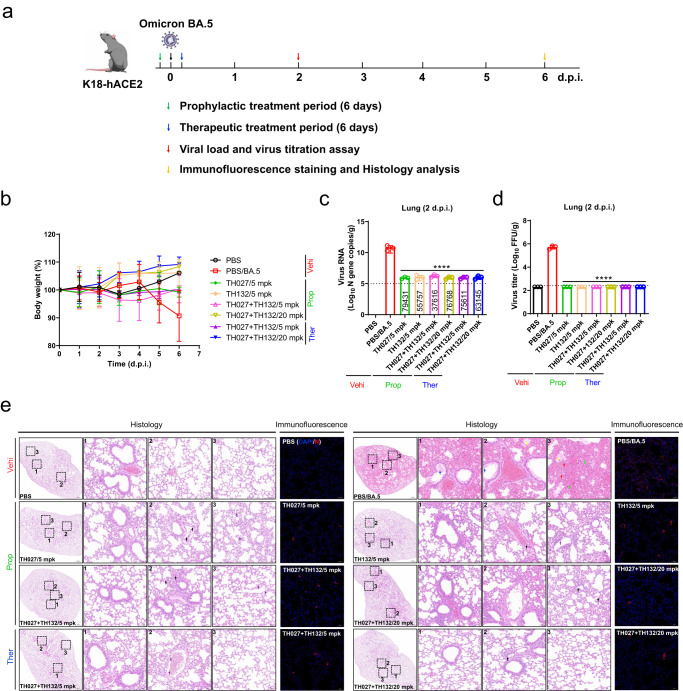
“Administration of TH027 + TH132 cocktail signi fi cantly improved the body weight of BA.5-infected mice starting from 3 d.p.i. in both of the prophylactic and therapeutic group (Fig.”
InfluentialSelf-citationCele, S., Jackson, L., Khoury, D. S., Khan, K., Moyo-Gwete, T., Tegally, H., San, J. E., Cromer, D., Scheepers, C., Amoako, D., et al. (2021) · doi:10.1101/2021.12.08.21267417 · Cited by 1,333 · cited 1×
“…34 distinct insertions,deletions, and mutations 6 , along with 15 amino acid mutations located in the receptor-binding domain (RBD), which leads to widespread escape from drugs and vaccines developed based on the ancestral strain in the early stage 7,8 , especially RBD-speci fi c antibodies 6 .”
A human neutralizing antibody targets the receptor-binding site of SARS-CoV-2
Shi, R., Shan, C., Duan, X., Chen, Z., Liu, P., Song, J., Song, T., Bi, X., Han, C., Wu, L., et al. (2020) · Nature · doi:10.1038/s41586-020-2381-y · Cited by 1,286 · cited 2×
“However, the majority of the currently approved SARS-CoV-2 nAbs and cocktail therapy have been reported to reduce or abrogate neutralizing potency against emerging VOCs, especially for BQ.1.1 and XBB 13,14 . such as LY-CoV1404 15 , REGN10933 +REGN10987 16 , LY-CoV016+LY-CoV555 17,18 , and AZD1061+ AZD8895 19 .”
InfluentialSelf-citationBaum, A., Fulton, B. O., Wloga, E., Copin, R., Pascal, K. E., Russo, V., Giordano, S., Lanza, K., Negron, N., Ni, M., et al. (2020) · Science · doi:10.1126/science.abd0831 · Cited by 1,253 · cited 1×
“One of the expected goals of our efforts was to identify elite antibodies for paired antibody cocktail therapies, with the goal of reducing the likelihood of ef fi cacy loss against future variants and viral escape mutants that may be selected under the pressure of single antibody treatment 36 .”
IgBLAST: an immunoglobulin variable domain sequence analysis tool
Ye, J., Ma, N., Madden, T. L., & Ostell, J. M. (2013) · Nucleic Acids Research · doi:10.1093/nar/gkt382 · Cited by 1,189 · cited 1×
“18.0) 43 .”
InfluentialCao, Y., Su, B., Guo, X., Sun, W., Deng, Y., Bao, L., Zhu, Q., Zhang, X., Zheng, Y., Geng, C., et al. (2020) · Cell · doi:10.1016/j.cell.2020.05.025 · Cited by 1,188 · cited 2×
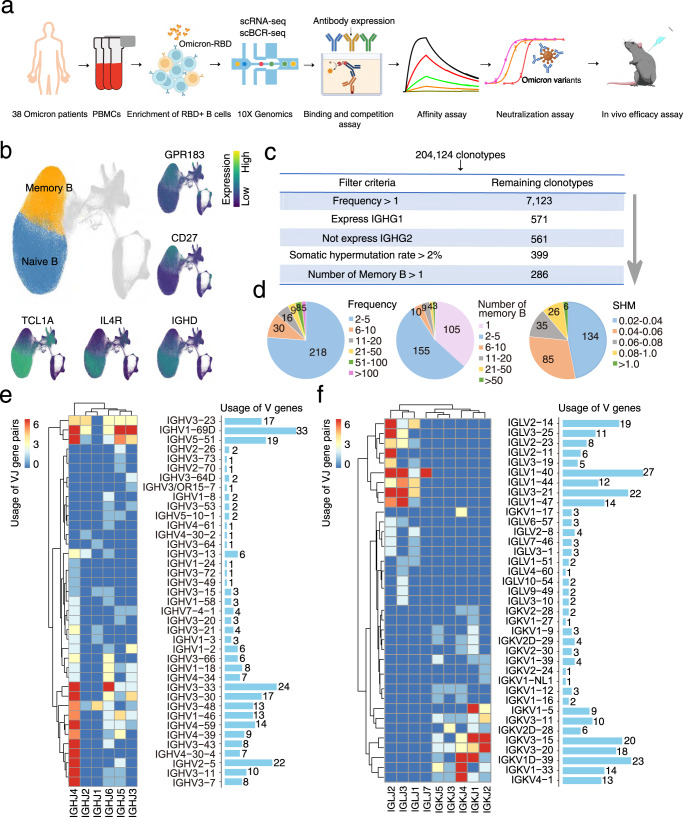
“The clonotypes featuring a frequency higher than 1, expressing IGHG1 but not IGHG2, having a somatic hypermutation (SHM) rate higher than 2% (corresponding to suf fi cient af fi nity maturation), and containing at least 1 MBC were considered to have high con fi dence in subsequent experiments 24 (Fig.”
Self-citationPotently neutralizing and protective human antibodies against SARS-CoV-2
Zost, S. J., Gilchuk, P., Case, J. B., Binshtein, E., Chen, R. E., Nkolola, J. P., Schäfer, A., Reidy, J. X., Trivette, A., Nargi, R. S., et al. (2020) · Nature · doi:10.1038/s41586-020-2548-6 · Cited by 1,041 · cited 3×
“However, the majority of the currently approved SARS-CoV-2 nAbs and cocktail therapy have been reported to reduce or abrogate neutralizing potency against emerging VOCs, especially for BQ.1.1 and XBB 13,14 . such as LY-CoV1404 15 , REGN10933 +REGN10987 16 , LY-CoV016+LY-CoV555 17,18 , and AZD1061+ AZD8895 19 .”
InfluentialWu, Y., Wang, F., Shen, C., Peng, W., Li, D., Zhao, C., Li, Z., Li, S., Bi, Y., Yang, Y., et al. (2020) · Science · doi:10.1126/science.abc2241 · Cited by 993
Self-citationAlarming antibody evasion properties of rising SARS-CoV-2 BQ and XBB subvariants
Wang, Q., Iketani, S., Li, Z., Liu, L., Guo, Y., Huang, Y., Bowen, A. D., Liu, M., Wang, M., Yu, J., et al. (2023) · Cell · doi:10.1016/j.cell.2022.12.018 · Cited by 912 · cited 1×
“…majority of the currently approved SARS-CoV-2 nAbs and cocktail therapy have been reported to reduce or abrogate neutralizing potency against emerging VOCs, especially for BQ.1.1 and XBB 13,14 . such as LY-CoV1404 15 , REGN10933 +REGN10987 16 , LY-CoV016+LY-CoV555 17,18 , and AZD1061+ AZD8895 19 .”
InfluentialSelf-citationCOVID-19 immune features revealed by a large-scale single-cell transcriptome atlas
Ren, X., Wen, W., Fan, X., Hou, W., Su, B., Cai, P., Li, J., Liu, Y., Tang, F., Zhang, F., et al. (2021) · Cell · doi:10.1016/j.cell.2021.01.053 · Cited by 865 · cited 1×
“Next, clonotypes were constituted by dominant heavy and light chains according to previous reports 24,25 .”
Self-citationImprinted SARS-CoV-2 humoral immunity induces convergent Omicron RBD evolution
Cao, Y., Jian, F., Wang, J., Yu, Y., Song, W., Yisimayi, A., Wang, J., An, R., Chen, X., Zhang, N., et al. (2023) · Nature · doi:10.1038/s41586-022-05644-7 · Cited by 841 · cited 1×
“…recent work has shown that this immunological background can be counterproductive due to immune imprinting or antigen sin, so the antibodies elicited after breakthrough infection remain primarily activated against ancestral strains, leading to poor ef fi cacy against new emerging variants 8,20,21 .”
Self-citationPersistence of somatic symptoms after COVID-19 in the Netherlands: an observational cohort study
Ballering, A. V., van Zon, S. K. R., olde Hartman, T. C., & Rosmalen, J. G. M. (2022) · The Lancet · doi:10.1016/s0140-6736(22)01214-4 · Cited by 827 · cited 1×
“Recently, there have been serious concerns about the long-term sequelae of COVID-19, where a substantial percentage of patients continue to experience symptoms of a physical, psychological, or cognitive nature that are seen as the next public health disaster 11 .”
Antibody escape of SARS-CoV-2 Omicron BA.4 and BA.5 from vaccine and BA.1 serum
Tuekprakhon, A., Nutalai, R., Dijokaite-Guraliuc, A., Zhou, D., Ginn, H. M., Selvaraj, M., Liu, C., Mentzer, A. J., Supasa, P., Duyvesteyn, H. M. E., et al. (2022) · Cell · doi:10.1016/j.cell.2022.06.005 · Cited by 686 · cited 13×
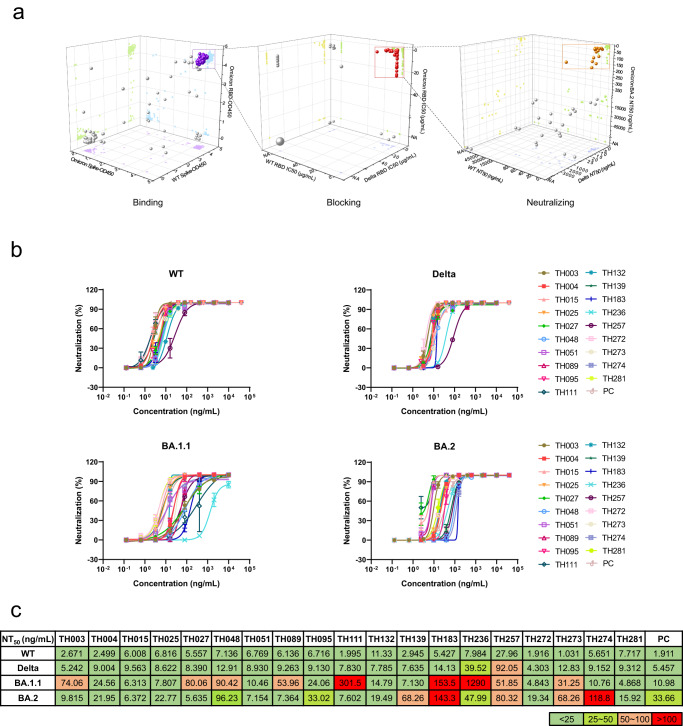
“The neutralization potency of these monoclonal antibodies spanned the single-digit to sextuple-digit ng/mL range against Wuhan-Hu-1, Delta, BA.1.1 and Omicron BA.2variants (Fig.”
InfluentialVDJtools: Unifying Post-analysis of T Cell Receptor Repertoires
Shugay, M., Bagaev, D. V., Turchaninova, M. A., Bolotin, D. A., Britanova, O. V., Putintseva, E. V., Pogorelyy, M. V., Nazarov, V. I., Zvyagin, I. V., Kirgizova, V. I., et al. (2015) · PLOS Computational Biology · doi:10.1371/journal.pcbi.1004503 · Cited by 614 · cited 1×
“2.1) 44 .”
InfluentialThe neutralizing antibody, LY-CoV555, protects against SARS-CoV-2 infection in nonhuman primates
Jones, B. E., Brown-Augsburger, P. L., Corbett, K. S., Westendorf, K., Davies, J., Cujec, T. P., Wiethoff, C. M., Blackbourne, J. L., Heinz, B. A., Foster, D., et al. (2021) · Science Translational Medicine · doi:10.1126/scitranslmed.abf1906 · Cited by 573 · cited 1×
“…majority of the currently approved SARS-CoV-2 nAbs and cocktail therapy have been reported to reduce or abrogate neutralizing potency against emerging VOCs, especially for BQ.1.1 and XBB 13,14 . such as LY-CoV1404 15 , REGN10933 +REGN10987 16 , LY-CoV016+LY-CoV555 17,18 , and AZD1061+ AZD8895 19 .”
InfluentialPathogenesis of SARS-CoV-2 in Transgenic Mice Expressing Human Angiotensin-Converting Enzyme 2
Jiang, R.-D., Liu, M.-Q., Chen, Y., Shan, C., Zhou, Y.-W., Shen, X.-R., Li, Q., Zhang, L., Zhu, Y., Si, H.-R., et al. (2020) · Cell · doi:10.1016/j.cell.2020.05.027 · Cited by 568
Self-citationRöltgen, K., Nielsen, S. C. A., Silva, O., Younes, S. F., Zaslavsky, M., Costales, C., Yang, F., Wirz, O. F., Solis, D., Hoh, R. A., et al. (2022) · Cell · doi:10.1016/j.cell.2022.01.018 · Cited by 469
Kurhade, C., Zou, J., Xia, H., Liu, M., Chang, H. C., Ren, P., Xie, X., & Shi, P. (2023) · Nature Medicine · doi:10.1038/s41591-022-02162-x · Cited by 423 · cited 1×
“Although the most commonly administered mRNA vaccine retains some neutralizing activity, it also exhibits signi fi cant immune evasion against emerging VOCs such as BA.5, BQ.1.1, and XBB.1 9,10 .”
InfluentialSelf-citationLY-CoV1404 (bebtelovimab) potently neutralizes SARS-CoV-2 variants
Westendorf, K., Žentelis, S., Wang, L., Foster, D., Vaillancourt, P., Wiggin, M., Lovett, E., van der Lee, R., Hendle, J., Pustilnik, A., et al. (2022) · Cell Reports · doi:10.1016/j.celrep.2022.110812 · Cited by 414 · cited 4×
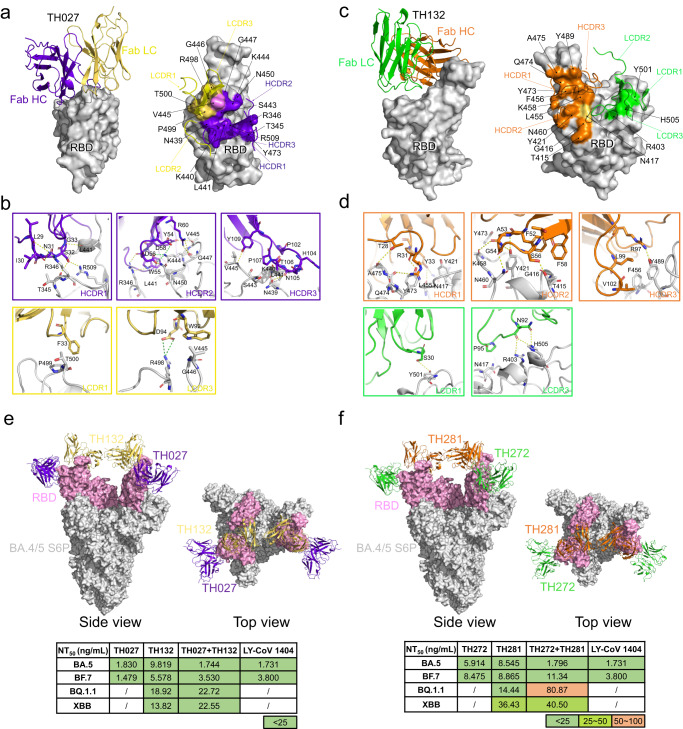
“These antibodies, which are similar to the IGHV2 – 5 germline-derived LY-CoV1404 15 and XGv265 26 , target the conserved solvent-exposed outer face of the SARS-CoV-2 RBD without directly blocking the binding of ACE2 and can be categorized into the RBD-5 community 2 .”
InfluentialShifting mutational constraints in the SARS-CoV-2 receptor-binding domain during viral evolution
Starr, T. N., Greaney, A. J., Hannon, W. W., Loes, A. N., Hauser, K., Dillen, J. R., Ferri, E., Farrell, A. G., Dadonaite, B., McCallum, M., et al. (2022) · Science · doi:10.1126/science.abo7896 · Cited by 303 · cited 4×
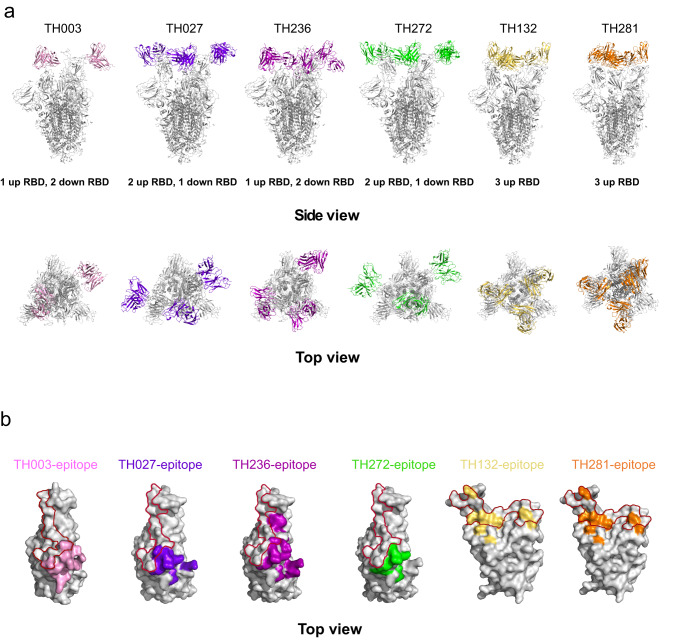
“S10a), especially Y501, which has epi-static shifts and enhances hACE2 binding 35 , however, these mutations donotaffecttheneutralizingactivityofTH281andTH132.”
InfluentialEvans, J. P., Zeng, C., Carlin, C., Lozanski, G., Saif, L. J., Oltz, E. M., Gumina, R. J., & Liu, S.-L. (2022) · Science Translational Medicine · doi:10.1126/scitranslmed.abn8057 · Cited by 236 · cited 1×
“…booster elicitsanef fi cienthumoralresponse,butduetoimmuneimprinting,itis likely to be directed primarily at the epitopes of ancestral strains 8,20 – 22 , nevertheless, studies have also reported that breakthrough infection can elicit more potent, breadth, and durability of serum-neutralizing…”
Omicron BA.4/BA.5 escape neutralizing immunity elicited by BA.1 infection
Khan, K., Karim, F., Ganga, Y., Bernstein, M., Jule, Z., Reedoy, K., Cele, S., Lustig, G., Amoako, D., Wolter, N., et al. (2022) · Nature Communications · doi:10.1038/s41467-022-32396-9 · Cited by 230 · cited 1×
“However, the protection ef fi cacy elicited by vaccination or primaryinfection was severely reduced or abrogated by Omicronsublineages 4,38,39 .”
Copin, R., Baum, A., Wloga, E., Pascal, K. E., Giordano, S., Fulton, B. O., Zhou, A., Negron, N., Lanza, K., Chan, N., et al. (2021) · Cell · doi:10.1016/j.cell.2021.06.002 · Cited by 212 · cited 1×
“…majority of the currently approved SARS-CoV-2 nAbs and cocktail therapy have been reported to reduce or abrogate neutralizing potency against emerging VOCs, especially for BQ.1.1 and XBB 13,14 . such as LY-CoV1404 15 , REGN10933 +REGN10987 16 , LY-CoV016+LY-CoV555 17,18 , and AZD1061+ AZD8895 19 .”
InfluentialMolecular basis of receptor binding and antibody neutralization of Omicron
Hong, Q., Han, W., Li, J., Xu, S., Wang, Y., Xu, C., Li, Z., Wang, Y., Zhang, C., Huang, Z., et al. (2022) · Nature · doi:10.1038/s41586-022-04581-9 · Cited by 203
SARS-CoV-2 breakthrough infections elicit potent, broad, and durable neutralizing antibody responses
Walls, A. C., Sprouse, K. R., Bowen, J. E., Joshi, A., Franko, N., Navarro, M. J., Stewart, C., Cameroni, E., McCallum, M., Goecker, E. A., et al. (2022) · Cell · doi:10.1016/j.cell.2022.01.011 · Cited by 196 · cited 1×
“…elicitsanef fi cienthumoralresponse,butduetoimmuneimprinting,itis likely to be directed primarily at the epitopes of ancestral strains 8,20 – 22 , nevertheless, studies have also reported that breakthrough infection can elicit more potent, breadth, and durability of serum-neutralizing responses 23 .”
Zhu, X., Mannar, D., Srivastava, S. S., Berezuk, A. M., Demers, J.-P., Saville, J. W., Leopold, K., Li, W., Dimitrov, D. S., Tuttle, K. S., et al. (2021) · PLOS Biology · doi:10.1371/journal.pbio.3001237 · Cited by 178
Grigorieff, N. (2016) · Methods in Enzymology · doi:10.1016/bs.mie.2016.04.013 · Cited by 177 · cited 1×
“Local resolution ranges were also analyzed within cryoSPARC according to the gold-standard Fourier shell correlation (FSC) cut-off of 0.143 48 .”
InfluentialMemory B cell repertoire from triple vaccinees against diverse SARS-CoV-2 variants
Wang, K., Jia, Z., Bao, L., Wang, L., Cao, L., Chi, H., Hu, Y., Li, Q., Zhou, Y., Jiang, Y., et al. (2022) · Nature · doi:10.1038/s41586-022-04466-x · Cited by 175 · cited 2×
“S1f), which was consistent with apreviousreportthattheIGHV2 – 5 lineagerepresented one ofthebest germlines for broadly neutralizing antibodies 15,26,27 .”
Self-citationStructural basis for potent antibody neutralization of SARS-CoV-2 variants including B.1.1.529
Zhou, T., Wang, L., Misasi, J., Pegu, A., Zhang, Y., Harris, D. R., Olia, A. S., Talana, C. A., Yang, E. S., Chen, M., et al. (2022) · Science · doi:10.1126/science.abn8897 · Cited by 170 · cited 2×
“…34 distinct insertions,deletions, and mutations 6 , along with 15 amino acid mutations located in the receptor-binding domain (RBD), which leads to widespread escape from drugs and vaccines developed based on the ancestral strain in the early stage 7,8 , especially RBD-speci fi c antibodies 6 .”
Self-citationCao, Y., Jian, F., Zhang, Z., Yisimayi, A., Hao, X., Bao, L., Yuan, F., Yu, Y., Du, S., Wang, J., et al. (2022) · Cell Reports · doi:10.1016/j.celrep.2022.111845 · Cited by 161
Self-citationCao, Y., Yisimayi, A., Bai, Y., Huang, W., Li, X., Zhang, Z., Yuan, T., An, R., Wang, J., Xiao, T., et al. (2021) · Cell Research · doi:10.1038/s41422-021-00514-9 · Cited by 146
Self-citationHuang, M., Wu, L., Zheng, A., Xie, Y., He, Q., Rong, X., Han, P., Du, P., Han, P., Zhang, Z., et al. (2022) · Immunity · doi:10.1016/j.immuni.2022.06.005 · Cited by 99
Self-citationGuo, Y., Huang, L., Zhang, G., Yao, Y., Zhou, H., Shen, S., Shen, B., Li, B., Li, X., Zhang, Q., et al. (2021) · Nature Communications · doi:10.1038/s41467-021-22926-2 · Cited by 94 · cited 3×
“However, the antibodies derived from IGHV3 – 66/3 – 53 or IGHV3 – 33 reported earlier 12,28 that target the receptor-binding motif (RBM) region was therefore easily escaped by Omicron variants.”
Self-citationEvasion of neutralizing antibody responses by the SARS-CoV-2 BA.2.75 variant
Qu, P.-K., Evans, J. P., Zheng, Y.-M., Carlin, C., Saif, L., Oltz, E. M., Xu, K., Gumina, R. J., & Liu, S.-L. (2022) · Cell Host and Microbe · doi:10.1016/j.chom.2022.09.015 · Cited by 86 · cited 1×
“However, the protection ef fi cacy elicited by vaccination or primaryinfection was severely reduced or abrogated by Omicronsublineages 4,38,39 .”
Xu, Y., Wu, C., Cao, X., Gu, C., Liu, H., Jiang, M., Wang, X., Yuan, Q., Wu, K., Liu, J., et al. (2022) · Cell Research · doi:10.1038/s41422-022-00672-4 · Cited by 84 · cited 3×
“Theatomicmodelsof thecomplexesweregeneratedby fi rst fi ttingthe chains of the SARS-CoV-2 S trimer and Fabs (PDB ID: 7XOD) 49 into the cryo-EM maps using UCSF Chimera 50 .”
Self-citationSix months of COVID vaccines: what 1.7 billion doses have taught scientists
Ledford, H. K. (2021) · Nature · doi:10.1038/d41586-021-01505-x · Cited by 77 · cited 1×
“Billions of doses of SARS-CoV-2 vaccines have been administered worldwide in the past two and a half years, and the rapid development and application of the vaccine have witnessed great scienti fi c and medical achievements 37 .”
Kurhade, C., Zou, J., Xia, H., Liu, M., Yang, Q., Cutler, M. W., Cooper, D., Muik, A., Şahin, U., Jansen, K. U., et al. (2022) · Emerging Microbes & Infections · doi:10.1080/22221751.2022.2099305 · Cited by 46 · cited 6×
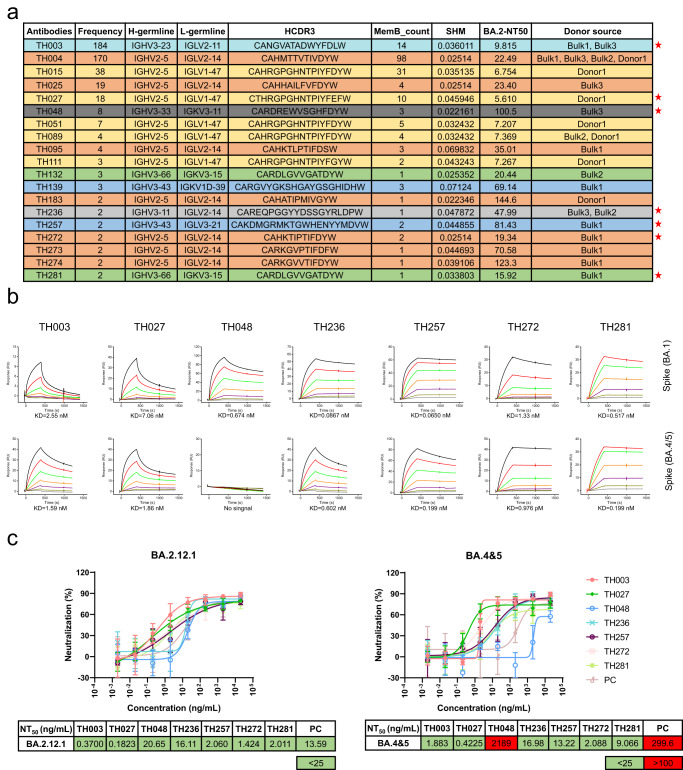
“Furthermore, we evaluated the binding af fi nity of TH027 and TH132 to the spike proteins of four variant strains: BF.7, BQ.1.1, XBB, and XBB.1.5, respectively.”
InfluentialSelf-citationStructural basis for SARS-CoV-2 neutralizing antibodies with novel binding epitopes
Fu, D. B., Zhang, G., Wang, Y., Zhang, Z., Hu, H., Shěn, S., Wu, J., Li, B., Li, X., Fang, Y., et al. (2021) · PLoS Biology · doi:10.1371/journal.pbio.3001209 · Cited by 41 · cited 1×
“However, the antibodies derived from IGHV3 – 66/3 – 53 or IGHV3 – 33 reported earlier 12,28 that target the receptor-binding motif (RBM) region was therefore easily escaped by Omicron variants.”
Self-citationStructural basis of Omicron neutralization by affinity-matured public antibodies
Sheward, D. J., Pushparaj, P., Das, H., Kim, C., Kim, S., Hanke, L., Dyrdak, R., McInerney, G., Albert, J., Murrell, B., et al. (2022) · bioRxiv (Cold Spring Harbor Laboratory) · doi:10.1101/2022.01.03.474825 · Cited by 30
Molecular analysis of a public cross-neutralizing antibody response to SARS-CoV-2
Yuan, M., Wang, Y., Lv, H., Tan, T. J. C., Wilson, I. A., & Wu, N. C. (2022) · Cell Reports · doi:10.1016/j.celrep.2022.111650 · Cited by 28 · cited 3×
“Notably, some populations cannot produce antibodies using speci fi c germlines since some elite antibodies present a strong allelic preference 27 , as do TH027 and TH272 reported here.”
SARS-CoV-2 vaccination washes away original antigenic sin
Pillai, S. S. (2022) · Trends in Immunology · doi:10.1016/j.it.2022.02.009 · Cited by 22 · cited 2×
“…booster elicitsanef fi cienthumoralresponse,butduetoimmuneimprinting,itis likely to be directed primarily at the epitopes of ancestral strains 8,20 – 22 , nevertheless, studies have also reported that breakthrough infection can elicit more potent, breadth, and durability of serum-neutralizing…”
Li, X., Pan, Y., Yin, Q., Wang, Z., Shan, S., Zhang, L., Yu, J., Qu, Y., Sun, L., Gui, F., et al. (2022) · Cell Discovery · doi:10.1038/s41421-022-00449-4 · Cited by 20
Self-citation
Cited by
Single-cell sequencing to multi-omics: technologies and applications
Wu, X., Yang, X., Dai, Y., Zhao, Z., Zhu, J., Guo, H., & Yang, R. (2024) · Biomarker Research · doi:10.1186/s40364-024-00643-4 · Cited by 222
“In the realm of infectious diseases, the technologies shed light on host-pathogen dynamics, immune responses, and advanced therapeutic strategies, especially in COVID-19 [145, 146, 219–223].”
BackgroundMethodInfluentialSelf-citationLu, Y., Yang, Q., Ran, T., Zhang, G., Li, W., Zhou, P., Tang, J., Dai, M., Zhong, J., Chen, H., et al. (2024) · Nature Communications · doi:10.1038/s41467-024-54462-0 · Cited by 49
“In this assay, the cytopathic effect (CPE) of SARS-CoV-2-infected Vero E6 cells with or withouttreatmentby thecompoundswasassessedusing CeligoImage Cytometer 45 .”
Self-citationStructural Immunology of SARS ‐ CoV ‐2
Yuan, M., & Wilson, I. A. (2024) · Immunological Reviews · doi:10.1111/imr.13431 · Cited by 29
Yang, P., Wu, X., Shang, H., Sun, Z., Wang, Z., Song, Z., Yuan, H., Dèng, F., Shěn, S., Guo, Y., et al. (2024) · PLoS Pathogens · doi:10.1371/journal.ppat.1012550 · Cited by 20
Self-citationLiao, Y., Ma, H., Wang, Z., Wang, S., He, Y., Chang, Y., Zong, H., Tang, H., Wang, L., Ke, Y., et al. (2025) · Proceedings of the National Academy of Sciences · doi:10.1073/pnas.2406659122 · Cited by 12
Self-citation
Metadata
- Authors
- Guo, Y., Zhang, G., Yang, Q., Xie, X., Lu, Y., Cheng, X., Wang, H., Liang, J., Tang, J., Gao, Y., Shang, H., Dai, J., Shi, Y., Zhou, J., Zhou, J., Guo, H., Yang, H., Qi, J., Liu, L., Ma, S., Zhang, B., Huo, Q., Xie, Y., Wu, J., Dong, F., Zhang, S., Lou, Z., Gao, Y., Song, Z., Wang, W., Sun, Z., Yang, X., Xiong, D., Liu, F., Chen, X., Zhu, P., Wang, X., Cheng, T., & Rao, Z.
- Affiliations
- Chinese Academy of Medical Sciences & Peking Union Medical College (CN)
- Nankai University (CN)
- Guangzhou Laboratory (CN)
- ShanghaiTech University (CN)
- Tianjin haihe hospital (CN)
- Corresponding author
- Guo, Yu
- Yang, Qi
- Yang, Xiaoming
- Xiong, Dongsheng
- Liu, Fengjiang
- Chen, Xinwen
- Zhu, Ping
- Wang, Ximo
- Cheng, Tao
- Rao, Zihe
- ORCID
- Guo, Yu
- Zhang, Guangshun
- Yang, Qi
- Xie, Xiaowei
- Lu, Yang
- Wang, Hui
- Liang, Jingxi
- Tang, Jielin
- Gao, Yuxin
- Shang, Hang
- Shi, Yongxia
- Zhou, Jiaxi
- Zhou, Jun
- Guo, Hangtian
- Yang, Haitao
- Qi, Jianwei
- Liu, Lijun
- Ma, Shihui
- Zhang, Biao
- Xie, Yi
- Wu, Junping
- Zhang, Song
- Lou, Zhiyong
- Gao, Yan
- Wang, Wenming
- Sun, Zixian
- Yang, Xiaoming
- Xiong, Dongsheng
- Liu, Fengjiang
- Chen, Xinwen
- Zhu, Ping
- Wang, Ximo
- Cheng, Tao
- Rao, Zihe
- Venue
- Nature Communications
- Published
- 2023-06-15
- Volume
- 14
- Issue
- 1
- Pages
- 3537-3537
- ISSN
- 2041-1723 (ISSN-L)
- PMC
- PMC10267556
- OpenAlex
- W4380681008
- Semantic Scholar
- e8134c2ffa4332424f3620affb5bcf40a44bc114
- Cited by
- 28
- References
- 54
- Citations by year
- 2026: 9 · 2025: 9 · 2024: 9 · 2023: 1
- FWCI
- 5.76
- Type
- journal article
- Language
- en
- Open access
- gold
- doi.org
- Licence
- cc-by
- creativecommons.org/licenses/by/4.0 (tdm)
- creativecommons.org/licenses/by/4.0 (vor)
- Locations
- Nature Communications (publishedVersion, cc-by)
- PubMed Central (publishedVersion, cc-by)
- PubMed (publishedVersion)
- RePEc: Research Papers in Economics (submittedVersion)
- DOAJ (DOAJ: Directory of Open Access Journals) (submittedVersion, cc-by-sa)
- Funders
- National Natural Science Foundation of China (81890990, 81730006, 32271256)
- ShanghaiTech University
- Topics
- Health Sciences › Medicine › Infectious Diseases › SARS-CoV-2 and COVID-19 Research
- Life Sciences › Biochemistry, Genetics and Molecular Biology › Molecular Biology › vaccines and immunoinformatics approaches
- Life Sciences › Immunology and Microbiology › Immunology › Monoclonal and Polyclonal Antibodies Research
- Keywords
- Omicron variant, neutralizing antibodies, breakthrough infection, convalescent plasma, BA.1, BA.2, B cell receptor repertoire, vaccine escape, single-cell RNA sequencing
- MeSH terms
- COVID-19, SARS-CoV-2, COVID-19 Serotherapy, Breakthrough Infections, Animals, Antibodies, Viral, Female, Mice, Transgenic, Mice, Antibodies, Neutralizing
About these checks
Registry, retraction, Cites and statistics results are computed, not judged, with one exception: a printed reference that no index lists is read once by a model before it counts as a citation error. Claims are extracted by a model and kept only when their quote appears verbatim in the text; each cited source is then checked, with a model’s help, for whether it says what the claim relies on. Those verdicts can be wrong — read the claim’s quote and the cited source before relying on one.
Statistics and arithmetic are recomputed, not judged.
Confidence bands are shown only for fields calibrated on our annotated test set. None is calibrated yet, so no band is shown.
What counts as a claim ›How we measure confidence ›How we check this ›
Are you an author, or do you see a problem with this page? Request a review
Data sources
Bibliographic data: Semantic Scholar, OpenAlex, Crossref.
Contains information from the Semantic Scholar Academic Graph Datasets, made available under the ODC Attribution License (ODC-BY 1.0).
Semantic Scholar’s data is described in: Kinney, R., et al. (2023). The Semantic Scholar Open Data Platform. arXiv:2301.10140.
