

Structural basis for differential inhibition of eukaryotic ribosomes by tigecycline
Open accessThe DOI matches its Crossref record; 53 of the 53 references it cites were found in a registry or an index.
Abstract
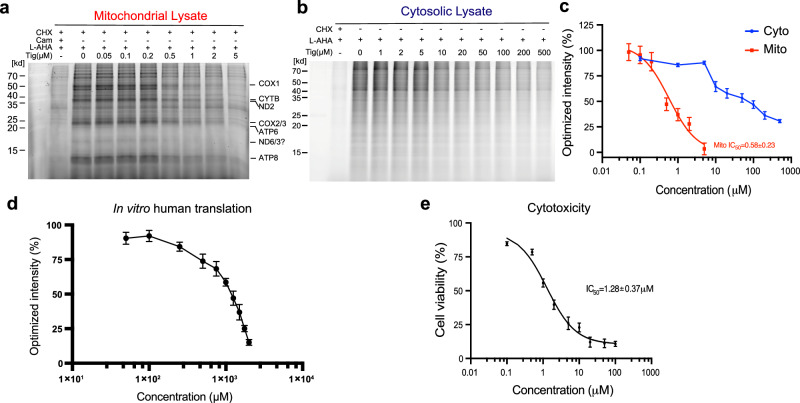
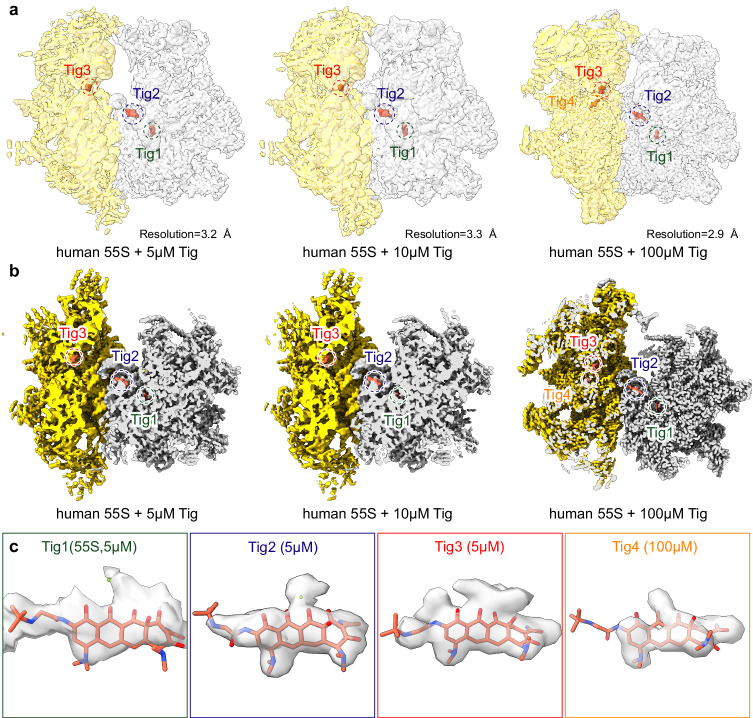
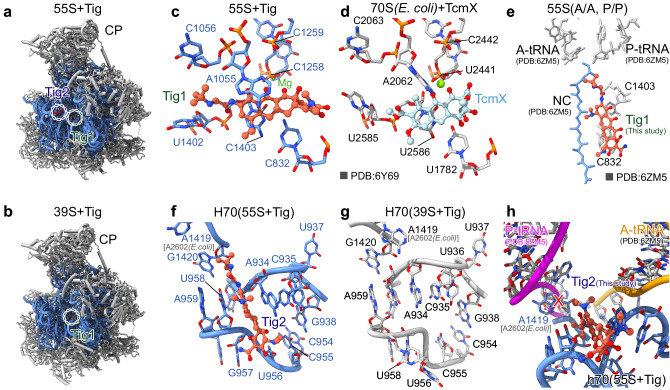
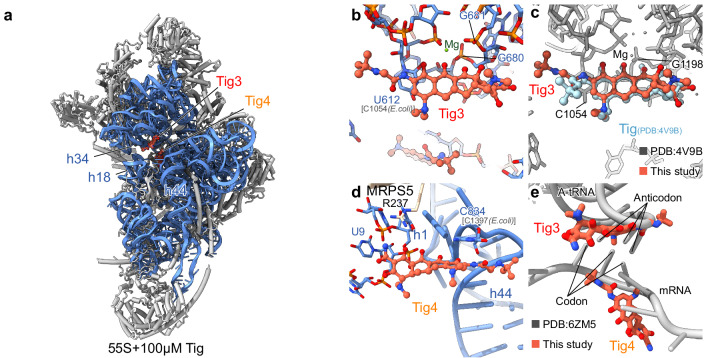
Tigecycline is widely used for treating complicated bacterial infections for which there are no effective drugs. It inhibits bacterial protein translation by blocking the ribosomal A-site. However, even though it is also cytotoxic for human cells, the molecular mechanism of its inhibition remains unclear. Here, we present cryo-EM structures of tigecycline-bound human mitochondrial 55S, 39S, cytoplasmic 80S and yeast cytoplasmic 80S ribosomes. We find that at clinically relevant concentrations, tigecycline effectively targets human 55S mitoribosomes, potentially, by hindering A-site tRNA accommodation and by blocking the peptidyl transfer center. In contrast, tigecycline does not bind to human 80S ribosomes under physiological concentrations. However, at high tigecycline concentrations, in addition to blocking the A-site, both human and yeast 80S ribosomes bind tigecycline at another conserved binding site restricting the movement of the L1 stalk. In conclusion, the observed distinct binding properties of tigecycline may guide new pathways for drug design and therapy.
Overview
The claims and statistics of this paper haven’t been checked yet.
Free: it reads the open-access text and checks the first 5 claims that cite a source we can check. Create a free account to check every claim.
Integrity signals
Registry
Cites
Statistics
Figures
Verification
Claims the paper makes
The claims and statistics of this paper haven’t been checked yet.
Free: it reads the open-access text and checks the first 5 claims that cite a source we can check. Create a free account to check every claim.
Claims other papers make about this one
Each is checked against this paper’s own text: does it say what the citing paper says it does?
The cited source says what the claim attributes to it.
In the citing paper
“Apart from bacterial ribosomes, a C:C non-canonical base pair is also found in the exact same location in the human 55S mitochondrial ribosome, and recent studies demonstrated that Tigecycline, a third-generation tetracycline, can bind at this site and potently inhibit mito-ribosomal protein translation31,32.”
From Dual site targeting of the bacterial 70S ribosome by tetracyclines (2026) · cites this paper as [31]
Self-check
Percentages, sums and reported differences re-computed from the paper’s own numbers.
The self-check needs the paper’s full text.
Citations
Cites
NIH Image to ImageJ: 25 years of image analysis
Schneider, C. A., Rasband, W. S., & Eliceiri, K. W. (2012) · Nature Methods · doi:10.1038/nmeth.2089 · Cited by 64,638
Coot : model-building tools for molecular graphics
Emsley, P., & Cowtan, K. (2004) · Acta Crystallographica Section D Biological Crystallography · doi:10.1107/s0907444904019158 · Cited by 30,571
PHENIX : a comprehensive Python-based system for macromolecular structure solution
Adams, P. D., Afonine, P. V., Bunkóczi, G., Chen, V. B., Davis, I. W., Echols, N., Headd, J. J., Hung, L.-W., Kapral, G. J., Grosse-Kunstleve, R. W., et al. (2010) · Acta Crystallographica Section D Biological Crystallography · doi:10.1107/s0907444909052925 · Cited by 23,716
MolProbity : all-atom structure validation for macromolecular crystallography
Chen, V. B., Arendall, W. B., Headd, J. J., Keedy, D. A., Immormino, R. M., Kapral, G. J., Murray, L. W., Richardson, J. S., & Richardson, D. C. (2010) · Acta Crystallographica Section D Biological Crystallography · doi:10.1107/s0907444909042073 · Cited by 14,115
cryoSPARC: algorithms for rapid unsupervised cryo-EM structure determination
Punjani, A., Rubinstein, J. L., Fleet, D. J., & Brubaker, M. A. (2017) · Nature Methods · doi:10.1038/nmeth.4169 · Cited by 11,626
MotionCor2: anisotropic correction of beam-induced motion for improved cryo-electron microscopy
Zheng, S. Q., Palovcak, E., Armache, J.-P., Verba, K. A., Cheng, Y., & Agard, D. A. (2017) · Nature Methods · doi:10.1038/nmeth.4193 · Cited by 7,777
UCSF ChimeraX: Meeting modern challenges in visualization and analysis
Goddard, T. D., Huang, C. C., Meng, E. C., Pettersen, E. F., Couch, G. S., Morris, J. H., & Ferrin, T. E. (2018) · Protein Science · doi:10.1002/pro.3235 · Cited by 5,267
CTFFIND4: Fast and accurate defocus estimation from electron micrographs
Rohou, A., & Grigorieff, N. (2015) · Journal of Structural Biology · doi:10.1016/j.jsb.2015.08.008 · Cited by 4,913
New tools for automated high-resolution cryo-EM structure determination in RELION-3
Zivanov, J., Nakane, T., Forsberg, B. O., Kimanius, D., Hagen, W. J., Lindahl, E., & Scheres, S. H. (2018) · eLife · doi:10.7554/elife.42166 · Cited by 4,621
Gctf: Real-time CTF determination and correction
Zhang, K. (2016) · Journal of Structural Biology · doi:10.1016/j.jsb.2015.11.003 · Cited by 3,537
DeepEMhancer: a deep learning solution for cryo-EM volume post-processing
Sanchez-Garcia, R., Gomez-Blanco, J., Cuervo, A., Carazo, J. M., Sorzano, C. O. S., & Vargas, J. (2021) · Communications Biology · doi:10.1038/s42003-021-02399-1 · Cited by 1,343
The Structure of the Eukaryotic Ribosome at 3.0 Å Resolution
Ben-Shem, A., Garreau de Loubresse, N., Melnikov, S., Jenner, L., Yusupova, G., & Yusupov, M. (2011) · Science · doi:10.1126/science.1212642 · Cited by 1,134
Ribosome-targeting antibiotics and mechanisms of bacterial resistance
Wilson, D. N. (2014) · Nature Reviews Microbiology · doi:10.1038/nrmicro3155 · Cited by 1,054 · cited 1×
“Discussion: “The Tig4 molecule on the other hand is only detected in the human 55S mitoribosome treated with 100 µM tigecycline, suggesting that Tig4 binds specifically under high concentrations of tigecycline.””
Update on acquired tetracycline resistance genes
Roberts, M. C. (2005) · FEMS Microbiology Letters · doi:10.1016/j.femsle.2005.02.034 · Cited by 1,010 · cited 1×
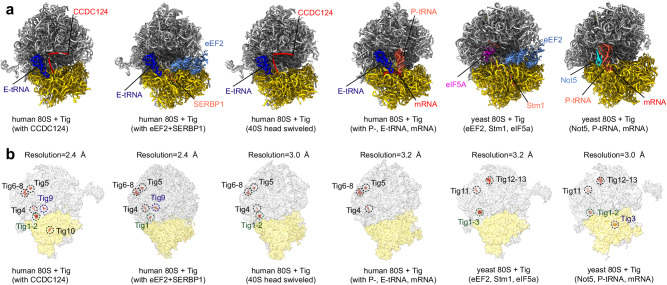
“The authors chose a complex containing the hibernation factor CCDC124 for discussion, as it “contains all tigecycline binding sites observed in other states”.”
Brodersen, D. E., Clemons, W. M., Carter, A. P., Morgan-Warren, R. J., Wimberly, B. T., & Ramakrishnan, V. (2000) · Cell · doi:10.1016/s0092-8674(00)00216-6 · Cited by 950
Inhibition of Mitochondrial Translation as a Therapeutic Strategy for Human Acute Myeloid Leukemia
Škrtić, M., Sriskanthadevan, S., Jhas, B., Gebbia, M., Wang, X., Wang, Z., Hurren, R., Jitkova, Y., Gronda, M., Maclean, N., et al. (2011) · Cancer Cell · doi:10.1016/j.ccr.2011.10.015 · Cited by 678 · cited 3×
“These structures represent different translational states, characterized by different rotations of the 40S ribosome body or head, accompanied by different translation factors (Fig.”
Sidrauski, C., McGeachy, A. M., Ingolia, N. T., & Walter, P. (2015) · eLife · doi:10.7554/elife.05033 · Cited by 639
Tetracycline antibiotics and resistance mechanisms
Nguyen, F., Starosta, A. L., Arenz, S., Sohmen, D., Dönhöfer, A., & Wilson, D. N. (2014) · Biological Chemistry · doi:10.1515/hsz-2013-0292 · Cited by 528 · cited 2×
“A crude preparation of human 80S ribosomes was used for analysis that contains additional factors.”
Crystal structures of complexes of the small ribosomal subunit with tetracycline, edeine and IF3
Pioletti, M., Schlünzen, F., Harms, J., Zarivach, R., Glühmann, M., Avila, H., Bashan, A., Bartels, H., Auerbach, T., Jacobi, C., et al. (2001) · The EMBO Journal · doi:10.1093/emboj/20.8.1829 · Cited by 527
AUREOMYCIN: A PRODUCT OF THE CONTINUING SEARCH FOR NEW ANTIBIOTICS
Duggar, B. M. (1948) · Annals of the New York Academy of Sciences · doi:10.1111/j.1749-6632.1948.tb27262.x · Cited by 512 · cited 1×
“This calls into question whether the observed binding sites are occupied at all at physiological concentration.”
Structural basis for aminoglycoside inhibition of bacterial ribosome recycling
Borovinskaya, M. A., Pai, R. D., Zhang, W., Schuwirth, B. S., Holton, J. M., Hirokawa, G., Kaji, H., Kaji, A., & Cate, J. H. D. (2007) · Nature Structural & Molecular Biology · doi:10.1038/nsmb1271 · Cited by 371
An induced-fit mechanism to promote peptide bond formation and exclude hydrolysis of peptidyl-tRNA
Martin Schmeing, T., Huang, K. S., Strobel, S. A., & Steitz, T. A. (2005) · Nature · doi:10.1038/nature04152 · Cited by 351
Youngman, E. M., Brunelle, J. L., Kochaniak, A. B., & Green, R. (2004) · Cell · doi:10.1016/s0092-8674(04)00411-8 · Cited by 335 · cited 2×
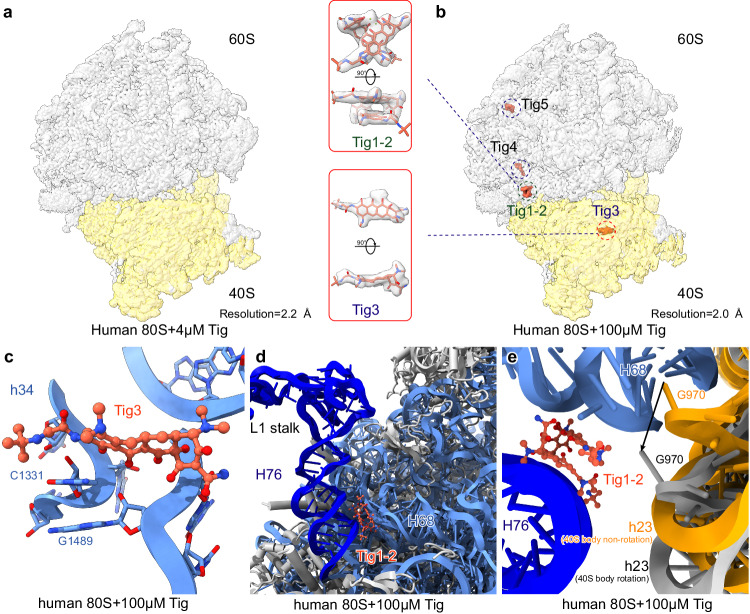
“In the main text: “To validate these findings on the human 80S ribosome, we also solved the cryo-EM structure of the tigecycline complex with the yeast 80S ribosome from one of our published datasets 33 (Fig.”
The A-Z of bacterial translation inhibitors
Wilson, D. N. (2009) · Critical Reviews in Biochemistry and Molecular Biology · doi:10.3109/10409230903307311 · Cited by 322 · cited 3×
“This is about two orders of magnitude higher than the IC50 they report for the mitochondrial system.”
Serum, tissue and body fluid concentrations of tigecycline after a single 100 mg dose
Rodvold, K. A., Gotfried, M. H., Cwik, M., Korth-Bradley, J. M., Dukart, G., & Ellis-Grosse, E. J. (2006) · Journal of Antimicrobial Chemotherapy · doi:10.1093/jac/dkl403 · Cited by 304
Wu, C. C.-C., Zinshteyn, B., Wehner, K. A., & Green, R. (2019) · Molecular Cell · doi:10.1016/j.molcel.2018.12.009 · Cited by 294
The Ccr4-Not complex monitors the translating ribosome for codon optimality
Buschauer, R., Matsuo, Y., Sugiyama, T., Chen, Y.-H., Alhusaini, N., Sweet, T., Ikeuchi, K., Cheng, J., Matsuki, Y., Nobuta, R., et al. (2020) · Science · doi:10.1126/science.aay6912 · Cited by 290
Self-citationCollagenolysis-dependent DDR1 signalling dictates pancreatic cancer outcome
Su, H., Yang, F., Fu, R., Trinh, B., Sun, N., Liu, J., Kumar, A., Baglieri, J., Siruno, J., Le, M., et al. (2022) · Nature · doi:10.1038/s41586-022-05169-z · Cited by 221 · cited 2×
“This manuscript presents some novel findings that should be published after a revision.”
Self-citationTarget protection as a key antibiotic resistance mechanism
Wilson, D. N., Hauryliuk, V., Atkinson, G. C., & O’Neill, A. J. (2020) · Nature Reviews Microbiology · doi:10.1038/s41579-020-0386-z · Cited by 213
The Development of Third-Generation Tetracycline Antibiotics and New Perspectives
Rusu, A., & Buta, E. L. (2021) · Pharmaceutics · doi:10.3390/pharmaceutics13122085 · Cited by 210 · cited 1×
“The authors chose a complex containing the hibernation factor CCDC124 for discussion, as it “contains all tigecycline binding sites observed in other states”.”
Jenner, L., Starosta, A. L., Terry, D. S., Mikolajka, A., Filonava, L., Yusupov, M., Blanchard, S. C., Wilson, D. N., & Yusupova, G. (2013) · Proceedings of the National Academy of Sciences · doi:10.1073/pnas.1216691110 · Cited by 204 · cited 1×
“Jenner et al., 2013 (reference 11 in this manuscript) determined the X-ray crystallography Structure of the 70S-tigecycline complex, which revealed the primary binding site.”
The Pharmacokinetic and Pharmacodynamic Profile of Tigecycline
Meagher, A. K., Ambrose, P. G., Grasela, T. H., & Ellis‐Grosse, E. J. (2005) · Clinical Infectious Diseases · doi:10.1086/431674 · Cited by 188
Schluenzen, F., Takemoto, C., Wilson, D. N., Kaminishi, T., Harms, J. M., Hanawa‐Suetsugu, K., Szaflarski, W., Kawazoe, M., Shirouzu, M., Nierhaus, K. H., et al. (2006) · Nature Structural & Molecular Biology · doi:10.1038/nsmb1145 · Cited by 156
Bacterial Protein Synthesis as a Target for Antibiotic Inhibition
Arenz, S., & Wilson, D. N. (2016) · Cold Spring Harbor Perspectives in Medicine · doi:10.1101/cshperspect.a025361 · Cited by 156 · cited 1×
“This is about two orders of magnitude higher than the IC50 they report for the mitochondrial system.”
Polacek, N., Gomez, M. J., Ito, K., Xiong, L., Nakamura, Y., & Mankin, A. S. (2003) · Molecular Cell · doi:10.1016/s1097-2765(02)00825-0 · Cited by 135
Systematic quantitative analysis of ribosome inventory during nutrient stress
An, H., Ordureau, A., Körner, M., Paulo, J. A., & Harper, J. W. (2020) · Nature · doi:10.1038/s41586-020-2446-y · Cited by 133 · cited 1×
“These additional structural analyses validate our observations under conditions that better simulate the in vivo environment, providing a more comprehensive understanding of tigecycline binding and its physiological implications.”
Insights into the impact of manure on the environmental antibiotic residues and resistance pool
Marutescu, L. G., JAGǍ, M. I., Postolache, C., Bărbuceanu, F., Miliţă, N. M., Romaşcu, L. M., Schmitt, H., Husman, A. M. D. R., Sefeedpari, P., Glaeser, S. P., et al. (2022) · Frontiers in Microbiology · doi:10.3389/fmicb.2022.965132 · Cited by 117 · cited 1×
“The authors have to repeat the structural analysis of the mitoribosome at a physiological relevant tigecycline concentration.”
Elongational stalling activates mitoribosome-associated quality control
Desai, N., Yang, H., Chandrasekaran, V., Kazi, R., Minczuk, M., & Ramakrishnan, V. (2020) · Science · doi:10.1126/science.abc7782 · Cited by 110
Structure and function of yeast Lso2 and human CCDC124 bound to hibernating ribosomes
Wells, J. N., Buschauer, R., Mackens-Kiani, T., Best, K., Kratzat, H., Berninghausen, O., Becker, T., Gilbert, W., Cheng, J., & Beckmann, R. (2020) · PLOS Biology · doi:10.1371/journal.pbio.3000780 · Cited by 107
Self-citationNarita, M., Denk, T., Matsuo, Y., Sugiyama, T., Kikuguchi, C., Ito, S., Sato, N., Suzuki, T., Hashimoto, S., Machová, I., et al. (2022) · Nature Communications · doi:10.1038/s41467-022-34097-9 · Cited by 97
Self-citationMonitoring mitochondrial translation in living cells
Yousefi, R., Fornasiero, E. F., Cyganek, L., Montoya, J., Jakobs, S., Rizzoli, S. O., Rehling, P., & Pacheu‐Grau, D. (2021) · EMBO Reports · doi:10.15252/embr.202051635 · Cited by 83
Biological Functions and Molecular Mechanisms of Antibiotic Tigecycline in the Treatment of Cancers
Dong, Z., Abbas, M. N., Kausar, S., Yang, J., Li, L., Tan, L., & Cui, H. (2019) · International Journal of Molecular Sciences · doi:10.3390/ijms20143577 · Cited by 77 · cited 1×
“The authors also determined the structure of the human 80S ribosome in complex with tigecycline, which reveals several binding sites for this antibiotic.”
Tetracenomycin X inhibits translation by binding within the ribosomal exit tunnel
Osterman, I. A., Wieland, M., Maviza, T. P., Lashkevich, K. A., Lukianov, D. A., Komarova, E. S., Zakalyukina, Y. V., Buschauer, R., Shiriaev, D. I., Leyn, S. A., et al. (2020) · Nature Chemical Biology · doi:10.1038/s41589-020-0578-x · Cited by 75
Self-citationCocozaki, A. I., Altman, R. B., Huang, J., Buurman, E. T., Kazmirski, S. L., Doig, P., Prince, D. B., Blanchard, S. C., Cate, J. H. D., & Ferguson, A. D. (2016) · Proceedings of the National Academy of Sciences · doi:10.1073/pnas.1605127113 · Cited by 56
Anyanwu, M. U., Nwobi, O. C., Okpala, C. O. R., & Ezeonu, I. M. (2022) · Frontiers in Microbiology · doi:10.3389/fmicb.2022.808744 · Cited by 54
A distinct assembly pathway of the human 39S late pre-mitoribosome
Cheng, J., Berninghausen, O., & Beckmann, R. (2021) · Nature Communications · doi:10.1038/s41467-021-24818-x · Cited by 51
Self-citationStructural Characterization of an Alternative Mode of Tigecycline Binding to the Bacterial Ribosome
Schedlbauer, A., Kaminishi, T., Ochoa-Lizarralde, B., Dhimole, N., Zhou, S., López-Alonso, J. P., Connell, S. R., & Fucini, P. (2015) · Antimicrobial Agents and Chemotherapy · doi:10.1128/aac.04895-14 · Cited by 45
Guideline: Appropriate use of tigecycline
Brink, A. J., Bizos, D., Boffard, K. D., Feldman, C. H., Grolman, D. C., Pretorius, J., Richards, G. A., Senekal, M., Steyn, E., & Welkovic, N. (2010) · South African Medical Journal · doi:10.7196/samj.4109 · Cited by 40
Features of 80S mammalian ribosome and its subunits
Budkevich, T. V., El'skaya, A. V., & Nierhaus, K. H. (2008) · Nucleic Acids Research · doi:10.1093/nar/gkn424 · Cited by 38 · cited 1×
“This approach was chosen, since it could purify distinct physiological/functional ribosome complexes with tigecycline that better reveal potential mechanisms underlying tigecycline’s inhibition of specific steps of translation.”
Nicholson, D., Edwards, T. A., O'Neill, A. J., & Ranson, N. A. (2020) · Structure · doi:10.1016/j.str.2020.08.004 · Cited by 30
Re-defining tigecycline therapy.
Rosa, F. G. D., Corcione, S., Perri, G. D., & Scaglione, F. (2015) · PubMed · Cited by 27
Tetracenomycin X sequesters peptidyl-tRNA during translation of QK motifs
Leroy, E. C., Perry, T. N., Renault, T. T., & Innis, C. A. (2023) · Nature Chemical Biology · doi:10.1038/s41589-023-01343-0 · Cited by 22 · cited 3×
“In the methods: “For the data set collected from the yeast ribosome sample (the tigecycline stalled monosome sample), a total of 11,217 good micrographs were selected.””
InfluentialSu, T., Kudva, R., Becker, T. A., Buschauer, R., Komar, T., Berninghausen, O., von HEIJNE, G., Cheng, J., & Beckmann, R. (2021) · Nucleic Acids Research · doi:10.1093/nar/gkab665 · Cited by 20 · cited 1×
“Additionally, we have included the source data used for calculating all the curves.”
Self-citation
Cited by
T cell toxicity induced by tigecycline binding to the mitochondrial ribosome
Shao, Q., Khawaja, A., Nguyen, M. D., Singh, V., Zhang, J., Liu, Y., Nordin, J., Adori, M., Axel Innis, C., Castro Dopico, X., et al. (2025) · Nature Communications · doi:10.1038/s41467-025-59388-9 · Cited by 16
“Together, these data provide a molecular mechanism to explain part of the anti-in fl ammatory effects of tetracyclines, informing antibiotic and OXPHOS inhibitor design 52 .”
Tang, H., Liu, Z., Hu, B., & Zhu, L. (2025) · Journal of Hazardous Materials · doi:10.1016/j.jhazmat.2025.138399 · Cited by 15
Mitochondrial ribosomal proteins: potential targets for cancer prognosis and therapy
Zhu, J., Wen, N., Chen, W., & Yu, H. (2025) · Frontiers in Oncology · doi:10.3389/fonc.2025.1586137 · Cited by 21
Doxycycline: An essential tool for Alzheimer’s disease
Forloni, G. (2025) · Biomedicine & Pharmacotherapy · doi:10.1016/j.biopha.2025.118159 · Cited by 12
Mechanisms and disease relevance of mitochondrial translation in humans
Richter‐Dennerlein, R., Dopico, X. C., & Rorbach, J. (2026) · Nature Reviews Molecular Cell Biology · doi:10.1038/s41580-026-00948-2 · Cited by 16
“For example, trials with repurposed antibiotics, including tetracyclines, that target mitochondrial translation, have shown promising results in therapy-resistant chronic myeloid leukaemia 104 and lymphoma 105 , for which a structural mechanism has also been shown 106,107 .”
Metadata
- Authors
- Li, X., Wang, M., Denk, T., Buschauer, R., Li, Y., Beckmann, R., & Cheng, J.
- Affiliations
- Shanghai Medical College of Fudan University (CN)
- Ludwig-Maximilians-Universität München (DE)
- Corresponding author
- Beckmann, Roland
- Cheng, Jingdong
- Venue
- Nature Communications
- Published
- 2024-06-28
- Volume
- 15
- Issue
- 1
- Pages
- 5481-5481
- ISSN
- 2041-1723 (ISSN-L)
- PMC
- PMC11213857
- OpenAlex
- W4400119210
- Cited by
- 21
- References
- 53
- Citations by year
- 2026: 11 · 2025: 10
- FWCI
- 2.86
- Type
- journal article
- Language
- en
- Open access
- gold
- doi.org
- Licence
- cc-by
- creativecommons.org/licenses/by/4.0 (tdm)
- creativecommons.org/licenses/by/4.0 (vor)
- Locations
- Nature Communications (publishedVersion, cc-by)
- PubMed Central (publishedVersion, cc-by)
- PubMed (publishedVersion)
- RePEc: Research Papers in Economics (submittedVersion)
- DOAJ (DOAJ: Directory of Open Access Journals) (submittedVersion)
- Funders
- Ministry of Science and Technology of the People’s Republic of China (2023YFC2413204)
- National Natural Science Foundation of China (32371350)
- Science and Technology Commission of Shanghai Municipality (22ZR1413600, 22410712400)
- Topics
- Life Sciences › Biochemistry, Genetics and Molecular Biology › Molecular Biology › RNA and protein synthesis mechanisms
- Life Sciences › Biochemistry, Genetics and Molecular Biology › Molecular Biology › RNA modifications and cancer
- Life Sciences › Immunology and Microbiology › Immunology › Toxin Mechanisms and Immunotoxins
- Keywords
- tigecycline, ribosome inhibition, 80S ribosome, mitochondrial ribosome, cryo-EM structure, drug binding sites, antibiotic mechanism of action
- MeSH terms
- Mitochondrial Ribosomes, Tigecycline, Anti-Bacterial Agents, Binding Sites, Humans, Models, Molecular, Ribosomes, RNA, Transfer, Saccharomyces cerevisiae, Protein Biosynthesis, Cryoelectron Microscopy
About these checks
Registry, retraction, Cites and statistics results are computed, not judged, with one exception: a printed reference that no index lists is read once by a model before it counts as a citation error. Claims are extracted by a model and kept only when their quote appears verbatim in the text; each cited source is then checked, with a model’s help, for whether it says what the claim relies on. Those verdicts can be wrong — read the claim’s quote and the cited source before relying on one.
Statistics and arithmetic are recomputed, not judged.
Confidence bands are shown only for fields calibrated on our annotated test set. None is calibrated yet, so no band is shown.
What counts as a claim ›How we measure confidence ›How we check this ›
Are you an author, or do you see a problem with this page? Request a review
Data sources
Bibliographic data: Semantic Scholar, OpenAlex, Crossref.
Contains information from the Semantic Scholar Academic Graph Datasets, made available under the ODC Attribution License (ODC-BY 1.0).
Semantic Scholar’s data is described in: Kinney, R., et al. (2023). The Semantic Scholar Open Data Platform. arXiv:2301.10140.
