

High-resolution bacterial 16S rRNA gene profile meta-analysis and biofilm status reveal common colorectal cancer consortia
Open accessThe DOI matches its Crossref record; 73 of the 74 references it cites were found in a registry or an index.
Abstract
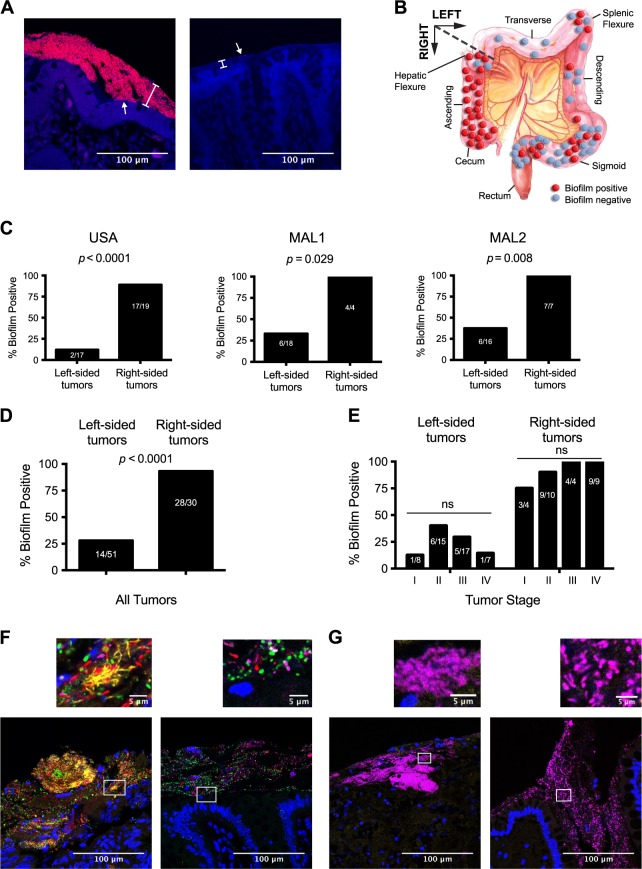
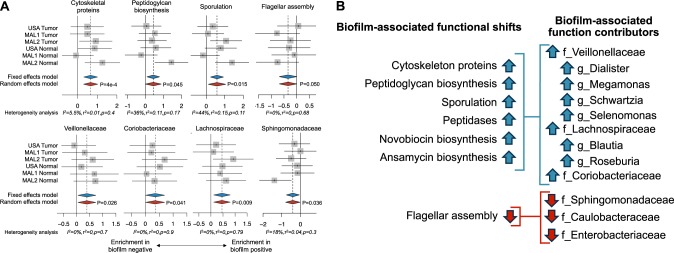
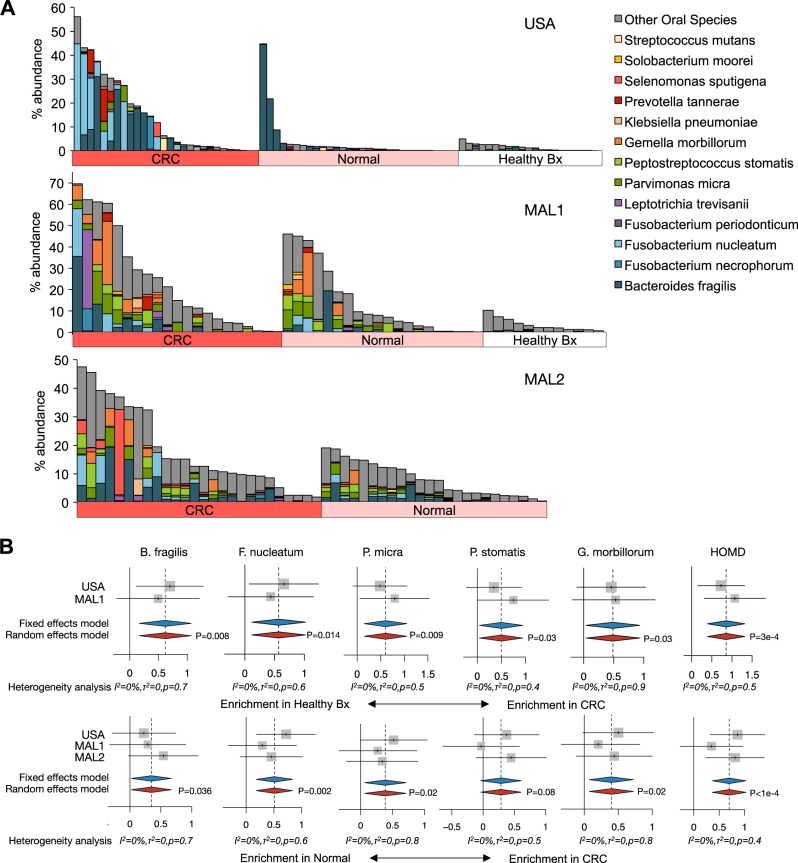
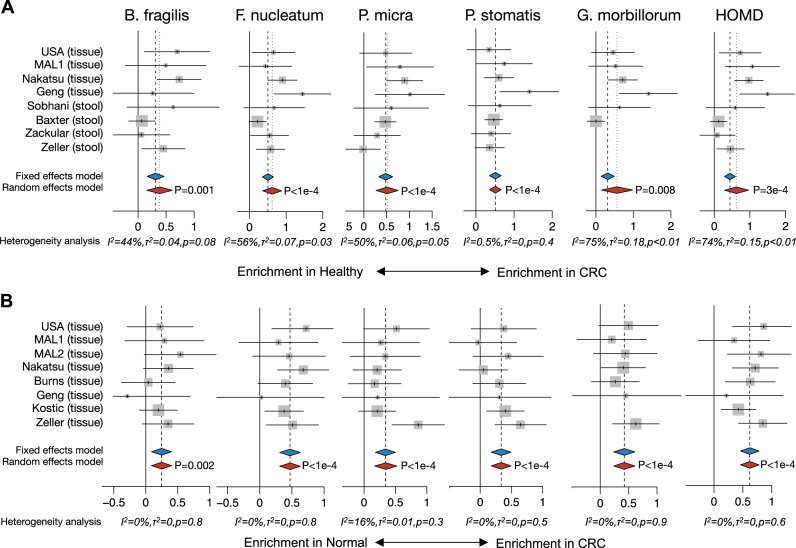
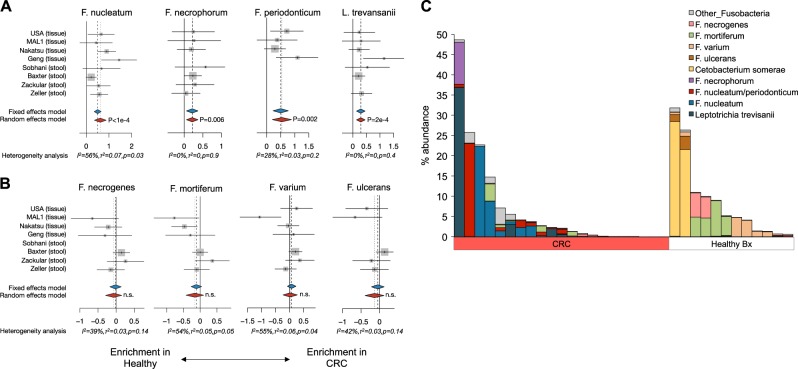
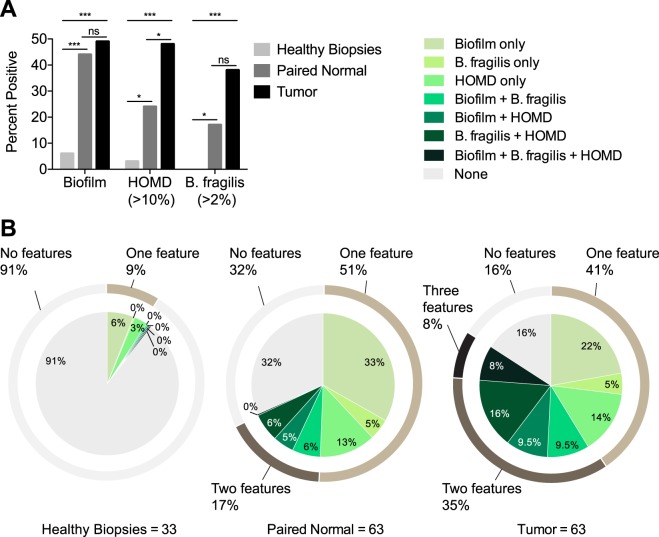
Colorectal cancer (CRC) remains the third most common cancer worldwide, with a growing incidence among young adults. Multiple studies have presented associations between the gut microbiome and CRC, suggesting a link with cancer risk. Although CRC microbiome studies continue to profile larger patient cohorts with increasingly economical and rapid DNA sequencing platforms, few common associations with CRC have been identified, in part due to limitations in taxonomic resolution and differences in analysis methodologies. Complementing these taxonomic studies is the newly recognized phenomenon that bacterial organization into biofilm structures in the mucus layer of the gut is a consistent feature of right-sided (proximal), but not left-sided (distal) colorectal cancer. In the present study, we performed 16S rRNA gene amplicon sequencing and biofilm quantification in a new cohort of patients from Malaysia, followed by a meta-analysis of eleven additional publicly available data sets on stool and tissue-based CRC microbiota using Resphera Insight, a high-resolution analytical tool for species-level characterization. Results from the Malaysian cohort and the expanded meta-analysis confirm that CRC tissues are enriched for invasive biofilms (particularly on right-sided tumors), a symbiont with capacity for tumorigenesis ( Bacteroides fragilis ), and oral pathogens including Fusobacterium nucleatum , Parvimonas micra , and Peptostreptococcus stomatis . Considered in aggregate, species from the Human Oral Microbiome Database are highly enriched in CRC. Although no detected microbial feature was universally present, their substantial overlap and combined prevalence supports a role for the gut microbiota in a significant percentage (>80%) of CRC cases.
Overview
The claims and statistics of this paper haven’t been checked yet.
Free: it reads the open-access text and checks the first 5 claims that cite a source we can check. Create a free account to check every claim.
Integrity signals
Registry
Cites
Statistics
Figures
Verification
Claims the paper makes
The claims and statistics of this paper haven’t been checked yet.
Free: it reads the open-access text and checks the first 5 claims that cite a source we can check. Create a free account to check every claim.
Claims other papers make about this one
Each is checked against this paper’s own text: does it say what the citing paper says it does?
The cited source says what the claim attributes to it.
In the citing paper
“The enrichment of bacterial species from the oral cavity is characteristic of the CRC GOMS50,76–79, along with an enrichment in invasive polymicrobial bacterial biofilms in patients with right-sided tumours76,80,81.”
From Gut OncoMicrobiome Signatures (GOMS) as next-generation biomarkers for cancer immunotherapy (2023) · cites this paper as [76]
The check wasn’t confident either way, so it gives no verdict — never disputed.
In the citing paper
“we selected Resphera Insight as previously published data demonstrate that this pipeline outperforms QIIME RDP and QIIME UCLUST in species level identification using the Human Microbiome Project reference isolate collection (60–70% species identified by Resphera Insight compared to 10–25% by QIIME RDP or QIIME UCLUST) (13).”
From A Uniform Computational Approach Improved on Existing Pipelines to Reveal Microbiome Biomarkers of Nonresponse to Immune Checkpoint Inhibitors (2021) · cites this paper as [13]
Experimental — accuracy not yet measuredIn the citing paper
“Further Resphera Insight has been validated as largely highly accurate for detection of Bacterioides and Fusobacterium spp. (13) and is also used by the FDA to enhance species identification contaminating the food chain (16,17).”
From A Uniform Computational Approach Improved on Existing Pipelines to Reveal Microbiome Biomarkers of Nonresponse to Immune Checkpoint Inhibitors (2021) · cites this paper as [13]
Self-check
Percentages, sums and reported differences re-computed from the paper’s own numbers.
The self-check needs the paper’s full text.
Citations
Cites
Trimmomatic: a flexible trimmer for Illumina sequence data
Bolger, A. M., Lohse, M., & Usadel, B. (2014) · Bioinformatics · doi:10.1093/bioinformatics/btu170 · Cited by 65,548
Fast gapped-read alignment with Bowtie 2
Langmead, B., & Salzberg, S. L. (2012) · Nature Methods · doi:10.1038/nmeth.1923 · Cited by 56,400
Harris, P. A., Taylor, R., Thielke, R., Payne, J., Gonzalez, N., & Conde, J. G. (2009) · Journal of Biomedical Informatics · doi:10.1016/j.jbi.2008.08.010 · Cited by 51,384
Naïve Bayesian Classifier for Rapid Assignment of rRNA Sequences into the New Bacterial Taxonomy
Wang, Q., Garrity, G. M., Tiedje, J. M., & Cole, J. R. (2007) · Applied and Environmental Microbiology · doi:10.1128/aem.00062-07 · Cited by 19,885
FLASH: fast length adjustment of short reads to improve genome assemblies
Magoč, T., & Salzberg, S. L. (2011) · Bioinformatics · doi:10.1093/bioinformatics/btr507 · Cited by 15,366
UCHIME improves sensitivity and speed of chimera detection
Edgar, R. C., Haas, B. J., Clemente, J. C., Quince, C., & Knight, R. (2011) · Bioinformatics · doi:10.1093/bioinformatics/btr381 · Cited by 15,114
Bacterial Biofilms: A Common Cause of Persistent Infections
Costerton, J. W., Stewart, P. S., & Greenberg, E. P. (1999) · Science · doi:10.1126/science.284.5418.1318 · Cited by 12,167 · cited 1×
“Biofilms form when bacteria aggregate on a surface (biological or inert) and become encased in a polymeric matrix.(18,19) Similar to other in vivo biofilms including oral biofilms (dental plaque) and Pseudomonas aeruginosa biofilms in cystic fibrosis patients, the colonic biofilm matrix may consist of both host mucus…”
BackgroundPredictive functional profiling of microbial communities using 16S rRNA marker gene sequences
Langille, M. G. I., Zaneveld, J., Caporaso, J. G., McDonald, D., Knights, D., Reyes, J. A., Clemente, J. C., Burkepile, D. E., Vega Thurber, R. L., Knight, R., et al. (2013) · Nature Biotechnology · doi:10.1038/nbt.2676 · Cited by 9,116
Klindworth, A., Pruesse, E., Schweer, T., Peplies, J., Quast, C., Horn, M., & Glöckner, F. O. (2013) · Nucleic Acids Research · doi:10.1093/nar/gks808 · Cited by 8,850
Ultra-high-throughput microbial community analysis on the Illumina HiSeq and MiSeq platforms
Caporaso, J. G., Lauber, C. L., Walters, W. A., Berg-Lyons, D., Huntley, J., Fierer, N., Owens, S. M., Betley, J., Fraser, L., Bauer, M., et al. (2012) · The ISME Journal · doi:10.1038/ismej.2012.8 · Cited by 8,839 · cited 1×
“High-throughput next-generation sequencing of the V3-V4 hypervariable region of the 16S rRNA gene was performed using 319 F (5′-ACTCCTACGGGAGGCAGCAG-3′) and 806 R (5′-GGACTACHVGGGTWTCTAAT-3′) universal primers containing a linker sequence required for Illumina MiSeq 300 bp paired-end sequencing and a 12-bp heterogenei…”
Method
Cited by
Items 201–300 of 334
Clinically adaptable polymer enables simultaneous spatial analysis of colonic tissues and biofilms
Macedonia, M. C., Drewes, J. L., Markham, N. O., Simmons, A. J., Roland, J. T., Vega, P. N., Scurrah, C. R., Coffey, R. J., Shrubsole, M. J., Sears, C. L., et al. (2020) · npj Biofilms and Microbiomes · doi:10.1038/s41522-020-00143-x · Cited by 12
Self-citationUehara, M., Inoue, T., Hase, S., Sasaki, E., Toyoda, A., & Sakakibara, Y. (2024) · mSystems · doi:10.1128/msystems.01405-23 · Cited by 10
Archaea influence composition of endoscopically visible ileocolonic biofilms
Orgler, E., Baumgartner, M., Duller, S., Kumptisch, C., Hausmann, B., Moser, D., Khare, V., Lang, M., Köcher, T., Frick, A. P., et al. (2024) · Gut Microbes · doi:10.1080/19490976.2024.2359500 · Cited by 13
“32,33 In particular, biofilms have recently been recognized in the GI tract, with microscopic biofilms first described in color-ectal cancer 37–39 and only now as endoscopically visible biofilms adhering to the mucosa in IBS and IBD.”
BackgroundSenthakumaran, T., Tannæs, T. M., Moen, A. E. F., Brackmann, S. A., Jahanlu, D., Rounge, T. B., Bemanian, V., & Tunsjø, H. S. (2024) · Molecular Oncology · doi:10.1002/1878-0261.13700 · Cited by 11
Jia, M., Lei, J., Dong, Y., Guo, Y., & Zhang, B. (2024) · Animals · doi:10.3390/ani14233528 · Cited by 14
“Specifically, polymerase chain reaction ( PCR ) amplification was performed in triplicate using primers including 338F (forward: 5 ′ -ACTCCTACGGGAGGCAGCAG-3 ′ ) and 806R (reverse: 5 ′ -GGACTACHVGGGTWTCTAAT -3 ′ ), which were labeled by a unique barcode to dis-Animals tinguish different samples [16].”
The Regional Specificity of Mucosa-Associated Microbiota in Patients with Distal Colorectal Cancer
Kono, Y., Inoüe, R., Teratani, T., Tojo, M., Kumagai, Y., Morishima, S., Koinuma, K., Lefor, A. K., Kitayama, J., Sata, N., et al. (2021) · Digestion · doi:10.1159/000519487 · Cited by 12
Autoprobiotics in the Treatment of Patients with Colorectal Cancer in the Early Postoperative Period
Ермоленко, Е. И., Baryshnikova, N. V., Alekhina, G., Zakharenko, A., Тен, О. А., Кащенко, В. А., Lavrenova, N. S., Gushchina, O. O., Сергеевич, О. Т., MOROZOVA, A. D., et al. (2024) · Microorganisms · doi:10.3390/microorganisms12050980 · Cited by 12
“A personalized approach to patient care.”
Gutting it Out: Developing Effective Immunotherapies for Patients With Colorectal Cancer
Gorgulho, C. M., Krishnamurthy, A., Lanzi, A., Galon, J., Housseau, F., Kaneno, R., & Lotze, M. T. (2021) · Journal of Immunotherapy · doi:10.1097/cji.0000000000000357 · Cited by 16
Effects of antibiotic exposure on risks of colorectal tumors: a systematic review and meta-analysis
Liu, Y.-C., Tang, X., Lang, J., Qiu, Y., Chen, Y., Li, X., Cao, Y., & Zhang, C. (2025) · Journal of Translational Medicine · doi:10.1186/s12967-025-06727-5 · Cited by 10
“This discrepancy may be closely linked to differences in microbiota concentrations between the colon and rectum, with higher microbial density and metabolic activity in the colon [37, 38].”
Sorrenti, E., Governa, V., Bressan, D., Cremonesi, E., Formaggio, N., Latino, I., Calì, B., Torcasio, C., Basso, C., Galafassi, J., et al. (2026) · Cell Host & Microbe · doi:10.1016/j.chom.2026.02.006 · Cited by 9
Kato, I., Sun, J., Larson, J. C., Hastert, T. A., & Abrams, J. (2020) · Journal of Women s Health · doi:10.1089/jwh.2019.8162 · Cited by 10
Microbiome and colorectal cancer: A review of the past, present, and future
Johns, M. S., & Petrelli, N. J. (2021) · Surgical Oncology · doi:10.1016/j.suronc.2021.101560 · Cited by 10
Microbiota-associated mechanisms in colorectal cancer
González, A., Fullaondo, A., & Odriozola, A. (2024) · Advances in genetics · doi:10.1016/bs.adgen.2024.05.002 · Cited by 8
Working together: gut microbe-microbe interactions shape host inflammation
Lawing, A., & Bleich, R. M. (2025) · Infection and Immunity · doi:10.1128/iai.00512-24 · Cited by 9
Distinct prophage infections in colorectal cancer-associated Bacteroides fragilis
Nielsen, F. D., Jespersen, M. G., Møller, J. E., Coia, J. E., Dessau, R. B., Sydenham, T. V., Strube, M. L., Møller‐Jensen, J., & Justesen, U. S. (2026) · Communications Medicine · doi:10.1038/s43856-026-01403-1 · Cited by 11
Hand-in-hand — colorectal cancer metastasizes with microorganisms
Yang, Y., & Jobin, C. (2018) · Nature Reviews Gastroenterology & Hepatology · doi:10.1038/nrgastro.2017.186 · Cited by 11
Genetic heterogeneity of colorectal cancer and the microbiome
Senchukova, M. A. (2023) · World Journal of Gastrointestinal Oncology · doi:10.4251/wjgo.v15.i3.443 · Cited by 9
Rifkin, S. B., Sze, M. A., Tuck, K., Koeppe, E. S., Stoffel, E. M., & Schloss, P. D. (2023) · Journal of Gastrointestinal Cancer · doi:10.1007/s12029-023-00925-4 · Cited by 13
Zhang, A., Sodhi, C. P., Wang, M., Shores, D. R., Fulton, W. B., Prindle, T., Brosten, S., O’Hare, E., Lau, A. R., Ding, H., et al. (2020) · Cellular and Molecular Gastroenterology and Hepatology · doi:10.1016/j.jcmgh.2020.04.006 · Cited by 9
Self-citationMicrobiome and gastrointestinal malignancies
Sayed, I. M., Ramadan, H. K., El‐Mokhtar, M. A., & Abdel-Wahid, L. (2021) · Current Opinion in Physiology · doi:10.1016/j.cophys.2021.06.005 · Cited by 10
Microbiome and Colorectal Cancer
Ahmed, I., & Umar, S. (2018) · Current Colorectal Cancer Reports · doi:10.1007/s11888-018-0416-7 · Cited by 12
Microbiome and biofilm insights from normal vs tumor tissues in Thai colorectal cancer patients
Yincharoen, P., Mordmuang, A., Techarang, T., Tangngamsakul, P., Kaewubon, P., Atipairin, P., Janwanitchasthaporn, S., Goodla, L., & Karnjana, K. (2025) · npj Precision Oncology · doi:10.1038/s41698-025-00873-1 · Cited by 10
Autoimmunity and Periodontitis
Costalonga, M., Thumbigere‐Math, V., & Herzberg, M. (2026) · Journal of Periodontal Research · doi:10.1111/jre.70058 · Cited by 7
The Oral Microbiome and Cancer
Deng, J., Sun, C., Xu, G., Wang, B., Tzortzopoulou, E., Deng, D., & Giovannetti, E. (2025) · Advances in experimental medicine and biology · doi:10.1007/978-3-031-79146-8_10 · Cited by 11
The Presence of Periodontal Pathogens in Gastric Cancer
de Leeuw, M. A., & Duval, M. X. (2020) · Exploratory Research and Hypothesis in Medicine · doi:10.14218/erhm.2020.00024 · Cited by 10
González, A., Fullaondo, A., Navarro, D., Rodríguez, J., Tîrnȃucȃ, C., & Odriozola, A. (2024) · Cancers · doi:10.3390/cancers16234008 · Cited by 8
Chen, Q., Wang, Y., Wu, D., Zhang, H., Xia, Q., & Qu, D. (2025) · Frontiers in Microbiology · doi:10.3389/fmicb.2025.1653249 · Cited by 13
Microbiome and the Hallmarks of Cancer
Bleich, R. M., & Arthur, J. C. (2021) · Physiology in health and disease · doi:10.1007/978-3-030-67951-4_1 · Cited by 8
Titanium complexes affect Bacillus subtilis biofilm formation
Hayet, S., Ghrayeb, M., Azulay, D. N., Shpilt, Z., Tshuva, E. Y., & Chai, L. (2023) · RSC Medicinal Chemistry · doi:10.1039/d3md00075c · Cited by 7
Villar-Ortega, P., Ruíz, M. E., Gutiérrez-Soto, M., Jiménez, M. R.-C., Navarro‐Marí, J. M., & Fernández, J. G. (2021) · Enfermedades Infecciosas y Microbiología Clínica · doi:10.1016/j.eimc.2021.01.005 · Cited by 6
Luévano, J. M., Liu, J. C., & Stappenbeck, T. S. (2025) · Clinical and Translational Gastroenterology · doi:10.14309/ctg.0000000000000864 · Cited by 6
“Recent work with LoCRC has elucidated associations with oral microbiota, including Parvimonas micra now associated with EoCRC (59,63,64,104,105).”
Yang, X., Zhang, K., Xia, L., & Li, J. (2026) · iMetaMed · doi:10.1002/imm3.70030 · Cited by 5
Majumdar, R., Kandel, S. L., Strausbaugh, C. A., Singh, A., Pokhrel, S., & Bill, M. (2024) · International Journal of Molecular Sciences · doi:10.3390/ijms252312681 · Cited by 5
“1 (CD) software for spectral processing and a database search was carried out in order to obtain qualitative and quantitative results for the detected metabolites.”
Wright, R. D., Bartelli, T. F., Baydogan, S., White, J. R., Kim, M. P., Bhutani, M. S., & McAllister, F. M. (2023) · Frontiers in Immunology · doi:10.3389/fimmu.2023.1268376 · Cited by 6
Self-citationWhittling down the bacterial subspecies that might drive colon cancer
Sears, C. L., & Queen, J. (2024) · Nature · doi:10.1038/d41586-024-00662-z · Cited by 5
Self-citationToxigenic gut bacteria, diet and colon carcinogenesis
Keenan, J. I., & Frizelle, F. (2019) · Journal of the Royal Society of New Zealand · doi:10.1080/03036758.2019.1695636 · Cited by 6
“2015) and this gains significance with evidence that the gene coding for the ETBF toxin (bft) is enriched in biofilms structures detected in patients presenting with proximal CRC (Drewes et al. 2017) as well as being detected in nascent biofilms present on the”
BackgroundFusobacterium nucleatum, rectal cancer and radiotherapy
Mann, E. H., & Maughan, T. (2020) · Annals of Oncology · doi:10.1016/j.annonc.2020.06.019 · Cited by 5
Azlan, P. I. H. M. M., Chin, S., Low, T. Y., Neoh, H., & Jamal, R. (2019) · PROTEOMICS · doi:10.1002/pmic.201800176 · Cited by 5
Microbiota, mucosal immunity, and Colon cancer
Drewes, J. L., Domingue, J. C., & Housseau, F. (2020) · Elsevier eBooks · doi:10.1016/b978-0-12-819672-4.00008-8 · Cited by 5
Self-citationColorectal microenvironment determines the prognosis of colorectal cancer
Bang, Y. H., Choi, J. H., Park, K., Lee, B., Han, K. Y., Pyo, D. H., Cho, Y. B., Kim, T. M., Park, K. J., Ryoo, S., et al. (2026) · Experimental & Molecular Medicine · doi:10.1038/s12276-025-01599-7 · Cited by 5
“…cancer cells were reported to be related to colon cancer metastasis 8 , and bacterial bio fi lms — aggregations of the microbial community that contact unshielded epithelial cells and invade the tumor — have been observed not only within the tumor but also in NBTs, even far from the tumor 18,20,21 .”
Qu, X., Nan, X., Wang, Y., Sun, H., Miao, J., Shi, Y., Li, Y., Qu, R., Wang, M., Zhang, N., et al. (2026) · Ecotoxicology and Environmental Safety · doi:10.1016/j.ecoenv.2026.119806 · Cited by 4
Rosenbaum, W., Garcia, M. R., Löfgren‐Burström, A., Larsson, P. G., Edin, S., Bronnec, V., & Palmqvist, R. (2026) · Gut Microbes · doi:10.1080/19490976.2026.2656004 · Cited by 4
Harnessing the oral-systemic axis: A novel frontier in cancer management
Parmar, A., Kaur, P., Kaur, M., & Yanadaiah, P. (2025) · Medical Oncology · doi:10.1007/s12032-025-02921-z · Cited by 4
“In some studies, a greater abundance of Fusobacterium has been found in CRC [36].”
Wong, M., Lo, I., Wu, W.-K., Liu, P., Yang, Y.-T., Chen, C., Wu, M.-S., Wong, S. H., Lei, W., Yi, C., et al. (2024) · Journal of Neurogastroenterology and Motility · doi:10.5056/jnm22191 · Cited by 4
“Interestingly, fecal P. micra and G. morbillorum had been reliably associated with human colorectal cancer 22 and saliva P. micra was also reported significantly increased with pathologic stage of oral squamous cell carcinoma.”
Rabee, A. E., Lamara, M., & Ishaq, S. L. (2023) · Biofuels · doi:10.1080/17597269.2023.2238381 · Cited by 4
“The V4 region of 16S rDNA was amplified using primers 319 F (5 0 -ACTCCTACGGGAGGCAGCAG-3 0 ), 806 R (5 0 - GGACTACHVGGGTWTCTAAT-3 0 ) [28].”
Compositional Analysis of the Human Microbiome in Cancer Research
Morales, E., Chen, J., & Greathouse, K. L. (2019) · Methods in molecular biology · doi:10.1007/978-1-4939-9027-6_16 · Cited by 5
Bergsten, E., Mestivier, D., Donnadieu, F., Pédron, T., Barau, C., Tsoumtsa, L. L., Mettouchi, A., Lemichez, E., Gorgette, O., Chamaillard, M., et al. (2022) · bioRxiv (Cold Spring Harbor Laboratory) · doi:10.1101/2022.05.14.491935 · Cited by 4
Fibre, microbes and radiotherapy: unravelling the gut’s impact on radiotherapy in cancer
Twhigg, L., Ng, H. M., Glyn, T., Wall, C., & Purcell, R. V. (2025) · ESMO Gastrointestinal Oncology · doi:10.1016/j.esmogo.2025.100174 · Cited by 5
Colorectal cancer chemoprevention: Exploring the path from molecular mechanisms to available drugs
Ivy, D. M., Bordone, R., Magno, L. D., Coni, S., & Canettieri, G. (2025) · Biochimica et Biophysica Acta (BBA) - Reviews on Cancer · doi:10.1016/j.bbcan.2025.189439 · Cited by 5
Perry, E. K., Udayasuryan, B., Zegeye, E. K., Rose, C. M., Reichelt, M., & Tan, M. (2025) · npj Biofilms and Microbiomes · doi:10.1038/s41522-025-00854-z · Cited by 3
Rethinking Colorectal Cancer Microbiome: From Universal Biomarkers to Patient-Stratified Signatures
Schena, C. A., Laterza, V., Covino, M., & Rosa, F. (2026) · Gastrointestinal Disorders · doi:10.3390/gidisord8020026 · Cited by 3
“Importantly, biofilm-competent microbial communities are more commonly associated with right-sided CRC and microsatellite-stable (MSS) tumors, suggesting that the cancer-causing effects of typical oral biofilms differ across CRC subtypes [24–26].”
Bifidobacterial biofilms as next-generation probiotics and their role in intestinal microbiocenosis
Aziz, K., & Zaidi, A. (2024) · Critical Reviews in Microbiology · doi:10.1080/1040841x.2024.2438119 · Cited by 5
“…and modulation of the mucus barrier and the immune system (Buret et al. 2019). the disruption or alteration of mucosal biofilms is associated with a host of diseased conditions, as widely reported (Swidsinski et al. 2005; engel et al. 2012; Drewes et al. 2017; Dejea et al. 2018; Motta et al. 2018).”
Byrd, D. A., Gómez, M. F. L., Hogue, S., Wan, Y., Ortega‐Villa, A. M., Warner, A., Dagnall, C. L., Jones, K. M., Hicks, B. D., Albert, P. S., et al. (2025) · JNCI Journal of the National Cancer Institute · doi:10.1093/jnci/djaf034 · Cited by 5
TNF-shaped microbiota promotes cancer
Trinchieri, G. (2020) · Nature Cancer · doi:10.1038/s43018-020-0090-y · Cited by 3
Targeting Gut Microbiota in Colorectal Cancer
Wong, S. H. (2023) · Springer eBooks · doi:10.1007/978-981-19-4492-5_16 · Cited by 3
Phanta: Phage-inclusive profiling of human gut metagenomesPreprint
Pinto, Y., Chakraborty, M., Jain, N., & Bhatt, A. S. (2022) · bioRxiv (Cold Spring Harbor Laboratory) · doi:10.1101/2022.08.05.502982 · Cited by 3
Won, K., Jin, P.-R., Davis, L., Orjala, J., Armstrong, A. T., Wang, W. H., Kothandaraman, H., Utturkar, S. M., Bae, D., Jeong, B., et al. (2025) · bioRxiv (Cold Spring Harbor Laboratory) · doi:10.1101/2025.09.25.678601 · Cited by 3
Byrd, D. A., Gómez, M. F. L., Hogue, S., Burns, J. R., Smith, N., Sampson, J. N., Loftfield, E., Wolf, P. G., Wan, Y., Warner, A., et al. (2025) · Cancer Medicine · doi:10.1002/cam4.71048 · Cited by 3
“…or normal tissue collected, respectively, from CRC cases and healthy controls, the relative abundance of Bacteroides fragilis , Fusobacterium nucleatum , Parvimonas micra , and Peptostreptococcus stomatis —the latter three being known oral pathogens—was higher within the CRC tumor samples [5].”
InfluentialPhylo-Spec: a phylogeny-fusion deep learning model advances microbiome status identification
Zhang, J., Meng, F. G., Sun, Y., Xu, W., Wu, S., & Su, X. (2025) · mSystems · doi:10.1128/msystems.01453-25 · Cited by 3
GPR35-mediated metabolic reprogramming promotes tumorigenesis in digestive cancers
Wang, F., Ding, X., Su, T., Cao, J., Li, F., Dong, Z., Guo, X.-Z., Zhang, Y., Chen, Y., Yang, D., et al. (2025) · Frontiers in Immunology · doi:10.3389/fimmu.2025.1668471 · Cited by 4
Novel human milk-derived peptide β-casein 65 repairs intestinal injury via modulating gut microbiota
Zhang, M., Xu, L., Zhang, F., Zhao, J., Chen, Y., Chen, X., Yan, X., Chen, X., Li, S., Zhang, J., et al. (2026) · Journal of Functional Foods · doi:10.1016/j.jff.2026.107203 · Cited by 2
Liu, H., Wu, T.-C., Xin, Y., Wang, W., Sun, D., Su, M., Yu, Y., Zhao, J., Elsabahy, M., & Gao, H. (2026) · Chemical Engineering Journal · doi:10.1016/j.cej.2026.175111 · Cited by 3
Byrd, D. A., Vogtmann, E., Ortega‐Villa, A. M., Wan, Y., Gómez, M. F. L., Hogue, S., Warner, A., Zhu, B., Dagnall, C. L., Jones, K. M., et al. (2022) · Cancer Epidemiology Biomarkers & Prevention · doi:10.1158/1055-9965.epi-22-0608 · Cited by 5
Epidemiology of bacterial biofilms on polyps and normal tissues in a screening colonoscopy cohort
Drewes, J. L., Rifkin, S. B., McMann, M., Glass, S., Spence, E., Wensel, C. R., Geis, A. L., Stevens, C. M., Gills, J. J., Wang, H., et al. (2025) · Gut Microbes · doi:10.1080/19490976.2025.2452233 · Cited by 4
Self-citationGut microbiota plays a key role in the development of colorectal cancer
Liu, Y.-L., & Liu, J. (2025) · World Journal of Gastroenterology · doi:10.3748/wjg.v31.i14.105420 · Cited by 2
An Integrated Approach for Efficient Multi-Omics Joint Analysis
Tagliamonte, M. S., Waugh, S. G., Prosperi, M., & Mai, V. (2019) · ACM International Conference on Bioinformatics, Computational Biology, and Health Informatics (ACM-BCB) · doi:10.1145/3307339.3343476 · Cited by 3
“While specific bacteria have been associated with CRC at different stages [29-32], possible mechanisms of causation remain yet to be cleared.”
BackgroundThe Gut Microbiome and Colorectal Cancer
Yu, A. I., & Chen, G. (2021) · Physiology in health and disease · doi:10.1007/978-3-030-67951-4_3 · Cited by 3
Association of the gut microbiota with colorectal cancer in a South Asian cohort of patientsPreprint
Sahankumari, P., Gamage, B. D., & Malavige, G. N. (2019) · doi:10.21203/rs.2.17494/v1 · Cited by 2
Association of the gut microbiota with colorectal cancer in a South Asian cohort of patientsPreprint
Sahankumari, A. G. P., Gamage, B. D., & Malavige, G. N. (2019) · bioRxiv (Cold Spring Harbor Laboratory) · doi:10.1101/694125 · Cited by 2
“Many previous studies have shown the association between CRC and Bacteroides fragilis [19].”
ResultZhang, X., Sun, S., Cheng, S., Dai, J., Du, F., Wang, J., Wei, D., Yan, Y., & Liu, Y. (2025) · Frontiers in Cellular and Infection Microbiology · doi:10.3389/fcimb.2025.1601688 · Cited by 1
Gloria, L. D., Casbarra, L., Bastiani, M., Memoli, G., & Ramazzotti, M. (2025) · Gut Microbiome · doi:10.1017/gmb.2025.10012 · Cited by 1
Ilozumba, M. N., Gomez, M. F., Lin, T., Himbert, C., Round, J. L., Stephens, W. Z., Warby, C. A., Hardikar, S. S., Li, C. I., Figueiredo, J. C., et al. (2025) · Cancer Causes & Control · doi:10.1007/s10552-025-02042-y · Cited by 4
“…Fusobacterium, Porphyromonas, Parvimonas, Peptostreptococcus, Gemella, Prevotella, Solobacterium, Dialister, and order Clostridiales) [20, 21] as well as previous associations with cachexia [10, 11, 14, 22–24] (which included Actinomyces , Lactobacillus, Parabacteroides, Bacteroides ,…”
Wang, H.-W., Li, W., Ma, Q.-J., Zhang, H.-Y., Quan, Y., & Zhu, Q. (2026) · Metabolites · doi:10.3390/metabo16010064 · Cited by 1
Clostridioides difficile Detection in a Human CRC Cohort
Anderson, S. M., Cing, Z., Drewes, J. L., White, J. R., Southward, T., Beauregard, H. E., Ferri, J. T., Wanyiri, J. W., Roslani, A. C., Vadivelu, J., et al. (2026) · Open Forum Infectious Diseases · doi:10.1093/ofid/ofag169 · Cited by 1
“Prior research has identified both broad microbiota signatures [4] and individual gut bacteria [5–7] associated with CRC pathogenesis.”
InfluentialSelf-citationAli, S., Chaudhary, A. A., Sheikh, W. M., Ali, M. A. M., Chopra, C., Dar, M. A., Wani, A. K., & Bashir, S. M. (2026) · Pathology - Research and Practice · doi:10.1016/j.prp.2026.156543 · Cited by 1
Nomiri, S., Yazdani, F., Heidary, H., Sadeghi, A., Tarzemani, S., Sadeghloo, Z., Niasar, M. S., Tillotson, G., Safarpour, H., & Raeisi, H. (2026) · Probiotics and Antimicrobial Proteins · doi:10.1007/s12602-026-11164-x · Cited by 1
Mechanisms linking the gut microbiota to colorectal cancer development and progression
Zheng, H., Zhang, W., Pang, Q., & Deng, H. (2026) · Microbiological Research · doi:10.1016/j.micres.2026.128689 · Cited by 1
Metagenomic analysis to identify the causative agents of atypical urogenital tract infections
Kutilin, D. S. (2021) · Russian Journal of Infection and Immunity · doi:10.15789/2220-7619-mat-1713 · Cited by 1
Intestinal Microbiome Modulation of Therapeutic Efficacy of Cancer Immunotherapy
Silveira, M. A. D., Rodrigues, R. R., & Trinchieri, G. (2025) · Gastroenterology Clinics of North America · doi:10.1016/j.gtc.2024.10.005 · Cited by 3
Zhao, Y., Ferri, J. T., White, J. R., Schollenberger, M. D., Peloza, K., Sears, C. L., Lipson, E. J., & Shaikh, F. Y. (2025) · Microbiology Spectrum · doi:10.1128/spectrum.02559-24 · Cited by 3
Self-citationFaintuch, J., & Faintuch, J. J. (2019) · Elsevier eBooks · doi:10.1016/b978-0-12-815249-2.00046-4 · Cited by 1
Bairi, K. E., Amrani, M., & Maleb, A. (2020) · Springer eBooks · doi:10.1007/978-3-030-53821-7_5 · Cited by 1
Purcell, R. V. (2020) · Elsevier eBooks · doi:10.1016/b978-0-12-819672-4.00004-0 · Cited by 1
Mucosal microbiomes and Fusobacterium genomics in Vietnamese colorectal cancer patientsPreprint
Tran, H. N. H., Thu, T. N. H., Nguyen, P. H., Vo, C. N., Doan, K. V., Minh, C. N. N., Nguyễn, N. T., Ta, V. N. D., Vu, K. A., Hua, T. D., et al. (2022) · bioRxiv (Cold Spring Harbor Laboratory) · doi:10.1101/2022.02.25.481918 · Cited by 1
Wang, D., Zhu, W., Pan, Y., Wang, T., Jiang, Y., Liang, L., Fan, S., Yan, H., Costa, C. D., Zhang, X., et al. (2022) · Research Square · doi:10.21203/rs.3.rs-1505710/v1 · Cited by 1
Extreme value analysis of gut microbial alterations in colorectal cancer
Song, S., Jeraldo, P., Chen, J., & Chia, N. (2019) · Physical review. E · doi:10.1103/physreve.99.032413 · Cited by 11
Microbial community profiling of human gastrointestinal cancers
Thomas, A. M. (2019) · Digital Library of Theses and Dissertations (Universidade de São Paulo) · doi:10.11606/t.95.2019.tde-07022019-134344
El Microbioma Humano: Entre la salud y la enfermedad
Palafox, J. L. I., Mata-Olvera, A., Flores, M. A. B., Molina-Trinidad, E. M., & Rodríguez, J. R. M. (2019) · Educación y Salud Boletín Científico Instituto de Ciencias de la Salud Universidad Autónoma del Estado de Hidalgo · doi:10.29057/icsa.v8i15.4603
Immunology and immunotherapy in CRC
Cordero, O. J., Varela‐Calviño, R., Graña-Suárez, B., & García-López, A. (2021) · Elsevier eBooks · doi:10.1016/b978-0-323-90055-3.00031-4
Current Knowledge About the Implication of Bacterial Microbiota in Human Health and Disease
Nikolova, D. N. (2021) · Acta Medica Bulgarica · doi:10.2478/amb-2021-0047
“Similarly to gastric cancer, many of these bacteria are known members of the oral microbiota, present in the Human Oral Microbiome Database and are associated with periodontal diseases [45].”
BackgroundSherrill-Mix, S. A., Yang, M. X., Aldrovandi, G. M., Brenchley, J. M., Bushman, F. D., Collman, R. G., Dandekar, S., Klatt, N. R., Lagenaur, L. A., LANDAY, A. L., et al. (2021) · AIDS Research and Human Retroviruses · doi:10.1089/aid.2021.0173
“…data from multiple studies, meta-analyses identified an enrichment of several bacterial taxa in the microbiomes of colorectal cancer patients 48 and decreased diversity associated with HIV infection in woman and men who have sex with women but not in MSM 52 with ongoing analysis to…”
Immunology and Immunotherapy of Colorectal Cancer
Cordero, O. J., Varela‐Calviño, R., & Graña-Suárez, B. (2020) · Springer eBooks · doi:10.1007/978-3-030-57949-4_10
Ruppin, E., & Sinha, S. (2019) · Faculty Opinions – Post-Publication Peer Review of the Biomedical Literature · doi:10.3410/f.736361337.793564548
Hiding in Plain Sight: A Novel Microbial Driver for Colorectal Cancer?
Jain, T., & Dudeja, V. (2022) · Cancer Discovery · doi:10.1158/2159-8290.cd-22-0612
Commensal Microbiota Regulate Renal Gene ExpressionPreprint
Moore, B. N., & Pluznick, J. L. (2022) · bioRxiv (Cold Spring Harbor Laboratory) · doi:10.1101/2022.12.08.519662
“High-quality16S rRNA sequences were normalized to 94,000 sequences per sample and assigned to taxonomic lineages for downstream alpha diversity and taxonomic % abundance estimates using Resphera Insight(16).”
Method(2023) · doi:10.1158/1078-0432.c.6530814
Self-citation(2023) · doi:10.1158/1078-0432.c.6530814.v1
Self-citationYoung, C., Wood, H. M., Balaguer, A. F., Bottomley, D., Gallop, N., Wilkinson, L., Benton, S. C., Brealey, M., John, C., Burtonwood, C., et al. (2023) · doi:10.1158/1078-0432.c.6531180
Metadata
- Authors
- Drewes, J. L., White, J. R., Dejea, C. M., Fathi, P., Iyadorai, T., Vadivelu, J., Roslani, A. C., Wick, E. C., Mongodin, E. F., Loke, M. F., Thulasi, K., Gan, H. M., Goh, K. L., Chong, H. Y., Kumar, S., Wanyiri, J. W., & Sears, C. L.
- Affiliations
- Johns Hopkins University (US)
- Resphera Biosciences (US)
- University of Malaya (MY)
- University of Maryland, Baltimore (US)
- Monash University Malaysia (MY)
- Corresponding author
- Sears, Cynthia L.
- ORCID
- Venue
- npj Biofilms and Microbiomes
- Published
- 2017-11-29
- Volume
- 3
- Issue
- 1
- Pages
- 34-34
- ISSN
- 2055-5008 (ISSN-L)
- PMC
- PMC5707393
- OpenAlex
- W2770639073
- Cited by
- 335
- References
- 74
- Citations by year
- 2026: 33 · 2025: 42 · 2024: 34 · 2023: 44 · 2022: 35 · 2021: 54 · 2020: 41 · 2019: 31 · 2018: 20 · 2017: 1
- FWCI
- 10.39
- Type
- journal article
- Language
- en
- Update notices
- correction (2019-01-09)
- Open access
- gold
- doi.org
- Licence
- cc-by
- creativecommons.org/licenses/by/4.0 (tdm)
- creativecommons.org/licenses/by/4.0 (vor)
- Locations
- npj Biofilms and Microbiomes (publishedVersion, cc-by)
- Europe PMC (PubMed Central) (publishedVersion, cc-by)
- PubMed Central (publishedVersion, cc-by)
- PubMed (publishedVersion)
- DOAJ (DOAJ: Directory of Open Access Journals) (submittedVersion)
- Own your potential (DEAKIN) (submittedVersion)
- Deakin Research Online (Deakin University) (submittedVersion)
- eScholarship (California Digital Library) (submittedVersion, cc-by)
- Figshare (submittedVersion, cc-by)
- Funders
- Cancer Research Institute (CA006973)
- Universiti Malaya (RP016A-13HTM)
- National Institutes of Health (1s10od016374-01, CA006973, CA062924, DK089502)
- Sidney Kimmel Comprehensive Cancer Center (P30 CA006973, CA006973)
- National Cancer Institute (R01CA196845, R01CA151393, P50CA062924, P30CA006973)
- National Institute of Diabetes and Digestive and Kidney Diseases (P30DK089502)
- Topics
- Life Sciences › Biochemistry, Genetics and Molecular Biology › Molecular Biology › Gut microbiota and health
- Health Sciences › Dentistry › Periodontics › Oral microbiology and periodontitis research
- Health Sciences › Medicine › Infectious Diseases › Clostridium difficile and Clostridium perfringens research
- Keywords
- colorectal cancer, gut microbiota, bacterial biofilms, 16S rRNA gene profiling, Bacteroides fragilis, Fusobacterium nucleatum, Parvimonas micra, Peptostreptococcus stomatis, oral pathogens, right-sided colorectal cancer, mucus layer
About these checks
Registry, retraction, Cites and statistics results are computed, not judged, with one exception: a printed reference that no index lists is read once by a model before it counts as a citation error. Claims are extracted by a model and kept only when their quote appears verbatim in the text; each cited source is then checked, with a model’s help, for whether it says what the claim relies on. Those verdicts can be wrong — read the claim’s quote and the cited source before relying on one.
Statistics and arithmetic are recomputed, not judged.
Confidence bands are shown only for fields calibrated on our annotated test set. None is calibrated yet, so no band is shown.
What counts as a claim ›How we measure confidence ›How we check this ›
Are you an author, or do you see a problem with this page? Request a review
Data sources
Bibliographic data: Semantic Scholar, OpenAlex, Crossref.
Contains information from the Semantic Scholar Academic Graph Datasets, made available under the ODC Attribution License (ODC-BY 1.0).
Semantic Scholar’s data is described in: Kinney, R., et al. (2023). The Semantic Scholar Open Data Platform. arXiv:2301.10140.
