

High-resolution bacterial 16S rRNA gene profile meta-analysis and biofilm status reveal common colorectal cancer consortia
Open accessThe DOI matches its Crossref record; 73 of the 74 references it cites were found in a registry or an index.
Abstract
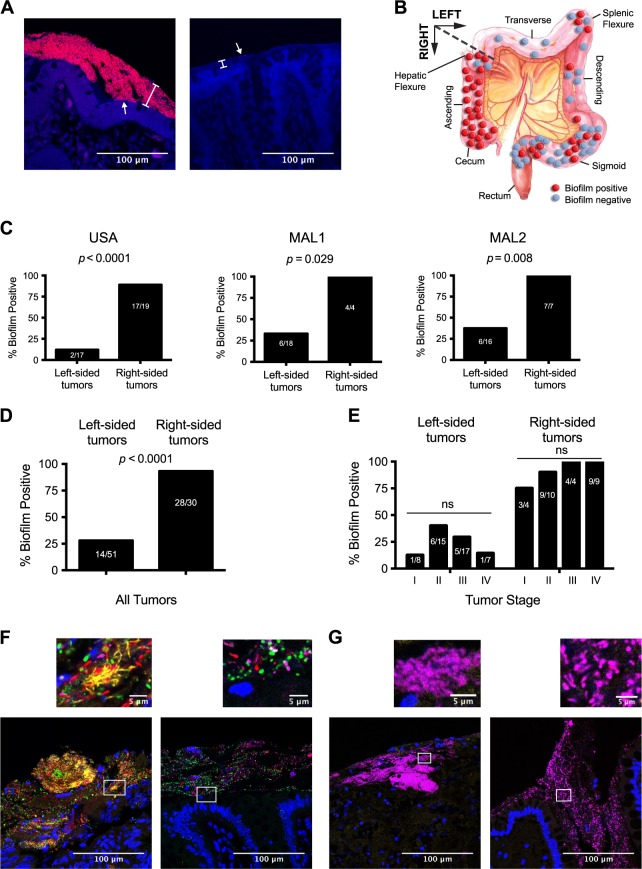
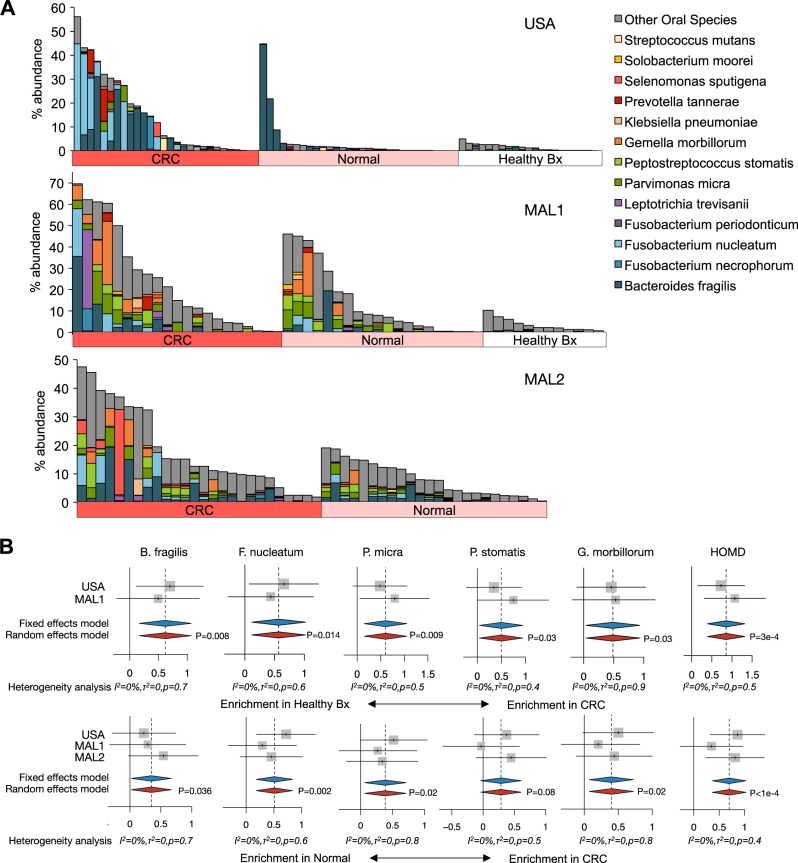
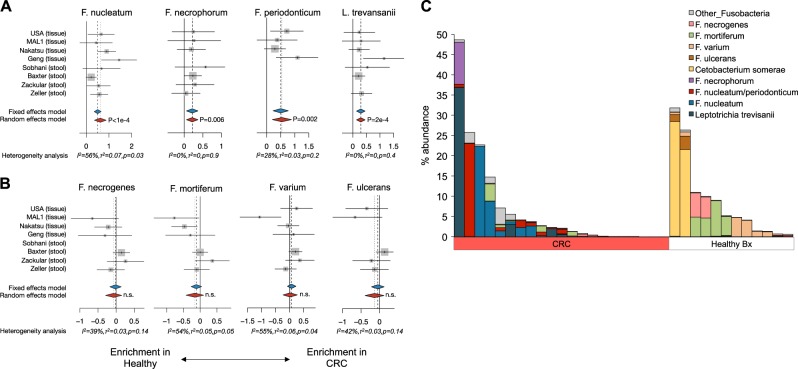
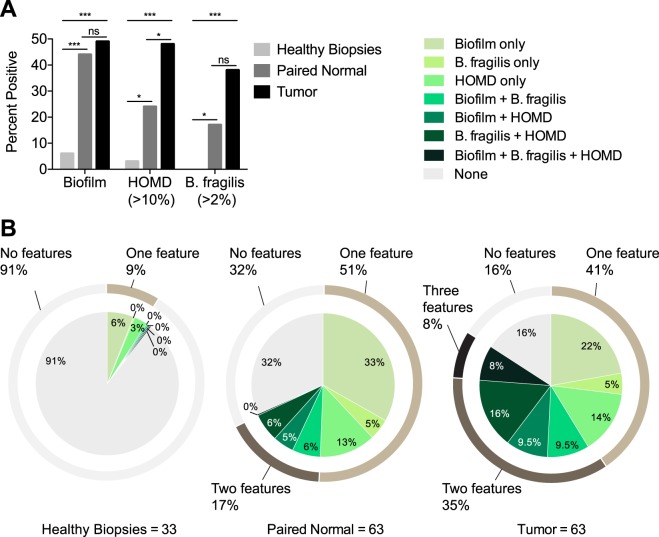
Colorectal cancer (CRC) remains the third most common cancer worldwide, with a growing incidence among young adults. Multiple studies have presented associations between the gut microbiome and CRC, suggesting a link with cancer risk. Although CRC microbiome studies continue to profile larger patient cohorts with increasingly economical and rapid DNA sequencing platforms, few common associations with CRC have been identified, in part due to limitations in taxonomic resolution and differences in analysis methodologies. Complementing these taxonomic studies is the newly recognized phenomenon that bacterial organization into biofilm structures in the mucus layer of the gut is a consistent feature of right-sided (proximal), but not left-sided (distal) colorectal cancer. In the present study, we performed 16S rRNA gene amplicon sequencing and biofilm quantification in a new cohort of patients from Malaysia, followed by a meta-analysis of eleven additional publicly available data sets on stool and tissue-based CRC microbiota using Resphera Insight, a high-resolution analytical tool for species-level characterization. Results from the Malaysian cohort and the expanded meta-analysis confirm that CRC tissues are enriched for invasive biofilms (particularly on right-sided tumors), a symbiont with capacity for tumorigenesis ( Bacteroides fragilis ), and oral pathogens including Fusobacterium nucleatum , Parvimonas micra , and Peptostreptococcus stomatis . Considered in aggregate, species from the Human Oral Microbiome Database are highly enriched in CRC. Although no detected microbial feature was universally present, their substantial overlap and combined prevalence supports a role for the gut microbiota in a significant percentage (>80%) of CRC cases.
Overview
The claims and statistics of this paper haven’t been checked yet.
Free: it reads the open-access text and checks the first 5 claims that cite a source we can check. Create a free account to check every claim.
Integrity signals
Registry
Cites
Statistics
Figures
Verification
Claims the paper makes
The claims and statistics of this paper haven’t been checked yet.
Free: it reads the open-access text and checks the first 5 claims that cite a source we can check. Create a free account to check every claim.
Claims other papers make about this one
Each is checked against this paper’s own text: does it say what the citing paper says it does?
The cited source says what the claim attributes to it.
In the citing paper
“The enrichment of bacterial species from the oral cavity is characteristic of the CRC GOMS50,76–79, along with an enrichment in invasive polymicrobial bacterial biofilms in patients with right-sided tumours76,80,81.”
From Gut OncoMicrobiome Signatures (GOMS) as next-generation biomarkers for cancer immunotherapy (2023) · cites this paper as [76]
The check wasn’t confident either way, so it gives no verdict — never disputed.
In the citing paper
“we selected Resphera Insight as previously published data demonstrate that this pipeline outperforms QIIME RDP and QIIME UCLUST in species level identification using the Human Microbiome Project reference isolate collection (60–70% species identified by Resphera Insight compared to 10–25% by QIIME RDP or QIIME UCLUST) (13).”
From A Uniform Computational Approach Improved on Existing Pipelines to Reveal Microbiome Biomarkers of Nonresponse to Immune Checkpoint Inhibitors (2021) · cites this paper as [13]
Experimental — accuracy not yet measuredIn the citing paper
“Further Resphera Insight has been validated as largely highly accurate for detection of Bacterioides and Fusobacterium spp. (13) and is also used by the FDA to enhance species identification contaminating the food chain (16,17).”
From A Uniform Computational Approach Improved on Existing Pipelines to Reveal Microbiome Biomarkers of Nonresponse to Immune Checkpoint Inhibitors (2021) · cites this paper as [13]
Self-check
Percentages, sums and reported differences re-computed from the paper’s own numbers.
The self-check needs the paper’s full text.
Citations
Cites
Trimmomatic: a flexible trimmer for Illumina sequence data
Bolger, A. M., Lohse, M., & Usadel, B. (2014) · Bioinformatics · doi:10.1093/bioinformatics/btu170 · Cited by 65,548
Fast gapped-read alignment with Bowtie 2
Langmead, B., & Salzberg, S. L. (2012) · Nature Methods · doi:10.1038/nmeth.1923 · Cited by 56,400
Harris, P. A., Taylor, R., Thielke, R., Payne, J., Gonzalez, N., & Conde, J. G. (2009) · Journal of Biomedical Informatics · doi:10.1016/j.jbi.2008.08.010 · Cited by 51,384
Naïve Bayesian Classifier for Rapid Assignment of rRNA Sequences into the New Bacterial Taxonomy
Wang, Q., Garrity, G. M., Tiedje, J. M., & Cole, J. R. (2007) · Applied and Environmental Microbiology · doi:10.1128/aem.00062-07 · Cited by 19,885
FLASH: fast length adjustment of short reads to improve genome assemblies
Magoč, T., & Salzberg, S. L. (2011) · Bioinformatics · doi:10.1093/bioinformatics/btr507 · Cited by 15,366
UCHIME improves sensitivity and speed of chimera detection
Edgar, R. C., Haas, B. J., Clemente, J. C., Quince, C., & Knight, R. (2011) · Bioinformatics · doi:10.1093/bioinformatics/btr381 · Cited by 15,114
Bacterial Biofilms: A Common Cause of Persistent Infections
Costerton, J. W., Stewart, P. S., & Greenberg, E. P. (1999) · Science · doi:10.1126/science.284.5418.1318 · Cited by 12,167 · cited 1×
“Biofilms form when bacteria aggregate on a surface (biological or inert) and become encased in a polymeric matrix.(18,19) Similar to other in vivo biofilms including oral biofilms (dental plaque) and Pseudomonas aeruginosa biofilms in cystic fibrosis patients, the colonic biofilm matrix may consist of both host mucus…”
BackgroundPredictive functional profiling of microbial communities using 16S rRNA marker gene sequences
Langille, M. G. I., Zaneveld, J., Caporaso, J. G., McDonald, D., Knights, D., Reyes, J. A., Clemente, J. C., Burkepile, D. E., Vega Thurber, R. L., Knight, R., et al. (2013) · Nature Biotechnology · doi:10.1038/nbt.2676 · Cited by 9,116
Klindworth, A., Pruesse, E., Schweer, T., Peplies, J., Quast, C., Horn, M., & Glöckner, F. O. (2013) · Nucleic Acids Research · doi:10.1093/nar/gks808 · Cited by 8,850
Ultra-high-throughput microbial community analysis on the Illumina HiSeq and MiSeq platforms
Caporaso, J. G., Lauber, C. L., Walters, W. A., Berg-Lyons, D., Huntley, J., Fierer, N., Owens, S. M., Betley, J., Fraser, L., Bauer, M., et al. (2012) · The ISME Journal · doi:10.1038/ismej.2012.8 · Cited by 8,839 · cited 1×
“High-throughput next-generation sequencing of the V3-V4 hypervariable region of the 16S rRNA gene was performed using 319 F (5′-ACTCCTACGGGAGGCAGCAG-3′) and 806 R (5′-GGACTACHVGGGTWTCTAAT-3′) universal primers containing a linker sequence required for Illumina MiSeq 300 bp paired-end sequencing and a 12-bp heterogenei…”
MethodDiversity of the Human Intestinal Microbial Flora
Eckburg, P. B., Bik, E. M., Bernstein, C. N., Purdom, E., Dethlefsen, L., Sargent, M., Gill, S. R., Nelson, K. E., & Relman, D. A. (2005) · Science · doi:10.1126/science.1110591 · Cited by 7,913
McDonald, D., Price, M. N., Goodrich, J., Nawrocki, E. P., DeSantis, T. Z., Probst, A., Andersen, G. L., Knight, R., & Hugenholtz, P. (2012) · The ISME Journal · doi:10.1038/ismej.2011.139 · Cited by 5,064
PyNAST: a flexible tool for aligning sequences to a template alignment
Caporaso, J. G., Bittinger, K., Bushman, F. D., DeSantis, T. Z., Andersen, G. L., & Knight, R. (2010) · Bioinformatics · doi:10.1093/bioinformatics/btp636 · Cited by 3,396 · cited 2×
“%) and length (minimum 150 bp) using Trimmomatic64 and QIIME.65,66 Spurious hits to the PhiX control genome were identified using BLASTN and removed.”
MethodKostic, A. D., Chun, E., Robertson, L., Glickman, J. N., Gallini, C. A., Michaud, M., Clancy, T. E., Chung, D. C., Lochhead, P., Hold, G. L., et al. (2013) · Cell Host & Microbe · doi:10.1016/j.chom.2013.07.007 · Cited by 2,718 · cited 2×
“nucleatum would enable it to tolerate the hypoxic tumor environment.(47) F.”
BackgroundRubinstein, M. R., Wang, X., Liu, W., Hao, Y., Cai, G., & Han, Y. W. (2013) · Cell Host & Microbe · doi:10.1016/j.chom.2013.07.012 · Cited by 2,476 · cited 1×
“nucleatum accelerated tumorigenesis.(46,47) Immune mechanisms including myeloid cell infiltration, the balance between FOXP3 and FOXP3 Treg populations, and checkpoint molecule (TIGIT) blockade may modulate F.”
BackgroundFusobacterium nucleatum infection is prevalent in human colorectal carcinoma
Castellarin, M., Warren, R. L., Freeman, J. D., Dreolini, L., Krzywinski, M., Strauss, J., Barnes, R., Watson, P., Allen-Vercoe, E., Moore, R. A., et al. (2012) · Genome Research · doi:10.1101/gr.126516.111 · Cited by 2,043
Genomic analysis identifies association of Fusobacterium with colorectal carcinoma
Kostic, A. D., Gevers, D., Pedamallu, C. S., Michaud, M., Duke, F., Earl, A. M., Ojesina, A. I., Jung, J., Bass, A. J., Tabernero, J., et al. (2012) · Genome Research · doi:10.1101/gr.126573.111 · Cited by 1,960
Wu, S., Rhee, K.-J., Albesiano, E., Rabizadeh, S., Wu, X., Yen, H.-R., Huso, D. L., Brancati, F. L., Wick, E., McAllister, F., et al. (2009) · Nature Medicine · doi:10.1038/nm.2015 · Cited by 1,812 · cited 1×
“In mouse models, inoculation of ETBF into Apc mice accelerates tumorigenesis in an IL-17-dependent manner.(38) In patients, bft has been found to be present more frequently in CRC versus controls in both the colon mucosa (>85 vs.”
BackgroundSelf-citationFadrosh, D. W., Ma, B., Gajer, P., Sengamalay, N., Ott, S., Brotman, R. M., & Ravel, J. (2014) · Microbiome · doi:10.1186/2049-2618-2-6 · Cited by 1,698 · cited 1×
“High-throughput next-generation sequencing of the V3-V4 hypervariable region of the 16S rRNA gene was performed using 319 F (5′-ACTCCTACGGGAGGCAGCAG-3′) and 806 R (5′-GGACTACHVGGGTWTCTAAT-3′) universal primers containing a linker sequence required for Illumina MiSeq 300 bp paired-end sequencing and a 12-bp heterogenei…”
MethodGur, C., Ibrahim, Y., Isaacson, B., Yamin, R., Abed, J., Gamliel, M., Enk, J., Bar-On, Y., Stanietsky-Kaynan, N., Coppenhagen-Glazer, S., et al. (2015) · Immunity · doi:10.1016/j.immuni.2015.01.010 · Cited by 1,490
Potential of fecal microbiota for early-stage detection of colorectal cancer
Zeller, G., Tap, J., Voigt, A. Y., Sunagawa, S., Kultima, J. R., Costea, P. I., Amiot, A., Böhm, J., Brunetti, F., Habermann, N., et al. (2014) · Molecular Systems Biology · doi:10.15252/msb.20145645 · Cited by 1,375
Structural segregation of gut microbiota between colorectal cancer patients and healthy volunteers
Wang, T., Cai, G., Qiu, Y., Fei, N., Zhang, M., Pang, X., Jia, W., Cai, S., & Zhao, L. (2012) · The ISME Journal · doi:10.1038/ismej.2011.109 · Cited by 1,287
Chen, T., Yu, W.-H., Izard, J., Baranova, O. V., Lakshmanan, A., & Dewhirst, F. E. (2010) · Database · doi:10.1093/database/baq013 · Cited by 1,162 · cited 3×
“Species associated with the human oral tract were determined from the HOMD.27 Details of Resphera Insight speciation validation, benchmarking studies and statistical analyses are available in SI Methods.”
BackgroundMethodInfluentialWorlitzsch, D., Tarran, R., Ulrich, M., Schwab, U. E., Cekici, A., Meyer, K. C., Birrer, P., Bellon, G., Berger, J., Weiß, T., et al. (2002) · Journal of Clinical Investigation · doi:10.1172/jci13870 · Cited by 1,099 · cited 1×
“Similar to other in vivo biofilms including oral biofilms (dental plaque) and Pseudomonas aeruginosa biofilms in cystic fibrosis patients, the colonic biofilm matrix may consist of both host mucus and bacteria-produced extrapolymeric substrates.(20,21) The invasion and attachment of biofilms to the colonic epithelium…”
BackgroundWorlitzsch, D., Tarran, R., Ulrich, M., Schwab, U., Cekici, A., Meyer, K. C., Birrer, P., Bellon, G., Berger, J., Weiss, T., et al. (2002) · Journal of Clinical Investigation · doi:10.1172/jci0213870 · Cited by 932
Swidsinski, A., Weber, J., Loening-Baucke, V., Hale, L. P., & Lochs, H. (2005) · Journal of Clinical Microbiology · doi:10.1128/jcm.43.7.3380-3389.2005 · Cited by 894 · cited 2×
“In comparison, a range of 13–35% of healthy screening colonoscopy patients have been reported to harbor colonic biofilms, with equivalent percentages of biofilms on the right and left sides.(16,23) Notably, the prevalence of biofilms in the healthy biopsies in the present meta-analysis was lower than expected (6%); ho…”
MethodResultTwo FOXP3+CD4+ T cell subpopulations distinctly control the prognosis of colorectal cancers
Saito, T., Nishikawa, H., Wada, H., Nagano, Y., Sugiyama, D., Atarashi, K., Maeda, Y., Hamaguchi, M., Ohkura, N., Sato, E., et al. (2016) · Nature Medicine · doi:10.1038/nm.4086 · Cited by 871
Microbial Dysbiosis in Colorectal Cancer (CRC) Patients
Sobhani, I., Tap, J., Roudot-Thoraval, F., Roperch, J. P., Letulle, S., Langella, P., Corthier, G., Van Nhieu, J. T., & Furet, J. P. (2011) · PLoS ONE · doi:10.1371/journal.pone.0016393 · Cited by 842 · cited 1×
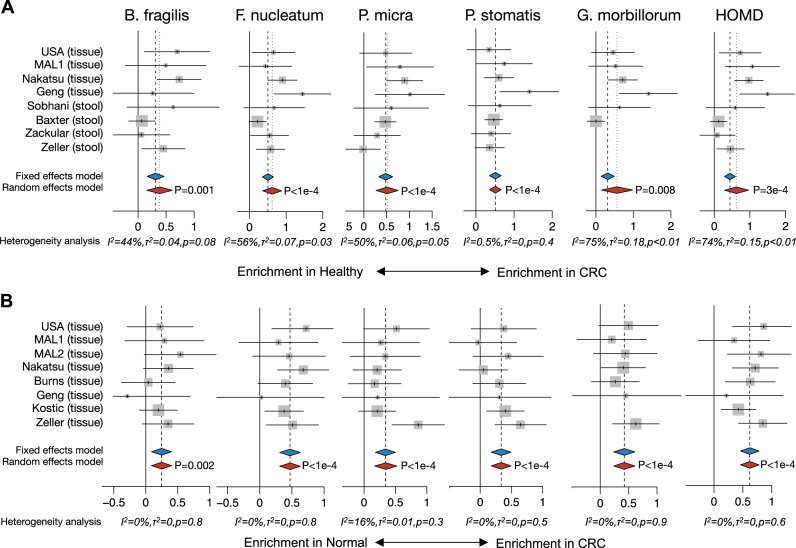
“The above analysis was then expanded to include all available 16S rRNA gene sequencing data sets on CRC samples, including two additional studies involving CRC versus healthy biopsy samples,(8,15) five studies on CRC versus paired normal tissue,(2,3,6,15,28) and four stool-based studies.(4,5,9,28) In total, eight data…”
MethodFusobacterium nucleatum: a commensal-turned pathogen
Han, Y. W. (2015) · Current Opinion in Microbiology · doi:10.1016/j.mib.2014.11.013 · Cited by 827 · cited 2×
“nucleatum has gained increasing notoriety in recent years as a potential pathogen in a number of clinical diseases including gastro–intestinal disorders, cardiovascular disease, adverse pregnancy outcomes, respiratory tract infections, and oropharyngeal infections, where it was first discovered.(42) Mechanistically, F.”
BackgroundTumour-associated and non-tumour-associated microbiota in colorectal cancer
Flemer, B., Lynch, D. B., Brown, J. M. R., Jeffery, I. B., Ryan, F. J., Claesson, M. J., O'Riordain, M., Shanahan, F., & O'Toole, P. W. (2017) · Gut · doi:10.1136/gutjnl-2015-309595 · Cited by 804
Bartram, A. K., Lynch, M. D. J., Stearns, J. C., Moreno-Hagelsieb, G., & Neufeld, J. D. (2011) · Applied and Environmental Microbiology · doi:10.1128/aem.02772-10 · Cited by 778 · cited 1×
“The V3-V4 region of the 16S rRNA gene was amplified using S-D-Bact-0341-b-S-17 forward (5′NNNNCCTACGGGNGGCWGCAG-3′) and S-D-Bact-0785-a-A-21 reverse (5′GACTACHVGGGTATCTAATCC-3′) primers(61) designed to include the Illumina-compatible adapters.(62) SI Methods contain additional details of library generation and sequenc…”
MethodBjarnsholt, T., Alhede, M., Alhede, M., Eickhardt-Sørensen, S. R., Moser, C., Kühl, M., Jensen, P. Ø., & Høiby, N. (2013) · Trends in Microbiology · doi:10.1016/j.tim.2013.06.002 · Cited by 764 · cited 1×
“Biofilms form when bacteria aggregate on a surface (biological or inert) and become encased in a polymeric matrix.(18,19) Similar to other in vivo biofilms including oral biofilms (dental plaque) and Pseudomonas aeruginosa biofilms in cystic fibrosis patients, the colonic biofilm matrix may consist of both host mucus…”
BackgroundUsing QIIME to Analyze 16S rRNA Gene Sequences from Microbial Communities
Kuczynski, J., Stombaugh, J., Walters, W. A., González, A., Caporaso, J. G., & Knight, R. (2011) · Current Protocols in Bioinformatics · doi:10.1002/0471250953.bi1007s36 · Cited by 727 · cited 2×
“%) and length (minimum 150 bp) using Trimmomatic64 and QIIME.65,66 Spurious hits to the PhiX control genome were identified using BLASTN and removed.”
MethodAdhere today, here tomorrow: oral bacterial adherence
Kolenbrander, P. E., & London, J. (1993) · Journal of Bacteriology · doi:10.1128/jb.175.11.3247-3252.1993 · Cited by 710 · cited 1×
“nucleatum.(42,55) Our meta-analysis revealed consistent elevations in not only F.”
BackgroundDuncan, S. H., Hold, G. L., Harmsen, H. J. M., Stewart, C. S., & Flint, H. J. (2002) · International Journal of Systematic and Evolutionary Microbiology · doi:10.1099/00207713-52-6-2141 · Cited by 708
Gut mucosal microbiome across stages of colorectal carcinogenesis
Nakatsu, G., Li, X., Zhou, H., Sheng, J., Wong, S. H., Wu, W. K. K., Ng, S. C., Tsoi, H., Dong, Y., Zhang, N., et al. (2015) · Nature Communications · doi:10.1038/ncomms9727 · Cited by 701 · cited 1×
“These organisms include Fusobacterium, Parvimonas, and Peptostreptococcus species found to be enriched in CRC in our metaanalysis, as well as Porphyromonas, Prevotella, and Gemella species enriched in other studies.(5,9,15) While it is tempting to speculate that biofilms from the oral cavity containing F.”
BackgroundMicrobiota organization is a distinct feature of proximal colorectal cancers
Dejea, C. M., Wick, E. C., Hechenbleikner, E. M., White, J. R., Mark Welch, J. L., Rossetti, B. J., Peterson, S. N., Snesrud, E. C., Borisy, G. G., Lazarev, M., et al. (2014) · Proceedings of the National Academy of Sciences · doi:10.1073/pnas.1406199111 · Cited by 700 · cited 7×
“The potential procarcinogenic mechanisms of biofilms elucidated thus far include production of the polyamine (N)1, (N)12-diacetylspermine(56) and induction of a pro-inflammatory response involving enhanced epithelial levels of IL-6, phospho-STAT3, and increased crypt epithelial cell proliferation.(16) Importantly, one…”
BackgroundMethodResultInfluentialSelf-citationStool microbiome and metabolome differences between colorectal cancer patients and healthy adults
Weir, T. L., Manter, D. K., Sheflin, A. M., Barnett, B. A., Heuberger, A. L., & Ryan, E. P. (2013) · PLoS ONE · doi:10.1371/journal.pone.0070803 · Cited by 642 · cited 2×
“Importantly, the enrichment of B. fragilis was paralleled by depletion of several other Bacteroides members, which is consistent with reports by others of an overall loss of phylum Bacteroidetes3 and more specifically the genus Bacteroides.9,12 The selective enrichment of B. fragilis may therefore suggest a growth adv…”
ResultThe Bacteroides fragilis toxin gene is prevalent in the colon mucosa of colorectal cancer patients
Boleij, A., Hechenbleikner, E. M., Goodwin, A. C., Badani, R., Stein, E. M., Lazarev, M. G., Ellis, B., Carroll, K. C., Albesiano, E., Wick, E. C., et al. (2015) · Clinical Infectious Diseases · doi:10.1093/cid/ciu787 · Cited by 625 · cited 11×
“Our high-resolution 16S rRNA gene metaanalysis captured species-level taxonomic assignments, allowing for the most detailed map to date of the microbial dysbiosis in CRC.”
BackgroundInfluentialSelf-citationGoodwin, A. C., Shields, C. E. D., Wu, S., Huso, D. L., Wu, X., Murray-Stewart, T. R., Hacker-Prietz, A., Rabizadeh, S., Woster, P. M., Sears, C. L., et al. (2011) · Proceedings of the National Academy of Sciences · doi:10.1073/pnas.1010203108 · Cited by 612
Self-citationMucin-bacterial interactions in the human oral cavity and digestive tract
Derrien, M., van Passel, M. W. J., van de Bovenkamp, J. H. B., Schipper, R., de Vos, W., & Dekker, J. (2010) · Gut Microbes · doi:10.4161/gmic.1.4.12778 · Cited by 556 · cited 1×
“Similar to other in vivo biofilms including oral biofilms (dental plaque) and Pseudomonas aeruginosa biofilms in cystic fibrosis patients, the colonic biofilm matrix may consist of both host mucus and bacteria-produced extrapolymeric substrates.(20,21) The invasion and attachment of biofilms to the colonic epithelium…”
BackgroundTowards the Human Colorectal Cancer Microbiome
Marchesi, J. R., Dutilh, B. E., Hall, N., Peters, W. H. M., Roelofs, R., Boleij, A., & Tjalsma, H. (2011) · PLoS ONE · doi:10.1371/journal.pone.0020447 · Cited by 552
The human gut microbiome as a screening tool for colorectal cancer
Zackular, J. P., Rogers, M. A. M., Ruffin, M. T., & Schloss, P. D. (2014) · Cancer Prevention Research · doi:10.1158/1940-6207.capr-14-0129 · Cited by 551 · cited 4×
“Importantly, the enrichment of B. fragilis was paralleled by depletion of several other Bacteroides members, which is consistent with reports by others of an overall loss of phylum Bacteroidetes3 and more specifically the genus Bacteroides.9,12 The selective enrichment of B. fragilis may therefore suggest a growth adv…”
BackgroundMethodResultInfluentialMicrobiota disbiosis is associated with colorectal cancer
Gao, Z., Guo, B., Gao, R., Zhu, Q., & Qin, H. (2015) · Frontiers in Microbiology · doi:10.3389/fmicb.2015.00020 · Cited by 537
ABC of colorectal cancer: Epidemiology
Boyle, P. (2000) · BMJ · doi:10.1136/bmj.321.7264.805 · Cited by 490
A possible role of Bacteroides fragilis enterotoxin in the aetiology of colorectal cancer
Ulger Toprak, N., Yagci, A., Gulluoglu, B. M., Akin, M. L., Demirkalem, P., Celenk, T., & Soyletir, G. (2006) · Clinical Microbiology and Infection · doi:10.1111/j.1469-0691.2006.01494.x · Cited by 454 · cited 1×
“10%).(39,40) Thus, the association between enrichment of B.”
BackgroundHan, Y. W., Shi, W., Huang, G. T.-J., Kinder Haake, S., Park, N.-H., Kuramitsu, H., & Genco, R. J. (2000) · Infection and Immunity · doi:10.1128/iai.68.6.3140-3146.2000 · Cited by 435
Enterotoxigenic Bacteroides fragilis: a Rogue among Symbiotes
Sears, C. L. (2009) · Clinical Microbiology Reviews · doi:10.1128/cmr.00053-08 · Cited by 411 · cited 11×
“Our high-resolution 16S rRNA gene metaanalysis captured species-level taxonomic assignments, allowing for the most detailed map to date of the microbial dysbiosis in CRC.”
BackgroundInfluentialSelf-citationBacteroides fragilis enterotoxin cleaves the zonula adherens protein, E-cadherin
Wu, S., Lim, K.-C., Huang, J., Saidi, R. F., & Sears, C. L. (1998) · Proceedings of the National Academy of Sciences · doi:10.1073/pnas.95.25.14979 · Cited by 408 · cited 1×
“tumorigenesis by inducing (1) DNA damage through enhanced spermine oxidase and resulting ROS activity,(35) and (2) cleavage and subsequent degradation of the tumor suppressor E-cadherin, resulting in increased permeability of the colonic epithelium, enhanced Wnt/β-catenin signaling, and enhanced cellular proliferation…”
BackgroundSelf-citationBacteroides fragilis enterotoxin induces c-Myc expression and cellular proliferation
Wu, S., Morin, P. J., Maouyo, D., & Sears, C. L. (2003) · Gastroenterology · doi:10.1053/gast.2003.50047 · Cited by 393 · cited 1×
“tumorigenesis by inducing (1) DNA damage through enhanced spermine oxidase and resulting ROS activity,(35) and (2) cleavage and subsequent degradation of the tumor suppressor E-cadherin, resulting in increased permeability of the colonic epithelium, enhanced Wnt/β-catenin signaling, and enhanced cellular proliferation…”
BackgroundSelf-citationBaxter, N. T., Ruffin, M. T., Rogers, M. A. M., & Schloss, P. D. (2016) · Genome Medicine · doi:10.1186/s13073-016-0290-3 · Cited by 354 · cited 2×
“These organisms include Fusobacterium, Parvimonas, and Peptostreptococcus species found to be enriched in CRC in our metaanalysis, as well as Porphyromonas, Prevotella, and Gemella species enriched in other studies.(5,9,15) While it is tempting to speculate that biofilms from the oral cavity containing F.”
BackgroundMethodBacteroides fragilis subverts mucosal biology: from symbiont to colon carcinogenesis
Sears, C. L., Geis, A. L., & Housseau, F. (2014) · Journal of Clinical Investigation · doi:10.1172/jci72334 · Cited by 353 · cited 1×
“fragilis), the emerging role of oral microbes as potentially hostile guests in the gut, and the establishment of polymicrobial, procarcinogenic biofilms.(16,32,33) Additionally, while specific organisms, such as B.”
BackgroundSelf-citationMetabolism Links Bacterial Biofilms and Colon Carcinogenesis
Johnson, C. H., Dejea, C. M., Edler, D., Hoang, L. T., Santidrian, A. F., Felding, B. H., Ivanisevic, J., Cho, K., Wick, E. C., Hechenbleikner, E. M., et al. (2015) · Cell Metabolism · doi:10.1016/j.cmet.2015.04.011 · Cited by 351
Self-citationCo-occurrence of anaerobic bacteria in colorectal carcinomas
Warren, R. L., Freeman, D. J., Pleasance, S., Watson, P., Moore, R. A., Cochrane, K., Allen-Vercoe, E., & Holt, R. A. (2013) · Microbiome · doi:10.1186/2049-2618-1-16 · Cited by 348
Fast, accurate error-correction of amplicon pyrosequences using Acacia
Bragg, L., Stone, G., Imelfort, M., Hugenholtz, P., & Tyson, G. W. (2012) · Nature Methods · doi:10.1038/nmeth.1990 · Cited by 337 · cited 1×
“Passing sequences were error-corrected using Acacia with default parameters.(67) Resulting sequences from all sequencing technologies were then trimmed of their associated primers, evaluated for chimeras with UCLUST (de novo mode),(68) and screened for human-associated contaminant using Bowtie2(69) searches of NCBI Ho…”
MethodKolenbrander, P. E., Andersen, R. N., & Moore, L. V. (1989) · Infection and Immunity · doi:10.1128/iai.57.10.3194-3203.1989 · Cited by 298 · cited 1×
“nucleatum is frequently found to co-occur with other oral pathogens in CRC(53) and can coaggregate with members of all genera in vitro.(54) As such, F.”
BackgroundMira-Pascual, L., Cabrera-Rubio, R., Ocon, S., Costales, P., Parra, A., Suarez, A., Moris, F., Rodrigo, L., Mira, A., & Collado, M. C. (2015) · Journal of Gastroenterology · doi:10.1007/s00535-014-0963-x · Cited by 262
Identification and Characterization of a Novel Adhesin Unique to Oral Fusobacteria
Han, Y. W., Ikegami, A., Rajanna, C., Kawsar, H. I., Zhou, Y., Li, M., Sojar, H. T., Genco, R. J., Kuramitsu, H. K., & Deng, C. X. (2005) · Journal of Bacteriology · doi:10.1128/jb.187.15.5330-5340.2005 · Cited by 259
Viljoen, K. S., Dakshinamurthy, A., Goldberg, P., & Blackburn, J. M. (2015) · PLoS ONE · doi:10.1371/journal.pone.0119462 · Cited by 256
Coppenhagen-Glazer, S., Sol, A., Abed, J., Naor, R., Zhang, X., Han, Y. W., & Bachrach, G. (2015) · Infection and Immunity · doi:10.1128/iai.02838-14 · Cited by 249
Spatial heterogeneity and co-occurrence patterns of human mucosal-associated intestinal microbiota
Zhang, Z., Geng, J., Tang, X., Fan, H., Xu, J., Wen, X., Ma, Z. (., & Shi, P. (2014) · The ISME Journal · doi:10.1038/ismej.2013.185 · Cited by 232
Virulence genes are a signature of the microbiome in the colorectal tumor microenvironment
Burns, M. B., Lynch, J., Starr, T. K., Knights, D., & Blekhman, R. (2015) · Genome Medicine · doi:10.1186/s13073-015-0177-8 · Cited by 231
Thiele Orberg, E., Fan, H., Tam, A. J., Dejea, C. M., Destefano Shields, C. E., Wu, S., Chung, L., Finard, B. B., Wu, X., Fathi, P., et al. (2017) · Mucosal Immunology · doi:10.1038/mi.2016.53 · Cited by 219 · cited 1×
“highly strain-dependent, as some strains have been resistant to colonization in mouse gut and required daily inoculation(47) while others have been found to colonize readily.(49) F.”
BackgroundSelf-citationShah, M. S., DeSantis, T. Z., Weinmaier, T., McMurdie, P. J., Cope, J. L., Altrichter, A., Yamal, J.-M., & Hollister, E. B. (2018) · Gut · doi:10.1136/gutjnl-2016-313189 · Cited by 180 · cited 4×
“Table 1), as well as compared to the recent stool meta-analysis by Shah et al.(41) Additionally, samples from not only tumors and paired normal tissue but also healthy biopsies and stool samples were included in the analysis.”
ResultInfluentialAssociation of Fusobacterium nucleatum infection with colorectal cancer in Chinese patients
Li, Y.-Y., Ge, Q.-X., Cao, J., Zhou, Y.-J., Du, Y.-L., Shen, B., Wan, Y.-J. Y., & Nie, Y.-Q. (2016) · World Journal of Gastroenterology · doi:10.3748/wjg.v22.i11.3227 · Cited by 175
Ottesen, A., Ramachandran, P., Reed, E., White, J. R., Hasan, N., Subramanian, P., Ryan, G., Jarvis, K., Grim, C., Daquiqan, N., et al. (2016) · BMC Microbiology · doi:10.1186/s12866-016-0894-1 · Cited by 160
Self-citationMetabolic and Community Synergy of Oral Bacteria in Colorectal Cancer
Flynn, K. J., Baxter, N. T., & Schloss, P. D. (2016) · mSphere · doi:10.1128/msphere.00102-16 · Cited by 149 · cited 2×
“fragilis), the emerging role of oral microbes as potentially hostile guests in the gut, and the establishment of polymicrobial, procarcinogenic biofilms.(16,32,33) Additionally, while specific organisms, such as B.”
BackgroundUrinary Microbiome and Cytokine Levels in Women With Interstitial Cystitis
Abernethy, M. G., Rosenfeld, A., White, J. R., Mueller, M. G., Lewicky-Gaupp, C., & Kenton, K. (2017) · Obstetrics & Gynecology · doi:10.1097/aog.0000000000001892 · Cited by 137
Self-citationMicrobial Biofilms in the Gut: Visualization by Electron Microscopy and by Acridine Orange Staining
Palestrant, D., Holzknecht, Z. E., Collins, B. H., Parker, W., Miller, S., & Bollinger, R. R. (2004) · Ultrastructural Pathology · doi:10.1080/01913120490275196 · Cited by 128 · cited 1×
“The invasion and attachment of biofilms to the colonic epithelium and inner mucus layer can be visualized by a number of different microscopy-based methodologies including fluorescence in situ hybridization (FISH) staining with oligonucleotide fluorescent probes, electron microscopy, or acridine orange staining.(22,23…”
MethodDiversified pattern of the human colorectal cancer microbiome
Geng, J., Fan, H., Tang, X., Zhai, H., & Zhang, Z. (2013) · Gut Pathogens · doi:10.1186/1757-4749-5-2 · Cited by 127
Co-occurrence of driver and passenger bacteria in human colorectal cancer
Geng, J., Song, Q., Tang, X., Liang, X., Fan, H., Peng, H., Guo, Q., & Zhang, Z. (2014) · Gut Pathogens · doi:10.1186/1757-4749-6-26 · Cited by 92
Daiquigan, N., Grim, C. J., White, J. R., Hanes, D. E., & Jarvis, K. G. (2016) · Frontiers in Microbiology · doi:10.3389/fmicb.2016.02103 · Cited by 56
Self-citationScreening for enterotoxigenic Bacteroides fragilis in stool samples
Keenan, J. I., Aitchison, A., Purcell, R. V., Greenlees, R., Pearson, J. F., & Frizelle, F. (2016) · Anaerobe · doi:10.1016/j.anaerobe.2016.05.004 · Cited by 49 · cited 1×
“10%).(39,40) Thus, the association between enrichment of B.”
Background
Cited by
Tumor Microbiome Diversity and Composition Influence Pancreatic Cancer Outcomes
Riquelme, E., Zhang, Y., Zhang, L., Montiel, M., Zoltan, M., Dong, W., Quesada, P., Sahin, I., Chandra, V., San Lucas, A., et al. (2019) · Cell · doi:10.1016/j.cell.2019.07.008 · Cited by 1,577
“high-resolution taxonomic lineage using Resphera Insight (Daquigan et al., 2017; Drewes et al., 2017) and SILVA Database v128 (Quast et al.”
MethodSelf-citationGut microbiota in colorectal cancer: mechanisms of action and clinical applications
Wong, S. H., & Yu, J. (2019) · Nature Reviews Gastroenterology & Hepatology · doi:10.1038/s41575-019-0209-8 · Cited by 1,331
Thomas, A. M., Manghi, P., Asnicar, F., Pasolli, E., Armanini, F., Zolfo, M., Beghini, F., Manara, S., Karcher, N., Pozzi, C., et al. (2019) · Nature Medicine · doi:10.1038/s41591-019-0405-7 · Cited by 1,030
The Intestinal Microbiota in Colorectal Cancer.
Tilg, H., Adolph, T. E., Gerner, R. R., & Moschen, A. R. (2018) · Cancer Cell · doi:10.1016/j.ccell.2018.03.004 · Cited by 777
Gut microbiota in colorectal cancer development and therapy
Wong, C. C., & Yu, J. (2023) · Nature Reviews Clinical Oncology · doi:10.1038/s41571-023-00766-x · Cited by 721
Metadata
- Authors
- Drewes, J. L., White, J. R., Dejea, C. M., Fathi, P., Iyadorai, T., Vadivelu, J., Roslani, A. C., Wick, E. C., Mongodin, E. F., Loke, M. F., Thulasi, K., Gan, H. M., Goh, K. L., Chong, H. Y., Kumar, S., Wanyiri, J. W., & Sears, C. L.
- Affiliations
- Johns Hopkins University (US)
- Resphera Biosciences (US)
- University of Malaya (MY)
- University of Maryland, Baltimore (US)
- Monash University Malaysia (MY)
- Corresponding author
- Sears, Cynthia L.
- ORCID
- Venue
- npj Biofilms and Microbiomes
- Published
- 2017-11-29
- Volume
- 3
- Issue
- 1
- Pages
- 34-34
- ISSN
- 2055-5008 (ISSN-L)
- PMC
- PMC5707393
- OpenAlex
- W2770639073
- Cited by
- 335
- References
- 74
- Citations by year
- 2026: 33 · 2025: 42 · 2024: 34 · 2023: 44 · 2022: 35 · 2021: 54 · 2020: 41 · 2019: 31 · 2018: 20 · 2017: 1
- FWCI
- 10.39
- Type
- journal article
- Language
- en
- Update notices
- correction (2019-01-09)
- Open access
- gold
- doi.org
- Licence
- cc-by
- creativecommons.org/licenses/by/4.0 (tdm)
- creativecommons.org/licenses/by/4.0 (vor)
- Locations
- npj Biofilms and Microbiomes (publishedVersion, cc-by)
- Europe PMC (PubMed Central) (publishedVersion, cc-by)
- PubMed Central (publishedVersion, cc-by)
- PubMed (publishedVersion)
- DOAJ (DOAJ: Directory of Open Access Journals) (submittedVersion)
- Own your potential (DEAKIN) (submittedVersion)
- Deakin Research Online (Deakin University) (submittedVersion)
- eScholarship (California Digital Library) (submittedVersion, cc-by)
- Figshare (submittedVersion, cc-by)
- Funders
- Cancer Research Institute (CA006973)
- Universiti Malaya (RP016A-13HTM)
- National Institutes of Health (1s10od016374-01, CA006973, CA062924, DK089502)
- Sidney Kimmel Comprehensive Cancer Center (P30 CA006973, CA006973)
- National Cancer Institute (R01CA196845, R01CA151393, P50CA062924, P30CA006973)
- National Institute of Diabetes and Digestive and Kidney Diseases (P30DK089502)
- Topics
- Life Sciences › Biochemistry, Genetics and Molecular Biology › Molecular Biology › Gut microbiota and health
- Health Sciences › Dentistry › Periodontics › Oral microbiology and periodontitis research
- Health Sciences › Medicine › Infectious Diseases › Clostridium difficile and Clostridium perfringens research
- Keywords
- colorectal cancer, gut microbiota, bacterial biofilms, 16S rRNA gene profiling, Bacteroides fragilis, Fusobacterium nucleatum, Parvimonas micra, Peptostreptococcus stomatis, oral pathogens, right-sided colorectal cancer, mucus layer
About these checks
Registry, retraction, Cites and statistics results are computed, not judged, with one exception: a printed reference that no index lists is read once by a model before it counts as a citation error. Claims are extracted by a model and kept only when their quote appears verbatim in the text; each cited source is then checked, with a model’s help, for whether it says what the claim relies on. Those verdicts can be wrong — read the claim’s quote and the cited source before relying on one.
Statistics and arithmetic are recomputed, not judged.
Confidence bands are shown only for fields calibrated on our annotated test set. None is calibrated yet, so no band is shown.
What counts as a claim ›How we measure confidence ›How we check this ›
Are you an author, or do you see a problem with this page? Request a review
Data sources
Bibliographic data: Semantic Scholar, OpenAlex, Crossref.
Contains information from the Semantic Scholar Academic Graph Datasets, made available under the ODC Attribution License (ODC-BY 1.0).
Semantic Scholar’s data is described in: Kinney, R., et al. (2023). The Semantic Scholar Open Data Platform. arXiv:2301.10140.
