

High-resolution bacterial 16S rRNA gene profile meta-analysis and biofilm status reveal common colorectal cancer consortia
Open accessThe DOI matches its Crossref record; 73 of the 74 references it cites were found in a registry or an index.
Abstract
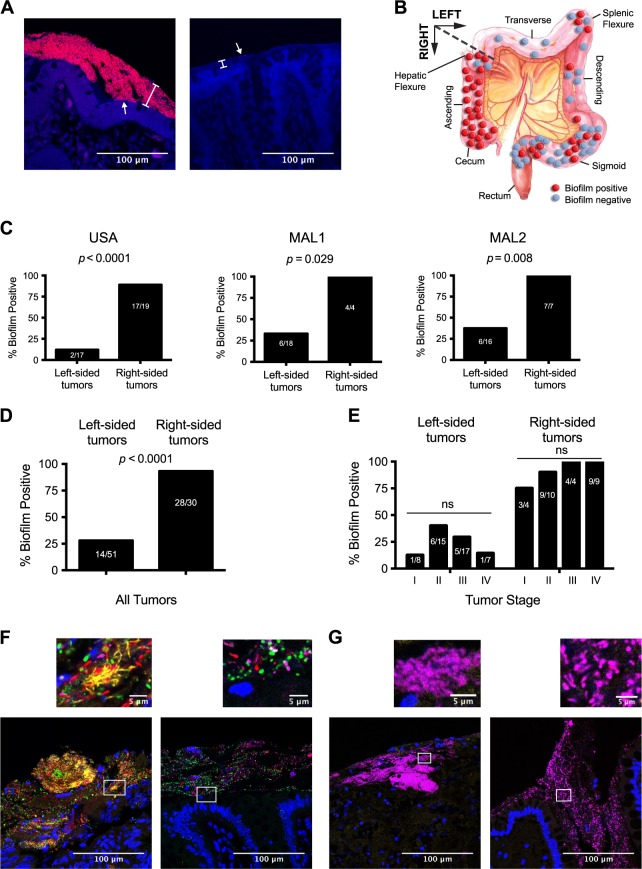
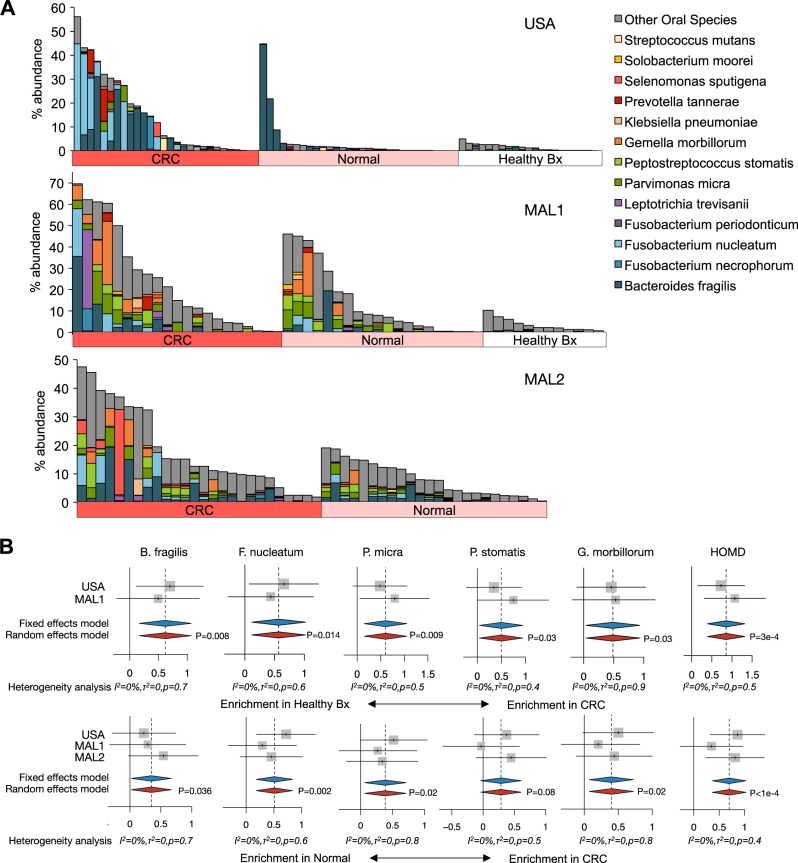
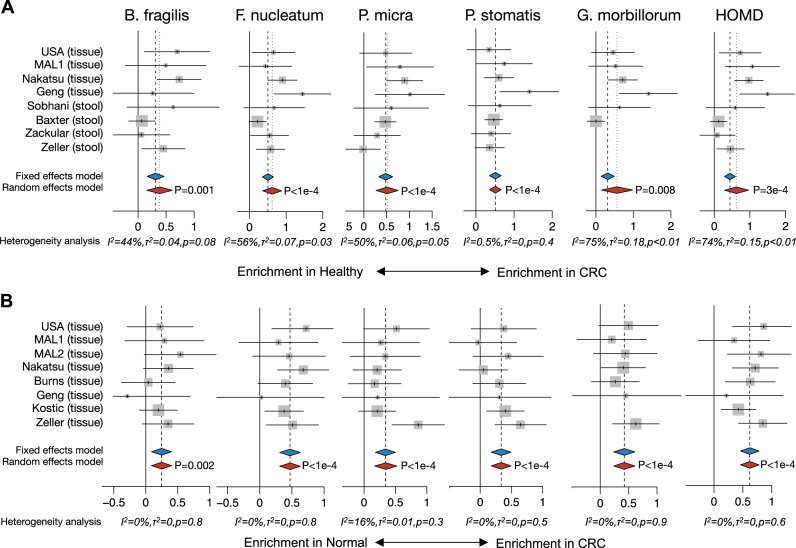
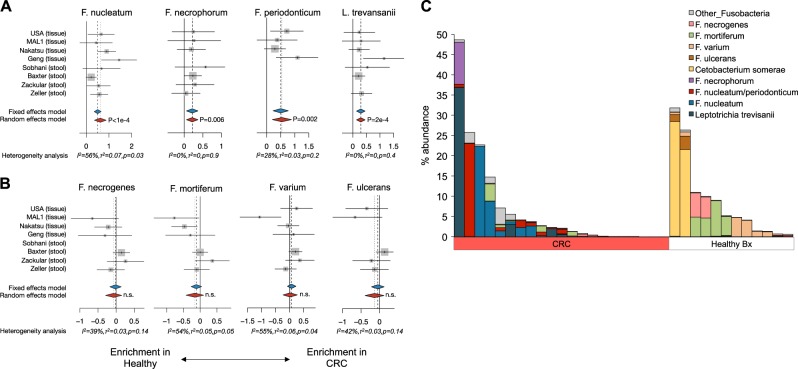
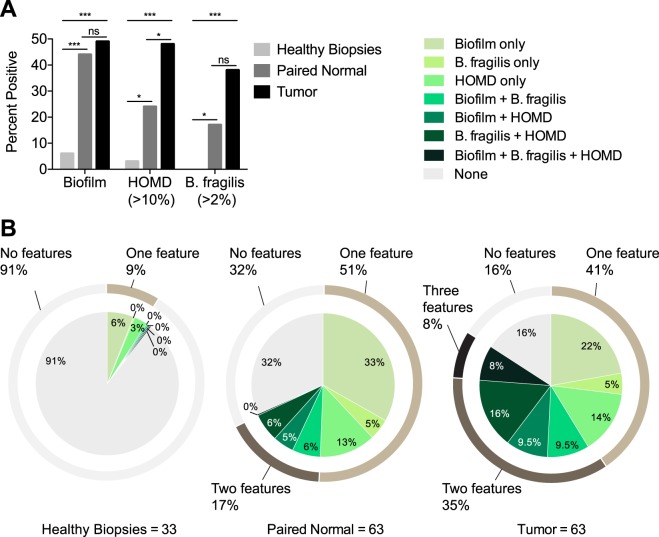
Colorectal cancer (CRC) remains the third most common cancer worldwide, with a growing incidence among young adults. Multiple studies have presented associations between the gut microbiome and CRC, suggesting a link with cancer risk. Although CRC microbiome studies continue to profile larger patient cohorts with increasingly economical and rapid DNA sequencing platforms, few common associations with CRC have been identified, in part due to limitations in taxonomic resolution and differences in analysis methodologies. Complementing these taxonomic studies is the newly recognized phenomenon that bacterial organization into biofilm structures in the mucus layer of the gut is a consistent feature of right-sided (proximal), but not left-sided (distal) colorectal cancer. In the present study, we performed 16S rRNA gene amplicon sequencing and biofilm quantification in a new cohort of patients from Malaysia, followed by a meta-analysis of eleven additional publicly available data sets on stool and tissue-based CRC microbiota using Resphera Insight, a high-resolution analytical tool for species-level characterization. Results from the Malaysian cohort and the expanded meta-analysis confirm that CRC tissues are enriched for invasive biofilms (particularly on right-sided tumors), a symbiont with capacity for tumorigenesis ( Bacteroides fragilis ), and oral pathogens including Fusobacterium nucleatum , Parvimonas micra , and Peptostreptococcus stomatis . Considered in aggregate, species from the Human Oral Microbiome Database are highly enriched in CRC. Although no detected microbial feature was universally present, their substantial overlap and combined prevalence supports a role for the gut microbiota in a significant percentage (>80%) of CRC cases.
Overview
The claims and statistics of this paper haven’t been checked yet.
Free: it reads the open-access text and checks the first 5 claims that cite a source we can check. Create a free account to check every claim.
Integrity signals
Registry
Cites
Statistics
Figures
Verification
Claims the paper makes
The claims and statistics of this paper haven’t been checked yet.
Free: it reads the open-access text and checks the first 5 claims that cite a source we can check. Create a free account to check every claim.
Claims other papers make about this one
Each is checked against this paper’s own text: does it say what the citing paper says it does?
The cited source says what the claim attributes to it.
In the citing paper
“The enrichment of bacterial species from the oral cavity is characteristic of the CRC GOMS50,76–79, along with an enrichment in invasive polymicrobial bacterial biofilms in patients with right-sided tumours76,80,81.”
From Gut OncoMicrobiome Signatures (GOMS) as next-generation biomarkers for cancer immunotherapy (2023) · cites this paper as [76]
The check wasn’t confident either way, so it gives no verdict — never disputed.
In the citing paper
“we selected Resphera Insight as previously published data demonstrate that this pipeline outperforms QIIME RDP and QIIME UCLUST in species level identification using the Human Microbiome Project reference isolate collection (60–70% species identified by Resphera Insight compared to 10–25% by QIIME RDP or QIIME UCLUST) (13).”
From A Uniform Computational Approach Improved on Existing Pipelines to Reveal Microbiome Biomarkers of Nonresponse to Immune Checkpoint Inhibitors (2021) · cites this paper as [13]
Experimental — accuracy not yet measuredIn the citing paper
“Further Resphera Insight has been validated as largely highly accurate for detection of Bacterioides and Fusobacterium spp. (13) and is also used by the FDA to enhance species identification contaminating the food chain (16,17).”
From A Uniform Computational Approach Improved on Existing Pipelines to Reveal Microbiome Biomarkers of Nonresponse to Immune Checkpoint Inhibitors (2021) · cites this paper as [13]
Self-check
Percentages, sums and reported differences re-computed from the paper’s own numbers.
The self-check needs the paper’s full text.
Citations
Cites
Trimmomatic: a flexible trimmer for Illumina sequence data
Bolger, A. M., Lohse, M., & Usadel, B. (2014) · Bioinformatics · doi:10.1093/bioinformatics/btu170 · Cited by 65,548
Fast gapped-read alignment with Bowtie 2
Langmead, B., & Salzberg, S. L. (2012) · Nature Methods · doi:10.1038/nmeth.1923 · Cited by 56,400
Harris, P. A., Taylor, R., Thielke, R., Payne, J., Gonzalez, N., & Conde, J. G. (2009) · Journal of Biomedical Informatics · doi:10.1016/j.jbi.2008.08.010 · Cited by 51,384
Naïve Bayesian Classifier for Rapid Assignment of rRNA Sequences into the New Bacterial Taxonomy
Wang, Q., Garrity, G. M., Tiedje, J. M., & Cole, J. R. (2007) · Applied and Environmental Microbiology · doi:10.1128/aem.00062-07 · Cited by 19,885
FLASH: fast length adjustment of short reads to improve genome assemblies
Magoč, T., & Salzberg, S. L. (2011) · Bioinformatics · doi:10.1093/bioinformatics/btr507 · Cited by 15,366
UCHIME improves sensitivity and speed of chimera detection
Edgar, R. C., Haas, B. J., Clemente, J. C., Quince, C., & Knight, R. (2011) · Bioinformatics · doi:10.1093/bioinformatics/btr381 · Cited by 15,114
Bacterial Biofilms: A Common Cause of Persistent Infections
Costerton, J. W., Stewart, P. S., & Greenberg, E. P. (1999) · Science · doi:10.1126/science.284.5418.1318 · Cited by 12,167 · cited 1×
“Biofilms form when bacteria aggregate on a surface (biological or inert) and become encased in a polymeric matrix.(18,19) Similar to other in vivo biofilms including oral biofilms (dental plaque) and Pseudomonas aeruginosa biofilms in cystic fibrosis patients, the colonic biofilm matrix may consist of both host mucus…”
BackgroundPredictive functional profiling of microbial communities using 16S rRNA marker gene sequences
Langille, M. G. I., Zaneveld, J., Caporaso, J. G., McDonald, D., Knights, D., Reyes, J. A., Clemente, J. C., Burkepile, D. E., Vega Thurber, R. L., Knight, R., et al. (2013) · Nature Biotechnology · doi:10.1038/nbt.2676 · Cited by 9,116
Klindworth, A., Pruesse, E., Schweer, T., Peplies, J., Quast, C., Horn, M., & Glöckner, F. O. (2013) · Nucleic Acids Research · doi:10.1093/nar/gks808 · Cited by 8,850
Ultra-high-throughput microbial community analysis on the Illumina HiSeq and MiSeq platforms
Caporaso, J. G., Lauber, C. L., Walters, W. A., Berg-Lyons, D., Huntley, J., Fierer, N., Owens, S. M., Betley, J., Fraser, L., Bauer, M., et al. (2012) · The ISME Journal · doi:10.1038/ismej.2012.8 · Cited by 8,839 · cited 1×
“High-throughput next-generation sequencing of the V3-V4 hypervariable region of the 16S rRNA gene was performed using 319 F (5′-ACTCCTACGGGAGGCAGCAG-3′) and 806 R (5′-GGACTACHVGGGTWTCTAAT-3′) universal primers containing a linker sequence required for Illumina MiSeq 300 bp paired-end sequencing and a 12-bp heterogenei…”
Method
Cited by
Tumor Microbiome Diversity and Composition Influence Pancreatic Cancer Outcomes
Riquelme, E., Zhang, Y., Zhang, L., Montiel, M., Zoltan, M., Dong, W., Quesada, P., Sahin, I., Chandra, V., San Lucas, A., et al. (2019) · Cell · doi:10.1016/j.cell.2019.07.008 · Cited by 1,577
“high-resolution taxonomic lineage using Resphera Insight (Daquigan et al., 2017; Drewes et al., 2017) and SILVA Database v128 (Quast et al.”
MethodSelf-citationGut microbiota in colorectal cancer: mechanisms of action and clinical applications
Wong, S. H., & Yu, J. (2019) · Nature Reviews Gastroenterology & Hepatology · doi:10.1038/s41575-019-0209-8 · Cited by 1,331
Thomas, A. M., Manghi, P., Asnicar, F., Pasolli, E., Armanini, F., Zolfo, M., Beghini, F., Manara, S., Karcher, N., Pozzi, C., et al. (2019) · Nature Medicine · doi:10.1038/s41591-019-0405-7 · Cited by 1,030
The Intestinal Microbiota in Colorectal Cancer.
Tilg, H., Adolph, T. E., Gerner, R. R., & Moschen, A. R. (2018) · Cancer Cell · doi:10.1016/j.ccell.2018.03.004 · Cited by 777
Gut microbiota in colorectal cancer development and therapy
Wong, C. C., & Yu, J. (2023) · Nature Reviews Clinical Oncology · doi:10.1038/s41571-023-00766-x · Cited by 721
Identification of bacteria-derived HLA-bound peptides in melanoma
Kalaora, S., Nagler, A., Nejman, D., Alon, M., Barbolin, C., Barnea, E., Ketelaars, S. L. C., Cheng, K., Vervier, K., Shental, N., et al. (2021) · Nature · doi:10.1038/s41586-021-03368-8 · Cited by 457
Host–microbiota maladaptation in colorectal cancer
Janney, A., Powrie, F., & Mann, E. H. (2020) · Nature · doi:10.1038/s41586-020-2729-3 · Cited by 445
Microbiome and colorectal cancer: Roles in carcinogenesis and clinical potential
Saus, E., Iraola-Guzmán, S., Willis, J. R., Brunet-Vega, A., & Gabaldón, T. (2019) · Molecular Aspects of Medicine · doi:10.1016/j.mam.2019.05.001 · Cited by 350
The Oral Microbiome and Cancer
Irfan, M., Delgado, R. Z. R., & Frias-Lopez, J. (2020) · Frontiers in Immunology · doi:10.3389/fimmu.2020.591088 · Cited by 341
“Colorectal cancer Fusobacterium nucleatum, Parvimonas micra, and Peptostreptococcus stomatis Colon tissue (92)”
BackgroundChen, B., Scurrah, C. R., McKinley, E. T., Simmons, A. J., Ramirez-Solano, M. A., Zhu, X., Markham, N. O., Heiser, C. N., Vega, P. N., Rolong, A., et al. (2021) · Cell · doi:10.1016/j.cell.2021.11.031 · Cited by 325
Self-citationGut microbiome, big data and machine learning to promote precision medicine for cancer
Cammarota, G., Ianiro, G., Ahern, A., Carbone, C., Temko, A., Claesson, M. J., Gasbarrini, A., & Tortora, G. (2020) · Nature Reviews Gastroenterology & Hepatology · doi:10.1038/s41575-020-0327-3 · Cited by 324
Fusobacterium nucleatum Secretes Outer Membrane Vesicles and Promotes Intestinal Inflammation
Engevik, M. A., Danhof, H. A., Ruan, W., Engevik, A. C., Chang-Graham, A. L., Engevik, K. A., Shi, Z., Zhao, Y., Brand, C. K., Krystofiak, E. S., et al. (2021) · mBio · doi:10.1128/mbio.02706-20 · Cited by 270
Gastrointestinal biofilms in health and disease
Motta, J.-P., Wallace, J. L., Buret, A. G., Deraison, C., & Vergnolle, N. (2021) · Nature Reviews Gastroenterology & Hepatology · doi:10.1038/s41575-020-00397-y · Cited by 270
Microbiome in Colorectal Cancer: How to Get from Meta-omics to Mechanism?
Ternes, D., Karta, J., Tsenkova, M., Wilmes, P., Haan, S., & Letellier, E. (2020) · Trends in Microbiology · doi:10.1016/j.tim.2020.01.001 · Cited by 251
Oral Bacteria and Intestinal Dysbiosis in Colorectal Cancer
Koliarakis, I., Messaritakis, I., Nikolouzakis, T. K., Hamilos, G., Souglakos, J., & Tsiaoussis, J. (2019) · International Journal of Molecular Sciences · doi:10.3390/ijms20174146 · Cited by 242
Banerjee, A., Herring, C. A., Chen, B., Kim, H., Simmons, A. J., Southard-Smith, A. N., Allaman, M. M., White, J. R., Macedonia, M. C., Mckinley, E. T., et al. (2020) · Gastroenterology · doi:10.1053/j.gastro.2020.08.029 · Cited by 221
Self-citationHuman colon mucosal biofilms from healthy or colon cancer hosts are carcinogenic
Tomkovich, S., Dejea, C. M., Winglee, K., Drewes, J. L., Chung, L., Housseau, F., Pope, J. L., Gauthier, J., Sun, X., Mühlbauer, M., et al. (2019) · Journal of Clinical Investigation · doi:10.1172/jci124196 · Cited by 209
“Both of these bacterial functions may contribute to biofilm formation (11).”
InfluentialSelf-citationMetabolic Biosynthesis Pathways Identified from Fecal Microbiome Associated with Prostate Cancer
Liss, M. A., White, J. R., Goros, M., Gelfond, J., Leach, R., Johnson-Pais, T., Lai, Z., Rourke, E., Basler, J., Ankerst, D., et al. (2018) · European Urology · doi:10.1016/j.eururo.2018.06.033 · Cited by 208
“High-quality 16S rRNA sequences were assigned to a high-resolution taxonomic lineage using Resphera Insight [17-21].”
MethodSelf-citationChronic Inflammation as a Link between Periodontitis and Carcinogenesis
Hoare, A., Soto, C., Rojas-Celis, V., & Bravo, D. (2019) · Mediators of Inflammation · doi:10.1155/2019/1029857 · Cited by 207
Buret, A. G., Motta, J.-P., Allain, T., Ferraz, J., & Wallace, J. L. (2019) · Journal of Biomedical Science · doi:10.1186/s12929-018-0495-4 · Cited by 203
Allen, J., & Sears, C. L. (2019) · Genome Medicine · doi:10.1186/s13073-019-0621-2 · Cited by 204
“Similar to the computational analysis conducted by Liang and colleagues [119], in which microarray data (from a single laboratory) were reanalyzed to look for lncRNA changes induced by the gut microbiome, or the meta-analysis conducted by Drewes and colleagues [7], in which combined data from several groups were reana…”
BackgroundResultSelf-citationUnderstanding the role of the gut microbiome in gastrointestinal cancer: A review
Ağagündüz, D., Cocozza, E., Cemali, Ö., Bayazıt, A. D., Nanì, M. F., Cerqua, I., Morgillo, F., Saygılı, S. K., Berni Canani, R., Amero, P., et al. (2023) · Frontiers in Pharmacology · doi:10.3389/fphar.2023.1130562 · Cited by 189
“…patient with colorectal cancer, a dysbiosis and an abundance of Fusobacterium, especially Fusobacterium nucleatum (Castellarin et al., 2012), Peptostreptococcus, Parvimonas, and Porphyromonas (Drewes et al., 2017; Dai et al., 2018) which are the components of the oral microbiota have been noted.”
BackgroundOsman, M. A., Neoh, H.-M., Ab Mutalib, N.-S., Chin, S.-F., Mazlan, L., Raja Ali, R. A., Zakaria, A. D., Ngiu, C. S., Ang, M. Y., & Jamal, R. (2021) · Scientific Reports · doi:10.1038/s41598-021-82465-0 · Cited by 183
The microbial landscape of colorectal cancer
White, M. T., & Sears, C. L. (2024) · Nature Reviews Microbiology · doi:10.1038/s41579-023-00973-4 · Cited by 161
“This finding was subsequently validated in two independent cohorts from Malaysia, with a total of 93% of right-sided CRCs being biofilm-positive compared to only 27% of left-sided CRCs across the three cohorts 130 .”
Self-citationGut Microbiota Dysbiosis Drives the Development of Colorectal Cancer
Fan, X., Jin, Y., Chen, G., Ma, X., & Zhang, L. (2021) · Digestion · doi:10.1159/000508328 · Cited by 166
The microbiome and the hallmarks of cancer
Fulbright, L. E., Ellermann, M., & Arthur, J. C. (2017) · PLOS Pathogens · doi:10.1371/journal.ppat.1006480 · Cited by 164
Saffarian, A., Mulet, C., Regnault, B., Amiot, A., Tran-Van-Nhieu, J., Ravel, J., Sobhani, I., Sansonetti, P. J., & Pédron, T. (2019) · mBio · doi:10.1128/mbio.01315-19 · Cited by 164
“Among the diverse set of bacterial taxa identified in these studies, Fusobacterium, Bacteroides fragilis, and Parvimonas micra were found to be consistently associated with the tumor tissues (21, 22), while other taxa, like Providencia (23), Roseburia, Ruminococcus and Oscillibacter (24), and Streptococcus gallolyticu…”
BackgroundInfluentialGut Microbiota in Colorectal Cancer: Biological Role and Therapeutic Opportunities
Pandey, H., Tang, D. W. T., Wong, S. H., & Lal, D. (2023) · Cancers · doi:10.3390/cancers15030866 · Cited by 159
Zhang, J., Haines, C., Watson, A. J. M., Hart, A. R., Platt, M. J., Pardoll, D. M., Cosgrove, S. E., Gebo, K. A., & Sears, C. L. (2019) · Gut · doi:10.1136/gutjnl-2019-318593 · Cited by 157
Self-citationRole of the oral microbiota in cancer evolution and progression
Sun, J., Tang, Q., Yu, S., Xie, M., Xie, Y., Chen, G., & Chen, L. (2020) · Cancer Medicine · doi:10.1002/cam4.3206 · Cited by 155
Shmuel-Galia, L., Humphries, F., Lei, X., Ceglia, S., Wilson, R., Jiang, Z., Ketelut-Carneiro, N., Foley, S. E., Pechhold, S. B., Houghton, J., et al. (2021) · Immunity · doi:10.1016/j.immuni.2021.05.008 · Cited by 156
Gut Microbiota, Fusobacteria, and Colorectal Cancer
Kelly, D., Yang, L., & Pei, Z. (2018) · Diseases · doi:10.3390/diseases6040109 · Cited by 169
Bowel Biofilms: Tipping Points between a Healthy and Compromised Gut?
Tytgat, H. L. P., Nobrega, F. L., van der Oost, J., & de Vos, W. M. (2019) · Trends in Microbiology · doi:10.1016/j.tim.2018.08.009 · Cited by 144
Mucosal Biofilms Are an Endoscopic Feature of Irritable Bowel Syndrome and Ulcerative Colitis
Baumgartner, M., Lang, M., Holley, H., Crepaz, D., Hausmann, B., Pjevac, P., Moser, D., Haller, F., Hof, F., Beer, A., et al. (2021) · Gastroenterology · doi:10.1053/j.gastro.2021.06.024 · Cited by 159
Gut OncoMicrobiome Signatures (GOMS) as next-generation biomarkers for cancer immunotherapy
Thomas, A. M., Fidelle, M., Routy, B., Kroemer, G., Wargo, J. A., Segata, N., & Zitvogel, L. (2023) · Nature Reviews Clinical Oncology · doi:10.1038/s41571-023-00785-8 · Cited by 141
The Role of the Gut Microbiota in Colorectal Cancer Causation
Hinai, E. A., Walton, G., & Commane, D. M. (2019) · International Journal of Molecular Sciences · doi:10.3390/ijms20215295 · Cited by 150
“nucleatum, for example, maybe more strongly associated with serrated adenomas [102,103], and BFT+ve biofilms appear to dominate in right-sided tumours [88].”
BackgroundHuman Colon Cancer–Derived Clostridioides difficile Strains Drive Colonic Tumorigenesis in Mice
Drewes, J. L., Chen, J., Markham, N. O., Knippel, R. J., Domingue, J. C., Tam, A. J., Chan, J. L., Kim, L., McMann, M., Stevens, C. M., et al. (2022) · Cancer Discovery · doi:10.1158/2159-8290.cd-21-1273 · Cited by 153
“Colorectal cancer is associated with marked fecal and mucosal dysbiosis (1–3), and colonic tumors can be induced in susceptible mouse models by gavage with fecal or colonic mucosal slurries from patients with colorectal cancer and even some healthy individuals (4–6).”
Self-citationGao, R., Wu, C., Zhu, Y., Kong, C., Zhu, Y., Gao, Y., Zhang, X., Yang, R., Zhong, H., Xiong, X., et al. (2022) · Gastroenterology · doi:10.1053/j.gastro.2022.06.069 · Cited by 148
Gethings-Behncke, C., Coleman, H. G., Jordão, H. W. T., Longley, D. B., Crawford, N., Murray, L., & Kunzmann, A. T. (2020) · Cancer Epidemiology Biomarkers & Prevention · doi:10.1158/1055-9965.epi-18-1295 · Cited by 153
“nucleatum DNA in colorectal tumor tissue compared with healthy colorectal tissue from controls, found a higher abundance in colorectal tumor tissue (4, 23, 40, 42).”
BackgroundLiu, W., Zhang, R., Shu, R., Yu, J., Li, H., Long, H., Jin, S., Li, S., Hu, Q., Yao, F., et al. (2020) · BioMed Research International · doi:10.1155/2020/7828392 · Cited by 154
“In many existing studies, there are also other bacteria to be proved to play an indispensable role across stages of colorectal carcinogenesis, including Butyricicoccus, E. coli [25, 35], Parvimonas micra and Solobacterium moorei [26], Bacteroides fragilis [27, 36], Parvimonas micra and Peptostreptococcus [28, 37], Pre…”
BackgroundWang, S., Liu, Y., Li, J., Zhao, L., Yan, W., Lin, B., Guo, X., & Wei, Y. (2021) · Frontiers in Cell and Developmental Biology · doi:10.3389/fcell.2021.710165 · Cited by 146
“Tissue samples with a preserved mucus layer are mainly used to study colon biofilms, which are essential to understand the impacts of multimicrobiota interactions on CRC (Drewes et al., 2017).”
BackgroundHale, V. L., Jeraldo, P., Chen, J., Mundy, M., Yao, J., Priya, S., Keeney, G., Lyke, K., Ridlon, J., White, B. A., et al. (2018) · Genome Medicine · doi:10.1186/s13073-018-0586-6 · Cited by 124
“Separate analyses of the dMMR and pMMR microbial communities revealed that many common CRC-associated microbial signatures [15]—including Fusobacterium nucleatum, Fusobacterium periodonticum, and Bacteroides fragilis— were all enriched in dMMR but not pMMR tumors.”
BackgroundSadrekarimi, H., Gardanova, Z. R., Bakhshesh, M., Ebrahimzadeh, F., Yaseri, A. F., Thangavelu, L. P., Hasanpoor, Z., Zadeh, F. A., & Kahrizi, M. S. (2022) · Journal of Translational Medicine · doi:10.1186/s12967-022-03492-7 · Cited by 143
Roles for Interleukin 17 and Adaptive Immunity in Pathogenesis of Colorectal Cancer
Hurtado, C. G., Wan, F., Housseau, F., & Sears, C. L. (2018) · Gastroenterology · doi:10.1053/j.gastro.2018.08.056 · Cited by 130
Self-citationProbiotics: A Promising Candidate for Management of Colorectal Cancer
Tripathy, A., Dash, J., Kancharla, S., Kolli, P., Mahajan, D., Senapati, S., & Jena, M. K. (2021) · Cancers · doi:10.3390/cancers13133178 · Cited by 133
Godoy‐Vitorino, F., Romaguera, J., Zhao, C., Vargas-Robles, D., Ortiz-Morales, G., Vazquez-Sanchez, F. E., Sánchez-Vázquez, M. M., de la Garza-Casillas, M., Martínez‐Ferrer, M., White, J. R., et al. (2018) · Frontiers in Microbiology · doi:10.3389/fmicb.2018.02533 · Cited by 128
“9:2533. doi: 10.3389/fmicb.2018.02533 Cervicovaginal Fungi and Bacteria Associated With Cervical Intraepithelial Neoplasia and High-Risk Human Papillomavirus Infections in a Hispanic Population Filipa Godoy-Vitorino1,2* , Josefina Romaguera3, Chunyu Zhao4, Daniela Vargas-Robles5,6, Gilmary Ortiz-Morales2, Frances Vázq…”
MethodInfluentialSelf-citationThe Cancer Microbiome: Recent Highlights and Knowledge Gaps
Knippel, R. J., Drewes, J. L., & Sears, C. L. (2021) · Cancer Discovery · doi:10.1158/2159-8290.cd-21-0324 · Cited by 110
“Furthermore, bft has been identified more frequently in CRC patients versus controls in both the colon mucosa and in the stool (15).”
BackgroundInfluentialSelf-citationTuddenham, S., Koay, W. L. A., Zhao, N., White, J. R., Ghanem, K. G., Sears, C. L., Dillon, S. M., Wilson, C. C., Lozupone, C., Ward, H., et al. (2019) · Clinical Infectious Diseases · doi:10.1093/cid/ciz258 · Cited by 117
Self-citationMouradov, D., Greenfield, P. A., Li, S., In, E.-J., Storey, C., Sakthianandeswaren, A., Georgeson, P., Buchanan, D. D., Ward, R. L., Hawkins, N. J., et al. (2023) · Gastroenterology · doi:10.1053/j.gastro.2023.03.205 · Cited by 116
Clinical applications of gut microbiota in cancer biology
Wong, S. H., Kwong, T. N. Y., Wu, C.-Y., & Yu, J. (2019) · Seminars in Cancer Biology · doi:10.1016/j.semcancer.2018.05.003 · Cited by 100
Promising dawn in tumor microenvironment therapy: engineering oral bacteria
Wang, Z., Sun, W., Hua, R., Wang, Y., Li, Y., & Zhang, H. (2024) · International Journal of Oral Science · doi:10.1038/s41368-024-00282-3 · Cited by 97
Parvimonas micra as a putative non-invasive faecal biomarker for colorectal cancer
Löwenmark, T., Löfgren‐Burström, A., Zingmark, C., Eklöf, V., Dahlberg, M. L., Wai, S. N., Larsson, P. G., Ljuslinder, I., Edin, S., & Palmqvist, R. (2020) · Scientific Reports · doi:10.1038/s41598-020-72132-1 · Cited by 114
Flavonoids and Colorectal Cancer Prevention
Li, Y., Zhang, T., & Chen, G. (2018) · Antioxidants · doi:10.3390/antiox7120187 · Cited by 103
Relationship between mucosa-associated gut microbiota and human diseases
Juge, N. (2022) · Biochemical Society Transactions · doi:10.1042/bst20201201 · Cited by 105
Bacterial biofilms in the human body: prevalence and impacts on health and disease
Perry, E. K., & Tan, M. (2023) · Frontiers in Cellular and Infection Microbiology · doi:10.3389/fcimb.2023.1237164 · Cited by 117
“Frontiers in Cellular and Infection Microbiology 08 (Swidsinski et al., 2005b; Drewes et al., 2017).”
BackgroundPathogens and Carcinogenesis: A Review
Hatta, M. N. A., Hanif, E. A. M., Chin, S., & Neoh, H. (2021) · Biology · doi:10.3390/biology10060533 · Cited by 108
Perillo, F., Amoroso, C., Strati, F., Giuffrè, M. R., Díaz‐Basabe, A., Lattanzi, G., & Facciotti, F. (2020) · International Journal of Molecular Sciences · doi:10.3390/ijms21155389 · Cited by 93
The Role of Microbiota in Gastrointestinal Cancer and Cancer Treatment: Chance or Curse?
Smet, A., Kupčinskas, J., Link, A., Hold, G. L., & Bornschein, J. (2021) · Cellular and Molecular Gastroenterology and Hepatology · doi:10.1016/j.jcmgh.2021.08.013 · Cited by 94
Rizzato, C., Torres, J., Kasamatsu, E., Camorlinga‐Ponce, M., Bravo, M. M., Canzian, F., & Kato, I. (2019) · Frontiers in Microbiology · doi:10.3389/fmicb.2019.00846 · Cited by 90
“This phenomenon was striking for the right sided tumors compared to left sided lesions (Dejea et al., 2014; Drewes et al., 2017).”
BackgroundShining a Light on Colibactin Biology
Dougherty, M. W., & Jobin, C. (2021) · Toxins · doi:10.3390/toxins13050346 · Cited by 80
“coli (68%) in proximal CRC biofilms [58,59].”
Over 50,000 Metagenomically Assembled Draft Genomes for the Human Oral Microbiome Reveal New Taxa
Zhu, J., Tian, L., Chen, P., Han, M., Song, L., Tong, X., Sun, X., Yang, F., Lin, Z., Liu, X., et al. (2021) · Genomics Proteomics & Bioinformatics · doi:10.1016/j.gpb.2021.05.001 · Cited by 81
“For the oral microbiome, culture-based characterization as well as marker gene sequencing techniques has been applied in many oral bacteria-associated disease studies, such as cystic fibrosis with Streptococcus oralis [4], colorectal cancer (CRC) with Fusobacterium nucleatum [5], and even Alzheimer’s disease with Porp…”
MethodAssociation between Fusobacterium nucleatum and colorectal cancer: Progress and future directions
Zhang, S., Cai, S., & Ma, Y. (2018) · Journal of Cancer · doi:10.7150/jca.24048 · Cited by 85
“The methods for detecting Fn include conventional quantitative PCR, metagenomic sequencing, Fluorescence in situ hybridization, and 16S ribosomal RNA sequencing[63].”
MethodBacterial community structure alterations within the colorectal cancer gut microbiome
Loftus, M. G., Hassouneh, S. A.-D., & Yooseph, S. (2021) · BMC Microbiology · doi:10.1186/s12866-021-02153-x · Cited by 81
Bergsten, E., Mestivier, D., Donnadieu, F., Pédron, T., Barau, C., Tsoumtsa, L. L., Mettouchi, A., Lemichez, E., Gorgette, O., Chamaillard, M., et al. (2023) · Gut Microbes · doi:10.1080/19490976.2023.2265138 · Cited by 79
Host responses to mucosal biofilms in the lung and gut
Domingue, J. C., Drewes, J. L., Merlo, C. A., Housseau, F., & Sears, C. L. (2020) · Mucosal Immunology · doi:10.1038/s41385-020-0270-1 · Cited by 67
“1).(15,35) Elegant studies have identified intricate structures in other in vivo biofilms such as dental plaques, including “corncob” and “hedgehog” structures, reflecting an orderly assembly from initial attachment organisms, to bridging organisms, to late colonizers.”
BackgroundMethodResultInfluentialSelf-citationGut mucosal microbiota profiles linked to colorectal cancer recurrence
Huo, R., Wang, Y., Hou, S., Wang, W., Zhang, C.-Z., & Wan, X. (2022) · World Journal of Gastroenterology · doi:10.3748/wjg.v28.i18.1946 · Cited by 72
Tanwar, H., Gnanasekaran, J. M., Allison, D. L., Chuang, L.-S. F., He, X., Aimetti, M., Baima, G., Costalonga, M., Cross, R. K., Sears, C. L., et al. (2024) · Journal of Crohn s and Colitis · doi:10.1093/ecco-jcc/jjae028 · Cited by 99
Self-citationChandra, V., Li, L., Roux, O. L., Zhang, Y., Howell, R. M., Rupani, D. N., Baydogan, S., Miller, H. D., Riquelme, E. M., Petrosino, J. F., et al. (2023) · Cancer Cell · doi:10.1016/j.ccell.2023.12.006 · Cited by 76
Self-citationDrewes, J. L., Corona, A., Sanchez, U., Fan, Y., Hourigan, S. K., Weidner, M., Sidhu, S. D., Simner, P. J., Wang, H., Timp, W., et al. (2019) · JCI Insight · doi:10.1172/jci.insight.130848 · Cited by 64
Self-citationFusobacterium nucleatum: ecology, pathogenesis and clinical implications
Jiang, S., Chen, Y., & Fang, J. (2025) · Nature Reviews Microbiology · doi:10.1038/s41579-025-01237-z · Cited by 86
Immunometabolism in biofilm infection: lessons from cancer
Mirzaei, R., Sabokroo, N., Ahmadyousefi, Y., Motamedi, H., & Karampoor, S. (2022) · Molecular Medicine · doi:10.1186/s10020-022-00435-2 · Cited by 63
Queen, J., Domingue, J. C., White, J. R., Stevens, C. M., Udayasuryan, B., Nguyen, T. T. D., Wu, S., Ding, H., Fan, H., McMann, M., et al. (2022) · mBio · doi:10.1128/mbio.02991-21 · Cited by 65
“nucleatum contributes to biofilm development of oral dental plaques and is also present in a majority of CRC-associated colonic biofilms (27), we also assessed distal colons for the presence of F.”
BackgroundSelf-citationBautista, J., Maceiras, M. L., Hidalgo‐Tinoco, C., Guerra-Guerrero, A., Betancourt-Velarde, A., & López‐Cortés, A. (2026) · npj Biofilms and Microbiomes · doi:10.1038/s41522-025-00883-8 · Cited by 78
Metabolomics and 16S rRNA sequencing of human colorectal cancers and adjacent mucosa
Loke, M. F., Chua, E. G., Gan, H. M., Thulasi, K., Wanyiri, J. W., Iyadorai, T., Goh, K., Wong, W. F., & Vadivelu, J. (2018) · PLoS ONE · doi:10.1371/journal.pone.0208584 · Cited by 68
Self-citationPhage-inclusive profiling of human gut microbiomes with Phanta
Pinto, Y., Chakraborty, M., Jain, N., & Bhatt, A. S. (2023) · Nature Biotechnology · doi:10.1038/s41587-023-01799-4 · Cited by 64
“Since the 1970s, tools such as 16S rRNA gene sequencing have enabled the identification of prokaryotic taxa present in the gut 5 and, therefore, the determination of crucial relationships between these taxa and human health, age, lifestyle, environment, geography and demographics 6–9 .”
Targeting Gut Microbial Biofilms—A Key to Hinder Colon Carcinogenesis?
Chew, S.-S., Tan, L. T., Law, J. W., Pusparajah, P., Goh, B. H., Mutalib, N. A., & Lee, L. (2020) · Cancers · doi:10.3390/cancers12082272 · Cited by 64
Cao, C., Yue, S., Lü, A., & Liang, C. (2024) · Pharmacological Research · doi:10.1016/j.phrs.2024.107321 · Cited by 67
Fusobacterium nucleatum is enriched in invasive biofilms in colorectal cancer
Queen, J., Cing, Z., Minsky, H., Nandi, A., Southward, T., Ferri, J., McMann, M., Iyadorai, T., Vadivelu, J., Roslani, A. C., et al. (2025) · npj Biofilms and Microbiomes · doi:10.1038/s41522-025-00717-7 · Cited by 66
Self-citationMicrobiomes Associated With Foods From Plant and Animal Sources
Jarvis, K. G., Daquigan, N., White, J. R., Morin, P. M., Howard, L. M., Manetas, J., Ottesen, A., Ramachandran, P., & Grim, C. J. (2018) · Frontiers in Microbiology · doi:10.3389/fmicb.2018.02540 · Cited by 56
Self-citationYoung, C., Wood, H. M., Seshadri, R. A., Nang, P. V., Vaccaro, C. A., Contreras, L., Bose, M., Doi, M. V., Piñero, T. A., Valladares, C. T., et al. (2021) · Genome Medicine · doi:10.1186/s13073-021-00844-8 · Cited by 62
Kvich, L., Burmølle, M., Bjarnsholt, T., & Lichtenberg, M. (2020) · Frontiers in Cellular and Infection Microbiology · doi:10.3389/fcimb.2020.00396 · Cited by 59
“…on the type of tissue that is sampled i.e., Carnoy’s fixative has been used instead of formalin for the preservation of mucus in colonic tissue, resulting in some elegant structural studies of the bacterial composition in the mucosal layer of colorectal cancer patients (Drewes et al., 2017).”
BackgroundImplications of Gut Microbiota in Complex Human Diseases
Yu, D., Meng, X., de Vos, W. M., Wu, H., Fang, X., & Maiti, A. K. (2021) · International Journal of Molecular Sciences · doi:10.3390/ijms222312661 · Cited by 56
Crosstalk between gut microbiotas and fatty acid metabolism in colorectal cancer
Zhang, H., Tian, Y., Xu, C., Chen, M., Xiang, Z., Gu, L., Xue, H., & Xu, Q. R. (2025) · Cell Death Discovery · doi:10.1038/s41420-025-02364-5 · Cited by 60
“These differences consist of decreased diversity and changes in the community composition, and they increase with the progression of CRC [118 – 122].”
Tumor-infiltrating bacteria disrupt cancer epithelial cell interactions and induce cell-cycle arrest
Niño, J. L. G., Ponath, F., Ajisafe, V. A., Becker, C. R., Kempchinsky, A. G., Zepeda‐Rivera, M. A., Gomez, J. A., Wu, H., Terrazas, J. G., Bouzek, H. K., et al. (2025) · Cancer Cell · doi:10.1016/j.ccell.2025.09.010 · Cited by 66
Hyoju, S. K., Zaborin, A., Keskey, R., Sharma, A., Arnold, W., van den Berg, F., Kim, S. M., Gottel, N., Bethel, C., Charnot-Katsikas, A., et al. (2019) · mBio · doi:10.1128/mbio.00903-19 · Cited by 50
“13 F75148 (9) WASH cecum Cefepimer, ceftazidimer, ceftriaxoner, ciprofloxacini, ertapenemr, gentamicinr, levofloxacini, meropenemr, piperacillinr POS NEG”
BackgroundYounginger, B. S., Mayba, O., Reeder, J., Nagarkar, D. R., Modrusan, Z. D., Albert, M. L., & Byrd, A. L. (2023) · Cell Reports Medicine · doi:10.1016/j.xcrm.2023.100920 · Cited by 58
Bacterial biofilms as a potential contributor to mucinous colorectal cancer formation
Li, S., Peppelenbosch, M. P., & Smits, R. (2019) · Biochimica et Biophysica Acta (BBA) - Reviews on Cancer · doi:10.1016/j.bbcan.2019.05.009 · Cited by 56
Kabwe, M., Dashper, S. G., Bachrach, G., & Tucci, J. (2021) · FEMS Microbiology Reviews · doi:10.1093/femsre/fuab017 · Cited by 55
Fei, Z., Lijuan, Y., Xi, Y., Wu, W., Jing, Z., Da, M., & Han, S. (2019) · Gut Pathogens · doi:10.1186/s13099-019-0299-4 · Cited by 54
“Accumulating evidence points to the gut microbiome being involved in CRC [13].”
BackgroundMukherjee, S., Chopra, A., Karmakar, S., & Bhat, G. S. (2024) · Critical Reviews in Microbiology · doi:10.1080/1040841x.2024.2339260 · Cited by 57
“…c3 of the complement system which increase the inflammation in the intestine (Dejea and Sears 2016). interpains also cause the release of anaphylatoxin c3a, at sites with higher bacterial numbers can cause an increase in the systemic inflammatory load (Dejea and Sears 2016; Drewes et al. 2017).”
Liu, H., Yu, Y., Dong, A., Elsabahy, M., Yang, Y., & Gao, H. (2023) · Exploration · doi:10.1002/exp.20230092 · Cited by 61
Bacterial biofilm in colorectal cancer: What is the real mechanism of action?
Mirzaei, R., Mirzaei, H., Alikhani, M. Y., Sholeh, M., Arabestani, M. R., Saidijam, M., Karampoor, S., Ahmadyousefi, Y., Moghadam, M. S., Irajian, G. R., et al. (2020) · Microbial Pathogenesis · doi:10.1016/j.micpath.2020.104052 · Cited by 50
Porphyromonas gingivalis in Colorectal Cancer and its Association to Patient Prognosis
Kerdreux, M., Edin, S., Löwenmark, T., Bronnec, V., Löfgren‐Burström, A., Zingmark, C., Ljuslinder, I., Palmqvist, R., & Ling, A. (2023) · Journal of Cancer · doi:10.7150/jca.83395 · Cited by 51
“Oral microbiota has also been linked to biofilm formation in CRC [30, 31].”
BackgroundButt, J., Jenab, M., Werner, J., Fedirko, V., Weiderpass, E., Dahm, C. C., Tjønneland, A. M., Olsen, A., Boutron‐Ruault, M., Rothwell, J. A., et al. (2021) · Gut Microbes · doi:10.1080/19490976.2021.1903825 · Cited by 51
“Nevertheless, the presence of biofilms in colonic tissue has been demonstrated by studies of sporadic CRC patients, particularly in tumors arising from the proximal colon.(22,23) Overall, 49% of the cases in our study were IgA-positive and 69% of the cases were IgG-positive to any of the seven E.”
BackgroundResultShaikh, F. Y., White, J. R., Gills, J. J., Hakozaki, T., Richard, C., Routy, B., Okuma, Y., Usyk, M., Pandey, A., Weber, J. S., et al. (2021) · Clinical Cancer Research · doi:10.1158/1078-0432.ccr-20-4834 · Cited by 44
“(13) and is also used by the FDA to enhance species identification contaminating the food chain (16, 17).”
BackgroundSelf-citationExpansion of Colorectal Cancer Biomarkers Based on Gut Bacteria and Viruses
Zhang, J., He, Y., Xia, L., Yi, J., Wang, Z., Zhao, Y., Song, X., Li, J., Liu, H., Liang, X., et al. (2022) · Cancers · doi:10.3390/cancers14194662 · Cited by 50
Gastrointestinal Biofilms: Endoscopic Detection, Disease Relevance, and Therapeutic Strategies
Jandl, B., Dighe, S. N., Baumgartner, M., Makristathis, A., Gasché, C., & Muttenthaler, M. (2024) · Gastroenterology · doi:10.1053/j.gastro.2024.04.032 · Cited by 57
Su, Y., & Ding, T. (2023) · Gut Microbes · doi:10.1080/19490976.2023.2252780 · Cited by 46
Conde‐Pérez, K., Aja‐Macaya, P., Buetas, E., Trigo‐Tasende, N., Nasser‐Ali, M., Rumbo‐Feal, S., Nión, P., Arribas, E. M., Estévez, L. S., Otero‐Alén, B., et al. (2024) · Molecular Oncology · doi:10.1002/1878-0261.13604 · Cited by 48
“The strong connection observed in this study between the oral and gut microbiomes of patients with CRC has been reported in previous studies [30,35,46,75,105].”
BackgroundResultInfluentialAllen, J., Huber, A. R., Pleguezuelos‐Manzano, C., Puschhof, J., Wu, S., Wu, X., Boot, C., Saftien, A., O’Hagan, H. M., Wang, H., et al. (2022) · Microbiology Spectrum · doi:10.1128/spectrum.01055-22 · Cited by 50
Self-citation
Metadata
- Authors
- Drewes, J. L., White, J. R., Dejea, C. M., Fathi, P., Iyadorai, T., Vadivelu, J., Roslani, A. C., Wick, E. C., Mongodin, E. F., Loke, M. F., Thulasi, K., Gan, H. M., Goh, K. L., Chong, H. Y., Kumar, S., Wanyiri, J. W., & Sears, C. L.
- Affiliations
- Johns Hopkins University (US)
- Resphera Biosciences (US)
- University of Malaya (MY)
- University of Maryland, Baltimore (US)
- Monash University Malaysia (MY)
- Corresponding author
- Sears, Cynthia L.
- ORCID
- Venue
- npj Biofilms and Microbiomes
- Published
- 2017-11-29
- Volume
- 3
- Issue
- 1
- Pages
- 34-34
- ISSN
- 2055-5008 (ISSN-L)
- PMC
- PMC5707393
- OpenAlex
- W2770639073
- Cited by
- 335
- References
- 74
- Citations by year
- 2026: 33 · 2025: 42 · 2024: 34 · 2023: 44 · 2022: 35 · 2021: 54 · 2020: 41 · 2019: 31 · 2018: 20 · 2017: 1
- FWCI
- 10.39
- Type
- journal article
- Language
- en
- Update notices
- correction (2019-01-09)
- Open access
- gold
- doi.org
- Licence
- cc-by
- creativecommons.org/licenses/by/4.0 (tdm)
- creativecommons.org/licenses/by/4.0 (vor)
- Locations
- npj Biofilms and Microbiomes (publishedVersion, cc-by)
- Europe PMC (PubMed Central) (publishedVersion, cc-by)
- PubMed Central (publishedVersion, cc-by)
- PubMed (publishedVersion)
- DOAJ (DOAJ: Directory of Open Access Journals) (submittedVersion)
- Own your potential (DEAKIN) (submittedVersion)
- Deakin Research Online (Deakin University) (submittedVersion)
- eScholarship (California Digital Library) (submittedVersion, cc-by)
- Figshare (submittedVersion, cc-by)
- Funders
- Cancer Research Institute (CA006973)
- Universiti Malaya (RP016A-13HTM)
- National Institutes of Health (1s10od016374-01, CA006973, CA062924, DK089502)
- Sidney Kimmel Comprehensive Cancer Center (P30 CA006973, CA006973)
- National Cancer Institute (R01CA196845, R01CA151393, P50CA062924, P30CA006973)
- National Institute of Diabetes and Digestive and Kidney Diseases (P30DK089502)
- Topics
- Life Sciences › Biochemistry, Genetics and Molecular Biology › Molecular Biology › Gut microbiota and health
- Health Sciences › Dentistry › Periodontics › Oral microbiology and periodontitis research
- Health Sciences › Medicine › Infectious Diseases › Clostridium difficile and Clostridium perfringens research
- Keywords
- colorectal cancer, gut microbiota, bacterial biofilms, 16S rRNA gene profiling, Bacteroides fragilis, Fusobacterium nucleatum, Parvimonas micra, Peptostreptococcus stomatis, oral pathogens, right-sided colorectal cancer, mucus layer
About these checks
Registry, retraction, Cites and statistics results are computed, not judged, with one exception: a printed reference that no index lists is read once by a model before it counts as a citation error. Claims are extracted by a model and kept only when their quote appears verbatim in the text; each cited source is then checked, with a model’s help, for whether it says what the claim relies on. Those verdicts can be wrong — read the claim’s quote and the cited source before relying on one.
Statistics and arithmetic are recomputed, not judged.
Confidence bands are shown only for fields calibrated on our annotated test set. None is calibrated yet, so no band is shown.
What counts as a claim ›How we measure confidence ›How we check this ›
Are you an author, or do you see a problem with this page? Request a review
Data sources
Bibliographic data: Semantic Scholar, OpenAlex, Crossref.
Contains information from the Semantic Scholar Academic Graph Datasets, made available under the ODC Attribution License (ODC-BY 1.0).
Semantic Scholar’s data is described in: Kinney, R., et al. (2023). The Semantic Scholar Open Data Platform. arXiv:2301.10140.
