

High-resolution bacterial 16S rRNA gene profile meta-analysis and biofilm status reveal common colorectal cancer consortia
Open accessThe DOI matches its Crossref record; 73 of the 74 references it cites were found in a registry or an index.
Abstract
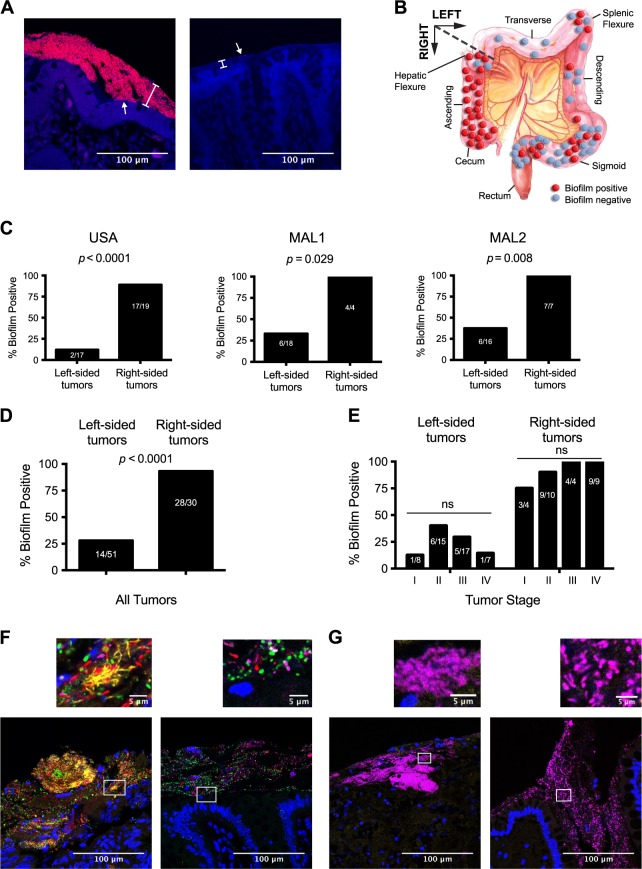
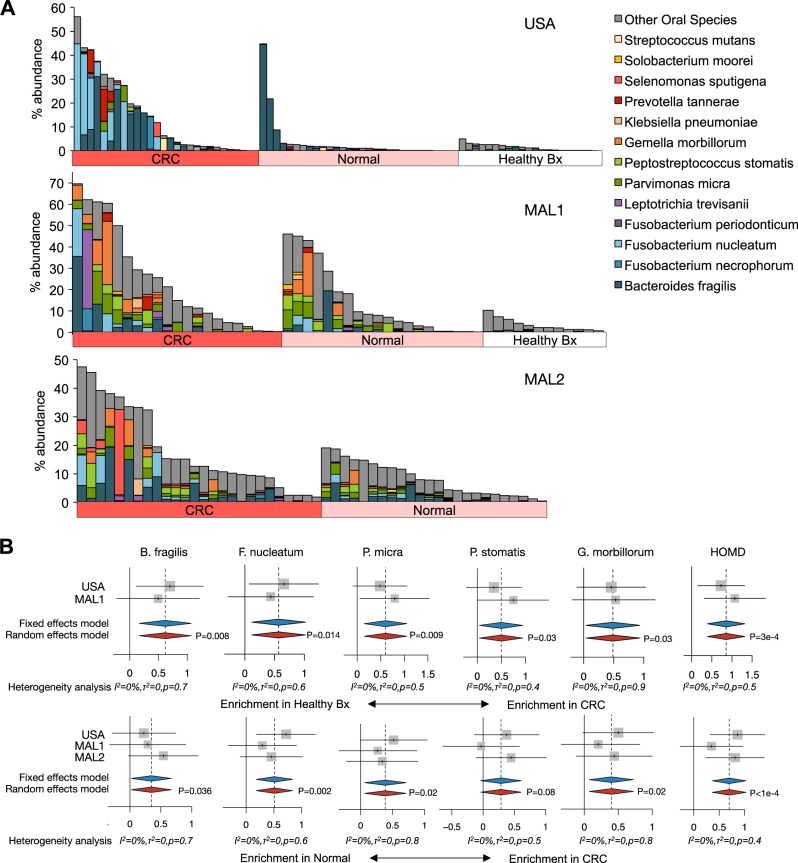
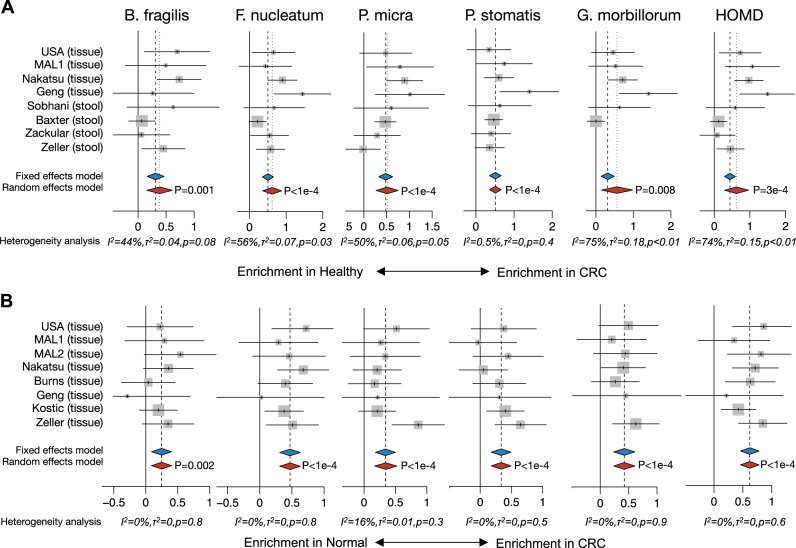
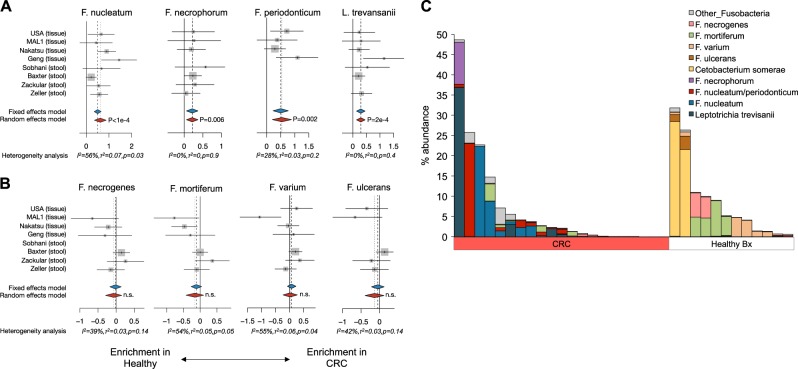
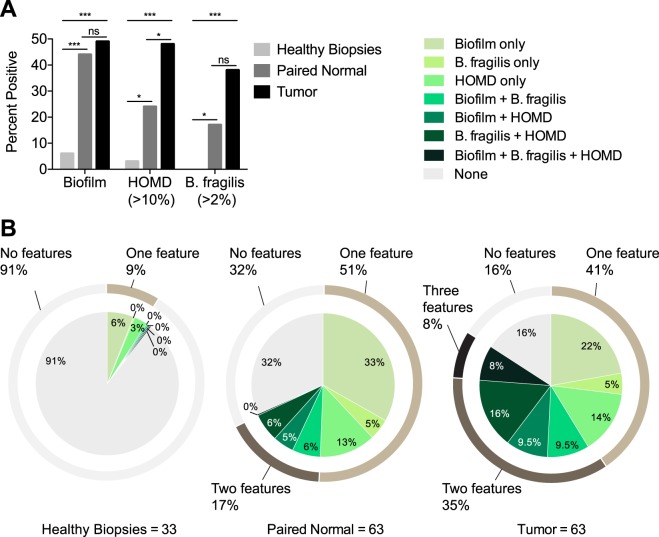
Colorectal cancer (CRC) remains the third most common cancer worldwide, with a growing incidence among young adults. Multiple studies have presented associations between the gut microbiome and CRC, suggesting a link with cancer risk. Although CRC microbiome studies continue to profile larger patient cohorts with increasingly economical and rapid DNA sequencing platforms, few common associations with CRC have been identified, in part due to limitations in taxonomic resolution and differences in analysis methodologies. Complementing these taxonomic studies is the newly recognized phenomenon that bacterial organization into biofilm structures in the mucus layer of the gut is a consistent feature of right-sided (proximal), but not left-sided (distal) colorectal cancer. In the present study, we performed 16S rRNA gene amplicon sequencing and biofilm quantification in a new cohort of patients from Malaysia, followed by a meta-analysis of eleven additional publicly available data sets on stool and tissue-based CRC microbiota using Resphera Insight, a high-resolution analytical tool for species-level characterization. Results from the Malaysian cohort and the expanded meta-analysis confirm that CRC tissues are enriched for invasive biofilms (particularly on right-sided tumors), a symbiont with capacity for tumorigenesis ( Bacteroides fragilis ), and oral pathogens including Fusobacterium nucleatum , Parvimonas micra , and Peptostreptococcus stomatis . Considered in aggregate, species from the Human Oral Microbiome Database are highly enriched in CRC. Although no detected microbial feature was universally present, their substantial overlap and combined prevalence supports a role for the gut microbiota in a significant percentage (>80%) of CRC cases.
Overview
The claims and statistics of this paper haven’t been checked yet.
Free: it reads the open-access text and checks the first 5 claims that cite a source we can check. Create a free account to check every claim.
Integrity signals
Registry
Cites
Statistics
Figures
Verification
Claims the paper makes
The claims and statistics of this paper haven’t been checked yet.
Free: it reads the open-access text and checks the first 5 claims that cite a source we can check. Create a free account to check every claim.
Claims other papers make about this one
Each is checked against this paper’s own text: does it say what the citing paper says it does?
The cited source says what the claim attributes to it.
In the citing paper
“The enrichment of bacterial species from the oral cavity is characteristic of the CRC GOMS50,76–79, along with an enrichment in invasive polymicrobial bacterial biofilms in patients with right-sided tumours76,80,81.”
From Gut OncoMicrobiome Signatures (GOMS) as next-generation biomarkers for cancer immunotherapy (2023) · cites this paper as [76]
The check wasn’t confident either way, so it gives no verdict — never disputed.
In the citing paper
“we selected Resphera Insight as previously published data demonstrate that this pipeline outperforms QIIME RDP and QIIME UCLUST in species level identification using the Human Microbiome Project reference isolate collection (60–70% species identified by Resphera Insight compared to 10–25% by QIIME RDP or QIIME UCLUST) (13).”
From A Uniform Computational Approach Improved on Existing Pipelines to Reveal Microbiome Biomarkers of Nonresponse to Immune Checkpoint Inhibitors (2021) · cites this paper as [13]
Experimental — accuracy not yet measuredIn the citing paper
“Further Resphera Insight has been validated as largely highly accurate for detection of Bacterioides and Fusobacterium spp. (13) and is also used by the FDA to enhance species identification contaminating the food chain (16,17).”
From A Uniform Computational Approach Improved on Existing Pipelines to Reveal Microbiome Biomarkers of Nonresponse to Immune Checkpoint Inhibitors (2021) · cites this paper as [13]
Self-check
Percentages, sums and reported differences re-computed from the paper’s own numbers.
The self-check needs the paper’s full text.
Citations
Cites
Trimmomatic: a flexible trimmer for Illumina sequence data
Bolger, A. M., Lohse, M., & Usadel, B. (2014) · Bioinformatics · doi:10.1093/bioinformatics/btu170 · Cited by 65,548
Fast gapped-read alignment with Bowtie 2
Langmead, B., & Salzberg, S. L. (2012) · Nature Methods · doi:10.1038/nmeth.1923 · Cited by 56,400
Harris, P. A., Taylor, R., Thielke, R., Payne, J., Gonzalez, N., & Conde, J. G. (2009) · Journal of Biomedical Informatics · doi:10.1016/j.jbi.2008.08.010 · Cited by 51,384
Naïve Bayesian Classifier for Rapid Assignment of rRNA Sequences into the New Bacterial Taxonomy
Wang, Q., Garrity, G. M., Tiedje, J. M., & Cole, J. R. (2007) · Applied and Environmental Microbiology · doi:10.1128/aem.00062-07 · Cited by 19,885
FLASH: fast length adjustment of short reads to improve genome assemblies
Magoč, T., & Salzberg, S. L. (2011) · Bioinformatics · doi:10.1093/bioinformatics/btr507 · Cited by 15,366
UCHIME improves sensitivity and speed of chimera detection
Edgar, R. C., Haas, B. J., Clemente, J. C., Quince, C., & Knight, R. (2011) · Bioinformatics · doi:10.1093/bioinformatics/btr381 · Cited by 15,114
Bacterial Biofilms: A Common Cause of Persistent Infections
Costerton, J. W., Stewart, P. S., & Greenberg, E. P. (1999) · Science · doi:10.1126/science.284.5418.1318 · Cited by 12,167 · cited 1×
“Biofilms form when bacteria aggregate on a surface (biological or inert) and become encased in a polymeric matrix.(18,19) Similar to other in vivo biofilms including oral biofilms (dental plaque) and Pseudomonas aeruginosa biofilms in cystic fibrosis patients, the colonic biofilm matrix may consist of both host mucus…”
BackgroundPredictive functional profiling of microbial communities using 16S rRNA marker gene sequences
Langille, M. G. I., Zaneveld, J., Caporaso, J. G., McDonald, D., Knights, D., Reyes, J. A., Clemente, J. C., Burkepile, D. E., Vega Thurber, R. L., Knight, R., et al. (2013) · Nature Biotechnology · doi:10.1038/nbt.2676 · Cited by 9,116
Klindworth, A., Pruesse, E., Schweer, T., Peplies, J., Quast, C., Horn, M., & Glöckner, F. O. (2013) · Nucleic Acids Research · doi:10.1093/nar/gks808 · Cited by 8,850
Ultra-high-throughput microbial community analysis on the Illumina HiSeq and MiSeq platforms
Caporaso, J. G., Lauber, C. L., Walters, W. A., Berg-Lyons, D., Huntley, J., Fierer, N., Owens, S. M., Betley, J., Fraser, L., Bauer, M., et al. (2012) · The ISME Journal · doi:10.1038/ismej.2012.8 · Cited by 8,839 · cited 1×
“High-throughput next-generation sequencing of the V3-V4 hypervariable region of the 16S rRNA gene was performed using 319 F (5′-ACTCCTACGGGAGGCAGCAG-3′) and 806 R (5′-GGACTACHVGGGTWTCTAAT-3′) universal primers containing a linker sequence required for Illumina MiSeq 300 bp paired-end sequencing and a 12-bp heterogenei…”
Method
Cited by
Items 101–200 of 334
Queen, J., Zhang, J., & Sears, C. L. (2020) · Gut Microbes · doi:10.1080/19490976.2019.1706425 · Cited by 52
“Furthermore, we and others have linked the acquisition of carcinogenic microbes or development of colon mucosal biofilms with chronic mucosal inflammation and subsequent tumor formation.(8,9,46,47)”
BackgroundResultSelf-citationThe role of oral microbiota in cancer
Lan, Z., Liu, W.-J., Cui, H., Zou, K., Chen, H. H., Zhao, Y., & Yu, G. (2023) · Frontiers in Microbiology · doi:10.3389/fmicb.2023.1253025 · Cited by 42
Fellows, R. C., Chun, S. K., Larson, N., Fortin, B. M., Mahieu, A. L., Song, W. A., Seldin, M. M., Pannunzio, N. R., & Masri, S. (2024) · Science Advances · doi:10.1126/sciadv.ado1458 · Cited by 46
“Many studies have identified an increase of the Bacteroides genus in patients with CRC, particularly B. fragilis ( 52 , 53 , 60 , 64 , 68 , 119 , 130 ), although others have reported opposite data ( 55 , 63 , 66 , 131 ).”
ResultGut Bacteria and their Metabolites: Which One Is the Defendant for Colorectal Cancer?
Tarashi, S., Siadat, S. D., Badi, S. A., Zali, M. R., Biassoni, R., Ponzoni, M., & Moshiri, A. (2019) · Microorganisms · doi:10.3390/microorganisms7110561 · Cited by 40
The promise and challenge of cancer microbiome research
Manzoor, S. S., Doedens, A. M., & Burns, M. B. (2020) · Genome biology · doi:10.1186/s13059-020-02037-9 · Cited by 43
Oral microbiota and gastrointestinal cancer
Zhang, Y., Niu, Q., Fan, W., Huang, F. P., & He, H. (2019) · OncoTargets and Therapy · doi:10.2147/ott.s194153 · Cited by 42
Young, C., Wood, H. M., Balaguer, A. F., Bottomley, D., Gallop, N., Wilkinson, L., Benton, S. C., Brealey, M., John, C., Burtonwood, C., et al. (2021) · Clinical Cancer Research · doi:10.1158/1078-0432.ccr-20-3807 · Cited by 48
Marongiu, L., Landry, J. J. M., Rausch, T., Abba, M. L., Delécluse, S., Delecluse, H., & Allgayer, H. (2021) · Molecular Oncology · doi:10.1002/1878-0261.13070 · Cited by 45
Wang, D., Jiang, Y., Jiang, J. W., Pan, Y., Yang, Y., Fang, X., Liang, L., Li, H., Dong, Z., Fan, S., et al. (2025) · Cell Reports Medicine · doi:10.1016/j.xcrm.2024.101919 · Cited by 54
Tomkovich, S., Gharaibeh, R. Z., Dejea, C. M., Pope, J. L., Jiang, J., Winglee, K., Gauthier, J., Newsome, R. C., Yang, Y., Fodor, A. A., et al. (2020) · mSystems · doi:10.1128/msystems.00451-19 · Cited by 42
Self-citationMo, Z., Huang, P., Yang, C., Xiao, S., Zhang, G., Ling, F., & Li, L. (2020) · mSystems · doi:10.1128/msystems.00138-20 · Cited by 42
“The 16 data sets were labeled as Zeller (5), Flemer (32), Burns (33), Baxter (10), China_GBA (China Great Bay Area) (23), MAL2 (34), MAL1 (34), Zackular (9), Kostic (35), PNAS (36), Brazil (19), China_KM (China, Kunming) (37), China_SH (38), China_QD (China, Qingdao) (39), and China_SHTJ (40).”
InfluentialMatute, J. D., Duan, J., Flak, M. B., Griebel, P., Tascón-Arcila, J., Doms, S., Hanley, T., Antanaviciute, A., Gundrum, J., Welch, J. L. M., et al. (2022) · The Journal of Experimental Medicine · doi:10.1084/jem.20211938 · Cited by 37
“High-quality 16S rRNA sequences were assigned to a high-resolution taxonomic lineage using Resphera Insight (Shaikh et al., 2021; Drewes et al., 2017).”
MethodSelf-citationHamid, M. A., Pammer, L. M., Oberparleiter, S., Günther, M., Amann, A., Gruber, R., Mair, A., Nocera, F. I., Ormanns, S., Zimmer, K., et al. (2025) · npj Precision Oncology · doi:10.1038/s41698-025-00892-y · Cited by 50
The effects of biofilms on tumor progression in a 3D cancer-biofilm microfluidic model
Deng, Y., Liu, S. Y., Chua, S. L., & Khoo, B. L. (2021) · Biosensors and Bioelectronics · doi:10.1016/j.bios.2021.113113 · Cited by 37
Greathouse, K. L., White, J. R., Padgett, R. N., Perrotta, B. G., Jenkins, G. D., Chia, N., & Chen, J. (2019) · BMJ Open Gastroenterology · doi:10.1136/bmjgast-2018-000247 · Cited by 35
“Prior to Resphera Insight and statistical analysis we rarefied the 16S rRNA sequencing data to the sample with the lowest number of reads; Zackular 25 000 per sample, Zeller 16S tissue and stool 10 000 per sample, and Baxter 10 000 per sample.”
InfluentialSelf-citationSilver, N. L., Dai, J., Kerr, T. D., Altemus, J. B., Garg, R. R., Simmons, H. L., Alban, T. J., Noël‐Romas, L., Makarov, V., Shih, D. J. H., et al. (2026) · Nature Cancer · doi:10.1038/s43018-025-01067-1 · Cited by 55
Self-citationHARMONIES: A Hybrid Approach for Microbiome Networks Inference via Exploiting Sparsity
Jiang, S., Xiao, G., Koh, A. Y., Chen, Y., Yao, B., Li, Q., & Zhan, X. (2020) · Frontiers in Genetics · doi:10.3389/fgene.2020.00445 · Cited by 39
“Similarly, another study Drewes et al. (2017) found a direct co-occurrence pattern between two species: F. nucleatum and P. micra.”
BackgroundJiang, P., Wu, S., Luo, Q., Zhao, X., & Chen, W.-H. (2021) · mSystems · doi:10.1128/msystems.00112-21 · Cited by 42
“nucleatum, a widely studied oral-associated anaerobe known to coaggregate with other anaerobes to form biofilm and involved in intestinal tumorigenesis (56, 57), showed positive correlations with P.”
BackgroundKvich, L., Fritz, B. G., Zschach, H., Terkelsen, T., Raskov, H., Høst-Rasmussen, K., Jakobsen, M. R., Gheorghe, A., Gögenür, I., & Bjarnsholt, T. (2024) · Gut Microbes · doi:10.1080/19490976.2024.2350156 · Cited by 36
Intestinal biofilms: pathophysiological relevance, host defense, and therapeutic opportunities
Jandl, B., Dighe, S. N., Gasché, C., Makristathis, A., & Muttenthaler, M. (2024) · Clinical Microbiology Reviews · doi:10.1128/cmr.00133-23 · Cited by 39
“When the resident flora colonizes a compromised mucus layer, it can initiate biofilm formation, potentially leading to alterations in epithelial cell biology and triggering inflammatory responses (30, 130–132).”
Han, S., Xi, Y., Pan, Y., Xu, J., Quan, Q., Haihong, L., Jiang, Y., & Wu, W. (2020) · Microbial Pathogenesis · doi:10.1016/j.micpath.2020.104343 · Cited by 39
The who, where and how of fusobacteria and colon cancer
Sears, C. L. (2018) · eLife · doi:10.7554/elife.28434 · Cited by 38
“There is also uncertainty about where F. nucleatum is found: some researchers have reported that it is found with increased frequency in cancers on the right side of the colon (Mima et al., 2016), whereas this effect was not seen in other experiments (Drewes et al., 2017).”
BackgroundResultSelf-citationCo‐ and polymicrobial infections in the gut mucosa: The host–microbiota–pathogen perspective
Frisan, T. (2020) · Cellular Microbiology · doi:10.1111/cmi.13279 · Cited by 39
“…are enriched in Proteobacteria and Bac-teroidetes, specifically E. coli and B. fragilis , while CRC-associated bio-films are enriched in B. fragilis and oral pathogens including Fusobacterium nucleatum , Parvimonas micra and Peptostreptococcus stomatis (Dejea et al., 2018; Drewes et al., 2017).”
BackgroundShen, X., Li, J., Li, J., Zhang, Y., Li, X., Cui, Y., Gao, Q., Chen, X., Chen, Y., & Fang, J. (2021) · Frontiers in Oncology · doi:10.3389/fonc.2021.661048 · Cited by 44
Association between gut microbiota and CpG island methylator phenotype in colorectal cancer
Park, P. H., Keith, K., Calendo, G., Jelínek, J., Madžo, J., Gharaibeh, R. Z., Ghosh, J., Sapienza, C., Jobin, C., & Issa, J. J. (2024) · Gut Microbes · doi:10.1080/19490976.2024.2363012 · Cited by 37
“68 However, a notable difference in bacterial invasion into the mucosal layer was observed between tumor and adjacent normal tissues in CRC patients, with significantly higher levels in the proximal colon compared to the distal colon.”
BackgroundQueen, J., Shaikh, F. Y., & Sears, C. L. (2023) · Nature Cancer · doi:10.1038/s43018-023-00602-2 · Cited by 36
Self-citationIntestinal dysbiosis and colorectal cancer
Kang, Z., Jiang, S., Fang, J., & Chen, H. (2025) · Chinese Medical Journal · doi:10.1097/cm9.0000000000003617 · Cited by 38
“[128] These bacterial communities contribute to inflammation and immune modulation and promote tumor growth in the TME.”
Borgognone, A., Serna, G., Noguera-Julián, M., Alonso, L., Parera, M., Català‐Moll, F., Sanchez, L. R., Fasani, R., Paredes, R., & Nuciforo, P. G. (2021) · Cancers · doi:10.3390/cancers13215421 · Cited by 36
Shaikh, F. Y., Gills, J. J., Mohammad, F., White, J. R., Stevens, C. M., Ding, H., Fu, J., Tam, A., Blosser, R. L., Domingue, J. C., et al. (2022) · Cancer Immunology, Immunotherapy · doi:10.1007/s00262-022-03169-6 · Cited by 30
“First, we utilized a high-dimensional taxonomic assignment approach which is able to perform species-level identification at higher accuracy than previously available tools [18, 24].”
MethodSelf-citationChen, Y., Fei, F., Ding, L.-L., Wen, S., Ren, C., & Gong, A. (2024) · Food & Function · doi:10.1039/d3fo04806c · Cited by 36
Rastogi, Y. R., Saini, A. K., Thakur, V. K., & Saini, R. V. (2020) · International Journal of Molecular Sciences · doi:10.3390/ijms21093212 · Cited by 36
“Metagenomics studies revealed that many oral bacteria or oral bacterial biofilms become associated with gastrointestinal malignancies in the initial stages, and assist in accelerating tumourigenesis [77].”
BackgroundTumour microbiomes and Fusobacterium genomics in Vietnamese colorectal cancer patients
Tran, H. N. H., Thu, T. N. H., Nguyen, P. H., Vo, C. N., Doan, K. V., Minh, C. N. N., Nguyễn, N. T., Ta, V. N. D., Vu, K. A., Hua, T. D., et al. (2022) · npj Biofilms and Microbiomes · doi:10.1038/s41522-022-00351-7 · Cited by 32
Song, C., Kim, N., Nam, R. H., Choi, S. I., Jang, J. Y., Kim, E. H., Choi, J., Choi, Y., Yoon, H., Lee, S. M., et al. (2023) · Gut and Liver · doi:10.5009/gnl230385 · Cited by 33
“Collectively, sex-related differences in the gut microbiome were evident in HCs but diminished in patients with AD and CRC.”
ResultInfluentialLiss, M. A., Chen, Y., Rodríguez, R., Pruthi, D. K., Johnson‐Pais, T. L., Wang, H., Mansour, A. M., White, J. R., & Kaushik, D. (2020) · Advances in Urology · doi:10.1155/2020/9068068 · Cited by 31
“Oral pathogens considered in aggregates such as Fusobacterium nucleatum, Parvimonas micra, and Peptostreptococcus stomatis are highly enriched in colorectal cancer [28].”
BackgroundSelf-citationLöwenmark, T., Li, X., Löfgren‐Burström, A., Zingmark, C., Ling, A., Kellgren, T. G., Larsson, P. G., Ljuslinder, I., Wai, S. N., Edin, S., et al. (2022) · Cancer Immunology Immunotherapy · doi:10.1007/s00262-022-03179-4 · Cited by 30
Löwenmark, T., Löfgren‐Burström, A., Zingmark, C., Ljuslinder, I., Dahlberg, M. L., Edin, S., & Palmqvist, R. (2022) · Cancers · doi:10.3390/cancers14235937 · Cited by 30
“nucleatum [10], and right-sided tumours have been suggested to be associated with bacterial biofilm formation [42].”
BackgroundWei, Y., Huang, N., Ye, X., Liu, M., Wei, M., & Huang, Y. (2023) · Frontiers in Nutrition · doi:10.3389/fnut.2023.1103463 · Cited by 33
Anderson, S. M., & Sears, C. L. (2023) · Clinical Infectious Diseases · doi:10.1093/cid/ciad640 · Cited by 32
Self-citationBiological invasions alter environmental microbiomes: A meta-analysis
Malacrinò, A., Sadowski, V. A., Martin, T. K., de Oliveira, N. C., Brackett, I. J., Feller, J. D., Harris, K. J., Cómbita-Heredia, O., Vescio, R., & Bennett, A. E. (2020) · PLoS ONE · doi:10.1371/journal.pone.0240996 · Cited by 31
Sheikh, A. A., Taube, J. H., & Greathouse, K. L. (2021) · Carcinogenesis · doi:10.1093/carcin/bgab060 · Cited by 32
The Crucial Roles of Diet, Microbiota, and Postbiotics in Colorectal Cancer
Kuru-Yaşar, R., & Üstün‐Aytekin, Ö. (2024) · Current Nutrition Reports · doi:10.1007/s13668-024-00525-z · Cited by 35
Wolf in Sheep’s Clothing: Clostridioides difficile Biofilm as a Reservoir for Recurrent Infections
Meza‐Torres, J., Auria, E., Dupuy, B., & Tremblay, Y. D. N. (2021) · Microorganisms · doi:10.3390/microorganisms9091922 · Cited by 31
P. aeruginosa interactions with other microbes in biofilms during co-infection
Oliveira, M., Cunha, E. S., Tavares, L. M., & Serrano, I. D. (2023) · AIMS Microbiology · doi:10.3934/microbiol.2023032 · Cited by 33
Pedrogo, D. A. M., Sears, C. L., & Melia, J. (2024) · Journal of Crohn s and Colitis · doi:10.1093/ecco-jcc/jjae061 · Cited by 32
Self-citationThe Tissue-Associated Microbiota in Colorectal Cancer: A Systematic Review
da Costa, C. P., Vieira, P. F., Mendes-Rocha, M., Pereira‐Marques, J., Ferreira, R. M., & Figueiredo, C. (2022) · Cancers · doi:10.3390/cancers14143385 · Cited by 33
“Taxa with suggestive positive associations with CRC are shown in Supplementary Table S6, and include, among others, the orders Campylobacteriales, Fusobacteriales [62,70], and Clostridiales [35,57], the families Campylobacteriaceae [62,70], Gemellaceae [67,70], and Streptococcaceae [42,60], the genera Escherichia-Shig…”
BackgroundMethodInfluentialDuijster, J. W., Franz, E., Neefjes, J., & Mughini‐Gras, L. (2021) · Frontiers in Microbiology · doi:10.3389/fmicb.2021.790256 · Cited by 32
“…(n = 2), biliary tract cancer (n = 2), and gallbladder, gastric, liver, and pancreatic cancer (latter four: n = 1) (Supplementary Table 12; Kato et al., 2013; Iyer et al., 2016; Lu et al., 2017; Mughini-Gras et al., 2018; De Savornin Lohman et al., 2020; Chang et al., 2021; Duijster et al., 2021).”
BackgroundSuga, D., Mizutani, H., Fukui, S., Kobayashi, M., Shimada, Y., Nakazawa, Y., Nishiura, Y., Kawasaki, Y., Moritani, I., Yamanaka, Y., et al. (2022) · BMC Gastroenterology · doi:10.1186/s12876-022-02382-y · Cited by 30
“These species are gram-positive anaerobic cocci mainly located among oral bacteria and influence mucosal gene expression, which might contribute to the development of colon cancers [3, 4, 37].”
BackgroundManghi, P., Antonello, G., Schiffer, L., Golzato, D., Wokaty, A., Beghini, F., Mirzayi, C. A., Long, K., Gravel-Pucillo, K., Piccinno, G., et al. (2025) · Nature Communications · doi:10.1038/s41467-025-66888-1 · Cited by 34
Drug–Microbiota Interaction in Colon Cancer Therapy: Impact of Antibiotics
Mohamed, A. A., Menon, H., Chulkina, M., Yee, N. S., & Pinchuk, I. V. (2021) · Biomedicines · doi:10.3390/biomedicines9030259 · Cited by 27
Oral pathogen in the pathogenesis of colorectal cancer
Yu, T., Zhou, Y., & Fang, J. (2021) · Journal of Gastroenterology and Hepatology · doi:10.1111/jgh.15743 · Cited by 27
Gut Microbiota and Colorectal Cancer Risk Factors
Feizi, H., Rezaee, M. A., Ghotaslou, R., Sadrkabir, M., Jadidi‐Niaragh, F., Gholizadeh, P., Taghizadeh, S., Ghanbarov, K., Yousefi, M., & Kafil, H. S. (2022) · Current Pharmaceutical Biotechnology · doi:10.2174/1389201023666221005103340 · Cited by 29
The Local Tumor Microbiome Is Associated with Survival in Late-Stage Colorectal Cancer Patients
Debelius, J. W., Engstrand, L. G., Matussek, A., Brusselaers, N., Morton, J. T., Stenmarker, M., & Olsen, R. S. (2023) · Microbiology Spectrum · doi:10.1128/spectrum.05066-22 · Cited by 26
“(12) demonstrated clear difference between paired tumor and normal tissue samples using microscopy, although their 16S analysis did not explicitly test paired samples.”
BackgroundDeepLINK: Deep learning inference using knockoffs with applications to genomics
Zhu, Z., Fan, Y., Kong, Y., Lv, J., & Sun, F. (2021) · Proceedings of the National Academy of Sciences · doi:10.1073/pnas.2104683118 · Cited by 41
Oral hygiene might prevent cancer
Cordero, O. J., & Varela‐Calviño, R. (2018) · Heliyon · doi:10.1016/j.heliyon.2018.e00879 · Cited by 28
Antibiotics, cancer risk and oncologic treatment efficacy: a practical review of the literature
Lopes, M. S. M., Machado, L. M., Silva, P. A. I. A., Uchiyama, A. A. T., Yen, C. T., Ricardo, E. D., Mutão, T. S., Pimento, J. R., Shimba, D. S., Hanriot, R. D. M., et al. (2020) · ecancermedicalscience · doi:10.3332/ecancer.2020.1106 · Cited by 30
A tale of two bacteria – Bacteroides fragilis, Escherichia coli, and colorectal cancer
Lichtenstern, C. R., & Lamichhane-Khadka, R. (2023) · Frontiers in Bacteriology · doi:10.3389/fbrio.2023.1229077 · Cited by 23
Zwinsová, B., Петров, В. А., Hrivňáková, M., Smatana, S., Micenková, L., Kazdová, N., Popovici, V. C., Hrstka, R., Šefr, R., Bencsiková, B., et al. (2021) · Cancers · doi:10.3390/cancers13194799 · Cited by 25
Conde‐Pérez, K., Buetas, E., Aja‐Macaya, P., Arribas, E. M., Iglesias‐Corrás, I., Trigo‐Tasende, N., Nasser‐Ali, M., Estévez, L. S., Rumbo‐Feal, S., Otero‐Alén, B., et al. (2023) · Molecular Oncology · doi:10.1002/1878-0261.13506 · Cited by 26
“The analysis of adenocarcinoma and oral samples performed in the current study showed a clear over-representation of oral bacteria in CRC tissue, as reported in previous studies [19,83].”
ResultMapping the colorectal tumor microbiota
Murphy, C., Barrett, M., Pellanda, P., Killeen, S., McCourt, M., Andrews, E., Riordain, M. O., Shanahan, F., & O’Toole, P. W. (2021) · Gut Microbes · doi:10.1080/19490976.2021.1920657 · Cited by 26
Dunn, K. A., MacDonald, T., Rodrigues, G. J., Forbrigger, Z., Bielawski, J. P., Langille, M. G. I., Limbergen, J. V., & Kulkarni, K. P. (2022) · Frontiers in Cellular and Infection Microbiology · doi:10.3389/fcimb.2022.924707 · Cited by 23
Lee, S., & Lee, I. (2024) · Gut Microbes · doi:10.1080/19490976.2024.2375679 · Cited by 25
“32,33 Other recognized CRC-associated species like Prevotella intermedia , 34 Allisonella pneu-mosintes (also classified as Dialister pneumosintes in the NCBI taxonomic hierarchy), 35,36 and Gemella morbillorum 37,38 were also highly influential in the model.”
BackgroundColon mucus in colorectal neoplasia and beyond
Loktionov, A. S. (2022) · World Journal of Gastroenterology · doi:10.3748/wjg.v28.i32.4475 · Cited by 21
Deng, Y., Fu, Y., Chua, S. L., & Khoo, B. L. (2023) · Small · doi:10.1002/smll.202205904 · Cited by 22
Dichotomous colorectal cancer behaviour
Aljama, S., Lago, E. P., Zafra, O., Sierra, J., Simón, D., Santos, C., Rodríguez-Pascual, J., & Garcia‐Romero, N. (2023) · Critical Reviews in Oncology/Hematology · doi:10.1016/j.critrevonc.2023.104067 · Cited by 26
“But at the mucosal level, only 12% (cid:0) 37% of these cancers show this bacterium forming biofilm (Drewes et al., 2017), and there is no correlation between Fusobacteria and poor prognosis.”
Ma, W., Li, Z.-H., Wu, Z., Liu, F., Wang, J.-K., Shi, Y., Jin, Y., & Li, F. (2023) · Neoplasia · doi:10.1016/j.neo.2023.100920 · Cited by 23
Khamash, D. F., Mongodin, E. F., White, J. R., Voskertchian, A., Hittle, L. E., Colantuoni, E., & Milstone, A. M. (2019) · Open Forum Infectious Diseases · doi:10.1093/ofid/ofz062 · Cited by 19
Self-citationGut microbiota in cancer initiation, development and therapy
Zhang, R., Zhang, X., Lau, H. C.-H., & Yu, J. Q. (2024) · Science China Life Sciences · doi:10.1007/s11427-024-2831-x · Cited by 19
“…of eleven publicly available datasets, demonstrated that colorectal cancer (CRC) tissues are enriched with the tumorigenic symbiont Bacteroides fragilis , as well as oral pathogens such as Fusobacterium nucleatum , Parvimonas micra , and Peptostreptococcus stomatis (Drewes et al., 2017).”
Integrating tumor genomics into studies of the microbiome in colorectal cancer
Burns, M. B., & Blekhman, R. (2018) · Gut Microbes · doi:10.1080/19490976.2018.1549421 · Cited by 25
Håheim, K. S., Lindbäck, E., Tan, K. N., Albrigtsen, M., Helgeland, I. T. U., Lauga, C., Matringe, T., Kennedy, E. K., Andersen, J. H., Avery, V. M., et al. (2021) · Molecules · doi:10.3390/molecules26113268 · Cited by 21
Xing, J., Fang, Y., Zhang, W., Zhang, H., Tang, D., & Wang, D. (2022) · Clinical & Translational Oncology · doi:10.1007/s12094-021-02738-y · Cited by 21
“In this case, biofilms are formed when ‘bacterial drivers’ and ‘bacterial passengers’ attach to a living or non-living substrate surface and enclosed in a matrix [5, 16].”
BackgroundIftode, A., Drăghici, G. A., Macasoi, I. G., Marcovici, I., Coricovac, D. E., Dragoi, R. G., Tischer, A. A., Kovatsi, L., Tsatsakis, A. M., Cretu, O. M., et al. (2020) · Experimental and Therapeutic Medicine · doi:10.3892/etm.2020.9532 · Cited by 21
“A novel identified risk factor for colorectal cancer is microbial dysbiosis (biofilms) in gut microbiome (37), biofilms being also responsible for most types of infections (~65% nosocomial infections and ~80% of all microbial infections) (38).”
BackgroundGreathouse, K. L., Stone, J. K., Vargas, A. J., Choudhury, A., Padgett, R. N., White, J. R., Jung, A., & Harris, C. C. (2024) · Scientific Reports · doi:10.1038/s41598-023-48862-3 · Cited by 23
“Passing 16S rRNA gene sequences were assigned a high-resolution taxonomic lineage using Resphera Insight, a custom 16S rRNA bioinformatics pipeline that utilizes both the SILVA and Greengenes databases for alignment 33,44 .”
MethodSelf-citationGeier, D. A., & Geier, M. R. (2023) · Journal of Clinical Medicine Research · doi:10.14740/jocmr4919 · Cited by 19
“Colon cancer is associated with fecal and mucosal dysbiosis [5-7], and gavage with fecal/colonic mucosal slurries from colon cancer patients induced colonic tumors in susceptible mouse model systems [8-10].”
BackgroundTian, X., Xia, G., Zhang, M., Tan, C., Yang, M., Wang, H., Song, X., Chai, S., Yin, J., & Song, W. (2022) · Journal of Parenteral and Enteral Nutrition · doi:10.1002/jpen.2370 · Cited by 21
Löwenmark, T., Köhn, L., Kellgren, T. G., Rosenbaum, W., Bronnec, V., Löfgren‐Burström, A., Zingmark, C., Larsson, P. G., Dahlberg, M. L., Schroeder, B. O., et al. (2024) · Journal of Translational Medicine · doi:10.1186/s12967-024-05720-8 · Cited by 19
“P. micra is less studied but has also been associated with CRC [3, 5, 6, 10, 11], and can promote tumour formation through stimulating colonocyte proliferation and altering the Th17 immune response [11].”
BackgroundThe rise and evolving role of Fusobacterium nucleatum subspecies
Wolf, M., Steinberg, T., Scholz, K. J., Kruse, A., Rezasoltani, S., Conrads, G., Al‐Ahmad, A., & Cieplik, F. (2025) · Current Research in Microbial Sciences · doi:10.1016/j.crmicr.2025.100414 · Cited by 24
“Such tumor-enriched taxa often include bacteria such as Fn, Peptostreptococcus spp., Parvimonas, Porphyromonas spp., and Gemella species, which form polymicrobial biofilms in colorectal tumors (Drewes et al., 2017; Tran et al., 2022).”
The effect of mindfulness-based stress reduction on the urinary microbiome in interstitial cystitis
Shatkin‐Margolis, A., White, J. R., Jedlicka, A., Tam, T. Y., Hill, A. M., Yeung, J., Crisp, C. C., & Pauls, R. N. (2021) · International Urogynecology Journal · doi:10.1007/s00192-021-04812-z · Cited by 17
Self-citationVillar-Ortega, P., Ruíz, M. E., Gutiérrez-Soto, M., Jiménez, M. R.-C., Navarro‐Marí, J. M., & Fernández, J. G. (2022) · Enfermedades infecciosas y microbiologia clinica (English ed ) · doi:10.1016/j.eimce.2022.02.007 · Cited by 21
Microbial networking in cancer: when two toxins collide
Tomkovich, S., & Jobin, C. (2018) · British Journal of Cancer · doi:10.1038/s41416-018-0101-2 · Cited by 18
“In that study, and a follow-up with additional patients, the biofilm structures were characterised by the presence of Enterobacteriaceae, Bacteroidetes and Fusobacterium among others.(5,6) These findings suggested that interactions between bacteria within biofilms may contribute to the development of CRC.”
BackgroundBiofilms: A cause for the development of cancer: A review
Gupta, A., Bhattacharya, D., Elayaperumal, S., Sivamani, Y., Lahiri, D., & Nag, M. (2025) · The Microbe · doi:10.1016/j.microb.2025.100236 · Cited by 17
Colorectal cancer biofilm composition reveals distinct bacterial species signature
Kushwaha, M., Dalal, N., Chaudhary, S., Ahmed, A., Makharia, G. K., Singh, A. K., & Kumar, A. (2025) · Applied Microbiology and Biotechnology · doi:10.1007/s00253-025-13537-8 · Cited by 17
“In Malaysia, B. fragilis , F. nucleatum , Parvimonas micra , and Peptostreptococcus stomatis emerged as key CRC-associated species (Drewes et al. 2017), while in the United States, Fusobacteria , Gammaproteobacteria , and Enterobacteriaceae predominated in proximal CRC cases (Dejea et al. 2014).”
Yazdi, F. G., Dalgaard, L. B., Li, Q., Ruscheweyh, H., Thøgersen, R., Bertram, H. C., Hansen, M., & Schwab, C. (2022) · Journal of Functional Foods · doi:10.1016/j.jff.2022.105089 · Cited by 17
Penicillin disrupts mitochondrial function and induces autophagy in colorectal cancer cell lines
Hu, F., Wu, Y. Z., Liu, C., Zhu, Y., Ye, S., Xi, Y., Cui, W., & Bu, S. (2021) · Oncology Letters · doi:10.3892/ol.2021.12952 · Cited by 17
“Oral anti‐anaerobic drugs can destroy the microbiota organization and structure in the colon and significantly impact the risk of CRC (56).”
BackgroundAntibiotic Use Impacts Colorectal Cancer: A Double-Edged Sword by Tumor Location?
Zhang, J., & Sears, C. L. (2021) · JNCI Journal of the National Cancer Institute · doi:10.1093/jnci/djab126 · Cited by 17
Self-citationAssociation of intratumoral microbiome diversity with hepatocellular carcinoma prognosis
Jiang, F., Dang, Y., Zhang, Z., Yan, Y., Wang, Y., Chen, Y., Chen, L., Zhang, J., Liu, J., & Wang, J. (2024) · mSystems · doi:10.1128/msystems.00765-24 · Cited by 19
Higashi, D. L., McGuire, S., AbdelRahman, Y. M., Zou, Z., Qin, H., Anderson, D. A., Palmer, E. A., Kreth, J., & Merritt, J. L. (2022) · Microbiology Spectrum · doi:10.1128/spectrum.00465-22 · Cited by 17
“micra in colorectal tumors [5, 40-42], while others have reported an association of P.”
BackgroundBiofilms and Benign Colonic Diseases
Songtanin, B., Peterson, C., Molehin, A. J., & NUGENT, K. M. (2022) · International Journal of Molecular Sciences · doi:10.3390/ijms232214259 · Cited by 16
Byrd, D. A., Damerell, V., Gómez, M. F. L., Hogue, S., Lin, T., Ose, J., Himbert, C., Ilozumba, M. N., Kahlert, C., Shibata, D., et al. (2025) · International Journal of Cancer · doi:10.1002/ijc.35342 · Cited by 13
“8,17 We also conducted exploratory analyses of genera present in 50% of the population at a mean relative abundance of >0.1% and of quantiles of genera present in 20% – 80% of the population.”
InfluentialStrategies for the treatment of colorectal cancer caused by gut microbiota
de Souza, J. B., de Castro, M. C. A. B., & Cavalcanti, I. M. F. (2021) · Life Sciences · doi:10.1016/j.lfs.2021.120202 · Cited by 15
Byrd, D. A., Gómez, M. F. L., Hogue, S., Murphy, G. A., Sampson, J. N., Vogtmann, E., Albert, P. S., Freedman, N. D., Sinha, R., & Loftfield, E. (2022) · Clinical and Translational Gastroenterology · doi:10.14309/ctg.0000000000000533 · Cited by 14
“e Secondary BAs 5 log 2 of the sum of deoxycholic acid, lithocholic acid, glycodeoxycholic acid, glycolithocholic acid, and taurodeoxycholic acid. generally (29,30) and with adenoma prevalence in PPT (under review).”
Viable bacterial communities on hospital window components in patient rooms
Horve, P. F., Dietz, L. G., Ishaq, S. L., Kline, J., Fretz, M., & Wymelenberg, K. G. V. D. (2020) · PeerJ · doi:10.7717/peerj.9580 · Cited by 13
Crosstalk between microbial biofilms in the gastrointestinal tract and chronic mucosa diseases
Wang, Y., Xu, S., He, Q., Sun, K., Wang, X., Zhang, X., Li, Y., & Zeng, J. (2023) · Frontiers in Microbiology · doi:10.3389/fmicb.2023.1151552 · Cited by 18
Bacterial Toxins Are a Never-Ending Source of Surprises: From Natural Born Killers to Negotiators
Chiloeches, M. L., Bergonzini, A., & Frisan, T. (2021) · Toxins · doi:10.3390/toxins13060426 · Cited by 15
Knippel, R. J., & Sears, C. L. (2021) · Journal of the National Comprehensive Cancer Network · doi:10.6004/jnccn.2021.7062 · Cited by 14
“Three microbiologic variants of colon biofilms were identified: polymicrobial (Bacteroidetes, Lachnospiraceae), polymicrobial with Fusobacteria blooms, and Proteobacteria dominant.(27) In contrast, patients with FAP were found to have biofilms predominantly composed of ETBF and pks(1) E coli, with these bacteria appea…”
BackgroundInfluentialSelf-citationThe Function of the Oral Microbiome in Health and Disease
Frias‐Lopez, J., & Duran-Pinedo, A. E. (2020) · Springer eBooks · doi:10.1007/978-3-030-42990-4_10 · Cited by 16
The role of human microbiota in the development of colorectal cancer: A literature review
Torres-Galarza, A., Toledo, Z., & Bailón-Moscoso, N. (2024) · Medicine in Microecology · doi:10.1016/j.medmic.2024.100100 · Cited by 13
Keystone pathobionts associated with colorectal cancer promote oncogenic reprograming
Jones, J. P., Shi, Q., Nath, R. R., & Brito, I. (2024) · PLoS ONE · doi:10.1371/journal.pone.0297897 · Cited by 14
“Pertaining to these organisms, major questions in the field remained about how these oral microbes, in concert with gut pathobionts, seed biofilms and, if so, whether the bio-films promote tumorigenesis in the colon [126,133–136].”
BackgroundSerbanescu, M. A., Lee, S., Li, F., Boppana, S. H., Elebasy, M., White, J. R., & Mintz, C. D. (2025) · Anesthesia & Analgesia · doi:10.1213/ane.0000000000007467 · Cited by 15
Self-citationCommensal microbiota regulate renal gene expression in a sex-specific manner
Moore, B. N., & Pluznick, J. L. (2023) · American Journal of Physiology-Renal Physiology · doi:10.1152/ajprenal.00303.2022 · Cited by 11
Antibacterial Activity of T22, a Specific Peptidic Ligand of the Tumoral Marker CXCR4
Serna, N., Carratalá, J. V., Conchillo‐Solé, O., Martínez-Torró, C., Unzueta, U., Mangues, R., Ferrer‐Miralles, N., Daura, X., Vázquez, E., & Villaverde, A. (2021) · Pharmaceutics · doi:10.3390/pharmaceutics13111922 · Cited by 12
“These notions are relevant in the context of the expanding recognized roles of bacterial biofilms in colorectal cancer development and progression [66,116,117], and regarding the progressive identification of involved bacterial species and consortia [118], which highlights E.”
Background
Metadata
- Authors
- Drewes, J. L., White, J. R., Dejea, C. M., Fathi, P., Iyadorai, T., Vadivelu, J., Roslani, A. C., Wick, E. C., Mongodin, E. F., Loke, M. F., Thulasi, K., Gan, H. M., Goh, K. L., Chong, H. Y., Kumar, S., Wanyiri, J. W., & Sears, C. L.
- Affiliations
- Johns Hopkins University (US)
- Resphera Biosciences (US)
- University of Malaya (MY)
- University of Maryland, Baltimore (US)
- Monash University Malaysia (MY)
- Corresponding author
- Sears, Cynthia L.
- ORCID
- Venue
- npj Biofilms and Microbiomes
- Published
- 2017-11-29
- Volume
- 3
- Issue
- 1
- Pages
- 34-34
- ISSN
- 2055-5008 (ISSN-L)
- PMC
- PMC5707393
- OpenAlex
- W2770639073
- Cited by
- 335
- References
- 74
- Citations by year
- 2026: 33 · 2025: 42 · 2024: 34 · 2023: 44 · 2022: 35 · 2021: 54 · 2020: 41 · 2019: 31 · 2018: 20 · 2017: 1
- FWCI
- 10.39
- Type
- journal article
- Language
- en
- Update notices
- correction (2019-01-09)
- Open access
- gold
- doi.org
- Licence
- cc-by
- creativecommons.org/licenses/by/4.0 (tdm)
- creativecommons.org/licenses/by/4.0 (vor)
- Locations
- npj Biofilms and Microbiomes (publishedVersion, cc-by)
- Europe PMC (PubMed Central) (publishedVersion, cc-by)
- PubMed Central (publishedVersion, cc-by)
- PubMed (publishedVersion)
- DOAJ (DOAJ: Directory of Open Access Journals) (submittedVersion)
- Own your potential (DEAKIN) (submittedVersion)
- Deakin Research Online (Deakin University) (submittedVersion)
- eScholarship (California Digital Library) (submittedVersion, cc-by)
- Figshare (submittedVersion, cc-by)
- Funders
- Cancer Research Institute (CA006973)
- Universiti Malaya (RP016A-13HTM)
- National Institutes of Health (1s10od016374-01, CA006973, CA062924, DK089502)
- Sidney Kimmel Comprehensive Cancer Center (P30 CA006973, CA006973)
- National Cancer Institute (R01CA196845, R01CA151393, P50CA062924, P30CA006973)
- National Institute of Diabetes and Digestive and Kidney Diseases (P30DK089502)
- Topics
- Life Sciences › Biochemistry, Genetics and Molecular Biology › Molecular Biology › Gut microbiota and health
- Health Sciences › Dentistry › Periodontics › Oral microbiology and periodontitis research
- Health Sciences › Medicine › Infectious Diseases › Clostridium difficile and Clostridium perfringens research
- Keywords
- colorectal cancer, gut microbiota, bacterial biofilms, 16S rRNA gene profiling, Bacteroides fragilis, Fusobacterium nucleatum, Parvimonas micra, Peptostreptococcus stomatis, oral pathogens, right-sided colorectal cancer, mucus layer
About these checks
Registry, retraction, Cites and statistics results are computed, not judged, with one exception: a printed reference that no index lists is read once by a model before it counts as a citation error. Claims are extracted by a model and kept only when their quote appears verbatim in the text; each cited source is then checked, with a model’s help, for whether it says what the claim relies on. Those verdicts can be wrong — read the claim’s quote and the cited source before relying on one.
Statistics and arithmetic are recomputed, not judged.
Confidence bands are shown only for fields calibrated on our annotated test set. None is calibrated yet, so no band is shown.
What counts as a claim ›How we measure confidence ›How we check this ›
Are you an author, or do you see a problem with this page? Request a review
Data sources
Bibliographic data: Semantic Scholar, OpenAlex, Crossref.
Contains information from the Semantic Scholar Academic Graph Datasets, made available under the ODC Attribution License (ODC-BY 1.0).
Semantic Scholar’s data is described in: Kinney, R., et al. (2023). The Semantic Scholar Open Data Platform. arXiv:2301.10140.
