

High-resolution bacterial 16S rRNA gene profile meta-analysis and biofilm status reveal common colorectal cancer consortia
Open accessThe DOI matches its Crossref record; 73 of the 74 references it cites were found in a registry or an index.
Abstract
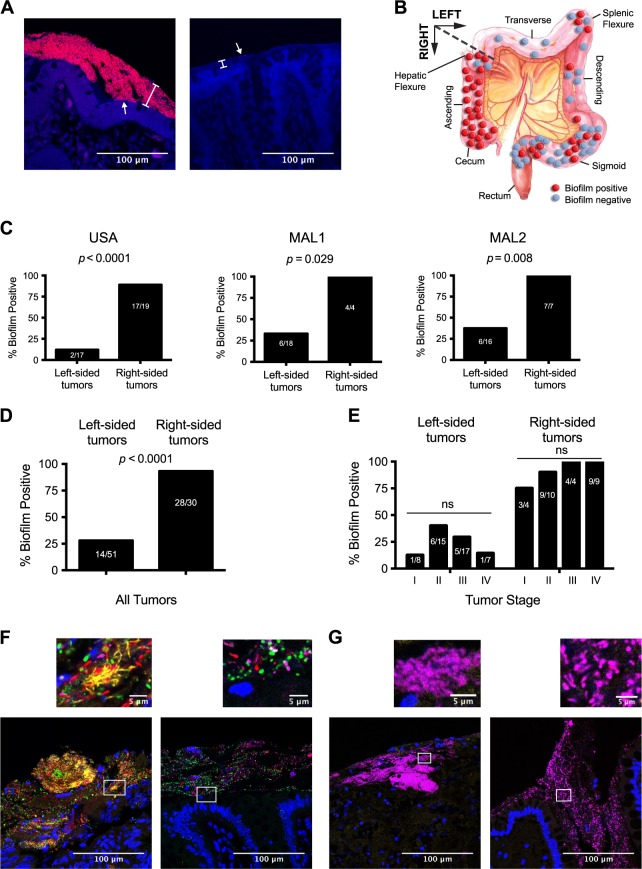
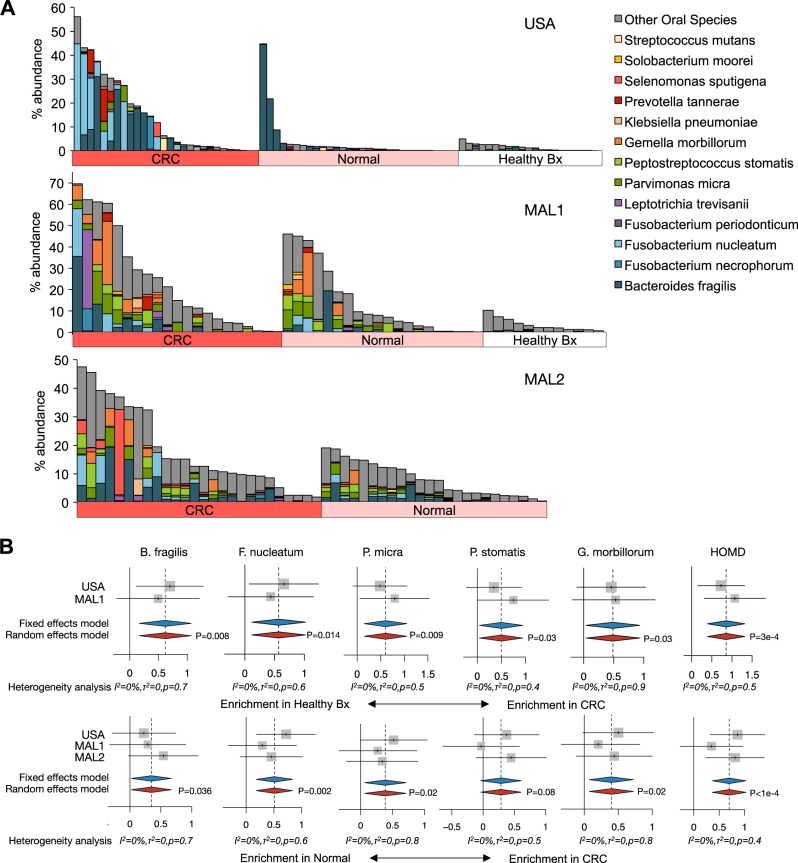
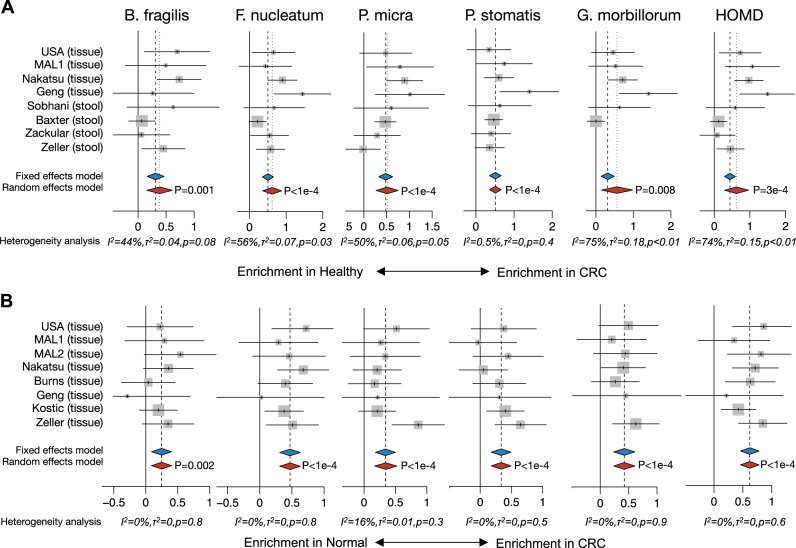
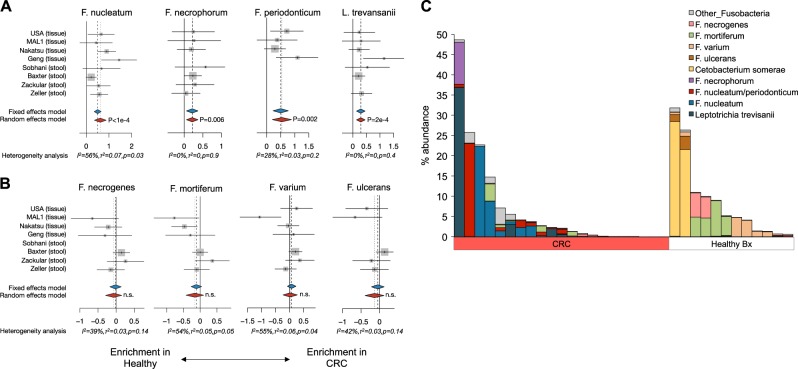
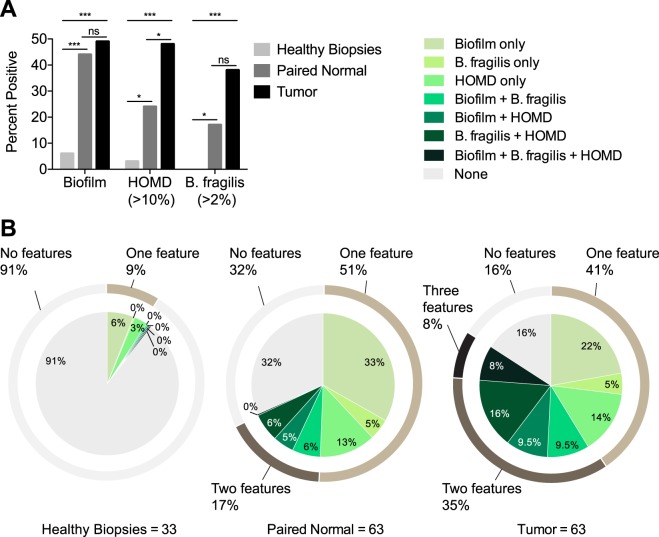
Colorectal cancer (CRC) remains the third most common cancer worldwide, with a growing incidence among young adults. Multiple studies have presented associations between the gut microbiome and CRC, suggesting a link with cancer risk. Although CRC microbiome studies continue to profile larger patient cohorts with increasingly economical and rapid DNA sequencing platforms, few common associations with CRC have been identified, in part due to limitations in taxonomic resolution and differences in analysis methodologies. Complementing these taxonomic studies is the newly recognized phenomenon that bacterial organization into biofilm structures in the mucus layer of the gut is a consistent feature of right-sided (proximal), but not left-sided (distal) colorectal cancer. In the present study, we performed 16S rRNA gene amplicon sequencing and biofilm quantification in a new cohort of patients from Malaysia, followed by a meta-analysis of eleven additional publicly available data sets on stool and tissue-based CRC microbiota using Resphera Insight, a high-resolution analytical tool for species-level characterization. Results from the Malaysian cohort and the expanded meta-analysis confirm that CRC tissues are enriched for invasive biofilms (particularly on right-sided tumors), a symbiont with capacity for tumorigenesis ( Bacteroides fragilis ), and oral pathogens including Fusobacterium nucleatum , Parvimonas micra , and Peptostreptococcus stomatis . Considered in aggregate, species from the Human Oral Microbiome Database are highly enriched in CRC. Although no detected microbial feature was universally present, their substantial overlap and combined prevalence supports a role for the gut microbiota in a significant percentage (>80%) of CRC cases.
Overview
The claims and statistics of this paper haven’t been checked yet.
Free: it reads the open-access text and checks the first 5 claims that cite a source we can check. Create a free account to check every claim.
Integrity signals
Registry
Cites
Statistics
Figures
Verification
Claims the paper makes
The claims and statistics of this paper haven’t been checked yet.
Free: it reads the open-access text and checks the first 5 claims that cite a source we can check. Create a free account to check every claim.
Claims other papers make about this one
Each is checked against this paper’s own text: does it say what the citing paper says it does?
The cited source says what the claim attributes to it.
In the citing paper
“The enrichment of bacterial species from the oral cavity is characteristic of the CRC GOMS50,76–79, along with an enrichment in invasive polymicrobial bacterial biofilms in patients with right-sided tumours76,80,81.”
From Gut OncoMicrobiome Signatures (GOMS) as next-generation biomarkers for cancer immunotherapy (2023) · cites this paper as [76]
The check wasn’t confident either way, so it gives no verdict — never disputed.
In the citing paper
“we selected Resphera Insight as previously published data demonstrate that this pipeline outperforms QIIME RDP and QIIME UCLUST in species level identification using the Human Microbiome Project reference isolate collection (60–70% species identified by Resphera Insight compared to 10–25% by QIIME RDP or QIIME UCLUST) (13).”
From A Uniform Computational Approach Improved on Existing Pipelines to Reveal Microbiome Biomarkers of Nonresponse to Immune Checkpoint Inhibitors (2021) · cites this paper as [13]
Experimental — accuracy not yet measuredIn the citing paper
“Further Resphera Insight has been validated as largely highly accurate for detection of Bacterioides and Fusobacterium spp. (13) and is also used by the FDA to enhance species identification contaminating the food chain (16,17).”
From A Uniform Computational Approach Improved on Existing Pipelines to Reveal Microbiome Biomarkers of Nonresponse to Immune Checkpoint Inhibitors (2021) · cites this paper as [13]
Self-check
Percentages, sums and reported differences re-computed from the paper’s own numbers.
The self-check needs the paper’s full text.
Citations
Cites
Trimmomatic: a flexible trimmer for Illumina sequence data
Bolger, A. M., Lohse, M., & Usadel, B. (2014) · Bioinformatics · doi:10.1093/bioinformatics/btu170 · Cited by 65,548
Fast gapped-read alignment with Bowtie 2
Langmead, B., & Salzberg, S. L. (2012) · Nature Methods · doi:10.1038/nmeth.1923 · Cited by 56,400
Harris, P. A., Taylor, R., Thielke, R., Payne, J., Gonzalez, N., & Conde, J. G. (2009) · Journal of Biomedical Informatics · doi:10.1016/j.jbi.2008.08.010 · Cited by 51,384
Naïve Bayesian Classifier for Rapid Assignment of rRNA Sequences into the New Bacterial Taxonomy
Wang, Q., Garrity, G. M., Tiedje, J. M., & Cole, J. R. (2007) · Applied and Environmental Microbiology · doi:10.1128/aem.00062-07 · Cited by 19,885
FLASH: fast length adjustment of short reads to improve genome assemblies
Magoč, T., & Salzberg, S. L. (2011) · Bioinformatics · doi:10.1093/bioinformatics/btr507 · Cited by 15,366
UCHIME improves sensitivity and speed of chimera detection
Edgar, R. C., Haas, B. J., Clemente, J. C., Quince, C., & Knight, R. (2011) · Bioinformatics · doi:10.1093/bioinformatics/btr381 · Cited by 15,114
Bacterial Biofilms: A Common Cause of Persistent Infections
Costerton, J. W., Stewart, P. S., & Greenberg, E. P. (1999) · Science · doi:10.1126/science.284.5418.1318 · Cited by 12,167 · cited 1×
“Biofilms form when bacteria aggregate on a surface (biological or inert) and become encased in a polymeric matrix.(18,19) Similar to other in vivo biofilms including oral biofilms (dental plaque) and Pseudomonas aeruginosa biofilms in cystic fibrosis patients, the colonic biofilm matrix may consist of both host mucus…”
BackgroundPredictive functional profiling of microbial communities using 16S rRNA marker gene sequences
Langille, M. G. I., Zaneveld, J., Caporaso, J. G., McDonald, D., Knights, D., Reyes, J. A., Clemente, J. C., Burkepile, D. E., Vega Thurber, R. L., Knight, R., et al. (2013) · Nature Biotechnology · doi:10.1038/nbt.2676 · Cited by 9,116
Klindworth, A., Pruesse, E., Schweer, T., Peplies, J., Quast, C., Horn, M., & Glöckner, F. O. (2013) · Nucleic Acids Research · doi:10.1093/nar/gks808 · Cited by 8,850
Ultra-high-throughput microbial community analysis on the Illumina HiSeq and MiSeq platforms
Caporaso, J. G., Lauber, C. L., Walters, W. A., Berg-Lyons, D., Huntley, J., Fierer, N., Owens, S. M., Betley, J., Fraser, L., Bauer, M., et al. (2012) · The ISME Journal · doi:10.1038/ismej.2012.8 · Cited by 8,839 · cited 1×
“High-throughput next-generation sequencing of the V3-V4 hypervariable region of the 16S rRNA gene was performed using 319 F (5′-ACTCCTACGGGAGGCAGCAG-3′) and 806 R (5′-GGACTACHVGGGTWTCTAAT-3′) universal primers containing a linker sequence required for Illumina MiSeq 300 bp paired-end sequencing and a 12-bp heterogenei…”
Method
Cited by
Items 301–334 of 334
Young, C., Wood, H. M., Balaguer, A. F., Bottomley, D., Gallop, N., Wilkinson, L., Benton, S. C., Brealey, M., John, C., Burtonwood, C., et al. (2023) · doi:10.1158/1078-0432.c.6531180.v1
Peterson, S. N., Eroshkin, A. M., Koźbiał, P., Florio, E., Fouladi, F., Strom, N., Valdes, Y., Kuehn, G., Casaburi, G., & Kuehn, T. (2023) · Research Square · doi:10.21203/rs.3.rs-2838129/v1 · Cited by 1
Kvich, L., Fritz, B. G., Zschach, H., Terkelsen, T., Raskov, H., Høst-Rasmussen, K., Jakobsen, M. R., Gheorghe, A., Gögenür, I., & Bjarnsholt, T. (2023) · bioRxiv (Cold Spring Harbor Laboratory) · doi:10.1101/2023.10.20.563034
Park, W., Bang, Y. H., Choi, J. H., Park, K., Lim, J., Lee, B., Han, K. Y., Pyo, D. H., Cho, Y. B., Kim, T., et al. (2023) · Research Square · doi:10.21203/rs.3.rs-3375190/v1
How the Microbiome Affects the Risk for Colon Cancer
Drewes, J. L., & Bhatt, A. P. (2023) · Springer eBooks · doi:10.1007/978-3-031-46712-7_7
Self-citationGut microbiota in the combined treatment of colorectal cancer using autoprobiotics
Ермоленко, Е. И., Alekhina, G., Кащенко, В. А., Захаренко, А. А., Тен, О. А., Morozova, A. S., Tsapieva, A., Ilyina, A. S., Сергеевич, О. Т., Евгеньевна, П. О., et al. (2024) · Экспериментальная и клиническая гастроэнтерология · doi:10.31146/1682-8658-ecg-218-10-63-76
Chen, Q., Wang, Y., Wu, D., Zhang, H., Xia, Q., & Qu, D. (2024) · SSRN Electronic Journal · doi:10.2139/ssrn.4807758
Microbiome engineering and cancer therapy
Ma, Y., Si, Z., Fang, H., & Chen, P. (2024) · Elsevier eBooks · doi:10.1016/b978-0-443-22348-8.00005-2
Microbiome and colorectal cancer drug resistance
Miya, T. V., Belancio, V. P., & Dlamini, Z. (2024) · Elsevier eBooks · doi:10.1016/b978-0-443-33475-7.00016-0
Bahrami-Banan, F., Taherkhani, A., Najafi, R., Alizadeh, N., Ghadimipour, H., Barati, N., Derakhshandeh, K., & Soleimani, M. (2025) · Research in Pharmaceutical Sciences · doi:10.4103/rps.rps_128_23
“Further analysis in this study revealed that rRNA processing was significantly involved in top-10 enriched pathways and BPs associated with early CRC. Growing evidence suggested an association between the disruption of the human gut microbiome and the development of CRC (80).”
Future Vision: Biofilm Global Impact
Bhattacharya, J., Chakrabarty, S., Halder, A., Roy, P., & Das, S. (2025) · Springer eBooks · doi:10.1007/978-3-031-85205-3_14
Giang, V. S., Toàn, N. L., Son, H. V., Manh, D. T., Thân, N. T., Tung, N. L., Thach, N. C., & Cuong, L. D. (2025) · Research Square · doi:10.21203/rs.3.rs-7579548/v1
Giang, V. S., Toàn, N. L., Son, H. V., Manh, D. T., Thân, N. T., Tung, N. L., Thach, N. C., & Cuong, L. D. (2025) · Research Square · doi:10.21203/rs.3.rs-7579548/v2
Zhao, Y., Naidoo, J., Conroy, M. R., Ferri, J. T., Gills, J. J., Chen, K. Y., White, J. R., Glass, S., Assan, W. O., Peloza, K. E., et al. (2025) · medRxiv · doi:10.1101/2025.10.01.25336378
Self-citationClostridioides difficile: A suspected pro-carcinogenic bacterium for gastrointestinal tumors
Zou, J., Tian, B., Xiao, Y., Wu, A., & Li, C. (2025) · Chinese Medical Journal · doi:10.1097/cm9.0000000000003834
“…group found that invasive polymicrobial bacterial biofilms are consistent features of right-sided (proximal) but not left-sided (distal) CRC. [165,166] This may be attributed to the difference in microbiota composition, molecular characteristics, response to chemotherapy, and prognosis between…”
Young, C., Wood, H. M., Seshadri, R. A., Van Nang, P., Vaccaro, C. A., Melendez, L. C., Bose, M., Van Doi, M., Piñero, T. A., Valladares, C. T., et al. (2021) · Figshare · doi:10.6084/m9.figshare.14052786
Morales, M. F. G., Hogue, S., Pitcher, S., Jeong, D. K., Radosavljevic, I., Stefanou, A. J., Felder, S. I., Burns, J. R., Dowd, S. E., Vogtmann, E., et al. (2025) · Gut Pathogens · doi:10.1186/s13099-025-00773-6 · Cited by 1
“The Tissue Service Core at H. Lee Moffitt Cancer Center manually extracted the samples for DNA using a modified protocol (supplementary methods) [26, 27].”
Self-citationMoibenko, O. V., Kozlovskyi, I. M., & Yankovska, N. V. (2026) · Fìzìologìčnij žurnal · doi:10.15407/fz72.01.034
Clostridioides difficile Detection in a Human CRC CohortPreprint
Anderson, S. M., Cing, Z., Drewes, J. L., White, J. R., Southward, T., Beauregard, H. E., Ferri, J. T., Wanyiri, J. W., Roslani, A., Vadivelu, J., et al. (2026) · medRxiv · doi:10.13016/m2wnlk-9p5v
Self-citationMajumdar, R., Long, E. M., Rogers, C. W., Strausbaugh, C. A., & Pokhrel, S. (2026) · Journal of Agriculture and Food Research · doi:10.1016/j.jafr.2026.102971
Hadjigol, S., Shah, B. A., Yazdani, N., & O’brien-simpson, N. M. (2026) · Cells · doi:10.3390/cells15100855
“A higher relative abundance of Fusobacterium in the stools of colorectal cancer patients was detected through 16S rRNA gene amplicon sequencing and biofilm quantification, indicating that microbial signatures may serve as non-invasive biomarkers [31].”
Zhu, Y., Luo, S., Luo, Y., Guo, Z., Jiang, Y., Ma, Q., Fu, X., Zheng, C., You, F., Kuang, Q., et al. (2026) · Virulence · doi:10.1080/21505594.2026.2673632
Spatial atlas highlights contribution of C. difficile in early-stage colorectal cancerPreprint
Markham, N. O., Drewes, J. L., Green, E. H., Ball, W., Lunnemann, H. M., Simmons, A. J., Kaur, H., Queen, J., Geis, A. L., Pourmaleki, M., et al. (2026) · bioRxiv (Cold Spring Harbor Laboratory) · doi:10.64898/2026.06.18.733268
Self-citationLiu, Y., Zhang, F., Chen, H. Y., Chen, K., Zhang, Y., Luo, C., Luo, J., Li, N., Dai, M., Zhai, J., et al. (2026) · Big Data Mining and Analytics · doi:10.26599/bdma.2025.9020088
Virulome over taxonomy: refining the driver-passenger model in colorectal carcinogenesis
Glazunova, E. V., Kurnosov, A., Bogacheva, A., Makarov, V., & Zlobovskaya, O. A. (2026) · Frontiers in Cellular and Infection Microbiology · doi:10.3389/fcimb.2026.1858868
Glazunova, E. V., Astakhova, L., Kurnosov, A., Doludin, Y. V., Lyundup, A., Kostin, A., Makarov, V., Yudin, S., & Zlobovskaya, O. A. (2026) · Frontiers in Cellular and Infection Microbiology · doi:10.3389/fcimb.2026.1887826
Tarkalson, D. D., Majumdar, R., Long, E. M., Bjorneberg, D. L., Rogers, C. W., Dungan, R. S., Leytem, A. B., & Nouwakpo, S. K. (2026) · Journal of Agriculture and Food Research · doi:10.1016/j.jafr.2026.103186
Genetic profiling of biofilm-associated cancers: Towards personalized medicine
Roy, S., Ghosh, S., Hansda, S., Karmakar, S., Ghosh, G., & Ghosh, S. (2026) · Progress in molecular biology and translational science · doi:10.1016/bs.pmbts.2026.07.002
Birla, P., Yang, L., Shan, W., Minamisawa, S., Dhaygude, O., Manoj, H., Lee, A. J., Ferri, J., Zheng, Y., Munoz, A. J., et al. (2026) · Proceedings of the National Academy of Sciences · doi:10.1073/pnas.2617943123
Self-citationIntratumoral Microbiota in Fueling Cancer and Steering Treatment Response
Xu, M., Yu, J., Chen, Y., Ge, S., Ye, L., Wang, Y., 周一雄, & Jia, R. (2026) · MedComm · doi:10.1002/mco2.71052
Giang, V. S., Hồ, V. S., Manh, Đ. T., Tùng, N. T., Thảo, N. T. P., Thân, N. T., Tung, N. L., Hao, T. V., & Cuong, L. D. (2026) · Microorganisms · doi:10.3390/microorganisms14102325
“Collectively, these findings indicate that different bacterial species may contribute to CRC development through distinct but potentially complementary biological mechanisms [10–12].”
Systemic antibody repertoires target specific microbial antigens in patients with colorectal cancerPreprint
Innocenti, G., Brezina, S., Barozzi, I., Prinzensteiner, M., Reyna-Blanco, C. S., Kołek, M. F., Prosenz, J., Maieron, A., Gsur, A., & Vogl, T. J. (2026) · bioRxiv (Cold Spring Harbor Laboratory) · doi:10.64898/2026.10.15.759395
“Together with the growing interest in machine learning approaches, these efforts have also led to the development of microbiota-based predictive models for CRC prediction and risk stratification (13,14).”
Metadata
- Authors
- Drewes, J. L., White, J. R., Dejea, C. M., Fathi, P., Iyadorai, T., Vadivelu, J., Roslani, A. C., Wick, E. C., Mongodin, E. F., Loke, M. F., Thulasi, K., Gan, H. M., Goh, K. L., Chong, H. Y., Kumar, S., Wanyiri, J. W., & Sears, C. L.
- Affiliations
- Johns Hopkins University (US)
- Resphera Biosciences (US)
- University of Malaya (MY)
- University of Maryland, Baltimore (US)
- Monash University Malaysia (MY)
- Corresponding author
- Sears, Cynthia L.
- ORCID
- Venue
- npj Biofilms and Microbiomes
- Published
- 2017-11-29
- Volume
- 3
- Issue
- 1
- Pages
- 34-34
- ISSN
- 2055-5008 (ISSN-L)
- PMC
- PMC5707393
- OpenAlex
- W2770639073
- Cited by
- 335
- References
- 74
- Citations by year
- 2026: 33 · 2025: 42 · 2024: 34 · 2023: 44 · 2022: 35 · 2021: 54 · 2020: 41 · 2019: 31 · 2018: 20 · 2017: 1
- FWCI
- 10.39
- Type
- journal article
- Language
- en
- Update notices
- correction (2019-01-09)
- Open access
- gold
- doi.org
- Licence
- cc-by
- creativecommons.org/licenses/by/4.0 (tdm)
- creativecommons.org/licenses/by/4.0 (vor)
- Locations
- npj Biofilms and Microbiomes (publishedVersion, cc-by)
- Europe PMC (PubMed Central) (publishedVersion, cc-by)
- PubMed Central (publishedVersion, cc-by)
- PubMed (publishedVersion)
- DOAJ (DOAJ: Directory of Open Access Journals) (submittedVersion)
- Own your potential (DEAKIN) (submittedVersion)
- Deakin Research Online (Deakin University) (submittedVersion)
- eScholarship (California Digital Library) (submittedVersion, cc-by)
- Figshare (submittedVersion, cc-by)
- Funders
- Cancer Research Institute (CA006973)
- Universiti Malaya (RP016A-13HTM)
- National Institutes of Health (1s10od016374-01, CA006973, CA062924, DK089502)
- Sidney Kimmel Comprehensive Cancer Center (P30 CA006973, CA006973)
- National Cancer Institute (R01CA196845, R01CA151393, P50CA062924, P30CA006973)
- National Institute of Diabetes and Digestive and Kidney Diseases (P30DK089502)
- Topics
- Life Sciences › Biochemistry, Genetics and Molecular Biology › Molecular Biology › Gut microbiota and health
- Health Sciences › Dentistry › Periodontics › Oral microbiology and periodontitis research
- Health Sciences › Medicine › Infectious Diseases › Clostridium difficile and Clostridium perfringens research
- Keywords
- colorectal cancer, gut microbiota, bacterial biofilms, 16S rRNA gene profiling, Bacteroides fragilis, Fusobacterium nucleatum, Parvimonas micra, Peptostreptococcus stomatis, oral pathogens, right-sided colorectal cancer, mucus layer
About these checks
Registry, retraction, Cites and statistics results are computed, not judged, with one exception: a printed reference that no index lists is read once by a model before it counts as a citation error. Claims are extracted by a model and kept only when their quote appears verbatim in the text; each cited source is then checked, with a model’s help, for whether it says what the claim relies on. Those verdicts can be wrong — read the claim’s quote and the cited source before relying on one.
Statistics and arithmetic are recomputed, not judged.
Confidence bands are shown only for fields calibrated on our annotated test set. None is calibrated yet, so no band is shown.
What counts as a claim ›How we measure confidence ›How we check this ›
Are you an author, or do you see a problem with this page? Request a review
Data sources
Bibliographic data: Semantic Scholar, OpenAlex, Crossref.
Contains information from the Semantic Scholar Academic Graph Datasets, made available under the ODC Attribution License (ODC-BY 1.0).
Semantic Scholar’s data is described in: Kinney, R., et al. (2023). The Semantic Scholar Open Data Platform. arXiv:2301.10140.
