

Recent advances and applications of deep learning methods in materials science
Open accessThe DOI matches its Crossref record; 402 of the 402 references it cites were found in a registry or an index.
Abstract
Deep learning (DL) is one of the fastest-growing topics in materials data science, with rapidly emerging applications spanning atomistic, image-based, spectral, and textual data modalities. DL allows analysis of unstructured data and automated identification of features. The recent development of large materials databases has fueled the application of DL methods in atomistic prediction in particular. In contrast, advances in image and spectral data have largely leveraged synthetic data enabled by high-quality forward models as well as by generative unsupervised DL methods. In this article, we present a high-level overview of deep learning methods followed by a detailed discussion of recent developments of deep learning in atomistic simulation, materials imaging, spectral analysis, and natural language processing. For each modality we discuss applications involving both theoretical and experimental data, typical modeling approaches with their strengths and limitations, and relevant publicly available software and datasets. We conclude the review with a discussion of recent cross-cutting work related to uncertainty quantification in this field and a brief perspective on limitations, challenges, and potential growth areas for DL methods in materials science.
Overview
The claims and statistics of this paper haven’t been checked yet.
Free: it reads the open-access text and checks the first 5 claims that cite a source we can check. Create a free account to check every claim.
Integrity signals
Registry
Cites
Statistics
Figures
Verification
Claims the paper makes
The claims and statistics of this paper haven’t been checked yet.
Free: it reads the open-access text and checks the first 5 claims that cite a source we can check. Create a free account to check every claim.
Self-check
Percentages, sums and reported differences re-computed from the paper’s own numbers.
The self-check needs the paper’s full text.
Citations
Cites
Items 201–400 of 404
A critical examination of compound stability predictions from machine-learned formation energies
Bartel, C., Trewartha, A., Wang, Q., Dunn, A., Jain, A., & Ceder, G. (2020) · eScholarship (California Digital Library) · Cited by 194
Self-citationChemicalTagger: A tool for semantic text-mining in chemistry
Hawizy, L., Jessop, D. M., Adams, N., & Murray-Rust, P. (2011) · Journal of Cheminformatics · doi:10.1186/1758-2946-3-17 · Cited by 192 · cited 1×
“com/BlueObelisk/chemicaltagger [304] ChemListem https://bitbucket.”
Yang, Z., Yabansu, Y. C., Jha, D., Liao, W.-K., Choudhary, A. N., Kalidindi, S. R., & Agrawal, A. (2019) · Acta Materialia · doi:10.1016/j.actamat.2018.12.045 · Cited by 192 · cited 2×
“com/NU-CUCIS/LocalizationDL [262] MDGAN https://github.”
BackgroundSelf-citationSanchez-Lengeling, B., Outeiral, C., Guimaraes, G. L., & Aspuru-Guzik, A. (2017) · ChemRxiv · doi:10.26434/chemrxiv.5309668.v3 · Cited by 191
Virtual screening of inorganic materials synthesis parameters with deep learning
Kim, E., Huang, K., Jegelka, S., & Olivetti, E. (2017) · npj Computational Materials · doi:10.1038/s41524-017-0055-6 · Cited by 190 · cited 1×
“Such data has been used to predict synthesis maps for titania nanotubes [310], various binary and ternary oxides [318], and perovskites [319].”
MethodAuthor Correction: A compendium of geochemical information from the Saanich Inlet water column
Torres-Beltrán, M., Hawley, A. K., Capelle, D., Zaikova, E., Walsh, D. A., Mueller, A., Scofield, M., Payne, C., Pakhomova, L., Kheirandish, S., et al. (2019) · Scientific Data · doi:10.1038/s41597-018-0005-2 · Cited by 186
Vasudevan, R. K., Choudhary, K., Mehta, A., Smith, R., Kusne, G., Tavazza, F., Vlcek, L., Ziatdinov, M., Kalinin, S. V., & Hattrick-Simpers, J. (2019) · MRS Communications · doi:10.1557/mrc.2019.95 · Cited by 185
Self-citationOpportunities and challenges of text mining in materials research
Kononova, O., He, T., Huo, H., Trewartha, A., Olivetti, E. A., & Ceder, G. (2021) · iScience · doi:10.1016/j.isci.2021.102155 · Cited by 182
ChemOS: Orchestrating autonomous experimentation
Roch, L. M., Häse, F., Kreisbeck, C., Tamayo-Mendoza, T., Yunker, L. P. E., Hein, J. E., & Aspuru-Guzik, A. (2018) · Science Robotics · doi:10.1126/scirobotics.aat5559 · Cited by 180 · cited 1×
“Finally, we note an important technological challenge is to make a “closedloop” autonomous materials design and synthesis process [348, 349] that can include both machine learning and experimental components in a “self-driving laboratory” [350].”
BackgroundCrystalGAN: Learning to Discover Crystallographic Structures with Generative Adversarial NetworksPreprint
Nouira, A., Sokolovska, N., & Crivello, J. (2018) · arXiv (Cornell University) · doi:10.48550/arxiv.1810.11203 · Cited by 180 · cited 1×
“While such concepts have been widely applied to molecular systems, 115 , recently these methods have been applied to solids as well 116 – 120 .”
MethodBinding MOAD, a high-quality protein ligand database
Benson, M. L., Smith, R. D., Khazanov, N. A., Dimcheff, B., Beaver, J., Dresslar, P., Nerothin, J., & Carlson, H. A. (2007) · Nucleic Acids Research · doi:10.1093/nar/gkm911 · Cited by 178
Choudhary, K., DeCost, B., & Tavazza, F. (2018) · Physical Review Materials · doi:10.1103/physrevmaterials.2.083801 · Cited by 177 · cited 1×
“com/usnistgov/jarvis/ [74] Atom2vec https://github.”
Self-citationDeep Learning for Semantic Segmentation of Defects in Advanced STEM Images of Steels
Roberts, G., Haile, S. Y., Sainju, R., Edwards, D. J., Hutchinson, B., & Zhu, Y. (2019) · Scientific Reports · doi:10.1038/s41598-019-49105-0 · Cited by 177 · cited 2×
“developed DefectSegNet to automatically identify defects in transmission and STEM images of steel including dislocations, precipitates, and voids [253].”
BackgroundInsightful classification of crystal structures using deep learning
Ziletti, A., Kumar, D., Scheffler, M., & Ghiringhelli, L. M. (2018) · MPG.PuRe (Max Planck Society) · Cited by 175
A fast image simulation algorithm for scanning transmission electron microscopy
Ophus, C. (2017) · Advanced Structural and Chemical Imaging · doi:10.1186/s40679-017-0046-1 · Cited by 174 · cited 2×
“com/prism-em/prismatic [236] AtomVision https://github.”
Torrisi, S. B., Carbone, M. R., Rohr, B. A., Montoya, J. H., Ha, Y., Yano, J., Suram, S. K., & Hung, L. (2020) · npj Computational Materials · doi:10.1038/s41524-020-00376-6 · Cited by 171 · cited 1×
“[213] In practical applications, Andrejevic et al.”
Fremout, W., & Saverwyns, S. (2012) · Journal of Raman Spectroscopy · doi:10.1002/jrs.4054 · Cited by 170 · cited 2×
“Collective efforts have been focusing on curating data extracted from different sources, as found in the RRUFF Raman, XRD and chemistry database [182], the open Raman database [187], and the SOP spectra library [192].”
MethodDetecting unexpected obstacles for self-driving cars: Fusing deep learning and geometric modeling
Ramos, S., Gehrig, S., Pinggera, P., Franke, U., & Rother, C. (2017) · 2017 IEEE Intelligent Vehicles Symposium (IV) · doi:10.1109/ivs.2017.7995849 · Cited by 170 · cited 1×
“DL techniques have been proven to provide exciting new capabilities in numerous fi elds (such as playing Go 25 , self-driving cars 26 , navigation, chip design, particle physics, protein science, drug discovery, astrophysics, object recognition 27 , etc).”
BackgroundMaksov, A., Dyck, O., Wang, K., Xiao, K., Geohegan, D. B., Sumpter, B. G., Vasudevan, R. K., Jesse, S., Kalinin, S. V., & Ziatdinov, M. (2019) · npj Computational Materials · doi:10.1038/s41524-019-0152-9 · Cited by 168
Accelerating materials discovery with Bayesian optimization and graph deep learning
Zuo, Y., Qin, M., Chen, C., Ye, W., Li, X., Luo, J., & Ong, S. P. (2021) · Materials Today · doi:10.1016/j.mattod.2021.08.012 · Cited by 168 · cited 2×
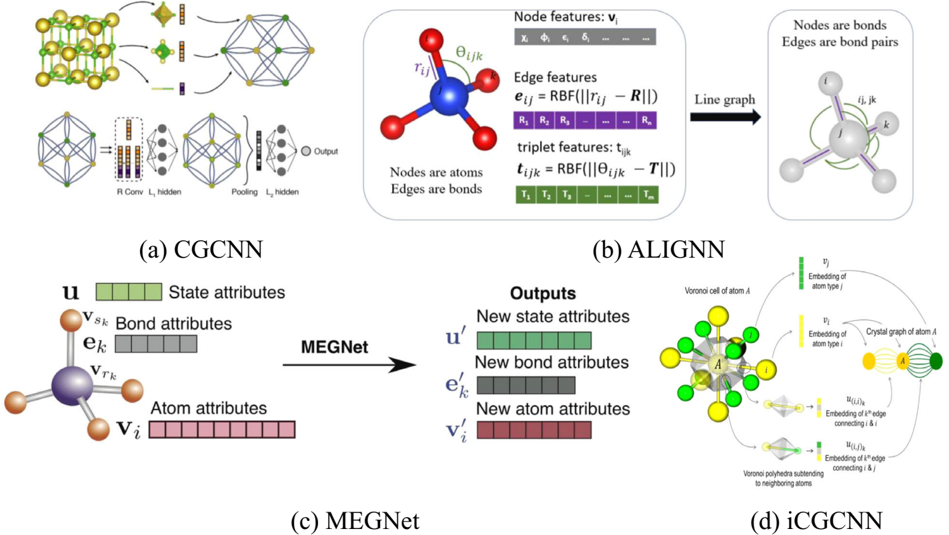
“Alternatively, Zuo et al.(129) started from the hypothetical structures without precise atom positions, and used a Bayesian optimization method coupled with a MEGNet energy model as an energy evaluator to perform direct structural relaxation.”
MethodSelf-citationNMRShiftDBConstructing a Free Chemical Information System with Open-Source Components
Steinbeck, C., Krause, S., & Kuhn, S. (2003) · Journal of Chemical Information and Computer Sciences · doi:10.1021/ci0341363 · Cited by 166
Resolution enhancement in scanning electron microscopy using deep learning
Haan, K. D., Ballard, Z. S., Rivenson, Y., Wu, Y., & Özcan, A. (2019) · Scientific Reports · doi:10.1038/s41598-019-48444-2 · Cited by 165 · cited 1×
“recorded SEM images of the same regions of interest in carbon samples containing gold nanoparticles at two different resolutions [281].”
BackgroundCastro, P. B. D., Terashima, K., Yamamoto, T. D., Hou, Z., Iwasaki, S., Matsumoto, R., Adachi, S., Saito, Y., Song, P., Takeya, H., et al. (2020) · NPG Asia Materials · doi:10.1038/s41427-020-0214-y · Cited by 164
Google AI algorithm masters ancient game of Go
Gibney, E. (2016) · Nature · doi:10.1038/529445a · Cited by 163 · cited 1×
“DL techniques have been proven to provide exciting new capabilities in numerous fields (such as playing Go [25], self-driving cars [26], navigation, chip design, particle physics, protein science, drug discovery, astrophysics, object recognition [27], etc).”
BackgroundAutomated defect analysis in electron microscopic images
Li, W., Field, K. G., & Morgan, D. (2018) · npj Computational Materials · doi:10.1038/s41524-018-0093-8 · Cited by 162
A database of battery materials auto-generated using ChemDataExtractor
Huang, S., & Cole, J. M. (2020) · Scientific Data · doi:10.1038/s41597-020-00602-2 · Cited by 162 · cited 1×
“Recently, software tools such as ChemDataExtractor [303] and other methods [312] based on more conventional machine learning and rule-based approaches have enabled automated or semi-automated extraction of data sets such as Curie and Néel magnetic phase transition temperatures [313], battery properties [314], UV-vis s…”
MethodAutonomous Scanning Probe Microscopy in Situ Tip Conditioning through Machine Learning
Rashidi, M., & Wolkow, R. A. (2018) · ACS Nano · doi:10.1021/acsnano.8b02208 · Cited by 160
Dai, M., Demirel, M. F., Liang, Y., & Hu, J.-M. (2021) · npj Computational Materials · doi:10.1038/s41524-021-00574-w · Cited by 160 · cited 2×
“Dai et al. 252 trained a GNN successfully trained to predict magnetos-triction in a wide range of synthetic polycrystalline systems with around 10% prediction error.”
Toward autonomous design and synthesis of novel inorganic materials
Szymanski, N. J., Zeng, Y., Huo, H., Bartel, C. J., Kim, H., & Ceder, G. (2021) · Materials Horizons · doi:10.1039/d1mh00495f · Cited by 159 · cited 1×
“Finally, we note an important technological challenge is to make a “closedloop” autonomous materials design and synthesis process [348, 349] that can include both machine learning and experimental components in a “self-driving laboratory” [350].”
BackgroundLearning the electronic density of states in condensed matter
Mahmoud, C. B., Anelli, A., Cśanyi, G., & Ceriotti, M. (2020) · Physical review. B./Physical review. B · doi:10.1103/physrevb.102.235130 · Cited by 156 · cited 1×
“Non-DL models can also perform such tasks to a reasonable accuracy 196 .”
BackgroundChoudhary, K. K., Garrity, K. F., Sharma, V., Biacchi, A. J., Walker, A. R. H., & Tavazza, F. (2020) · npj Computational Materials · doi:10.1038/s41524-020-0337-2 · Cited by 154 · cited 2×
“gov/jarvisdft [181] RRUFF 3527 https://rruff.”
MethodSelf-citationBayesian Uncertainty Estimation for Batch Normalized Deep Networks
Teye, M., Azizpour, H., & Smith, K. C. (2018) · arXiv (Cornell University) · doi:10.48550/arxiv.1802.06455 · Cited by 153 · cited 1×
“Another example is Teye, Azizpour, and Smith ’ s exploration of the use of batch normalization as a way to approximate inference in Bayesian models 287 .”
MethodLong, T., Fortunato, N. M., Opahle, I., Zhang, Y., Samathrakis, I., Shen, C., Gutfleisch, O., & Zhang, H. (2021) · npj Computational Materials · doi:10.1038/s41524-021-00526-4 · Cited by 152
Holm, E. A. (2019) · Science · doi:10.1126/science.aax0162 · Cited by 150 · cited 2×
“Despite their many advantages, DL methods have disadvantages too, the most significant one being their black-box nature [38] which may hinder physical insights into the phenomena under examination.”
BackgroundMethodSelf-citationSuzuki, Y., Hino, H., Hawai, T., Saito, K., Kotsugi, M., & Ono, K. (2020) · Scientific Reports · doi:10.1038/s41598-020-77474-4 · Cited by 150 · cited 2×
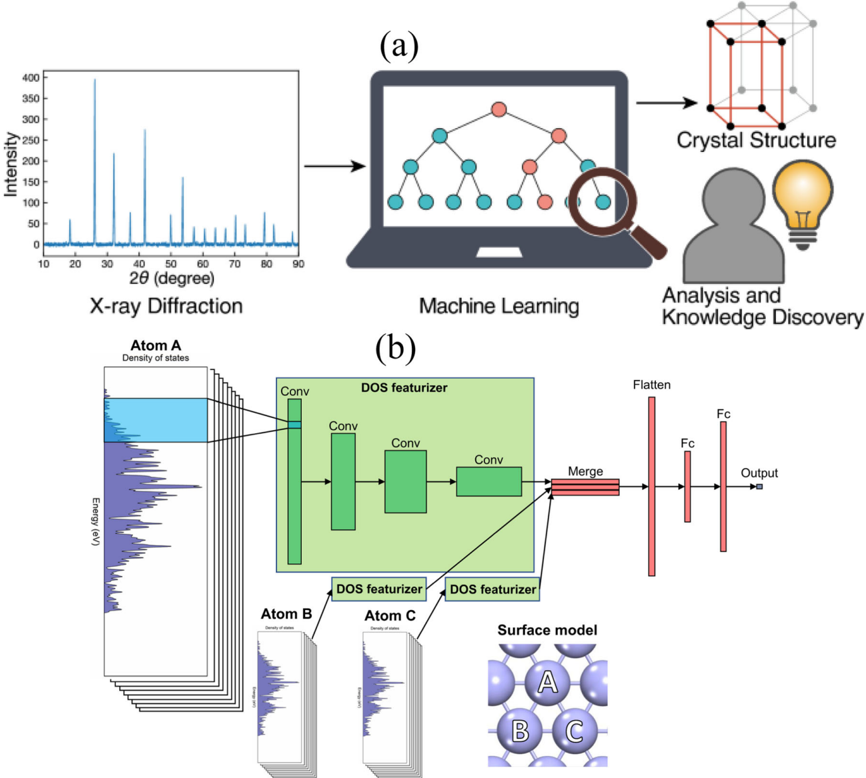
“a) Predicting structure information from the X-ray diffraction [197], Reprinted according to the terms of the CC-BY license.”
MethodSanchez-Lengeling, B., Outeiral, C., Guimaraes, G. L., & Aspuru-Guzik, A. (2017) · ChemRxiv · doi:10.26434/chemrxiv.5309668.v2 · Cited by 149
Hsu, T., Epting, W. K., Kim, H., Abernathy, H., Hackett, G., Rollett, A. D., Salvador, P. A., & Holm, E. A. (2020) · JOM · doi:10.1007/s11837-020-04484-y · Cited by 146 · cited 1×
“constructed a GAN to generate 3D synthetic solid oxide fuel cell microstructures [290].”
MethodSelf-citationPark, C. W., Kornbluth, M., Vandermause, J., Wolverton, C., Kozinsky, B., & Mailoa, J. P. (2021) · npj Computational Materials · doi:10.1038/s41524-021-00543-3 · Cited by 146
Self-citationCrossing the mesoscale no-man<U+2019>s land via parallel kinetic Monte Carlo.
Webb, E. B., III, García–Cardona, C., Wagner, G. J., Tikare, V., Holm, E. A., Plimpton, S. J., Thompson, A. L., Slepoy, A., Zhou, X., Battaile, C. C., et al. (2009) · OSTI OAI (U.S. Department of Energy Office of Scientific and Technical Information) · doi:10.2172/966942 · Cited by 142
Self-citationNeural Network for Nanoscience Scanning Electron Microscope Image Recognition
Modarres, M. H., Aversa, R., Cozzini, S., Ciancio, R., Leto, A., & Brandino, G. P. (2017) · Scientific Reports · doi:10.1038/s41598-017-13565-z · Cited by 142 · cited 1×
“applied DL with transfer learning to automatically classify SEM images of different material systems [265].”
MethodInorganic Materials Synthesis Planning with Literature-Trained Neural Networks
Kim, E., Jensen, Z., van Grootel, A., Huang, K., Staib, M., Mysore, S., Chang, H.-S., Strubell, E., McCallum, A., Jegelka, S., et al. (2020) · Journal of Chemical Information and Modeling · doi:10.1021/acs.jcim.9b00995 · Cited by 142
Machine-Learning X-Ray Absorption Spectra to Quantitative Accuracy
Carbone, M. R., Topsakal, M., Lu, D., & Yoo, S. (2020) · Physical Review Letters · doi:10.1103/physrevlett.124.156401 · Cited by 141 · cited 2×
“Carbone et al. 199 used a message passing neural network (MPNN) to predict the O and N K-edge XANES spectra from the molecular structures in the QM9 database 7 .”
MethodHigh-throughput computational X-ray absorption spectroscopy
Mathew, K., Zheng, C., Winston, D., Chen, C., Dozier, A., Rehr, J. J., Ong, S. P., & Persson, K. A. (2018) · Scientific Data · doi:10.1038/sdata.2018.151 · Cited by 140 · cited 16×
“For example, in an autonomous synthesis experiment the oxidation state of copper (and therefore the oxide phase) was varied in a sample of copper oxide by automatically fl owing more oxidizing or more reducing gas over the sample and monitoring the charge state of the copper using XANES.”
BackgroundInfluentialSelf-citationTimoshenko, J., Anspoks, A., Cintiņš, A., Kuzmin, A., Purans, J., & Frenkel, A. I. (2018) · Physical Review Letters · doi:10.1103/physrevlett.120.225502 · Cited by 139 · cited 5×
“Timoshenko et al.(182) first transformed the EXAFS data into 2D maps with a wavelet transform and then supplied the 2D data to a neural network model.”
MethodInfluentialAdsorption Isotherm Predictions for Multiple Molecules in MOFs Using the Same Deep Learning Model
Anderson, R., Biong, A., & Gómez-Gualdrón, D. A. (2020) · Journal of Chemical Theory and Computation · doi:10.1021/acs.jctc.9b00940 · Cited by 139
Court, C. J., & Cole, J. M. (2018) · Scientific Data · doi:10.1038/sdata.2018.111 · Cited by 135 · cited 1×
“Recently, software tools such as ChemDataExtractor [303] and other methods [312] based on more conventional machine learning and rule-based approaches have enabled automated or semi-automated extraction of data sets such as Curie and Néel magnetic phase transition temperatures [313], battery properties [314], UV-vis s…”
MethodThe Harvard organic photovoltaic dataset
Lopez, S. A., Pyzer-Knapp, E. O., Simm, G. N., Lutzow, T., Li, K., Seress, L. R., Hachmann, J., & Aspuru-Guzik, A. (2016) · Scientific Data · doi:10.1038/sdata.2016.86 · Cited by 134
Choudhary, K., Zhang, Q., Reid, A. C. E., Chowdhury, S., Van Nguyen, N., Trautt, Z., Newrock, M. W., Congo, F. Y., & Tavazza, F. (2018) · Scientific Data · doi:10.1038/sdata.2018.82 · Cited by 134 · cited 1×
“gov/jarvisdft [180] JV Infrared 5k http://jarvis.”
Self-citationWang, H., Xie, Y., Li, D., Deng, H., Zhao, Y., Xin, M., & Lin, J. (2020) · Journal of Chemical Information and Modeling · doi:10.1021/acs.jcim.0c00020 · Cited by 134 · cited 1×
“[203] for fast identification of metal-organic frameworks (MOFs), where experimental spectral noise was extracted and then synthesized into the theoretical XRD for training data augmentation.”
MethodAb initio quality neural-network potential for sodium
Eshet, H., Khaliullin, R. Z., Kühne, T. D., Behler, J., & Parrinello, M. (2010) · Physical Review B · doi:10.1103/physrevb.81.184107 · Cited by 133 · cited 1×
“Such FF models have been developed for molecular systems, such as water, methane, and other organic molecules 99,101 as well as solids such as silicon 98 , sodium 102 , graphite 103 , and titania ( TiO 2 ) 104 .”
BackgroundChun, S., Roy, S., Nguyen, Y. T., Choi, J. B., Udaykumar, H. S., & Baek, S. S. (2020) · Scientific Reports · doi:10.1038/s41598-020-70149-0 · Cited by 130 · cited 23×
“Generative Adversarial Networks (GANs) are currently the predominant method for synthetic microstructure generation.”
BackgroundInfluentialCubuk, E. D., Sendek, A. D., & Reed, E. J. (2019) · The Journal of Chemical Physics · doi:10.1063/1.5093220 · Cited by 129
Automated generation and ensemble-learned matching of X-ray absorption spectra
Zheng, C., Mathew, K., Chen, C., Chen, Y., Tang, H., Dozier, A., Kas, J. J., Vila, F. D., Rehr, J. J., Piper, L. F. J., et al. (2018) · npj Computational Materials · doi:10.1038/s41524-018-0067-x · Cited by 123 · cited 16×
“For example, in an autonomous synthesis experiment the oxidation state of copper (and therefore the oxide phase) was varied in a sample of copper oxide by automatically fl owing more oxidizing or more reducing gas over the sample and monitoring the charge state of the copper using XANES.”
BackgroundMethodInfluentialSelf-citationZhao, J., Chen, Q., Huang, X., & Fang, C. (2006) · Journal of Pharmaceutical and Biomedical Analysis · doi:10.1016/j.jpba.2006.02.053 · Cited by 120 · cited 4×
“Hence, dimensional reduction strategies are commonly used to compress the information dimension using, for example, principal component analysis (PCA) 189,190 .”
MethodInfluentialThe first annotated set of scanning electron microscopy images for nanoscience
Aversa, R., Modarres, M. H., Cozzini, S., Ciancio, R., & Chiusole, A. (2018) · Scientific Data · doi:10.1038/sdata.2018.172 · Cited by 118
(2018) · INTERNATIONAL JOURNAL FOR TRAFFIC AND TRANSPORT ENGINEERING · doi:10.7708/ijtte.2018.8(1).01 · Cited by 117 · cited 1×
“ImageNet-based deep transfer learning has also been successfully applied for crack detection in macroscale materials images [266, 267], as well as for property prediction on small, noisy, and heterogeneous industrial datasets [268, 269].”
BackgroundKhaliullin, R. Z., Eshet, H., Kühne, T. D., Behler, J., & Parrinello, M. (2010) · Physical Review B · doi:10.1103/physrevb.81.100103 · Cited by 116 · cited 1×
“Such FF models have been developed for molecular systems, such as water, methane, and other organic molecules 99,101 as well as solids such as silicon 98 , sodium 102 , graphite 103 , and titania ( TiO 2 ) 104 .”
BackgroundKolb, B., Lentz, L. C., & Kolpak, A. M. (2017) · Scientific Reports · doi:10.1038/s41598-017-01251-z · Cited by 113 · cited 1×
“com/biklooost/PROPhet [100] DeepMD Mol https://github.”
A Deep Neural Network for the Rapid Prediction of X-ray Absorption Spectra
Rankine, C. D., Madkhali, M. M. M., & Penfold, T. J. (2020) · The Journal of Physical Chemistry A · doi:10.1021/acs.jpca.0c03723 · Cited by 112
Direct Prediction of Phonon Density of States With Euclidean Neural Networks
Chen, Z., Andrejevic, N., Smidt, T., Ding, Z., Xu, Q., Chi, Y., Nguyen, Q. T., Alatas, A., Kong, J., & Li, M. (2021) · Advanced Science · doi:10.1002/advs.202004214 · Cited by 111 · cited 1×
“[226] used a Euclidean neural network (E(3)NN) to predict the phonon density of state (DOS) spectra from atom positions and element types.”
MethodLearning surface molecular structures via machine vision
Ziatdinov, M., Maksov, A., & Kalinin, S. V. (2017) · npj Computational Materials · doi:10.1038/s41524-017-0038-7 · Cited by 107
An online tool for predicting fatigue strength of steel alloys based on ensemble data mining
Agrawal, A., & Choudhary, A. (2018) · International Journal of Fatigue · doi:10.1016/j.ijfatigue.2018.04.017 · Cited by 107
Self-citationFurmanchuk, A., Saal, J. E., Doak, J. W., Olson, G. B., Choudhary, A., & Agrawal, A. (2018) · Journal of Computational Chemistry · doi:10.1002/jcc.25067 · Cited by 106
Self-citationJCPDS-ICDD Research Associateship (cooperative program with NBS/NIST)
Wong-Ng, W., McMurdie, H. F., Hubbard, C. R., & Mighell, A. D. (2001) · Journal of Research of the National Institute of Standards and Technology · doi:10.6028/jres.106.052 · Cited by 105 · cited 1×
“com/pdf-product-summary/ [183] ICSD XRD 150k https://icsd.”
UHCSDB: UltraHigh Carbon Steel Micrograph DataBase
DeCost, B., Hecht, M. D., Francis, T., Webler, B. A., Picard, Y. N., & Holm, E. A. (2017) · Integrating materials and manufacturing innovation · doi:10.1007/s40192-017-0097-0 · Cited by 103 · cited 2×
“Decost, Francis, and Holm applied PixelNet to segment microstructural constituents in the UltraHigh Carbon Steel Database 223,224 .”
MethodSelf-citationComparative dataset of experimental and computational attributes of UV/vis absorption spectra
Beard, E. J., Sivaraman, G., Vázquez-Mayagoitia, Á., Vishwanath, V., & Cole, J. M. (2019) · Scientific Data · doi:10.1038/s41597-019-0306-0 · Cited by 100 · cited 1×
“Recently, software tools such as ChemDataExtractor [303] and other methods [312] based on more conventional machine learning and rule-based approaches have enabled automated or semi-automated extraction of data sets such as Curie and Néel magnetic phase transition temperatures [313], battery properties [314], UV-vis s…”
MethodStan, T., Thompson, Z., & Voorhees, P. W. (2020) · Materials Characterization · doi:10.1016/j.matchar.2020.110119 · Cited by 100 · cited 1×
“Stan, Thompson, and Voorhees applied Pixelwise DL to characterize dendritic growth from serial sectioning and synchrotron computed tomography data [273].”
MethodCrystallography companion agent for high-throughput materials discovery
Maffettone, P. M., Banko, L., Cui, P., Lysogorskiy, Y., Little, M. A., Olds, D., Ludwig, A., & Cooper, A. I. (2021) · Nature Computational Science · doi:10.1038/s43588-021-00059-2 · Cited by 99 · cited 1×
“[206] In their work, an ensemble of fifty CNN models was trained on synthetic data reproducing experimental variations (missing peaks, broadening, peaking shifting, noises).”
MethodDeepFrag: a deep convolutional neural network for fragment-based lead optimization
Green, H., Koes, D. R., & Durrant, J. D. (2021) · Chemical Science · doi:10.1039/d1sc00163a · Cited by 99
Deep Learning‐Assisted Quantification of Atomic Dopants and Defects in 2D Materials
Yang, S., Choi, W., Cho, B. W., Agyapong-Fordjour, F., Park, S., Yun, S. J., Kim, H., Han, Y., Lee, Y. H., Kim, K. K., et al. (2021) · Advanced Science · doi:10.1002/advs.202101099 · Cited by 98 · cited 1×
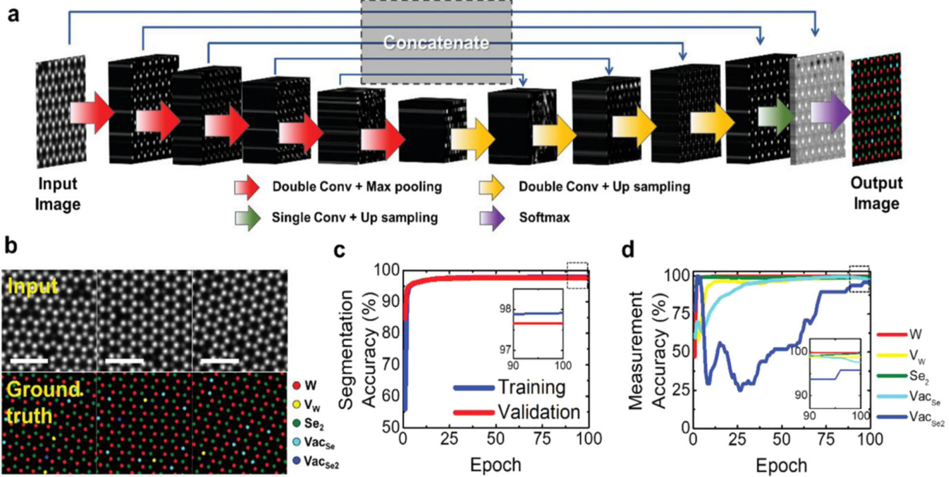
“[276] used U-net architecture (as shown in Fig.”
MethodTimoshenko, J., Halder, A., Yang, B., Seifert, S., Pellin, M. J., Vajda, Š., & Frenkel, A. I. (2018) · The Journal of Physical Chemistry C · doi:10.1021/acs.jpcc.8b07952 · Cited by 96 · cited 1×
“used neural networks to predict the coordination numbers of Pt [209] and Cu [210] in nanoclusters from the XANES.”
MethodKoh, K. M., Dong, F., & Tay, E. G. (2023) · WORLD SCIENTIFIC eBooks · doi:10.1142/13637 · Cited by 92
Qualitative Analysis of Monte Carlo DropoutPreprint
Seoh, R. (2020) · arXiv (Cornell University) · doi:10.48550/arxiv.2007.01720 · Cited by 91 · cited 1×
“When a similar randomization procedure is also applied to the prediction procedure, the methodology becomes Monte-Carlo dropout 291 .”
MethodRapid discovery of stable materials by coordinate-free coarse graining
Goodall, R. E. A., Parackal, A. S., Faber, F. A., Armiento, R., & Lee, A. A. (2022) · Science Advances · doi:10.1126/sciadv.abn4117 · Cited by 90
Monti, S., Sortino, S., Fasani, E., & Albini, A. (2001) · Chemistry · doi:10.1002/1521-3765(20010518)7:10<2185::aid-chem2185>3.0.co;2-u · Cited by 86
Microstructure Cluster Analysis with Transfer Learning and Unsupervised Learning
Kitahara, A. R., & Holm, E. A. (2018) · Integrating materials and manufacturing innovation · doi:10.1007/s40192-018-0116-9 · Cited by 86 · cited 1×
“surface defects and Inconnel fracture surfaces [287].”
Self-citationZheng, C., Chen, C., Chen, Y., & Ong, S. P. (2020) · Patterns · doi:10.1016/j.patter.2020.100013 · Cited by 86 · cited 1×
“environment labels from the XANES spectra directly [212].”
BackgroundSelf-citationMix-n-match: Ensemble and compositional methods for uncertainty calibration in deep learning
Zhang, J., Kailkhura, B., & Han, Y.-J. (2020) · Unpublished · doi:10.13140/rg.2.2.11390.13125 · Cited by 86
Data-driven discovery of 3D and 2D thermoelectric materials
Choudhary, K. K., Garrity, K. F., & Tavazza, F. (2020) · Journal of Physics Condensed Matter · doi:10.1088/1361-648x/aba06b · Cited by 85 · cited 1×
“There have been several previous attempts to represent crystals and molecules using fi xed-size descriptors such as Coulomb matrix 87 – 89 , classical force fi eld inspired descriptors (CFID) 90 – 92 , pair-distribution function (PRDF), Voronoi tessellation 93 – 95 .”
BackgroundSelf-citationSimilarity of Precursors in Solid-State Synthesis as Text-Mined from Scientific Literature
He, T., Sun, W., Huo, H., Kononova, O., Rong, Z., Tshitoyan, V., Botari, T., & Ceder, G. (2020) · Chemistry of Materials · doi:10.1021/acs.chemmater.0c02553 · Cited by 85 · cited 2×
“In the past few years, DL approaches such as LSTMs and transformer-based models have been employed to extract various categories of information [307], and in particular materials synthesis information [302, 308, 317] from text sources.”
MethodLiu, C.-H., Tao, Y., Hsu, D., Du, Q., & Billinge, S. J. L. (2019) · Acta Crystallographica Section A Foundations and Advances · doi:10.1107/s2053273319005606 · Cited by 84 · cited 5×
“DL has also been used to improve the analysis of electron backscatter diffraction (EBSD) data, with Liu et al. 218 presenting one of the fi rst DL-based solution for EBSD indexing capable of taking an EBSD image as input and predicting the three Euler angles representing the orientation that would have led to the given…”
BackgroundMethodInfluentialSelf-citationArtificial intelligence for search and discovery of quantum materials
Stanev, V., Choudhary, K. K., Kusne, A. G., Paglione, J., & Takeuchi, I. (2021) · Communications Materials · doi:10.1038/s43246-021-00209-z · Cited by 83
Self-citationDiversity oriented Deep Reinforcement Learning for targeted molecule generation
Pereira, T., Abbasi, M., Ribeiro, B., & Arrais, J. P. (2021) · Journal of Cheminformatics · doi:10.1186/s13321-021-00498-z · Cited by 82 · cited 1×
“Deep RL uses DL into the RL framework, allowing agents to make decisions from unstructured input data 79 .”
MethodEnabling deeper learning on big data for materials informatics applications
Jha, D., Gupta, V., Ward, L. T., Yang, Z., Wolverton, C., Foster, I. T., Liao, W., Choudhary, A., & Agrawal, A. (2021) · Scientific Reports · doi:10.1038/s41598-021-83193-1 · Cited by 82 · cited 3×
“IRNet models were tested on a variety of big and small materials datasets, such as OQMD, AFLOW, Materials Project, JARVIS, using different vector-based materials representations (element fractions, MagPie, structural) and were found to not only successfully alleviate the vanishing gradient problem and enable deeper le…”
BackgroundMethodSelf-citationPredictive analytics for crystalline materials: bulk modulus
Furmanchuk, A., Agrawal, A., & Choudhary, A. (2016) · RSC Advances · doi:10.1039/c6ra19284j · Cited by 81
Self-citationDong, H., Butler, K. T., Matras, D., Price, S. W. T., Odarchenko, Y. I., Khatry, R., Thompson, A., Middelkoop, V., Jacques, S. D. M., Beale, A. M., et al. (2021) · npj Computational Materials · doi:10.1038/s41524-021-00542-4 · Cited by 81 · cited 2×
“An alternative idea was proposed by Dong et al. 174 .”
MethodKusche, C. F., Reclik, T., Freund, M., Al‐Samman, T., Kerzel, U., & Korte‐Kerzel, S. (2019) · PLoS ONE · doi:10.1371/journal.pone.0216493 · Cited by 75 · cited 2×
“applied DL to localize defects in panoramic SEM images of dual-phase steel [237].”
MethodZeroCostDL4Mic: an open platform to use Deep-Learning in MicroscopyPreprint
von Chamier, L., Laine, R. F., Jukkala, J., Spahn, C. K., Krentzel, D., Nehme, E., Lerche, M., Hernández‐Pérez, S., Mattila, P. K., Karinou, E., et al. (2020) · bioRxiv (Cold Spring Harbor Laboratory) · doi:10.1101/2020.03.20.000133 · Cited by 75
Eppel, S., Xu, H., Bismuth, M., & Aspuru-Guzik, A. (2020) · ACS Central Science · doi:10.1021/acscentsci.0c00460 · Cited by 74 · cited 1×
“trained multiple models to detect chemicals, materials, and transparent vessels in a chemistry lab setting [284].”
MethodSavitzky, B. H., Zeltmann, S. E., Hughes, L. A., Brown, H. G., Zhao, S., Pelz, P., Pekin, T. C., Barnard, E. S., Donohue, J., Rangel DaCosta, L., et al. (2021) · eScholarship (California Digital Library) · Cited by 74
Community Detection with Graph Neural NetworksPreprint
Bruna, J., & Li, X. (2017) · arXiv (Cornell University) · Cited by 73
Modeling Relational Data with Graph Convolutional Networks
Schlichtkrull, M., Kipf, T., Bloem, P., van den Berg, R., Titov, I. S., & Welling, M. (2017) · arXiv (Cornell University) · doi:10.48550/arxiv.1703.06103 · Cited by 73
Deep learning for single-molecule science
Albrecht, T., Slabaugh, G., Alonso, E., & Al-Arif, S. M. R. (2017) · Nanotechnology · doi:10.1088/1361-6528/aa8334 · Cited by 72
DeepChemStable: Chemical Stability Prediction with an Attention-Based Graph Convolution Network
Li, X., Yan, X., Gu, Q., Zhou, H., Wu, D., & Xu, J. (2019) · Journal of Chemical Information and Modeling · doi:10.1021/acs.jcim.8b00672 · Cited by 72
Mendili, Y. E., Vaitkus, A., Merkys, A., Gražulis, S., Chateigner, D., Mathevet, F., Gascoin, S., Petit, S., Bardeau, J., Zanatta, M., et al. (2019) · Journal of Applied Crystallography · doi:10.1107/s1600576719004229 · Cited by 72 · cited 1×
“Collective efforts have been focusing on curating data extracted from different sources, as found in the RRUFF Raman, XRD and chemistry database [182], the open Raman database [187], and the SOP spectra library [192].”
MethodRajan, K. (2013) · Cited by 71
Text Mining Metal–Organic Framework Papers
Park, S., Kim, B., Choi, S., Boyd, P. G., Smit, B., & Kim, J. (2018) · Journal of Chemical Information and Modeling · doi:10.1021/acs.jcim.7b00608 · Cited by 69 · cited 1×
“Recently, software tools such as ChemDataExtractor [303] and other methods [312] based on more conventional machine learning and rule-based approaches have enabled automated or semi-automated extraction of data sets such as Curie and Néel magnetic phase transition temperatures [313], battery properties [314], UV-vis s…”
MethodHierarchical visualization of materials space with graph convolutional neural networks
Xie, T., & Grossman, J. C. (2018) · The Journal of Chemical Physics · doi:10.1063/1.5047803 · Cited by 69 · cited 1×
“used CGCNN model to screen stable perovskite materials [95] as well hierarchical visualization of materials space [132].”
MethodJha, D., Singh, S., Al-Bahrani, R., Liao, W., Choudhary, A., Graef, M. D., & Agrawal, A. (2018) · Microscopy and Microanalysis · doi:10.1017/s1431927618015131 · Cited by 68 · cited 3×
“Jha et al.(219) built upon that work to train a single DL model to predict the three Euler angles in simulated EBSD patterns of polycrystalline Ni while directly minimizing the misorientation angle between the true and predicted orientations.”
InfluentialSelf-citationAutomating crystal-structure phase mapping by combining deep learning with constraint reasoning
Chen, D., Bai, Y., Ament, S., Zhao, W., Guevarra, D., Zhou, L., Selman, B., van Dover, R. B., Gregoire, J. M., & Gomes, C. P. (2021) · Nature Machine Intelligence · doi:10.1038/s42256-021-00384-1 · Cited by 68
IRNet: A General Purpose Deep Residual Regression Framework for Materials Discovery
Jha, D., Ward, L. T., Yang, Z., Wolverton, C., Foster, I. T., Liao, W., Choudhary, A., & Agrawal, A. (2019) · ACM SIGKDD Conference on Knowledge Discovery and Data Mining (KDD) · doi:10.1145/3292500.3330703 · Cited by 67 · cited 3×
“com/NU-CUCIS/IRNet [162, 163] Roost https://github.”
BackgroundSelf-citationWang, Y., Gao, Z., & Zhou, J. (2018) · Physica E Low-dimensional Systems and Nanostructures · doi:10.1016/j.physe.2018.12.004 · Cited by 66
Addressing materials’ microstructure diversity using transfer learning
Goetz, A., Durmaz, A. R., Müller, M. J., Thomas, A., Britz, D., Kerfriden, P., & Eberl, C. (2022) · npj Computational Materials · doi:10.1038/s41524-022-00703-z · Cited by 65 · cited 1×
“Goetz et al. investigated the use of unsupervised domain adaptation as an alternative to simply fi ne-tuning a pre-trained model 244 .”
MethodComputational scanning tunneling microscope image database
Choudhary, K. K., Garrity, K. F., Camp, C. H., Kalinin, S. V., Vasudevan, R. K., Ziatdinov, M. A., & Tavazza, F. (2021) · Scientific Data · doi:10.1038/s41597-021-00824-y · Cited by 63 · cited 4×
“DL has also been applied to classify symmetries in simulated STM measurements of 2D material systems [235].”
BackgroundMethodInfluentialSelf-citationPaul, A., Jha, D., Al-Bahrani, R., Liao, W., Choudhary, A., & Agrawal, A. (2018) · arXiv (Cornell University) · doi:10.48550/arxiv.1811.08283 · Cited by 61 · cited 1×
“com/NU-CUCIS/CheMixNet [176] SINet https://github.”
Self-citationDesign‐to‐Device Approach Affords Panchromatic Co‐Sensitized Solar Cells
Cooper, C. B., Beard, E. J., Vázquez‐Mayagoitia, Á., Stan, L., Stenning, G. B. G., Nye, D. W., Vigil, J. A., Tomar, T., Jia, J., Bodedla, G. B., et al. (2019) · Advanced Energy Materials · doi:10.1002/aenm.201802820 · Cited by 61 · cited 2×
“Similarly, Cooper et al.(276) demonstrated a “design to device approach” for designing dye-sensitized solar cells that are co-sensitized with two dyes(276).”
BackgroundA Deep Adversarial Learning Methodology for Designing Microstructural Material Systems
Li, X., Yang, Z., Brinson, L. C., Choudhary, A., Agrawal, A., & Chen, W. (2018) · Volume 2B: 44th Design Automation Conference · doi:10.1115/detc2018-85633 · Cited by 60 · cited 1×
“Yang and Li et al.(247,248) developed a GAN-based model for learning a low-dimensional embedding of microstructures, which could then be easily sampled and used with the generator of the GAN model to generate realistic, statistically similar microstructure images, thus enabling microstructural materials design.”
MethodSelf-citationAtomic-position independent descriptor for machine learning of material properties
Jain, A., & Bligaard, T. (2018) · Physical Review B · doi:10.1103/physrevb.98.214112 · Cited by 57 · cited 1×
“For example, Jain and Bligaard 127 proposed the atomic position-independent descriptors and used a CNN model to learn the energies of crystals.”
MethodSelf-citationPartial Scanning Transmission Electron Microscopy with Deep Learning
Ede, J. M., & Beanland, R. (2020) · Scientific Reports · doi:10.1038/s41598-020-65261-0 · Cited by 56 · cited 1×
“Ede and Beanland collected a dataset of STEM images of different samples 237 .”
Transformer-based artificial neural networks for the conversion between chemical notations
Krasnov, L. V., Khokhlov, I., Fedorov, M. V., & Sosnin, S. (2021) · Scientific Reports · doi:10.1038/s41598-021-94082-y · Cited by 56
Chemlistem: chemical named entity recognition using recurrent neural networks
Corbett, P. T., & Boyle, J. (2018) · Journal of Cheminformatics · doi:10.1186/s13321-018-0313-8 · Cited by 55 · cited 1×
“org/rscapplications/chemlistem/ [305] ChemSpot https://github.”
Machine‐Learning Spectral Indicators of Topology
Andrejevic, N., Andrejevic, J., Bernevig, B. A., Regnault, N., Han, F., Fabbris, G., Nguyen, T., Drucker, N. C., Rycroft, C. H., & Li, M. (2022) · Advanced Materials · doi:10.1002/adma.202204113 · Cited by 55 · cited 2×
“Similar approaches were also adopted by Torrisi et al. 184 In practical applications, Andrejevic et al. 185 used the XASDb data together with the topological materials database.”
MethodRapid 3D nanoscale coherent imaging via physics-aware deep learning
Chan, H., Nashed, Y. S. G., Kandel, S., Hruszkewycz, S. O., Sankaranarayanan, S. K. R. S., Harder, R., & Cherukara, M. J. (2021) · Applied Physics Reviews · doi:10.1063/5.0031486 · Cited by 54 · cited 1×
“Such implementations usually involve applying multiple physics-based constraints while training a DL model 81 – 83 .”
MethodDatabase of ab initio L-edge X-ray absorption near edge structure
Chen, Y., Chen, C., Zheng, C., Dwaraknath, S., Horton, M. K., Cabana, J., Rehr, J. J., Vinson, J., Dozier, A., Kas, J. J., et al. (2021) · Scientific Data · doi:10.1038/s41597-021-00936-5 · Cited by 53 · cited 16×
“For example, in an autonomous synthesis experiment the oxidation state of copper (and therefore the oxide phase) was varied in a sample of copper oxide by automatically fl owing more oxidizing or more reducing gas over the sample and monitoring the charge state of the copper using XANES.”
BackgroundInfluentialSelf-citationAguiar, J. A., Gong, M. L., & Taşdizen, T. (2019) · Computational Materials Science · doi:10.1016/j.commatsci.2019.109409 · Cited by 51 · cited 1×
“[205] took a step further and proposed a modular neural network architecture that enables the combination of diffraction patterns and chemistry data and provided a ranked list of predictions.”
BackgroundTraining-Free Uncertainty Estimation for Dense Regression: Sensitivity as a Surrogate
Lu, M., Wang, H., Tian, Y., He, H., & Shavit, N. (2022) · Proceedings of the AAAI Conference on Artificial Intelligence · doi:10.1609/aaai.v36i9.21243 · Cited by 51 · cited 1×
“An example of such an effort is the work of Mi et al.(286), where three scalable methods are explored, to evaluate the variance of output from trained NN, without requiring any amount of retraining.”
MethodChoudhary, K. K., Garrity, K. F., Ghimire, N., Anand, N., & Tavazza, F. (2021) · Physical review. B./Physical review. B · doi:10.1103/physrevb.103.155131 · Cited by 50
Self-citationKaundinya, P. R., Choudhary, K. K., & Kalidindi, S. R. (2022) · JOM · doi:10.1007/s11837-022-05199-y · Cited by 50 · cited 1×
“Similarly, Kaundinya et al. 204 used Atomistic Line Graph Neural Network (ALIGNN) to predict DOS for 56,000 materials in the JARVIS-DFT database using a direct discretized spectrum (D-ALIGNN), and a compressed low-dimensional representation using an autoencoder (AE-ALIGNN).”
MethodSelf-citationProperties of α-Brass Nanoparticles. 1. Neural Network Potential Energy Surface
Weinreich, J., Römer, A., Paleico, M. L., & Behler, J. (2020) · The Journal of Physical Chemistry C · doi:10.1021/acs.jpcc.0c00559 · Cited by 46
Maximizing Overall Diversity for Improved Uncertainty Estimates in Deep Ensembles
Jain, S., Liu, G., Mueller, J., & Gifford, D. (2020) · Proceedings of the AAAI Conference on Artificial Intelligence · doi:10.1609/aaai.v34i04.5849 · Cited by 45
Cohn, R., Anderson, I. E., Prost, T., Tiarks, J. A., White, E. M. H., & Holm, E. A. (2021) · JOM · doi:10.1007/s11837-021-04713-y · Cited by 43 · cited 2×
“com/rccohn/AMPIS [254] partial-STEM https://github.”
MethodSelf-citationYang, Z., Papanikolaou, S., Reid, A. C. E., Liao, W., Choudhary, A., Campbell, C. E., & Agrawal, A. (2020) · Scientific Reports · doi:10.1038/s41598-020-65157-z · Cited by 42 · cited 3×
“Recently, DL has also been to learn crystal plasticity using images of strain profiles as input [259, 260].”
BackgroundSelf-citationManifestation of the thermoelectric properties in Ge-based halide perovskites
Jong, U.-G., Yu, C., Kye, Y.-H., Hong, S., & Kim, H.-G. (2020) · Physical Review Materials · doi:10.1103/physrevmaterials.4.075403 · Cited by 42
Залога, А. Н., Вадимович, С. В., Bezrukovа, O. E., Dubinin, P. S., & Yakimov, I. S. (2020) · Materials Today Communications · doi:10.1016/j.mtcomm.2020.101662 · Cited by 42 · cited 1×
“[201] also used the ICSD database for XRD pattern generation and CNN models to classify crystals.”
MethodLearning Multiple Quantiles With Neural Networks
Moon, S. J., Jeon, J., Lee, J. S. H., & Kim, Y. (2021) · Journal of Computational and Graphical Statistics · doi:10.1080/10618600.2021.1909601 · Cited by 41
EM-net: Deep learning for electron microscopy image segmentation
Khadangi, A., Boudier, T., & Rajagopal, V. (2021) · Proceedings - International Conference on Pattern Recognition/Proceedings/International Conference on Pattern Recognition · doi:10.1109/icpr48806.2021.9413098 · Cited by 41
USID and Pycroscopy – Open Source Frameworks for Storing and Analyzing Imaging and Spectroscopy Data
Somnath, S., Smith, C. R., Laanait, N., Vasudevan, R. K., & Jesse, S. (2019) · Microscopy and Microanalysis · doi:10.1017/s1431927619001831 · Cited by 39 · cited 1×
“com/pycroscopy/pycroscopy [245] Prismatic https://github.”
Ziatdinov, M., Nelson, C. T., Zhang, X., Vasudevan, R. K., Eliseev, E., Morozovska, A. N., Takeuchi, I., & Kalinin, S. V. (2020) · npj Computational Materials · doi:10.1038/s41524-020-00396-2 · Cited by 39
Machine learning methods for quantitative analysis of Raman spectroscopy data
Madden, M. G., & Ryder, A. G. (2003) · Proceedings of SPIE, the International Society for Optical Engineering/Proceedings of SPIE · doi:10.1117/12.464039 · Cited by 38 · cited 1×
“[215] have used neural network models to predict the concentration of illicit materials in a mixture using the Raman spectra.”
MethodA Formation Energy Predictor for Crystalline Materials Using Ensemble Data Mining
Agrawal, A., Meredig, B., Wolverton, C. M., & Choudhary, A. (2016) · IEEE ... International Conference on Data Mining workshops · doi:10.1109/icdmw.2016.0183 · Cited by 38
Self-citationTransfer Learning Using Ensemble Neural Networks for Organic Solar Cell Screening
Paul, A., Jha, D., Al-Bahrani, R., Liao, W., Choudhary, A., & Agrawal, A. (2019) · International Joint Conference on Neural Networks (IJCNN) · doi:10.1109/ijcnn.2019.8852446 · Cited by 37
Self-citationConroy, J., Ryder, A. G., Léger, M. N., Hennessey, K., & Madden, M. G. (2005) · Proceedings of SPIE, the International Society for Optical Engineering/Proceedings of SPIE · doi:10.1117/12.605056 · Cited by 36 · cited 1×
“Interestingly, several groups have independently found that DL models outperform chemometrics analysis in vibrational spectroscopies [216, 217].”
BackgroundComputational Materials Design
Saito, T. (1999) · Springer series in materials science · doi:10.1007/978-3-662-03923-6 · Cited by 36
Geiger, M., Smidt, T., Alby, M., Miller, B., Boomsma, W., Dice, B., Lapchevskyi, K., Kotak, M., Tyszkiewicz, M., Uhrin, M., et al. (2020) · Zenodo (CERN European Organization for Nuclear Research) · doi:10.5281/zenodo.3724963 · Cited by 36
Deep Neural Network Enabled Space Group Identification in EBSD
Kaufmann, K., Zhu, C., Rosengarten, A. S., & Vecchio, K. S. (2020) · Microscopy and Microanalysis · doi:10.1017/s1431927620001506 · Cited by 35
Inverse design of crystal structures for multicomponent systems
Long, T., Zhang, Y., Fortunato, N. M., Shen, C., Dai, M., & Zhang, H. (2022) · Acta Materialia · doi:10.1016/j.actamat.2022.117898 · Cited by 35
Meyer, C., Dellby, N., Hachtel, J. A., Lovejoy, T. C., Mittelberger, A., & Krivanek, O. L. (2019) · Microscopy and Microanalysis · doi:10.1017/s143192761900134x · Cited by 33 · cited 1×
“com/nion-software/nionswift [251] EENCM https://github.”
Compact representations of microstructure images using triplet networks
Larmuseau, M., Sluydts, M., Theuwissen, K., Duprez, L., Dhaene, T., & Cottenier, S. (2020) · npj Computational Materials · doi:10.1038/s41524-020-00423-2 · Cited by 33
A cloud platform for atomic pair distribution function analysis: PDFitc
Yang, L., Culbertson, E., Thomas, N. K., Vuong, H., Kjær, E. T. S., Jensen, K. M. Ø., Tucker, M. G., & Billinge, S. J. L. (2020) · Acta Crystallographica Section A Foundations and Advances · doi:10.1107/s2053273320013066 · Cited by 33
Self-citationXue, L.-Y., Guo, F., Wen, Y., Feng, S., Huang, X., Guo, L., Li, H., Cui, S., Zhang, G., & Wang, Q. (2021) · Physical Chemistry Chemical Physics · doi:10.1039/d1cp01656c · Cited by 33
Selzer, P. M., Gasteiger, J., Thomas, H., & Salzer, R. (2000) · Chemistry - A European Journal · doi:10.1002/(sici)1521-3765(20000303)6:5<920::aid-chem920>3.0.co;2-w · Cited by 33
Materials discovery: Understanding polycrystals from large-scale electron patterns
Liu, R., Agrawal, A., Liao, W., Choudhary, A., & Graef, M. D. (2016) · IEEE International Conference on Big Data (BigData) · doi:10.1109/bigdata.2016.7840857 · Cited by 32
Self-citationVlček, L., Ziatdinov, M. A., Maksov, A., Tselev, A., Baddorf, A. P., Kalinin, S. V., & Vasudevan, R. K. (2019) · ACS Nano · doi:10.1021/acsnano.8b07980 · Cited by 32
Bang, K., Yeo, B. C., Kim, D.-H., Han, S. S., & Lee, H. M. (2021) · Scientific Reports · doi:10.1038/s41598-021-91068-8 · Cited by 32
Leveraging Uncertainty from Deep Learning for Trustworthy Material Discovery Workflows
Zhang, J., Kailkhura, B., & Han, T. Y.-J. (2021) · ACS Omega · doi:10.1021/acsomega.1c00975 · Cited by 31 · cited 2×
“Zhang, Kailkhura, and Han’s work emphasizes how including a UQ-motivated reject option into the DL model results in substantial improvements in the performance of the remaining material data [333].”
BackgroundLiu, C.-H., Wright, C. J., Gu, R., Bandi, S., Wustrow, A., Todd, P. K., O’Nolan, D., Beauvais, M. L., Neilson, J. R., Chupas, P. J., et al. (2021) · Journal of Applied Crystallography · doi:10.1107/s160057672100265x · Cited by 31 · cited 1×
“As a result, it appears that the mathematical decomposition often results in interpretable, physically meaningful, components and weights, as shown by Liu et al. for PDF data 178 .”
BackgroundSelf-citationA Graph-to-Sequence Model for AMR-to-Text GenerationPreprint
Song, L., Zhang, Y., Wang, Z., et al. (2018) · arXiv (Cornell University) · doi:10.48550/arxiv.1805.02473 · Cited by 30
Haque, E. (2021) · ACS Applied Energy Materials · doi:10.1021/acsaem.0c03043 · Cited by 30
Automated Extraction of Chemical Synthesis Actions from Experimental ProceduresPreprint
Vaucher, A. C., Zipoli, F., Geluykens, J., et al. (2020) · ChemRxiv · doi:10.26434/chemrxiv.11448177.v2 · Cited by 30
Deep Learning for Physics Research
Erdmann, M., Glombitza, J., Kasieczka, G., & Klemradt, U. (2021) · WORLD SCIENTIFIC eBooks · doi:10.1142/12294 · Cited by 29 · cited 1×
“Recently DL methods have been outperforming other machine learning techniques in numerous scienti fi c fi elds, such as chemistry, physics, biology, and materials science 20,28 – 32 .”
MethodXue, N. (2010) · Natural Language Engineering · doi:10.1017/s1351324910000306 · Cited by 28
Low lattice thermal conductivity and excellent thermoelectric behavior in Li 3 Sb and Li 3 Bi
Yang, X., Dai, Z., Zhao, Y., Liu, J., & Meng, S. (2018) · Journal of Physics Condensed Matter · doi:10.1088/1361-648x/aade17 · Cited by 28 · cited 1×
“Since then, several of these predictions have been tested either computationally 277 – 282 or experimentally 283 as potential thermoelectrics.”
BackgroundThe Materials Research Platform: Defining the Requirements from User Stories
Aykol, M., Hummelshøj, J. S., Anapolsky, A., Aoyagi, K., Bazant, M. Z., Bligaard, T., Braatz, R. D., Broderick, S., Cogswell, D. A., Dagdelen, J. M., et al. (2019) · Matter · doi:10.1016/j.matt.2019.10.024 · Cited by 28
Self-citationYang, Z., Al-Bahrani, R., Reid, A. C. E., Papanikolaou, S., Kalidindi, S. R., Liao, W., Choudhary, A., & Agrawal, A. (2019) · International Joint Conference on Neural Networks (IJCNN) · doi:10.1109/ijcnn.2019.8852162 · Cited by 27 · cited 4×
“Recently, DL has also been to learn crystal plasticity using images of strain profiles as input [259, 260].”
BackgroundInfluentialSelf-citationThe Open Catalyst 2020 (OC20) Dataset and Community Challenges
Ulissi, Z. W. (2020) · doi:10.29363/nanoge.ecocat.2020.018 · Cited by 27
Machine Learning for Materials Scientists: An Introductory Guide Towards Best PracticesPreprint
Wang, A., Murdock, R., Kauwe, S., et al. (2020) · ChemRxiv · doi:10.26434/chemrxiv.12249752.v1 · Cited by 27
Direct Prediction of Phonon Density of States With Euclidean Neural Networks
Chen, Z., Andrejevic, N., Smidt, T., Ding, Z., Xu, Q., Chi, Y., Nguyen, Q. T., Alatas, A., Kong, J., & Li, M. (2021) · DSpace@MIT (Massachusetts Institute of Technology) · Cited by 26
DScribe: Library of descriptors for machine learning in materials science
Himanen, L. (2022) · doi:10.52843/cassyni.jv9n6f · Cited by 26
O’Connell, M.-L., Howley, T., Ryder, A. G., Léger, M. N., & Madden, M. G. (2005) · Proceedings of SPIE, the International Society for Optical Engineering/Proceedings of SPIE · doi:10.1117/12.605156 · Cited by 24 · cited 4×
“Hence, dimensional reduction strategies are commonly used to compress the information dimension using, for example, principal component analysis (PCA) 189,190 .”
MethodInfluentialRakita, Y., Hart, J. L., Das, P. P., Shahrezaei, S., Foley, D. L., Mathaudhu, S. N., Nicolopoulos, S., Taheri, M. L., & Billinge, S. J. L. (2022) · Acta Materialia · doi:10.1016/j.actamat.2022.118426 · Cited by 24
Self-citationWeston, L., Tshitoyan, V., Dagdelen, J. M., et al. (2019) · ChemRxiv · doi:10.26434/chemrxiv.8226068 · Cited by 23
Synthesis, optical imaging, and absorption spectroscopy data for 179072 metal oxides
Stein, H. S., Soedarmadji, E., Newhouse, P. F., Guevarra, D., & Gregoire, J. M. (2019) · Scientific Data · doi:10.1038/s41597-019-0019-4 · Cited by 22 · cited 1×
“[231] tried to learn the mapping between the image and the UV-vis spectrum of the material using the conditional variational encoder (cVAE) with neural network models as the backbone.”
MethodA Fatigue Strength Predictor for Steels Using Ensemble Data Mining
Agrawal, A., & Choudhary, A. (2016) · ACM International Conference on Information and Knowledge Management (CIKM) · doi:10.1145/2983323.2983343 · Cited by 20
Self-citationDeepFreak: Learning Crystallography Diffraction Patterns with Automated Machine LearningPreprint
Souza, A., Oliveira, L. B., Hollatz, S., Feldman, M., Olukotun, K., Holton, J. M., Cohen, A. E., & Nardi, L. (2019) · arXiv (Cornell University) · doi:10.48550/arxiv.1904.11834 · Cited by 20 · cited 1×
“com/arturluis/diffranet [242] Peregrine v2021-03 https://doi.”
An Introduction to Electrocatalyst Design using Machine Learning for Renewable Energy Storage
Zitnick, C. L., Chanussot, L., Das, A., Goyal, S., Heras‐Domingo, J., Ho, C., Hu, W., Lavril, T., Palizhati, A., Rivière, M., et al. (2020) · arXiv (Cornell University) · doi:10.48550/arxiv.2010.09435 · Cited by 20 · cited 1×
“DL is also heavily being used for predicting catalytic behavior of materials such as the Open Catalyst Project 109 which is driven by the DL methods materials design.”
MethodZiatdinov, M. A., Jesse, S., Sumpter, B. G., Kalinin, S. V., & Dyck, O. (2020) · Nanotechnology · doi:10.1088/1361-6528/abb8a6 · Cited by 19
Laugier, L., Bash, D., Recatala‐Gomez, J., Ng, H. K., Ramasamy, S., Foo, C.-S., Chandrasekhar, V., & Hippalgaonkar, K. (2018) · arXiv (Cornell University) · doi:10.48550/arxiv.1811.06219 · Cited by 17
Detection of defects in atomic-resolution images of materials using cycle analysis
Ovchinnikov, O., O’Hara, A., Jesse, S., Hudak, B. M., Yang, S., Lupini, A. R., Chisholm, M. F., Zhou, W., Kalinin, S. V., Borisevich, A. Y., et al. (2020) · Advanced Structural and Chemical Imaging · doi:10.1186/s40679-020-00070-x · Cited by 15
Phase-Transition-Enhanced Thermoelectric Transport in Rickardite Mineral Cu3–xTe2
Yahyaoglu, M., Özen, M., Prots', Y. M., Hamouli, O. E., Tshitoyan, V., Ji, H., Burkhardt, U., Lenoir, B., Snyder, G. J., Jain, A., et al. (2021) · Chemistry of Materials · doi:10.1021/acs.chemmater.0c04839 · Cited by 15
Self-citationYamamoto, K., Narita, G., Yamasaki, J., & Iikubo, S. (2020) · Journal of Physics and Chemistry of Solids · doi:10.1016/j.jpcs.2020.109372 · Cited by 14
Materials Image Informatics Using Deep Learning
Agrawal, A., Gopalakrishnan, K., & Choudhary, A. (2020) · WORLD SCIENTIFIC eBooks · doi:10.1142/9789811204555_0006 · Cited by 14
Self-citationPeak Area Detection Network for Directly Learning Phase Regions from Raw X-ray Diffraction Patterns
Jha, D., Kusne, A. G., Al-Bahrani, R., Van, N. N., Liao, W., Choudhary, A., & Agrawal, A. (2019) · International Joint Conference on Neural Networks (IJCNN) · doi:10.1109/ijcnn.2019.8852096 · Cited by 13 · cited 1×
“com/NU-CUCIS/PADNet-XRD [258] DKACNN https://github.”
Self-citationViennois, R., Koza, M. M., Debord, R., Toulemonde, P., Mutka, H., & Pailhes, S. M. (2020) · Physical review. B./Physical review. B · doi:10.1103/physrevb.101.224302 · Cited by 13
Martensite Start Temperature Predictor for Steels Using Ensemble Data Mining
Agrawal, A., Saboo, A., Xiong, W., Olson, G., & Choudhary, A. (2019) · IEEE International Conference on Data Science and Advanced Analytics (DSAA) · doi:10.1109/dsaa.2019.00067 · Cited by 12 · cited 1×
“…for building ML/DL models, beginning with a simple vector of raw elemental fractions 140,141 or of weight percentages of alloying compositions 142 – 145 , as well as more sophisticated hand-crafted descriptors or physical attributes to add known chemistry knowledge (e.g., electronegativity,…”
BackgroundSelf-citationRakita, Y., O’Nolan, D., McAuliffe, R. D., Veith, G. M., Chupas, P. J., Billinge, S. J. L., & Chapman, K. W. (2020) · Journal of the American Chemical Society · doi:10.1021/jacs.0c09418 · Cited by 12 · cited 1×
“An algorithmic decision policy was then used to automatically change the gas composition for a subsequent experiment based on the prior experiments, with no human in the loop, in such a way as to autonomously move towards a target copper oxidation state [352].”
MethodSelf-citationTayfuroğlu, Ö., Kocak, A., & Zorlu, Y. (2019) · Langmuir · doi:10.1021/acs.langmuir.9b03618 · Cited by 11
Kim, J., Tiong, L. C. O., Kim, D.-H., & Han, S. S. (2021) · The Journal of Physical Chemistry Letters · doi:10.1021/acs.jpclett.1c02305 · Cited by 11 · cited 1×
“com/ceright1/Prediction-material-property [252] DefectSegNet https://github.”
Accelerating Materials Discovery with Bayesian Optimization and Graph Deep LearningPreprint
Zuo, Y., Qin, M., Chen, C., et al. (2021) · arXiv (Cornell University) · doi:10.48550/arxiv.2104.10242 · Cited by 11 · cited 2×
“Alternatively, Zuo et al.(129) started from the hypothetical structures without precise atom positions, and used a Bayesian optimization method coupled with a MEGNet energy model as an energy evaluator to perform direct structural relaxation.”
MethodSelf-citationZeroCostDL4Mic: an open platform to simplify access and use of Deep-Learning in Microscopy
Niz, M. D. (2020) · doi:10.1242/prelights.17760 · Cited by 10 · cited 1×
“com/HenriquesLab/ZeroCostDL4Mic [256] EBSD-indexing https://github.”
Training-Free Uncertainty Estimation for Neural NetworksPreprint
Lu, M., Wang, H., Tian, Y., & Shavit, N. (2019) · arXiv (Cornell University) · Cited by 9
Yang, Z., Watari, T., Ichigozaki, D., Morohoshi, K., Suga, Y., Liao, W., Choudhary, A., & Agrawal, A. (2019) · IEEE ... International Conference on Data Mining workshops · doi:10.1109/icdmw.2019.00119 · Cited by 9 · cited 1×
“ImageNet-based deep transfer learning has also been successfully applied for crack detection in macroscale materials images 212,213 , as well as for property prediction on small, noisy, and heterogeneous industrial datasets 214,215 .”
BackgroundSelf-citationMachine learning spectral indicators of topologyPreprint
Andrejevic, N., Andrejevic, J., Bernevig, B. A., Regnault, N., Han, F., Fabbris, G., Nguyen, T., Drucker, N. C., Rycroft, C. H., & Li, M. (2020) · arXiv (Cornell University) · doi:10.48550/arxiv.2003.00994 · Cited by 9 · cited 2×
“Similar approaches were also adopted by Torrisi et al. 184 In practical applications, Andrejevic et al. 185 used the XASDb data together with the topological materials database.”
MethodResolution Enhancement in Scanning Electron Microscopy using Deep Learning
Haan, K. D., Ballard, Z. S., Rivenson, Y., Wu, Y., & Özcan, A. (2020) · Conference on Lasers and Electro-Optics · doi:10.1364/cleo_si.2020.sth1m.5 · Cited by 9
Kostka, T., Selzer, P. M., & Gasteiger, J. (2001) · Chemistry - A European Journal · doi:10.1002/1521-3765(20010518)7:10<2254::aid-chem2254>3.0.co;2-# · Cited by 9
DeepFrag-k: a fragment-based deep learning approach for protein fold recognition
Elhefnawy, W. R., Li, M., Wang, J., & Li, Y. (2020) · BMC Bioinformatics · doi:10.1186/s12859-020-3504-z · Cited by 8 · cited 1×
“com/yaohangli/DeepFragK/ [175] CheMixNet https://github.”
Cohn, R., & Holm, E. A. (2024) · Scientific Reports · doi:10.1038/s41598-024-81349-3 · Cited by 8 · cited 1×
“Similarly, Cohn and Holm present preliminary work applying GNNs to predict the occurrence of abnormal grain growth (AGG) in Monte Carlo simulations of microstructure evolution 253 .”
BackgroundSelf-citationAutonomous Scanning Probe Microscopy in-situ Tip Conditioning through Machine Learning
Rashidi, M., & Wolkow, R. A. (2018) · PubMed · doi:10.48550/arxiv.1803.07059 · Cited by 7
Using word embeddings in abstracts to accelerate metallocene catalysis polymerization research
Ho, D., Shkolnik, A. S., Ferraro, N. J., Rizkin, B. A., & Hartman, R. L. (2020) · Computers & Chemical Engineering · doi:10.1016/j.compchemeng.2020.107026 · Cited by 7 · cited 1×
“Recently, such approaches have also been applied to search for understudied areas of metallocene catalysis [329], although challenges still remain in such direct approaches to materials prediction.”
BackgroundRapid discovery of novel materials by coordinate-free coarse graining
Goodall, R. E. A., Parackal, A. S., Faber, F. A., et al. (2022) · Zenodo (CERN European Organization for Nuclear Research) · doi:10.5281/zenodo.6344995 · Cited by 7
Rapid discovery of stable materials by coordinate-free coarse graining
Goodall, R. E. A., Parackal, A. S., Faber, F. A., Armiento, R., & Lee, A. A. (2022) · Zenodo (CERN European Organization for Nuclear Research) · doi:10.5281/zenodo.6344994 · Cited by 7
Hegde, V. I., Borg, C. K. H., del Rosario, Z., Kim, Y., Hutchinson, M., Antono, E., Ling, J., Saxe, P. W., Saal, J. E., & Meredig, B. (2020) · arXiv (Cornell University) · Cited by 5
Yang, Z., Jha, D., Paul, A., Liao, W., Choudhary, A., & Agrawal, A. (2021) · arXiv (Cornell University) · doi:10.48550/arxiv.2101.10553 · Cited by 5 · cited 3×
“More DL applications in vibrational spectral analysis can be found in a recent review by Yang et al. 192 .”
BackgroundSelf-citationInverse design of crystal structures for multicomponent systemsPreprint
Long, T., Zhang, Y., Fortunato, N. M., et al. (2021) · arXiv (Cornell University) · doi:10.48550/arxiv.2104.08040 · Cited by 4
Scime, L., Joslin, C., Duncan, R., Brinkley, F. M., Ledford, C., Siddel, D., & Paquit, V. (2023) · OSTI OAI (U.S. Department of Energy Office of Scientific and Technical Information) · doi:10.13139/ornlnccs/1896716 · Cited by 3
Scime, L., Paquit, V., Joslin, C., Richardson, D., Goldsby, D., & Lowe, L. (2023) · OSTI OAI (U.S. Department of Energy Office of Scientific and Technical Information) · doi:10.13139/ornlnccs/1779073 · Cited by 3
Cohn, R., & Holm, E. A. (2021) · arXiv (Cornell University) · Cited by 2
Self-citationCohn, R., & Holm, E. A. (2021) · arXiv (Cornell University) · doi:10.48550/arxiv.2110.09326 · Cited by 2 · cited 1×
“Similarly, Cohn and Holm present preliminary work applying GNNs to predict the occurrence of abnormal grain growth (AGG) in Monte Carlo simulations of microstructure evolution 253 .”
BackgroundSelf-citationYang, Z., Watari, T., Ichigozaki, D., Mitsutoshi, A., Takahashi, H., Suga, Y., Liao, W., Choudhary, A., & Agrawal, A. (2021) · Lecture notes in computer science · doi:10.1007/978-3-030-68799-1_41 · Cited by 1
Self-citationGeiger, M., Smidt, T., Alby, M., et al. (2021) · Zenodo (CERN European Organization for Nuclear Research) · doi:10.5281/zenodo.5006322 · Cited by 1
Materials Representation and Transfer Learning for Multi-Property PredictionPreprint
Kong, S., Guevarra, D., Gomes, C. P., & Gregoire, J. M. (2021) · ChemRxiv · doi:10.26434/chemrxiv.14612307 · Cited by 1
Research works printed but not linked: 14
- 61. LeCun, Y. et al. The Handbook of Brain Theory and Neural Networks vol. 3361 (MIT press Cambridge, MA, USA 1995).
- 83. Onken, D. et al. A neural network approach for high-dimensional optimal control. arXiv. https://arxiv.org/abs/2104.03270 (2021). · arXiv
- 85. Chen, L., Zhang, W., Nie, Z., Li, S. & Pan, F. Generative models for inverse design of inorganic solid materials. J. Mater. Inform. 1, 4 (2021).
- 140. Liu, R. et al. Deep learning for chemical compound stability prediction. In Pro- ceedings of ACM SIGKDD workshop on large-scale deep learning for data mining (DL-KDD), 1-7. https://rosanneliu.com/publication/kdd/ (ACM SIGKDD, 2016).
- 179. Rakita, Y. et al. Studying heterogeneities in local nanostructure with scanning nanostructure electron microscopy (snem). arXiv https://arxiv.org/abs/ 2110.03589 (2021).
- 198. Kong, S. et al. Density of states prediction for materials discovery via contrastive learning from probabilistic embeddings. arXiv. https://arxiv.org/abs/2110.11444 (2021). · arXiv
- 206. Choudhary, A. et al. Graph neural network predictions of metal organic framework co2 adsorption properties. arXiv. https://arxiv.org/abs/2112.10231 (2021). · arXiv
- 282. Haque, E. Effect of electron-phonon scattering, pressure and alloying on the thermoelectric performance of tmcu _3 ch _4(tm= v, nb, ta; ch= s, se, te). arXiv. https://arxiv.org/abs/2010.08461 (2020). · arXiv
- 299. Hegde, P., Heinonen, M., Lähdesmäki, H. & Kaski, S. Deep learning with differ- ential gaussian process flows. arXiv. https://arxiv.org/abs/1810.04066 (2018). · arXiv
- 300. Wilson, A. G., Hu, Z., Salakhutdinov, R. & Xing, E. P. Deep kernel learning. in Artificial intelligence and statistics, 370-378 (PMLR, 2016).
- 314. Andersen, C. W. et al. Optimade: an api for exchanging materials data. arXiv. https://arxiv.org/abs/2103.02068 (2021). · arXiv
- 328. Artrith, N. & Urban, A. An implementation of artificial neural-network potentials for atomistic materials simulations: Performance for tio2. Comput. Mater. Sci. 114, 135-150 (2016). · DOI · Paper page
- 348. Fung, V., Hu, G., Ganesh, P. & Sumpter, B. G. Machine learned features from density of states for accurate adsorption energy prediction. Nat. Commun. 12, 1-11 (2021). · DOI · Paper page
- 357. Ede, J. M. & Beanland, R. Partial scanning transmission electron microscopy with deep learning. Sci. Rep. 10, 1-10 (2020). 358. 116. Somnath, S., Smith, C. R., Laanait, N., Vasudevan, R. K. & Jesse, S. Usid and pycroscopy-open source frameworks for storing and analyzing imaging and spectroscopy data. Microsc. Microanal. 25, 220-221 (2019). · DOI
Cited by
Structured information extraction from scientific text with large language models
Dagdelen, J., Dunn, A., Lee, S., Walker, N., Rosen, A. S., Ceder, G., Persson, K. A., & Jain, A. (2024) · Nature Communications · doi:10.1038/s41467-024-45563-x · Cited by 771
Self-citationA review of large language models and autonomous agents in chemistry
Ramos, M. C., Collison, C. J., & White, A. D. (2025) · Chemical Science · doi:10.1039/d4sc03921a · Cited by 274
Artificial Intelligence in Predicting Mechanical Properties of Composite Materials
Kibrete, F., Trzepieciński, T., Gebremedhen, H. S., & Woldemichael, D. E. (2023) · Journal of Composites Science · doi:10.3390/jcs7090364 · Cited by 249
Mersha, M., Lam, K., Wood, J., AlShami, A. K., & Kalita, J. (2024) · Neurocomputing · doi:10.1016/j.neucom.2024.128111 · Cited by 237
“This understanding is important to increasing trust, facilitating insights and discoveries, enabling validation and error analysis, and dealing with regulatory and ethical considerations in AI models [198].”
BackgroundScope of machine learning in materials research—A review
Mobarak, M. H., Mimona, M. A., Islam, M. A., Hossain, N., Zohura, F. T., Imtiaz, I., & Rimon, M. I. H. (2023) · Applied Surface Science Advances · doi:10.1016/j.apsadv.2023.100523 · Cited by 230
Metadata
- Authors
- Choudhary, K., DeCost, B., Chen, C., Jain, A., Tavazza, F., Cohn, R., Park, C. W., Choudhary, A., Agrawal, A., Billinge, S. J. L., Holm, E., Ong, S. P., & Wolverton, C.
- Affiliations
- National Institute of Standards and Technology (US)
- University of California San Diego (US)
- Lawrence Berkeley National Laboratory (US)
- Carnegie Mellon University (US)
- Northwestern University (US)
- Columbia University (US)
- ORCID
- Venue
- npj Computational Materials
- Published
- 2022-04-05
- Volume
- 8
- Issue
- 1
- ISSN
- 2057-3960 (ISSN-L)
- OpenAlex
- W3208687975
- Cited by
- 1,172
- References
- 401
- Citations by year
- 2026: 248 · 2025: 386 · 2024: 316 · 2023: 187 · 2022: 35
- FWCI
- 64.93
- Type
- journal article
- Language
- en
- Open access
- gold
- doi.org
- Licence
- cc-by
- creativecommons.org/licenses/by/4.0 (tdm)
- creativecommons.org/licenses/by/4.0 (vor)
- Locations
- npj Computational Materials (publishedVersion, cc-by)
- arXiv (Cornell University) (submittedVersion)
- eScholarship (California Digital Library) (submittedVersion, cc-by)
- OSTI OAI (U.S. Department of Energy Office of Scientific and Technical Information) (submittedVersion, cc-by)
- DOAJ (DOAJ: Directory of Open Access Journals) (submittedVersion)
- arXiv (Cornell University) (cc-by)
- Funders
- National Science Foundation (DEAC02-05CH11231, 2053929, 70NANB19H005, 1826218, 1922234)
- U.S. Department of Energy (-AC02-05CH11231, DE-AC02-05-CH11231: Materials Project program KC23MP, 70NANB19H005, KC23MP, DE AC02 05CH11231, DE-AC02-)
- U.S. Department of Commerce (70NANB19H005, 70NANB19H117)
- Northwestern University (70NANB19H005)
- University of Warwick
- National Institute of Standards and Technology (70NANB19H117, 70NANB19H005)
- Office of Science (DEAC02–05CH11231, DE-AC02, DE-AC02-05-CH11231: Materials Project Program KC23MP)
- Division of Civil, Mechanical and Manufacturing Innovation (CMMI-2053929)
- Basic Energy Sciences (DE-AC02, DE-AC02-05CH11231., KC23MP, DE-AC02-05-, AC02–05CH11231)
- Topics
- Physical Sciences › Materials Science › Materials Chemistry › Machine Learning in Materials Science
- Physical Sciences › Physics and Astronomy › Atomic and Molecular Physics, and Optics › Advanced Chemical Physics Studies
- Physical Sciences › Physics and Astronomy › Statistical and Nonlinear Physics › Model Reduction and Neural Networks
- Keywords
- deep learning, atomistic simulation, materials imaging, spectral analysis, natural language processing, synthetic data, generative models, uncertainty quantification, materials database, spectral data
About these checks
Registry, retraction, Cites and statistics results are computed, not judged, with one exception: a printed reference that no index lists is read once by a model before it counts as a citation error. Claims are extracted by a model and kept only when their quote appears verbatim in the text; each cited source is then checked, with a model’s help, for whether it says what the claim relies on. Those verdicts can be wrong — read the claim’s quote and the cited source before relying on one.
Statistics and arithmetic are recomputed, not judged.
Confidence bands are shown only for fields calibrated on our annotated test set. None is calibrated yet, so no band is shown.
What counts as a claim ›How we measure confidence ›How we check this ›
Are you an author, or do you see a problem with this page? Request a review
Data sources
Bibliographic data: Semantic Scholar, OpenAlex, Crossref.
Contains information from the Semantic Scholar Academic Graph Datasets, made available under the ODC Attribution License (ODC-BY 1.0).
Semantic Scholar’s data is described in: Kinney, R., et al. (2023). The Semantic Scholar Open Data Platform. arXiv:2301.10140.
