

Recent advances and applications of deep learning methods in materials science
Open accessThe DOI matches its Crossref record; 402 of the 402 references it cites were found in a registry or an index.
Abstract
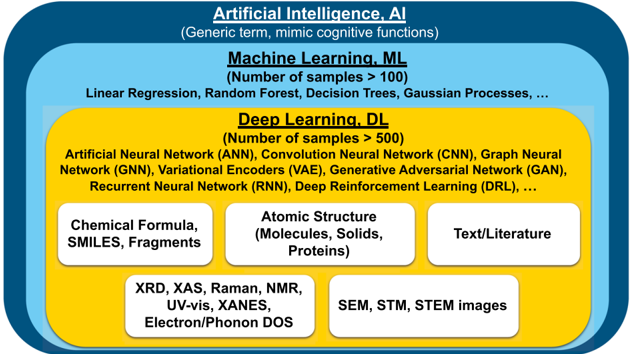
Deep learning (DL) is one of the fastest-growing topics in materials data science, with rapidly emerging applications spanning atomistic, image-based, spectral, and textual data modalities. DL allows analysis of unstructured data and automated identification of features. The recent development of large materials databases has fueled the application of DL methods in atomistic prediction in particular. In contrast, advances in image and spectral data have largely leveraged synthetic data enabled by high-quality forward models as well as by generative unsupervised DL methods. In this article, we present a high-level overview of deep learning methods followed by a detailed discussion of recent developments of deep learning in atomistic simulation, materials imaging, spectral analysis, and natural language processing. For each modality we discuss applications involving both theoretical and experimental data, typical modeling approaches with their strengths and limitations, and relevant publicly available software and datasets. We conclude the review with a discussion of recent cross-cutting work related to uncertainty quantification in this field and a brief perspective on limitations, challenges, and potential growth areas for DL methods in materials science.
Overview
The claims and statistics of this paper haven’t been checked yet.
Free: it reads the open-access text and checks the first 5 claims that cite a source we can check. Create a free account to check every claim.
Integrity signals
Registry
Cites
Statistics
Figures
Verification
Claims the paper makes
The claims and statistics of this paper haven’t been checked yet.
Free: it reads the open-access text and checks the first 5 claims that cite a source we can check. Create a free account to check every claim.
Self-check
Percentages, sums and reported differences re-computed from the paper’s own numbers.
The self-check needs the paper’s full text.
Citations
Cites
ImageNet classification with deep convolutional neural networks
Krizhevsky, A., Sutskever, I., & Hinton, G. E. (2017) · Communications of the ACM · doi:10.1145/3065386 · Cited by 112,155
LeCun, Y., Bengio, Y., & Hinton, G. (2015) · Nature · doi:10.1038/nature14539 · Cited by 84,126
BERT: Pre-training of Deep Bidirectional Transformers for Language Understanding
Devlin, J., Chang, M.-W., Lee, K., & Toutanova, K. (2018) · arXiv · doi:10.48550/arxiv.1810.04805 · Cited by 73,173 · cited 1×
“More recently, sequence-to-sequence models based on a “transformer” architecture, such as Google’s Bidirectional Encoder Representations from Transformers (BERT) model [53, 70], have helped address some of the issues of traditional RNNs.”
BERT: Pre-training of Deep Bidirectional Transformers for Language Understanding
Devlin, J., Chang, M.-W., Lee, K., & Toutanova, K. (2019) · Proceedings of the 2019 Conference of the North American Chapter of the Association for Computational Linguistics: Human Language Technologies, Volume 1 (Long and Short Papers) · doi:10.18653/v1/n19-1423 · Cited by 54,325 · cited 1×
“More recently, sequence-to-sequence models based on a “transformer” architecture, such as Google’s Bidirectional Encoder Representations from Transformers (BERT) model [53, 70], have helped address some of the issues of traditional RNNs.”
PyTorch: An Imperative Style, High-Performance Deep Learning Library
Paszke, A., Gross, S., Massa, F., Lerer, A., Bradbury, J., Chanan, G., Killeen, T., Lin, Z., Gimelshein, N., Antiga, L., et al. (2019) · arXiv · doi:10.48550/arxiv.1912.01703 · Cited by 31,473
Semi-supervised classification with graph convolutional networks
Kipf, T. N., & Welling, M. (2016) · arXiv · doi:10.48550/arxiv.1609.02907 · Cited by 24,853 · cited 6×
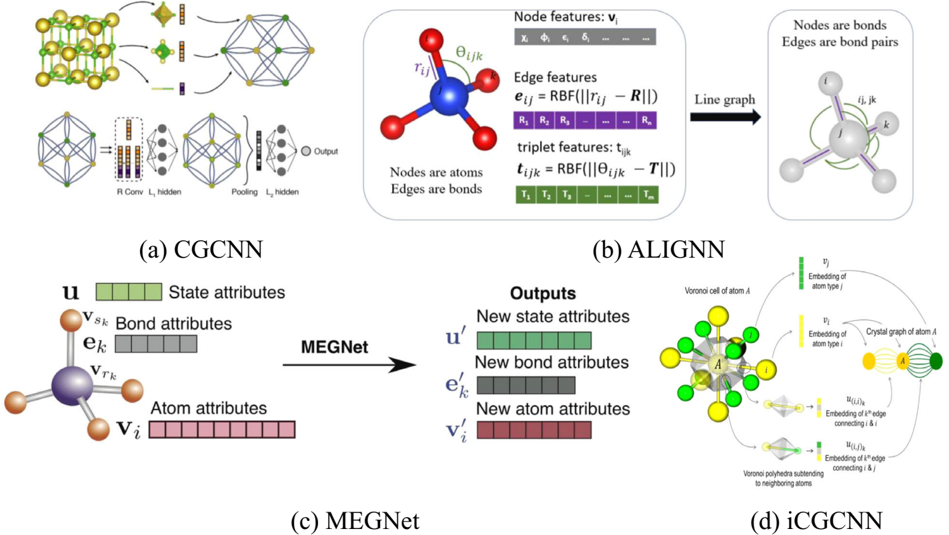
“Models such as SchNet, crystal graph convolutional neural network (CGCNN), improved crystal graph convolutional neural network (iCGCNN), directional message passing neural network (DimeNet), atomistic line graph neural network (ALIGNN) and materials graph neural network (MEGNet) shown in Table 1 have been used to pred…”
MethodInfluentialThe Elements of Statistical Learning
Hastie, T., Friedman, J., & Tibshirani, R. (2001) · Springer Series in Statistics · doi:10.1007/978-0-387-21606-5 · Cited by 24,162
A logical calculus of the ideas immanent in nervous activity
McCulloch, W. S., & Pitts, W. (1943) · The Bulletin of Mathematical Biophysics · doi:10.1007/bf02478259 · Cited by 18,566
The FAIR Guiding Principles for scientific data management and stewardship
Wilkinson, M. D., Dumontier, M., Aalbersberg, I. J., Appleton, G., Axton, M., Baak, A., Blomberg, N., Boiten, J.-W., da Silva Santos, L. B., Bourne, P. E., et al. (2016) · Scientific Data · doi:10.1038/sdata.2016.18 · Cited by 18,423 · cited 2×
“Through the Materials Genome Initiative (MGI) [3] and the increasing adoption of Findable, Accessible, Interoperable, Reusable (FAIR) [4] principles, several large experimental and computational datasets have been developed [5–12].”
Breiman, L. (1996) · Machine Learning · doi:10.1007/bf00058655 · Cited by 16,325 · cited 1×
“Similar to bagging 60 , the use of dropout brings about the same effect of training a collection of randomly chosen models which prevents the co-adaptations among the neurons, consequently reducing the likelihood of the model from over fi tting.”
BackgroundApproximation by superpositions of a sigmoidal function
Cybenko, G. (1989) · Mathematics of Control, Signals, and Systems · doi:10.1007/bf02551274 · Cited by 13,883
Commentary: The Materials Project: A materials genome approach to accelerating materials innovation
Jain, A., Ong, S. P., Hautier, G., Chen, W., Richards, W. D., Dacek, S., Cholia, S., Gunter, D., Skinner, D., Ceder, G., et al. (2013) · APL Materials · doi:10.1063/1.4812323 · Cited by 13,094
Self-citationThe perceptron: A probabilistic model for information storage and organization in the brain.
Rosenblatt, F. (1958) · Psychological Review · doi:10.1037/h0042519 · Cited by 12,280 · cited 1×
“Originally inspired by biological models of computation and cognition in the human brain [23, 24], one of DL’s major strengths is its potential to extract higher-level features from the raw input data.”
BackgroundVeličković, P., Cucurull, G., Casanova, A., Romero, A., Liò, P., & Bengio, Y. (2017) · arXiv · doi:10.48550/arxiv.1710.10903 · Cited by 12,107
TensorFlow: A system for large-scale machine learning
Abadi, M., Barham, P., Chen, J., Chen, Z., Davis, A., Dean, J., Devin, M., Ghemawat, S., Irving, G., Isard, M., et al. (2016) · arXiv (Cornell University) · doi:10.48550/arxiv.1605.08695 · Cited by 11,822
(2016) · Cited by 11,679
Veličković, P., Casanova, A., Liò, P., Cucurull, G., Romero, A., & Bengio, Y. (2017) · arXiv (Cornell University) · doi:10.17863/cam.48429 · Cited by 8,657
Re-epithelialization and immune cell behaviour in an ex vivo human skin model
Rakita, A., Nikolić, N., Mildner, M., Matiasek, J., & Elbe-Bürger, A. (2020) · Scientific Reports · doi:10.1038/s41598-019-56847-4 · Cited by 8,228
Dropout as a bayesian approximation: Representing model uncertainty in deep learning
Gal, Y., & Ghahramani, Z. (2015) · arXiv · doi:10.48550/arxiv.1506.02142 · Cited by 7,865 · cited 2×
“A common drawback of Bayesian methods is a prohibitive computational cost if dealing with large datasets 292 .”
MethodImproving neural networks by preventing co-adaptation of feature detectors
Hinton, G. E., Srivastava, N., Krizhevsky, A., Sutskever, I., & Salakhutdinov, R. R. (2012) · arXiv · doi:10.48550/arxiv.1207.0580 · Cited by 6,382 · cited 1×
“Another popular regularization is dropout 59 in which we randomly set the activations for an NN layer to zero during training.”
BackgroundHow Powerful are Graph Neural Networks?
Xu, K., Hu, W., Leskovec, J., & Jegelka, S. (2018) · arXiv · doi:10.48550/arxiv.1810.00826 · Cited by 6,078
Materials science and engineering: An introduction
Clayton, C. R. (1987) · Materials Science and Engineering · doi:10.1016/0025-5416(87)90343-0 · Cited by 5,925
Modeling Relational Data with Graph Convolutional Networks
Schlichtkrull, M., Kipf, T. N., Bloem, P., van den Berg, R., Titov, I., & Welling, M. (2018) · Lecture Notes in Computer Science · doi:10.1007/978-3-319-93417-4_38 · Cited by 5,570
Gaussian Processes in Machine Learning
Rasmussen, C. E. (2004) · Lecture Notes in Computer Science · doi:10.1007/978-3-540-28650-9_4 · Cited by 5,397
Materials Science and Engineering: An Introduction
Callister, W. D. (1985) · Cited by 5,351
Generalized Neural-Network Representation of High-Dimensional Potential-Energy Surfaces
Behler, J., & Parrinello, M. (2007) · Physical Review Letters · doi:10.1103/physrevlett.98.146401 · Cited by 5,010
Machine learning for molecular and materials science
Butler, K. T., Davies, D. W., Cartwright, H., Isayev, O., & Walsh, A. (2018) · Nature · doi:10.1038/s41586-018-0337-2 · Cited by 4,968 · cited 1×
“Although there are several good recent reviews of ML applications in MSE 15 – 17, 19 , 39 –”
BackgroundFields, J. (2001) · Cited by 4,160
Theoretical surface science and catalysis—calculations and concepts
Hammer, B., & Nørskov, J. K. (2000) · Advances in Catalysis · doi:10.1016/s0360-0564(02)45013-4 · Cited by 3,972 · cited 1×
“This approach extends the previous d-band theory [230], where only the d-band center, a scalar, was used to correlate with the adsorption energy on transition metals.”
BackgroundPerceptrons: An Introduction to Computational Geometry
Minsky, M., & Papert, S. A. (1969) · Cited by 3,764
Simple and Scalable Predictive Uncertainty Estimation using Deep Ensembles
Lakshminarayanan, B., Pritzel, A., & Blundell, C. (2016) · arXiv · doi:10.48550/arxiv.1612.01474 · Cited by 3,666 · cited 1×
“Deep ensemble methodologies 293 – 296 combine deep learning modelling with ensemble learning.”
BackgroundNeural Message Passing for Quantum Chemistry
Gilmer, J., Schoenholz, S. S., Riley, P. F., Vinyals, O., & Dahl, G. E. (2017) · arXiv (Cornell University) · doi:10.48550/arxiv.1704.01212 · Cited by 3,440 · cited 2×
“DL methods can be used to to establish structure-property relationship between atomic structure and their properties with high accuracy [28, 97].”
MethodPubChem 2019 update: improved access to chemical data
Kim, S., Chen, J., Cheng, T., Gindulyte, A., He, J., He, S., Li, Q., Shoemaker, B. A., Thiessen, P. A., Yu, B., et al. (2019) · Nucleic Acids Research · doi:10.1093/nar/gky1033 · Cited by 3,249
Formal Semantics for Kolmogorov-Arnold Network Representations of Operational Games
Zhukov, G. A. (2025) · Zenodo (CERN European Organization for Nuclear Research) · doi:10.5281/zenodo.15206559 · Cited by 3,212
A review of uncertainty quantification in deep learning: Techniques, applications and challenges
Abdar, M., Pourpanah, F., Hussain, S., Rezazadegan, D., Liu, L., Ghavamzadeh, M., Fieguth, P., Cao, X., Khosravi, A., Acharya, U. R., et al. (2021) · Information Fusion · doi:10.1016/j.inffus.2021.05.008 · Cited by 3,111 · cited 2×
“While most of the focus in the DL field currently goes into developing new algorithms or training networks to high accuracy, there is increasing attention to UQ, as exemplified by the detailed review of Abdar et al.(285).”
BackgroundMoleculeNet: a benchmark for molecular machine learning
Wu, Z., Ramsundar, B., Feinberg, E. N., Gomes, J., Geniesse, C., Pappu, A. S., Leswing, K., & Pande, V. (2018) · Chemical Science · doi:10.1039/c7sc02664a · Cited by 3,107 · cited 2×
“com/deepchem/deepchem [107] dgl-lifesci Prot https://github.”
Automatic Chemical Design Using a Data-Driven Continuous Representation of Molecules
Gómez-Bombarelli, R., Wei, J. N., Duvenaud, D., Hernández-Lobato, J. M., Sánchez-Lengeling, B., Sheberla, D., Aguilera-Iparraguirre, J., Hirzel, T. D., Adams, R. P., & Aspuru-Guzik, A. (2018) · ACS Central Science · doi:10.1021/acscentsci.7b00572 · Cited by 3,106 · cited 1×
“com/aspuru-guzik-group/chemical vae [173] CVAE https://github.”
Xie, T., & Grossman, J. C. (2018) · Physical Review Letters · doi:10.1103/physrevlett.120.145301 · Cited by 2,828 · cited 3×
“[95] Copyright 2019 American Physical Society], b) ALIGNN [93] model in which the convolution layer alternates between message passing on the bond graph and its bondangle line graph c) MEGNet in which the initial graph is represented by the set of atomic attributes, bond attributes and global state attributes [Reprint…”
BackgroundMethodConvolutional Networks on Graphs for Learning Molecular Fingerprints
Duvenaud, D., Maclaurin, D., Aguilera-Iparraguirre, J., Gómez-Bombarelli, R., Hirzel, T., Aspuru-Guzik, A., & Adams, R. P. (2015) · arXiv · doi:10.48550/arxiv.1509.09292 · Cited by 2,628 · cited 1×
“com/HIPS/neural-fingerprint [105] DeepChemSt.”
Recent advances and applications of machine learning in solid-state materials science
Schmidt, J., Marques, M. R. G., Botti, S., & Marques, M. A. L. (2019) · npj Computational Materials · doi:10.1038/s41524-019-0221-0 · Cited by 2,607 · cited 1×
“Testing and benchmarking methodologies such as under fi tting/over fi tting/cross-validation 15,16,37 are common knowledge, and standards for measuring model performance are well established in the community.”
MethodOn representing chemical environments
Bartók, A. P., Kondor, R., & Csányi, G. (2013) · Physical Review B · doi:10.1103/physrevb.87.184115 · Cited by 2,572
ZINC: A Free Tool to Discover Chemistry for Biology
Irwin, J. J., Sterling, T., Mysinger, M. M., Bolstad, E. S., & Coleman, R. G. (2012) · Journal of Chemical Information and Modeling · doi:10.1021/ci3001277 · Cited by 2,509 · cited 2×
“Some of the common SMILES datasets are: ZINC [145], Tox21 [146] and PubChem [147].”
MethodThe Open Quantum Materials Database (OQMD): assessing the accuracy of DFT formation energies
Kirklin, S., Saal, J. E., Meredig, B., Thompson, A., Doak, J. W., Aykol, M., Rühl, S., & Wolverton, C. (2015) · npj Computational Materials · doi:10.1038/npjcompumats.2015.10 · Cited by 2,378
Self-citationFast and Accurate Modeling of Molecular Atomization Energies with Machine Learning
Rupp, M., Tkatchenko, A., Müller, K.-R., & von Lilienfeld, O. A. (2012) · Physical Review Letters · doi:10.1103/physrevlett.108.058301 · Cited by 2,312 · cited 1×
“There have been several previous attempts to represent crystals and molecules using fi xed-size descriptors such as Coulomb matrix 87 – 89 , classical force fi eld inspired descriptors (CFID) 90 – 92 , pair-distribution function (PRDF), Voronoi tessellation 93 – 95 .”
BackgroundDeep Potential Molecular Dynamics: A Scalable Model with the Accuracy of Quantum Mechanics
Zhang, L., Han, J., Wang, H., Car, R., & E, W. (2018) · Physical Review Letters · doi:10.1103/physrevlett.120.143001 · Cited by 2,258 · cited 1×
“com/deepmodeling/deepmd-kit [101, 102] ænet Sol https://github.”
Ensemble deep learning: A review
Ganaie, M. A., Hu, M., Malik, A. K., Tanveer, M., & Suganthan, P. N. (2022) · Engineering Applications of Artificial Intelligence · doi:10.1016/j.engappai.2022.105151 · Cited by 2,143
Wang, H., Zhang, L., Han, J., & E, W. (2018) · Computer Physics Communications · doi:10.1016/j.cpc.2018.03.016 · Cited by 2,138 · cited 2×
“Such FF models have been developed for molecular systems such as water, methane and other organic molecules [102, 112] as well as solids such as silicon [111], sodium [114], graphite [115] and titania (TiO2) [116].”
BackgroundAutomatic Differentiation in Machine Learning: a Survey
Baydin, A. G., Pearlmutter, B. A., Radul, A., & Siskind, J. M. (2015) · Maynooth University ePrints and eTheses Archive (Maynooth University) · Cited by 2,026
Quantum chemistry structures and properties of 134 kilo molecules
Ramakrishnan, R., Dral, P. O., Rupp, M., & von Lilienfeld, O. A. (2014) · Scientific Data · doi:10.1038/sdata.2014.22 · Cited by 1,966 · cited 2×
“[227] used a message passing neural network (MPNN) to predict the O and N K-edge XANES spectra from the molecular structures in the QM9 database [9].”
MethodANI-1: an extensible neural network potential with DFT accuracy at force field computational cost
Smith, J. S., Isayev, O., & Roitberg, A. E. (2017) · Chemical Science · doi:10.1039/c6sc05720a · Cited by 1,921 · cited 3×
“com/isayev/ANI1 dataset [80] MD17 1mil http://quantum-machine.”
MethodA general-purpose machine learning framework for predicting properties of inorganic materials
Ward, L., Agrawal, A., Choudhary, A., & Wolverton, C. (2016) · npj Computational Materials · doi:10.1038/npjcompumats.2016.28 · Cited by 1,831 · cited 1×
“One of the commonly used representations that have been shown to work for a variety of different use-cases is the materials agnostic platform for informatics and exploration (MagPie) 150 .”
BackgroundSelf-citationMXNet: A Flexible and Efficient Machine Learning Library for Heterogeneous Distributed Systems
Chen, T., Li, M., Li, Y., Lin, M., Wang, N., Wang, M., Xiao, T., Xu, B., Zhang, C., & Zhang, Z. (2015) · arXiv · doi:10.48550/arxiv.1512.01274 · Cited by 1,819
Crystallography Open Database – an open-access collection of crystal structures
Gražulis, S., Chateigner, D., Downs, R. T., Yokochi, A. F. T., Quirós, M., Lutterotti, L., Manakova, E., Butkus, J., Moeck, P., & Le Bail, A. (2009) · Journal of Applied Crystallography · doi:10.1107/s0021889809016690 · Cited by 1,816 · cited 1×
“net/cod/ [185] MP XRD 140k https://materialsproject.”
Automatic Chemical Design Using a Data-Driven Continuous Representation of Molecules.
Gómez‐Bombarelli, R., Wei, J. N., Duvenaud, D., Hernández-Lobato, J. M., Sánchez-Lengeling, B., Sheberla, D., Aguilera‐Iparraguirre, J., Hirzel, T. D., Adams, R. P., & Aspuru‐Guzik, A. (2018) · Cambridge University Engineering Department Publications Database · doi:10.17863/cam.34134 · Cited by 1,703
Molecular graph convolutions: moving beyond fingerprints
Kearnes, S., McCloskey, K., Berndl, M., Pande, V., & Riley, P. (2016) · Journal of Computer-Aided Molecular Design · doi:10.1007/s10822-016-9938-8 · Cited by 1,631 · cited 2×
“DL methods can be used to to establish structure-property relationship between atomic structure and their properties with high accuracy [28, 97].”
MethodAtom-centered symmetry functions for constructing high-dimensional neural network potentials
Behler, J. (2011) · The Journal of Chemical Physics · doi:10.1063/1.3553717 · Cited by 1,610 · cited 1×
“The first application includes development of DL based force-fields (FF) [80, 110]/interatomic potentials.”
MethodGraph Networks as a Universal Machine Learning Framework for Molecules and Crystals
Chen, C., Ye, W., Zuo, Y., Zheng, C., & Ong, S. P. (2019) · Chemistry of Materials · doi:10.1021/acs.chemmater.9b01294 · Cited by 1,552 · cited 2×
“com/materialsvirtuallab/megnet [33] DimeNet Mol https://github.”
BackgroundSelf-citationAFLOW: An automatic framework for high-throughput materials discovery
Curtarolo, S., Setyawan, W., Hart, G. L. W., Jahnatek, M., Chepulskii, R. V., Taylor, R. H., Wang, S., Xue, J., Yang, K., Levy, O., et al. (2012) · Computational Materials Science · doi:10.1016/j.commatsci.2012.02.005 · Cited by 1,531 · cited 1×
“org/ [8] QM9 134k http://quantum-machine.”
Agrawal, A., & Choudhary, A. (2016) · APL Materials · doi:10.1063/1.4946894 · Cited by 1,385
Self-citationBelsky, A., Hellenbrandt, M., Karen, V. L., & Luksch, P. (2002) · Acta Crystallographica Section B Structural Science · doi:10.1107/s0108768102006948 · Cited by 1,379
Molecular de-novo design through deep reinforcement learning
Olivecrona, M., Blaschke, T., Engkvist, O., & Chen, H. (2017) · Journal of Cheminformatics · doi:10.1186/s13321-017-0235-x · Cited by 1,324 · cited 1×
“There have also been several applications for identifying reasonable chemical space using DL methods such as autoenco-ders 111 and reinforcement learning 112 – 114 for inverse materials design.”
MethodAllenNLP: A Deep Semantic Natural Language Processing Platform
Gardner, M., Grus, J., Neumann, M., Tafjord, O., Dasigi, P., Liu, N. F., Peters, M., Schmitz, M., & Zettlemoyer, L. (2018) · Proceedings of Workshop for NLP Open Source Software (NLP-OSS) · doi:10.18653/v1/w18-2501 · Cited by 1,252
(2015) · doi:10.1515/9783110417104-003 · Cited by 1,242 · cited 1×
“Collective efforts have been focusing on curating data extracted from different sources, as found in the RRUFF Raman, XRD and chemistry database [182], the open Raman database [187], and the SOP spectra library [192].”
MethodActivation Functions: Comparison of trends in Practice and Research for Deep Learning
Nwankpa, C. E., Ijomah, W., Gachagan, A., & Marshall, S. (2018) · arXiv (Cornell University) · doi:10.48550/arxiv.1811.03378 · Cited by 1,240 · cited 2×
“57 .”
BackgroundParameter-free calculations of X-ray spectra with FEFF9
Rehr, J. J., Kas, J. J., Vila, F. D., Prange, M. P., & Jorissen, K. (2010) · Physical Chemistry Chemical Physics · doi:10.1039/b926434e · Cited by 1,216 · cited 1×
“The training XANES data were generated using the FEFF package [228].”
MethodMachine learning of accurate energy-conserving molecular force fields
Chmiela, S., Tkatchenko, A., Sauceda, H. E., Poltavsky, I., Schütt, K. T., & Müller, K.-R. (2017) · Science Advances · doi:10.1126/sciadv.1603015 · Cited by 1,175 · cited 1×
“org/datasets [81] Tox21 760k https://tox21.”
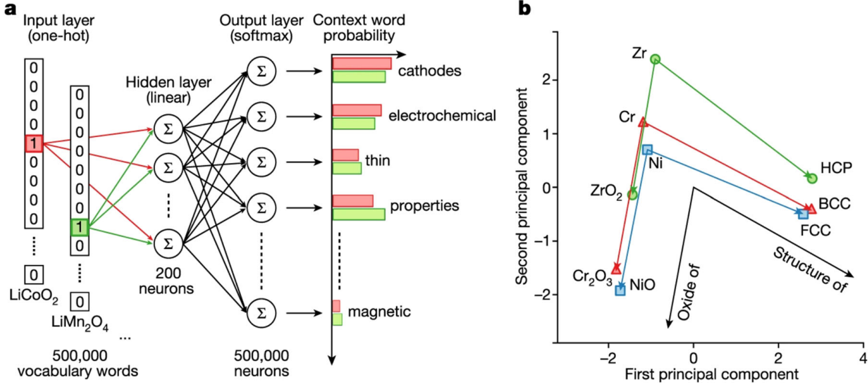
Unsupervised word embeddings capture latent knowledge from materials science literature
Tshitoyan, V., Dagdelen, J., Weston, L., Dunn, A., Rong, Z., Kononova, O., Persson, K. A., Ceder, G., & Jain, A. (2019) · Nature · doi:10.1038/s41586-019-1335-8 · Cited by 1,123 · cited 2×
“com/materialsintelligence/mat2vec [299] MaterialsParser https://github.”
BackgroundSelf-citationThe NIST Chemistry WebBook: A Chemical Data Resource on the Internet
Linstrom, P. J., & Mallard, W. G. (2001) · Journal of Chemical & Engineering Data · doi:10.1021/je000236i · Cited by 1,120 · cited 1×
“gov/chemistry/ [188] PDFitc XPD https://pdfitc.”
Graph Convolutional Policy Network for Goal-Directed Molecular Graph Generation
You, J., Liu, B., Ying, R., Pande, V., & Leskovec, J. (2018) · arXiv · doi:10.48550/arxiv.1806.02473 · Cited by 1,071
Matminer: An open source toolkit for materials data mining
Ward, L., Dunn, A., Faghaninia, A., Zimmermann, N. E. R., Bajaj, S., Wang, Q., Montoya, J., Chen, J., Bystrom, K., Dylla, M., et al. (2018) · Computational Materials Science · doi:10.1016/j.commatsci.2018.05.018 · Cited by 1,069 · cited 3×
“There have been libraries of such descriptors developed such as MatMiner [161] and DScribe [168].”
MethodSelf-citationMachine learning in materials science
Wei, J., Chu, X., Sun, X., Xu, K., Deng, H., Chen, J., Wei, Z., & Lei, M. (2019) · InfoMat · doi:10.1002/inf2.12028 · Cited by 1,069
The ToxCast Program for Prioritizing Toxicity Testing of Environmental Chemicals
Dix, D. J., Houck, K. A., Martin, M. T., Richard, A. M., Setzer, R. W., & Kavlock, R. J. (2007) · Toxicological Sciences · doi:10.1093/toxsci/kfl103 · Cited by 1,012 · cited 2×
“Some of the common SMILES datasets are: ZINC [145], Tox21 [146] and PubChem [147].”
MethodGopalakrishnan, K., Khaitan, S. K., Choudhary, A., & Agrawal, A. (2017) · Construction and Building Materials · doi:10.1016/j.conbuildmat.2017.09.110 · Cited by 955
Self-citationThe PDBbind database: methodologies and updates
Wang, R., Fang, X., Lu, Y., Yang, C.-Y., & Wang, S. (2005) · Journal of Medicinal Chemistry · doi:10.1021/jm048957q · Cited by 933
Wilson, R. J. (1972) · Cited by 926
Chung, Y. G., Haldoupis, E., Bucior, B. J., Haranczyk, M., Lee, S., Zhang, H., Vogiatzis, K. D., Milisavljevic, M., Ling, S., Camp, J. S., et al. (2019) · Journal of Chemical & Engineering Data · doi:10.1021/acs.jced.9b00835 · Cited by 863
GNINA 1.0: molecular docking with deep learning
McNutt, A. T., Francoeur, P., Aggarwal, R., Masuda, T., Meli, R., Ragoza, M., Sunseri, J., & Koes, D. R. (2021) · Journal of Cheminformatics · doi:10.1186/s13321-021-00522-2 · Cited by 861
From DFT to machine learning: recent approaches to materials science–a review
Schleder, G. R., Padilha, A. C. M., Acosta, C. M., Costa, M., & Fazzio, A. (2019) · Journal of Physics: Materials · doi:10.1088/2515-7639/ab084b · Cited by 852 · cited 1×
“Although there are several good recent reviews of ML applications in MSE 15 – 17, 19 , 39 –”
BackgroundGNNExplainer: Generating Explanations for Graph Neural Networks
Ying, R., Bourgeois, D., You, J., Zitnik, M., & Leskovec, J. (2019) · arXiv · doi:10.48550/arxiv.1903.03894 · Cited by 850
DScribe: Library of descriptors for machine learning in materials science
Himanen, L., Jäger, M. O. J., Morooka, E. V., Federici Canova, F., Ranawat, Y. S., Gao, D. Z., Rinke, P., & Foster, A. S. (2020) · Computer Physics Communications · doi:10.1016/j.cpc.2019.106949 · Cited by 845 · cited 3×
“There have been libraries of such descriptors developed such as MatMiner [161] and DScribe [168].”
MethodSelf-driving laboratory for accelerated discovery of thin-film materials
MacLeod, B. P., Parlane, F. G. L., Morrissey, T. D., Häse, F., Roch, L. M., Dettelbach, K. E., Moreira, R., Yunker, L. P. E., Rooney, M. B., Deeth, J. R., et al. (2020) · Science Advances · doi:10.1126/sciadv.aaz8867 · Cited by 809 · cited 1×
“Finally, we note an important technological challenge is to make a “closedloop” autonomous materials design and synthesis process [348, 349] that can include both machine learning and experimental components in a “self-driving laboratory” [350].”
BackgroundData‐Driven Materials Science: Status, Challenges, and Perspectives
Himanen, L., Geurts, A., Foster, A. S., & Rinke, P. (2019) · Advanced Science · doi:10.1002/advs.201900808 · Cited by 808
Choi, W.-M., Jo, Y. H., Sohn, S. S., Lee, S., & Lee, B.-J. (2018) · npj Computational Materials · doi:10.1038/s41524-017-0060-9 · Cited by 794
Open Catalyst 2020 (OC20) Dataset and Community Challenges
Chanussot, L., Das, A., Goyal, S., Lavril, T., Shuaibi, M., Riviere, M., Tran, K., Heras-Domingo, J., Ho, C., Hu, W., et al. (2021) · ACS Catalysis · doi:10.1021/acscatal.0c04525 · Cited by 765
Atomistic Line Graph Neural Network for improved materials property predictions
Choudhary, K., & DeCost, B. (2021) · npj Computational Materials · doi:10.1038/s41524-021-00650-1 · Cited by 758 · cited 8×
“Models such as SchNet, crystal graph convolutional neural network (CGCNN), improved crystal graph convolutional neural network (iCGCNN), directional message passing neural network (DimeNet), atomistic line graph neural network (ALIGNN) and materials graph neural network (MEGNet) shown in Table 1 have been used to pred…”
BackgroundMethodInfluentialSelf-citationSussman, J. L., Lin, D., Jiang, J., Manning, N. O., Prilusky, J., Ritter, O., & Abola, E. E. (1998) · Acta Crystallographica Section D Biological Crystallography · doi:10.1107/s0907444998009378 · Cited by 740
Combinatorial screening for new materials in unconstrained composition space with machine learning
Meredig, B., Agrawal, A., Kirklin, S., Saal, J. E., Doak, J. W., Thompson, A., Zhang, K., Choudhary, A., & Wolverton, C. (2014) · Physical Review B · doi:10.1103/physrevb.89.094104 · Cited by 730 · cited 1×
“…fractions 140,141 or of weight percentages of alloying compositions 142 – 145 , as well as more sophisticated hand-crafted descriptors or physical attributes to add known chemistry knowledge (e.g., electronegativity, valency, etc. of constituent elements) to the feature representations 146 – 151 .”
BackgroundSelf-citationJunction Tree Variational Autoencoder for Molecular Graph Generation
Jin, W., Barzilay, R., & Jaakkola, T. (2018) · arXiv (Cornell University) · doi:10.48550/arxiv.1802.04364 · Cited by 720 · cited 1×
“There have also been several applications for identifying reasonable chemical space using DL methods such as autoenco-ders 111 and reinforcement learning 112 – 114 for inverse materials design.”
MethodApproximation by superpositions of a sigmoidal function
Cybenko, G. (1992) · Mathematics of Control, Signals, and Systems · doi:10.1007/bf02134016 · Cited by 703
Towards exact molecular dynamics simulations with machine-learned force fields
Chmiela, S., Sauceda, H. E., Müller, K.-R., & Tkatchenko, A. (2018) · Nature Communications · doi:10.1038/s41467-018-06169-2 · Cited by 700 · cited 1×
“While the above works are mainly based on NNs, there have also been development of graph neural network force field (GNNFF) framework [117, 118] that bypasses both computational bottlenecks.”
BackgroundThe Inorganic Crystal Structure Database (ICSD)—Present and Future
Hellenbrandt, M. (2004) · Crystallography Reviews · doi:10.1080/08893110410001664882 · Cited by 684 · cited 1×
“[199] calculated 150000 XRD patterns from the Inorganic Crystal Structure Database (ICSD) structural database [200] and then used CNN models to predict structural information from the simulated XRD patterns.”
MethodDeep Graph Library: A Graph-Centric, Highly-Performant Package for Graph Neural Networks
Wang, M., Zheng, D., Ye, Z., Gan, Q., Li, M., Song, X. H., Zhou, J., Ma, C., Yu, L., Gai, Y. L., et al. (2019) · arXiv (Cornell University) · doi:10.48550/arxiv.1909.01315 · Cited by 666
Self-referencing embedded strings (SELFIES): A 100% robust molecular string representation
Krenn, M., Häse, F., Nigam, A., Friederich, P., & Aspuru-Guzik, A. (2020) · Machine Learning: Science and Technology · doi:10.1088/2632-2153/aba947 · Cited by 660
Universal fragment descriptors for predicting properties of inorganic crystals
Isayev, O., Oses, C., Toher, C., Gossett, E., Curtarolo, S., & Tropsha, A. (2017) · Nature Communications · doi:10.1038/ncomms15679 · Cited by 651
Prediction Errors of Molecular Machine Learning Models Lower than Hybrid DFT Error
Faber, F. A., Hutchison, L., Huang, B., Gilmer, J., Schoenholz, S. S., Dahl, G. E., Vinyals, O., Kearnes, S., Riley, P. F., & von Lilienfeld, O. A. (2017) · Journal of Chemical Theory and Computation · doi:10.1021/acs.jctc.7b00577 · Cited by 651 · cited 1×
“There have been several previous attempts to represent crystals and molecules using fi xed-size descriptors such as Coulomb matrix 87 – 89 , classical force fi eld inspired descriptors (CFID) 90 – 92 , pair-distribution function (PRDF), Voronoi tessellation 93 – 95 .”
BackgroundSelf-referencing embedded strings (SELFIES): A 100% robust molecular string representation
Krenn, M., Häse, F., Nigam, A., Friederich, P., & Aspuru‐Guzik, A. (2020) · Repository KITopen (Karlsruhe Institute of Technology) · doi:10.5445/ir/1000128111 · Cited by 618
A Critical Review of Machine Learning of Energy Materials
Chen, C., Zuo, Y., Ye, W., Li, X., Deng, Z., & Ong, S. P. (2020) · Advanced Energy Materials · doi:10.1002/aenm.201903242 · Cited by 609
Self-citationSwain, M. C., & Cole, J. M. (2016) · Journal of Chemical Information and Modeling · doi:10.1021/acs.jcim.6b00207 · Cited by 598 · cited 3×
“org [303] ChemicalTagger https://github.”
MethodNew frontiers for the materials genome initiative
de Pablo, J. J., Jackson, N. E., Webb, M. A., Chen, L.-Q., Moore, J. E., Morgan, D., Jacobs, R., Pollock, T., Schlom, D. G., Toberer, E. S., et al. (2019) · npj Computational Materials · doi:10.1038/s41524-019-0173-4 · Cited by 562
Lusci, A., Pollastri, G., & Baldi, P. (2013) · Journal of Chemical Information and Modeling · doi:10.1021/ci400187y · Cited by 555 · cited 1×
“DL for molecular materials have been used to predict technologically important properties such as aqueous solubility [135] and toxicity [136].”
MethodOpportunities and Challenges for Machine Learning in Materials Science
Morgan, D., & Jacobs, R. (2020) · Annual Review of Materials Research · doi:10.1146/annurev-matsci-070218-010015 · Cited by 549
Choudhary, K., Garrity, K. F., Reid, A. C. E., DeCost, B., Biacchi, A. J., Hight Walker, A. R., Trautt, Z., Hattrick-Simpers, J., Kusne, A. G., Centrone, A., et al. (2020) · npj Computational Materials · doi:10.1038/s41524-020-00440-1 · Cited by 541 · cited 2×
“gov/jarvisdft/ [5] MPContribs https://mpcontribs.”
Self-citationRosen, A. S., Iyer, S. M., Ray, D., Yao, Z., Aspuru-Guzik, A., Gagliardi, L., Notestein, J. M., & Snurr, R. Q. (2021) · Matter · doi:10.1016/j.matt.2021.02.015 · Cited by 538
Honnibal, M., Montani, I., Honnibal, M., Peters, H., Samsonov, M., Geovedi, J., Regan, J., Orosz, G., Kristiansen, S. L., R., et al. (2018) · Zenodo (CERN European Organization for Nuclear Research) · doi:10.5281/zenodo.1212303 · Cited by 536
Why Does Deep and Cheap Learning Work So Well?Preprint
Lin, H. W., Tegmark, M., & Rolnick, D. (2017) · DSpace@MIT (Massachusetts Institute of Technology) · Cited by 527
FreeSolv: a database of experimental and calculated hydration free energies, with input files
Mobley, D. L., & Guthrie, J. P. (2014) · Journal of Computer-Aided Molecular Design · doi:10.1007/s10822-014-9747-x · Cited by 517 · cited 1×
“com/MobleyLab/FreeSolv [86] NOMAD 11mil https://nomad-lab.”
Inverse design in search of materials with target functionalities
Zunger, A. (2018) · Nature Reviews Chemistry · doi:10.1038/s41570-018-0121 · Cited by 513 · cited 1×
“Physics-based deep learning can also aid in inverse design problems, a challenging but important task 84,85 .”
BackgroundElemNet: Deep Learning the Chemistry of Materials From Only Elemental Composition
Jha, D., Ward, L., Paul, A., Liao, W.-K., Choudhary, A., Wolverton, C., & Agrawal, A. (2018) · Scientific Reports · doi:10.1038/s41598-018-35934-y · Cited by 510 · cited 5×
“It is relevant to note that ElemNet 141 , which is a 17-layer neural network composed of fully connected layers and uses only raw elemental fractions as input, was found to signi fi cantly outperform traditional ML methods such as Random Forest, even when they were allowed to use more sophisticated physical attributes…”
BackgroundMethodInfluentialSelf-citationMachine Learning for Materials Scientists: An Introductory Guide toward Best Practices
Wang, A. Y.-T., Murdock, R. J., Kauwe, S. K., Oliynyk, A. O., Gurlo, A., Brgoch, J., Persson, K. A., & Sparks, T. D. (2020) · Chemistry of Materials · doi:10.1021/acs.chemmater.0c01907 · Cited by 509
Artrith, N., & Urban, A. (2016) · Computational Materials Science · doi:10.1016/j.commatsci.2015.11.047 · Cited by 508 · cited 1×
“Such FF models have been developed for molecular systems such as water, methane and other organic molecules [102, 112] as well as solids such as silicon [111], sodium [114], graphite [115] and titania (TiO2) [116].”
BackgroundDeep convolutional neural networks for Raman spectrum recognition: a unified solution
Liu, J., Osadchy, M., Ashton, L., Foster, M., Solomon, C. J., & Gibson, S. J. (2017) · The Analyst · doi:10.1039/c7an01371j · Cited by 507 · cited 5×
“DL has also been used to improve the analysis of electron backscatter diffraction (EBSD) data, with Liu et al. 218 presenting one of the fi rst DL-based solution for EBSD indexing capable of taking an EBSD image as input and predicting the three Euler angles representing the orientation that would have led to the given…”
MethodInfluentialBest practices in machine learning for chemistry
Artrith, N., Butler, K. T., Coudert, F.-X., Han, S., Isayev, O., Jain, A., & Walsh, A. (2021) · Nature Chemistry · doi:10.1038/s41557-021-00716-z · Cited by 505 · cited 1×
“Testing and benchmarking methodologies such as underfitting/overfitting/cross-validation [15, 16, 37] are common knowledge, and standards for measuring model performance are well established in the community.”
MethodSelf-citationKo, T. W., Finkler, J. A., Goedecker, S., & Behler, J. (2021) · Nature Communications · doi:10.1038/s41467-020-20427-2 · Cited by 503
The TensorMol-0.1 model chemistry: a neural network augmented with long-range physics
Yao, K., Herr, J. E., Toth, D. W., Mckintyre, R., & Parkhill, J. (2018) · Chemical Science · doi:10.1039/c7sc04934j · Cited by 481 · cited 1×
“com/jparkhill/TensorMol [99] PROPhet Sol https://github.”
Materials Synthesis Insights from Scientific Literature via Text Extraction and Machine Learning
Kim, E., Huang, K., Saunders, A., McCallum, A., Ceder, G., & Olivetti, E. (2017) · Chemistry of Materials · doi:10.1021/acs.chemmater.7b03500 · Cited by 473 · cited 1×
“Such data has been used to predict synthesis maps for titania nanotubes [310], various binary and ternary oxides [318], and perovskites [319].”
MethodConvolutional neural networks for vibrational spectroscopic data analysis
Acquarelli, J., van Laarhoven, T., Gerretzen, J., Tran, T. N., Buydens, L. M. C., & Marchiori, E. (2017) · Analytica Chimica Acta · doi:10.1016/j.aca.2016.12.010 · Cited by 472 · cited 1×
“Interestingly, several groups have independently found that DL models outperform chemometrics analysis in vibrational spectroscopies [216, 217].”
BackgroundPreservation and Storage Stability of Extracellular Vesicles for Therapeutic Applications
Jeyaram, A., & Jay, S. M. (2018) · The AAPS Journal · doi:10.1208/s12248-017-0160-y · Cited by 460
NOMAD: The FAIR concept for big data-driven materials science
Draxl, C., & Scheffler, M. (2018) · MRS Bulletin · doi:10.1557/mrs.2018.208 · Cited by 453 · cited 1×
“eu/prod/rae/gui/search [10] Open catalys projectP 1.”
Machine learning modeling of superconducting critical temperature
Stanev, V., Oses, C., Kusne, A. G., Rodriguez, E., Paglione, J., Curtarolo, S., & Takeuchi, I. (2018) · npj Computational Materials · doi:10.1038/s41524-018-0085-8 · Cited by 451 · cited 2×
“Such methods have been used for diverse DFT datasets mentioned above in Table 1 as well as experimental datasets such as SuperCon 155,156 for quick pre-screening applications.”
MethodMolGAN: An implicit generative model for small molecular graphs
De Cao, N., & Kipf, T. (2018) · arXiv · doi:10.48550/arxiv.1805.11973 · Cited by 442
SchNetPack: A Deep Learning Toolbox For Atomistic Systems
Schütt, K. T., Kessel, P., Gastegger, M., Nicoli, K. A., Tkatchenko, A., & Müller, K.-R. (2019) · Journal of Chemical Theory and Computation · doi:10.1021/acs.jctc.8b00908 · Cited by 433 · cited 1×
“com/atomistic-machine-learning [94] CGCNN Sol https://github.”
Molecular generative model based on conditional variational autoencoder for de novo molecular design
Lim, J., Ryu, S., Kim, J. W., & Kim, W. Y. (2018) · Journal of Cheminformatics · doi:10.1186/s13321-018-0286-7 · Cited by 421 · cited 1×
“com/jaechanglim/CVAE [143] DeepChem https://github.”
Ward, L., Liu, R., Krishna, A., Hegde, V. I., Agrawal, A., Choudhary, A., & Wolverton, C. (2017) · Physical Review B · doi:10.1103/physrevb.96.024104 · Cited by 412 · cited 1×
“There have been several previous attempts to represent crystals and molecules using fi xed-size descriptors such as Coulomb matrix 87 – 89 , classical force fi eld inspired descriptors (CFID) 90 – 92 , pair-distribution function (PRDF), Voronoi tessellation 93 – 95 .”
BackgroundSelf-citationGoodall, R. E. A., & Lee, A. A. (2020) · Nature Communications · doi:10.1038/s41467-020-19964-7 · Cited by 400 · cited 3×
“Further, graph-based methods such as Roost 154 have also been developed which can outperform many similar techniques.”
MethodInfluentialAutonomous experimentation systems for materials development: A community perspective
Stach, E., DeCost, B., Kusne, A. G., Hattrick-Simpers, J., Brown, K. A., Reyes, K. G., Schrier, J., Billinge, S., Buonassisi, T., Foster, I., et al. (2021) · Matter · doi:10.1016/j.matt.2021.06.036 · Cited by 398 · cited 1×
“For an overview of early proof of principle attempts see 306 .”
BackgroundSelf-citationCancerPPD: a database of anticancer peptides and proteins
Tyagi, A., Tuknait, A., Anand, P., Gupta, S., Sharma, M., Mathur, D., Joshi, A., Singh, S., Gautam, A., & Raghava, G. P. S. (2015) · Nucleic Acids Research · doi:10.1093/nar/gku892 · Cited by 397 · cited 1×
“A SMILES string is a simple gridlike (1-D grid) structure that can represent molecular sequences such as DNA, macromolecules/polymers, protein sequences also [140, 141].”
BackgroundMachine learning enabled autonomous microstructural characterization in 3D samples
Chan, H., Cherukara, M., Loeffler, T. D., Narayanan, B., & Sankaranarayanan, S. K. R. S. (2020) · npj Computational Materials · doi:10.1038/s41524-019-0267-z · Cited by 396
Materials Cloud, a platform for open computational science
Talirz, L., Kumbhar, S., Passaro, E., Yakutovich, A. V., Granata, V., Gargiulo, F., Borelli, M., Uhrin, M., Huber, S. P., Zoupanos, S., et al. (2020) · Scientific Data · doi:10.1038/s41597-020-00637-5 · Cited by 395 · cited 1×
“org/home#statistics [88] CoreMOF 163k https://mof.”
Why Does Deep and Cheap Learning Work So Well?
Lin, H. W., Tegmark, M., & Rolnick, D. (2017) · Journal of Statistical Physics · doi:10.1007/s10955-017-1836-5 · Cited by 393 · cited 1×
“However, it is important to note that the theorem doesn ’ t guarantee that the functions can be learnt easily 52 .”
BackgroundDeep Learning for Drug-Induced Liver Injury
Xu, Y., Dai, Z., Chen, F., Gao, S., Pei, J., & Lai, L. (2015) · Journal of Chemical Information and Modeling · doi:10.1021/acs.jcim.5b00238 · Cited by 382 · cited 1×
“DL for molecular materials have been used to predict technologically important properties such as aqueous solubility [135] and toxicity [136].”
MethodDirectional Message Passing for Molecular GraphsPreprint
Klicpera, J., Groß, J., & Günnemann, S. (2020) · arXiv (Cornell University) · Cited by 380
Inverse Design of Solid-State Materials via a Continuous Representation
Noh, J., Kim, J., Stein, H. S., Sanchez-Lengeling, B., Gregoire, J. M., Aspuru-Guzik, A., & Jung, Y. (2019) · Matter · doi:10.1016/j.matt.2019.08.017 · Cited by 379
Universal Approximation with Deep Narrow NetworksPreprint
Kidger, P., & Lyons, T. (2019) · arXiv (Cornell University) · doi:10.48550/arxiv.1905.08539 · Cited by 373 · cited 1×
“According to the “ universal approximation theorem ” 50,51 , neural networks can approximate any function to arbitrary accuracy.”
BackgroundReinforced Adversarial Neural Computer for de Novo Molecular Design
Putin, E., Asadulaev, A., Ivanenkov, Y., Aladinskiy, V., Sanchez-Lengeling, B., Aspuru-Guzik, A., & Zhavoronkov, A. (2018) · Journal of Chemical Information and Modeling · doi:10.1021/acs.jcim.7b00690 · Cited by 372 · cited 1×
“There have also been several applications for identifying reasonable chemical space using DL methods such as autoenco-ders 111 and reinforcement learning 112 – 114 for inverse materials design.”
MethodYang, Z., Yabansu, Y. C., Al-Bahrani, R., Liao, W.-K., Choudhary, A. N., Kalidindi, S. R., & Agrawal, A. (2018) · Computational Materials Science · doi:10.1016/j.commatsci.2018.05.014 · Cited by 365 · cited 2×
“com/NU-CUCIS/HomogenizationDL [261] LocalizationDL https://github.”
BackgroundSelf-citationAmp: A modular approach to machine learning in atomistic simulations
Khorshidi, A., & Peterson, A. A. (2016) · Computer Physics Communications · doi:10.1016/j.cpc.2016.05.010 · Cited by 360 · cited 1×
“org/andrewpeterson/amp [98] TensorMol Mol https://github.”
Determination of core structure periodicity and point defect density along dislocations
Koch, C. T. (2002) · Cited by 359
Jing, Y., Bian, Y., Hu, Z., Wang, L., & Xie, X.-Q. S. (2018) · The AAPS Journal · doi:10.1208/s12248-018-0210-0 · Cited by 351
Insightful classification of crystal structures using deep learning
Ziletti, A., Kumar, D., Scheffler, M., & Ghiringhelli, L. M. (2018) · Nature Communications · doi:10.1038/s41467-018-05169-6 · Cited by 347
Jha, D., Choudhary, K., Tavazza, F., Liao, W.-K., Choudhary, A., Campbell, C., & Agrawal, A. (2019) · Nature Communications · doi:10.1038/s41467-019-13297-w · Cited by 339 · cited 1×
“They have also been used for transfer learning across datasets for enhanced predictive accuracy on small data 34 , even for different source and target properties 157 , which is especially useful to build predictive models for target properties for which big source datasets may not be readily…”
Self-citationPhysically informed artificial neural networks for atomistic modeling of materials
Pun, G. P. P., Batra, R., Ramprasad, R., & Mishin, Y. (2019) · Nature Communications · doi:10.1038/s41467-019-10343-5 · Cited by 337 · cited 1×
“In addition to development of pure NN based FFs, there have also been recent developments of combining traditional FFs such as bondorder potentials with NNs and ReaxFF with message passing neural network (MPNN) that can help mitigate the NNs issue for extrapolation [119, 120].”
MethodMaterial structure-property linkages using three-dimensional convolutional neural networks
Cecen, A., Dai, H., Yabansu, Y. C., Kalidindi, S. R., & Song, L. (2018) · Acta Materialia · doi:10.1016/j.actamat.2017.11.053 · Cited by 336 · cited 1×
“, predicting the macroscale property of a material given its microstructure information [259, 261, 285], as well as for localization, i.”
BackgroundBenchmarking graph neural networks for materials chemistry
Fung, V., Zhang, J., Juarez, E., & Sumpter, B. G. (2021) · npj Computational Materials · doi:10.1038/s41524-021-00554-0 · Cited by 332
Oviedo, F., Ren, Z., Sun, S., Settens, C., Liu, Z., Hartono, N. T. P., Ramasamy, S., DeCost, B. L., Tian, S. I. P., Romano, G., et al. (2019) · npj Computational Materials · doi:10.1038/s41524-019-0196-x · Cited by 327
Self-citationBigSMILES: A Structurally-Based Line Notation for Describing Macromolecules
Lin, T.-S., Coley, C. W., Mochigase, H., Beech, H. K., Wang, W., Wang, Z., Woods, E., Craig, S. L., Johnson, J. A., Kalow, J. A., et al. (2019) · ACS Central Science · doi:10.1021/acscentsci.9b00476 · Cited by 322 · cited 1×
“A SMILES string is a simple gridlike (1-D grid) structure that can represent molecular sequences such as DNA, macromolecules/polymers, protein sequences also [140, 141].”
BackgroundMaterials Cloud, a platform for open computational science
Talirz, L., Kumbhar, S., Passaro, E., Yakutovich, A. V., Granata, V., Gargiulo, F., Borelli, M., Uhrin, M., Huber, S. P., Zoupanos, S., et al. (2020) · Repository for Publications and Research Data (ETH Zurich) · doi:10.3929/ethz-b-000440189 · Cited by 319
Supervised Community Detection with Line Graph Neural NetworksPreprint
Chen, Z., Li, X., & Bruna, J. (2017) · arXiv (Cornell University) · doi:10.48550/arxiv.1705.08415 · Cited by 312
Deep Ensembles: A Loss Landscape Perspective
Fort, S., Hu, H., & Lakshminarayanan, B. (2019) · arXiv (Cornell University) · doi:10.48550/arxiv.1912.02757 · Cited by 311
Weston, L., Tshitoyan, V., Dagdelen, J., Kononova, O., Trewartha, A., Persson, K. A., Ceder, G., & Jain, A. (2019) · Journal of Chemical Information and Modeling · doi:10.1021/acs.jcim.9b00470 · Cited by 307
Self-citationTimoshenko, J., Lu, D., Lin, Y., & Frenkel, A. I. (2017) · The Journal of Physical Chemistry Letters · doi:10.1021/acs.jpclett.7b02364 · Cited by 305 · cited 1×
“used neural networks to predict the coordination numbers of Pt [209] and Cu [210] in nanoclusters from the XANES.”
MethodData-driven materials research enabled by natural language processing and information extraction
Olivetti, E. A., Cole, J. M., Kim, E., Kononova, O., Ceder, G., Han, T. Y.-J., & Hiszpanski, A. M. (2020) · Applied Physics Reviews · doi:10.1063/5.0021106 · Cited by 302 · cited 2×
“As the domain is rapidly growing, we suggest dedicated reviews on this topic by Olivetti et al.(261) and Kononova et al.”
MethodDirectional Message Passing for Molecular Graphs
Gasteiger, J., Groß, J., & Günnemann, S. (2020) · arXiv (Cornell University) · doi:10.48550/arxiv.2003.03123 · Cited by 301
Deep learning for vibrational spectral analysis: Recent progress and a practical guide
Yang, J., Xu, J., Zhang, X., Wu, C., Lin, T., & Ying, Y. (2019) · Analytica Chimica Acta · doi:10.1016/j.aca.2019.06.012 · Cited by 299 · cited 1×
“[221] Although most current DL work focuses on the inverse problem, i.”
BackgroundData-driven modeling and learning in science and engineering
Montáns, F. J., Chinesta, F., Gómez-Bombarelli, R., & Kutz, J. N. (2019) · Comptes Rendus. Mécanique · doi:10.1016/j.crme.2019.11.009 · Cited by 299
Zhao, F., Bhanage, B. M., Shirai, M., & Arai, M. (2000) · Chemistry - A European Journal · doi:10.1002/(sici)1521-3765(20000303)6:5<869::aid-chem869>3.0.co;2-l · Cited by 295
Machine Learning in Materials Science: Recent Progress and Emerging Applications
Mueller, T., Kusne, A. G., & Ramprasad, R. (2016) · Reviews in Computational Chemistry · doi:10.1002/9781119148739.ch4 · Cited by 295
Deep materials informatics: Applications of deep learning in materials science
Agrawal, A., & Choudhary, A. (2019) · MRS Communications · doi:10.1557/mrc.2019.73 · Cited by 294 · cited 2×
“Such an outburst of data requires automated analysis which can be facilitated by machine learning (ML) techniques 13 – 20 .”
MethodSelf-citationBaker, N., Alexander, F., Bremer, T., Hagberg, A., Kevrekidis, Y., Najm, H., Parashar, M., Patra, A., Sethian, J., Wild, S., et al. (2019) · doi:10.2172/1478744 · Cited by 282
Park, C. W., & Wolverton, C. (2020) · Physical Review Materials · doi:10.1103/physrevmaterials.4.063801 · Cited by 281 · cited 2×
“[133] Copyright 2019 American Physical Society]”
Self-citationAgrawal, A., Deshpande, P. D., Cecen, A., Basavarsu, G. P., Choudhary, A. N., & Kalidindi, S. R. (2014) · Integrating Materials and Manufacturing Innovation · doi:10.1186/2193-9772-3-8 · Cited by 280 · cited 1×
“…for building ML/DL models, beginning with a simple vector of raw elemental fractions 140,141 or of weight percentages of alloying compositions 142 – 145 , as well as more sophisticated hand-crafted descriptors or physical attributes to add known chemistry knowledge (e.g., electronegativity,…”
BackgroundSelf-citationPhysically informed artificial neural networks for atomistic modeling of materials
Pun, G. P. P., Batra, R., Ramprasad, R., & Mishin, Y. M. (2019) · RePEc: Research Papers in Economics · Cited by 278
A critical examination of compound stability predictions from machine-learned formation energies
Bartel, C. J., Trewartha, A., Wang, Q., Dunn, A., Jain, A., & Ceder, G. (2020) · npj Computational Materials · doi:10.1038/s41524-020-00362-y · Cited by 277 · cited 2×
“It is thus not a surprise that chemical formula-based methods may not be adequate in some cases 159 .”
BackgroundSelf-citationPerceptrons: An Introduction to Computational Geometry
Minsky, M., & Papert, S. A. (2017) · The MIT Press eBooks · doi:10.7551/mitpress/11301.001.0001 · Cited by 271
ChemSpot: a hybrid system for chemical named entity recognition
Rocktäschel, T., Weidlich, M., & Leser, U. (2012) · Bioinformatics · doi:10.1093/bioinformatics/bts183 · Cited by 269 · cited 1×
“com/rockt/ChemSpot [306] LBNLP https://github.”
tmChem: a high performance approach for chemical named entity recognition and normalization
Leaman, R., Wei, C.-H., & Lu, Z. (2015) · Journal of Cheminformatics · doi:10.1186/1758-2946-7-s1-s3 · Cited by 268
Generative Adversarial Networks for Crystal Structure Prediction
Kim, S., Noh, J., Gu, G. H., Aspuru-Guzik, A., & Jung, Y. (2020) · ACS Central Science · doi:10.1021/acscentsci.0c00426 · Cited by 265
Meredig, B., Antono, E., Church, C., Hutchinson, M., Ling, J., Paradiso, S., Blaiszik, B., Foster, I., Gibbons, B., Hattrick-Simpers, J., et al. (2018) · Molecular Systems Design & Engineering · doi:10.1039/c8me00012c · Cited by 264 · cited 2×
“ML/DL models are prone to perform poorly on extrapolation 289 .”
BackgroundMethodThe abTEM code: transmission electron microscopy from first principles
Madsen, J., & Susi, T. (2021) · Open Research Europe · doi:10.12688/openreseurope.13015.1 · Cited by 264 · cited 1×
“com/jacobjma/abTEM [247] QSTEM https://github.”
Deep Learning Spectroscopy: Neural Networks for Molecular Excitation Spectra
Ghosh, K., Stuke, A., Todorović, M., Jørgensen, P. B., Schmidt, M. N., Vehtari, A., & Rinke, P. (2019) · Advanced Science · doi:10.1002/advs.201801367 · Cited by 262 · cited 1×
“This is most common in molecular science, where predicting the infrared spectra [222], molecular excitation spectra [223], is of particular interest.”
BackgroundCompositionally restricted attention-based network for materials property predictions
Wang, A. Y.-T., Kauwe, S. K., Murdock, R. J., & Sparks, T. D. (2021) · npj Computational Materials · doi:10.1038/s41524-021-00545-1 · Cited by 260 · cited 1×
“com/anthony-wang/CrabNet [170] CFID-Chem https://github.”
Text-mined dataset of inorganic materials synthesis recipes
Kononova, O., Huo, H., He, T., Rong, Z., Botari, T., Sun, W., Tshitoyan, V., & Ceder, G. (2019) · Scientific Data · doi:10.1038/s41597-019-0224-1 · Cited by 259 · cited 2×
“In the past few years, DL approaches such as LSTMs and transformer-based models have been employed to extract various categories of information [307], and in particular materials synthesis information [302, 308, 317] from text sources.”
MethodGraph convolutional neural networks with global attention for improved materials property prediction
Louis, S.-Y., Zhao, Y., Nasiri, A., Wang, X., Song, Y., Liu, F., & Hu, J. (2020) · Physical Chemistry Chemical Physics · doi:10.1039/d0cp01474e · Cited by 257
Machine learned features from density of states for accurate adsorption energy prediction
Fung, V., Hu, G., Ganesh, P., & Sumpter, B. G. (2021) · Nature Communications · doi:10.1038/s41467-020-20342-6 · Cited by 257 · cited 2×
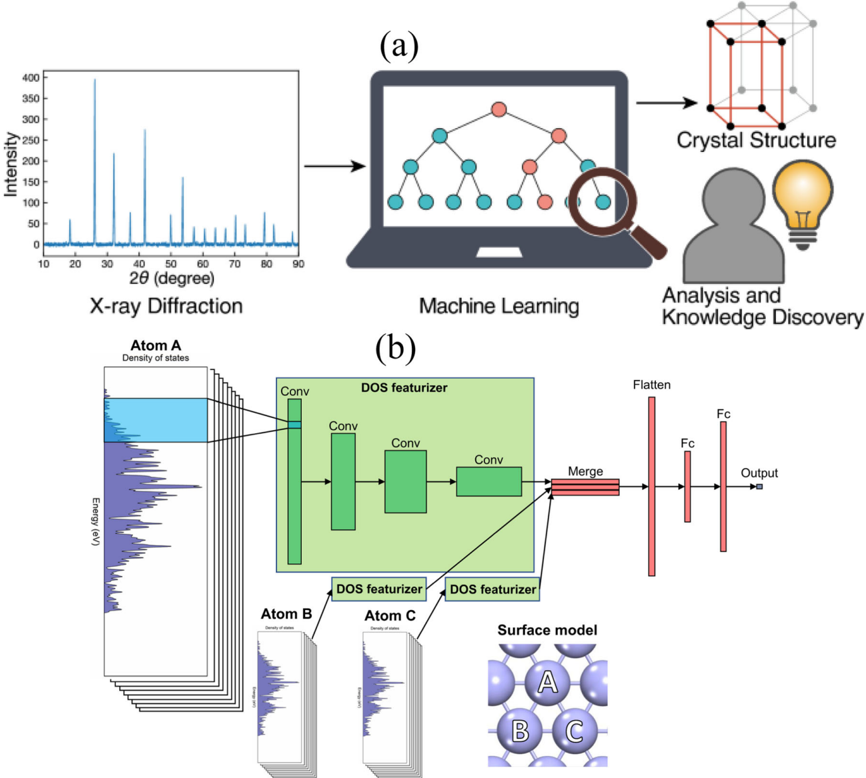
“[198] (Figure 3b) uses the electronic DOS spectra calculated from DFT as inputs to a CNN model to predict the adsorption energies of H, C, N, O, S and their hydrogenated counterparts, CH, CH2, CH3, NH, OH, and SH, on bimetallic alloy surfaces.”
MethodDiscovering Symbolic Models from Deep Learning with Inductive Biases
Cranmer, M., Sánchez‐González, Á., Battaglia, P., Xu, R., Cranmer, K. S., Spergel, D. N., & Ho, S. (2020) · arXiv (Cornell University) · doi:10.48550/arxiv.2006.11287 · Cited by 250
Overview: Computer Vision and Machine Learning for Microstructural Characterization and Analysis
Holm, E. A., Cohn, R., Gao, N., Kitahara, A. R., Matson, T. P., Lei, B., & Yarasi, S. R. (2020) · Metallurgical and Materials Transactions A · doi:10.1007/s11661-020-06008-4 · Cited by 249 · cited 2×
“Pixelwise DL has also been applied to automatically segment dislocations in Ni superalloys [234].”
BackgroundMethodSelf-citationClassification of crystal structure using a convolutional neural network
Park, W. B., Chung, J., Jung, J., Sohn, K., Singh, S. P., Pyo, M., Shin, N., & Sohn, K.-S. (2017) · IUCrJ · doi:10.1107/s205225251700714x · Cited by 245 · cited 3×
“Park et al. 169 calculated 150,000 XRD patterns from the Inorganic Crystal Structure Database (ICSD) structural database 170 and then used CNN models to predict structural information from the simulated XRD patterns.”
MethodMicrostructural Materials Design Via Deep Adversarial Learning Methodology
Yang, Z., Li, X., Catherine Brinson, L., Choudhary, A. N., Chen, W., & Agrawal, A. (2018) · Journal of Mechanical Design · doi:10.1115/1.4041371 · Cited by 235 · cited 2×
“[263, 289] developed a GAN-based model for learning a low-dimensional embedding of microstructures, which could then be easily sampled and used with the generator of the GAN model to generate realistic, statistically similar microstructure images, thus enabling microstructural materials design.”
MethodSelf-citationMachine learning in materials genome initiative: A review
Liu, Y., Niu, C., Wang, Z., Gan, Y., Zhu, Y., Sun, S., & Shen, T. (2020) · Journal of Materials Science & Technology · doi:10.1016/j.jmst.2020.01.067 · Cited by 231
TorchMD: A Deep Learning Framework for Molecular Simulations
Doerr, S., Majewski, M., Pérez, A., Krämer, A., Clementi, C., Noe, F., Giorgino, T., & De Fabritiis, G. (2021) · Journal of Chemical Theory and Computation · doi:10.1021/acs.jctc.0c01343 · Cited by 230
The US Federal Tox21 Program: A strategic and operational plan for continued leadership
Thomas, R. (2018) · ALTEX · doi:10.14573/altex.1803011 · Cited by 229 · cited 1×
“gov/resources/ [82] CCCBDB 2069 https://cccbdb.”
Fundamentals of Deep Learning: Designing Next-Generation Machine Intelligence Algorithms
Buduma, N., & Locascio, N. (2017) · Cited by 218
Modelling the inelastic scattering of fast electrons
Allen, L. J., D׳Alfonso, A. J., & Findlay, S. D. (2015) · Ultramicroscopy · doi:10.1016/j.ultramic.2014.10.011 · Cited by 217 · cited 2×
“com/HamishGBrown/MuSTEM [249] AICrystallographer https://github.”
A Graph-to-Sequence Model for AMR-to-Text Generation
Song, L., Zhang, Y., Wang, Z., & Gildea, D. (2018) · Proceedings of the 56th Annual Meeting of the Association for Computational Linguistics (Volume 1: Long Papers) · doi:10.18653/v1/p18-1150 · Cited by 216
Learning properties of ordered and disordered materials from multi-fidelity data
Chen, C., Zuo, Y., Ye, W., Li, X., & Ong, S. P. (2021) · Nature Computational Science · doi:10.1038/s43588-020-00002-x · Cited by 216
Self-citationHirohara, M., Saito, Y., Koda, Y., Sato, K., & Sakakibara, Y. (2018) · BMC Bioinformatics · doi:10.1186/s12859-018-2523-5 · Cited by 214 · cited 2×
“Due to the limitations to enforce the generation of valid molecular structures from SMILES, fragment-based models are developed such as DeepFrag and DeepFrag-K 138,139 .”
MethodOSCAR4: a flexible architecture for chemical text-mining
Jessop, D. M., Adams, S. E., Willighagen, E. L., Hawizy, L., & Murray-Rust, P. (2011) · Journal of Cheminformatics · doi:10.1186/1758-2946-3-41 · Cited by 213 · cited 1×
“com/BlueObelisk/oscar4 [309] Synthesis Project https://www.”
DeepSMILES: An Adaptation of SMILES for Use in Machine-Learning of Chemical Structures
O'Boyle, N., & Dalke, A. (2018) · ChemRxiv · doi:10.26434/chemrxiv.7097960.v1 · Cited by 213
DeCost, B. L., Lei, B., Francis, T., & Holm, E. A. (2019) · Microscopy and Microanalysis · doi:10.1017/s1431927618015635 · Cited by 212 · cited 3×
“net/11256/964 [240] SmBFO https://drive.”
MethodSelf-citationMATERIALS CHARACTERIZATION IN THE ABERRATION-CORRECTED SCANNING TRANSMISSION ELECTRON MICROSCOPE
Varela, M., Lupini, A. R., Benthem, K. V., Borisevich, A. Y., Chisholm, M. F., Shibata, N., Abe, E., & Pennycook, S. J. (2005) · Annual Review of Materials Research · doi:10.1146/annurev.matsci.35.102103.090513 · Cited by 211 · cited 5×
“Over the past few decades, atomic-scale imaging has become widespread and near-routine due to aberration-corrected STEM 209 .”
BackgroundInfluentialDGL-LifeSci: An Open-Source Toolkit for Deep Learning on Graphs in Life Science
Li, M., Zhou, J., Hu, J., Fan, W., Zhang, Y., Gu, Y., & Karypis, G. (2021) · ACS Omega · doi:10.1021/acsomega.1c04017 · Cited by 210 · cited 2×
“com/awslabs/dgl-lifesci [108] gnina Prot https://github.”
BackgroundDeep Dive into Machine Learning Models for Protein Engineering
Xu, Y., Verma, D., Sheridan, R. P., Liaw, A., Ma, J., Marshall, N. M., McIntosh, J., Sherer, E. C., Svetnik, V., & Johnston, J. M. (2020) · Journal of Chemical Information and Modeling · doi:10.1021/acs.jcim.0c00073 · Cited by 208
Madsen, J., Liu, P., Kling, J., Wagner, J. B., Hansen, T. W., Winther, O., & Schiøtz, J. (2018) · Advanced Theory and Simulations · doi:10.1002/adts.201800037 · Cited by 207 · cited 1×
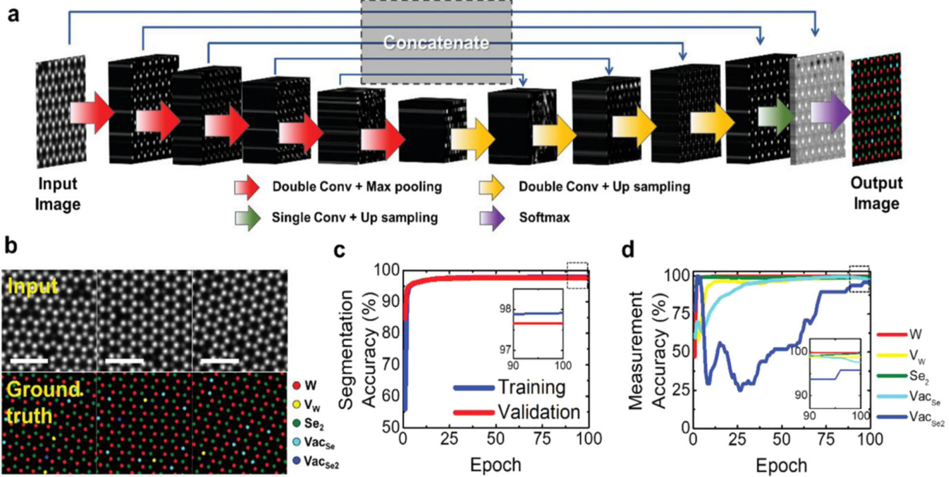
“applied pixelwise DL to detect atoms in simulated atomicresolution TEM images of graphene [274].”
MethodScime, L., Siddel, D., Baird, S., & Paquit, V. (2020) · Additive Manufacturing · doi:10.1016/j.addma.2020.101453 · Cited by 206
An open experimental database for exploring inorganic materials
Zakutayev, A., Wunder, N., Schwarting, M., Perkins, J. D., White, R., Munch, K., Tumas, W., & Phillips, C. (2018) · Scientific Data · doi:10.1038/sdata.2018.53 · Cited by 202 · cited 1×
“Such examples include the HTEM database [12] that contains 50000 optical absorption spectra, the UV-Vis database of 180000 samples from the Joint Center for Artificial Photosynthesis.”
Automated extraction of chemical synthesis actions from experimental procedures
Vaucher, A. C., Zipoli, F., Geluykens, J., Nair, V. H., Schwaller, P., & Laino, T. (2020) · Nature Communications · doi:10.1038/s41467-020-17266-6 · Cited by 202 · cited 1×
“In the past few years, DL approaches such as LSTMs and transformer-based models have been employed to extract various categories of information [307], and in particular materials synthesis information [302, 308, 317] from text sources.”
MethodLearning atoms for materials discovery
Zhou, Q., Tang, P., Liu, S., Pan, J., Yan, Q., & Zhang, S.-C. (2018) · Proceedings of the National Academy of Sciences · doi:10.1073/pnas.1801181115 · Cited by 200
Lee, J.-W., Park, W. B., Lee, J. H., Singh, S. P., & Sohn, K.-S. (2020) · Nature Communications · doi:10.1038/s41467-019-13749-3 · Cited by 199 · cited 2×
“Lee et al.(172) developed a CNN model for phase identification from samples consisting of a mixture of several phases in a limited chemical space relevant for battery materials.”
BackgroundGupta, V., Choudhary, K., Tavazza, F., Campbell, C., Liao, W.-K., Choudhary, A., & Agrawal, A. (2021) · Nature Communications · doi:10.1038/s41467-021-26921-5 · Cited by 198 · cited 1×
“They have also been used for transfer learning across datasets for enhanced predictive accuracy on small data [34], even for different source and target properties [167].”
MethodSelf-citationOverview: Computer Vision and Machine Learning for Microstructural Characterization and Analysis
Holm, E. A., Cohn, R., Gao, N., Kitahara, A. R., Matson, T. P., Lei, B., & Yarasi, S. R. (2020) · DSpace@MIT (Massachusetts Institute of Technology) · Cited by 196
Self-citationDeep learning analysis on microscopic imaging in materials science
Ge, M., Su, F., Zhao, Z., & Su, D. (2020) · Materials Today Nano · doi:10.1016/j.mtnano.2020.100087 · Cited by 195
Research works printed but not linked: 14
- 61. LeCun, Y. et al. The Handbook of Brain Theory and Neural Networks vol. 3361 (MIT press Cambridge, MA, USA 1995).
- 83. Onken, D. et al. A neural network approach for high-dimensional optimal control. arXiv. https://arxiv.org/abs/2104.03270 (2021). · arXiv
- 85. Chen, L., Zhang, W., Nie, Z., Li, S. & Pan, F. Generative models for inverse design of inorganic solid materials. J. Mater. Inform. 1, 4 (2021).
- 140. Liu, R. et al. Deep learning for chemical compound stability prediction. In Pro- ceedings of ACM SIGKDD workshop on large-scale deep learning for data mining (DL-KDD), 1-7. https://rosanneliu.com/publication/kdd/ (ACM SIGKDD, 2016).
- 179. Rakita, Y. et al. Studying heterogeneities in local nanostructure with scanning nanostructure electron microscopy (snem). arXiv https://arxiv.org/abs/ 2110.03589 (2021).
- 198. Kong, S. et al. Density of states prediction for materials discovery via contrastive learning from probabilistic embeddings. arXiv. https://arxiv.org/abs/2110.11444 (2021). · arXiv
- 206. Choudhary, A. et al. Graph neural network predictions of metal organic framework co2 adsorption properties. arXiv. https://arxiv.org/abs/2112.10231 (2021). · arXiv
- 282. Haque, E. Effect of electron-phonon scattering, pressure and alloying on the thermoelectric performance of tmcu _3 ch _4(tm= v, nb, ta; ch= s, se, te). arXiv. https://arxiv.org/abs/2010.08461 (2020). · arXiv
- 299. Hegde, P., Heinonen, M., Lähdesmäki, H. & Kaski, S. Deep learning with differ- ential gaussian process flows. arXiv. https://arxiv.org/abs/1810.04066 (2018). · arXiv
- 300. Wilson, A. G., Hu, Z., Salakhutdinov, R. & Xing, E. P. Deep kernel learning. in Artificial intelligence and statistics, 370-378 (PMLR, 2016).
- 314. Andersen, C. W. et al. Optimade: an api for exchanging materials data. arXiv. https://arxiv.org/abs/2103.02068 (2021). · arXiv
- 328. Artrith, N. & Urban, A. An implementation of artificial neural-network potentials for atomistic materials simulations: Performance for tio2. Comput. Mater. Sci. 114, 135-150 (2016). · DOI · Paper page
- 348. Fung, V., Hu, G., Ganesh, P. & Sumpter, B. G. Machine learned features from density of states for accurate adsorption energy prediction. Nat. Commun. 12, 1-11 (2021). · DOI · Paper page
- 357. Ede, J. M. & Beanland, R. Partial scanning transmission electron microscopy with deep learning. Sci. Rep. 10, 1-10 (2020). 358. 116. Somnath, S., Smith, C. R., Laanait, N., Vasudevan, R. K. & Jesse, S. Usid and pycroscopy-open source frameworks for storing and analyzing imaging and spectroscopy data. Microsc. Microanal. 25, 220-221 (2019). · DOI
Cited by
Structured information extraction from scientific text with large language models
Dagdelen, J., Dunn, A., Lee, S., Walker, N., Rosen, A. S., Ceder, G., Persson, K. A., & Jain, A. (2024) · Nature Communications · doi:10.1038/s41467-024-45563-x · Cited by 771
Self-citationA review of large language models and autonomous agents in chemistry
Ramos, M. C., Collison, C. J., & White, A. D. (2025) · Chemical Science · doi:10.1039/d4sc03921a · Cited by 274
Artificial Intelligence in Predicting Mechanical Properties of Composite Materials
Kibrete, F., Trzepieciński, T., Gebremedhen, H. S., & Woldemichael, D. E. (2023) · Journal of Composites Science · doi:10.3390/jcs7090364 · Cited by 249
Mersha, M., Lam, K., Wood, J., AlShami, A. K., & Kalita, J. (2024) · Neurocomputing · doi:10.1016/j.neucom.2024.128111 · Cited by 237
“This understanding is important to increasing trust, facilitating insights and discoveries, enabling validation and error analysis, and dealing with regulatory and ethical considerations in AI models [198].”
BackgroundScope of machine learning in materials research—A review
Mobarak, M. H., Mimona, M. A., Islam, M. A., Hossain, N., Zohura, F. T., Imtiaz, I., & Rimon, M. I. H. (2023) · Applied Surface Science Advances · doi:10.1016/j.apsadv.2023.100523 · Cited by 230
Metadata
- Authors
- Choudhary, K., DeCost, B., Chen, C., Jain, A., Tavazza, F., Cohn, R., Park, C. W., Choudhary, A., Agrawal, A., Billinge, S. J. L., Holm, E., Ong, S. P., & Wolverton, C.
- Affiliations
- National Institute of Standards and Technology (US)
- University of California San Diego (US)
- Lawrence Berkeley National Laboratory (US)
- Carnegie Mellon University (US)
- Northwestern University (US)
- Columbia University (US)
- ORCID
- Venue
- npj Computational Materials
- Published
- 2022-04-05
- Volume
- 8
- Issue
- 1
- ISSN
- 2057-3960 (ISSN-L)
- OpenAlex
- W3208687975
- Cited by
- 1,172
- References
- 401
- Citations by year
- 2026: 248 · 2025: 386 · 2024: 316 · 2023: 187 · 2022: 35
- FWCI
- 64.93
- Type
- journal article
- Language
- en
- Open access
- gold
- doi.org
- Licence
- cc-by
- creativecommons.org/licenses/by/4.0 (tdm)
- creativecommons.org/licenses/by/4.0 (vor)
- Locations
- npj Computational Materials (publishedVersion, cc-by)
- arXiv (Cornell University) (submittedVersion)
- eScholarship (California Digital Library) (submittedVersion, cc-by)
- OSTI OAI (U.S. Department of Energy Office of Scientific and Technical Information) (submittedVersion, cc-by)
- DOAJ (DOAJ: Directory of Open Access Journals) (submittedVersion)
- arXiv (Cornell University) (cc-by)
- Funders
- National Science Foundation (DEAC02-05CH11231, 2053929, 70NANB19H005, 1826218, 1922234)
- U.S. Department of Energy (-AC02-05CH11231, DE-AC02-05-CH11231: Materials Project program KC23MP, 70NANB19H005, KC23MP, DE AC02 05CH11231, DE-AC02-)
- U.S. Department of Commerce (70NANB19H005, 70NANB19H117)
- Northwestern University (70NANB19H005)
- University of Warwick
- National Institute of Standards and Technology (70NANB19H117, 70NANB19H005)
- Office of Science (DEAC02–05CH11231, DE-AC02, DE-AC02-05-CH11231: Materials Project Program KC23MP)
- Division of Civil, Mechanical and Manufacturing Innovation (CMMI-2053929)
- Basic Energy Sciences (DE-AC02, DE-AC02-05CH11231., KC23MP, DE-AC02-05-, AC02–05CH11231)
- Topics
- Physical Sciences › Materials Science › Materials Chemistry › Machine Learning in Materials Science
- Physical Sciences › Physics and Astronomy › Atomic and Molecular Physics, and Optics › Advanced Chemical Physics Studies
- Physical Sciences › Physics and Astronomy › Statistical and Nonlinear Physics › Model Reduction and Neural Networks
- Keywords
- deep learning, atomistic simulation, materials imaging, spectral analysis, natural language processing, synthetic data, generative models, uncertainty quantification, materials database, spectral data
About these checks
Registry, retraction, Cites and statistics results are computed, not judged, with one exception: a printed reference that no index lists is read once by a model before it counts as a citation error. Claims are extracted by a model and kept only when their quote appears verbatim in the text; each cited source is then checked, with a model’s help, for whether it says what the claim relies on. Those verdicts can be wrong — read the claim’s quote and the cited source before relying on one.
Statistics and arithmetic are recomputed, not judged.
Confidence bands are shown only for fields calibrated on our annotated test set. None is calibrated yet, so no band is shown.
What counts as a claim ›How we measure confidence ›How we check this ›
Are you an author, or do you see a problem with this page? Request a review
Data sources
Bibliographic data: Semantic Scholar, OpenAlex, Crossref.
Contains information from the Semantic Scholar Academic Graph Datasets, made available under the ODC Attribution License (ODC-BY 1.0).
Semantic Scholar’s data is described in: Kinney, R., et al. (2023). The Semantic Scholar Open Data Platform. arXiv:2301.10140.
