

Recent advances and applications of deep learning methods in materials science
Open accessThe DOI matches its Crossref record; 404 of the 404 references it cites were found in a registry or an index.
Abstract
Deep learning (DL) is one of the fastest-growing topics in materials data science, with rapidly emerging applications spanning atomistic, image-based, spectral, and textual data modalities. DL allows analysis of unstructured data and automated identification of features. The recent development of large materials databases has fueled the application of DL methods in atomistic prediction in particular. In contrast, advances in image and spectral data have largely leveraged synthetic data enabled by high-quality forward models as well as by generative unsupervised DL methods. In this article, we present a high-level overview of deep learning methods followed by a detailed discussion of recent developments of deep learning in atomistic simulation, materials imaging, spectral analysis, and natural language processing. For each modality we discuss applications involving both theoretical and experimental data, typical modeling approaches with their strengths and limitations, and relevant publicly available software and datasets. We conclude the review with a discussion of recent cross-cutting work related to uncertainty quantification in this field and a brief perspective on limitations, challenges, and potential growth areas for DL methods in materials science.
Overview
The claims and statistics of this paper haven’t been checked yet.
Free: it reads the open-access text and checks the first 5 claims that cite a source we can check. Create a free account to check every claim.
Integrity signals
Registry
Cites
Statistics
Figures
Verification
Claims the paper makes
The claims and statistics of this paper haven’t been checked yet.
Free: it reads the open-access text and checks the first 5 claims that cite a source we can check. Create a free account to check every claim.
Self-check
Percentages, sums and reported differences re-computed from the paper’s own numbers.
The self-check needs the paper’s full text.
Citations
Cites
ImageNet classification with deep convolutional neural networks
Krizhevsky, A., Sutskever, I., & Hinton, G. E. (2017) · Communications of the ACM · doi:10.1145/3065386 · Cited by 112,155
LeCun, Y., Bengio, Y., & Hinton, G. (2015) · Nature · doi:10.1038/nature14539 · Cited by 84,126
BERT: Pre-training of Deep Bidirectional Transformers for Language Understanding
Devlin, J., Chang, M.-W., Lee, K., & Toutanova, K. (2018) · arXiv · doi:10.48550/arxiv.1810.04805 · Cited by 73,173 · cited 1×
“More recently, sequence-to-sequence models based on a “transformer” architecture, such as Google’s Bidirectional Encoder Representations from Transformers (BERT) model [53, 70], have helped address some of the issues of traditional RNNs.”
BERT: Pre-training of Deep Bidirectional Transformers for Language Understanding
Devlin, J., Chang, M.-W., Lee, K., & Toutanova, K. (2019) · Proceedings of the 2019 Conference of the North American Chapter of the Association for Computational Linguistics: Human Language Technologies, Volume 1 (Long and Short Papers) · doi:10.18653/v1/n19-1423 · Cited by 54,325 · cited 1×
“More recently, sequence-to-sequence models based on a “transformer” architecture, such as Google’s Bidirectional Encoder Representations from Transformers (BERT) model [53, 70], have helped address some of the issues of traditional RNNs.”
PyTorch: An Imperative Style, High-Performance Deep Learning Library
Paszke, A., Gross, S., Massa, F., Lerer, A., Bradbury, J., Chanan, G., Killeen, T., Lin, Z., Gimelshein, N., Antiga, L., et al. (2019) · arXiv · doi:10.48550/arxiv.1912.01703 · Cited by 31,473
Semi-supervised classification with graph convolutional networks
Kipf, T. N., & Welling, M. (2016) · arXiv · doi:10.48550/arxiv.1609.02907 · Cited by 24,853 · cited 6×
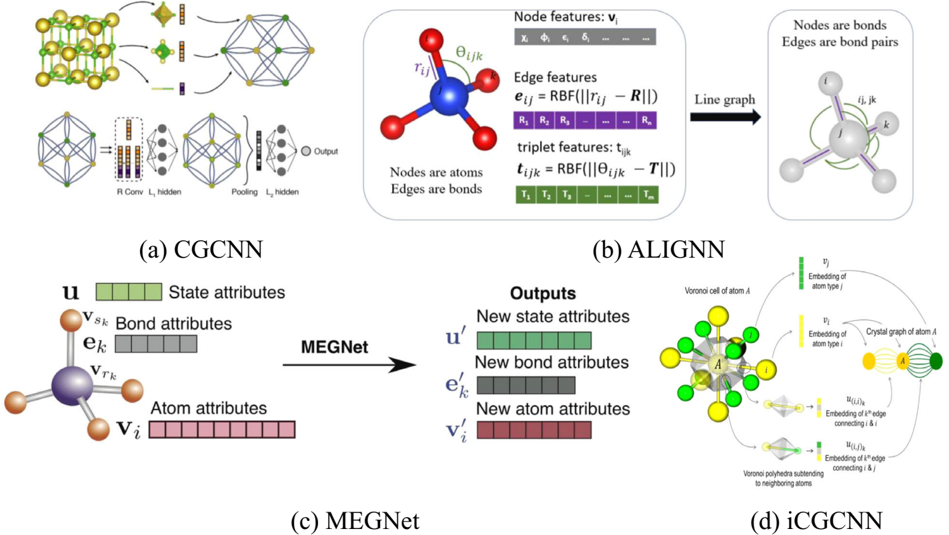
“Models such as SchNet, crystal graph convolutional neural network (CGCNN), improved crystal graph convolutional neural network (iCGCNN), directional message passing neural network (DimeNet), atomistic line graph neural network (ALIGNN) and materials graph neural network (MEGNet) shown in Table 1 have been used to pred…”
MethodInfluentialThe Elements of Statistical Learning
Hastie, T., Friedman, J., & Tibshirani, R. (2001) · Springer Series in Statistics · doi:10.1007/978-0-387-21606-5 · Cited by 24,162
A logical calculus of the ideas immanent in nervous activity
McCulloch, W. S., & Pitts, W. (1943) · The Bulletin of Mathematical Biophysics · doi:10.1007/bf02478259 · Cited by 18,566
The FAIR Guiding Principles for scientific data management and stewardship
Wilkinson, M. D., Dumontier, M., Aalbersberg, I. J., Appleton, G., Axton, M., Baak, A., Blomberg, N., Boiten, J.-W., da Silva Santos, L. B., Bourne, P. E., et al. (2016) · Scientific Data · doi:10.1038/sdata.2016.18 · Cited by 18,423 · cited 2×
“Through the Materials Genome Initiative (MGI) [3] and the increasing adoption of Findable, Accessible, Interoperable, Reusable (FAIR) [4] principles, several large experimental and computational datasets have been developed [5–12].”
Breiman, L. (1996) · Machine Learning · doi:10.1007/bf00058655 · Cited by 16,325 · cited 1×
“Similar to bagging 60 , the use of dropout brings about the same effect of training a collection of randomly chosen models which prevents the co-adaptations among the neurons, consequently reducing the likelihood of the model from over fi tting.”
Background
Research works printed but not linked: 12
- 61. LeCun, Y. et al. The Handbook of Brain Theory and Neural Networks vol. 3361 (MIT press Cambridge, MA, USA 1995).
- 83. Onken, D. et al. A neural network approach for high-dimensional optimal control. arXiv. https://arxiv.org/abs/2104.03270 (2021). · arXiv
- 85. Chen, L., Zhang, W., Nie, Z., Li, S. & Pan, F. Generative models for inverse design of inorganic solid materials. J. Mater. Inform. 1, 4 (2021).
- 104. Artrith, N. & Urban, A. An implementation of artificial neural-network potentials for atomistic materials simulations: Performance for tio2. Comput. Mater. Sci. 114, 135-150 (2016). · DOI · Paper page
- 140. Liu, R. et al. Deep learning for chemical compound stability prediction. In Pro- ceedings of ACM SIGKDD workshop on large-scale deep learning for data mining (DL-KDD), 1-7. https://rosanneliu.com/publication/kdd/ (ACM SIGKDD, 2016).
- 179. Rakita, Y. et al. Studying heterogeneities in local nanostructure with scanning nanostructure electron microscopy (snem). arXiv https://arxiv.org/abs/ 2110.03589 (2021).
- 198. Kong, S. et al. Density of states prediction for materials discovery via contrastive learning from probabilistic embeddings. arXiv. https://arxiv.org/abs/2110.11444 (2021). · arXiv
- 206. Choudhary, A. et al. Graph neural network predictions of metal organic framework co2 adsorption properties. arXiv. https://arxiv.org/abs/2112.10231 (2021). · arXiv
- 282. Haque, E. Effect of electron-phonon scattering, pressure and alloying on the thermoelectric performance of tmcu _3 ch _4(tm= v, nb, ta; ch= s, se, te). arXiv. https://arxiv.org/abs/2010.08461 (2020). · arXiv
- 300. Wilson, A. G., Hu, Z., Salakhutdinov, R. & Xing, E. P. Deep kernel learning. in Artificial intelligence and statistics, 370-378 (PMLR, 2016).
- 348. Fung, V., Hu, G., Ganesh, P. & Sumpter, B. G. Machine learned features from density of states for accurate adsorption energy prediction. Nat. Commun. 12, 1-11 (2021). · DOI · Paper page
- 357. Ede, J. M. & Beanland, R. Partial scanning transmission electron microscopy with deep learning. Sci. Rep. 10, 1-10 (2020). 358. 116. Somnath, S., Smith, C. R., Laanait, N., Vasudevan, R. K. & Jesse, S. Usid and pycroscopy-open source frameworks for storing and analyzing imaging and spectroscopy data. Microsc. Microanal. 25, 220-221 (2019). · DOI
Cited by
Structured information extraction from scientific text with large language models
Dagdelen, J., Dunn, A., Lee, S., Walker, N., Rosen, A. S., Ceder, G., Persson, K. A., & Jain, A. (2024) · Nature Communications · doi:10.1038/s41467-024-45563-x · Cited by 771
Self-citationA review of large language models and autonomous agents in chemistry
Ramos, M. C., Collison, C. J., & White, A. D. (2025) · Chemical Science · doi:10.1039/d4sc03921a · Cited by 274
Artificial Intelligence in Predicting Mechanical Properties of Composite Materials
Kibrete, F., Trzepieciński, T., Gebremedhen, H. S., & Woldemichael, D. E. (2023) · Journal of Composites Science · doi:10.3390/jcs7090364 · Cited by 249
Mersha, M., Lam, K., Wood, J., AlShami, A. K., & Kalita, J. (2024) · Neurocomputing · doi:10.1016/j.neucom.2024.128111 · Cited by 237
“This understanding is important to increasing trust, facilitating insights and discoveries, enabling validation and error analysis, and dealing with regulatory and ethical considerations in AI models [198].”
BackgroundScope of machine learning in materials research—A review
Mobarak, M. H., Mimona, M. A., Islam, M. A., Hossain, N., Zohura, F. T., Imtiaz, I., & Rimon, M. I. H. (2023) · Applied Surface Science Advances · doi:10.1016/j.apsadv.2023.100523 · Cited by 230
Jablonka, K. M., Ai, Q., Al-Feghali, A., Badhwar, S., Bocarsly, J. D., Bran, A. M., Bringuier, S., Brinson, L. C., Choudhary, K., Circi, D., et al. (2023) · Digital Discovery · doi:10.1039/d3dd00113j · Cited by 218
Self-citationMachine Learning-Assisted Low-Dimensional Electrocatalysts Design for Hydrogen Evolution Reaction
Li, J., Wu, N., Zhang, J., Wu, H.-H., Pan, K., Wang, Y., Liu, G., Liu, X., Yao, Z., & Zhang, Q. (2023) · Nano-Micro Letters · doi:10.1007/s40820-023-01192-5 · Cited by 207
Artificial Intelligence for Materials Discovery, Development, and Optimization
Madika, B., Saha, A., Kang, C., Buyantogtokh, B., Agar, J., Wolverton, C. M., Voorhees, P., Littlewood, P., Kalinin, S., & Hong, S. (2025) · ACS Nano · doi:10.1021/acsnano.5c04200 · Cited by 171
Self-citationMachine Learning for Perovskite Solar Cells and Component Materials: Key Technologies and Prospects
Liu, Y., Tan, X., Liang, J., Han, H., Xiang, P., & Yan, W. (2023) · Advanced Functional Materials · doi:10.1002/adfm.202214271 · Cited by 174
Artificial intelligence for personalized nanomedicine; from material selection to patient outcomes
Mazumdar, H., Khondakar, K. R., Das, S., Halder, A., & Kaushik, A. (2025) · Expert Opinion on Drug Delivery · doi:10.1080/17425247.2024.2440618 · Cited by 159
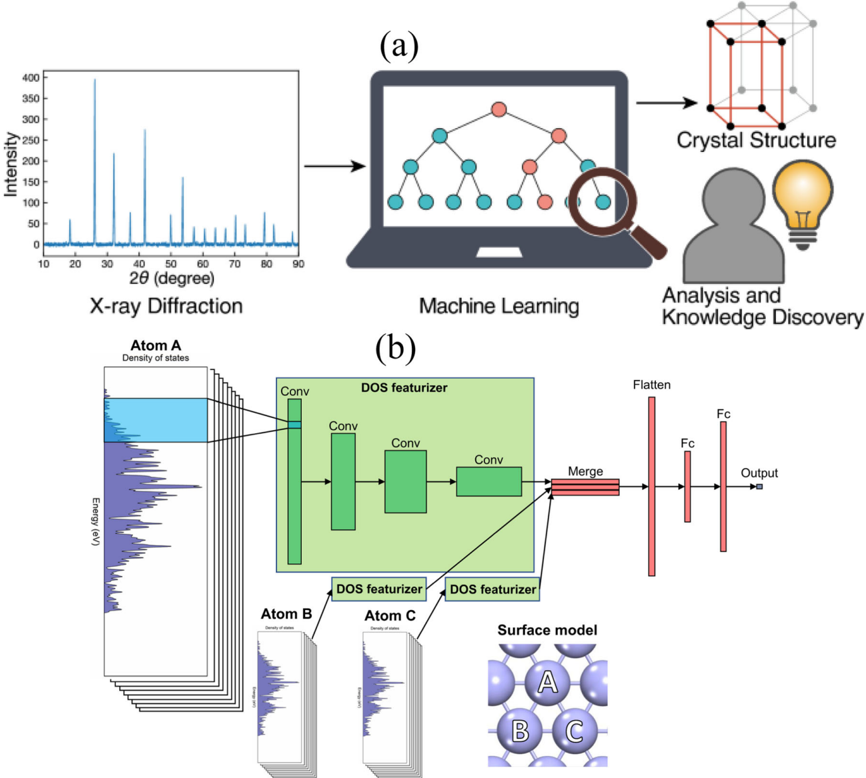
“Emerging DL applications in spectroscopic data analysis are discussed in Figure 4(b) [94].”
Crystal structure generation with autoregressive large language modeling
Antunes, L. M., Butler, K. T., & Grau-Crespo, R. (2024) · Nature Communications · doi:10.1038/s41467-024-54639-7 · Cited by 157
“Increasingly, techniques from machine learning (ML) and data science are being used to solve problems in materials science 9 – 11 .”
Recent Advances and Applications of Machine Learning in Experimental Solid Mechanics: A Review
Jin, H., Zhang, E., & Espinosa, H. D. (2023) · Applied Mechanics Reviews · doi:10.1115/1.4062966 · Cited by 203
Li, K., DeCost, B., Choudhary, K. K., Greenwood, M., & Hattrick-Simpers, J. R. (2023) · npj Computational Materials · doi:10.1038/s41524-023-01012-9 · Cited by 197
“However, quantifying the uncertainty associated with the neural network predictions is challenging [7, 60] and is beyond the scope of this work.”
BackgroundSelf-citationFrom text to insight: large language models for chemical data extraction
Schilling-Wilhelmi, M., Ríos-García, M., Shabih, S., Gil, M. V., Miret, S., Koch, C. T., Márquez, J. A., & Jablonka, K. M. (2025) · Chemical Society Reviews · doi:10.1039/d4cs00913d · Cited by 142
Applications of Long Short-Term Memory (LSTM) Networks in Polymeric Sciences: A Review
Malashin, I. P., Тынченко, В. С., Gantimurov, A., Nelyub, V., & Бородулин, А. С. (2024) · Polymers · doi:10.3390/polym16182607 · Cited by 214
“This architecture enables LSTM networks to effectively learn long-term dependencies, making them particularly useful in fields such as material science, where processes and phenomena often evolve over extended periods [14,15].”
BackgroundAssessing optimization techniques for improving water quality model
Uddin, M. G., Nash, S., Rahman, A., & Olbert, A. I. (2022) · Journal of Cleaner Production · doi:10.1016/j.jclepro.2022.135671 · Cited by 140
Exploring the Potential of Artificial Intelligence for Hydrogel Development—A Short Review
Neguț, I., & Bita, B. I. (2023) · Gels · doi:10.3390/gels9110845 · Cited by 162
“This leads to the development of hydrogels better tailored for diverse applications in medicine and biology [80].”
Lan, J., Palizhati, A., Shuaibi, M., Wood, B. M., Wander, B., Das, A., Uyttendaele, M., Zitnick, C. L., & Ulissi, Z. W. (2023) · npj Computational Materials · doi:10.1038/s41524-023-01121-5 · Cited by 198
Exploiting redundancy in large materials datasets for efficient machine learning with less data
Li, K., Persaud, D., Choudhary, K. K., DeCost, B., Greenwood, M., & Hattrick-Simpers, J. R. (2023) · Nature Communications · doi:10.1038/s41467-023-42992-y · Cited by 175
Self-citationDeep learning on medical image analysis
Wang, J., Wang, S., & Zhang, Y. (2024) · CAAI Transactions on Intelligence Technology · doi:10.1049/cit2.12356 · Cited by 165
Artificial Intelligence in Drug Discovery and Development
Mak, K., Wong, Y.-H., & Pichika, M. R. (2024) · Springer eBooks · doi:10.1007/978-3-031-35529-5_92 · Cited by 201
Crystal structure prediction by combining graph network and optimization algorithm
Cheng, G., Gong, X.-G., & Yin, W. (2022) · Nature Communications · doi:10.1038/s41467-022-29241-4 · Cited by 163
A Perspective on Explanations of Molecular Prediction Models
Wellawatte, G. P., Gandhi, H. A., Seshadri, A., & White, A. D. (2023) · Journal of Chemical Theory and Computation · doi:10.1021/acs.jctc.2c01235 · Cited by 140
Accelerating the prediction of stable materials with machine learning
Griesemer, S. D., Xia, Y., & Wolverton, C. M. (2023) · Nature Computational Science · doi:10.1038/s43588-023-00536-w · Cited by 123
“Deep learning has a well-documented track record of learning complex and hierarchical relationships from massive amounts of data, for example, identifying objects among millions of images, without the need for engineered, domain-specific features 42,43 .”
BackgroundSelf-citationAdvances of machine learning in materials science: Ideas and techniques
Chong, S. S., Ng, Y. S., Wang, H., & Zheng, J. (2023) · Frontiers of Physics · doi:10.1007/s11467-023-1325-z · Cited by 126
“There are numerous comprehensive surveys on ML in material science [52-60].”
BackgroundArtificial-intelligence-led revolution of construction materials: From molecules to Industry 4.0
Wang, X. Q., Chen, P., Chow, C. L., & Lau, D. (2023) · Matter · doi:10.1016/j.matt.2023.04.016 · Cited by 120
Hasan, M. R., Alsaiari, A. A., Fakhurji, B., Molla, M. H. R., Asseri, A. H., Sumon, M. A. A., Park, M. N., Ahammad, F., & Kim, B. (2022) · Molecules · doi:10.3390/molecules27134169 · Cited by 119
“This strategy entails a highly collaborative scheme between databases and correlations across genomics, transcriptomics, proteomics, metabolomics, the study of the microbiome, and pharmacogenomics, and it is heavily reliant on the development of relevant mathematical, computational, and systems biology tools that conn…”
BackgroundBand gap predictions of double perovskite oxides using machine learning
Talapatra, A., Uberuaga, B. P., Stanek, C. R., & Pilania, G. (2023) · Communications Materials · doi:10.1038/s43246-023-00373-4 · Cited by 117
Graph neural network predictions of metal organic framework CO 2 adsorption properties
Choudhary, K. K., Yildirim, T., Siderius, D. W., Kusne, A. G., McDannald, A., & Ortiz‐Montalvo, D. L. (2022) · Computational Materials Science · doi:10.1016/j.commatsci.2022.111388 · Cited by 108
Self-citationDeep learning for automated size and shape analysis of nanoparticles in scanning electron microscopy
Bals, J., & Epple, M. (2023) · RSC Advances · doi:10.1039/d2ra07812k · Cited by 93
Liu, B., Liu, P., Lu, W., & Olofsson, T. (2025) · International journal of mechanical system dynamics · doi:10.1002/msd2.70017 · Cited by 106
“Despite growing interest in applying ML to material design, key challenges persist, particularly in interpretability, feature interaction analysis, and scalability [42].”
Adaptively driven X-ray diffraction guided by machine learning for autonomous phase identification
Szymanski, N. J., Bartel, C. J., Zeng, Y., Diallo, M. S., Kim, H., & Ceder, G. (2023) · npj Computational Materials · doi:10.1038/s41524-023-00984-y · Cited by 127
“Recently, machine learning (ML) has been applied to interpret characterization data more rapidly 5,6 .”
MethodReview of machine learning approaches for predicting mechanical behavior of composite materials
Sharma, H., Arora, G., Singh, M. K., Ayyappan, V., Bhowmik, P., Rangappa, S. M., & Siengchin, S. (2025) · Discover Applied Sciences · doi:10.1007/s42452-025-07616-8 · Cited by 122
“ML permits the formation of predictive models by training on large, high-dimensional datasets to find underlying patterns, which makes it easier to make decisions without explicit programming [26].”
Recent Advances in Deep Learning for Protein-Protein Interaction Analysis: A Comprehensive Review
Lee, M. (2023) · Molecules · doi:10.3390/molecules28135169 · Cited by 112
AI‐Driven TENGs for Self‐Powered Smart Sensors and Intelligent Devices
Baburaj, A., Jayadevan, S., Aliyana, A. K., Kumar, S. K. N., & Stylios, G. K. (2025) · Advanced Science · doi:10.1002/advs.202417414 · Cited by 107
Deep learning object detection in materials science: Current state and future directions
Jacobs, R. M. (2022) · Computational Materials Science · doi:10.1016/j.commatsci.2022.111527 · Cited by 90
Thermodynamics and its prediction and CALPHAD modeling: Review, state of the art, and perspectives
Liu, Z. (2023) · Calphad · doi:10.1016/j.calphad.2023.102580 · Cited by 103
Batool, M., Sanumi, O. J., & Janković, J. (2024) · Energy and AI · doi:10.1016/j.egyai.2024.100424 · Cited by 88
Choudhary, K. K., & Garrity, K. F. (2022) · npj Computational Materials · doi:10.1038/s41524-022-00933-1 · Cited by 94
“In addition, we use the dataset to develop deep-learning models using the atomistic line-graph graph neural network (ALIGNN) [33, 34] to predict the Debye temperature, electronic DOS, T C , and electron-phonon coupling parameters for arbitrary crystal structures.”
Self-citationArtificial Intelligence in Drug Discovery and Development
Mak, K., Wong, Y.-H., & Pichika, M. R. (2023) · Springer eBooks · doi:10.1007/978-3-030-73317-9_92-1 · Cited by 132
Expanding the Horizons of Machine Learning in Nanomaterials to Chiral Nanostructures
Kuznetsova, V. A., Coogan, Á., Botov, D., Gromova, Y. A., Ushakova, E. V., & Gun’ko, Y. K. (2024) · Advanced Materials · doi:10.1002/adma.202308912 · Cited by 86
Li, L., Chang, J., Vakanski, A., Wang, Y., Yao, T., & Xian, M. (2024) · Scientific Reports · doi:10.1038/s41598-024-61189-x · Cited by 101
“• Applied the UQ frameworks for an active learning task to iteratively select data points with the highest epistemic uncertainty and diversity for faster model training with fewer data points.”
MethodAtomGPT: Atomistic Generative Pretrained Transformer for Forward and Inverse Materials Design
Choudhary, K. (2024) · The Journal of Physical Chemistry Letters · doi:10.1021/acs.jpclett.4c01126 · Cited by 72
“1–3 Such ML models can be used for forward design tasks such as given an atomic structure predict its properties, or inverse design tasks such as given properties predict its atomic structures.”
MethodSelf-citationAutomated classification of big X-ray diffraction data using deep learning models
Salgado, J. E., Lerman, S., Du, Z., Xu, C., & Abdolrahim, N. (2023) · npj Computational Materials · doi:10.1038/s41524-023-01164-8 · Cited by 111
Improving sentiment classification using a RoBERTa-based hybrid model
Semary, N. A., Ahmed, W., Amin, K., Pławiak, P., & Hammad, M. (2023) · Frontiers in Human Neuroscience · doi:10.3389/fnhum.2023.1292010 · Cited by 71
Cao, Y., Nakhjiri, A. T., & Ghadiri, M. (2024) · Engineering Applications of Artificial Intelligence · doi:10.1016/j.engappai.2024.108783 · Cited by 75
Tabatabaeian, A., Jerkovic, B., Harrison, P. G., Marchiori, E., & Fotouhi, M. (2023) · Composites Part B Engineering · doi:10.1016/j.compositesb.2023.110907 · Cited by 76
“The field of AI, especifically ML and computer vision, offers a way to detect defects in materials in seconds [2,22].”
Structured information extraction from complex scientific text with fine-tuned large language models
Dunn, A., Dagdelen, J., Walker, N., Lee, S., Rosen, A. S., Ceder, G., Persson, K., & Jain, A. (2022) · arXiv · doi:10.48550/arxiv.2212.05238 · Cited by 67
“While machine learning models for direct property prediction have been increasingly employed as screening steps for materials discovery and design workflows [1, 2], this approach is limited by the amount of training data available in tabulated databases.”
BackgroundSelf-citationDu, Y., Mukherjee, T., Li, R., Hou, Z., Dutta, S., Arnold, C. B., Elwany, A. H., Kung, S., Tang, J., & DebRoy, T. (2025) · Progress in Materials Science · doi:10.1016/j.pmatsci.2025.101587 · Cited by 100
JARVIS-Leaderboard: a large scale benchmark of materials design methods
Choudhary, K. K., Wines, D., Li, K., Garrity, K. F., Gupta, V., Romero, A. H., Krogel, J. T., Saritas, K., Fuhr, A., Ganesh, P., et al. (2024) · npj Computational Materials · doi:10.1038/s41524-024-01259-w · Cited by 108
Self-citationWinkler, D. A., Hughes, A. E., Özkan, C., Mol, J. M. C., Würger, T., Feiler, C., Zhang, D., & Lamaka, S. V. (2024) · Progress in Materials Science · doi:10.1016/j.pmatsci.2024.101392 · Cited by 81
AI-driven optimization of agricultural water management for enhanced sustainability
Ye, Z., Yin, S., Cao, Y., & Wang, Y. (2024) · Scientific Reports · doi:10.1038/s41598-024-76915-8 · Cited by 66
Systematic assessment of various universal machine‐learning interatomic potentials
Yu, H., Giantomassi, M., Materzanini, G., Wang, J., & Rignanese, G. (2024) · Materials Genome Engineering Advances · doi:10.1002/mgea.58 · Cited by 98
“The second metric depends directly on the physically measurable quantities V 0 , B 0 , and B 1 .”
BackgroundA review on the recent applications of deep learning in predictive drug toxicological studies
Sinha, K., Ghosh, N., & Sil, P. C. (2023) · Chemical Research in Toxicology · doi:10.1021/acs.chemrestox.2c00375 · Cited by 64
A physics-informed neural network framework for laminated composite plates under bending
Wang, W., & Thai, H. (2025) · Thin-Walled Structures · doi:10.1016/j.tws.2025.113014 · Cited by 79
Wang, G., Mine, S., Chen, D., Jing, Y., Ting, K. W., Yamaguchi, T., Takao, M., Maeno, Z., Takigawa, I., Matsushita, K., et al. (2023) · Nature Communications · doi:10.1038/s41467-023-41341-3 · Cited by 84
A review on the applications of graph neural networks in materials science at the atomic scale
Shi, X., Zhou, L., Huang, Y., Wu, Y., & Hong, Z. (2024) · Materials Genome Engineering Advances · doi:10.1002/mgea.50 · Cited by 86
A Perspective on Foundation Models in Chemistry
Choi, J., Nam, G., Choi, J., & Jung, Y. (2025) · JACS Au · doi:10.1021/jacsau.4c01160 · Cited by 107
Foundation models and intelligent decision-making: Progress, challenges, and perspectives
Huang, J., Xu, Y., Wang, Q., Wang, Q., Liang, X., Wang, F., Zhang, Z., Wei, W., Zhang, B., Huang, L., et al. (2025) · The Innovation · doi:10.1016/j.xinn.2025.100948 · Cited by 192
“414,415 These data-driven models complement traditional frameworks, bridging the gap between theory and empirical observations.”
33 Unresolved Questions in Nanoscience and Nanotechnology
Mirkin, C. A., Petrosko, S. H., Artzi, N., Aydın, K., Biaggne, A., Brinker, C. J., Bujold, K. E., Cao, Y. C., Chan, R. R., Chen, C., et al. (2025) · ACS Nano · doi:10.1021/acsnano.5c12854 · Cited by 69
Self-citationRecent progress on surface chemistry II: Property and characterization
Li, X., Xu, Z., Bu, D., Cai, J., Chen, H., Chen, Q., Chen, T., Cheng, F., Chi, L., Dong, W., et al. (2024) · Chinese Chemical Letters · doi:10.1016/j.cclet.2024.110100 · Cited by 63
Emerging Ultraviolet Persistent Luminescent Materials
Wang, X., & Mao, Y. (2022) · Advanced Optical Materials · doi:10.1002/adom.202201466 · Cited by 60
Ghorbani, M., Boley, M., Nakashima, P. N. H., & Birbilis, N. (2023) · Journal of Magnesium and Alloys · doi:10.1016/j.jma.2023.09.035 · Cited by 65
Multistage transfer learning for medical images
Ayana, G., Dese, K., Abagaro, A. M., Jeong, K. C., Yoon, S.-D., & Choe, S.-W. (2024) · Artificial Intelligence Review · doi:10.1007/s10462-024-10855-7 · Cited by 57
“The broad observation of different transfer learning methods demonstrates how flexible and adaptive these strategies are across different domains and tasks (Choudhary et al. 2022).”
Zhou, J., You, J., Zhao, Y.-M., Feng, Y. P., & Shen, L. (2024) · Accounts of Chemical Research · doi:10.1021/acs.accounts.4c00394 · Cited by 65
Parsa, S. M. (2025) · Applied Energy · doi:10.1016/j.apenergy.2025.126925 · Cited by 75
Conditional diffusion-based microstructure reconstruction
Düreth, C., Seibert, P., Rücker, D., Handford, S., Kästner, M., & Gude, Μ. (2023) · Materials Today Communications · doi:10.1016/j.mtcomm.2023.105608 · Cited by 93
Ninduwezuor-Ehiobu, N., Tula, O. A., Daraojimba, C., Ofonagoro, K. A., Ogunjobi, O. A., Gidiagba, J. O., Egbokhaebho, B. A., & Banso, A. A. (2023) · Engineering Science & Technology Journal · doi:10.51594/estj.v4i3.552 · Cited by 67
“Noisy, biased, or incomplete data can produce unreliable insights and inaccurate predictions (Choudhary et al., 2022; Kler et al., 2022; Tantithamthavorn, McIntosh, Hassan, Ihara, & Matsumoto, 2015).”
BackgroundBatu, T., Lemu, H. G., & Gebremedhen, H. S. (2023) · Materials · doi:10.3390/ma16186266 · Cited by 77
“Machine learning methods have demonstrated remarkable capabilities in predicting complex patterns and relationships within diverse datasets [93,94].”
Kotobi, A., Singh, K., Höche, D., Bari, S., Meißner, R. H., & Bande, A. (2023) · Journal of the American Chemical Society · doi:10.1021/jacs.3c07513 · Cited by 63
Applications of density functional theory and machine learning in nanomaterials: A review
Nyangiwe, N. N. (2025) · Next Materials · doi:10.1016/j.nxmate.2025.100683 · Cited by 91
Accelerated Discovery of Novel Garnet-Type Solid-State Electrolyte Candidates via Machine Learning
Sun, J., Kang, S., Kim, J., & Min, K. (2023) · ACS Applied Materials & Interfaces · doi:10.1021/acsami.2c15980 · Cited by 52
A prompt-engineered large language model, deep learning workflow for materials classification
Liu, S., Wen, T., Pattamatta, A. S. L. S., & Srolovitz, D. J. (2024) · Materials Today · doi:10.1016/j.mattod.2024.08.028 · Cited by 67
Detection of Mycotoxin Contamination in Foods Using Artificial Intelligence: A Review
Aggarwal, A., Mishra, A., Tabassum, N., Kim, Y., & Khan, F. (2024) · Foods · doi:10.3390/foods13203339 · Cited by 67
“AI has garnered attention for its capacity to automatically extract intricate features from large data volumes, making it particularly suitable for image recognition, spectroscopic analysis, and the interpretation of sensor data for mycotoxin detection [15,16].”
BackgroundSun, T. S., Wang, Z., Zeng, L., & Feng, G. (2025) · npj Computational Materials · doi:10.1038/s41524-025-01590-w · Cited by 74
“With the development of ML, models have become more accurate but increasingly dif fi cult to interpret, limiting our understanding of the relationships between structures and properties 37 .”
Gogoi, M., Kumar, V., Begum, S. A., Sharma, N., & Kant, S. (2023) · Agriculture · doi:10.3390/agriculture13081505 · Cited by 81
Moser, P., Fenz, W., Thumfart, S., Ganitzer, I., & Giretzlehner, M. (2023) · Fluids · doi:10.3390/fluids8020046 · Cited by 63
A machine learning and deep learning-based integrated multi-omics technique for leukemia prediction
Abbasi, E. Y., Deng, Z., Arain, Q. A., Khan, A., Shaikh, A., Reshan, M. S. A., Sulaiman, A. A., & Alshahrani, H. M. (2024) · Heliyon · doi:10.1016/j.heliyon.2024.e25369 · Cited by 55
The effects of organic cation rotation in hybrid Organic-Inorganic Perovskites: A critical review
Liu, S., Guo, R., & Xie, F. (2022) · Materials & Design · doi:10.1016/j.matdes.2022.110951 · Cited by 51
ChemNLP: A Natural Language-Processing-Based Library for Materials Chemistry Text Data
Choudhary, K. K., & Kelley, M. L. (2023) · The Journal of Physical Chemistry C · doi:10.1021/acs.jpcc.3c03106 · Cited by 65
Self-citationMachine-learning synergy in high-entropy alloys: A review
Elkatatny, S., Abd‐Elaziem, W., Sebaey, T. A., Darwish, M. A., & Hamada, A. (2024) · Journal of Materials Research and Technology · doi:10.1016/j.jmrt.2024.10.034 · Cited by 53
Machine learning for analyses and automation of structural characterization of polymer materials
Lu, S., & Jayaraman, A. (2024) · Progress in Polymer Science · doi:10.1016/j.progpolymsci.2024.101828 · Cited by 49
Dong, X., Shi, L., Ma, S., Chen, X., Cao, S., Li, W., Zhao, Z., Chen, C., & Deng, H. (2024) · Nano Letters · doi:10.1021/acs.nanolett.4c02632 · Cited by 52
Self-citationZhong, Z., Jiang, X., Sun, H., Wu, Z., Liu, Y., & Matamoros‐Veloza, A. (2024) · Advanced Engineering Materials · doi:10.1002/adem.202401392 · Cited by 49
Choi, J. B., Nguyen, P. C. H., Sen, O., Udaykumar, H. S., & Baek, S. (2023) · Propellants Explosives Pyrotechnics · doi:10.1002/prep.202200276 · Cited by 56
“Numerical modeling and simulation of EMs can be challenging, as the response of such materials occurs over a short time and small spatial scales, typically within a few nanoseconds in time-scale and over a few micrometers in length-scale, [42-43].”
MethodStrategic view on the current role of AI in advancing environmental sustainability: a SWOT analysis
Greif, L., Kimmig, A., Bobbou, S. E., Jurisch, P., & Ovtcharova, J. (2024) · Discover Artificial Intelligence · doi:10.1007/s44163-024-00146-z · Cited by 66
“For example, a conditional variational autoencoder (cVAE) has been developed, which is capable of generating UV–Vis spectra from an image of the material, providing an accelerated method for material characterization [77, 78].”
A general framework to govern machine learning oriented materials data quality
Liu, Y., Yang, Z., Zou, X., Lin, Y., Ma, S., Zuo, W., Zou, Z., Wang, H., Avdeev, M., & Shi, S. (2025) · Materials Science and Engineering R Reports · doi:10.1016/j.mser.2025.101050 · Cited by 53
Machine learning strategies for small sample size in materials science
Tao, Q., Yu, J., Mu, X., Jia, X., Shi, R., Yao, Z., Wang, C., Zhang, H., & Liu, X. (2025) · Science China Materials · doi:10.1007/s40843-024-3204-5 · Cited by 51
“Such ML models typically require a large amount of data [26,27].”
Dermawan, D., & Alotaiq, N. (2025) · Pharmaceuticals · doi:10.3390/ph18070981 · Cited by 63
“DL techniques are particularly advantageous in modeling nonlinear relationships and developing end-to-end learning frameworks, including convolutional and graph neural networks that power many modern cheminformatics and bioinformatics pipelines [26,27].”
Zhang, Y., Ren, K., Wang, W. Y., Gao, X., Yuan, R., Wang, J., Wang, Y., Song, H., Liang, X., & Li, J. (2023) · Journal of Material Science and Technology · doi:10.1016/j.jmst.2023.05.060 · Cited by 48
Kim, D., & Choi, J. (2025) · Toxicology · doi:10.1016/j.tox.2025.154230 · Cited by 47
de la Asunción‐Nadal, V., Sprague, C. I., Guijarro‐Berdiñas, B., Cappel, U. B., & García‐Fernández, A. (2025) · EES solar. · doi:10.1039/d5el00041f · Cited by 59
“123,124 In a related study, the authors also performed a SHAP analysis to determine the impact of each variable, being the absorber layer and thickness the most relevant parameters in predicting the PCE of PSCs. 121 Although well-established approaches like GB can o en outperform NNs, especially…”
Southworth, J., Smith, A. C., Safaei, M., Rahaman, M., Alruzuq, A., Tefera, B. B., Muir, C. S., & Herrero, H. V. (2024) · Frontiers in Remote Sensing · doi:10.3389/frsen.2024.1374862 · Cited by 53
Machine learning reshapes the paradigm of nanomedicine research
Wei, Z., Zhuo, S., Zhang, Y., Wu, L., Gao, X., He, S., Bo, X., & Zhou, W. (2025) · Acta Pharmaceutica Sinica B · doi:10.1016/j.apsb.2025.05.014 · Cited by 53
“With the gradual integration of materials science and artificial intelligence, ML has made significant progress in the field of materials science, including atomic simulations, material imaging, and spectral analysis 40,41 .”
Živić, F., Kaplarevic-Malisic, A. M., Grujović, N., Stojanovic, B. S., & Ivanovic, M. R. (2025) · Materials Today Communications · doi:10.1016/j.mtcomm.2025.113525 · Cited by 65
Mi, X., Dai, L., Jing, X., She, J., Holmedal, B., Tang, A., & Pan, F. (2024) · Journal of Magnesium and Alloys · doi:10.1016/j.jma.2024.01.005 · Cited by 44
Molecular set representation learning
Boulougouri, M., Vandergheynst, P., & Probst, D. (2024) · Nature Machine Intelligence · doi:10.1038/s42256-024-00856-0 · Cited by 62
“…properties in material science, the prediction of pharmacokinetic properties in drug development, the prediction of binding affinities between small-molecule ligands and proteins in drug discovery, or the prediction of chemical reaction yields in synthetic and process chemistry 2–6 .”
Malashin, I. P., Martysyuk, D., Тынченко, В. С., Gantimurov, A., Nelyub, V., & Бородулин, А. С. (2025) · Polymers · doi:10.3390/polym17182557 · Cited by 40
“Here, ML approaches such as convolutional networks [20], graph neural networks [21], and hybrid physics-informed surrogates [22] are effective in monitoring, detecting anomalies, and guiding optimization under strict quality and throughput constraints.”
A Computational Renaissance in High-Energy Density Materials (HEDMs) Research
Gao, H., Murray, J. S., & Shreeve, J. M. (2025) · Chemical Reviews · doi:10.1021/acs.chemrev.5c00232 · Cited by 47
A deep CNN approach to detect and classify local fruits through a web interface
Rahman, M. M., Basar, M. A., Shinti, T. S., Khan, M. S. I., Babu, H. M. H., & Uddin, K. M. M. (2023) · Smart Agricultural Technology · doi:10.1016/j.atech.2023.100321 · Cited by 49
Metadata
- Authors
- Choudhary, K., DeCost, B., Chen, C., Jain, A., Tavazza, F., Cohn, R., Park, C. W., Choudhary, A., Agrawal, A., Billinge, S. J. L., Holm, E., Ong, S. P., & Wolverton, C.
- Affiliations
- National Institute of Standards and Technology (US)
- University of California San Diego (US)
- Lawrence Berkeley National Laboratory (US)
- Carnegie Mellon University (US)
- Northwestern University (US)
- Columbia University (US)
- ORCID
- Venue
- npj Computational Materials
- Published
- 2022-04-05
- Volume
- 8
- Issue
- 1
- ISSN
- 2057-3960 (ISSN-L)
- OpenAlex
- W3208687975
- Semantic Scholar
- 5aaeb50d8051890e9fbb9b9b8f34d9f3f2d85c1a
- Cited by
- 1,172
- References
- 401
- Citations by year
- 2026: 248 · 2025: 386 · 2024: 316 · 2023: 187 · 2022: 35
- FWCI
- 64.93
- Type
- journal article
- Language
- en
- Open access
- gold
- doi.org
- Licence
- cc-by
- creativecommons.org/licenses/by/4.0 (tdm)
- creativecommons.org/licenses/by/4.0 (vor)
- Locations
- npj Computational Materials (publishedVersion, cc-by)
- arXiv (Cornell University) (submittedVersion)
- eScholarship (California Digital Library) (submittedVersion, cc-by)
- OSTI OAI (U.S. Department of Energy Office of Scientific and Technical Information) (submittedVersion, cc-by)
- DOAJ (DOAJ: Directory of Open Access Journals) (submittedVersion)
- arXiv (Cornell University) (cc-by)
- Funders
- National Science Foundation (DEAC02-05CH11231, 2053929, 70NANB19H005, 1826218, 1922234)
- U.S. Department of Energy (-AC02-05CH11231, DE-AC02-05-CH11231: Materials Project program KC23MP, 70NANB19H005, KC23MP, DE AC02 05CH11231, DE-AC02-)
- U.S. Department of Commerce (70NANB19H005, 70NANB19H117)
- Northwestern University (70NANB19H005)
- University of Warwick
- National Institute of Standards and Technology (70NANB19H117, 70NANB19H005)
- Office of Science (DEAC02–05CH11231, DE-AC02, DE-AC02-05-CH11231: Materials Project Program KC23MP)
- Division of Civil, Mechanical and Manufacturing Innovation (CMMI-2053929)
- Basic Energy Sciences (DE-AC02, DE-AC02-05CH11231., KC23MP, DE-AC02-05-, AC02–05CH11231)
- Topics
- Physical Sciences › Materials Science › Materials Chemistry › Machine Learning in Materials Science
- Physical Sciences › Physics and Astronomy › Atomic and Molecular Physics, and Optics › Advanced Chemical Physics Studies
- Physical Sciences › Physics and Astronomy › Statistical and Nonlinear Physics › Model Reduction and Neural Networks
- Keywords
- deep learning, atomistic simulation, materials imaging, spectral analysis, natural language processing, synthetic data, generative models, uncertainty quantification, materials database, spectral data
About these checks
Registry, retraction, Cites and statistics results are computed, not judged, with one exception: a printed reference that no index lists is read once by a model before it counts as a citation error. Claims are extracted by a model and kept only when their quote appears verbatim in the text; each cited source is then checked, with a model’s help, for whether it says what the claim relies on. Those verdicts can be wrong — read the claim’s quote and the cited source before relying on one.
Statistics and arithmetic are recomputed, not judged.
Confidence bands are shown only for fields calibrated on our annotated test set. None is calibrated yet, so no band is shown.
What counts as a claim ›How we measure confidence ›How we check this ›
Are you an author, or do you see a problem with this page? Request a review
Data sources
Bibliographic data: Semantic Scholar, OpenAlex, Crossref.
Contains information from the Semantic Scholar Academic Graph Datasets, made available under the ODC Attribution License (ODC-BY 1.0).
Semantic Scholar’s data is described in: Kinney, R., et al. (2023). The Semantic Scholar Open Data Platform. arXiv:2301.10140.
