

Divergent evolutionary trajectories of bryophytes and tracheophytes from a complex common ancestor of land plants
Open accessPublished version of a preprint
The DOI matches its Crossref record; 212 of the 213 references it cites were found in a registry or an index.
Abstract
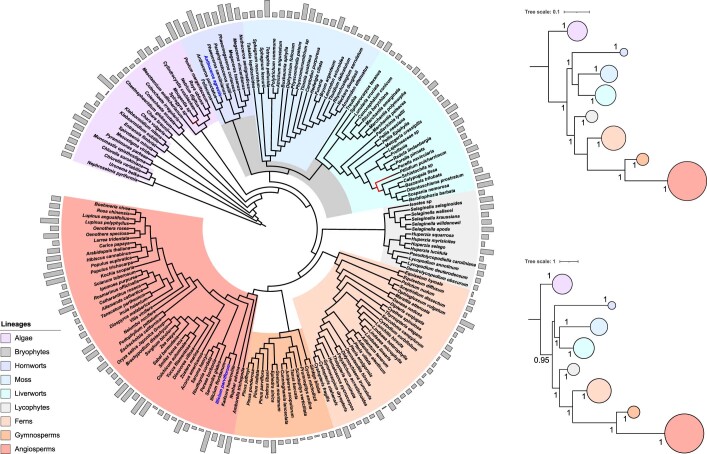
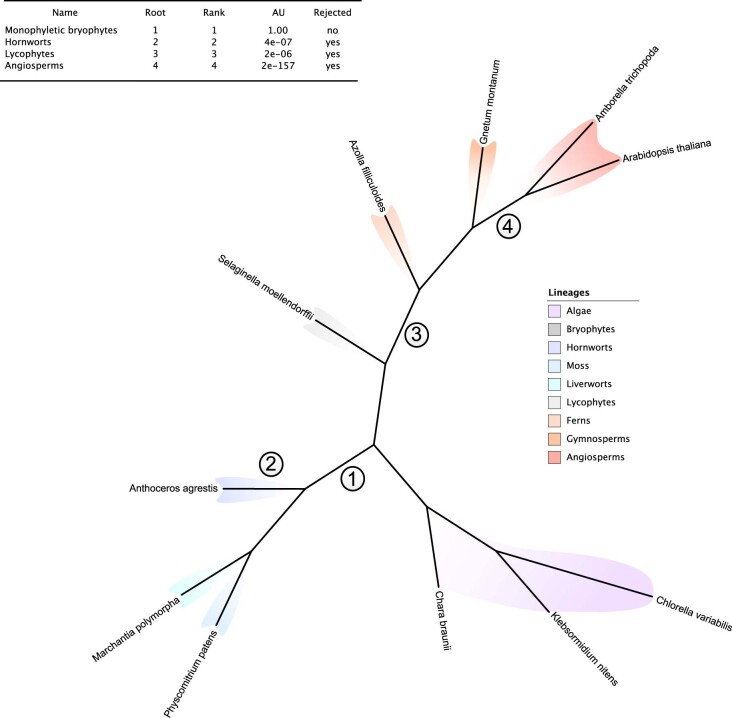
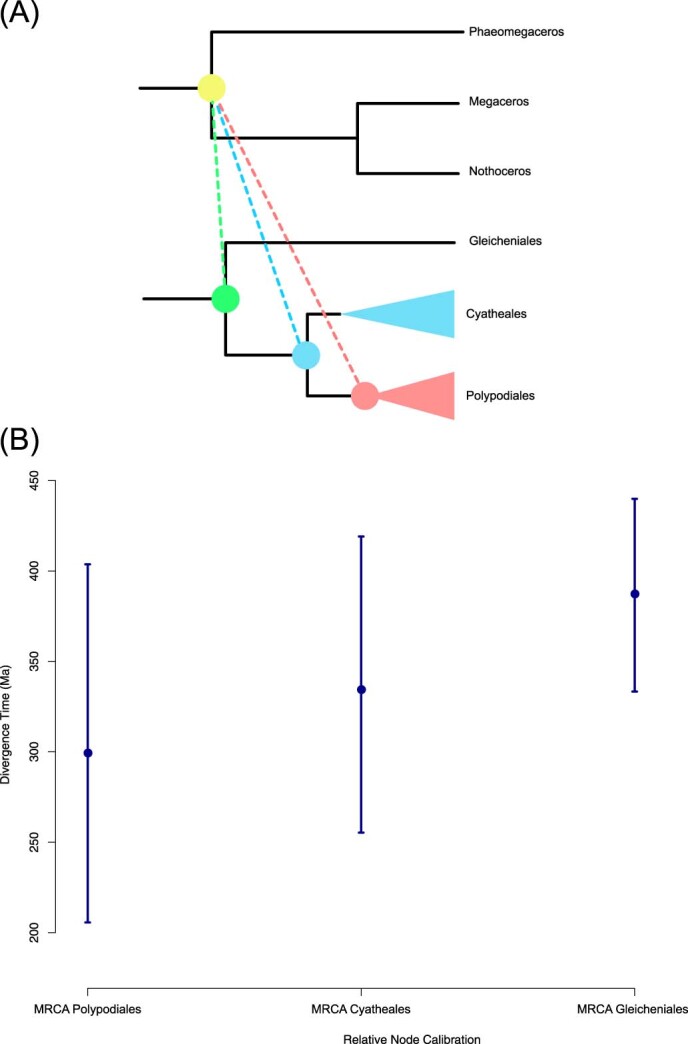
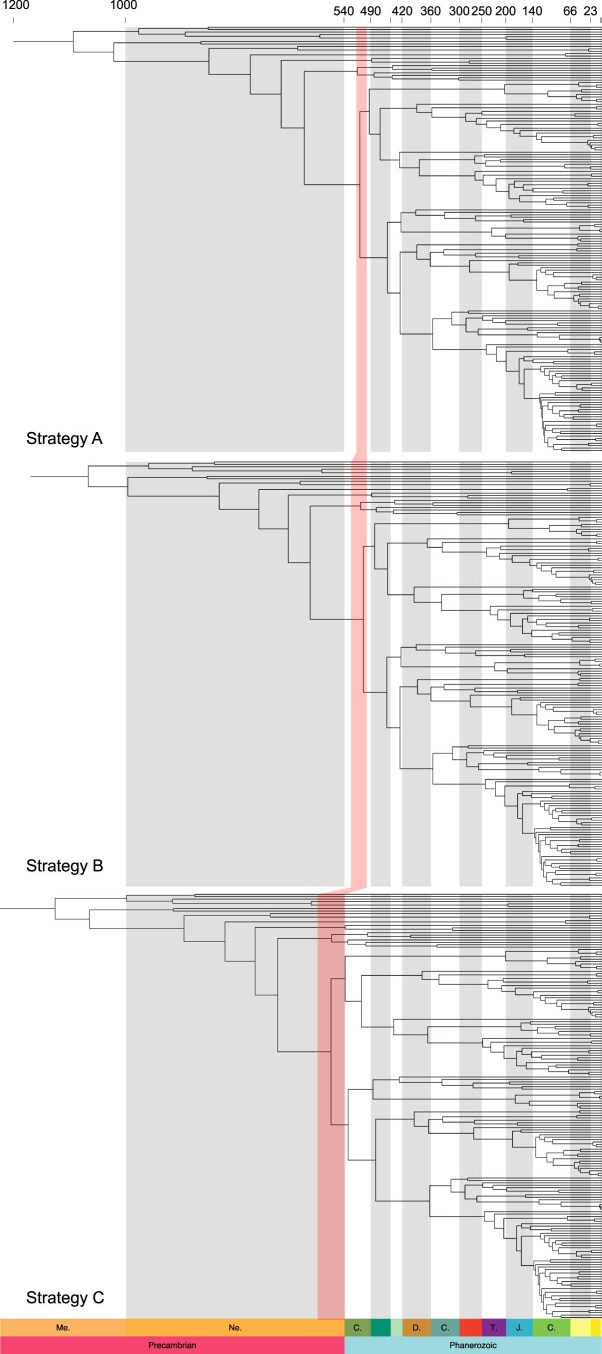
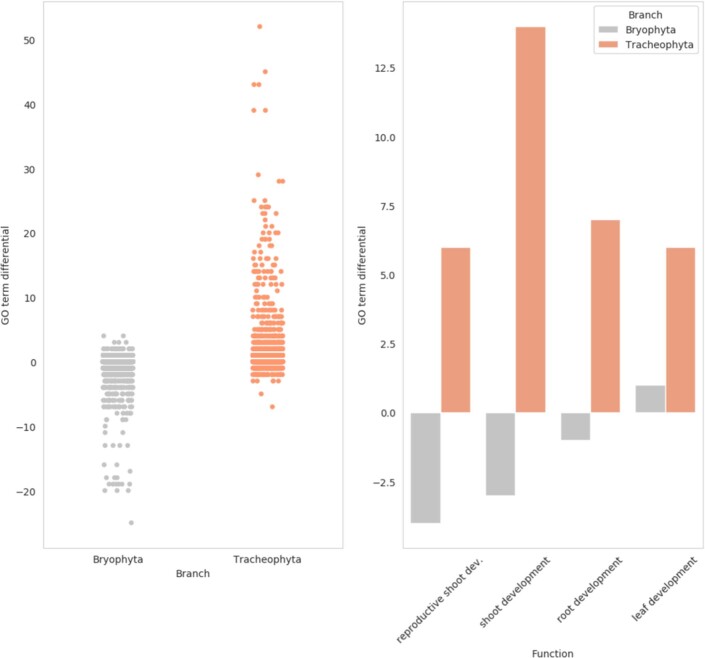
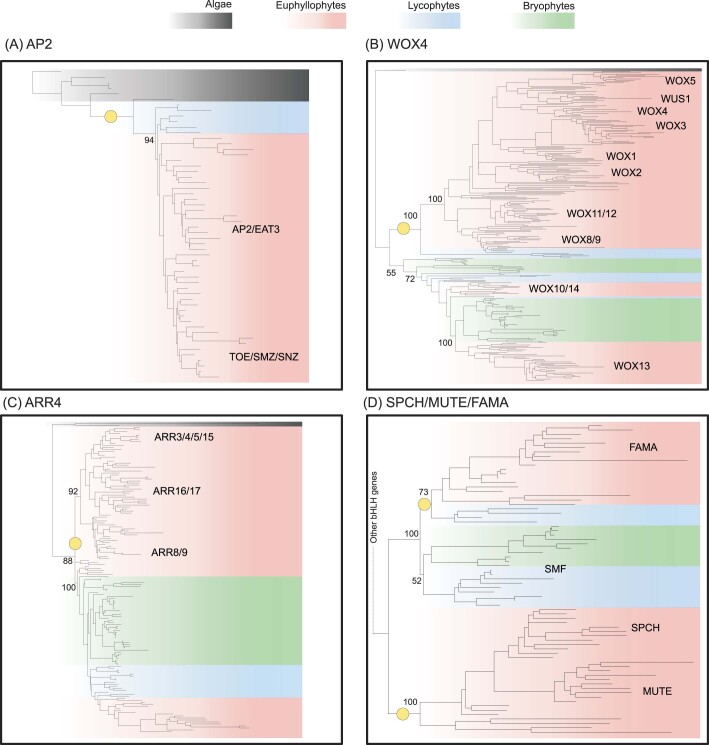
The origin of plants and their colonization of land fundamentally transformed the terrestrial environment. Here we elucidate the basis of this formative episode in Earth history through patterns of lineage, gene and genome evolution. We use new fossil calibrations, a relative clade age calibration (informed by horizontal gene transfer) and new phylogenomic methods for mapping gene family origins. Distinct rooting strategies resolve tracheophytes (vascular plants) and bryophytes (non-vascular plants) as monophyletic sister groups that diverged during the Cambrian, 515–494 million years ago. The embryophyte stem is characterized by a burst of gene innovation, while bryophytes subsequently experienced an equally dramatic episode of reductive genome evolution in which they lost genes associated with the elaboration of vasculature and the stomatal complex. Overall, our analyses reveal that extant tracheophytes and bryophytes are both highly derived from a more complex ancestral land plant. Understanding the origin of land plants requires tracing character evolution across a diversity of modern lineages.
Overview
The claims and statistics of this paper haven’t been checked yet.
Free: it reads the open-access text and checks the first 5 claims that cite a source we can check. Create a free account to check every claim.
Integrity signals
Registry
Cites
Statistics
Figures
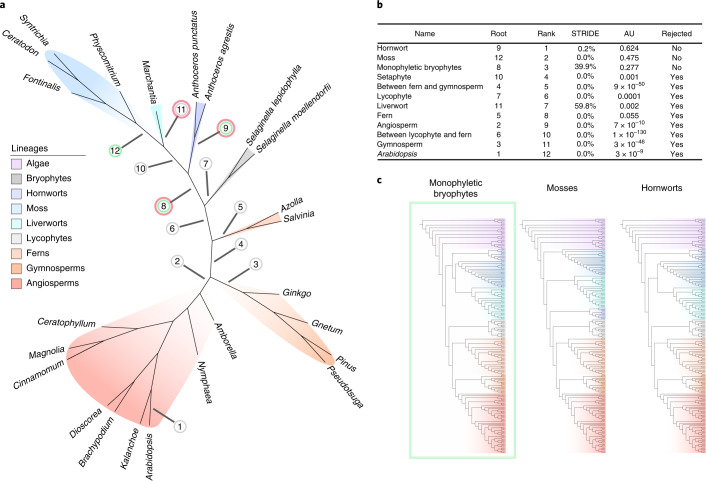
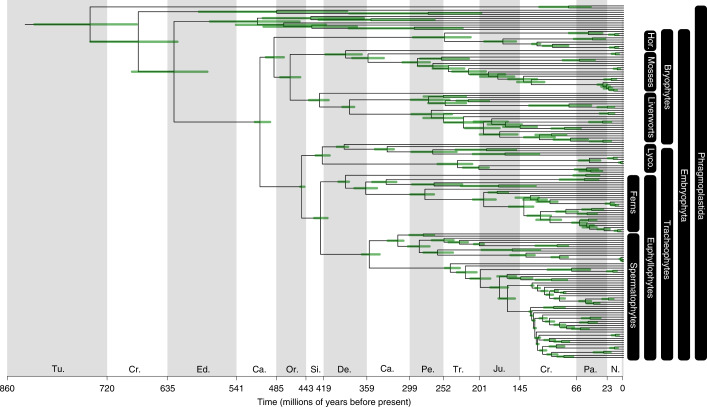
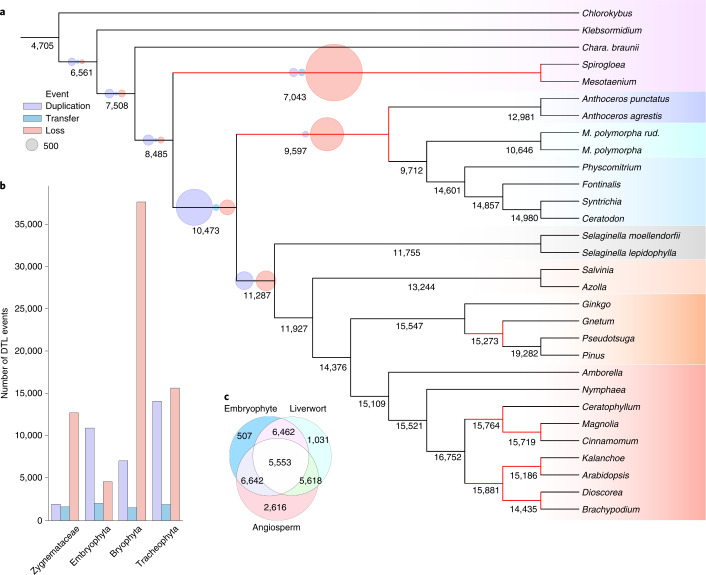
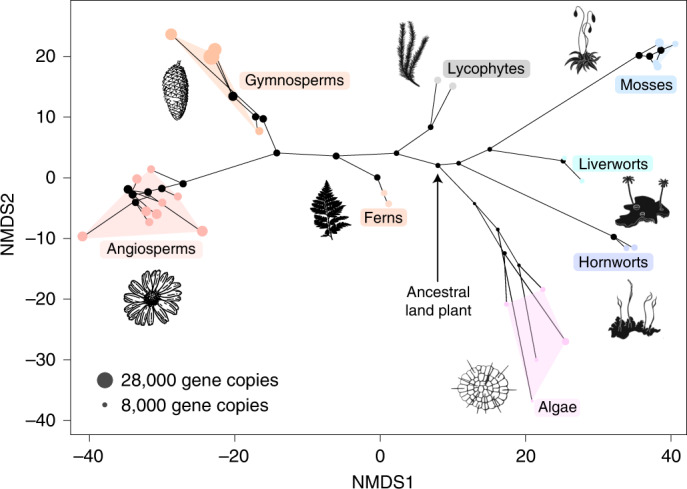
Verification
Claims the paper makes
The claims and statistics of this paper haven’t been checked yet.
Free: it reads the open-access text and checks the first 5 claims that cite a source we can check. Create a free account to check every claim.
Self-check
Percentages, sums and reported differences re-computed from the paper’s own numbers.
The self-check needs the paper’s full text.
Citations
Cites
IQ-TREE: A Fast and Effective Stochastic Algorithm for Estimating Maximum-Likelihood Phylogenies
Nguyen, L.-T., Schmidt, H. A., von Haeseler, A., & Minh, B. Q. (2015) · Molecular Biology and Evolution · doi:10.1093/molbev/msu300 · Cited by 26,046 · cited 5×
“A maximum likelihood tree was inferred from an alignment of 30 species of plants and algae, comprising 185 single-copy orthologues and 71,855 sites, under the LG + C60 + G4 + F model in IQ-TREE 69 , and rooted in accordance with our previous phylogenetic analysis.”
MethodInfluentialFast and sensitive protein alignment using DIAMOND
Buchfink, B., Xie, C., & Huson, D. H. (2015) · Nature Methods · doi:10.1038/nmeth.3176 · Cited by 14,201 · cited 3×
“The Arabidopsis thaliana protein sequence for PHOT1 was used to BLAST a database of 177 species of plant and transcriptomes.”
MethodInfluentialPAML 4: Phylogenetic Analysis by Maximum Likelihood
Yang, Z. (2007) · Molecular Biology and Evolution · doi:10.1093/molbev/msm088 · Cited by 13,879 · cited 1×
“We fixed the tree topology to that recovered by the Bayesian analysis and used the normal approximation method in MCMCtree (v. 4.9i) [81], with branch lengths first estimated under the LG + G4 model in codeml (v 4.9i) 81 .”
MethodBUSCO: assessing genome assembly and annotation completeness with single-copy orthologs
Simão, F. A., Waterhouse, R. M., Ioannidis, P., Kriventseva, E. V., & Zdobnov, E. M. (2015) · Bioinformatics · doi:10.1093/bioinformatics/btv351 · Cited by 13,344
Posterior summarization in Bayesian phylogenetics using tracer 1.7
Rambaut, A., Drummond, A. J., Xie, D., Baele, G., & Suchard, M. A. (2018) · Systematic Biology · doi:10.1093/sysbio/syy032 · Cited by 11,159
Extracellular vesicles: Exosomes, microvesicles, and friends
Raposo, G., & Stoorvogel, W. (2013) · Journal of Cell Biology · doi:10.1083/jcb.201211138 · Cited by 8,099 · cited 1×
“Exosomes and complex cytoskeletons are essential for multicellular organisms to function 43,44 , and the inferred loss of these gene families is consistent with the hypothesis that the body plan of the algal ancestor of embryophytes was multicellular 5 , rather than possessing the single-cell or…”
BackgroundOrthoFinder: phylogenetic orthology inference for comparative genomics
Emms, D. M., & Kelly, S. (2019) · Genome Biology · doi:10.1186/s13059-019-1832-y · Cited by 7,676
Accelerated Profile HMM Searches
Eddy, S. R. (2011) · PLoS Computational Biology · doi:10.1371/journal.pcbi.1002195 · Cited by 6,975 · cited 1×
“To functionally annotate the gene families, we inferred the consensus sequence of each gene family alignment using hidden Markov modelling 91 .”
MethodKanehisa, M., Sato, Y., & Morishima, K. (2016) · Journal of Molecular Biology · doi:10.1016/j.jmb.2015.11.006 · Cited by 4,055
An efficient algorithm for large-scale detection of protein families
Enright, A. J. (2002) · Nucleic Acids Research · doi:10.1093/nar/30.7.1575 · Cited by 3,588
Cited by
Items 101–198 of 198
Eocene liverwort and moss species preserved in Anglesea amber from Australia
Paulsen, M., Ohlsen, D. J., Cantrill, D. J., & Stilwell, J. D. (2025) · Review of Palaeobotany and Palynology · doi:10.1016/j.revpalbo.2025.105330 · Cited by 4
Nakayama, H., & Sinha, N. R. (2025) · New Phytologist · doi:10.1111/nph.70597 · Cited by 4
A Global Conservation Blind Spot: Neglect of Bryophytes Undermines Biodiversity Targets
Yin, X., Liu, Y., Kong, F., Shu, L., PENG, C., & Ang, L. P. (2026) · Global Change Biology · doi:10.1111/gcb.70789 · Cited by 4
Csürös, M. (2026) · Proceedings of the National Academy of Sciences · doi:10.1073/pnas.2537812123 · Cited by 5
Membrane-anchored calpains – hidden regulators of growth and development beyond plants?
Šafránek, M., Shumbusho, A., Johansen, W., Šarkanová, J., Voško, S., Bokor, B., Jásik, J., & Demko, V. (2023) · Frontiers in Plant Science · doi:10.3389/fpls.2023.1289785 · Cited by 5
“3 The only membrane-anchored calpain with known biological role is plant DEFECTIVE KERNEL1 Plants colonized land around 515 – 494 million years ago (Harris et al., 2022).”
BackgroundSecular variation in the magnitudes of Phanerozoic and Precambrian weathering
Medaris, L. G., & Driese, S. G. (2023) · Precambrian Research · doi:10.1016/j.precamres.2023.107273 · Cited by 4
Szablińska‐Piernik, J., Sulima, P., & Sawicki, J. (2025) · GigaScience · doi:10.1093/gigascience/giaf145 · Cited by 4
“Recent evidence tends to support the idea of secondary reductions [ 3 ].”
Tsuda, K. (2024) · Current Opinion in Plant Biology · doi:10.1016/j.pbi.2024.102594 · Cited by 4
Genome-Wide Characterization of Wholly Disordered Proteins in Arabidopsis
Long, W., Zhao, L., Yang, H., Yang, X., Bai, Y., Xue, X., Wang, D., & Han, S. (2025) · International Journal of Molecular Sciences · doi:10.3390/ijms26031117 · Cited by 4
An evo-devo perspective on no Ordovician land plants
Strother, P. K. (2023) · Proceedings of the Estonian Academy of Sciences Geology · doi:10.3176/earth.2023.31 · Cited by 4
“Evidence for such a sporopollenin transfer hypothesis (Graham 1984; Hemsley 1994) has been supported by studies of spore development (sporogenesis) in bryophytes (Brown and Lemmon 2011; Renzaglia et al. 2023).”
BackgroundTranscription factors operate on a limited vocabulary of binding motifs in Arabidopsis thalianaPreprint
Zenker, S., Wulf, D., Meierhenrich, A., Becker, S., Eisenhut, M., Stracke, R., Weißhaar, B., & Bräutigam, A. (2023) · bioRxiv (Cold Spring Harbor Laboratory) · doi:10.1101/2023.08.28.555073 · Cited by 4
“…age of a phylogenetic subgroup, we assessed the presence of M. polymorpha and C. reinhardtii orthologs determined by Orthofinder2 (Emms and Kelly, 2019) which, if present, indicate an age of at least 500 or 950 million years, respectively, for the branch (Hedges et al., 2004; Harris et al., 2022).”
Spermine and thermospermine synthases emerged multiple times during eukaryote evolution
Li, B., Liang, J., Baniasadi, H. R., Phillips, M. A., & Michael, A. J. (2025) · Journal of Biological Chemistry · doi:10.1016/j.jbc.2025.111028 · Cited by 5
Diversification of liverworts across spatial and climatic gradients in the world
Qian, H., Kessler, M. R., & Qian, S. (2025) · Acta Botanica Yunnanica · doi:10.1016/j.pld.2025.12.010 · Cited by 3
“Liverworts have an age of about 500 million years (Laenen et al., 2014; Harris et al., 2022).”
Cross-kingdom gene transfer as a driver of land plant evolution
Fridrich, A., & Irwin, N. A. T. (2025) · Current Opinion in Plant Biology · doi:10.1016/j.pbi.2025.102850 · Cited by 3
A family‐level phylogeny of liverworts (Marchantiophyta): New insights from mitochondrial sequences
Huang, D., Zhou, X., Dong, S., Sheng, W., Zuo, Q., Zhang, L., Ma, W.-Z., Golinski, G. K., Vanderpoorten, A., Goffinet, B., et al. (2026) · Journal of Systematics and Evolution · doi:10.1111/jse.70051 · Cited by 3
“…number of informative sites for phylogenetics, con fl icts remain due to di ff erences in gene sampling and substitution saturation, as illustrated in Ptilidiales, Pelliales, and Marchantiopsida (Su et al., 2021; Dong et al., 2022; Harris et al., 2022; Bechteler et al., 2023; Shen et al., 2025).”
InfluentialLipocalins regulate development and various stress responses in Physcomitrium patens
Wang, S., Ma, J., Wang, Q., Guan, Y., Hu, X., Sun, H., & Huang, J. (2026) · Cell Reports · doi:10.1016/j.celrep.2026.117089 · Cited by 3
Diversification of functional requirements for proteolysis of auxin response factors
de Roij, M., Heijdra, E., Lamers, J., Nishihama, R., Borst, J. W., & Weijers, D. (2026) · Nature Communications · doi:10.1038/s41467-026-70440-0 · Cited by 3
“…accumulates in essentially all cell-and tissue types across the of an ancestral AB-class ARF, which took place close to the origin of land plants (an event which likely occurred in an ancestor of all embryophytes), resulted in the lineages giving rise to the respective A -and B-class clades 23,29 .”
Structure of bryophyte communities in the paramo complexes of Boyacá-Colombia
Gaona, D. A. M., Puentes, M. E. M., Novoa, J. E. G., & Gómez, J. D. M. (2023) · Revista de Biología Tropical · doi:10.15517/rev.biol.trop..v71i1.53584 · Cited by 3
Robinson, K., Chia, K., Guyon, A., Schornack, S., & Carella, P. (2024) · Journal of Experimental Botany · doi:10.1093/jxb/erae256 · Cited by 3
The global pattern of epiphytic liverwort disparity: insights from Frullania
Yu, Y., Fan, M., Zhou, H., & Song, Y. (2024) · BMC Ecology and Evolution · doi:10.1186/s12862-024-02254-x · Cited by 3
“…provided by tropic and sub-tropic forests, e.g., rich diversity of vascular plants as epi-phytic substrates and extensive resources [41, 56], and / or the relaxed ecological constraints, e.g., high humidity [34, 53], and / or phenotypic innovation that facilitate ecospace expansion [13, 57, 58].”
BackgroundDiversification of functional requirements for proteolysis of Auxin Response Factors
de Roij, M., Heijdra, E., Nishihama, R., Borst, J. W., & Weijers, D. (2025) · doi:10.1101/2025.09.03.673984 · Cited by 3
Is there a tapetum in the hornwort capsule? Evidence from the sporogenesis of Phaeoceros
Filin, V. R., & Platonova, A. G. (2024) · Botanical Journal of the Linnean Society · doi:10.1093/botlinnean/boae052 · Cited by 2
A Year at the Forefront of Streptophyte Algal Evolution
Bowles, A. M. C. (2024) · Biology Open · doi:10.1242/bio.061673 · Cited by 2
“Temporal analyses have demonstrated the timescale of streptophyte evolution spanning the Meso-Neoproterozoic eras to the present day (del Cortona et al., 2020; Harris et al., 2022; Morris et al., 2018; Strassert et al., 2021).”
BackgroundEnvironmental effects of land plants evolution in the phanerozoic
Cai, J., Ju, P., Liu, M., Xue, J., & Zhao, M. (2025) · Chinese Science Bulletin (Chinese Version) · doi:10.1360/tb-2025-0173 · Cited by 4
Universal single-copy ortholog benchmark gene set for bryophytes
Zhou, X., Peng, T., Jin, Y., Dong, S., & Liu, Y. (2025) · Journal of genetics and genomics/Journal of Genetics and Genomics · doi:10.1016/j.jgg.2025.07.009 · Cited by 2
Kusová, A., Holá, M., Petrová, I. G., Rudolf, J., Zachová, D., Skalák, J., Hejátko, J., Klodová, B., Přerovská, T., Lyčka, M., et al. (2025) · The Plant Journal · doi:10.1111/tpj.70574 · Cited by 2
“…that TRB proteins play a critical role in telomere maintenance in mosses, suggesting a conserved ancestral function present in the last common ancestor of tracheophytes (vascular plants) and bryophytes (non-vascular plants) that diverged during the Cambrian, 515 – 494 Ma (Harris et al., 2022).”
Kawamura, S., Shimokawa, E., Ito, M., Nakamura, I., Kanazawa, T., Iwano, M., Sun, R., Yoshitake, Y., Yamaoka, S., Yamaguchi, S., et al. (2026) · Plant and Cell Physiology · doi:10.1093/pcp/pcag039 · Cited by 2
Evaluating Phylogenetic Comparative Methods under Reticulate Evolutionary Scenarios
Morley, L., Lehmberg, E. S., & Kong, S. (2026) · Systematic Biology · doi:10.1093/sysbio/syag064 · Cited by 3
“While these network-based PCMs have shown great promise in improving estimation accuracy when traits are inherited through reticulate evolution (see [3] and [4] for instance), they are still in their infancy and conventional tree-based approaches continue to dominate in practice [5, 6, 7, 8, 9].”
Signatures of gene transfer in the parallel evolution of osmotrophic specialization in eukaryotes
Ocaña‐Pallarès, E., Richards, T. A., Gabaldón, T., & Szöllősi, G. J. (2026) · Nature Ecology & Evolution · doi:10.1038/s41559-026-03054-w · Cited by 2
“1), and are older than recently published estimates for the age of the Metazoa 55 (613–593 Ma) and the Embryophyta clades 56 (515–493 Ma).”
Self-citationSex Across Origins: Questioning Animal-Centric Assumptions and Developing Integrative Frameworks
Warkentin, K. M., Falk, J. J., & Casper, A. M. (2026) · Integrative and Comparative Biology · doi:10.1093/icb/icag150 · Cited by 2
Kato, M., Yamamori, L., Imada, Y., & Sota, T. (2023) · Proceedings of the Royal Society B Biological Sciences · doi:10.1098/rspb.2022.2347 · Cited by 2
Chahar, N., Dangwal, M., & Das, S. (2023) · Gene · doi:10.1016/j.gene.2023.147685 · Cited by 2
Plant–pathogen interactions: The need to evolve to stay the same
Rubio‐Somoza, I., & Blázquez, M. A. (2023) · Current Biology · doi:10.1016/j.cub.2023.07.037 · Cited by 2
Chavan, R. R., & Singh, A. P. (2024) · Planta · doi:10.1007/s00425-024-04503-1 · Cited by 2
“As an early colonizer of land, mosses have been extensively studied particularly from an evolutionary perspective (Huttunen et al. 2018; Harris et al. 2022).”
Bryophytes from the “Alto da Serra de Paranapiacaba” Biological Reserve, São Paulo - Brazil
Oliveira, D. S., & Peralta, D. F. (2024) · Rodriguésia · doi:10.1590/2175-7860202475073 · Cited by 2
Rooting the deep divergence of land plantsPreprint
Chen, H., & de Vries, J. (2025) · bioRxiv (Cold Spring Harbor Laboratory) · doi:10.1101/2025.11.29.691271 · Cited by 5
“Gene duplication is a defining feature of embryophytes 34 .”
InfluentialPlant reproduction: Ancient origins of male germline differentiation
Hisanaga, T., & Berger, F. (2023) · Current Biology · doi:10.1016/j.cub.2023.09.069 · Cited by 1
Decoding genetic diversity through genome engineering in bryophytes
Ye, H., Luo, G., Liu, J. B., Cao, J., Ma, Q., Xiao, M., & Dai, J. (2025) · The Plant Journal · doi:10.1111/tpj.70103 · Cited by 1
The evolution of auxin transport and its contribution to plant morphology
Suemitsu, K., & Naramoto, S. (2024) · PLANT MORPHOLOGY · doi:10.5685/plmorphol.36.5 · Cited by 1
Yu, Y., Zhang, W., Fan, M., Zhou, H., & Song, Y. (2025) · Revista Brasileira de Botânica · doi:10.1007/s40415-025-01107-1 · Cited by 1
“…structure and evolution in this group (Bowman et al. 2017; Li et al. 2020; Linde et al. 2021; Gao et al. 2022; Clark 2023; Lubna et al. 2024), but also provided insights into its origin, diversification, and adaptation (Dong et al. 2022; Harris et al. 2022; Bechteler et al. 2023; Li et al. 2024).”
Diamanti, M. L., Fedeli, R., Alnaqshabandi, R., Fiaschi, T., Tremori, G., Angiolini, C., & Loppi, S. (2026) · Plant Biosystems - An International Journal Dealing with all Aspects of Plant Biology · doi:10.1007/s44473-026-00112-w · Cited by 1
“Bryophytes are one of the oldest forms of terrestrial plants (Shaw et al. 2011), dating back to > 400 M years ago and represent a fundamental stage in the transition of life from aquatic to terrestrial environments (Harris et al. 2022; Ligrone et al. 2012).”
Temperate Origins Shape Global Patterns of Liverwort Phylogenetic Structure
Qian, H., Kessler, M. R., Qian, S., & Mellado‐Mansilla, D. (2026) · Journal of Biogeography · doi:10.1111/jbi.70197 · Cited by 2
Lozano-Quiles, M., Raval, P. K., Rensing, S. A., & Gould, S. B. (2026) · Plant Reproduction · doi:10.1007/s00497-026-00537-5 · Cited by 1
“Likely due to an ancestral genome reduction event (Zhang et al. 2020; Donoghue et al. 2021a, b; Harris et al. 2022; Linde et al. 2023 ), however, bryophytes encode only a single SWI3A/B-type gene (Genau et al. 2021).”
Phylogenomic analysis supports the deep and gradual evolution of water-conducting tissues
Bowles, A. M. C. (2026) · PLANT PHYSIOLOGY · doi:10.1093/plphys/kiag525 · Cited by 1
“Combined with the analysis presented here, this reveals bryophytes as descendants of a complex ancestor rather than Gene loss and gene family evolution can be inferred using multiple approaches, which could lead to discrepancies between studies (Harris et al. 2022; Dong et al. 2025).”
InfluentialDohms, S. M., Bravo, I. L. F., Mendes, T. P., Gonçalves, M. K., Mello, M. C. M., Braga, I. P. O., Nishitani, G. M., Maciel, A. J. D. M., Lourenço, A. L. P., Peixoto, L. F., et al. (2026) · Plant Cell Tissue and Organ Culture (PCTOC) · doi:10.1007/s11240-026-03579-9 · Cited by 1
“…mem - bers of the plant kingdom to colonize land (embryophytes), presumably during the late Cambrian to early Ordovician period (Bechteler et al. 2023; Harris et al. 2022; Morris et al. 2018 ), comprising a monophyletic sister lineage to tracheo-phytes (Bechteler et al. 2023; Harris et al. 2022).”
Wu, A., Seto, Y., Kyozuka, J., & Hata, Y. (2026) · Plant and Cell Physiology · doi:10.1093/pcp/pcag129 · Cited by 1
Can Repeated Reductive Genome Evolution Across Archaeplastida Explain Volatility in Traits?
Kunz, C. F., Baştürk, M. N., de Vries, J., & Chen, H. (2026) · Advanced Genetics · doi:10.1002/ggn2.70048 · Cited by 2
“Leveraging probabilistic phylogenomic approaches, Harris et al. [ 15 ]. reconstructed ancestral gene content and found that the origin of land plants was marked by substantial gene-family expansion, driven primarily by gene duplications, suggesting that the common ancestor of embryophytes and…”
InfluentialTelomere Length Variation in Model Bryophytes
Valeeva, L. R., Sannikova, A., Рустэмовна, Ш. Н., Abdulkina, L. R., Sharipova, M. R., & Shakirov, E. V. (2024) · Plants · doi:10.3390/plants13030387 · Cited by 1
“Bryophytes represent a group of non-vascular plants that diverged relatively early from other land plant lineages [9,10].”
BackgroundSong, Z.-M., Liu, B.-X., Fan, M., & Yu, Y. (2024) · Bangladesh Journal of Botany · doi:10.3329/bjb.v53i1.72249 · Cited by 1
Assembling the picture of stomatal evolution
Clark, J. (2024) · New Phytologist · doi:10.1111/nph.20179 · Cited by 1
Self-citationGenome assembly, annotation and evolutionary insights from the draft genome of wild pomegranate
Mahajan, R., Gupta, S., Tanoj, N., Sagar, T., Kaur, S., Hussain, S., & Kapoor, N. (2024) · PROTOPLASMA · doi:10.1007/s00709-024-02012-2 · Cited by 1
“The results provide an additional evidence for a shared evolutionary history among these plant species, suggesting their divergence from a common ancestor in the past that might lead to sharing of genetic traits and pathways (Harris et al. 2022).”
Elevational patterns of plant taxonomic, functional and phylogenetic diversity in the Himalaya
Islam, T., Rasray, B. A., Wani, S. A., Dar, F. A., Nawchoo, I. A., & Khuroo, A. A. (2026) · Flora · doi:10.1016/j.flora.2026.153040 · Cited by 1
Bryophyte literature records database of Aysén, Chilean sub-Antarctic ecoregion
Sánchez‐Jardón, L., de Diego, A. H., Mackenzie, R., Villodre, M., Arnaiz‐Schmitz, C., Schmitz, M. F., & Gallo, B. A. (2025) · Scientific Data · doi:10.1038/s41597-024-04149-4 · Cited by 1
Raval, P. K., Thaler, N. K., Mitchell, C., Lozano-Quiles, M., Kajander, T., Djamriani, D. W., Reiners, J., Smits, S. H. J., Butcher, S. J., Battersby, B. J., et al. (2026) · bioRxiv (Cold Spring Harbor Laboratory) · doi:10.64898/2026.05.28.728419 · Cited by 1
“The single copy conservation of a YebC/TACO1 contrasts with the otherwise observed expansion of organelle-related protein families in land plants 46,74 .”
Elicki, O., & Breitkreuz, C. (2023) · Springer eBooks · doi:10.1007/978-3-662-65764-5_4
Paläozoikum III – Devon, Karbon, Perm
Elicki, O., & Breitkreuz, C. (2023) · Springer eBooks · doi:10.1007/978-3-662-65764-5_6
Origin & Evolution of the C3HDZ-ACL5-SACL Regulatory Module in Land Plants
Gil, A. S. (2023) · RiuNet (Universitat Politècnica de València) · doi:10.4995/thesis/10251/196681
Recent diversification of Aneuraceae, an ancient family of simple thalloid liverworts
Anantaprayoon, N., Wonnapinij, P., Leavitt, S. D., & Kraichak, E. (2024) · Journal of Bryology · doi:10.1080/03736687.2024.2428869
“Previous estimates of early terrestrial plant divergences from chronograms have been widely debated, as they are often older than the date for the earliest known terrestrial plant (475 Mya; Graur and Martin 2004; Morris et al. 2018; Harris et al. 2022; Bowles et al. 2023).”
Savoretti, A., Escapa, I. H., Bippus, A. C., Massini, J. L. G., & Guido, D. M. (2025) · Review of Palaeobotany and Palynology · doi:10.1016/j.revpalbo.2025.105321
Moriya, K. C., & Shimada, T. (2024) · PLANT MORPHOLOGY · doi:10.5685/plmorphol.36.69
Namachivayam, R., Ponnurangan, V., Kokiladevi, E., Djanaguiraman, M., Mannu, J., Paramasivam, J., Duraialagaraja, S., Neeraja, C. N., & Varanavasiappan, S. (2025) · Genetic Resources and Crop Evolution · doi:10.1007/s10722-025-02511-y
“The presence of both types in bryophytes and tracheophytes suggests that their last common ancestor already possessed a sophisticated and multifaceted Fe homeostasis mechanism (Harris et al. 2022).”
Conserved language of plant gene regulation
Lohani, N. (2025) · PLANT PHYSIOLOGY · doi:10.1093/plphys/kiaf263
Metal Detoxification in Land Plants: From Bryophytes to Vascular Plants
Kumar, V., Sharma, N., Singh, S., & Laller, R. (2025) · Springer eBooks · doi:10.1007/978-981-96-8260-7_17
The dawn of bryophyte genomics is here
Potente, G., Yue, Y., & Szövényi, P. (2025) · Nature Genetics · doi:10.1038/s41588-025-02240-z
Reverse tracking life’s evolution using bioinformatics tools and AI algorithms
Ashrafuzzaman, M. (2025) · Elsevier eBooks · doi:10.1016/b978-0-443-36368-9.00013-5
Li, H., Zhao, Q., Wu, T., Liao, X., & Fang, Y. (2025) · Journal of Systematics and Evolution · doi:10.1111/jse.70033
“…green plants and land plants, among the three bryophyte lineages, and within bryophytes, supporting divergence dating and diversi fi cation estimates (Leebens ‐ Mack et al., 2019; Liu et al., 2019; Su et al., 2021; Harris et al., 2022; Bechteler et al., 2023; Li et al., 2024; Shen et al., 2025).”
Jeong, H., Sugihara, Y., Webster, M. W., & Carella, P. (2025) · bioRxiv (Cold Spring Harbor Laboratory) · doi:10.64898/2025.12.17.694876
“While mostly congruent with species phylogeny, these single gene trees illustrate the complex evolutionary relationships between bryophytes and land plants (Puttick et al. 2018; Sousa et al. 2019; Su et al. 2021; Harris et al. 2022; Chen and De Vries 2025; Dong et al. 2025).”
Additional file 1 of The global pattern of epiphytic liverwort disparity: insights from Frullania
Yu, Y., Fan, M.-Y., Zhou, H.-X., & Song, Y.-Q. (2024) · Figshare · doi:10.6084/m9.figshare.25815122
Additional file 2 of The global pattern of epiphytic liverwort disparity: insights from Frullania
Yu, Y., Fan, M.-Y., Zhou, H.-X., & Song, Y.-Q. (2024) · Figshare · doi:10.6084/m9.figshare.25815667
Delving into the evolutionary origin of steroid hormones in plants
Ferreira-Guerra, M. (2023) · Tesis Doctorals en Xarxa (Consorci de Serveis Universitaris de Catalunya)
Hornworts in India: A Compendium
Dui, A. D. N., & Evelin, H. (2025) · Nelumbo · doi:10.20324/nelumbo/v67/2025/173463
Moriya, K. C., Kono, H., Lu, Y., Loue-Manifel, J., Oka, Y., Matsushita, T., Honjo, M. N., Ishizaki, K., Kudoh, H., Goodrich, J., et al. (2026) · Journal of Experimental Botany · doi:10.1093/jxb/erag024
Diterpenoid Diversity across Land Plants
Berg, A., Papenfuhs, C. K., & Fraley, A. E. (2026) · Helvetica Chimica Acta · doi:10.1002/hlca.202500222
Conservation and divergence of WOX functions in regenerative responses across land plants
Doll, Y., Beeckman, T., & Ikeuchi, M. (2026) · Current Opinion in Plant Biology · doi:10.1016/j.pbi.2026.102882
Comprendre la paleo-évolution des plantes à fleurs pour les enjeux de l'Agriculture moderne
Siguret, C. (2023) · theses.fr (ABES) · doi:10.70675/e94e3eb6z00a1z4cd1zbbfbz414f5e0a34e9
Garrecht, J., Rössner, C., Sreechakram, V. N. S., Li, Q., Braun, S. J., Golz, J. F., & Becker, A. (2026) · Molecular Biology and Evolution · doi:10.1093/molbev/msag154
Jasmonate Biosynthesis Across Bryophyte Lineages: Lessons from Marchantia polymorpha and Beyond
Galassi, L., Medina-Paz, F., & Jiménez‐Alemán, G. H. (2026) · Plants · doi:10.3390/plants15132102
“…incapacity in flowering plants is consistent with their ancient evolutionary divergence from nonvascular plants in LCPUFA biosynthesis, though whether it represents a primary evolutionary absence rather than a secondary loss has not been definitively resolved by genomic analyses alone [30–32].”
Raval, P. K., Mitchell, C., Lozano-Quiles, M., O’Keefe, S. M., Nyman, T. A., Battersby, B. J., Butcher, S. J., & Gould, S. B. (2026) · bioRxiv (Cold Spring Harbor Laboratory) · doi:10.64898/2026.07.14.738477
“…to all vascular land plants 72,74 , have retained ancestral features such as flagellated sperms or a dominant, photosynthetic haploid gametophyte 75–77 , and their genomes have independently diverged from those of vascular plants after having been reduced in their common ancestor 19,26 .”
Evolutionary origin of abscisic acid beyond land plants
Ma, C., Gu, J., Kuang, Y., Tarkowská, D., Gan, Q., & Lu, Y. (2026) · Trends in Plant Science · doi:10.1016/j.tplants.2026.06.008
Klamke, M., Maurino, V. G., Grefen, C., Desimone, M., & Tessi, T. M. (2026) · bioRxiv (Cold Spring Harbor Laboratory) · doi:10.64898/2026.07.17.739114
Song, X. S., Vallicrosa, H., Liu, D., Grau‐Andrés, R., Garcia‐Porta, J., Martín, A., Solé, J., Corbera, J., Preece, C., Peguero, G., et al. (2026) · Research Square · doi:10.21203/rs.3.rs-10046045/v1
Evolution of Tat Retrotransposons Reveals Mosaic Phylogenetic Patterns Among Land Plants
Prokopeva, A., Plotnikov, K. O., & Biryukov, M. (2026) · Plants · doi:10.3390/plants15152388
Prediction of plant organismal complexity based on transcription factor annotation: an AI approachPreprint
Varshney, D., Tajjar, M., de Vries, J., Hutter, F., & Rensing, S. A. (2026) · bioRxiv (Cold Spring Harbor Laboratory) · doi:10.64898/2026.08.18.745462
“Some lineages of bryophytes also went through gene loss, most noteworthy in liverworts and hornworts (Harris et al., 2022; Li et al., 2020; Puttick et al., 2018).”
Comparative spore wall architecture and development across hornwort diversity and across time
RENZAGLIA, K. S., Crandall‐Stotler, B., Taylor, W. A., Merced, A., Schuette, S., Villarreal, J. C., & Cargill, D. C. (2026) · Plant Systematics and Evolution · doi:10.1007/s00606-026-02014-y
“A consensus from modern phylogenetic studies is that bryophytes are monophyletic, with hornworts sister to a moss plus liverwort clade designated as setaphytes (Renza-glia and Garbary 2001; Renzaglia et al. 2018; Harris et al. 2022; Bechteler et al. 2023).”
InfluentialFernando, D., & de Silva, N. (2026) · Facilities · doi:10.1108/f-11-2025-0220
Reconstructing spore evolution recalibrates the timescale of land plant diversification
Hooper, J., Worth, A. M., Wellman, C. H., Clark, J., & Donoghue, P. C. J. (2026) · Nature Plants · doi:10.1038/s41477-026-02432-3 · Cited by 1
Self-citationWhen plants colonised the land
Sand-Jensen, K., Schou, J. C., & Barden, D. (2026) · Oxford University Press eBooks · doi:10.1093/9780197862971.003.0004
Horizontal gene transfer as a driving force in plant terrestrialization and adaptive evolution
Ma, J. H., Dong, S., Zhou, Y., Song, C., & Huang, J. (2026) · PLANT PHYSIOLOGY · doi:10.1093/plphys/kiag733
Ma, X., Li, Y., Yang, Z., Zhao, Y., & Zhong, B. (2026) · PLANT PHYSIOLOGY · doi:10.1093/plphys/kiag738
Zhang, M., Guo, Z., Zheng, Z., & Chen, Z.-Q. (2026) · Palaeogeography Palaeoclimatology Palaeoecology · doi:10.1016/j.palaeo.2026.114266
Elucidation of the regulatory mechanism of SWEET11 phloem parenchyma cell-specific expression
Zhang, C. (2023) · Illinois Digital Environment for Access to Learning and Scholarship (University of Illinois at Urbana-Champaign)
Another Story of O: On the Origin of the Ovule
Theißen, G., & Schulz, R. (2026) · Plants · doi:10.3390/plants15203112
“[35] except for the relationship of Cycads and Ginkgo, for which several (but not all) recent studies suggest, as shown here, that they represent a clade [2,31,36] and references cited therein.”
Interconnectivity’s reversible ratchet and complexity’s entanglement with evolution
Niklas, K. J., Crepet, W. L., & Owens, T. G. (2026) · Quantitative Plant Biology · doi:10.1017/qpb.2026.10059
“Phylogenetically broader and empirically more robust datasets are needed, particularly for early divergent animal and plant taxa and their ancestral traits, which remain problematic for some clades (e.g., Harris et al., 2022).”
Ivsic, C. (2026) · UWA Profiles and Research Repository (UWA) · doi:10.26182/08rh-5j96
The cell polarity landscape in Arabidopsis male and female gametophytesPreprint
Koh, S. W. H., van Schie, M., Albrecht, C., Ramalho, J., Voss, B., & Weijers, D. (2026) · bioRxiv (Cold Spring Harbor Laboratory) · doi:10.64898/2026.10.30.763139
Volkov, A., Pukhovaya, E. M., Albrecht, C., & Weijers, D. (2026) · bioRxiv (Cold Spring Harbor Laboratory) · doi:10.64898/2026.10.30.762996
Alam, S. R., Hossain, M. S., Ulla, S. S., Bera, A., & Saadi, S. M. A. I. (2026) · Revista Brasileira de Botânica · doi:10.1007/s40415-026-01184-w
Metadata
- Authors
- Harris, B. J., Clark, J. W., Schrempf, D., Szöllősi, G. J., Donoghue, P. C. J., Hetherington, A. M., & Williams, T. A.
- Affiliations
- University of Bristol (GB)
- Eötvös Loránd University (HU)
- Corresponding author
- Williams, Tom A.
- ORCID
- Venue
- Nature Ecology & Evolution
- Published
- 2022-09-29
- Volume
- 6
- Issue
- 11
- Pages
- 1634-1643
- ISSN
- 2397-334X (ISSN-L)
- PMC
- PMC9630106
- OpenAlex
- W4297996490
- Semantic Scholar
- 364117b09d51789fbd2d43e94cba4f2023c326ec
- Cited by
- 187
- References
- 213
- Citations by year
- 2026: 36 · 2025: 55 · 2024: 47 · 2023: 46 · 2022: 3
- FWCI
- 31.49
- Type
- journal article
- Language
- en
- Open access
- hybrid
- doi.org
- Licence
- cc-by
- creativecommons.org/licenses/by/4.0 (tdm)
- creativecommons.org/licenses/by/4.0 (vor)
- Locations
- Nature Ecology & Evolution (publishedVersion, cc-by)
- bioRxiv (Cold Spring Harbor Laboratory) (acceptedVersion, cc-by-nc)
- PubMed Central (publishedVersion, cc-by)
- PubMed (publishedVersion)
- ELTE Digital Institutional Repository (EDIT) (Eötvös Loránd University) (submittedVersion, other-oa)
- Explore Bristol Research (submittedVersion, cc-by)
- Funders
- Gordon and Betty Moore Foundation (GBMF9741)
- New Phytologist Trust
- Leverhulme Trust (RPG-2019, RPG‐2019‐004)
- European Commission (HORIZON2020, 714774, 201024)
- National Natural Science Foundation of China
- Technische Universität Bergakademie Freiberg
- Directorate for Biological Sciences
- Biotechnology and Biological Sciences Research Council (BB/T012773, BB/N000919/1, BB/T012773/1)
- Natural Environment Research Council (NE/P013678/1, NE/N003438/1, NE/P00251X/1)
- Topics
- Life Sciences › Agricultural and Biological Sciences › Ecology, Evolution, Behavior and Systematics › Plant Diversity and Evolution
- Life Sciences › Agricultural and Biological Sciences › Ecology, Evolution, Behavior and Systematics › Bryophyte Studies and Records
- Life Sciences › Biochemistry, Genetics and Molecular Biology › Genetics › Chromosomal and Genetic Variations
- Keywords
- plant origin, bryophytes, vascular plants, land plants, phylogenomics, gene family evolution, genome reduction, vascularization, stomatal complex, fossil calibration, horizontal gene transfer, monophyly, character evolution
- MeSH terms
- Biological Evolution, Fossils, Phylogeny, Plants, Embryophyta, Tracheophyta
About these checks
Registry, retraction, Cites and statistics results are computed, not judged, with one exception: a printed reference that no index lists is read once by a model before it counts as a citation error. Claims are extracted by a model and kept only when their quote appears verbatim in the text; each cited source is then checked, with a model’s help, for whether it says what the claim relies on. Those verdicts can be wrong — read the claim’s quote and the cited source before relying on one.
Statistics and arithmetic are recomputed, not judged.
Confidence bands are shown only for fields calibrated on our annotated test set. None is calibrated yet, so no band is shown.
What counts as a claim ›How we measure confidence ›How we check this ›
Are you an author, or do you see a problem with this page? Request a review
Data sources
Bibliographic data: Semantic Scholar, OpenAlex, Crossref.
Contains information from the Semantic Scholar Academic Graph Datasets, made available under the ODC Attribution License (ODC-BY 1.0).
Semantic Scholar’s data is described in: Kinney, R., et al. (2023). The Semantic Scholar Open Data Platform. arXiv:2301.10140.
