

Evidence of a predictive coding hierarchy in the human brain listening to speech
Open accessThe DOI matches its Crossref record; 92 of the 92 references it cites were found in a registry or an index.
Abstract
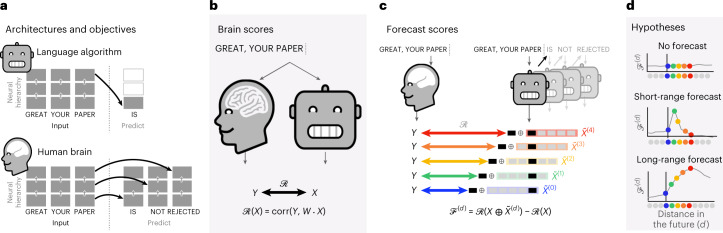
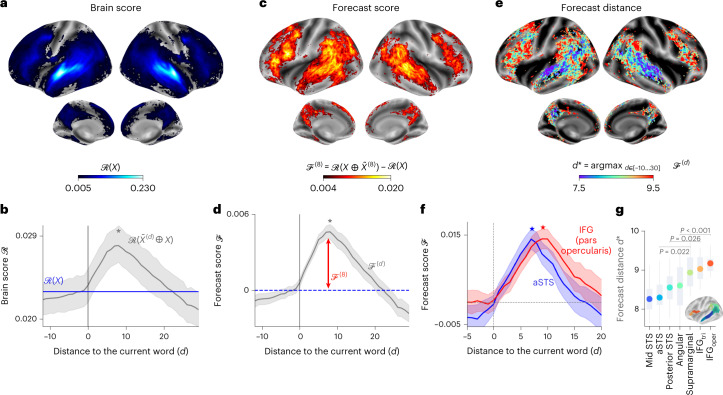
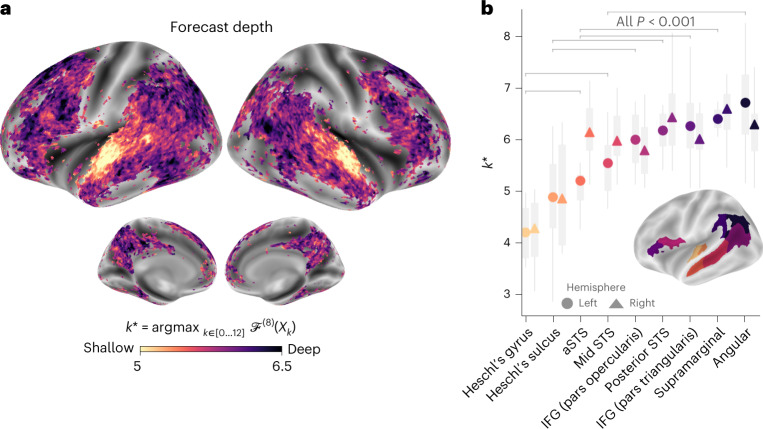
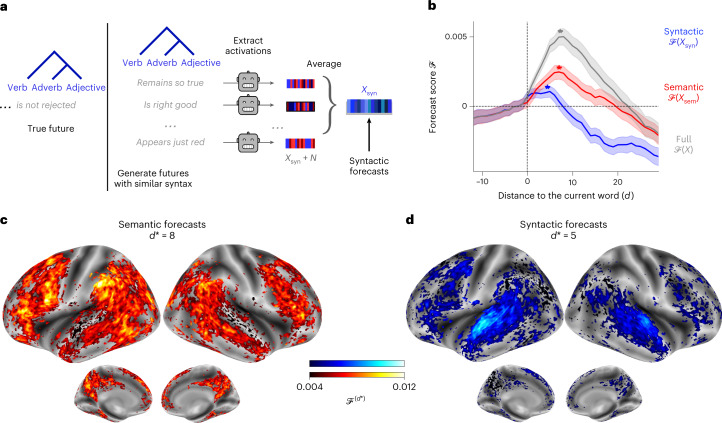
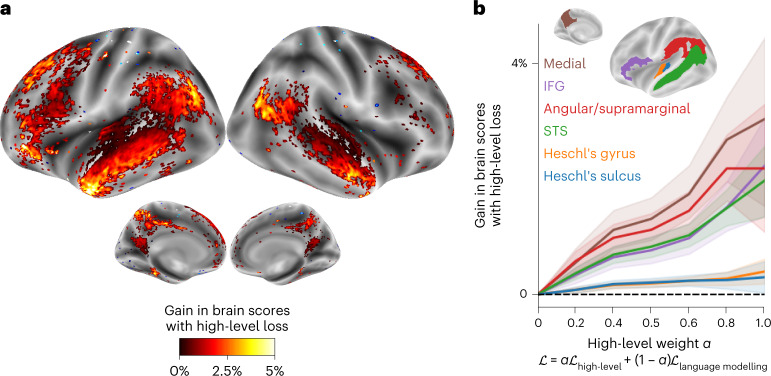
Considerable progress has recently been made in natural language processing: deep learning algorithms are increasingly able to generate, summarize, translate and classify texts. Yet, these language models still fail to match the language abilities of humans. Predictive coding theory offers a tentative explanation to this discrepancy: while language models are optimized to predict nearby words, the human brain would continuously predict a hierarchy of representations that spans multiple timescales. To test this hypothesis, we analysed the functional magnetic resonance imaging brain signals of 304 participants listening to short stories. First, we confirmed that the activations of modern language models linearly map onto the brain responses to speech. Second, we showed that enhancing these algorithms with predictions that span multiple timescales improves this brain mapping. Finally, we showed that these predictions are organized hierarchically: frontoparietal cortices predict higher-level, longer-range and more contextual representations than temporal cortices. Overall, these results strengthen the role of hierarchical predictive coding in language processing and illustrate how the synergy between neuroscience and artificial intelligence can unravel the computational bases of human cognition.
Overview
The claims and statistics of this paper haven’t been checked yet.
Free: it reads the open-access text and checks the first 5 claims that cite a source we can check. Create a free account to check every claim.
Integrity signals
Registry
Cites
Statistics
Figures
Verification
Claims the paper makes
The claims and statistics of this paper haven’t been checked yet.
Free: it reads the open-access text and checks the first 5 claims that cite a source we can check. Create a free account to check every claim.
Claims other papers make about this one
Each is checked against this paper’s own text: does it say what the citing paper says it does?
The cited source doesn’t support the claim as written.
In the citing paper
“Previous studies in the neural encoding literature all used LLMs that were only aware of the short-term context, i.e., where the context window size was as large as several tens of words1–10.”
From Incremental accumulation of linguistic context in artificial and biological neural networks (2025) · cites this paper as [5]
Checked by a reasoning model — may be wrong.
Experimental — accuracy not yet measuredThe source backs part of the claim, not all of it — or backs it for a different population, condition or comparison.
In the citing paper
“Additionally, we focused on the intermediate-to-deep layers ( 𝑙 = 2 3 𝑛 𝑙𝑎𝑦𝑒𝑟𝑠 ) of each LLM, as suggested by Caucheteux et al. (2023). These layers merit particular attention due to their demonstrated superior predictive capabilities for human brain activity (Schrimpf et al., 2021; Caucheteux and King, 2022; Caucheteux et al., 2023).”
From Can "consciousness" be observed from large language model (LLM) internal states? Dissecting LLM representations obtained from Theory of Mind test with Integrated Information Theory and Span Representation analysis (2025) · cites this paper as Caucheteux et al., 2023
Experimental — accuracy not yet measuredThe cited source says what the claim attributes to it.
In the citing paper
“Recent studies have increasingly explored LLM representations as analogs to neuroimaging data, aligning and comparing the human brain with the LLM”
From Can "consciousness" be observed from large language model (LLM) internal states? Dissecting LLM representations obtained from Theory of Mind test with Integrated Information Theory and Span Representation analysis (2025) · cites this paper as Caucheteux et al., 2023
The cited source says what the claim attributes to it.
In the citing paper
“This finding is consistent with previous studies, which suggest that the 2 3 layer is optimal for predicting human brain activity (Schrimpf et al., 2021; Caucheteux and King, 2022; Caucheteux et al., 2023).”
From Can "consciousness" be observed from large language model (LLM) internal states? Dissecting LLM representations obtained from Theory of Mind test with Integrated Information Theory and Span Representation analysis (2025) · cites this paper as Caucheteux et al., 2023
The cited source says what the claim attributes to it.
In the citing paper
“While LLM representations are being increasingly studied as analogs of neuroimaging data when comparing and aligning human brain activity with LLM”
From Can "consciousness" be observed from large language model (LLM) internal states? Dissecting LLM representations obtained from Theory of Mind test with Integrated Information Theory and Span Representation analysis (2025) · cites this paper as Caucheteux et al., 2023
3 more claims about this paper
Create a free account to see every claim other papers make about this one.
Self-check
Percentages, sums and reported differences re-computed from the paper’s own numbers.
The self-check needs the paper’s full text.
Citations
Cites
Vaswani, A., Shazeer, N., Parmar, N., Uszkoreit, J., Jones, L., Gomez, A. N., Kaiser, L., & Polosukhin, I. (2017) · arXiv · doi:10.48550/arxiv.1706.03762 · Cited by 120,404 · cited 10×
“For each word, (1) we generated n = 10”
BackgroundMethodResultInfluentialScikit-learn: Machine Learning in Python
Pedregosa, F., Varoquaux, G., Gramfort, A., Michel, V., Thirion, B., Grisel, O., Blondel, M., Müller, A., Nothman, J., Louppe, G., et al. (2012) · arXiv · doi:10.48550/arxiv.1201.0490 · Cited by 71,016
Self-citationGoing deeper with convolutions
Szegedy, C., Liu, W., Jia, Y., Sermanet, P., Reed, S., Anguelov, D., Erhan, D., Vanhoucke, V., & Rabinovich, A. (2015) · 2015 IEEE Conference on Computer Vision and Pattern Recognition (CVPR) · doi:10.1109/cvpr.2015.7298594 · Cited by 48,562
SciPy 1.0: fundamental algorithms for scientific computing in Python
Virtanen, P., Gommers, R., Oliphant, T. E., Haberland, M., Reddy, T., Cournapeau, D., Burovski, E., Peterson, P., Weckesser, W., Bright, J., et al. (2020) · Nature Methods · doi:10.1038/s41592-019-0686-2 · Cited by 38,430
Exploring the Limits of Transfer Learning with a Unified Text-to-Text Transformer
Raffel, C., Shazeer, N., Roberts, A., Lee, K., Narang, S., Matena, M., Zhou, Y., Li, W., & Liu, P. J. (2019) · arXiv · doi:10.48550/arxiv.1910.10683 · Cited by 31,859
Language Models are Few-Shot Learners
Brown, T. B., Mann, B., Ryder, N., Subbiah, M., Kaplan, J., Dhariwal, P., Neelakantan, A., Shyam, P., Sastry, G., Askell, A., et al. (2020) · arXiv · doi:10.48550/arxiv.2005.14165 · Cited by 23,372 · cited 8×
“with F(Xk) = R(Xk ⊕ X̃k (d) ) − R(Xk) (equation (3)).”
MethodResultInfluentialRoBERTa: A Robustly Optimized BERT Pretraining Approach
Liu, Y., Ott, M., Goyal, N., Du, J., Joshi, M., Chen, D., Levy, O., Lewis, M., Zettlemoyer, L., & Stoyanov, V. (2019) · arXiv · doi:10.48550/arxiv.1907.11692 · Cited by 16,515
Momentum Contrast for Unsupervised Visual Representation LearningPreprint
He, K., Fan, H., Wu, Y., Xie, S., & Girshick, R. B. (2019) · Computer Vision and Pattern Recognition · doi:10.48550/arxiv.1911.05722 · Cited by 16,385
Bellman, R. E. (2010) · doi:10.1515/9781400835386 · Cited by 14,588
Momentum Contrast for Unsupervised Visual Representation Learning
He, K., Fan, H., Wu, Y., Xie, S., & Girshick, R. (2020) · 2020 IEEE/CVF Conference on Computer Vision and Pattern Recognition (CVPR) · doi:10.1109/cvpr42600.2020.00975 · Cited by 13,347
Research works printed but not linked: 5
- Toneva, M. & Wehbe, L. Interpreting and improving natural-language processing (in machines) with natural language-processing (in the brain). In Advances in Neural Information Processing Systems, Vol. 32 (Curran Associates, 2019).
- Holtzman, A., Buys, J., Maxwell Forbes, L. D. & Choi, Y. The curious case of neural text degeneration. In International Conference on Learning Representations (2020).
- Thakur, N., Reimers, N., Rücklé, A., Srivastava, A. & Gurevych, I. BEIR: a heterogenous benchmark for zero-shot evaluation of information retrieval models. In Thirty-fifth Conference on Neural Information Processing Systems Datasets and Benchmarks Track (Round 2) (2021).
- Devlin, J., Chang, M.-W., Lee, K. & Toutanova, K. BERT: pre-training of deep bidirectional transformers for language understanding. In Proceedings of the 2019 Conference of the North American Chapter of the Association for Computational Linguistics: Human Language Technologies, 1, 4171–4186, (Association for Computational Linguistics, 2019).
- Bardes, A., Ponce, J. & LeCun, Y. VICReg: variance-invariance-covariance regularization for self-supervised learning. In International Conference on Learning Representations (2022).
Cited by
Items 101–200 of 340
The cortical architecture representing the linguistic hierarchy of the conversational speech
Aili, R., Zhou, S., Xu, X., He, X., & Lu, C. (2025) · NeuroImage · doi:10.1016/j.neuroimage.2025.121180 · Cited by 7
Natural Language Processing in Psychiatry: A Field at an Inflection Point
Nour, M. M., & Huys, Q. J. M. (2023) · Biological Psychiatry Cognitive Neuroscience and Neuroimaging · doi:10.1016/j.bpsc.2023.08.001 · Cited by 9
“LLM intermediate representations have recently been used to investigate how semantic information is encoded in human brain activity (15 – 17).”
The unique contribution of uncertainty reduction during naturalistic language comprehension
Ming, S., Wang, J., & Cai, Q. (2024) · Cortex · doi:10.1016/j.cortex.2024.09.007 · Cited by 9
Predictive learning enables compositional representationsPreprint
Boeshertz, G., & Clopath, C. (2025) · bioRxiv (Cold Spring Harbor Laboratory) · doi:10.1101/2025.09.26.678731 · Cited by 8
“…where the cerebellum is hypothesized to predict sensory outcomes to refine movements [14, 31], and to sensory processing, where predictive coding theories posit that higher-level cortical areas send predictions to lower-level areas to be compared against incoming sensory data [2, 8, 25, 37].”
A semantotopic map in human hippocampusPreprint
Mickiewicz, E. A., Franch, M. C., Katlowitz, K. A., Chavez, A. G., Zhu, H., Chericoni, A., Yan, X., Belanger, J. L., Ismail, T., Paulo, D. L., et al. (2025) · bioRxiv (Cold Spring Harbor Laboratory) · doi:10.1101/2025.10.31.685959 · Cited by 6
“Some studies indicate that middle-to-late layers provide better match to neural data than the highest layer (Caucheteux et al., 2023).”
Dynamical systems, literary theory, and the computational modelling of narrative
Pianzola, F. (2024) · Interdisciplinary Science Reviews · doi:10.1177/03080188241257167 · Cited by 6
“…that we can use machine-actioned Language Models (LM) relying on the self-attention mechanism and on contextualised word embeddings (Vaswani et al. 2017; Devlin et al. 2019) to simulate how the human brain semantically processes a text (Toneva and Wehbe 2019; Caucheteux, Gramfort and King 2023).”
Emergence of a temporal processing gradient from naturalistic inputs and network connectivity
Chang, C. H. C., Nastase, S. A., Hasson, U., & Dominey, P. F. (2025) · Proceedings of the National Academy of Sciences · doi:10.1073/pnas.2420105122 · Cited by 5
Evidence for compositionality in fMRI visual representations via Brain Algebra
Ferrante, M., Boccato, T., Toschi, N., & VanRullen, R. (2025) · Communications Biology · doi:10.1038/s42003-025-08706-4 · Cited by 7
Serra, E., Lumaca, M., Brattico, E., Vuust, P., Kringelbach, M. L., & Bonetti, L. (2025) · Brain and Cognition · doi:10.1016/j.bandc.2025.106360 · Cited by 5
Mischler, G., Li, Y. A., Bickel, S., Mehta, A. D., & Mesgarani, N. (2025) · Nature Communications · doi:10.1038/s41467-025-63961-7 · Cited by 5
Schneider, F., & Blank, H. (2026) · PLoS Biology · doi:10.1371/journal.pbio.3003588 · Cited by 6
Sender–receiver subdivisions of the default mode network in perceptual and memory-guided cognition
Zhang, M., Paquola, C., Krieger‐Redwood, K., Mckeown, B., Murphy, C., Liu, C., Margulies, D. S., Leech, R., Smallwood, J., & Jefferies, E. (2026) · Proceedings of the National Academy of Sciences · doi:10.1073/pnas.2528851123 · Cited by 5
Peng, Z., Xu, L., Lian, J., An, X., Chen, S., Shao, Y., Jiao, F., & Lv, J. (2024) · Cognitive Neurodynamics · doi:10.1007/s11571-024-10171-4 · Cited by 5
“These predictions are constructed at different levels of abstraction to form a hierar - chical prediction system (Clark 2013; Alexander and Wom-elsdorf, 2012; Caucheteux et al. 2023).”
Foraging and inertia: Understanding the developmental dynamics of overt visual attention
Wass, S. V., Amadó, M. P., Northrop, T., Haresign, I. M., & Phillips, E. (2024) · Neuroscience & Biobehavioral Reviews · doi:10.1016/j.neubiorev.2024.105991 · Cited by 5
“Once initiated, these higher-order goals may serve to prolong a play episode longer than it would have lasted in the absence of a goal, possibly through similar mechanisms to those discussed in Section 5.1.1; however, this remains almost completely unexplored (see Section 6).”
Influential“What” and “When” Predictions Jointly Modulate Speech Processing
Auksztulewicz, R., Ödül, O. B., Helbling, S., Böke, A., Cappotto, D., Luo, D., Schnupp, J. W. H., & Melloni, L. (2025) · Journal of Neuroscience · doi:10.1523/jneurosci.1049-24.2025 · Cited by 7
Prediction tendency, eye movements, and attention in a unified framework of neural speech trackingPreprint
Schubert, J., Gehmacher, Q., Schmidt, F., Hartmann, T., & Weisz, N. (2023) · eLife · doi:10.1101/2023.06.27.546746 · Cited by 5
“A mediation analysis, however, suggests that they are related and that ocular speech tracking contributes to neural speech tracking (or vice versa).”
Divergences between Language Models and Human BrainsPreprint
Zhou, Y., Liu, E., Neubig, G., Tarr, M. J., & Wehbe, L. (2023) · PubMed Central · doi:10.48550/arxiv.2311.09308 · Cited by 5
“Moreover, LM representations can predict the hierarchy of brain responses [Caucheteux and King, 2022b, Caucheteux et al., 2023].”
Modality-Specific and Amodal Language Processing by Single NeuronsPreprint
Lakretz, Y., Friedmann, N., King, J.-R., Mankin, E. A., Rangel, A., Tankus, A., Dehaene, S., & Fried, I. (2024) · eLife · doi:10.1101/2024.11.16.623907 · Cited by 5
Self-citationSchönmann, I., Szewczyk, J., de Lange, F. P., & Heilbron, M. (2025) · eLife · doi:10.7554/elife.106543.1 · Cited by 7
Sequence as output, not limitation: Comparative evidence for niche-driven language evolution
Shi, E. R. (2026) · Evolutionary Linguistic Theory · doi:10.1075/elt.25002.shi · Cited by 5
Carta, S., Aličković, E., Zaar, J., Valdés, A. L., & Liberto, G. M. D. (2026) · PLoS Biology · doi:10.1371/journal.pbio.3003876 · Cited by 4
“With these caveats in mind, counter to consistent reports of the similarity between modern LLMs with neurophysiological activity [73–75], the higher neurophysiological plausibility of the Reset model suggests that prior context is not availed of by our brains in the way implemented by the competing…”
Söderström, P. (2024) · Cambridge University Press eBooks · doi:10.1017/9781009161114 · Cited by 4
Brain-wide representation of social knowledge
Alcalá-López, D., Mei, N., Margolles, P., & Soto, D. (2024) · Social Cognitive and Affective Neuroscience · doi:10.1093/scan/nsae032 · Cited by 4
“Recent research has shown that the representations of large language models such as GPT2 map linearly onto the brain responses of participants listening to stories (Caucheteux and King, 2022; Caucheteux et al. , 2023).”
BackgroundFeedback processing in the primate brain and in AI systems
Jiang, Y. M., & He, S. (2024) · Science China Technological Sciences · doi:10.1007/s11431-024-2755-x · Cited by 5
Bruera, A., & Poesio, M. (2024) · PLoS ONE · doi:10.1371/journal.pone.0291099 · Cited by 5
Brain-model neural similarity reveals abstractive summarization performance
Zhang, Z., Guo, S.-L., Zhou, W. H., Luo, Y., Zhu, Y., Zhang, L., & Li, L. (2025) · Scientific Reports · doi:10.1038/s41598-024-84530-w · Cited by 6
“However, studies 18,19,56 have, in turn, provided approaches for separating syntactic and semantic representations in GPT-2 (decoder-only).”
Sterner, E., Greve, A., & Knolle, F. (2025) · Schizophrenia · doi:10.1038/s41537-025-00643-9 · Cited by 5
“While recent fi ndings provide evidence for hierarchical predictions during language processing 45 – 48 , it remains unclear how (semantic) prior beliefs are initially formed 12 and maintained or updated over time.”
Cooper, G., Blackburne, G., Dekker, T. M., Das, R., & Skipper, J. I. (2023) · bioRxiv (Cold Spring Harbor Laboratory) · doi:10.1101/2023.09.18.558347 · Cited by 6
A large annotated dataset of vocalizations by common marmosets
Lamothe, C., Obliger-Debouche, M., Best, P., Trapeau, R., Ravel, S., Artières, T., Marxer, R., & Belin, P. (2025) · Scientific Data · doi:10.1038/s41597-025-04951-8 · Cited by 8
“In the last decade, DNN-based representations have emerged as the class of computational model that correlates best with human brain responses to a wide range of auditory stimulations, including speech 18,19 , language 20,21 , natural sounds 22 , and even music 23 .”
Dual representation of lexical uncertainty in human cortexPreprint
Guilleminot, P. H., & Morillon, B. (2025) · bioRxiv (Cold Spring Harbor Laboratory) · doi:10.1101/2025.08.08.669343 · Cited by 4
“Trained on vast corpora, LLMs generate context-sensitive probability distributions over upcoming words, aligned with neural signals (Schrimpf et al., 2021; Caucheteux et al., 2023).”
Li, J. (2025) · Natural Language Processing Journal · doi:10.1016/j.nlp.2025.100163 · Cited by 3
Skrill, D., & Norman-Haignere, S. (2023) · PubMed · Cited by 6
Tsai, C. (2024) · Music & Science · doi:10.1177/20592043241267076 · Cited by 5
“This approach mirrors the way the human brain employs predictive coding to process language, engaging predictions that span multiple timescales and hierarchical representation levels (Caucheteux et al., 2023).”
Hippocampal and cortical oscillatory dynamics support semantic processing and performance
Hall, M. C., Rempe, M. P., John, J. A., Garrison, G. M., Glesinger, R. J., Casagrande, C. C., Petro, N. M., Okelberry, H. J., Petts, A. J., Bai, H., et al. (2026) · Communications Biology · doi:10.1038/s42003-026-09718-4 · Cited by 4
“Recent work hasshownthattheleftIFG isspeci fi cally related to predictive processing, including the anticipation of future semantic representations, and is sensitive to semantic anomalies 24,27 , further supporting its role in semantic control under the CSC framework 3 .”
Benchmark evaluation of large language models for clinical decision support in headache management
Chen, S. (2026) · Journal of Oral & Facial Pain and Headache · doi:10.22514/jofph.2026.029 · Cited by 3
“They rely on large-scale training data and predictive learning algorithms to generate contextually coherent responses to user queries [8].”
A decade of comparing brains to DNNs: Progress and perspectives
Schmitt, L., Dong, D. T., Çelik, E., de Lange, F. P., & Toneva, M. (2026) · Trends in Cognitive Sciences · doi:10.1016/j.tics.2026.06.011 · Cited by 3
Unifying the structures of language in a neural population code
Nastase, S. A., Zada, Z., Goldberg, A., & Hasson, U. (2026) · Neuron · doi:10.1016/j.neuron.2026.07.024 · Cited by 4
Reconstructing voice identity from noninvasive auditory cortex recordings
Lamothe, C., Thoret, E., Trapeau, R., Giordano, B. L., Sein, J., Takerkart, S., Ayache, S., Artières, T., & Belin, P. (2026) · eLife · doi:10.7554/elife.98047.3 · Cited by 3
Exploring the World of Coding in Artificial Intelligence: A Guide for Primary School Students
Munusamy, P., Sanmugam, M., & Edwards, B. I. (2024) · Advances in educational technologies and instructional design book series · doi:10.4018/979-8-3693-7255-5.ch007 · Cited by 4
Xu, T., Li, J., & Jiang, X. (2025) · NeuroImage · doi:10.1016/j.neuroimage.2025.121253 · Cited by 3
Munich Sentence (MuSe) Database: Completion norms and audio recordings for 619 German sentences
Sterner, E., Stadler, M., & Knolle, F. (2026) · Behavior Research Methods · doi:10.3758/s13428-026-02993-3 · Cited by 3
“…across diverse research fields, including studies of the temporal and spatial neurobiological mechanisms of natural language processing (e.g., Caucheteux et al., 2023; Heilbron et al., 2022; Willems et al., 2016), language learning and acquisition (e.g., Busse & Moehlig-Falke, 2019; Fazekas…”
Predictive coding algorithms induce brain-like responses in artificial neural networks
Gütlin, D., & Auksztulewicz, R. (2025) · PLOS complex systems. · doi:10.1371/journal.pcsy.0000076 · Cited by 4
Sentence Reconstruction Leveraging Contextual Meaning from Speech-Related Brain Signals
Lee, J., Lee, S., Lee, Y.-E., Kim, S.-W., & Lee, S. (2023) · Conference proceedings/Conference proceedings - IEEE International Conference on Systems, Man, and Cybernetics · doi:10.1109/smc53992.2023.10394348 · Cited by 4
A neuro-cognitive model of comprehension based on prediction and unification
Blache, P. (2024) · Frontiers in Human Neuroscience · doi:10.3389/fnhum.2024.1356541 · Cited by 4
Floyd, S., Jouravlev, O., Mineroff, Z., Poliak, M., Gibson, E. A. F., & Fedorenko, E. G. (2023) · PsyArXiv (OSF Preprints) · doi:10.31234/osf.io/e2xta · Cited by 3
Çelık, F., Ersanlı, C. Y., & Drummond, A. (2023) · Research Square · doi:10.21203/rs.3.rs-3388153/v1 · Cited by 5
Comprehensive Neural Representations of Naturalistic Stimuli through Multimodal Deep LearningPreprint
Fu, M., Chen, G., Zhang, Y., Zhang, M., & Wang, Y. (2025) · eLife · doi:10.7554/elife.107607.1 · Cited by 5
Habersetzer, T., Steuer, S., Radeloff, A., & Meyer, B. T. (2025) · Scientific Data · doi:10.1038/s41597-025-06397-4 · Cited by 6
“It is hypothesized that robust speech perception arises from a hierarchical auditory processing system that progressively extracts more complex features from the acoustic input 2–7 .”
A distinct set of brain areas process prosody--the melody of speechPreprint
Regev, T. I., Kim, H. S., Jhingan, N., Swords, S., Kean, H., Casto, C., Cole, J., & Fedorenko, E. G. (2025) · bioRxiv (Cold Spring Harbor Laboratory) · doi:10.64898/2025.12.12.693781 · Cited by 3
LITcoder: A General-Purpose Library for Building and Comparing Encoding ModelsPreprint
Binhuraib, T. O. A., Gao, R., & Ivanova, A. A. (2025) · arXiv (Cornell University) · doi:10.48550/arxiv.2509.09152 · Cited by 4
CLIMB – Curriculum Learning for Infant-inspired Model Building
Martinez, R. D., McGovern, H., Goriely, Z., Davis, C., Caines, A., Buttery, P., & Beinborn, L. (2023) · Proceedings of the BabyLM Challenge at the 27th Conference on Computational Natural Language Learning · doi:10.18653/v1/2023.conll-babylm.10 · Cited by 2
A survey on neuro-mimetic deep learning via predictive coding
Salvatori, T., Mali, A., Buckley, C. L., Lukasiewicz, T., Rao, R. P. N., Friston, K., & Ororbia, A. (2026) · Neural Networks · doi:10.1016/j.neunet.2025.108161 · Cited by 2
Hearing as adaptive cascaded envelope interpolation
Thoret, E., Ystad, S., & Kronland-Martinet, R. (2023) · Communications Biology · doi:10.1038/s42003-023-05040-5 · Cited by 3
The hierarchical predictive coding framework of post-traumatic stress disorder
Pierce, Z. P., & Black, J. M. (2024) · Medical Hypotheses · doi:10.1016/j.mehy.2024.111365 · Cited by 3
Beyond Acoustics: Capacity Limitations of Linguistic Levels
Giroud, J., & Morillon, B. (2026) · Cambridge University Press eBooks · doi:10.1017/9781009295888.016 · Cited by 2
Making sense of transformer success
Angius, N., Perconti, P., Plebe, A., & Acciai, A. (2025) · Frontiers in Artificial Intelligence · doi:10.3389/frai.2025.1509338 · Cited by 2
Mechtenberg, H. (2025) · Cognitive Affective & Behavioral Neuroscience · doi:10.3758/s13415-025-01355-4 · Cited by 2
Probabilistic processing: Possible, probable, or preposterous? A dialectical essay
Loued‐Khenissi, L., & Pascucci, D. (2025) · New Ideas in Psychology · doi:10.1016/j.newideapsych.2025.101212 · Cited by 2
Temporal propagation of neural state boundaries in naturalistic context
Oetringer, D., Henderson, S., Gözükara, D., & Geerligs, L. (2025) · Cerebral Cortex · doi:10.1093/cercor/bhaf284 · Cited by 2
“The optimal delay was then defi ned as the delay that gave the maximum Gaussian match.”
Nakai, T., Daikoku, T., & Oseki, Y. (2025) · Neuroscience Research · doi:10.1016/j.neures.2025.105001 · Cited by 3
From Voice to Self: An Integrative Framework on Self-Voice Processing
Orepić, P., & Pinheiro, A. P. (2026) · Perspectives on Psychological Science · doi:10.1177/17456916261422585 · Cited by 3
“…gyrus; OV = other voice; PFC = prefrontal cortex; STG = superior temporal gyrus; STS = superior temporal sulcus; SV = self-voice. information (Caucheteux et al., 2023; Friston et al., 2021; Ralph et al., 2017), yet these frameworks tend to focus on speech and linguistic content rather than…”
Kölbl, N., Tziridis, K., Maier, A., Kinfe, T. M., Chavarriaga, R., Schilling, A., & Krauß, P. (2026) · NeuroImage · doi:10.1016/j.neuroimage.2026.121966 · Cited by 2
Neural decoding of autobiographical mental image features with a general semantic model
Anderson, A. J., Fernandino, L., Gross, W. L., Rey, H. G., & Binder, J. R. (2025) · Nature Communications · doi:10.1038/s41467-025-65541-1 · Cited by 2
“Alongside these spe-cialisms, all three DMN subsystems have been implicated in encoding semantic features in language comprehension 16 – 23 .”
SparseLinTab: Sparse linear self-attention for efficient feature interaction in tabular data
Xu, N., Lin, S., Li, Z., Lv, H., Wang, N., Liu, C., & Guo, Z. (2025) · High-Confidence Computing · doi:10.1016/j.hcc.2025.100379 · Cited by 2
The anticipation of imminent events is time-scale invariant
Grabenhorst, M., Poeppel, D., & Michalareas, G. (2026) · Proceedings of the National Academy of Sciences · doi:10.1073/pnas.2518982123 · Cited by 2
Giulianelli, M., Wallbridge, S., Cotterell, R., & Fernández, R. (2026) · Journal of Memory and Language · doi:10.1016/j.jml.2025.104715 · Cited by 7
Evaluating ChatGPT’s TPACK performance: a more knowledgeable other for teacher training
Çelik, F., Drummond, A., Ersanlı, C. Y., Duran, V., & Barjesteh, H. (2026) · Telematics and Informatics Reports · doi:10.1016/j.teler.2026.100300 · Cited by 3
Brain-AI convergence: Generative world models and hierarchical attention for human intelligence
Ohmae, S., & Ohmae, K. (2026) · Patterns · doi:10.1016/j.patter.2026.101593 · Cited by 2
“99,141,142 This extraction of increasingly abstract language information aligns naturally with the theoretical framework of hierarchical predictive coding in language.”
Investigating the cortical tracking of speech and music with sung speech
Cantisani, G., Chalehchaleh, A., Liberto, G. M. D., & Shamma, S. (2023) · Interspeech (USB) · doi:10.21437/interspeech.2023-1949 · Cited by 6
“Previous studies investigating either speech or music encoding using non-invasive neurophysiology provided evidence in this sense. sound acoustics and phonological units to semantics for speech, and build predictions of upcoming sensory events, making perception an active process [16, 14].”
BackgroundRunnqvist, E., & Kell, C. A. (2025) · Current Opinion in Behavioral Sciences · doi:10.1016/j.cobeha.2025.101573 · Cited by 2
Mapping the mind’s landscape: Common neural encoding for spatial and morality concepts
Wang, J., Qian, M., & Cai, Q. (2025) · NeuroImage · doi:10.1016/j.neuroimage.2025.121485 · Cited by 2
Cortical representations of languages during natural dialoguePreprint
Yamashita, M., Kubo, R., & Nishimoto, S. (2023) · bioRxiv (Cold Spring Harbor Laboratory) · doi:10.1101/2023.08.21.553821 · Cited by 2
45th Bulletin of the International Neuropsychoanalysis Society
(2024) · Neuropsychoanalysis · doi:10.1080/15294145.2024.2327655 · Cited by 2
“…others, recent detailed examination of neural circuits in brain injury cases (Matchin et al., 2022) and high-resolution fMRI studies in healthy subjects (Caucheteux et al., 2023; Gior-dano et al., 2023) have provided a new perspective that the role of the superior temporal gyrus (STG) as an…”
BackgroundReconstructing voice identity from noninvasive auditory cortex recordingsPreprint
Lamothe, C., Thoret, E., Trapeau, R., Giordano, B. L., Sein, J., Takerkart, S., Ayache, S., Artières, T., & Belin, P. (2024) · eLife · doi:10.7554/elife.98047 · Cited by 2
Predictive processing in neuroscience, computational modeling and psychology
Brucklacher, M., Lee, K., Moreni, G., Mejías, J. F., Bohté, S. M., & Pennartz, C. M. A. (2024) · Elsevier eBooks · doi:10.1016/b978-0-12-820480-1.00201-1 · Cited by 4
Beta Oscillations as a Mechanistic Target for Predictive Processing Deficits in Psychosis
Wei, H. T., Power, L., Singh, K. D., & Palaniyappan, L. K. (2026) · Schizophrenia Bulletin Open · doi:10.20944/preprints202511.2284.v1 · Cited by 2
Introduction to Predictive Coding Networks for Machine LearningPreprint
Stenlund, M. (2025) · arXiv (Cornell University) · doi:10.48550/arxiv.2506.06332 · Cited by 2
“Further empirical neuroscience evidence is presented in [30, 5].”
Demler, V. F., Sterner, E., & Knolle, F. (2025) · medRxiv · doi:10.64898/2025.12.07.25341628 · Cited by 2
Distinct regimes of spatial prediction across the visual field during natural visionPreprint
Scheurer, W. H., & Heilbron, M. (2026) · bioRxiv (Cold Spring Harbor Laboratory) · doi:10.64898/2026.03.27.714859 · Cited by 2
“…bottom-up feature encoding hierarchy and aligns with hierarchical accounts of predictive coding in the cortex, which postulate a hierarchy of predictions, in which every cortical area sends top-down predictions about the expected features encoded at the level below [37, 2, 31, 38, 39, 3, 40].”
Gehmacher, Q., Kaltenmaier, A., Schubert, J., Weisz, N., & Press, C. (2026) · bioRxiv (Cold Spring Harbor Laboratory) · doi:10.64898/2026.06.12.731866 · Cited by 2
Formal Properties of Language as Constraints on Neural DynamicsPreprint
Murphy, E. (2026) · arXiv · doi:10.48550/arxiv.2609.14384 · Cited by 2
Probing Next-Word and Long-Distance Prediction Using Encoding Modelling and MEG
Schönmann, I., de Lange, F. P., & Heilbron, M. (2023) · Conference on Cognitive Computational Neuroscience (CCN) · doi:10.32470/ccn.2023.1454-0 · Cited by 2
The Simulative Role of Neural Language Models in Brain Language Processing
Angius, N., Perconti, P., Plebe, A., & Acciai, A. (2024) · Philosophies · doi:10.3390/philosophies9050137 · Cited by 1
Measuring Sound Symbolism In Audio-Visual Models
Tseng, W.-C., Shih, Y.-J., Harwath, D. F., & Mooney, R. J. (2024) · IEEE Spoken Language Technology Workshop (SLT) · doi:10.1109/slt61566.2024.10832254 · Cited by 3
“Such research can bridge deep learning approaches in speech processing with cognitive science, offering insights into model behavior that aligns with human perceptual and cognitive process—an area of broad interest within the research community [33, 34].”
A primate grammar enabling incremental processing
Gallot, Q., Tillé, Y., Depriester, C., Moran, S., & Zuberbühler, K. (2025) · iScience · doi:10.1016/j.isci.2025.112229 · Cited by 1
Puffay, C., Mischler, G., Choudhari, V., Vanthornhout, J., Bickel, S., Mehta, A. D., Schevon, C. A., McKhann, G. M., hamme, H. V., Francart, T., et al. (2026) · Imaging Neuroscience · doi:10.1162/imag.a.1227 · Cited by 1
“S5a), which contains areas encoding context ( Caucheteux et al., 2023), and (2) the electrodes are less responsive, leading to poorer prediction scores than in subjects 1 and 2 (Supplementary Fig .”
InfluentialGao, S., Nash, R., Burns, S. M., & Leong, Y. C. (2025) · Social Cognitive and Affective Neuroscience · doi:10.1093/scan/nsaf043 · Cited by 3
“Our goal was to fit encoding models that map semantic information to observed and predicted fMRI data (Naselaris et al. 2011, Deniz et al. 2019, Caucheteux et al. 2023).”
Lei, Y., Liu, L., Chen, J., Tang, C., Fan, S., Cai, Y., & Ding, G. (2025) · Behavioral Sciences · doi:10.3390/bs15091159 · Cited by 1
“For instance, Caucheteux et al. (2023) found that brain‑based semantic representations exhibit long‑ range predictive dynamics, whereas LLMs primarily rely on short‑range contexts.”
What does my network learn? Assessing interpretability of deep learning for EEG
Göktepe-Kavis, P., Aellen, F. M., Alnes, S. L., & Tzovara, A. (2025) · Imaging Neuroscience · doi:10.1162/imag.a.1033 · Cited by 2
“…the use of deep learning in fundamental neuroscience studies stays limited and is largely focused on the study of linguistic processing and predictions ( Cai et al., 2025; Caucheteux et al., 2023; Goldstein et al., 2022, 2025; Riveland & Pouget, 2024; Russo et al., 2022; Tuckute et al., 2024).”
Kim, J., Wessel, J. R., & Hendrickson, K. (2026) · Quarterly Journal of Experimental Psychology · doi:10.1177/17470218251398828 · Cited by 1
“The current results align closely with predictive coding frameworks (Caucheteux et al., 2023; Lupyan & Clark, 2015; Rao & Ballard, 1999), which suggest that the brain is organized hierarchically, where top-down neural signals convey predictions based on constantly updated models of the environment,…”
Directed cortico-limbic dialogue in the human brain
van Maren, E., Mignardot, C. G., Widmer, R., Friedrichs‐Maeder, C., Ansó, J., Nevalainen, P., Fuchs, M., Pollo, C., Tzovara, A., Proix, T., et al. (2026) · Nature Communications · doi:10.1038/s41467-026-68701-z · Cited by 1
Giraldi, E., Frosolone, M., Corcoran, A. W., Barca, L., Corsini, A., Donnarumma, F., D’Ausilio, A., & Pezzulo, G. (2026) · Imaging Neuroscience · doi:10.1162/imag.a.1178 · Cited by 1
“Furthermore, various studies indicate that language processing uses extensively predictive mechanisms ( Altmann & Kamide, 1999; Caucheteux et al., 2023; Goldstein, Zada, et al., 2022; Kuperberg & Jaeger, 2016; Levy, 2008; Schrimpf et al., 2021).”
Neural dynamics of narrative structure-building in visual stories
Grenon, K. E., Cohn, N., & Coderre, E. L. (2026) · Cortex · doi:10.1016/j.cortex.2026.02.016 · Cited by 1
Toward a Realistic Encoding Model of Auditory Affective Understanding in the Brain
Pan, G., Yang, Y., Chen, S., Wang, X., Liu, L., Zheng, H., & Tang, S. (2026) · IEEE Transactions on Affective Computing · doi:10.1109/taffc.2026.3670015 · Cited by 2
“Representations derived from deep learning: Previous research has shown that activations of DNNs can deliver rich semantic information compared to traditional feature extraction methods [24], [28], [47].”
InfluentialVoice information processing by the primate brain
Lamothe, C., Giamundo, M., & Belin, P. (2026) · Trends in Cognitive Sciences · doi:10.1016/j.tics.2026.02.005 · Cited by 1
Zhang, Z., Zhou, W. H., Zhang, S., Li, X., Zhang, L., & Li, L. (2026) · Neural Networks · doi:10.1016/j.neunet.2026.108916 · Cited by 1
Hierarchical Decoding of Perceived Speech From Non-Invasive Brain Recordings
Wang, B., Xu, X., Xiao, B., Linze, Z., Wu, X., Cheng, H., & Chen, J. (2026) · IEEE Transactions on Neural Systems and Rehabilitation Engineering · doi:10.1109/tnsre.2026.3688564 · Cited by 7
“This design progressively expands the receptive field to extract neural patterns across diverse time scales, aligning with the hierarchical dynamic coding of speech [29], where higher-level features require broader temporal integration [54], [55], [56].”
The effects of spoiler types on audience immersion: an inter-subject correlation study of heart rate
Zhou, X., Chai, H., Zhang, W., Zuo, W., & Liu, Q. (2026) · Cognitive Research Principles and Implications · doi:10.1186/s41235-026-00733-x · Cited by 1
“Because narrative comprehension relies on hierarchical long range prediction mechanisms, video spoilers may more strongly engage this predictive architecture and thus produce a more pronounced phase-dependent reduction (Caucheteux et al., 2023).”
Tsai, C., Chien, L.-Y., & Goh, J. O. S. (2026) · Psychology of Music · doi:10.1177/03057356261442576 · Cited by 1
Investigation of Information Processing Mechanisms in the Human Brain During Reading Tanka Poetry
Sato, A., Chikazoe, J., Funai, S., Mochihashi, D., Shikano, Y., Asahara, M., Iso, S., & Kobayashi, I. (2023) · Lecture notes in computer science · doi:10.1007/978-3-031-44198-1_34 · Cited by 1
Metadata
- Authors
- Caucheteux, C., Gramfort, A., & King, J.-R.
- Affiliations
- Institut national de recherche en sciences et technologies du numérique (FR)
- Centre National de la Recherche Scientifique (FR)
- Corresponding author
- Caucheteux, Charlotte
- King, Jean-Rémi
- Venue
- Nature Human Behaviour
- Published
- 2023-03-02
- Volume
- 7
- Issue
- 3
- Pages
- 430-441
- ISSN
- 2397-3374 (ISSN-L)
- PMC
- PMC10038805
- OpenAlex
- W4322766928
- Semantic Scholar
- 66c286df54551baba7351a1ed44019367e5aa7ea
- Cited by
- 308
- References
- 82
- Citations by year
- 2026: 78 · 2025: 109 · 2024: 76 · 2023: 43
- FWCI
- 45.83
- Type
- journal article
- Language
- en
- Open access
- hybrid
- doi.org
- Licence
- cc-by
- creativecommons.org/licenses/by/4.0 (tdm)
- creativecommons.org/licenses/by/4.0 (vor)
- Locations
- Nature Human Behaviour (publishedVersion, cc-by)
- PubMed Central (publishedVersion, cc-by)
- PubMed (publishedVersion)
- HAL (submittedVersion, other-oa)
- RePEc: Research Papers in Economics (submittedVersion)
- Funders
- Philippe Foundation
- Agence Nationale de la Recherche (ANR-17-EURE-, ANR-17-EURE-0017, ANR-17)
- Université de Recherche Paris Sciences et Lettres (ANR-17-EURE-0017)
- Topics
- Life Sciences › Neuroscience › Cognitive Neuroscience › Neurobiology of Language and Bilingualism
- Life Sciences › Neuroscience › Cognitive Neuroscience › Neuroscience and Music Perception
- Social Sciences › Psychology › Developmental and Educational Psychology › Reading and Literacy Development
- Keywords
- predictive coding, hierarchical predictive coding, speech perception, language processing, natural language models, short stories, frontoparietal cortex, temporal cortex, multiple time scales, computational neuroscience, artificial intelligence
- MeSH terms
- Artificial Intelligence, Auditory Perception, Brain, Humans, Speech, Temporal Lobe
About these checks
Registry, retraction, Cites and statistics results are computed, not judged, with one exception: a printed reference that no index lists is read once by a model before it counts as a citation error. Claims are extracted by a model and kept only when their quote appears verbatim in the text; each cited source is then checked, with a model’s help, for whether it says what the claim relies on. Those verdicts can be wrong — read the claim’s quote and the cited source before relying on one.
Statistics and arithmetic are recomputed, not judged.
Confidence bands are shown only for fields calibrated on our annotated test set. None is calibrated yet, so no band is shown.
What counts as a claim ›How we measure confidence ›How we check this ›
Are you an author, or do you see a problem with this page? Request a review
Data sources
Bibliographic data: Semantic Scholar, OpenAlex, Crossref.
Contains information from the Semantic Scholar Academic Graph Datasets, made available under the ODC Attribution License (ODC-BY 1.0).
Semantic Scholar’s data is described in: Kinney, R., et al. (2023). The Semantic Scholar Open Data Platform. arXiv:2301.10140.
