

Gut microbiota-derived hexa-acylated lipopolysaccharides enhance cancer immunotherapy responses
Open accessPublished version of a preprint
The DOI matches its Crossref record; 60 of the 66 references it cites were found in a registry or an index; 9 of the 34 sources its claims cite were checked for support.
Abstract
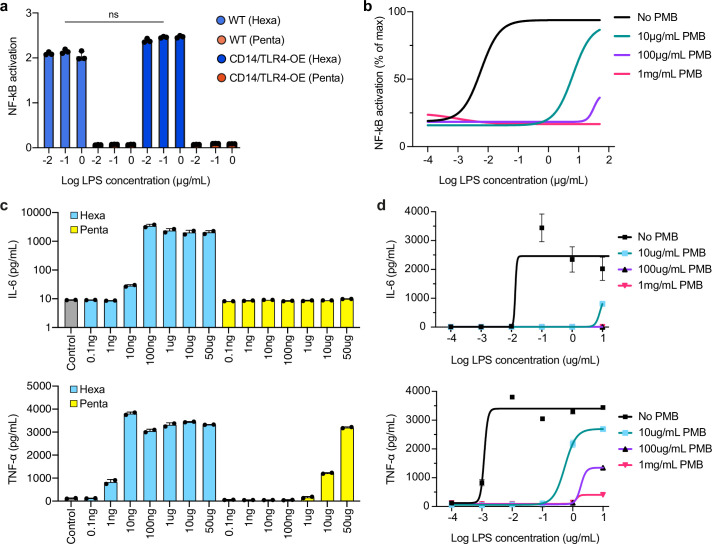
The gut microbiome modulates immunotherapy treatment responses, and this may explain why immune checkpoint inhibitors, such as anti-PD-1, are only effective in some patients. Previous studies correlated lipopolysaccharide (LPS)-producing gut microbes with poorer prognosis; however, LPS from diverse bacterial species can range from immunostimulatory to inhibitory. Here, by functionally analysing faecal metagenomes from 112 patients with melanoma, we found that a subset of LPS-producing bacteria encoding immunostimulatory hexa-acylated LPS was enriched in microbiomes of clinical responders. In an implanted tumour mouse model of anti-PD-1 treatment, microbiota-derived hexa-acylated LPS was required for effective anti-tumour immune responses, and LPS-binding antibiotics and a small-molecule TLR4 antagonist abolished anti-PD-1 efficacy. Conversely, oral administration of hexa-acylated LPS to mice significantly augmented anti-PD-1-mediated anti-tumour immunity. Penta-acylated LPS did not improve anti-PD-1 efficacy in vivo and inhibited hexa-acylated LPS-induced immune activation in vitro. Microbiome hexa-acylated LPS therefore represents an accessible predictor and potential enhancer of immunotherapy responses.
Overview
CoChat Summary
TL;DR
Functional metagenomics of pre-treatment faecal microbiomes from 112 patients with melanoma shows that anti-PD-1 responders are enriched for gut bacteria encoding hexa-acylated LPS, especially lpxM, while total LPS biosynthesis genes are higher in non-responders. In mouse MC38 tumour models, microbiota-derived hexa-acylated LPS and host TLR4 are required for anti-PD-1 efficacy, and oral hexa-acylated LPS supplementation enhances anti-PD-1-mediated anti-tumour immunity.
Key findings
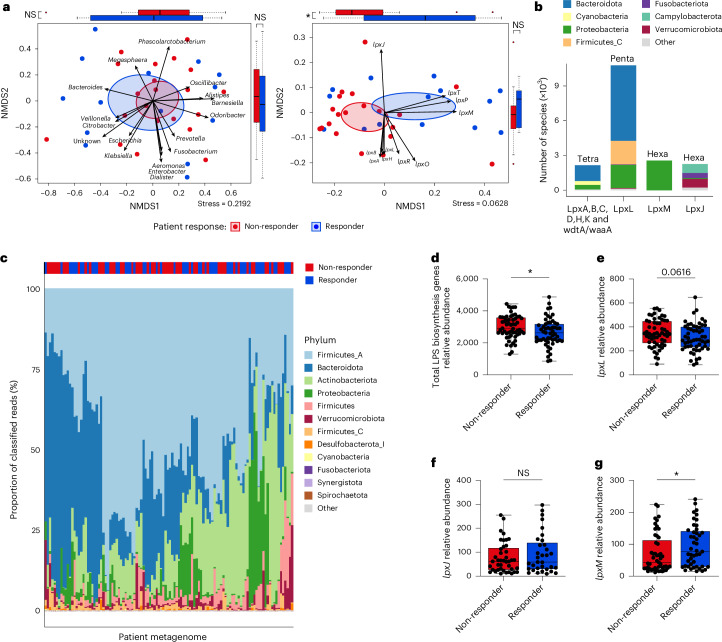
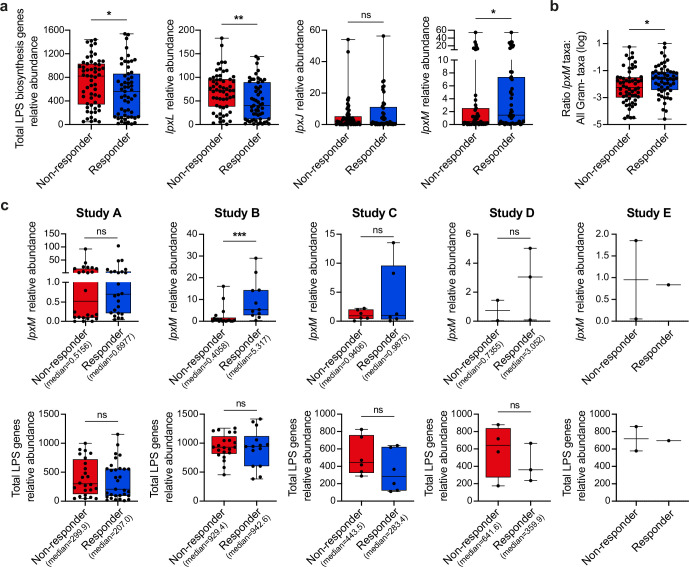
- In 112 patients with melanoma before anti-PD-1 therapy, total LPS biosynthesis genes were significantly higher in non-responders (*P* = 0.0218), but lpxM, which mediates lipid A hexa-acylation, was significantly higher in responders (*P* = 0.0453); lpxM-to-lpxL ratios were also higher in responders (*P* = 0.0292).
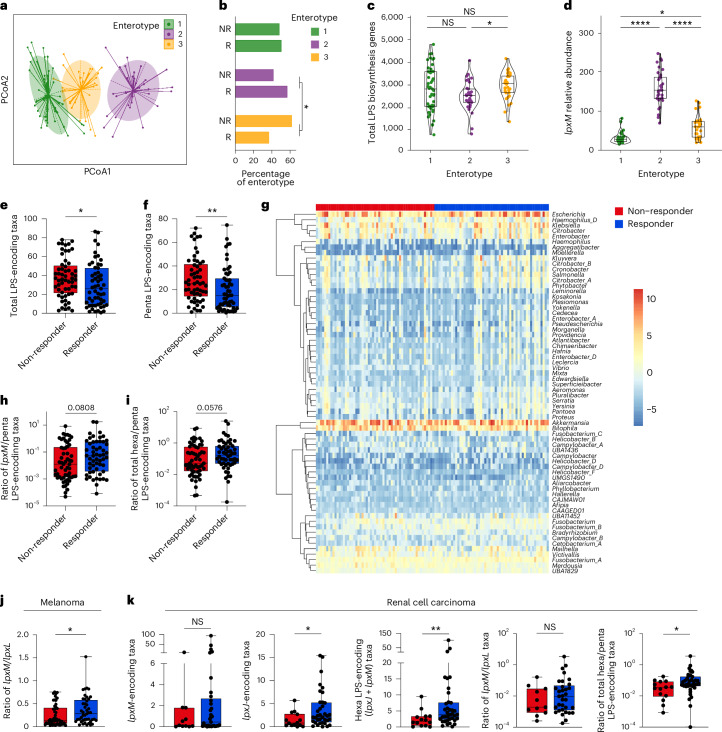
- Ratios of hexa- to penta-acylated LPS-producing taxa were more than doubled in responders: mean lpxM-to-penta ratios were 0.9238 in responders versus 0.4217 in non-responders, and mean total hexa-to-penta ratios were 1.255 versus 0.6244.
- Functional enterotype 2 was mostly responders and enterotype 3 mostly non-responders (*P* = 0.03424); enterotype 3 had higher total LPS biosynthesis genes (*P* = 0.03), whereas enterotype 2 had higher lpxM abundance (1 versus 2, *P* = 4.11 × 10⁻¹⁵; 2 versus 3, *P* = 1.70 × 10⁻⁷).
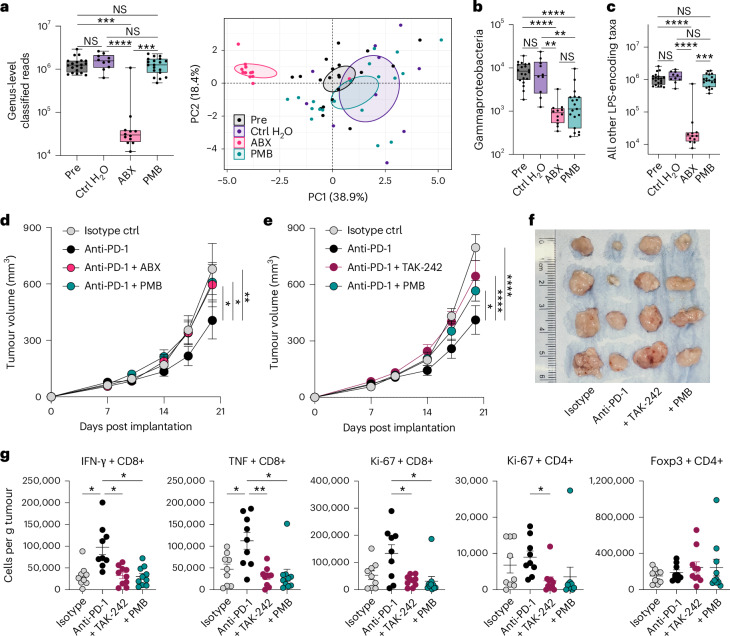
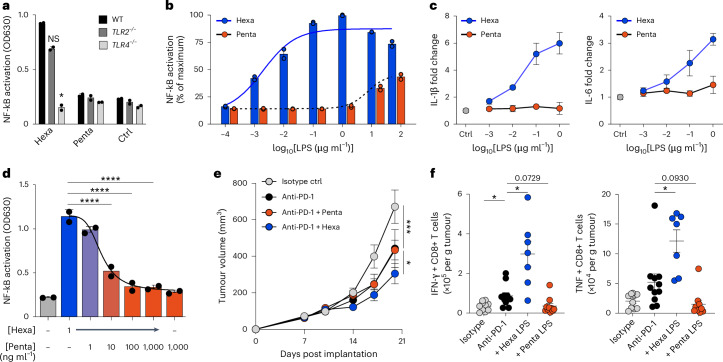
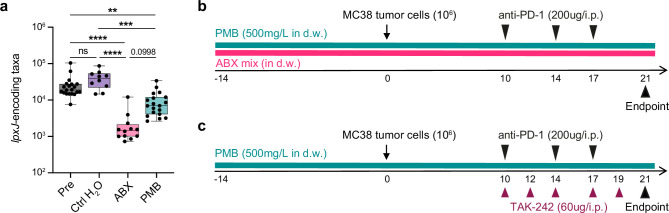
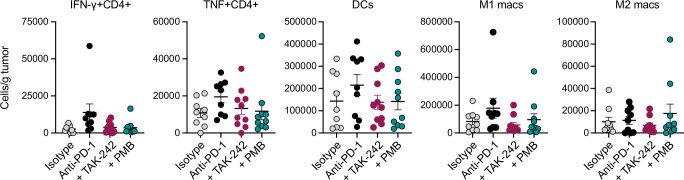
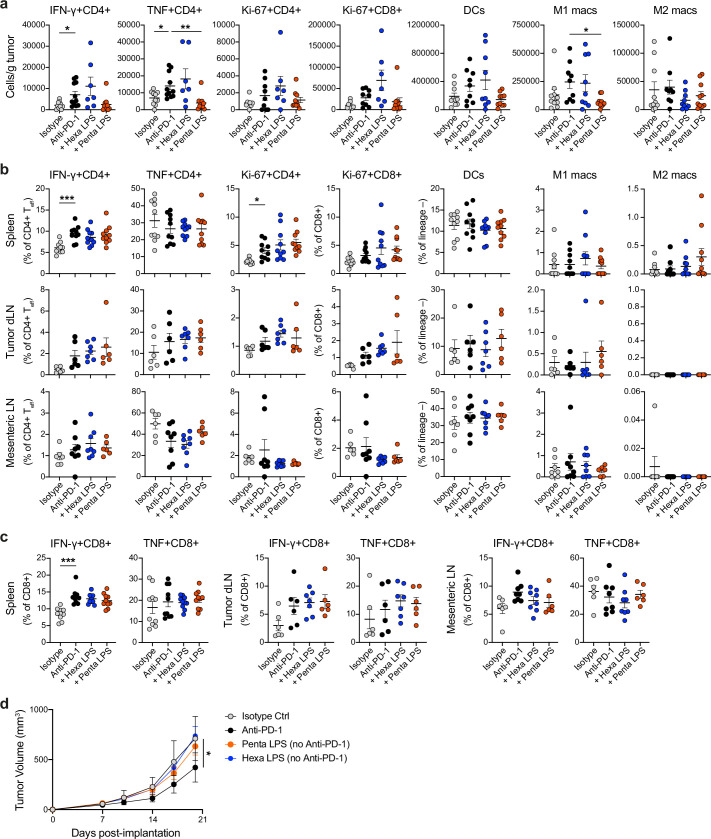
- In MC38 mouse tumours, broad-spectrum antibiotics or polymyxin B abolished anti-PD-1 efficacy (anti-PD-1 versus isotype control, P* = 0.0054; anti-PD-1 versus ABX + anti-PD-1, *P* = 0.0478; anti-PD-1 versus PMB + anti-PD-1, *P* = 0.0318), as did TLR4 inhibitor TAK-242 during anti-PD-1 therapy (anti-PD-1 versus isotype control, P* < 0.0001; anti-PD-1 versus anti-PD-1 + TAK242, P* < 0.0001). Oral hexa-acylated LPS improved anti-PD-1 efficacy (anti-PD-1 versus isotype control, *P* = 0.0002; anti-PD-1 versus anti-PD-1 + Hexa, *P* = 0.0318), while penta-acylated LPS did not.
Methods
- Public human metagenomes from six datasets were analysed, including 112 patients with melanoma treated with anti-PD-1 across seven clinical studies and four countries; only baseline samples before therapy were included, excluding combination therapy and recent proton pump inhibitor, H2 receptor antagonist, or antibiotic use. Responders were stable disease, partial response, or complete response; non-responders were progressive disease. A separate renal cell carcinoma cohort (*n* = 51) was also analysed.
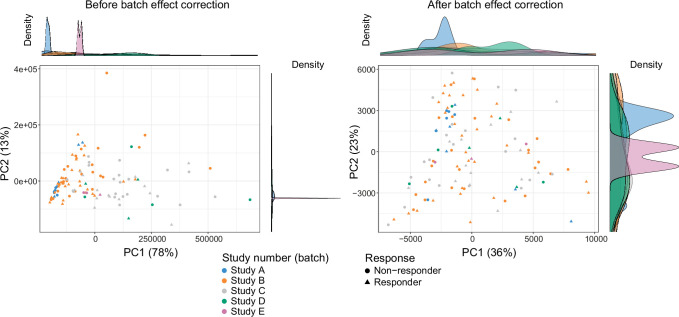
- Metagenomes underwent quality control, host decontamination, assembly, gene calling, and functional annotation using KEGG/SqueezeMeta and Salmon; lpx operon genes were identified from pangenomes of 3,006 bacterial species. Batch correction used ComBat-Seq and ConQuR; functional enterotypes used PAM clustering with Jensen–Shannon divergence, and ordination used NMDS.
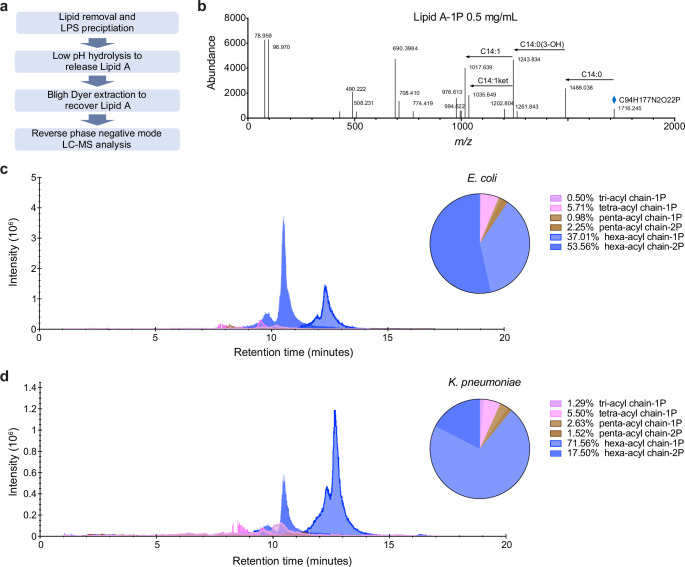
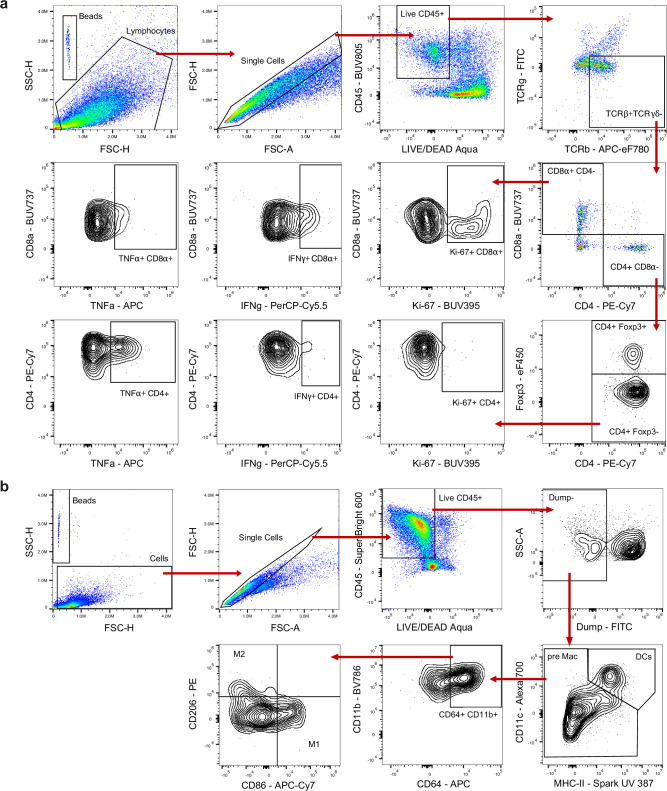
- Mouse experiments used 9-week-old female C57BL/6 mice with subcutaneous MC38 colorectal adenocarcinoma; treatments included polymyxin B, broad-spectrum antibiotics, anti-PD-1, TAK-242, and oral hexa- or penta-acylated LPS. Tumour-infiltrating lymphocytes were analysed by flow cytometry, lipid A acylation was assessed by LC–MS from commensal isolates, and in vitro NF-κB/cytokine assays used THP-1 and RAW 264.7 cells.
Limitations
- The paper states that inferred LPS biosynthesis capacity from taxonomy and pangenome annotations did not always match taxonomy-independent functional analyses, and that current databases and functional annotation methods are incomplete; it also states that methods to accurately measure lipid A acylation states in complex samples such as patient stool need further development.
- The paper states that human TLR4/MD2 discriminates LPS acylation states differently from mouse TLR4/MD2, so the mouse model required human macrophage in vitro experiments as a complement; it calls for further optimization of humanized mouse models and additional tumour models.
- Evident from the text: the human findings are observational associations from public datasets, so causality is not established in patients; the in vivo causal evidence comes from one mouse tumour model (MC38) in female C57BL/6 mice, and the paper notes investigators were not formally blinded and sample sizes were not pre-determined statistically.
Model-written summary. Check it against the paper before relying on it.
Integrity signals
Registry
Cites
Statistics
Figures
Verification
Claims the paper makes
7 Valid · 0 Not valid · 17 Not checked · 67 Own results and interpretations
The cited sources support only part of this claim — read each source’s verdict below.
In the paper
“Several studies in rodents have indeed demonstrated that oral LPS administration at doses up to 1 mg kg−1 does not cause any inflammation, pathology or associated toxicity”
§ Gut microbiota-derived hexa-acylated lipopolysaccharides enhance cancer immunotherapy responses > Discussion
What the sources say
- Partly supportedcites [32] Mizobuchi, H. Oral route lipopolysaccharide as a potential dementia preventive agent inducing neuroprotective microglia. Front. Immunol. 14, 1110583 (2023). 36969154 PMC10033586 sourceExperimental — accuracy not yet measured
The Introduction describes oral LPS at 0.01–1 mg/kg as maintaining high safety, and its animal-safety discussion reports no toxicity at substantially higher doses. But the section on disease exacerbation reports cases in which oral LPS worsened arthritis or autoimmune disease. The categorical claim that it causes no inflammation or pathology is therefore stronger than this review supports; page numbers are unavailable in our copy. (LLM, conf=0.88)
boosted- Asserted: passes — The authors put it forward as true.
- Checkable: passes — It can be checked against evidence.
- Load-bearing: unclear — It is unclear whether the paper’s conclusions depend on it.
- Based: passes — The paper gives a reason why it holds.
- Partly supported
Every source the paper cites for this claim was checked and supports it.
In the paper
“the abundance of total LPS biosynthesis genes was significantly higher in non-responders to anti-PD-1 therapy (Fig. 1d), as previously noted4.”
§ Gut microbiota-derived hexa-acylated lipopolysaccharides enhance cancer immunotherapy responses > Results > Patient microbiome LPS segregates responders to anti-PD-1
What the sources say
- Supportedcites [4] McCulloch, J. A. et al. Intestinal microbiota signatures of clinical response and immune-related adverse events in melanoma patients treated with anti-PD-1. Nat. Med. 28, 545–556 (2022). 35228752 PMC10246505 source
The Discussion of McCulloch et al. (2022) states that, using a binning approach to candidate bacterial driver genes, they observed enrichment of glycosyltransferases associated with LPS synthesis in non-responders (NRs); the Results section 'Gene signature of favorable and unfavorable intestinal taxa' likewise reports increased abundance of genes encoding enzymes related to LPS synthesis within unfavorable taxa. The Results section 'Systemic and gut inflammation associates with poor response' adds that of ~39,000 microbial genes, 1,200 were differentially abundant between progressors and non-progressors (FDR < 0.2, FC > 1.5; Extended Data Fig. 5b–d), with LPS synthesis being the signature in progressors — the group the paper equates with poor response/non-responders. The only wording the source does not use verbatim is 'total' LPS biosynthesis gene abundance (its finding is reported as LPS-synthesis-related genes and an LPS synthesis signature, in the Pittsburgh early-sample cohort at 10 months), but the attributed content — higher abundance of LPS biosynthesis genes in anti-PD-1 non-responders — is stated. (LLM, conf=0.82)
plainstates an associationn = 112- Asserted: passes — The authors put it forward as true.
- Checkable: passes — It can be checked against evidence.
- Load-bearing: passes — The paper’s conclusions depend on it.
- Based: passes — The paper gives a reason why it holds.
- Rests on an assumption not shown here.
- Supported
Every source the paper cites for this claim was checked and supports it.
In the paper
“we used isolates from our culture collection17 and confirmed by liquid chromatography–mass spectrometry that gut commensal Gammaproteobacteria that encode lpxM can produce hexa-acylated lipid A (Extended Data Fig. 3).”
§ Gut microbiota-derived hexa-acylated lipopolysaccharides enhance cancer immunotherapy responses > Results > Functional metagenomics reveal hexa-LPS signature of response
What the sources say
- Supportedcites [17] Beresford-Jones, B. S. et al. The Mouse Gastrointestinal Bacteria Catalogue enables translation between the mouse and human gut microbiotas via functional mapping. Cell Host Microbe30, 124–138.e8 (2022). PMC8763404 34971560 source
The citation is attached to “our culture collection,” not to the sentence’s lipid A finding. The Results section, “Expanding the cultured diversity of the mouse gut microbiota,” identifies the paper’s mouse culture collection and its bacterial isolates, supporting that identification. No page number is available in our copy. (LLM, conf=0.91)
plainstates a cause- Asserted: passes — The authors put it forward as true.
- Checkable: passes — It can be checked against evidence.
- Load-bearing: passes — The paper’s conclusions depend on it.
- Based: passes — The paper gives a reason why it holds.
- Supported
The sources with a verdict support this claim; the rest weren’t checked yet, have no full text we could read, or their verdicts aren’t rated yet.
In the paper
“Given that the acylation state of LPS lipid A has been shown to directly impact immune signalling through TLR46,21”
§ Gut microbiota-derived hexa-acylated lipopolysaccharides enhance cancer immunotherapy responses > Results > Hexa-LPS stimulates host immunity and enhances immunotherapy
What the sources say
- Supportedcites [6] Vatanen, T. et al. Variation in microbiome LPS immunogenicity contributes to autoimmunity in humans. Cell 165, 842–853 (2016). 27133167 PMC4950857 source
The Results section 'Contrasting Immunogenicity of LPS Subtypes' states that 'the number of acyl chains is a strong determinant of immune activation by LPS' and that penta- and tetra-acylated lipid A structures elicit reduced TLR4 responses, and that 'structural changes in lipid A impact recognition by TLR4'. The same section's own data contrast hexa-acylated E. coli lipid A (strong TLR4/NFkB signalling) with mono-phosphorylated penta/tetra-acylated B. dorei lipid A (no response), and a follow-up passage rules out phosphorylation status as the driver, leaving acylation state as the determinant. The claim is therefore stated by our copy at the same level of generality. (LLM, conf=0.88)
- Not checked yetcites [21] Bryant, C. E., Spring, D. R., Gangloff, M. & Gay, N. J. The molecular basis of the host response to lipopolysaccharide. Nat. Rev. Microbiol. 8, 8–14 (2010). 19946286 source
boostedstates a cause- Asserted: passes — The authors put it forward as true.
- Checkable: passes — It can be checked against evidence.
- Load-bearing: passes — The paper’s conclusions depend on it.
- Based: passes — The paper gives a reason why it holds.
- Supported
None of the sources cited for this claim have been checked yet.
In the paper
“As previously reported1,2, broad-spectrum antibiotics significantly abrogated anti-PD-1-induced tumour reduction”
§ Gut microbiota-derived hexa-acylated lipopolysaccharides enhance cancer immunotherapy responses > Results > Microbiome LPS and TLR4 are required for anti-PD-1 efficacy
What the sources say
- Could not verifycites [1] Matson, V. et al. The commensal microbiome is associated with anti-PD-1 efficacy in metastatic melanoma patients. Science 359, 104–108 (2018). 29302014 PMC6707353 sourceExperimental — accuracy not yet measured
Our full-text copy of Matson et al. (2018) reports an association between baseline commensal composition in 42 metastatic melanoma patients and anti–PD-1 clinical response, and fecal-transfer experiments in germ-free mice showing that 'Anti–PD-L1 was markedly efficacious in mice colonized with R microbiota yet completely ineffective in NR-derived mice' (Results, Abstract section). No passage anywhere in our copy mentions broad-spectrum antibiotics, antibiotic exposure, or abrogation of tumour reduction by antibiotics (searched: 'antibiotics', 'broad-spectrum antibiotics abrogated anti-PD-1 efficacy', 'antibiotic treatment reduced tumor control germ-free mice'). The claim's specific intervention is therefore neither stated nor contradicted by this source, so it cannot be verified from our copy. (LLM, conf=0.72)
- Not checked yetcites [2] Routy, B. et al. Gut microbiome influences efficacy of PD-1-based immunotherapy against epithelial tumors. Science 359, 91–97 (2018). 29097494 source
plainstates a cause- Asserted: passes — The authors put it forward as true.
- Checkable: passes — It can be checked against evidence.
- Load-bearing: passes — The paper’s conclusions depend on it.
- Based: passes — The paper gives a reason why it holds.
- Rests on an assumption not shown here.
- Could not verify
45 more claims
Create a free account to see all 91 claims and to verify the 25 references still open.
- Probably not a substantial claim. 30
- It may state two separate claims as one. 21
Claims other papers make about this one
Each is checked against this paper’s own text: does it say what the citing paper says it does?
In the citing paper
“For example, the number of acyl chains attached to lipid A — the most conserved and immunologically active portion of LPS — can modulate host toll-like receptor 4 (TLR4) signaling and thereby influence the efficacy of anti-PD-1 immunotherapy.135”
From Gut dysbiosis in oncology: a risk factor for immunoresistance (2026) · doi:10.1038/s41422-025-01212-6 · cites this paper as [135]
Citations
Cites
Trimmomatic: a flexible trimmer for Illumina sequence data
Bolger, A. M., Lohse, M., & Usadel, B. (2014) · Bioinformatics · doi:10.1093/bioinformatics/btu170 · Cited by 65,548 · cited 1×
“39) 33 ; (2) DNA contamination removal using Bowtie 2 (v2.”
Fast gapped-read alignment with Bowtie 2
Langmead, B., & Salzberg, S. L. (2012) · Nature Methods · doi:10.1038/nmeth.1923 · Cited by 56,400 · cited 1×
“3.5.1) 34 in sensitive mode, removing host DNA from humans (GRCh38) and mice (GRCm39) and non-host phiX174 Illumina spike-in; and (3) checking the FastQC (http://www.bioinformatics. babraham.ac.uk/projects/fastqc/) results and removing any samples that had >50% read duplication from the…”
InfluentialKEGG: Kyoto Encyclopedia of Genes and Genomes
Kanehisa, M. (2000) · Nucleic Acids Research · doi:10.1093/nar/28.1.27 · Cited by 37,077
KEGG: Kyoto Encyclopedia of Genes and Genomes
Ogata, H., Goto, S., Sato, K., Fujibuchi, W., Bono, H., & Kanehisa, M. (1999) · Nucleic Acids Research · doi:10.1093/nar/27.1.29 · Cited by 31,232 · cited 7×
“This way each protein sequence from the metagenomes was assigned to a function (KEGG) and bacterial taxa, and thus a connection between function and taxonomy was established.”
InfluentialNon‐parametric multivariate analyses of changes in community structure
CLARKE, K. R. (1993) · Australian Journal of Ecology · doi:10.1111/j.1442-9993.1993.tb00438.x · Cited by 14,128 · cited 1×
“We used NMDS, a distance-based ordination technique 53,54 in R (vegan::metaMDS()) with default engine = “monoMDS”.”
Salmon provides fast and bias-aware quantification of transcript expression
Patro, R., Duggal, G., Love, M. I., Irizarry, R. A., & Kingsford, C. (2017) · Nature Methods · doi:10.1038/nmeth.4197 · Cited by 12,700 · cited 1×
“8.00) 45 .”
InfluentialProdigal: prokaryotic gene recognition and translation initiation site identification
Hyatt, D., Chen, G.-L., LoCascio, P. F., Land, M. L., Larimer, F. W., & Hauser, L. J. (2010) · BMC Bioinformatics · doi:10.1186/1471-2105-11-119 · Cited by 12,587
Cd-hit: a fast program for clustering and comparing large sets of protein or nucleotide sequences
Li, W., & Godzik, A. (2006) · Bioinformatics · doi:10.1093/bioinformatics/btl158 · Cited by 11,410 · cited 1×
“8.1) 37,38 .”
InfluentialCd-hit: Accelerated for clustering the next-generation sequencing data
Fu, L., Niu, B., Zhu, Z., Wu, S., & Li, W. (2012) · Bioinformatics · doi:10.1093/bioinformatics/bts565 · Cited by 11,175 · cited 1×
“8.1) 37,38 .”
InfluentialDatabase resources of the National Center for Biotechnology Information: update
Wheeler, D. L. (2004) · Nucleic Acids Research · doi:10.1093/nar/gkh073 · Cited by 10,641
Cited by
Gut microbial metabolites in cancer immunomodulation
Liu, H., Xiong, X., Zhu, W., Wang, S., Huang, W.-C., Zhu, G., Xu, H., & Yang, L. (2025) · Molecular Cancer · doi:10.1186/s12943-025-02521-5 · Cited by 62
“Beyond diffusible metabolites, ligand quality within microbial-structural signals also matters: hexa-acylated LPS from commensals more potently licenses anti-PD-1 responses than penta-acylated LPS in CRC models [156].”
InfluentialMicrobial metabolites and their influence on the tumor microenvironment
Duan, H., Xu, B., Luo, P., Chen, T., & Zou, J. (2025) · Frontiers in Immunology · doi:10.3389/fimmu.2025.1675677 · Cited by 35
“Within tumor immunotherapy, LPS - like other microbiota metabolites discussed - enhances host antitumor immunity by activating speci fi c immune cell populations and intracellular signaling pathways, thereby potentiating immune checkpoint blockade ef fi cacy including anti-PD-1 therapy (123 – 125).”
Gut dysbiosis in oncology: a risk factor for immunoresistance
(2026) · doi:10.1038/s41422-025-01212-6 · Cited by 24
“135 One A. muciniphila strain isolated from a healthy donor produces an LPS with a lipid A moiety that bene fi cially tunes innate immune signaling and restores intestinal and metabolic homeostasis.”
Chen, L., He, Y., Duan, M., Yang, T., Chen, Y., Wang, W., Cui, D., & Li, C. (2025) · Frontiers in Immunology · doi:10.3389/fimmu.2025.1559396 · Cited by 26
Yang, M., Mao, S., Duan, J., & Xiao, P. (2025) · Carbohydrate Polymers · doi:10.1016/j.carbpol.2025.124723 · Cited by 19
Advancements in understanding tumor‑resident bacteria and their application in cancer therapy
Luo, Y., Huang, X., Wang, R., Lin, Y., Sun, J., Li, K., Wang, D. Y., Yan, Y., & Qiao, Y. (2025) · Military Medical Research · doi:10.1186/s40779-025-00623-1 · Cited by 31
Gut microbiome in gastrointestinal neoplasms: from mechanisms to precision therapeutic strategies
Song, J., Zhang, W., & Wang, D. (2025) · Gut Pathogens · doi:10.1186/s13099-025-00734-z · Cited by 18
“…result is a decrease in the secretion of pro-inflammatory factors and an increase in the secretion of immunosuppressive factors, which may eventually lead to tumor immunosuppression and tumor cell proliferation [31] (This effect is particularly worthy of attention in the context of ICIs treatment).”
Zhao, X., Liu, Z., & Wu, C. (2025) · Integrative Medicine in Nephrology and Andrology · doi:10.1097/imna-d-25-00007 · Cited by 18
Gut microbiota contributes to obstructive sleep apnea-induced hypertension by gut-heart axis in mice
Zhang, X., Yin, Y., Chen, Y., Lin, L., Shen, S., Fang, F., & Wang, Q. (2025) · International Immunopharmacology · doi:10.1016/j.intimp.2025.114667 · Cited by 15
Integrating functional metagenomics to decipher microbiome–immune interactions
Sardar, P., Almeida, A., & Pedicord, V. A. (2024) · Immunology and Cell Biology · doi:10.1111/imcb.12798 · Cited by 16
Self-citationThe role of the microbiome on immune homeostasis of the host nervous system
Zhao, S., Fu, D., Lin, Y., Sun, X., Wang, X., Wu, X., & Zhang, X. (2025) · Frontiers in Immunology · doi:10.3389/fimmu.2025.1609960 · Cited by 16
Probiotic membrane vesicles: emerging tools for disease treatment
Verbunt, J., & Stassen, F. R. M. (2025) · Microbiome Research Reports · doi:10.20517/mrr.2025.20 · Cited by 12
Vitamin D, Gut Microbiota, and Cancer Immunotherapy—A Potentially Effective Crosstalk
Yan, Y., Mao, S., Guo, Y., Chenhang, Y., Jiang, Q., Zhao, L. R., & Zhao, L. R. (2025) · International Journal of Molecular Sciences · doi:10.3390/ijms26157052 · Cited by 13
“Analysis of fecal metagenomes from 112 melanoma patients and in vivo experiments in mice revealed that bacterial subpopulations encoding immunostimulatory hexa-acylated lipopolysaccharide (LPS) can enhance the antitumor efficacy of anti-PD-1 therapy [31].”
Guan, X., Zou, B., Jin, W., Liu, Y., Lan, Y., Qian, J., Luo, J., Lei, Y., Liang, X., Zhang, S., et al. (2025) · Acta Pharmaceutica Sinica B · doi:10.1016/j.apsb.2025.08.012 · Cited by 10
“It can activate inflammatory cytokines expression and trigger an inflammatory response by binding with receptors on the surface of host cells, such as TLR4 63,64 .”
Tumor Immunotherapy and Microbiome: From Bench‐to‐Bedside Applications
Lin, A., Xiong, M., Jiang, A., Chen, L., Huang, L., Li, K., Wong, H. Z. H., Zhang, J., Liu, Z., Cheng, Q., et al. (2026) · MedComm · doi:10.1002/mco2.70454 · Cited by 11
“Experimental studies in animal models have shown that the efficacy of anti-PD-1 therapy in tumor-bearing mice largely depends on microbiome-derived hexa-acylated lipopolysaccharide (LPS) [125].”
Microbiota mechanisms in cancer progression and therapy
Zhang, X., Fam, K. T., Dai, T., & Hang, H. C. (2025) · Cell chemical biology · doi:10.1016/j.chembiol.2025.04.005 · Cited by 9
LPS‐Binding Hydrogel for TLR4‐Mediated Microbiota‐Immune Modulation
Chen, J., Wu, C., Yang, R., Chen, Z., Yang, X., Xu, Y., Cheng, X., Sui, H., Zhang, S., Zhu, X., et al. (2025) · Advanced Materials · doi:10.1002/adma.202514484 · Cited by 13
Historical rise of cancer and dietary linoleic acid: Mechanisms and therapeutic strategies
Mercola, J. M. (2025) · World Journal of Clinical Oncology · doi:10.5306/wjco.v16.i9.110686 · Cited by 5
Targeting the microbiota‐ miRNA ‐protease axis: A new therapeutic avenue in melanoma
Katsoulieris, E. N., Ioannou, P., & Afratis, N. A. (2026) · FEBS Journal · doi:10.1111/febs.70386 · Cited by 4
Wu, Q., Zhou, Y.-R., Chen, Z.-R., Liu, M.-X., Liu, M.-X., Liu, Y.-F., Li, Z., Zhao, Q.-R., Zhang, Y.-Q., Zhang, H., et al. (2026) · Critical Reviews in Oncology/Hematology · doi:10.1016/j.critrevonc.2026.105230 · Cited by 5
Vicente-Valor, J., Aguado, C., Mateos, M., Tesolato, S. E., Antoñanzas, M., Paz-Cabezas, M., Gómez‐Garré, D., Ortega‐Hernández, A., Bernabé, M. J., Morales, B., et al. (2026) · Lung Cancer · doi:10.1016/j.lungcan.2026.109381 · Cited by 4
Lin, Z., Mu, S., Zhang, W., Guo, Y., Dong, C., Song, L., Zhang, H., Wu, R., Luo, P., & Liang, L. (2026) · Genes & Diseases · doi:10.1016/j.gendis.2026.102428 · Cited by 4
Nanotechnology – Microbiota synergy in cancer immunotherapy
Yang, J., Wang, J., Li, J., & Cui, J. (2025) · Critical Reviews in Oncology/Hematology · doi:10.1016/j.critrevonc.2025.105018 · Cited by 5
Dong, N., Wu, N., Huang, S., Dong, Y., & Xiu, Z. (2026) · Journal of Food Science · doi:10.1111/1750-3841.70878 · Cited by 3
Mechanisms of lipopolysaccharide-driven progression and metastasis of colorectal cancer
Zhang, M., & Liu, K. (2025) · International Journal of Biological Macromolecules · doi:10.1016/j.ijbiomac.2025.147856 · Cited by 5
Tumor-associated bacterial effectors: novel frontiers in tumor biology and immunity
Dai, J.-H., Lu, Y.-Q., Feng, S.-Y., Tan, X.-R., Li, L., Zeng, Y.-C., Chen, J., Ma, J., & Liu, N. (2026) · Science Bulletin · doi:10.1016/j.scib.2026.04.034 · Cited by 4
Decoding the microbiome-immune crosstalk in cancer: from mechanisms to therapeutic translation
Zhao, N., Wu, L., Peng, S., Yang, H., 宋永春, Zhang, Y., & Ding, L. (2026) · Biomarker Research · doi:10.1186/s40364-026-00930-2 · Cited by 2
“Current research reveals that this interplay operates through multiple axes, including: (i) bacterial components, such as lipopolysaccharides (LPS) [33] and flagellin [34], engaging pattern recognition receptors (PRRs) on immune cells to provide basal stimulation that enhances responsiveness to…”
Xu, Y., Wen, B., Gao, N., & Liu, S. (2025) · Frontiers in Oncology · doi:10.3389/fonc.2025.1629479 · Cited by 2
“…and functionality of gut microbiota are not only associated with the development of HCC, but also with the diversity and compositional alterations of the microbiota, which may serve as predictors of patient responses to immunotherapy and are closely linked to the prognosis of liver cancer (8).”
RETRACTED ARTICLE: MAVS is a sensor of fumarate during antiviral immunity
Min, Y., & O'Neill, L. A. J. (2025) · Nature Microbiology · doi:10.1038/s41564-025-01991-z · Cited by 2
RetractedCao, T.-L., & Jiang, H. (2025) · World Journal of Clinical Oncology · doi:10.5306/wjco.v16.i8.107660 · Cited by 1
Wu, T., Zhao, C., Wang, Z., Sheng, W., Zhao, F., Song, H., Wang, W., & Xing, J. (2026) · ACS Nano · doi:10.1021/acsnano.5c17930 · Cited by 1
Chen, Y., Wang, Q., Zhao, Y., Guan, X., Chen, J., Zhu, H., Yu, K., Zheng, W., 司晶星, Li, S., et al. (2026) · Acta Pharmaceutica Sinica B · doi:10.1016/j.apsb.2026.03.026 · Cited by 2
Reprogramming the Tumor Immune Microenvironment to Overcome Immunotherapy Resistance
Mao, J., & Huang, S. (2026) · Cancer Biome and Targeted Therapy · doi:10.66505/cbtt.v1i2.38 · Cited by 1
Vadakkan, K., Karippali, S., Jacob, J., Suriyakala, G., Sathiyaraj, S., & Raphael, R. (2026) · Archives of Microbiology · doi:10.1007/s00203-026-05030-1 · Cited by 1
“However, it is also reported that structural changes in components such as lipopolysaccharides (LPS) can alter bacterial physiology, helping convert a virulent strain into a potent strain with enhanced anticancer properties (Sardar et al. 2025).”
Retracing a tangled tree of archaeal evolution
Paul, B. G., & DiSalvo, B. (2025) · Nature Microbiology · doi:10.1038/s41564-025-02040-5
Liu, W., An, M., Wang, Q., Shang, Y., Zang, S., Ding, H., Fu, S., Liu, Y., Dong, X., Yang, X., et al. (2025) · Open Research (University of Surrey) · doi:10.1002/viw.20250139
The gut microbiome in B cell lymphoma
Vickers, D., Martynchyk, A., Henden, A. S., Smibert, O. C., Hawkes, E. A., & Chong, G. (2025) · Blood Reviews · doi:10.1016/j.blre.2025.101357
Qin, M., Wen, Y., Li, S., Li, S., Li, X., Lin, Y., Hu, L., Xia, H., Pang, Y., & Li, L. (2026) · mSystems · doi:10.1128/msystems.01563-25
Nicklin, A. D., Jordan, A., Price, C. A., Rowe, M., Ilker, N., Mitchell, L. J., Stentz, R., Carding, S. R., Hall, L. J., & Robinson, S. D. (2026) · bioRxiv (Cold Spring Harbor Laboratory) · doi:10.64898/2026.06.08.731027
“At the same time, the lack of TLR4-associated activation should be interpreted specifically for Bif-210 BEVs rather than as a general statement about Gram-negative BEVs or LPS biology, because structurally distinct LPS species can elicit divergent effects on tumour immunity and checkpoint blockade responses 36 .”
InfluentialChien, P.-Y., Cheng, W., Hung, C., Tu, C., Hsia, T., Cho, D. H., Hsueh, P., Lai, Z.-L., Shen, Y., & Lin, Y. (2026) · Cancer Immunology Immunotherapy · doi:10.1007/s00262-026-04463-3
“Because LPS immunogenicity is determined by its acylation pattern [21], we further assessed the relationship between Gram-negative enrichment and predicted abundance of lpxM, an enzyme responsible for the final acylation step generating hexa-acylated lipid A.”
Ozeer, F. Z., & Kester, J. C. (2026) · Nutrients · doi:10.3390/nu18132113
“…responders to anti-PD-1 therapy were enriched for LPS-producing bacteria encoding the immunostimulatory hexa-acylated LPS, which elicited stronger TLR4-mediated immune activation and enhanced anti-PD-1 treat-ment efficacy in murine models, whereas penta-acylated LPS inhibits this activation [92].”
Rani, R., Adhikari, A., & Kumar, S. (2026) · Advanced Gut & Microbiome Research · doi:10.1155/agm3/9526059
Wu, J. J., Wang, Q., & Mao, X. (2026) · Frontiers in Microbiology · doi:10.3389/fmicb.2026.1869733
“The infiltration of gut microbiota and their metabolites into the mucosal lamina propria activates immune responses, primarily through TLR signaling pathways (Sardar et al., 2025).”
Joglekar, K. G. (2026) · Cureus · doi:10.7759/cureus.113248
“Integrative multi-omic approaches, combining metagenomic and metabolomic profiling, have identified specific microbial signatures and metabolites associated with response, reinforcing the value of functional characterization alongside taxonomic profiling [18,22,24].”
Chan, Y.-T., Lu, P., Zou, J., Jiang, Z., Xu, L., & Wang, N. (2026) · Cancer Biome and Targeted Therapy · doi:10.66505/cbtt.v1i3.42
Malik, G., Bashir, S., Javeed, S., Dhanawat, M., & Girdhar, J. (2026) · Elsevier eBooks · doi:10.1016/b978-0-443-33206-7.00008-x
Zaeifi, D., Jamialahmadi, K., & Karimi, G. (2026) · Pharmacological Research · doi:10.1016/j.phrs.2026.109645
Yang, S., Long, D., Qiu, W., Morris-Natschke, S. L., Ma, G., Xu, X., Zhao, Z., Li, Y., Zou, Q., & Wu, H. (2026) · Frontiers in Immunology · doi:10.3389/fimmu.2026.1924150
“…mechanistic studies reveal that microbiota-based interventions can in fl uence key immune pathways, including the CXCL10-CXCR3 axis for T cell recruitment and TLR4 signaling for innate immune activation, thereby reshaping the tumor immune microenvironment to favor antitumor responses (155, 159).”
Modulation of Toll-like receptor signaling by intestinal bacteria in colorectal cancer
Wang, S., Chen, D., Yang, D., Gao, L., & Zhang, Y. (2026) · Frontiers in Cellular and Infection Microbiology · doi:10.3389/fcimb.2026.1963456
“In a separate experiment, TLR4 inhibition during anti-PD-1 treatment substantially reduced treatment ef fi cacy (Sardar et al., 2025).”
From blunt to precision: Engineering microbiome therapeutics against cancer
Rose, A., & Zhu, W. (2026) · Cell Host & Microbe · doi:10.1016/j.chom.2026.08.008
Antibiotics and outcomes of cancer immunotherapy: An updated meta-analysis and clinical applications
Porcari, S., Bolte, L. A., Björk, J. R., Elkrief, A., Derosa, L., Ferrari, M., Pezzullo, A. M., Severino, A., Fusco, W. G., Messaoudene, M., et al. (2026) · Cancer Cell · doi:10.1016/j.ccell.2026.09.012
Metadata
- Authors
- Sardar, P., Beresford-Jones, B. S., Xia, W., Shabana, O., Suyama, S., Ramos, R. J. F., Soderholm, A. T., Tourlomousis, P., Kuo, P., Evans, A. C., Imianowski, C. J., Conti, A. G., Wesolowski, A. J., Baker, N. M., McCord, E. A. L., Okkenhaug, K., Whiteside, S. K., Roychoudhuri, R., Bryant, C. E., Cross, J. R., & Pedicord, V. A.
- Affiliations
- University of Cambridge (GB)
- Memorial Sloan Kettering Cancer Center (US)
- Corresponding author
- Pedicord, Virginia A.
- ORCID
- Sardar, Puspendu
- Beresford-Jones, Benjamin S.
- Xia, Wangmingyu
- Shabana, Omar
- Suyama, Satoshi
- Ramos, Ruben J. F.
- Soderholm, Amelia T.
- Tourlomousis, Panagiotis
- Kuo, Paula
- Evans, Alexander C.
- Imianowski, Charlotte J.
- Conti, Alberto G.
- Wesolowski, Alexander J.
- Baker, Natalie M.
- Okkenhaug, Klaus
- Whiteside, Sarah K.
- Roychoudhuri, Rahul
- Bryant, Clare E.
- Cross, Justin R.
- Pedicord, Virginia A.
- Venue
- Nature Microbiology
- Published
- 2025-02-10
- Volume
- 10
- Issue
- 3
- Pages
- 795-807
- ISSN
- 2058-5276 (ISSN-L)
- PMC
- PMC11879847
- OpenAlex
- W4407341231
- Semantic Scholar
- 1c98ea21fbac0226e1f0c817968ad885448151f3
- Cited by
- 49
- References
- 65
- Citations by year
- 2026: 25 · 2025: 23
- FWCI
- 19.88
- Type
- journal article
- Language
- en
- Open access
- hybrid
- doi.org
- Licence
- cc-by
- creativecommons.org/licenses/by/4.0 (tdm)
- creativecommons.org/licenses/by/4.0 (vor)
- Locations
- Nature Microbiology (publishedVersion, cc-by)
- bioRxiv (Cold Spring Harbor Laboratory) (acceptedVersion)
- PubMed Central (publishedVersion, cc-by)
- PubMed (publishedVersion)
- Apollo (University of Cambridge) (submittedVersion, cc-by)
- Apollo (cc-by)
- Funders
- Wellcome Trust (206245/Z/17/Z, 302351/Z/23/Z)
- Rosetrees Trust (A2194)
- EC | Horizon 2020 Framework Programme (EP/X024709/1)
- Topics
- Health Sciences › Medicine › Oncology › Cancer Immunotherapy and Biomarkers
- Life Sciences › Biochemistry, Genetics and Molecular Biology › Molecular Biology › Gut microbiota and health
- Life Sciences › Immunology and Microbiology › Immunology › Immunotherapy and Immune Responses
- Keywords
- gut microbiota, immune checkpoint inhibitors, anti-PD-1 therapy, cancer immunotherapy response, melanoma, TLR4, antitumor immunity
- MeSH terms
- Gastrointestinal Microbiome, Immune Checkpoint Inhibitors, Acylation, Animals, Bacteria, Feces, Female, Humans, Immunotherapy, Lipopolysaccharides, Male, Melanoma, Mice, Inbred C57BL, Cell Line, Tumor, Toll-Like Receptor 4, Mice, Metagenome, Programmed Cell Death 1 Receptor
About these checks
Registry, retraction, Cites and statistics results are computed, not judged, with one exception: a printed reference that no index lists is read once by a model before it counts as a citation error. Claims are extracted by a model and kept only when their quote appears verbatim in the text; each cited source is then checked, with a model’s help, for whether it says what the claim relies on. Those verdicts can be wrong — read the claim’s quote and the cited source before relying on one.
The claim verdicts this report counts are experimental: their accuracy is not yet measured.
A language model drew the claims from the paper on 2026-10-05, under version 3 of the claim definition (model deepseek-v4.1-flash, prompt extract-v3).
A second model labelled each claim on 2026-10-05 (model jev-1.13-20260917, definition revision gold-guideline-v0.2).
Cited sources are checked with a language model’s help (gpt-6-sol and qwen3.8-omni-flash).
Statistics and arithmetic are recomputed, not judged.
Confidence bands are shown only for fields calibrated on our annotated test set. None is calibrated yet, so no band is shown.
What counts as a claim ›How we measure confidence ›How we check this ›
Are you an author, or do you see a problem with this page? Request a review
Data sources
Bibliographic data: Semantic Scholar, OpenAlex, Crossref.
Contains information from the Semantic Scholar Academic Graph Datasets, made available under the ODC Attribution License (ODC-BY 1.0).
Semantic Scholar’s data is described in: Kinney, R., et al. (2023). The Semantic Scholar Open Data Platform. arXiv:2301.10140.
