

Gut microbiota-derived hexa-acylated lipopolysaccharides enhance cancer immunotherapy responses
Open accessPublished version of a preprint
The DOI matches its Crossref record; 60 of the 66 references it cites were found in a registry or an index; 9 of the 34 sources its claims cite were checked for support.
Abstract
The gut microbiome modulates immunotherapy treatment responses, and this may explain why immune checkpoint inhibitors, such as anti-PD-1, are only effective in some patients. Previous studies correlated lipopolysaccharide (LPS)-producing gut microbes with poorer prognosis; however, LPS from diverse bacterial species can range from immunostimulatory to inhibitory. Here, by functionally analysing faecal metagenomes from 112 patients with melanoma, we found that a subset of LPS-producing bacteria encoding immunostimulatory hexa-acylated LPS was enriched in microbiomes of clinical responders. In an implanted tumour mouse model of anti-PD-1 treatment, microbiota-derived hexa-acylated LPS was required for effective anti-tumour immune responses, and LPS-binding antibiotics and a small-molecule TLR4 antagonist abolished anti-PD-1 efficacy. Conversely, oral administration of hexa-acylated LPS to mice significantly augmented anti-PD-1-mediated anti-tumour immunity. Penta-acylated LPS did not improve anti-PD-1 efficacy in vivo and inhibited hexa-acylated LPS-induced immune activation in vitro. Microbiome hexa-acylated LPS therefore represents an accessible predictor and potential enhancer of immunotherapy responses.
Overview
CoChat Summary
TL;DR
Functional metagenomics of pre-treatment faecal microbiomes from 112 patients with melanoma shows that anti-PD-1 responders are enriched for gut bacteria encoding hexa-acylated LPS, especially lpxM, while total LPS biosynthesis genes are higher in non-responders. In mouse MC38 tumour models, microbiota-derived hexa-acylated LPS and host TLR4 are required for anti-PD-1 efficacy, and oral hexa-acylated LPS supplementation enhances anti-PD-1-mediated anti-tumour immunity.
Key findings
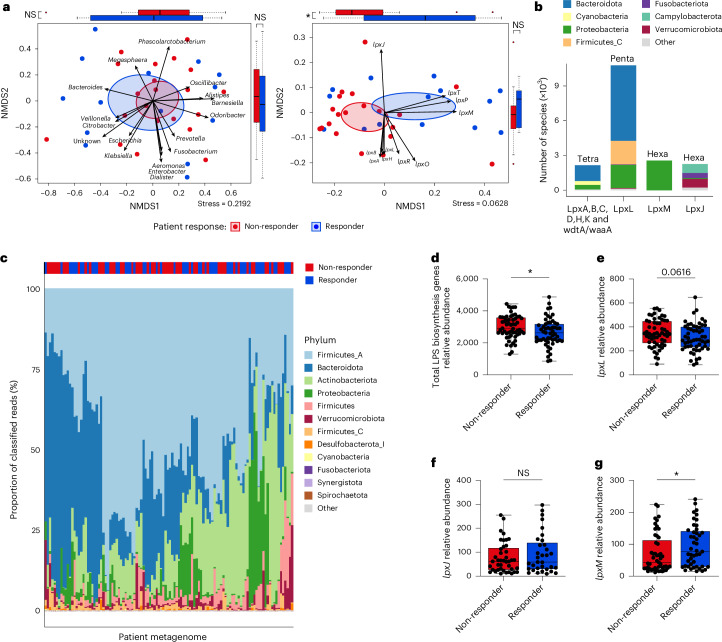
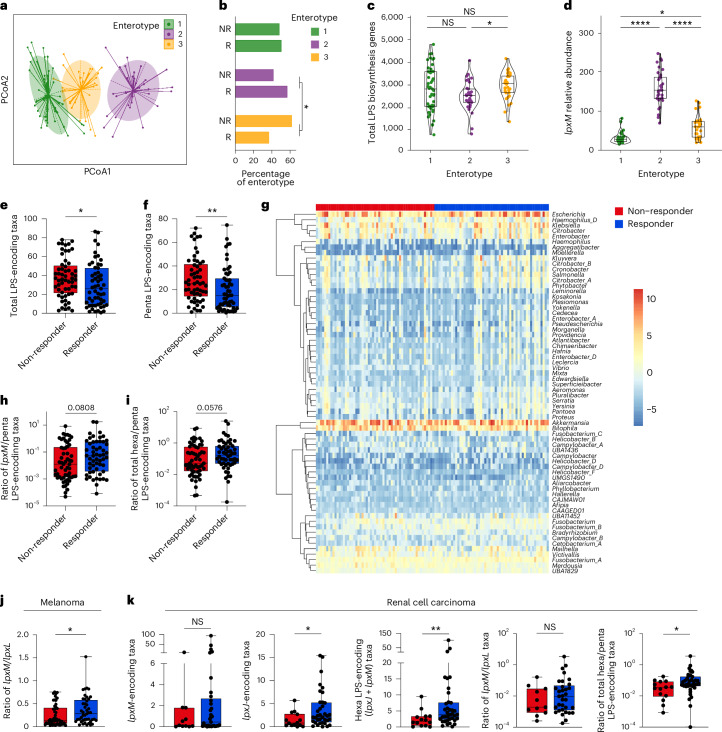
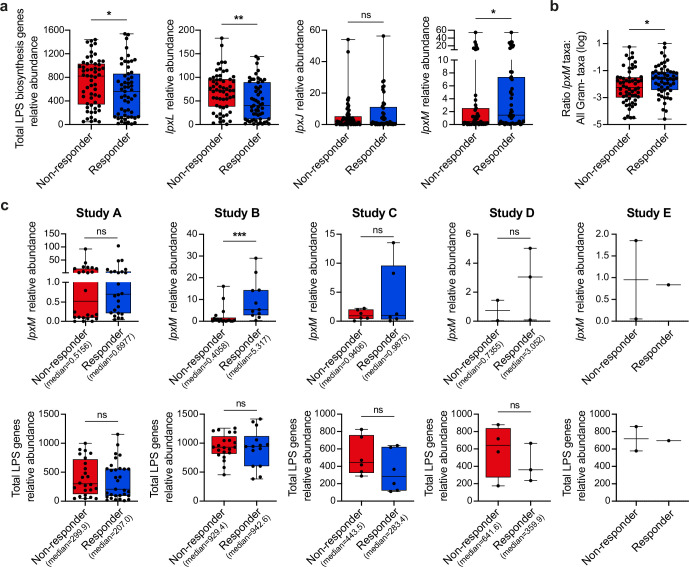
- In 112 patients with melanoma before anti-PD-1 therapy, total LPS biosynthesis genes were significantly higher in non-responders (*P* = 0.0218), but lpxM, which mediates lipid A hexa-acylation, was significantly higher in responders (*P* = 0.0453); lpxM-to-lpxL ratios were also higher in responders (*P* = 0.0292).
- Ratios of hexa- to penta-acylated LPS-producing taxa were more than doubled in responders: mean lpxM-to-penta ratios were 0.9238 in responders versus 0.4217 in non-responders, and mean total hexa-to-penta ratios were 1.255 versus 0.6244.
- Functional enterotype 2 was mostly responders and enterotype 3 mostly non-responders (*P* = 0.03424); enterotype 3 had higher total LPS biosynthesis genes (*P* = 0.03), whereas enterotype 2 had higher lpxM abundance (1 versus 2, *P* = 4.11 × 10⁻¹⁵; 2 versus 3, *P* = 1.70 × 10⁻⁷).
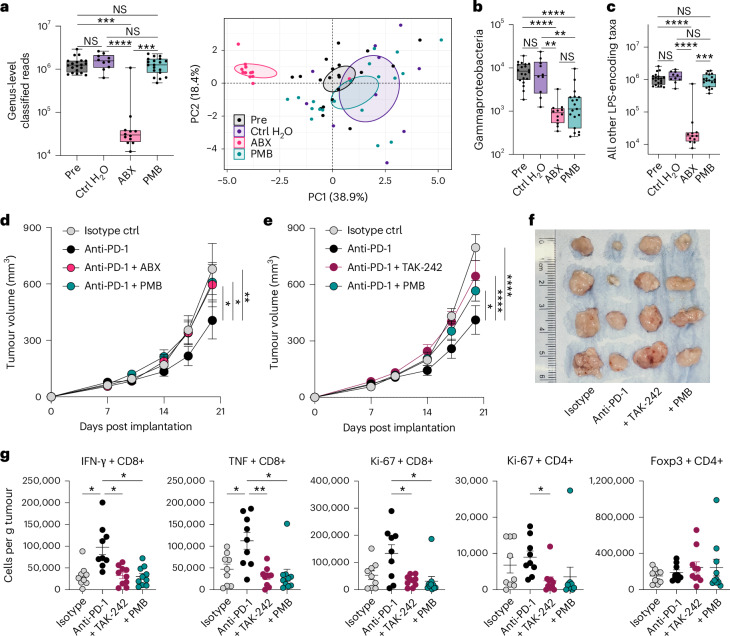
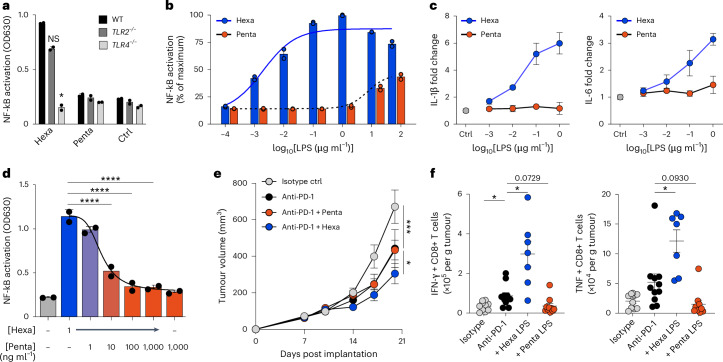
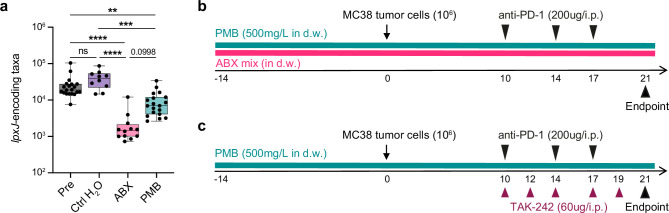
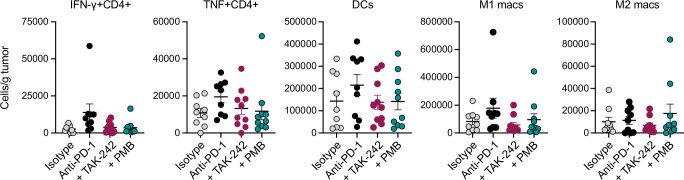
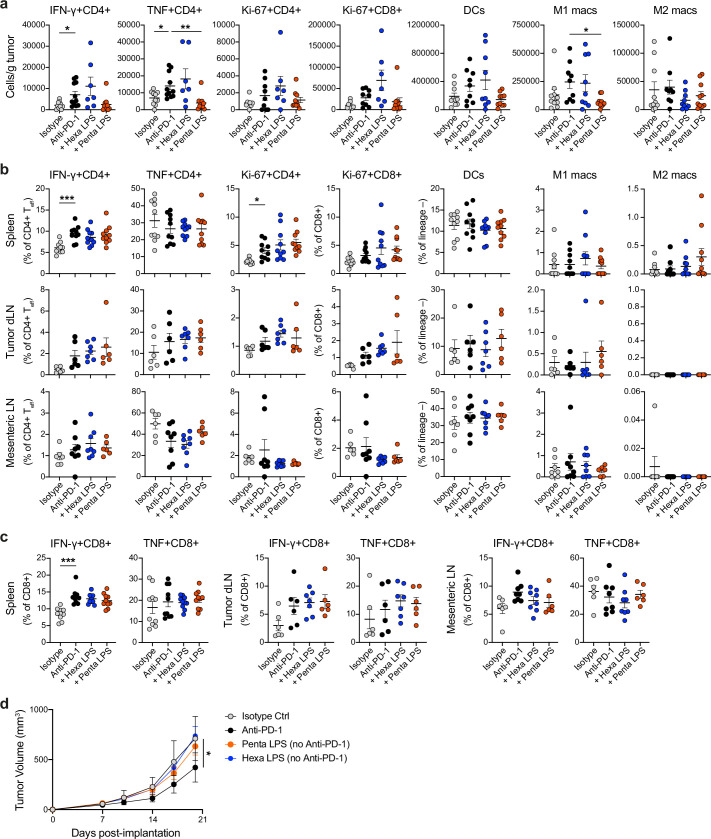
- In MC38 mouse tumours, broad-spectrum antibiotics or polymyxin B abolished anti-PD-1 efficacy (anti-PD-1 versus isotype control, P* = 0.0054; anti-PD-1 versus ABX + anti-PD-1, *P* = 0.0478; anti-PD-1 versus PMB + anti-PD-1, *P* = 0.0318), as did TLR4 inhibitor TAK-242 during anti-PD-1 therapy (anti-PD-1 versus isotype control, P* < 0.0001; anti-PD-1 versus anti-PD-1 + TAK242, P* < 0.0001). Oral hexa-acylated LPS improved anti-PD-1 efficacy (anti-PD-1 versus isotype control, *P* = 0.0002; anti-PD-1 versus anti-PD-1 + Hexa, *P* = 0.0318), while penta-acylated LPS did not.
Methods
- Public human metagenomes from six datasets were analysed, including 112 patients with melanoma treated with anti-PD-1 across seven clinical studies and four countries; only baseline samples before therapy were included, excluding combination therapy and recent proton pump inhibitor, H2 receptor antagonist, or antibiotic use. Responders were stable disease, partial response, or complete response; non-responders were progressive disease. A separate renal cell carcinoma cohort (*n* = 51) was also analysed.
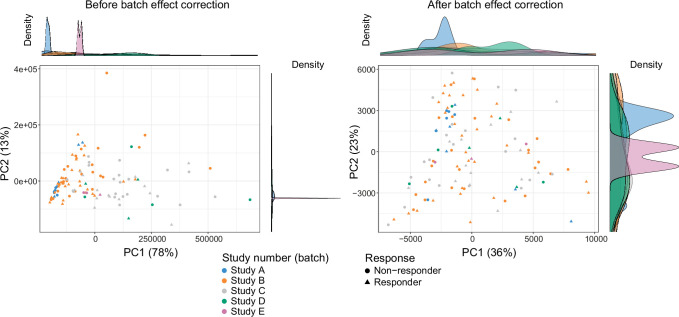
- Metagenomes underwent quality control, host decontamination, assembly, gene calling, and functional annotation using KEGG/SqueezeMeta and Salmon; lpx operon genes were identified from pangenomes of 3,006 bacterial species. Batch correction used ComBat-Seq and ConQuR; functional enterotypes used PAM clustering with Jensen–Shannon divergence, and ordination used NMDS.
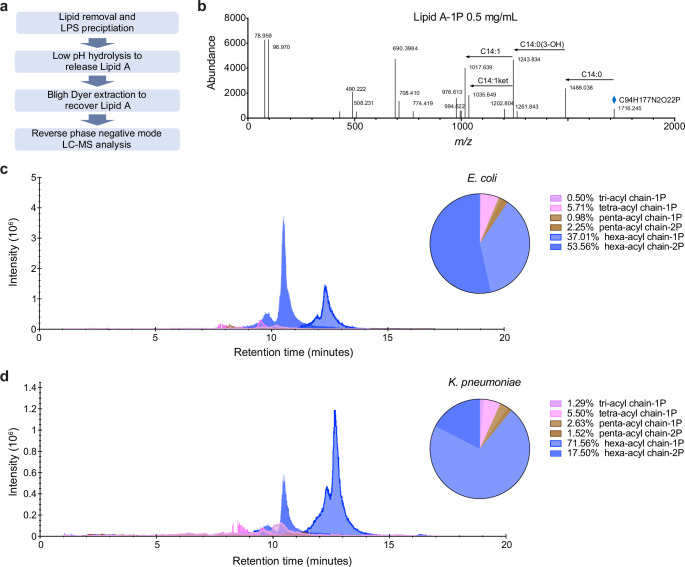
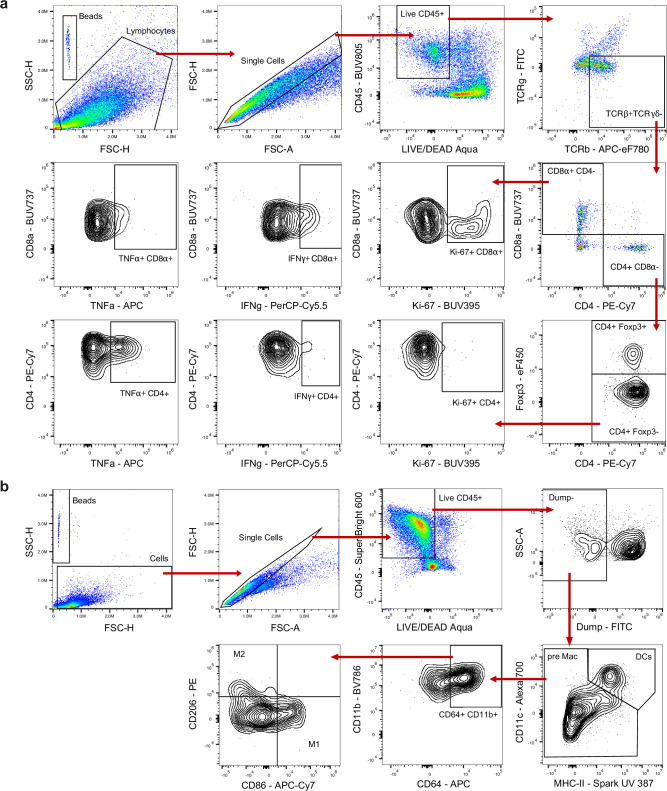
- Mouse experiments used 9-week-old female C57BL/6 mice with subcutaneous MC38 colorectal adenocarcinoma; treatments included polymyxin B, broad-spectrum antibiotics, anti-PD-1, TAK-242, and oral hexa- or penta-acylated LPS. Tumour-infiltrating lymphocytes were analysed by flow cytometry, lipid A acylation was assessed by LC–MS from commensal isolates, and in vitro NF-κB/cytokine assays used THP-1 and RAW 264.7 cells.
Limitations
- The paper states that inferred LPS biosynthesis capacity from taxonomy and pangenome annotations did not always match taxonomy-independent functional analyses, and that current databases and functional annotation methods are incomplete; it also states that methods to accurately measure lipid A acylation states in complex samples such as patient stool need further development.
- The paper states that human TLR4/MD2 discriminates LPS acylation states differently from mouse TLR4/MD2, so the mouse model required human macrophage in vitro experiments as a complement; it calls for further optimization of humanized mouse models and additional tumour models.
- Evident from the text: the human findings are observational associations from public datasets, so causality is not established in patients; the in vivo causal evidence comes from one mouse tumour model (MC38) in female C57BL/6 mice, and the paper notes investigators were not formally blinded and sample sizes were not pre-determined statistically.
Model-written summary. Check it against the paper before relying on it.
Integrity signals
Registry
Cites
Statistics
Figures
Verification
Claims the paper makes
7 Valid · 0 Not valid · 17 Not checked · 67 Own results and interpretations
The cited sources support only part of this claim — read each source’s verdict below.
In the paper
“Several studies in rodents have indeed demonstrated that oral LPS administration at doses up to 1 mg kg−1 does not cause any inflammation, pathology or associated toxicity”
§ Gut microbiota-derived hexa-acylated lipopolysaccharides enhance cancer immunotherapy responses > Discussion
What the sources say
- Partly supportedcites [32] Mizobuchi, H. Oral route lipopolysaccharide as a potential dementia preventive agent inducing neuroprotective microglia. Front. Immunol. 14, 1110583 (2023). 36969154 PMC10033586 sourceExperimental — accuracy not yet measured
The Introduction describes oral LPS at 0.01–1 mg/kg as maintaining high safety, and its animal-safety discussion reports no toxicity at substantially higher doses. But the section on disease exacerbation reports cases in which oral LPS worsened arthritis or autoimmune disease. The categorical claim that it causes no inflammation or pathology is therefore stronger than this review supports; page numbers are unavailable in our copy. (LLM, conf=0.88)
boosted- Asserted: passes — The authors put it forward as true.
- Checkable: passes — It can be checked against evidence.
- Load-bearing: unclear — It is unclear whether the paper’s conclusions depend on it.
- Based: passes — The paper gives a reason why it holds.
- Partly supported
Every source the paper cites for this claim was checked and supports it.
In the paper
“the abundance of total LPS biosynthesis genes was significantly higher in non-responders to anti-PD-1 therapy (Fig. 1d), as previously noted4.”
§ Gut microbiota-derived hexa-acylated lipopolysaccharides enhance cancer immunotherapy responses > Results > Patient microbiome LPS segregates responders to anti-PD-1
What the sources say
- Supportedcites [4] McCulloch, J. A. et al. Intestinal microbiota signatures of clinical response and immune-related adverse events in melanoma patients treated with anti-PD-1. Nat. Med. 28, 545–556 (2022). 35228752 PMC10246505 source
The Discussion of McCulloch et al. (2022) states that, using a binning approach to candidate bacterial driver genes, they observed enrichment of glycosyltransferases associated with LPS synthesis in non-responders (NRs); the Results section 'Gene signature of favorable and unfavorable intestinal taxa' likewise reports increased abundance of genes encoding enzymes related to LPS synthesis within unfavorable taxa. The Results section 'Systemic and gut inflammation associates with poor response' adds that of ~39,000 microbial genes, 1,200 were differentially abundant between progressors and non-progressors (FDR < 0.2, FC > 1.5; Extended Data Fig. 5b–d), with LPS synthesis being the signature in progressors — the group the paper equates with poor response/non-responders. The only wording the source does not use verbatim is 'total' LPS biosynthesis gene abundance (its finding is reported as LPS-synthesis-related genes and an LPS synthesis signature, in the Pittsburgh early-sample cohort at 10 months), but the attributed content — higher abundance of LPS biosynthesis genes in anti-PD-1 non-responders — is stated. (LLM, conf=0.82)
plainstates an associationn = 112- Asserted: passes — The authors put it forward as true.
- Checkable: passes — It can be checked against evidence.
- Load-bearing: passes — The paper’s conclusions depend on it.
- Based: passes — The paper gives a reason why it holds.
- Rests on an assumption not shown here.
- Supported
Every source the paper cites for this claim was checked and supports it.
In the paper
“we used isolates from our culture collection17 and confirmed by liquid chromatography–mass spectrometry that gut commensal Gammaproteobacteria that encode lpxM can produce hexa-acylated lipid A (Extended Data Fig. 3).”
§ Gut microbiota-derived hexa-acylated lipopolysaccharides enhance cancer immunotherapy responses > Results > Functional metagenomics reveal hexa-LPS signature of response
What the sources say
- Supportedcites [17] Beresford-Jones, B. S. et al. The Mouse Gastrointestinal Bacteria Catalogue enables translation between the mouse and human gut microbiotas via functional mapping. Cell Host Microbe30, 124–138.e8 (2022). PMC8763404 34971560 source
The citation is attached to “our culture collection,” not to the sentence’s lipid A finding. The Results section, “Expanding the cultured diversity of the mouse gut microbiota,” identifies the paper’s mouse culture collection and its bacterial isolates, supporting that identification. No page number is available in our copy. (LLM, conf=0.91)
plainstates a cause- Asserted: passes — The authors put it forward as true.
- Checkable: passes — It can be checked against evidence.
- Load-bearing: passes — The paper’s conclusions depend on it.
- Based: passes — The paper gives a reason why it holds.
- Supported
The sources with a verdict support this claim; the rest weren’t checked yet, have no full text we could read, or their verdicts aren’t rated yet.
In the paper
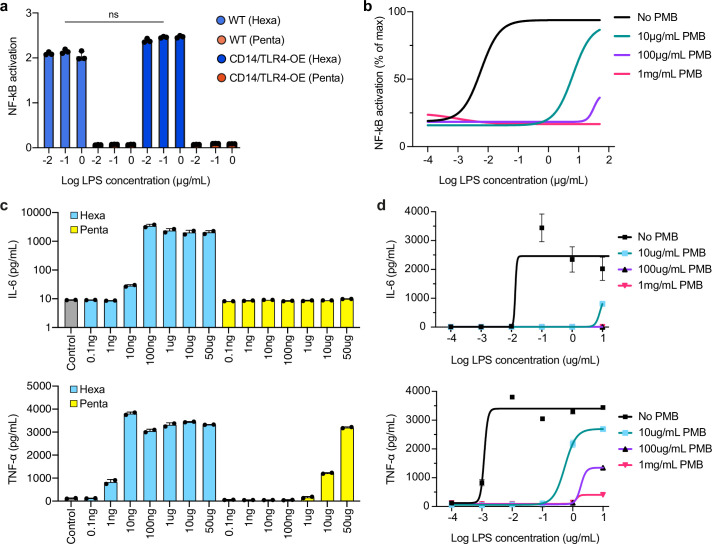
“Given that the acylation state of LPS lipid A has been shown to directly impact immune signalling through TLR46,21”
§ Gut microbiota-derived hexa-acylated lipopolysaccharides enhance cancer immunotherapy responses > Results > Hexa-LPS stimulates host immunity and enhances immunotherapy
What the sources say
- Supportedcites [6] Vatanen, T. et al. Variation in microbiome LPS immunogenicity contributes to autoimmunity in humans. Cell 165, 842–853 (2016). 27133167 PMC4950857 source
The Results section 'Contrasting Immunogenicity of LPS Subtypes' states that 'the number of acyl chains is a strong determinant of immune activation by LPS' and that penta- and tetra-acylated lipid A structures elicit reduced TLR4 responses, and that 'structural changes in lipid A impact recognition by TLR4'. The same section's own data contrast hexa-acylated E. coli lipid A (strong TLR4/NFkB signalling) with mono-phosphorylated penta/tetra-acylated B. dorei lipid A (no response), and a follow-up passage rules out phosphorylation status as the driver, leaving acylation state as the determinant. The claim is therefore stated by our copy at the same level of generality. (LLM, conf=0.88)
- Not checked yetcites [21] Bryant, C. E., Spring, D. R., Gangloff, M. & Gay, N. J. The molecular basis of the host response to lipopolysaccharide. Nat. Rev. Microbiol. 8, 8–14 (2010). 19946286 source
boostedstates a cause- Asserted: passes — The authors put it forward as true.
- Checkable: passes — It can be checked against evidence.
- Load-bearing: passes — The paper’s conclusions depend on it.
- Based: passes — The paper gives a reason why it holds.
- Supported
None of the sources cited for this claim have been checked yet.
In the paper
“As previously reported1,2, broad-spectrum antibiotics significantly abrogated anti-PD-1-induced tumour reduction”
§ Gut microbiota-derived hexa-acylated lipopolysaccharides enhance cancer immunotherapy responses > Results > Microbiome LPS and TLR4 are required for anti-PD-1 efficacy
What the sources say
- Could not verifycites [1] Matson, V. et al. The commensal microbiome is associated with anti-PD-1 efficacy in metastatic melanoma patients. Science 359, 104–108 (2018). 29302014 PMC6707353 sourceExperimental — accuracy not yet measured
Our full-text copy of Matson et al. (2018) reports an association between baseline commensal composition in 42 metastatic melanoma patients and anti–PD-1 clinical response, and fecal-transfer experiments in germ-free mice showing that 'Anti–PD-L1 was markedly efficacious in mice colonized with R microbiota yet completely ineffective in NR-derived mice' (Results, Abstract section). No passage anywhere in our copy mentions broad-spectrum antibiotics, antibiotic exposure, or abrogation of tumour reduction by antibiotics (searched: 'antibiotics', 'broad-spectrum antibiotics abrogated anti-PD-1 efficacy', 'antibiotic treatment reduced tumor control germ-free mice'). The claim's specific intervention is therefore neither stated nor contradicted by this source, so it cannot be verified from our copy. (LLM, conf=0.72)
- Not checked yetcites [2] Routy, B. et al. Gut microbiome influences efficacy of PD-1-based immunotherapy against epithelial tumors. Science 359, 91–97 (2018). 29097494 source
plainstates a cause- Asserted: passes — The authors put it forward as true.
- Checkable: passes — It can be checked against evidence.
- Load-bearing: passes — The paper’s conclusions depend on it.
- Based: passes — The paper gives a reason why it holds.
- Rests on an assumption not shown here.
- Could not verify
45 more claims
Create a free account to see all 91 claims and to verify the 25 references still open.
- Probably not a substantial claim. 30
- It may state two separate claims as one. 21
Claims other papers make about this one
Each is checked against this paper’s own text: does it say what the citing paper says it does?
In the citing paper
“For example, the number of acyl chains attached to lipid A — the most conserved and immunologically active portion of LPS — can modulate host toll-like receptor 4 (TLR4) signaling and thereby influence the efficacy of anti-PD-1 immunotherapy.135”
From Gut dysbiosis in oncology: a risk factor for immunoresistance (2026) · doi:10.1038/s41422-025-01212-6 · cites this paper as [135]
Citations
Cites
Trimmomatic: a flexible trimmer for Illumina sequence data
Bolger, A. M., Lohse, M., & Usadel, B. (2014) · Bioinformatics · doi:10.1093/bioinformatics/btu170 · Cited by 65,548 · cited 1×
“39) 33 ; (2) DNA contamination removal using Bowtie 2 (v2.”
Fast gapped-read alignment with Bowtie 2
Langmead, B., & Salzberg, S. L. (2012) · Nature Methods · doi:10.1038/nmeth.1923 · Cited by 56,400 · cited 1×
“3.5.1) 34 in sensitive mode, removing host DNA from humans (GRCh38) and mice (GRCm39) and non-host phiX174 Illumina spike-in; and (3) checking the FastQC (http://www.bioinformatics. babraham.ac.uk/projects/fastqc/) results and removing any samples that had >50% read duplication from the…”
InfluentialKEGG: Kyoto Encyclopedia of Genes and Genomes
Kanehisa, M. (2000) · Nucleic Acids Research · doi:10.1093/nar/28.1.27 · Cited by 37,077
KEGG: Kyoto Encyclopedia of Genes and Genomes
Ogata, H., Goto, S., Sato, K., Fujibuchi, W., Bono, H., & Kanehisa, M. (1999) · Nucleic Acids Research · doi:10.1093/nar/27.1.29 · Cited by 31,232 · cited 7×
“This way each protein sequence from the metagenomes was assigned to a function (KEGG) and bacterial taxa, and thus a connection between function and taxonomy was established.”
InfluentialNon‐parametric multivariate analyses of changes in community structure
CLARKE, K. R. (1993) · Australian Journal of Ecology · doi:10.1111/j.1442-9993.1993.tb00438.x · Cited by 14,128 · cited 1×
“We used NMDS, a distance-based ordination technique 53,54 in R (vegan::metaMDS()) with default engine = “monoMDS”.”
Salmon provides fast and bias-aware quantification of transcript expression
Patro, R., Duggal, G., Love, M. I., Irizarry, R. A., & Kingsford, C. (2017) · Nature Methods · doi:10.1038/nmeth.4197 · Cited by 12,700 · cited 1×
“8.00) 45 .”
InfluentialProdigal: prokaryotic gene recognition and translation initiation site identification
Hyatt, D., Chen, G.-L., LoCascio, P. F., Land, M. L., Larimer, F. W., & Hauser, L. J. (2010) · BMC Bioinformatics · doi:10.1186/1471-2105-11-119 · Cited by 12,587
Cd-hit: a fast program for clustering and comparing large sets of protein or nucleotide sequences
Li, W., & Godzik, A. (2006) · Bioinformatics · doi:10.1093/bioinformatics/btl158 · Cited by 11,410 · cited 1×
“8.1) 37,38 .”
InfluentialCd-hit: Accelerated for clustering the next-generation sequencing data
Fu, L., Niu, B., Zhu, Z., Wu, S., & Li, W. (2012) · Bioinformatics · doi:10.1093/bioinformatics/bts565 · Cited by 11,175 · cited 1×
“8.1) 37,38 .”
InfluentialDatabase resources of the National Center for Biotechnology Information: update
Wheeler, D. L. (2004) · Nucleic Acids Research · doi:10.1093/nar/gkh073 · Cited by 10,641
Li, D., Liu, C.-M., Luo, R., Sadakane, K., & Lam, T.-W. (2015) · Bioinformatics · doi:10.1093/bioinformatics/btv033 · Cited by 9,893 · cited 1×
“2.9) 36 .”
InfluentialEnterotypes of the human gut microbiome
MetaHIT Consortium (additional members), Arumugam, M., Raes, J., Pelletier, E., Le Paslier, D., Yamada, T., Mende, D. R., Fernandes, G. R., Tap, J., Bruls, T., et al. (2011) · Nature · doi:10.1038/nature09944 · Cited by 7,548 · cited 1×
“Functional enterotyping and between-class analyses were performed according to the procedure described by Arumugam et al. 50 Data generated by functional annotation with the KEGG database (KEGG orthologs) were used to calculate the JSD among samples.”
Multidimensional Scaling by Optimizing Goodness of Fit to a Nonmetric Hypothesis
Kruskal, J. B. (1964) · Psychometrika · doi:10.1007/bf02289565 · Cited by 7,317 · cited 1×
“The final stress score was used to assess the optimal model and goodness of fit as suggested previously 55,56 .”
Improved metagenomic analysis with Kraken 2
Wood, D. E., Lu, J., & Langmead, B. (2019) · Genome Biology · doi:10.1186/s13059-019-1891-0 · Cited by 7,061
Gut microbiome influences efficacy of PD-1-based immunotherapy against epithelial tumors
Routy, B., Le Chatelier, E., Derosa, L., Duong, C. P. M., Alou, M. T., Daillère, R., Fluckiger, A., Messaoudene, M., Rauber, C., Roberti, M. P., et al. (2018) · Science · doi:10.1126/science.aan3706 · Cited by 5,671 · cited 4×
“It is worth noting that we also functionally annotated and examined abundance of LPS biosynthesis genes in patients with renal cell carcinoma (RCC) from a single previous study 2 .”
InfluentialSensitive protein alignments at tree-of-life scale using DIAMOND
Buchfink, B., Reuter, K., & Drost, H.-G. (2021) · Nature Methods · doi:10.1038/s41592-021-01101-x · Cited by 5,097
Nonmetric Multidimensional Scaling: A Numerical Method
Kruskal, J. B. (1964) · Psychometrika · doi:10.1007/bf02289694 · Cited by 4,846 · cited 1×
“The final stress score was used to assess the optimal model and goodness of fit as suggested previously 55,56 .”
metaSPAdes: a new versatile metagenomic assembler
Nurk, S., Meleshko, D., Korobeynikov, A., & Pevzner, P. A. (2017) · Genome Research · doi:10.1101/gr.213959.116 · Cited by 4,496 · cited 1×
“15.4) 35 to build contigs.”
InfluentialA dendrite method for cluster analysis
Caliński, T., & Harabasz, J. (1974) · Communications in Statistics · doi:10.1080/03610927408827101 · Cited by 4,480
Hoshino, K., Takeuchi, O., Kawai, T., Sanjo, H., Ogawa, T., Takeda, Y., Takeda, K., & Akira, S. (1999) · The Journal of Immunology · doi:10.4049/jimmunol.162.7.3749 · Cited by 3,374
MEGAN analysis of metagenomic data
Huson, D. H., Auch, A. F., Qi, J., & Schuster, S. C. (2007) · Genome Research · doi:10.1101/gr.5969107 · Cited by 3,312
The commensal microbiome is associated with anti-PD-1 efficacy in metastatic melanoma patients
Matson, V., Fessler, J., Bao, R., Chongsuwat, T., Zha, Y., Alegre, M.-L., Luke, J. J., & Gajewski, T. F. (2018) · Science · doi:10.1126/science.aao3290 · Cited by 3,107 · cited 2×
“We retrieved human metagenomic data from six publicly available datasets 1–4,11 , 16 through the National Center for”
Database resources of the national center for biotechnology information
Sayers, E. W., Bolton, E. E., Brister, J. R., Canese, K., Chan, J., Comeau, D. C., Connor, R., Funk, K., Kelly, C., Kim, S., et al. (2022) · Nucleic Acids Research · doi:10.1093/nar/gkab1112 · Cited by 2,812
Measurement of mRNA abundance using RNA-seq data: RPKM measure is inconsistent among samples
Wagner, G. P., Kin, K., & Lynch, V. J. (2012) · Theory in Biosciences · doi:10.1007/s12064-012-0162-3 · Cited by 2,136
ComBat-seq: batch effect adjustment for RNA-seq count data
Zhang, Y., Parmigiani, G., & Johnson, W. E. (2020) · NAR Genomics and Bioinformatics · doi:10.1093/nargab/lqaa078 · Cited by 1,566
Microbiome-derived inosine modulates response to checkpoint inhibitor immunotherapy
Mager, L. F., Burkhard, R., Pett, N., Cooke, N. C. A., Brown, K., Ramay, H., Paik, S., Stagg, J., Groves, R. A., Gallo, M., et al. (2020) · Science · doi:10.1126/science.abc3421 · Cited by 1,407 · cited 1×
“Other microbiota-derived metabolites, including Bifidobacterium inosine 26 , Enterococcus muropeptides 27 and bacterial flagellin 28 , have also been implicated in modulating ICI treatment response.”
Variation in Microbiome LPS Immunogenicity Contributes to Autoimmunity in Humans
Vatanen, T., Kostic, A. D., d’Hennezel, E., Siljander, H., Franzosa, E. A., Yassour, M., Kolde, R., Vlamakis, H., Arthur, T. D., Hämäläinen, A.-M., et al. (2016) · Cell · doi:10.1016/j.cell.2016.04.007 · Cited by 1,289 · cited 3×
“In the gut, LPS-TLR4 signalling has been shown to both dampen intestinal immune responses to the resident microbiota during states of health 5 and modulate systemic autoimmune activity 6 .”
Napolitani, G., Rinaldi, A., Bertoni, F., Sallusto, F., & Lanzavecchia, A. (2005) · Nature Immunology · doi:10.1038/ni1223 · Cited by 1,157 · cited 1×
“While it is currently unknown to what degree gut LPS signalling interfaces with signals from other microbiome-derived immunostimulatory metabolites, simultaneous activation of different pattern recognition receptors has been shown to result in synergistic immunostimulation 29,30 .”
Metabolomics: A New Tool to Reveal the Nature of Diabetic Kidney Disease
Huang, G., Li, M., Li, Y., & Mao, Y. (2022) · Laboratory Medicine · doi:10.1093/labmed/lmac041 · Cited by 922
Assembly and localization of Toll-like receptor signalling complexes
Gay, N. J., Symmons, M. F., Gangloff, M., & Bryant, C. E. (2014) · Nature Reviews Immunology · doi:10.1038/nri3713 · Cited by 832 · cited 1×
“As TLR4 is the canonical host receptor for LPS and is required for a majority of its endotoxic and immunomodulatory effects 20 , we next investigated the contribution of host TLR4 signalling to anti-PD-1 responses.”
Self-citationBinding of polymyxin B to the lipid A portion of bacterial lipopolysaccharides
Morrison, D. C., & Jacobs, D. M. (1976) · Immunochemistry · doi:10.1016/0019-2791(76)90181-6 · Cited by 819 · cited 1×
“We treated mice with control drinking water, a cocktail of broad-spectrum antibiotics, or polymyxin B (PMB), a narrow-spectrum antibiotic known to both inhibit LPS signalling and deplete Gram-negative bacteria by binding the lipid A region of LPS 18 .”
Database resources of the National Center for Biotechnology Information
Sayers, E. W., Barrett, T., Benson, D. A., Bolton, E., Bryant, S. H., Canese, K., Chetvernin, V., Church, D. M., DiCuccio, M., Federhen, S., et al. (2010) · Nucleic Acids Research · doi:10.1093/nar/gkp967 · Cited by 804
Bates, J. M., Akerlund, J., Mittge, E., & Guillemin, K. (2007) · Cell Host & Microbe · doi:10.1016/j.chom.2007.10.010 · Cited by 751 · cited 1×
“For instance, differential expression of host intestinal alkaline phosphatase has been shown to affect the strength of the TLR4 signal 31 , and this represents just one of many currently uncharacterized patient factors that could be explored in the future.”
Function and Biogenesis of Lipopolysaccharides
Bertani, B., & Ruiz, N. (2018) · EcoSal Plus · doi:10.1128/ecosalplus.esp-0001-2018 · Cited by 742
Frankel, A. E., Coughlin, L. A., Kim, J., Froehlich, T. W., Xie, Y., Frenkel, E. P., & Koh, A. Y. (2017) · Neoplasia · doi:10.1016/j.neo.2017.08.004 · Cited by 709 · cited 1×
“We retrieved human metagenomic data from six publicly available datasets 1–4,11 , 16 through the National Center for”
Applying Metric and Nonmetric Multidimensional Scaling to Ecological Studies: Some New Results
Kenkel, N. C., & Orloci, L. (1986) · Ecology · doi:10.2307/1939814 · Cited by 668 · cited 1×
“We used NMDS, a distance-based ordination technique 53,54 in R (vegan::metaMDS()) with default engine = “monoMDS”.”
Human Toll-like receptor 4 recognizes host-specific LPS modifications
Hajjar, A. M., Ernst, R. K., Tsai, J. H., Wilson, C. B., & Miller, S. I. (2002) · Nature Immunology · doi:10.1038/ni777 · Cited by 579 · cited 4×
“7b), and although the LPS response between human and mouse TLR4/MD2 has been shown to differ 8 , similar effects on cytokine secretion (as a proxy of NF-kB activation) were also observed in a mouse macrophage cell line (Extended Data Fig.”
InfluentialSqueezeMeta, A Highly Portable, Fully Automatic Metagenomic Analysis Pipeline
Tamames, J., & Puente-Sánchez, F. (2019) · Frontiers in Microbiology · doi:10.3389/fmicb.2018.03349 · Cited by 496 · cited 1×
“5.2) 40 was used to assign KEGG (Kyoto Encyclopedia of Genes and Genomes) orthology and corresponding microbial taxa to the predicted protein sequences.”
InfluentialMcCulloch, J. A., Davar, D., Rodrigues, R. R., Badger, J. H., Fang, J. R., Cole, A. M., Balaji, A. K., Vetizou, M., Prescott, S. M., Fernandes, M. R., et al. (2022) · Nature Medicine · doi:10.1038/s41591-022-01698-2 · Cited by 472 · cited 4×
“Recent studies have associated some LPS-encoding Gram-negative taxa, such as members of the Bacteroidaceae family, with non-response to ICI treatment 4,10,11 .”
InfluentialLee, K. A., Thomas, A. M., Bolte, L. A., Björk, J. R., de Ruijter, L. K., Armanini, F., Asnicar, F., Blanco-Miguez, A., Board, R., Calbet-Llopart, N., et al. (2022) · Nature Medicine · doi:10.1038/s41591-022-01695-5 · Cited by 464 · cited 1×
“…studies instead conclude that the relationship between the gut microbiome and ICI clinical response extends beyond the level of species composition 3 , pointing to associations between unfavourable immunotherapy outcomes and lipopolysaccharide (LPS)-producing bacteria in the gut microbiota 4 .”
The molecular basis of the host response to lipopolysaccharide
Bryant, C. E., Spring, D. R., Gangloff, M., & Gay, N. J. (2010) · Nature Reviews Microbiology · doi:10.1038/nrmicro2266 · Cited by 391 · cited 1×
“Given that the acylation state of LPS lipid A has been shown to directly impact immune signalling through TLR4 6,21 , we quantified the relative potency of hexa-acylated and penta-acylated LPS at stimulating NF-kB activation via TLR4 in both human monocyte/macrophage and mouse macrophage cell lines.”
Self-citationEnterococcus peptidoglycan remodeling promotes checkpoint inhibitor cancer immunotherapy
Griffin, M. E., Espinosa, J., Becker, J. L., Luo, J.-D., Carroll, T. S., Jha, J. K., Fanger, G. R., & Hang, H. C. (2021) · Science · doi:10.1126/science.abc9113 · Cited by 366 · cited 1×
“Other microbiota-derived metabolites, including Bifidobacterium inosine 26 , Enterococcus muropeptides 27 and bacterial flagellin 28 , have also been implicated in modulating ICI treatment response.”
Gut microbiome composition may be an indicator of preclinical Alzheimer’s disease
Ferreiro, A. L., Choi, J., Ryou, J., Newcomer, E. P., Thompson, R., Bollinger, R. M., Hall-Moore, C., Ndao, I. M., Sax, L., Benzinger, T. L. S., et al. (2023) · Science Translational Medicine · doi:10.1126/scitranslmed.abo2984 · Cited by 356
Total Lipopolysaccharide from the Human Gut Microbiome Silences Toll-Like Receptor Signaling
d’Hennezel, E., Abubucker, S., Murphy, L. O., & Cullen, T. W. (2017) · mSystems · doi:10.1128/msystems.00046-17 · Cited by 324 · cited 1×
“In the gut, LPS-TLR4 signalling has been shown to both dampen intestinal immune responses to the resident microbiota during states of health 5 and modulate systemic autoimmune activity 6 .”
Hsu, R. Y. C., Chan, C. H. F., Spicer, J. D., Rousseau, M. C., Giannias, B., Rousseau, S., & Ferri, L. E. (2011) · Cancer Research · doi:10.1158/0008-5472.can-10-2833 · Cited by 279
A novel Escherichia coli lipid A mutant that produces an antiinflammatory lipopolysaccharide.
Somerville, J. E., Cassiano, L., Bainbridge, B., Cunningham, M. D., & Darveau, R. P. (1996) · Journal of Clinical Investigation · doi:10.1172/jci118423 · Cited by 275 · cited 1×
“1b), which has previously been demonstrated to be immunoinhibitory 7,8 .”
Relating the gut metagenome and metatranscriptome to immunotherapy responses in melanoma patients
Peters, B. A., Wilson, M., Moran, U., Pavlick, A., Izsak, A., Wechter, T., Weber, J. S., Osman, I., & Ahn, J. (2019) · Genome Medicine · doi:10.1186/s13073-019-0672-4 · Cited by 263 · cited 2×
“Recent studies have associated some LPS-encoding Gram-negative taxa, such as members of the Bacteroidaceae family, with non-response to ICI treatment 4,10,11 .”
(1974) · Communications in Statistics - Theory and Methods · doi:10.1080/03610928308827180 · Cited by 258
Simpson, R. C., Shanahan, E. R., Batten, M., Reijers, I. L. M., Read, M., Silva, I. P., Versluis, J. M., Ribeiro, R., Angelatos, A. S., Tan, J., et al. (2022) · Nature Medicine · doi:10.1038/s41591-022-01965-2 · Cited by 256 · cited 1×
“Recent studies have associated some LPS-encoding Gram-negative taxa, such as members of the Bacteroidaceae family, with non-response to ICI treatment 4,10,11 .”
Kawahara, K., Tsukano, H., Watanabe, H., Lindner, B., & Matsuura, M. (2002) · Infection and Immunity · doi:10.1128/iai.70.8.4092-4098.2002 · Cited by 246
Beresford-Jones, B. S., Forster, S. C., Stares, M. D., Notley, G., Viciani, E., Browne, H. P., Boehmler, D. J., Soderholm, A. T., Kumar, N., Vervier, K., et al. (2022) · Cell Host & Microbe · doi:10.1016/j.chom.2021.12.003 · Cited by 194 · cited 2×
“To predict the LPS-producing bacterial species in the mouse metagenomes, lpx operon genes were identified using the MGBC protein database 17 .”
InfluentialSelf-citationSong, W., Tiruthani, K., Wang, Y., Shen, L., Hu, M., Dorosheva, O., Qiu, K., Kinghorn, K. A., Liu, R., & Huang, L. (2018) · Advanced Materials · doi:10.1002/adma.201805007 · Cited by 194
Batch effects removal for microbiome data via conditional quantile regression
Ling, W., Lu, J., Zhao, N., Lulla, A., Plantinga, A. M., Fu, W., Zhang, A., Liu, H., Song, H., Li, Z., et al. (2022) · Nature Communications · doi:10.1038/s41467-022-33071-9 · Cited by 136
Hajjar, A. M., Ernst, R. K., Fortuno, E. S., Brasfield, A. S., Yam, C. S., Newlon, L. A., Kollmann, T. R., Miller, S. I., & Wilson, C. B. (2012) · PLoS Pathogens · doi:10.1371/journal.ppat.1002963 · Cited by 79 · cited 1×
“Mice expressing only human TLR4/MD-2 have also been generated, but only male mice can be used due to integration on the Y chromosome 25 .”
Coats, S. R., Do, C. T., Karimi-Naser, L. M., Braham, P. H., & Darveau, R. P. (2007) · Cellular Microbiology · doi:10.1111/j.1462-5822.2006.00859.x · Cited by 65 · cited 1×
“…distinct acylation states differs from that of mouse TLR4/MD2 8 , and it has been previously shown that hexa-acylated LPS potently activates human TLR4/MD2, whereas hypo-acylated tetra-and penta-acylated LPS poorly activate or antagonize human TLR4/MD2 activation driven by hexa-acylated LPS 22,23 .”
Mitchell, D., Yong, M. C. R., Schroder, W. A., Black, M., Tirrell, M., & Olive, C. (2010) · The Journal of Infectious Diseases · doi:10.1086/653499 · Cited by 39 · cited 1×
“While it is currently unknown to what degree gut LPS signalling interfaces with signals from other microbiome-derived immunostimulatory metabolites, simultaneous activation of different pattern recognition receptors has been shown to result in synergistic immunostimulation 29,30 .”
LCA*: an entropy-based measure for taxonomic assignment within assembled metagenomes
Hanson, N. W., Konwar, K. M., & Hallam, S. (2016) · Bioinformatics · doi:10.1093/bioinformatics/btw400 · Cited by 36 · cited 1×
“0.15.153) 41 blastp alignments of the proteins against the KEGG 42 and NCBI non-redundant 43 databases using the lowest common ancestor 44 methods.”
InfluentialTLR5 agonists enhance anti-tumor immunity and overcome resistance to immune checkpoint therapy
González, C., Williamson, S. L., Gammon, S. T., Glazer, S. E., Rhee, J. H., & Piwnica-Worms, D. R. (2023) · Communications Biology · doi:10.1038/s42003-022-04403-8 · Cited by 35
Sándor, V., Dörnyei, Á., Makszin, L., Kilár, F., Péterfi, Z., Kocsis, B., & Kilár, A. (2016) · Journal of Mass Spectrometry · doi:10.1002/jms.3839 · Cited by 32 · cited 2×
“The published extracted ion chromato-grams by Sándor et al. 52 were used to characterize the lipid A molecule.”
Rubin, E. J., O'Brien, J. P., Ivanov, P. L., Brodbelt, J. S., & Trent, M. S. (2014) · Molecular Microbiology · doi:10.1111/mmi.12501 · Cited by 21
Sprong, T., Ley, P. V. D., Abdollahi-Roodsaz, S., Joosten, L., Meer, J. V. D., Netea, M., & Deuren, M. V. (2011) · Innate Immunity · doi:10.1177/1753425910383999 · Cited by 20 · cited 1×
“…distinct acylation states differs from that of mouse TLR4/MD2 8 , and it has been previously shown that hexa-acylated LPS potently activates human TLR4/MD2, whereas hypo-acylated tetra-and penta-acylated LPS poorly activate or antagonize human TLR4/MD2 activation driven by hexa-acylated LPS 22,23 .”
Aryee, K., Shultz, L. D., Burzenski, L. M., Greiner, D. L., & Brehm, M. A. (2023) · Journal of Leukocyte Biology · doi:10.1093/jleuko/qiac020 · Cited by 16 · cited 1×
“For example, the NSG TLR4 −/− mouse model reconstituted with human haematopoietic stem cells 24 can be used to test effects of hexa-acylated LPS on immune cells expressing human TLR4, although this system will not account for possible roles of TLR4 activation in intestinal epithelial cells and…”
Mizobuchi, H. (2023) · Frontiers in Immunology · doi:10.3389/fimmu.2023.1110583 · Cited by 11 · cited 1×
“Several studies in rodents have indeed demonstrated that oral LPS administration at doses up to 1 mg kg −1 does not cause any inflammation, pathology or associated toxicity and may instead have neuroprotective effects 32 .”
Sprong, T., van der Ley, P., Abdollahi-Roodsaz, S., Joosten, L. A., van der Meer, J. W. M., Netea, M. G., & Deuren, M. V. (2011) · Radboud Repository (Radboud University) · Cited by 3
Lite Kraken/Bracken databases built using UHGG genomes
Beresford-Jones, B. S. (2022) · Zenodo (CERN European Organization for Nuclear Research) · doi:10.5281/zenodo.7319343 · Cited by 1
Self-citationLite Kraken/Bracken databases built using UHGG genomes
Beresford-Jones, B. S. (2022) · Zenodo · doi:10.5281/zenodo.7319344
Self-citation
Cited by
Gut microbial metabolites in cancer immunomodulation
Liu, H., Xiong, X., Zhu, W., Wang, S., Huang, W.-C., Zhu, G., Xu, H., & Yang, L. (2025) · Molecular Cancer · doi:10.1186/s12943-025-02521-5 · Cited by 62
“Beyond diffusible metabolites, ligand quality within microbial-structural signals also matters: hexa-acylated LPS from commensals more potently licenses anti-PD-1 responses than penta-acylated LPS in CRC models [156].”
InfluentialMicrobial metabolites and their influence on the tumor microenvironment
Duan, H., Xu, B., Luo, P., Chen, T., & Zou, J. (2025) · Frontiers in Immunology · doi:10.3389/fimmu.2025.1675677 · Cited by 35
“Within tumor immunotherapy, LPS - like other microbiota metabolites discussed - enhances host antitumor immunity by activating speci fi c immune cell populations and intracellular signaling pathways, thereby potentiating immune checkpoint blockade ef fi cacy including anti-PD-1 therapy (123 – 125).”
Gut dysbiosis in oncology: a risk factor for immunoresistance
(2026) · doi:10.1038/s41422-025-01212-6 · Cited by 24
“135 One A. muciniphila strain isolated from a healthy donor produces an LPS with a lipid A moiety that bene fi cially tunes innate immune signaling and restores intestinal and metabolic homeostasis.”
Chen, L., He, Y., Duan, M., Yang, T., Chen, Y., Wang, W., Cui, D., & Li, C. (2025) · Frontiers in Immunology · doi:10.3389/fimmu.2025.1559396 · Cited by 26
Yang, M., Mao, S., Duan, J., & Xiao, P. (2025) · Carbohydrate Polymers · doi:10.1016/j.carbpol.2025.124723 · Cited by 19
Metadata
- Authors
- Sardar, P., Beresford-Jones, B. S., Xia, W., Shabana, O., Suyama, S., Ramos, R. J. F., Soderholm, A. T., Tourlomousis, P., Kuo, P., Evans, A. C., Imianowski, C. J., Conti, A. G., Wesolowski, A. J., Baker, N. M., McCord, E. A. L., Okkenhaug, K., Whiteside, S. K., Roychoudhuri, R., Bryant, C. E., Cross, J. R., & Pedicord, V. A.
- Affiliations
- University of Cambridge (GB)
- Memorial Sloan Kettering Cancer Center (US)
- Corresponding author
- Pedicord, Virginia A.
- ORCID
- Sardar, Puspendu
- Beresford-Jones, Benjamin S.
- Xia, Wangmingyu
- Shabana, Omar
- Suyama, Satoshi
- Ramos, Ruben J. F.
- Soderholm, Amelia T.
- Tourlomousis, Panagiotis
- Kuo, Paula
- Evans, Alexander C.
- Imianowski, Charlotte J.
- Conti, Alberto G.
- Wesolowski, Alexander J.
- Baker, Natalie M.
- Okkenhaug, Klaus
- Whiteside, Sarah K.
- Roychoudhuri, Rahul
- Bryant, Clare E.
- Cross, Justin R.
- Pedicord, Virginia A.
- Venue
- Nature Microbiology
- Published
- 2025-02-10
- Volume
- 10
- Issue
- 3
- Pages
- 795-807
- ISSN
- 2058-5276 (ISSN-L)
- PMC
- PMC11879847
- OpenAlex
- W4407341231
- Cited by
- 49
- References
- 65
- Citations by year
- 2026: 25 · 2025: 23
- FWCI
- 19.88
- Type
- journal article
- Language
- en
- Open access
- hybrid
- doi.org
- Licence
- cc-by
- creativecommons.org/licenses/by/4.0 (tdm)
- creativecommons.org/licenses/by/4.0 (vor)
- Locations
- Nature Microbiology (publishedVersion, cc-by)
- bioRxiv (Cold Spring Harbor Laboratory) (acceptedVersion)
- PubMed Central (publishedVersion, cc-by)
- PubMed (publishedVersion)
- Apollo (University of Cambridge) (submittedVersion, cc-by)
- Apollo (cc-by)
- Funders
- Wellcome Trust (206245/Z/17/Z, 302351/Z/23/Z)
- Rosetrees Trust (A2194)
- EC | Horizon 2020 Framework Programme (EP/X024709/1)
- Topics
- Health Sciences › Medicine › Oncology › Cancer Immunotherapy and Biomarkers
- Life Sciences › Biochemistry, Genetics and Molecular Biology › Molecular Biology › Gut microbiota and health
- Life Sciences › Immunology and Microbiology › Immunology › Immunotherapy and Immune Responses
- Keywords
- gut microbiota, immune checkpoint inhibitors, anti-PD-1 therapy, cancer immunotherapy response, melanoma, TLR4, antitumor immunity
- MeSH terms
- Gastrointestinal Microbiome, Immune Checkpoint Inhibitors, Acylation, Animals, Bacteria, Feces, Female, Humans, Immunotherapy, Lipopolysaccharides, Male, Melanoma, Mice, Inbred C57BL, Cell Line, Tumor, Toll-Like Receptor 4, Mice, Metagenome, Programmed Cell Death 1 Receptor
About these checks
Registry, retraction, Cites and statistics results are computed, not judged, with one exception: a printed reference that no index lists is read once by a model before it counts as a citation error. Claims are extracted by a model and kept only when their quote appears verbatim in the text; each cited source is then checked, with a model’s help, for whether it says what the claim relies on. Those verdicts can be wrong — read the claim’s quote and the cited source before relying on one.
The claim verdicts this report counts are experimental: their accuracy is not yet measured.
A language model drew the claims from the paper on 2026-10-05, under version 3 of the claim definition (model deepseek-v4.1-flash, prompt extract-v3).
A second model labelled each claim on 2026-10-05 (model jev-1.13-20260917, definition revision gold-guideline-v0.2).
Cited sources are checked with a language model’s help (gpt-6-sol and qwen3.8-omni-flash).
Statistics and arithmetic are recomputed, not judged.
Confidence bands are shown only for fields calibrated on our annotated test set. None is calibrated yet, so no band is shown.
What counts as a claim ›How we measure confidence ›How we check this ›
Are you an author, or do you see a problem with this page? Request a review
Data sources
Bibliographic data: Semantic Scholar, OpenAlex, Crossref.
Contains information from the Semantic Scholar Academic Graph Datasets, made available under the ODC Attribution License (ODC-BY 1.0).
Semantic Scholar’s data is described in: Kinney, R., et al. (2023). The Semantic Scholar Open Data Platform. arXiv:2301.10140.
