

Integrated photonic quantum technologies
Open accessThe DOI matches its Crossref record; 159 of the 160 references it cites were found in a registry or an index, and 1 are not checked yet; 103 of the 132 sources its claims cite were checked for support.
Abstract
Quantum technologies comprise an emerging class of devices capable of controlling superposition and entanglement of quantum states of light or matter, to realize fundamental performance advantages over ordinary classical machines. The technology of integrated quantum photonics has enabled the generation, processing and detection of quantum states of light at a steadily increasing scale and level of complexity, progressing from few-component circuitry occupying centimetre-scale footprints and operating on two photons, to programmable devices approaching 1,000 components occupying millimetre-scale footprints with integrated generation of multiphoton states. This Review summarizes the advances in integrated photonic quantum technologies and its demonstrated applications, including quantum communications, simulations of quantum chemical and physical systems, sampling algorithms, and linear-optic quantum information processing. This Review covers recent progress in integrated quantum photonics (IQP) technologies and their applications. The challenges and opportunities of realizing large-scale, monolithic IQP circuits for future quantum applications are discussed.
Verified 2026-11-25 · 1 reference not checked yet
Overview
CoChat Summary
TL;DR
This review summarizes a decade of integrated quantum photonics (IQP), covering platforms, single-photon sources/detectors, circuits, and applications in quantum communications, information processing, Boson sampling, and simulation. It argues that IQP has scaled from few-component two-photon circuits to programmable silicon chips with hundreds of components, while identifying full integration and photon-number scaling as key challenges.
Key findings
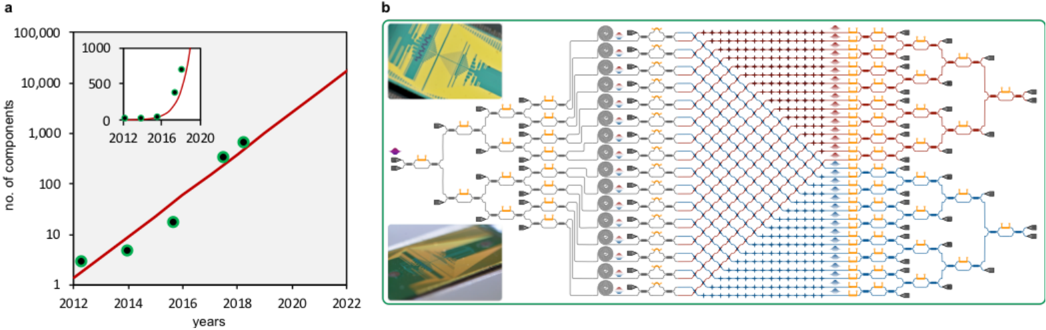
- IQP advanced from fixed circuits with few components operating on two photons to programmable circuitry approaching 1000 components with integrated multi-photon generation; a state-of-the-art Si device monolithically integrated 671 components (16 SFWM-SPSs, 93 TOPSs, 122 MMIs, 376 waveguide-crossers, 64 grating couplers) and verified up to 15×15 dimensional two-photon entangled states.
- Integrated QKD demonstrations include a chip-to-chip InP transmitter/SiOxNy receiver programmable for BB84 at 560 MHz, coherent-one-way at 860 MHz, and differential-phase-shift at 1.76 GHz; WDM-QKD doubled key rates to 1.11 Mbit/s over 20 km emulated fiber; Si-based transmitters achieved kbps–Mbps secret key rates and 1.0%–5.4% QBER.
- Key device benchmarks: Si-waveguide SNSPDs reached 91% detection efficiency, 18 ps jitter, and 50 Hz dark count; QD-SPSs produced 99.1% single-photon purity, 66% extraction efficiency, and 98.5% indistinguishability; two-photon interference visibilities were 100.1±0.4% in SiO2 and 100.0±0.4% in Si.
- Boson sampling was first demonstrated with n=3 photons, mainly in integrated photonics; the highest photon numbers used demultiplexed single QD-SPS photons, and the review states >20 photons are needed to challenge conventional computers and >50 to surpass supercomputers.
Methods
- Design: narrative review of integrated photonic quantum technologies, summarizing advances in materials, devices, functionality, and on-chip applications.
- Data/sample: published literature and milestone demonstrations from 2008 onward, including platforms (silica, Si, Si3N4, LN, GaAs, InP), sources, detectors, QKD, QIP, Boson sampling, and quantum simulation.
- Analysis: qualitative synthesis of experimental results and stated benchmarks; no primary experimental data or formal systematic-review methodology are reported.
Limitations
- Stated: a fully integrated quantum chip having sources, circuits, and detectors is yet to be realised; cryogenic operation for detectors and manipulation of photons at cryogenic temperature remain technical challenges.
- Stated: creating multiple identical QD-SPSs is difficult due to sample reproducibility; parametric SPSs produce photons nondeterministically with 5%–10% probability; full certification of Boson sampling is believed not possible.
- Evident from the text: as a review, it synthesizes prior work rather than presenting new experiments, and its performance numbers are drawn from cited demonstrations rather than a systematic meta-analysis.
Model-written summary. Check it against the paper before relying on it.
Integrity signals
Registry
Cites
Statistics
Figures

Verification
Claims the paper makes
28 Valid · 48 Not valid · 25 Not checked · 34 Own results and interpretations
Some cited sources support this claim and some don’t — read each source’s verdict below.
In the paper
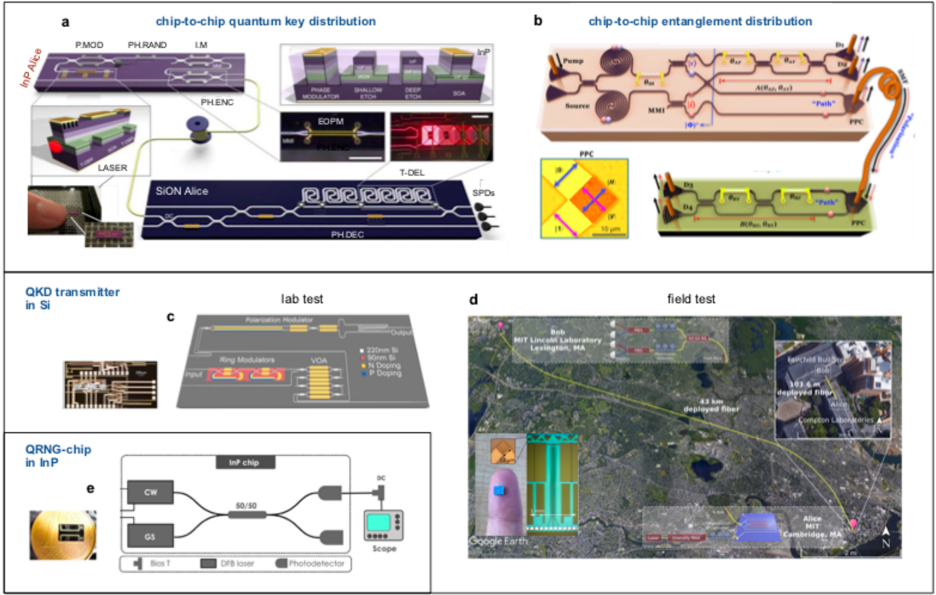
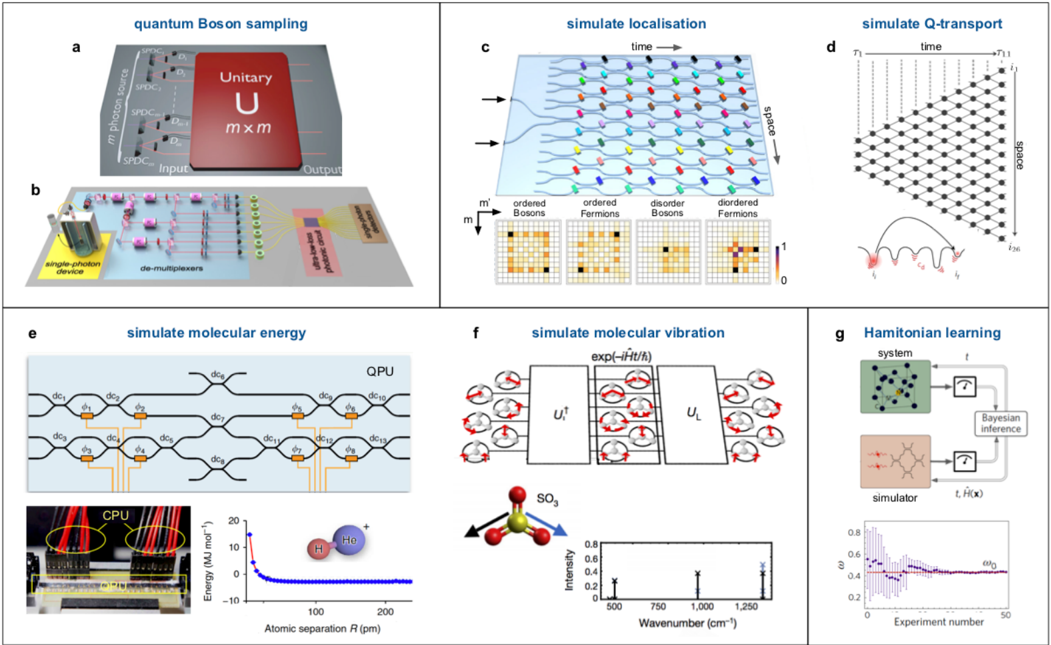
“For example, fully integrated QRNGs have been demonstrated in InP-chips ( Fig.3e ) [38, 74], in which random numbers were generated from the random phases of two-laser interference.”
What the sources say
- Partly supportedcites [38] 37. P. Sibson et al. Chip-based quantum key distribution. Nat. Commun. 8, 13984 (2017). sourceExperimental — accuracy not yet measured
The Results (Integrated photonic devices and Transmitter; page unavailable) describe a monolithically integrated InP chip with an on-chip laser, but it is a QKD transmitter, not a demonstrated QRNG. The Discussion says the receiver's passive basis choice removes the requirement for a QRNG; no passage describes generating random numbers from the phases of two interfering lasers. (LLM, conf=0.85)
- Disputedcites [74] 69. Y. Ding et al. High-dimensional quantum key distribution based on multicore fiber using silicon photonic integrated circuits. npj Quantum Information 3, 25 (2017). sourceExperimental — accuracy not yet measured
The Introduction describes a high-dimensional QKD demonstration using silicon photonic integrated circuits, not an InP-chip QRNG. The Experimental results say the experiment used FPGA-generated pseudorandom sequences for state and basis choices, rather than random phases from two-laser interference. Page numbers are unavailable in our copy. (LLM, conf=0.87)
Checked by a reasoning model — may be wrong.
boostedstates a cause- Asserted: passes — The authors put it forward as true.
- Checkable: passes — It can be checked against evidence.
- Load-bearing: unclear — It is unclear whether the paper’s conclusions depend on it.
- Based: passes — The paper gives a reason why it holds.
- Partly supported
At least one cited source doesn’t support this claim or points to a different paper, and none confirmed it — see the verdicts below.
In the paper
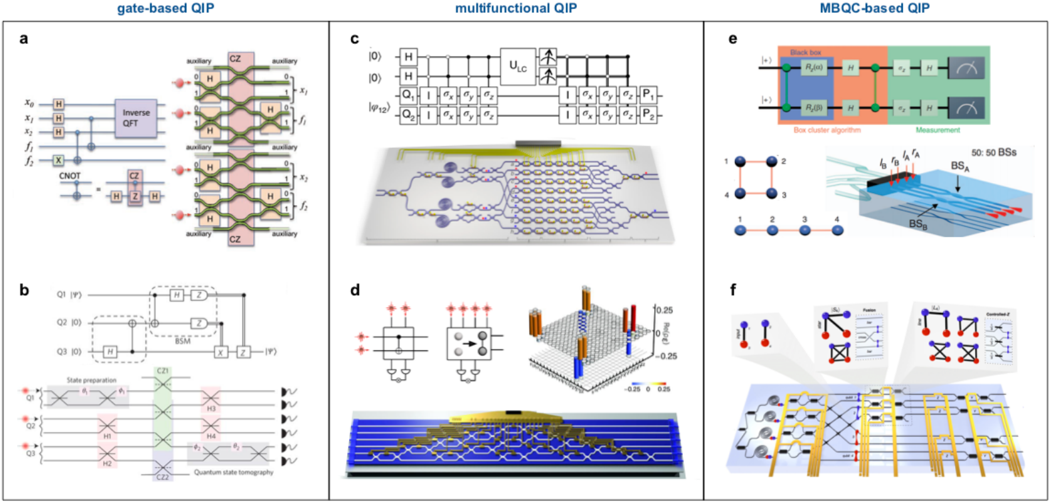
“The on-chip GMM of four-photon four-qubit graph states was demonstrated in a Si-chip ( Fig. 4f ) [87].”
What the sources say
- Disputedcites [87] 81. X. Qiang et al. Large-scale silicon quantum photonics implementing arbitrary two-qubit processing. Nat. Photon. 12, 534-539 (2018). sourceExperimental — accuracy not yet measured
The paper’s Abstract describes a silicon chip that generates two photonic qubits and performs two-qubit processing using only two photons. It does not report generating, manipulating and measuring four-photon four-qubit graph states; its stated demonstration uses a different number of photons and qubits. (LLM, conf=0.90)
Checked by a reasoning model — may be wrong.
boosted- Asserted: passes — The authors put it forward as true.
- Checkable: passes — It can be checked against evidence.
- Load-bearing: unclear — It is unclear whether the paper’s conclusions depend on it.
- Based: passes — The paper gives a reason why it holds.
- Disputed
At least one cited source doesn’t support this claim or points to a different paper, and none confirmed it — see the verdicts below.
In the paper
“The first on-chip GMM of four-qubit cluster state was realised in a laser-writing chip ( Fig.4e ), by manipulating both the polarisation and path DoFs of two photons [85].”
What the sources say
- Disputedcites [85] 79. A. Peruzzo et al. A variational eigenvalue solver on a photonic quantum processor. Nat. Commun. 5, 4213 (2013). sourceExperimental — accuracy not yet measured
The Results section (“Prototype demonstration”; page unavailable) describes a chip that prepares and measures two-qubit states encoded in photon paths, not a four-qubit cluster state encoded in both polarisation and path. Our copy does not establish the claimed first demonstration or laser-writing fabrication. (LLM, conf=0.88)
Checked by a reasoning model — may be wrong.
plainstates a cause- Asserted: passes — The authors put it forward as true.
- Checkable: passes — It can be checked against evidence.
- Load-bearing: unclear — It is unclear whether the paper’s conclusions depend on it.
- Based: passes — The paper gives a reason why it holds.
- Disputed
At least one cited source doesn’t support this claim or points to a different paper, and none confirmed it — see the verdicts below.
In the paper
“For example, the first GMM of entangled two-qubit states encoded in dual-paths were demonstrated in a Si-chip, with the inclusion of ring-resonator-based SFWM photon sources and circuits [84].”
What the sources say
- Disputedcites [84] 78. B. J. Metcalf et al. Quantum teleportation on a photonic chip. Nat. Photon. 8, 770-774 (2014). sourceExperimental — accuracy not yet measured
The main-experiment passage describes three photons from two parametric down-conversion sources coupled into a UV-written silica-on-silicon chip, not ring-resonator SFWM sources integrated on a silicon chip. Figure 1(c) does support dual-rail encoding and on-chip state preparation and tomography, but the claimed chip and photon-source technology contradict the paper’s description. (LLM, conf=0.88)
Checked by a reasoning model — may be wrong.
boosted- Asserted: passes — The authors put it forward as true.
- Checkable: passes — It can be checked against evidence.
- Load-bearing: unclear — It is unclear whether the paper’s conclusions depend on it.
- Based: passes — The paper gives a reason why it holds.
- Disputed
Some cited sources support this claim and some don’t — read each source’s verdict below.
In the paper
“In Fig.6 , we summarise the scaling of integrated quantum photonic circuits in silicon: from a single MZI adopted for the on-chip HOM-interference experiment in 2012 [24], to a state-of-the-art large-scale quantum photonic device having 671 components that was used for the GMM of multi-dimensional entanglement [44].”
What the sources say
- Disputedcites [24] 24. D. Bonneau et al. Quantum interference and manipulation of entanglement in silicon wire waveguide quantum circuits. New J. Phys. 14, 045003 (2012). sourceExperimental — accuracy not yet measured
Split into 2 atoms — 0 confirmed, 1 partially supported, 1 disputed, 0 misattributed, 0 unverifiable. Expand the claim to see per-atom verdicts.
Checked by a reasoning model — may be wrong.
- Partly supportedcites [44] 44. J. Wang et al. Multidimensional quantum entanglement with large-scale integrated optics. Science 360, 285-291 (2018). sourceExperimental — accuracy not yet measured
The opening summary (p. 1) says the silicon-photonics device generated, manipulated and measured multidimensional entanglement. It reports more than 550 components, however, and the components listed in Fig. 1 (p. 2) total 551; our copy does not support the attributed figure of 671. The 2012 single-MZI experiment is attached to a different citation in the citing sentence. (LLM, conf=0.88)
plainstates an association- Asserted: passes — The authors put it forward as true.
- Checkable: passes — It can be checked against evidence.
- Load-bearing: unclear — It is unclear whether the paper’s conclusions depend on it.
- Based: passes — The paper gives a reason why it holds.
- Disputed
67 more claims · 35 with their cited sources checked
Create a free account to see all 135 claims and to verify the 22 references still open.
- It may state two separate claims as one. 38
- Probably not a substantial claim. 34
Claims other papers make about this one
Each is checked against this paper’s own text: does it say what the citing paper says it does?
The source backs part of the claim, not all of it — or backs it for a different population, condition or comparison.
In the citing paper
“As an example, the timeline in figure 1 illustrates this rapid progression from few-component circuits enabling two-photon quantum interference in 2008 [5] to a decade later with devices combining more than 650 components capable of arbitrary and programmable two-qubit operations [6], enabling advances in foundational quantum mechanics, computing, communications, and metrology [7].”
From 2022 Roadmap on integrated quantum photonics (2022) · cites this paper as [7]
Experimental — accuracy not yet measuredThe source backs part of the claim, not all of it — or backs it for a different population, condition or comparison.
In the citing paper
“Thermo-optic tuning can be used as a drift-free method of bias control [16,468], but this requires tradeoffs in power dissipation and tuning bandwidth.”
From Integrated photonics on thin-film lithium niobate (2021) · cites this paper as [468]
Experimental — accuracy not yet measuredThe source backs part of the claim, not all of it — or backs it for a different population, condition or comparison.
In the citing paper
“Recent advances in the fabrication of quantum photonic integrated circuits (QPICs) have enabled the functionality of bench-top nonlinear sources to be scaled down to a single chip, with a dramatic improvement in the efficiency and stability [12][13][14][15].”
From Ultrabright Entangled-Photon-Pair Generation from anAlGaAs-On-Insulator Microring Resonator (2021) · cites this paper as [14]
Experimental — accuracy not yet measuredThe cited source says what the claim attributes to it.
In the citing paper
“As a result, it has been the material of choice for many early demonstrations of building blocks for photonic quantum computing and has seen rapid growth in the number of generated photons and integrated components over the last 10 years [7,24,25].”
From 2022 Roadmap on integrated quantum photonics (2022) · cites this paper as [7]
The cited source says what the claim attributes to it.
In the citing paper
“Silicon photonics has been pivotal for increasing the complexity and component-number of on-chip quantum circuitry and revealing the disruptive potential an engineered integrated approach can take for a quantum technology [7].”
From 2022 Roadmap on integrated quantum photonics (2022) · cites this paper as [7]
1 more claim about this paper
Create a free account to see every claim other papers make about this one.
Self-check
Percentages, sums and reported differences re-computed from the paper’s own numbers.
Each contradiction between two passages listed here was confirmed by an independent check.
Rated minor: it would not touch a result — a value no result rests on, a p-value that stays on the same side of the significance level, or a conflict that is clerical, resolved elsewhere in the paper, or outside its own findings.
In the paper
§ Box 2: integrated building blocks for operating photonic states · p. 9
“large-scale quantum circuits in Si with 670 components [44]”
§ Box 2: integrated building blocks for operating photonic states · p. 13
“This large-scale device monolithically integrates 16 SFMW-SPSs, 93 reconfigurable TOPSs, 122 MMIs, 376 waveguide-crossers and 64 grating couplers, in total 671 photonic components.”
Rated minor: it would not touch a result — a value no result rests on, a p-value that stays on the same side of the significance level, or a conflict that is clerical, resolved elsewhere in the paper, or outside its own findings.
In the paper
§ Introduction · p. 1
“In 2001, a theoretical breakthrough presented a scheme for universal quantum computation using photons in linear optics, in which photons interact non-deterministically via quantum interference and measurement-induced nonlinearities [9, 10]”
§ References · p. 14
“9. E. Knill, R. Laflamme & G. J. Milburn. A scheme for efficient quantum computation with linear optics. Nature 409, 46-52 (2000).”
Citations
Cites
Gisin, N., Ribordy, G., Tittel, W., & Zbinden, H. (2002) · Reviews of Modern Physics · doi:10.1103/revmodphys.74.145 · Cited by 8,515 · cited 4×
“do not require operation at mK temperatures or in high vacuum. The translation of quantum information science to real world technologies promises extreme advantages for certain tasks in communication [5], computation [6], and simulation [7]. However, implementing large instances of quantum algorithms or the deployment…”
InfluentialA scheme for efficient quantum computation with linear optics
Knill, E., Laflamme, R., & Milburn, G. J. (2001) · Nature · doi:10.1038/35051009 · Cited by 5,880
Experimental quantum teleportation
Bouwmeester, D., Pan, J.-W., Mattle, K., Eibl, M., Weinfurter, H., & Zeilinger, A. (1997) · Nature · doi:10.1038/37539 · Cited by 5,545 · cited 1×
“antum information processing. Introduction Pioneering investigations of quantum science, including tests of entanglement [1], generation of squeezed light [2], demonstrations of quantum teleportation [3], and loophole-free tests of Bell nonlocality [4], were possible because photons are excellent, low-noise carriers o…”
BackgroundBiamonte, J., Wittek, P., Pancotti, N., Rebentrost, P., Wiebe, N., & Lloyd, S. (2017) · Nature · doi:10.1038/nature23474 · Cited by 4,779
A variational eigenvalue solver on a photonic quantum processor
Peruzzo, A., McClean, J., Shadbolt, P., Yung, M.-H., Zhou, X.-Q., Love, P. J., Aspuru-Guzik, A., & O’Brien, J. L. (2014) · Nature Communications · doi:10.1038/ncomms5213 · Cited by 4,552 · cited 4×
“hysical process [40, 111]. Molecular simulation. Efficient simulation of molecular properties is fundamentally interesting in chemistry [7]. Quantum phase estimation [112] and variational eigensolver [79] were implemented in IQP chips to compute the ground-state energy of molecules (Fig.5e). An algorithm combining the…”
BackgroundMethodInfluentialRaussendorf, R., & Briegel, H. J. (2001) · Physical Review Letters · doi:10.1103/physrevlett.86.5188 · Cited by 4,477
Ladd, T. D., Jelezko, F., Laflamme, R., Nakamura, Y., Monroe, C., & O’Brien, J. L. (2010) · Nature · doi:10.1038/nature08812 · Cited by 3,592
Integrated lithium niobate electro-optic modulators operating at CMOS-compatible voltages
Wang, C., Zhang, M., Chen, X., Bertrand, M., Shams-Ansari, A., Chandrasekhar, S., Winzer, P., & Lončar, M. (2018) · Nature · doi:10.1038/s41586-018-0551-y · Cited by 2,593 · cited 2×
“elopment of multiplexed parametric SPSs [49, 50] and de-multiplexed QD-SPSs [56, 57]. They both require a network of fast and low-loss optical switches. Recent progress in thin-film LN-based switches [118] has shown a great promise for the multiplexed and de-multiplexed many-photon generation. These advanced systems a…”
BackgroundExperimental Test of Local Hidden-Variable Theories
Freedman, S. J., & Clauser, J. F. (1972) · Physical Review Letters · doi:10.1103/physrevlett.28.938 · Cited by 1,999 · cited 1×
“s of quantum physical and chemical systems, Boson sampling, and linear-optic quantum information processing. Introduction Pioneering investigations of quantum science, including tests of entanglement [1], generation of squeezed light [2], demonstrations of quantum teleportation [3], and loophole-free tests of Bell non…”
BackgroundGottesman, D., & Chuang, I. L. (1999) · Nature · doi:10.1038/46503 · Cited by 1,860
Cited by
Items 1,401–1,500 of 1,640
Toward a Room-Temperature Fully-Integrated Photonic Quantum Simulator
Sanna, M., Baldazzi, A., Broseghini, N., Piccoli, G., Bernard, M., Acerbi, F., Pucker, G., Azzini, S., Ghulinyan, M., & Pavesi, L. (2024) · IEEE International Conference on Quantum Computing and Engineering (QCE) · doi:10.1109/qce60285.2024.00092
Electron-phonon coupling in lattice engineering of lithium niobate single crystal thin filmsPreprint
Shi, G., Chen, K., Hu, H., Tang, G., & Xue, D. (2025) · arXiv (Cornell University) · doi:10.48550/arxiv.2501.05060
Vijay, Ghosh, J., & Venkataraman, V. (2025) · IEEE Journal of Selected Topics in Quantum Electronics · doi:10.1109/jstqe.2025.3529620
Scalable high-dimensional multipartite entanglement with trapped ions
Upadhyay, H. V., Tripathy, S., Tan, T. R., Suri, B., & Shankar, A. (2025) · Quantum Science and Technology · doi:10.1088/2058-9565/adac06 · Cited by 2
Waveguide Excitation and Spin Pumping of Chirally Coupled Quantum DotsPreprint
Siampour, H., Germanis, S., Chen, X., Dost, R., Hallett, D., Clarke, E., Patil, P., Skolnick, M. S., Wilson, L. R., & Fox, A. M. (2025) · Research Square · doi:10.21203/rs.3.rs-5938986/v1
Wang, N., Zhang, X., Liu, Q., Sun, F.-X., He, Q., & Gu, Y. (2025) · Journal of the Optical Society of America B · doi:10.1364/josab.554233 · Cited by 1
Marangon, D. G., Smith, P. R., Walk, N., Paraïso, T. K., Dynes, J. F., Lovic, V., Sanzaro, M., Roger, T., Marco, I. D., Lucamarini, M., et al. (2025) · Quantum Computing, Communication, and Simulation · doi:10.1117/12.3041860
Active alignment of densely spaced optical fibers for high-accuracy fiber arrays manufacturing
Cardarelli, S., Verheggen, J., Bolotova, P., Lollia, G., Walkiewicz, H., Molloy, L., Stevens, T., & Fattori, M. (2025) · Optical Interconnects and Packaging · doi:10.1117/12.3045791
Weiss, T. F., & Peruzzo, A. (2025) · IEEE photonics journal · doi:10.1109/jphot.2025.3554620
A deep learning approach for high-resolution and enhanced efficiency in photonic power dividers
Sengor, C. N., Ay, F., & Perkgöz, C. (2025) · Journal of Applied Physics · doi:10.1063/5.0255080
Optical spin readout of a silicon color center in the telecom L-bandPreprint
Berencén, Y., Wen, S., Pieplow, G., Yang, J., Jamshidi, K., Helm, M., Luo, J., Schröder, T., & Zhou, S. (2025) · Research Square · doi:10.21203/rs.3.rs-6031453/v1
Reconstruction of the reduced transfer matrix for tunable linear-optical circuits
Biguaa, L. V., Kondratyev, I. V., Skryabin, N. N., Dyakonov, I. V., & Kulik, S. P. (2025) · Laser Physics Letters · doi:10.1088/1612-202x/adc552
Palai, G. (2025) · Journal of Optics · doi:10.1007/s12596-025-02657-z
Cavity-assisted efficient interaction between two nonidentical emitters via a dressed resonance
Yan, W., Liao, Z., Xing, F., Lu, Y., & Wang, X.-H. (2025) · Physical review. B./Physical review. B · doi:10.1103/physrevb.111.165303 · Cited by 2
Non-unitary transformation on quantum interference in a chip
Lei, J., Yilin, Y., Li, H., Liao, Z., Tang, B., Li, Y., Zheng, Y., & Chen, X. (2025) · Chinese Optics Letters · doi:10.3788/col202523.052701
Twisting entangled photons on a chip
Cardano, F., & Marrucci, L. (2025) · Nature Photonics · doi:10.1038/s41566-025-01648-7
Tailoring optical pulse transport in a two-mode waveguide coupled with a quantum system
Abdalla, A. S. I. (2025) · APL Quantum · doi:10.1063/5.0255588
Implementation of the quantum full-adder algorithm using integrated optics
Armaghani, S., & Rostami, A. (2025) · Optics Express · doi:10.1364/oe.564056
Nonlinear Interference in Silicon Photonics for Enhanced Photon Pair Generation
Ma, H., Zhu, H., Ruan, F., Ye, L., Zhao, Z., Liang, Q., Chen, D., Wang, D., Wang, Y., & Yang, J. (2025) · Optical Fiber Communication Conference · doi:10.1364/ofc.2025.m3e.4
Brockmeier, J., Schapeler, T., Lange, N. A., Höpker, J. P., Herrmann, H., Silberhorn, C., & Bartley, T. J. (2025) · New Journal of Physics · doi:10.1088/1367-2630/ade46c
A Stochastic Quantum Neural Network Model for AiPreprint
Filardo, G.-E. (2025) · SSRN Electronic Journal · doi:10.2139/ssrn.5297282
Silicon Photonics in Quantum Computing
Rizwan, M., Ayub, A., Waris, M. A., Manzoor, A., Ilyas, S., & Waqas, F. (2025) · Wiley eBooks · doi:10.1002/9781394248605.ch9
Introduction to Quantum Optics
Vovrosh, J. (2025) · Wiley eBooks · doi:10.1002/9781394248605.ch2
Chip-based quantum signature network reaches 200 km
You, C., & Magaña‐Loaiza, O. S. (2025) · Light Advanced Manufacturing · doi:10.37188/lam.2025.041
Scaling quantum computers with electronic–photonic chips
Zheng, Y., Jia, X., & Wang, J. (2025) · Nature Electronics · doi:10.1038/s41928-025-01416-z
Self-citationArmaghani, S., & Rostami, A. (2025) · Applied Physics B · doi:10.1007/s00340-025-08532-w
Neural network reconstruction of the reduced transfer matrix for tunable linear-optical chips
Biguaa, L. V., & Kulik, S. P. (2025) · Laser Physics Letters · doi:10.1088/1612-202x/adf03e
Fully On-Chip Source of Hybrid Polarization and Time-Energy Entangled Photons
Léger, Z. M., Stirling, T. J., Iu, M. L., & Helmy, A. S. (2025) · Quantum 2.0 Conference and Exhibition · doi:10.1364/quantum.2025.qm4c.3
Photonic Quantum Processor for Novel Applications
Monika, M., Sevilla-Gutiérrez, C., Mendez, C. J. A., Mitin, D., Olcoz, I. U., del Campo, L. J. G.-M., Leyendecker, M., Reibe, M., Kohout, O., Geiß, R., et al. (2025) · Photonics North (PN) · doi:10.1109/pn66844.2025.11097157
Shuying, 李. L., Yunping, 白. B., Haoran, 张. Z., Shifan, 陈. C., Jiajia, 王. W., Xuecheng, 曾. Z., Xingyuan, 徐. X., & Kun, 徐. X. (2025) · Acta Optica Sinica · doi:10.3788/aos250939
Kazmaier, S., & Laiho, K. (2025) · Physica Scripta · doi:10.1088/1402-4896/adfa4b · Cited by 2
Albiero, R., Gualandi, G., Giano, N. D., Caime, A., Corrielli, G., Labanca, I. G., Gulinatti, A., Rech, I., Osellame, R., Acconcia, G., et al. (2025) · OptoElectronics and Communications Conference and International Conference on Photonics in Switching and Computing (OECC/PSC) · doi:10.23919/oecc/psc62146.2025.11109103
Quantum Information Processing - an encyclopedia article
Paschotta, R. (2025) · doi:10.61835/5rn
Photon Entanglement in Synthetic Dimensions of a Single Waveguide
Sivan, A., Lotan, S., Kam, A., Gal, L., Bartal, G., & Orenstein, M. (2025) · Conference on Lasers and Electro-Optics Europe & European Quantum Electronics Conference (CLEO/Europe-EQEC) · doi:10.1109/cleo/europe-eqec65582.2025.11110931
Spontaneous parametric downconversion in periodically poled linearly uncoupled resonators
Piccolini, M., Stefano, A., Zatti, L., & Liscidini, M. (2025) · International Conference on Transparent Optical Networks · doi:10.1109/icton67126.2025.11125186
Thermally Reconfigurable Inverse-Designed Photonic Logic Gate
Neşeli, B., Hong, S., Kim, J., Lee, S., Choi, S., Lee, J., Park, H., & Kurt, H. (2025) · International Conference on Transparent Optical Networks · doi:10.1109/icton67126.2025.11125258
Advanced Photonics Packaging for Space and sub-THz Communication Systems
Rodrigo, A. S., Chiesa, M., & Rotta, D. (2025) · International Conference on Transparent Optical Networks · doi:10.1109/icton67126.2025.11125247
Heterogeneous photonic molecule composed of a Mie nano-resonator and a photonic crystal nanocavity
Ji, Y., Fang, L., Yi, R., Zhang, Q., Zhao, J., & Gan, X. (2025) · Chinese Optics Letters · doi:10.3788/col202523.103603
Integrated photonic Galton board and its application for photon counting
Qin, H., Cheng, R., Zhou, Y., & Tang, H. X. (2025) · Conference on Lasers and Electro-Optics · doi:10.1364/cleo_fs.2025.ff105_4
Quantum Optics in Synthetic Dimensions of a Single Waveguide
Sivan, A., Kam, A., Lotan, S., Gal, L., Bartal, G., & Orenstein, M. (2025) · Conference on Lasers and Electro-Optics · doi:10.1364/cleo_fs.2025.ff101_4
Superconducting Single-Photon Detectors on Lithium Niobate-on-Insulator
Schmid, C., Wietschorke, F., Zugliani, L., Grotowski, S., Strohauer, S., Althammer, M., Groß, R., Finley, J. J., & Müller, K. (2025) · Conference on Lasers and Electro-Optics · doi:10.1364/cleo_at.2025.jps100_145
Photon Emission Gain in Er-Doped Si Light-Emitting Diodes by Impact Excitation
Liu, H., Zhao, J., Zhang, J., Liu, H., He, J., Kentsch, U., Zhou, S., Helm, M., & Dan, Y. (2025) · ACS Photonics · doi:10.1021/acsphotonics.5c01769
Ultra-Compact Transverse Mode Quantum Interference Device on Silicon
Li, Y., Cheng, Y., Jiang, S., Xu, P., Du, J., Zhao, Y., Sheng, Z., Zhang, T., Li, H., You, L., et al. (2025) · Chinese Physics Letters · doi:10.1088/0256-307x/42/11/110603
Room‐Temperature Collective Quantum Emission Mediated by Wannier–Mott Excitons in CsPbBr 3 Nanowires
Alanazi, M., Jana, A., Nguyen, D. A., Cho, S., Park, S.-H., Pasanen, H. P., Matiash, O., Laquai, F., Taylor, R. A., & Park, Y. S. (2025) · Small Science · doi:10.1002/smsc.202500400
Quantum light detection in high-temperature superconducting nanowires
Sidorova, M., Semenov, A. D., Hübers, H., Vetlugin, A. N., Soci, C., Charaev, I., Schilling, A., & Cherednichenko, S. (2025) · npj Nanophotonics · doi:10.1038/s44310-025-00084-3 · Cited by 2
Fast 3D Nanophotonic Inverse Design Using Volume Integral Equations
Fallah, A., & Sideris, C. (2026) · ACS Photonics · doi:10.1021/acsphotonics.5c02232
Recent Advancements in Photonic Quantum Computation
Mukhopadhyay, D., Bhattacharyya, S., Platoš, J., Zelinka, I., Snåšel, V., & Palodhi, K. (2025) · Lecture notes on data engineering and communications technologies · doi:10.1007/978-3-032-07326-6_7
Bezerra, L. J. R., & Dias, W. S. (2026) · Nonlinear Dynamics · doi:10.1007/s11071-026-12633-2
Feasibility of Quantum Key Distribution Between Supersonic Aircraft
McKiernan, S., & Collins, R. J. (2025) · IET Quantum Communication · doi:10.1049/qtc2.70018
Fully On-Chip Source of Polarization/Time-Energy Entangled Photons
Léger, Z. M., Stirling, T. J., Iu, M. L., & Helmy, A. S. (2025) · IEEE Photonics Technology Letters · doi:10.1109/lpt.2025.3625097
Creation of higher order quantum NOON states using super-radiant emitters in the cavity
Shugayev, R. (2025) · AIP Advances · doi:10.1063/5.0299021
Scalable, polarization-insensitive broadband nonlinear metasurfaces for weak-light applications
Guo, Y., Deng, J., Gao, Y., Un, I.-W., Jiang, X., & Chen, Y. (2025) · Optics Letters · doi:10.1364/ol.575496
Sub-volt dual-drive silicon Mach–Zehnder modulator with an energy efficiency of 60 fJ bit −1
Li, M., Wang, H., Jiang, H., Zhang, Y., & Zhang, Z. (2025) · Journal of Optics · doi:10.1088/2040-8986/ae1c4c · Cited by 1
Nomoev, S. (2025) · Materials science forum · doi:10.4028/p-lylvm2
Filardo, G.-E., & Heckmann, T. (2025) · Neurocomputing · doi:10.1016/j.neucom.2025.132031 · Cited by 1
Ma, C., Yang, J., Peng, C., Li, G., Xue, S., & Qi, X. (2025) · Photonics Research · doi:10.1364/prj.573858
Li, Y., Shu, Z., Liu, X., Xiao, Y., Huang, J., Xu, H., Ding, C., You, L., Wang, Z., & Li, H. (2025) · Optics Express · doi:10.1364/oe.579480
Hasnaoui, H., Leonardi, M., Zendri, J.-P., Bazzan, M., & Lobino, M. (2025) · Frontiers in Sensors · doi:10.3389/fsens.2025.1603365
Quantum PCA on Classical Datasets: Fidelity Benchmarks and Downstream Task Performance
Magdon-Ismail, Z., & Munasinghe, T. (2025) · IEEE International Conference on Quantum Computing and Engineering (QCE) · doi:10.1109/qce65121.2025.10346
On-chip coupling and synchronization of quantum emitters using superradiant coupling channels
Shugayev, R. (2025) · Academia quantum. · doi:10.20935/acadquant8025
Parametric processes in nonlinear structures with reflections: an asymptotic-field approach
Tassis, T., Quesada, N., & Houde, M. (2026) · Journal of Physics Photonics · doi:10.1088/2515-7647/ae58dd
Halogenated Metal–Organic Frameworks for Entangled Photon Pair Generation
Raney, W. R., & Colón, Y. J. (2025) · Chemistry of Materials · doi:10.1021/acs.chemmater.5c02366
Majorana Nanowires for Topological Quantum Computing
(2025) · IEEE Annual Computing and Communication Workshop and Conference (CCWC) · doi:10.1109/ccwc62904.2025.10903867
Stephanie, M. V. (2024) · reposiTUm (TU Wien) · doi:10.34726/hss.2024.124850
Simulations and experiments to enhance light-matter interactions with nanophotonics
Steiner, F. (2024) · reposiTUm (TU Wien) · doi:10.34726/hss.2024.118725
Coherent Manipulation of Rydberg Polaritons
Spong, N. L. R. (2022) · Durham e-Theses (Durham University)
Miller, F. (2023) · ResearchWorks at the University of Washington (University of Washington)
Svenblad, T. (2024) · University Library of Skövde (University of Skövde) · Cited by 2
Scalable Optical Unitary Converting Circuit and Its Applications
Tanemura, T., Tanomura, R., Rui, T. A. N. G., & NAKANO, Y. (2023) · The Review of Laser Engineering · doi:10.2184/lsj.51.10_619
A Tentative Roadmap for Semiconductor Quantum Dots in Integrated Quantum Photonic Systems
Davanço, M. (2025) · OSA Advanced Photonics Congress · doi:10.1364/iprsn.2025.ith3b.2
Integrated Homodyne Detectors for Continuous Variable Quantum Photonics
Puzio, B., Ferranti, G., Tasker, J. F., Frazer, J., Green, O., Ellis, T., Clark, R. N., Sayers, B., & Matthews, J. C. F. (2025) · Conference on Lasers and Electro-Optics · doi:10.1364/cleo_si.2025.ss160_4
Leveraging a feature-based model for linear optical interferometer control
Kuzmin, S. S., Dyakonov, I., & Straupe, S. S. (2025) · Physical Review A · doi:10.1103/x8wd-83pt
Tensor-network approach to quantum optical state evolution beyond the Fock basis
Kapridov, N., Tiunov, E., & Chermoshentsev, D. (2026) · SciPost Physics Core · doi:10.21468/scipostphyscore.9.4.073
The Post-Electromagnetic Era: A Vision for Wireless Communication Beyond 6GPreprint
Javaid, S., & Saeed, N. (2025) · SSRN Electronic Journal · doi:10.2139/ssrn.5933551
Hybrid Integrated Nonlinear Photonics Platform Enabled by Efficient Inter-Layer Couplers
Lei, K., Sun, B., Bao, K., Li, L., & Lin, H. H. (2025) · IEEE Photonics Conference · doi:10.1109/ipc65510.2025.11282163
Unlocking silicon’s hidden talent for spin quantum photonics
Semenova, E. S., & Huck, A. (2025) · Nature Nanotechnology · doi:10.1038/s41565-025-02094-w
Analysis of the multiport beam splitter transfer matrix in photonic integrated devices
Barreto, D. G., Cordeiro, M., de Lima, E. C. R., Aragao, G., da Cruz, L. S., & Marques, B. (2026) · Journal of the Optical Society of America B · doi:10.1364/josab.580046
Integrated multi-wavelength photonic routing architectures for scalable trapped ion quantum devices
Osada, A., & Miyanishi, K. (2026) · APL Quantum · doi:10.1063/5.0300216
CMOS Compatible Low-loss Optical Tunnel Vias for 3D Photonic Integration
Bhakat, S. S., PIYUSH, K., Sam, C., Goswami, R., Goswami, A., Marigó, E., Hoong, H. C., Yan, N. C., & Das, B. K. (2026) · IEEE Journal of Selected Topics in Quantum Electronics · doi:10.1109/jstqe.2026.3653717
Diode-assisted microheaters for programmable photonic integrated circuits
PIYUSH, K., Pandit, P. K., Velamuri, A., Goswami, A., Viraraghavan, J., & Das, B. K. (2026) · Optics Express · doi:10.1364/oe.584909
Topological localization of biphoton states in arrays of nonlinear photonic waveguides
Wang, D., Qiu, Q., Zhao, Y., Jing, X., Zheng, X., Zhao, S., Tao, Y. C., Liu, G., Sheng, C., & Lu, L. (2026) · Physical Review A · doi:10.1103/8tg7-5pmz · Cited by 2
An angular dispersion-free resonant metasurface for quantum photon pair generation
Wu, S., Pusino, V., & Cumming, D. R. S. (2026) · EPJ Applied Metamaterials · doi:10.1051/epjam/2025013
Quantum correlations on a lithium tantalate chip
Xu, D., Fan, Y.-R., Chen, B., Wang, C.-L., Wang, X.-Q., Cai, J.-C., Song, H.-Z., Wang, Y., Qi, J., Li, H., et al. (2025) · Asia Communications and Photonics Conference · doi:10.1109/acp66871.2025.11349865
An Ultra-compact Scalable Three-mode (De)Multiplexer by GPU-accelerated Inverse Design
Li, J., Li, X., Wu, L., Luo, M., Li, Y., Zhou, Q., Li, H., Huang, T., & Qiu, Y. (2025) · Asia Communications and Photonics Conference · doi:10.1109/acp66871.2025.11350828
Waveguide-integrated microdisk lasers via ink-jet printing
Abazi, A. S., Hiramoto, K., Matsubayashi, H., van Schoonhoven, F., Jinghan, C., Mikami, Y., Oki, Y., Schuck, C., & Yoshioka, H. (2026) · Optics Letters · doi:10.1364/ol.588307
High-Brightness Bell Source Generation on a Thin-Film Lithium Niobate Integrated Circuit
Kim, H., Kim, C., Choi, M., Lee, J., Park, Y., Moon, S., Lee, J., Hwang, H., Seo, M., Kim, Y. H., et al. (2025) · Frontiers in Optics · doi:10.1364/fio.2025.fw6c.3
Rose, H., Schumacher, S., & Meier, T. (2025) · Frontiers in Optics · doi:10.1364/fio.2025.fw7c.5
Encoding quantum information on near-field photons using total angular momentum
Tsesses, S., Kam, A., Ilin, Y., Cohen, K., Lumer, Y., Fridman, L., Sivan, A., Lotan, S., Patsyk, A., Nemirovsky-Levy, L., et al. (2025) · Frontiers in Optics · doi:10.1364/fio.2025.fth1c.3
Photonic QPU With Coherent States for Reversible Quantum Logic
Aguiar, A. F., Gomes, O. C. V., & Silva, J. B. R. (2026) · Annalen der Physik · doi:10.1002/andp.202500635
Klein, M., Ireland, A. R., Moore, E. G., Delic, D. V., & Pandey, A. K. (2026) · Advanced Materials Interfaces · doi:10.1002/admi.202500897
Silicon photonic integrated QKD transceiver utilizing an external cavity laser as the light source
Zhou, Y., Guo, Y., Zhou, Y.-Y., Lu, Y. P., Jiang, X.-L., Lu, L., Zhou, L., & Bao, W.-S. (2026) · Optics Express · doi:10.1364/oe.582305 · Cited by 1
On-chip quantum frequency conversion of 2μm photon in thin-film lithium niobate waveguide
Gu, Z., Wang, C., Chen, M., Wang, Z., Liu, H.-Y., Tian, X.-H., Jia, K., Zhang, Y., Zhu, S. K., & Xie, Z. (2026) · Quantum Review Letters · doi:10.1016/j.qrl.2026.01.002
Advanced Quantum Communication and Quantum Networks -- From basic research to future applicationsPreprint
Kubala, B., Sauer, A., Tarantola, A., Fabian, D., Ginter, A., Kulikovska, O., Pumpo, F. D., Seiler, J., Schleich, W. P., & Zimmermann, M. (2026) · arXiv (Cornell University) · doi:10.48550/arxiv.2602.05781 · Cited by 2
Nouioua, T. (2026) · Quantum Information Processing · doi:10.1007/s11128-026-05314-x
Engineering the Quantum Future: Impact of Electrical Engineering in the Field of Quantum Mechanics
Kaza, S. V. M., & Beg, O. A. (2026) · World Journal of Engineering and Technology · doi:10.4236/wjet.2026.141012
A Quaternary Interpretation of Quantum Dynamics (QIQD) Dialogic Computer
Malik, P., & Hilton, K. (2025) · IEEE Annual Information Technology, Electronics and Mobile Communication Conference (IEMCON) · doi:10.1109/iemcon67450.2025.11381037
Metadata
- Authors
- Wang, J., Sciarrino, F., Laing, A., & Thompson, M. G.
- Affiliations
- Peking University (CN)
- Sapienza University of Rome (IT)
- University of Bristol (GB)
- Corresponding author
- Thompson, Mark G.
- Venue
- Nature Photonics
- Published
- 2019-10-21
- Volume
- 14
- Issue
- 5
- Pages
- 273-284
- ISSN
- 1749-4885 (ISSN-L)
- 1749-4893
- OpenAlex
- W2980980200
- Cited by
- 1,576
- References
- 139
- Citations by year
- 2026: 195 · 2025: 342 · 2024: 290 · 2023: 259 · 2022: 189 · 2021: 203 · 2020: 89 · 2019: 6
- FWCI
- 55.54
- Type
- journal article
- Language
- en
- Open access
- green
- arxiv.org
- Licence
- www.springer.com/tdm (tdm)
- www.springer.com/tdm (vor)
- Locations
- Nature Photonics (publishedVersion)
- arXiv (Cornell University) (submittedVersion)
- arXiv (Cornell University)
- Funders
- Engineering and Physical Sciences Research Council (EP/L024020/1, EP/N003470/1, EP/K033085/1)
- Topics
- Physical Sciences › Physics and Astronomy › Atomic and Molecular Physics, and Optics › Quantum Information and Cryptography
- Physical Sciences › Engineering › Electrical and Electronic Engineering › Photonic and Optical Devices
- Physical Sciences › Computer Science › Artificial Intelligence › Quantum Computing Algorithms and Architecture
- Keywords
- integrated quantum photonics, quantum technologies, quantum entanglement, multi-photon states, quantum communication, quantum simulation, sampling algorithms
About these checks
Registry, retraction, Cites and statistics results are computed, not judged, with one exception: a printed reference that no index lists is read once by a model before it counts as a citation error. Claims are extracted by a model and kept only when their quote appears verbatim in the text; each cited source is then checked, with a model’s help, for whether it says what the claim relies on. Those verdicts can be wrong — read the claim’s quote and the cited source before relying on one.
The claim verdicts this report counts are experimental: their accuracy is not yet measured.
A language model drew the claims from the paper on 2026-11-10, under version 3 of the claim definition (model deepseek-v4.1-flash, prompt extract-v3).
A second model labelled each claim on 2026-11-10 (model jev-1.13-20260917, definition revision gold-guideline-v0.2).
Cited sources are checked with a language model’s help (gpt-6-sol).
Statistics and arithmetic are recomputed, not judged.
Confidence bands are shown only for fields calibrated on our annotated test set. None is calibrated yet, so no band is shown.
What counts as a claim ›How we measure confidence ›How we check this ›
Are you an author, or do you see a problem with this page? Request a review
Data sources
Bibliographic data: Semantic Scholar, OpenAlex, Crossref.
Contains information from the Semantic Scholar Academic Graph Datasets, made available under the ODC Attribution License (ODC-BY 1.0).
Semantic Scholar’s data is described in: Kinney, R., et al. (2023). The Semantic Scholar Open Data Platform. arXiv:2301.10140.
