

Integrated photonic quantum technologies
Open accessThe DOI matches its Crossref record; 156 of the 158 references it cites were found in a registry or an index, and 2 are not checked yet; 103 of the 132 sources its claims cite were checked for support.
Abstract
Quantum technologies comprise an emerging class of devices capable of controlling superposition and entanglement of quantum states of light or matter, to realize fundamental performance advantages over ordinary classical machines. The technology of integrated quantum photonics has enabled the generation, processing and detection of quantum states of light at a steadily increasing scale and level of complexity, progressing from few-component circuitry occupying centimetre-scale footprints and operating on two photons, to programmable devices approaching 1,000 components occupying millimetre-scale footprints with integrated generation of multiphoton states. This Review summarizes the advances in integrated photonic quantum technologies and its demonstrated applications, including quantum communications, simulations of quantum chemical and physical systems, sampling algorithms, and linear-optic quantum information processing. This Review covers recent progress in integrated quantum photonics (IQP) technologies and their applications. The challenges and opportunities of realizing large-scale, monolithic IQP circuits for future quantum applications are discussed.
Verified 2026-11-22 · 2 references not checked yet
Overview
CoChat Summary
TL;DR
This review summarizes a decade of integrated quantum photonics (IQP), covering platforms, single-photon sources/detectors, circuits, and applications in quantum communications, information processing, Boson sampling, and simulation. It argues that IQP has scaled from few-component two-photon circuits to programmable silicon chips with hundreds of components, while identifying full integration and photon-number scaling as key challenges.
Key findings
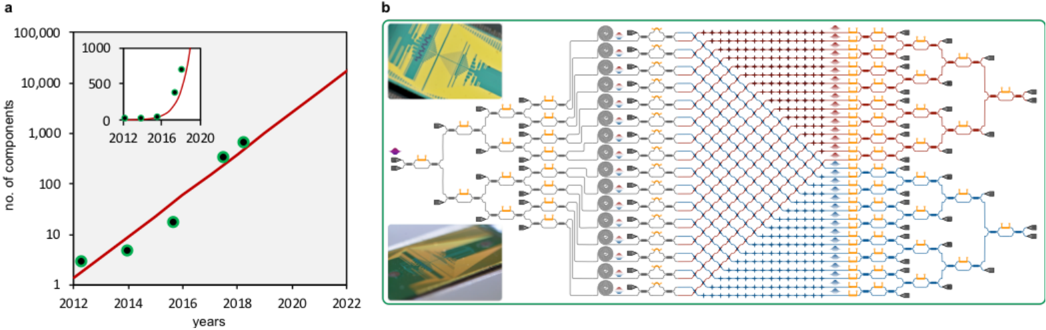
- IQP advanced from fixed circuits with few components operating on two photons to programmable circuitry approaching 1000 components with integrated multi-photon generation; a state-of-the-art Si device monolithically integrated 671 components (16 SFWM-SPSs, 93 TOPSs, 122 MMIs, 376 waveguide-crossers, 64 grating couplers) and verified up to 15×15 dimensional two-photon entangled states.
- Integrated QKD demonstrations include a chip-to-chip InP transmitter/SiOxNy receiver programmable for BB84 at 560 MHz, coherent-one-way at 860 MHz, and differential-phase-shift at 1.76 GHz; WDM-QKD doubled key rates to 1.11 Mbit/s over 20 km emulated fiber; Si-based transmitters achieved kbps–Mbps secret key rates and 1.0%–5.4% QBER.
- Key device benchmarks: Si-waveguide SNSPDs reached 91% detection efficiency, 18 ps jitter, and 50 Hz dark count; QD-SPSs produced 99.1% single-photon purity, 66% extraction efficiency, and 98.5% indistinguishability; two-photon interference visibilities were 100.1±0.4% in SiO2 and 100.0±0.4% in Si.
- Boson sampling was first demonstrated with n=3 photons, mainly in integrated photonics; the highest photon numbers used demultiplexed single QD-SPS photons, and the review states >20 photons are needed to challenge conventional computers and >50 to surpass supercomputers.
Methods
- Design: narrative review of integrated photonic quantum technologies, summarizing advances in materials, devices, functionality, and on-chip applications.
- Data/sample: published literature and milestone demonstrations from 2008 onward, including platforms (silica, Si, Si3N4, LN, GaAs, InP), sources, detectors, QKD, QIP, Boson sampling, and quantum simulation.
- Analysis: qualitative synthesis of experimental results and stated benchmarks; no primary experimental data or formal systematic-review methodology are reported.
Limitations
- Stated: a fully integrated quantum chip having sources, circuits, and detectors is yet to be realised; cryogenic operation for detectors and manipulation of photons at cryogenic temperature remain technical challenges.
- Stated: creating multiple identical QD-SPSs is difficult due to sample reproducibility; parametric SPSs produce photons nondeterministically with 5%–10% probability; full certification of Boson sampling is believed not possible.
- Evident from the text: as a review, it synthesizes prior work rather than presenting new experiments, and its performance numbers are drawn from cited demonstrations rather than a systematic meta-analysis.
Model-written summary. Check it against the paper before relying on it.
Integrity signals
Registry
Cites
Statistics
Figures

Verification
Claims the paper makes
28 Valid · 48 Not valid · 25 Not checked · 34 Own results and interpretations
Some cited sources support this claim and some don’t — read each source’s verdict below.
In the paper
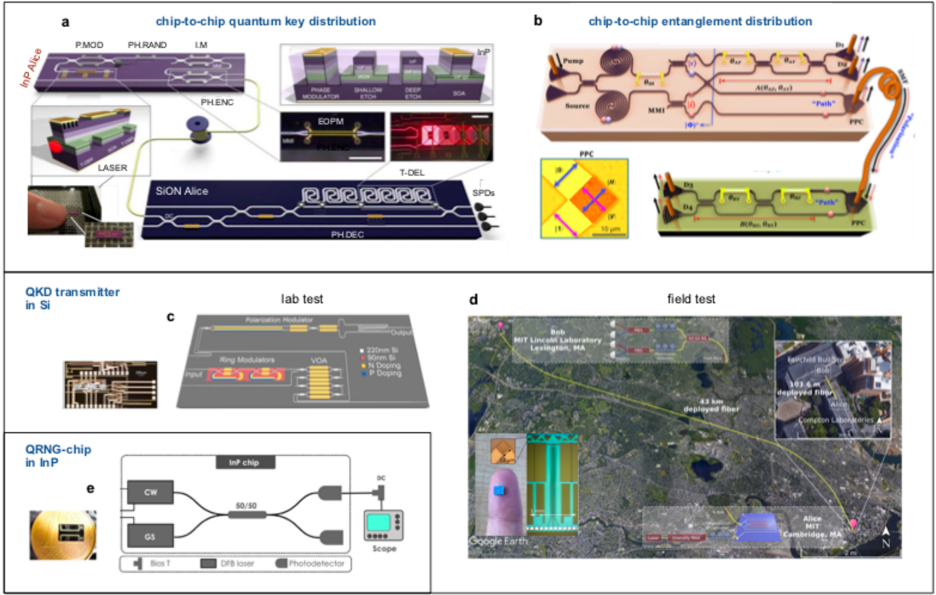
“For example, fully integrated QRNGs have been demonstrated in InP-chips ( Fig.3e ) [38, 74], in which random numbers were generated from the random phases of two-laser interference.”
What the sources say
- Partly supportedcites [38] 37. P. Sibson et al. Chip-based quantum key distribution. Nat. Commun. 8, 13984 (2017). sourceExperimental — accuracy not yet measured
The Results (Integrated photonic devices and Transmitter; page unavailable) describe a monolithically integrated InP chip with an on-chip laser, but it is a QKD transmitter, not a demonstrated QRNG. The Discussion says the receiver's passive basis choice removes the requirement for a QRNG; no passage describes generating random numbers from the phases of two interfering lasers. (LLM, conf=0.85)
- Disputedcites [74] 69. Y. Ding et al. High-dimensional quantum key distribution based on multicore fiber using silicon photonic integrated circuits. npj Quantum Information 3, 25 (2017). sourceExperimental — accuracy not yet measured
The Introduction describes a high-dimensional QKD demonstration using silicon photonic integrated circuits, not an InP-chip QRNG. The Experimental results say the experiment used FPGA-generated pseudorandom sequences for state and basis choices, rather than random phases from two-laser interference. Page numbers are unavailable in our copy. (LLM, conf=0.87)
Checked by a reasoning model — may be wrong.
boostedstates a cause- Asserted: passes — The authors put it forward as true.
- Checkable: passes — It can be checked against evidence.
- Load-bearing: unclear — It is unclear whether the paper’s conclusions depend on it.
- Based: passes — The paper gives a reason why it holds.
- Partly supported
At least one cited source doesn’t support this claim or points to a different paper, and none confirmed it — see the verdicts below.
In the paper
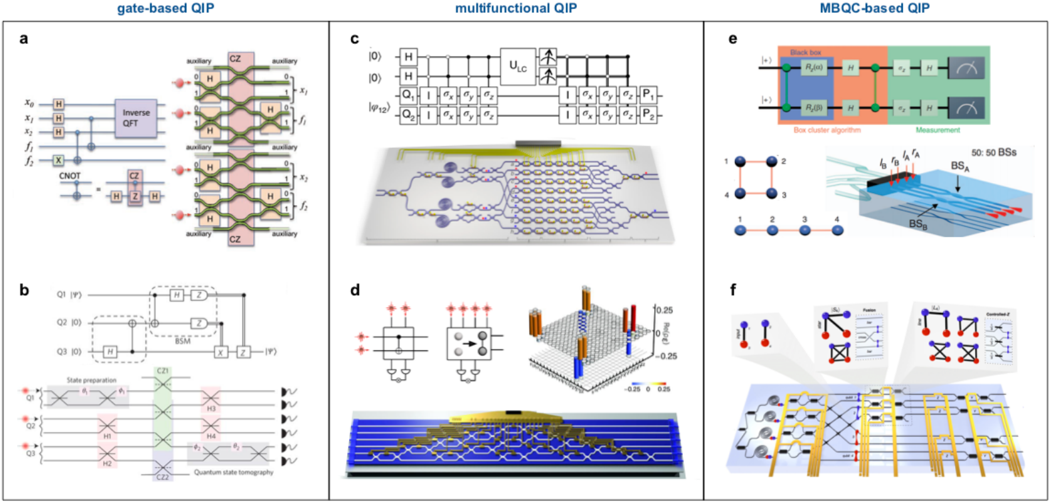
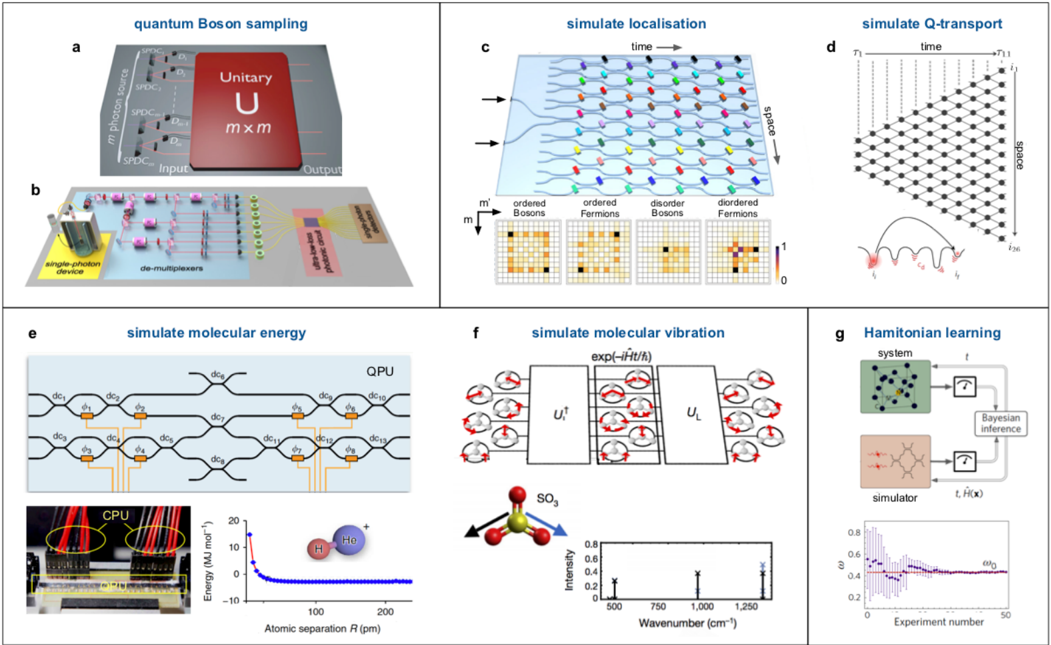
“The on-chip GMM of four-photon four-qubit graph states was demonstrated in a Si-chip ( Fig. 4f ) [87].”
What the sources say
- Disputedcites [87] 81. X. Qiang et al. Large-scale silicon quantum photonics implementing arbitrary two-qubit processing. Nat. Photon. 12, 534-539 (2018). sourceExperimental — accuracy not yet measured
The paper’s Abstract describes a silicon chip that generates two photonic qubits and performs two-qubit processing using only two photons. It does not report generating, manipulating and measuring four-photon four-qubit graph states; its stated demonstration uses a different number of photons and qubits. (LLM, conf=0.90)
Checked by a reasoning model — may be wrong.
boosted- Asserted: passes — The authors put it forward as true.
- Checkable: passes — It can be checked against evidence.
- Load-bearing: unclear — It is unclear whether the paper’s conclusions depend on it.
- Based: passes — The paper gives a reason why it holds.
- Disputed
At least one cited source doesn’t support this claim or points to a different paper, and none confirmed it — see the verdicts below.
In the paper
“The first on-chip GMM of four-qubit cluster state was realised in a laser-writing chip ( Fig.4e ), by manipulating both the polarisation and path DoFs of two photons [85].”
What the sources say
- Disputedcites [85] 79. A. Peruzzo et al. A variational eigenvalue solver on a photonic quantum processor. Nat. Commun. 5, 4213 (2013). sourceExperimental — accuracy not yet measured
The Results section (“Prototype demonstration”; page unavailable) describes a chip that prepares and measures two-qubit states encoded in photon paths, not a four-qubit cluster state encoded in both polarisation and path. Our copy does not establish the claimed first demonstration or laser-writing fabrication. (LLM, conf=0.88)
Checked by a reasoning model — may be wrong.
plainstates a cause- Asserted: passes — The authors put it forward as true.
- Checkable: passes — It can be checked against evidence.
- Load-bearing: unclear — It is unclear whether the paper’s conclusions depend on it.
- Based: passes — The paper gives a reason why it holds.
- Disputed
At least one cited source doesn’t support this claim or points to a different paper, and none confirmed it — see the verdicts below.
In the paper
“For example, the first GMM of entangled two-qubit states encoded in dual-paths were demonstrated in a Si-chip, with the inclusion of ring-resonator-based SFWM photon sources and circuits [84].”
What the sources say
- Disputedcites [84] 78. B. J. Metcalf et al. Quantum teleportation on a photonic chip. Nat. Photon. 8, 770-774 (2014). sourceExperimental — accuracy not yet measured
The main-experiment passage describes three photons from two parametric down-conversion sources coupled into a UV-written silica-on-silicon chip, not ring-resonator SFWM sources integrated on a silicon chip. Figure 1(c) does support dual-rail encoding and on-chip state preparation and tomography, but the claimed chip and photon-source technology contradict the paper’s description. (LLM, conf=0.88)
Checked by a reasoning model — may be wrong.
boosted- Asserted: passes — The authors put it forward as true.
- Checkable: passes — It can be checked against evidence.
- Load-bearing: unclear — It is unclear whether the paper’s conclusions depend on it.
- Based: passes — The paper gives a reason why it holds.
- Disputed
Some cited sources support this claim and some don’t — read each source’s verdict below.
In the paper
“In Fig.6 , we summarise the scaling of integrated quantum photonic circuits in silicon: from a single MZI adopted for the on-chip HOM-interference experiment in 2012 [24], to a state-of-the-art large-scale quantum photonic device having 671 components that was used for the GMM of multi-dimensional entanglement [44].”
What the sources say
- Disputedcites [24] 24. D. Bonneau et al. Quantum interference and manipulation of entanglement in silicon wire waveguide quantum circuits. New J. Phys. 14, 045003 (2012). sourceExperimental — accuracy not yet measured
Split into 2 atoms — 0 confirmed, 1 partially supported, 1 disputed, 0 misattributed, 0 unverifiable. Expand the claim to see per-atom verdicts.
Checked by a reasoning model — may be wrong.
- Partly supportedcites [44] 44. J. Wang et al. Multidimensional quantum entanglement with large-scale integrated optics. Science 360, 285-291 (2018). sourceExperimental — accuracy not yet measured
The opening summary (p. 1) says the silicon-photonics device generated, manipulated and measured multidimensional entanglement. It reports more than 550 components, however, and the components listed in Fig. 1 (p. 2) total 551; our copy does not support the attributed figure of 671. The 2012 single-MZI experiment is attached to a different citation in the citing sentence. (LLM, conf=0.88)
plainstates an association- Asserted: passes — The authors put it forward as true.
- Checkable: passes — It can be checked against evidence.
- Load-bearing: unclear — It is unclear whether the paper’s conclusions depend on it.
- Based: passes — The paper gives a reason why it holds.
- Disputed
67 more claims · 35 with their cited sources checked
Create a free account to see all 135 claims and to verify the 22 references still open.
- It may state two separate claims as one. 38
- Probably not a substantial claim. 34
Claims other papers make about this one
Each is checked against this paper’s own text: does it say what the citing paper says it does?
The source backs part of the claim, not all of it — or backs it for a different population, condition or comparison.
In the citing paper
“As an example, the timeline in figure 1 illustrates this rapid progression from few-component circuits enabling two-photon quantum interference in 2008 [5] to a decade later with devices combining more than 650 components capable of arbitrary and programmable two-qubit operations [6], enabling advances in foundational quantum mechanics, computing, communications, and metrology [7].”
From 2022 Roadmap on integrated quantum photonics (2022) · cites this paper as [7]
Experimental — accuracy not yet measuredThe source backs part of the claim, not all of it — or backs it for a different population, condition or comparison.
In the citing paper
“Thermo-optic tuning can be used as a drift-free method of bias control [16,468], but this requires tradeoffs in power dissipation and tuning bandwidth.”
From Integrated photonics on thin-film lithium niobate (2021) · cites this paper as [468]
Experimental — accuracy not yet measuredThe source backs part of the claim, not all of it — or backs it for a different population, condition or comparison.
In the citing paper
“Recent advances in the fabrication of quantum photonic integrated circuits (QPICs) have enabled the functionality of bench-top nonlinear sources to be scaled down to a single chip, with a dramatic improvement in the efficiency and stability [12][13][14][15].”
From Ultrabright Entangled-Photon-Pair Generation from anAlGaAs-On-Insulator Microring Resonator (2021) · cites this paper as [14]
Experimental — accuracy not yet measuredThe cited source says what the claim attributes to it.
In the citing paper
“As a result, it has been the material of choice for many early demonstrations of building blocks for photonic quantum computing and has seen rapid growth in the number of generated photons and integrated components over the last 10 years [7,24,25].”
From 2022 Roadmap on integrated quantum photonics (2022) · cites this paper as [7]
The cited source says what the claim attributes to it.
In the citing paper
“Silicon photonics has been pivotal for increasing the complexity and component-number of on-chip quantum circuitry and revealing the disruptive potential an engineered integrated approach can take for a quantum technology [7].”
From 2022 Roadmap on integrated quantum photonics (2022) · cites this paper as [7]
1 more claim about this paper
Create a free account to see every claim other papers make about this one.
Self-check
Percentages, sums and reported differences re-computed from the paper’s own numbers.
Each contradiction between two passages listed here was confirmed by an independent check.
Rated minor: it would not touch a result — a value no result rests on, a p-value that stays on the same side of the significance level, or a conflict that is clerical, resolved elsewhere in the paper, or outside its own findings.
In the paper
§ Box 2: integrated building blocks for operating photonic states · p. 9
“large-scale quantum circuits in Si with 670 components [44]”
§ Box 2: integrated building blocks for operating photonic states · p. 13
“This large-scale device monolithically integrates 16 SFMW-SPSs, 93 reconfigurable TOPSs, 122 MMIs, 376 waveguide-crossers and 64 grating couplers, in total 671 photonic components.”
Rated minor: it would not touch a result — a value no result rests on, a p-value that stays on the same side of the significance level, or a conflict that is clerical, resolved elsewhere in the paper, or outside its own findings.
In the paper
§ Introduction · p. 1
“In 2001, a theoretical breakthrough presented a scheme for universal quantum computation using photons in linear optics, in which photons interact non-deterministically via quantum interference and measurement-induced nonlinearities [9, 10]”
§ References · p. 14
“9. E. Knill, R. Laflamme & G. J. Milburn. A scheme for efficient quantum computation with linear optics. Nature 409, 46-52 (2000).”
Citations
Cites
Gisin, N., Ribordy, G., Tittel, W., & Zbinden, H. (2002) · Reviews of Modern Physics · doi:10.1103/revmodphys.74.145 · Cited by 8,515 · cited 4×
“do not require operation at mK temperatures or in high vacuum. The translation of quantum information science to real world technologies promises extreme advantages for certain tasks in communication [5], computation [6], and simulation [7]. However, implementing large instances of quantum algorithms or the deployment…”
InfluentialA scheme for efficient quantum computation with linear optics
Knill, E., Laflamme, R., & Milburn, G. J. (2001) · Nature · doi:10.1038/35051009 · Cited by 5,880
Experimental quantum teleportation
Bouwmeester, D., Pan, J.-W., Mattle, K., Eibl, M., Weinfurter, H., & Zeilinger, A. (1997) · Nature · doi:10.1038/37539 · Cited by 5,545 · cited 1×
“antum information processing. Introduction Pioneering investigations of quantum science, including tests of entanglement [1], generation of squeezed light [2], demonstrations of quantum teleportation [3], and loophole-free tests of Bell nonlocality [4], were possible because photons are excellent, low-noise carriers o…”
BackgroundBiamonte, J., Wittek, P., Pancotti, N., Rebentrost, P., Wiebe, N., & Lloyd, S. (2017) · Nature · doi:10.1038/nature23474 · Cited by 4,779
A variational eigenvalue solver on a photonic quantum processor
Peruzzo, A., McClean, J., Shadbolt, P., Yung, M.-H., Zhou, X.-Q., Love, P. J., Aspuru-Guzik, A., & O’Brien, J. L. (2014) · Nature Communications · doi:10.1038/ncomms5213 · Cited by 4,552 · cited 4×
“hysical process [40, 111]. Molecular simulation. Efficient simulation of molecular properties is fundamentally interesting in chemistry [7]. Quantum phase estimation [112] and variational eigensolver [79] were implemented in IQP chips to compute the ground-state energy of molecules (Fig.5e). An algorithm combining the…”
BackgroundMethodInfluentialRaussendorf, R., & Briegel, H. J. (2001) · Physical Review Letters · doi:10.1103/physrevlett.86.5188 · Cited by 4,477
Ladd, T. D., Jelezko, F., Laflamme, R., Nakamura, Y., Monroe, C., & O’Brien, J. L. (2010) · Nature · doi:10.1038/nature08812 · Cited by 3,592
Integrated lithium niobate electro-optic modulators operating at CMOS-compatible voltages
Wang, C., Zhang, M., Chen, X., Bertrand, M., Shams-Ansari, A., Chandrasekhar, S., Winzer, P., & Lončar, M. (2018) · Nature · doi:10.1038/s41586-018-0551-y · Cited by 2,593 · cited 2×
“elopment of multiplexed parametric SPSs [49, 50] and de-multiplexed QD-SPSs [56, 57]. They both require a network of fast and low-loss optical switches. Recent progress in thin-film LN-based switches [118] has shown a great promise for the multiplexed and de-multiplexed many-photon generation. These advanced systems a…”
BackgroundExperimental Test of Local Hidden-Variable Theories
Freedman, S. J., & Clauser, J. F. (1972) · Physical Review Letters · doi:10.1103/physrevlett.28.938 · Cited by 1,999 · cited 1×
“s of quantum physical and chemical systems, Boson sampling, and linear-optic quantum information processing. Introduction Pioneering investigations of quantum science, including tests of entanglement [1], generation of squeezed light [2], demonstrations of quantum teleportation [3], and loophole-free tests of Bell non…”
BackgroundGottesman, D., & Chuang, I. L. (1999) · Nature · doi:10.1038/46503 · Cited by 1,860
Research works printed but not linked: 1
- 99. S. Aaronson & A. Arkhipov. Boson sampling is far from uniform. Quantum Inf. Comput. 14, 1383-423 (2014).
Cited by
Integrated photonics on thin-film lithium niobate
Zhu, D., Shao, L., Yu, M., Cheng, R., Desiatov, B., Xin, C. J., Hu, Y., Holzgrafe, J., Ghosh, S., Shams-Ansari, A., et al. (2021) · Advances in Optics and Photonics · doi:10.1364/aop.411024 · Cited by 1,516
Programmable photonic circuits
Bogaerts, W., Pérez, D., Capmany, J., Miller, D. A. B., Poon, J., Englund, D., Morichetti, F., & Melloni, A. (2020) · Nature · doi:10.1038/s41586-020-2764-0 · Cited by 1,368
Hybrid integrated quantum photonic circuits
Elshaari, A. W., Pernice, W., Srinivasan, K., Benson, O., & Zwiller, V. (2020) · Nature Photonics · doi:10.1038/s41566-020-0609-x · Cited by 805
“Fabrication approaches for hybrid quantum photonic integrated circuits We now discuss three important approaches for hybrid integration, highlighting their advantages and technological challenges: (1) wafer bonding, (2) transfer printing and (3) pick and place.”
BackgroundMethodInfluentialAdvances in high-dimensional quantum entanglement
Erhard, M., Krenn, M., & Zeilinger, A. (2020) · Nature Reviews Physics · doi:10.1038/s42254-020-0193-5 · Cited by 609
A bright and fast source of coherent single photons
Tomm, N., Javadi, A., Antoniadis, N. O., Najer, D., Löbl, M. C., Korsch, A. R., Schott, R., Valentin, S. R., Wieck, A. D., Ludwig, A., et al. (2021) · Nature Nanotechnology · doi:10.1038/s41565-020-00831-x · Cited by 608
Photonic Bound States in the Continuum: From Basics to Applications
Azzam, S. I., & Kildishev, A. V. (2021) · Advanced Optical Materials · doi:10.1002/adom.202001469 · Cited by 584
The potential and global outlook of integrated photonics for quantum technologies
Pelucchi, E., Fagas, G., Aharonovich, I., Englund, D., Figueroa, E., Gong, Q., Hannes, H., Liu, J., Lu, C.-Y., Matsuda, N., et al. (2021) · Nature Reviews Physics · doi:10.1038/s42254-021-00398-z · Cited by 533
Self-citationQuantum circuits with many photons on a programmable nanophotonic chip
Arrazola, J. M., Bergholm, V., Brádler, K., Bromley, T. R., Collins, M. J., Dhand, I., Fumagalli, A., Gerrits, T., Goussev, A., Helt, L. G., et al. (2021) · Nature · doi:10.1038/s41586-021-03202-1 · Cited by 567
“Combined with rapid advancements in photonic chip fabrication [25], such demonstrations coincide with new optimism towards pho-”
MethodDeep learning in nano-photonics: inverse design and beyond
Wiecha, P. R., Arbouet, A., Girard, C., & Muskens, O. L. (2021) · Photonics Research · doi:10.1364/prj.415960 · Cited by 501
Integrated lithium niobate electro-optic modulators: when performance meets scalability
Zhang, M., Wang, C., Kharel, P., Zhu, D., & Lončar, M. (2021) · Optica · doi:10.1364/optica.415762 · Cited by 489
Silicon/2D-material photodetectors: from near-infrared to mid-infrared
Liu, C., Guo, J., Yu, L., Li, J., Zhang, M., Li, H., Shi, Y., & Dai, D. (2021) · Light: Science & Applications · doi:10.1038/s41377-021-00551-4 · Cited by 473
Quantum circuits with many photons on a programmable nanophotonic chip
Arrazola, J. M., Bergholm, V., Brádler, K., Bromley, T. R., Collins, M. J., Dhand, I., Fumagalli, A., Gerrits, T., Goussev, A., Helt, L. G., et al. (2021) · RePEc: Research Papers in Economics · Cited by 463
Microcomb-driven silicon photonic systems
Shu, H., Chang, L., Tao, Y., Shen, B., Xie, W., Jin, M., Netherton, A., Tao, Z., Zhang, X., Chen, R., et al. (2022) · Nature · doi:10.1038/s41586-022-04579-3 · Cited by 437
Polino, E., Valeri, M., Spagnolo, N., & Sciarrino, F. (2020) · AVS Quantum Science · doi:10.1116/5.0007577 · Cited by 414
Self-citationSilicon nitride passive and active photonic integrated circuits: trends and prospects
Xiang, C., Jin, W., & Bowers, J. E. (2022) · Photonics Research · doi:10.1364/prj.452936 · Cited by 376
Advances in on-chip photonic devices based on lithium niobate on insulator
Lin, J., Bo, F., Cheng, Y., & Xu, J. (2020) · Photonics Research · doi:10.1364/prj.395305 · Cited by 377
Colloidal Quantum Dots as Platforms for Quantum Information Science
Kagan, C. R., Bassett, L. C., Murray, C. B., & Thompson, S. M. (2021) · Chemical Reviews · doi:10.1021/acs.chemrev.0c00831 · Cited by 331
Prospects and applications of on-chip lasers
Zhou, Z., Ou, X., Fang, Y., Alkhazraji, E., Xu, R., Wan, Y., & Bowers, J. E. (2023) · eLight · doi:10.1186/s43593-022-00027-x · Cited by 319
Silicon photonics for high-capacity data communications
Shi, Y., Zhang, Y., Wan, Y., Yu, Y., Zhang, Y., Hu, X., Xiao, X., Xu, H., Zhang, L., & Pan, B. (2022) · Photonics Research · doi:10.1364/prj.456772 · Cited by 311
Quantum networks based on color centers in diamond
Ruf, M., Wan, N. H., Choi, H., Englund, D., & Hanson, R. (2021) · Journal of Applied Physics · doi:10.1063/5.0056534 · Cited by 297
Chip-to-chip quantum teleportation and multi-photon entanglement in silicon
Llewellyn, D., Ding, Y., Faruque, I. I., Paesani, S., Bacco, D., Santagati, R., Qian, Y.-J., Li, Y., Xiao, Y.-F., Huber, M., et al. (2020) · Nature Physics · doi:10.1038/s41567-019-0727-x · Cited by 331
Self-citationHighlighting photonics: looking into the next decade
Chen, Z., & Segev, M. (2021) · eLight · doi:10.1186/s43593-021-00002-y · Cited by 320
High-rate quantum key distribution exceeding 110 Mb s–1
Li, W., Zhang, L., Tan, H., Lu, Y., Liao, S.-K., Huang, J., Li, H., Wang, Z., Mao, H.-K., Yan, B., et al. (2023) · Nature Photonics · doi:10.1038/s41566-023-01166-4 · Cited by 308
Recent progress in quantum photonic chips for quantum communication and internet
Luo, W., Cao, L., Shi, Y., Wan, L., Zhang, H., Li, S., Chen, G., Li, Y., Li, S., Wang, Y., et al. (2023) · Light: Science & Applications · doi:10.1038/s41377-023-01173-8 · Cited by 284
Nonvolatile programmable silicon photonics using an ultralow-loss Sb 2 Se 3 phase change material
Delaney, M., Zeimpekis, I., Du, H., Yan, X., Banakar, M., Thomson, D. J., Hewak, D. W., & Muskens, O. L. (2021) · Science Advances · doi:10.1126/sciadv.abg3500 · Cited by 283
Progress in quantum teleportation
Hu, X.-M., Guo, Y., Liu, B.-H., Li, C.-F., & Guo, G.-C. (2023) · Nature Reviews Physics · doi:10.1038/s42254-023-00588-x · Cited by 261
Ion-cut lithium niobate on insulator technology: Recent advances and perspectives
Jia, Y., Wang, L., & Chen, F. (2021) · Applied Physics Reviews · doi:10.1063/5.0037771 · Cited by 277
A programmable qudit-based quantum processor
Chi, Y., Huang, J., Zhang, Z., Mao, J., Zhou, Z., Chen, X., Zhai, C., Bao, J., Dai, T., Yuan, H., et al. (2022) · Nature Communications · doi:10.1038/s41467-022-28767-x · Cited by 273
“We designed the integrated quantum photonic circuit and use 248nm deep ultraviolet lithography to fabricate the silicon-based quantum photonic chip shown in Fig 1A on 220nm silicon-on-insulator (SOI) [3].”
MethodSelf-citationQuantum networks based on color centers in diamond
Ruf, M., Wan, N., Choi, H., Englund, D., & Hanson, R. (2021) · DSpace@MIT (Massachusetts Institute of Technology) · Cited by 238
A Review of Optical Neural Networks
Sui, X., Wu, Q., Liu, J., Chen, Q., & Gu, G. (2020) · IEEE Access · doi:10.1109/access.2020.2987333 · Cited by 232
“According to the review of integrated optical quantum technology [58], the integrated photonic platforms”
BackgroundA sinterless, low-temperature route to 3D print nanoscale optical-grade glass
Bauer, J., Crook, C., & Baldacchini, T. (2023) · Science · doi:10.1126/science.abq3037 · Cited by 232
Two-photon interference: the Hong–Ou–Mandel effect
Bouchard, F., Sit, A., Zhang, Y., Fickler, R., Miatto, F. M., Yao, Y., Sciarrino, F., & Karimi, E. (2021) · Reports on Progress in Physics · doi:10.1088/1361-6633/abcd7a · Cited by 232
“[134] Wang, J.”
BackgroundSelf-citationA manufacturable platform for photonic quantum computing
PsiQuantum team, Alexander, K., Benyamini, A., Black, D., Bonneau, D., Burgos, S., Burridge, B., Cable, H., Campbell, G., Catalano, G., et al. (2025) · Nature · doi:10.1038/s41586-025-08820-7 · Cited by 231
Self-citationContinuous-variable quantum key distribution system: Past, present, and future
Zhang, Y., Bian, Y., Li, Z., Yu, S., & Guo, H. (2024) · Applied Physics Reviews · doi:10.1063/5.0179566 · Cited by 194
Toward 1% single-photon anharmonicity with periodically poled lithium niobate microring resonators
Lu, J., Li, M., Zou, C.-L., Al Sayem, A., & Tang, H. X. (2020) · Optica · doi:10.1364/optica.403931 · Cited by 221
Applications of single photons to quantum communication and computing
Couteau, C., Barz, S., Durt, T., Gerrits, T., Huwer, J., Prevedel, R., Rarity, J., Shields, A., & Weihs, G. (2023) · Nature Reviews Physics · doi:10.1038/s42254-023-00583-2 · Cited by 216
“As these set-ups require long-term stability and scalability is limited through the number of bulk components needed, a pathway to scaling up linear-optical gate-based approach is integration 154 .”
BackgroundVery-large-scale integrated quantum graph photonics
Bao, J., Fu, Z., Pramanik, T., Mao, J., Chi, Y., Cao, Y., Zhai, C., Mao, Y., Dai, T., Chen, X., et al. (2023) · Nature Photonics · doi:10.1038/s41566-023-01187-z · Cited by 198
Self-citationA photonic integrated quantum secure communication system
Paraïso, T. K., Roger, T., Marangon, D. G., De Marco, I., Sanzaro, M., Woodward, R. I., Dynes, J. F., Yuan, Z., & Shields, A. J. (2021) · Nature Photonics · doi:10.1038/s41566-021-00873-0 · Cited by 208
Quantum optics of soliton microcombs
Guidry, M. A., Lukin, D. M., Yang, K. Y., Trivedi, R., & Vučković, J. (2022) · Nature Photonics · doi:10.1038/s41566-021-00901-z · Cited by 190
Quantum dots for photonic quantum information technology
Heindel, T., Kim, J.-H., Gregersen, N., Rastelli, A., & Reitzenstein, S. (2023) · Advances in Optics and Photonics · doi:10.1364/aop.490091 · Cited by 172
High-Performance Silicon Photonics Using Heterogeneous Integration
Xiang, C., Jin, W., Huang, D., Tran, M. A., Guo, J., Wan, Y., Xie, W., Kurczveil, G., Netherton, A. M., Liang, D., et al. (2022) · IEEE Journal of Selected Topics in Quantum Electronics · doi:10.1109/jstqe.2021.3126124 · Cited by 184
Tan, D., Wang, Z., Xu, B., & Qiu, J. (2021) · Advanced Photonics · doi:10.1117/1.ap.3.2.024002 · Cited by 185
A heterogeneously integrated lithium niobate-on-silicon nitride photonic platform
Churaev, M., Wang, R. N., Riedhauser, A., Snigirev, V., Blésin, T., Möhl, C., Anderson, M. H., Siddharth, A., Popoff, Y., Drechsler, U., et al. (2023) · Nature Communications · doi:10.1038/s41467-023-39047-7 · Cited by 171
Chip-based quantum key distribution
Kwek, L.-C., Cao, L., Luo, W., Wang, Y., Sun, S., Wang, X., & Liu, A. Q. (2021) · AAPPS Bulletin · doi:10.1007/s43673-021-00017-0 · Cited by 182
Lithium Niobate on Insulator: An Emerging Platform for Integrated Quantum Photonics
Saravi, S., Pertsch, T., & Setzpfandt, F. (2021) · Advanced Optical Materials · doi:10.1002/adom.202100789 · Cited by 184
Aluminium nitride integrated photonics: a review
Li, N., Ho, C. P., Zhu, S., Fu, Y. H., Zhu, Y., & Lee, L. Y. T. (2021) · Nanophotonics · doi:10.1515/nanoph-2021-0130 · Cited by 178
Ceccarelli, F., Acconcia, G., Gulinatti, A., Ghioni, M., Rech, I., & Osellame, R. (2021) · Advanced Quantum Technologies · doi:10.1002/qute.202000102 · Cited by 158
Sun, D., Zhang, Y., Wang, D., Song, W., Liu, X., Pang, J., Geng, D., Sang, Y., & Liu, H. (2020) · Light: Science & Applications · doi:10.1038/s41377-020-00434-0 · Cited by 174
Cueff, S., John, J., Zhang, Z., Parra, J., Sun, J., Orobtchouk, R., Ramanathan, S., & Sanchis, P. (2020) · APL Photonics · doi:10.1063/5.0028093 · Cited by 166
On-chip nanophotonics and future challenges
Karabchevsky, A., Katiyi, A., Ang, A. S., & Hazan, A. (2020) · Nanophotonics · doi:10.1515/nanoph-2020-0204 · Cited by 166
Entangled photon-pair sources based on three-wave mixing in bulk crystals
Anwar, A., Perumangatt, C., Steinlechner, F., Jennewein, T., & Ling, A. (2021) · Review of Scientific Instruments · doi:10.1063/5.0023103 · Cited by 202
Quantum State Tomography with Conditional Generative Adversarial Networks
Ahmed, S., Sánchez Muñoz, C., Nori, F., & Kockum, A. F. (2021) · Physical Review Letters · doi:10.1103/physrevlett.127.140502 · Cited by 164
“[19] J.”
BackgroundIntegrated Electro-Optics on Thin-Film Lithium Niobate
Hu, Y., Zhu, D., Lu, S., Zhu, X., Song, Y., Renaud, D., Assumpcao, D., Cheng, R., Xin, C. J., Yeh, M., et al. (2025) · Nature Reviews Physics · doi:10.1038/s42254-025-00825-5 · Cited by 162
Ultrabright Entangled-Photon-Pair Generation from anAlGaAs-On-Insulator Microring Resonator
Steiner, T. J., Castro, J. E., Chang, L., Dang, Q., Xie, W., Norman, J., Bowers, J. E., & Moody, G. (2021) · PRX Quantum · doi:10.1103/prxquantum.2.010337 · Cited by 156
Bright Polarized Single-Photon Source Based on a Linear Dipole
Thomas, S. E., Billard, M., Coste, N., Wein, S. C., Priya, P., Ollivier, H., Krebs, O., Tazaïrt, L., Harouri, A., Lemaître, A., et al. (2021) · Physical Review Letters · doi:10.1103/physrevlett.126.233601 · Cited by 177
Li, L., Kong, W., & Chen, F. (2022) · Advanced Photonics · doi:10.1117/1.ap.4.2.024002 · Cited by 161
Sciara, S., Roztocki, P., Fischer, B., Reimer, C., Cortés, L. R., Munro, W. J., Moss, D., Cino, A. C., Caspani, L., Kues, M., et al. (2021) · Nanophotonics · doi:10.1515/nanoph-2021-0510 · Cited by 144
A ferroelectric multilevel non-volatile photonic phase shifter
Geler-Kremer, J., Eltes, F., Stark, P., Stark, D., Caimi, D., Siegwart, H., Offrein, B. J., Fompeyrine, J., & Abel, S. (2022) · Nature Photonics · doi:10.1038/s41566-022-01003-0 · Cited by 164
Ultrabroadband Entangled Photons on a Nanophotonic Chip
Javid, U. A., Ling, J., Staffa, J., Li, M., He, Y., & Lin, Q. (2021) · Physical Review Letters · doi:10.1103/physrevlett.127.183601 · Cited by 162
Mendelson, N., Doherty, M. W., Toth, M., Aharonovich, I., & Tran, T. T. (2020) · Advanced Materials · doi:10.1002/adma.201908316 · Cited by 145
“Quantum dots: Perspectives in next-generation chemical gas sensors” ‒ A review
Galstyan, V. (2021) · Analytica Chimica Acta · doi:10.1016/j.aca.2020.12.067 · Cited by 148
Fully on-chip photonic turnkey quantum source for entangled qubit/qudit state generation
Mahmudlu, H., Johanning, R., van Rees, A., Kashi, A. K., Epping, J. P., Haldar, R., Boller, K. J., & Kues, M. (2023) · Nature Photonics · doi:10.1038/s41566-023-01193-1 · Cited by 156
Quantum key distribution implemented with d-level time-bin entangled photons
Yu, H., Sciara, S., Chemnitz, M., Montaut, N., Crockett, B., Fischer, B., Helsten, R., Wetzel, B., Goebel, T. A., Krämer, R. G., et al. (2025) · Nature Communications · doi:10.1038/s41467-024-55345-0 · Cited by 146
Femtosecond laser micromachining for integrated quantum photonics
Corrielli, G., Crespi, A., & Osellame, R. (2021) · Nanophotonics · doi:10.1515/nanoph-2021-0419 · Cited by 149
Integrated photon-pair sources with nonlinear optics
Wang, Y., Jöns, K. D., & Sun, Z. (2021) · Applied Physics Reviews · doi:10.1063/5.0030258 · Cited by 137
Photophysical properties of materials for high-speed photodetection
Najarian, A. M., Vafaie, M., Chen, B., de Arquer, F. P. G., & Sargent, E. H. (2024) · Nature Reviews Physics · doi:10.1038/s42254-024-00699-z · Cited by 153
All-organic polymeric materials with high refractive index and excellent transparency
Zhang, J., Bai, T., Liu, W., Li, M., Zang, Q., Ye, C., Sun, J. Z., Shi, Y., Ling, J., Qin, A., et al. (2023) · Nature Communications · doi:10.1038/s41467-023-39125-w · Cited by 136
Quantum machine learning: from physics to software engineering
Melnikov, A. A., Kordzanganeh, M., Alodjants, A. P., & Lee, R. (2023) · Advances in Physics X · doi:10.1080/23746149.2023.2165452 · Cited by 182
Ye, Z., Jia, H., Huang, Z., Shen, C., Long, J., Shi, B., Luo, Y.-H., Gao, L., Sun, W., Guo, H., et al. (2023) · Photonics Research · doi:10.1364/prj.486379 · Cited by 153
Fault-Tolerant Continuous-Variable Measurement-based Quantum Computation Architecture
Larsen, M. V., Chamberland, C., Noh, K., Neergaard-Nielsen, J. S., & Andersen, U. L. (2021) · PRX Quantum · doi:10.1103/prxquantum.2.030325 · Cited by 99
Topologically protected quantum entanglement emitters
Dai, T., Ao, Y., Bao, J., Mao, J., Chi, Y., Fu, Z., You, Y., Chen, X., Zhai, C., Tang, B., et al. (2022) · Nature Photonics · doi:10.1038/s41566-021-00944-2 · Cited by 116
Self-citationSilicon photonics interfaced with integrated electronics for 9 GHz measurement of squeezed light
Tasker, J. F., Frazer, J., Ferranti, G., Allen, E. J., Brunel, L. F., Tanzilli, S., D’Auria, V., & Matthews, J. C. F. (2021) · Nature Photonics · doi:10.1038/s41566-020-00715-5 · Cited by 116
Integrated Photonics Based on Rare‐Earth Ion‐Doped Thin‐Film Lithium Niobate
Jia, Y., Wu, J., Sun, X., Yan, X., Xie, R., Wang, L., Chen, Y., & Chen, F. (2022) · Laser & Photonics Review · doi:10.1002/lpor.202200059 · Cited by 122
Anneal-free ultra-low loss silicon nitride integrated photonics
Bose, D., Harrington, M., Isichenko, A., Liu, K., Wang, J., Chauhan, N., Newman, Z. L., & Blumenthal, D. J. (2024) · Light Science & Applications · doi:10.1038/s41377-024-01503-4 · Cited by 146
Self-citationEmerging material platforms for integrated microcavity photonics
Liu, J., Bo, F., Chang, L., Dong, C., Ou, X., Regan, B., Shen, X., Song, Q., Yao, B., Zhang, W., et al. (2022) · Science China Physics Mechanics and Astronomy · doi:10.1007/s11433-022-1957-3 · Cited by 123
Ultra-low threshold continuous-wave quantum dot mini-BIC lasers
Zhong, H., Yu, Y., Zheng, Z., Ding, Z., Zhao, X., Yang, J., Wei, Y., Chen, Y., & Yu, S. (2023) · Light Science & Applications · doi:10.1038/s41377-023-01130-5 · Cited by 122
Unidirectional Chiral Emission via Twisted Bi-layer Metasurfaces
Gromyko, D., An, S., Gorelik, S. R., Xu, J., Lim, L. J., Lee, H. Y. L., Tjiptoharsono, F., Tan, Z., Qiu, C., Dong, Z., et al. (2024) · Nature Communications · doi:10.1038/s41467-024-54262-6 · Cited by 139
Cervera-Lierta, A., Krenn, M., Aspuru‐Guzik, A., & Galda, A. (2022) · Physical Review Applied · doi:10.1103/physrevapplied.17.024062 · Cited by 126
Huang, H.-L., Xu, X., Guo, C., Tian, G., Wei, S.-J., Sun, X., Bao, W., & Long, G. (2023) · Science China Physics Mechanics and Astronomy · doi:10.1007/s11433-022-2057-y · Cited by 143
Coupling Hexagonal Boron Nitride Quantum Emitters to Photonic Crystal Cavities
Fröch, J. E., Kim, S., Mendelson, N., Kianinia, M., Toth, M., & Aharonovich, I. (2020) · ACS Nano · doi:10.1021/acsnano.0c01818 · Cited by 117
Multichip multidimensional quantum networks with entanglement retrievability
Zheng, Y., Zhai, C., Liu, D., Mao, J., Chen, X., Dai, T., Huang, J., Bao, J., Fu, Z., Tong, Y., et al. (2023) · Science · doi:10.1126/science.adg9210 · Cited by 128
Self-citationXue, G.-T., Niu, Y.-F., Liu, X., Duan, J.-C., Chen, W., Pan, Y., Jia, K., Wang, X., Liu, H.-Y., Zhang, Y., et al. (2021) · Physical Review Applied · doi:10.1103/physrevapplied.15.064059 · Cited by 109
Quantum frequency conversion and single-photon detection with lithium niobate nanophotonic chips
Wang, X., Jiao, X., Wang, B., Liu, Y., Xie, X.-P., Zheng, M.-Y., Zhang, Q., & Pan, J.-W. (2023) · npj Quantum Information · doi:10.1038/s41534-023-00704-w · Cited by 130
18.8 Gbps real-time quantum random number generator with a photonic integrated chip
Bai, B., Huang, J., Qiao, G.-R., Nie, Y.-Q., Tang, W., Chu, T., Zhang, J., & Pan, J.-W. (2021) · Applied Physics Letters · doi:10.1063/5.0056027 · Cited by 121
Tunable entangled photon-pair generation in a liquid crystal
Sultanov, V., Kavčič, A., Kokkinakis, E. T., Sebastián, N., Chekhova, M. V., & Humar, M. (2024) · Nature · doi:10.1038/s41586-024-07543-5 · Cited by 125
Programmable surface plasmonic neural networks for microwave detection and processing
Gao, X., Ma, Q., Gu, Z., Cui, W. Y., Liu, C., Zhang, J., & Cui, T. J. (2023) · Nature Electronics · doi:10.1038/s41928-023-00951-x · Cited by 106
Microcavity exciton polaritons at room temperature
Ghosh, S., Su, R., Zhao, J., Fieramosca, A., Jin-qi, W., Li, T., Zhang, Q., Li, F., Chen, Z., Liew, T. C. H., et al. (2022) · Photonics Insights · doi:10.3788/pi.2022.r04 · Cited by 118
A programmable topological photonic chip
Dai, T., Ma, A., Mao, J., Ao, Y., Jia, X., Zheng, Y., Zhai, C., Yang, Y., Li, Z., Tang, B., et al. (2024) · Nature Materials · doi:10.1038/s41563-024-01904-1 · Cited by 132
Self-citationIntegrated electro-optic isolator on thin-film lithium niobate
Yu, M., Cheng, R., Reimer, C., He, L., Luke, K. J., Puma, E., Shao, L., Shams‐Ansari, A., Ren, X., Grant, H. R., et al. (2023) · Nature Photonics · doi:10.1038/s41566-023-01227-8 · Cited by 121
Entanglement-based quantum information technology: a tutorial
Zhang, Z., You, C., Magaña‐Loaiza, O. S., Fickler, R., León‐Montiel, R. D. J., Torres, J. P., Humble, T. S., Liu, S., Xia, Y., & Zhuang, Q. (2024) · Advances in Optics and Photonics · doi:10.1364/aop.497143 · Cited by 131
Cultivating Multidisciplinarity: Manufacturing and Sensing Challenges in Cultured Meat Production
Djisalov, M., Knežić, T., Podunavac, I., Živojević, K., Radonić, V., Knežević, N. Ž., Bobrinetskiy, I. I., & Gadjanski, I. (2021) · Biology · doi:10.3390/biology10030204 · Cited by 111
Room-temperature single-photon emitters in silicon nitride
Senichev, A. V., Martin, Z. O., Peana, S., Sychev, D., Xu, X., Lagutchev, A., Boltasseva, A. E., & Shalaev, V. M. (2021) · Science Advances · doi:10.1126/sciadv.abj0627 · Cited by 107
An elementary review on basic principles and developments of qubits for quantum computing
Chae, E., Choi, J., & Kim, J. (2024) · Nano Convergence · doi:10.1186/s40580-024-00418-5 · Cited by 120
Reproducibility of High-Performance Quantum Dot Single-Photon Sources
Ollivier, H., Wenniger, I. M. D. B., Thomas, S. E., Wein, S. C., Harouri, A., Coppola, G., Hilaire, P., Millet, C., Lemaître, A., Sagnes, I., et al. (2020) · ACS Photonics · doi:10.1021/acsphotonics.9b01805 · Cited by 117
20-Mode Universal Quantum Photonic Processor
Taballione, C., Anguita, M. C., de Goede, M., Venderbosch, P., Kassenberg, B., Snijders, H., Kannan, N., Vleeshouwers, W., Smith, D. H., Epping, J. P., et al. (2023) · Quantum · doi:10.22331/q-2023-08-01-1071 · Cited by 128
Photonic-Electronic Integrated Circuits for High-Performance Computing and AI Accelerators
Ning, S., Zhu, H., Feng, C., Gu, J., Jiang, Z., Ying, Z., Midkiff, J., Jain, S., Hlaing, M. H., Pan, D. Z., et al. (2024) · Journal of Lightwave Technology · doi:10.1109/jlt.2024.3427716 · Cited by 126
Uppu, R., Eriksen, H. T., Thyrrestrup, H., Uğurlu, A. D., Wang, Y., Scholz, S., Wieck, A. D., Ludwig, A., Löbl, M. C., Warburton, R. J., et al. (2020) · Nature Communications · doi:10.1038/s41467-020-17603-9 · Cited by 106
Vanackere, T., Vandekerckhove, T., Bogaert, L., Billet, M., Poelman, S., Cuyvers, S., Kerrebrouck, J. V., Moerman, A., Caytan, O., Singh, N., et al. (2023) · APL Photonics · doi:10.1063/5.0150878 · Cited by 104
Colloquium : Cavity-enhanced quantum network nodes
Reiserer, A. (2022) · Reviews of Modern Physics · doi:10.1103/revmodphys.94.041003 · Cited by 116
Roadmap on electromagnetic metamaterials and metasurfaces
Cui, T. J., Zhang, S., Alù, A., Wegener, M., Pendry, J. B., Luo, J., Lai, Y., Wang, Z., Lin, X., Chen, H., et al. (2024) · Journal of Physics Photonics · doi:10.1088/2515-7647/ad1a3b · Cited by 127
Metadata
- Authors
- Wang, J., Sciarrino, F., Laing, A., & Thompson, M. G.
- Affiliations
- Peking University (CN)
- Sapienza University of Rome (IT)
- University of Bristol (GB)
- Corresponding author
- Thompson, Mark G.
- Venue
- Nature Photonics
- Published
- 2019-10-21
- Volume
- 14
- Issue
- 5
- Pages
- 273-284
- ISSN
- 1749-4885 (ISSN-L)
- 1749-4893
- OpenAlex
- W2980980200
- Cited by
- 1,576
- References
- 139
- Citations by year
- 2026: 195 · 2025: 342 · 2024: 290 · 2023: 259 · 2022: 189 · 2021: 203 · 2020: 89 · 2019: 6
- FWCI
- 55.54
- Type
- journal article
- Language
- en
- Open access
- green
- arxiv.org
- Licence
- www.springer.com/tdm (tdm)
- www.springer.com/tdm (vor)
- Locations
- Nature Photonics (publishedVersion)
- arXiv (Cornell University) (submittedVersion)
- arXiv (Cornell University)
- Funders
- Engineering and Physical Sciences Research Council (EP/L024020/1, EP/N003470/1, EP/K033085/1)
- Topics
- Physical Sciences › Physics and Astronomy › Atomic and Molecular Physics, and Optics › Quantum Information and Cryptography
- Physical Sciences › Engineering › Electrical and Electronic Engineering › Photonic and Optical Devices
- Physical Sciences › Computer Science › Artificial Intelligence › Quantum Computing Algorithms and Architecture
- Keywords
- integrated quantum photonics, quantum technologies, quantum entanglement, multi-photon states, quantum communication, quantum simulation, sampling algorithms
About these checks
Registry, retraction, Cites and statistics results are computed, not judged, with one exception: a printed reference that no index lists is read once by a model before it counts as a citation error. Claims are extracted by a model and kept only when their quote appears verbatim in the text; each cited source is then checked, with a model’s help, for whether it says what the claim relies on. Those verdicts can be wrong — read the claim’s quote and the cited source before relying on one.
The claim verdicts this report counts are experimental: their accuracy is not yet measured.
A language model drew the claims from the paper on 2026-11-10, under version 3 of the claim definition (model deepseek-v4.1-flash, prompt extract-v3).
A second model labelled each claim on 2026-11-10 (model jev-1.13-20260917, definition revision gold-guideline-v0.2).
Cited sources are checked with a language model’s help (gpt-6-sol).
Statistics and arithmetic are recomputed, not judged.
Confidence bands are shown only for fields calibrated on our annotated test set. None is calibrated yet, so no band is shown.
What counts as a claim ›How we measure confidence ›How we check this ›
Are you an author, or do you see a problem with this page? Request a review
Data sources
Bibliographic data: Semantic Scholar, OpenAlex, Crossref.
Contains information from the Semantic Scholar Academic Graph Datasets, made available under the ODC Attribution License (ODC-BY 1.0).
Semantic Scholar’s data is described in: Kinney, R., et al. (2023). The Semantic Scholar Open Data Platform. arXiv:2301.10140.
