

Cells of the adult human heart
Open accessThe DOI matches its Crossref record; 115 of the 115 references it cites were found in a registry or an index.
Abstract
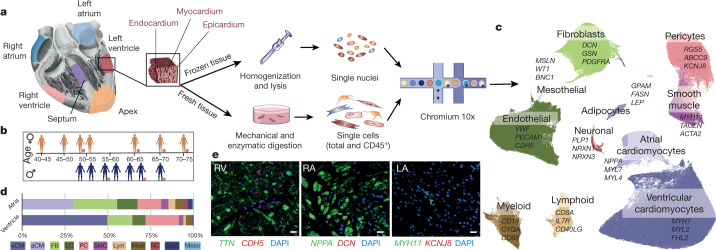
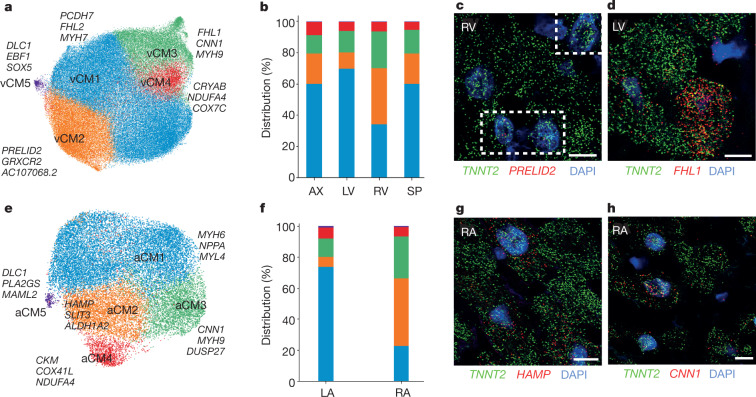
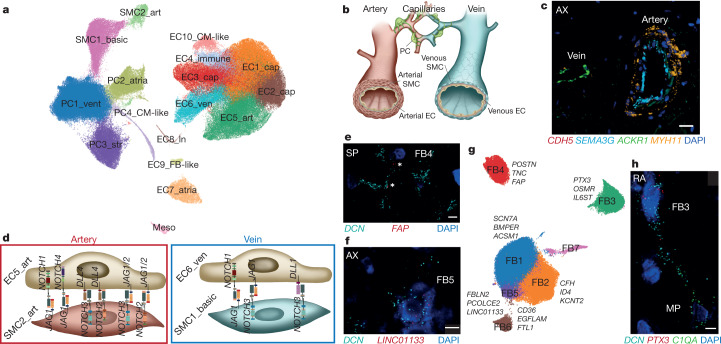
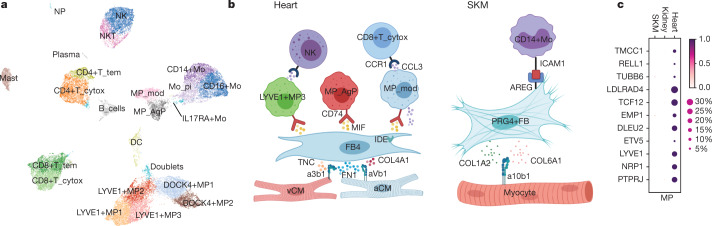
Cardiovascular disease is the leading cause of death worldwide. Advanced insights into disease mechanisms and therapeutic strategies require a deeper understanding of the molecular processes involved in the healthy heart. Knowledge of the full repertoire of cardiac cells and their gene expression profiles is a fundamental first step in this endeavour. Here, using state-of-the-art analyses of large-scale single-cell and single-nucleus transcriptomes, we characterize six anatomical adult heart regions. Our results highlight the cellular heterogeneity of cardiomyocytes, pericytes and fibroblasts, and reveal distinct atrial and ventricular subsets of cells with diverse developmental origins and specialized properties. We define the complexity of the cardiac vasculature and its changes along the arterio-venous axis. In the immune compartment, we identify cardiac-resident macrophages with inflammatory and protective transcriptional signatures. Furthermore, analyses of cell-to-cell interactions highlight different networks of macrophages, fibroblasts and cardiomyocytes between atria and ventricles that are distinct from those of skeletal muscle. Our human cardiac cell atlas improves our understanding of the human heart and provides a valuable reference for future studies.
Overview
The claims and statistics of this paper haven’t been checked yet.
Free: it reads the open-access text and checks the first 5 claims that cite a source we can check. Create a free account to check every claim.
Integrity signals
Registry
Cites
Statistics
Figures
Verification
Claims the paper makes
The claims and statistics of this paper haven’t been checked yet.
Free: it reads the open-access text and checks the first 5 claims that cite a source we can check. Create a free account to check every claim.
Claims other papers make about this one
Each is checked against this paper’s own text: does it say what the citing paper says it does?
The cited source doesn’t support the claim as written.
In the citing paper
“However, these studies rely on nuclear RNA information and lack cellular transcriptomic, epigenetic and proteomic profiling information necessary to obtain a granular picture of the precise immune and fibroblast populations that emerge in the failing human heart and collaborate to drive cardiac fibrosis.”
From Targeting immune–fibroblast cell communication in heart failure (2024) · cites this paper as [21]
Checked by a reasoning model — may be wrong.
Experimental — accuracy not yet measuredThe source backs part of the claim, not all of it — or backs it for a different population, condition or comparison.
In the citing paper
“The monocyte and macrophage lineage constitute the most abundant immune cell population in the hearts of healthy adults and under myocarditis conditions”
From Autoimmune Myocarditis, Old Dogs and New Tricks. (2024) · cites this paper as [106]
Experimental — accuracy not yet measuredThe source backs part of the claim, not all of it — or backs it for a different population, condition or comparison.
In the citing paper
“Interestingly, Geneformer was able to distinguish central versus peripheral factors in the N1-dependent network with fine-tuning on this very minimal data to a better degree than the alternative methods’ predictions trained on the larger dataset of ~30,000 ECs32, demonstrating the strength of pretraining in enabling predictions from increasingly limited data (Fig. 4d, Extended Data Fig. 9b).”
From Transfer learning enables predictions in network biology (2023) · cites this paper as [32]
Experimental — accuracy not yet measuredThe source backs part of the claim, not all of it — or backs it for a different population, condition or comparison.
In the citing paper
“Again, Geneformer significantly boosted the ability to predict central versus peripheral factors compared to alternative methods (AUC 0.81) (Fig. 4a, Extended Data Fig. 8e).”
From Transfer learning enables predictions in network biology (2023) · cites this paper as [32]
Experimental — accuracy not yet measuredThe cited source says what the claim attributes to it.
In the citing paper
“Numerous single-nucleus RNA sequencing (snRNA-seq) studies have investigated the healthy and failing human heart18–22.”
From Targeting immune–fibroblast cell communication in heart failure (2024) · cites this paper as [21]
1 more claim about this paper
Create a free account to see every claim other papers make about this one.
Self-check
Percentages, sums and reported differences re-computed from the paper’s own numbers.
The self-check needs the paper’s full text.
Citations
Cites
Fiji: an open-source platform for biological-image analysis
Schindelin, J., Arganda-Carreras, I., Frise, E., Kaynig, V., Longair, M., Pietzsch, T., Preibisch, S., Rueden, C., Saalfeld, S., Schmid, B., et al. (2012) · Nature Methods · doi:10.1038/nmeth.2019 · Cited by 66,890
Clinical features of patients infected with 2019 novel coronavirus in Wuhan, China
Huang, C., Wang, Y., Li, X., Ren, L., Zhao, J., Hu, Y., Zhang, L., Fan, G., Xu, J., Gu, X., et al. (2020) · The Lancet · doi:10.1016/s0140-6736(20)30183-5 · Cited by 48,884
Hoffmann, M., Kleine-Weber, H., Schroeder, S., Krüger, N., Herrler, T., Erichsen, S., Schiergens, T. S., Herrler, G., Wu, N.-H., Nitsche, A., et al. (2020) · Cell · doi:10.1016/j.cell.2020.02.052 · Cited by 20,286
Enrichr: a comprehensive gene set enrichment analysis web server 2016 update
Kuleshov, M. V., Jones, M. R., Rouillard, A. D., Fernandez, N. F., Duan, Q., Wang, Z., Koplev, S., Jenkins, S. L., Jagodnik, K. M., Lachmann, A., et al. (2016) · Nucleic Acids Research · doi:10.1093/nar/gkw377 · Cited by 10,799
UMAP: Uniform Manifold Approximation and Projection
McInnes, L., Healy, J., Saul, N., & Großberger, L. (2018) · Journal of Open Source Software · doi:10.21105/joss.00861 · Cited by 9,826
SCANPY: large-scale single-cell gene expression data analysis
Wolf, F. A., Angerer, P., & Theis, F. J. (2018) · Genome Biology · doi:10.1186/s13059-017-1382-0 · Cited by 8,881
UMAP: Uniform Manifold Approximation and Projection for Dimension Reduction
McInnes, L., Healy, J., & Melville, J. (2018) · arXiv · doi:10.48550/arxiv.1802.03426 · Cited by 7,101
From Louvain to Leiden: guaranteeing well-connected communities
Traag, V. A., Waltman, L., & van Eck, N. J. (2019) · Scientific Reports · doi:10.1038/s41598-019-41695-z · Cited by 5,635
La Manno, G., Soldatov, R., Zeisel, A., Braun, E., Hochgerner, H., Petukhov, V., Lidschreiber, K., Kastriti, M. E., Lönnerberg, P., Furlan, A., et al. (2018) · Nature · doi:10.1038/s41586-018-0414-6 · Cited by 4,118
MAGMA: Generalized Gene-Set Analysis of GWAS Data
de Leeuw, C. A., Mooij, J. M., Heskes, T., & Posthuma, D. (2015) · PLOS Computational Biology · doi:10.1371/journal.pcbi.1004219 · Cited by 3,653
Cited by
Items 901–1,000 of 1,014
Skalski, B., Rywaniak, J., Żuchowski, J., Stochmal, A., & Olas, B. (2023) · Biomedicine & Pharmacotherapy · doi:10.1016/j.biopha.2023.114594 · Cited by 10
Samouillan, V., García, E., Amaro, A. B., Lhoëst, M. T. L. C., Dandurand, J., Dato, V. A., Palmero, M. J. G., Escolá‐Gil, J. C., Chiabrando, G. A., Enrich, C., et al. (2023) · Journal of Medicinal Chemistry · doi:10.1021/acs.jmedchem.2c02103 · Cited by 8
The origin, progress, and application of cell‐based cardiac regeneration therapy
Zhuo, D., Lei, I., Li, W., Liu, L., Li, L., Ni, J., Liu, Z., & Fan, G. (2023) · Journal of Cellular Physiology · doi:10.1002/jcp.31060 · Cited by 8
Das, S. S., Kar, A., Rajkumar, S., Lee, S. H., Alvarez, M., Pietiläinen, K. H., & Pajukanta, P. (2023) · Arteriosclerosis Thrombosis and Vascular Biology · doi:10.1161/atvbaha.123.319358 · Cited by 8
Unleashing the power of formyl peptide receptor 2 in cardiovascular disease
Prevete, N., Poto, R., Marone, G., & Varricchi, G. (2023) · Cytokine · doi:10.1016/j.cyto.2023.156298 · Cited by 9
Lu, M., Hayat, R., Zhang, X., Jiao, Y., Huang, J., Huangfu, Y., Jiang, M., Fu, J., Jiang, Q., Gu, Y., et al. (2023) · Marine Life Science & Technology · doi:10.1007/s42995-023-00202-0 · Cited by 8
Jin, J., Wang, Y., Liu, Y., Chakrabarti, S., & Su, Z. (2024) · Acta Pharmaceutica Sinica B · doi:10.1016/j.apsb.2023.12.018 · Cited by 10
Liu, C., & Shao, N. (2024) · International Journal of Molecular Sciences · doi:10.3390/ijms25063240 · Cited by 9
“Previous studies have shown that, even in the heart, the same type of cell can exhibit different expression profiles in different anatomical structures [8,14,20].”
BackgroundMethodInfluentialQClus: a droplet filtering algorithm for enhanced snRNA-seq data quality in challenging samples
Schmauch, E., Ojanen, J., Galani, K., Jalkanen, J. M., Harju, K., Hollmén, M., Kokki, H. J., Gunn, J. M., Halonen, J., Hartikainen, J. E. K., et al. (2024) · Nucleic Acids Research · doi:10.1093/nar/gkae1145 · Cited by 9
“In these tissues, the whole cells may be difficult to isolate or the use of the single-cell approach may lead to biased cell yields due to the differences in cell sizes between the tissue cell populations [e.g., cardiomyocyte (CM) and non-cardiomyocyte (non-CM) populations in the heart] ( 4 ,5 ).”
InfluentialAutomated integration of multi-slice spatial transcriptomics data in 2D and 3D using VR-Omics
Bienroth, D., Charitakis, N., Wong, D., Zhang, Y., Jaeger-Honz, S., Ding, J., Watt, K. I., Stolper, J. S., Chambers-Smith, H., MacGregor, D. P., et al. (2025) · Genome biology · doi:10.1186/s13059-025-03630-6 · Cited by 10
“The mammalian heart contains spatially restricted genes that display complex spatial expression in the heart sub-compartments [30, 31], for instance the atrial markers Myl2 and Myh7 were found to be differentially expressed between the right ventricle and right atrium.”
InfluentialTranslational insights from single-cell technologies across the cardiovascular disease continuum
van Blokland, I. V., Groot, H. E., Franke, L., van der Wijst, M. G. P., & van der Harst, P. (2021) · Trends in Cardiovascular Medicine · doi:10.1016/j.tcm.2021.02.009 · Cited by 9
Zhu, L., Wang, W., Ren, C., Wang, Y., Zhang, G., Liu, J., & Wang, W. (2022) · Biomedicines · doi:10.3390/biomedicines10020402 · Cited by 11
“Recent studies have revealed the cellular diversity in cardiac physiological and pathophysiological conditions with the rapid development of single-cell techniques [1,2].”
BackgroundParikh, M., Shah, S., Basu, R., Famulski, K. S., Kim, D., Mullen, J. C., Halloran, P. F., & Oudit, G. Y. (2022) · International Journal of Molecular Sciences · doi:10.3390/ijms23042050 · Cited by 8
“However, proof of concept regarding gene expression and regulation generated in DCM hearts with or without LVAD should be further evaluated using next-generation sequencing [54].”
BackgroundMethodSelf-citationSantos, G. L., DeGrave, A. N., Rehman, A., Disi, S. A., Xhaxho, K., Schröder, H., Bao, G., Meyer, T., Tiburcy, M., Dworatzek, E., et al. (2022) · Biomaterials Advances · doi:10.1016/j.bioadv.2022.213041 · Cited by 10
Abu‐Halima, M., Wagner, V., Becker, L. S., Ayesh, B. M., El-Rahman, M. A., Fischer, U., Meese, E. U., & Abdul‐Khaliq, H. (2021) · Cells · doi:10.3390/cells10051066 · Cited by 11
“These genes were found to functionally interact with their intronic microRNAs (miRNAs) in a specific pattern [9,10].”
BackgroundKatraki-Pavlou, S., Kastana, P., Bousis, D., Ντενέκου, Δ., Varela, A., Davos, C. H., Νίκου, Σ., Papadaki, E., Tsigkas, G., Athanasiadis, E. I., et al. (2021) · American Journal of Physiology-Heart and Circulatory Physiology · doi:10.1152/ajpheart.00400.2021 · Cited by 8
Zuela-Sopilniak, N., Morival, J. L. P., Ntekas, I., Elpers, M. A., Agarwal, R., Henretta, S. J., Odell, J. D., Vlaminck, I. D., & Lammerding, J. (2024) · bioRxiv (Cold Spring Harbor Laboratory) · doi:10.1101/2024.06.11.598511 · Cited by 8
“To annotate individual clusters with cell types using the established Azimuth reference map 31–33 , mouse genes were first converted to human orthologous genes as only human heart references are available.”
A heart releasing neuropeptide that synchronizes brain-heart regulation during courtship behaviorPreprint
Li, H., Cheng, S., Niu, Y., Diao, T., Zhang, Q., & Zhang, W. (2025) · bioRxiv (Cold Spring Harbor Laboratory) · doi:10.1101/2025.03.31.646145 · Cited by 7
“Cumulative evidences outline that the brain-heart connection highly affects human health from genetic and structural perspectives 24–27 .”
Cardiac Macrophages across Space and Time: Roles in Homeostasis, Disease, and Remodeling
Shrestha, S., & Dick, S. A. (2026) · Canadian Journal of Cardiology · doi:10.1016/j.cjca.2026.02.025 · Cited by 7
Thirugnanam, K., Rizvi, F., Jahangir, A., Homar, P. J., Shabnam, F., Palecek, S. P., Kumar, S. N., Pan, A., Bai, X., Sekine, H., et al. (2025) · Regenerative medicine reports . · doi:10.4103/regenmed.regenmed-d-25-00009 · Cited by 7
“18 Therefore, the presence of more FBs in the atria may increase the propensity for fibrosis in the atrium.”
Schiano, C., & Claudio Napoli, A. (2025) · European journal of medical research · doi:10.1186/s40001-025-02720-2 · Cited by 7
The immune checkpoint TIM-3/HMGB-1 axis in myocardial infarction
Yousif, L. I. E., Sijtema, A. G., Appels, Y., Screever, E. M., van Blokland, I. V., Oelen, R., Groot, H. E., Gergely, T. G., Kocsis, M., Leszek, P., et al. (2025) · npj Cardiovascular Health · doi:10.1038/s44325-025-00061-x · Cited by 8
“As an independent healthy reference, left ventricular snRNAseq data from https://www. heartcellatlas.org was used alongside the self-obtained control tissue 41 .”
ALKBH5 in development: decoding the multifaceted roles of m6A demethylation in biological processes
Zhang, X., Zhou, L., Tian, C., & Tao, H. (2025) · Frontiers in Molecular Biosciences · doi:10.3389/fmolb.2025.1599487 · Cited by 7
Danesh, S., Khan, F. W., Chopko, T. C., Lee, A., Huo, R., Lu, S., Tam, V., Safi, J. P., Gao, W., Todd, A., et al. (2025) · Journal of the American Heart Association · doi:10.1161/jaha.125.043661 · Cited by 9
“While MRAs are known to reduce the development and burden of AF in chronic medical settings, 15–19 initiating MRA in the acute setting for reducing POAF is less clear.”
Evaluating Seeding Density Effects on Cardiac Organoid Health and Functionality for Toxicity Studies
Harihara, A., Moshksayan, K., Momtahan, N., Ben‐Yakar, A., & Zoldan, J. (2025) · Tissue Engineering Part A · doi:10.1177/19373341251392244 · Cited by 7
Wang, E. Y., Calle, E. A., Ying, B., Eshaghi, B., Zhang, L., Yang, X., Lin, S. Q., Han, J., Backx, A. G., Huang, Y., et al. (2025) · Cell Biomaterials · doi:10.1016/j.celbio.2025.100249 · Cited by 9
Deng, S., Tayefi, F., & Jin, Y. (2025) · Frontiers in Endocrinology · doi:10.3389/fendo.2025.1696344 · Cited by 12
“…of DCM research and therapy development: (cid:129) Single-Cell and Spatial Omics: Technologies like scRNA-seq are already illuminating the cellular heterogeneity of the failing heart, identifying distinct cardiomyocyte subpopulations with unique calcium handling gene expression pro fi les (112).”
Yang, J., Wang, Z., Lyu, Y., Ma, R., Zhang, J., Lu, S., Zhang, W., Kang, X., Chen, Y., Su, J., et al. (2025) · European Heart Journal · doi:10.1093/eurheartj/ehaf980 · Cited by 7
Development and modeling of cardiac autonomic innervation
Patsy, M., Ge, K., Khodabukus, A., & Bursac, N. (2025) · Nature Cardiovascular Research · doi:10.1038/s44161-025-00746-7 · Cited by 8
Kathiriya, I. S., Rao, K. S., Clark, A. P., Hu, K. M., Grant, Z. L., Matthews, M. N., Chen, Z., Hota, S. K., Saucerman, J. J., & Bruneau, B. G. (2026) · Development · doi:10.1242/dev.205173 · Cited by 8
Inflammatory and fibrotic signaling pathways mediated by cardiac macrophages in atrial fibrillation
Ren, H., Lai, H., & Chen, Z. (2026) · Frontiers in Cardiovascular Medicine · doi:10.3389/fcvm.2025.1692638 · Cited by 7
“Therefore, understanding macrophage polarization in AF should go beyond the classical M1/M2 dichotomy and consider multiple activation states based on gene expression signatures rather than relying solely on surface markers (15).”
InfluentialDisruption of polycystin-1 cleavage leads to cardiac metabolic rewiring in mice
Amaral, A. G., da Silva, C. C. C., Serna, J. D. C., Sampaio, K. H., de Freitas, J. A., Duarte‐Neto, A. N., Bloise, A. C., Cassina, L., Yoshinaga, M. Y., Chaves‐Filho, A. B., et al. (2022) · Biochimica et Biophysica Acta (BBA) - Molecular Basis of Disease · doi:10.1016/j.bbadis.2022.166371 · Cited by 7
A Multimodal Omics Framework to Empower Target Discovery for Cardiovascular Regeneration
Li, Z., Brittan, M., & Mills, N. L. (2023) · Cardiovascular Drugs and Therapy · doi:10.1007/s10557-023-07484-7 · Cited by 7
“[32].”
BackgroundInfluentialMiao, J., Zhang, K., Yang, Y., Xu, S., Du, J., Wu, T., Tao, C., Wang, Y., & Yang, S. (2024) · iScience · doi:10.1016/j.isci.2024.110015 · Cited by 9
“4 We further found that the metabolic state strongly influenced the composition and gene expression of CMs. Collectively, CMs in cardiac injury induced by metabolic disorders converge toward a common disease-associated state.”
InfluentialIncreased endothelial sclerostin caused by elevated DSCAM mediates multiple trisomy 21 phenotypes
McKean, D. M., Zhang, Q., Narayan, P., Morton, S. U., Strohmenger, V., Tang, V. T., McAllister, S., Sharma, A., Quiat, D., Reichart, D., et al. (2024) · Journal of Clinical Investigation · doi:10.1172/jci167811 · Cited by 9
“All CHD tissues were processed for bulk RNA sequencing and analyzed as previously described (11, 17).”
BackgroundMethodInfluentialSelf-citationLiu, Q., Guo, K., Jiang, L., Yang, H., Ni, Z., & Xiang, N. (2024) · Sensors and Actuators B Chemical · doi:10.1016/j.snb.2024.136408 · Cited by 8
At the heart of inflammation: Unravelling cardiac resident macrophage biology
Liao, Y., & Zhu, L. (2024) · Journal of Cellular and Molecular Medicine · doi:10.1111/jcmm.70050 · Cited by 9
“8 The CCR2 − - macrophage population within the cardiac milieu demonstrates a remarkable capacity for self-renewal, thereby earning them the distinguished title of CRMs.”
BackgroundKe, Z., Wei, X., Zhi, Z., Shang, S., Zhang, S., Xu, Y., Fu, X., Cheng, L., Yao, J., Li, Y., et al. (2024) · Journal of Cardiovascular Translational Research · doi:10.1007/s12265-024-10571-1 · Cited by 7
“They play pivotal roles in regulating cardiac function [46], and are the main effector cells during the pathological changes of HF [5, 47].”
Self-citationChiba, A., Yamamoto, T., Fukui, H., Fukumoto, M., Shirai, M., Nakajima, H., & Mochizuki, N. (2024) · Developmental Cell · doi:10.1016/j.devcel.2024.09.012 · Cited by 8
Wolnik, J., Adamska, P., Oleksy, A., Sanetra, A. M., Palus‐Chramiec, K., Lewandowski, M. H., Dulak, J., & Biniecka, M. (2024) · Stem Cell Research & Therapy · doi:10.1186/s13287-024-03956-1 · Cited by 10
“A study by Litviňuková et al. provided a more comprehensive understanding of the cellular composition of the healthy adult human heart [4].”
BackgroundAbolins-Thompson, H., Henare, K. L., Simonson, B., Chaffin, M. D., Ellinor, P. T., Henry, C., Haimona, M., Aitken, J., Parai, T., Elkington, B., et al. (2024) · Frontiers in Research Metrics and Analytics · doi:10.3389/frma.2024.1468400 · Cited by 7
“…understand the transcriptional shifts that occur in patients with heart disease, and to identify which cell types these shifts occur in Chaffin et al. (2022), Simonson et al. (2023), Reichart et al. (2022), Litvinukova et al. (2020), Tucker et al. (2020), Amrute et al. (2023), and Liu et al. (2022).”
Advancing Cardiac Organoid Engineering Through Application of Biophysical Forces
Blazeski, A., García‐Cardeña, G., & Kamm, R. D. (2024) · IEEE Reviews in Biomedical Engineering · doi:10.1109/rbme.2024.3514378 · Cited by 8
“In addition to this, relative distributions of different cell types differ in atrial and ventricular tissues, with atria composed of about 30% CMs, 24% FBs, and 12% ECs, while ventricles composed of about 49% CMs, 15% FBs, and 8% ECs [27].”
InfluentialGuo, Z., Liu, Y., Zhou, Z., Chen, J., Guo, L., Liang, K., Hao, Y., Hao, B., Yang, B., & Liao, S. (2025) · Clinical Epigenetics · doi:10.1186/s13148-025-01876-2 · Cited by 7
“To verify the expression of screened key genes in both the receptor and donor hearts, we initially utilized a human heart single cell online analysis tool (Heart Cell Atlas v2, https:// www. heart cella tlas. org/)[22] to evaluate the expression of five specific genes across various heart subsets.”
Immune-mediated cardiac development and regeneration
Byatt, T. C., Razaghi, E., Tüzüner, S., & Simões, F. C. (2025) · Seminars in Cell and Developmental Biology · doi:10.1016/j.semcdb.2025.103613 · Cited by 7
“Additionally, single cell analysis of human cardiac tissue has also identified cardiac-specific LYVE1 + and antigen-presenting macrophages [97].”
METTL3 Modulates Radiation‐Induced Cardiac Fibrosis via the Akt/ mTOR Pathway
Qiao, S., Tang, C., Zhu, J., Feng, Y. Y., Li, X., Zhu, J., & Gu, X. (2025) · The FASEB Journal · doi:10.1096/fj.202403143rrrr · Cited by 7
Wang, J., Pan, J., Luan, F., Shi, H., Xie, Y., Zhao, C., Zou, J., Shi, Y., Guo, D., Sun, J., et al. (2025) · Pharmacological Research · doi:10.1016/j.phrs.2025.107898 · Cited by 7
GP130 Antagonism Enhances Porcine RV Function
Mendelson, J. B., Sternbach, J. D., Kim, M., Moon, R. A., Hartweck, L. M., Clark, S. R., Tollison, W., Lahti, M. T., Carney, J. P., Markowski, T. W., et al. (2025) · Circulation Research · doi:10.1161/circresaha.125.326336 · Cited by 10
Towards spatio-temporally resolved developmental cardiac gene regulatory networks in zebrafish
Hallab, J., Nim, H. T., Stolper, J. S., Chahal, G., Waylen, L. N., Bolk, F., Elliott, D. A., Porrello, E. R., & Ramialison, M. (2021) · Briefings in Functional Genomics · doi:10.1093/bfgp/elab030 · Cited by 8
“Single-cell sequencing in the human heart has revealed high transcriptional diversity, and new targets for cell-type specific therapeutics [36, 49].”
BackgroundHIF-1α Cardioprotection in COVID-19 Patients
Wang, B. J., Madathil, S. V., Croft, L. B., Brody, R., & Chaudhry, H. W. (2022) · JACC Basic to Translational Science · doi:10.1016/j.jacbts.2021.12.001 · Cited by 8
Xiao, Y., Chen, Y., Shao, C., Wang, Y., Hu, S., & Lei, W. (2022) · Frontiers in Bioengineering and Biotechnology · doi:10.3389/fbioe.2022.973496 · Cited by 9
“The main cell types in the heart have significant heterogeneity, with different proportions of cells in different regions (Litvinukova et al., 2020).”
BackgroundTranscriptional plasticity of fibroblasts in heart disease
Micheletti, R., & Alexanian, M. (2022) · Biochemical Society Transactions · doi:10.1042/bst20210864 · Cited by 7
Gaulton, N., Wakelin, G., Young, L. V., Wotherspoon, S., Kamal, M. J., Parise, G., Nederveen, J. P., Holwerda, A. M., Verdijk, L. B., van Loon, L. J. C., et al. (2022) · The FASEB Journal · doi:10.1096/fj.202201349rr · Cited by 7
Li, X., Fan, H., Song, X., Song, B., Liu, W., Dong, R., Zhang, H., Guo, S., Liang, H., Schrodi, S. J., et al. (2023) · Epigenetics · doi:10.1080/15592294.2023.2195307 · Cited by 7
“3% of the total number of ventricular cells [6].”
BackgroundSelf-citationOdogwu, N. M., Hagen, C. E., & Nelson, T. J. (2023) · Frontiers in Genetics · doi:10.3389/fgene.2023.1278747 · Cited by 8
Williams, T. L., Kuc, R. E., Paterson, A., Abraham, G. R., Pullinger, A. L., Maguire, J. J., Sinha, S., Greasley, P. J., Ambery, P., & Davenport, A. P. (2024) · Bioscience Reports · doi:10.1042/bsr20240604 · Cited by 7
“For example, the gene encoding SGLT-2 has been identified in human ventricular cardiomyocytes using single cell RNA-Seq [9] and in cardiomyocytes derived from human induced pluripotent stem cells [10].”
Single-Cell RNA Sequencing and Combinatorial Approaches for Understanding Heart Biology and Disease
Wang, L., & Jin, B. (2024) · Biology · doi:10.3390/biology13100783 · Cited by 9
“Litviˇnukov á et al. [11] presented comprehensive transcriptomic data on six distinct cardiac regions, using both scRNA-seq (for non-cardiomyocytes) and snRNA-seq (for cardiomyocytes).”
BackgroundMethodRecent advances in understanding the roles of T cells in atrial fibrillation
Pu, J., & Du, Y. (2024) · npj Cardiovascular Health · doi:10.1038/s44325-024-00026-6 · Cited by 7
Wang, Y., Wang, Z., Dong, C., Yim, W. Y., Liu, Z., Hou, J., Li, C., Wen, S., Peng, Y., Zeng, Q., et al. (2025) · Science Bulletin · doi:10.1016/j.scib.2025.03.019 · Cited by 7
Tambi, R., Hameid, R. A., Bankapur, A., Nassir, N., Begum, G., Alsheikh-Ali, A. A. A., Uddin, M. J., & Berdiev, B. K. (2021) · American Journal of Physiology-Heart and Circulatory Physiology · doi:10.1152/ajpheart.00061.2021 · Cited by 7
Macrophage-adipocyte communication and cardiac remodeling
Yepuri, G., Hasan, S. N., Schmidt, A. M., & Ramasamy, R. (2021) · The Journal of Experimental Medicine · doi:10.1084/jem.20211098 · Cited by 7
Concordant and Heterogeneity of Single-Cell Transcriptome in Cardiac Development of Human and Mouse
Shang, M., Hu, Y., Cao, H., Lin, Q., Yi, N., Zhang, J., Gu, Y., Yang, Y., He, S., Lu, M., et al. (2022) · Frontiers in Genetics · doi:10.3389/fgene.2022.892766 · Cited by 7
Recent Progress in Cardiovascular Research Involving Single-Cell Omics Approaches
Dai, Z., & Nomura, S. (2021) · Frontiers in Cardiovascular Medicine · doi:10.3389/fcvm.2021.783398 · Cited by 7
Boikova, A., Quaife-Ryan, G. A., Batho, C. A. P., Lawrence, E., Robinson, H., Ascanelli, C., Jennbacken, K., Wang, Q., Hansson, K. M., Seaton, A., et al. (2023) · bioRxiv (Cold Spring Harbor Laboratory) · doi:10.1101/2023.08.02.551469 · Cited by 7
Evaluating the Utilities of Large Language Models in Single-cell Data AnalysisPreprint
Zhao, H., Liu, T., Li, K., Wang, Y., & Li, H. (2023) · Research Square · doi:10.21203/rs.3.rs-3376641/v1 · Cited by 16
Defining Cardiac Recovery at Single Cell Resolution
Amrute, J. M., Lai, L., Ma, P., Koenig, A. L., Kamimoto, K., Bredemeyer, A., Shankar, T. S., Kuppe, C., Kadyrov, F. F., Schulte, L. J., et al. (2022) · doi:10.1101/2022.09.11.507463 · Cited by 6
Khorasani, N., Ni, H., Saucerman, J. J., Dobrev, D., Morotti, S., & Grandi, E. (2025) · The Journal of Physiology · doi:10.1113/jp289040 · Cited by 6
Kgabeng, T., Wang, L., Ngwangwa, H., & Pandelani, T. (2025) · Bioengineering · doi:10.3390/bioengineering12101037 · Cited by 7
Kim, T., Sheen, M., Ryan, D., & Joseph, J. (2026) · International Journal of Molecular Sciences · doi:10.3390/ijms27020673 · Cited by 8
“Spatially resolved transcriptomic approaches—including multiplex single-molecule fluorescence in situ hybridization (smFISH)—are further defining micro-regional communication be-tween cardiomyocytes and non-myocyte cells, offering unprecedented resolution into tissue remodeling [107].”
Li, Y., Rimon, R. A., Wang, F., Li, H., Epelman, S., Tallquist, M. D., Westover, L., Oudit, G. Y., & Kassiri, Z. (2026) · Cardiovascular Research · doi:10.1093/cvr/cvaf256 · Cited by 8
“53,54 The distribution of cardiac cells in NFC, and in IZ, BZ, and RZ of ICM revealed a decrease in cardiomyocyte population in the ischemic and border zones, but an increase in fibroblasts, endothelial cells, and myeloid cells in the ischemic zone comparing to non-failing controls ( Figure 1B )…”
Self-citationSarcomeric remodelling in human heart failure unraveled by single molecule long read sequencing
Haas, J., Schudy, S., Rauscher, B., Verdú, A. M., Roßkopf, S., Reich, C., Dönmez, G., Yalcin, A., Seeger, T., Dieterich, C., et al. (2026) · EMBO Molecular Medicine · doi:10.1038/s44321-025-00370-9 · Cited by 9
“While non-myocytes contribute to heart tissue remodeling in heart failure, their influence on transcript abundance is likely limited due to the dominant transcriptional output of cardiomyocytes (Litviňuková et al., 2020).”
Deep-learning analysis of 3D microarchitectural remodeling in hypertrophic cardiomyopathy
Wei, E. Q., Beyer, M., Brown, K., Bansbach, A., Gorham, J., McDonough, B. A., Chen, H., Khoramjoo, M., Zhang, A., Bishop, B. L., et al. (2026) · Science · doi:10.1126/science.ady6443 · Cited by 7
Self-citationVaičiulevičiūtė, R., Alaburda, A., Uzielienė, I., Kistamás, K., Lengyel, M., Dinnyés, A., Bergaud, C., & Bernotienė, E. (2026) · Frontiers in Bioengineering and Biotechnology · doi:10.3389/fbioe.2026.1711698 · Cited by 6
Dakhil, Z. A., Gitti, S. A., & Kaddoura, R. (2026) · Frontiers in Global Women s Health · doi:10.3389/fgwh.2026.1659244 · Cited by 6
Luo, Y., Yu, Y., Zeng, Z., Chen, Y., Yi, Y., Lu, Z., Zeng, F., Xu, P., Luo, D., Chen, L., et al. (2026) · Advanced Science · doi:10.1002/advs.202519216 · Cited by 7
“The variability across studies largely reflects differences in tissue dissociation and scRNA-seq capture efficiency, particularly given the low capture of large cardiomyocytes [ 24 ].”
Approaches to Optimize Stem Cell-Derived Cardiomyocyte Maturation and Function
Gilbert, G. (2021) · Current Stem Cell Reports · doi:10.1007/s40778-021-00197-3 · Cited by 7
South Asian ethnicity: What can we do to make this risk enhancer a risk equivalent?
Gupta, K., Rifai, M. A., Hussain, A., Minhas, A. M. K., Patel, J., Kalra, D. K., Samad, Z. Z., & Virani, S. S. (2022) · Progress in Cardiovascular Diseases · doi:10.1016/j.pcad.2022.10.001 · Cited by 6
Lu, Y., Huo, H., Feng, L., Xue, J., Fang, L., Miao, Y., Shen, L., & He, B. (2023) · Biomedicines · doi:10.3390/biomedicines11112896 · Cited by 7
Hierarchical and automated cell-type annotation and inference of cancer cell of origin with Census
Ghaddar, B., & De, S. (2023) · Bioinformatics · doi:10.1093/bioinformatics/btad714 · Cited by 6
Regulation mechanism of microRNAs in cardiac cells-derived exosomes in cell crosstalk
Lin, S., Yang, Y., Zhou, Z., Li, W., Wang, X., Liu, Y., Bi, Y., & Mao, J. (2024) · Frontiers in Pharmacology · doi:10.3389/fphar.2024.1399850 · Cited by 7
Caudal, A., Liu, Y., Pang, P. D., Maison, D. P., Nakasuka, K., Feng, J., Sperber, H. S., Schwarzer, R., Moffatt, E., Henrich, T. J., et al. (2024) · JACC. Clinical electrophysiology · doi:10.1016/j.jacep.2024.08.013 · Cited by 6
Xing, X., Yan, X.-Y., Tan, Y.-W., Liu, Y., Cui, Y.-X., Feng, C.-L., Cai, Y.-R., Dai, H.-L., Gao, W. Y., Zhou, P., et al. (2025) · Journal of Advanced Research · doi:10.1016/j.jare.2025.02.028 · Cited by 8
“However, neglecting the preservation of the original fibrocyte state, which plays a critical role in many tissues and organs [8].”
Spector, S. N., Noval, M. G., & Stapleford, K. A. (2025) · PLoS neglected tropical diseases · doi:10.1371/journal.pntd.0012534 · Cited by 7
“We selected four cell types that are known to compose the majority of heart tissue: cardiac fibroblasts (hCFs), cardiac myocytes (hCMs), microvascular endothelial cells (hCMECs), and smooth muscle cells of aortic origin (hAoS-MCs) [32].”
Ye, W., Shi, M., Cheng, Y., Liu, Y., Ren, K., Fang, Y., Younas, W., Zhang, W., Wang, Y., & Xia, X.-Q. (2025) · International Journal of Biological Macromolecules · doi:10.1016/j.ijbiomac.2025.142397 · Cited by 9
Multimodal Mass Spectrometry Imaging in Atlas Building: A Review
Vanderschoot, K. A., Bender, K. J., Caro, C. M. D., Steineman, K. A., & Neumann, E. K. (2024) · Seminars in Nephrology · doi:10.1016/j.semnephrol.2025.151578 · Cited by 6
Cardiac endothelial cells and cardiomyocytes alter their communication properties in diabetic mice
Wen, Y., & Wang, Q. (2025) · Biological Research · doi:10.1186/s40659-025-00602-9 · Cited by 6
“Except for the fibroblasts, cardiomyocytes (CMs) and cardiac microvascular endothelial cells (ECs) are the major and vital components of the heart [7].”
Wang, J., Liu, X., Zhu, R., Sun, Y. H., Jiao, B., Wang, K., Jiang, Y., Wang, Y., Li, C., & Wang, W. (2025) · Acta Pharmaceutica Sinica B · doi:10.1016/j.apsb.2025.04.025 · Cited by 6
Current trends in single‐cell RNA sequencing applications in diabetes mellitus
Zadian, S. S., Jahanbin, K., Nikooei, S., Rostaminejad, M., Rahimi, A., Abdizadeh, P., & Alipoor, B. (2025) · FEBS Open Bio · doi:10.1002/2211-5463.70061 · Cited by 7
Fu, Y., Wang, Y., Tian, Y., Xia, L. H., Liu, F., Su, Z., Dong, Z., & Cao, P. (2025) · Materials Today Communications · doi:10.1016/j.mtcomm.2025.113232 · Cited by 6
Yoda1 Inhibits TGFβ-Induced Cardiac Fibroblast Activation via a BRD4-Dependent Pathway
Alam, P., Stiens, S. M., Bowles, H. J., Bui, H., & Bowles, D. K. (2025) · Cells · doi:10.3390/cells14131028 · Cited by 7
“Cardiac fibroblasts (CFs) are the third most abundant cell type in the myocardium and play a crucial role in maintaining the structural integrity of the heart, especially after injury [1,2].”
Moore, J., & Emili, A. (2021) · International Journal of Molecular Sciences · doi:10.3390/ijms222413644 · Cited by 6
“Mature CMs are biologically complex, dynamic cells that execute a number of tasks beyond their primary contractile function, including peptide synthesis and extra-cellular communication [41].”
BackgroundProtocol to generate cardiac pericytes from human induced pluripotent stem cells
Shen, M., Zhao, S. R., Khokhar, Y., Li, L., Zhou, Y., Liu, C., & Wu, J. C. (2023) · STAR Protocols · doi:10.1016/j.xpro.2023.102256 · Cited by 6
Modi, A. D., Khan, A. N., Cheng, W. Y. E., & Modi, D. M. (2023) · Acta Histochemica · doi:10.1016/j.acthis.2023.152045 · Cited by 7
Prevention of Atrial Fibrillation: Putting Proteostasis Derailment Back on Track
Kishore, P., Collinet, A. C. T., & Brundel, B. J. J. M. (2023) · Journal of Clinical Medicine · doi:10.3390/jcm12134352 · Cited by 9
New perspective on the mechanisms of cardiac fibrosis
Wang, H.-F., Du, X., Zhang, Y., & Xiao, H. (2023) · 中国科学通报:英文版 · doi:10.1016/j.scib.2023.10.009 · Cited by 6
Luo, Y., Safabakhsh, S., Palumbo, A., Fiset, C., Shen, C., Parker, J., Foster, L. J., & Laksman, Z. (2024) · International Journal of Molecular Sciences · doi:10.3390/ijms25115964 · Cited by 7
“A greater understanding of these mechanisms may enable the development of therapeutic or diagnostic tools to inform the clinical approach towards CVD across the sexes.”
BackgroundOverexpression of ATP5F1A in Cardiomyocytes Promotes Cardiac Reverse Remodeling
Xu, M., Zhang, H., Chang, Y., Hua, X., Chen, X., Sheng, Y., Shan, D., Bao, M., Hu, S., & Song, J. (2024) · Circulation Heart Failure · doi:10.1161/circheartfailure.123.011504 · Cited by 7
“Maladap-tive markers for starvation and stress-responses genes, such as ANKRD1 17 and PRKAA2 , 18 were increased in CM2 (Figure S4A).”
BackgroundSelf-citationJacob, A. G., Moutsopoulos, I., Petchey, A., Kollyfas, R., Knight-Schrijver, V. R., Mohorianu, I. I., Sinha, S., & Smith, C. W. J. (2024) · Cardiovascular Research · doi:10.1093/cvr/cvae198 · Cited by 7
Identification of immune feature genes and intercellular profiles in diabetic cardiomyopathy
Zheng, Z., Cai, D.-H., & Song, Y. (2024) · World Journal of Diabetes · doi:10.4239/wjd.v15.i10.2093 · Cited by 7
Arppo, A., Barker, H. R., & Parkkila, S. (2024) · PLoS ONE · doi:10.1371/journal.pone.0307731 · Cited by 7
An, N., Yang, F., Zhang, G., Jiang, Y., Liu, H., Gao, Y., Li, Y., Ji, P., Shang, H., & Xing, Y. (2024) · Molecular Medicine · doi:10.1186/s10020-024-00999-1 · Cited by 6
Metadata
- Authors
- Litviňuková, M., Talavera-López, C., Maatz, H., Reichart, D., Worth, C. L., Lindberg, E. L., Kanda, M., Polanski, K., Heinig, M., Lee, M., Nadelmann, E. R., Roberts, K., Tuck, L., Fasouli, E. S., DeLaughter, D. M., McDonough, B., Wakimoto, H., Gorham, J. M., Samari, S., Mahbubani, K. T., Saeb-Parsy, K., Patone, G., Boyle, J. J., Zhang, H., Zhang, H., Viveiros, A., Oudit, G. Y., Bayraktar, O. A., Seidman, J. G., Seidman, C. E., Noseda, M., Hubner, N., & Teichmann, S. A.
- Affiliations
- Max Delbrück Center (DE)
- European Bioinformatics Institute (GB)
- Harvard University (US)
- Sapporo Medical University (JP)
- Helmholtz Munich (DE)
- Imperial College London (GB)
- Wellcome Sanger Institute (GB)
- Brigham and Women's Hospital (US)
- University of Cambridge (GB)
- University of Alberta (CA)
- British Heart Foundation (GB)
- Corresponding author
- Seidman, J. G.
- Seidman, Christine E.
- Noseda, Michela
- Teichmann, Sarah A.
- ORCID
- Litviňuková, Monika
- Talavera-López, Carlos
- Maatz, Henrike
- Reichart, Daniel
- Worth, Catherine L.
- Lindberg, Eric L.
- Kanda, Masatoshi
- Polanski, Krzysztof
- Heinig, Matthias
- Lee, Michael
- Nadelmann, Emily R.
- Roberts, Kenny
- Fasouli, Eirini S.
- DeLaughter, Daniel M.
- McDonough, Barbara
- Wakimoto, Hiroko
- Gorham, Joshua M.
- Mahbubani, Krishnaa T.
- Saeb-Parsy, Kourosh
- Patone, Giannino
- Boyle, Joseph J.
- Zhang, Hongbo
- Zhang, Hao
- Viveiros, Anissa
- Oudit, Gavin Y.
- Bayraktar, Omer Ali
- Seidman, J. G.
- Seidman, Christine E.
- Noseda, Michela
- Hubner, Norbert
- Teichmann, Sarah A.
- Venue
- Nature
- Published
- 2020-09-24
- Volume
- 588
- Issue
- 7838
- Pages
- 466-472
- ISSN
- 0028-0836 (ISSN-L)
- 1476-4687
- PMC
- PMC7681775
- OpenAlex
- W3088401235
- Cited by
- 1,729
- References
- 104
- Citations by year
- 2026: 281 · 2025: 320 · 2024: 371 · 2023: 283 · 2022: 273 · 2021: 186 · 2020: 13
- FWCI
- 61.91
- Type
- journal article
- Language
- en
- Open access
- hybrid
- doi.org
- Licence
- cc-by
- www.springernature.com/gp/researchers/text-and-data-mining (tdm)
- www.springernature.com/gp/researchers/text-and-data-mining (vor)
- Locations
- Nature (publishedVersion, cc-by)
- PubMed Central (publishedVersion, cc-by)
- PubMed (publishedVersion)
- MDC Repository (Max-Delbrueck-Center for Molecular Medicine) (acceptedVersion)
- RePEc: Research Papers in Economics (submittedVersion)
- BOA (University of Milano-Bicocca) (submittedVersion, cc-by)
- Site cant be reached (submittedVersion, cc-by)
- PuSH - Publication Server of Helmholtz Zentrum München (submittedVersion, cc-by)
- Spiral (Imperial College London) (submittedVersion, cc-by)
- Funders
- National Science Foundation (1647837)
- Howard Hughes Medical Institute
- Heart and Stroke Foundation of Canada
- Alexander von Humboldt-Stiftung
- Wellcome Trust (211276/Z/18/Z, 206194)
- Deutsches Zentrum für Herz-Kreislaufforschung (SP/19/1/34461)
- Sarnoff Cardiovascular Research Foundation
- Chan Zuckerberg Initiative
- University of Alberta
- British Heart Foundation (SP/19/1/34461, FS/13/12/30037, PG/17/71/33242, PG/15/57/31580, PG/16/47/32156)
- European Commission (HORIZON2020)
- Deutsche Forschungsgemeinschaft (13/12)
- Bundesministerium für Bildung und Forschung (031L0075A)
- China Scholarship Council
- Alberta Innovates
- National Institutes of Health
- Canadian Institutes of Health Research
- National Heart, Lung, and Blood Institute (UM1HL098166, R01HL080494)
- H2020 European Research Council (788970)
- Topics
- Life Sciences › Biochemistry, Genetics and Molecular Biology › Molecular Biology › Single-cell and spatial transcriptomics
- Life Sciences › Biochemistry, Genetics and Molecular Biology › Molecular Biology › Congenital heart defects research
- Health Sciences › Medicine › Cardiology and Cardiovascular Medicine › Cardiac electrophysiology and arrhythmias
- Keywords
- adult human heart, cardiomyocytes, pericytes, cardiac fibroblasts, cardiac vasculature, cardiac macrophages, cell-cell interactions, single-cell transcriptomics, single-nucleus transcriptomics, heart development, cardiovascular disease
- MeSH terms
- Receptors, Coronavirus, Angiotensin-Converting Enzyme 2, SARS-CoV-2, Adult, Epithelial Cells, Epithelium, Female, Fibroblasts, Heart Atria, Heart Ventricles, Homeostasis, Humans, Macrophages, Male, Myocardium, Neurons, Stromal Cells, Adipocytes, Muscle, Skeletal, Pericytes, Gene Expression Profiling, Myocytes, Cardiac, Genome-Wide Association Study, Single-Cell Analysis, Transcriptome
About these checks
Registry, retraction, Cites and statistics results are computed, not judged, with one exception: a printed reference that no index lists is read once by a model before it counts as a citation error. Claims are extracted by a model and kept only when their quote appears verbatim in the text; each cited source is then checked, with a model’s help, for whether it says what the claim relies on. Those verdicts can be wrong — read the claim’s quote and the cited source before relying on one.
Statistics and arithmetic are recomputed, not judged.
Confidence bands are shown only for fields calibrated on our annotated test set. None is calibrated yet, so no band is shown.
What counts as a claim ›How we measure confidence ›How we check this ›
Are you an author, or do you see a problem with this page? Request a review
Data sources
Bibliographic data: Semantic Scholar, OpenAlex, Crossref.
Contains information from the Semantic Scholar Academic Graph Datasets, made available under the ODC Attribution License (ODC-BY 1.0).
Semantic Scholar’s data is described in: Kinney, R., et al. (2023). The Semantic Scholar Open Data Platform. arXiv:2301.10140.
