

Cells of the adult human heart
Open accessThe DOI matches its Crossref record; 115 of the 115 references it cites were found in a registry or an index.
Abstract
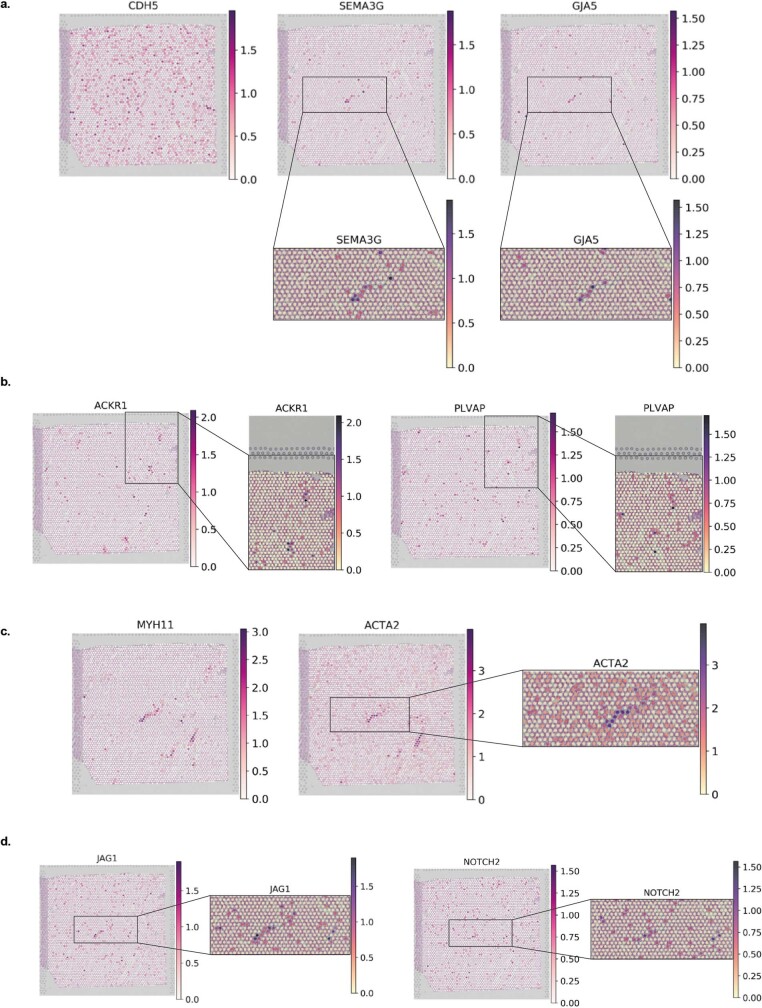
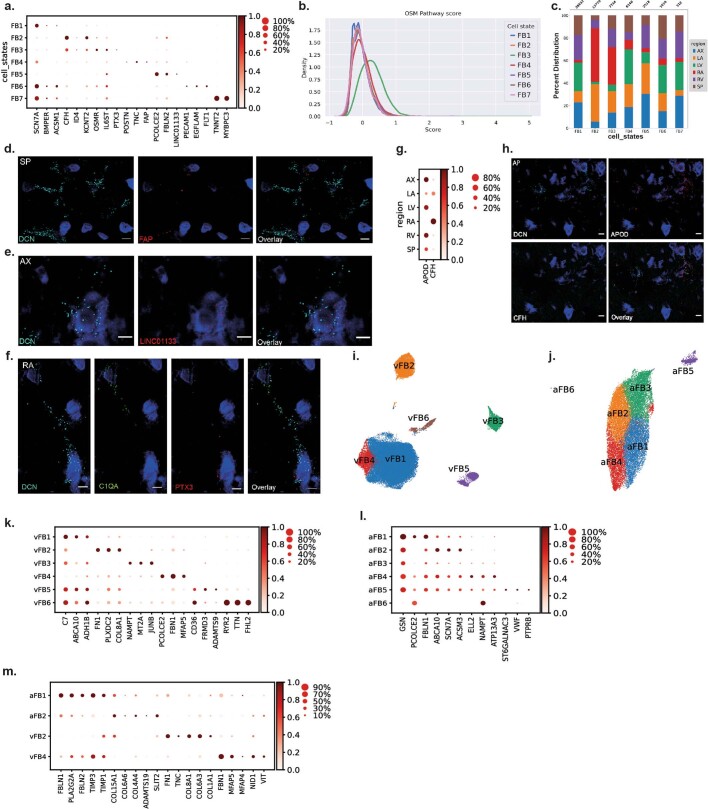
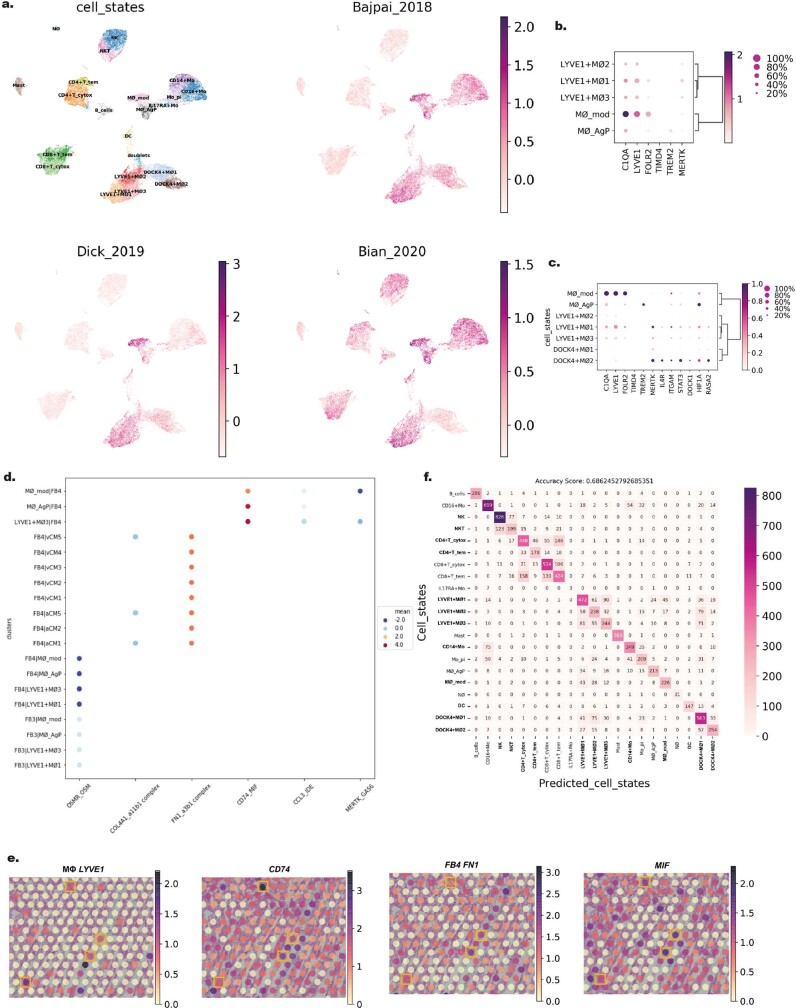
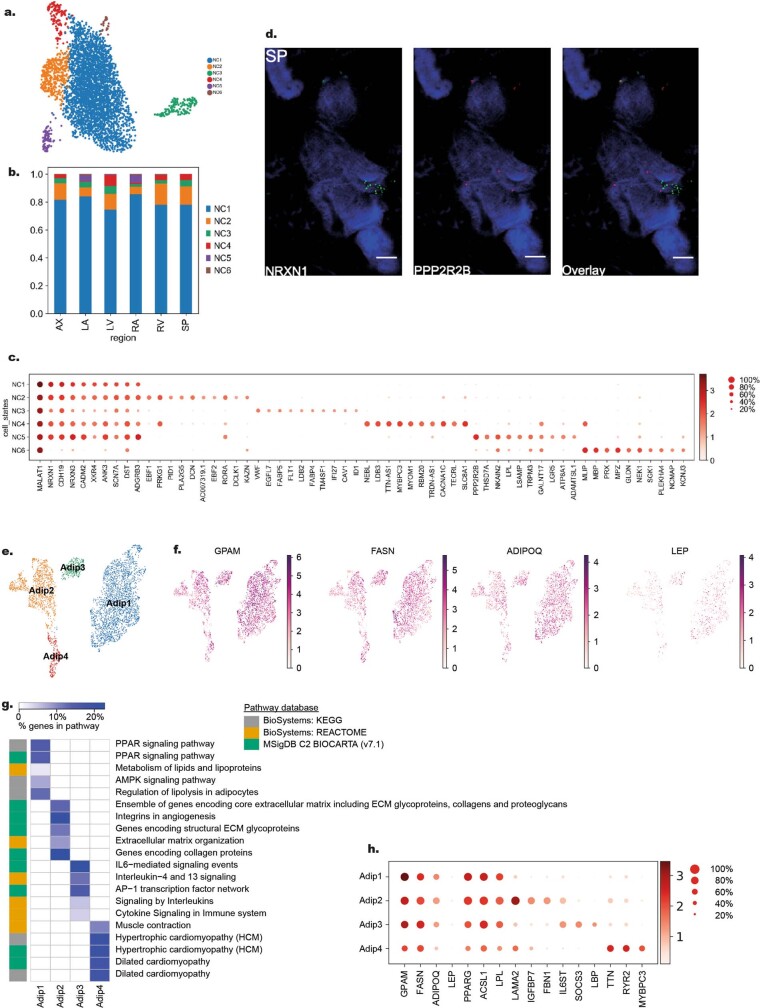
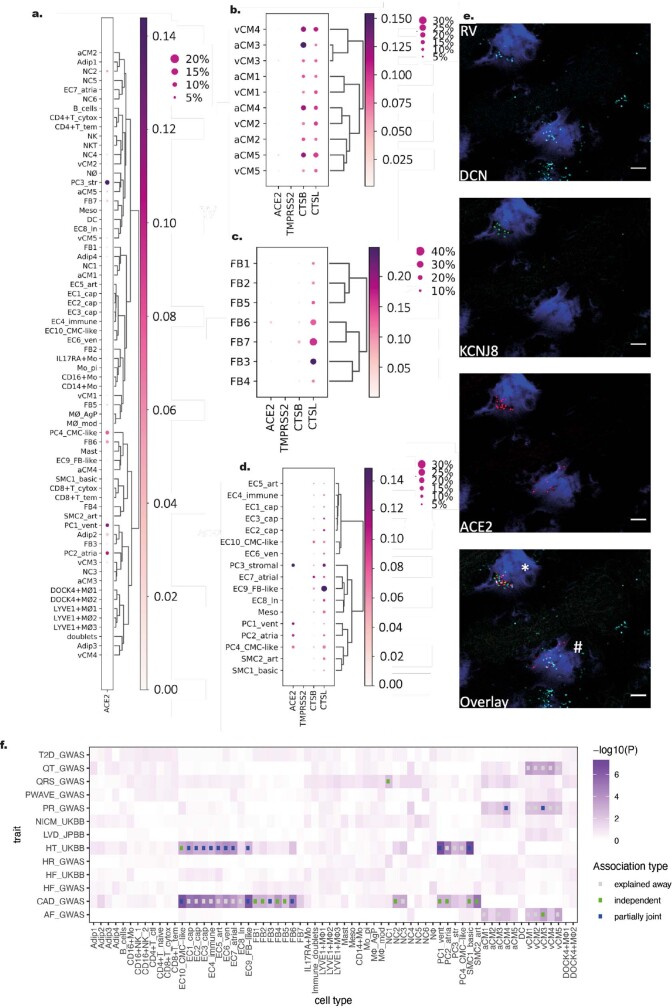
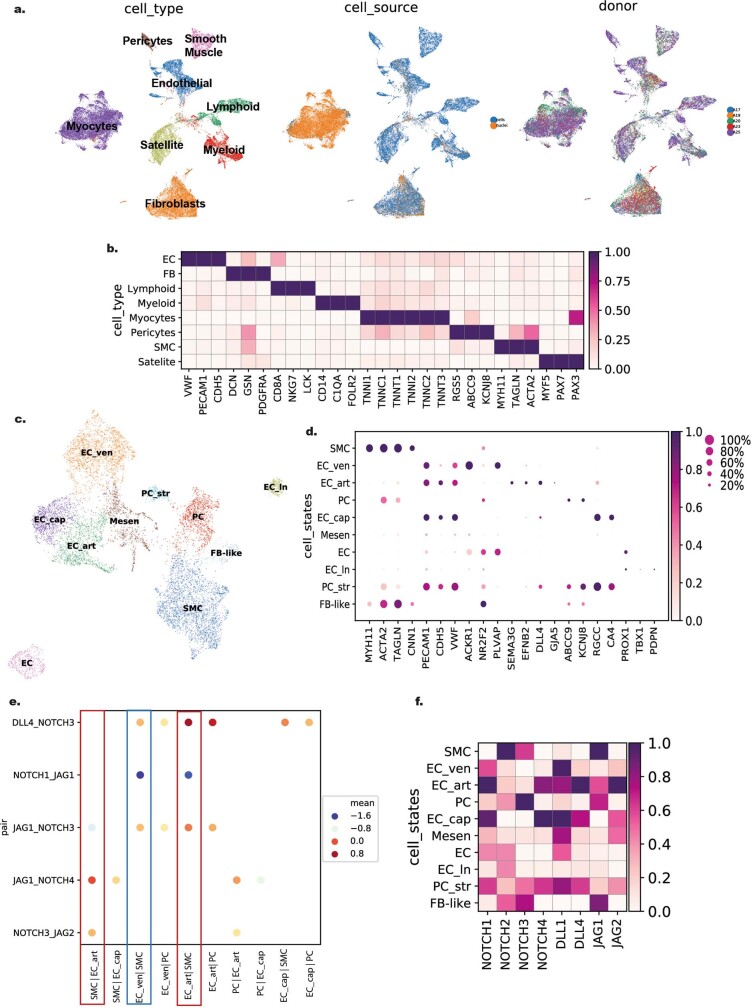
Cardiovascular disease is the leading cause of death worldwide. Advanced insights into disease mechanisms and therapeutic strategies require a deeper understanding of the molecular processes involved in the healthy heart. Knowledge of the full repertoire of cardiac cells and their gene expression profiles is a fundamental first step in this endeavour. Here, using state-of-the-art analyses of large-scale single-cell and single-nucleus transcriptomes, we characterize six anatomical adult heart regions. Our results highlight the cellular heterogeneity of cardiomyocytes, pericytes and fibroblasts, and reveal distinct atrial and ventricular subsets of cells with diverse developmental origins and specialized properties. We define the complexity of the cardiac vasculature and its changes along the arterio-venous axis. In the immune compartment, we identify cardiac-resident macrophages with inflammatory and protective transcriptional signatures. Furthermore, analyses of cell-to-cell interactions highlight different networks of macrophages, fibroblasts and cardiomyocytes between atria and ventricles that are distinct from those of skeletal muscle. Our human cardiac cell atlas improves our understanding of the human heart and provides a valuable reference for future studies.
Overview
The claims and statistics of this paper haven’t been checked yet.
Free: it reads the open-access text and checks the first 5 claims that cite a source we can check. Create a free account to check every claim.
Integrity signals
Registry
Cites
Statistics
Figures
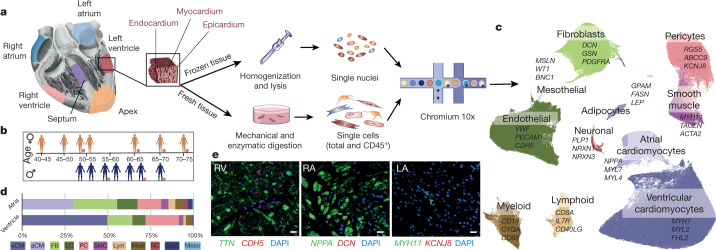
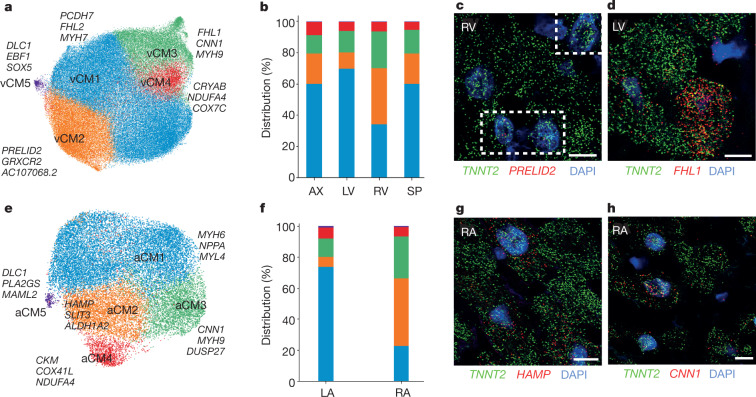
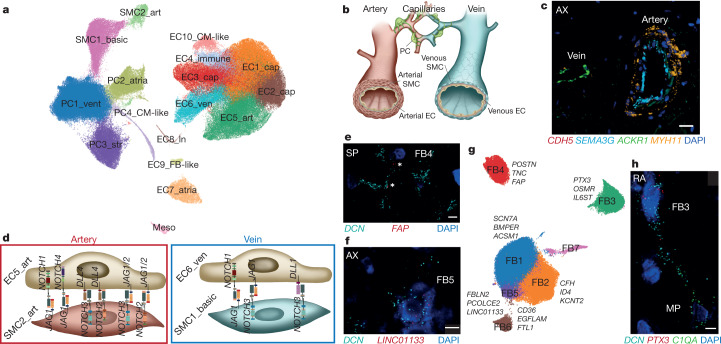
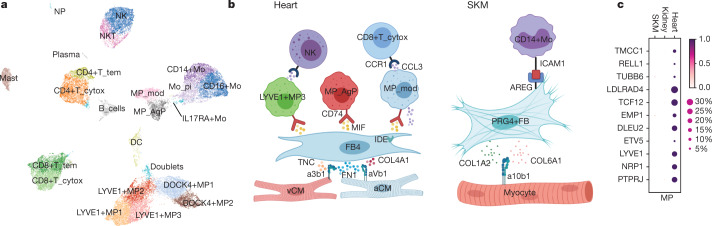
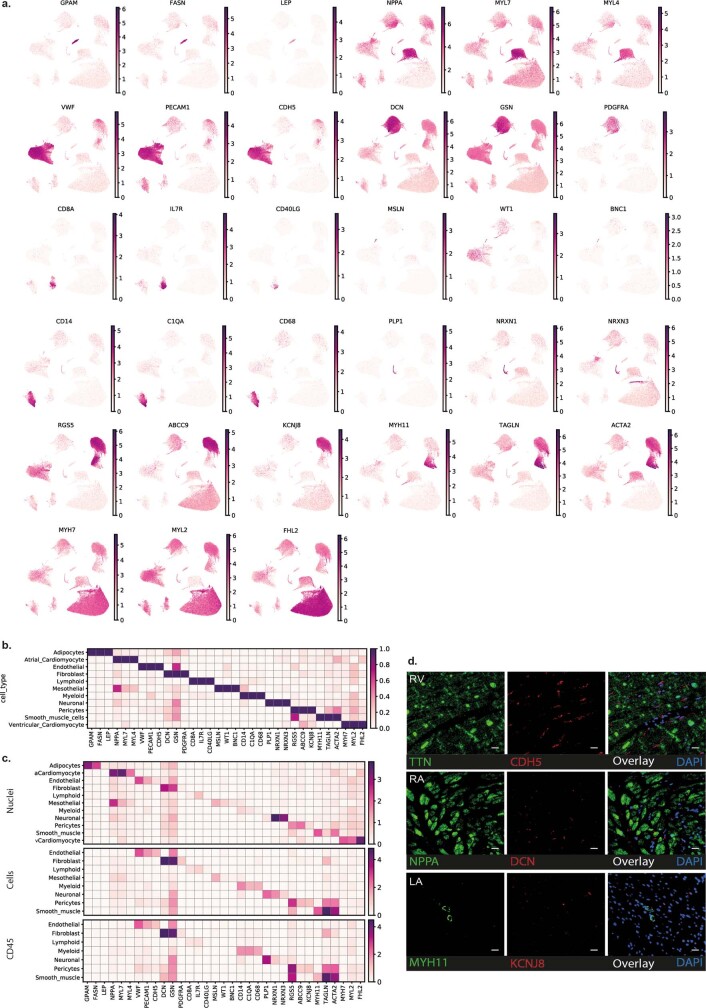
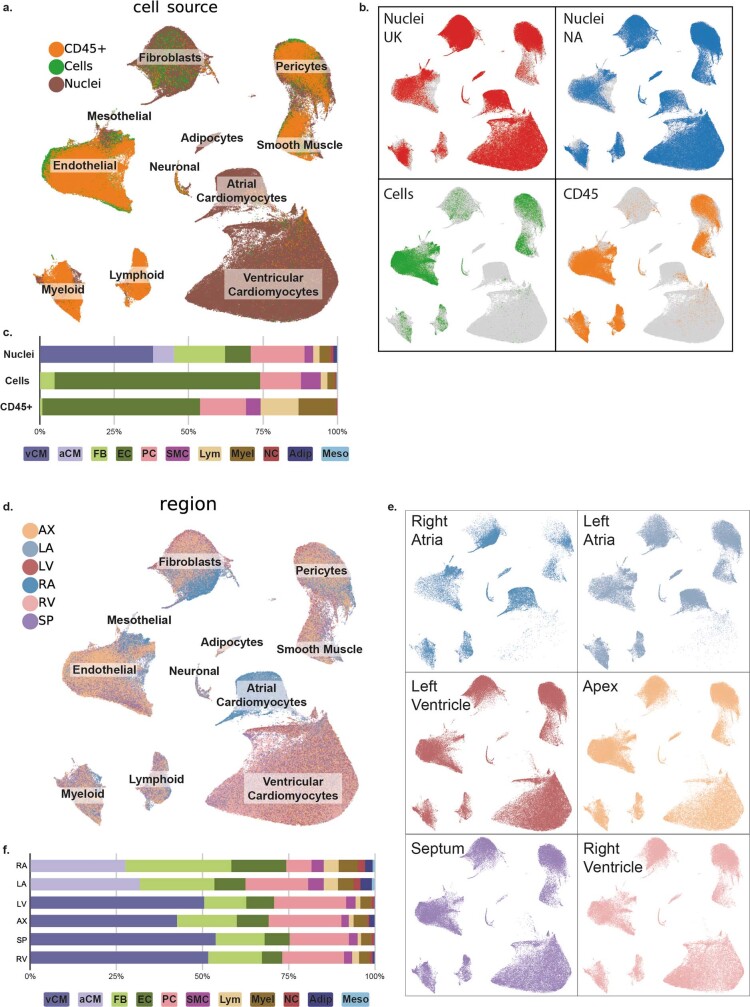
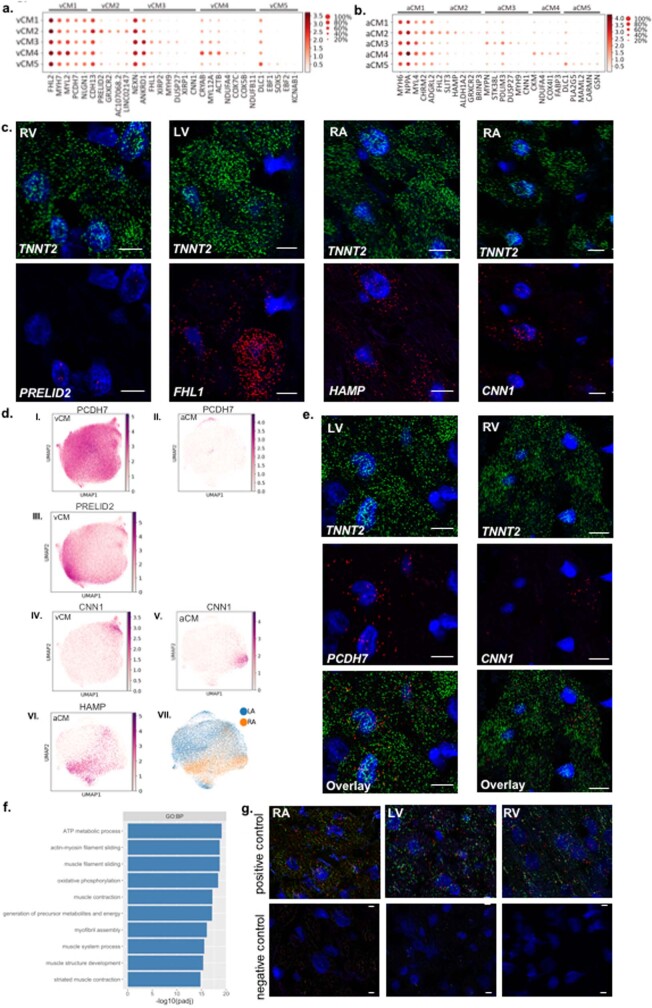
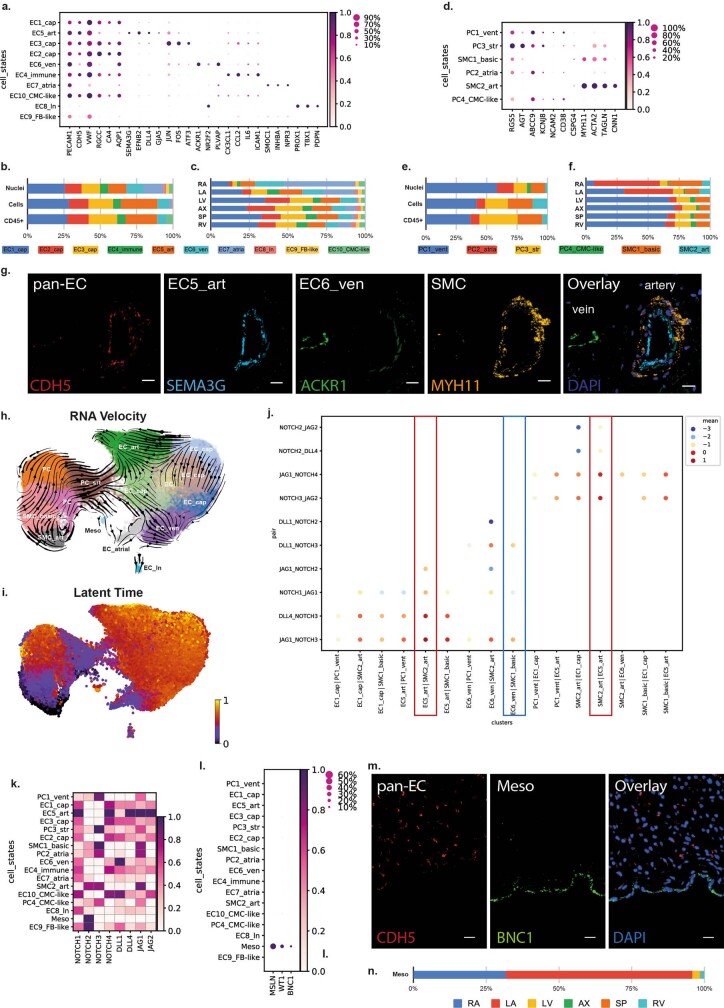
Verification
Claims the paper makes
The claims and statistics of this paper haven’t been checked yet.
Free: it reads the open-access text and checks the first 5 claims that cite a source we can check. Create a free account to check every claim.
Claims other papers make about this one
Each is checked against this paper’s own text: does it say what the citing paper says it does?
The cited source doesn’t support the claim as written.
In the citing paper
“However, these studies rely on nuclear RNA information and lack cellular transcriptomic, epigenetic and proteomic profiling information necessary to obtain a granular picture of the precise immune and fibroblast populations that emerge in the failing human heart and collaborate to drive cardiac fibrosis.”
From Targeting immune–fibroblast cell communication in heart failure (2024) · cites this paper as [21]
Checked by a reasoning model — may be wrong.
Experimental — accuracy not yet measuredThe source backs part of the claim, not all of it — or backs it for a different population, condition or comparison.
In the citing paper
“The monocyte and macrophage lineage constitute the most abundant immune cell population in the hearts of healthy adults and under myocarditis conditions”
From Autoimmune Myocarditis, Old Dogs and New Tricks. (2024) · cites this paper as [106]
Experimental — accuracy not yet measuredThe source backs part of the claim, not all of it — or backs it for a different population, condition or comparison.
In the citing paper
“Interestingly, Geneformer was able to distinguish central versus peripheral factors in the N1-dependent network with fine-tuning on this very minimal data to a better degree than the alternative methods’ predictions trained on the larger dataset of ~30,000 ECs32, demonstrating the strength of pretraining in enabling predictions from increasingly limited data (Fig. 4d, Extended Data Fig. 9b).”
From Transfer learning enables predictions in network biology (2023) · cites this paper as [32]
Experimental — accuracy not yet measuredThe source backs part of the claim, not all of it — or backs it for a different population, condition or comparison.
In the citing paper
“Again, Geneformer significantly boosted the ability to predict central versus peripheral factors compared to alternative methods (AUC 0.81) (Fig. 4a, Extended Data Fig. 8e).”
From Transfer learning enables predictions in network biology (2023) · cites this paper as [32]
Experimental — accuracy not yet measuredThe cited source says what the claim attributes to it.
In the citing paper
“Numerous single-nucleus RNA sequencing (snRNA-seq) studies have investigated the healthy and failing human heart18–22.”
From Targeting immune–fibroblast cell communication in heart failure (2024) · cites this paper as [21]
1 more claim about this paper
Create a free account to see every claim other papers make about this one.
Self-check
Percentages, sums and reported differences re-computed from the paper’s own numbers.
The self-check needs the paper’s full text.
Citations
Cites
Fiji: an open-source platform for biological-image analysis
Schindelin, J., Arganda-Carreras, I., Frise, E., Kaynig, V., Longair, M., Pietzsch, T., Preibisch, S., Rueden, C., Saalfeld, S., Schmid, B., et al. (2012) · Nature Methods · doi:10.1038/nmeth.2019 · Cited by 66,890
Clinical features of patients infected with 2019 novel coronavirus in Wuhan, China
Huang, C., Wang, Y., Li, X., Ren, L., Zhao, J., Hu, Y., Zhang, L., Fan, G., Xu, J., Gu, X., et al. (2020) · The Lancet · doi:10.1016/s0140-6736(20)30183-5 · Cited by 48,884
Hoffmann, M., Kleine-Weber, H., Schroeder, S., Krüger, N., Herrler, T., Erichsen, S., Schiergens, T. S., Herrler, G., Wu, N.-H., Nitsche, A., et al. (2020) · Cell · doi:10.1016/j.cell.2020.02.052 · Cited by 20,286
Enrichr: a comprehensive gene set enrichment analysis web server 2016 update
Kuleshov, M. V., Jones, M. R., Rouillard, A. D., Fernandez, N. F., Duan, Q., Wang, Z., Koplev, S., Jenkins, S. L., Jagodnik, K. M., Lachmann, A., et al. (2016) · Nucleic Acids Research · doi:10.1093/nar/gkw377 · Cited by 10,799
UMAP: Uniform Manifold Approximation and Projection
McInnes, L., Healy, J., Saul, N., & Großberger, L. (2018) · Journal of Open Source Software · doi:10.21105/joss.00861 · Cited by 9,826
SCANPY: large-scale single-cell gene expression data analysis
Wolf, F. A., Angerer, P., & Theis, F. J. (2018) · Genome Biology · doi:10.1186/s13059-017-1382-0 · Cited by 8,881
UMAP: Uniform Manifold Approximation and Projection for Dimension Reduction
McInnes, L., Healy, J., & Melville, J. (2018) · arXiv · doi:10.48550/arxiv.1802.03426 · Cited by 7,101
From Louvain to Leiden: guaranteeing well-connected communities
Traag, V. A., Waltman, L., & van Eck, N. J. (2019) · Scientific Reports · doi:10.1038/s41598-019-41695-z · Cited by 5,635
La Manno, G., Soldatov, R., Zeisel, A., Braun, E., Hochgerner, H., Petukhov, V., Lidschreiber, K., Kastriti, M. E., Lönnerberg, P., Furlan, A., et al. (2018) · Nature · doi:10.1038/s41586-018-0414-6 · Cited by 4,118
MAGMA: Generalized Gene-Set Analysis of GWAS Data
de Leeuw, C. A., Mooij, J. M., Heskes, T., & Posthuma, D. (2015) · PLOS Computational Biology · doi:10.1371/journal.pcbi.1004219 · Cited by 3,653
Cited by
Benchmarking atlas-level data integration in single-cell genomics
Luecken, M. D., Büttner, M., Chaichoompu, K., Danese, A., Interlandi, M., Mueller, M. F., Strobl, D. C., Zappia, L., Dugas, M., Colomé-Tatché, M., et al. (2022) · Nature Methods · doi:10.1038/s41592-021-01336-8 · Cited by 1,438
“If cell identity labels are known, it is always beneficial to integrate scRNA-seq batches via scANVI or scGen (for example, as in the recent heart cell atlas 38 ).”
MethodCOVID-19 and cardiovascular disease: from basic mechanisms to clinical perspectives
Nishiga, M., Wang, D. W., Han, Y., Lewis, D. B., & Wu, J. C. (2020) · Nature Reviews Cardiology · doi:10.1038/s41569-020-0413-9 · Cited by 1,409
Transfer learning enables predictions in network biology
Theodoris, C. V., Xiao, L., Chopra, A., Chaffin, M. D., Al Sayed, Z. R., Hill, M. C., Mantineo, H., Brydon, E. M., Zeng, Z., Liu, X. S., et al. (2023) · Nature · doi:10.1038/s41586-023-06139-9 · Cited by 1,193
Fleming, S. J., Chaffin, M. D., Arduini, A., Akkad, A.-D., Banks, E., Marioni, J. C., Philippakis, A. A., Ellinor, P. T., & Babadi, M. (2023) · Nature Methods · doi:10.1038/s41592-023-01943-7 · Cited by 867
“[41] Monika Litviňuková, Carlos Talavera-López, Henrike Maatz, Daniel Reichart, Catherine L.”
BackgroundIschemia-reperfusion injury: molecular mechanisms and therapeutic targets
Zhang, M., Liu, Q., Meng, H., Duan, H., Liu, X., Wu, J., Gao, F., Wang, S., Tan, R., & Yuan, J. (2024) · Signal Transduction and Targeted Therapy · doi:10.1038/s41392-023-01688-x · Cited by 712
“…the heart, such as cardiac precursor cells, cardiomyocytes, fi broblasts, endothelial cells (ECs), epicardium, smooth muscle cells, adipocytes, and macrophages, 85,86,90 play key roles in heart injury via cell-to-cell communication, in which the Wnt signaling pathway serve as a central regulator.”
BackgroundA human brain vascular atlas reveals diverse mediators of Alzheimer’s risk
Yang, A. C., Vest, R. T., Kern, F., Lee, D. P., Agam, M., Maat, C. A., Losada, P. M., Chen, M. B., Schaum, N., Khoury, N., et al. (2022) · Nature · doi:10.1038/s41586-021-04369-3 · Cited by 797
A Python library for probabilistic analysis of single-cell omics data
Gayoso, A., Lopez, R., Xing, G., Boyeau, P., Valiollah Pour Amiri, V., Hong, J., Wu, K., Jayasuriya, M., Mehlman, E., Langevin, M., et al. (2022) · Nature Biotechnology · doi:10.1038/s41587-021-01206-w · Cited by 789
Self-citationSpatial multi-omic map of human myocardial infarction
Kuppe, C., Ramirez Flores, R. O., Li, Z., Hayat, S., Levinson, R. T., Liao, X., Hannani, M. T., Tanevski, J., Wünnemann, F., Nagai, J. S., et al. (2022) · Nature · doi:10.1038/s41586-022-05060-x · Cited by 772
Organ aging signatures in the plasma proteome track health and disease
Oh, H. S.-H., Rutledge, J., Nachun, D., Pálovics, R., Abiose, O., Moran-Losada, P., Channappa, D., Urey, D. Y., Kim, K., Sung, Y. J., et al. (2023) · Nature · doi:10.1038/s41586-023-06802-1 · Cited by 634
Yang, F., Wang, W., Wang, F., Fang, Y., Tang, D., Huang, J., Lu, H., & Yao, J. (2021) · doi:10.1101/2021.12.05.471261 · Cited by 617
Mapping single-cell data to reference atlases by transfer learning
Lotfollahi, M., Naghipourfar, M., Luecken, M. D., Khajavi, M., Büttner, M., Wagenstetter, M., Avsec, Ž., Gayoso, A., Yosef, N., Interlandi, M., et al. (2022) · Nature Biotechnology · doi:10.1038/s41587-021-01001-7 · Cited by 602
Brundel, B. J. J. M., Ai, X., Hills, M. T., Kuipers, M. F., Lip, G. Y. H., & de Groot, N. M. S. (2022) · Nature Reviews Disease Primers · doi:10.1038/s41572-022-00347-9 · Cited by 499
Dick, S. A., Wong, A., Hamidzada, H., Nejat, S., Nechanitzky, R., Vohra, S., Mueller, B., Zaman, R., Kantores, C., Aronoff, L., et al. (2022) · Science Immunology · doi:10.1126/sciimmunol.abf7777 · Cited by 538
Vascular endothelial cell development and diversity
Trimm, E., & Red-Horse, K. (2023) · Nature Reviews Cardiology · doi:10.1038/s41569-022-00770-1 · Cited by 537
A single-cell atlas of chromatin accessibility in the human genome
Zhang, K., Hocker, J. D., Miller, M., Hou, X., Chiou, J., Poirion, O. B., Qiu, Y., Li, Y. E., Gaulton, K. J., Wang, A., et al. (2021) · Cell · doi:10.1016/j.cell.2021.10.024 · Cited by 502
Single-cell transcriptomics reveals cell-type-specific diversification in human heart failure
Koenig, A. L., Shchukina, I., Amrute, J., Andhey, P. S., Zaitsev, K., Lai, L., Bajpai, G., Bredemeyer, A., Smith, G., Jones, C., et al. (2022) · Nature Cardiovascular Research · doi:10.1038/s44161-022-00028-6 · Cited by 482
“We also detected distinct pathways associated with age in donor controls and individuals with DCM (Supplementary Tables 18 and 19).”
InfluentialCai, Y., Song, W., Li, J., Jing, Y., Liang, C., Zhang, L., Zhang, X., Zhang, W., Liu, B., An, Y., et al. (2022) · Science China Life Sciences · doi:10.1007/s11427-022-2161-3 · Cited by 408
Spatially resolved multiomics of human cardiac niches
Kanemaru, K., Cranley, J., Muraro, D., Miranda, A. M. A., Ho, S. Y., Wilbrey-Clark, A., Patrick Pett, J., Polanski, K., Richardson, L., Litvinukova, M., et al. (2023) · Nature · doi:10.1038/s41586-023-06311-1 · Cited by 425
“For epicardial-subepicardial niches, the ligand-receptor interactions of the co-locating cell states were retrieved based on the following criteria: (1) all the members were expressed in at least 10% of the cell states and (2) at least one of the members in the ligand or the receptor is a differentially expressed gene…”
Self-citationThe emerging landscape of spatial profiling technologies
Moffitt, J. R., Lundberg, E., & Heyn, H. (2022) · Nature Reviews Genetics · doi:10.1038/s41576-022-00515-3 · Cited by 419
Single-nucleus profiling of human dilated and hypertrophic cardiomyopathy
Chaffin, M., Papangeli, I., Simonson, B., Akkad, A.-D., Hill, M. C., Arduini, A., Fleming, S. J., Melanson, M., Hayat, S., Kost-Alimova, M., et al. (2022) · Nature · doi:10.1038/s41586-022-04817-8 · Cited by 418
Single-nucleus cross-tissue molecular reference maps toward understanding disease gene function
Eraslan, G., Drokhlyansky, E., Anand, S., Fiskin, E., Subramanian, A., Slyper, M., Wang, J., Van Wittenberghe, N., Rouhana, J. M., Waldman, J., et al. (2022) · Science · doi:10.1126/science.abl4290 · Cited by 405
A systems view of the vascular endothelium in health and disease
Augustin, H. G., & Koh, G. Y. (2024) · Cell · doi:10.1016/j.cell.2024.07.012 · Cited by 343
Targeting immune–fibroblast cell communication in heart failure
Amrute, J. M., Luo, X., Penna, V., Yang, S., Yamawaki, T., Hayat, S., Bredemeyer, A., Jung, I.-H., Kadyrov, F. F., Heo, G. S., et al. (2024) · Nature · doi:10.1038/s41586-024-08008-5 · Cited by 339
Danaher, P., Kim, Y., Nelson, B., Griswold, M., Yang, Z., Piazza, E., & Beechem, J. M. (2022) · Nature Communications · doi:10.1038/s41467-022-28020-5 · Cited by 292
Dobrev, D., Heijman, J., Hiram, R., Li, N., & Nattel, S. (2023) · Nature Reviews Cardiology · doi:10.1038/s41569-022-00759-w · Cited by 268
Immune Cells and Immunotherapy for Cardiac Injury and Repair
Rurik, J. G., Aghajanian, H., & Epstein, J. A. (2021) · Circulation Research · doi:10.1161/circresaha.121.318005 · Cited by 265
Ritterhoff, J., & Tian, R. (2023) · Nature Reviews Cardiology · doi:10.1038/s41569-023-00887-x · Cited by 254
Early prediction of preeclampsia in pregnancy with cell-free RNA
Moufarrej, M. N., Vorperian, S. K., Wong, R. J., Campos, A. A., Quaintance, C. C., Sit, R. V., Tan, M., Detweiler, A. M., Mekonen, H., Neff, N. F., et al. (2022) · Nature · doi:10.1038/s41586-022-04410-z · Cited by 247
Identification, discrimination and heterogeneity of fibroblasts
Lendahl, U., Muhl, L., & Betsholtz, C. (2022) · Nature Communications · doi:10.1038/s41467-022-30633-9 · Cited by 239
Sex Matters: A Comprehensive Comparison of Female and Male Hearts
St. Pierre, S. R., Peirlinck, M., & Kuhl, E. (2022) · Frontiers in Physiology · doi:10.3389/fphys.2022.831179 · Cited by 226
“2% more cardiac muscle cells than the male heart with 47 ± 11% (Litviňuková et al., 2020).”
BackgroundMolecular Genetic Basis of Hypertrophic Cardiomyopathy
Marian, A. J. (2021) · Circulation Research · doi:10.1161/circresaha.121.318346 · Cited by 250
Genomic frontiers in congenital heart disease
Morton, S. U., Quiat, D., Seidman, J. G., & Seidman, C. E. (2022) · Nature Reviews Cardiology · doi:10.1038/s41569-021-00587-4 · Cited by 236
Self-citationAdvances in spatial transcriptomic data analysis
Dries, R., Chen, J., del Rossi, N., Khan, M. M., Sistig, A., & Yuan, G.-C. (2021) · Genome Research · doi:10.1101/gr.275224.121 · Cited by 241
Pathogenic variants damage cell composition and single cell transcription in cardiomyopathies
Reichart, D., Lindberg, E. L., Maatz, H., Miranda, A. M. A., Viveiros, A., Shvetsov, N., Gärtner, A., Nadelmann, E. R., Lee, M., Kanemaru, K., et al. (2022) · Science · doi:10.1126/science.abo1984 · Cited by 240
“1A), obtained prior to any mechanical support in 61 patients and 18 controls (Tables S1, S2) including 12 controls previously reported (4).”
InfluentialSelf-citationA Single-Cell RNA Expression Map of Human Coronavirus Entry Factors
Singh, M., Bansal, V., & Feschotte, C. (2020) · Cell Reports · doi:10.1016/j.celrep.2020.108175 · Cited by 241
A transcriptional switch governs fibroblast activation in heart disease
Alexanian, M., Przytycki, P. F., Micheletti, R., Padmanabhan, A., Ye, L., Travers, J. G., Gonzalez-Teran, B., Silva, A. C., Duan, Q., Ranade, S. S., et al. (2021) · Nature · doi:10.1038/s41586-021-03674-1 · Cited by 238
Recruited macrophages elicit atrial fibrillation
Hulsmans, M., Schloss, M. J., Lee, I.-H., Bapat, A., Iwamoto, Y., Vinegoni, C., Paccalet, A., Yamazoe, M., Grune, J., Pabel, S., et al. (2023) · Science · doi:10.1126/science.abq3061 · Cited by 228
Efficient and precise single-cell reference atlas mapping with Symphony
Kang, J. B., Nathan, A., Weinand, K., Zhang, F., Millard, N., Rumker, L., Moody, D. B., Korsunsky, I., & Raychaudhuri, S. (2021) · Nature Communications · doi:10.1038/s41467-021-25957-x · Cited by 231
“Single-cell resolution enables the discovery and refinement of cell states across diverse clinical and biological contexts 6–11 .”
BackgroundUniversal cell embedding provides a foundation model for cell biology
Rosen, Y., Roohani, Y., Agrawal, A., Samotorcan, L., Quake, S. R., & Leskovec, J. (2026) · Nature · doi:10.1038/s41586-026-10689-z · Cited by 287
He, P., Lim, K., Sun, D., Pett, J. P., Jeng, Q., Polanski, K., Dong, Z., Bolt, L., Richardson, L., Mamanova, L., et al. (2022) · Cell · doi:10.1016/j.cell.2022.11.005 · Cited by 227
Self-citationThe Pathogenesis of Cardiac Fibrosis: A Review of Recent Progress
Maruyama, K., & Imanaka-Yoshida, K. (2022) · International Journal of Molecular Sciences · doi:10.3390/ijms23052617 · Cited by 205
“Recent single-cell analysis in the adult human heart has revealed significant heterogeneity in CFs [71].”
BackgroundMcKellar, D. W., Walter, L. D., Song, L. T., Mantri, M., Wang, M. F. Z., De Vlaminck, I., & Cosgrove, B. D. (2021) · Communications Biology · doi:10.1038/s42003-021-02810-x · Cited by 210
Endothelial Dysfunction and Diabetic Cardiomyopathy
Wang, M., Li, Y., Li, S., & Lv, J. (2022) · Frontiers in Endocrinology · doi:10.3389/fendo.2022.851941 · Cited by 207
“Endothelial cells are the third most abundant cell type in the mammalian heart, accounting for about 12% of atrial and 8% of ventricular cell numbers respectively (90).”
BackgroundResolving the intertwining of inflammation and fibrosis in human heart failure at single-cell level
Rao, M., Wang, X., Guo, G., Wang, L., Chen, S., Yin, P., Chen, K., Chen, L., Zhang, Z., Chen, X., et al. (2021) · Basic Research in Cardiology · doi:10.1007/s00395-021-00897-1 · Cited by 212
Complex Relationship Between Cardiac Fibroblasts and Cardiomyocytes in Health and Disease
Hall, C., Gehmlich, K., Denning, C., & Pavlovic, D. (2021) · Journal of the American Heart Association · doi:10.1161/jaha.120.019338 · Cited by 205
McCracken, I. R., Saginc, G., He, L., Huseynov, A., Daniels, A., Fletcher, S., Peghaire, C., Kalna, V., Andaloussi-Mäe, M., Muhl, L., et al. (2021) · Circulation · doi:10.1161/circulationaha.120.052824 · Cited by 211
Self-citationSpatially organized cellular communities form the developing human heart
Farah, E. N., Hu, R. K., Kern, C., Zhang, Q., Lu, T.-Y., Ma, Q., Tran, S., Zhang, B., Carlin, D., Monell, A., et al. (2024) · Nature · doi:10.1038/s41586-024-07171-z · Cited by 200
Cell transcriptomic atlas of the non-human primate Macaca fascicularis
Han, L., Wei, X., Liu, C., Volpe, G., Zhuang, Z., Zou, X., Wang, Z., Pan, T., Yuan, Y., Zhang, X., et al. (2022) · Nature · doi:10.1038/s41586-022-04587-3 · Cited by 209
Self-citationZernecke, A., Erhard, F., Weinberger, T., Schulz, C., Ley, K., Saliba, A.-E., & Cochain, C. (2023) · Cardiovascular Research · doi:10.1093/cvr/cvac161 · Cited by 191
Single-cell atlas of the human brain vasculature across development, adulthood and disease
Wälchli, T., Ghobrial, M., Schwab, M., Takada, S., Zhong, H., Suntharalingham, S., Vetiska, S., Gonzalez, D. R., Wu, R., Rehrauer, H., et al. (2024) · Nature · doi:10.1038/s41586-024-07493-y · Cited by 177
Efficient in vivo genome editing prevents hypertrophic cardiomyopathy in mice
Reichart, D., Newby, G. A., Wakimoto, H., Lun, M., Gorham, J. M., Curran, J. J., Raguram, A., DeLaughter, D. M., Conner, D. A., Marsiglia, J. D. C., et al. (2023) · Nature Medicine · doi:10.1038/s41591-022-02190-7 · Cited by 203
Self-citationStroke–Heart Syndrome: Recent Advances and Challenges
Scheitz, J. F., Sposato, L. A., Schulz‐Menger, J., Nolte, C. H., Backs, J., & Endres, M. (2022) · Journal of the American Heart Association · doi:10.1161/jaha.122.026528 · Cited by 181
cellxgene: a performant, scalable exploration platform for high dimensional sparse matrices
Megill, C., Martin, B., Weaver, C., Bell, S., Prins, L., Badajoz, S., McCandless, B., Pisco, A. O., Kinsella, M., Griffin, F., et al. (2021) · bioRxiv (Cold Spring Harbor Laboratory) · doi:10.1101/2021.04.05.438318 · Cited by 195
“Other notable examples include the COVID-19 Cell Atlas (https://www.covid19cellatlas.org) [11 ] and the Heart Cell Atlas (https://www.heartcellatlas.org) [9 ].”
BackgroundGorin, G., Fang, M., Chari, T., & Pachter, L. (2022) · PLOS Computational Biology · doi:10.1371/journal.pcbi.1010492 · Cited by 186
Regression of cardiac hypertrophy in health and disease: mechanisms and therapeutic potential
Martin, T. G., Juarros, M. A., & Leinwand, L. A. (2023) · Nature Reviews Cardiology · doi:10.1038/s41569-022-00806-6 · Cited by 170
Wang, Z., Cui, M., Shah, A. M., Tan, W., Liu, N., Bassel-Duby, R., & Olson, E. N. (2020) · Cell Reports · doi:10.1016/j.celrep.2020.108472 · Cited by 175
“…and disease remodeling (Asp et al., 2019; Cui et al., 2019; DeLaughter et al., 2016; Farbehi et al., 2019; Gladka et al., 2018; Hill et al., 2019; Litviňuková et al., 2020; Liu et al., 2019; Martini et al., 2019; See et al., 2017; Skelly et al., 2018; Tucker et al., 2020; Wang et al., 2020; Xiao…”
Single-cell atlases: shared and tissue-specific cell types across human organs
Elmentaite, R., Domínguez Conde, C., Yang, L., & Teichmann, S. A. (2022) · Nature Reviews Genetics · doi:10.1038/s41576-022-00449-w · Cited by 169
Self-citationA reference tissue atlas for the human kidney
Hansen, J., Sealfon, R., Menon, R., Eadon, M. T., Lake, B. B., Steck, B., Anjani, K., Parikh, S., Sigdel, T. K., Zhang, G., et al. (2022) · Science Advances · doi:10.1126/sciadv.abn4965 · Cited by 166
Fleming, S. J., Chaffin, M. D., Arduini, A., Akkad, A.-D., Banks, E., Marioni, J. C., Philippakis, A. A., Ellinor, P. T., & Babadi, M. (2019) · doi:10.1101/791699 · Cited by 164
Flexible Electrodes for In Vivo and In Vitro Electrophysiological Signal Recording
Zhu, M., Wang, H., Li, S., Liang, X., Zhang, M., Dai, X., & Zhang, Y. (2021) · Advanced Healthcare Materials · doi:10.1002/adhm.202100646 · Cited by 171
Accurate and fast cell marker gene identification with COSG
Dai, M., Pei, X., & Wang, X.-J. (2022) · Briefings in Bioinformatics · doi:10.1093/bib/bbab579 · Cited by 158
Emerging Functions of IL-33 in Homeostasis and Immunity
Dwyer, G. K., D’Cruz, L. M., & Turnquist, H. R. (2022) · Annual Review of Immunology · doi:10.1146/annurev-immunol-101320-124243 · Cited by 185
Cardiac fibroblasts and mechanosensation in heart development, health and disease
Pesce, M., Duda, G. N., Forte, G., Girão, H., Raya, Á., Roca‐Cusachs, P., Sluijter, J. P. G., Tschöpe, C., & Linthout, S. V. (2022) · Nature Reviews Cardiology · doi:10.1038/s41569-022-00799-2 · Cited by 168
GDF15 and Cardiac Cells: Current Concepts and New Insights
Rochette, L., Dogon, G., Zeller, M., Cottin, Y., & Vergely, C. (2021) · International Journal of Molecular Sciences · doi:10.3390/ijms22168889 · Cited by 150
“Sex-specific differences in the composition of hearts develop shortly after birth under the control of gonadal hormones [3,4].”
BackgroundProgress in multicellular human cardiac organoids for clinical applications
Kim, H., Kamm, R. D., Vunjak-Novakovic, G., & Wu, J. C. (2022) · Cell Stem Cell · doi:10.1016/j.stem.2022.03.012 · Cited by 154
Wan, X., Xiao, J., Tam, S. S. T., Cai, M., Sugimura, R., Wang, Y., Wan, X., Lin, Z., Wu, A. R., & Yang, C. (2023) · Nature Communications · doi:10.1038/s41467-023-43629-w · Cited by 181
“For cell type identi fi cation, we used a paired human heart snRNA-seq atlas that consists of 10 major cell types, ranging from widespread cardiomyocytes to less common adipocytes and neuronal cells 40 .”
InfluentialElectroimmunology and cardiac arrhythmia
Grune, J., Yamazoe, M., & Nahrendorf, M. (2021) · Nature Reviews Cardiology · doi:10.1038/s41569-021-00520-9 · Cited by 166
MicroRNAs as therapeutic targets in cardiovascular disease
Laggerbauer, B., & Engelhardt, S. H. (2022) · Journal of Clinical Investigation · doi:10.1172/jci159179 · Cited by 168
“, from healthy (57) and failing human heart (58).”
BackgroundNext generation of heart regenerative therapies: progress and promise of cardiac tissue engineering
Tenreiro, M. F., Louro, A. F., Alves, P. M., & Serra, M. (2021) · npj Regenerative Medicine · doi:10.1038/s41536-021-00140-4 · Cited by 171
Integrated multi-omic characterization of congenital heart disease
Hill, M. C., Kadow, Z. A., Long, H., Morikawa, Y., Martin, T. J., Birks, E. J., Campbell, K. S., Nerbonne, J. M., Lavine, K. J., Wadhwa, L., et al. (2022) · Nature · doi:10.1038/s41586-022-04989-3 · Cited by 163
Bhattacharya, M., & Ramachandran, P. (2023) · Nature Immunology · doi:10.1038/s41590-023-01551-9 · Cited by 148
Single-cell senescence identification reveals senescence heterogeneity, trajectory, and modulators
Tao, W., Yu, Z., & Han, J.-D. J. (2024) · Cell Metabolism · doi:10.1016/j.cmet.2024.03.009 · Cited by 147
Lyra‐Leite, D. M., Gutiérrez‐Gutiérrez, Ó., Wang, M., Zhou, Y., Cyganek, L., & Burridge, P. W. (2022) · STAR Protocols · doi:10.1016/j.xpro.2022.101560 · Cited by 161
Zhuang, T., Chen, M., Wu, R.-X., Wang, J., Hu, X.-D., Meng, T., Wu, A.-H., Li, Y., Yang, Y., Lei, Y., et al. (2024) · Nature Communications · doi:10.1038/s41467-024-46357-x · Cited by 157
Resident cardiac macrophages: Heterogeneity and function in health and disease
Zaman, R., & Epelman, S. (2022) · Immunity · doi:10.1016/j.immuni.2022.08.009 · Cited by 141
Origin and function of activated fibroblast states during zebrafish heart regeneration
Hu, B., Lelek, S., Spanjaard, B., El-Sammak, H., Simões, M. G., Mintcheva, J., Aliee, H., Schäfer, R., Meyer, A. M., Theis, F., et al. (2022) · Nature Genetics · doi:10.1038/s41588-022-01129-5 · Cited by 134
“A number of recent single-cell RNA-sequencing (scRNA-seq) studies have determined cell type diversity in the mammalian heart 18,19,20,21 as well as in the regenerating zebrafish heart 22,23 .”
Zaman, R., Hamidzada, H., Kantores, C., Wong, A., Dick, S. A., Wang, Y., Momen, A., Aronoff, L., Lin, J., Razani, B., et al. (2021) · Immunity · doi:10.1016/j.immuni.2021.07.006 · Cited by 136
Passive myocardial mechanical properties: meaning, measurement, models
Emig, R., Zgierski-Johnston, C. M., Timmermann, V., Taberner, A. J., Nash, M. P., Köhl, P., & Peyronnet, R. (2021) · Biophysical Reviews · doi:10.1007/s12551-021-00838-1 · Cited by 152
“There are marked differences in cellular composition during development, between males and females (Squiers et al. 2020), between atria and ventricles of the same individual (Litviňuková et al. 2020) and between healthy and diseased tissue.”
BackgroundNon-Coding RNA-Targeted Therapy: A State-of-the-Art Review
Nappi, F. (2024) · International Journal of Molecular Sciences · doi:10.3390/ijms25073630 · Cited by 146
An organotypic atlas of human vascular cells
Barnett, S. N., Cujba, A.-M., Yang, L., Maceiras, A. R., Li, S., Kedlian, V. R., Pett, J. P., Polański, K., Miranda, A. M. A., Xu, C., et al. (2024) · Nature Medicine · doi:10.1038/s41591-024-03376-x · Cited by 157
“To explore the heterogeneity of vascular cells, we subset and integrated the endothelial and mural compartments, obtaining approximately 67,000 cells from 62 donors, and identifying arterial, capillary, venous and lymphatic ECs, pericytes and VSMCs 13 (Fig.”
InfluentialSelf-citationCardiac cell type–specific gene regulatory programs and disease risk association
Hocker, J. D., Poirion, O. B., Zhu, F., Buchanan, J., Zhang, K., Chiou, J., Wang, T.-M., Zhang, Q., Hou, X., Li, Y. E., et al. (2021) · Science Advances · doi:10.1126/sciadv.abf1444 · Cited by 138
Immunometabolic mechanisms of heart failure with preserved ejection fraction
Schiattarella, G. G., Alcaide, P., Condorelli, G., Gillette, T. G., Heymans, S. R. B., Jones, E. A. V., Kallikourdis, M., Lichtman, A. H., Marelli‐Berg, F. M., Shah, S. J., et al. (2022) · Nature Cardiovascular Research · doi:10.1038/s44161-022-00032-w · Cited by 143
Bao, C., Ma, Q., Ying, X., Wang, F., Hou, Y., Wang, D., Zhu, L., Huang, J., & He, C. (2024) · EBioMedicine · doi:10.1016/j.ebiom.2024.105502 · Cited by 148
“48,49 Macrophages exhibit signi fi cant heterogeneity and polarization.”
Fibroblasts as confederates of the immune system
Correa‐Gallegos, D., Jiang, D., & Rinkevich, Y. (2021) · Immunological Reviews · doi:10.1111/imr.12972 · Cited by 138
Spatial proteomics in three-dimensional intact specimens
Bhatia, H. S., Brunner, A.-D., Öztürk, F., Kapoor, S., Rong, Z., Mai, H., Thielert, M., Ali, M., Al-Maskari, R., Paetzold, J. C., et al. (2022) · Cell · doi:10.1016/j.cell.2022.11.021 · Cited by 129
Multi-species single-cell transcriptomic analysis of ocular compartment regulons
Gautam, P., Hamashima, K., Chen, Y., Zeng, Y., Makovoz, B., Parikh, B. H., Lee, H. Y., Lau, K. A., Su, X., Wong, R. C. B., et al. (2021) · Nature Communications · doi:10.1038/s41467-021-25968-8 · Cited by 137
Chen, J., Wei, X., Zhang, Q., Wu, Y., Xia, G., Xia, H., Wang, L., Shang, H., & Lin, S. (2023) · Acta Pharmaceutica Sinica B · doi:10.1016/j.apsb.2023.02.005 · Cited by 133
Inhalable Stem Cell Exosomes Promote Heart Repair After Myocardial Infarction
Li, J., Sun, S., Zhu, D., Mei, X., Lyu, Y., Huang, K., Li, Y., Liu, S., Wang, Z., Hu, S., et al. (2024) · Circulation · doi:10.1161/circulationaha.123.065005 · Cited by 136
“We annotated cell-type clusters according to their distinct markers and previously established evidence 29–32 : EC1, lymphatic ECs ( Prox1 and RELN ); EC2, vascular ECs ( Cdh5 and Pecam1 ); EC3, proliferating ECs ( Ki67 ); and EC4, disease-responsive ECs (mainly existed in the control group and…”
Wang, R., Maron, B. A., & Loscalzo, J. (2023) · Arteriosclerosis Thrombosis and Vascular Biology · doi:10.1161/atvbaha.122.318731 · Cited by 140
The immune system in cardiovascular diseases: from basic mechanisms to therapeutic implications
Wang, X., Chen, L., Wei, J., Zheng, H., Zhou, N., Xu, X., Deng, X., Liu, T., & Zou, Y. (2025) · Signal Transduction and Targeted Therapy · doi:10.1038/s41392-025-02220-z · Cited by 148
“49,50 The main types of innate immune cells involved in cardiovascular diseases (CVDs) include neutrophils, monocytes/macrophages, eosinophils, dendritic cells (DCs), mast cells, natural killer cells and innate lymphoid cells.”
Mori, Y., Novruzov, E., Schmitt, D. R., Cardinale, J., Watabe, T., Choyke, P. L., Alavi, A. A., Haberkorn, U., & Giesel, F. L. (2024) · npj Imaging · doi:10.1038/s44303-024-00053-z · Cited by 141
“FAPI uptake volume at baseline was a signi fi cant predictor (OR = 1.048, P = 0.011)forLVremodelingat12monthsaftermyocardialinfarction 165,166 .”
InfluentialCardiac Fibrosis in the Multi-Omics Era: Implications for Heart Failure
Ghazal, R., Wang, M., Liu, D., Tschumperlin, D. J., & Pereira, N. L. (2025) · Circulation Research · doi:10.1161/circresaha.124.325402 · Cited by 142
“103,104 107 These pericyte-derived fibroblasts are unique in that they maintain expression of pericyte markers while acquiring fibroblast identity genes such as PDGFRA (marker of resident fibroblasts) and TCF21 (TF essential for fibroblast development) after MI. 108 Pseudotemporal trajectory…”
Cardiovascular Toxicity of Proteasome Inhibitors: Underlying Mechanisms and Management Strategies
Georgiopoulos, G. A., Makris, N., Laina, A., Theodorakakou, F., Briasoulis, Α., Trougakos, I. P., Dimopoulos, M. A., Kastritis, E., & Stamatelopoulos, K. (2023) · JACC CardioOncology · doi:10.1016/j.jaccao.2022.12.005 · Cited by 144
Macrophages in myocardial infarction
Kubota, A., & Frangogiannis, N. G. (2022) · American Journal of Physiology-Cell Physiology · doi:10.1152/ajpcell.00230.2022 · Cited by 131
Spatiotemporal modeling of molecular holograms
Qiu, X., Zhu, D. Y., Lu, Y., Yao, J., Jing, Z., Min, K. H., Cheng, M., Pan, H., Zuo, L., King, S. B., et al. (2024) · Cell · doi:10.1016/j.cell.2024.10.011 · Cited by 151
Anatomical structures, cell types and biomarkers of the Human Reference Atlas
Börner, K., Teichmann, S. A., Quardokus, E. M., Gee, J. C., Browne, K., Osumi-Sutherland, D., Herr, B. W., Bueckle, A., Paul, H., Haniffa, M., et al. (2021) · Nature Cell Biology · doi:10.1038/s41556-021-00788-6 · Cited by 113
Self-citationA multi-omic atlas of human embryonic skeletal development
To, K., Fei, L., Pett, J. P., Roberts, K., Blain, R., Polański, K., Li, T., Yayon, N., He, P., Xu, C., et al. (2024) · Nature · doi:10.1038/s41586-024-08189-z · Cited by 138
Self-citationChronic low‐grade inflammation in heart failure with preserved ejection fraction
Mesquita, T., Lin, Y., & Ibrahim, A. G.-E. (2021) · Aging Cell · doi:10.1111/acel.13453 · Cited by 130
“The thickening of the LV has also been observed (Liu et al., 2013) in response to cardiomyocyte senescence (Olivetti et al., 1991).”
BackgroundSingle-cell transcriptomics for the assessment of cardiac disease
Miranda, A. M. A., Janbandhu, V., Maatz, H., Kanemaru, K., Cranley, J., Teichmann, S. A., Hübner, N., Schneider, M. D., Harvey, R. P., & Noseda, M. (2023) · Nature Reviews Cardiology · doi:10.1038/s41569-022-00805-7 · Cited by 117
Self-citationCell type ontologies of the Human Cell Atlas
Osumi-Sutherland, D., Xu, C., Keays, M., Levine, A. P., Kharchenko, P. V., Regev, A., Lein, E., & Teichmann, S. A. (2021) · Nature Cell Biology · doi:10.1038/s41556-021-00787-7 · Cited by 123
Self-citation
Metadata
- Authors
- Litviňuková, M., Talavera-López, C., Maatz, H., Reichart, D., Worth, C. L., Lindberg, E. L., Kanda, M., Polanski, K., Heinig, M., Lee, M., Nadelmann, E. R., Roberts, K., Tuck, L., Fasouli, E. S., DeLaughter, D. M., McDonough, B., Wakimoto, H., Gorham, J. M., Samari, S., Mahbubani, K. T., Saeb-Parsy, K., Patone, G., Boyle, J. J., Zhang, H., Zhang, H., Viveiros, A., Oudit, G. Y., Bayraktar, O. A., Seidman, J. G., Seidman, C. E., Noseda, M., Hubner, N., & Teichmann, S. A.
- Affiliations
- Max Delbrück Center (DE)
- European Bioinformatics Institute (GB)
- Harvard University (US)
- Sapporo Medical University (JP)
- Helmholtz Munich (DE)
- Imperial College London (GB)
- Wellcome Sanger Institute (GB)
- Brigham and Women's Hospital (US)
- University of Cambridge (GB)
- University of Alberta (CA)
- British Heart Foundation (GB)
- Corresponding author
- Seidman, J. G.
- Seidman, Christine E.
- Noseda, Michela
- Teichmann, Sarah A.
- ORCID
- Litviňuková, Monika
- Talavera-López, Carlos
- Maatz, Henrike
- Reichart, Daniel
- Worth, Catherine L.
- Lindberg, Eric L.
- Kanda, Masatoshi
- Polanski, Krzysztof
- Heinig, Matthias
- Lee, Michael
- Nadelmann, Emily R.
- Roberts, Kenny
- Fasouli, Eirini S.
- DeLaughter, Daniel M.
- McDonough, Barbara
- Wakimoto, Hiroko
- Gorham, Joshua M.
- Mahbubani, Krishnaa T.
- Saeb-Parsy, Kourosh
- Patone, Giannino
- Boyle, Joseph J.
- Zhang, Hongbo
- Zhang, Hao
- Viveiros, Anissa
- Oudit, Gavin Y.
- Bayraktar, Omer Ali
- Seidman, J. G.
- Seidman, Christine E.
- Noseda, Michela
- Hubner, Norbert
- Teichmann, Sarah A.
- Venue
- Nature
- Published
- 2020-09-24
- Volume
- 588
- Issue
- 7838
- Pages
- 466-472
- ISSN
- 0028-0836 (ISSN-L)
- 1476-4687
- PMC
- PMC7681775
- OpenAlex
- W3088401235
- Cited by
- 1,729
- References
- 104
- Citations by year
- 2026: 281 · 2025: 320 · 2024: 371 · 2023: 283 · 2022: 273 · 2021: 186 · 2020: 13
- FWCI
- 61.91
- Type
- journal article
- Language
- en
- Open access
- hybrid
- doi.org
- Licence
- cc-by
- www.springernature.com/gp/researchers/text-and-data-mining (tdm)
- www.springernature.com/gp/researchers/text-and-data-mining (vor)
- Locations
- Nature (publishedVersion, cc-by)
- PubMed Central (publishedVersion, cc-by)
- PubMed (publishedVersion)
- MDC Repository (Max-Delbrueck-Center for Molecular Medicine) (acceptedVersion)
- RePEc: Research Papers in Economics (submittedVersion)
- BOA (University of Milano-Bicocca) (submittedVersion, cc-by)
- Site cant be reached (submittedVersion, cc-by)
- PuSH - Publication Server of Helmholtz Zentrum München (submittedVersion, cc-by)
- Spiral (Imperial College London) (submittedVersion, cc-by)
- Funders
- National Science Foundation (1647837)
- Howard Hughes Medical Institute
- Heart and Stroke Foundation of Canada
- Alexander von Humboldt-Stiftung
- Wellcome Trust (211276/Z/18/Z, 206194)
- Deutsches Zentrum für Herz-Kreislaufforschung (SP/19/1/34461)
- Sarnoff Cardiovascular Research Foundation
- Chan Zuckerberg Initiative
- University of Alberta
- British Heart Foundation (SP/19/1/34461, FS/13/12/30037, PG/17/71/33242, PG/15/57/31580, PG/16/47/32156)
- European Commission (HORIZON2020)
- Deutsche Forschungsgemeinschaft (13/12)
- Bundesministerium für Bildung und Forschung (031L0075A)
- China Scholarship Council
- Alberta Innovates
- National Institutes of Health
- Canadian Institutes of Health Research
- National Heart, Lung, and Blood Institute (UM1HL098166, R01HL080494)
- H2020 European Research Council (788970)
- Topics
- Life Sciences › Biochemistry, Genetics and Molecular Biology › Molecular Biology › Single-cell and spatial transcriptomics
- Life Sciences › Biochemistry, Genetics and Molecular Biology › Molecular Biology › Congenital heart defects research
- Health Sciences › Medicine › Cardiology and Cardiovascular Medicine › Cardiac electrophysiology and arrhythmias
- Keywords
- adult human heart, cardiomyocytes, pericytes, cardiac fibroblasts, cardiac vasculature, cardiac macrophages, cell-cell interactions, single-cell transcriptomics, single-nucleus transcriptomics, heart development, cardiovascular disease
- MeSH terms
- Receptors, Coronavirus, Angiotensin-Converting Enzyme 2, SARS-CoV-2, Adult, Epithelial Cells, Epithelium, Female, Fibroblasts, Heart Atria, Heart Ventricles, Homeostasis, Humans, Macrophages, Male, Myocardium, Neurons, Stromal Cells, Adipocytes, Muscle, Skeletal, Pericytes, Gene Expression Profiling, Myocytes, Cardiac, Genome-Wide Association Study, Single-Cell Analysis, Transcriptome
About these checks
Registry, retraction, Cites and statistics results are computed, not judged, with one exception: a printed reference that no index lists is read once by a model before it counts as a citation error. Claims are extracted by a model and kept only when their quote appears verbatim in the text; each cited source is then checked, with a model’s help, for whether it says what the claim relies on. Those verdicts can be wrong — read the claim’s quote and the cited source before relying on one.
Statistics and arithmetic are recomputed, not judged.
Confidence bands are shown only for fields calibrated on our annotated test set. None is calibrated yet, so no band is shown.
What counts as a claim ›How we measure confidence ›How we check this ›
Are you an author, or do you see a problem with this page? Request a review
Data sources
Bibliographic data: Semantic Scholar, OpenAlex, Crossref.
Contains information from the Semantic Scholar Academic Graph Datasets, made available under the ODC Attribution License (ODC-BY 1.0).
Semantic Scholar’s data is described in: Kinney, R., et al. (2023). The Semantic Scholar Open Data Platform. arXiv:2301.10140.
